Gavin Cada, TOPAZ/JASPER HS intern, Brookings-Harbor High School

Hi, my name is Gavin Cada and I am a high school intern for the 2026 TOPAZ/JASPER project. I currently go to school at Brookings Harbor High School but I am originally from Las Vegas, Nevada. Having just moved to the south coast of Oregon a little under a year ago, I heard about the TOPAZ/JASPER project through my school’s TRIO ETS program and decided to apply because of my interest in Biology, but more specifically to experience real field work that contributes to professional science.

In school, I learned about our changing environment and the primary impact of anthropogenic activity. During my spare time, I’ve really enjoyed conducting my own research and learning about conservation efforts through the World Wildlife Foundation (WWF). Specifically, a figure that has always remained with me is the Living Planet Index’s 2024 graph that measures the average global population change of monitored vertebrate populations from 1970 to 2020. The graph shows a clear negative decline of vertebrate populations over the last 50 years. From this graph, it is clear that current wildlife populations are experiencing drastic effects, and I am curious to learn about what methods can be used to support them. Publicly available data has shown that anthropogenic activity is a large part of this current decline in biodiversity through CO2 emissions, global warming, and other listed reasons in the IBPES report not mentioned (1). I feel responsible for the protection of Earth’s natural resources not only because I appreciate ecosystems but because humans depend on them through industries such as fishing and agriculture.

Fig. 1. Graph for the 2024 Living Planet Index showing average population decline of monitored vertebrate populations at WWF sites globally (https://www.livingplanetindex.org/lpi)


A marvel I have found interesting during my time with this internship is that the ocean, whilst deceptively appearing flat to the human eye, actually has thousands of microorganisms, zooplankton, and algae living within it. Growing up in Las Vegas, Nevada, the ecosystems I had been exposed to were actually not so different from the Oregon Coast when it comes to hiding how dynamic they are. At Mount Charleston, one of my favorite locations, I frequently encountered Wild horses (Equus ferus), Palmer’s chipmunks (Neotamias palmeri), Western yellowjackets, and small birds such as the slate colored dark eyed Junco (Junco hyemalis) and American robin (Turdus migratorius). Although I didn’t initially have a camera in my time in Nevada, I built up my basic understanding of wildlife photography and animal behavior by using my phone’s camera.

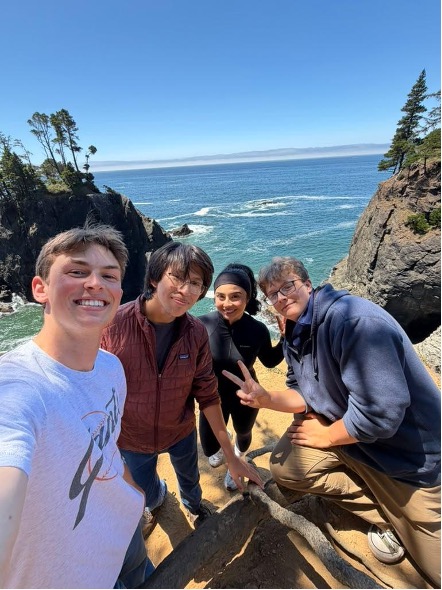
Fig. 2. Image of fellow TOPAZ/JASPER intern Owen Fewell (left) and myself (right) after completing our GPS training activity at the beginning. of our field season.
Fig 3.  Screenshot of a smartphone video I took of Wild horses at Fletcher View campground, Mt Charleston.

When I moved to the Oregon coast, I obtained a massive upgrade for my wildlife photography. Not only did I get a new camera, but I also gained new access to a variety of different environments: from the coast and marshes to forests. Having a professional camera has allowed me to get clearer photos of birds, mammals, and insects to upload to citizen science platforms like iNaturalist. However, imagine my surprise when I learned that citizen science can go beyond land and into the water through the Pacific Coast Feeding Group (PCFG) gray whales and the GEMM lab’s website, Individuwhale.com.

Fig. 4:  Two images I took with my camera of a predator-prey relationship in the sands at Harris Beach state park of the intertidal jumping spider (left) that preys on beach arthropods like this sand hopper(right).

Over the past 10 years the GEMM lab (Geospatial Ecology off Marine Megafauna) has created a photo ID catalogue composed of photos taken of PCFG gray whales to be used to monitor their movements and health. Amazingly, this photo ID catalogue is hosted on the website “Individuwhale,” also created by the GEMM lab. Individuwhale has multiple purposes, but most importantly the website acts as a public resource for the general public to learn about who the PCFG gray whales are and the research that has come from the GEMM lab. One of the most impactful elements of Individuwhale would be their “submit a whale sighting” feature, which allows any individual to contribute to science by submitting photos taken of PCFG gray whales.

But what makes a photo so important?

During my six weeks with the TOPAZ/JASPER project, I learned so much of the projects’ importance in science as well as its impact. One objective of TOPAZ (Theodolite Overlooking Predators and Zooplankton) is to observe the relationship between abundance of prey in Port Orford, OR and the presence or absence of the PCFG gray whales during their migration. One of the tools we use to observe whales on our cliff site is a camera. A camera is important because photos can act as records for a whale’s presence at a certain time and place, so overtime researchers can review and identify unique patterns. Photos are also important for identifying species, such as gray whales, and can capture individual characteristics (like scars from killer whales, flat vs round dorsal humps, etc.) (read more from Ale’s previous blog, Stories from a whales life). Finally, photos can be a record for a whale’s body condition, and demonstrate how anthropogenic activity, such as boat strikes or entanglement scars, can impact their health. During the last stretch of our field season, we observed our first whale of the season named “Propscar”. After capturing as many photos as possible of the whale when it surfaced, we sent the best photos to members of the GEMM lab who later identified this whale as Propscar as a result of this photo ID catalogue. As you can see from the photo below, Propscar is a great example of using photography to assess whale condition and health monitoring, since the 4 distinct line shaped marks clearly originate from a boat strike.

Fig. 5: Photo we took of Propscar in Port Orford, OR. (Note the 3-4 distinct propeller mark lines on Propscar’s dorsal hump).

Ultimately, this internship with the TOPAZ/JASPER project this summer has been a thoroughly educating experience that taught me so much. I have learned that teamwork and proper communication are crucial to ecological field work. I’ve also learned that patience, and handling the bits of boredom that come with staring at a horizon line, are normal everyday factors of the job. Success isn’t always guaranteed in the field; we don’t always see gray whales everyday and we had only seen one this season, but to define this as a failure would be far from the truth. While this lack of whales could be perceived as failure, we collected critical absence data on gray whales that tells an important story, so you shouldn’t judge your fieldwork’s effectiveness off of factors that are out of your control.

My time here has meant many things to me: learning how to be a scientist, connecting with people, and contributing to professional science. But the part I have found the most enjoyable was learning about the scientific equipment used for the TOPAZ/JASPER project. Equipment isn’t the only thing I’ll be working with in my future career though; through this internship I have also learned about reliable data entry and computer skills which I am excited to apply down the road.

References

  1.  Brondizio, Eduardo, et al. “Global Assessment Report on Biodiversity and Ecosystem Services of the Intergovernmental Science-Policy Platform on Biodiversity and Ecosystem Services.” Zenodo, Zenodo, 16 July 2024, zenodo.org/records/6417333.
  2. “Living Planet Index.” Livingplanetindex.Org, www.livingplanetindex.org/lpi. Accessed 5 Sept. 2026

Small Whales, Big Questions: my journey into marine science

Gavin Vierra, TOPAZ/JASPER High School Intern, North Bend High School

Hello! I am Gavin Vierra, a high school intern for the TOPAZ/JASPER project. I am in my junior year at North Bend High School. I tried my hardest to join this program because of my fascination with marine animals, from big to small (even the microscopic zooplankton.) My fascination with Polar gigantism (which you’ll hear more about in the following paragraph) is what fueled my desire to learn more about marine science, leading me to find a way into this field. Mr. Prince, my history teacher, knew about my interest in marine science and encouraged me to apply for this internship. After reading papers and undergoing the interview with Celest and Dr. Torres, I got the internship. This thrilled me so much, I ran through the front doors of my school and instantly informed Mr. Prince about the success.

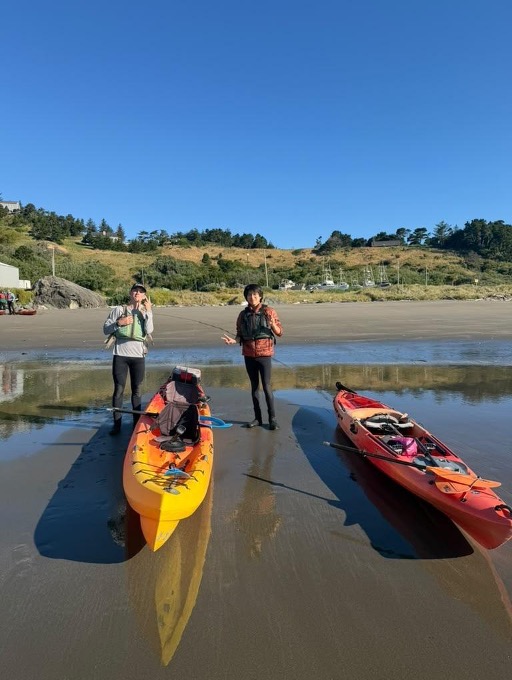
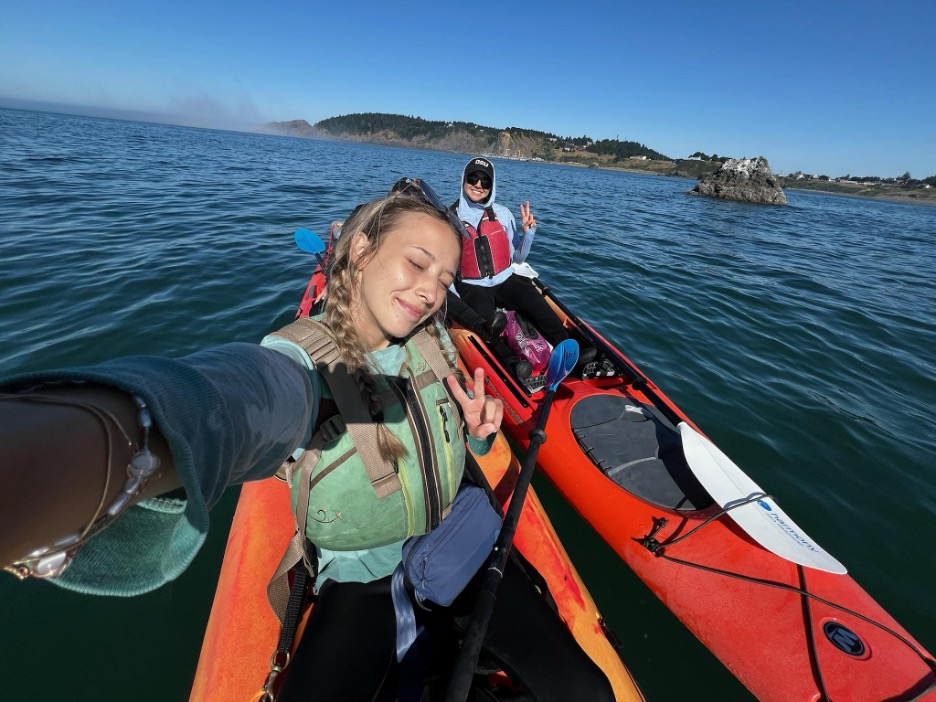
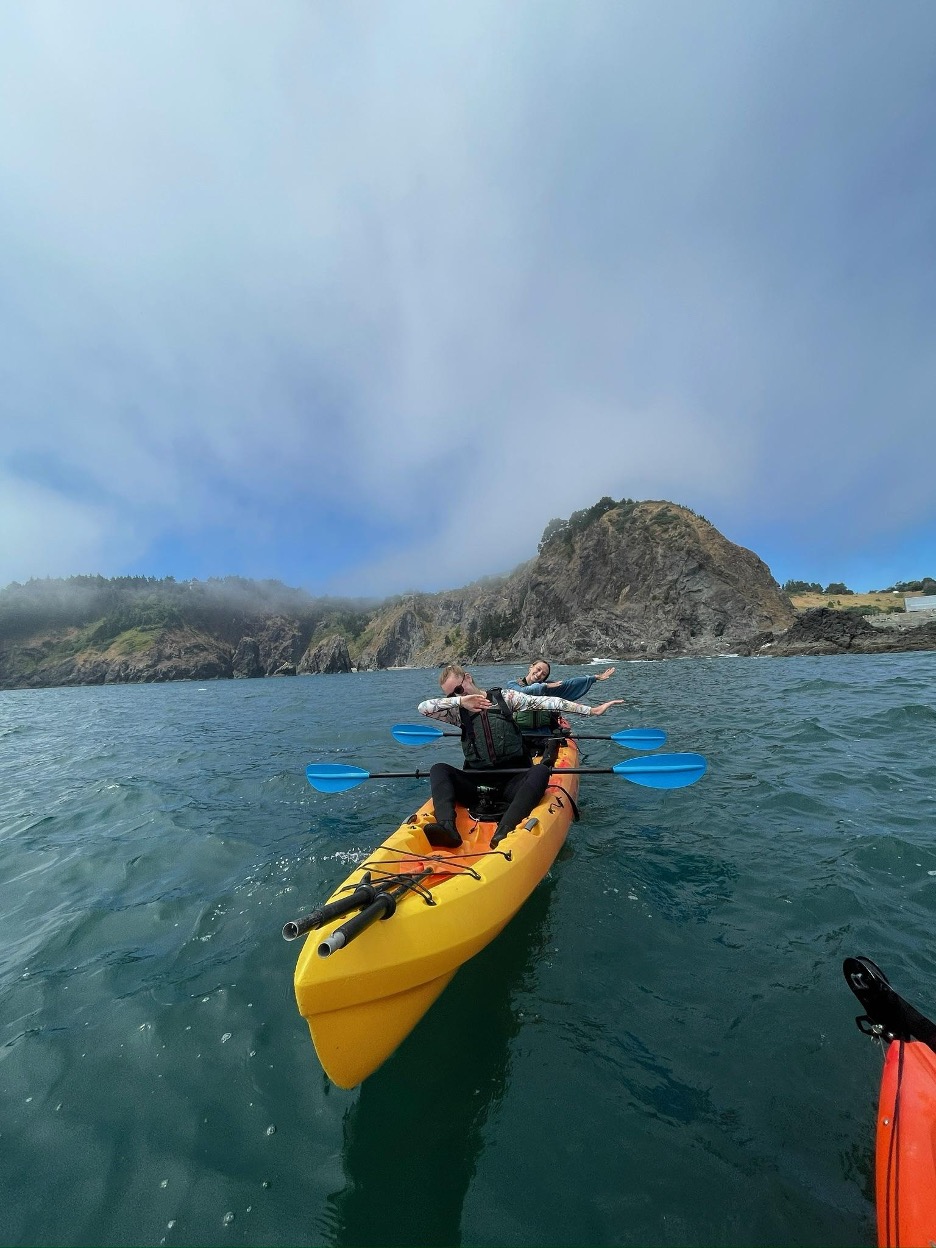
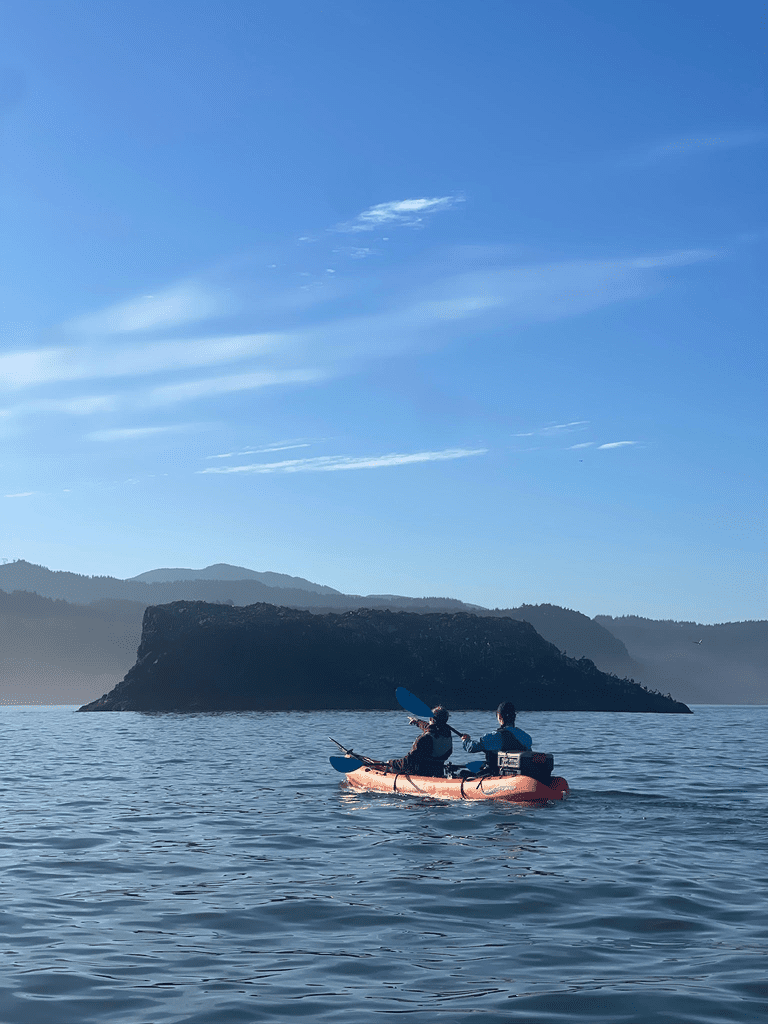
            (left image) Mill rocks, Port Orford: showcasing 4 of the 6 stations at Mill Rocks. (right image) Grant (left), our kayak instructor, at the Port Orford port, teaching TOPAZ/JASPER intern Adrian and I (the right kayak) how to kayak.

(photo credit for the image on the left: Gavin Cada)

A concept I am particularly interested in learning about within marine science is the phenomenon known as “polar gigantism”, an unusual phenomenon that occurs in Antarctic fauna resulting in abnormally large body sizes (Catlin M Shisido, H Arthur Woods et al. 2019), compared to their conspecifics in warmer environments. This pattern is evident in these taxa: Sea spiders (pycnogonids), giant Antarctic Sea spider (Colossendeis megalonyx) (Catlin M Shisido, H Arthur Woods et al) Polychaetae worm (Phylum Annelida) (Amy L Moran, H Artur Woods et al). Hypotheses for polar gigantism are highly debated, but a more commonly discussed hypothesis is the Oxygen hypothesis. Since polar waters are lower in temperature, this allows for higher dissolved oxygen availability, eliminating the previous oxygen ceiling marine organisms typically face and increasing the potential for larger body size.

Although Polar gigantism is researched in invertebrates such as sea spiders (pycnogonids) and ectothermic species (Catlin M Shisido, H Arthur Woods et al. 2019), I find deviations of typical body sizes in a population to be intriguing. Earlier in the field season, our team leader, Celest, gave our team a short presentation introducing our focal species: the Pacific Coast Feeding Group (PCFG) gray whale. Here is where I learned the PCFG female gray whale is 1 meter shorter than the Eastern North Pacific (ENP) female gray whale, while the PCFG male gray whale is 0.5 meters shorter than the ENP male gray whale. To my surprise, body size can actually have a critical effect on a species livelihood. For example, being small may help the PCFG gray whales forage in more rocky or shallow areas. However, being small could also present challenges, such as less surface area to pack on blubber (a.k.a. energy reserves) which could impact their life history stages (learn more from this previous blog post by K.C. Bierlich). The GEMM Lab has also documented that the smaller size of PCFG whales compared to ENP whales may lead to lower calving rates (Pirotta et al. 2025), which could influence population abundance (read more at this previous blog).

 Alongside presentations, a significant part of our internship has been participating in weekly research reading circles, where each week we are assigned past research publications from the GEMM Lab to read. During each session, each of the interns discuss the findings of the papers and any questions that come up. For our last reading circle, we discussed two papers, one of which was: “Zoop to poop: assessment of microparticles in gray whale zooplankton prey and fecal matter reveal high daily consumption rates” by Torres et. al. 2023. An interesting finding from this publication was the difference in estimated amount of microparticles consumed by gray whales depending on the type of zooplankton species. Ideally, if a gray whale consumes its  estimated required daily amount of zooplankton or more, these individuals should increase blubber stores and, in turn, grow into a larger body size. Which could have a negative effect on their health via “false” caloric intake, harming their blubber stores and energy. Having learned that the PCFG gray whales are shorter compared to the ENP gray whales, a question that has riddled my mind is whether this high level of microparticle consumption by PCFG gray whales could potentially create a  “false” caloric intake (makes whales feel full when they are not), and affect their overall blubber accumulation, thus contributing to their shorter length compared to ENP whales? This hypothesis makes me then wonder how this pattern may affect their population reproduction and if there be a threshold of microparticle consumption to where PCFG gray whales will not making their annual migrations?

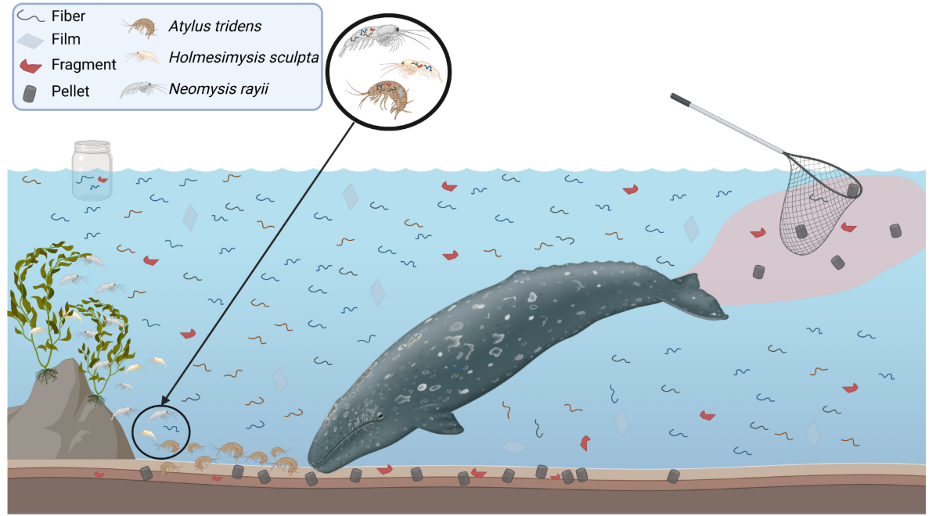
Figure taken from Torres et al. 2023 showing a schematic of a PCFG gray whale feeding in Oregon coastal waters on zooplankton (Atylus tridens, Holmesimysis sculpta, Neomysis rayii) with secondary consumption of mixed microparticles, including fiber, film, fragments, and pellet fragments of microplastic.

Questions such as these are a consistent norm throughout this internship, and I am so happy to have been given the opportunity to be a part of it. The TOPAZ/JASPER project has been my first real introduction to research, and it has been amazing so far—from net tow sampling off the kayak to observing from the cliff and even spending a few hours identifying zooplankton. Our weekly reading circle sessions have been very fun, as we each get to share ideas and questions as they arise with every new publication.  Without a doubt, this experience has been truly awesome. I’ve gotten to become immersed in the true nature of the field I want to study, as well as work with amazing people that have broadened my worldview. If I had some advice to any young inspiring marine scientists, it’s to pursue this dream with no retreat, and do all in your power to make it happen.

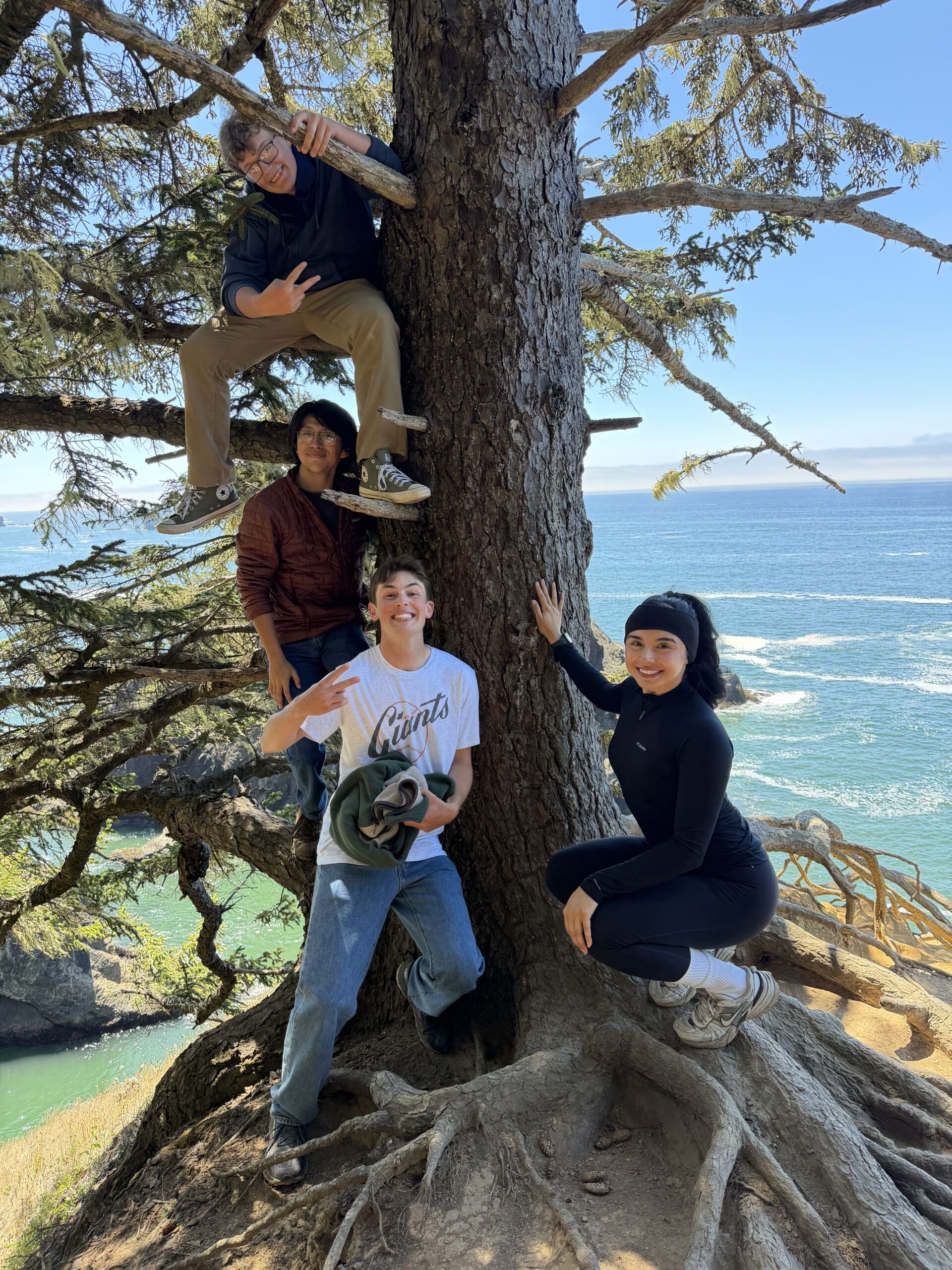
(top branch to the left) is me Gavin Vierra , (middle branch to the left) is Adrian Ruiz, (and at the bottom left) is Owen Fewell, (on the bottom right) is our team leader Celest Sorrentino.

REFERENCES

Moran, A. L., & Woods, H. A. (2012). Why might they be giants? Towards an understanding of polar gigantism. The Journal of Experimental Biology, 215(12), 1995–2002. https://doi.org/10.1242/jeb.067066

Pirotta, E., New, L., Fernandez Ajó, A., Bierlich, K. C., Bird, C. N., Buck, C. L., Hildebrand, L., Hunt, K. E., Calambokidis, J., & Torres, L. G. (2025). Body size, nutritional state and endocrine state are associated with calving probability in a long‐lived marine species. Journal of Animal Ecology, 94(7), 1422–1434. https://doi.org/10.1111/1365-2656.70068

Shishido, C. M., Woods, H. A., Lane, S. J., Toh, M. W. A., Tobalske, B. W., & Moran, A. L. (2019). Polar gigantism and the oxygen–temperature hypothesis: A test of upper thermal limits to body size in Antarctic Pycnogonids. Proceedings of the Royal Society B: Biological Sciences, 286(1900), 20190124. https://doi.org/10.1098/rspb.2019.0124

Torres, L. G., Brander, S. M., Parker, J. I., Bloom, E. M., Norman, R., Van, J. E., Lasdin, K. S., & Hildebrand, L. (2023). Zoop to poop: Assessment of microparticle loads in gray whale zooplankton prey and fecal matter reveal high daily consumption rates. Frontiers in Marine Science, 10. https://doi.org/10.3389/fmars.2023.1201078

Return of The Kelp? Cascading Conditions in Port Orford

Owen Fewell, GEMM Lab TOPAZ/JASPER Intern, OSU Fisheries, Wildlife, and Conservation Sciences Undergraduate

Hello! I’m Owen Fewell, the OSU undergraduate intern on the TOPAZ/JASPER project. I’ll be going into my senior year at Oregon State University, majoring in Fisheries, Wildlife, and Conservation Sciences. I am originally from Marin County, about 40 minutes north of San Francisco, CA. My interest in the ocean stems from fond memories I share with my family, where almost any free time we had would be spent on the coast hiking, kayaking, or enjoying the beach. Truthfully, I never loved ocean kayaking as a kid because of how tiring it was, but things have definitely changed now, as that experience allowed me to be a part of this amazing project.

Fig 1: Picture of me during the first week of training in Port Orford. The team conducted a scavenger hunt-type activity to learn how to use a GPS, and we now apply this newfound knowledge to locate our sampling sites on the water.

As I am writing this, I find it hard to believe our team has already been here for three weeks. The TOPAZ/JASPER internship is my first exposure to real data collection, and my time here has been great so far. The work can be tedious at times, so it has been crucial to stay calm and remember all of the necessary steps in the process. Our days are jam packed with fieldwork, either navigating toward our 12 stations on the kayak to collect data, scanning for gray whales on the horizon from the bluff, or identifying the many different types of zooplankton we collect. Each day presents new and unique challenges that our team couldn’t have expected – from unpredictable ocean conditions to sporadic beeping signals on the theodolite, we have to be prepared for it all. Luckily, we have our fearless leader Celest, who is always able to adapt and show us how to find solutions under pressure. So far this season the only problem that we can’t seem to solve is the lack of whales! There have been a couple reported sightings of whales coming through while we’ve been here, but only later in the evening once we packed everything up. By reading different publications built off data collected from this project in previous years, and hearing from Port Orford locals and prior interns, we’ve learned that this absence of whales isn’t completely random, but the result of a changing ecosystem.

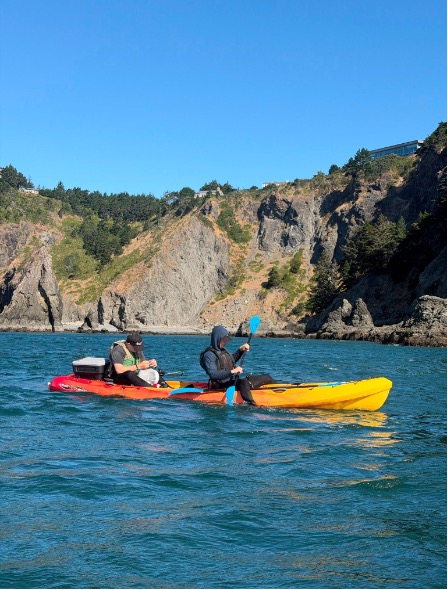
Fig 2. Fellow TOPAZ/JASPER intern Adrian Ruiz (right) and I (left) getting ready to embark on one of our first days of kayak training, where we are hoping to get more comfortable navigating to our different stations.

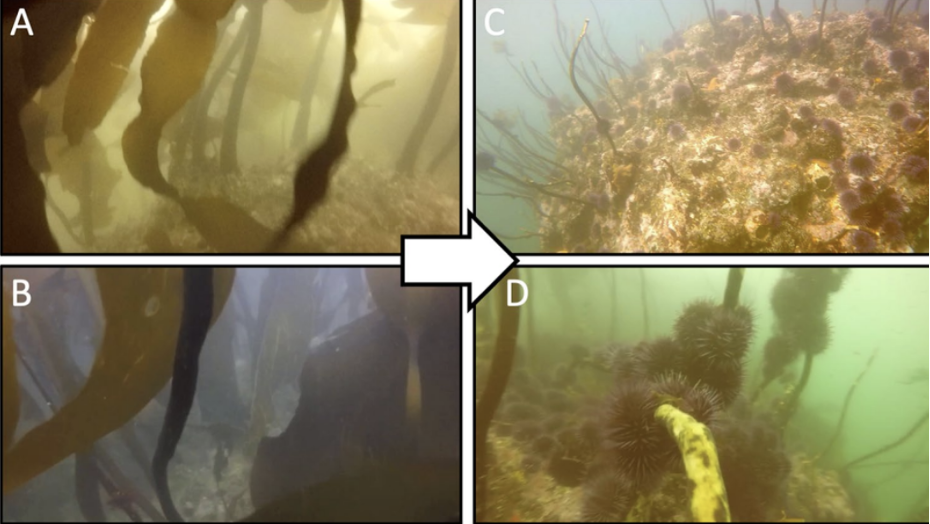
An ecological interest of mine has always been learning more about various forms of tropic cascades, and how the presence or absence of one species can have profound effects on an entire ecosystem. Part of our internship has involved reading literature relevant to our study system here in Port Orford, with our most recent read being “Exploring indirect effects of a classic trophic cascade between urchins and kelp on zooplankton and whales” by Hildebrand et. al. in 2024. In recent years, purple sea urchins, a natural predator for bull kelp, have proliferated in population numbers due to the loss of the urchin’s natural predator, the sunflower sea star. From 2013-2016, a well documented marine heat wave and the development of sea star wasting disease led to the 100% decline of the sunflower sea star population off the coast of Port Orford (Hildebrand et al. 2024). A trophic cascade was observed using the methods that our team currently use during this internship. Specifically, one method involves lowering an oceanographic sensor, the RBR, with a Go-Pro camera attached to simultaneously record differences in temperature and salinity at different depths, alongside video. Additionally, at each site we conduct a small net tow in order to collect zooplankton samples. In Hildebrand et. al. (2024), these methods were performed over 8 years (2016-2023) to connect the purple sea urchin population increase to gray whale foraging habits. As the years progressed, the increase in purple sea urchin correlated with the loss of bull kelp. Since bull kelp provide protection and nutrients to zooplankton, this loss of kelp correlated with a decrease in zooplankton abundance. With less prey available, the Pacific Coast Feeding Group (PCFG) of gray whales were observed less within our study system.

Fig 3. Graphic from Hildebrand et. al. (2024) showing Go-Pro footage of bull kelp forests in Port Orford before the tropic cascade (A and B) vs after (C and D) at the same sampling sites
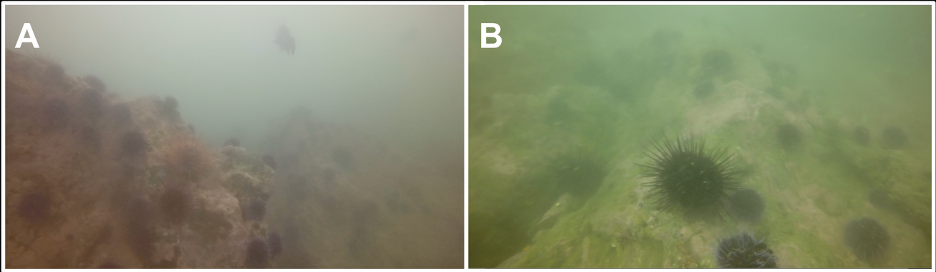
Fig 4. Two still images from Go-Pro footage that we’ve taken this year, two years after Hildebrand et. Al (2024) was published. Image A is from station MR19 (Mill Rocks), and image B is from station TC4 (Tichenor’s Cove), the same stations as images from Fig 3.

With our team out on the water everyday collecting zooplankton samples and later reviewing our GoPro videos, I find we observe this dynamic in real time. From recounts of Port Orford locals, Mill Rocks, which is one of our sampling sites, has historically been extremely productive. There were once masses of bull kelp and zooplankton, resulting in somewhat of a hotspot for gray whales. As this is my first time in Port Orford, I only have a vague idea of what conditions used to look like, but there appears to be significantly less kelp than there once was. Specifically, at one of our Mill Rocks sites, former interns have relied on grabbing on to kelp to help keep the kayak steady in the rough water. Unfortunately, throughout our field season we haven’t been able to enjoy this luxury, and instead have had to either brave the rough waters, or abandon the site altogether. However, efforts to reduce these urchin predation pressures and restore kelp habitats are exhibited through a different research group, the Oregon Kelp Alliance (ORKA), where they are actively removing urchins from select areas, and surveying to track the progress of bull kelp regrowth (https://www.oregonkelp.com/the-oregon-kelp-alliance/).

Although the team hasn’t observed as much kelp at our two study sites, we have observed large patches of kelp in different areas, specifically the open water between Mill Rocks and Tichenor’s Cove. I find these new areas with kelp to be interesting, as I am curious to know whether our PCFG gray whales will end up changing their preferred foraging sites according to these new patches and if our project will have to adapt with this changing environment.

A fundamental part of this internship has been learning how to become adaptable, and this is particularly true for the navigator on the kayak. For me, this has been the most difficult yet rewarding job. The navigator that sits at the bow of the tandem kayak must locate each of the 12 stations. Once there, they are responsible for maintaining the kayak within 5 meters of a given station while their partner engages in data collection (e.g., secchi disk, net tow, GoPro drop). Being navigator is physically demanding and can be extremely tedious, as one wrong paddle can lead to being pushed far off the station. Because of the challenge, it makes getting to all 12 stations that much more rewarding.

Being immersed in this coastal ecosystem for the last three weeks, alongside reading research papers, and talking to fellow interns staying at our field station has taught me so much about how a tropic cascade has changed how species are interacting here in Port Orford, and why we might not be observing any gray whales this season. I have also learned about myself, how to stay calm in the field when things aren’t going as planned. I’m really looking forward to the next three weeks, as I have been loving spending time with the team either out on the field or watching movies after our long days (some of my favorites have been Transformers, or Twilight –surprisingly good.) We’re all hoping to see some whales, and put our cliff-side theodolite tracking skills to the test. Regardless, we know the data we’re collecting is still informative to this long-term (12 years and counting!) project and will help to understand why this year has been so different to previous years. All we can do is keep thinking positive thoughts, as according to our team leader Celest, the whales can tell if we aren’t!


References:

Hildebrand, L., Derville, S., Hildebrand, I., & Torres, L. G. (2024). Exploring indirect effects of a classic trophic cascade between urchins and kelp on zooplankton and whales. Scientific Reports, 14(1), 9815. https://doi.org/10.1038/s41598-024-59964-x

Scanning for whales with Sharp Eyes and Smooth Riffs: Meet Team Quick-with-it

Celest Sorrentino, GEMM Lab MSc Student, OSU Department of Fisheries, Wildlife and Conservation Sciences, Geospatial Ecology of Marine Megafauna Lab

July has rolled around just as quickly as the coastal winds sweep across the south coast of Oregon, bringing in a new team for the 2026 TOPAZ/JASPER field season, the projects’ 12th year in the running. This season also marks my third summer as part of the long-standing TOPAZ/JASPER legacy: first learning the ropes alongside Team Protein and master’s student Allison Dawn in 2024, then growing into my role as the on-site lead for Team Dabwich in 2025 with both Leigh and Lisa’s invaluable guidance from Newport, and now returning once again to guide the 2026 team.
With each season, I have gained a deeper appreciation for the collaboration and genuine passion required to sustain a long-term project like ours. I am especially grateful for the foundation created by previous master’s students Florence Sullivan, Lisa Hildebrand, and Allison Dawn, and for Leigh’s unwavering dedication and effort for TOPAZ/JASPER to continue year after year. Now a week and a half into the field season, the team has completed their first 10-day stretch of training, and morale remains just as high as it was on day one. Each year unites an entirely new and exciting mix of undergraduate and high school interns, and the 2026 team is no exception.  
Adrian Ruiz got a head start by joining the GEMM lab in June as our NSF REU intern for this summer. Originally from Santa Rosa, Adrian just completed his second year at CSU Monterey Bay studying Marine Science. Using a microscope to identify tiny bits in the water is no new feat, since at CSUMB he interned along Dr. Matt Scott Savoca and Chad King identifying microplastics from water samples taken in the Monterey Bay area, as part of a larger project investigating the potential health risk for marine mammals. As the oldest brother of three, Adrian naturally acts as a gentle instructive team member for the younger interns.

(left) Adrian reviewing drone footage of pygmy blue whale mother-calf pairs using BORIS for his REU project. (middle) Celest and Adrian out on the kayak in PO. (right) Adrian and fellow TOPAZ/JASPER HS intern Gavin C working together as cliff team.

Gavin Vierra is one of our high school interns residing in Lakeside, OR. Gavin was one of our first applicants for the TOPAZ/JASPER project this year, where his curious spirit shined through. Having spent most of his life fishing and kayaking, spending a few hours on the water is nothing new. However, Gavin is truly in his element when cooking, as his love for making others feel at home manifests in delicious pasta meals for post-fieldwork dinner, such as chicken alfredo and three-cheese penne.

(left) Gavin V with his grandmother and nephew in California. (middle) Gavin V. whipping up some French Toast for the team. (right) Gavin V and Adrian learning how to ocean kayak in sync during our kayak training with Southcoast Tours.

Owen Fewell is an upcoming senior at OSU studying Fisheries and Wildlife. Originally from Marin County, CA, his earliest memories begin in the outdoors, ocean kayaking along the dynamic coastline of Point Reyes with his parents. Also, an older brother like Adrian, Owen’s personality as a natural jester helps keep morale high even after spending 5 hours navigating to our stations.

(left) Throwback picture of Owen ocean kayaking with his parents in Point Reyes. (middle) Celest, Owen, and Gavin V out on the kayak in Tichenor Cove after completing all of Mill Rocks stations. (right) Owen and Adrian practicing some stability at Natural Bridges.

Gavin Cada is our second high school intern from Brookings-Harbor High School. Having moved to the south coast from Las Vegas, NV, just this past year, the coastal system is an entirely new world. In Nevada, Gavin became fascinated with wildlife, taking photographs of birds and reptiles. Now, as part of the TOPAZ/JASPER project, he spends each day on the cliff, eager for a gray whale visitor to finally put his photography skills to the test.

(left) Gavin C. learning how to use a microscope and processing a zooplankton sample. (right) Gavin C. creating a “start fix” to start out cliff team’s observation effort.

Although whales haven’t been observed quite yet, morale remains high both out on the cliff and on the water. Reports of whale sightings prior to the team’s arrival, and the hope of witnessing a gray whale surface alongside while on the kayak, continue to inspire each morning’s 6:30 AM wake up. Through challenging waves and long hours scanning the horizon, this team has found the best way to stay sharp is through riffing off one another and testing each other with some of the best riddles Reddit has to offer. The team has also enjoyed gearing up for the next day by watching the Transformers movies, and carrying that same action-movie intensity onto the water by dramatically narrating our paddles: “In a world where light meets darkness, two men. One kayak. One dream. Twelve stations. Countless zooplankton. Missing whales. Their mission: brave the insurmountable waves and descend into the unforgiving depths to retrieve the samples that could save the planet. This summer…”

(top) Owen and Gavin paddling out to Mill Rocks together.

(bottom-left): Gavin V. introduced the team to a super niche Coos Bay favorite: Vinny’s Smokin’ Burgers! (bottom-right) A few of our team members (Gavin V., Adrian, Owen, and Celest) visiting Natural Bridges to celebrate completing their first 10-day stretch of training.

With their quick comebacks and eagerness to get out on the water, even if actually launching quickly still needs some work, it only seemed fitting to name this year’s crew: Team Quick-with-it.

With plenty of running jokes and action-movie-level determination, Team Quick-With-It is ready to take on the 12th TOPAZ/JASPER field season. Now, we await the whales!

There she blows! Studying blow synchrony in blue and gray whale mother-calf pairs

Maddie Honomichl, CSUMB Undergraduate in Marine Science, 2025  NSF REU and TOPAZ/JASPER Intern

Hi everyone, my name is Maddie Honomichl, and I was one of the two NSF REU interns with the GEMM lab this summer. This fall will be my last semester at California State University, Monterey Bay (CSUMB), where I will receive my undergraduate degree in Marine Science. Growing up in the Arizona desert limited my exposure to large bodies of water but led to memorable family trips to San Diego. With each trip my adoration for the ocean and the vast marine ecosystem emerged, resulting in my choice to go to college at CSU Monterey Bay. During my time at CSUMB, I learned of what internships were and the magnitude of impact these experiences had on my peers. Naturally, I searched online for weeks for future summer internship openings available—eventually leading me to none other than the GEMM Lab’s TOPAZ/JASPER project.

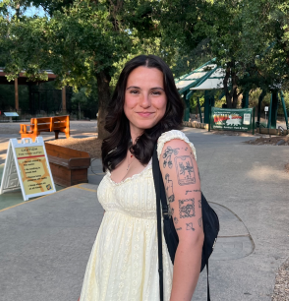
Figure 1. A picture of me, Maddie Honomichl, in Redding, CA.

Celest Sorrentino, my amazing mentor, took me under her wing and helped me complete my very first research project: In sync? Studying blow synchrony in blue and gray whale mother-calf pairs using drone footage. The aim of my project is to understand more about calf development in gray and blue whales by investigating changes in mother-calf blow synchrony. But what is synchrony?

Synchrony can be defined as two individuals attempting to match each other’s behavior (Novotny & Bente 2022) and promote mimicry and learning. For example, humpback whales teaching their calves vocalizations and song patterns to communicate is an instance of synchrony and social learning (Anjara 2018). Another example of synchrony in wildlife is energetic transfer, where a whale calf will swim in alignment with its mother’s slipstream to expend less energy (Norris & Prescott 1961). Just like these behaviors, blow synchrony is a measure we can use in marine mammal mother-calf pairs to evaluate their relationship with each other.

Aside from the TOPAZ/JASPER project, you might already be familiar with two other incredible GEMM lab projects GRANITE and SAPPHIRE. During the years of 2016-2023, drone footage of the Pacific Coast Feeding Group of gray whales was collected along the Oregon coast for the GRANITE project. In 2016, 2017, 2024, and 2025, drone footage for the pygmy blue whales was collected in South Taranaki Bight, New Zealand, for the SAPPHIRE project. Large marine mammals, especially whales, are difficult to study for many reasons including their brief occurrences at the surface and the challenges of studying aquatic animals. However, the use of drones allows for a safer and non-invasive alternative method for marine mammal monitoring in their natural habitat (Álvarez-González et al., 2023).

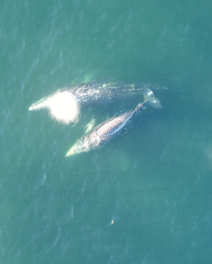
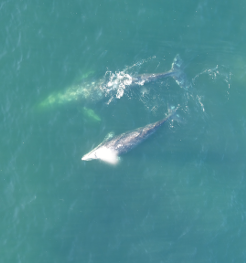
Figure 2. Two still images taken from GRANITE drone footage. The left is of a mother gray whale blowing and the right is of a gray whale calf blowing

Baleen whale calves only have 6-8 months to learn everything they need to know before they wean and are sent off on their own (Lockyer 1984). I don’t know about you, but if my mom kicked me out after I turned 5 years old, I would be pretty lost. In American culture, the golden age for humans to be considered an adult is around 18 years old, when they finally leave the house and venture on their own. For humans, age is a cultural sign of independence, but not much is known about what factors influence what makes a calf ready to be independent. Blow synchrony between mother-calf pairs during the calf’s weaning period can be used as a metric for calf development, which is important to know more about as calf development and survival rates are critical factors to consider in population dynamics and management efforts.

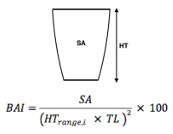
When do whales eventually leave their mother? We frequently don’t know how old a calf is, so we use three different metrics as proxies of calf maturity. First, we use Total Length (TL), which is the length of the whale from rostrum to fluke (or nose to tail) (Pirotta et. al., 2023) and serves as an indicator of growth. Our next metric is Body Area Index (BAI), similar to BMI in humans, which is a score of body condition to understand how fat or skinny the whale calf is (Burnett et. al., 2019). Total Length and BAI measurements are derived from drone photogrammetry work conducted by the GEMM Lab and CODEX. Our last proxy is Day of Year (DOY), which is the day in the year we sighted the whales.

Figure 3. Demonstrating photogrammetry methods used to measure Total Length and Body Area Index (BAI). On the left is a drone image of a gray whale showing how we calculate Total Length (TL) from rostrum to fluke. This image is also divided into increments which are used to calculate Surface Area (SA), depicted by the green dashed box, and using the equation on the right with TL, BAI is calculated. 

The specific question I addressed was: Does mother-calf blow rate synchrony change as the calf’s Total Length and Body Area Index increase, and Day of Year increases? In other words, does synchrony change as calves become longer, healthier, and the year progresses. Meaning, as the calf grows in length, increases its body condition, and the day of year progresses, the calf will gain independence from its mother and become out of sync.

I analyzed blowhole rates of mother-calf gray and blue whales using  a program called BORIS (Friard & Gamba 2016). BORIS (Behavioral Observation Research Interactive Software) is an online free program where researchers can assign behavior states to animals in video. In BORIS, I watched the drone footage and marked a “blow” event for the mom and calf, recording a specific time stamp per event. I repeated this workflow for each video of both gray and blue whale mom-calf pairs. Once completed, I calculated the average difference of the calf’s timestamp from the mother’s timestamp per pair. The reason behind this approach is that  the larger the average difference, the more asynchronous the calf is with its mother, and the smaller the average difference the more synchronous they will become.

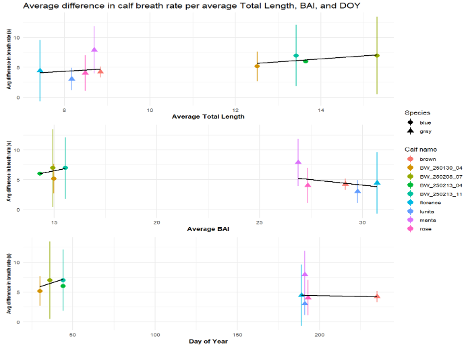
To evaluate the effect of our proxies for age, Total Length, BAI, and Day of Year, on mother-calf blow rate synchrony, I turned to my good friend RStudio. I created a scatterplot and regressions for these relationships (Figure 4). These results indicate that body condition (BAI) may be a better proxy of calf maturity and preparation for weaning in gray whales (p-value = 0.0064), whereas calf Total Length (TL) is more indicative of calf maturity in blue whales (p-value = 0.00097).

Figure 4. Scatterplot describing the relationship between the average difference in breath rate in seconds across our three proxies: (i) Average total length, (ii) Average BAI, (iii) Day of Year. The black line in the linear regression fit to the data produced by the linear model. The error bars around each point are the standard deviation or the variability in their blow synchrony. The bigger the error bars mean the more variation the mother and calf had in their blow rates, and the smaller the error bars means the less variation the mother and calf had in their blow rates. Ultimately to answer my question, for gray whales, blow synchrony between mother and calf decreases with increasing calf Body Area Index (BAI). For our blue whales, mother-calf blow synchrony decreases with increasing calf Total Length (TL).

As I end my 10-week internship summer filled with data collection and analysis, lots of laughs and inside jokes, I am proud to say I have learned so much about the research that goes into a project like mine. As someone who loves marine animals, especially whale sharks, I now have a newfound love for whales that will forever be in my heart. I am so incredibly grateful that I was able to work with the GEMM lab and the amazing team of researchers and scientists it encompasses. Being a first-generation college student comes with its challenges of learning how to navigate higher education without direct guidance of family who had been through the experience. But if there’s one thing I always tell myself, it’s that with a little bit of grit and hard work, you can do anything you put your mind to! Whatever my future holds for me, I hope it is filled with more research opportunities and the chance to work with marine mammals!

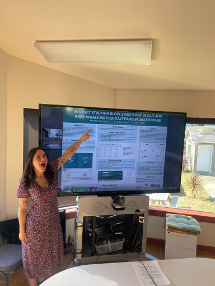
Figure 5. An image of Maddie Honomichl, presenting her research poster at the Hatfield summer coastal intern symposium remotely from Port Orford!

References:

Álvarez-González, M., Suarez-Bregua, P., Pierce, G. J., & Saavedra, C. (2023). Unmanned Aerial Vehicles (UAVs) in Marine Mammal Research: A Review of Current Applications and Challenges. Drones, 7(11), 667. https://doi.org/10.3390/drones7110667

Anjara Saloma. Humpback whales (Megaptera novaeangliae) mother-calf interactions. Vertebrate Zoology. Université Paris Saclay (COmUE); Université d’Antananarivo, 2018. English. ⟨NNT : 2018SACLS138⟩. ⟨tel-02869389⟩

Burnett, J. D., Lemos, L., Barlow, D., Wing, M. G., Chandler, T., & Torres, L. G. (2019). Estimating morphometric attributes of baleen whales with photogrammetry from small UASs: A case study with blue and gray whales. Marine Mammal Science, 35(1), 108–139. https://doi.org/10.1111/mms.12527

Friard, O., & Gamba, M. (2016). BORIS: A free, versatile open‐source event‐logging software for video/audio coding and live observations. Methods in Ecology and Evolution, 7(11), 1325–1330. https://doi.org/10.1111/2041-210X.12584

Huetz, C., Saloma, A., Adam, O., Andrianarimisa, A., & Charrier, I. (2022). Ontogeny and synchrony of diving behavior in Humpback whale mothers and calves on their breeding ground. Journal of Mammalogy, 103(3), 576–585. https://doi.org/10.1093/jmammal/gyac010

Lockyer, Christina. (1984). Review of Baleen Whale (Mysticeti) Reproduction and Implications for Management. Reproduction in whales, dolphins and porpoises. Proc. conference, La Jolla, CA, 1981. 6. 27-50.

Norris, K.S., & Prescott, J.H. (1961). Observations of Pacific cetaceans of Californian and Mexican waters. University of California Publications in Zoology, 63, 291- 402.

Novotny, E., & Bente, G. (2022). Identifying Signatures of Perceived Interpersonal Synchrony. Journal of nonverbal behavior, 46(4), 485–517. https://doi.org/10.1007/s10919-022-00410-9

Pirotta, E., Fernandez Ajó, A., Bierlich, K. C., Bird, C. N., Buck, C. L., Haver, S. M., Haxel, J. H., Hildebrand, L., Hunt, K. E., Lemos, L. S., New, L., & Torres, L. G. (2023). Assessing variation in faecal glucocorticoid co

Smultea, M. A., Fertl, D., Bacon, C. E., Moore, M. R., James, V. R., & Würsig, B. (2017). Cetacean mother-calf behavior observed from a small aircraft off Southern California. Animal Behavior and Cognition, 4(1), 1–23. https://doi.org/10.12966/abc.01.02.2017

Zoop Gone Missing: A Whale’s Dinner Dilemma

Dawson Mohney, TOPAZ/JASPER HS Intern, Pacific High School Graduate

My name is Dawson Mohney, I am a high school intern for the 2025 TOPAZ/JASPER team this field season. I first heard about the TOPAZ/JASPER internship from my friend Jonah Lewis, a previous intern from the 2023 field season. Coincidentally, Jonah and I both graduated this year from Pacific High School here on the coast—small world. I have called Port Orford my home for most of my life, and in recent years I discovered that a gray whale research project has been happening in my own backyard. Growing up less than a mile from the Oregon Coast, I’ve spent a lot of time looking out into the water. I always liked how, no matter what happened in my life, the ocean was always there. This interest is what encouraged me to apply for the internship with the hope of discovering more about the ocean, a substantial part of my home and family.

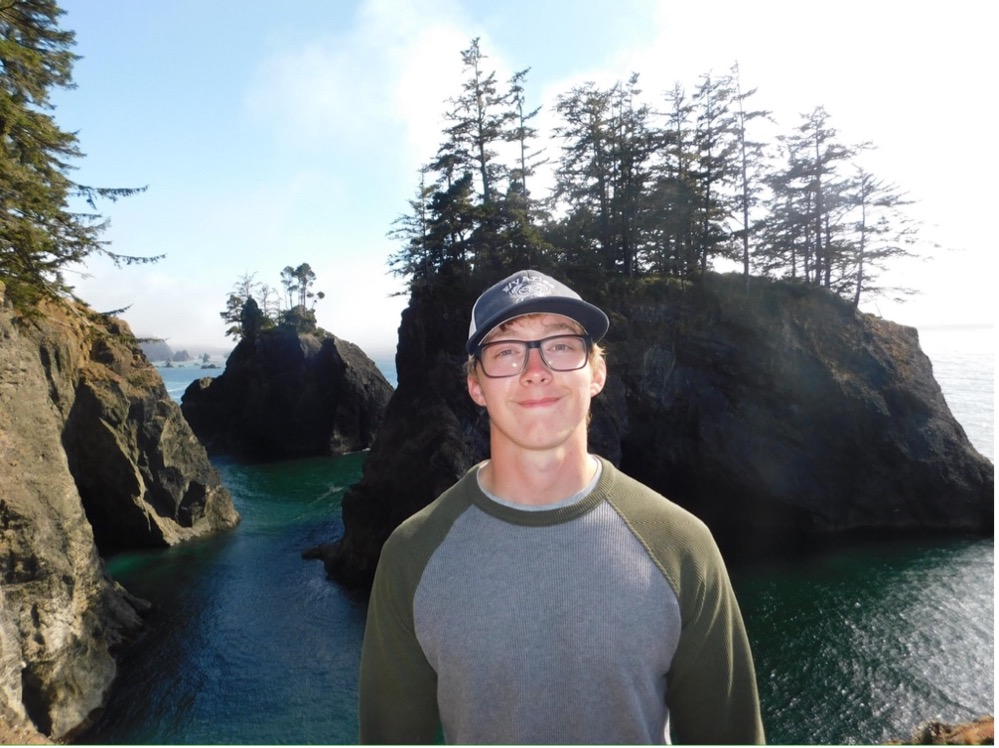
Fig 1: Picture fellow intern Maddie took of me (Dawson) during our trip to Natural Bridges.

A critical part of this project is understanding not only the magnificent gray whales but also the much less apparent zooplankton–after all, the whales need to eat a lot of zooplankton! Many different species of zooplankton—“zoop” for short—call the Oregon coast home. Each day, as we kayak to our 12 sample stations within the gray whale feeding grounds of Mill Rocks and Tichenor’s Cove, I find myself wondering which species of zoop I’ll get to identify later under the microscope.

Throughout the duration of this internship, our team has met to discuss a few research papers published by GEMM Lab members, including research produced from the TOPAZ/JASPER projects. Recently, I read, “Do Gray Whales Count Calories? Comparing Energetic Values of Gray Whale Prey Across Two Different Feeding Grounds in the Eastern North Pacific,” by Hildebrand et al. who describe the caloric content of different zooplankton species. Before reading this paper, I didn’t realize whale prey could vary in nutritional value – much like food for humans. This paper made it clear that each of the different species of zooplankton is just as important as the last, but consuming more of the higher caloric species such as the Neomysis rayii or the Dungeness crab larvae would certainly be a welcome meal. Seeing these “healthy” meals in the area makes me hopeful for the whales.

Fig 2: Image of a crab larvae in their megalopae stage.

From reading previous blog posts, the foraging habits of the whales this season appear to be unusual. In prior TOPAZ/JASPER field seasons, gray whales have often been tracked foraging near or around our Mill Rocks and Tichenor Cove study sites. This season, we haven’t tracked a single whale in Mill Rocks and only two in Tichenor Cove. Could there just not be enough good zoop?

Along with this lack of whales, there does seem to be a lack of these “high calorie zoop species”. Our team has most frequently collected samples primarily comprising of Atylus tridens, a lower calorie prey type. In fact, during one of our earlier kayak training days this field season we collected 2,019 individual A. tridens. However, since this day we have collected sparse amounts of zooplankton in our samples, ranging from zero to 121 in a given sample. Our total zoop count thus far is 2,524 zooplankton, a third of the total zooplankton collected last field season.

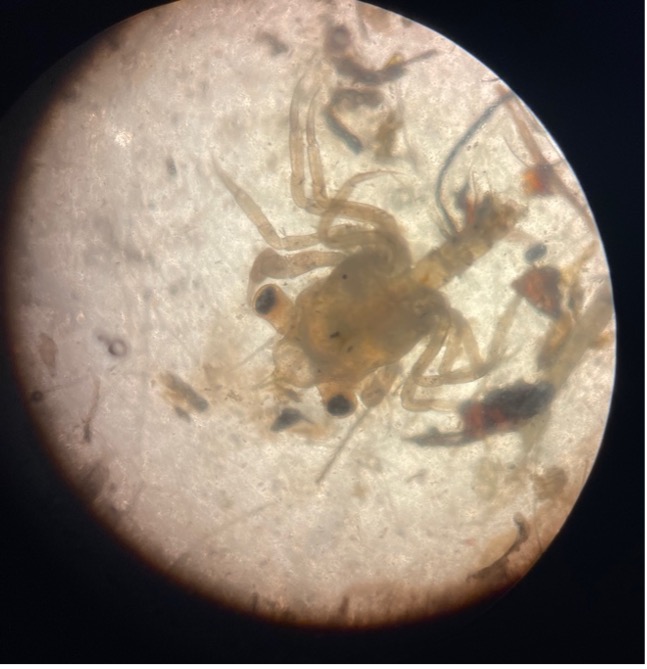
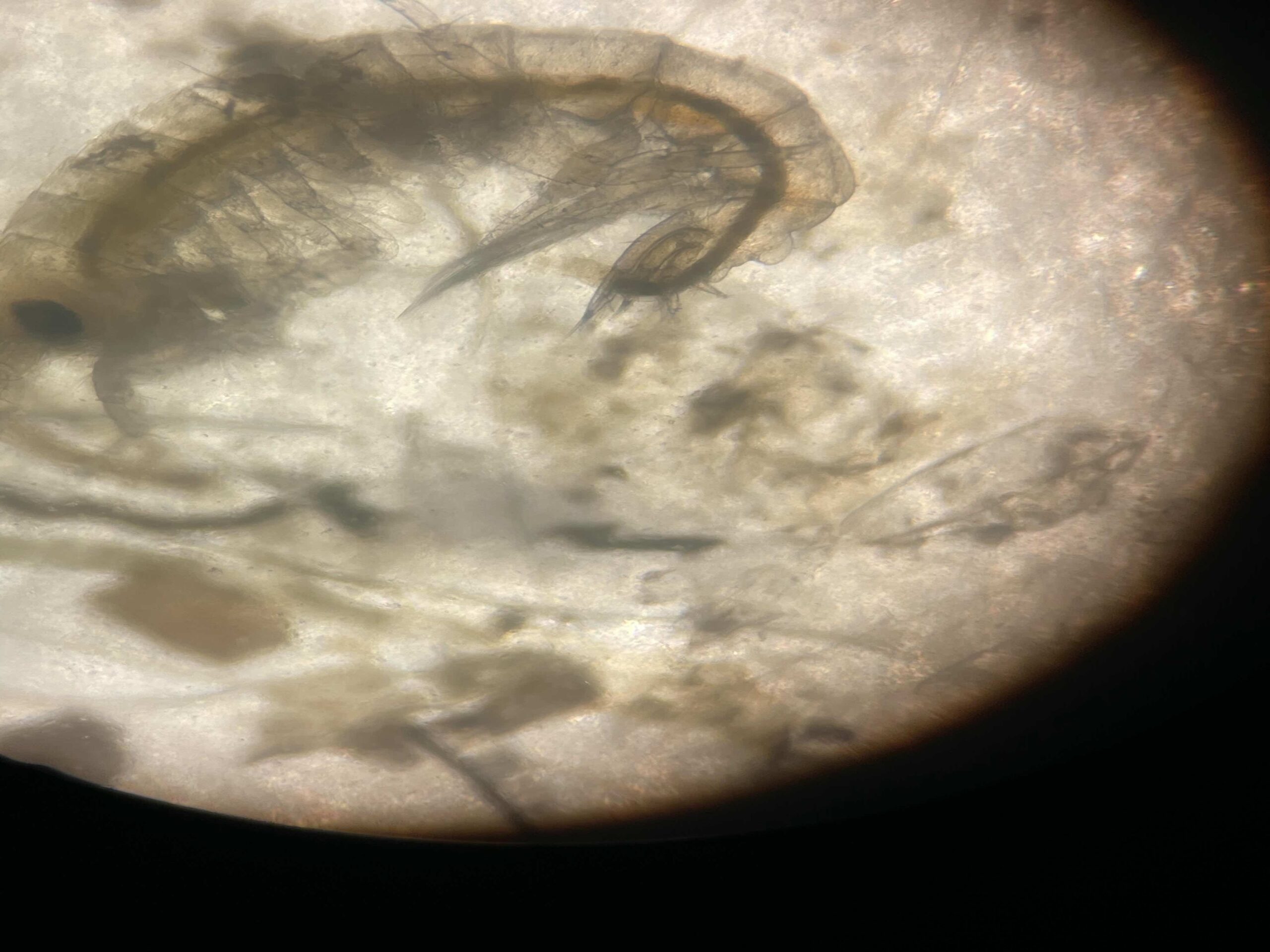
Fig 3: Image of an Atylus tridens under a microscope.

As for whale presence, we have been observing many whales blows near Hell’s Gate as mentioned in last week’s blog written by fellow intern Miranda Fowles. From our cliff site, it has been difficult to know whether these are gray whales or a different kind of whale, leading us to venture out to the Heads to get a better look. The persistence of whales in this area is certainly unusual, and perhaps it can be explained by a larger amount of higher calorie zooplankton species in the Hell’s Gate area.

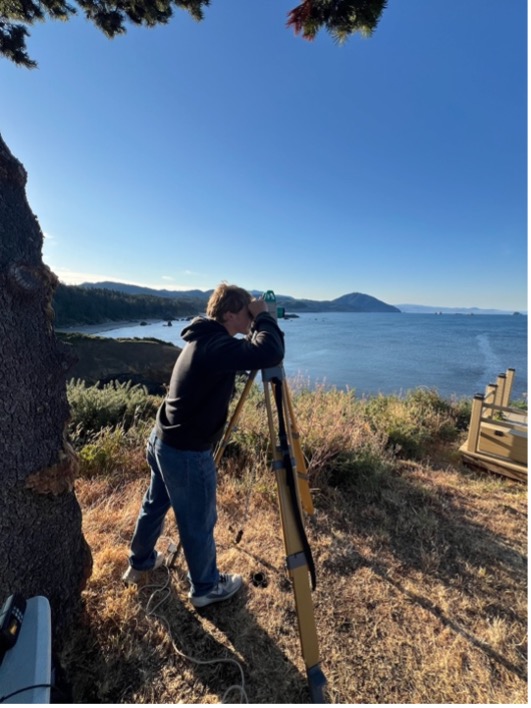
Fig 4: Dawson tracking blows by Hell’s Gate with the theodolite.

Being part of the TOPAZ/JASPER project, I have become exposed to what the true meaning is behind “fieldwork,” including learning how to be flexible and adapt to new challenges every day. What I have most enjoyed is the team’s ability to overcome any new hurdle together as a unit.  My dad often says, “You learn something new every day,” and this internship couldn’t embody this quote more. In just these 5 weeks, it almost feels like my head is now a couple sizes bigger.

Before this experience, I never thought much about how one might track a whale or how different microscopic species could have such a profound impact on a whale’s decision to forage. Now I feel I understand just how important these less than obvious factors are and the effort which goes behind understanding these relationships. I can only hope future opportunities teach me as much as joining the TOPAZ/JASPER legacy has—it’s an experience that, even just a few days into the 2025 field season, I knew would be hard to match.

Fig 4: Dawson (navigator) and Miranda (sampler) during kayak training on their way to Mill Rocks.

Hildebrand, L., Bernard, K. S., & Torres, L. G. (2021). Do Gray Whales Count Calories? Comparing Energetic Values of Gray Whale Prey Across Two Different Feeding Grounds in the Eastern North Pacific. Frontiers in Marine Science, 8, 683634. https://doi.org/10.3389/fmars.2021.683634

Whales Off Course: Theodolite Tracking in an Unpredicted Area

Miranda Fowles, GEMM Lab TOPAZ/JASPER Intern, OSU Fisheries and Wildlife Undergraduate

Hello! My name is Miranda Fowles, and I am the OSU intern for the 2025 TOPAZ/JASPER project this summer! I recently earned my bachelor’s degree – almost, I have one more term, but I walked at commencement in June – from Oregon State University in Fisheries, Wildlife and Conservation Sciences and a minor in Spanish. My interest in whales began at a young age during a visit to SeaWorld. While I didn’t enjoy the killer whale shows for their entertainment aspect, this exposure allowed me to see a whale for the first time. From then on, I knew I wanted to contribute to understanding more about these animals, even if I wasn’t always sure how to make that happen. My decision to pursue Fisheries and Wildlife sciences was set from the beginning, however I wondered if there were actually opportunities to study whales.

Last summer, I was a MACO intern and stayed at the Hatfield Marine Science Center where I met last year’s TOPAZ/JASPER REU student, Sophia Kormann, and she raved all about her experience, so I just had to apply for this year’s internship! I remember feeling so nervous for the interview, but Dr. Leigh Torres and Celest Sorrentino’s kindness and inspiration quickly put me to ease. When I found out I was offered the position, I was just more excited than I’d ever been!

My day-to-day life as a TOPAZ/JASPER intern here at the Port Orford Field Station looks one of two ways: either on the kayak or the cliff site. When we are ocean kayaking, we go to our 12 sampling sites in the Mill Rocks and Tichenor Cove study areas (Fig. 1), where we collect zooplankton samples (Fig. 2) and oceanographic data with our RBR (an oceanographic instrument), as well as GoPro footage. When on the cliff site, we keep our eyes peeled for any whales to take pictures of them and mark their location in the water with a theodolite.

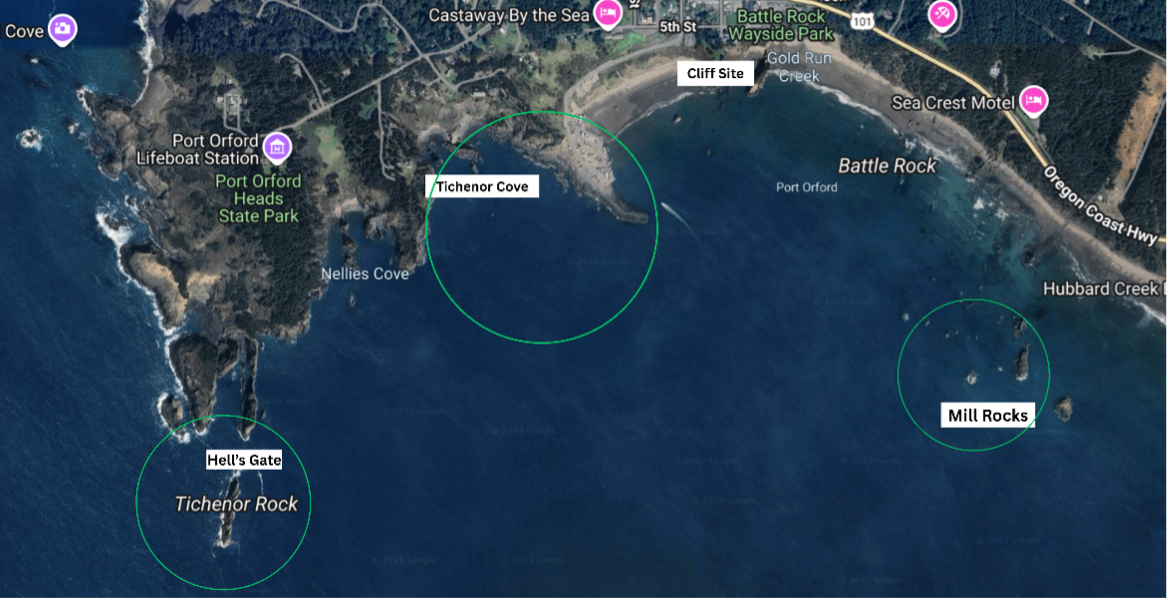
Fig. 1: Map of our study sites (Tichenor Cove and Mill Rocks) and where we have been seeing gray whales (Hell’s Gate) circled in green, and our Cliff Site.
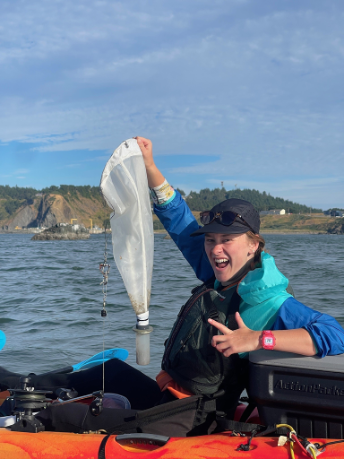
Fig. 2: Miranda Fowles out on the kayak pointing at her zooplankton samples.

A theodolite is an instrument that is used for mapping and engineering; in our case it is used to track where a gray whale blows and surfaces (For more info, please see this blog by previous intern Jonah Lewis). Each time a whale surfaces, we use the theodolite to create a point in space that marks its location. Once we have multiple points, we can draw lines between each point to establish the track of the whale. These tracklines can then be used to make assumptions of the whales’ behavior. For example, if the trackline is straight, and the individual is moving at a consistent speed and direction, we can assume the whale is transiting. Whereas if the trackline is going back and forth in one small area, the whale is likely searching or foraging for food (Hildebrand et al., 2022).

In last week’s blog my peer Nautika Brown showed how photo ID is a critical part in our field methods. When theodolite tracking, we assign a number with each new individual whale observation. If the whale is close enough, we also capture photographs of the whale (Fig. 3) and match it up to its given number, allowing us to link the trackline to an individual whale so we can understand more about individual behavior. Documenting individual specific behavior is important because previous research has shown that age, size and the individual ID of a whale can all influence different foraging tactic use (Bird et al., 2024). Therefore, each season as we collect more and more data, we establish a repertoire of recurring or new behaviors to sieve for trends and patterns.

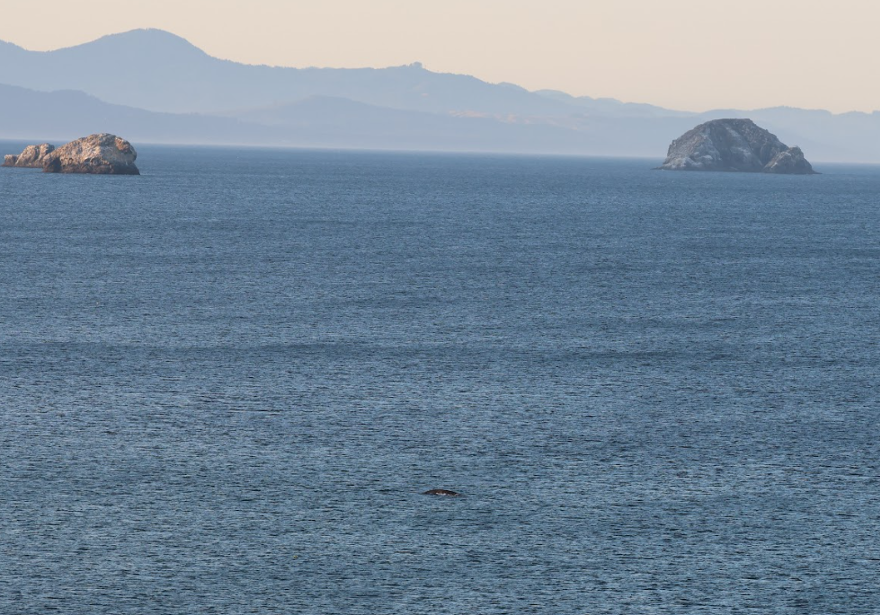
Fig. 3: Photo of a gray whale surfacing captured from our cliff site.

I find animal behavior to be an integral role in many ecological studies, and I am intrigued to explore this topic more. As marine mammals that spend most of their time underwater, cetaceans are quite an inconspicuous species to study (Bird et al., 2024), but by studying their ecology through photo ID and theodolite tracking we get insight into who they are, how they behave, and where they go.

Up until this point in the season, we have theodolite tracked gray whales for 12 hours and 3 minutes (woohoo). Interestingly, most of these tracks of whales have been near an area called “Hell’s Gate”, which is located around large rocks toward the far west of our study site (Figs. 2 and 4). We can assume, but cannot be sure, that the whales are feeding here because they spend so much time in the area, and return day after day. According to Dr. Torres, the consistent use of this area near Hell’s Gate by gray whales is unusual. In the prior 10 years of the TOPAZ project, few whales have been tracked foraging in this area near Hell’s Gate, but rather most whales have foraged in the Mill Rocks and Tichenor Cove areas. It is interesting to think about why the whales are behaving differently this year. Maybe this is due to variations in prey availability at these different sites. In recent years, Port Orford has been affected by a surge in purple sea urchin density, which have overgrazed the once prominent kelp forests here. A high urchin density decreases the kelp condition, which then leads to less habitat for zooplankton, creating a decline in prey availability for gray whales (Hildebrand et al., 2024). Upon reflection of my time on the kayak, I have noticed minimal kelp and low zooplankton abundance when conducting our zooplankton drops in our Mill Rocks and Tichenor Cove study sites. Additionally, I have also noticed many purple sea urchins in our GoPro videos. With the effects of this trophic cascade in mind, not observing any gray whales in our traditional study sites is understandable. With these gray whales more commonly seen near Hell’s Gate this year, I am curious to know what prey is attracting them there. Perhaps it is a different type of prey species or one that is high in caloric value than what is in the Mill Rocks and Tichenor Cove areas.

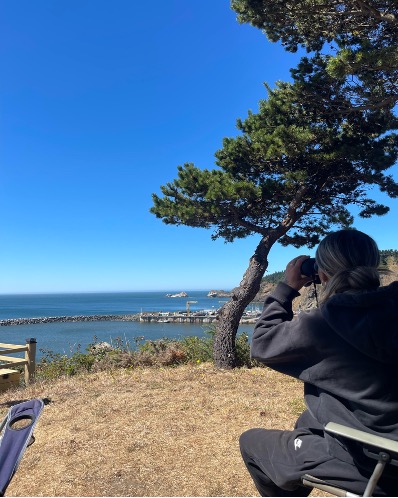
Fig. 4: Intern Nautika Brown looking at Hell’s Gate through the binoculars. Hell’s Gate is the passage between the two large boulders in the distance.

From actively observing whales and learning from my mentor, Celest, I have started to understand that behavior is a critical piece to any form of studying gray whales (and all species). By integrating photo-ID and theodolite tracking, we can learn so much about whale behavior, from where they eat, who is spending time where, and how they may adjust their behavior in response to a changing environment. The TOPAZ/JASPER internship has allowed me to truly comprehend what field research is like, how studying the behaviors of an individual is important, and how detail and patience are extremely necessary when collecting data. As this summer is continuing, I wonder if we will continue to see gray whales primarily feeding in the Hell’s Gate area, or if we will start to observe them more in the Mill Rocks and Tichenor Cove sites like previous years. The thrill of seeing gray whales is unlike any other, and I am so ready to see more whales this season!

References:

Bird, C. N., Pirotta, E., New, L., Bierlich, K. C., Donnelly, M., Hildebrand, L., Fernandez Ajó, A., & Torres, L. G. (2024). Growing into it: Evidence of an ontogenetic shift in grey whale use of foraging tactics. Animal Behaviour, 214, 121–135. https://doi.org/10.1016/j.anbehav.2024.06.004

Hildebrand, L., Derville, S., Hildebrand, I., & Torres, L. G. (2024). Exploring indirect effects of a classic trophic cascade between urchins and kelp on zooplankton and whales. Scientific Reports, 14(1), 9815. https://doi.org/10.1038/s41598-024-59964-x

Hildebrand, L, Sullivan, F. A., Orben, R. A., Derville. S., Torres L. G. (2022) Trade-offs in prey quantity and quality in gray whale foraging. Mar Ecol Prog Ser 695:189-201 https://doi-org.oregonstate.idm.oclc.org/10.3354/meps14115

A Nauti(k)al Journey with Photo ID  

Nautika Brown, GEMM Lab TOPAZ/JASPER Intern, recent Lake Roosevelt high school graduate 

Hi everyone! I’m Nautika Brown, a recent graduate at Lake Roosevelt High School in a small town on the Colville Indian Reservation in Washington.  

Growing up in beautiful Eastern Washington, I spent most all my days outside and, from the time I could swim, I was in the water. When I was little, I used to wish I was a fish so I could live underwater and swim every day of my life. And since then, I have always been fascinated by all animals that could live in and around water. This very fascination is what sparked the idea of becoming a marine biologist. Animals AND water, perfect! 

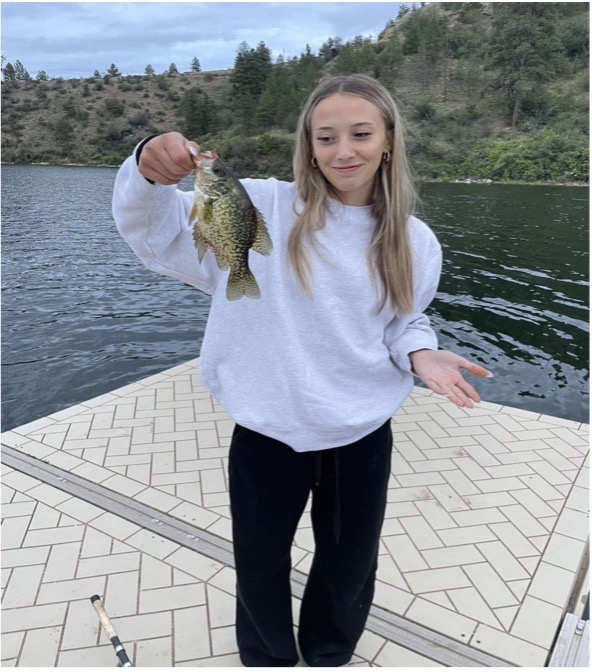
(Left): Nautika holding a fish she caught back home in Buffalo Lake.
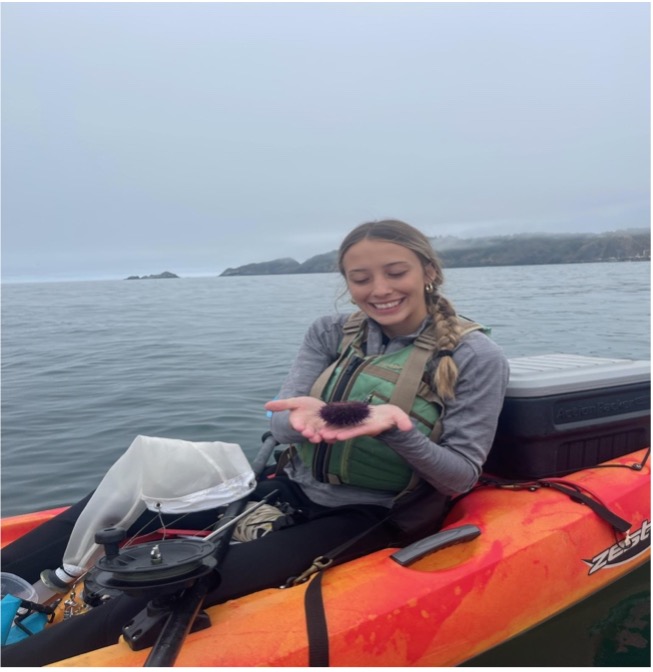
(Right) Nautika with a new type of catch (purple sea urchin) while conducting a zooplankton drop at station MR 18.

Although, as you might assume, living on a reservation surrounded by wheat fields and a few lakes, there weren’t a lot of opportunities to explore my passion. Hence, when I came across a flyer for the 2025 TOPAZ/JASPER internship just a few days before the deadline, I submitted my application as soon as I could. I was so thrilled, I couldn’t imagine getting the chance to kayak with whales on the ocean! It was all I could talk about for weeks on end. 

Since starting my internship here in Port Orford, I have learned so many new things. During our first couple weeks at the field station, we went through a few different classes and trainings, one of them being a presentation on photo identification by GEMM Lab PhD candidate Lisa Hildebrand. Prior to this presentation, I had no idea photos were so important in marine mammal science. During this presentation, I learned about the many different identifiers of a whale and how you can apply them when looking at photos to identify a specific individual. For example, Lisa’s rule of three’s: to confidently ascertain an individual’s ID, at least 3 consistent characteristics between photos must be matched. At the end of this presentation, we even played a guessing game to test our new photo ID’ing skills. (I did pretty well – not to brag or anything.) 

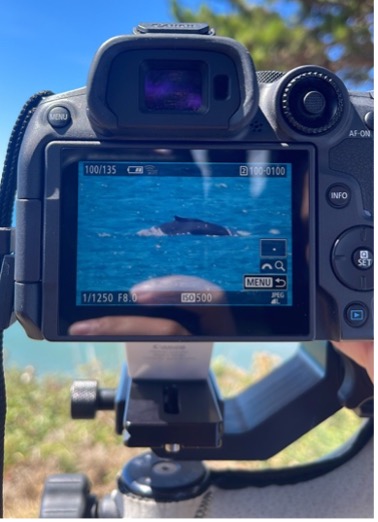
Now with my new photo ID skills, I was excited to capture a photo of a gray whale. On our second day of training, we did spot a whale—but thanks to my newly learned photo-ID skills, I quickly realized it wasn’t the gray whale I was expecting. When the whale first surfaced, I noticed the lack of dorsal knuckles and its distinctly darker body—clear signs it wasn’t a gray whale, but a humpback whale! While it is common to see gray whales from shore along the Oregon coast as they feed in the very nearshore habitat, humpback whales are typically found in much deeper waters, further from shore. Over the last week we have seen a humpback whale within our study site across several days—and we’re not the only ones!  When chatting with the local fisherman pre and post kayak, a few have expressed their own excitement about seeing a humpback so close to shore as well. Throughout our conversations, the question of why a humpback would be so close to shore weighed on our minds, leading me to do my own online research.  

To investigate whether these humpback sightings have been of the same individual or multiple different whales, I decided to review the photos we have captured to try and determine a match. Once I conducted a first pass of the photos, I downloaded 10 of the most clear and definite shots and compared the photos using Lisa’s rule of threes. After reviewing the photos, I noticed that the humpback whale’s dorsal hump resembled one from a previous sighting, but I couldn’t find any other distinguishing markings on its body. While I couldn’t confirm we have been observing the same humpback whale, I gained a deeper understanding of the importance of clear, high-quality photos in photo-ID work.

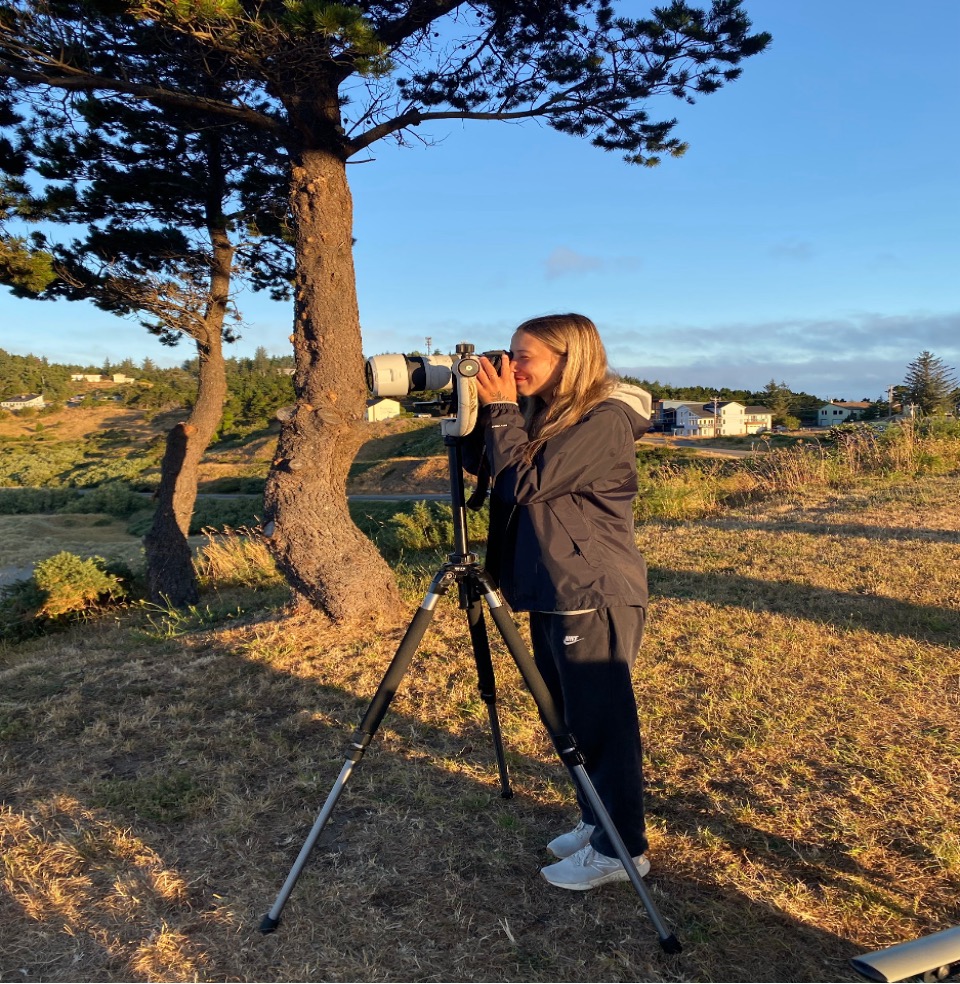
(Left) Nautika getting ready to take pictures of whales with camera on our cliff site. 
(Right) Picture of humpback whale caught on camera on our 2nd day of training

After reading a few articles about humpback whale migration through Oregon, I found a few potential reasons behind this whale’s occurrence close to the shores of Port Orford. During the summer months, humpbacks travel to colder, more nutrient-dense places to feed, often near the shelf break (where the depth of the ocean suddenly gets deeper, around 200 m). Interestingly, the shelf break near Port Orford is not far from shore, and is a known hotspot for foraging humpback whales in the summer (Derville et al. 2022).  Humpback whales filter-feed on krill and small fish, so perhaps enough prey has moved into the waters near Port Orford to attract a humpback so close to shore. Another reason for this humpback to be close to shore could be the effects of climate change. As the waters warm, food distribution changes, causing multiple species, including humpbacks, to change their feeding grounds and migration routes (read more here).  Although the humpback sightings are outside the range of our kayak zooplankton sampling stations, it would be interesting to see what prey is in the water that is keeping them around.

So far, I have learned the importance of photo identification in marine mammal science and the many ways it can be used. I’m especially grateful for Lisa’s fun and insightful presentation at the start of the season and even more surprised by how quickly I was able to put those photo-ID skills into practice. With three weeks left in the field season, I’m excited to keep building on what I’ve learned and to keep growing my skills. And speaking of building, I’m also curious to see how my “kayak muscles” are shaping up by the end of this amazing TOPAZ/JASPER internship!  

  (Left) Nautika and Celest on kayak heading Mill Rocks stations. 
(Right) Miranda and Nautika wrapping up kayak training with a celebratory team dab

Derville, S., D.R. Barlow, C. Hayslip, and L.G. Torres, Seasonal, Annual, and Decadal Distribution of Three Rorqual Whale Species Relative to Dynamic Ocean Conditions Off Oregon, USA. Frontiers in Marine Science, 2022. 9: p. 868566.