Return of The Kelp? Cascading Conditions in Port Orford

Owen Fewell, GEMM Lab TOPAZ/JASPER Intern, OSU Fisheries, Wildlife, and Conservation Sciences Undergraduate

Hello! I’m Owen Fewell, the OSU undergraduate intern on the TOPAZ/JASPER project. I’ll be going into my senior year at Oregon State University, majoring in Fisheries, Wildlife, and Conservation Sciences. I am originally from Marin County, about 40 minutes north of San Francisco, CA. My interest in the ocean stems from fond memories I share with my family, where almost any free time we had would be spent on the coast hiking, kayaking, or enjoying the beach. Truthfully, I never loved ocean kayaking as a kid because of how tiring it was, but things have definitely changed now, as that experience allowed me to be a part of this amazing project.

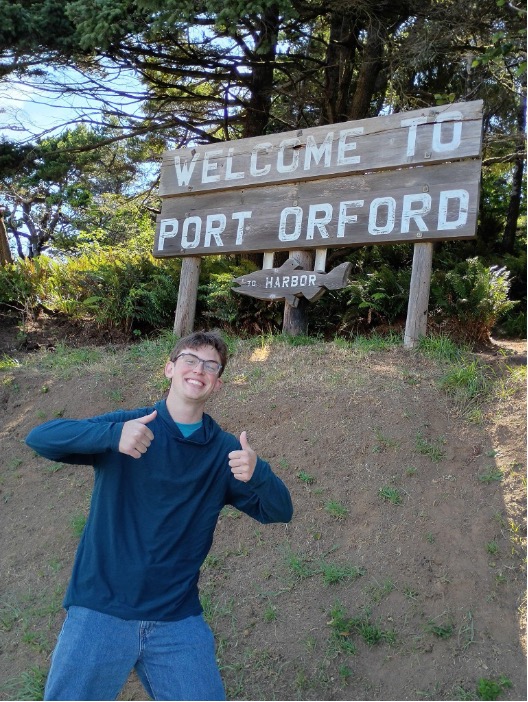
Fig 1: Picture of me during the first week of training in Port Orford. The team conducted a scavenger hunt-type activity to learn how to use a GPS, and we now apply this newfound knowledge to locate our sampling sites on the water.

As I am writing this, I find it hard to believe our team has already been here for three weeks. The TOPAZ/JASPER internship is my first exposure to real data collection, and my time here has been great so far. The work can be tedious at times, so it has been crucial to stay calm and remember all of the necessary steps in the process. Our days are jam packed with fieldwork, either navigating toward our 12 stations on the kayak to collect data, scanning for gray whales on the horizon from the bluff, or identifying the many different types of zooplankton we collect. Each day presents new and unique challenges that our team couldn’t have expected – from unpredictable ocean conditions to sporadic beeping signals on the theodolite, we have to be prepared for it all. Luckily, we have our fearless leader Celest, who is always able to adapt and show us how to find solutions under pressure. So far this season the only problem that we can’t seem to solve is the lack of whales! There have been a couple reported sightings of whales coming through while we’ve been here, but only later in the evening once we packed everything up. By reading different publications built off data collected from this project in previous years, and hearing from Port Orford locals and prior interns, we’ve learned that this absence of whales isn’t completely random, but the result of a changing ecosystem.

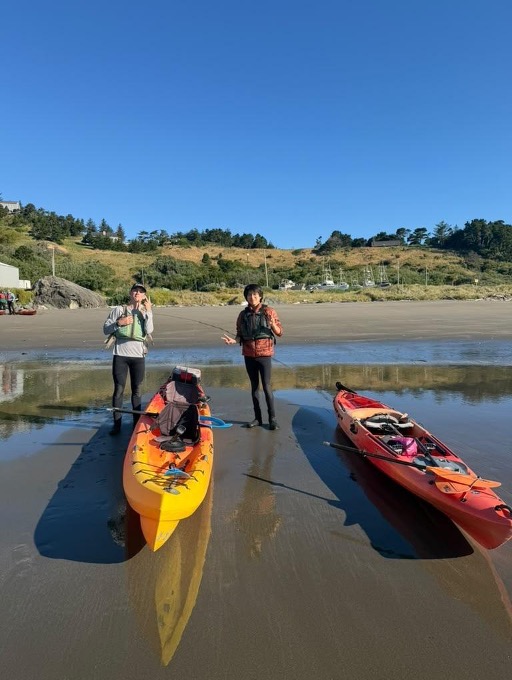
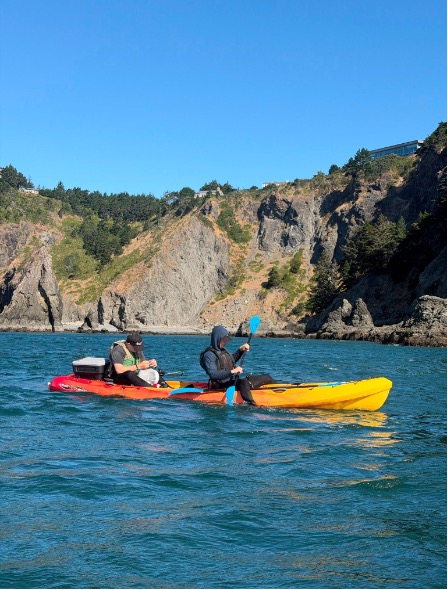
Fig 2. Fellow TOPAZ/JASPER intern Adrian Ruiz (right) and I (left) getting ready to embark on one of our first days of kayak training, where we are hoping to get more comfortable navigating to our different stations.

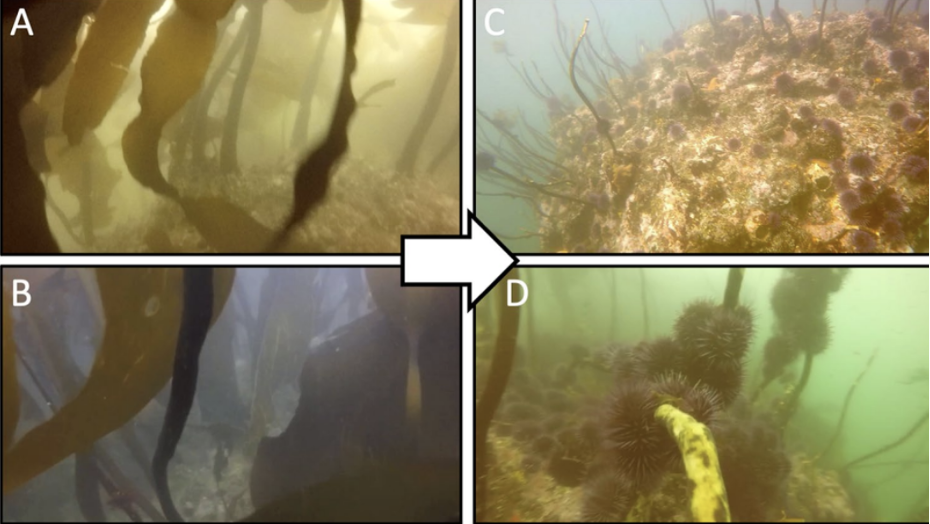
An ecological interest of mine has always been learning more about various forms of tropic cascades, and how the presence or absence of one species can have profound effects on an entire ecosystem. Part of our internship has involved reading literature relevant to our study system here in Port Orford, with our most recent read being “Exploring indirect effects of a classic trophic cascade between urchins and kelp on zooplankton and whales” by Hildebrand et. al. in 2024. In recent years, purple sea urchins, a natural predator for bull kelp, have proliferated in population numbers due to the loss of the urchin’s natural predator, the sunflower sea star. From 2013-2016, a well documented marine heat wave and the development of sea star wasting disease led to the 100% decline of the sunflower sea star population off the coast of Port Orford (Hildebrand et al. 2024). A trophic cascade was observed using the methods that our team currently use during this internship. Specifically, one method involves lowering an oceanographic sensor, the RBR, with a Go-Pro camera attached to simultaneously record differences in temperature and salinity at different depths, alongside video. Additionally, at each site we conduct a small net tow in order to collect zooplankton samples. In Hildebrand et. al. (2024), these methods were performed over 8 years (2016-2023) to connect the purple sea urchin population increase to gray whale foraging habits. As the years progressed, the increase in purple sea urchin correlated with the loss of bull kelp. Since bull kelp provide protection and nutrients to zooplankton, this loss of kelp correlated with a decrease in zooplankton abundance. With less prey available, the Pacific Coast Feeding Group (PCFG) of gray whales were observed less within our study system.

Fig 3. Graphic from Hildebrand et. al. (2024) showing Go-Pro footage of bull kelp forests in Port Orford before the tropic cascade (A and B) vs after (C and D) at the same sampling sites
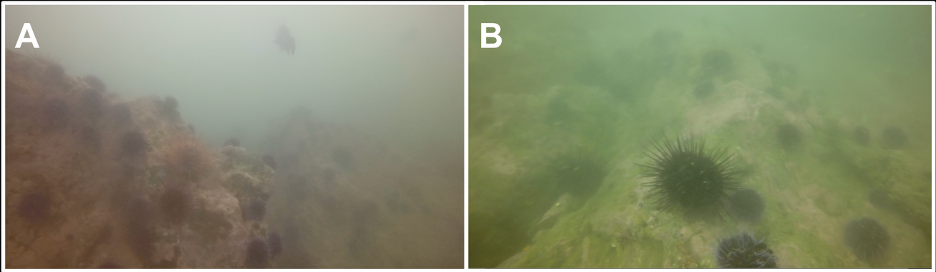
Fig 4. Two still images from Go-Pro footage that we’ve taken this year, two years after Hildebrand et. Al (2024) was published. Image A is from station MR19 (Mill Rocks), and image B is from station TC4 (Tichenor’s Cove), the same stations as images from Fig 3.

With our team out on the water everyday collecting zooplankton samples and later reviewing our GoPro videos, I find we observe this dynamic in real time. From recounts of Port Orford locals, Mill Rocks, which is one of our sampling sites, has historically been extremely productive. There were once masses of bull kelp and zooplankton, resulting in somewhat of a hotspot for gray whales. As this is my first time in Port Orford, I only have a vague idea of what conditions used to look like, but there appears to be significantly less kelp than there once was. Specifically, at one of our Mill Rocks sites, former interns have relied on grabbing on to kelp to help keep the kayak steady in the rough water. Unfortunately, throughout our field season we haven’t been able to enjoy this luxury, and instead have had to either brave the rough waters, or abandon the site altogether. However, efforts to reduce these urchin predation pressures and restore kelp habitats are exhibited through a different research group, the Oregon Kelp Alliance (ORKA), where they are actively removing urchins from select areas, and surveying to track the progress of bull kelp regrowth (https://www.oregonkelp.com/the-oregon-kelp-alliance/).

Although the team hasn’t observed as much kelp at our two study sites, we have observed large patches of kelp in different areas, specifically the open water between Mill Rocks and Tichenor’s Cove. I find these new areas with kelp to be interesting, as I am curious to know whether our PCFG gray whales will end up changing their preferred foraging sites according to these new patches and if our project will have to adapt with this changing environment.

A fundamental part of this internship has been learning how to become adaptable, and this is particularly true for the navigator on the kayak. For me, this has been the most difficult yet rewarding job. The navigator that sits at the bow of the tandem kayak must locate each of the 12 stations. Once there, they are responsible for maintaining the kayak within 5 meters of a given station while their partner engages in data collection (e.g., secchi disk, net tow, GoPro drop). Being navigator is physically demanding and can be extremely tedious, as one wrong paddle can lead to being pushed far off the station. Because of the challenge, it makes getting to all 12 stations that much more rewarding.

Being immersed in this coastal ecosystem for the last three weeks, alongside reading research papers, and talking to fellow interns staying at our field station has taught me so much about how a tropic cascade has changed how species are interacting here in Port Orford, and why we might not be observing any gray whales this season. I have also learned about myself, how to stay calm in the field when things aren’t going as planned. I’m really looking forward to the next three weeks, as I have been loving spending time with the team either out on the field or watching movies after our long days (some of my favorites have been Transformers, or Twilight –surprisingly good.) We’re all hoping to see some whales, and put our cliff-side theodolite tracking skills to the test. Regardless, we know the data we’re collecting is still informative to this long-term (12 years and counting!) project and will help to understand why this year has been so different to previous years. All we can do is keep thinking positive thoughts, as according to our team leader Celest, the whales can tell if we aren’t!


References:

Hildebrand, L., Derville, S., Hildebrand, I., & Torres, L. G. (2024). Exploring indirect effects of a classic trophic cascade between urchins and kelp on zooplankton and whales. Scientific Reports, 14(1), 9815. https://doi.org/10.1038/s41598-024-59964-x

Scanning for whales with Sharp Eyes and Smooth Riffs: Meet Team Quick-with-it

Celest Sorrentino, GEMM Lab MSc Student, OSU Department of Fisheries, Wildlife and Conservation Sciences, Geospatial Ecology of Marine Megafauna Lab

July has rolled around just as quickly as the coastal winds sweep across the south coast of Oregon, bringing in a new team for the 2026 TOPAZ/JASPER field season, the projects’ 12th year in the running. This season also marks my third summer as part of the long-standing TOPAZ/JASPER legacy: first learning the ropes alongside Team Protein and master’s student Allison Dawn in 2024, then growing into my role as the on-site lead for Team Dabwich in 2025 with both Leigh and Lisa’s invaluable guidance from Newport, and now returning once again to guide the 2026 team.

With each season, I have gained a deeper appreciation for the collaboration and genuine passion required to sustain a long-term project like ours. I am especially grateful for the foundation created by previous master’s students Florence Sullivan, Lisa Hildebrand, and Allison Dawn, and for Leigh’s unwavering dedication and effort for TOPAZ/JASPER to continue year after year. Now a week and a half into the field season, the team has completed their first 10-day stretch of training, and morale remains just as high as it was on day one. Each year unites an entirely new and exciting mix of undergraduate and high school interns, and the 2026 team is no exception.  

Adrian Ruiz got a head start by joining the GEMM lab in June as our NSF REU intern for this summer. Originally from Santa Rosa, Adrian just completed his second year at CSU Monterey Bay studying Marine Science. Using a microscope to identify tiny bits in the water is no new feat, since at CSUMB he interned along Dr. Matt Scott Savoca and Chad King identifying microplastics from water samples taken in the Monterey Bay area, as part of a larger project investigating the potential health risk for marine mammals. As the oldest brother of three, Adrian naturally acts as a gentle instructive team member for the younger interns.

(left) Adrian reviewing drone footage of pygmy blue whale mother-calf pairs using BORIS for his REU project. (middle) Celest and Adrian out on the kayak in PO. (right) Adrian and fellow TOPAZ/JASPER HS intern Gavin C working together as cliff team.

Gavin Vierra is one of our high school interns residing in Lakeside, OR. Gavin was one of our first applicants for the TOPAZ/JASPER project this year, where his curious spirit shined through. Having spent most of his life fishing and kayaking, spending a few hours on the water is nothing new. However, Gavin is truly in his element when cooking, as his love for making others feel at home manifests in delicious pasta meals for post-fieldwork dinner, such as chicken alfredo and three-cheese penne.

(left) Gavin V with his grandmother and nephew in California. (middle) Gavin V. whipping up some French Toast for the team. (right) Gavin V and Adrian learning how to ocean kayak in sync during our kayak training with Southcoast Tours.

Owen Fewell is an upcoming senior at OSU studying Fisheries and Wildlife. Originally from Marin County, CA, his earliest memories begin in the outdoors, ocean kayaking along the dynamic coastline of Point Reyes with his parents. Also, an older brother like Adrian, Owen’s personality as a natural jester helps keep morale high even after spending 5 hours navigating to our stations.

(left) Throwback picture of Owen ocean kayaking with his parents in Point Reyes. (middle) Celest, Owen, and Gavin V out on the kayak in Tichenor Cove after completing all of Mill Rocks stations. (right) Owen and Adrian practicing some stability at Natural Bridges.

Gavin Cada is our second high school intern from Brookings-Harbor High School. Having moved to the south coast from Las Vegas, NV, just this past year, the coastal system is an entirely new world. In Nevada, Gavin became fascinated with wildlife, taking photographs of birds and reptiles. Now, as part of the TOPAZ/JASPER project, he spends each day on the cliff, eager for a gray whale visitor to finally put his photography skills to the test.

(left) Gavin C. learning how to use a microscope and processing a zooplankton sample. (right) Gavin C. creating a “start fix” to start out cliff team’s observation effort.

Although whales haven’t been observed quite yet, morale remains high both out on the cliff and on the water. Reports of whale sightings prior to the team’s arrival, and the hope of witnessing a gray whale surface alongside while on the kayak, continue to inspire each morning’s 6:30 AM wake up. Through challenging waves and long hours scanning the horizon, this team has found the best way to stay sharp is through riffing off one another and testing each other with some of the best riddles Reddit has to offer. The team has also enjoyed gearing up for the next day by watching the Transformers movies, and carrying that same action-movie intensity onto the water by dramatically narrating our paddles: “In a world where light meets darkness, two men. One kayak. One dream. Twelve stations. Countless zooplankton. Missing whales. Their mission: brave the insurmountable waves and descend into the unforgiving depths to retrieve the samples that could save the planet. This summer…”

(top) Owen and Gavin paddling out to Mill Rocks together.

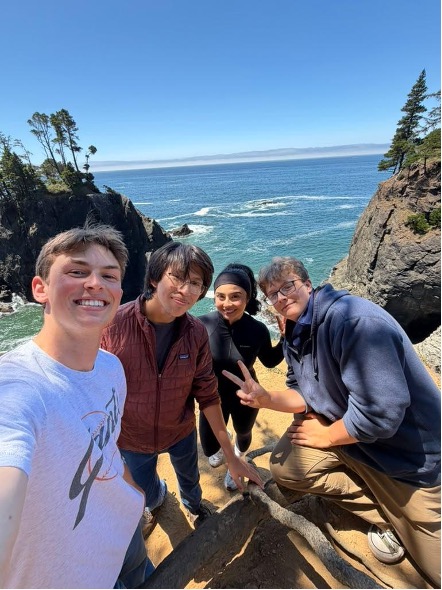
(bottom-left): Gavin V. introduced the team to a super niche Coos Bay favorite: Vinny’s Smokin’ Burgers! (bottom-right) A few of our team members (Gavin V., Adrian, Owen, and Celest) visiting Natural Bridges to celebrate completing their first 10-day stretch of training.

With their quick comebacks and eagerness to get out on the water, even if actually launching quickly still needs some work, it only seemed fitting to name this year’s crew: Team Quick-with-it.

With plenty of running jokes and action-movie-level determination, Team Quick-With-It is ready to take on the 12th TOPAZ/JASPER field season. Now, we await the whales!