Small Whales, Big Questions: my journey into marine science

Gavin Vierra, TOPAZ/JASPER High School Intern, North Bend High School

Hello! I am Gavin Vierra, a high school intern for the TOPAZ/JASPER project. I am in my junior year at North Bend High School. I tried my hardest to join this program because of my fascination with marine animals, from big to small (even the microscopic zooplankton.) My fascination with Polar gigantism (which you’ll hear more about in the following paragraph) is what fueled my desire to learn more about marine science, leading me to find a way into this field. Mr. Prince, my history teacher, knew about my interest in marine science and encouraged me to apply for this internship. After reading papers and undergoing the interview with Celest and Dr. Torres, I got the internship. This thrilled me so much, I ran through the front doors of my school and instantly informed Mr. Prince about the success.

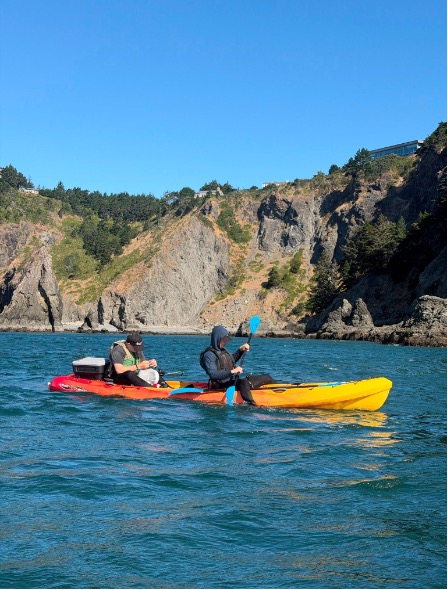
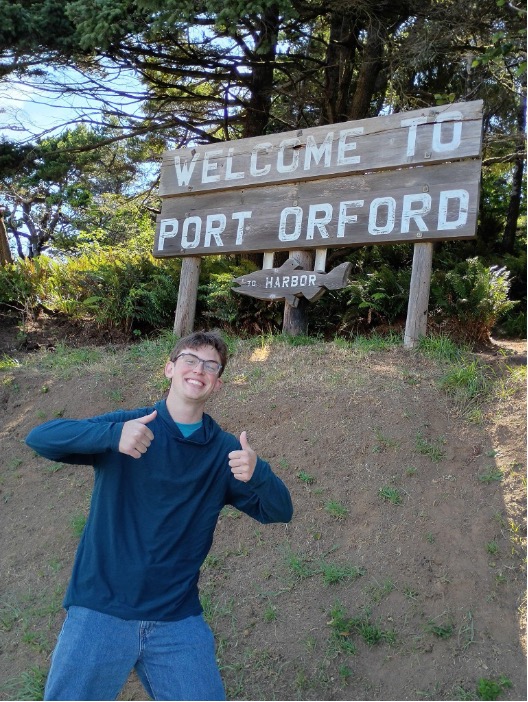
            (left image) Mill rocks, Port Orford: showcasing 4 of the 6 stations at Mill Rocks. (right image) Grant (left), our kayak instructor, at the Port Orford port, teaching TOPAZ/JASPER intern Adrian and I (the right kayak) how to kayak.

(photo credit for the image on the left: Gavin Cada)

A concept I am particularly interested in learning about within marine science is the phenomenon known as “polar gigantism”, an unusual phenomenon that occurs in Antarctic fauna resulting in abnormally large body sizes (Catlin M Shisido, H Arthur Woods et al. 2019), compared to their conspecifics in warmer environments. This pattern is evident in these taxa: Sea spiders (pycnogonids), giant Antarctic Sea spider (Colossendeis megalonyx) (Catlin M Shisido, H Arthur Woods et al) Polychaetae worm (Phylum Annelida) (Amy L Moran, H Artur Woods et al). Hypotheses for polar gigantism are highly debated, but a more commonly discussed hypothesis is the Oxygen hypothesis. Since polar waters are lower in temperature, this allows for higher dissolved oxygen availability, eliminating the previous oxygen ceiling marine organisms typically face and increasing the potential for larger body size.

Although Polar gigantism is researched in invertebrates such as sea spiders (pycnogonids) and ectothermic species (Catlin M Shisido, H Arthur Woods et al. 2019), I find deviations of typical body sizes in a population to be intriguing. Earlier in the field season, our team leader, Celest, gave our team a short presentation introducing our focal species: the Pacific Coast Feeding Group (PCFG) gray whale. Here is where I learned the PCFG female gray whale is 1 meter shorter than the Eastern North Pacific (ENP) female gray whale, while the PCFG male gray whale is 0.5 meters shorter than the ENP male gray whale. To my surprise, body size can actually have a critical effect on a species livelihood. For example, being small may help the PCFG gray whales forage in more rocky or shallow areas. However, being small could also present challenges, such as less surface area to pack on blubber (a.k.a. energy reserves) which could impact their life history stages (learn more from this previous blog post by K.C. Bierlich). The GEMM Lab has also documented that the smaller size of PCFG whales compared to ENP whales may lead to lower calving rates (Pirotta et al. 2025), which could influence population abundance (read more at this previous blog).

 Alongside presentations, a significant part of our internship has been participating in weekly research reading circles, where each week we are assigned past research publications from the GEMM Lab to read. During each session, each of the interns discuss the findings of the papers and any questions that come up. For our last reading circle, we discussed two papers, one of which was: “Zoop to poop: assessment of microparticles in gray whale zooplankton prey and fecal matter reveal high daily consumption rates” by Torres et. al. 2023. An interesting finding from this publication was the difference in estimated amount of microparticles consumed by gray whales depending on the type of zooplankton species. Ideally, if a gray whale consumes its  estimated required daily amount of zooplankton or more, these individuals should increase blubber stores and, in turn, grow into a larger body size. Which could have a negative effect on their health via “false” caloric intake, harming their blubber stores and energy. Having learned that the PCFG gray whales are shorter compared to the ENP gray whales, a question that has riddled my mind is whether this high level of microparticle consumption by PCFG gray whales could potentially create a  “false” caloric intake (makes whales feel full when they are not), and affect their overall blubber accumulation, thus contributing to their shorter length compared to ENP whales? This hypothesis makes me then wonder how this pattern may affect their population reproduction and if there be a threshold of microparticle consumption to where PCFG gray whales will not making their annual migrations?
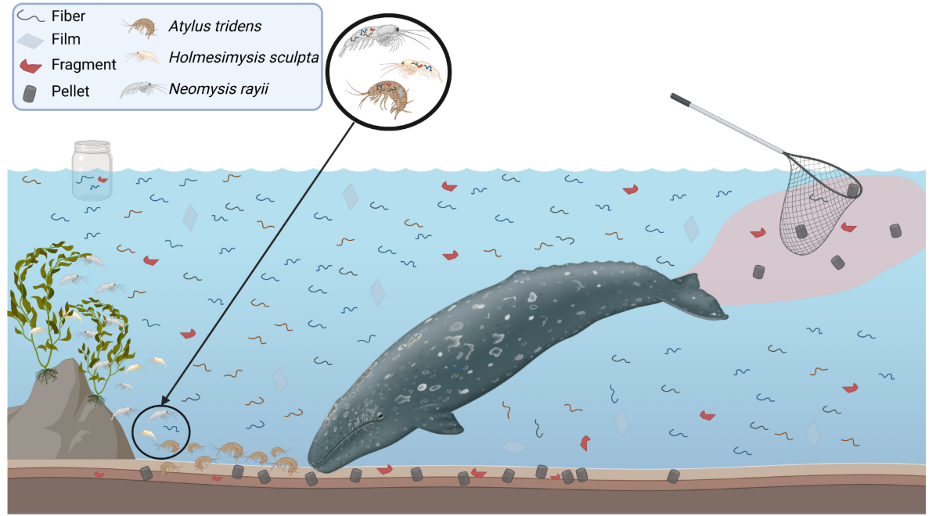
Figure taken from Torres et al. 2023 showing a schematic of a PCFG gray whale feeding in Oregon coastal waters on zooplankton (Atylus tridens, Holmesimysis sculpta, Neomysis rayii) with secondary consumption of mixed microparticles, including fiber, film, fragments, and pellet fragments of microplastic.

Questions such as these are a consistent norm throughout this internship, and I am so happy to have been given the opportunity to be a part of it. The TOPAZ/JASPER project has been my first real introduction to research, and it has been amazing so far—from net tow sampling off the kayak to observing from the cliff and even spending a few hours identifying zooplankton. Our weekly reading circle sessions have been very fun, as we each get to share ideas and questions as they arise with every new publication.  Without a doubt, this experience has been truly awesome. I’ve gotten to become immersed in the true nature of the field I want to study, as well as work with amazing people that have broadened my worldview. If I had some advice to any young inspiring marine scientists, it’s to pursue this dream with no retreat, and do all in your power to make it happen.
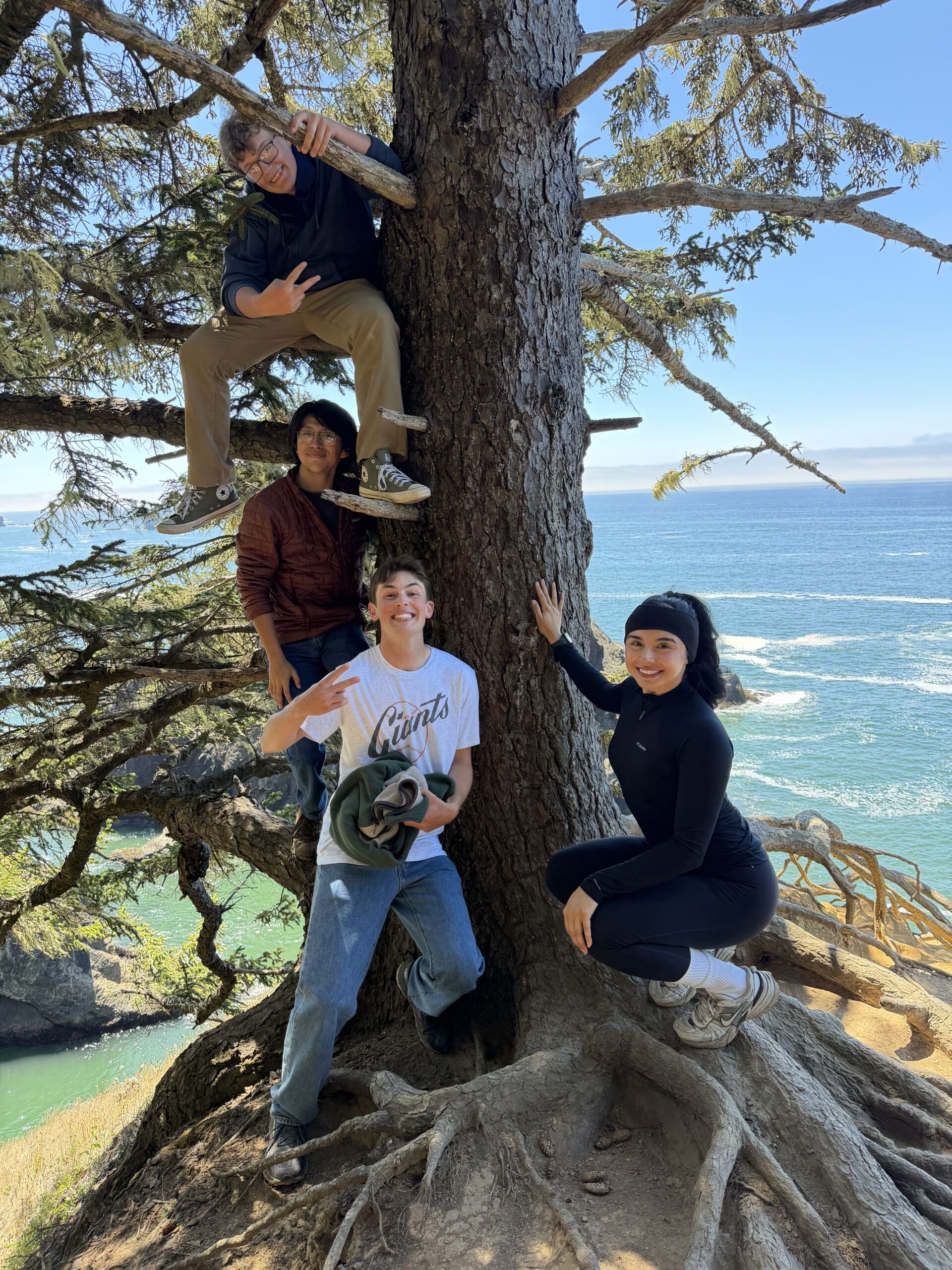
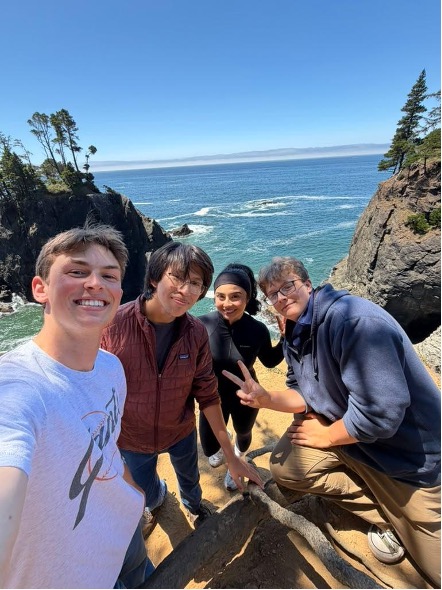
(top branch to the left) is me Gavin Vierra , (middle branch to the left) is Adrian Ruiz, (and at the bottom left) is Owen Fewell, (on the bottom right) is our team leader Celest Sorrentino.

REFERENCES

Moran, A. L., & Woods, H. A. (2012). Why might they be giants? Towards an understanding of polar gigantism. The Journal of Experimental Biology, 215(12), 1995–2002. https://doi.org/10.1242/jeb.067066

Pirotta, E., New, L., Fernandez Ajó, A., Bierlich, K. C., Bird, C. N., Buck, C. L., Hildebrand, L., Hunt, K. E., Calambokidis, J., & Torres, L. G. (2025). Body size, nutritional state and endocrine state are associated with calving probability in a long‐lived marine species. Journal of Animal Ecology, 94(7), 1422–1434. https://doi.org/10.1111/1365-2656.70068

Shishido, C. M., Woods, H. A., Lane, S. J., Toh, M. W. A., Tobalske, B. W., & Moran, A. L. (2019). Polar gigantism and the oxygen–temperature hypothesis: A test of upper thermal limits to body size in Antarctic Pycnogonids. Proceedings of the Royal Society B: Biological Sciences, 286(1900), 20190124. https://doi.org/10.1098/rspb.2019.0124

Torres, L. G., Brander, S. M., Parker, J. I., Bloom, E. M., Norman, R., Van, J. E., Lasdin, K. S., & Hildebrand, L. (2023). Zoop to poop: Assessment of microparticle loads in gray whale zooplankton prey and fecal matter reveal high daily consumption rates. Frontiers in Marine Science, 10. https://doi.org/10.3389/fmars.2023.1201078
Return of The Kelp? Cascading Conditions in Port Orford

Owen Fewell, GEMM Lab TOPAZ/JASPER Intern, OSU Fisheries, Wildlife, and Conservation Sciences Undergraduate

Hello! I’m Owen Fewell, the OSU undergraduate intern on the TOPAZ/JASPER project. I’ll be going into my senior year at Oregon State University, majoring in Fisheries, Wildlife, and Conservation Sciences. I am originally from Marin County, about 40 minutes north of San Francisco, CA. My interest in the ocean stems from fond memories I share with my family, where almost any free time we had would be spent on the coast hiking, kayaking, or enjoying the beach. Truthfully, I never loved ocean kayaking as a kid because of how tiring it was, but things have definitely changed now, as that experience allowed me to be a part of this amazing project.

Fig 1: Picture of me during the first week of training in Port Orford. The team conducted a scavenger hunt-type activity to learn how to use a GPS, and we now apply this newfound knowledge to locate our sampling sites on the water.

As I am writing this, I find it hard to believe our team has already been here for three weeks. The TOPAZ/JASPER internship is my first exposure to real data collection, and my time here has been great so far. The work can be tedious at times, so it has been crucial to stay calm and remember all of the necessary steps in the process. Our days are jam packed with fieldwork, either navigating toward our 12 stations on the kayak to collect data, scanning for gray whales on the horizon from the bluff, or identifying the many different types of zooplankton we collect. Each day presents new and unique challenges that our team couldn’t have expected – from unpredictable ocean conditions to sporadic beeping signals on the theodolite, we have to be prepared for it all. Luckily, we have our fearless leader Celest, who is always able to adapt and show us how to find solutions under pressure. So far this season the only problem that we can’t seem to solve is the lack of whales! There have been a couple reported sightings of whales coming through while we’ve been here, but only later in the evening once we packed everything up. By reading different publications built off data collected from this project in previous years, and hearing from Port Orford locals and prior interns, we’ve learned that this absence of whales isn’t completely random, but the result of a changing ecosystem.

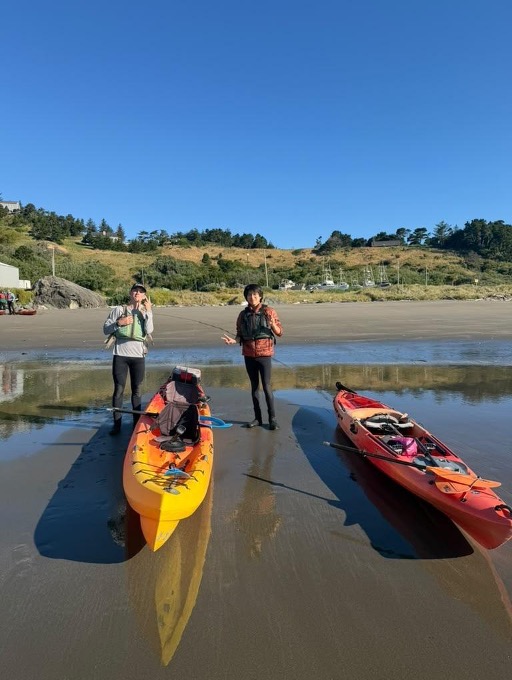
Fig 2. Fellow TOPAZ/JASPER intern Adrian Ruiz (right) and I (left) getting ready to embark on one of our first days of kayak training, where we are hoping to get more comfortable navigating to our different stations.

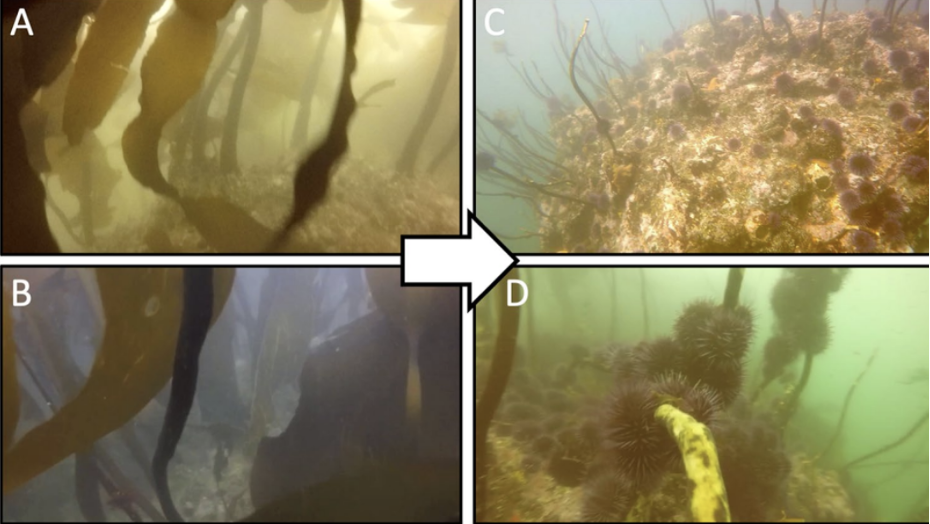
An ecological interest of mine has always been learning more about various forms of tropic cascades, and how the presence or absence of one species can have profound effects on an entire ecosystem. Part of our internship has involved reading literature relevant to our study system here in Port Orford, with our most recent read being “Exploring indirect effects of a classic trophic cascade between urchins and kelp on zooplankton and whales” by Hildebrand et. al. in 2024. In recent years, purple sea urchins, a natural predator for bull kelp, have proliferated in population numbers due to the loss of the urchin’s natural predator, the sunflower sea star. From 2013-2016, a well documented marine heat wave and the development of sea star wasting disease led to the 100% decline of the sunflower sea star population off the coast of Port Orford (Hildebrand et al. 2024). A trophic cascade was observed using the methods that our team currently use during this internship. Specifically, one method involves lowering an oceanographic sensor, the RBR, with a Go-Pro camera attached to simultaneously record differences in temperature and salinity at different depths, alongside video. Additionally, at each site we conduct a small net tow in order to collect zooplankton samples. In Hildebrand et. al. (2024), these methods were performed over 8 years (2016-2023) to connect the purple sea urchin population increase to gray whale foraging habits. As the years progressed, the increase in purple sea urchin correlated with the loss of bull kelp. Since bull kelp provide protection and nutrients to zooplankton, this loss of kelp correlated with a decrease in zooplankton abundance. With less prey available, the Pacific Coast Feeding Group (PCFG) of gray whales were observed less within our study system.

Fig 3. Graphic from Hildebrand et. al. (2024) showing Go-Pro footage of bull kelp forests in Port Orford before the tropic cascade (A and B) vs after (C and D) at the same sampling sites
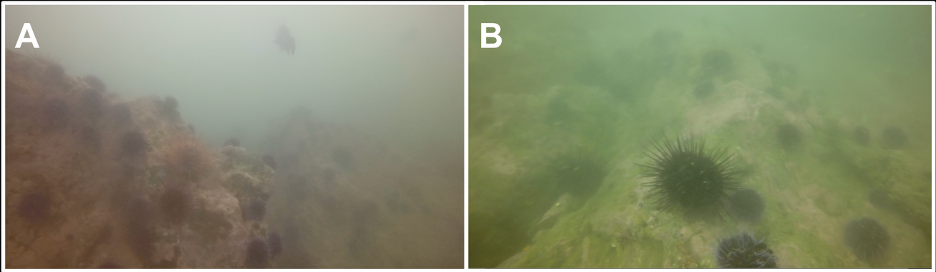
Fig 4. Two still images from Go-Pro footage that we’ve taken this year, two years after Hildebrand et. Al (2024) was published. Image A is from station MR19 (Mill Rocks), and image B is from station TC4 (Tichenor’s Cove), the same stations as images from Fig 3.

With our team out on the water everyday collecting zooplankton samples and later reviewing our GoPro videos, I find we observe this dynamic in real time. From recounts of Port Orford locals, Mill Rocks, which is one of our sampling sites, has historically been extremely productive. There were once masses of bull kelp and zooplankton, resulting in somewhat of a hotspot for gray whales. As this is my first time in Port Orford, I only have a vague idea of what conditions used to look like, but there appears to be significantly less kelp than there once was. Specifically, at one of our Mill Rocks sites, former interns have relied on grabbing on to kelp to help keep the kayak steady in the rough water. Unfortunately, throughout our field season we haven’t been able to enjoy this luxury, and instead have had to either brave the rough waters, or abandon the site altogether. However, efforts to reduce these urchin predation pressures and restore kelp habitats are exhibited through a different research group, the Oregon Kelp Alliance (ORKA), where they are actively removing urchins from select areas, and surveying to track the progress of bull kelp regrowth (https://www.oregonkelp.com/the-oregon-kelp-alliance/).

Although the team hasn’t observed as much kelp at our two study sites, we have observed large patches of kelp in different areas, specifically the open water between Mill Rocks and Tichenor’s Cove. I find these new areas with kelp to be interesting, as I am curious to know whether our PCFG gray whales will end up changing their preferred foraging sites according to these new patches and if our project will have to adapt with this changing environment.

A fundamental part of this internship has been learning how to become adaptable, and this is particularly true for the navigator on the kayak. For me, this has been the most difficult yet rewarding job. The navigator that sits at the bow of the tandem kayak must locate each of the 12 stations. Once there, they are responsible for maintaining the kayak within 5 meters of a given station while their partner engages in data collection (e.g., secchi disk, net tow, GoPro drop). Being navigator is physically demanding and can be extremely tedious, as one wrong paddle can lead to being pushed far off the station. Because of the challenge, it makes getting to all 12 stations that much more rewarding.

Being immersed in this coastal ecosystem for the last three weeks, alongside reading research papers, and talking to fellow interns staying at our field station has taught me so much about how a tropic cascade has changed how species are interacting here in Port Orford, and why we might not be observing any gray whales this season. I have also learned about myself, how to stay calm in the field when things aren’t going as planned. I’m really looking forward to the next three weeks, as I have been loving spending time with the team either out on the field or watching movies after our long days (some of my favorites have been Transformers, or Twilight –surprisingly good.) We’re all hoping to see some whales, and put our cliff-side theodolite tracking skills to the test. Regardless, we know the data we’re collecting is still informative to this long-term (12 years and counting!) project and will help to understand why this year has been so different to previous years. All we can do is keep thinking positive thoughts, as according to our team leader Celest, the whales can tell if we aren’t!


References:

Hildebrand, L., Derville, S., Hildebrand, I., & Torres, L. G. (2024). Exploring indirect effects of a classic trophic cascade between urchins and kelp on zooplankton and whales. Scientific Reports, 14(1), 9815. https://doi.org/10.1038/s41598-024-59964-x