How Humans and Cetaceans Shape Each Other

Marc Rams i Rios, PhD Student, Oregon State University Department of Fisheries, Wildlife, and Conservation Sciences, Geospatial Ecology of Marine Megafauna Lab

When I moved to Oregon to begin my PhD, I pictured long days on the water watching gray whales feed and travel along the coast. That does happen, and it is as incredible as I imagined. But I have learned that studying cetaceans is about much more than observing whales. It is also about people: how cultures – past and present – perceive these animals and share space with them.

In addition to marine mammals, I have always loved history and geography. Now, as I start my work with the GRANITE Project in the GEMM Lab, I find myself thinking about how these relationships between humans and whales unfold across time and space. In this post, I want to share a few examples of how whales have shaped human traditions for hundreds, even thousands of years, across societies that have never crossed. Then I will discuss how our research fits into this larger picture of human–cetacean connections.

Our journey begins in India, where the Ganges River dolphin inhabits a river that millions of people consider sacred. Its presence has long been linked to the health of the river, giving the species spiritual and cultural significance. Over the past century, the river’s ecological integrity has declined due to pollution, altered flow, and habitat disturbances, and this has caused the dolphin population to diminish1, 2. Conservation efforts that improve water quality, restore natural flow, and reduce disturbances not only help the dolphin recover but also protect the river and the human communities that rely on it1, 2. In this way, cultural reverence for the dolphin drives conservation measures that benefit both people and ecosystems1, 2.
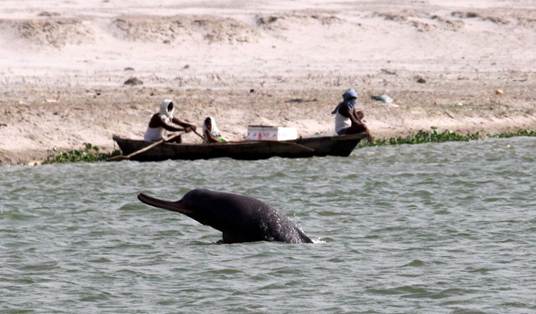
© WWF Mohd Shahnawaz Khan

From there we move to Aotearoa, New Zealand, where Māori tradition speaks of tohorā, or whales, as guardians and ancestors3. They appear in ancestral stories as guides and protectors, and whale strandings have historically brought communities together in collective response. The Māori principles of kaitiakitanga, or guardianship, continue to shape marine conservation decisions today, guiding policies that integrate ecological and cultural values4. Here, whales are not seen as resources. They are part of a living genealogy that binds people to the sea and the life it sustains. In fact, team members of the SAPPHIRE project in the GEMM lab frequently engage with multiple iwi (Māori tribes) across Aotearoa through hui (meetings) where knowledge, stories, and culture are shared about blue whales and their ecosystem.

Traveling nearly to the antipodes, we arrive on the Atlantic coast of Brazil, in the town of Laguna, where an extraordinary partnership has endured for centuries. Artisanal fishers work alongside bottlenose dolphins, who drive schools of fish toward the shore and signal the right moment to cast the nets5, 6, 7. This cooperation benefits both species, and the knowledge behind it is passed down through generations of humans and dolphins through observation and shared practice5, 6, 7. It is a powerful example of how species can learn from one another, creating connections that challenge the idea of humans and wildlife as competitors and showing the potential for collaboration across species5, 6, 7. The LABIRINTO Lab in MMI has studied this interspecific relationship for decades, helping us learn about the patterns and endurance of these cultures.
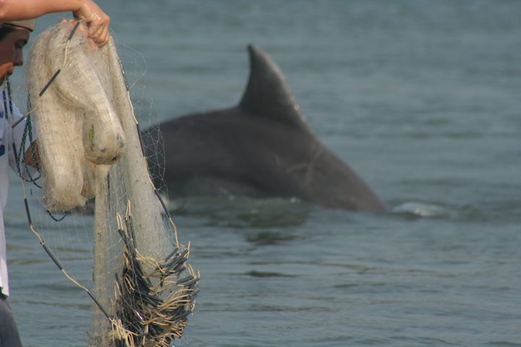
PELD-SELA: Long-term ecological project on the Laguna Estuarine System and Adjacent Areas Projects. (n.d.). https://thelabirinto.com/projects1/

At the top of the Americas, in the Arctic, Inuit communities have hunted bowhead whales for thousands of years. These hunts are not only a source of food but also form the foundation of cultural identity and social life8. Knowledge of the ice, weather, and whale behavior is passed down through generations, and the hunt itself is embedded in ceremonies and practices that sustain the community8. Today, these traditions continue under strict quotas set through international agreements, carefully balancing cultural continuity with conservation9. The MMBEL lab in MMI studies the communication and ecology of bowhead whales to support the survival of this iconic species and the culture of Inuit people.

Emory Kristoff, National Geographic

Finally, our journey brings us to Oregon, where gray whales feed along a coastline rich with reefs, kelp beds, and sandy bottoms. These waters support a variety of human activities, from commercial fishing to recreation, creating risks such as entanglement, vessel strikes, and disturbance10, 11. Even well-intentioned actions like whale watching can cause harm if not carefully managed12, 13. Around the world, many communities have shifted from whaling to whale watching, transforming former hunting grounds into tourism destinations. While this is a positive change, it still requires monitoring. Noise can stress whales, boats can disrupt their behavior, and too much interaction can alter natural feeding and social patterns12, 13. In Oregon, research on gray whale habitat use and feeding home ranges helps inform management and conservation14.

Tradewind Charters Whale Watching and Fishing

This is where project GRANITE, Gray whale Response to Ambient Noise Informed by Technology and Ecology, comes in15. The project studies how whales respond to human activities by using drones to monitor health and behavior, photo-ID to track individuals, prey mapping to understand feeding choices, and acoustic recorders to capture the soundscape15, 16, 17. Equally important is collaborating directly with fishers and resource managers to reduce risks and develop solutions that benefit both whales and people. Healthy whale populations support communities too, through ecotourism, cultural continuity, education, and the ecological services whales provide. Conservation is reciprocal: caring for whales strengthens the ocean systems that sustain us all.

The tools and techniques developed by GRANITE, including drones, acoustic monitoring, and prey mapping, are not limited to Oregon. They can be applied globally, contributing to the protection of cetaceans in diverse habitats15. In this way, Oregon becomes more than the final stop on our tour. It is a place where centuries of human–whale relationships, lessons from around the world, and modern science converge. These examples across the world remind us that conservation is about more than preventing harm. It is about fostering a future where humans and whales thrive together, as they have shared the ocean for millennia.

Did you enjoy this blog? Want to learn more about marine life, research, and conservation? Subscribe to our blog and get a monthly message when we post a new blog. Just add your name and email into the subscribe box below.

Loading

References

1 Sinha, R. K., & Kannan, K. (2014). Ganges river dolphin: An overview of biology, ecology, and conservation status in India. AMBIO, 43(8), 1029–1046. https://doi.org/10.1007/s13280-014-0534-7

2 Braulik, G., Atkore, V., Khan, M. S., & Malla, S. (2021). Review of scientific knowledge of the Ganges river dolphin. WWF. https://riverdolphins.org/wp-content/uploads/2021/07/Ganges-River-dolphin-Scientific-Knowledge-Review-July2021.pdf

3 Taonga, N. Z. M. for C. and H. T. M. (n.d.). Whales in Māori tradition. Teara.govt.nz. https://teara.govt.nz/en/te-whanau-puha-whales/page-1

4 McAllister, T., Hikuroa, D., & Macinnis‑Ng, C. (2023). Connecting science to Indigenous knowledge: Kaitiakitanga, conservation, and resource management. New Zealand Journal of Ecology, 47(1), 3521. https://doi.org/10.20417/nzjecol.47.3521

5 Simões‑Lopes, P. C., Fabián, M. E., & Menegheti, J. O. (1998). Dolphin interactions with the mullet artisanal fishing on southern Brazil: A qualitative and quantitative approach. Revista Brasileira de Zoologia, 15(3), 709–726. https://doi.org/10.1590/S0101-81751998000300008

6 Daura Jorge, F. G., Cantor, M., Ingram, S. N., Lusseau, D., & Simões Lopes, P. C. (2012). The structure of a bottlenose dolphin society is coupled to a unique foraging cooperation with artisanal fishermen. Biology Letters, 8(5), 702–705. https://doi.org/10.1098/rsbl.2012.0174

7 Cantor, M., Farine, D. R., & Daura‑Jorge, F. G. (2023). Foraging synchrony drives resilience in human–dolphin mutualism. Proceedings of the National Academy of Sciences, 120(6), e2207739120. https://doi.org/10.1073/pnas.2207739120

8 Jensen, A. M. (2012). The material culture of Iñupiat whaling: An ethnographic and ethnohistorical perspective. Arctic Anthropology, 49(2), 143–161. https://doi.org/10.1353/arc.2012.0020

9 Description of the USA Aboriginal Subsistence Hunt: Alaska. (n.d.). Iwc.int. https://iwc.int/management-and-conservation/whaling/aboriginal/usa/alaska

10 Derville, S., Buell, T. V., Corbett, K. C., Hayslip, C., & Torres, L. G. (2023). Exposure of whales to entanglement risk in Dungeness crab fishing gear in Oregon, USA. Biological Conservation, 281, 109989. https://doi.org/10.1016/j.biocon.2023.109989

11 Silber, G. K., Weller, D. W., Reeves, R. R., Adams, J. D., & Moore, T. J. (2021). Co‑occurrence of gray whales and vessel traffic in the North Pacific Ocean. Endangered Species Research, 44, 177–201. https://doi.org/10.3354/esr01093

12 Sullivan, F. A., & Torres, L. G. (2018). Assessment of vessel disturbance to gray whales to inform sustainable ecotourism. Journal of Wildlife Management, 82(5), 896–905. https://doi.org/10.1002/jwmg.21462

13 Sprogis, K. R., Videsen, S., & Madsen, P. T. (2020). Vessel noise levels drive behavioural responses of humpback whales with implications for whale‑watching. eLife, 9, e56760. https://doi.org/10.7554/eLife.56760

14 Lagerquist, B. A., Palacios, D. M., Winsor, M. H., Irvine, L. M., Follett, T. M., & Mate, B. R. (2019). Feeding home ranges of Pacific Coast Feeding Group gray whales. Journal of Wildlife Management, 83(4), 925–937. https://doi.org/10.1002/jwmg.21642

15 GRANITE: Gray whale Response to Ambient Noise Informed by Technology and Ecology | Marine Mammal Institute | Oregon State University. (n.d.). Mmi.oregonstate.edu. https://mmi.oregonstate.edu/gemm-lab/granite-gray-whale-response-ambient-noise-informed-technology-ecology

16 Pirotta, E., Bierlich, K. C., New, L., Bird, C. N., Fernandez Ajó, A., Hildebrand, L., Buck, C. L., Hunt, K. E., Calambokidis, J., & Torres, L. G. (2025). Body size, nutritional state and endocrine state are associated with calving probability in a long‑lived marine species. Journal of Animal Ecology. Advance online publication. https://doi.org/10.1111/1365-2656.70068

17 Bierlich, K. C., Kane, A., Hildebrand, L., Bird, C. N., Fernandez Ajó, A., Stewart, J. D., Hewitt, J., Hildebrand, I., Sumich, J., & Torres, L. G. (2023). Downsized: Gray whales using an alternative foraging ground have smaller morphology. Biology Letters, 19(7), 20230043. https://doi.org/10.1098/rsbl.2023.0043
Why the precautionary principle matters for marine mammal conservation

Lindsay Wickman, Postdoctoral Scholar, Oregon State University Department of Fisheries, Wildlife, and Conservation Sciences, Geospatial Ecology of Marine Megafauna Lab

This summer, Rep. Nick Begich of (R-AK), submitted a draft bill that proposes to roll back key features of the 1972 U.S. Marine Mammal Protection Act (MMPA). The MMPA has been the centerpiece legislation protecting whales, dolphins, sea otters, manatees, polar bears and seals for over 50 years, bringing many species back from the brink of extinction and setting a benchmark that has been replicated worldwide. Among the changes proposed, the draft bill explicitly bars the use of the precautionary principle in marine mammal management. For example, the draft bill includes these changes:

  • changing wording from “has the potential to injure/disturb” to “injures or disturbs” when considering threats that need to be mitigated.
  • instead of managing marine mammal populations to “result in maximum productivity”, the draft bill would manage species at the size “necessary to support the continued survival”.

The draft bill also includes changes to how allowable levels of injury and mortality to marine mammal populations (called a “take”) in the MMPA are calculated. Until now, these take levels were calculated using safety factors that correct for scientific uncertainty and bias. The proposal removes these safety factors, which would essentially increase the number of allowable takes from each population before management intervention is required. The proposed changes also require a much higher burden of proof before populations can be considered “depleted” or “strategic”, which are identifiers that trigger conservation action.

 Proponents of the draft bill say the current MMPA has been too precautionary, unnecessarily increasing burdens on fishers and other resource users. Here, I argue that the precautionary principle is not a subjective judgement that favors marine mammals over people’s livelihoods. Instead, it is a rational decision-making tool, essential for making management decisions when information is uncertain.

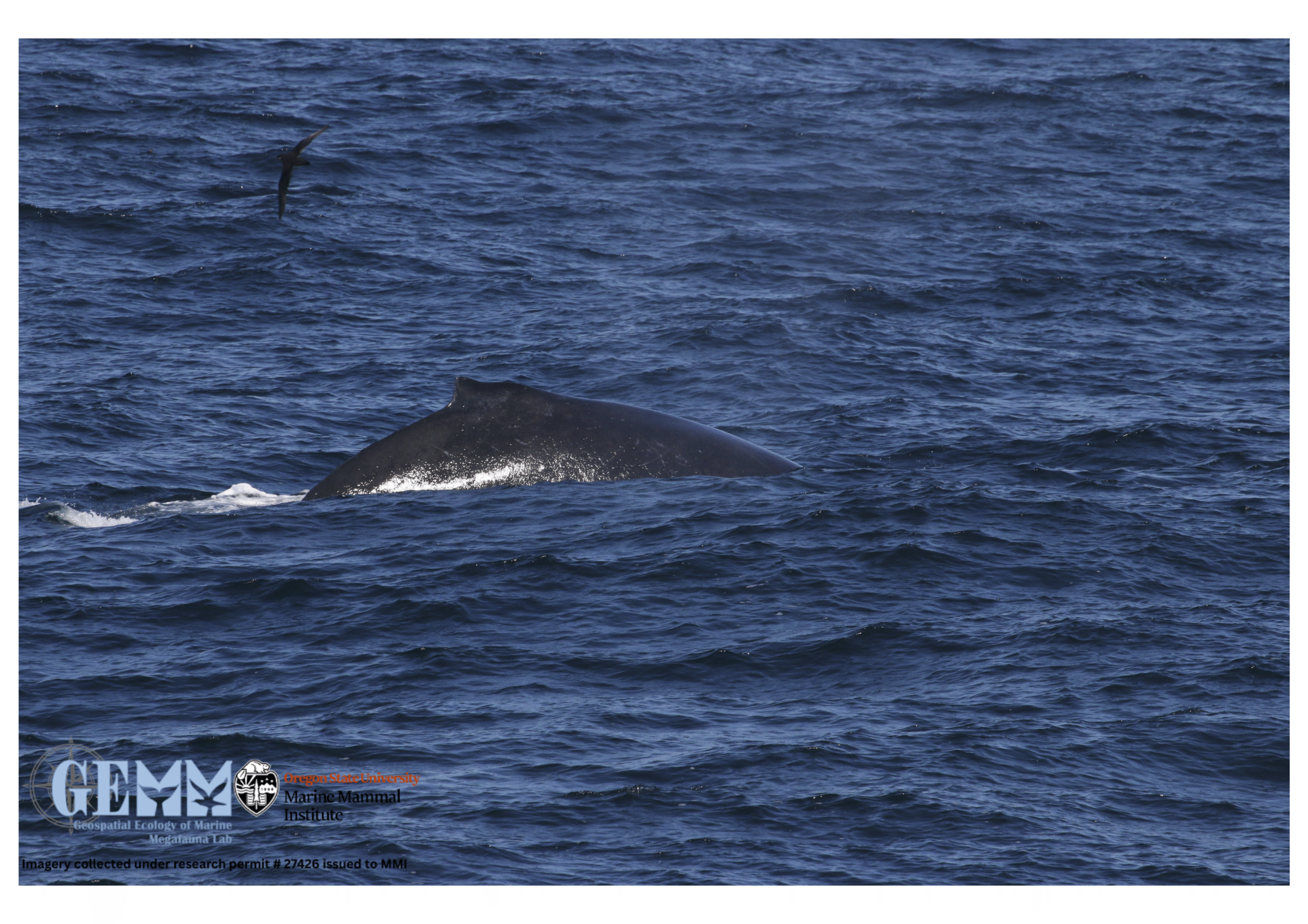
A humpback whale (Megaptera novaeangliae) surfaces during a recent research survey. Humpback whales along the U.S. West Coast have increased in abundance since the end of commercial whaling and MMPA protections. Imagery collected under research permit #27426 issued to MMI.

What is the precautionary principle?

In practice, it means that a lack of data or uncertainty in statistical estimates or trends should not be used as an excuse for inaction in the face of a valid threat (Raffensperger and Tickner, 1999). Instead, decision-makers should incorporate “safety factors” that account for limited knowledge or imperfect science. As said by Holt and Talbot (1978), “the magnitude of the safety factor should be proportional to the magnitude of risk.” So, if the goal is to prevent extinction, severely depleted populations may require bigger safety factors than healthy populations.

How does the U.S. MMPA apply the precautionary principle? 

During the first few decades the MMPA, actions to protect marine mammals were primarily reactionary, in response to highly publicized issues like the dolphin-tuna problem (Taylor et al., 2000). Conservation actions were supposed to be triggered when scientists detected a declining trend in a population’s abundance, but obtaining precise estimates of population size is notoriously difficult for marine mammals. The amount of data required to prove a population was declining due to human activities was so high that protection was continually stalled due to uncertainty in statistical trends (e.g., Marine Mammal Commission 1982; Wade 1993; Taylor et al., 2000).

In 1994, the U.S. MMPA was amended, implementing a new way to determine which marine mammal populations were at risk. Instead of requiring a statistical trend in population abundance, the new method calculates the number of sustainable takes without putting the population at risk of decline. The 1994 amendments also explicitly applied the precautionary principle by incorporating safety factors into this calculation of this number of allowable takes, known as the Potential Biological Removal (PBR; Wade 1998), which increases the likelihood that the management goals stated by the MMPA are achieved (Taylor et al., 2000). 

Three reasons why the precautionary principle matters:

1. It accounts for uncertainty and potential bias

Consider air travel for a moment: Given the uncertainty in the amount of time it takes to arrive at the airport (e.g., traffic, parking) and the unknown possibilities for extra delays once there (e.g., security), most travelers shoot for airport arrival times significantly earlier than the flight boards.  However, what if instead of an exact flight time, you are told the plane leaves sometime between 9 and 11 am? Also, although you have some experience travelling, you have never used this particular airport, and you have no idea how long security and check-in might take. Given these hypothetical circumstances, how would you plan your travel?

When applying marine mammal science to management goals, decision-makers must contend with a similarly uncertain set of information. Marine mammals are wide-ranging and spend most of their lives underwater, making them particularly challenging to study. It is impossible to get exact estimates of population size for these animals, and even the best designed research produces abundance estimates with significant levels uncertainty (e.g., Taylor et al., 2000; Taylor et al. 2007). After decades of researching marine mammals, we also still have significant knowledge gaps about their population dynamics, space-use, and behaviors.

Currently, the MMPA accounts for scientific uncertainty by using minimum estimated population size (the lower 20th percentile) when calculating sustainable levels of human takes (Wade 1998; Taylor et al. 2000). This safety factor makes it more likely that calculations of allowable takes are at or below safe levels (Wade 1998; Taylor et al. 2000).

Relating back to the airport example, if you were told your flight could leave between 9 and 11 am, using minimum population size (instead of the maximum or center of the estimate) is analogous to planning for the flight to leave closer to 9 am. However, you still need to add in time for extra factors that may cause other possible delays in addition to the uncertain departure time.

So, in addition to minimum population size, the MMPA also uses another safety factor in its calculation of allowable takes, called the recovery factor (FR). FR scales the number of allowable takes relative to the level of risk to the population and the potential for biased or uncertain information (Wade 1998; Taylor et al. 2000).  A lower FR is given to depleted, high risk populations, while FR can be increased for well-studied populations at lower risk (Wade 1998; Taylor et al. 2000). In the travel analogy, FR is the amount of padding needed to ensure a passenger makes their flight, accounting for potentially unknown security lines and traffic.

2. It incentivizes the public and industry to collect more data to “fine-tune” management

The more experienced you are with a particular airport and the more certain you are of the departure time, the more confident you can be in your travel plans. If you know the plane leaves at 10 am, and security takes 15 minutes, you don’t need to add nearly as much extra travel time as if your travel details were more uncertain.

Importantly, as the scientific knowledge of a population increases, the magnitude of the safety factors in the calculation of allowable mortalities decreases. For example, as the number of surveys of a population increases and an abundance estimate gets more precise, the range of the abundance estimate gets smaller. So, getting a more precise abundance estimate is like changing your uncertain flight time from being between 9 – 11 am, to being between 9:30 – 10 am. While you still have some uncertainty, you can be confident that leaving a little later than originally planned would be ok.

Since better knowledge results in more targeted management, both the public and industry are motivated to invest in continued research. Fine-tuning management means that necessary precautions can be kept, but unnecessary burdens on industries are removed. Ultimately, the strategy of a precautionary approach is to “act now, fine-tune later,” instead of “delay action until we get detailed information.” In addition to potentially delaying urgent action, the latter approach also disincentivizes industry to invest in research or develop solutions. As explained below, delaying conservation due to uncertainty has led to past pitfalls in marine mammal conservation, necessitating the need for a more proactive approach.

3. It prevents unnecessary delays in conservation action

If you had an important flight to catch on Wednesday, but did not know the departure time, would you decide to not go to the airport at all? Would it be worth it to just get to the airport early, or would you wait at home for more information, but at the risk of missing your flight?

The choice to not act at all in the face of uncertain data is inherently risky. For the first couple of decades of the MMPA, managers attempted to prove a population was declining before conservation action could be taken. The problem is, determining population trends of marine mammals with any certainty can take decades (Taylor and Gerrodette, 1993; Wade 1993; Taylor et al., 2000). In the case of some species, by the time scientists have the statistical power to detect a trend, the population could already be in a catastrophic decline. For example, in the case of eastern tropical Pacific dolphins killed as bycatch by the tuna industry during the 1970s, proving their population decline led to a 14-year protection delay from the first abundance estimate of the population (Wade et al., 1994; Taylor et al., 2000).

The purpose of the 1994 MMPA amendments was to correct for these unnecessary delays that required extensive amounts of data (Taylor et al. 2000). Instead of requiring population trend data, the MMPA now uses values that are much easier to obtain — population size and maximum population growth rates (Wade 1998). From these, the number of individuals that can sustainably be removed from the population (PBR) can be calculated. This approach is a much faster and simpler method, allowing for quick action if estimated mortality (e.g., numbers of animals killed or injured) is higher than this calculated threshold (PBR).

Lastly, the precautionary principle assumes that if a threat is valid, it should be considered, even if the effects are not 100% proven yet. This approach is essential for marine mammals, where anthropogenic injuries and mortality are not always easily detected or recorded. In the case of ship strikes and fisheries entanglement, many individuals disappear before their deaths or injuries are recorded (e.g., Cassoff et al., 2011; Pace et al. 2021). Other threats, like the effects of sound and chemical pollution, may require long-term monitoring to fully understand their population-level impacts. By using language like “has the potential to injure,” management can be implemented more proactively, allowing for research to continue, but not at the detriment of population health during the lengthy time it can take to establish statistical certainty.

Final thoughts

The precautionary principle is a way of dealing with the fact that good science can cost precious time. Results rarely give “yes or no” answers and clear-cut solutions. Instead, decision-makers must weigh study design, statistical power, and the precision (i.e., uncertainty) of scientific findings. The precautionary principle provides a framework for how to effectively use science to make decisions, increasing the likelihood that management plans meet their goals.

If this blog makes you concerned about the future of the precautionary principle in the U.S. MMPA:

Did you enjoy this blog? Want to learn more about marine life, research, and conservation? Subscribe to our blog and get a monthly message when we post a new blog. Just add your name and email into the subscribe box below.

Loading

References

Cassoff, R.M., Moore, K.M., McLellan, W.A., Barco, S.G., Rotstein, D.S., Moore, M.J. (2011). Lethal entanglement in baleen whales. Diseases of Aquatic Organisms, 96: 175– 185.

Holt, S. J., and L. M. Talbot. (1978). New principles for the conservation of wild living resources. Wildlife Monographs, 59.

Marine Mammal Commission. (1982). Marine Mammal Commission annual report to Congress. Bethesda, Maryland.

Pace, R.M., Williams, R., Kraus, S.D., Knowlton, A.R., Pettis, H.M. (2021). Cryptic mortality of North Atlantic right whales. Conservation Science and Practice, 3: e346.

Raffensperger C, Tickner J, eds. (1999). Protecting Public Health and the Environment: Implementing the Precautionary Principle. Washington, DC: Island Press.

Taylor, B. L., & Gerrodette, T. (1993). The Uses of Statistical Power in Conservation Biology: The Vaquita and Northern Spotted Owl. Conservation Biology, 7(3), 489–500.

Taylor, B. L., Wade, P. R., de Master, D. P., & Barlow, J. (2000). Incorporating uncertainty into management models for marine mammals. Conservation Biology, 14(5), 1243–1252.

Taylor, B. L., Martinez, M., Gerrodette, T., Barlow, J., & Hrovat, Y. N. (2007). Lessons From Monitoring Trends in Abundance of Marine Mammals. Marine Mammal Science, 23(1), 157–175.

Wade, P. R. (1993). Estimation of historical population size of the eastern spinner dolphin (Stenella longirostris orientalis). Fishery Bulletin, United States 91:775–787.

Wade, P. R. (1994). Abundance and population dynamics of two eastern Pacific dolphins, Stenella attenuata and Stenella longirostris orientalis. Ph.D. dissertation. Scripps Institution of Oceanography, University of California, San Diego.

Wade, P. R. (1998). Calculating limits to the allowable human-caused mortality of cetaceans and pinnipeds. Marine Mammal Science, 14(1), 1–37.