Grouper groupie: studying climate change and the Nassau grouper

During winter months, a few days after the full moon, thousands of fish make their way to the warm tropical waters off the west coast of Little Cayman, Cayman Island. Nassau Grouper are typically territorial and don’t interact often, but once per year, they gather in the same spot where they all spawn to carry on the tradition of releasing gametes, in the hopes that some of them will develop to adulthood and carry on the population.

Our guest this week is Janelle Layton, a Masters (and soon to be PhD) student in Dr. Scott Heppel’s lab in the Department of Fisheries, Wildlife, and Conservation Sciences. Janelle’s research focuses on this grouper, which is listed as near threatened under the Endangered Species Act. Overfishing has been the largest threat to Nassau Grouper populations, but another threat looms: warming waters due to climate change. This threat is what Janelle is interested in studying – how does the warming water temperature affect the growth and development of grouper larvae?
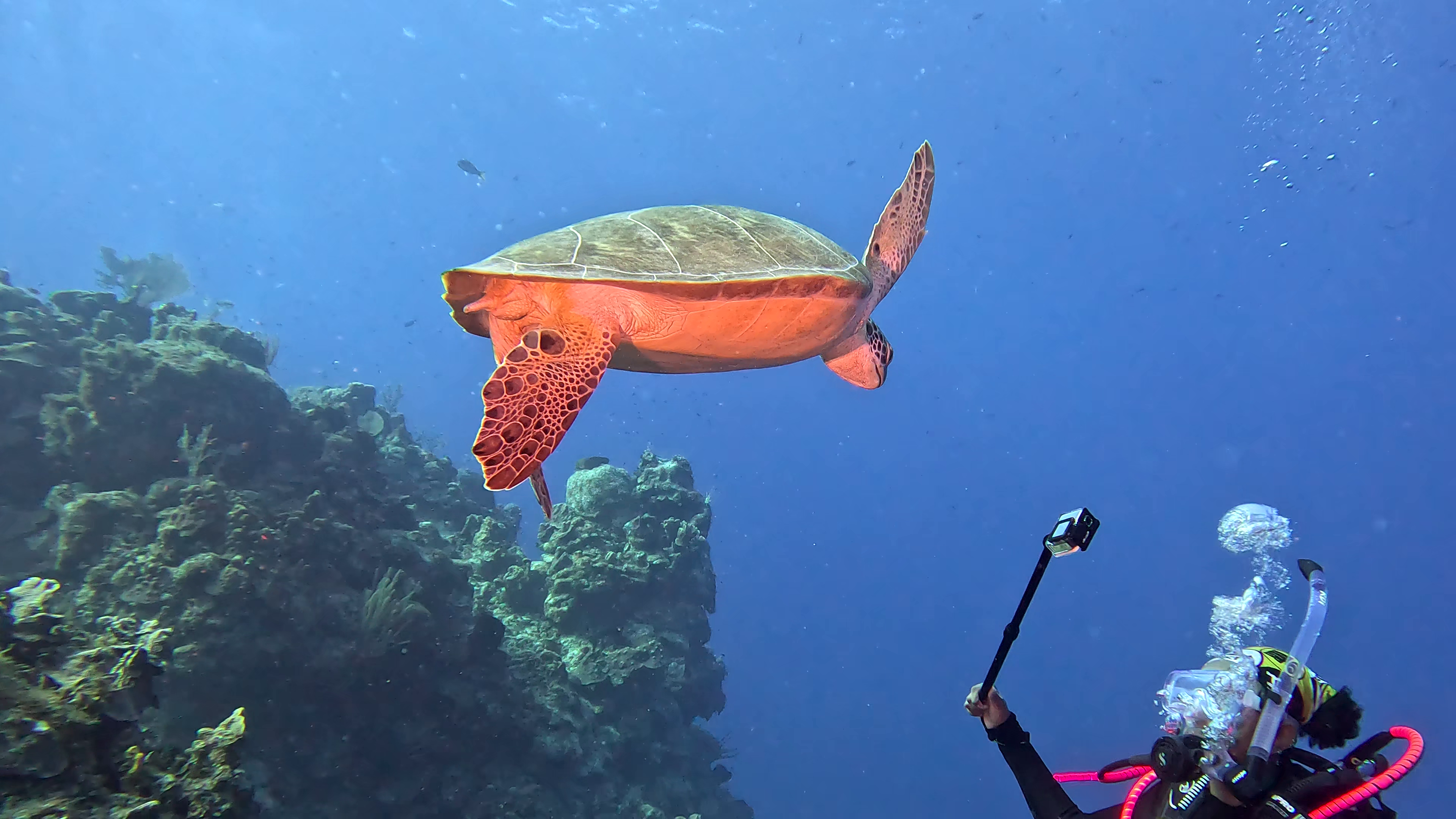
Janelle with a curious sea turtle

Each winter Janelle travels to this aggregation site in the Cayman Islands, where these large groups of grouper (grouper groups?) aggregate for a few days to reproduce. During this time, she collects thousands of fertilized Nassau Grouper eggs to take back to the lab and study. These eggs will develop in varying water temperatures for 6 days, where each day a subset of samples are preserved for future analysis.

Spawning groupers

So far, Janelle is finding that the larvae raised in higher temperatures tend to demonstrate not only an increase in mortality, but an increase in variability in mortality. What does this mean? Basically, eggs from some females are able to survive and develop under these stressful conditions better than eggs from other females – so is there a genetic component to being able to survive these temperature increases?

The answer may lie in proteins

Aside from development and mortality, Janelle is investigating this theory by measuring the expression of heat shock proteins in the fertilized eggs and larvae. Heat shock proteins are expressed in response to environmental stressors such as increased temperatures, and can be measured through RNA sequencing. The expression of these proteins might hold the key to understanding why some grouper are more likely to survive than others. Janelle’s work is a collaborative effort between Oregon State University, Scripps Institute of Oceanography, Reef Environmental Education Foundation and the Cayman Islands Department of Environment.

To learn more about Nassau Grouper, heat shock proteins, and what it’s like being a Black woman in marine science, tune into Janelle’s episode this upcoming Sunday, March 12th at 7 PM! Be sure to listen live on KBVR 88.7FM, or download the podcast if you missed it. You can also catch Janelle on TikTok or at her website.

Finicky Fish: Investigating the impact of dams on the John Day White Sturgeon

This week we have a Fisheries and Wildlife Master’s student and ODFW employee, Gabriella Brill, joining us to discuss her research investigating the impact of dams on the movement and reproduction habits of the White Sturgeon here in Oregon. Much like humans, these fish can live up to 100 years and can take 25 years to fully mature. But the similarities stop there, as they can also grow up to 10 ft long, haven’t evolved much in 200 million years, and can lay millions of eggs at a time (makes the Duggar family’s 19 Kids and Counting not seem so bad).   

Despite being able to lay millions of eggs at a time, the White Sturgeon will only do so if the conditions are right. This fish Goldilocks’ its way through the river systems, looking for a river bed that’s just right. If it doesn’t like what it sees, the fish can just choose not to lay the eggs and will wait for another year. When the fish don’t find places they want to lay their eggs, it can cause drastic changes to the overall population size. This can be a problem for people whose lives are intertwined with these fish: such as fishermen and local Tribal Nations (and graduate students).

The white sturgeon was once a prolific fish in the Columbia River and holds ceremonial significance to local Tribal Nations, however, post-colonialization a fishery was established in 1888 that collapsed the population just four years later in 1892. Due to the long lifespan of these fish, the effects of that fishery are something today’s populations have still not fully recovered from.

Image of white sturgeon in a river. It is a large bluish grey fish. The river is a murkey dark green color.
White Sturgeon

Can you hear me now

Gabriella uses sound transmitters to track the white sturgeon’s movements. Essentially, the fish get a small sound-emitting implant that is picked up by a series of receivers – as long the receivers don’t get washed away by a strong current. By monitoring the fish’s journey through the river systems, she can then determine if the man-made dams are impacting their ability to find a desirable place to lay eggs. 

Journey to researching a sturgeon’s journey

Gabriella always gravitated towards ecology due to the ways it blends many different sciences and ideas – and Fish are a great system for studying ecology. She started with studying Salmon in undergrad which eventually led to a position with the ODFW. Working with the ODFW inspired her to get a Master’s degree so that she could gain the necessary experience and credentials to be a more effective advocate for changes in conservation efforts that are being made. One way to get clout in the fish world: study a highly picky fish with a long life cycle. Challenge accepted.

Gabriella Brill holding a smaller sturgeon while on a boat.

To hear more about these finicky fish be sure to listen live on Sunday February 26th at 7PM on 88.7FM, or download the podcast.

Global swarming: getting robot swarms to perform intelligently

This week we have a robotics PhD student, Everardo Gonzalez, joining us to discuss his research on coordinating robots with artificial intelligence (AI). That doesn’t mean he dresses them up in matching bow ties (sadly), but instead he works on how to get a large collective of robots, also called a swarm, to work collectively towards a shared goal. 

Why should we care about swarming robots? 

Aside from the potential for an apocalyptic robot world domination, there are actually many applications for this technology. Some are just as terrifying. It could be applied to fully automated warfare – reducing accountability when no one is to blame for pulling the trigger (literally).

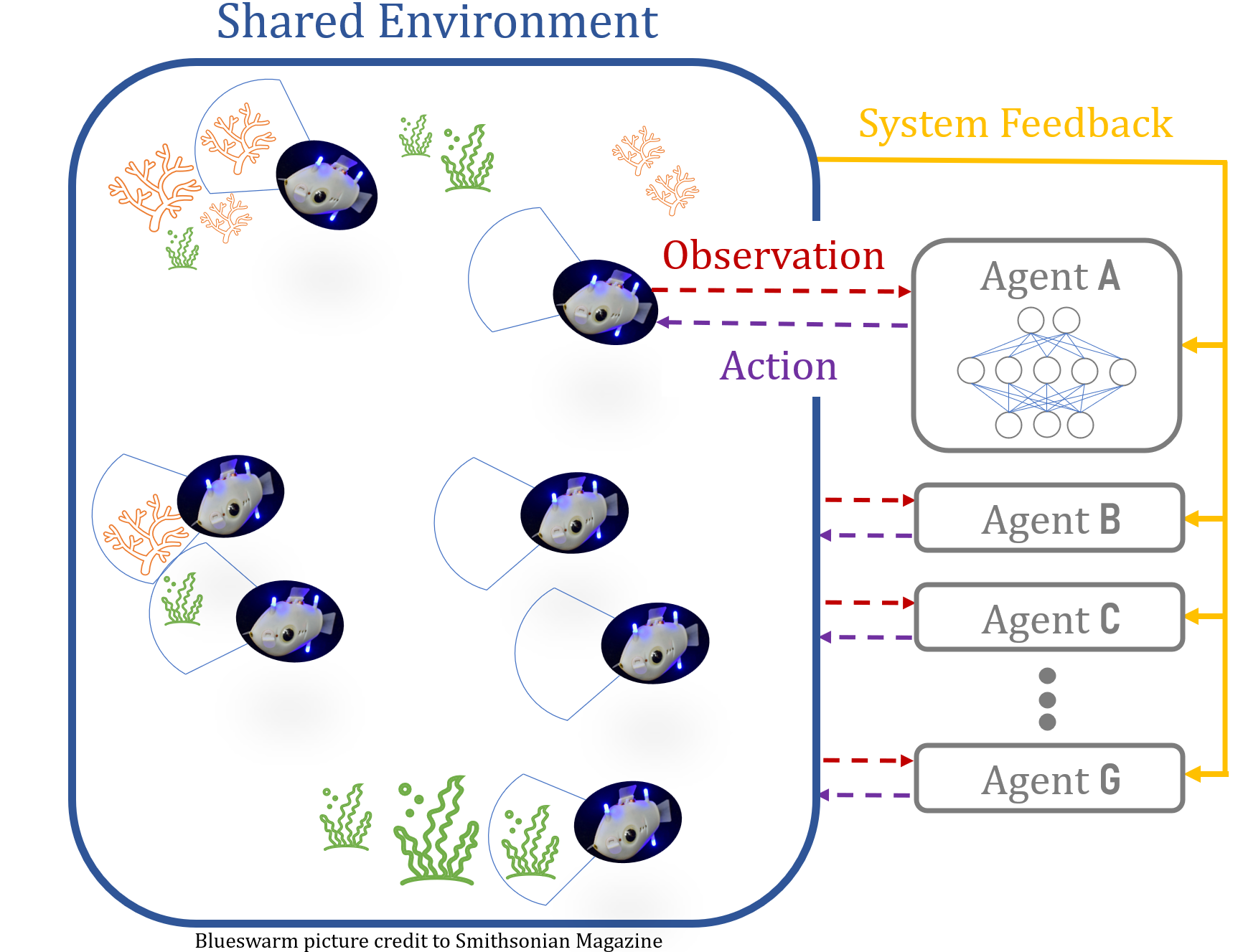
However, it could also be used to coordinate robots used in healthcare and with organizing fleets of autonomous vehicles, potentially making our lives, and our streets, safer. In the case of the fish-inspired Blue Bots, this kind of coordinated robot system can also help us gather information about our oceans as we try to resolve climate change.

Depiction of how the fish-inspired Blue Bots can observe their surroundings in a shared aquatic space, then send that information and receive feedback from the computer system. Driving the Blue Bots’ behavior is a network model, as depicted in the Agent A square.

#Influencer

Having a group of intelligent robots behaving intelligently sounds like it’s a problem of quantity, however, it’s not that simple. These bots can also suffer from there being “too many cooks in the kitchen”, and, if all bots in the swarm are intelligent, they can start to hinder each other’s progress. Instead, the swarm needs both a few leader bots, that are intelligent and capable of learning and trying new things, along with follower bots, which can learn from their leader. Essentially, the bots play a game of “Follow the Leaders”.

All robots receive feedback with respect to a shared objective, which is typical of AI training and allow the bots to infer which behaviors are effective. In this case, the leaders will get additional feedback on how well they are influencing their followers. 

Unlike social media, one influencer with too many followers is a bad thing – and the bots can become ineffective. There’s a famous social experiment in which actors in a busy New York City street stopped to stare at a window to determine if strangers would do the same. If there are not enough actors staring at the window, strangers are unlikely to respond. But as the number of actors increases, the likeness of a stranger stopping to look will also increase. The bot swarms also have an optimal number of leaders required to have the largest influence on their followers. Perhaps we’re much more like robots than the Turing test would have us believe. 

Dot to dot

We’re a long way from intelligent robot swarms, though, as Everardo is using simplified 2D particle simulations to begin to tackle this problem. In this case the particles replace the robots, and are essentially just dots (rodots?) in a shared environment that only has two dimensions. The objectives or points of interest for these dot bots are more dots! Despite these simplifications, translating system feedback into a performance review for the leaders is still a challenging problem to solve computationally. Everardo starts by asking the question “what if the leader had not been there”, but then you have to ask “what if the followers that followed that leader did something else?” and then you’ve opened a can of worms reminiscent of Smash Mouth where the “what if”’s start coming and they don’t stop coming.

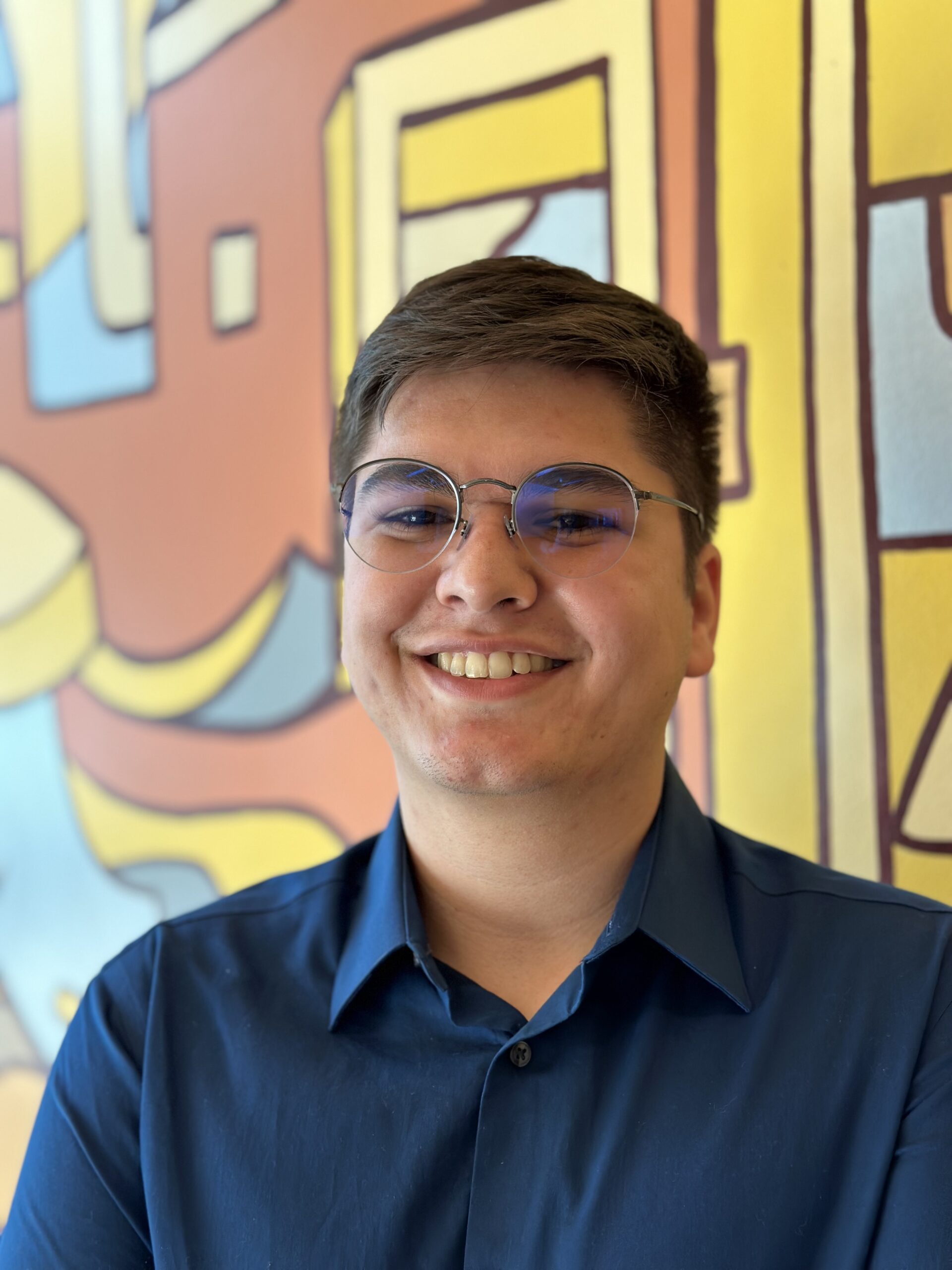
Everardo Gonzalez

What if you wanted to know more about swarming robots? Be sure to listen live on Sunday February 26th at 7PM on 88.7FM, or download the podcast if you missed it. To learn a bit more about Everardo’s work with swarms and all things robotics, check out his portfolio at everardog.github.io

No longer a torrent of salamanders

We are pleased to introduce our upcoming guest, Christopher Cousins, a fourth-year PhD student in the Department of Fisheries and Wildlife, advised by Prof. Tiffany Garcia. Cousins is  researching torrent salamanders, a family of small amphibians endemic to the Pacific Northwest.

Chris is also an amateur photographer, check out his Instagram to see more wildlife pics!

The habitat for torrent salamanders stretches from the far north of California up through the Washington coast and includes distinct populations in the Cascade Range and the Oregon Coast Range. Torrent salamanders inhabit cold streams at relatively high altitude — the kind where few or no fish live, leaving the amphibians near or at the top of the local food chain. Such streams can be ephemeral, disappearing at times throughout the year and leaving salamanders vulnerable to desiccation. This problem is only expected to worsen as climate change further upends these water systems. Torrent salamanders are currently candidates for classification under the Endangered Species Act (ESA), the federal law which grants protections to threatened species. Logging presents another danger to salamander habitats, as reduced tree canopy cover can contribute to higher water temperatures. Under the ESA, officials could prohibit logging in buffer zones around small streams, granting salamander habitats the same protection as the larger streams where salmon live.

Chris’s work with salamanders takes many different forms. He has extensive experience in fieldwork, spending six months traveling throughout Oregon and Washington. He has used environmental DNA from water samples to detect torrent salamander populations in various streams. In another project, he collected DNA directly from approximately 150 salamanders. Chris performed both the lab work to process these samples and the bioinformatics analysis to assemble their DNA sequences. This summer, he plans to conduct a detailed survey of the streams of the streams in the H.J. Andrews Experimental Forest. The overarching goal of his PhD is to document the genetic diversity among torrent salamanders and characterize their population structure across the region, which he hopes will help inform the ESA decision-making process.

Chris remembers catching frogs and salamanders as a child – proof of his fascination with amphibians at a young age. His father was in the Navy, so the family moved around repeatedly, but Chris grew up mostly in Japan. Upon moving back to the US, he felt drawn to Oregon and enrolled at Lane community college before transferring to Oregon State to earn his bachelor’s degree as a first-generation college graduate. He remained at OSU for his graduate work due to the community of scientific mentors he had built. To hear more about his journey, what it is like to explore the Mt. St. Helens eruption zone, and what motivates him to work with this threatened species, tune in to KBVR 88.7 FM this this Sunday, Feb 19th, at 7pm.

Lasers and lipids : in search of a mechanism for dysferlin

This week on Inspiration Dissemination, we are looking forward to chatting with Andrew Carpenter, a postdoctoral fellow working in the lab of Professor Joe Baio in the School of Chemical, Biological, and Environmental Engineering.

Andrew’s research seeks a better understanding of a protein called dysferlin, which plays a critical role in repairing muscle cells.  Muscles undergo constant strain as they expand and contract, leading to tears in the sarcolemmas — thin membranes that surround muscle fibers. Dysferlin is responsible for recruiting vesicles to the site of these tears for a process called vesicle fusion to take place. Andrew likens this mechanism to using a denim patch to fix a hole in jeans, if the patch could become fully absorbed into the fabric in the way that vesicles eventually do into sarcolemmas. Dysferlin is clinically important because certain mutations (dysferlinopathies) to the gene encoding dysferlin lead to a disease called muscular dystrophy. The symptoms of dysferlinopathy typically include muscle weakness and damage to the musculoskeletal system, especially in the limbs.

Andrew working in the lab

The general importance of dysferlin to cell repair is well-established, but the molecular details of its mechanism of action are relatively unknown.  Andrew uses an advanced experimental method called sum-frequency spectroscopy to study the protein at high resolution. This procedure uses two lasers — one infrared and one visible green — and points them at the sample of interest. When the lasers hit the sample, a third beam of light is generated at the surface, carrying information about the vibrations of the molecules. Quantum mechanical calculations are used to examine the intensity of this light as a function of frequency. In Andrew’s research, a synthetic lipid monolayer serves as an in-vitro model of the sarcolemma, and he introduces the dysferlin protein either in its healthy form or with various mutations. Then he uses spectroscopy data to infer changes in protein orientation and binding. In the future, he intends to correlate his experiments with data from live cells.

Andrew first discovered his fascination with laser instrumentation as an undergraduate at Linfield University. After that, he obtained a PhD in Chemistry at the University of Oregon, where he used small oil droplets called nano-emulsions to study the oil-water interface. His background in physical chemistry and expertise in the sum-frequency spectroscopy method have enabled him to readily adapt to studying biological lipid interfaces. His research, including a recent publication, is currently supported by the National Science Foundation.

To hear more about Andrew’s research journey and the differences and similarities in being a postdoc and a graduate student, tune in after the Super Bowl this Sunday, February 12th, at 7pm on 88.7 FM KBVR.


A Gut Feeling: Examining Whale Ecology Using Number-Two Genetics

This week we have a MS (but soon to be PhD) student from the department of Fisheries and Wildlife, Charles Nye, joining us to discuss their work examining the dietary and environmental DNA of whales. So that begs the question – how exactly does an environment, or a diet, have DNA? Essentially, the DNA of many organisms can be isolated from samples of ocean water near the whales, or in the case of dietary DNA, can be taken from the whales’ fecal matter – that’s right, there’s a lot more you can get from poop than just an unpleasant smell.

Why should we care about what whales eat?

As the climate changes, so too does the composition of creatures and plants in the oceans. Examining environmental DNA gives Charles information on the nearby ecological community – which in turn gives information about what is available for the whale to eat plus what other creatures they may be in resource competition with. He is working to identify the various environmental DNA present to assist with conservation efforts for the right whale near Cape Cod – a whale that they hold as dear to their hearts on the East Coast as the folks of Depoe Bay hold the grey whale to theirs.

By digging into the whale poop to extract dietary DNA, Charles can look into how the whales’ diets shift over seasonal and yearly intervals – and he is doing precisely that with the West Coast grey whales. These dietary shifts may be important for conservation purposes, and may also be applied to studying behavior. For example, by looking at whether or not there are sex differences in diet and asking the ever-important question: do whales also experience bizarre pregnancy cravings?

two people underwater in scuba gear. Some tall kelp in the background. One person is holding a light which emits a beam into the water.
Scuba diving underwater.

How does someone even get to study whales?

Like many careers, it starts with an identity crisis. Charles originally thought they’d go into scientific illustration, but quickly realized that they didn’t want to turn a hobby he enjoyed into a job with deadlines and dread. A fortunate conversation with his ecology professor during undergrad inspired him to join a research lab studying intertidal species’ genetics – and eventually become a technician at the Monterey Bay Aquarium Research Institute. 

After a while, simply doing the experiments was not enough and they wanted to be able to ask his own questions like “does all the algae found in a gray whale’s stomach indicate they may actually be omnivores, unlike their carnivorous whale peers?” (mmm, shrimp).

Turns out, in order to study whales all you have to do is start small – tiny turban snail small. 

Image of Charles working in the lab and using a micropipette. They are wearing a lab coat and white rubber gloves. He is holding a small tube into which the tip of the micropette is inserted.
Working in the lab.

Excited for more whale tales? Us too. Be sure to listen live on Sunday, February 5th at 7PM on 88.7FM, or download the podcast if you missed it. Want to stay up to date with the world of whales and art? Follow Charles @thepaintpaddock on Twitter/Instagram for his art or @cnyescienceguy on Twitter for his marine biology musings. 

What to do with all the whey?

You probably already know that skim milk and buttermilk are byproducts of cheese-making. But did you know that whey is another major byproduct of the cheese-making process? Maybe you did. Well, did you know that for each 1 kg of cheese obtained, there are about 9 kg of whey produced as a byproduct?! What in the world is done with all of that whey? And what even is whey? In this week’s episode, Food Science Master’s student Alyssa Thibodeau tells us all about it!

Alyssa making cheese!

Whey is the liquid that remains after milk has been curdled and strained to produce cheese (both soft and hard cheeses) and yoghurt. Whey is mainly water but it also has lots of proteins and fats, as well as some vitamins, minerals, and a little bit of lactose. There are two types of whey: acid-whey (byproduct of yoghurt and soft cheese production) and sweet-whey (byproduct of hard cheese production). Most people are probably familiar with whey protein, which is isolated from whey. The whey protein isolates are only a small component of the liquid though and unfortunately the process of isolating the proteins is very energy inefficient. So, it is not the most efficient or effective way of using the huge quantities of whey produced. This is where Alyssa comes in. Alyssa’s research at OSU is focused on trying to develop a whey-beverage. Because of the small amounts of lactose that are in whey, yeast can be used to ferment the lactose, creating ethanol. This ethanol can then be converted by bacteria to acetic acid. Does this process sound a little familiar? It is! A similar process is involved when making kombucha and the end-product in Alyssa’s mind isn’t too far off of kombucha. She envisions creating an organic, acid-based or vinegar-type beverage from whey. 

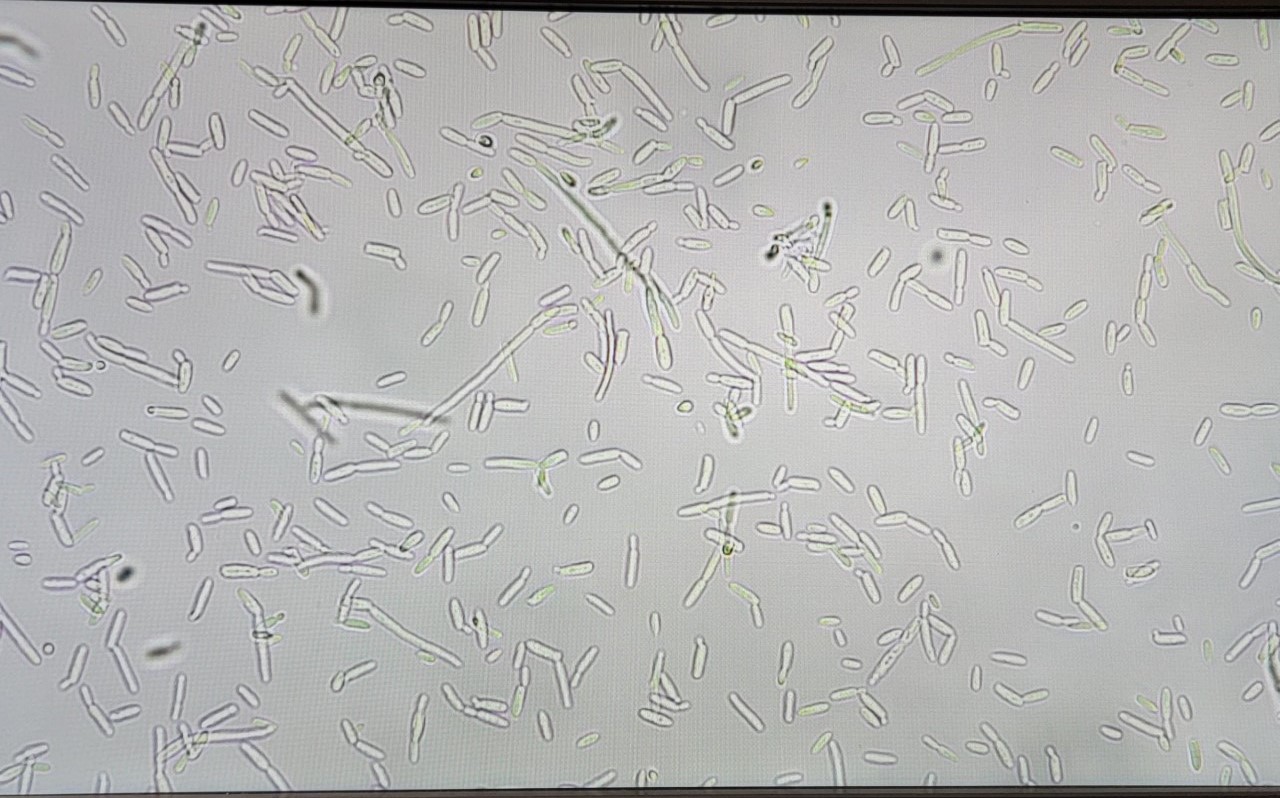
Morphology of yeast species Brettanomyces anomalus which Alyssa is planning on using for her whey-beverage.

How does one get into creating the potentially next-level kombucha? Alyssa’s route to graduate school has been backwards, one that most students don’t get to experience. While the majority of students get a degree, get a job and then start a family, Alyssa started a family, got a job, and then went to graduate school. On top of being a single mother in graduate school, she is also a first-gen student and Hispanic. To quote Alyssa: “It makes me proud every day that I am able to go back to school as a single mom. In the past, this would have maybe been too hard to do or wouldn’t have been possible for older generations but our generations are progressing and people are making decisions for themselves.”.

Intrigued by Alyssa’s research and personal journey? You can hear all about it on Sunday, January 29th at 7 pm on https://kbvrfm.orangemedianetwork.com/. Missed the live show? You can listen to the recorded episode on your preferred podcast platform!

Krypton-ice : what the noble gases tell us about the ancient climate

Tree rings famously reflect the age of the tree, but they can also encode information about the environmental conditions throughout the organism’s life. A similar principle motivates the study of ice cores – traces of the ancient atmosphere are preserved in the massive ice caps covering Earth’s polar regions.

This Sunday’s guest is Olivia Williams, a graduate student here at Oregon State who is helping to uncover the wealth of climate information harbored by polar ice cores. Olivia is a member of the College of Earth, Ocean and Atmospheric Sciences (CEOAS), where she is advised by Christo Buizert. Their lab uses ice cores to study paleoclimatology and heads the Center for Oldest Ice Exploration (COLDEX), a multi-institution NSF collaboration.

Drilling an ice core in the Arctic or Antarctic is an expensive and labor-intensive process. As a result, once they have been studied by project leads, most American ice core samples are centrally managed by the National Ice Core Lab in Denver, CO and carefully allocated to labs throughout the country. Researchers analyze cross-sections of the larger ice core sample for many geochemical features, including dust records, stable isotopes, and evidence of volcanic eruptions. Determining the historical levels of carbon dioxide, methane, and other greenhouse gases is one application of ice core analysis that yields important insights into climate change.

Olivia’s project focuses on “melt layers”, which are formed by a large-scale melting and refreezing event. The frequency and intensity of melt layers help characterize polar summer temperatures, and specifically the number of days above freezing. Typically, researchers use visual examination or optical instruments to locate layers with relatively smooth and bubble-free ice. However, such methods can fail further down in ice cores, where clathrate ice formed by increased pressure excludes all bubbles. In response, the lab of Jeffrey Severinghaus at the Scripps Institution of Oceanography developed a chemical method to serve as a supplement. This technique extracts noble gases from the core and compares the ratio of the heavier (xenon and krypton) to argon, the lightest noble gas. Since the heavier noble gases are more water-soluble, spikes in the relative concentration of krypton and xenon suggest that a melting event occurred.

During a typical day in the lab, Williams takes samples from the ice core stored at -20 C in a large walk-in freezer and handles the samples in chilled ethanol baths. She particularly focuses on ice cores from Greenland and time periods such as the last interglacial period ~120 thousand years ago and the early Holocene ~12 thousand years ago. Since the OSU lab’s noble gas methodology is novel, Olivia’s work involves a lot of design and troubleshooting the extraction line, which extracts the trapped gases. One time, she even had to commission a scientific glassblower for custom cold traps in the extraction line.

Williams’ interest in geology was impressed upon her at an early age, in part by the influence of her grandfather, a longtime science writer for the Seattle Times. Her grandfather’s love for the geology of the Pacific Northwest inspired her to follow in his footsteps as a scientific journalist. At Boston University, Olivia initially planned to major in communications, until she took a seminar on interdisciplinary science communication offered by BU Antarctic Research Lab, together with education and earth sciences majors. This experience helped solidify her interest in geology, and she switcher her major to earth sciences. Her senior research project related to nutrient cycling in salt marshes, but she knew that she eventually wanted to work in polar science and paleoclimatology. Besides her research at OSU, Olivia has stayed active in science communication, serving as the outreach chair for the CEOS graduate student association. She has helped organize education tables at the Corvallis Farmer’s Market. In the future, Olivia hopes to pursue an academic career and continue research and teaching in the field she loves but is open to the full range of earth science career paths.

For more on Olivia’s exciting research and to hear what it is like to drill ice from a lava formation, tune in this Sunday, January 22nd at 7PM on KBVR 88.7 FM or look out for the podcast upload on Spotify!

LGBTQ+ health disparities and the impact of stress

Correlation does not equal causation. This phrase gets mentioned a lot in science. In part, because many scientists can fall into the trap of assuming that correlation equals causation. Proof that this phrase is true can be found in ice cream and sharks. Monthly ice cream sales and shark attacks are highly correlated in the United States each year. Does that mean eating lots of ice cream causes sharks to attack more people? No. The likely reason for this correlation is that more people eat ice cream and get in the ocean during the summer months when it’s warmer outside, which explain why the two are correlated. But, one does not cause the other. Correlation does not equal causation.

To date, much of the research that has been conducted on LGBTQ+ health has been correlational. Our guest this week, Kalina Fahey, hopes that her dissertation project will play a part in changing this paradigm as she is trying to get more at causation. Kalina is a 5th year PhD candidate in the School of Psychological Science working with her advisors Drs. Anita Cservenka and Sarah Dermody. Her research broadly investigates LGBTQ+ health disparities and how stress impacts health in LGBTQ+ groups. She is also interested in understanding ways in which spiritual and/or religious identities can influence stress, and thereby, health. To do this, Kalina is employing a number of methods, including undertaking a systematic review to synthesize the existing research on substance use in transgender youth, analyzing large-scale publicly available datasets to look at how religious and spiritual identity relates to health outcomes, and finally developing a safe experiment to look at how specific forms of stress impact substance use-related behaviors in real time. 

Most of Kalina’s time at the moment is being spent on the experimental portion of her research as part of her dissertation. For this study, Kalina is adapting the personalized guided induction stress paradigm, with the aim of safely eliciting minor stress responses in a laboratory setting. The experiment involves one virtual study visit and two in-person sessions. During the first visit, participants are asked to describe a minority-induced stressful event that occurred recently, as well as a description of a moment or situation that is soothing or calming. After this session, Kalina and her team develop two meditative scripts – one each to recreate the two events or moments described by the participant. When the participant comes back for their in-person sessions, they listen to one of two different meditative scripts and are asked a series of questions regarding their stress levels. Kalina and her team also are collecting saliva and heart rate readings to look at physiological stress levels. This project is still looking for participants. If you are a sexual-minority woman who drinks alcohol, consider checking out the following website to learn more about the study: https://oregonstate.qualtrics.com/jfe/form/SV_8e443Lq10lgyX66?fbclid=IwAR3XOdECIOvCbx1xn3QA5rrCtHfSezZrR5Ppkpnd9sx1SsicZRQnfYHAqb8. Kalina hopes to continue experiment-based research on LGBTQ+ health disparities in the future as she sees the lack of experimental studies to be a major gap in better understanding, and thereby supporting, the LGBTQ+ community.

Interested in learning more about Kalina’s research, the results, and her background? Listen live on Sunday, January 15, 2023 at 7 PM on 88.7 KBVR FM. Missed the live show? You can download the episode on our Podcast Pages! Also, check out her other work here or finder her on Twitter @faheypsych

Small fish, tiny bacteria, big impacts

We eat food to keep ourselves happy and healthy. While the foods we eat are degraded in our gut, it’s actually little microbes that do most of the work to break down our food. Many many microbes. It is well known that our diet controls our health. But until recently, we have not appreciated the intermediate step that relies on microbes in our gut, and their influence on our health. What if our gut microbes are just as important for human health as the food we eat? The so-called gut microbiome, the unique community of microbes living in our digestive tract that influences how we break down food, is the quickly evolving research area that our guest is interested in. Michael Sieler is a 3rd year Ph.D. student in the Microbiology Department and is interested in better understanding how environmental factors, like rising temperatures and pathogens to name just a few, influence our gut microbiome and thus our health.

Michael Sieler is a 3rd year PhD student in the department of Microbiology at Oregon State University

There are hundreds of  different microbial species living in human guts. These microbes work together to support human health by helping us digest our food and fight off pathogenic microbes. Because humans eat a multitude of diets, it can be tricky to figure out how human health is influenced by our gut microbes if the things we eat are not consistent. Instead of forcing humans to undergo rigorous eating and environmental trials – that may even be unethical given how much we’d need to control a human life – researchers like Michael use different organisms that are similar to humans to help understand some of the fundamental drivers of health. While you may be thinking of mice trials to see how toxic a substance is, or if we’ve successfully created a non-hallucinogenic version of psilocybin for therapeutic purposes, mice still have plenty of limitations

Instead of using mice to run experiments, researchers are increasingly using zebrafish because they’re well studied, easy to grow and maintain, fast to reproduce, and 70% of their genes overlap with human genes so we can generally use these little fish as models of larger humans. For example, we’ve interviewed previous guests like Grace Deitzler researching how the gut microbiome can influence anxiety disorders and the connections to autism spectrum disorder. We’ve also interviewed Sarah Alto who researched how different levels of oxygen and carbon dioxide are connected to stress responses. Finally, Delia Shelton is actively researching how cadmium, a toxic heavy metal, is influencing behavioral patterns. You can imagine these studies would be tricky to perform on humans, that’s why all of these researchers use zebrafish as their model organism. 

Michael’s research uses the zebrafish model organism to answer questions about how the gut microbiome influences the health of its host.

Michael’s work focuses on how environmental factors impact our gut microbiome to influence our health. For example, exposure to antibiotics or pathogens can dramatically affect the microbes living in our guts, but so can our diet. Surprisingly, unlike other model organisms such as mice, zebrafish are not fed a consistent diet across research studies and facilities. Given the importance of the gut microbiome to digest food and support our health, inconsistent use of diets in zebrafish microbiome studies could lead to inconsistency in study results. It’s like trying to compare race times for a five-mile race, except some people get to use cars and bikes and unicycles. Without a standard way to compare people, how comparable are the race results? Michael’s current work seeks to address this conundrum by feeding zebrafish one of three commonly used research diets and comparing their microbiomes. He finds that type of diet has an overwhelming effect on their gut microbiome, and these effects may overwhelm the effects of other environmental factors, like pathogen exposure.

What does this mean for the mountain of research built on zebrafish? We’ll answer that, and so much more with our guest Michael Sieler. We’ll also discuss his non-traditional route to graduate school, his love of travel, a side project using a tamagotchi-style video game to teach students about fish health, and how a year in the Guatemalan countryside helped him rethink his relationship to food and how he could have a greater impact in our world. Tune in live on Sunday at 7pm PT on 88.7FM, or check out the podcast if you missed the interview. 

In the summer of 2012, the seeds for Michael’s interest in science were planted while working alongside Guatemalan community members and agronomists