The Puzzle of Puffy Snout

Puffy snout syndrome: though it has a cute-sounding name, this debilitating condition causes masses on the face of Scombridae fish (a group of fish that includes mackerel and tuna.) Fish afflicted with puffy snout syndrome (PSS) develop excessive collagenous tumor-like growths around the eyes, snout, and mouth. This ultimately leads to visual impairment, difficulty feeding, and eventual death. PSS is surprisingly confined to just fish raised in captivity – those in aquaculture farms or aquariums, for example. Unfortunately, when PSS is identified in aquaculture, the only option is to cull the entire tank — no treatments or cures currently exist.

Left: a mackerel with puffy snout syndrome. Collagenous growths cover the snout and eye. Right: a healthy mackerel. Photos Emily Miller

PSS was first identified in the 1950s, in a fish research center in Honolulu, Hawaii. Since then, there have only been 9 publications in the scientific literature documenting the condition and possible causes, although the fish community has come to the conclusion that PSS is likely a transmittable condition with an infectious agent as the cause. But despite this conclusion, there’s been no success so far in identifying such a cause – tests for parasites, bacterial growth, and viruses have come up empty-handed. That was until a 2021 paper, using high-resolution electron microscopy, found evidence of viral particles in facial tissues taken from Pacific mackerel. Suddenly, there was a lead: could PSS be caused by a virus that we just don’t have a test for yet?
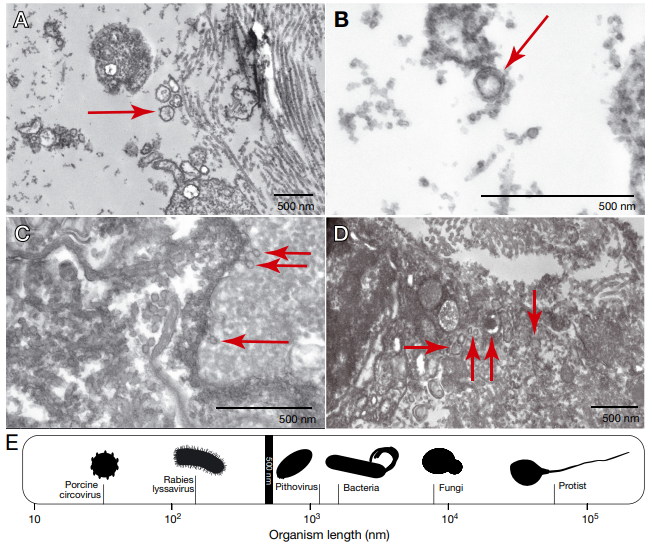
Electron microscopy images showing viral-like particles (red arrows) in facial tissue from Pacific mackerel (Miller et al 2022).

Putting Together the Pieces

To investigate this hypothesis, this week’s guest Savanah Leidholt (a co-author of the 2021 microscopy study) is using an approach for viral detection known as metatranscriptomics. Leidholt, a fourth year PhD candidate in the Microbiology department, sees this complex approach as a sort of puzzle: “Your sample of RNA has, say, 10 giant jigsaw puzzles in it. But the individual puzzles might not be complete, and the pieces might fit into multiple places, so your job is to reassemble the pieces into the puzzles in a way that gives you a better picture of your story.”

Savanah Leidholt, PhD candidate in Rebecca Vega-Thurber’s lab, is looking for evidence of viruses in the tissues of fish with puffy snout syndrome.

RNA, or ribonucleic acid, is a nucleic acid similar to DNA found in all living organisms, But where DNA is like a blueprint – providing the code that makes you, you; RNA is more like the assembly manual. When a gene is expressed (meaning the corresponding protein is manufactured), the double-stranded DNA is unwound and the information is transcribed into a molecule called messenger RNA. This single-stranded mRNA is now a copy of the gene that can be translated into protein. The process of writing an mRNA copy of the DNA blueprint is called transcription, and these mRNA molecules are the target of this metatranscriptomics approach, with the prefix “meta” meaning all of the RNA in a sample (both the fish RNA and the potential viral RNA, in this case) and the suffix “omics” just referring to the fact that this approach happens on a large scale (ALL of the RNA, not just a single gene, is sequenced here!) When mRNA is sequenced in this manner, the researchers can then conclude that the gene it corresponds to was being expressed in the fish at the time the sample was collected.

The process of transcription: making messenger RNA from DNA. Image from Nature Education.

So far, Leidholt has identified some specific genes in fish that tend to be much more abundant in fish from captive settings versus those found in the wild. Could these genes be related to why PSS is only seen in fish in captivity? It’s likely – the genes identified are immune markers, and the upregulation of immune markers is well-known to be associated with chronic stress. Think about a college student during finals week – stress is high after a long semester, maybe they’ve been studying until late in the night and not eating or sleeping well, consuming more alcohol than is recommended. And then suddenly, on the day of the test, they’re stuck in bed with the flu or a cold. The same thing can happen to fish (well, maybe not the part where they take a test!,) especially in captivity – Pacific mackerel, tuna, and other scombrid species susceptible to PSS are fairly large, sometimes swimming hundreds of miles in a single day in the ocean. But in captivity, they are often in very small tanks, constantly swimming in constrained circles. They’re not exposed to the same diversity of other fish, plankton, prey, and landscape as they would be in the wild. “Captivity is a great place to be if you’re a pathogen, but not great if you’re a fish”, says Leidholt.

The results of Leidholt’s study are an exciting step forward in the field of PSS research, as one of the biggest challenges currently facing aquaculture farms and aquariums is that there is no way to screen for PSS in healthy fish before symptoms begin to show. Finding these marker genes that appear in fish that could later on develop PSS means that in the future a test could be developed. If vulnerable fish could be identified and removed from the population before they begin to show symptoms and spread the condition, then it would mean fish farmers no longer have to cull the entire tank when PSS is noticed.

The elusive virus

One of the challenges that remains is going beyond the identification of genes in the fish and beginning to identify viruses in the samples. Viruses, which are small entities made up of a DNA or RNA core and a protective protein coating, are thought to be the most abundant biological entities on the planet Earth – and the smallest in terms of size. They usually get a bit of a bad reputation due to their association with diseases in humans and other animals, but there are also viruses that play important positive roles in their ecosystems – bacteriophages, for example, are viruses that infect bacteria. In humans, bacteriophages can attack and invade pathogenic or antibiotic-resistance bacteria like E. coli or S. aureus (for more information on phages and how they are actually studied as a potential therapy for infections, check out this November 2021 interview with Miriam Lipton!) Across the entire planet there are estimated to be between 10^7 to 10^9 distinct viral species – that’s between 10 million and 10 billion different species. And fish are thought to host more viruses than any other vertebrate species. Because of technological advancements, these viral species have only really been identified very recently, and identification still poses a significant challenge.

As a group, viruses are very diverse, so one of the challenges is finding a reliable way to identify them in a given sample. For bacteria, researchers can use a marker gene called the 16S rRNA gene – this gene is found in every single bacterial cell, making it universal, but it also has a region of variability. This region of variability allows for identification of different strains of bacteria. “Nothing like 16S exists for viruses,” Leidholt says. “Intense sequencing methods have to be used to capture them in a given sample.” The metatranscriptomic methods that Leidholt is using should allow her to capture elusive viruses by taking a scorched earth approach – targeting and sequencing any little bit of RNA in the sample at all, and trying to match up that RNA to a virus. 

To learn more about Savanah’s research on puffy snout syndrome, her journey to Oregon State, and the amazing outreach she’s doing with high school students in the Microbiology Department, tune in to Inspiration Dissemination on Sunday, November 20th at 7 PM Pacific!

Lean, Mean, Bioinformatics Machine

Machines take me by surprise with great frequency. – Alan Turing

This week we have a PhD student from the College of Engineering and advised by Dr. Maude David in Microbiology, Nima Azbijari, to discuss how he uses machine learning to better understand biology. Before we dig in to the research, let’s dig into what exactly machine learning is, and how it differs from artificial intelligence (AI). Both AI and machine learning learn patterns from data they are fed, but the difference is that AI is typically developed to be interacted with and make decisions in real time. If you’ve ever lost a game of chess to a computer, that was AI playing against you. But don’t worry, even the world’s champion at an even more complex game, Go, was beaten by AI. AI utilizes machine learning, but not all machine learning is AI. Kind of like how a square is a rectangle, but not all rectangles are squares. The goal of machine learning is to use data to improve at tasks using data it is fed.

So how exactly does a machine, one of the least biological things on this planet, help us understand biology? 

Ten years ago it was big news that a computer was able to recognize images of cats, but now photo recognition is quite common. Similarly, Nima uses machine learning with large sets of genomic (genes/DNA), proteomic (proteins), and even gut microbiomic data (symbiotic microbes in the digestive track) to then see if the computer can predict varying patient outcomes. By using computational power, larger data sets and the relationships between the varying kinds of data can be analyzed more quickly. This is great for both understanding the biological world in which we live, and also for the potential future of patient care. 

How exactly do you teach an old machine a new trick?

First, it’s important to note that he’s using a machine, not magic, and it can be massively time consuming (even for a computer) to do any kind of analysis on every element of a massive set. Potentially millions of computations, or even more. So to isolate only the data that matters, Nima uses graph neural networks to extrapolate the important pieces. Imagine if you had a data set about your home, and you counted both the number of windows and the number of blinds and found that they were the same. Then you might conclude that you only need to count windows, and that counting blinds doesn’t tell you anything new. The same idea works with reducing data into only the components that add meaning. 

The phrase ‘neural network’ can invoke imagery of a massive computer-brain made of wires, but what does this neural network look like, exactly? The 1999 movie The Matrix borrowed its name from a mathematical object which contains columns and rows of data, much like the iconic green columns of data from the movie posters. These matrices are useful for storing and computing data sets since they can be arranged much like an excel sheet, with columns for each patient and rows for each type of recorded data. He (or the computer?) can then work with that matrix to develop this neural network graph. Then, the neural network determines which data is relevant and can also illustrate connections between the different pieces of data. Much like how you might be connected to friends, coworkers, and family on a social network, except in this case, each profile is a compound or molecule and the connections can be any kind of relationship, such as a common reaction between the pair. However, unlike a social network, no one cares how many degrees from Kevin Bacon they are. The goal here isn’t to connect one molecule to another but to instead identify unknown relationships. Perhaps that makes it more like 23 and Me than Facebook.

TLDR

Nima is using machine learning to discover previously unknown relationships between various kinds of human biological data such as genes and the gut microbiome. Now, that’s a machine you don’t need to rage against.

Excited to learn more about machine learning?
Us too. Be sure to listen live on Sunday November 13th at 7PM on 88.7FM, or download the podcast if you missed it. And if you want to stay up to date on Nima’s research, you can follow them on Twitter.

Heat, Hatchlings, and Sea Turtle Survival

Heat, Hatchlings, and Sea Turtle Survival

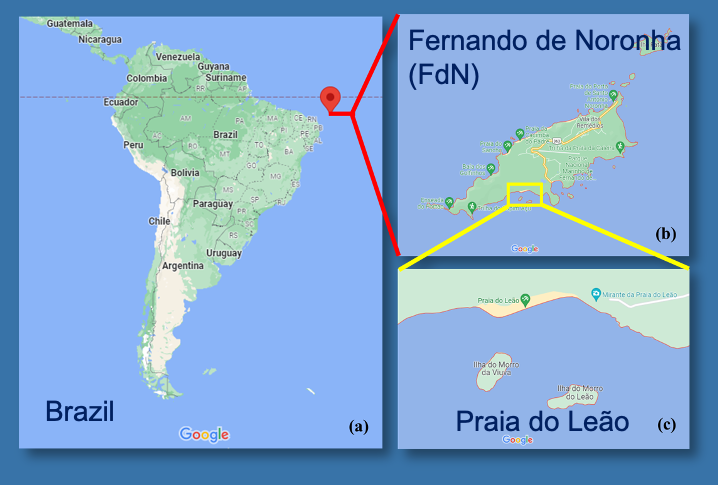
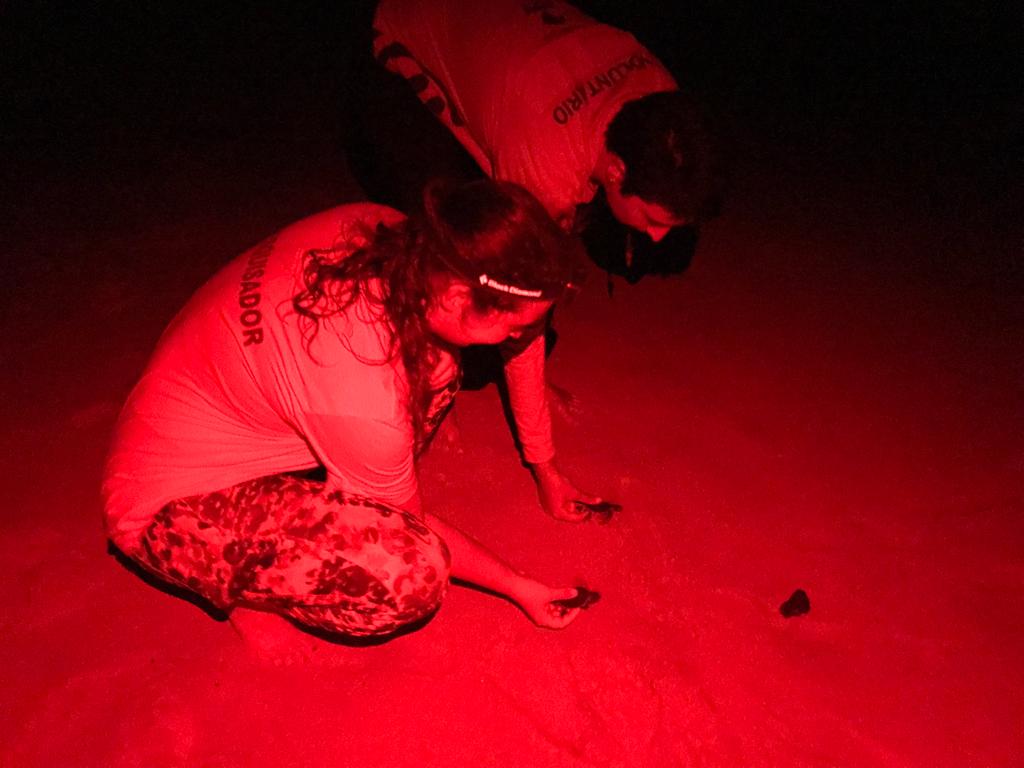
A team of researchers makes its way across the beach on this dark night, lighting their way only with starlight and moonlight. It’s high tide on this small island off the coast of Brazil, and the kind of night when green sea turtles love to come ashore to nest. The turtles fall into a trance-like state after wandering around for hours and finally building their nests, and this is when the team approaches. They take a skin sample, place a temperature logger to measure the nest temperature, and tag the turtle with a nail polish marking for future identification. One member of the team is Vic Quennessen (she/they), the subject of our next episode. Vic is a PhD student in the Department of Fisheries, Wildlife, and Conservation Sciences. Quennessen is a computational researcher on the project but helping out on nights like these is part of the job. Vic’s team collaborates with Projeto TAMAR, a Brazilian nonprofit organization that works to preserve and conserve these endangered animals throughout Brazil since the 1980s.

Vic Quennessen releases their first hatchling!

Sea turtles have no sex chromosomes, and their sex is instead determined by the environmental temperature during incubation. Eggs subjected to higher temperatures are more likely to produce female hatchlings. The point at which the sex ratio of eggs approaches 50/50 is around 29 degrees Celsius, but at just one degree higher, some clutches of eggs produce as high as 90% female hatchlings. As temperatures rise due to climate change, this has resulted in a worrying oversupply of female hatchlings.

Sea turtles are difficult to study due to their long and mysterious life cycles. It is believed that they reach reproductive maturity after around twenty-five years, but only females are readily observed because they return to land to build their nests and lay eggs. In contrast, the males stay out at sea for their entire lives. This complicates any effort to ascertain the true population structure. Sea turtles also live a long time, so there is a lag between changes in the hatchling population and the overall population. Finally, hatchlings lack external reproductive organs or other visible sexual characteristics, so the sex ratios must be estimated using temperature as a surrogate.

Vic has always loved the ocean, and they came to OSU looking to help conserve resources that are threatened, such as fish stocks or sea turtles. While attending UMass Dartmouth for their undergraduate degree, they double majored in computational mathematics and marine biology. Initially these felt like separate interests, until a professor suggested that she apply to a NOAA workshop on marine resources and population dynamics. Here she learned that mathematical methods could be a part of rigorous modeling efforts in population biology. After a gap year dedicated to science education, Vic made her way to Oregon State for a Masters in Fisheries Science. Her advisor, Prof. Will White, persuaded her to stay on for a PhD with an opportunity to study her beloved sea turtles.

Sea turtles visit the beaches of more than eighty countries, but Vic’s fieldwork focuses on a population that nests on a small Brazilian island.

Quennessen’s research seeks to predict how the green sea turtle population will be affected by their looming sex imbalance. Vic uses data collected from over 3000 hatchlings per season, including nest temperature readings as well as the numbers of nesting females, hatchlings, and captured males. They build a mathematical model to explore possible scenarios for the “mating function”, the unknown relationship between the sex ratio and reproductive success. On the one hand it is easy to imagine that such a mismatch could reduce the number of mating pairs and lead to a rapid population decline. On the other, it is not well understood how many breeding males are required to sustain the population, and adaptations in mating behavior could slow the decline in population long enough for the more optimistic climate mitigation scenarios to take effect. In any case, it will take a lot of international cooperation to conserve these ancient marine creatures – green sea turtles nest on the shores of over 80 countries. Vic’s hope is that a mathematical exploration of this question could help reveal the chances of survival for the green sea turtles and possibly inform these conservation efforts.

To learn more about Vic’s research and their other interests, including science education and working with CGE, the graduate student union at OSU, tune in Sunday, Nov 6th at 7pm PST on KBVR 88.7 FM or online!

Missed the show? Don’t worry, you can download this episode via your podcast player of choice here.

“Creepy” Beer

Happy Halloween from the ID team! This week we’re chatting about a popular halloweekend beverage: Beer and a “creepy” phenomenon seen in a west coast favorite, IPAs. Hop creep may not mean that there are creepy crawlies in your beer, but it may lead to exploding cans or a beer that’s all trick and no treat. To find out more, we are talking  with Cade Jobe on his work on hops maturity and its impact on understanding this spooky problem facing the beer industry.

Cade Jobe, a 1st year masters student in FST

Cade is a 1st year masters student in the Department of Food Science and Technology at OSU, where he works under the advisement of Dr. Tom Shellhammer. In the “Beer”, or “Hops”, lab there are a wide variety of projects on the various components of beer, in addition to offering resources to the brewing industry by running standard analytical measurements on hops. Cade moved to Oregon in pursuit of joining the Hop Lab, after falling in love with home-brewing and embarking upon a career shift from law to food science. While his master’s work is going to be more focused on the impact of wildfire-smoke on hops, his post-baccalaureate work focused on hop maturity, in particular the Citra hop variety.

How does one study the impact of hop maturity? Cade worked with a hop grower in Yakima, Washington to harvest hops from 3 fields at 7 different time points during the hop picking season. These dried samples were then sent back to Corvallis where they underwent standard hop chemical analysis, sensory analysis, and enzymatic analysis.

Cade and team harvesting hops
Cade pelletizing hops

This is all great, but how does it help me drink beer? From the chemical analysis, there are standard components that are measured to give an overall hop quality measure to know if it is going to produce the desired result. From sensory analysis, they can see what aromas are associated with the different maturity levels of the hops and what aromas they would impart in beer. Spoiler: late season hops might identify if you are a vampire! And finally, going back to the exploding beer cans, the enzymatic analysis shows the potential of hop creep occurring so that brewers can mitigate the problem.

Want to learn more about the science behind beer and more on Cade’s research into hops? Tune in Sunday, October 30th, 2022 at 7 PM on KBVR 88.7FM (https://kbvrfm.orangemedianetwork.com) or wherever you get your podcasts! 

Also, if you’re interested in learning more about the wide-world of brewing, check out Cade on the “BruLab” podcast.

This blog post was written by Jenna Fryer and posted by Lisa Hildebrand.

Stressed out corals

Coral reef ecosystems offer a multitude of benefits, ranging from coastline protection from storms and erosion to a source of food through fishing or harvest. In fact, it is estimated that over half a billion people depend on reefs for food, income, and/or protection. However, coral reefs face many threats in our rapidly changing world. Climate change and nutrient input due to run-off from land are two stressors that can affect coral health. How exactly do these stressors impact corals? This week’s guest Alex Vompe is trying to figure that out!

Alex is a 4th year PhD candidate in the Department of Microbiology at OSU, where he is co-advised by Dr. Becky Vega-Thurber and Dr. Tom Sharpton. The goal of Alex’s research is to understand how coral microbe communities change over time and across various sources of stress. While the microbial communities of different coral species can differ, typically under normal, non-stressed conditions, they look quite similar. However, once exposed to a stressor, changes start to arise in the microbial community between different coral species, which can have different outcomes for the coral host. This pattern has been coined the ‘Anna Karenina principle’ whereby all happy corals are alike, however as soon as things start to go wrong, corals suffer differently.

Alex is testing how this Anna Karenina principle plays out for three different coral species (Acropora retusaPocillopora verrucosa [also known as cauliflower coral], Porites lobata [also known as lobe coral]) in the tropical Pacific Ocean. The stressors that Alex is investigating are reduction in herbivory and introduction of fertilizer. A big source of stress for reefs is when fish populations are low, which results in a lack of grazing by fish on macroalgae. In extreme situations, macroalgae can overgrow a coral reef completely and outcompete it for light and resources. Fertilizers contain a whole host of nutrients with the intent of increasing plant growth and production on land. However, these fertilizers run-off from land into aquatic ecosystems which can often be problematic for aquatic flora and fauna. 

How is Alex testing the effects of these stressors on the corals? He is achieving this both in-situ and in the lab. Alex and his lab conduct field work on coral reefs off the island of Moorea in French Polynesia. Here, they have set up experimental apparatus in the ocean on coral reefs (via scuba diving!) to simulate the effects of reduced herbivory and fertilizer introduction. This field work is conducted three times a year. When not under the water surface, Alex sets up aquaria experiments on land in Moorea using coral fragments, which he has been able to grow in order to investigate the microbial communities more closely. These samples then get processed in the lab at OSU for genomic analysis and Alex uses bioinformatics to investigate the coral microbiome dynamics.

Curious to know more about Alex’s research? Listen live on Sunday, October 23, 2022 at 7 PM on KBVR 88.7FM. Missed the live show? You can download the episode on our Podcast Pages! Also, feel free to follow Alex on Twitter (@AVompe) and Instagram (@vompedomp) to learn more about him and his research.

Schmitty Thompson wears glasses and a sweater, and smiles at the camera while standing in front of a vast field.

What ice sheets can teach us about ancient ocean shorelines

Around 80,000 years ago, the Earth was in the middle of the late Pleistocene era, and much of Canada and the northern part of the United States was blanketed in ice. The massive Laurentide Ice Sheet covered millions of square miles, and in some places, up to 2 miles thick. Over vast timescales this ice sheet advanced its way across the continent slowly, gouging out what we now know as the Great Lakes, carving the valleys, depositing glacial tills, and transforming the surface geology of much of the southern part of Canada and northern US. Further west, the Cordilleran ice sheet stretched across what is now Alaska, British Columbia, and the northern parts of the Western US, compressing the ground under its massive weight. As these ice sheets depressed the land beneath them, the Earth’s crust bulged outwards, and as the planet warmed and the ice sheets began to melt, the pressure was released, returning the crust underneath to its previous shape. As this happened, ocean water flowed away, resulting in lower sea levels locally, but higher levels across the other side of the planet.

The effects of massive bodies of ice forming, moving, and melting are far from negligible in their impact on the overall geology of the region, the sea level throughout history, and the patterns of a changing climate. Though there are only two ice sheets on the planet today, deducing the ancient patterns and dynamics of ice sheets can help researchers fill the geological record and even make predictions about what the planet might look like in the future. Our guest on Inspiration Dissemination this week is PhD candidate and researcher Schmitty Thompson, of the Department of Geology in CEOAS. Thompson is ultimately trying to answer questions about ice distribution, sea levels, and other unknown parameters that the geologic record is missing during two different ice age warming periods. Their research is very interdisciplinary – Thompson has degrees in both math and geology, and also uses a lot of data science, computer science, and physics in their work. They are using computer modeling to figure out just what the shorelines looked like during this time period around 80,000 years ago. 

Schmitty Thompson, fourth year PhD candidate with Jessica Creveling in the Geology Department.

“I use models because the geologic record is pretty incomplete – the further back you go, the less complete it is. So by matching my models to the existing data, we can then infer more information about what the shoreline was like,” they explain. To do this accurately, Thompson feeds the model what the ice sheets looked like over the course of around 250,000 years. They also need to incorporate other inputs to the model to get an accurate picture – variables such as the composition of the interior of the Earth, the physics of Earth’s interior, and even the ice sheets’ own gravitational pull (ice sheets are so massive they exert a gravitational pull on the water around them!)

Using math to learn about ice

The first equation to describe global changes in sea level was published in 1976, with refining throughout the 90s and early 2000s. Thompson’s model builds on these equations in two versions: one which can run in about 10 minutes on their laptop, and another which can take multiple weeks and must run on a supercomputer. The quicker version uses spherical harmonics as the basis function for the pseudospectral formulation, which is basically a complex function that does math and incorporates coefficient representations of the earth’s radius, meridional wave numbers, variation across north/south and east/west, and a few other variables. The short of it is that it can perform these calculations across a 250k time span relatively quickly, but it makes assumptions about the homogeneity of the earth’s crust and mantle viscosity. Think of it like a gumball: a giant, magma-filled gumball with a smooth outer surface and even layers. So while this method is fast, the assumptions that it makes means the output data is limited in its usefulness. When Thompson needs a more accurate picture, they turn to collaborators who are able to run the models on a supercomputer, and then they work with the model’s outputs.

While the model is useful for filling in gaps in the historical record, Thompson also points out that it has uses in predicting what the future will look like in the context of a changing climate. After testing out these models and seeing how sensitive they are, they could be used by researchers looking at much smaller time scales and more sensitive constraints for current and future predictions. “There are still lots of open questions – if we warm the planet by a few degrees, are we going to collapse a big part of Antarctica or a small part? How much ice will melt?”


To learn more about ice sheets, sea levels, and using computer models to figure out how the shoreline looked thousands of years ago, tune in to Schmitty Thompson’s episode on Inspiration Dissemination this upcoming Sunday evening at 7 PM PST. Catch the show live by streaming on https://kbvrfm.orangemedianetwork.com/, or check out the show later wherever you get your podcasts!

Thompson was also recently featured on Alie Ward’s popular podcast Ologies. You can catch up with all things geology by checking out their episode here.

Warming waters, waning nutrition

Here at Inspiration Dissemination, we are fascinated by the moments of inspiration that lead people to pursue graduate studies. For our next guest, an experience like this came during a boat trip accompanying the National Oceanic and Atmospheric Administration (NOAA) on a research expedition. Becky Smoak, an M.S. student in OSU’s Marine Resource Management program, remembers feeling in awe of the vibrant array of marine life that she saw, including whales, sunfish, and sharks. Growing up on a farm in eastern Washington, Becky had always wanted to be a veterinarian. During her undergraduate studies at Washington State University, she came to feel that the culture of pre-veterinary students was too cutthroat. In search of something more collaborative, she came to Oregon State in summer 2019 for a Research Experience for Undergrads (REU) and was impressed by the support and inclusivity of her research mentors. A couple years later, Becky is now on the cusp of graduation after her time spent studying marine life.

Becky’s graduate work is the continuation of a long-running collaboration between Oregon State and NOAA out of the Hatfield Marine Science Center in Newport. Beginning in 1996 under the direction of Bill Peterson, a team of researchers has monitored oceanic conditions along a route called the Newport Hydrographic, which extends in a straight line eastward from the Oregon Coast and intersects the northern part of the vast Californian Current. The team takes samples of ocean water at fixed points along the route and analyzes the concentrations of plankton and other organisms or compounds of interest. 

Becky Smoak, teaching on the OSU research vessel The Elakha.

The specific biochemicals that Becky studies are Omega-3 fatty acids. In a set of experiments from the 1930s, rats fed with a diet poor in Omega-3 fatty acids eventually died, demonstrating that these compounds are essential to life and are not produced by mammals. Two types of Omega-3 fatty acids, called EPA and DHA, can only be synthesized by phytoplankton, microscopic photosynthetic organisms that live in the ocean. The ability of phytoplankton to produce fatty acids is intimately linked with oceanic temperature. Studies have shown that increases in sea surface temperature and decreases in nutrient availability can decrease the quality of fatty acids in phytoplankton, thus decreasing food availability and quality in the marine environment. Fatty acid levels have downstream effects on the ecosystem, for example on copepods, a type of zooplankton that feeds on phytoplankton. Becky’s team affectionately refers to the copepod colony of the chilly northern Pacific as the “cheeseburger” copepods, in contrast to the “celery” copepods of the southern Pacific colony. The present-day effect of temperature also points to a key ecological challenge, as warming oceans due to climate change could disrupt the supply of this vital nutrient.

In her thesis work, Becky seeks to untangle the contributions of phytoplankton community structure to oceanic Omega-3 fatty acid levels. She uses a set of statistical methodologies called nonmetric multidimensional scaling to uncover correlations in the datasets. A particularly interesting instrument used to collect her data is a flow cytometry robot dubbed ‘Lucy’. Lucy uses advanced imaging to count individual plankton and characterize their sizes. This yields an improvement in accuracy over older monitoring techniques that assumed a fixed size for all plankton. Becky’s goal for finishing her thesis is to create a statistical procedure for predicting fatty acid availability given information on phytoplankton population structure.

To hear more about Becky’s journey to OSU, her experiences as a first-generation college student, and the fascinating role of Omega-3s in marine ecosystems, be sure to tune in this Sunday October 9th at 7pm on KBVR.

This article was written by Joseph Valencia.

Violence and Masculinity in Film

After a long summer hiatus, Inspiration Dissemination is back on the airwaves and your podcast platforms this week! Kicking off our Fall quarter lineup is Andrew Herrera, MA candidate with Jon Lewis in the School of Writing, Literature, and Film here at Oregon State University.

Herrera’s research might sound like a dream come true to some: “I study movies, honestly.”

For Herrera it really is a dream come true – he grew up with a lifelong love of film, inspired by watching movies with his mother as a child, the same movies that she had also grown up with. But it was after seeing Darren Aronofsky’s 2010 hit film Black Swan that he knew that studying film was going to be a career for him. The psychological horror production stars Natalie Portman as a dancer in a production of Swan Lake and follows her descent into madness as she struggles with a rival dancer. Herrera recalls that after seeing the film in theaters he sat in the car for several hours, just thinking about what he’d seen. This was around the time he learned that he could actually study film as an academic pursuit, and ended up writing about Black Swan for a literature class, comparing and contrasting it with The Strange Case of Dr. Jekyll and Mr. Hyde.

Andrew Herrera, MA candidate in SWLF.

He eventually finished his Bachelor’s degree in English Literature here at Oregon State University, and decided to stay and pursue a Master’s in Film Studies. His dissertation is focusing on the themes of three films by acclaimed Danish director Nicolas Winding Refn: Drive, Only God Forgives, and Bronson. Herrera is looking at the three films through the lens of masculinity, gender performativity and violence – all three center around male characters engaged in violent trajectories. Herrera in part argues that the three films present masculinity as a kind of performance or even a very literal costume, in the case of Drive (Ryan Gosling’s character is known for his iconic white jacket which sports a scorpion design, which he is only seen wearing when committing acts of violence.) The removal of weakness and femininity through violence and fighting leads to the rebirth of masculinity in Bronson, and in Only God Forgives features an almost Oedipal-like protagonist (also played by Ryan Gosling) who eventually cuts open the womb of his dead mother in a representation of asserting control over his own masculinity. Herrera is also interested in the intersection of masculinity and queerness in media, and how these themes show up explicitly or implicitly in these three and other films.


To hear more about these movies, the way masculinity is portrayed in film and its cultural impacts, and Herrera’s research, tune in to Inspiration Dissemination this Sunday evening at 7 PM at KBVR 88.7 FM or listen live online at https://kbvrfm.orangemedianetwork.com/. If you missed the live episode don’t forget to check out the podcast, now available wherever you get your podcasts.

Environmental Justice: what it is, and what to do about it

The overlap between environmental science and social justice are rare, but it has been around since at least the early 1990’s and is becoming more well-known today. The framework of Environmental Justice was popularized by Robert Bullard when his wife, a lawyer, asked him to help her with a case where he was mapping all the landfills in the state of Texas and cross reference the demographics of the people who lived there. Landfills are not the most pleasant places to live next to, especially if you never had the opportunity to choose otherwise. Bullard found that even though Houston has a 75% white population, every single city-owned landfill was built in predominantly black neighborhoods. The environmental hazards of landfills, their emissions and contaminated effluent, were systematically placed in communities that had been – and continue to be – disenfranchised citizens who lacked political power. Black people were forced to endure a disproportionate burden of the environmental hazards, and procedural justice was lacking in the decision making process that created these realities. Unfortunately, this is not a unique situation to Houston, or Texas, because this pattern continues today

Environmental justice is an umbrella term that we cannot fully unpack in a blogpost or a single podcast, but it is fundamentally about the injustices of environmental hazards being forced upon disadvantaged communities who had little to no role in creating those hazards. This is not a United States-specific issue although we do focus on state-side issues in this episode. In fact, some of the most egregious examples occur in smaller and lesser known countries (see our episode with Michael Johnson, where his motivation for pursuing marine sciences in graduate school is because the islands of micronesia where he grew up are literally being submerged by the rising seas of global warming). The issues we discuss are multifaceted and can seem impossible to fix. But before we can fix the issues we need to really understand the socio-political-economic ecosystem that has placed us exactly where we are today. 

To begin to discuss all of this, we have Chris Hughbanks who is a graduate student at Oregon State and one of the Vice Presidents of the local Linn-Benton NAACP branch and a member of their Environmental and Climate Justice committee (Disclaimer: Adrian is also a branch member and part of the committee). We begin the discussion with a flood in Chris’ hometown of Detroit. Chris describes how they never really had floods because when precipitation occurs it’s usually either not that much rain or cold enough for it to snow instead. Because it hardly rains that much, very few people have flood insurance. But that pesky climate change is making temperatures warmer and precipitation events more intense than ever before causing flooding to occur in 2014, 2016, 2019, and 2020. As you might guess, the effects of this natural disaster were not equally shared by all citizens of Detroit. We discuss the overlap between housing discrimination and flood areas, how the recovery effort left so many out to [not] dry. 

We end the episode with ways to get involved at the local level. First, consider learning more about the Linn-Benton NAACP branch, and the initiatives they focus on to empower local communities. Vote, vote, vote, and vote. Make sure you’re registered, and everyone else you know is registered to vote. And recognize these problems are generations in the making, and it will take just as long to fully rectify them. Finally, I am reminded of an episode interviewing millennial writers about what it means to be born when global warming was a niche research topic, but to come of age when climate change has become a global catastrophe. They rightfully point out that there are a myriad of possibilities for human salvation and sacrifice for every tenth of a degree between 1.5 and 3.0°C of warming that is predicted by the most recent 6th edition of the IPCC report. As grim as our future seems, what an awesome task for our generations to embark upon to try and “create a polity and economy that actually treats everybody with dignity, I cannot think of a more meaningful way to spend a human life.”

If you missed the show, you can listen to this episode on the podcast feed!

Additional Reading & Podcast Notes

The Detroit Flood – We mentioned the NPR article reporting that 40% of people living in Detroit experienced flooding, how black neighborhoods were at higher risk to flooding, and that renters (who are disproportionately black) were nearly twice as likely to experience flooding compared to those who owned their homes. We also mentioned a map of Detroit, showing which areas are more at risk of flooding. Another local article described how abnormal that summer in Detroit and the surrounding areas were compared to other years.

We listed a number of Environmental Justice links that include:

  • Dumping in Dixie, the 1990 book written by Robert Bullard which is considered essential reading for many law school courses on environmental justice.  
  • We listed the organizing principles of the modern environmental justice movement, first codified in 1991 at the First National People of Color Environmental Leadership Summit
  • A story near Los Angeles where mixed-use city zoning laws allowed industrial businesses to operate near residential areas, causing soil lead pollution that was unknown until Yvette Cabrera wrote her own grant to study the issue. Read her story in Grist: Ghost of Polluter’s Past that describes the immense efforts she and researchers had to go through to map soil lead contamination, and how the community has used that information to generate positive change for the community. 
  • Environmental [in]justice afflicts the global south as well, where a majority of forest loss since the 1960’s has occurred in the tropical regions of the world. 

Adrian mentioned a number of podcasts for further listening:

  • Two Voltz podcasts about recent  increased traffic fatalities and how to get cars out of downtowns
  • Two past Inspiration Dissemination episodes with Holly Horan on maternal infant stress in Puerto Rico and her experience conducting research after Hurricane Maria, and Michael Johnson who one of his motivation to go to graduate school was because where he grew up – Micronesia – has been feeling the rising seas of climate change long before other countries. 
  • A deep investigative journalism podcast called Floodlines about the events leading up to Hurricane Katrina in 2005 and what happened after (or, what should have happened). 
  • If all this hurricane and flooding talk has got you down, consider that heat kills more people in the US than floods, hurricanes, or tornadoes according to the National Weather Service.

We also discussed the 2021 heat dome in the Pacific Northwest. This led to Oregon passing some of the strongest protections for heat for farmworkers (and others working outside). Consider reading a summary of wildfire effects on outdoor workers, and a new proposal in Oregon to pay farmworkers overtime (this proposal was recently passed in March of 2022). Related to farmworkers, Adrian mentioned the 2013 Southern Poverty Law Center’s analysis of guest visa worker programs titled Close to Slavery: Guestworker programs in the United States

We returned to the fact that housing is central to so many injustices for generations. The Color of Law: A forgotten history of how our government segregated America by Richard Rothstein is a historical analysis of the laws and policies that shaped today’s housing patterns. One example Rothstein often cites is the construction of freeways purposefully routed through black communities; recently one developer accidentally said the quiet part out loud in explaining where a gas pipeline was routed because they choose “the path of least resistance“. We also mentioned that in 2019 and in 2020, Corvallis has ~37% of its residents being rent burdened (meaning households spend more than 50% of their income on rent), which is the worst city in the state over both years. You can also read about a California Delta assessment that focuses on agricultural shifts in the region due to land erosion and flooding, but they mention how current flood risk is tied to historical redlining.  

From A(lgorithms) to Z(O-1 proteins): A Computer Scientist’s Journey into the Lab

By Grace Deitzler

Improvements in DNA sequencing technology have allowed scientists to dig deeper than ever before into the intricacies of the microbes that inhabit our gut, also called the gut microbiome. Massive amounts of data – on the scale of pentabytes – have been accumulated as labs and institutes across the globe sequence the gut microbiome in an effort to learn more about its inhabitants and how they contribute to human health. But now that we have all of this data (and more accumulating all the time), the challenge becomes making sense of it.

This is a challenge that Christine Tataru, a rising fifth year PhD student in the Department of Microbiology, is tackling head-on. “My research is trying to understand what a ‘healthy’ gut microbiome actually looks like, how it ‘should’ look, and to do so in a way that is integrative,” she explains. 

A woman with long hair in a red and white striped shirt sits at a computer.
Christine Tataru, fifth year PhD student in Maude David’s lab.

An integrative approach looks at all of the processes and relationships that are occurring between all of the trillions of microorganisms in our gut, and the cells within our body. Previous microbiology dogma focused on the behavior and impact of singular species such as pathogens, but as we learn more about microbiomes, this approach becomes limiting. There are a vast number of relationships that can occur between microbes and human cells. And there are many different lenses through which we can look at this system: taking a census of what microbes are present; tracking the genes that are present rather than just the microbes (this tells us about the functions that might be carried out); and what proteins or metabolites are actually present, whether those are created by the bacteria or the host. Each piece of the puzzle allows us a glimpse of the massively complex system that is the gut microbiome.

“It’s difficult for a human brain to keep track of these relationships and sources of variations, so I use computer algorithms to try to get a picture of what is happening, and what that might mean for health.” 

It’s an approach that makes sense for the Stanford-trained computer-scientist-turned-biologist. Christine recalls a deep learning class in college in which a natural language processing algorithm on the whiteboard struck her with inspiration: what if instead of being applied to words, this algorithm could be applied to gut microbiomes? The thought stuck with her and when she came to OSU to pursue her PhD, she already had a clear goal in mind for what she wanted to do.

The natural language processing and interpretation algorithm treats words in a document as discrete entities, and looks for patterns and relationships between words to gain context and “understand” the contents. A computer can’t really understand what words mean linguistically and with the complex nuances that natural language presents, but they are really good at looking for patterns. It can look at what words occur together frequently, what words never occur together, and what words share a ‘social network’ — words that don’t appear together, but appear with the same other words. Christine has developed a way to apply this algorithm to large gut microbiome datasets: using this approach to identify what microbes frequently appear together, which don’t, and which share ‘social networks’. This produces clusters of microbes, or what she refers to as ‘topics’, which can then be interpreted by humans to try to understand how these clusters relate to certain aspects of health. You can read more about this method in her recent PLOS Computational Biology publication here.

It’s quite the challenging undertaking: no one has done this type of approach before, and even when the clusters are generated, we still need to be able to interpret what it means – why is it interesting or important that these microbes occur with each other and also correlate with these genes or metabolites? Biologically, what does it actually mean?

The question of biological meaning prompted Christine to pivot to a more traditional ‘wet lab’ biology approach. “Who gave this computer scientist a pipette,” she jokes. But to be perfectly honest, it makes a lot of sense: who better to investigate the hypotheses that can be generated by computers than the scientist who wrote the code?

Taking the ‘integrative approach’ to the next level, she now works on recapitulating the environment of the gut microbiome on a chip in the lab. The organ-on-a-chip system is a fairly new approach to studying biological mechanisms in a way that better mimics the naturally occurring environment. In Christine’s case, she is using a ‘gut on a chip’, which is made of a thin piece of silicone with input and output channels. The silicone is split by a microporous membrane in such a way that two different kinds of cells can be grown, one on the top layer and one on the bottom. What makes this system unique as compared to traditional cell culture is that the channels and membrane allow for constant flow of growth media, which physically simulates the flow of blood over the cells. It can also mimic peristalsis, which is the stretching and relaxing of intestinal cells that helps push food and nutrients through the digestive tract. It’s a sophisticated system, and one that allows her a high degree of control over the environment. She can use this system to mimic Inflammatory Bowel Disease, and then add in specific microbes or combinations of microbes to see how the gut cells respond, using findings from her algorithm results to inform what kinds of additions might have anti-inflammatory effects.

Christine in a biosafety hood, preparing gut-chips for experiments.

This innovative approach provides Christine another lens through which to view the relationship between the gut microbiome and health. Though she will be finishing her doctorate at the end of the year, the curiosity doesn’t end there – “Broadly, my life goal to some extent has always been to make ways for people to help people.” Whether that’s pipeline and methods development or building the infrastructure to study complex biological relationships, Christine’s innovation-driven approach is sure to lead to huge strides in our understanding of how the tiny living things in our gut influence our health, behavior, and mood.

Tune in at 7 PM this Sunday evening on KBVR 88.7 or stream online to hear more about her research and how she ended up here at OSU!