Our Energy System in Transition: Pushing The Grid Towards Zero Emissions

Our climate in the next thirty years will not look the same as today, and that’s exactly why our energy systems will also soon look completely different. Energy systems are the big umbrella of how and where we create electricity, how we transport that electricity, and how we use electricity. We’re discussing the past and the future of our energy environment with Emily Richardson, a Masters of Engineering student in the Energy Systems Program.

Emily holding up a multi-colored sign with the words "FOR THE WATER WE DRINK".
Emily Richardson preparing for some good trouble

When our energy infrastructure was originally built, energy generation, transport, and usage was a one-way street. Utility companies made or acquired the electricity, built poles and wires to transport that electricity to then be used in homes and businesses. Although that infrastructure was only made to last 50 years, many are pushing 100 years of operation. 

If it ain’t broke, don’t fix it” some might say, but we’re not living in the same energy reality when the infrastructure was originally built. For in-depth visuals of our energy generation and usage, we recommend viewing Lawrence Livermore National Labs. Now we have a different energy portfolio (e.g. wind and solar) but there’s also a two-way street of electricity movement that is required. Rooftop solar helps power individual homes, but when zero to little energy is being used in-house and it’s sunny outside, that excess energy generation on your rooftop moves back upstream and can fulfill energy needs in other places. A two-way street is quickly being paved. It’s worth remembering that energy is on demand, meaning we only make exactly as much energy as what’s being used. If there is excess generation in a highly distributed way (i.e. home solar panels) it adds another level of complexity to our energy systems because there is no “overflow” valve for electricity.

Imagine if your toilet, that slowly moves water in one direction, was suddenly expected to move water in the other direction and back and forth as quick as the speed of light? Yikes indeed. City-wide plumbing infrastructure was bult to accommodate the most extreme events like the Super Bowl flush (when everyone in the city/state/country runs to the bathroom at halftime). While it’s an extreme circumstance, the infrastructure was built to prepare for it, and it works! But our energy systems were hardly made for this kind of reverse movement of energy, especially on a large scale as more people install rooftop solar.

Beyond the two-way street, there’s also rush hour to worry about. The UK is known for their tea; at a specific time after a popular TV show ends about one-million teakettles get turned on simultaneously. Without planning and foresight this would lead to an electricity shortage and people losing power. But the UK government imports 200-600 megawatts of energy, sometimes coming from a hydroelectric dam and/or nuclear energy, to accommodate their hot tea requirements. It’s surprisingly complicated to move this much power all at once, but with strategic planning there are solutions!

Everything in the energy world is physically connected. Even if the poles and wires and outlets are hidden behind walls there’s an immense amount of planning and design that you will never see because if infrastructure is working well, you can accidently forget its existence. When it fails, it can fail catastrophically. The 2020 Holiday Farm Fire in Oregon was initiated by downed powerlines, and the 2018 Paradise Fire in California was also initiated by malfunctioning powerlines. There are a multitude of reasons why those fires were especially damaging (location of ignition, exceptionally dry fuels, extreme wind events, drought and insect stressed trees, too many trees per acre, etc.), and why wildfires will get worse in the future (rising temperatures and changing precipitation patterns).

But our collective future requires energy, a lot of it, to be efficiently distributed and stored that requires a radical shift in our hardware, software, and maybe even our philosophy of energy usage. You don’t want to miss the discussion with Emily who will give us the deep dive on how we arrived at our energy reality and what our energy future will need to look like. This conversation is happening at 7pm on KBVR 88.7 FM, but you can also listen via the podcast feed.

Emily at the edge of a lake ready to begin kayaking
Emily Richardson preparing for some adventures on the kayak

Additional Notes
On air we mentioned a few resources that can provide more deep dives! The first is the Energy Gang Podcast that focuses on energy, clean technology, and the environment. The Big Switch Podcast is a five-part series on how the power grid works and how upcoming changes to the gird can help society. The Volts Podcast is an interview based show untangling our messy climate future and hopeful energy transitions. Emily mentioned a presentation titled Imagining a Zero Emissions Energy System.
The non-Ghostbusting Venkman: a virus that “eats” marine bacteria

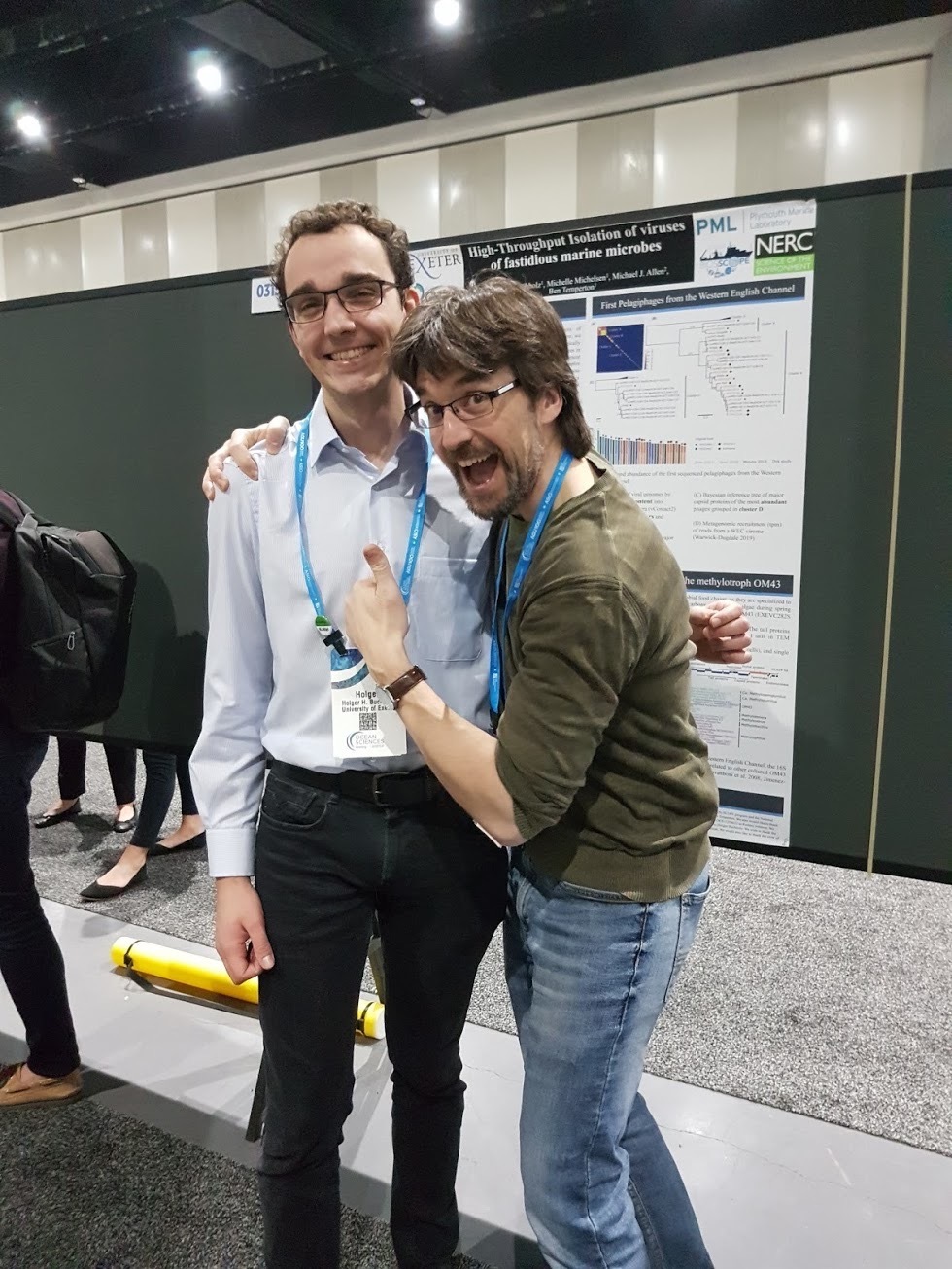
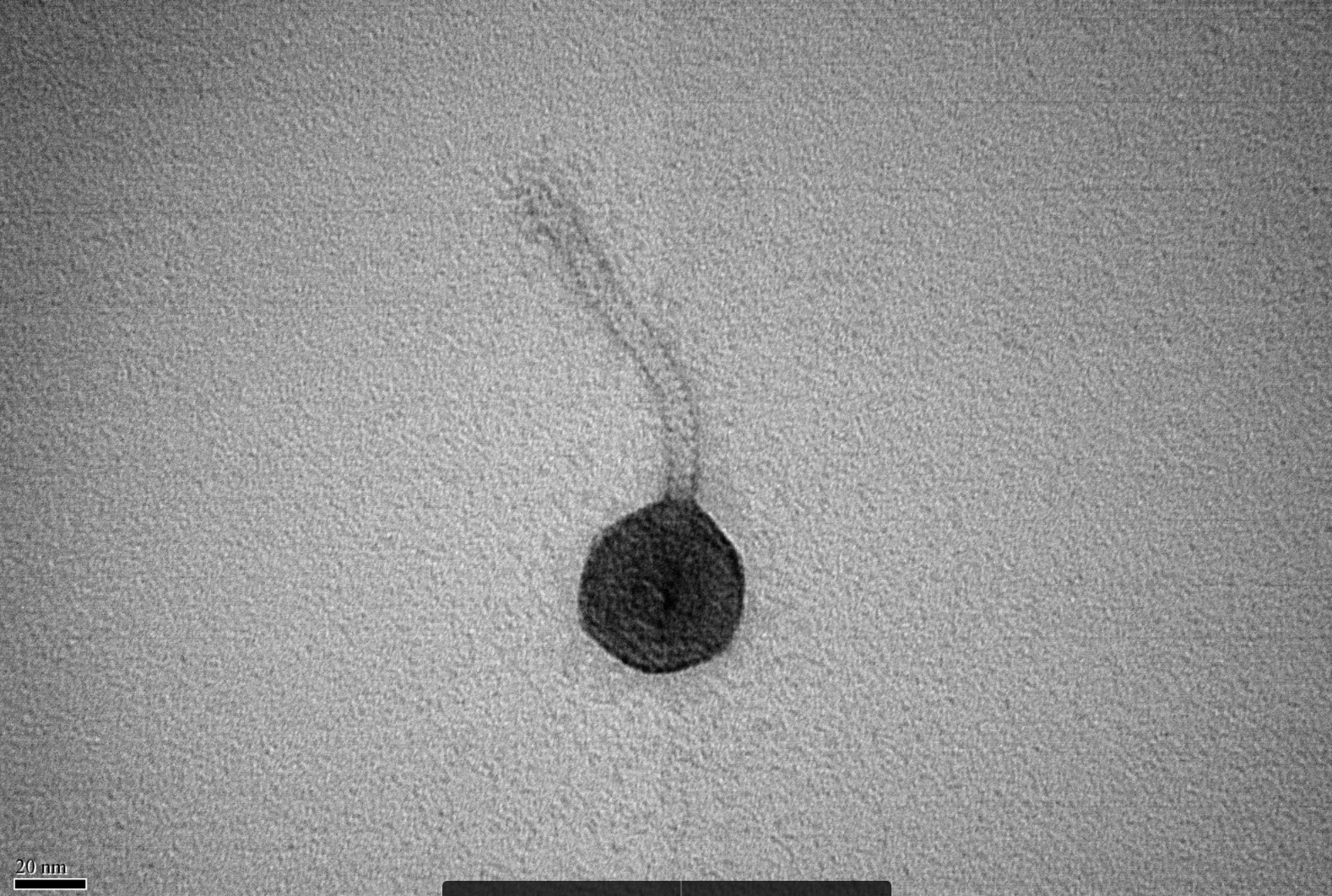
Have you ever considered that a virus that eats bacteria could potentially have an effect on global carbon cycling? No? Me neither. Yet, our guest this week, Dr. Holger Buchholz, a postdoctoral researcher at OSU, taught me just that! Holger, who works with Drs. Kimberly Halsey and Stephen Giovannoni in OSU’s Department of Microbiology, is trying to understand how a bacteriophage (a bacteria-eating virus), called Venkman, impacts the metabolism of marine bacterial strains in a clade called OM43.

Bacteria that are part of the OM43 clade are methylotrophs, in other words, these bacteria eat methanol, a type of volatile organic compound. It is thought that the methanol that the OM43 bacteria consume are a by-product of photosynthesis by algae. In fact, OM43 bacteria are more abundant in coastal waters and are particularly associated with phytoplankton (algae) blooms. While this relationship has been shown in the marine environment before, there are still a lot of unknowns surrounding the exact dynamics. For example, how much methanol do the algae produce and how much of this methanol do the OM43 bacteria in turn consume? Is methanol in the ocean a sink or a source for methanol in the atmosphere? Given that methanol is a carbon compound, these processes likely affect global carbon cycles in some way. We just do not know how much yet. And methanol is just one of many different Volatile Organic Carbon (VOC) compounds that scientists think are important in the marine ecosystem, and they are probably consumed by bacteria too!

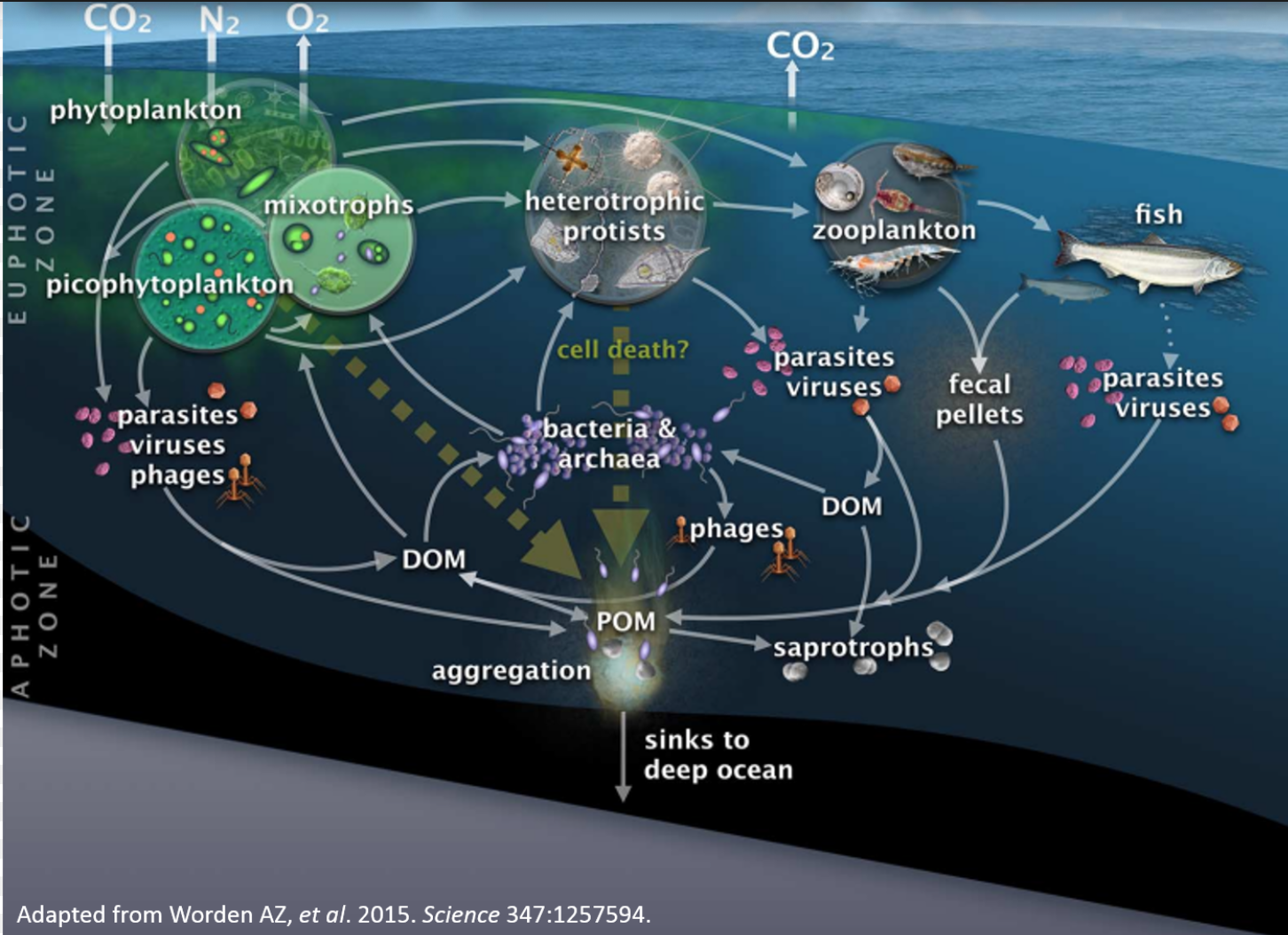
Depiction of the carbon cycle within the marine food web. DOM means Dissolved Organic Material, POM stands for Particulate Organic Material. This refers to all the things that are bound within cells that gets released when for example viruses destroy cells. 

All of this gets even more complicated by the fact that a bacteriophage, by the name of Venkman, infects the OM43 bacteria. If you are a fan of Ghostbusters and your mind is conjuring the image of Bill Murray in tan coveralls at the sound of the name Venkman, then you are actually not at all wrong. During his PhD, which he conducted at the University of Exeter, part of Holger’s research was to isolate the bacteriophage that consumes OM43 bacteria (which he successfully did). As a result, Holger and his advisor (Dr. Ben Temperton, who is a big Ghostbusters fan) were able to name the bacteriophage and called it Venkman. Holger’s current work at OSU is to try and figure out how the Venkman bacteriophage affects the metabolism of methanol in OM43 bacteria and the viral influence on methanol production in algae. Does the virus increase the bacteria’s methanol metabolism? Decrease it? Or does nothing happen at all? At this point, Holger is not entirely sure what he is going to find, but whatever the answer, there would be an effect on the amount of carbon in the oceans, which is why this work is being conducted.

Holger is currently in the process of setting up experiments to answer these questions. He has been at OSU since February 2022 and has funding to conduct this work for three years from the Simons Foundation. Join us live on Sunday at 7 pm PST on 88.7 KBVR FM or https://kbvrfm.orangemedianetwork.com/ to hear more about Holger’s research and how a chance encounter with a marine biologist in Australia set him on his current career path! Can’t make it live, catch the podcast after the episode on your preferred podcast platform!

Spaghetti & Networks: Oodles of Nodes

Picture a bowl of spaghetti and meatballs. There are pristine noodles, drenched in rich tomato sauce, topped with savory meatballs. Now imagine you’re only allowed to eat just one noodle, and one meatball. You’re tasked with finding the very best, the most interesting bite out of this bowl of spaghetti. It might sound absurd, but replace spaghetti with ‘edges’ and meatballs with ‘nodes’ and you’ve got a network.

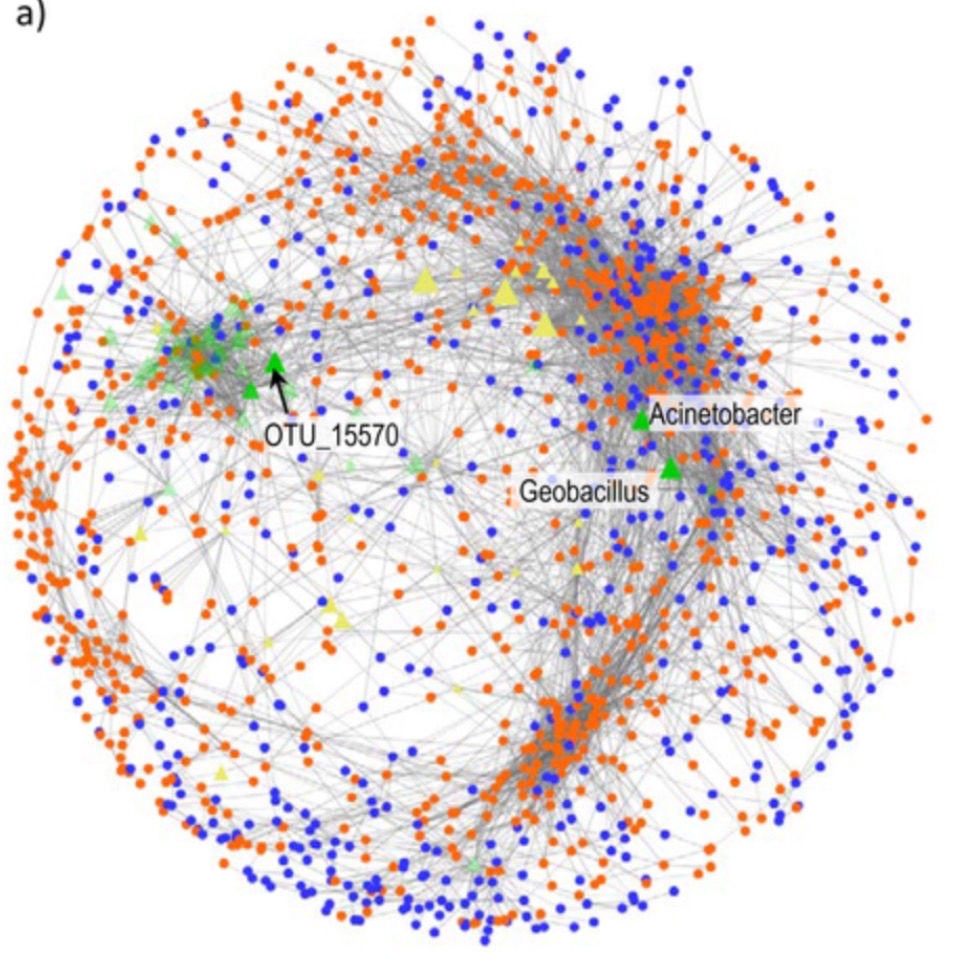
An image of a network from Nolan’s recent publication. The lines are ‘edges’ and the dots are ‘nodes’.

Computational biologists like our guest this week use networks to uncover meaningful relationships, or the tastiest spaghetti noodle and meatball, between biological entities.
Joining us this week is Nolan Newman, a PhD candidate in the College of Pharmacy under PI Andriy Morgun. Nolan’s research lies at the intersection of math, statistics, computer science, and biology. He’s looking at how networks, such as covariation networks, can be used to look for relationships and correlations between genes, microbes, and other factors from massive datasets which compare thousands or even of biological entities. With datasets this large and complex, it can be difficult to pare down just the important or interesting relationships – like trying to scoop a single bowl of spaghetti from a giant tray at a buffet, and then further narrowing it down to pick just one interesting noodle.

Nolan Newman, PhD candidate


Nolan is further interested in how different statistical thresholds and variables contribute to how the networks ‘look’ when they are changed. If only noodles covered in sauce are considered ‘interesting’, then all of the sauce-less noodles are out of the running. But what if noodles are only considered ‘sauce-covered’ if they are 95% or more covered? Could you be missing out on perfectly delicious, interesting noodles by applying this constraint?


If you’re left scratching your head and a little hungry, fear not. We’ll chat about all things computational biology, networks, making meaning out of chaos, and why hearing loss prompted Nolan to begin a career in science, all on this week’s episode of Inspiration Dissemination. Catch the episode live at 7 PST at 88.7 FM or https://kbvrfm.orangemedianetwork.com/, or catch the podcast after the episode on any podcast platform.

AI that benefits humans and humanity

When you think about artificial intelligence or robots in the everyday household, your first thought might be that it sounds like science fiction – like something out of the 1999 cult classic film “Smart House”. But it’s likely you have some of this technology in your home already – if you own a Google Home, Amazon Alexa, Roomba, smart watch, or even just a smartphone, you’re already plugged into this network of AI in the home. The use of this technology can pose great benefits to its users, spanning from simply asking Google to set an alarm to wake you up the next day, to wearable smart devices that can collect health data such as heart rate. AI is also currently being used to improve assistive technology, or technology that is used to improve the lives of disabled or elderly individuals. However, the rapid explosion in development and popularity of this tech also brings risks to consumers: there isn’t great legislation yet about the privacy of, say, healthcare data collected by such devices. Further, as we discussed with another guest a few weeks ago, there is the issue of coding ethics into AI – how can we as humans program robots in such a way that they learn to operate in an ethical manner? Who defines what that is? And on the human side – how do we ensure that human users of such technology can actually trust them, especially if they will be used in a way that could benefit the user’s health and wellness?

Anna Nickelson, a fourth-year PhD student in Kagan Tumer’s lab in the Collaborative Robotics and Intelligent Systems (CoRIS) Institute in the Department of Mechanical, Industrial and Manufacturing Engineering, joins us this week to discuss her research, which touches on several of these aspects regarding the use of technology as part of healthcare. Also a former Brookings Institute intern, Anna incorporates not just coding of robots but far-reaching policy and legislation goals into her work. Her research is driven by a very high level goal: how do we create AI that benefits humans and humanity?

Anna Nickelson, fourth year PhD student in the Collaborative Robotics and Intelligent Systems Institute.

AI for social good

When we think about how to create technology that is beneficial, Anna says that there are four major considerations in play. First is the creation of the technology itself – the hardware, the software; how technology is coded, how it’s built. The second is technologists and the technology industry – how do we think about and create technologies beyond the capitalist mindset of what will make the most money? Third is considering the general public’s role: what is the best way to educate people about things like privacy, the limitations and benefits of AI, and how to protect themselves from harm? Finally, she says we must also consider policy and legislation surrounding beneficial tech at all levels, from local ordinances to international guidelines. 

Anna’s current research with Dr. Tumer is funded by the NSF AI Institute for Collaborative Assistance and Responsive Interaction for Networked Groups (AI-CARING), an institute through the National Science Foundation that focuses on “personalized, longitudinal, collaborative AI, enabling the development of AI systems that learn personalized models of user behavior…and integrate that knowledge to support people and AIs working together”, as per their website. The institute is a collaboration between five universities, including Oregon State University and OHSU. What this looks like for Anna is lots of code writing and simulations studying how AI systems make trade-offs between different objectives.For this she looks at machine learning for decision making, and how multiple robots or AIs can work together towards a specific task without necessarily having to communicate with each other directly. For this she looks at machine learning for decision making in robots, and how multiple robots or AIs can work together towards a specific task without necessarily having to communicate with each other directly. Each robot or AI may have different considerations that factor into how they accomplish their objective, so part of her goal is to develop a framework for the different individuals to make decisions as part of a group.

With an undergraduate degree in math, a background in project management in the tech industry, engineering and coding skills, and experience working with a think tank in DC on tech-related policy, Anna is uniquely situated to address the major questions about development technology for social good in a way that mitigates risk. She came to graduate school at Oregon State with this interdisciplinary goal in mind. Her personal life goal is to get experience in each sector so she can bring in a wide range of perspectives and ideas. “There are quite a few people working on tech policy right now, but very few people have the breadth of perspective on it from the low level to the high level,” she says. 

If you are interested in hearing more about Anna’s life goals and the intersection of artificial intelligence, healthcare, and policy, join us live at 7 PM on Sunday, May 7th on https://kbvrfm.orangemedianetwork.com/, or after the show wherever you find your podcasts. 

Horror in Fiction

In 2021 Jordan Peele remade the 1992 cult horror classic, Candyman. The 2021 remake received critical success and despite being delayed several times due to the covid-19 pandemic, was a box office success as well. In both the 1992 and 2021 versions, the eponymous main character is a black man. But in the remake, the character deviates from the usual narrative trope of being a menacing black man to a man with complex emotions and feelings. For most viewers, these changes make for a good story, but likely are not things that they dwell on, and certainly are forgettable by the time they have left the theater. But for our guest this week, literature MA student Marisa Williams in the School of Writing, Literature, and Film, these differences are what gives them inspiration and are what inform their research. While Marisa has just begun their thesis work, they know that they will examine issues of racism on black bodies within contemporary literature. Specifically, Marisa plans to explore how the legacy of colonialism has remained in the literature of French-Caribbean authors writing in the 21st century despite more than two centuries of emancipation from colonialism. 

In order to do this kind of research, Marisa first has to learn about the history and philosophy of colonialism and post-colonial identity in the Caribbean. They plan to do this by exploring how notions of “Creole-ness,” the monstrosity of whiteness, and identity have all shaped the French-Caribbean experience in today’s literature. This has led Marisa to some interesting literary “rabbit holes,” that has taken them through history, philosophy, and fantasy literature.

To learn more about what is “Creole-ness,” the monstrosity of whiteness, and identity and how they relate to fantasy literature, tune in live on Sunday May 1st, 2022 on KBVR to listen. You can also catch more of Marisa’s story and research when they present as part of OSU’s 2022 Grad Inspire which will be taking place on May 12th

In the face of national anti-trans legislation, local game developer and OSU graduate raises over $400k for trans advocacy groups

Content warning: this article includes mentions of transphobia and suicide.

Rue Dickey found himself feeling helpless and frustrated upon reading the news about the onslaught of anti-transgender legislation sweeping the country this year. In the four months of 2022 alone, nearly 240 anti-LGBTQ bills have been filed in states across the United States. This skyrocketing number is up from around 41 such bills in 2018, and around half of these bills targeting transgender folks specifically. In February 2022, Texas governor Greg Abbott called for teachers and members of the public to report parents of transgender children to authorities, equating providing support and medical care for trans youth to child abuse –  a move that made national headlines.  It’s imperative that we understand the consequences of this wave of horrific and discriminatory legislation: a survey by the Trevor Project found that 42% of LGBTQ youth have seriously considered suicide within the past year alone, and over half of transgender and nonbinary youth have considered suicide.

Rue (they/he) graduated from Oregon State University in 2019, and they are currently the Marketing Coordinator for the Corvallis Community Center. They also develop and create content for TTRPGs, or Tabletop Role Playing Games. TTRPGs are role playing games in which players describe their characters’ actions and adhere to a set of rules and characterizations based on the world setting, and characters work together to achieve a goal or go on an adventure. They often involve improvisation and their choices shape the world around them. Think Dungeons & Dragons – many TTRPGs involve the use of dice rolling to determine the outcomes of certain actions and events.

Rue Dickey, 2019 OSU graduate and Marketing Director for the Corvallis Community Center.

Gaming as a way to crowdfund for a cause

Wanting to do something to help children and transgender people living in Texas, Rue decided to turn his passion for TTRPGs into a fundraiser. The online indie game hosting platform itch.io has been used in the past to create fundraisers for charities by bundling together and selling games. A few of Rue’s friends who run a BIPOC tabletop server have had experience with creating profit-sharing bundles using the platform in the past, so after he consulted them and walked through the steps, he set up a bund?ndraiser, Rue wanted to ensure that the money was going directly to transgender people. “At the time, a lot of the larger media outlets were encouraging people to donate to Equality Texas, which works to get pro-queer legislature through in Texas, but they don’t necessarily help trans folks on an individual level.”  

After tweeting about the fundraiser and soliciting ideas for charities, he landed on two organizations in Texas that are trans-led and focused on transgender individuals: TENT (Transgender Education Network of Texas, a trans-led group that works to combat misinformation on the community level through the corporate level, offering workshops as well as emergency relief funds for trans folks in need) and OLTT (Organización Latina Trans in Texas, a Latina trans woman-led organization focusing on transgender immigrants in Texas, assisting with the legal processes of immigration, name changes, and paperwork.) Both charities serve transgender folks directly in Texas, and you can donate to the organizations by following the links we have included in the article. Both charities were thrilled to learn about the donation – for OLTT, it’s the largest single donation they have ever received, and they will be able to use it to perform needed renovations and expansions at their shelter facilities.

Since the fundraiser ended, Rue has been interviewed by several national news outlets, including NBC, Gizmodo, and The Mary Sue, as well as gaming-centric websites like Polygon, Dicebreaker, and GamesHub. Although they have received some harassment and nasty DMs, Rue says that the support from the community has vastly overshadowed the naysayers. Similarly, he spoke of the overwhelming rush of support from trans folks, queer folks, and allies to the movement in the face of structural legislation that seeks to harm trans people. 

“It restores a bit of my faith in humanity to see that on a structural level, they are trying to get rid of us, but on a community level, there is support – there will always be a place to go and people looking out for you.”

Tune in at 5 PM on Sunday, April 24 for this special episode of Inspiration Dissemination. Stream the show live or listen to this episode wherever you get your podcasts! You can keep up with Rue and their games on twitter and itch.io.

This article was written by Grace Deitzler.

Red, Red, (smoky) Wine

Did you know humans have the ability to “taste” through smelling? Well we do, and it is through a process called retronasal olfaction. This fancy sounding term is just some of the ways that food scientists, such as our guest speaker this week, recent M.S. graduate and soon to be Ph.D. student, Jenna Fryer studies how flavors, or tastes through smell, are understood and what impact external factors have on them. Specifically, Fryer looks at the ways fires affect the flavors of wine, a particularly timely area of research due to the recent wave of devastating wildfires in Oregon. 

Fryer at OSU’s vineyard

Having always been interested in food science, Fryer examines the ways smoke penetrates wine grapes. She does this by studying the ways people taste the smoke and how they can best rid the smokiness in their mouths, because spoiler, it has a pretty negative impact on the flavor. This research has forced her to develop novel ways to explain and standardize certain flavors, such as ashiness and mixed berry, as well as learn what compounds are the best palate cleansers. She will continue this research with her Ph.D. where she plans to figure out what compounds make that smoky flavor, and how best to predict which wines will taste like smoke in the future. 

Through this work, Fryer has made some fascinating discoveries, such as how many people can actually detect the smoke flavor (because not everyone can), how best to create an ashy flavor (hint, it has to do with a restaurant in the UK and leeks), why red wine is more affected by smoke than white wines, and what the difference is between flavor and taste. 

Fryer processing wine samples

Tune in live at 7pm on Sunday April 24th or listen to this episode anywhere you get your podcasts to learn about Fryer’s research! 

And, if you are interested in being a part of a future wine study (and who wouldn’t want to get paid to taste wine), click on this link to sign up! 

I, Roboethicist

This week we have Colin Shea-Blymyer, a PhD student from OSU’s new AI program in the departments of Electrical Engineering and Computer Science, joining us to talk about coding computer ethics. Advancements in artificial intelligence (AI) are exploding, and while many of us are excited for a world where our Roomba’s evolve into Rosie’s (á la The Jetsons) – some of these technological advancements require grappling with ethical dilemmas. Determining how these AI technologies should make their decisions is a question that simply can’t be answered, and is best left to be debated by the spirits of John Stewart Mill and Immanual Kant. However, as a society, we are in dire need of a way to communicate ethics in a language that machines can understand – and this is exactly what Colin is developing.

Making An Impact: why coding computer ethics matters

A lot of AI is developed through machine learning – a process where software becomes more accurate without being explicitly told to do so. One example of this is through image recognition softwares. By feeding these algorithms with more and more photos of a cat – it will get better at recognizing what is and isn’t a cat. However, these algorithms are not perfect. How will the program treat a stuffed animal of a cat? How will it categorize the image of a cat on a t-shirt? When the stakes are low, like in image recognition, these errors may not matter as much. But for some technology being correct most of the time isn’t sufficient. We would simply not accept a pace-maker that operates correctly most of the time, or a plane that doesn’t crash into the mountains with just 95% certainty. Technologies that require a higher precision for safety also require a different approach to developing that software, and many applications of AI will require high safety standards – such as with self-driving cars or nursing robots. This means society is in need of a language to communicate with the AI in a way that it can understand ethics precisely, and with 100% accuracy. 
The Trolley Problem is a famous ethical dilemma that asks: if you are driving a trolley and see that it is going to hit and kill five pedestrians, but you could pull a lever to reroute the trolley to instead hit and kill one pedestrian – would you do it? While it seems obvious that we want our self-driving cars to not hit pedestrians, what is less obvious is what the car should do when it doesn’t have a choice but to hit and kill a pedestrian or to drive off a cliff killing the driver. Although Colin isn’t tackling the impossible feat of solving these ethical dilemmas, he is developing the language we need to communicate ethics to AI with the accuracy that we can’t achieve from machine learning. So who does decide how these robots will respond to ethical quandaries? While not part of Colin’s research, he believes this is best left answered by the communities the technologies will serve.

Colin doing a logical proof on a whiteboard with a 1/10 scale autonomous vehicle in the foreground.

The ArchIve: a (brief) history of AI

AI had its first wave in the 70’s, when it was thought that logic systems (a way of communicating directly with computers) would run AI. They also created perceptrons which try to mimic a neuron in a brain to put data into binary classes, but more importantly, has a very cool name. Perceptron! It sounds like a Spider-Man villain. However, logic and perceptrons turned out to not be particularly effective. There are a seemingly infinite number of possibilities and variables in the world, making it challenging to create a comprehensive code. Further, when AI has an incomprehensive code, it has the potential to enter a world it doesn’t know could even exist – and then it EXPLODES! Kind of. It enters a state known as the Principle of Explosion, where everything becomes true and chaos ensues. These challenges with using logic to develop AI led to the first “AI winter”. A highly relatable moment in history given the number of times I stop working and take a nap because a problem is too challenging. 

The second wave of AI blew up in the 80’s/90’s with the development of machine learning methods and in the mid-2000’s it really took off due to software that can handle matrix conversions rapidly. (And if that doesn’t mean anything to you, that’s okay. Just know that it basically means speedy complicated math could be achieved via computers). Additionally, high computational power means revisiting the first methods of the 70’s, and could string perceptrons together to form a neural network – moving from binary categorization to complex recognition.

A bIography: Colin’s road to coding computer ethics

During his undergrad at Virginia Tech studying computer science, Colin ran into an ArachnId that left him bitten by a philosophy bug. This led to one of many philosophical dilemmas he’d enjoy grappling with: whether to focus his studies on computer science or philosophy? And after reading I, Robot answered that question with a “yes”, finding a kindred spirit in the robopsychologist in the novel. This led to a future of combining computer science with philosophy and ethics: from his Master’s program where he weaved computer science into his philosophy lab’s research to his current project developing a language to communicate ethics to machines with his advisor Hassam Abbas. However, throughout his journey, Colin has become less of a robopsychologist and more of a roboethicist.

Want more information on coding computer ethics? Us too. Be sure to listen live on Sunday, April 17th at 7PM on 88.7FM, or download the podcast if you missed it. Want to stay up to date with the world of roboethics? Find more from Colin at https://web.engr.oregonstate.edu/~sheablyc/.

Colin Shea-Blymyer: PhD student of computer science and artificial intelligence at Oregon State University

This post was written by Bryan Lynn.

The rigamarole of RNA, ribosomes, and machine learning

Basic biology and computer science is probably not an intuitive pairing to think of, when we think of pairs of scientific disciplines. Not as intuitive as say biology and chemistry (often referred to as biochem). However, for Joseph Valencia, a third year PhD student at OSU, the bridge between these two disciplines is a view of life at the molecular scale as a computational process in which cells store, transmit, and interpret the information necessary for survival. 

Think back to your 9th or 10th grade biology class content and you will (probably? maybe?) vaguely remember learning about DNA, RNA, proteins, and ribosomes, and much more. In case your memory is a little foggy, here is a short (and very simplified) recap of the basic biology. DNA is the information storage component of cells. RNA, which is the focus of Joseph’s research, is the messenger that carries information from DNA to control the synthesis of proteins. This process is called translation and ribosomes are required to carry out this process. Ribosomes are complex molecular machines and many of them can also be found in each of our cells. Their job is to interpret the RNA. The way this works is that they attach themselves to the RNA, they take the transcript of information that the RNA contains, interpret it and produce a protein. The proteins fold into a specific 3D shape and the shape determines the protein’s function. What do proteins do? Basically control everything in our bodies! Proteins make enzymes which control everything from muscle repair to eye twitching. The amazing thing about this process is that it is not specific to humans, but is a fundamental part of basic biology that occurs in basically every living thing!

An open reading frame (ORF) is a stretch of nucleotides beginning with a start codon and ending with a stop codon. Ribosomes bind to RNA transcripts and translate certain ORFs into proteins. The Kozak sequence (bottom right, from Wikipedia) depicts the nucleotides that commonly occur around the start codons of translated ORFs.

So now that you are refreshed on your high school biology, let us tie all of these ‘basics’ to what Joseph does for his research. Joseph’s research focuses on RNA, which can be broken down into two main groups: messenger  RNA (mRNA) and non-coding RNA. mRNA is what ends up turning into a protein following the translation by a ribosome, whereas with long non-coding RNA, the ribosome decides not to turn it into a protein. While we are able to distinguish between the two types of RNA, we do not  fully understand how a ribosome decides to turn one RNA (aka mRNA) into a protein, and not another (aka long non-coding RNA). That’s where Joseph and computer science come in – Joseph is building a machine learning model to try and better understand this ribosomal decision-making process.

Machine learning, a field within artificial intelligence, can be defined as any approach that creates an algorithm or model by using data rather than programmer specified rules. Lots of data. Modern machine learning models tend to  keep learning and improving when more data is fed to them. While there are many different types of machine-learning approaches, Joseph is interested in one called natural language processing . You are probably pretty familiar with an example of natural language processing at work – Google Translate! The model that Joseph is building is in fact not too dissimilar from Google Translate, or at least the idea behind it; except  that instead of taking English and translating it into Spanish, Joseph’s model is taking RNA and translating (or not translating) it into a protein. In Joseph’s own words, “We’re going through this whole rigamarole [aka his PhD] to understand how the ins [RNA & ribosomes] create the outs [proteins].”.

A high-level diagram of Joseph’s deep learning model architecture.

But it is not as easy as it sounds. There are a lot of complexities to the work because the thing that makes machine learning so powerful is that the exact complexities that gives these models the power that they have, also makes it hard to interpret why the model is doing what it is doing. Even a highly performing machine learning model may not capture the exact biological rules that govern translation, but successfully interpreting its learned patterns can help in formulating testable hypotheses about this fundamental life process.

To hear more about how Joseph is building this model, how it is going, and what brought him to OSU, listen to the podcast episode! Also, you can check out Joseph’s personal website to learn more about him & his work!

Microbial and biochemical community dynamics in low-oxygen Oregon waters

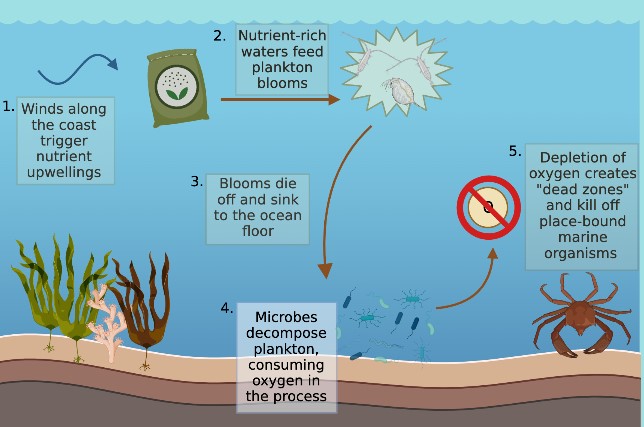
Much like Oregon’s forests experience wildfire seasons, the waters off the Oregon coast experience what are called “hypoxia seasons”. During these periods, which occur in the summer, northern winds bring nutrient-rich water to the Eastern Current Boundary off the Oregon Coast. While that might sound like a good thing, the upwells bring a bloom of microscopic organisms such as phytoplankton that consume these nutrients and then die off. As they die off, they sink and are then decomposed by marine microorganisms. This process of decomposition removes oxygen from the water, creating what’s called an oxygen minimum zone, or OMZs. These OMZs can span thousands of square miles. While mobile organisms such as fish can escape these areas and relocate, place-bound creatures such as crabs and bottom-dwelling fish can perish in these low oxygen zones. While these hypoxia seasons can occur due to natural phenomena, stratification of the water column due to other factors such as climate change can increase the frequency or severity of these seasons.

2021 was one of the worst years on record for hypoxic waters off the Western coast of the United States. A major contributing factor was the extremely early start to the upwelling triggered by strong winds. Measurements of dissolved oxygen and ocean acidity were high enough to be consistent with conditions that can lead to dead zones, and this is exactly what happened. Massive die-offs of crabs are concerning as the harvesting of Dungeness crab is one of the most lucrative fishing industries in the state. Other species and organisms move into shallower waters, disturbing the delicate balance of the coastal ecosystems. From the smallest microbe to the largest whale, almost every part of the coast can be affected by hypoxia season. 

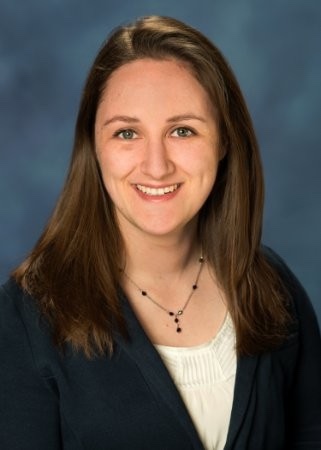
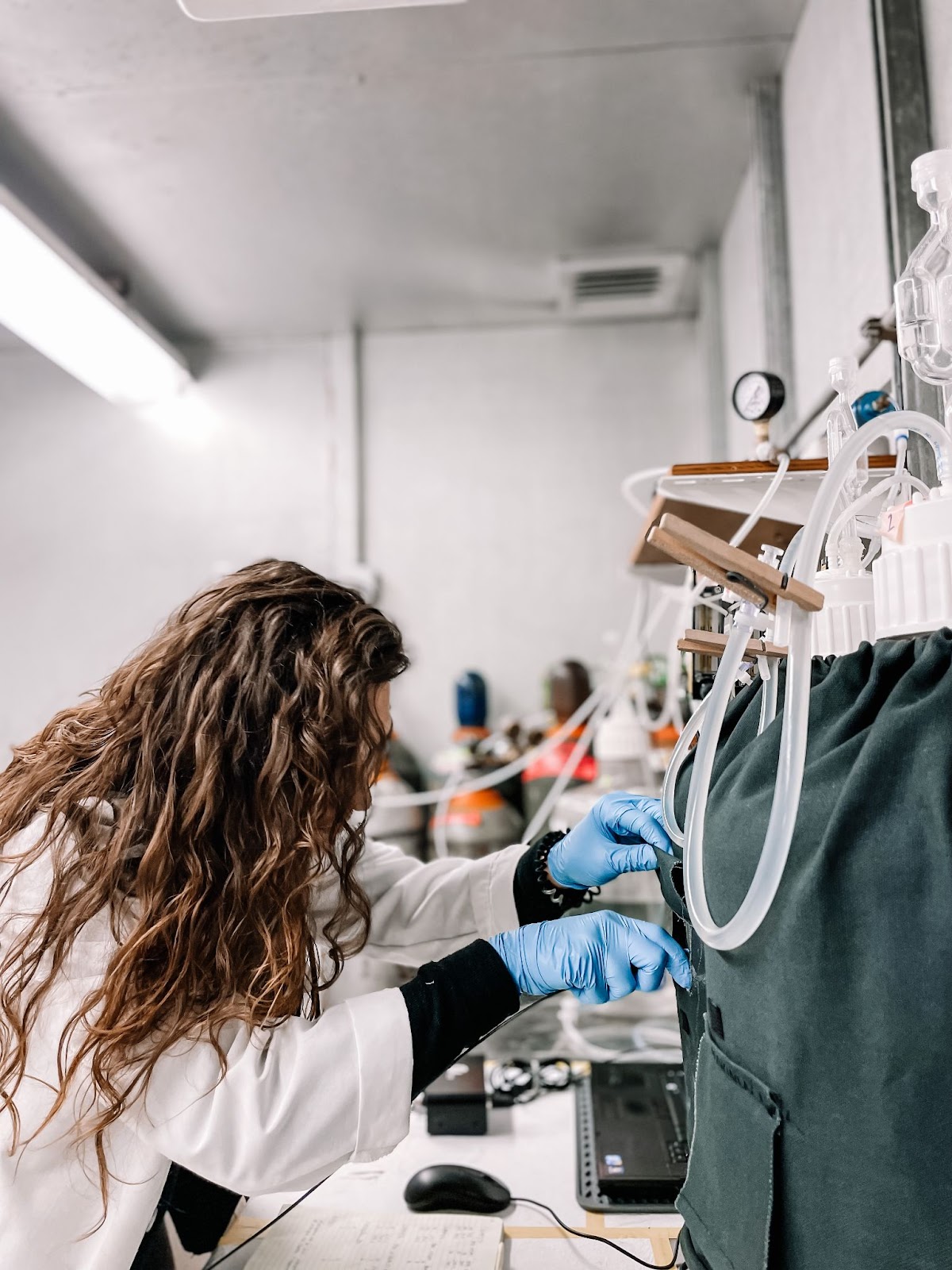
Our guest this week is Sarah Wolf, a fourth year PhD candidate in the Department of Microbiology here at Oregon State. Sarah, who is co-advised by Dr. Steve Giovannoni and Dr. Francis Chan, studies how microbes operate in these OMZs. Her work centers around microbial physiology and enzyme kinetics, and how these things change over time and in varying oxygen concentrations. To do this, she spent her second year developing a mesocosm, which is a closed environment that allows for the study of a natural environment, which replicates conditions found in low oxygen environments. 

Sarah Wolf, a fourth year PhD Candidate in the department of Microbiology, in her lab

Her experiments involve hauling hundreds of liters of ocean water from the Oregon coast back to her lab in Nash Hall, where she filters and portions it into different jugs hooked up to a controlled gas delivery system which allows her to precisely control the concentration of oxygen in the mesocosm. Over a period of four months Sarah samples the water in these jugs to look at the microbial composition, carbon levels, oxygen respiration rates, cell counts, and other measures of the biological and chemical dynamics occurring in low oxygen. Organic matter can get transformed by different microorganisms that “eat” different pieces through the use of enzymes, but many enzymes which can break down large, complex molecules require oxygen, and in low oxygen conditions, this can be a problem for the breakdown and accumulation of organic matter. This is the kind of phenomenon that Sarah is studying in these mesocosms, which her lab affectionately refers to as the “Data Machine”. 

Sarah’s journey into science has been a little nontraditional. A first generation college student, she started out her education as a political science major at Montana State before moving to the University of the Virgin Islands for a semester abroad. At the time she wasn’t really sure how to get into research or science as a career. During this semester her interest in microbiology was sparked during an environmental science course which led to her first research experience, studying water quality in St. Thomas. This experience resulted in an award-winning poster at a conference, and prompted Sarah to change her major to Microbiology and transfer to California State University Los Angeles. Her second research experience was very different – an internship at NASA’s Jet Propulsion Laboratory studying cleanroom microbiology, which resulted in a publication identifying two novel species of Bacillus isolated from the Kennedy Space Center. Ultimately Sarah’s journey brought her here to Oregon State, which she was drawn to because of its strong marine microbiology research program.

Sarah works on the “Data Machine”

But Sarah’s passion for science doesn’t stop at the lab: during the Covid-19 pandemic, she began creating and teaching lessons for children stuck at home. During this time she taught over 60 kids remotely, with lessons about microbes ranging from marine microbiology to astrobiology and even how to create your own sourdough starter at home. Eventually she compiled these lessons onto her website where parents and teachers alike can download them for use in classrooms and at home. She also began reviewing children’s science books on her Instagram page (@scientist.sarahwolf), and inviting experts in different fields to participate in livestreams about books relating to their topics. A practicing Catholic, she also shares thoughts and resources about religion and science, especially topics surrounding climate science. With around 12k followers, Sarah’s outreach on Instagram has certainly found its audience, and will only continue to grow. 

If you’re curious about microbes in low oxygen conditions, what it’s like to be a science educator and social media influencer, or want to hear more about Sarah’s journey in her own words, tune in at 7 PM on March 13th to catch the live episode at 7 PM PST on 88.7 FM Corvallis, online at https://kbvrfm.orangemedianetwork.com – or you can catch this episode after the show airs wherever you get your podcasts!