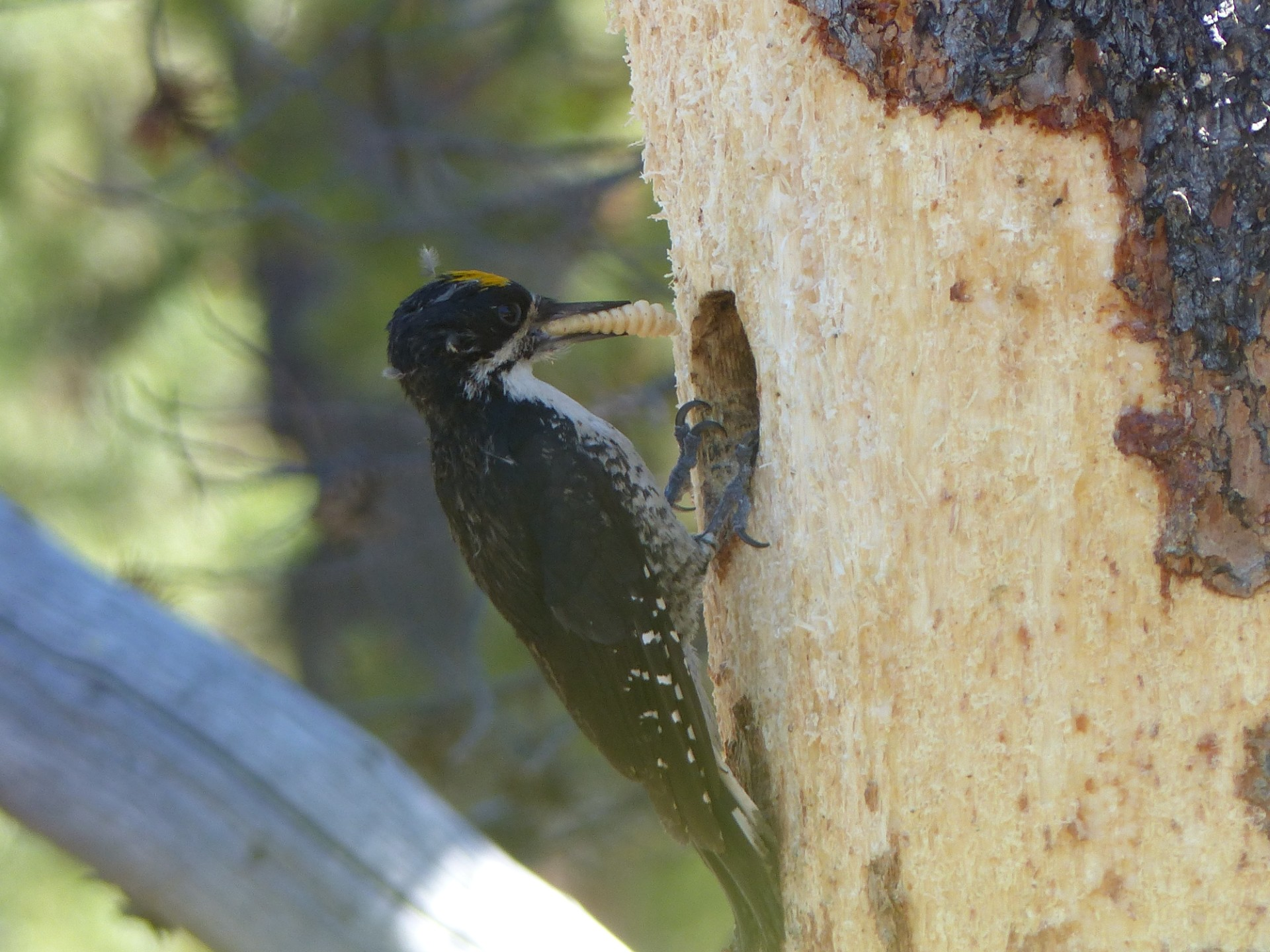
In Oregon, the Black-backed Woodpecker is considered a “keystone” species and indicator of bird community health. They create critical nest holes for other cavity-nesting birds and small mammals. Black-backed Woodpeckers are described as post-burn specialists that prefer burned conifer forests, particularly because it is where bark beetle larvae and other food sources are abundant after wildfires. However, Black-backed Woodpeckers are also known to inhabit green, unburned conifer forests, but the extent to which they use green forests throughout their range is poorly understood.
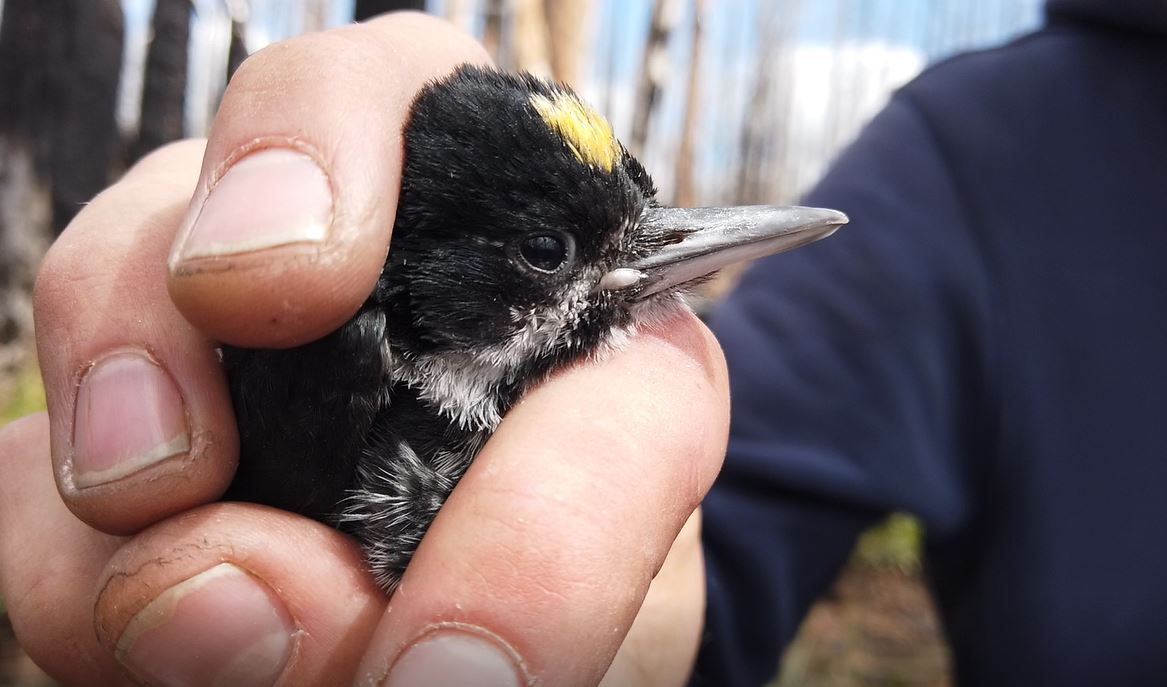
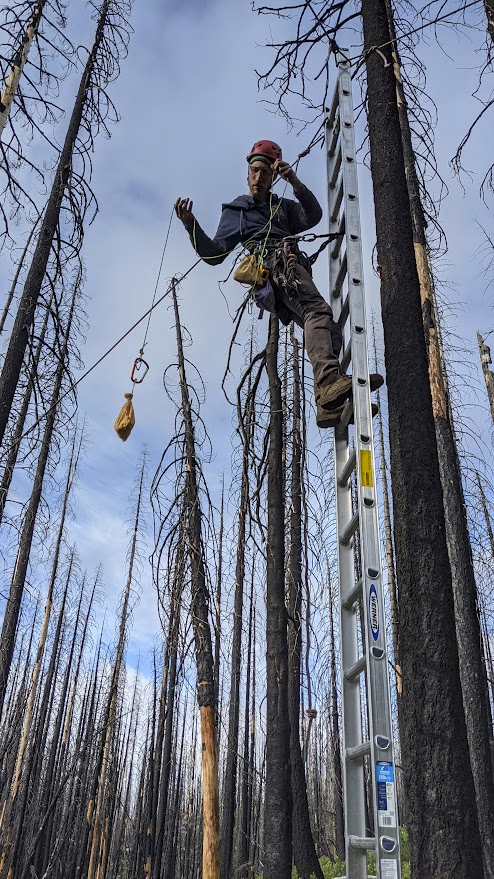
Mark Kerstens, a third year PhD student in Sustainable Forest Management under the mentorship of Dr. Jim Rivers, studies these fickle birds with the hope to understand what drives them to inhabit green forests. His main research interests are how to manage forests both before and after wildfires to provide habitat for cavity-nesting birds, and to use these species as indicators for ecosystem health. As a masters student he studied Black-backed Woodpecker vital rates in fire-prone landscapes in South/Central Oregon. For his PhD he is expanding this work, potentially redefining Black-backed Woodpeckers not as post-burn specialists, but rather “early decayed wood specialists”. Through his work he hopes to better inform forest management for biodiversity, and use these woodpeckers as a biodiversity indicator.
To hear all about beautiful birds, Oregon’s incredible lodgepole pine ecosystems, and the pre-med to scientist pipeline, tune in to 88.7FM KBVR Corvallis at 7PM PST on May 31, or listen after the show wherever you get your podcasts!
Written by Hannah Stuwe