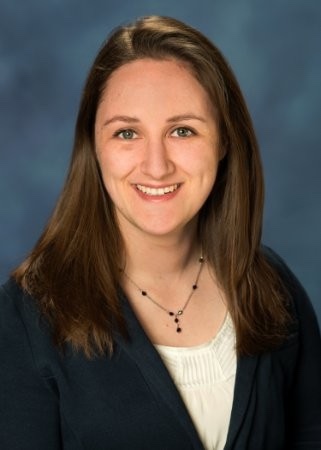
After a long summer hiatus, Inspiration Dissemination is back on the airwaves and your podcast platforms this week! Kicking off our Fall quarter lineup is Andrew Herrera, MA candidate with Jon Lewis in the School of Writing, Literature, and Film here at Oregon State University.
Herrera’s research might sound like a dream come true to some: “I study movies, honestly.”
For Herrera it really is a dream come true – he grew up with a lifelong love of film, inspired by watching movies with his mother as a child, the same movies that she had also grown up with. But it was after seeing Darren Aronofsky’s 2010 hit film Black Swan that he knew that studying film was going to be a career for him. The psychological horror production stars Natalie Portman as a dancer in a production of Swan Lake and follows her descent into madness as she struggles with a rival dancer. Herrera recalls that after seeing the film in theaters he sat in the car for several hours, just thinking about what he’d seen. This was around the time he learned that he could actually study film as an academic pursuit, and ended up writing about Black Swan for a literature class, comparing and contrasting it with The Strange Case of Dr. Jekyll and Mr. Hyde.
Andrew Herrera, MA candidate in SWLF.
He eventually finished his Bachelor’s degree in English Literature here at Oregon State University, and decided to stay and pursue a Master’s in Film Studies. His dissertation is focusing on the themes of three films by acclaimed Danish director Nicolas Winding Refn: Drive, Only God Forgives, and Bronson. Herrera is looking at the three films through the lens of masculinity, gender performativity and violence – all three center around male characters engaged in violent trajectories. Herrera in part argues that the three films present masculinity as a kind of performance or even a very literal costume, in the case of Drive (Ryan Gosling’s character is known for his iconic white jacket which sports a scorpion design, which he is only seen wearing when committing acts of violence.) The removal of weakness and femininity through violence and fighting leads to the rebirth of masculinity in Bronson, and in Only God Forgives features an almost Oedipal-like protagonist (also played by Ryan Gosling) who eventually cuts open the womb of his dead mother in a representation of asserting control over his own masculinity. Herrera is also interested in the intersection of masculinity and queerness in media, and how these themes show up explicitly or implicitly in these three and other films.
To hear more about these movies, the way masculinity is portrayed in film and its cultural impacts, and Herrera’s research, tune in to Inspiration Dissemination this Sunday evening at 7 PM at KBVR 88.7 FM or listen live online at https://kbvrfm.orangemedianetwork.com/. If you missed the live episode don’t forget to check out the podcast, now available wherever you get your podcasts.
The overlap between environmental science and social justice are rare, but it has been around since at least the early 1990’s and is becoming more well-known today. The framework of Environmental Justice was popularized by Robert Bullard when his wife, a lawyer, asked him to help her with a case where he was mapping all the landfills in the state of Texas and cross reference the demographics of the people who lived there. Landfills are not the most pleasant places to live next to, especially if you never had the opportunity to choose otherwise. Bullard found that even though Houston has a 75% white population, every single city-owned landfill was built in predominantly black neighborhoods. The environmental hazards of landfills, their emissions and contaminated effluent, were systematically placed in communities that had been – and continue to be – disenfranchised citizens who lacked political power. Black people were forced to endure a disproportionate burden of the environmental hazards, and procedural justice was lacking in the decision making process that created these realities. Unfortunately, this is not a unique situation to Houston, or Texas, because this pattern continues today.
Environmental justice is an umbrella term that we cannot fully unpack in a blogpost or a single podcast, but it is fundamentally about the injustices of environmental hazards being forced upon disadvantaged communities who had little to no role in creating those hazards. This is not a United States-specific issue although we do focus on state-side issues in this episode. In fact, some of the most egregious examples occur in smaller and lesser known countries (see our episode with Michael Johnson, where his motivation for pursuing marine sciences in graduate school is because the islands of micronesia where he grew up are literally being submerged by the rising seas of global warming). The issues we discuss are multifaceted and can seem impossible to fix. But before we can fix the issues we need to really understand the socio-political-economic ecosystem that has placed us exactly where we are today.
To begin to discuss all of this, we have Chris Hughbanks who is a graduate student at Oregon State and one of the Vice Presidents of the local Linn-Benton NAACP branch and a member of their Environmental and Climate Justice committee (Disclaimer: Adrian is also a branch member and part of the committee). We begin the discussion with a flood in Chris’ hometown of Detroit. Chris describes how they never really had floods because when precipitation occurs it’s usually either not that much rain or cold enough for it to snow instead. Because it hardly rains that much, very few people have flood insurance. But that pesky climate change is making temperatures warmer and precipitation events more intense than ever before causing flooding to occur in 2014, 2016, 2019, and 2020. As you might guess, the effects of this natural disaster were not equally shared by all citizens of Detroit. We discuss the overlap between housing discrimination and flood areas, how the recovery effort left so many out to [not] dry.
We end the episode with ways to get involved at the local level. First, consider learning more about the Linn-Benton NAACP branch, and the initiatives they focus on to empower local communities. Vote, vote, vote, and vote. Make sure you’re registered, and everyone else you know is registered to vote. And recognize these problems are generations in the making, and it will take just as long to fully rectify them. Finally, I am reminded of an episode interviewing millennial writers about what it means to be born when global warming was a niche research topic, but to come of age when climate change has become a global catastrophe. They rightfully point out that there are a myriad of possibilities for human salvation and sacrifice for every tenth of a degree between 1.5 and 3.0°C of warming that is predicted by the most recent 6th edition of the IPCC report. As grim as our future seems, what an awesome task for our generations to embark upon to try and “create a polity and economy that actually treats everybody with dignity, I cannot think of a more meaningful way to spend a human life.”
If you missed the show, you can listen to this episode on the podcast feed!
Additional Reading & Podcast Notes
The Detroit Flood – We mentioned the NPR article reporting that 40% of people living in Detroit experienced flooding, how black neighborhoods were at higher risk to flooding, and that renters (who are disproportionately black) were nearly twice as likely to experience flooding compared to those who owned their homes. We also mentioned a map of Detroit, showing which areas are more at risk of flooding. Another local article described how abnormal that summer in Detroit and the surrounding areas were compared to other years.
We listed a number of Environmental Justice links that include:
Dumping in Dixie, the 1990 book written by Robert Bullard which is considered essential reading for many law school courses on environmental justice.
We listed the organizing principles of the modern environmental justice movement, first codified in 1991 at the First National People of Color Environmental Leadership Summit
A story near Los Angeles where mixed-use city zoning laws allowed industrial businesses to operate near residential areas, causing soil lead pollution that was unknown until Yvette Cabrera wrote her own grant to study the issue. Read her story in Grist: Ghost of Polluter’s Past that describes the immense efforts she and researchers had to go through to map soil lead contamination, and how the community has used that information to generate positive change for the community.
Environmental [in]justice afflicts the global south as well, where a majority of forest loss since the 1960’s has occurred in the tropical regions of the world.
Adrian mentioned a number of podcasts for further listening:
Two past Inspiration Dissemination episodes with Holly Horan on maternal infant stress in Puerto Rico and her experience conducting research after Hurricane Maria, and Michael Johnson who one of his motivation to go to graduate school was because where he grew up – Micronesia – has been feeling the rising seas of climate change long before other countries.
A deep investigative journalism podcast calledFloodlines about the events leading up to Hurricane Katrina in 2005 and what happened after (or, what should have happened).
If all this hurricane and flooding talk has got you down, consider that heat kills more people in the US than floods, hurricanes, or tornadoes according to the National Weather Service.
We also discussed the 2021 heat dome in the Pacific Northwest. This led to Oregon passing some of the strongest protections for heat for farmworkers (and others working outside). Consider reading a summary of wildfire effects on outdoor workers, and a new proposal in Oregon to pay farmworkers overtime (this proposal was recently passed in March of 2022). Related to farmworkers, Adrian mentioned the 2013 Southern Poverty Law Center’s analysis of guest visa worker programs titled Close to Slavery: Guestworker programs in the United States.
We returned to the fact that housing is central to so many injustices for generations. The Color of Law: A forgotten history of how our government segregated America by Richard Rothstein is a historical analysis of the laws and policies that shaped today’s housing patterns. One example Rothstein often cites is the construction of freeways purposefully routed through black communities; recently one developer accidentally said the quiet part out loud in explaining where a gas pipeline was routed because they choose “the path of least resistance“. We also mentioned that in 2019 and in 2020, Corvallis has ~37% of its residents being rent burdened (meaning households spend more than 50% of their income on rent), which is the worst city in the state over both years. You can also read about a California Delta assessment that focuses on agricultural shifts in the region due to land erosion and flooding, but they mention how current flood risk is tied to historical redlining.
Improvements in DNA sequencing technology have allowed scientists to dig deeper than ever before into the intricacies of the microbes that inhabit our gut, also called the gut microbiome. Massive amounts of data – on the scale of pentabytes – have been accumulated as labs and institutes across the globe sequence the gut microbiome in an effort to learn more about its inhabitants and how they contribute to human health. But now that we have all of this data (and more accumulating all the time), the challenge becomes making sense of it.
This is a challenge that Christine Tataru, a rising fifth year PhD student in the Department of Microbiology, is tackling head-on. “My research is trying to understand what a ‘healthy’ gut microbiome actually looks like, how it ‘should’ look, and to do so in a way that is integrative,” she explains.
Christine Tataru, fifth year PhD student in Maude David’s lab.
An integrative approach looks at all of the processes and relationships that are occurring between all of the trillions of microorganisms in our gut, and the cells within our body. Previous microbiology dogma focused on the behavior and impact of singular species such as pathogens, but as we learn more about microbiomes, this approach becomes limiting. There are a vast number of relationships that can occur between microbes and human cells. And there are many different lenses through which we can look at this system: taking a census of what microbes are present; tracking the genes that are present rather than just the microbes (this tells us about the functions that might be carried out); and what proteins or metabolites are actually present, whether those are created by the bacteria or the host. Each piece of the puzzle allows us a glimpse of the massively complex system that is the gut microbiome.
“It’s difficult for a human brain to keep track of these relationships and sources of variations, so I use computer algorithms to try to get a picture of what is happening, and what that might mean for health.”
It’s an approach that makes sense for the Stanford-trained computer-scientist-turned-biologist. Christine recalls a deep learning class in college in which a natural language processing algorithm on the whiteboard struck her with inspiration: what if instead of being applied to words, this algorithm could be applied to gut microbiomes? The thought stuck with her and when she came to OSU to pursue her PhD, she already had a clear goal in mind for what she wanted to do.
The natural language processing and interpretation algorithm treats words in a document as discrete entities, and looks for patterns and relationships between words to gain context and “understand” the contents. A computer can’t really understand what words mean linguistically and with the complex nuances that natural language presents, but they are really good at looking for patterns. It can look at what words occur together frequently, what words never occur together, and what words share a ‘social network’ — words that don’t appear together, but appear with the same other words. Christine has developed a way to apply this algorithm to large gut microbiome datasets: using this approach to identify what microbes frequently appear together, which don’t, and which share ‘social networks’. This produces clusters of microbes, or what she refers to as ‘topics’, which can then be interpreted by humans to try to understand how these clusters relate to certain aspects of health. You can read more about this method in her recent PLOS Computational Biology publicationhere.
It’s quite the challenging undertaking: no one has done this type of approach before, and even when the clusters are generated, we still need to be able to interpret what it means – why is it interesting or important that these microbes occur with each other and also correlate with these genes or metabolites? Biologically, what does it actually mean?
The question of biological meaning prompted Christine to pivot to a more traditional ‘wet lab’ biology approach. “Who gave this computer scientist a pipette,” she jokes. But to be perfectly honest, it makes a lot of sense: who better to investigate the hypotheses that can be generated by computers than the scientist who wrote the code?
Taking the ‘integrative approach’ to the next level, she now works on recapitulating the environment of the gut microbiome on a chip in the lab. The organ-on-a-chip system is a fairly new approach to studying biological mechanisms in a way that better mimics the naturally occurring environment. In Christine’s case, she is using a ‘gut on a chip’, which is made of a thin piece of silicone with input and output channels. The silicone is split by a microporous membrane in such a way that two different kinds of cells can be grown, one on the top layer and one on the bottom. What makes this system unique as compared to traditional cell culture is that the channels and membrane allow for constant flow of growth media, which physically simulates the flow of blood over the cells. It can also mimic peristalsis, which is the stretching and relaxing of intestinal cells that helps push food and nutrients through the digestive tract. It’s a sophisticated system, and one that allows her a high degree of control over the environment. She can use this system to mimic Inflammatory Bowel Disease, and then add in specific microbes or combinations of microbes to see how the gut cells respond, using findings from her algorithm results to inform what kinds of additions might have anti-inflammatory effects.
Christine in a biosafety hood, preparing gut-chips for experiments.
This innovative approach provides Christine another lens through which to view the relationship between the gut microbiome and health. Though she will be finishing her doctorate at the end of the year, the curiosity doesn’t end there – “Broadly, my life goal to some extent has always been to make ways for people to help people.” Whether that’s pipeline and methods development or building the infrastructure to study complex biological relationships, Christine’s innovation-driven approach is sure to lead to huge strides in our understanding of how the tiny living things in our gut influence our health, behavior, and mood.
Tune in at 7 PM this Sunday evening on KBVR 88.7 or stream online to hear more about her research and how she ended up here at OSU!
Our climate in the next thirty years will not look the same as today, and that’s exactly why our energy systems will also soon look completely different. Energy systems are the big umbrella of how and where we create electricity, how we transport that electricity, and how we use electricity. We’re discussing the past and the future of our energy environment with Emily Richardson, a Masters of Engineering student in the Energy Systems Program.
Emily Richardson preparing for some good trouble
When our energy infrastructure was originally built, energy generation, transport, and usage was a one-way street. Utility companies made or acquired the electricity, built poles and wires to transport that electricity to then be used in homes and businesses. Although that infrastructure was only made to last 50 years, many are pushing 100 years of operation.
“If it ain’t broke, don’t fix it” some might say, but we’re not living in the same energy reality when the infrastructure was originally built. For in-depth visuals of our energy generation and usage, we recommend viewing Lawrence Livermore National Labs. Now we have a different energy portfolio (e.g. wind and solar) but there’s also a two-way street of electricity movement that is required. Rooftop solar helps power individual homes, but when zero to little energy is being used in-house and it’s sunny outside, that excess energy generation on your rooftop moves back upstream and can fulfill energy needs in other places. A two-way street is quickly being paved. It’s worth remembering that energy is on demand, meaning we only make exactly as much energy as what’s being used. If there is excess generation in a highly distributed way (i.e. home solar panels) it adds another level of complexity to our energy systems because there is no “overflow” valve for electricity.
Imagine if your toilet, that slowly moves water in one direction, was suddenly expected to move water in the other direction and back and forth as quick as the speed of light? Yikes indeed. City-wide plumbing infrastructure was bult to accommodate the most extreme events like the Super Bowl flush (when everyone in the city/state/country runs to the bathroom at halftime). While it’s an extreme circumstance, the infrastructure was built to prepare for it, and it works! But our energy systems were hardly made for this kind of reverse movement of energy, especially on a large scale as more people install rooftop solar.
Beyond the two-way street, there’s also rush hour to worry about. The UK is known for their tea; at a specific time after a popular TV show ends about one-million teakettles get turned on simultaneously. Without planning and foresight this would lead to an electricity shortage and people losing power. But the UK government imports 200-600 megawatts of energy, sometimes coming from a hydroelectric dam and/or nuclear energy, to accommodate their hot tea requirements. It’s surprisingly complicated to move this much power all at once, but with strategic planning there are solutions!
Everything in the energy world is physically connected. Even if the poles and wires and outlets are hidden behind walls there’s an immense amount of planning and design that you will never see because if infrastructure is working well, you can accidently forget its existence. When it fails, it can fail catastrophically. The 2020 Holiday Farm Fire in Oregon was initiated by downed powerlines, and the 2018 Paradise Fire in California was also initiated by malfunctioning powerlines. There are a multitude of reasons why those fires were especially damaging (location of ignition, exceptionally dry fuels, extreme wind events, drought and insect stressed trees, too many trees per acre, etc.), and why wildfires will get worse in the future (rising temperatures and changing precipitation patterns).
But our collective future requires energy, a lot of it, to be efficiently distributed and stored that requires a radical shift in our hardware, software, and maybe even our philosophy of energy usage. You don’t want to miss the discussion with Emily who will give us the deep dive on how we arrived at our energy reality and what our energy future will need to look like. This conversation is happening at 7pm on KBVR 88.7 FM, but you can also listen via the podcast feed.
Emily Richardson preparing for some adventures on the kayak
Additional Notes On air we mentioned a few resources that can provide more deep dives! The first is the Energy Gang Podcast that focuses on energy, clean technology, and the environment. The Big Switch Podcast is a five-part series on how the power grid works and how upcoming changes to the gird can help society. The Volts Podcast is an interview based show untangling our messy climate future and hopeful energy transitions. Emily mentioned a presentation titled Imagining a Zero Emissions Energy System.
Have you ever considered that a virus that eats bacteria could potentially have an effect on global carbon cycling? No? Me neither. Yet, our guest this week, Dr. Holger Buchholz, a postdoctoral researcher at OSU, taught me just that! Holger, who works with Drs. Kimberly Halsey and Stephen Giovannoni in OSU’s Department of Microbiology, is trying to understand how a bacteriophage (a bacteria-eating virus), called Venkman, impacts the metabolism of marine bacterial strains in a clade called OM43.
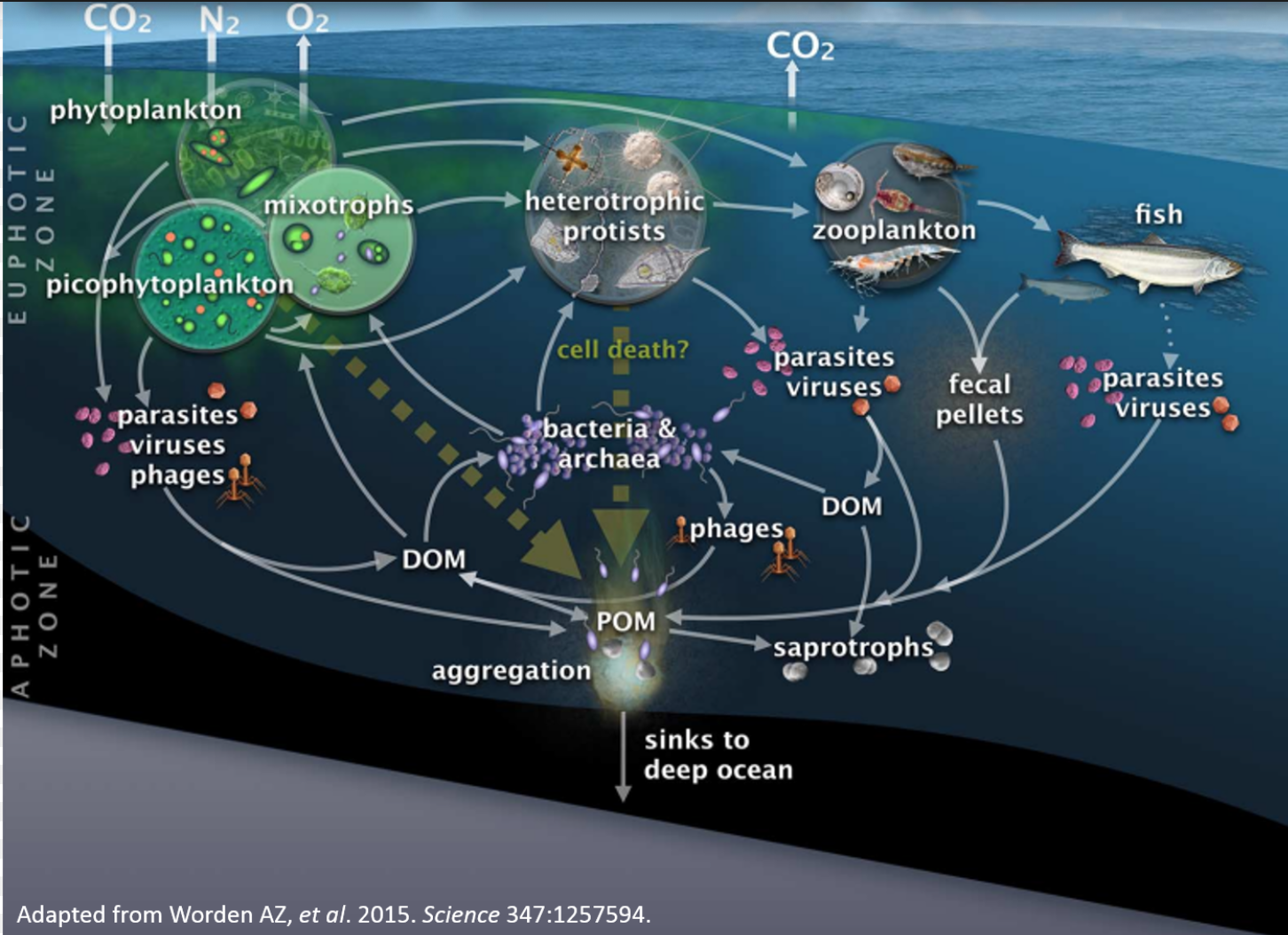
Bacteria that are part of the OM43 clade are methylotrophs, in other words, these bacteria eat methanol, a type of volatile organic compound. It is thought that the methanol that the OM43 bacteria consume are a by-product of photosynthesis by algae. In fact, OM43 bacteria are more abundant in coastal waters and are particularly associated with phytoplankton (algae) blooms. While this relationship has been shown in the marine environment before, there are still a lot of unknowns surrounding the exact dynamics. For example, how much methanol do the algae produce and how much of this methanol do the OM43 bacteria in turn consume? Is methanol in the ocean a sink or a source for methanol in the atmosphere? Given that methanol is a carbon compound, these processes likely affect global carbon cycles in some way. We just do not know how much yet. And methanol is just one of many different Volatile Organic Carbon (VOC) compounds that scientists think are important in the marine ecosystem, and they are probably consumed by bacteria too!
Depiction of the carbon cycle within the marine food web. DOM means Dissolved Organic Material, POM stands for Particulate Organic Material. This refers to all the things that are bound within cells that gets released when for example viruses destroy cells.
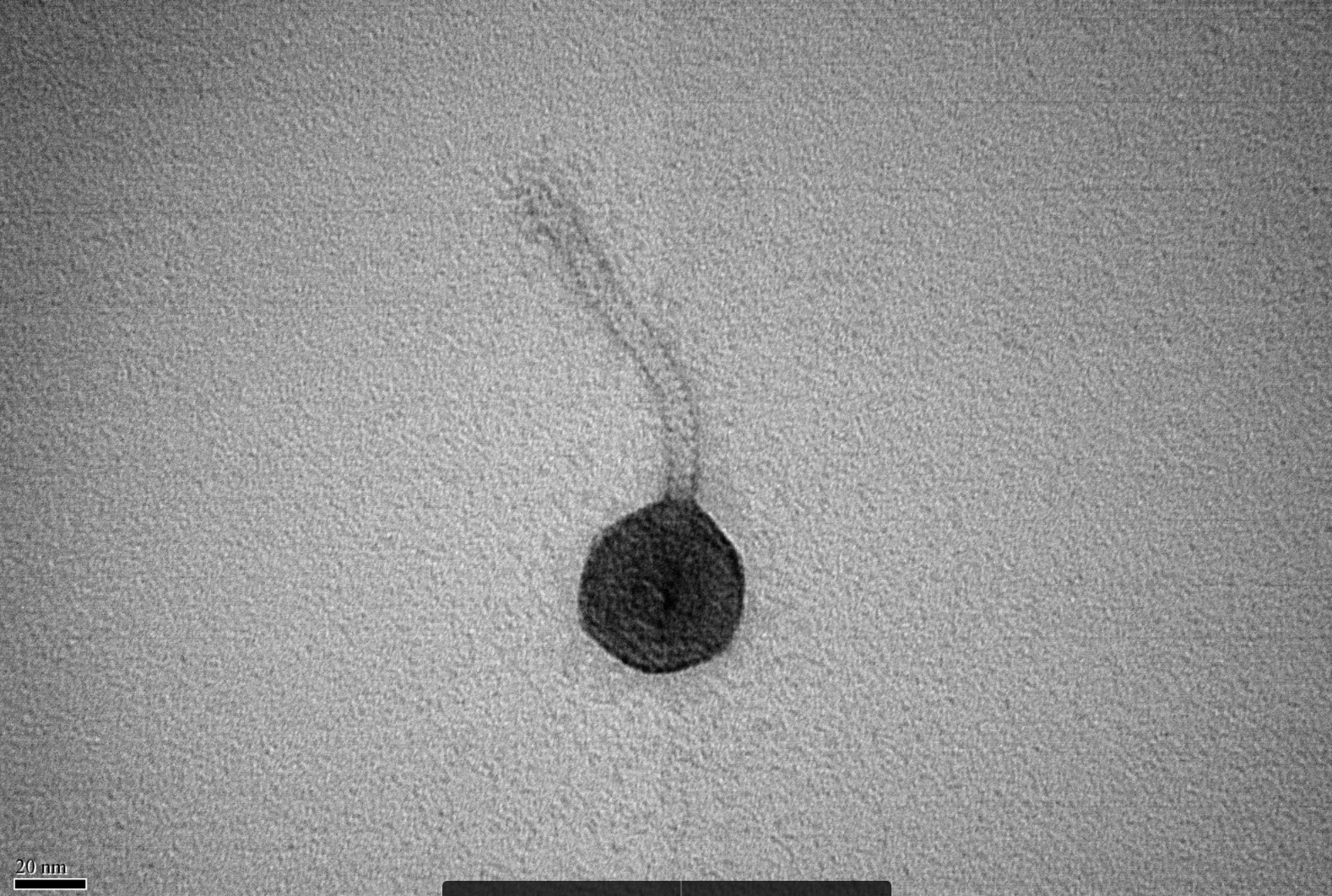
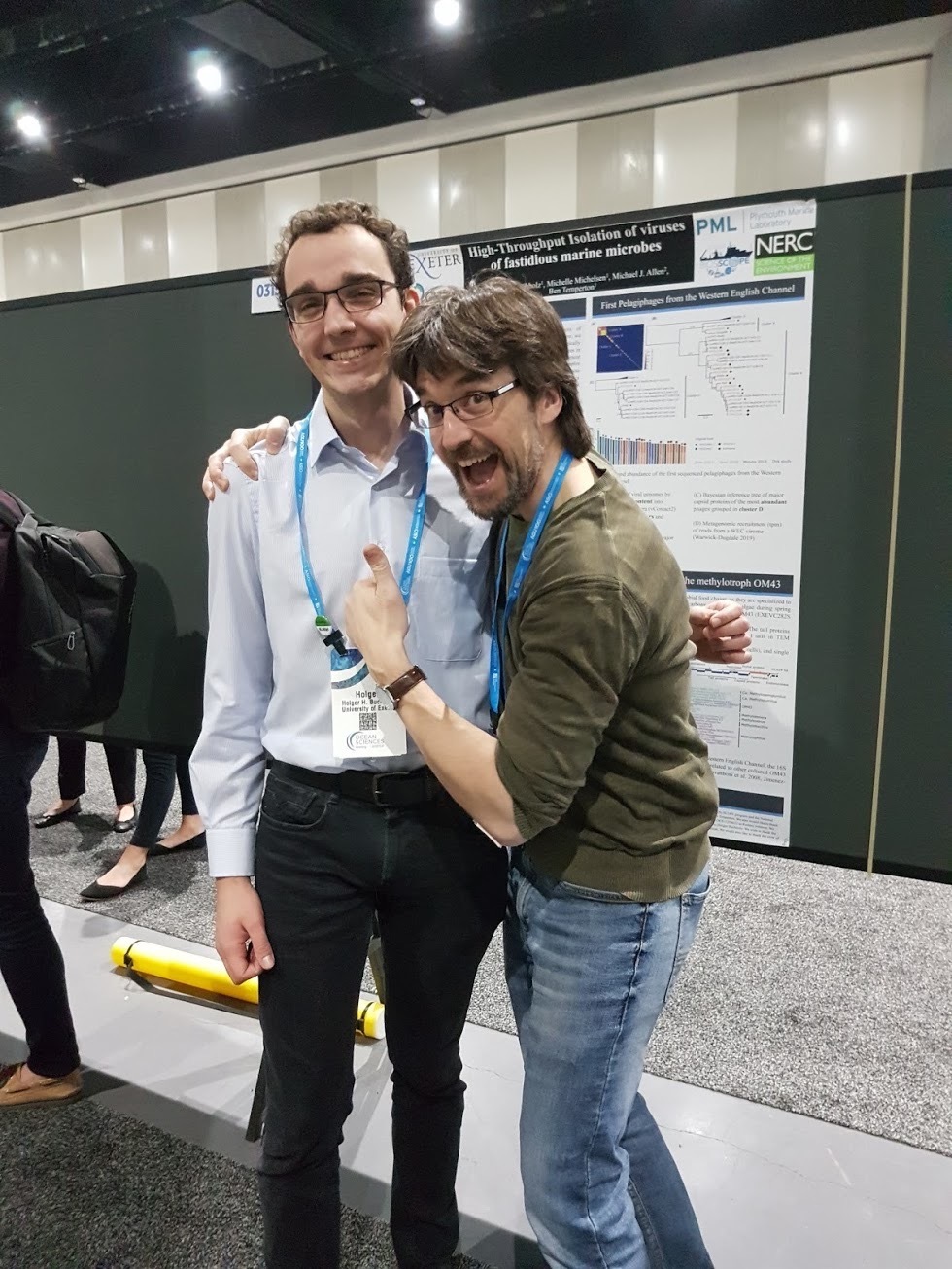
All of this gets even more complicated by the fact that a bacteriophage, by the name of Venkman, infects the OM43 bacteria. If you are a fan of Ghostbusters and your mind is conjuring the image of Bill Murray in tan coveralls at the sound of the name Venkman, then you are actually not at all wrong. During his PhD, which he conducted at the University of Exeter, part of Holger’s research was to isolate the bacteriophage that consumes OM43 bacteria (which he successfully did). As a result, Holger and his advisor (Dr. Ben Temperton, who is a big Ghostbusters fan) were able to name the bacteriophage and called it Venkman. Holger’s current work at OSU is to try and figure out how the Venkman bacteriophage affects the metabolism of methanol in OM43 bacteria and the viral influence on methanol production in algae. Does the virus increase the bacteria’s methanol metabolism? Decrease it? Or does nothing happen at all? At this point, Holger is not entirely sure what he is going to find, but whatever the answer, there would be an effect on the amount of carbon in the oceans, which is why this work is being conducted.
A bacteriophageHolger & PhD advisor BenInfected OM43 cells, every little black dot is a virus!
Holger is currently in the process of setting up experiments to answer these questions. He has been at OSU since February 2022 and has funding to conduct this work for three years from the Simons Foundation. Join us live on Sunday at 7 pm PST on 88.7 KBVR FM or https://kbvrfm.orangemedianetwork.com/ to hear more about Holger’s research and how a chance encounter with a marine biologist in Australia set him on his current career path! Can’t make it live, catch the podcast after the episode on your preferred podcast platform!
Picture a bowl of spaghetti and meatballs. There are pristine noodles, drenched in rich tomato sauce, topped with savory meatballs. Now imagine you’re only allowed to eat just one noodle, and one meatball. You’re tasked with finding the very best, the most interesting bite out of this bowl of spaghetti. It might sound absurd, but replace spaghetti with ‘edges’ and meatballs with ‘nodes’ and you’ve got a network.
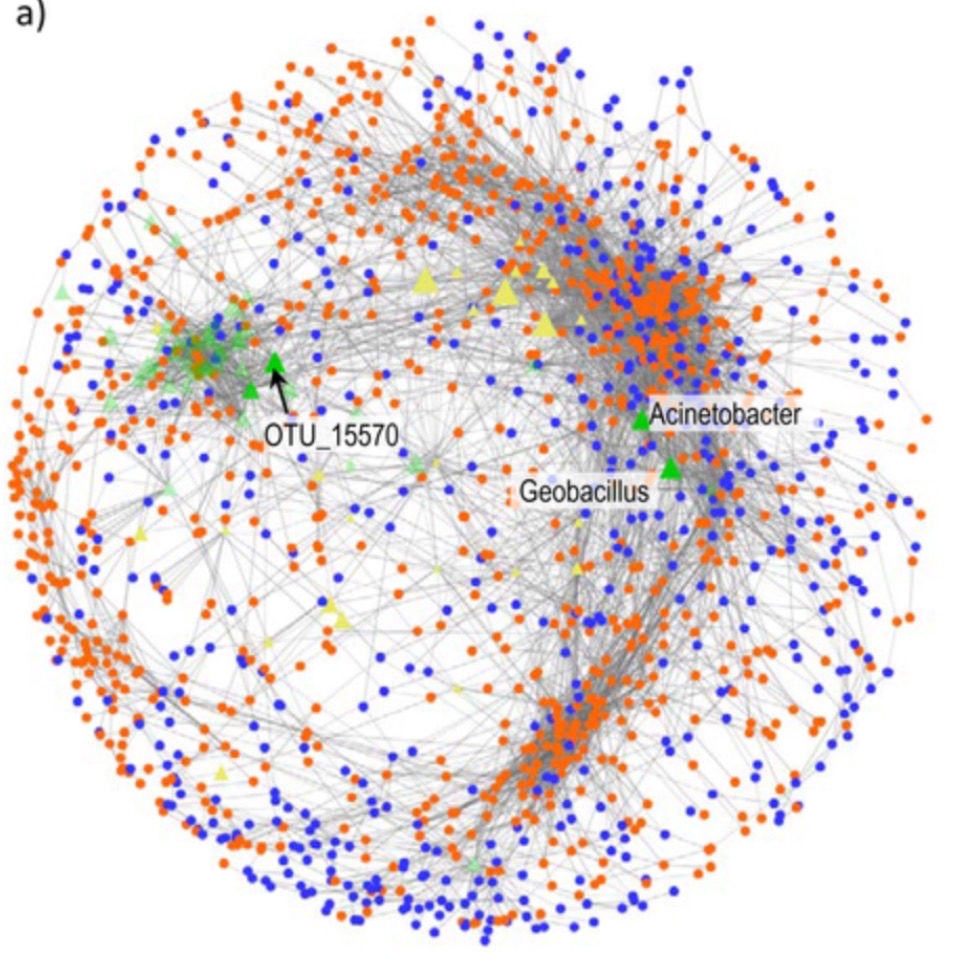
An image of a network from Nolan’s recent publication. The lines are ‘edges’ and the dots are ‘nodes’.
Computational biologists like our guest this week use networks to uncover meaningful relationships, or the tastiest spaghetti noodle and meatball, between biological entities. Joining us this week is Nolan Newman, a PhD candidate in the College of Pharmacy under PI Andriy Morgun. Nolan’s research lies at the intersection of math, statistics, computer science, and biology. He’s looking at how networks, such as covariation networks, can be used to look for relationships and correlations between genes, microbes, and other factors from massive datasets which compare thousands or even of biological entities. With datasets this large and complex, it can be difficult to pare down just the important or interesting relationships – like trying to scoop a single bowl of spaghetti from a giant tray at a buffet, and then further narrowing it down to pick just one interesting noodle.
Nolan Newman, PhD candidate
Nolan is further interested in how different statistical thresholds and variables contribute to how the networks ‘look’ when they are changed. If only noodles covered in sauce are considered ‘interesting’, then all of the sauce-less noodles are out of the running. But what if noodles are only considered ‘sauce-covered’ if they are 95% or more covered? Could you be missing out on perfectly delicious, interesting noodles by applying this constraint?
If you’re left scratching your head and a little hungry, fear not. We’ll chat about all things computational biology, networks, making meaning out of chaos, and why hearing loss prompted Nolan to begin a career in science, all on this week’s episode of Inspiration Dissemination. Catch the episode live at 7 PST at 88.7 FM or https://kbvrfm.orangemedianetwork.com/, or catch the podcast after the episode on any podcast platform.
When you think about artificial intelligence or robots in the everyday household, your first thought might be that it sounds like science fiction – like something out of the 1999 cult classic film “Smart House”. But it’s likely you have some of this technology in your home already – if you own a Google Home, Amazon Alexa, Roomba, smart watch, or even just a smartphone, you’re already plugged into this network of AI in the home. The use of this technology can pose great benefits to its users, spanning from simply asking Google to set an alarm to wake you up the next day, to wearable smart devices that can collect health data such as heart rate. AI is also currently being used to improve assistive technology, or technology that is used to improve the lives of disabled or elderly individuals. However, the rapid explosion in development and popularity of this tech also brings risks to consumers: there isn’t great legislation yet about the privacy of, say, healthcare data collected by such devices. Further, as we discussed with another guest a few weeks ago, there is the issue of coding ethics into AI – how can we as humans program robots in such a way that they learn to operate in an ethical manner? Who defines what that is? And on the human side – how do we ensure that human users of such technology can actually trust them, especially if they will be used in a way that could benefit the user’s health and wellness?
Anna Nickelson, a fourth-year PhD student in Kagan Tumer’s lab in the Collaborative Robotics and Intelligent Systems (CoRIS) Institute in the Department of Mechanical, Industrial and Manufacturing Engineering, joins us this week to discuss her research, which touches on several of these aspects regarding the use of technology as part of healthcare. Also a former Brookings Institute intern, Anna incorporates not just coding of robots but far-reaching policy and legislation goals into her work. Her research is driven by a very high level goal: how do we create AI that benefits humans and humanity?
Anna Nickelson, fourth year PhD student in the Collaborative Robotics and Intelligent Systems Institute.
AI for social good
When we think about how to create technology that is beneficial, Anna says that there are four major considerations in play. First is the creation of the technology itself – the hardware, the software; how technology is coded, how it’s built. The second is technologists and the technology industry – how do we think about and create technologies beyond the capitalist mindset of what will make the most money? Third is considering the general public’s role: what is the best way to educate people about things like privacy, the limitations and benefits of AI, and how to protect themselves from harm? Finally, she says we must also consider policy and legislation surrounding beneficial tech at all levels, from local ordinances to international guidelines.
Anna’s current research with Dr. Tumer is funded by the NSF AI Institute for Collaborative Assistance and Responsive Interaction for Networked Groups (AI-CARING), an institute through the National Science Foundation that focuses on “personalized, longitudinal, collaborative AI, enabling the development of AI systems that learn personalized models of user behavior…and integrate that knowledge to support people and AIs working together”, as per their website. The institute is a collaboration between five universities, including Oregon State University and OHSU. What this looks like for Anna is lots of code writing and simulations studying how AI systems make trade-offs between different objectives.For this she looks at machine learning for decision making, and how multiple robots or AIs can work together towards a specific task without necessarily having to communicate with each other directly. For this she looks at machine learning for decision making in robots, and how multiple robots or AIs can work together towards a specific task without necessarily having to communicate with each other directly. Each robot or AI may have different considerations that factor into how they accomplish their objective, so part of her goal is to develop a framework for the different individuals to make decisions as part of a group.
With an undergraduate degree in math, a background in project management in the tech industry, engineering and coding skills, and experience working with a think tank in DC on tech-related policy, Anna is uniquely situated to address the major questions about development technology for social good in a way that mitigates risk. She came to graduate school at Oregon State with this interdisciplinary goal in mind. Her personal life goal is to get experience in each sector so she can bring in a wide range of perspectives and ideas. “There are quite a few people working on tech policy right now, but very few people have the breadth of perspective on it from the low level to the high level,” she says.
If you are interested in hearing more about Anna’s life goals and the intersection of artificial intelligence, healthcare, and policy, join us live at 7 PM on Sunday, May 7th on https://kbvrfm.orangemedianetwork.com/, or after the show wherever you find your podcasts.
In 2021 Jordan Peele remade the 1992 cult horror classic, Candyman. The 2021 remake received critical success and despite being delayed several times due to the covid-19 pandemic, was a box office success as well. In both the 1992 and 2021 versions, the eponymous main character is a black man. But in the remake, the character deviates from the usual narrative trope of being a menacing black man to a man with complex emotions and feelings. For most viewers, these changes make for a good story, but likely are not things that they dwell on, and certainly are forgettable by the time they have left the theater. But for our guest this week, literature MA student Marisa Williams in the School of Writing, Literature, and Film, these differences are what gives them inspiration and are what inform their research. While Marisa has just begun their thesis work, they know that they will examine issues of racism on black bodies within contemporary literature. Specifically, Marisa plans to explore how the legacy of colonialism has remained in the literature of French-Caribbean authors writing in the 21st century despite more than two centuries of emancipation from colonialism.
In order to do this kind of research, Marisa first has to learn about the history and philosophy of colonialism and post-colonial identity in the Caribbean. They plan to do this by exploring how notions of “Creole-ness,” the monstrosity of whiteness, and identity have all shaped the French-Caribbean experience in today’s literature. This has led Marisa to some interesting literary “rabbit holes,” that has taken them through history, philosophy, and fantasy literature.
To learn more about what is “Creole-ness,” the monstrosity of whiteness, and identity and how they relate to fantasy literature, tune in live on Sunday May 1st, 2022 on KBVR to listen. You can also catch more of Marisa’s story and research when they present as part of OSU’s 2022 Grad Inspire which will be taking place on May 12th.
Content warning: this article includes mentions of transphobia and suicide.
Rue Dickey found himself feeling helpless and frustrated upon reading the news about the onslaught of anti-transgender legislation sweeping the country this year. In the four months of 2022 alone, nearly 240 anti-LGBTQ bills have been filed in states across the United States. This skyrocketing number is up from around 41 such bills in 2018, and around half of these bills targeting transgender folks specifically. In February 2022, Texas governor Greg Abbott called for teachers and members of the public to report parents of transgender children to authorities, equating providing support and medical care for trans youth to child abuse – a move that made national headlines. It’s imperative that we understand the consequences of this wave of horrific and discriminatory legislation: a survey by the Trevor Project found that 42% of LGBTQ youth have seriously considered suicide within the past year alone, and over half of transgender and nonbinary youth have considered suicide.
Rue (they/he) graduated from Oregon State University in 2019, and they are currently the Marketing Coordinator for the Corvallis Community Center. They also develop and create content for TTRPGs, or Tabletop Role Playing Games. TTRPGs are role playing games in which players describe their characters’ actions and adhere to a set of rules and characterizations based on the world setting, and characters work together to achieve a goal or go on an adventure. They often involve improvisation and their choices shape the world around them. Think Dungeons & Dragons – many TTRPGs involve the use of dice rolling to determine the outcomes of certain actions and events.
Rue Dickey, 2019 OSU graduate and Marketing Director for the Corvallis Community Center.
Gaming as a way to crowdfund for a cause
Wanting to do something to help children and transgender people living in Texas, Rue decided to turn his passion for TTRPGs into a fundraiser. The online indie game hosting platform itch.io has been used in the past to create fundraisers for charities by bundling together and selling games. A few of Rue’s friends who run a BIPOC tabletop server have had experience with creating profit-sharing bundles using the platform in the past, so after he consulted them and walked through the steps, he set up a bund?ndraiser, Rue wanted to ensure that the money was going directly to transgender people. “At the time, a lot of the larger media outlets were encouraging people to donate to Equality Texas, which works to get pro-queer legislature through in Texas, but they don’t necessarily help trans folks on an individual level.”
After tweeting about the fundraiser and soliciting ideas for charities, he landed on two organizations in Texas that are trans-led and focused on transgender individuals: TENT (Transgender Education Network of Texas, a trans-led group that works to combat misinformation on the community level through the corporate level, offering workshops as well as emergency relief funds for trans folks in need) and OLTT (Organización Latina Trans in Texas, a Latina trans woman-led organization focusing on transgender immigrants in Texas, assisting with the legal processes of immigration, name changes, and paperwork.) Both charities serve transgender folks directly in Texas, and you can donate to the organizations by following the links we have included in the article. Both charities were thrilled to learn about the donation – for OLTT, it’s the largest single donation they have ever received, and they will be able to use it to perform needed renovations and expansions at their shelter facilities.
Since the fundraiser ended, Rue has been interviewed by several national news outlets, including NBC, Gizmodo, and The Mary Sue, as well as gaming-centric websites like Polygon, Dicebreaker, and GamesHub. Although they have received some harassment and nasty DMs, Rue says that the support from the community has vastly overshadowed the naysayers. Similarly, he spoke of the overwhelming rush of support from trans folks, queer folks, and allies to the movement in the face of structural legislation that seeks to harm trans people.
“It restores a bit of my faith in humanity to see that on a structural level, they are trying to get rid of us, but on a community level, there is support – there will always be a place to go and people looking out for you.”
Tune in at 5 PM on Sunday, April 24 for this special episode of Inspiration Dissemination. Stream the show live or listen to this episode wherever you get your podcasts! You can keep up with Rue and their games on twitter and itch.io.
Did you know humans have the ability to “taste” through smelling? Well we do, and it is through a process called retronasal olfaction. This fancy sounding term is just some of the ways that food scientists, such as our guest speaker this week, recent M.S. graduate and soon to be Ph.D. student, Jenna Fryer studies how flavors, or tastes through smell, are understood and what impact external factors have on them. Specifically, Fryer looks at the ways fires affect the flavors of wine, a particularly timely area of research due to the recent wave of devastating wildfires in Oregon.
Fryer at OSU’s vineyard
Having always been interested in food science, Fryer examines the ways smoke penetrates wine grapes. She does this by studying the ways people taste the smoke and how they can best rid the smokiness in their mouths, because spoiler, it has a pretty negative impact on the flavor. This research has forced her to develop novel ways to explain and standardize certain flavors, such as ashiness and mixed berry, as well as learn what compounds are the best palate cleansers. She will continue this research with her Ph.D. where she plans to figure out what compounds make that smoky flavor, and how best to predict which wines will taste like smoke in the future.
Through this work, Fryer has made some fascinating discoveries, such as how many people can actually detect the smoke flavor (because not everyone can), how best to create an ashy flavor (hint, it has to do with a restaurant in the UK and leeks), why red wine is more affected by smoke than white wines, and what the difference is between flavor and taste.
Fryer processing wine samples
Tune in live at 7pm on Sunday April 24th or listen to this episode anywhere you get your podcasts to learn about Fryer’s research!
And, if you are interested in being a part of a future wine study (and who wouldn’t want to get paid to taste wine), click on this link to sign up!