This week on ID we interview El Rose, a talented first year MFA student of non-fiction in the School of Writing, Literature and Film. El draws on their background growing up in rural Arkansas to write about topics of class, immigration, intergenerational trauma, identity, and the intersection of it all.
Their work falls primarily within the realm of memoir. ‘Memoir’ is derived from the French word ‘mémoire’, which means ‘reminiscence’ or ‘memory’. Memoir falls into the category of non-fiction but is ultimately a subjective narrative in which the author remembers experiences, emotions, and events from a certain event or period in their life. Memoirs focus on conveying their perception of these memories in a way that is emotionally truthful but isn’t necessarily factual.
El began their journey in writing at the University of Memphis, although they’ve been writing in one manner or another for most of their life. They spent eight years between finishing undergrad and coming to OSU, working through the ranks in the food industry and eventually becoming an owner of a cafe in the Portland area. Through a series of perfectly timed events, and their own desire to make more space to take their writing seriously, El came to OSU to set out on the grad school journey.
To hear more about how writing a memoir works, as well as El’s journey from Arkansas to Oregon, tune in this Sunday, November 12th live on 88.7 FM or on the live stream. Missed the show? You can listen to the recorded episode on your preferred podcast platform!
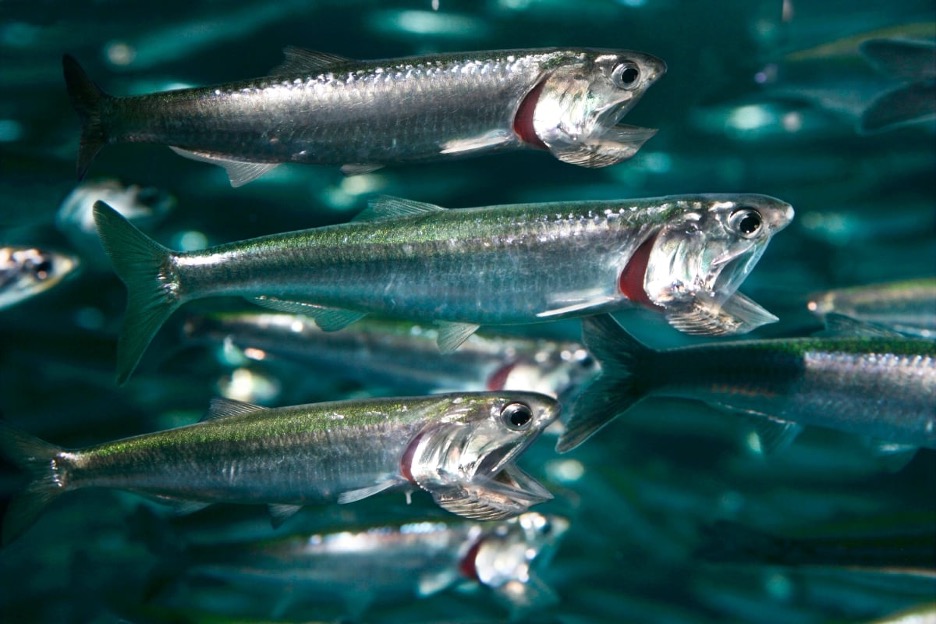
Trophic ecology studies how energy flows through food webs; basically who is eating whom in an ecosystem. Understanding the structure of feeding relationships among species in a system helps us to understand why populations may fluctuate in terms of abundance or distribution at different times. These dynamics are particularly important to consider in the face of a changing climate as conditions like increasing temperatures make resources less predictable. Our guest this week is Luke Bobay, who is trying to do exactly this for anchovy in the Pacific Ocean off the US West Coast.
Luke, a 3rd year PhD student in Integrative Biology, is researching the potential influences of climate change on anchovy abundance by studying its ecological effects on their early life stages. Anchovy are forage fish, which means they are eaten (aka foraged upon) by a lot of larger animals such as birds, marine mammals, other predatory fish, and humans. They are also short-lived and therefore we expect their population dynamics to respond pretty quickly to things that are happening in the environment.
For his research, Luke is looking at the larval stage of anchovy. He uses samples and plankton imagery data collected on weeks-long research cruises that Plankton Ecology Lab has conducted during the past six years, as well as samples collected by the National Oceanic and Atmospheric Administration (NOAA) since 1996. The samples that Luke uses are collected using large nets with a very fine mesh that enables the collection of tiny plankton. The imagery data are collected using a sampling technology unique to Luke’s lab called the In Situ Ichthyoplankton Imaging System (ISIIS). ISIIS uses a high-resolution camera to take images of the water column at a very high spatial and temporal scale, allowing the lab to basically take one long continuous image of what’s happening in the top 100 m of the ocean. These images are then run through an AI image classification model that automatically identifies and measures each individual plankter that is recorded. Both the net and the ISIIS also record data about the environment, such as temperature, salinity, and depth. By examining relationships between environmental conditions, the abundance of other plankton, and the abundance and other characteristics of anchovy larvae, Luke explores the factors that may contribute to variability in anchovy abundance.
In Situ Ichthyoplankton Imaging System (ISIIS)
To hear more about the day in the life of an anchovy, as well as Luke’s journey from OSU to another OSU, tune in this Sunday, November 5th live on 88.7 FM or on the live stream . Missed the show? You can listen to the recorded episode on your preferred podcast platform!
This week we are chatting with new ID host Selene Ross on her path to earning an MFA in fiction in the School of Writing, Literature, and Film. Inspired by her upbringing and life in northern California, Selene’s interest lies in looking deeper at why we believe what we believe, exploring power, women, and trust through short stories. What makes a short story different than a novel? In short stories, nothing has to change except everything to change, leading to a “surprising but inevitable” ending.
Selene began her journey at UC Santa Barbara studying Environmental Science and Sociology, focusing on the native plants of Central California. Straight from undergrad, she moved to Berlin, Germany on an au pair visa and became part of a vibrant community of writers and poets. After moving back to the U.S., Selene looked to radio as a way to do creative work and worked with various production companies prior to starting here at Oregon State. In wanting to stay connected with the audio world she is starting her own show on KBVR, Mystic Yarn, and joining us here at Inspiration Dissemination.
What does getting an MFA in creative writing look like? This program encompasses two main areas, writing workshops and more interdisciplinary “craft” classes. The workshop is where students submit original work and gather critiques from peers, while the “craft” classes are more generative, and a place to draw inspiration from other areas of creative expression, like poetry or non-fiction. The final hurdle is the thesis defense, which can take many forms depending on the area of focus. In Selene’s case, this will look like a collection of fiction short stories.
Tune in this week to hear all about her writing process, how she incorporates “spooky” into her writing, and listen to an excerpt from her work.
Per and polyfluoroalkyl substances, also known as PFAS, are widely used, long lasting chemicals, components of which break down very slowly over time. This is why you may have heard these substances called “forever chemicals.” Because of their widespread use in anything from firefighting foams to non-stick pan coating, and their persistence in the environment, many PFAS are found in the blood of people and animals all over the world. PFAS are found in water, air, fish, and soil at locations across the world and have been linked to harmful health effects, including various forms of cancer. However, the toxicity of these substances are not fully understood.
There are thousands of PFAS chemicals, and they are found in many different consumer, commercial, and industrial products, making it challenging to study and assess the potential human health and environmental risks. Additionally, it is challenging to accurately detect and quantify PFAS levels in environmental samples.
Esteban Hernandez is a chemistry PhD student conducting his research in the lab of Jennifer Field in the department of Environmental and Molecular Toxicology. His research focuses on developing fast and accurate detection techniques for PFAS. Specifically, he utilizes nuclear magnetic resonance spectroscopy (NMR), which provides an alternative to the canonical methods of PFAS detection such as mass spectroscopy. Esteban has found that utilizing NMR this way allows for detection of different varieties of PFAS, which had previously not been detectable with other methods. This has big implications for the field of PFAS research and environmental testing.
Esteban comes from a part of North Carolina that has been highly impacted by environmental PFAS contamination, sporting the title of the second worst drinking water in the country behind Flint, Michigan. His research has a very personal connection to his history and where he comes from. However, researching forever chemicals was not always his plan. He started his undergraduate journey as a theater major at Mars Hill University, eventually finding his way to chemistry and the University of North Carolina. In his undergraduate research at UNC he worked on developing an estrogen analog to help treat breast cancer. During his masters (also at UNC) he worked on synthesizing an anticancer compound originally found in sea cucumbers from the sea of Japan. Even when he came to OSU he didn’t initially think he would be working on PFAS detection. When he joined the Field lab, and consequently the field of PFAS research, he found the right fit for him. Tune in to Inspiration Dissemination this week to hear all about Esteban’s research and pathway to graduate school.
Getting to the bottom of what top predators in an ecosystem are eating is critical to understand how they may be influencing dynamics in the entire system and food web. But how do you figure out what a predator is eating if it’s hard to catch and collar or watch continuously? Easy, you use their poop! Ellen Dymit, a 4th year graduate student in the Department of Fisheries, Wildlife, and Conservation Sciences advised by Dr. Taal Levi, is our guest on the show this week and she is a poop-tracker extraordinaire!
For her PhD research, Ellen uses primarily non-invasive genetic methods to study large carnivores in two projects in Alaska and Central America. While the systems and carnivores she studies for these two projects are pretty different, the techniques she uses to analyze the collected scats are the same. The Alaska project is focused on determining what different wolf populations and packs across coastal Alaska are consuming, whether individuals are specialized in their feeding habits, and how large the populations are. The Central America project, which is based out of Guatemala, looks at a whole host of predators, including jaguars, pumas, and ocelots, to gain a better understand of the food web dynamics in the ecosystem.
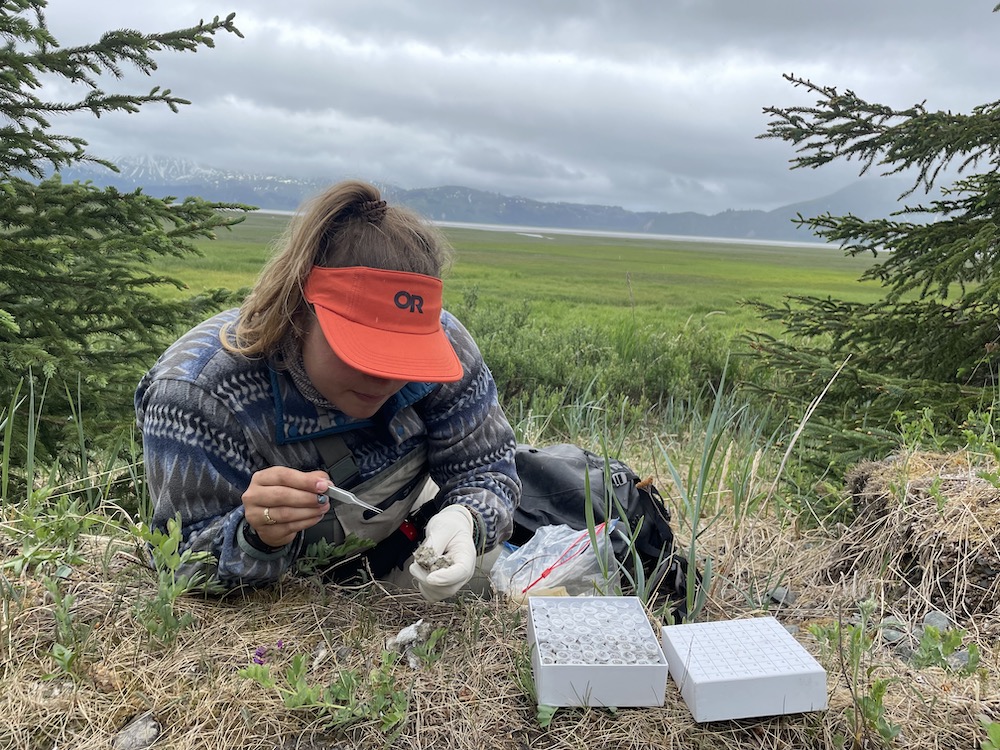
One of Ellen’s extremely remote field camps in Alaska
Both of these projects involve some unique challenges in the field that Ellen has had to learn to tackle. DNA can deteriorate pretty quickly, especially in warm Guatemalan temperatures, which is problematic when you’re trying to analyze it. Yet, Ellen’s lab has perfected methods over the last few years to work with neotropical samples. Ellen’s Alaska field work is incredibly remote as it’s just Ellen and one field technician roaming the Alaskan tundra in search of wolf scat. Accessing her field sites involves being flown in on a small fixed wing plane, where they are extremely space and weight-limited. Therefore, every single piece of gear needs to be weighed to ensure that the pilot has enough fuel to get to the site and back. As a result, Ellen isn’t able to collect the entire scat samples that she finds but can only take a small, representative sample.
Ellen sub-sampling a wolf scat
Ellen’s incredibly adventurous field work is followed by months spent in the lab processing her precious scat samples. So far, her results have revealed some pretty interesting differences in diet of wolf packs and populations across three field sites in Alaska. The Guatemalan project, which occurs in collaboration with the Wildlife Conservation Society Guatemala, is one of the first to analyze a large sample size of ocelot scats and the first to attempt DNA metabarcoding of samples collected in the neotropics.
To hear more details about both of these projects, as well as Ellen’s background and some bad-a$$ stories from her Alaskan field work, tune in this Sunday, October 15th live on 88.7 FM or on the live stream. Missed the show? You can listen to the recorded episode on your preferred podcast platform!
You don’t have to look hard to find signs of the long legacy of logging in Oregon. It’s evident in everything from the names of local sports teams and businesses to the clear cutting spread across nearby hills.
But in Maxville, nestled in Wallowa County in eastern Oregon, there’s a story that often goes untold. Like many Oregon towns, Maxville was a timber town, but unique to Maxville is the community of Black loggers that lived and worked there after the Great Migration of the 1920s.
Maxville Logger Company Photo, circa 1926 (Photo courtesy of the Maxville Heritage Interpretive Center, Timber Culture Photos)
Lonni Ivey is a logger’s daughter. In her family logging goes back several generations on both sides. After graduating from OSU with a BA in Philosophy & Religious Studies, she fell in love with history and religious history, specifically that of the American West. While in her MA program in History, she learned about the community of Black loggers in Maxville and immediately knew she had to learn more.
Lonni devoted her research to discovering more about Maxville and giving this story the attention it deserves, leading to her capstone project “More Than a Footnote: Erasure, Exclusion, and the Remarkable Presence of the Black Logging Community of Maxville, Oregon, 1923-33.” Lonni was inspired by Gwendolyn Trice, the founder and executive director of the Maxville Heritage Ideology Center and herself the descendant of one of the Maxville Loggers.
At a time when Oregon’s constitution included laws excluding Black people from the state, the mere presence of a community like Maxville was remarkable, let alone their perseverance and persistence to thrive in such a racially hostile environment. Recruited by the Bowman-Hicks Lumber Company, these experienced loggers traveled in boxcars to Wallowa County all the way from states like Mississippi, Louisiana, Alabama, and Arkansas. Eventually, their families began to join them, and this influx of people proved to be a major economic boom for Wallowa County. Maxville had a Black baseball team, a post office, hotel, and the first segregated school in Oregon’s history.
As a white historian researching a community of color, and one that has been erased and excluded for generations, it was important to Lonni to acknowledge that this research requires relationship building and that communities of color have the right to deny access to historical records to external researchers. In Lonni’s work she seeks to platform Black contributions to Oregon history and address racial inequalities and racism. Lonni’s own family’s history is one of racism and white supremacy, and she views her work not as redeeming her family (whom she no longer has contact with) but instead as reparative action to address the harm that racism has enacted in this state.
As a non-traditional and disabled student, advocacy and allyship is central to Lonni’s work. She graduated in June 2023, presenting her project at the 100th anniversary commemoration of Maxville. She hopes to work as an advocate for minorized communities and to get grant funding for further research and digitization of the archive at the Wallowa County Museum.
Tune in Sunday, August 20th at 7pm on KBVR 88.7 to hear more!
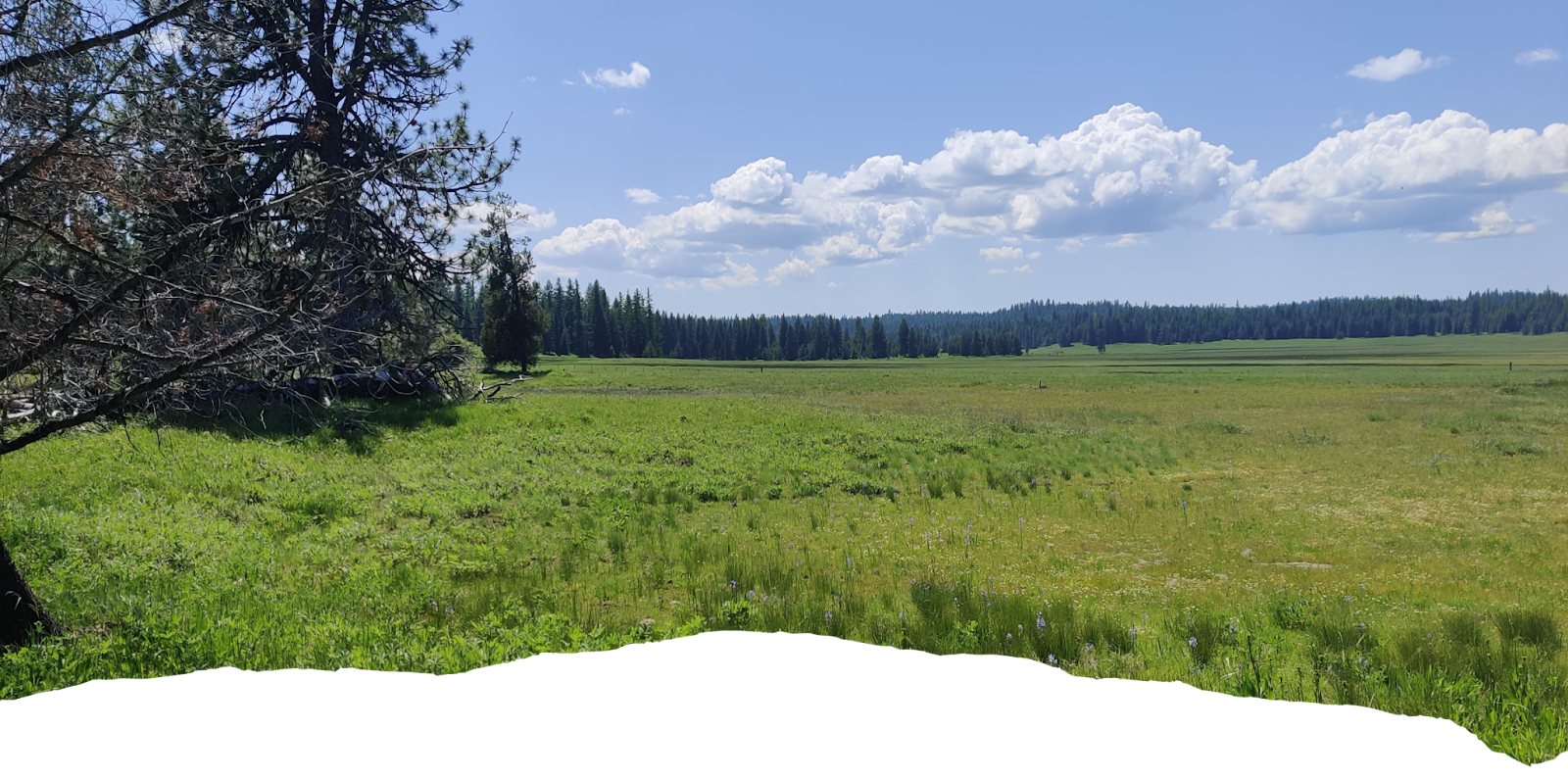
Maxville today. Photo taken by L. Ivey June 2, 2023
We have a special guest this week on Inspiration Dissemination, our own Dr. Grace Deitzler (she/they) who is graduating this term with a PhD in Microbiology! Grace was on an episode of ID earlier in her degree and has served as a host since 2021. In this episode, we will mostly cover the remainder of Grace’s PhD work and give them a send-off both from OSU and from ID.
In the early part of her PhD, Grace worked on mice models of autism and examined the effects of bacterial infection on autism-like behaviors. Since then, her research has focused on a much different species – honeybees. A connective thread between these two disparate phases of research is the “double-hit hypothesis”. This refers to the idea that two concurrent stressors on an organism can increase vulnerability to or severity of disease, beyond the impact of either stressor individually. In mice, the two stressors were a simulated maternal infection during gestation and a subsequent infection of the offspring. In honeybees, the double-hit of interest to Grace is treatment with probiotics after an infection, in this case by a microsporidian fungus.
In comparison with mice or humans, honeybees have a very homogeneous microbiome, with just 8-10 bacterial species accounting for around 95% of the total. The minimalism of the honeybee microbiome and its conservation across individuals suggests that the insect and its bacteria have co-evolved for millions of years. As pollinators, honeybees are of vast ecological and economic importance, with $20 billion in agricultural activity sustained by managed colonies in the US. Beekeepers are understandably interested in protecting their colonies from infection by pathogens such as fungi and foreign bacteria. Much like the probiotic shakes marketed for human consumption, companies have developed probiotic products for honeybees and marketed them towards keepers.
Grace’s research findings cast this practice into doubt. They exposed the pupae to Nosema, a common fungal pathogen that targets the bees’ gut. Then they treated some bees with probiotics. Somewhat counterintuitively, infected individuals treated with probiotics died more quickly than those not fed probiotics! Premature death due to probiotic administration was even observed among healthy bees not exposed to the pathogen. This surprising result spurred Grace to investigate possible mechanisms for probiotic-induced mortality. The Nosema infection damages the bee’s microbiome, eliminating many species from the gut. Grace found that although the probiotic partially restores some of these bacterial species, it leads to more subtle disequilibria in the microbiome at the level of specific bacterial strains. She hypothesizes that this imbalance induces stress that is enough to worsen the bee’s ability to survive. Their results also raise questions about the efficacy of current honeybee probiotics, which appear to do more harm than good. After final analyses are complete, these results will be available in a forthcoming paper.
The work (counting bees)The reward (counting degrees)
To hear more about the details of bees and bacteria as well as Grace’s experiences in science communication, tune in this Sunday, June 11th, at 7PM on 88.7 KBVR.
This week’s guest is Alexander Butcher, a second-year master’s student in the Department of Crop and Soil Science. Alexander has a wide variety of interests related to minimizing food waste and improving global food security, but his current research focuses on protecting potato crops from insect pests.
Typical chemical pesticides are effective deterrents against invading insects but can cause significant harm to the environment and to humans. Such substances can present health risks to the farm workers that apply the pesticides as well as the consumers who purchase and eat the treated crops. Runoff from agriculture can also cause damage to surrounding ecosystems. In light of these downsides, scientists are interested in finding safer alternatives to conventional pesticides. Alexander studies an alternative class of chemicals called elicitors, which act as signals to activate defense mechanisms of plants. Plants have evolved numerous chemical and structural defenses for fending off insect and microbial attackers as well as competing against other plant species. One such product of this evolutionary arms race is the caffeine that you might enjoy in your morning cup of coffee. Elicitors can selectively turn these defenses on or off. This gives farmers and plant breeders a lot more possibilities for using plant defenses to manage insects.
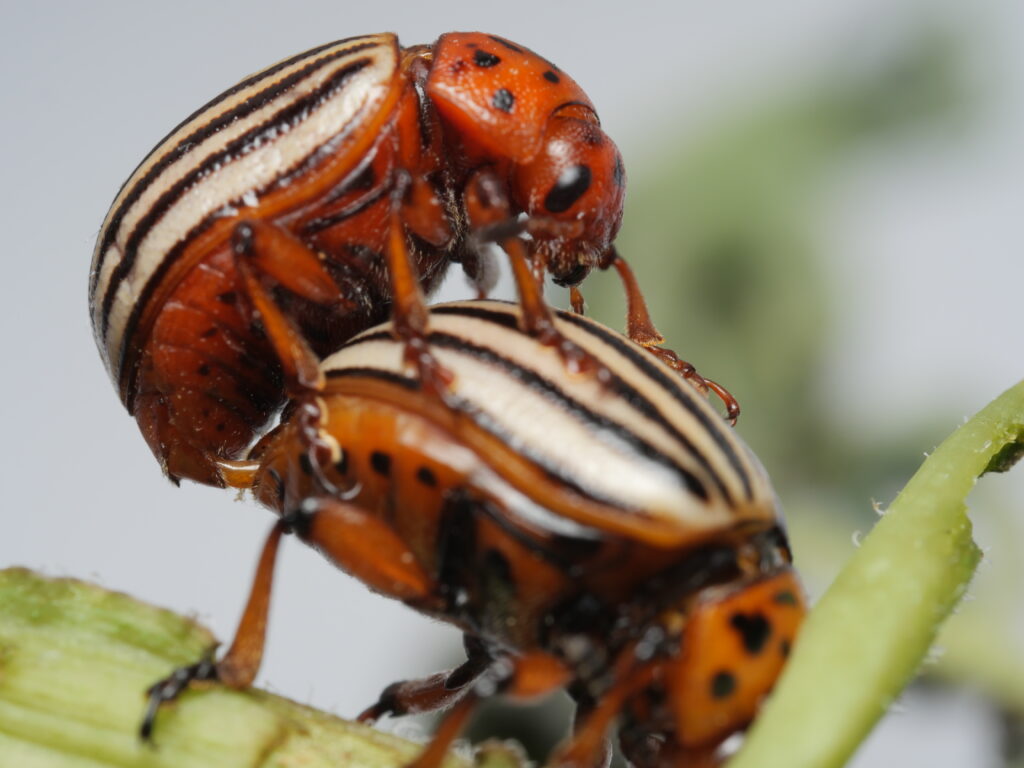
The Colorado potato beetle
Alexander’s research focuses on potatoes, which are an important agricultural product in northeastern Oregon along the Washington border. One of the biggest insect pests of potato is the Colorado potato beetle. Alexander is testing strategies for using two synthetic chemical analogs of natural plant signal hormones– salicylic acid and jasmonic acid — to stimulate the natural defenses of potato plants. Jasmonic acid is a phytohormone that promotes defenses against insects that chew, like the Colorado potato beetle. Some of Alexander’s research shows that these defenses can lower the weight of beetles. He thinks that this is due to protease inhibitors, which disrupt the enzymes insects use to digest proteins. Similarly, salicylic acid plays a major signaling role in plant development and defenses against insects that pierce into the plant and suck out fluids, like aphids. While these natural products have the potential to serve as affordable and effective pesticides, their sublethal effects lag behind the efficacy of more lethal chemicals. To help close this gap, Alexander has been researching how potato defenses induced by elicitors can impact the behavior of the beetle and its ability to reproduce.
Alexander first came to an interest in agriculture through his passion for food. He was classically trained in French cuisine and worked as a chef for twelve years, where he experienced first-hand the amount of waste that happens in the food system. His travels in countries affected by food insecurity helped solidify a desire to return to school, and he attended Portland State for a degree in biology. Despite his day job defending crops from insect invaders, he maintains a significant interest in bugs, founding an entomology club at Oregon State. Alexander will be transitioning into the PhD degree in the fall and switching topics towards defending vineyards from vine mealybugs. He eventually hopes to pursue a career in academic research and education.
Alexander treating crops with elicitors
To hear more about Alexander’s story, including why he advocates for insects as a sustainable protein source, tune in this Sunday, May 28th, at 7PM on KBVR 88.7 FM.
There’s a big difference between human time and Earth–or soil–time. It’s what makes climate impacts so difficult to imagine, and climate solutions so challenging to fully realize. Take it from someone who knows: Adrian Gallo has spent the last decade studying the very idea of “permanence.”
It took an entire day to dig a 1x1x1 meter perfectly square soil pit in the HJ Andrews Experimental Forest outside of Eugene, Oregon. It’s a terribly cumbersome process, but you get much better data from this sampling method compared the conventional methods and the photos are better.
Adrian has dug through a lot of dirt. As a recent PhD graduate in soil science, his research focused on the carbon sequestration potentials of soil. Soil holds about twice as much carbon as our atmosphere. If you factor in permafrost (frozen soils in cold regions that are rapidly thawing) then soil holds nearly three times more carbon than both the atmosphere and all vegetation combined. And that’s a lot.
Let’s back up a second for a quick carbon cycle overview: plants use CO2 to produce sugars through photosynthesis. Microbes eat these sugars, inhaling oxygen and respiring CO2, and when plants and soil decay, they release carbon dioxide back into the atmosphere. There’s a delicate balance between soil being a carbon sink (absorbing more carbon than it releases) or a carbon source (the opposite). More carbon dioxide in the atmosphere = more greenhouse gasses; more climate uncertainty.
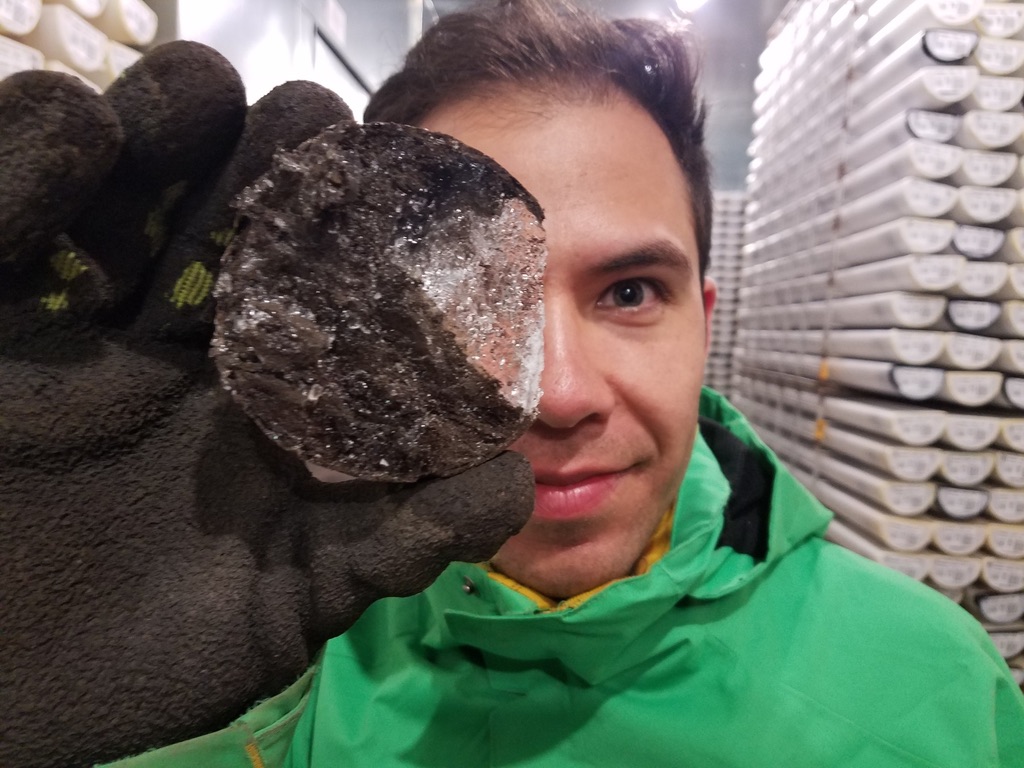
Some of Adrian’s soil samples included sites in Alaska where the ground is permanently frozen year around, leading to pockets of frozen water, leading to the presence of an “ice wedge” seen here. In order to preserve the integrity (physical, chemical, and biological) of these unique soils, sampling and processing had to occur in a walk in freezer.
Soil’s a tricky thing to study. The age of carbon stored in soil ranges widely. Some plant-derived carbon enters the soil and cycles back into the atmosphere in a number of hours, but other soil carbon can remain underground for thousands of years. And around 12,000 years ago (right around the end of the last ice age) soils used to hold nearly 10% more organic carbon than they do now. Most of that carbon loss came along with the spread of industrial agriculture in the last 200 years. If we could regain some of that carbon storage capacity, we’d have a powerful natural climate solution.
Adrian examined soil cores from nearly 40 representative ecosystems across North America. Adrian’s research was unique in not only its depth (at below 30 cm they tested beyond most existing soil research) but also its length (part of a 30 year project).
The findings? First, soil can indeed be a natural climate solution, but only if farmers can be convinced to alter their land management practices in perpetuity. Many land management practices to prevent carbon escape have been largely the same since the Dust Bowl (minimize tilling, plant natural windbreaks, cover crops, etc) but the expense has not made the switch financially worthwhile. To incentivize farmers, the emerging carbon market allows farm managers to get paid for the carbon they store by selling credits to large companies wanting to offset their emissions. It’s an interesting idea, but also plagued with problems. Big corporations are eager to market themselves as more climate friendly, which often leads to greenwashing. But more importantly, there’s a big question over how long this carbon needs to stay in the soil in order for it to count as a credit. It’s easier to motivate a farmer to alter their land management for 30 years–but that’s thinking in human time, not soil time, and that shortsightedness has some dire consequences, even if moving in the right direction. Now try convincing farmers to use these practices for 100 years–still not on the same scale as soil, but certainly getting closer, and an even tougher sell.
Second, much to Adrian’s and the other researchers’ surprise, there seemed to be a homogenizing effect in endmembers of the soil. No matter what plant types grew aboveground, the distribution of plant-end-members was largely the same, from grasslands to mountain ranges. Adrian coined this term “ecosystem inertia” and it’s still not known why exactly this happens.
This week we have Andrea Domen, a MS student in Food Science and Technology co-advised by Dr. Joy Waite-Cusic and Dr. Jovana Kovacevic, joining us to discuss her research investigating some mischievous pathogenic microbes. Much like an unwelcome dinner guest, food-bourne pathogens can stick around for far longer than you think. Andrea seeks to uncover the mechanisms that allow for Listeria monocytogenes, a ubiquitous pathogen found in dirt that loves cheese (who doesn’t?), to persist in dairy processing facilities.
Listeria hysteria
Way back in the early 2000s, there were two listeriosis outbreaks that were linked to cheese. Because of these two outbreaks, the British Columbia Centre for Disease Control conducted a sampling program over the course of a decade. From this program, 88 isolates of L. monocytogenes from five different facilities were recovered. Within this set of isolates, 63 were from one facility which is now (perhaps unsurprisingly) shut down. Those 63 microbes were essentially clones of each other, which means this one lineage of microbes seemed to carry something that allowed them to survive for multiple years. So how did that lineage of Listeria survive? Turns out, like a 1990’s Reebok, they pump it. Listeria uses a protein in its cell membrane called an efflux pump to remove harmful chemicals like sanitizers, antibiotics, and heavy metals from the cell. Essentially, when the cell absorbs something that is too spicy – it’ll yeet it back out.
gif of an efflux pump
Don’t cry over contaminated milk
The idea that food borne pathogens are evolving to withstand processing environments is alarming, but fret not, the results of Andrea’s research are a first step to avoiding the creation of these super microbes in the first place. Instead, it can serve as a warning story for dairy production facilities about what can happen when L. monocytogenes contamination isn’t properly handled. In healthcare, it’s not uncommon to treat a microbial pathogen with multiple medications – as becoming resistant to several treatments is harder for the microbe than becoming resistant to just one. We are also able to apply this treatment method to sanitizing food production facilities by combining different sanitizers – but that is best left up to the chemists to avoid accidentally making an explosion or lethal gas.
Andrea Domen
To hear more about how Listeria can survive better than Destiny’s Child be sure to listen live on Sunday, May 7th at 7PM on 88.7FM, or download the podcast.