A blade of seagrass is a powerful thing

Even though seagrasses occupy less than 0.2% of the world’s oceans, they account for more than 10% of all carbon trapped in the sea. In a world and time where we are producing more carbon than we should be and can manage, making sure that seagrasses are healthy and abundant is extremely pertinent. Winni Wang is one such seagrass scientist working to understand the biology of seagrasses and what threatens them.

Winni is a 5th year PhD candidate in the Department of Microbiology working with Dr. Ryan Mueller. Winni specializes in studying the microbiome of different plants, which for her PhD happens to be seagrasses. The microbiome is the community of microorganisms in a particular environment, and therefore it is found on all living things. By studying the microbiome on different seagrasses, Winni hopes to determine how anthropogenic (human-induced) stressors affect seagrass plants as a whole through changes in the microbiome.

If you’re like me and you love marine megafauna, then when thinking about seagrass beds you most likely are picturing a big manatee slowly grazing on seagrass in tropical, warm waters. Well, then you might be surprised to know that seagrasses don’t only occur in warm, tropical waters. In fact, there are over 60 species of seagrass worldwide and they occur in all kinds of habitats and climates. As a matter of fact, there is a species of seagrass right off of our coast here in Oregon, in Yaquina Bay, which is one of Winni’s study sites for her thesis research.
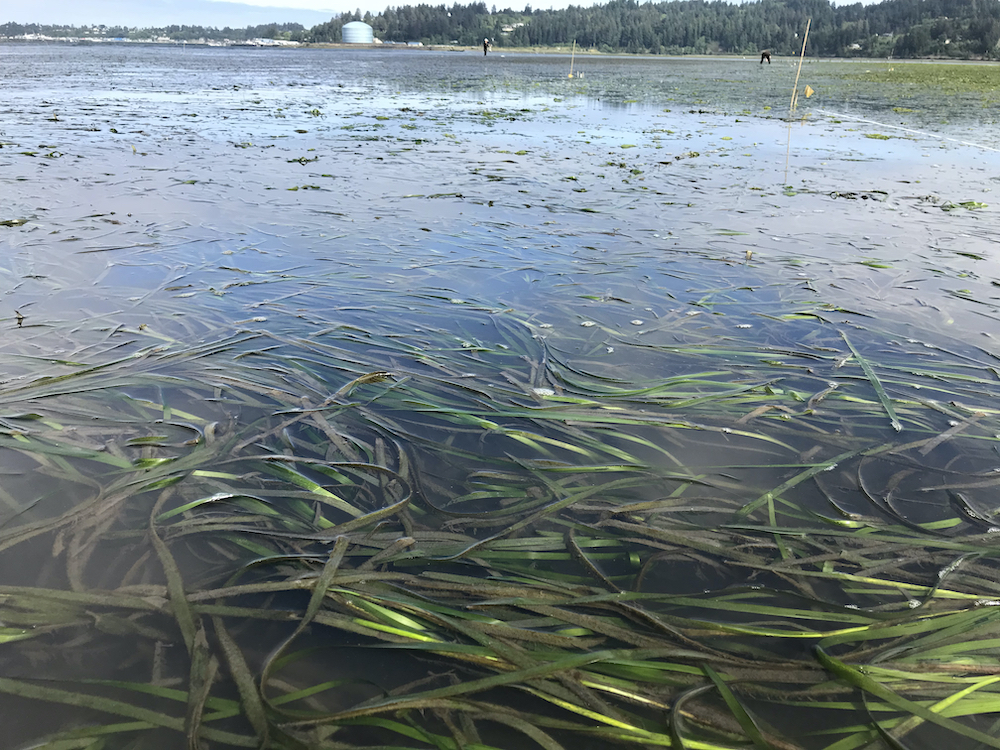
Eelgrass at Yaquina Bay.
Winni with the experimental tanks at HMSC.

Her work in Yaquina Bay relates to understanding how seagrasses are affected by eutrophication. Eutrophication occurs when an excessive amount of nutrients enters an aquatic environment, often due to land run-off, which in extreme cases can lead to severe oxygen depletion in those habitats resulting in death of plant and animal life. Winni hypothesized that with increased nutrients in a seagrass habitat, the microbiome of the seagrass would change in a way that would have an effect on the overall plant. In order to test this hypothesis, Winni had to carry out controlled lab experiments but not without collecting her test species first. She collected over 200 seagrass individuals as well as buckets of mud from Yaquina Bay, which she took back to Hatfield Marine Science Center where she set up tanks for her experiment. The tanks housed seagrasses and the collected mud. Half of the tanks included added fertilizer to test the effects of nutrient addition, and the other half were left as controls. Over the course of the experiment, Winni tracked plant growth metrics and nitrogen concentrations of the tanks, as well as collecting root and leaf samples to look at the microbiomes on both of those parts of the seagrass. 
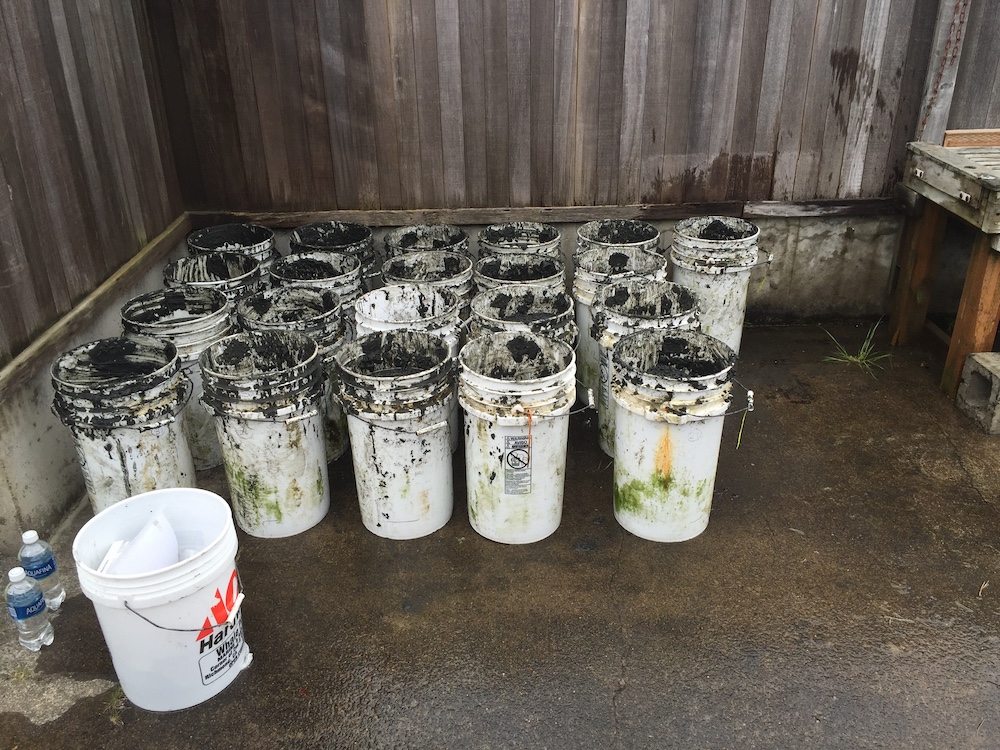
The mud buckets.

Winni found that the fertilizer affected the roots in such a way that it changed the microbiome community found there. This change resulted in enrichment for microbes that could cycle sulfur, which could potentially have quite detrimental effects on seagrasses. This is because seagrasses grow in anoxic, or oxygen-low, environments where sulfur is found in its reduced form, hydrogen sulfide. Usually, in environments without excessive nutrient input, seagrasses are able to deal with sulfide, which is typically toxic to plants and animals. However, with increased nutrients, the seagrasses may become overwhelmed by the amount of sulfur in the water as it gets converted into hydrogen sulfide. At certain thresholds, the sulfide ends up becoming toxic to seagrasses. Thus, Winni’s research shows that excessive fertilization to seagrass environments, potentially from land run-off, could have detrimental impacts on seagrasses.

Another chapter of her PhD takes Winni half way across the world to the Mediterranean. Well, it is not so much that it takes Winni to the Mediterranean, it is more that the Mediterranean comes to her! Through her advisor, Winni was able to obtain seagrass samples from the Mediterranean. What makes these samples unique is that they were taken from a site near a naturally occurring underwater volcano. You may be wondering how this is relevant to Winni’s research since she is trying to figure out how human-induced stressors impact seagrasses. Well, the underwater volcano spews carbon dioxide into the water, which makes the water more acidic. This phenomenon is essentially a natural experiment because it mimics the effects of human-induced ocean acidification, which is becoming a problem around the world’s oceans. The results are still underway but they will help fill some of the knowledge gaps concerning the effects of ocean acidification on organisms.

This blog started by emphasizing how important seagrasses are in sequestering carbon, however it is not the only thing that makes these small, unassuming plants so vital to our lives and the lives of many other organisms. Coastal waters with seagrass beds have been found to contain relatively less human pathogens than areas without seagrasses. This is because seagrasses filter the water and are able to remove a lot of pathogens. Furthermore, they are important in preventing coastal erosion and often make coastlines more resilient to storms. Not only are they also important habitats to some beloved marine megafauna (manatees, sharks, turtles) but they are also important for many smaller, but equally ecologically and economically important, species. For example, in Oregon, seagrass beds may actually be helping mitigate ocean acidification which is having a negative impact on oysters as it affects the strength of their shells. 

Winni’s life, both at Oregon State and before her arrival here, has not been all about seagrass science though. To hear more about her background and some of the struggles and lessons that she has had during her tenure here, tune in on Sunday, March 8 at 7 PM on KBVR Corvallis 88.7 FM or stream live. To follow Winni and her research, be sure to follow her on Twitter @ramenmicrobiome. Something that we weren’t able to cover on the blog but covered on the show, is that Winni is one of the founders of the Women of Color Caucus (WoCC) at OSU. Read about the origin story of WoCC here, follow their Instagram and Twitter pages and join their listserv here.
Finding a place in policy: where do the scientists fit in?

Somewhere, in a local government meeting, an idea is proposed, a policy brief is written, some voting occurs, paperwork is pushed around, money is allocated, and a new highway is built.

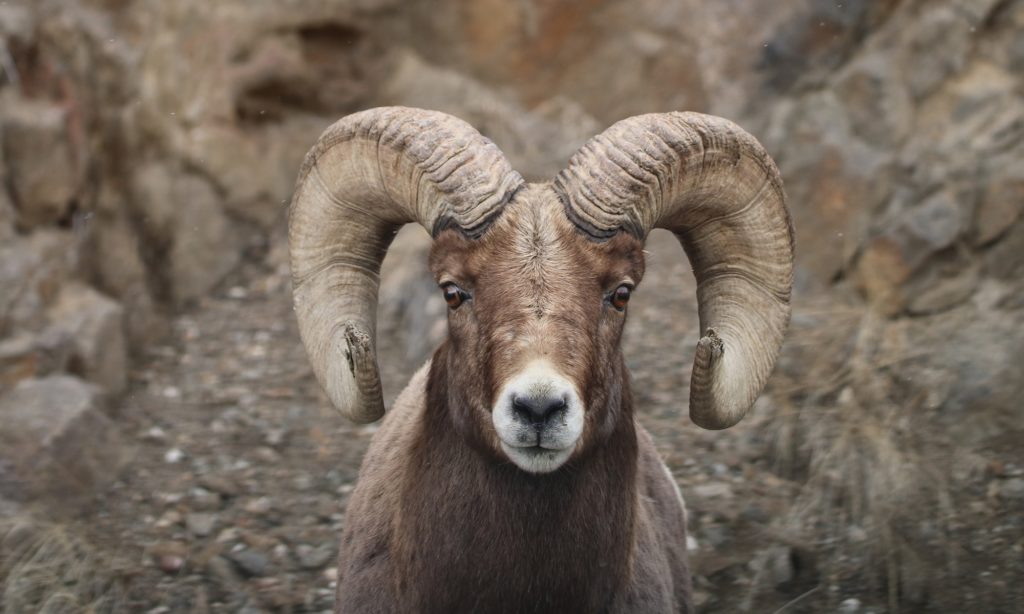
In the same region, some bighorn sheep are off trekking in search of their favorite grasses to eat. They come upon a road they can’t cross that wasn’t there before. The sheep stay put and eat the same old grass they were already eating.

Bighorn sheep iImage from Defenders of Wildlife.

When policymakers decided to build this road, it’s unclear whether they considered the consequences of this type of habitat fragmentation on the tiny ecosystems of bacteria that live inside of each bighorn sheep. More importantly, whether they knew their decision might lead to unforeseen consequences for bighorn population health.

We take for granted how intertwined policy and science really are.

Claire Couch is a 5th year PhD candidate in the department of Integrative Biology, studying wildlife disease ecology, but she’s also the president of a new Science & Policy Club at Oregon State University.

Advised by Anna Jolles in the College of Veterinary Medicine, Claire studies the bacteria that live in the guts of large animals like African buffalo, rocky mountain elk, and bighorn sheep. She’s interested in how the gut microbiome can contribute to disease resistance, but separate from her PhD research, she’s interested in how policy can be informed by science, and how science can be impacted by policy.

Claire says she’s always been interested in ecosystem health and fascinated by ecosystem dynamics between big scale (a region the sheep lives in) and small scale (the bacteria living in the gut) ecosystems. Through her research, she’s been exposed to diverse conservation issues for different wildlife species. For example, management and policy shapes where wildlife can reside, and where they are determines the factors that shape the gut microbiome. It became apparent to Claire that most scientists are not typically trained to understand and partake in policy, including herself, even though is it’s critical to all of our research pursuits.

(Left to right) Jane Lubchenco, Karen McLeod and Steve Lundeberg at OSU science policy panel discussion.

Claire started looking for ways to learn more and to become more engaged in science policy, but wasn’t finding exactly what she was looking for. OSU has some science-policy courses and clubs, but they are typically very specific to one type of science. So although she didn’t feel qualified to take the lead on this, she created what she was looking for: a science policy space that is more inclusive and general, with an emphasis on career development and general policy literacy.

In the first year since this group started, they’ve already packed in several activities including:  meetings with OSU faculty who are closely tied to policy, a seminar about how to communicate about controversial topics, a panel talk about how scientists can communicate with the press, a talk from a government agency research organization scientist, and a meeting with House Rep. Peter DeFazio. Finally, the group has an open-source data panel coming up.

House Rep Peter Defazio speaking with OSU Science Policy club. Image from gazettetimes

Claire wants to help scientists make their work relevant, but she hasn’t been doing it all alone. There are currently a few other club officers, and as Claire writes her dissertation, she’s looking to pass on club leadership. In the future, she hopes to see the club become more engaged with the non-OSU community members around us, host bigger events in collaboration with other groups on campus, and start up a mentoring program in which club members would be mentored by policy professionals.

To hear more about this policy club and Claire’s research and future plans, tune in to KBVR 88.7 FM or stream online March 1, 2020 at 7 P.M.

Working with Dungeness crab fishermen to get a ‘sense’ of low-oxygen conditions off the Oregon coast

Linus tidepooling at Yaquina Head, Oregon Coast.

Linus Stoltz is a graduate student in the Marine Resource Management Master’s Program through the College of Earth Ocean and Atmospheric Sciences, co-advised by Dr. Kipp Shearman and Dr. Francis Chan. Only in his second term, Linus is already diving in to a project that means a lot to Oregon coastal communities.

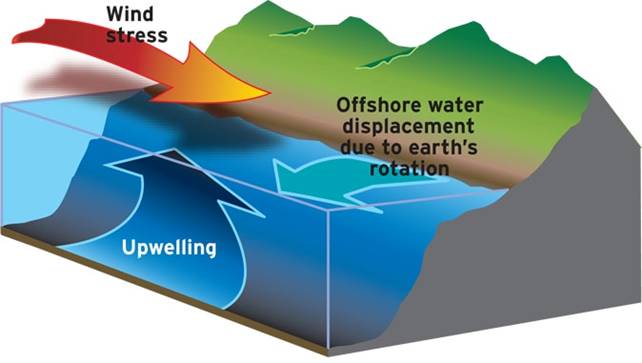
Dungeness crab is the most profitable state-managed fishery in Oregon, generating $66.7 million dollars in commercial sales over the 2018-2019 season alone. However, an increasing threat to this valuable industry that has caused significant harvest reductions in recent years: hypoxia. Hypoxia refers to low-oxygen conditions in the ocean that have been recorded as occurring more frequently off the Oregon Coast and elsewhere in the Pacific Northwest, where Dungeness crab fishing is a major activity. In some parts of the ocean, such as the Gulf Coast, these conditions are triggered by pollution which causes overproduction of algae, followed by excess decomposition. However, here, it’s more complicated. These conditions are generated by offshore wind- driven movement of cold, nutrient-rich but oxygen-poor deep water across the continental shelf, toward the coast.

This process of ‘upwelling’ (see figure below) is a natural occurrence, but scientists speculate that climate change is making these events more frequent and their characteristics severe. As a Marine Biology major in his undergraduate studies at the University of North Carolina Wilmington, Linus admits that oceanography isn’t exactly in his “wheelhouse” but it doesn’t take an oceanographer to understand that atmospheric conditions are strongly tied to ocean circulation patterns. Referring to graphic representations of Northwest wind stress and dissolved oxygen concentrations, he says “they’re pretty well correlated.” Normally, the offshore winds that drive upwelling are counteracted by a shifting of wind patterns that ultimately allow them to mix sufficiently and re-oxygenate. But the reality is that this is happening less and less frequently.

The process of ‘upwelling’ off the West Coast. Source. www.noaa.gov

What does hypoxia mean for Dungeness crabs? Linus describes the events like waves of low-oxygen water moving slowly across the seafloor. As bottom-dwelling organisms that depend on dissolved oxygen to breathe, if conditions are severe enough or persist long enough, they’ll die. More and more instances of crab fishermen pulling up their gear full of dead crabs prompted them to reach out to scientists for help. Oregon Department of Fish and Wildlife (ODFW) biologists and researchers at Oregon State University (OSU) have been working together since 2002 to try and find answers. Check out this video by ODFW to see real-time footage of a hypoxic wave as it flows over a Dungeness crab pot in 2017.

While we are beginning to understand the bigger picture of the oceanographic conditions that result in hypoxia, Linus explains that we don’t have any models that predict this ‘wave’ on a finer scale. He describes the ocean as patchy, where conditions just a thousand yards away from where a fisherman may have set his or her pots may be completely different. The ultimate goal of his research is to be able to predict these conditions and inform management decisions such as seasonal and/or spatial closures.

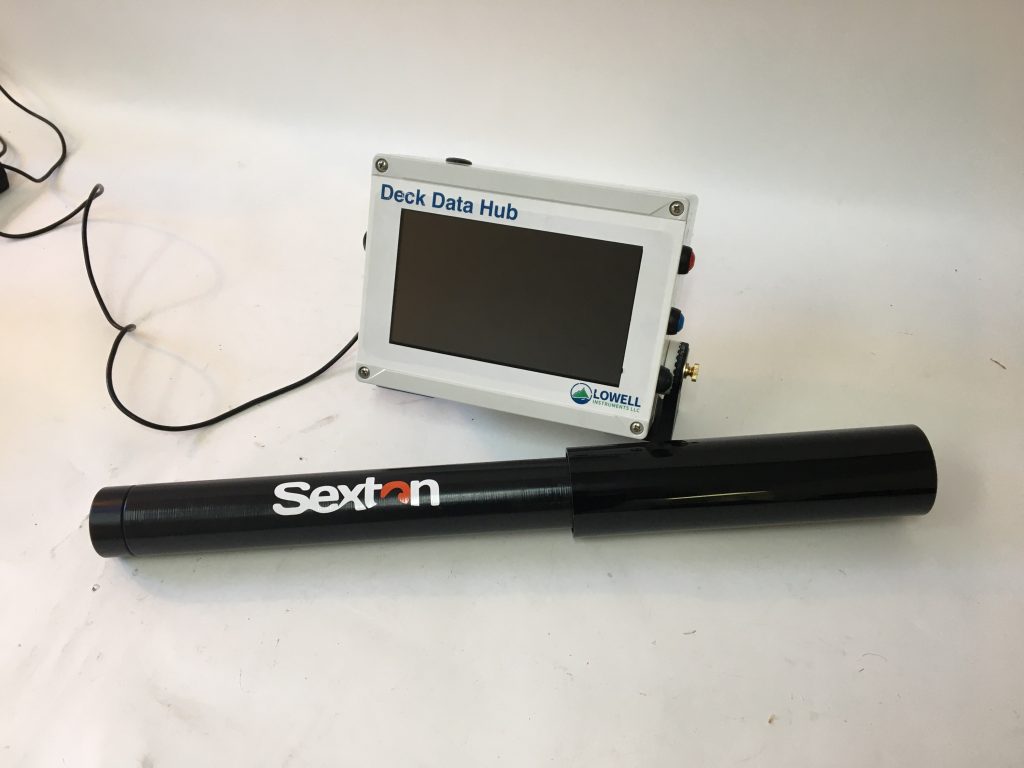
The roughly two-foot long Sexton oxygen sensor seen above will be attached to an individual crab pot that will transmit data via Bluetooth to the Deck Data Hub which will then relay the information to a receiver on the OSU campus.

But even more important to fisherman now, the project will also provide ‘in situ’ information fisherman can use to make critical decisions while they’re out there. To achieve this, Linus will be equipping fishermen with sensors to be deployed by Dungeness crab fishermen through the season to collect data on dissolved oxygen. The data recorded by the sensors can be seen immediately by fishermen when they retrieve their pots and will also be automatically transferred via Bluetooth to a box on deck which will ultimately transmit to a receiver on the OSU campus. The hope is to capture the variability in oxygen conditions, while minimizing their impact on fishing operations.

Linus tagging red drum in Hancock Creek when he worked for North Carolina Division of Marine Fisheries (NCDMF).

Before coming to OSU, Linus spent time as an observer for the North Carolina Division of Marine Fisheries testing by-catch reduction technology in the shrimp trawling industry, an experience he recounts as “character-building to say the least.” In other words, Linus knows how important it is to streamline the process if he wants to get any cooperation from fishermen and collecting data can’t be in the way or slow them down. A stark contrast, however, between the interactions between fisherman and researchers on the East Coast to Oregon is that this relationship is more than just cooperative, it’s a collaboration. Fishermen here trust scientists, but at the same time the researchers recognize that fishermen are out there more and are the ones who see changes first-hand.

For Linus, this project represents one of just about any marine science topic he’s excited to be involved in. To learn more about Linus’s journey from SCUBA diving in a cold lake in Ohio as a ten-year old to working as an underwater technician monitoring artificial reefs off the coast of North Carolina, tune in to KBVR 88.7 FM or online February 23, 2020 at 7 P.M.

Not all robots are hard and made of metal…

Picture a robot. Seriously, close your eyes for 30 seconds and picture a robot in your head. Ok, most of you probably didn’t do it but if you had, my guess is that you would have pictured something very boxy, perhaps with pincher hands, quite awkward in its movements and perhaps with a weird robotic voice pre-Siri era. Or maybe something R2-D2 like. That’s definitely what comes to mind for me. Well, robots don’t all look like that. In fact, some robots aren’t hard and made of metal at all. Some are soft and pliable, and they’re the kind that Nick Bira studies.

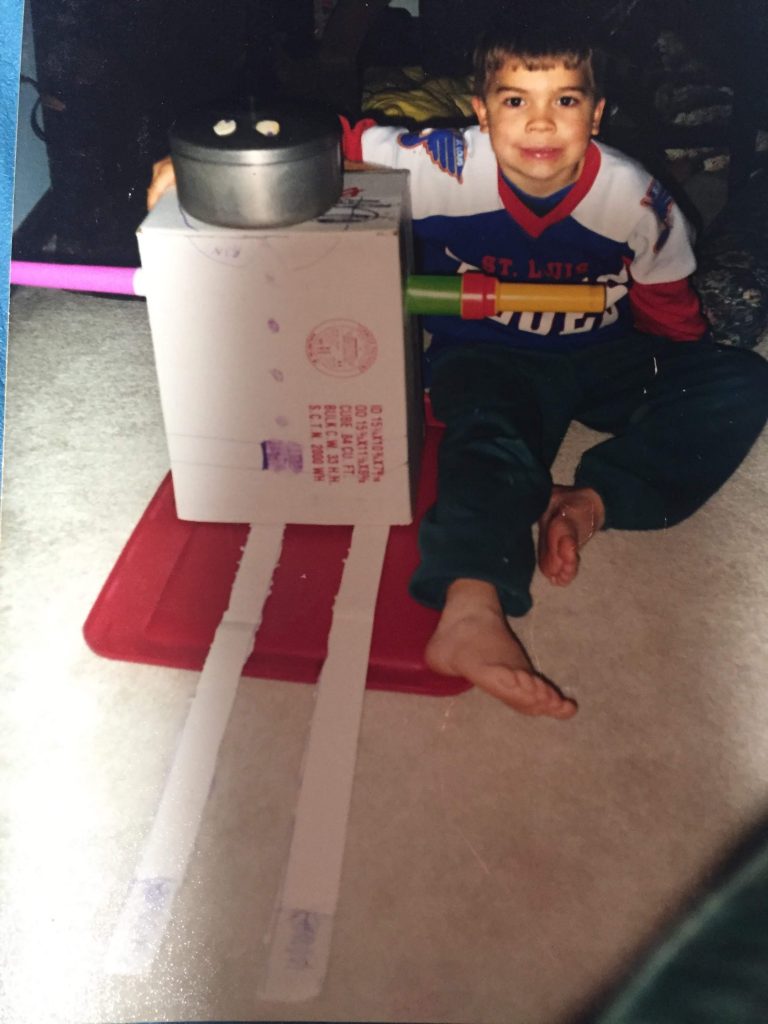
Was a career in robotics always on the horizon for Nick? Perhaps…judging by this photo of him with his home-made robot, “Mr. Klanky”.

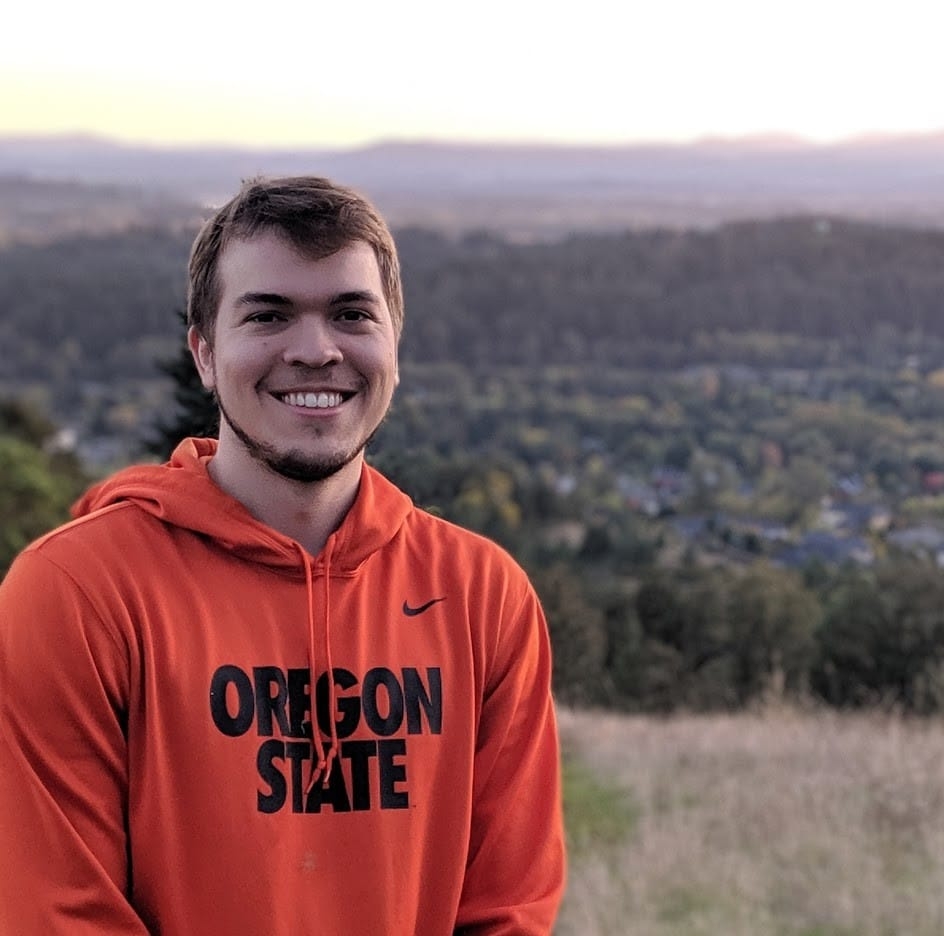
Nick is a 3rd year PhD student in the Department of Robotics working with Dr. Joseph Davidson. When asked to summarize his research into just a few words, Nick answered that he works on magnetism and soft robotics. What is soft robotics and why would we want a soft robot you may ask (I know I certainly did)? Well, soft robotics is exactly what the phrase implies – they’re robots that are soft, absolutely no hard parts (or very few) to them. Why would we want a soft robot? Well, imagine if you have a small space that you need a robot to fit through, like a small hole. A soft robot can mold into the shape that you need it to. Alternatively, soft robots are becoming more and more needed and used in medical robotics. After all, you don’t want some hard, klanky thing poking around inside of you and possibly causing damage. You’d much rather have something that’s soft, gentle, compliant and non-damaging. Another example is in instances of human-robot interactions and increasing the safety of such interactions. A big, metallic, hard robot on an assembly line could easily spin and injure a human. But a robot with arms designed like tentacles that are floppy and soft, will perhaps push you over and bruise you, but not lead to serious damage.

The utility of soft robotics is manifold. So why aren’t they used more or why haven’t you heard much of them before? Well, the challenge is how to keep the utility of a hard robot while making it soft and, by proxy, safe. In part, this is down to how the robot and its movements are controlled. Most soft robots to date are controlled by or pneumatics or hydraulics (using air or liquid pressure). The downside of these is that the soft robot has to be accompanied by bulky hard components, such as a pumps, electrical sources, batteries, or air tanks. So even though you may have this super soft, compliant robot, it comes with large apparatuses that are not soft. Kind of counter-intuitive. 

This is where the other half of Nick’s research phrase comes in – magnetism. Magnetism has very limited usage as a tool in soft robotics and Nick thinks it should be applied more. If you’re having a hard time picturing how a magnet could be used in soft robotics, then visualize this example Nick gave us. It could be used in a pincher – instead of using air pressure in inflate the pincers to open and close, you could have the fingers of the pincer be made out of stretch magnetic material that closes when exposed to a magnetic field. It seems pretty simple right? And yet, it doesn’t yet exist in soft robotics. This is why Nick is exploring this possibility because he believes ideas like this could be useful building blocks, and once we have them, we can build more complicated things. 

Now, you may be thinking, hang on, magnets are hard, I thought this was all about soft robotics? Good thought – here’s how Nick is planning to work around that. Nick is embedding iron particles, which are magnetically soft, into silicone rubber, which is a soft elastic material, to make a material that is soft and hyper elastic and when brought close to an ordinary magnet, will stick to it. However, this is only step 1. Nick is interested in creating magnetic fields within the robot rather than it only working if there is a big, hard magnet nearby. One core goal of soft robotics is to have them function on their own without needing some hard object nearby to ‘support’ it. He is still in the development and testing stages of this material, but Nick does have an application in mind. He wants to make a magneto-rheological fluid (MRF) valve that can be used in soft robots. Rather than have this valve open and shut with air pressure (which would require air tanks to accompany the robot), Nick wants the valve to open and close through a magnetic field generated by the elastic, soft magnetic material. This way everything would be compact, stretchy, and wouldn’t require any additional bulky parts.

To hear more about Nick’s research and also about his journey to OSU and more on his personal background, tune in on Sunday, February 16 at 7 PM on KBVR Corvallis 88.7 FM or stream live. Also, be sure to check out his Instagram (@nick_makes_stuff and @nick_bakes_stuff) and Twitter (@BiraNick) accounts. 

Fitness for Life: Sport psychology and the motivations behind healthy lifestyles

Portrait of Alex Szarabajko

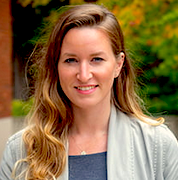
For graduate teaching assistant Alex Szarabajko, being part of the team teaching the 3,000-plus students who take Lifetime Fitness for Health (HHS 231) every term is not just a job. “It’s the last time students are able to learn about physical activity, nutrition and mental health before adulthood, ” says Alex. The course, which tied for first place in a “Best of 2020” vote, lays a foundation for healthy habits by addressing physical activity, nutrition, and mental health. Alex started work on her doctorate in Kinesiology at Oregon State University in 2018 after completing master’s degrees in General Psychology and in Exercise and Sport Science at Eastern Kentucky University. As a researcher in the field of sport psychology, Alex works to understand the reasons that people pursue their fitness goals and engage in healthy behavior. 

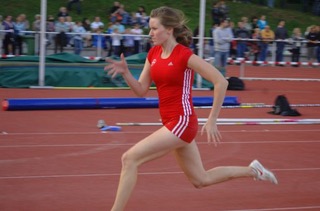
Alex sprinting at a track meet.

Alex first came to the United States to work as an au pair in Bethesda, Maryland. Her host family were very enthusiastic about college sports. In particular, Alex wanted to know: “Why are they so popular?” In her native Germany, university sports are not taken seriously. Instead, serious athletes are members of athletic clubs. If athletes are paid at all, it is typically only a small amount. With the exception of footballers, most elite German athletes need supplemental income, often from a career in a more traditional domain. (Link 2)  Alex was excited by the idea of college athletes having national attention and earning scholarships through sport. Perhaps this was a way that she, too, could continue to compete, at least for a few more years. After returning to Germany and resuming track and field practice at her local club, Alex began applying for college in the United States. She was recruited by Eastern Kentucky University on a track and field scholarship. 

Starting out, Alex thought she had her career path figured out. As a freshman at EKU she was required to go to a majors expo, which she reluctantly attended. At the expo Alex found a booth advertising the field of sport psychology, an experience she describes as an “immediate lightbulb.” She promptly changed her major to psychology to prepare for graduate work in sport psychology.

Following the completion of her bachelor’s degree, Alex stayed at EKU in order to do graduate work under the tutelage of Dr. Jonathan Gore. Psychologists use the term intrinsic motivation to describe actions inspired by internal rewards. For example, a person playing a sport just for fun is intrinsically motivated. Extrinsic motivation describes actions influenced by others. An employee performing a task that they personally don’t care about is extrinsically motivated. Working with Dr. Gore, Alex examined a third type of motivation, relational motivation, among athletes. Relational motivation is defined by the needs of a group. Initially, Alex expected to find that athletes in team sports like football and basketball were more relationally motivated than athletes in individual sports. To their surprise, she found little difference between sports. Instead, she found differences between the levels of relational motivation among female athletes and male athletes. She found that female athletes’ performance was significantly linked to relationships between athletes and coaches.

In 2018, Alex left Kentucky and came to Oregon. She arrived at the start of the academic year, never having been to Oregon before. It didn’t take long for her to feel at home. “I just fell in love with Oregon when I got here,” says Alex. “I was able to go to the coast, go to the waterfalls.” Being near to Eugene (Track Town, USA) is also a bonus: that’s where the 2020 Olympic trials for track and field are being held. Being raised by Polish parents in Germany, Alex speaks both languages fluently and holds citizenship in both countries. She’s volunteered as an official translator for the Polish national team in the past, and hopes to volunteer again for either the German or Polish team.

As a graduate student in Kinesiology with a Psychosocial emphasis, Alex is focusing now on health and fitness in adults, rather than only among adults who consider themselves athletes. About 10 years ago, her advisor, Dr. Bradley Cardinal, carried out a study examining required health classes in colleges and found that since 1930 the number of schools requiring a course in fitness and healthy living has dropped from 80% to 39%. Alex is interested in finding out whether this trend has continued since that study was carried out. Oregon State’s version of the class, Lifetime Fitness for Health, has adapted with time to address student needs. In particular, student responses to end-of-class surveys resulted in the addition of a mental health component the class, which initially only focused on physical activity and nutrition. Alex hopes to uncover more about how required health classes across multiple universities have adapted to changing needs of students, and whether the number of schools requiring such classes has continued to drop.

Tune in Sunday, February 2nd at 7pm on 88.7 FM or online to learn more about Alex’s research and her personal journey!

Swimming with Salmon(ids)

Dams, bears, and anglers aren’t the only challenges that salmon face as they undergo their journeys from their mountain river birthplaces to the Pacific Ocean and back again. Timber harvests, dam-induced streamflow changes, and climate change have increased stream temperatures throughout the Pacific Northwest. Native cold-water-loving species like salmon and trout struggle in warm water, while certain parasitic microbes flourish.

The confluence of the Deschutes and Columbia Rivers. Illustration by Daniel Watkins.

Sofiya Yusova, a master’s degree candidate in the Department of Microbiology at Oregon State University, researches the microbe Ceratonova shasta. Her work aims to understand how C. shasta adapts to climate change in river ecosystems in the Pacific Northwest. Her advisor, Dr. Jerri Bartholomew, runs a long-term monitoring project in the Klamath River, and recently began applying the same methods to the Deschutes and Willamette Rivers. Dr. Bartholomew and her lab identified the complex lifecycle of the parasite, recognizing that C. shasta requires an intermediate host (the polychaete worm) in order to infect fish. Understanding the lifecycle is critical for understanding how to intervene when fish populations are struggling, as well as for anticipating the effects of climate change. As stated on Dr. Bartholomew’s website, “Climate change is expected to have profound effects on host-pathogen interactions. We are examining how this might affect myxozoan disease by developing predictions for how the phenology of parasite life cycles will change under future climates, how changing flow dynamics will alter disease, and to identify river habitats that should be protected as refugia.”

Lifecycle of ceratanova shasta. Illustration by Daniel Watkins.

Having a healthy population of salmon is important for many groups, including tribal communities, commercial and recreational anglers. Salmonids (a family of fish including salmon, trout, whitefish, and char) are particularly susceptible to infection when water temperature is warmer than usual, stream flow is low, or the number of C. shasta spores is high. Collaborative monitoring projects on the Klamath River and the Deschutes River have shown that the danger of deadly infections varies along the course of the river. This knowledge has allowed river managers to focus their efforts. For example, if the number of infectious spores is especially high, dam flowthrough rates can be increased to “flush out” the pathogens.

Tune in Sunday, February 2nd at 7pm on 88.7 FM or online to learn more about Sofiya’s research and her personal journey.

Work Your Body, Work Your Brain

Regular exercise can increase your muscle strength, decrease the risk of health complications like high blood pressure and diabetes, but most importantly it can do wonders for our happiness. This link between physical activity and psychological well-being is supported in the literature, but the people who can benefit the most — children in grade school and adults with mobility limitations — seem to be faced with many unnecessary hurdles. Our guest is Winston Kennedy, a 3rd year PhD student in the Kinesiology program and Adaptive Physical Activity option, was a practicing Physical Therapist when he noticed his patients with mobility limitations were trying to perform their rehabilitation exercises at home but they received inadequate support or guidance. It’s these barriers to successful rehabilitation that Winston is examining in his research project with the aim of making physical therapy more inclusive to any patient who could benefit.

Poster presentation of some of my Winston’s research; Determining Factors associated with Physical and Occupational Therapists’ attitudes Towards Disability

Physical therapy is often learned in the hospital and the patient is expected to perform those exercises at home; in fact, nearly 9 million Americans have some experience with physical therapy during their lifetimes but that number should actually be much bigger. Unfortunately, the benefits that patients can receive from PT is not well understood by primary care physicians so there is a discrepancy in the number of patients who receive a referral to visit the PT and those who can benefit. Adults who may benefit from PT could argue their case to their general practitioner and they may even be successful, but treatment gaps remain for children. Early in life during primary school “the majority of students with disabilities are placed in general education classrooms for 80% or more of their time in school“, which could exclude children from participating in exercise and bonding with their peers. The overlap between physical therapy, independent mobility, and mental health becomes obvious only when a wholistic approach to how a lived experience can extend from a person with physically unstable wrists or fingers into the frustration they may feel when using a small key to unlock a stiff door to your own home is painful or is downright too strenuous.

Winston at the Oregon state Championship Olympic weightlifting competition.

Winston continues to be a practicing physical therapist in Corvallis, but what brought him to Oregon State University from Florida was the seemingly obvious physical barriers that patients had in performing their rehabilitation, at home or in the gym, and the effect it had on his patients success. One practical design idea for gyms that can be more inclusive are structurally sound scaffolding near weight machines, or parallel bars for patients to practice walking without the fear of falling, the addition of a roaming human facilitator that can assist someone for a few minutes at a time can also have major positive benefits to generate spaces inclusive for people of all kinds of physical abilities. However, before he can help people in the physical therapy offices, he first needs to understand what the attitudes and perceptions of physical therapy are from primary care physicians who can refer patients. This is the first part of Winston’s project, but it won’t be his last.

Winston first became exposed to physical therapy after a shoulder injury in high school, although he wouldn’t pursue it professionally until he was in his senior year at Hampton University playing on the football team when his school counselor suggested PT could be a career option. Following knee surgeries that ended his football career, he made a hard swing to focus on schooling and PT school that eventually lead him to see the need from his patients. This gap in care, especially for those with disabilities, is what brought him to Oregon State and Sam Logan’s lab in the Kinesiology program. Listen in on Sunday January 26th at 7pm on 88.7FM, or live-streamed to learn more about Winston’s research. If you missed the live episode, you can listen to Winston’s interview on our Apple Podcast page.

Robots without boarders: from Morocco to France to Germany to Oregon State

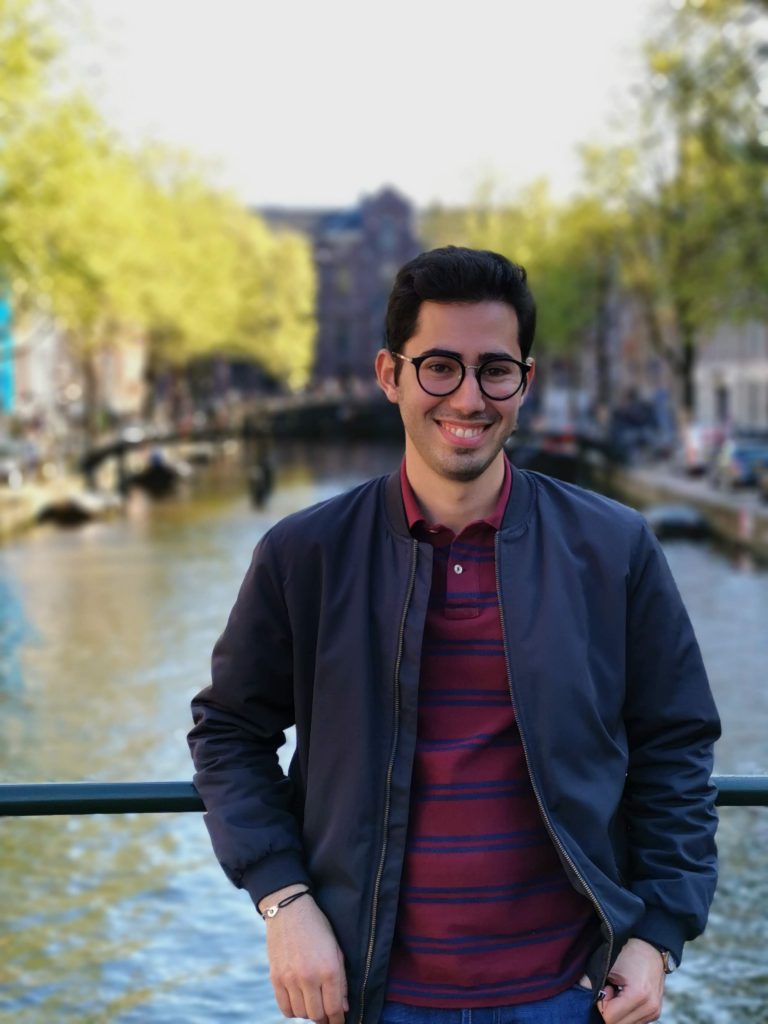
Amine Gaizi is a masters student working on a degree in Electronics and Embedded systems. As an exchange student from France, Amine is studying in the Department of Electrical and Computer Engineering within the College of Engineering here at OSU.

Amine taking care of a tea salon and serving mint tea he had prepared for all CPE students, which is very popular in Morocco. During that day Melting Potes was presenting Africa and Amine did this to display the moroccan culture.

Amine is originally from Morocco, where he studied in French schools, so the next natural step was to move to France for his higher education. At CPE (Ecole d’Ingénieurs en Chimie et Sciences du Numérique) in Lyon France, Amine has been working on his degree. At CPE Amine was part of an association that promotes cultural diversity and helps the foreign students that come to CPE. It is called “Melting Potes”, like melting pot but with a twist, in french “potes” means good friends. One of the major events we organize is called “the cultural week”. Everyday they present the culture of a continent through food, music, decorations, activities and gifts.

During his graduate work, Amine worked in the department of automotive microcontrollers at Infineon Technologies in Germany for a year to develop an autonomous robot in the shape of a mini car. Essentially, there is a chip that you can program to interface sensors and control actuators following a particular algorithm. Amine says the microcontrollers developed by the automotive department of Infineon are very safety and security oriented, which makes them practically fail-proof. It is the type of technology that is used for braking systems in cars.

This mini robot car that Amine worked on is capable of scanning what’s in front of it, and heading to target locations while avoiding obstacles, and Amine presented this work at Embedded World fair.

After moving from Morocco to France to Germany, Amine thought, “why not also do an exchange program!”, so going through the University of Lyon’s exchange program, Amine arrived in Corvallis Oregon Fall 2019 and has had a great time so far! Living in “iHouse” which is a community of mostly international students living together in a large house, Amine has made amazing friends from all over the world and has made even more friends through playing tennis.

He’s done a decent amount of traveling during his exchange here but Amine said graduate school is no joke. Being a graduate student is already a challenging undertaking, but being an international student adds another layer of complexity and difficulty. Thankfully, Amine knew some other French exchange students when he arrived who helped him get started, and the Office of International Services provided plenty of resources and information.

To hear more about Amine’s journey to OSU, how the French school system is organized, and about the highs and lows of the international student experience, tune in on Sunday, January 19th at 7 PM on KBVR Corvallis 88.7 FM or stream live

Climate change, carbon, roots vs shoots, and why soil is more than just dirt

For starters, soil and dirt are not the same thing (contrary to my own belief). First of all, dirt is in fact soil that has been removed from its intended location. For example, the stuff on your shoes after you go hiking in the forest or the grit under your fingernails after you go dig around in your garden, that’s all dirt. The stuff that is left untouched in the forest and in the garden, that’s all soil. Secondly, soil is super important for a number of reasons. One of the key reasons being that it has the potential to help us reduce the amount of carbon in our atmosphere on human timescales, and therefore, mitigate the effects of climate change. And Adrian Gallo is right in the nitty-gritty of it all. 

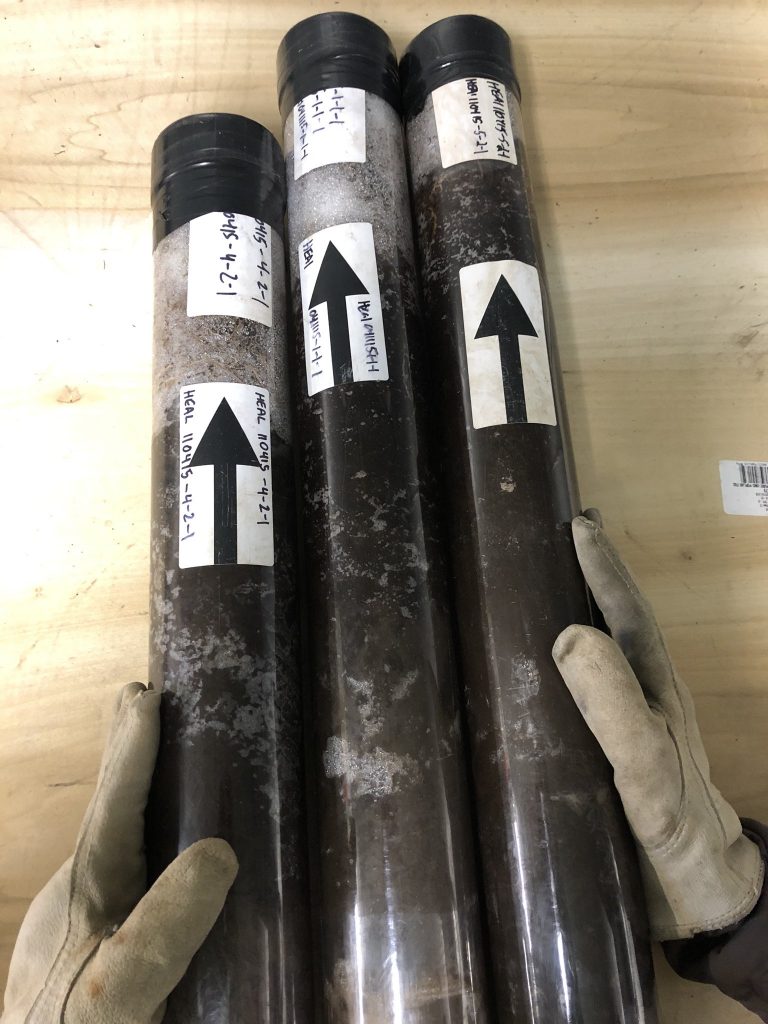
Adrian is a 4th year PhD student in the Department of Crops and Soil Sciences working with Dr. Jeff Hatten, who was also his Master’s advisor. While Adrian’s Master’s work was focused on understanding how carbon and water move in Oregon soils under intensive forest management, his PhD is looking at soils from a much wider and more diverse range of habitats and ecosystems. Specifically, the soil cores are from 43 different locations across North America spanning 20 different ecoclimatic zones, ranging from the Alaskan Arctic Tundra to the southern tip of Florida. By analyzing these samples, Adrian is making a continental-scale assessment of soil organic matter and how similar or different it is across these ecoclimatic zones. In particular, Adrian is looking at carbon. Carbon is unique to look at in soils because it is cycling in human timescales, unlike carbon in rocks and oceans, which cycles on geologic timescales. What this means is that essentially we can directly manage and influence the carbon on our landscapes. However, before we can do that, we need to understand why some carbon stays in soil much longer than other carbon (50,000 years vs 1 week) and how different microbes have different abilities to use these different kinds of carbon. 

While it may not sound like it to many of us, the work that Adrian is doing is soil-scientifically speaking quite ‘basic’. It is ‘basic’ because soil scientists today are only now realizing how little we actually know and understand about how carbon works and cycles within soil. The reason being that “we were using essentially the same analytical methods for more than 100 years, and our predictions and climate models were built using that data. It’s only in the last 25 years that we have had instruments sensitive enough to test some of these predictions, and in some cases we’ve found that our models are completely wrong.” (NEON Science). 

Many of us probably learned about how cycling of elements, such as nitrogen, calcium, and carbon, works in middle school. The terrestrial carbon cycle was likely explained in the following way; a tree grows, its leaves fall, the leaves decompose, the nutrients go back into the soil, the tree uses the nutrients, which includes carbon. However, what Adrian and many other soil scientists are finding is that the carbon cycle isn’t as cyclical as we thought it was, and as we perhaps wish it would. Additionally, our belief that most of the carbon that finds its way into soils is shoot-derived (aka from the leaves or from above the ground) is also being proven flawed, in some part by Adrian’s research. After analyzing the soil cores from his 43 sites, Adrian found that most of the carbon in soil is looking like it is in fact root-derived. 

You may be thinking to yourself, why should I care about how much carbon is in the soil and where it comes from and how long it stays there. Well, soil is actually the most important terrestrial carbon sink, storing an estimated 4,100 gigatons of carbon globally, which is more than the atmosphere (~590 Gt) and organisms (650 Gt) store. And the truth of the matter is that we want carbon in our soil. In fact, we want a whole lot more in there. Not only would having more carbon in our soil be beneficial to our climate (as we would be capturing and storing more of the atmospheric carbon in our soils rather than have it out in the atmosphere), but it is also beneficial from an agricultural perspective. If you put carbon in soil, it increases its water holding capacity, meaning farmers don’t have to irrigate as much, it increases the amount of nutrients in the soil, and as a consequence of both, it means that a more diverse range of crops can be planted. There are so many downstream benefits of putting carbon back into soil that is has the potential to make farmers much safer in bad drought or flood years.

Another really exciting component of Adrian’s research is how collaborative and interdisciplinary it is. One of the best examples of this is where he got his 43 soil cores from. You see, Adrian didn’t actually have to go to each of his 43 cross-continental sites (which would have been a nightmare temporally, logistically, financially, and many more words ending in -ally). Instead, he and his advisor were able to convince a team of researchers who were already going to these sites as part of an NSF-funded project called NEON (National Ecological Observatory Network), to send him the 1-m average length cores, which the NEON group were actually planning on not using and dumping. Furthermore, Adrian has joined forces with researchers from diverse backgrounds to look at these cores from totally different angles. While Adrian represents the role of chemist in the group, there is also an ecologist, mineralogist, and a statistician, who are all fitting different pieces of the puzzle together.

In Adrian’s own words, “it’s a really exciting time to be in the field of biogeochemistry because that’s basically what soil is – some mixture of biology, the chemistry that is involved, and the parent material– the rock itself–dictates a lot of the reactions that can occur. We have taken that for granted for a really long time but I really enjoy the complexity of it and having specialists come in to look at this problem from lots of different angles has been really great.”.

https://twitter.com/adriancgallo/status/964185681500110848?s=21
When Adrian is not in the lab breaking apart soil cores or in his office thinking about soil, you’ll probably find him speeding around in the woods on his bike…covered in soil. Source: Twitter.

To hear more about Adrian’s research and also about his journey to OSU and more on his personal background, tune in on Sunday, January 12 at 7 PM on KBVR Corvallis 88.7 FM or stream live. Also, make sure to follow Adrian on Twitter for updates on all things soil and check out a recording of a talk he recently gave at the American Society of Agronomy and Crop Science Society of America joined conference!

[Unfortunately due to a conflict with OSU Athletics schedule promoting a game, this on-air interview did not take place. The podcast/on-air interview will occur later in 2020]

Robots! A Story of Engineering and Biology

Meet Nathan Justus, a Robotics Engineer at Oregon State University.

“I never thought I’d end up in graduate school funded by grape lobbyists,” says Nathan Justus, a robotics engineer at OSU, “but here we are!”

Imagine you reach down into a bag of grapes only to notice a black widow spider crawling through the grape stems. These small spiders have an unusually potent venom containing a neurotoxin that is harmful to large vertebrates (aka humans!). Although there haven’t been any deaths from black widows transmitted through grape production to date, you can imagine why the 800 people that find black widows in their grapes every year get quite the scare. Not surprisingly, the grape industry is looking for a sustainable way to solve this problem. After all, the use of pesticides and fumigants is harmful for humans and the environment, and black widow spiders are actually beneficial to the grape-growing ecosystem. Nathan is part of a team that is using robotics as a creative tool to tackle this issue, and by taking this interdisciplinary approach, the development of a promising solution is underway. 

Generally, Nathan studies the robotics of biological motion. It turns out that when a black widow spider enters the web of another, the two spiders pluck at the web to communicate and ultimately determine who gets to stay and who has to leave. Nathan’s lab is partnered with arachnologists and researchers at the USDA who found that when you record the spiders plucking and play it back to them, sometimes the spiders would leave the webs. Part of what Nathan worked on for his Master’s project was a new method to measure the frequency of the web vibrations in order to fine tune and develop a method for implementing this spider evacuation plan. 

The status quo method of measuring such vibrations has been to use a fancy laser, which catches shifts in wavelength in order to deduce the frequency of vibration. Although this method works great for flat surfaces, it is understandably a challenge to use a laser on a moving spider or web. Enter video vibrometry: the new method that Nathan has been working towards developing. Simply put, this method involves pointing a video camera at a target, in this case, the black widow web, and then a little bit of “math magic” will yield the vibration frequency. This piece of technology works towards the greater goal of the project; to allow spiders to live comfortably in their homes as grapes grow, but leave when the time comes to harvest. Happy farmers, (relatively) happy spiders.

Luckily, Nathan is not leaving OSU as a researcher any time soon. He will be beginning his PhD in Robotics with Dr. Joe Davidson working to solve an entirely different puzzle. The overarching project goal is the development of autonomous robots that can navigate and interact with the underwater environment. This has many practical applications; just to name one, there is the extensive feat of keeping up with the frequent maintenance needed for our global telecommunications infrastructure, which, of course, is underwater. Maybe we want robots that will be able to work on ship hull examinations and repair, or perhaps we are envisioning a fleet of scientific robots that can explore shipwrecks or the ocean floor. Currently we have robots for the underwater environment, however, most are either human operated and thus attached to a tether, or must be within 10 meters of controls. Creating a robot that can break free of these limitations and navigate through the noise of currents and frictions, all while receiving feedback from the environment, is incredibly complex. Nathan’s PhD work will move the state of research on underwater robotics closer to autonomy.

Nathan was on the winning team for the NASA RASCAL Robotics Ops Competition. His team received $10,000 of funding to build a rover. Their rover was inspired by the Russian style Marsicon and was roughly 1m by 1m upon completion.

Nathan didn’t always know that he would end up working on underwater robots. He grew up dreaming of being an aerospace engineer, and went to the University of Oklahoma for just that. In his undergrad, he joined a team that got funded 10,000 to join a national competition to build a rover for NASA, and even won. After graduating, he joined NASA and worked in mission controls for the International Space Station. Nathan was part of the communications teams that worked in real time, 24-hours a day to keep the communication channels at NASA up and running. Legend has it that he has even gone rock climbing with astronauts. 

Mission Controls at NASA

Impressed? Me too. Intrigued? Tune into the live interview with Nathan this Sunday, December 8that 7:00pm on 88.7 KBVR Corvallis or stream it live!