Monthly Archives: February 2026

It’s a Small World After All: Weevils Wreck your Clover!

White clover is a perennial legume that originated in Europe and has become one of the most widely distributed legumes in the world. White clover is one of the most important pasture legumes. It is highly palatable and nutritious forage for all classes of livestock and most wildlife. It is also beloved by honey bees! However, recently local farmers have observed unusual reduction in the quantity and quality of the white clover in their pastures. The culprit? A tiny weevil. Clover seed weevils (Tychius picirostris) are a small gray weevil about 0.1 inch long. Their larvae damage clover seeds, feeding within and destroying seeds. This pest can seriously infest white clover and needs routine control in western Oregon, typically via insecticide treatment. Concerningly, some weevils have developed resistance to certain insecticides, exacerbating the pest issue.

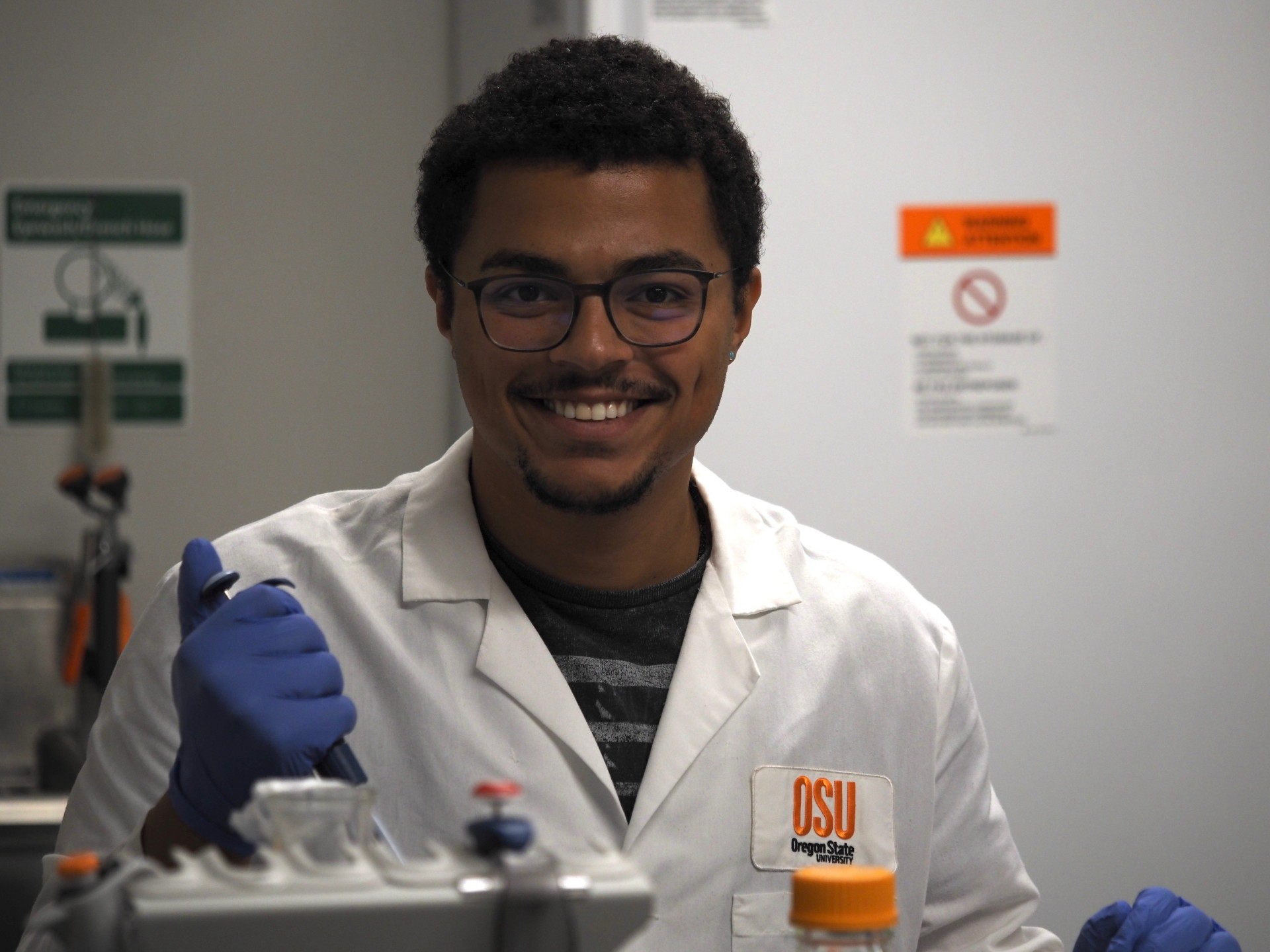
Wyatt Davis-Hinze is a master’s student in the Crop and Soil Science Department at Oregon State University, and his research examines the abundance and mechanisms of insecticidal resistance in clover seed weevils. His work integrates crop science, entomology, and applied biochemistry to understand how insecticidal resistance develops and to inform more effective, sustainable pest management strategies for growers in the Pacific Northwest. His research interests lie at the interface of entomology and plant pathology, where the aim is to study how plant diseases and insect pests interact to influence crop health and yield. Of particular interest is developing and evaluating strategies that emphasize durable management strategies of key pests and pathogens in Pacific Northwest cropping systems.

To hear all about tiny bugs, the nitty-gritty of pesticides, and transporting weevils across international borders, tune in to KBVR 88.7FM at 7PM PST on February 15th for the live show, or check out the show on our podcast pages.

Written by Hannah Stuwe
Scat, and wolves, and worms, oh my!

Alaska is home to four subspecies of gray wolves whose diets differ depending on where in the state they are and the food resources they have access to. While the wolves themselves may be difficult to keep track of, scat (poop) won’t try to run away and contains enough information to help researchers understand the diets of these animals. The Levi Lab, here at OSU, maintains a large library of DNA material collected from Alaskan wolf scat samples. What if this DNA could tell us more about the lives of Alaskan wolves and help us more deeply understand the diseases they are exposed to? This is exactly the question that our guest this week is trying to answer.

This week on the show, we are joined by Zach Muniz, a 2rd year master’s student under the advisement of Dr. Taal Levi in the Department of Fisheries, Wildlife and Conservation Sciences. Using Levi Lab materials, resources from collaborators and publicly available databases, Zach is developing methods to study the helminthic parasites that pass through the digestive tracts of Alaskan wolves. Zach extracted helminthic DNA from over 930 wolf scat samples during his time here at OSU! When Zach isn’t in the lab, he enjoys giving back to the community by mentoring the next generation of scientists in science communication programs such as OSU Explore and More, and Salmon Watch.

Tune into KBVR 88.7 FM at 7:00 pm PST on February 8th to hear Zach describe the many stepping stones of his journey to and through graduate school!

Written by Emilee Lance

Mimicking the Body to Help Mother Earth

Climate change driven by global warming is a highly debated topic in today’s world. However, what we can be sure of is that certain gases cause changes to our environment and are often referred to as “greenhouse gases”. A large scientific effort has been made to capture these gases and turn it into things with less environment impact. One particular way is by creating molecules that mimic our bodies natural mechanisms. This is called biomimetic science and is the topic of our guest’s research, Bella Mc Coll


Bella is a third-year PhD student researching under Dr. Addison Desnoyer, in the Department of Chemistry here at OSU. Bella is an Oregon native and comes to us from Beaverton. Outside of the lab Bella has many interests particularly those involving the fiber arts. These interests have allowed her to come up with research ideas that uses her scientific mind to help answer questions for her creative mind.

Tune into KBVR 88.7 FM at 7 pm PST on February 1st to hear Bella talk about how growing up in a natural medicine house inspired her to find the harmony between science and nature.

Written by E Hernandez