Monthly Archives: January 2026

Cooking Up New Machine Learning Models

Per- and polyfluoroalkyl substances (PFAS) are persistent environmental contaminates and their research has been featured on this show quite a bit. A little known fact is that estimates on the amount of PFAS in the environment range from 12,000 to 7 million. The number of working hours needed to analyze all those compounds would take many lifetimes. However, advancements in machine learning models have allowed for accurate estimates of crucial properties used to better understand PFAS. This cutting-edge research is the focus of our guest this week, Boris Droz.

Boris is a newly minted staff scientist in the lab of Dr. Gerrad Jones, in the Department of Biological and Ecological Engineering at OSU. Boris is originally from Switzerland and came to OSU in 2025 as a post-doc. Boris brings with him a deep knowledge and appreciation of both the rationale and in-lab work that goes into developing robust and useful machine learning models. His knowledge and expertise is a boon for OSU’s research prowess.



Tune into KBVR 88.7 FM at 7 pm PST on January 25th to hear Boris talk about how an apprenticeship in primary school was his ticket to traveling the world.

Written by E Hernandez
Oregon’s Next Top Model: Bull Kelp!

“Mathematics compares the most diverse phenomena and discovers the secret analogies that unite them.” — Joseph Fourier

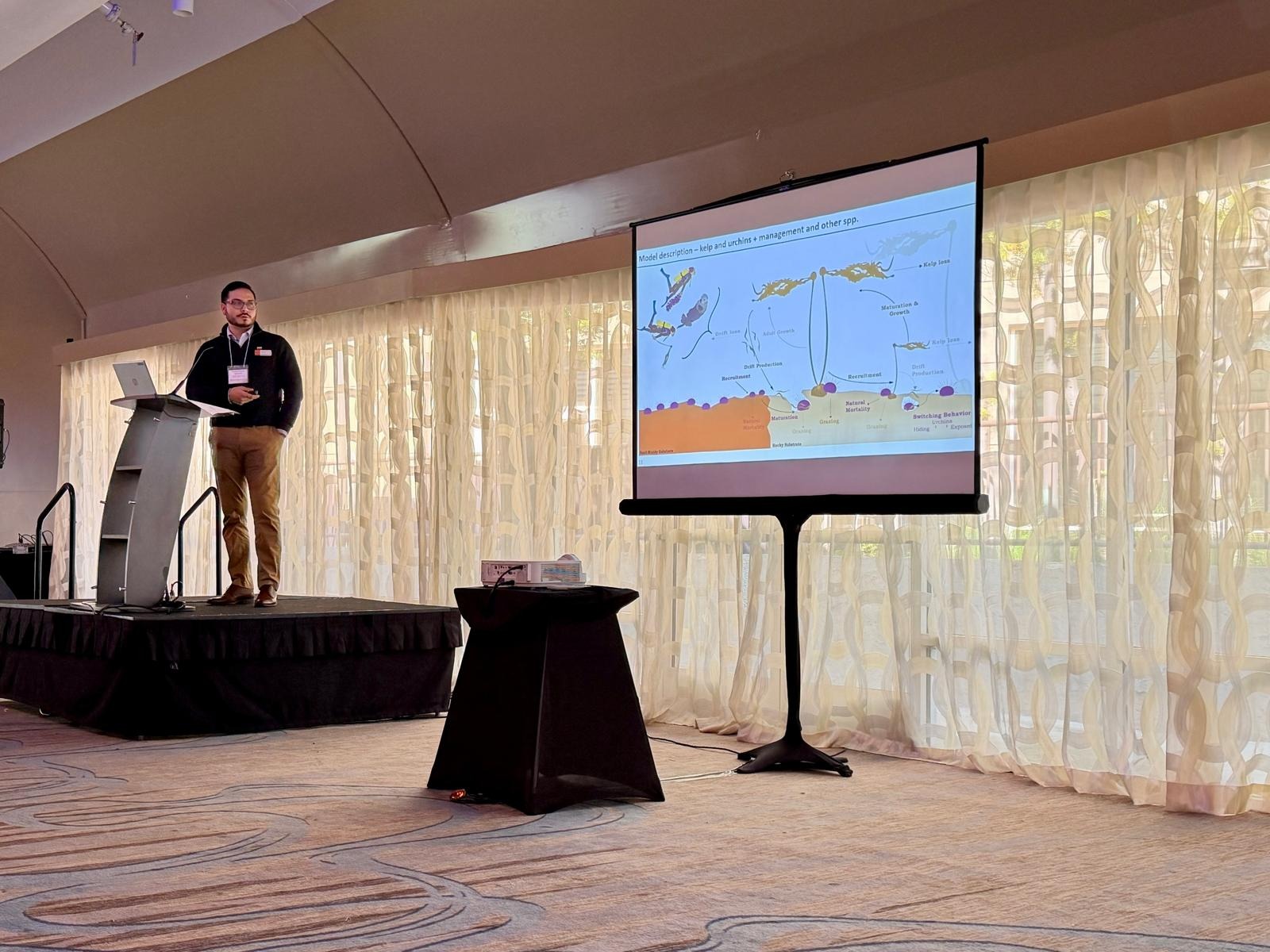
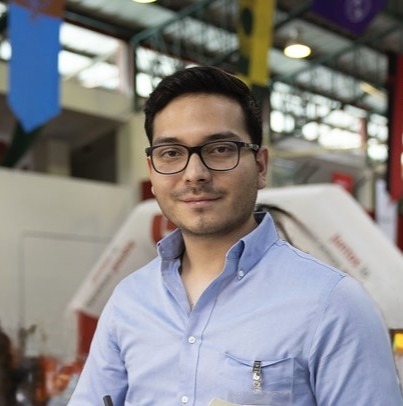
Mathematical modeling has become an essential tool across all disciplines of science. Models are built and applied in everything from astrophysics to food science. Andrés Pinos-Sánchez, a masters student in the Department of Fisheries, Wildlife and Conservation Sciences in the lab of Will White, uses modeling to investigate the population dynamics of bull kelp and sea urchins on the Oregon coast. The goal of his research is to determine what’s the best pathway to recover kelp forests in Oregon, which are in drastic decline due to rising sea temperatures and overpopulation of purple sea urchins. The decline of bull kelp in Oregon’s coastal ecosystems is detrimental to several species, like rockfish which make up a large part of the commercial fishery in Oregon.


Andrés has been able to model the outcome of different kelp restoration tactics, determining the best potential course of action before having to step foot in the field. Modeling these restoration tactics potentially saves Oregon taxpayers and conservation groups millions of dollars and saves our environment from unintended consequences.

Tune in to KBVR 88.7FM on January 18th at 7PM to hear all about modeling population dynamics, the intricacies of preparing a system for restoration, and the pros and cons of sea otter reintroduction in Oregon. You can also check out the show on streaming services or wherever you get podcasts.

Written by Hannah Stuwe


Getting a Sense of the World Around You

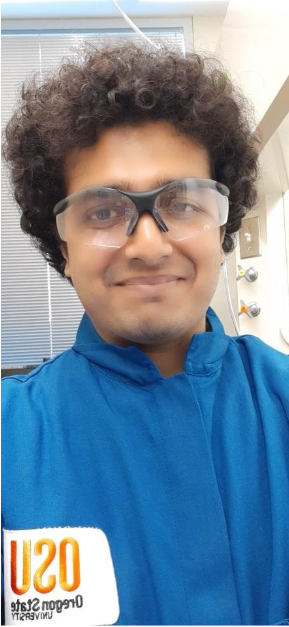
The term “sensors” is broad and often conjures up different ideas in people’s heads. For example, motion sensors that turn lights off and on. However, sensors could be powerful tools to help monitor people’s health in a non-invasive way. As science develops a large amount of research is being done to make sensors smaller and more efficient. Continuous glucose monitors and smart rings are a great example of recent advancements. Development of technologies like these is the research focus of our guest this week, Pavel Sengupta.


Pavel is a 5th year PhD student in the lab of Dr. Dipankar Koley, in the division of Analytical Chemistry here at OSU. Pavel is from Kolkata, India and came to America after earning his B.S. and M.S. from the Indian Institute of Engineering Science and Technology. Driven by his curiosity and strong sense of wonder for science, Pavel has become a pillar of his Department and OSU as a whole. It is our pleasure to share his story on Inspiration Dissemination.

Tune into KBVR 88.7 FM at 7 pm PST on January 11th to hear Pavel talk about how he let his passions steer his path through education and research.

Written by E Hernandez