
The Dedicated Community Members Who Make The Garden Ecology Lab’s Work Possible
by Anna Janowski
PART 5: DOUG & ANTHONY GORDON
From publishing educational materials to heading the Garden Ecology League, the Garden Ecology Lab’s work is firmly rooted in community outreach and engagement. What we do is possible because of the support of the community we serve: their donations and volunteer hours, their interest in our results, their willingness to let us conduct research in the gardens they work so hard to grow. This blog series highlights the amazing work these community members do in and around their gardens.
Corvallis looks like a very standard suburb if one’s vantage point is the area around the OSU campus. Orderly street grids and a healthy array of businesses give the impression that there might be a larger city just down the highway, or perhaps just across the river. But in reality, Corvallis—along with its neighbor city, the much smaller Philomath—is surrounded by a miles-wide belt of unambiguously rural land. It is in this sparsely populated, largely natural area that Doug and Anthony Gordon have made their garden.
Living outside of the city allows for more space than a typical urban garden, and the Gordons have made the most of it. Their property includes a pollinator meadow, riparian areas, a vegetable garden, and plenty of trees, spread across 2.2 acres. It’s a thriving, healthy space and is the site of regular visitation by a wide variety of mammals, birds, insects, and amphibians. But it wasn’t like that when the Gordons first moved in thirty years ago, and getting the space to the way it is today has been a long process.
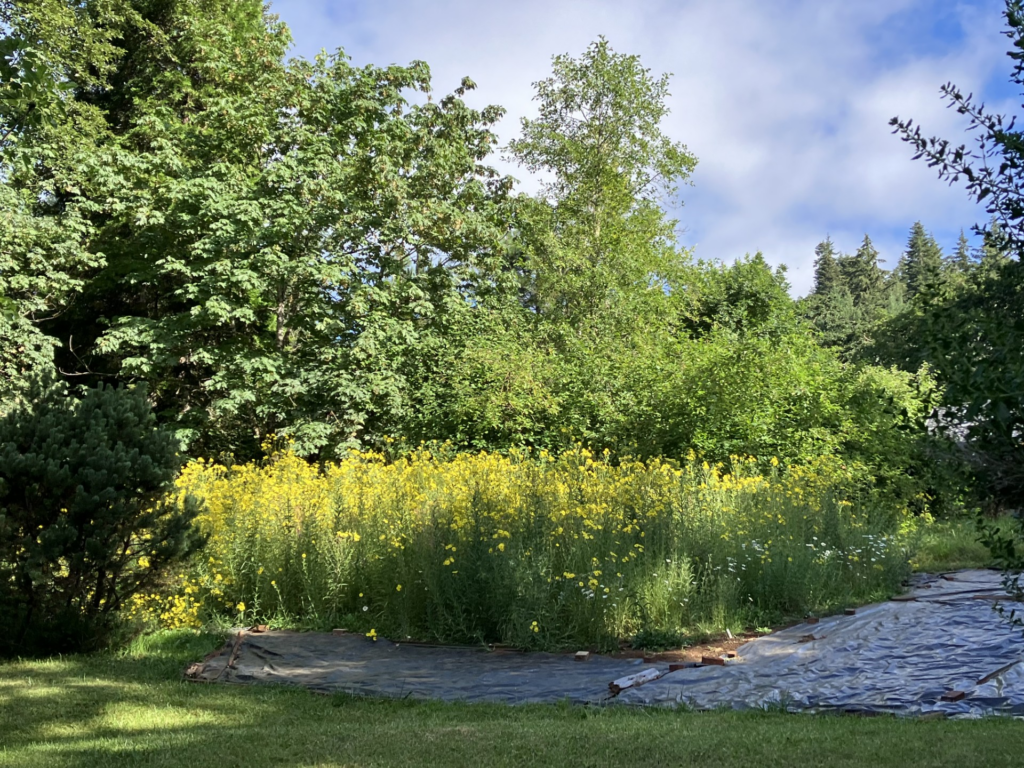
The Gordons’ pollinator meadow under construction. Photo credit: Doug Gordon.
“It was not set up really in any way for what we have now,” Doug Gordon says. “We basically started from scratch with the entire property…it’s been a radical change.”
On a multi-acre piece of land, starting from scratch is no small undertaking. It’s been a long-term and multifaceted effort, and throughout all of it, their philosophy and goals have remained relatively constant: the focus is always on benefitting the local ecology, particularly for native species.
They’ve based these projects on knowledge they’ve drawn from a variety of resources. Anthony Gordon participated in the Master Gardener program, and they received valuable advice from nurseries around Corvallis and Portland.
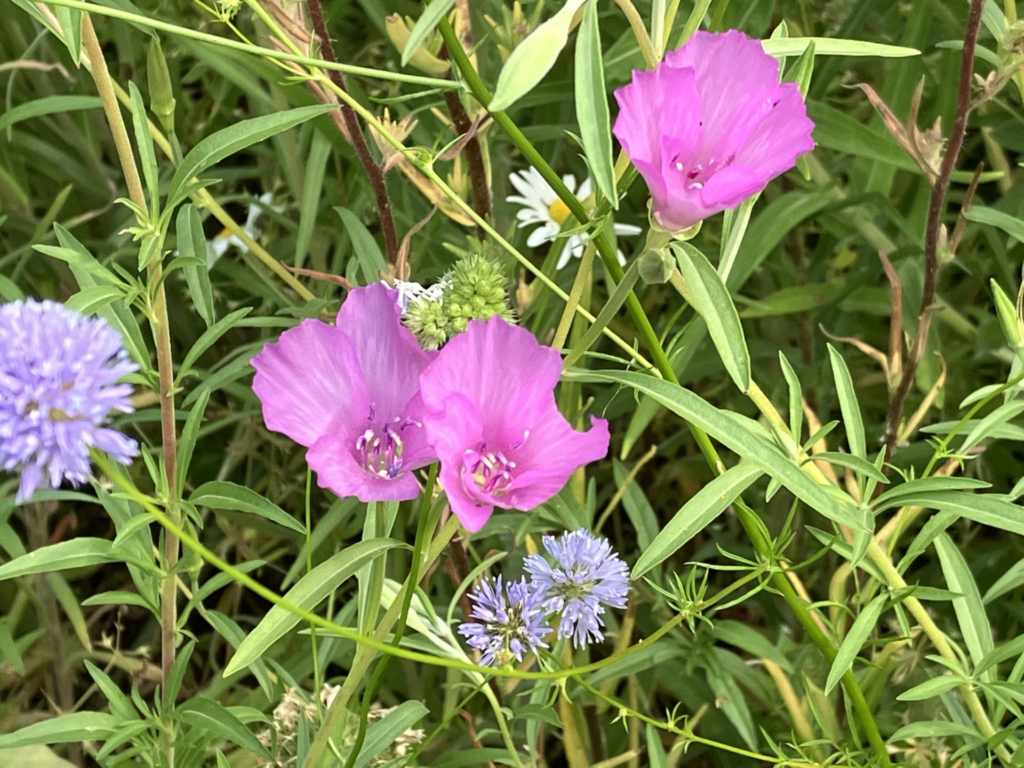
Native Clarkia and Gilia flowers in the garden. The cut-out sections of the clarkias’ petals indicate that native leafcutter bees (family Megachilidae) are present. Photo credit: Doug Gordon.
One focus of the Gordons’ efforts has been restoration to the riparian areas around the stream that borders their property. They have also, with the help of local environmental groups, removed non-native bird cherry trees (Prunus avium)—which had been outcompeting some native plants—from their property. This project was featured by Outside the Frame, a youth filmmaking organization, in a 2025 short film titled “The Youth Council for Mary’s River Watershed Council”.
Another area of the property that has undergone dramatic change is the space that is now the pollinator meadow. “It was a dense field of blackberry,” Doug Gordon says, before its renovation. Now, it’s filled with plants native to the Willamette Valley.
These and other projects have transformed the property into a haven for all sorts of wildlife. The Gordons see multiple species of frogs, a great variety of bird species, various rodents, and larger mammals like foxes, cougars, and deer, among others. Invertebrates are also present in great abundance and diversity. The pollinator meadow attracts various pollinating insects, including bees and syrphid flies. Last winter, thousands of ladybugs overwintered there as well.
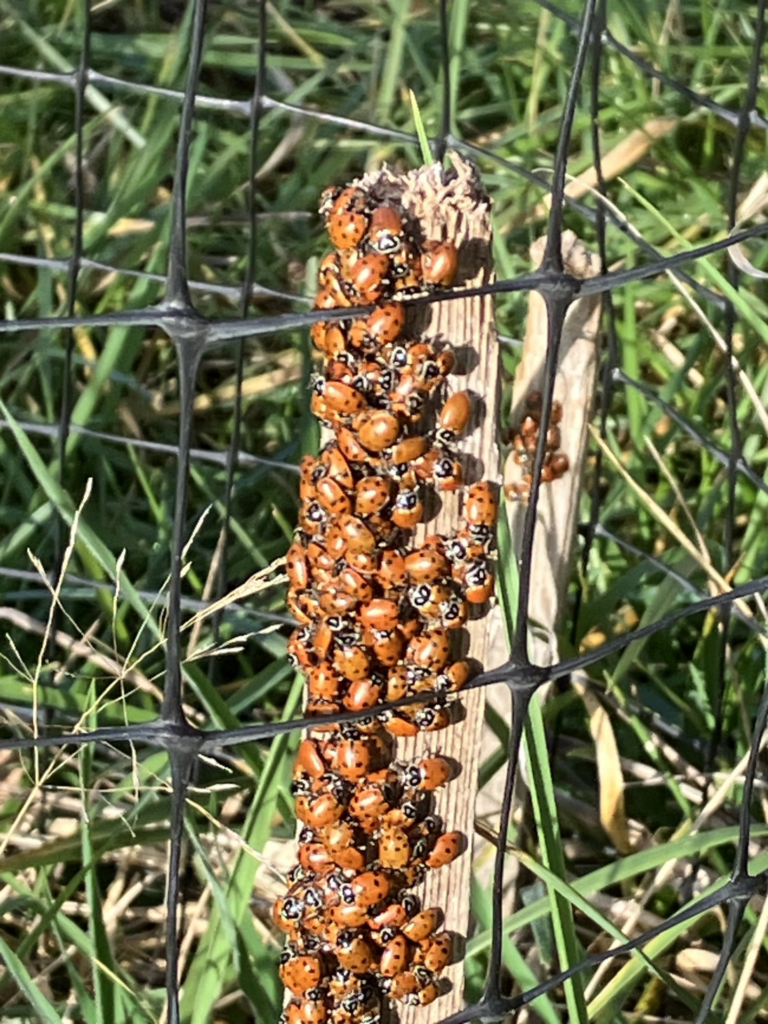
Ladybugs aggregating on a piece of wood in the Gordons’ garden. Photo credit: Doug Gordon.
While the abundance of animals can cause some problems—namely, deer browsing on plants in the garden—they’ve proved to be solvable. The Gordons put up a fence around their property to keep the deer away from young native plants. Later, once the plants had matured, they modified this approach by altering the fence so the deer could move more freely. “They still eat some things, but that’s okay,” Doug Gordon says. They’ve struck a balance, which allows for benefit to gardener and deer alike.
This coexistence, mirrored by the interactions between all of the great variety of plants, animals, and habitats within the Gordons’ garden, illustrates the power of gardens to bring ourselves closer to nature, and to bring nature closer to us.
Thanks to Gail Langellotto for supporting this project, Nina Miller and Taylor Janecek for their assistance with the research and writing process, and to the featured gardeners for the information and photographs they provided.




1 Comment
Add Yours →Two thumbs up!