
The Dedicated Community Members Who Make The Garden Ecology Lab’s Work Possible
by Anna Janowski
PART 2: COMMON GROUND GARDEN
From publishing educational materials to heading the Garden Ecology League, the Garden Ecology Lab’s work is firmly rooted in community outreach and engagement. What we do is possible because of the support of the community we serve: their donations and volunteer hours, their interest in our results, their willingness to let us conduct research in the gardens they work so hard to grow. This blog series highlights the amazing work these community members do in and around their gardens.
Standing out against an otherwise modest neighborhood street in Eugene is an expansive garden, chock-full of blooms and greenery. A flourishing array of lavender and California poppies borders the sidewalk, and as one travels farther back into the garden—which is as wide and deep as the properties surrounding it—the density of plants, a mix of natives and ornamentals, doesn’t let up. The gardeners, clearly, treat every square foot of the space with love.
This is Common Ground Garden, a community garden in the suburbs of Eugene. It was first planted over a decade ago in what used to be a vacant lot, and over the years, it has drawn in a host of volunteers and community members who share a desire to garden together.
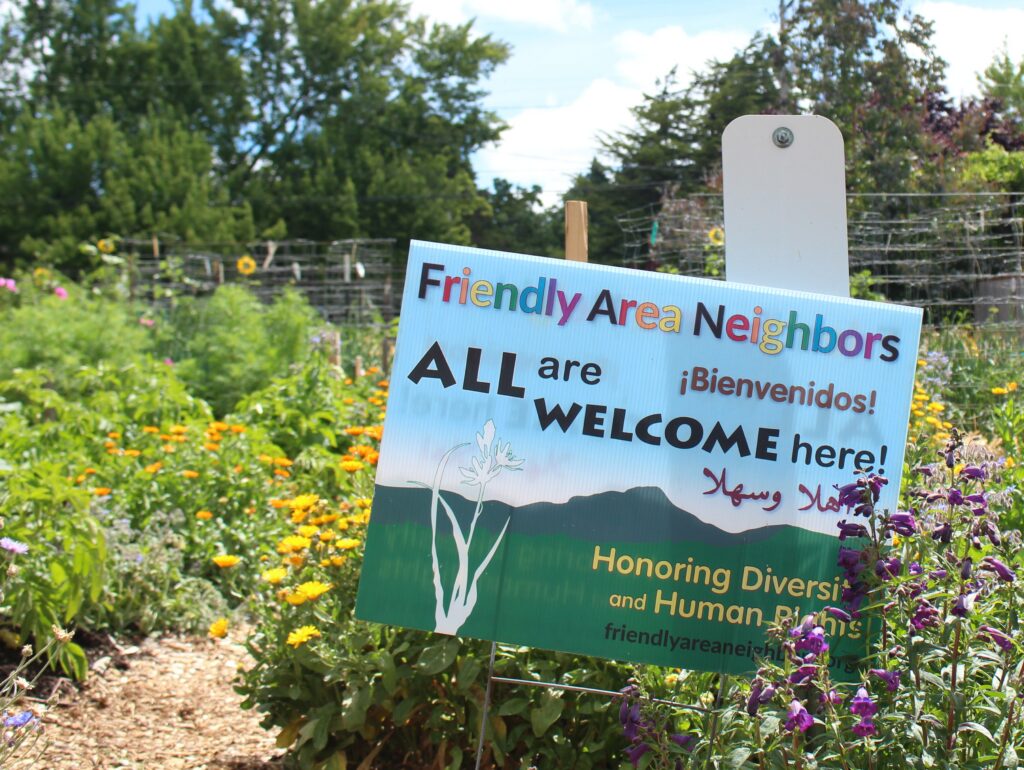
A sign among the plants in Common Ground Garden proclaims its community-centered nature. Photo credit: Anna Janowski.
Sara Van Dyck, a leader of those volunteers, first came to the garden in 2020, looking for a safe activity to fill her time amidst the COVID-19 pandemic. When she first started working with Common Ground, she says, “other gardeners and neighbors were appreciative,” and over time, the community has become more interested in the garden. She hopes that community involvement will gradually change people’s attitudes about gardening, helping them see the value in native plants and bees.
Among the plants the garden uses to attract those native bees are catmint, salvia, penstemon, and yarrow, spread across four garden beds. The variety of plants increases the timeframe over which bees will visit the garden. With these plants, Van Dyck reports that bees will visit the garden from April through October.
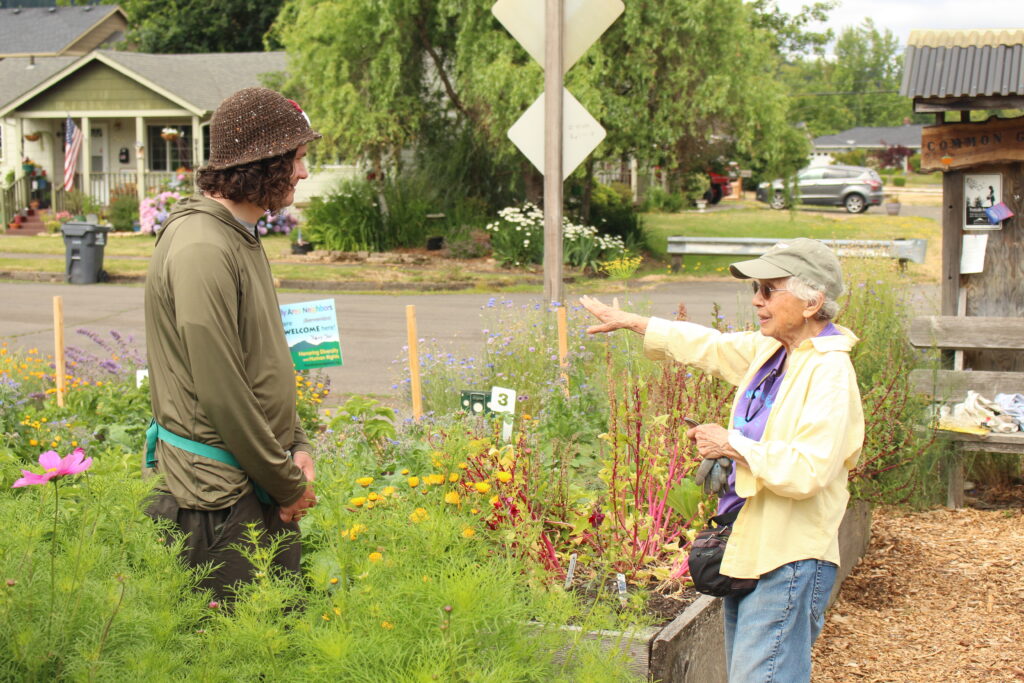
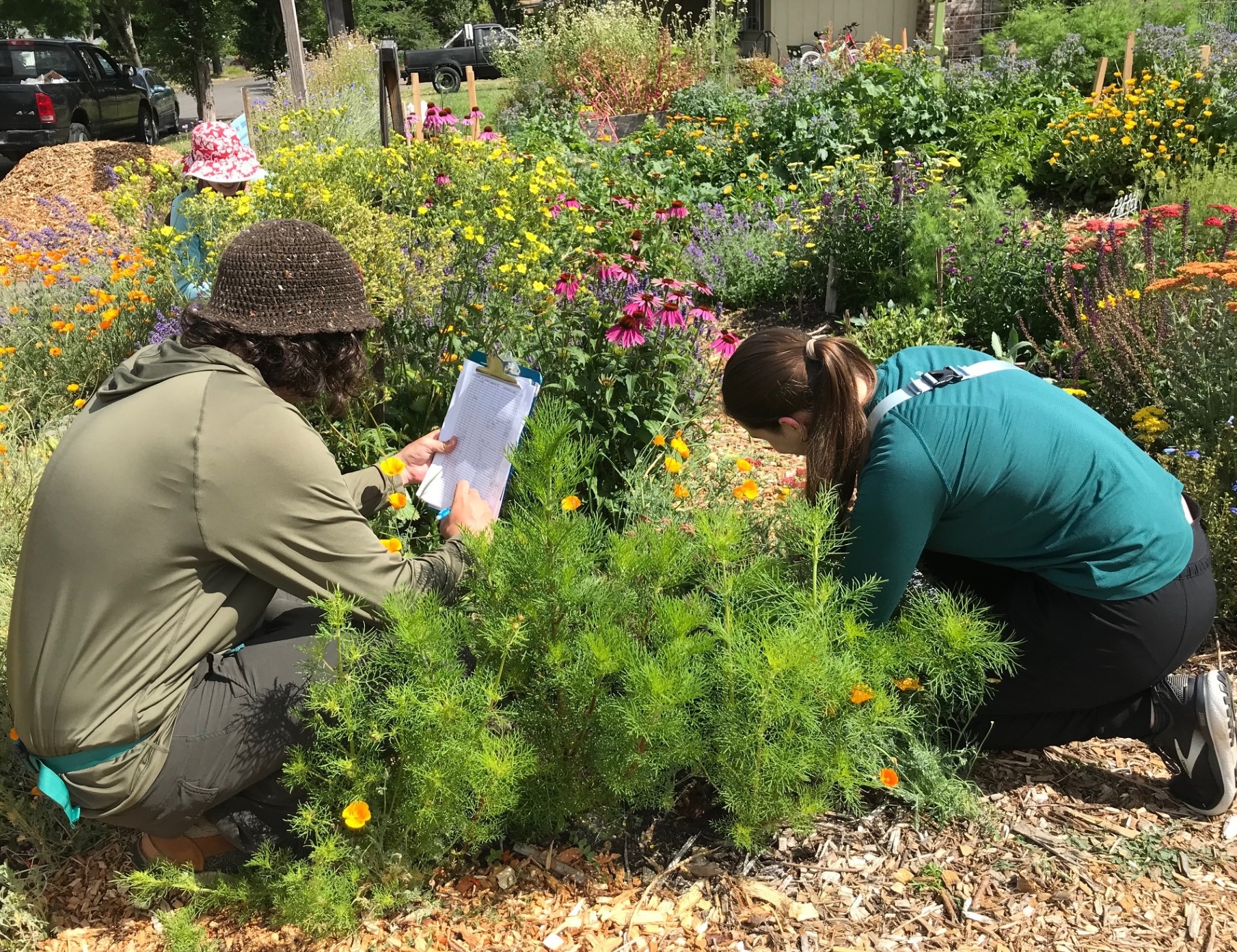
Sara Van Dyck, right, shows Garden Ecology Lab member Taylor Janecek, left, around the garden’s pollinator area. Photo credit: Anna Janowski.
Van Dyck had previously volunteered at a different community garden—Grassroots—where she’d gotten her first experience with growing pollinator plants like coreopsis and California poppies. Her experience working with the other Grassroots volunteers, she says, taught her a lot that she carried into her work at Common Ground.
She is now working with Grassroots again. “We have renovated the original pollinator garden,” she says, and they’re adding pollinator plants such as goldenrod and clarkia, which were recommended to her by Garden Ecology Lab PhD student Taylor Janecek based on their research.
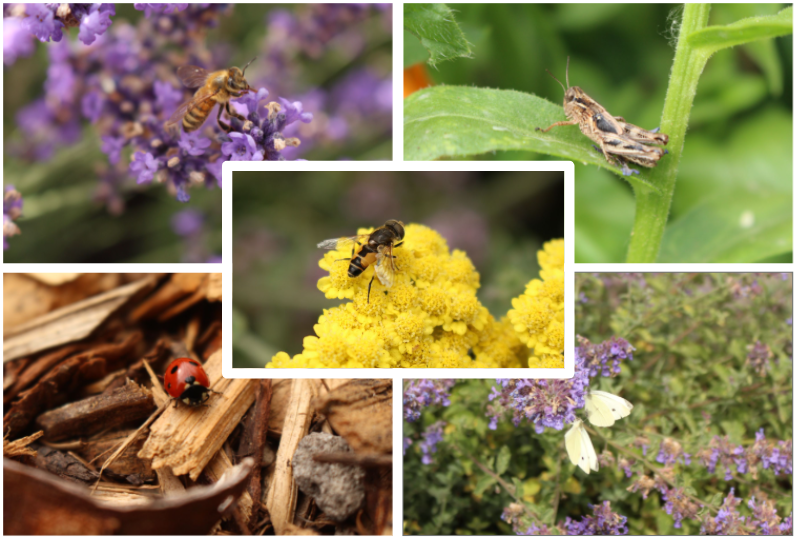
Five different orders of insects seen in the same afternoon in Common Ground Garden: Hymenoptera (bee; top left), Orthoptera (grasshopper, top right), Coleoptera (ladybug; bottom left), Lepidoptera (butterflies; bottom right), Diptera (fly, center). Photo credit for all photos: Anna Janowski.
Another volunteer leader, Susanna Saxton, emphasizes the value of the garden as a community builder. “People feel a connection to each other and the garden,” she says.
Saxton, one of four garden coordinators at Common Ground, has been volunteering there for a decade. Her role involves recruiting and organizing volunteers as well as equipping them with both the knowledge and the gardening tools they need to make the garden the thriving, diverse space that it is.
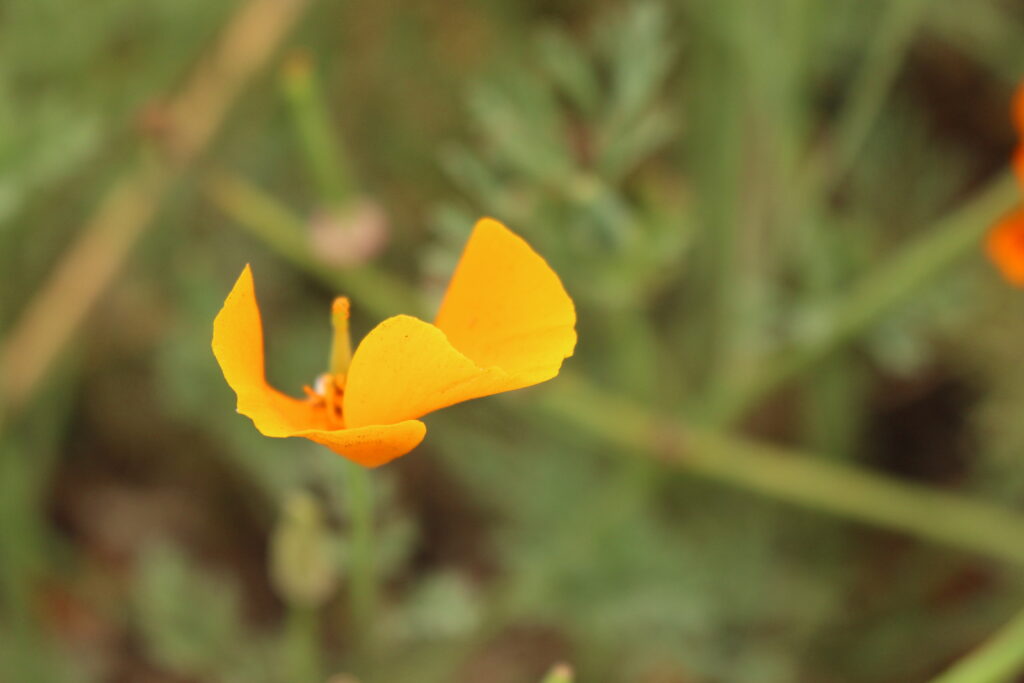
The missing petals on this California poppy (Eschscholzia californica) in Common Ground Garden tell of visits by leafcutter bees (family Megachilidae). Photo credit: Anna Janowski.
As impressive as the plants—and the wildlife they attract—are, the garden doesn’t stop there. It also serves as a kind of unconventional community center. It is, of course, an ideal place for neighbors to teach one another about their gardening practices and for people to work together to grow and harvest food, and planting parties and harvest days provide frequent opportunities to do so. But on top of that, the volunteers who run the garden have also used the space to host “Music in the Garden” events, where the community can gather to socialize and enjoy live music.
On their Facebook page, they describe themselves as “a model for others to replicate.” It has been no small feat for the volunteers at Common Ground to make the garden what it is today, but their work certainly shows that when so much love is invested into a garden, it can become an invaluable space for biodiversity, education, and human connection.
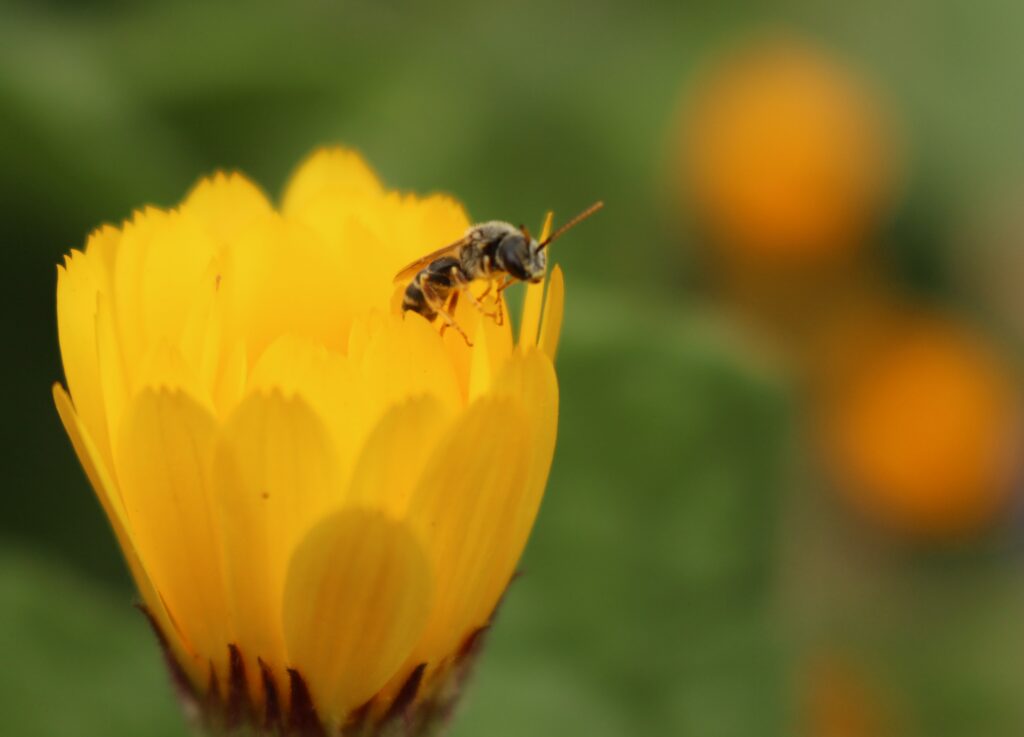
A native furrow bee (family Halictidae) emerges from nectaring at a marigold (genus Calendula) flower in Common Ground Garden. Photo credit: Anna Janowski.
Thanks to Gail Langellotto for supporting this project, Nina Miller and Taylor Janecek for their assistance with the research and writing process, and to the featured gardeners for the information and photographs they provided