Today is Dam Proud Day, and I’m asking you to make a gift of any amount to support the statewide OSU Extension Master Gardener Program.
This year, we are one of only three Extension programs selected to be featured. In our 50th anniversary year, that is both an honor and a powerful opportunity to show how much this program matters across Oregon.
Every gift helps fund the statewide work that strengthens county programs and supports volunteers like you — including the Master Gardener training course, Garden Future, Seed to Supper and the tools, resources and support that help coordinators and volunteers serve their communities.
One great example is Seed to Supper.
This year, we launched a new activity library with updated hands-on learning tools designed for adult learners, along with a new container gardening component in direct response to what participants asked for most. The full curriculum has also been revised and modernized and is now moving through OSU’s peer review process.
Meanwhile, classes are going strong across Oregon.
In Umatilla County, Rocio Arias Hansen volunteered to bring the first Spanish-language Seed to Supper class to her community and recently completed the region’s first Spanish-language course with 15 participants from Hermiston, Umatilla and the Tri-Cities area.
She recently shared with us:
“This is just the beginning of something very important for our Hispanic community. Participants asked for more hands-on classes, more time together and even a second course offering. They also asked if we could offer food preservation classes. They clearly demonstrated both interest and need, which motivates me to continue this work.
To keep the group’s enthusiasm going, we are arranging space in a community garden where participants can continue meeting, practice what we learned and ask questions outside the formal program. In our culture, gathering and spending time together is deeply valued, and this will be a great opportunity to strengthen connection and foster unity within the group.”
That is exactly what this program does best — it creates knowledge, confidence and community.
Across Oregon, Master Gardener volunteers show up. You answer questions, teach neighbors, support local food systems, care for gardens and help communities become more resilient.
Today is our chance to show the broader OSU community what we already know: this program matters.
Dam Proud Day is about collective action. It is about many people giving what they can, all in one day, to support something they believe in. I hope you will join me today by making a gift and helping us continue this work for the next 50 years. Let’s show what Master Gardener volunteers can do when we grow together.
Warmly,
Leslie Madsen Statewide Program Manager OSU Extension Master Gardener volunteer program
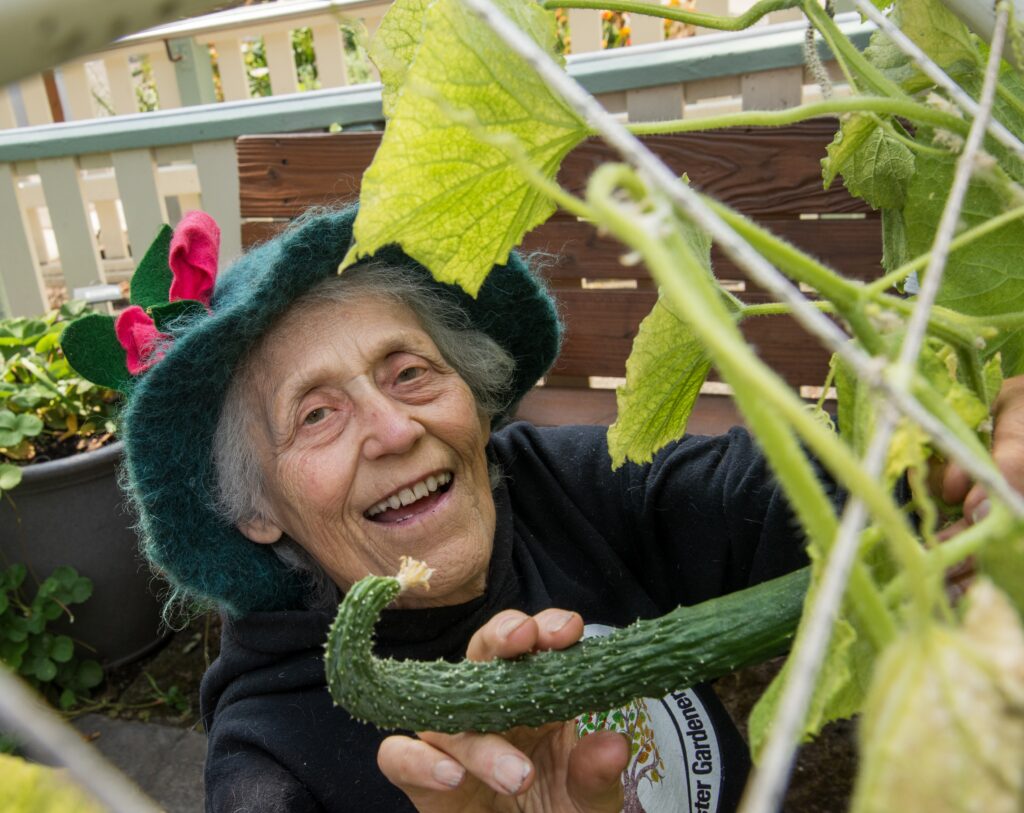
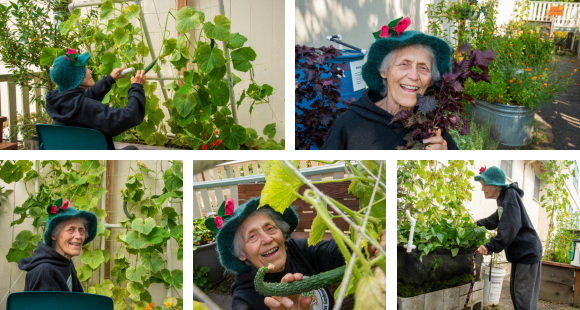
Pat Patterson was one of the original OSU Extension Master Gardener volunteers when the program started in Oregon in 1976. Photos by Lynn Ketchum.
From chance to legacy: original Master Gardener marks 50 years
When the Oregon State University Extension Service Master Gardener Program launched in 1976, Pat Patterson wasn’t the one in her family who planned to sign up.
Her husband, Robert, was.
“He was going to take the course,” Patterson said. “We were both graduate assistants at the University of Oregon and his classes conflicted, and so I just walked in and took his place. Talk about fate.”
That moment set Patterson on a path that has spanned five decades. Now 87, she remains the program’s longest-serving volunteer — still answering gardening questions from her home on a 10-acre farm near Noti.
The Master Gardener Program educates Oregonians about the art and science of growing and caring for plants. Operating in 27 counties, Oregon State University Extension Service trains thousands of volunteers who serve as educators, neighbors and on-the-ground researchers in their communities.
Master Gardener volunteers provide science-based, sustainable gardening information through plant clinics, workshops and community projects — helping Oregonians grow food, steward natural resources and make informed decisions in a changing environment.
The program began in 1976 in Lane County and the Portland metro area with just a few dozen participants. Today, it is a statewide network connecting university research with communities across Oregon.
From the start, Patterson said, the program was different than a garden club.
“A garden club is a social club basically made up of gardeners who swap their stories, do garden sales and so forth,” she said. “Ours requires constant retraining every year. We must recertify, because science changes. It was like going to college. So, it was a very, very deep learning curve, even though I had been gardening for most of my life. I had not been gardening scientifically.”
Early days: meeting a growing need
Patterson was part of a cohort of about 20 volunteers in Lane County. There were no fees, and much of the instruction came from university faculty as OSU Extension built the program from the ground up.
After training, volunteers didn’t staff formal clinics. Instead, they set up wherever they could.
“We would go to any venue that would give us a table,” Patterson said. “We’d sit there with our manuals, and people would come ask us questions. It was kind of scary at first.”
At the time, demand for reliable gardening information was high.
“There was a huge amount of information out there that was not good,” she said.
That need continues today, Patterson said, as gardeners navigate misinformation online, climate variability and evolving best practices.
Inside the Extension office, the program quickly formed strong connections across disciplines.
“It became a very close family,” Patterson said. “We were connected to forestry, to home economics and 4-H — everything.”
From generalists to specialists
As the program evolved, so did its approach to education.
“What we are now is a club of specialists,” Patterson said. “That wasn’t before. We were all generalists before; now we’re all specialists.”
Patterson’s own role expanded over time. After completing the program, she was hired as a horticulture assistant in Lane County, a position she held until 2006.
“I retired being in the office as a paid person,” she said, smiling.
Her volunteer work never stopped.
Through the online “Ask Extension” service, Patterson has answered more than 23,000 gardening questions — part of what she estimates are tens of thousands of volunteer hours.
That kind of service, replicated by volunteers across the state, represents a significant public value: extending university expertise into communities, often at no cost to residents.
“Pat is an amazing person and has always been a joy to work with,” said Erica Chernoh, OSU Extension horticulturist and Master Gardener coordinator for Lane County. “She has jumped into just about every volunteer role out there, from teaching classes to leading committees to hosting a radio show.
“She has a wealth of horticultural knowledge, and her commitment to teaching and community building has strengthened our program and built long-lasting partnerships that continue to this day,” Chernoh said.
Gardening for everyone
One of Patterson’s most lasting contributions has been her work in adaptive gardening.
A longtime member of the Lane County Master Gardener Association’s adaptive gardening committee, she has helped make gardening more accessible to people with a wide range of abilities — from physical limitations to time and space constraints.
“I felt it was really important to allow people to garden no matter what,” she said. “No matter what their physical abilities were, no matter what their mental abilities were, no matter what their time abilities were — there was a way to get around it.”
Her approach reflects broader changes in gardening science and practice, including a shift toward sustainability and working with natural systems instead of relying on chemicals.
“I’m happy to say that science has changed,” Patterson said.
Instead, she emphasizes practices that support soil health, biodiversity and long-term resilience.
“Garden smarter, not harder,” she said.
A lifelong connection
Patterson’s knowledge of plants stretches back decades, shaped by a lifetime of gardening and learning. She has taught classes, contributed to plant clinics and remained active in the gardening community even in retirement.
“Gardening is so great,” she said. “There’s always something you don’t know.”
Of the original Lane County cohort, Patterson was one of three who remained active for decades. She and fellow volunteers Juanita Manley and Phoebe Staples referred to themselves as the “Three Musketeers.”
Today, Patterson is the last surviving member of that original group — and the Master Gardener with the most years of service in the program’s history.
Why it matters now
As the Master Gardener Program marks its 50th anniversary, its role continues to grow in importance.
Across Oregon, residents are turning to gardening for food security, environmental stewardship and personal well-being. At the same time, they face new challenges — from climate change to invasive pests — that require reliable, science-based information.
Master Gardener volunteers help meet that need, serving as a bridge between university research and everyday practice.
For Patterson, that mission has been deeply personal.
“This has been my life and my family,” she said.
“I’m amazed at how much Extension has changed over those 50 years,” she said. “It has grown in ways that we would never have guessed.”
Still, the core remains the same: helping people succeed, one garden at a time.
From her farm outside Noti, Patterson continues that work — answering questions, sharing knowledge and staying engaged.
“Use it or lose it,” she said. “The more you’re challenged, the better chance you have of staying engaged.”
This year marks the 50th anniversary of the OSU Extension Master Gardener Program. If you are or ever have been a Master Gardener volunteer, we’d love to hear from you. Share your story with us: Beav.es/mgstory
Note: early giving is open for Dam Proud Day! Please help support the program today, but first, be inspired by Colleen’s story….
When Colleen of Milwaukie became a Master Gardener, she found more than a community of fellow plant lovers. She found a way to partner with her community — connecting with local groups, city leaders and neighbors around a shared purpose. What started with learning about native plants grew into something bigger: helping launch the Milwaukie Pollinator Pathway and advocating for Milwaukie to become a Bee City USA affiliate.
“I would not have started the Pollinator Pathway and Bee City journey without the Master Gardener program.” Photo by Kelby Whittington
“The best part of being a Master Gardener is the people I meet and the community I have come to know.
Starting the Milwaukie Pollinator Pathway and advocating for the city of Milwaukie to become a Bee City USA affiliate is something I am especially excited and proud of.
Through that work, I have connected with local gardening groups, neighborhood district associations, the Rotary Club of Milwaukie, City Council and city staff, as well as the city of Beaverton.
I became a Master Gardener in 2019, and 2020 became a time to delve more deeply into the resources available to us. I kept coming back to the benefits of native plants. It was also a time to get outdoors for the sake of my physical and mental health, both of which I greatly needed.
Our hikes strengthened our family bonds. They gave us a greater appreciation for the land around us and the trees and plants that grew there. Those hikes strengthened us, both physically and mentally.
Growing plants and food gives us a sense of accomplishment and ownership. It grounds us, so to speak. It is peaceful and satisfying to see something grow.
I would not have started the Pollinator Pathway and Bee City journey without first being introduced to the Master Gardener program. In that first year, we were encouraged to participate in different volunteer activities so we could learn what interested us. For me, that interest was native plants.”
P.S. This year marks the 50th anniversary of the OSU Extension Master Gardener Program— and giving is now open for Dam Proud Day. If this program has shaped your life, your garden or your community, consider making a gift today to help support the next 50 years. We’re also collecting stories from current and past Master Gardener volunteers. Share your story with us: Beav.es/mgstory
Something special is coming this week for Master Gardener volunteers, and we cannot wait to share it with you!
As we celebrate the 50th anniversary of the OSU Extension Master Gardener Program, we have been looking for new ways to honor the people, stories and shared pride that have shaped this program across Oregon. Later this week, we’ll be sharing something created especially with this community in mind.
This year, the OSU Extension Master Gardener Program was selected as one of only three Extension programs featured for Dam Proud Day. That is a big honor — and a big opportunity to support the statewide work that helps Master Gardener volunteers serve communities across Oregon.
Your gift helps support the program behind the volunteers: training, coordinator support, statewide resources, Seed to Supper, Garden Future and the trusted, science-based gardening education people rely on in every corner of the state.
So here is your Sunday nudge:
Give early. Watch this space. And get ready — something really good is coming.
P.S. This year marks the 50th anniversary of the OSU Extension Master Gardener Program. We’re collecting and sharing stories from volunteers across Oregon. If you are a Master Gardener volunteer — or ever have been — we would love to hear from you. Share your story with us: Beav.es/mgstory
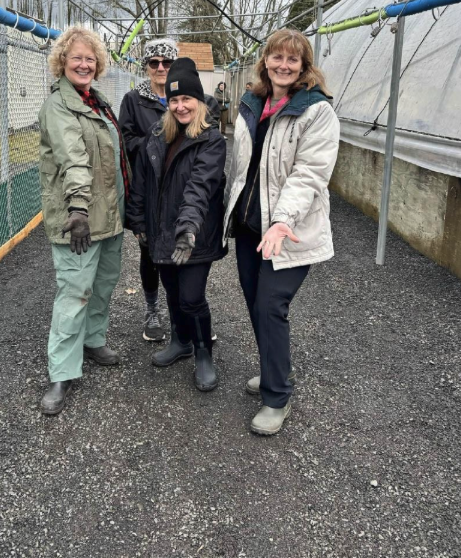
After a career in tech that took her all over the world, Linda Sellheim retired in Dundee and found herself looking for local connection. She joined the Master Gardener program toward the end of the pandemic, hoping to learn and volunteer. What she found was a community — one that would become a source of friendship, learning and support as her husband faced a rare blood cancer diagnosis.
“The friendships I’ve made through being a Master Gardener have helped me learn so much — not only about gardening, but about the community.” —Linda, Dundee (in black hat) Photo credit: Debbie Warner
“The best part of being a Master Gardener volunteer has been meeting fellow gardeners with similar interests and making new friends.
One thing I’m most proud of is the community of learning we have created around our propagation group.
I applied to the program right after I retired, toward the end of the pandemic. I had not been in the area very long, and after coming off a career in tech with lots of travel, I realized I had friends all over the world, but not locally.
The friendships I’ve made through being a Master Gardener have helped me learn so much — not only about gardening, but about the community. Within our propagation group, we have started a book club where we read gardening novels. We go to local restaurants and wineries, celebrate holidays and events, and do seed exchanges. Those are just a handful of the things that have grown out of this group.
While I was taking the Master Gardener course in the first few months, my husband was diagnosed with a very rare blood cancer. Having the Master Gardener community there, and having a place to go to work and clear my mind, was a lifesaver.
I’ve always believed that in times of change, learning and volunteering can help you make a transition. You never know who you will connect with who can alter your life in a good way. My husband has been through a stem cell transplant, CAR-T therapy and some deadly emergencies, and my Master Gardener group has been there.
I think Master Gardener volunteers are needed now more than ever because of climate change, the need to help people make good decisions and the importance of growing food.”
P.S. This year marks the 50th anniversary of the OSU Extension Master Gardener Program — and early giving is now open for Dam Proud Day. If this program has shaped your life, your garden or your community, consider making a gift today to help support the next 50 years. We’re also collecting stories from current and past Master Gardener volunteers. Share your story with us: Beav.es/mgstory
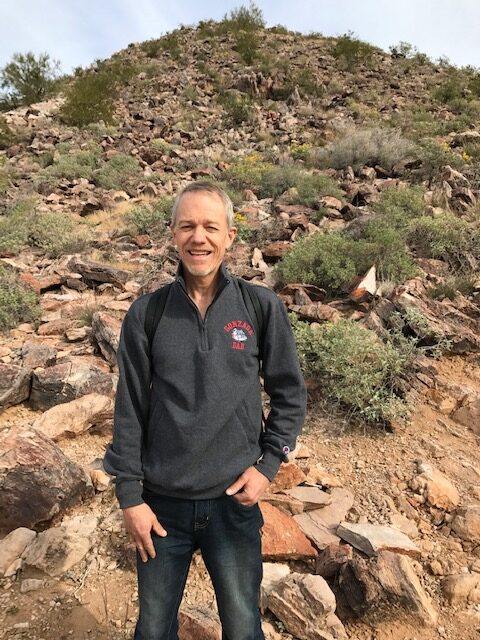
For Joe Hodge, the best thing about being a Master Gardener volunteer is “I feel like I’m giving back to my community. I’m not super involved with leadership or charitable organizations in my hometown, but with Master Gardeners, I feel like I’m a part of so many people learning. I know that I’m a valuable person who can help others live their lives better.”
Coaching and cheering on new volunteers is what Joe is most proud of: “I remember Master Gardener training as being a bit stressful with the huge amount of information coming our way (like drinking out of a firehose). So when our local chapter does Master Gardener training for new volunteers each year, I make sure to join our weekly Question and Answer Zoom meetings, hoping I can get across to the trainees that they really are special.
The friends who I have who are also Master Gardeners are the kinds of friends who you stay friends with.
I’m lucky enough to garden in a community garden, and when you see the others gardening alongside you, it always brightens up your day. The physical benefits of gardening are fairly obvious, but we sometimes forget about how talking to others about how your garden is growing, or about your plans for next year’s garden, can be so beneficial for your mental state.
It feels like the world is more divisive than ever, and Master Gardener volunteers do the opposite of that – we bring people together, people from all different backgrounds become closer once they start gardening.
Being a Master Gardener has not only allowed me to help others, but it has sharpened my own gardening skills.
A fun part of gardening is giving your excess away. I will list them into categories, starting with FAMILY. My nearest family member is 180 miles away, and you would think that might make it extra challenging, but not so in this day of efficient coolers.
Next, NEIGHBORS. I live in a good sized apartment complex, and it’s very rewarding and easy to give away vegetables to my neighbors so that they do not go to waste.
Also, FRIENDS. At my age, I go to a lot more meetings than parties, so during harvest season I hope to bring some produce to a meeting to give away – very easy.
Lastly, and for me this category is not so common to give away but just as rewarding as any, is BUSINESSES. The employees at the businesses are just as appreciative and smile just as much as anybody. It’s become a habit for me to drop extra tomatoes to the office workers of my property manager’s office. When a certain employee there sees me in late summer or early fall, she is always smiling when I walk in because she knows I am bringing in tomatoes, and she absolutely loves tomatoes. Only one time has she not shared with the rest of the office, because that year my tomatoes were absolutely gorgeous.
My garden is next to the hospital, and when I have zinnias I like to take them next door. The receptionists in the ER department have a stressful job and I think the flowers make their day better.
I know the library employees well, and I like to bring them kale and other yummy, healthy vegetables.
Going to our local food bank to make a drop-off is important, and I leave feeling good every single time.
It might sound like I’m trying to make giving things from my garden away my only focus each year, and I while that would be great, it’s not quite true. It just happens to work out that every year, when you plant your garden, you don’t realize that a certain vegetable or flower is going to produce way more than you thought it would. The very last thing in the world that I want to do is let something go to waste. Giving it away becomes incredibly easy to do, and really quite rewarding. It’s a part of gardening that I never could have envisioned when I first started. And now, it’s become an integral part of each season. Being a Master Gardener has made all of this possible – thank you, OSU Extension, for improving the lives of so many!”
P.S. This year marks the 50th anniversary of the OSU Extension Master Gardener Program — and early giving is now open for Dam Proud Day. If this program has shaped your life, your garden or your community, consider making a gift today to help support the next 50 years. We’re also collecting stories from current and past Master Gardener volunteers. Share your story with us: Beav.es/mgstory
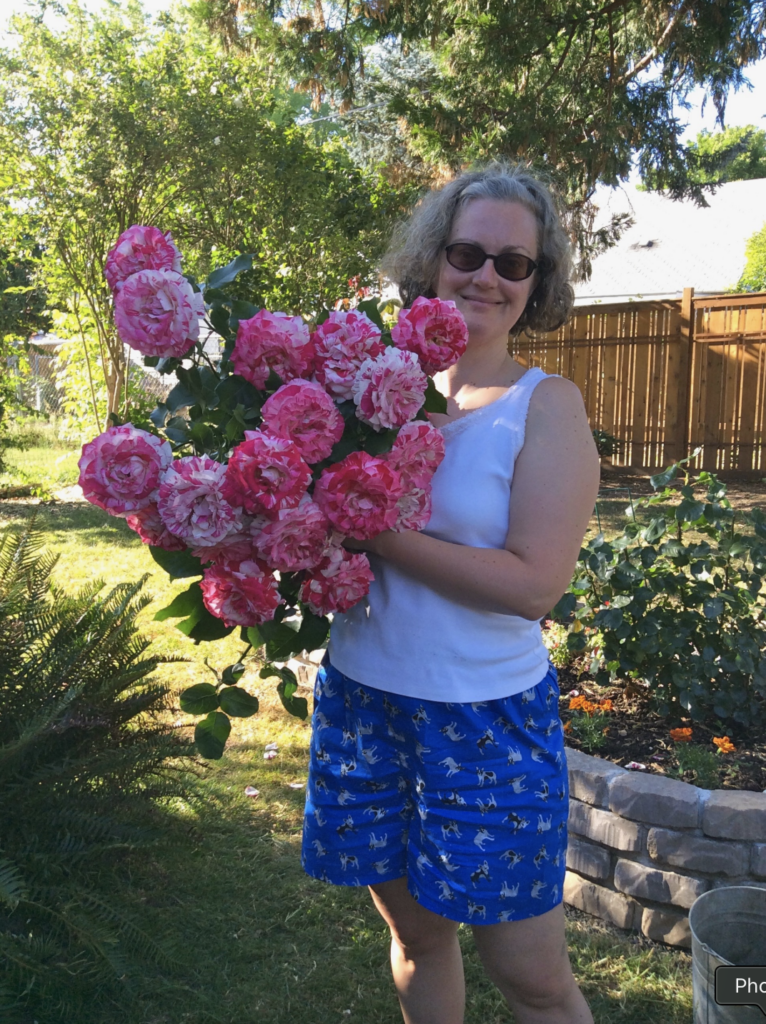
For Jean in Salem, being a Master Gardener volunteer has opened up conversations about food, climate and what it means to feel more secure in your own garden. She thought she might be helping people with lawns and roses. Instead, she’s found herself talking with families who are trying to grow food and adapt to a changing world.
“I’ve learned a lot about how to be successful in my own garden, and that’s been very rewarding. No one likes dying plants! But the best part has been helping people in the community learn how to grow their own vegetables.
I thought the Master Gardener program would be largely about helping people grow green lawns or keep roses alive. Instead, many of my conversations have been with families who are worried about food prices. Helping them feel more secure is quite a gift.
I’m very proud of some of the programming we’ve shared with the community, including the Garden Future series. Being able to discuss climate change with a large group of folks at the state fair, without having any arguments or hurt feelings, was just an amazing thing.
“Helping people feel more secure is quite a gift.”
I’ve met several people who have talked with me at two or more tabling events here in Salem, and they’ve told me about how an idea or two I shared helped them in their gardens. Those have been pretty great conversations!
I think it’s easy to keep our heads down in times of stress and strife. Connecting with people always helps, and I find that gardening is one of those universal conversation points. Talking about gardening has been really good for me over the last year.
Climate change is shifting what people can grow successfully, so some of the lessons people learned as kids are no longer applicable. Master Gardener volunteers have access to science-based information that can be useful as people reimagine what they can grow, including food.
I’m grateful I was selected as a trainee last year. I look forward to participating for many years to come.”
P.S. This year marks the 50th anniversary of the OSU Extension Master Gardener Program, and these stories remind us what we’re celebrating. On Wednesday, April 29, Dam Proud Day gives us one day to show up for the statewide program that supports Master Gardener volunteers across Oregon. In fact, you can join in early giving and actually give now! And if you are a Master Gardener volunteer — or ever have been — we’d still love to hear your story at Beav.es/mgstory.
On Wednesday, April 29, Oregon State University will celebrate Dam Proud Day, a 24-hour giving day that brings the OSU community together to support programs making a difference across Oregon and beyond.
This year, the OSU Extension Master Gardener Program has been selected as one of only three Extension programs featured for Dam Proud Day.
That is something to be proud of.
For 50 years, Master Gardener volunteers have helped grow gardening knowledge, partnerships and community across Oregon. Volunteers answer questions, teach classes, support demonstration gardens, grow food for their communities, mentor new gardeners and connect people with research-based information they can trust.
Dam Proud Day is a chance to support the statewide program behind that work.
Gifts made on April 29 will support the statewide Master Gardener Program and the work we do to support county programs, coordinators and volunteers across Oregon. That includes statewide efforts such as the Master Gardener training course, Seed to Supper, Garden Future and other programs that help us serve gardeners and communities statewide.
What is Dam Proud Day?
Dam Proud Day is OSU’s annual 24-hour day of giving. For one day only, alumni, volunteers, friends and supporters are invited to make a gift online to the OSU programs they care about.
For the Master Gardener Program, this is a special opportunity to show broad support for the work we do together across the state.
The goal is not just large gifts. Participation matters. Every gift, of any size, helps show that people believe in the Master Gardener Program and want to see it continue to grow.
Make a gift online to support the statewide Master Gardener Program
Share the giving link with friends, family and fellow volunteers
Help spread the word about why the Master Gardener Program matters
Watch for and share stories from volunteers across Oregon
Over the next week, we’ll be sharing stories here from Master Gardener volunteers about what this program has meant to them and how they see their work making a difference in their communities. These stories are inspiring, heartfelt and representative of the incredible impact this program — and the people of this program — make across Oregon.
They remind us that the Master Gardener Program is more than a training course. It is a statewide community of people sharing knowledge, growing connections and helping others garden with more confidence.
Share your story
We’d also love to hear from you.
Whether you are currently volunteering or were part of the Master Gardener Program in the past, your story matters. What has this program meant to you? What are you proud of? How has gardening, volunteering or being part of this community shaped your life?
“I’m donating today on Dam Proud Day because I believe in supporting the things I care most about, and at the top of my list is the Master Gardener program.
I love plants and I love people. Master Gardening is a perfect combination! I have been a life-time educator, and my Extension service gives me the opportunity to continue my learning and give to my community.
I especially enjoy working with young people. Children have a wonderful natural drive to ask questions and learn more. Their sense of wonder and intense desire to explore always keeps me on my toes.
I think it’s important for everyone, of all ages and abilities, to have access to the natural environment and to be able to experience hands-on opportunities to discover how they fit into our world. Garden education is important for us to understand who we are, where our food comes from and the importance of caring for other living things around us.”
Today is a rare opportunity for making a significant difference in supporting Seed to Supper and updating our Master Gardener curriculum. You can join Corinne’s giving, at any level, today on Dam Proud Day.
Challenge grants have been made to double our funds! Come check our progress and see the names of your fellow Master Gardeners who are committing to support this vitally important program. Will you add your name to the list?
Over the past month, you have heard the stories of Oregon State University’s Extension Master Gardener volunteers. Master Gardeners are neighbors, friends, and family members who volunteer their time to cultivate resilient and healthy communities through sustainable horticulture education and gardening projects that are rooted in science. Master Gardener volunteers work across the state in community gardens, at farmers markets, in schools, and online to support sustainable gardening success for all gardeners.
Today, you have an opportunity to help us continue this important work. For Oregon State University’s Dam Proud Day, we are fundraising to support the Seed to Supper Program and an update of our foundational textbook, the Sustainable Gardening Handbook. The Seed to Supper program is an introductory vegetable gardening course for beginning and low-income gardeners, that includes considerations for gardeners who don’t have easy access to land. Our Sustainable Gardening Handbook is the text used to teach new Master Gardener volunteers. We need to update this resource, to include advances in the science of sustainable gardening, as well as consideration of climate change impacts on Oregon gardeners.
Donations can be as low as $5. A symbolic gift of $50 recognizes the 50 years that the Master Gardener Program has been serving communities across the United States!
All together, all on one day. Every donation helps us get closer to our goal, and unlocking the FIVE challenge grant gifts that we have set up.