When Larry King and his partner retired and moved from Multnomah County to Lincoln County, they left behind many of the friends and family who had been part of their lives. They also arrived in their new community ready to get involved. Joining the Oregon State University Extension Master Gardener Program gave Larry a way to share reliable, research-based gardening knowledge while creating something equally important: a new community and chosen family on the Oregon coast.
Finding community in a new home
“At retirement, my partner and I moved from Multnomah County down to Lincoln County and immediately signed up for the Master Gardener Program,” Larry said.
Starting over in a new community could have been isolating. Instead, the Master Gardener Program provided an immediate point of connection.
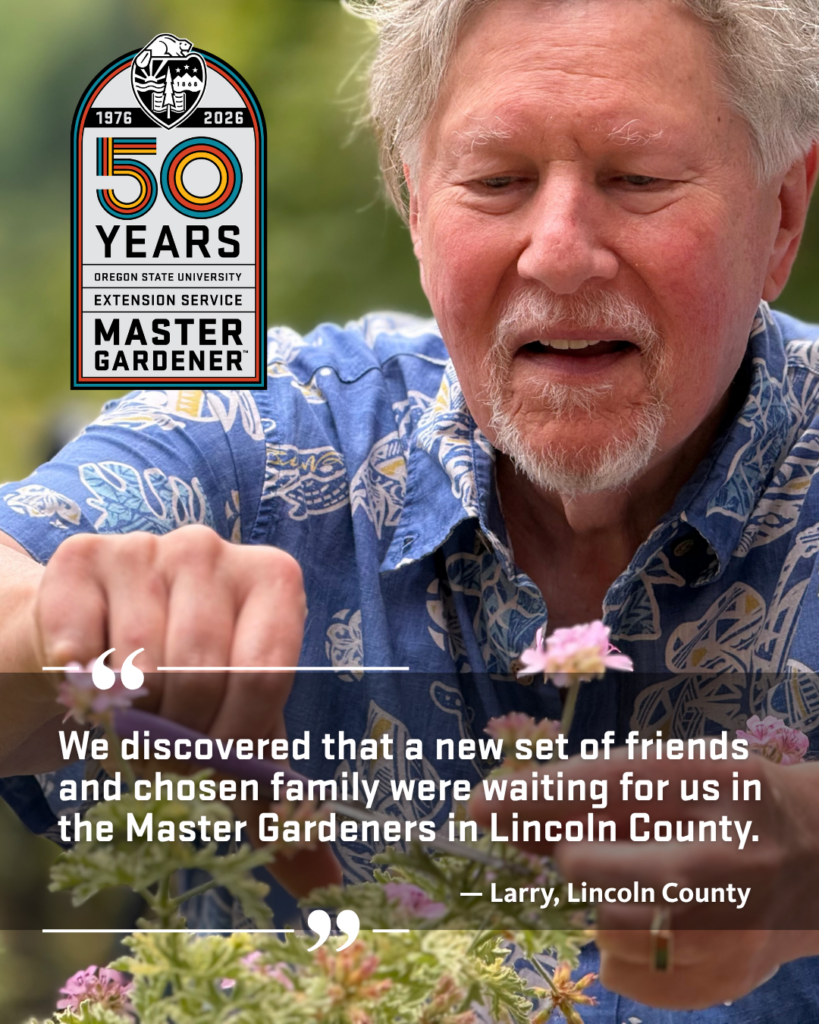
“We left most of our friends and family behind, but discovered that a new set of friends and chosen family were waiting for us in the Master Gardeners in Lincoln County.”
For Larry, those relationships have become an important part of what it means to be a Master Gardener volunteer: learning alongside people with a shared interest and becoming part of the community where he now lives.
Sharing research-based gardening knowledge
Larry also values the Master Gardener Program’s emphasis on reliable, science-based information and the opportunity volunteers have to share that knowledge with others.
“It’s a wonderful way to pass along science-based gardening tips and processes,” Larry said. “So much of gardening seems to be ‘what Grandma did,’ and although that’s great, there’s no replacement for research-based information that will work in our local environment.”
That local connection matters. Gardening practices that work somewhere else aren’t necessarily the best choices for Lincoln County’s climate and growing conditions. Master Gardener volunteers help connect community members with information they can put to use where they actually garden.
Helping people grow food where they live
Larry sees that knowledge as especially valuable when it comes to helping people grow their own food.
“Master Gardeners are one of the sources of education about raising our own food,” Larry said. “We provide realistic advice and training for people who wish to grow their own fruit and vegetables right here in Lincoln County.”
It’s a role that brings together many of the things Larry values about the program: science, education, local knowledge and neighbors helping neighbors.
For Larry, joining the Master Gardener Program after retirement didn’t just provide a way to keep gardening and learning. It offered a way to become part of a new community, share useful knowledge with others and discover that even after leaving longtime friends and family behind, a new chosen family was waiting to welcome him.
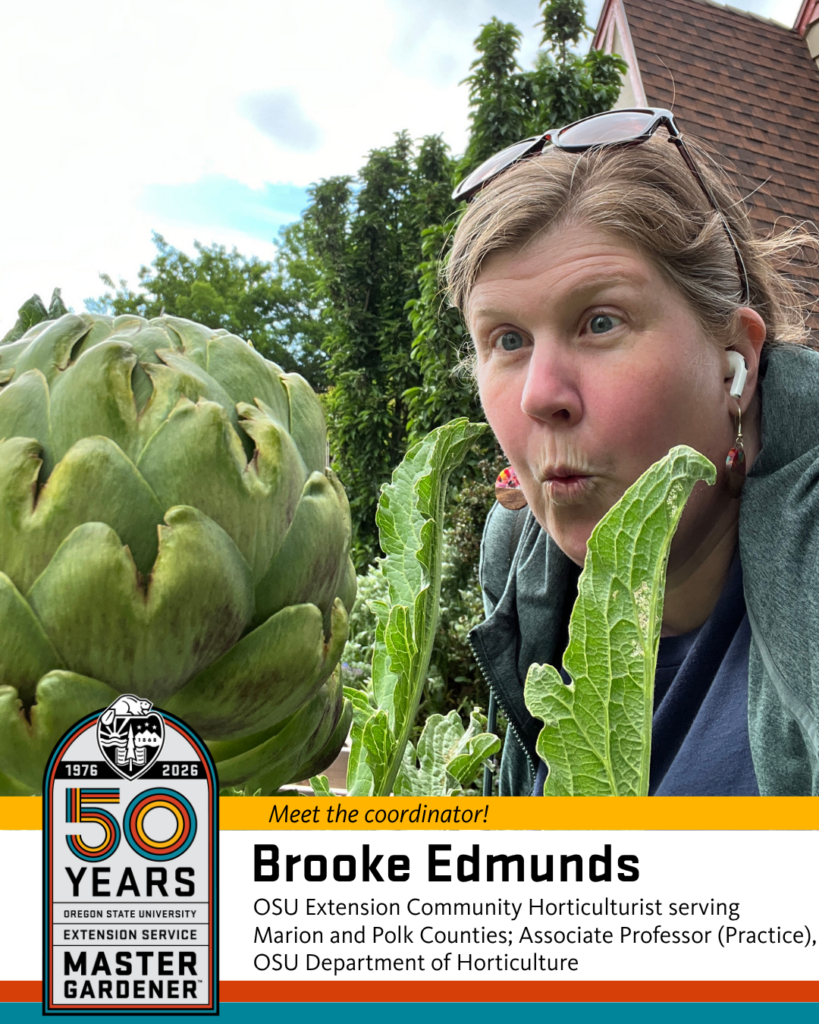
OSU Extension Community Horticulturist in Marion and Polk Counties; Associate Professor (Practice), OSU Department of Horticulture
In celebration of the 50th anniversary of the OSU Extension Master Gardener volunteer program, we’re featuring stories about coordinators and volunteers. Let’s get to know Brooke Edmunds and hear about her path to Extension, what makes gardening in Marion and Polk counties unique and the volunteers who continue to inspire her.
Brooke first encountered Master Gardeners as an undergraduate at Iowa State University, where an Extension faculty mentor introduced her to the program through the university’s Master Gardener mini college. She helped teach a class and quickly became interested in the volunteers she met.
“They’re not students, they’re not trying to get jobs, they’re just doing this because they’re really curious.”
That curiosity has remained a common thread throughout Brooke’s career in Extension. After working as a nursery and greenhouse specialist at Colorado State University and in other roles, she joined OSU in a community horticulture position working with Master Gardeners full-time. She says she has enjoyed working with volunteers who are “incredibly curious and love what they’re doing.”
Quick Facts
Position: OSU Extension Community Horticulturist in Marion and Polk Counties; Associate Professor (Practice), OSU Department of Horticulture
Region: Marion and Polk counties
Education: Bachelor’s degree in interdisciplinary plant health and protection from Iowa State University; master’s degree in plant pathology from Iowa State University; PhD in plant pathology with a minor in food safety from North Carolina State University
Favoritearthropods: Jumping spiders, along with bumblebees and sweat bees
Beginnergardeningadvice:Start small, try something you love, and don’t hesitate to reach out to Master Gardeners for help.
Background
Brooke’s interest in plant health developed during her undergraduate studies at Iowa State University, where she completed an interdisciplinary plant health and protection major covering horticulture, soil science, entomology and plant pathology. She stayed at Iowa State for her master’s degree, studying plant diseases of hostas. She jokes that she “killed a lot of hosta plants” while figuring out how to prevent them from dying.
Brooke later moved to North Carolina State University for her PhD in plant pathology, with a minor in food safety. Her research focused on post-harvest diseases of sweet potatoes, looking at the intersection between farmers growing the crop and what happens before it reaches the grocery store. Her career also included work as a nursery and greenhouse specialist at Colorado State University and a position with the Oregon Department of Agriculture. Ultimately, she returned to Extension through her current role with OSU.
Gardening in Marion and Polk Counties
Brooke describes the Willamette Valley as a relatively easy place to garden, with temperate weather and a diversity of growing conditions.
The summer is dry, so gardeners need to account for watering or choose plants that need less water.
Marion and Polk counties include both valley areas and higher-elevation areas so this creates diversity in what gardeners can grow and plant.
“It’s a great spot to be. You know, we get the pretty temperate weather. It’s easy to grow here.”
Favorite Garden Lesson
Brooke’s garden fails often come down to one thing: being busy. She describes forgetting to water newly planted plants, waiting too long to repot something, or not giving young plants enough water to get established. Her takeaway is not to blame the plant.
“That’s all on me, that’s not the poor plant’s fault.”
And when something does go wrong, her advice is simple: “There’s always next year.”
Supporting Volunteers
Brooke appreciates the individual interests that Master Gardeners bring to the program. While everyone completes the same curriculum and requirements, she enjoys watching volunteers find the areas where their own interests and skills fit. She describes the moment when a volunteer discovers that connection as especially rewarding:
“Oh, I can do that?” And I’m like, “You can do that, you should do that, because you know way more than I know about that.”
Brooke also values the connections volunteers bring with them. She enjoys watching volunteers introduce other volunteers to new interests, build connections and take ownership of projects in their communities.
“They’re just an amazing group.”
Community Partnerships
One of Brooke’s major local partners is the City of Independence, which hosts the Master Gardener demonstration garden in one of its public parks.
The seven-acre garden transformed an abandoned log yard into a public park. The city partnered with the Master Gardener program to create a fully accessible path through the park and helps with utilities and basic park maintenance.
The Independence Library is another important partner. During the summer, the library brings children from the community to the garden through its summer reading program for outreach activities. The library has also installed a StoryWalk winding through the garden, including bilingual, garden-related stories.
Brooke says the support from the City of Independence has been essential to the garden’s presence in the community:
“We would not be able to have that resource of the garden there without them.”
Quick Questions
Favorite arthropod? Jumping spiders. Brooke enjoys watching them hunt and turn to watch people moving around the garden. She also enjoys identifying the different bumblebees and sweat bees that visit the pollinator plants in her garden.
What should beginner gardeners plant? Brooke doesn’t recommend one specific plant. Instead, she encourages beginners to start small, choose a few things they really love, and try them. Herbs are one option because they can be grown in containers and don’t require a large yard.
Her biggest piece of advice: don’t try to do too much in one year… and don’t hesitate to reach out to Master Gardeners when something goes sideways.
More work from Brooke Edmunds can be found here: [click here]
This is part of a series of stories we are featuring about the people of the OSU Extension Master Gardener volunteer program in celebration of our 50th anniversary. With +1,800 amazing volunteers and 30 faculty and staff we hope you are as inspired as we are by their dedication joy and impact that they make across the state.
If you’d like to share your Master Gardener story, we’d love to hear from you! Submit your volunteer story here: https://beav.es/mgstory
When K.O. Clark of Rockaway Beach enrolled in the Oregon State University Extension Master Gardener Program, the goal was to learn more about gardening. What emerged was something much bigger: a deeper understanding of science-based gardening, lasting friendships, renewed excitement for the future and a stronger connection to both community and the environment. For K.O., gardening has become a source of joy, resilience and purpose—and the Master Gardener Program has opened doors that never seemed possible before.
Learning, laughing and growing
“This has been such an invigorating and inspiring course to take,” K.O. said. “There are so many really wonderful takeaways, I couldn’t narrow it down to one. I have learned so much, but I have laughed even more!”
Each week, the learning continued long after class ended.
“The best part is going home after each class and spending the whole week working in my garden on whatever I learned that week,” K.O. said. “I dream about Scott’s salmon and Sami’s noodles.”
Being surrounded by fellow gardeners became one of the highlights of the experience.
“Being around other gardeners has been so refreshing, finding other people who are into this and even introducing me to more that I didn’t know I loved!” K.O. said. “I feel really excited about my future as an herbalist.”
Discovering the science behind gardening
One of the biggest transformations was learning to approach gardening through research-based information.
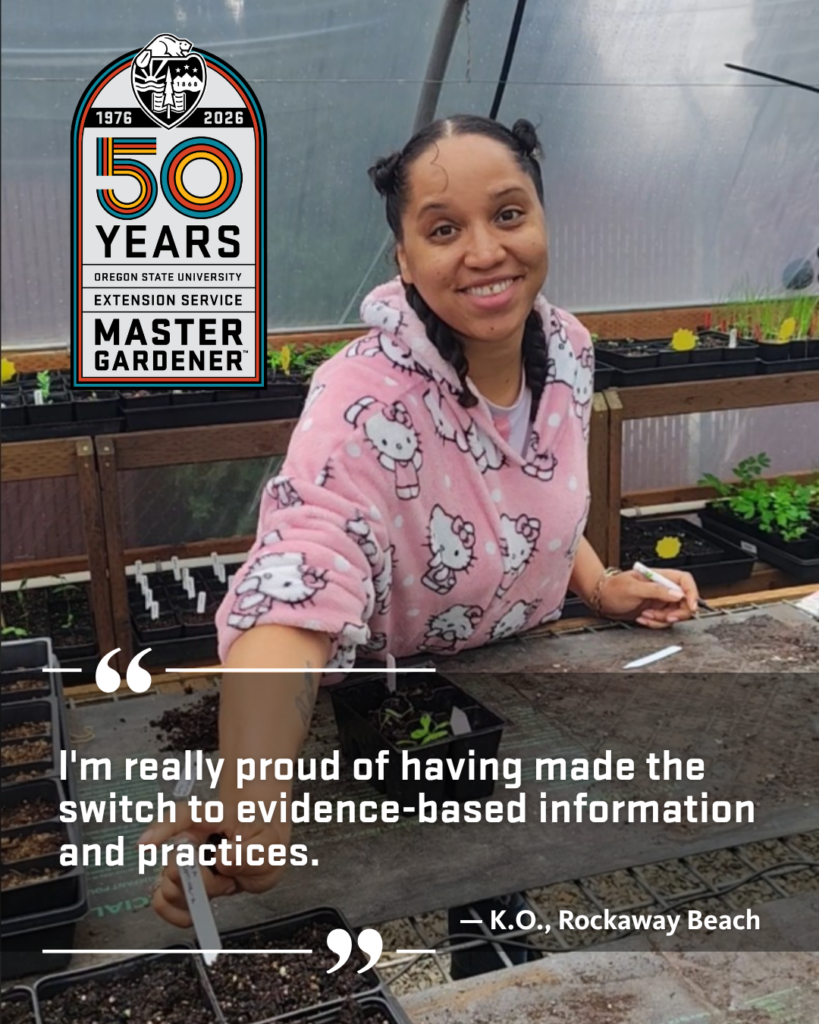
“I’m really proud of having made the switch to evidence-based information and practices,” K.O. said. “What we become naturals at doing over the course is finding where the science-based information and answers are.”
Learning about integrated pest management has also changed how K.O. gardens.
“I’m equally proud to be a gardener who is aware of the steps of integrated pest management and how to keep our environment and other creatures as safe as possible. That’s huge to me.”
More than classmates
The friendships formed during the program have become just as meaningful as the gardening knowledge.
“I have met ALL KINDS OF PEOPLE, which I absolutely love,” K.O. said. “We have formed connections that I hope will last. I want to continue building on our relationships over everything gardening and beyond.”
The friendly competition doesn’t hurt either.
“I’m gonna beat Scott in a zucchini contest one of these years,” K.O. laughed.
Looking ahead, K.O. sees a lifelong future with the program.
“I’m really looking forward to being a part of the Master Gardeners for a long time. I hope to be like some of the hardies who have paved the way for so many years before me. I’m not going anywhere.”
Gardening as a foundation
For K.O., gardening has become essential to maintaining balance through life’s challenges.
“Absolutely, I don’t know what I’d do without gardening,” K.O. said. “Between taking care of my grandmother, studying for my degree and just doing life…it can be really hard on the mental and emotional state.”
“Gardening keeps me at a proper baseline,” K.O. said. “It’s the safest addiction—as long as I’m not growing stinging nettle.”
Caring for community and the environment
Since becoming certified, K.O. has already begun seeing the impact of being a Master Gardener volunteer.
“Since I’ve gotten my certification, I’ve been approached by a ton of people in the community who want help with their yards, making them beautiful and functional,” K.O. said.
The program has also reinforced how closely gardening is connected to environmental stewardship.
“A few of our classes were on how important it is that we understand what’s going on in nature all around us,” K.O. said. “Weeds like Japanese knotweed getting out of hand and impacting the environment, water contamination, chemical leaching…all of this is critical.”
“I do hope anyone with good sense can understand that we can use more people in the world that care about the world and want to do what’s necessary to keep our communities and planet safe, beautiful, livable and thriving.”
Feeling welcome
One aspect of the program that left a lasting impression was the diversity of people involved.
“I’m really grateful for the diversity in the rooms,” K.O. said. “As a person of color, it felt really good to see so many people from all kinds of backgrounds and ethnicities teaching and learning.”
“I will keep coming back to support all the work that everyone at OSU Extension is doing. I am so grateful for what OSU has done in our community and look forward to doing more courses with the Extension office in the future.”
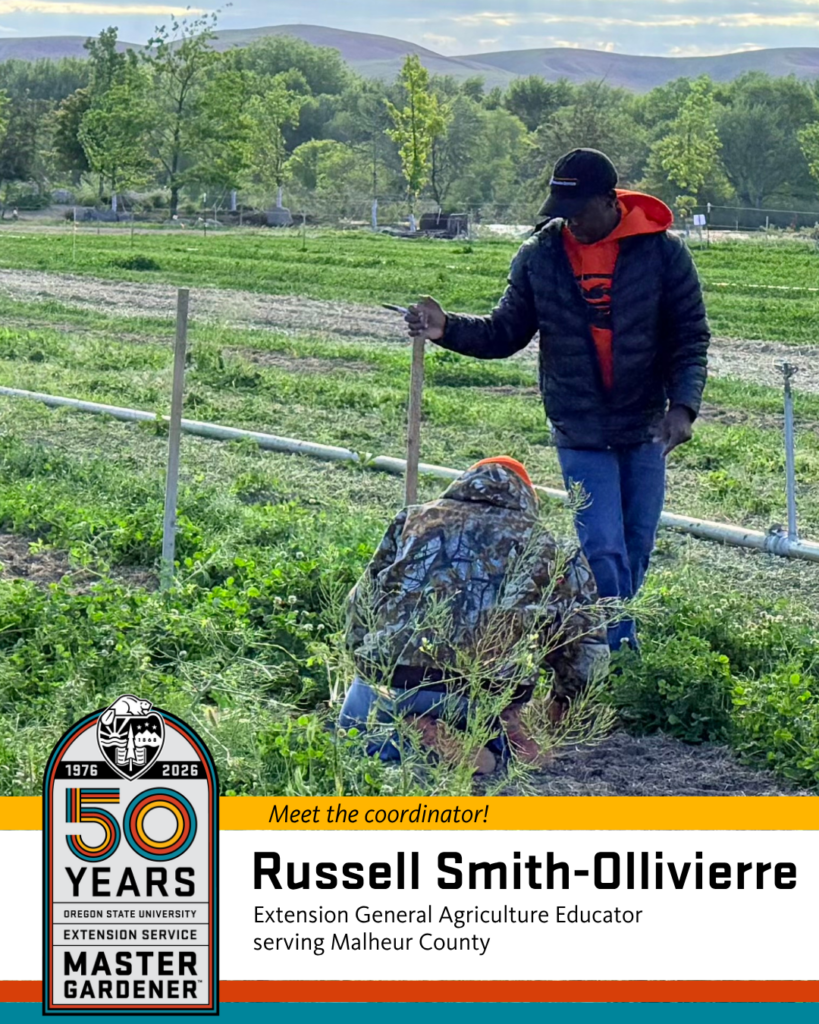
Extension General Agriculture Educator serving Malheur County
When Russell arrived in Malheur County in 2023, he discovered that the county did not yet have a Master Gardener program. After conducting a needs assessment and finding strong community interest, he helped launch the program in 2024 with its first group of 10 Master Gardener volunteers.
I spoke with Russell about starting a new Master Gardener program, gardening in Oregon’s high desert, and the volunteers and community partners helping build the program.
Quick Facts
Position: Extension General Agriculture Educator
Region: Malheur County
Malheur County Master Gardener program launched: 2024
Favorite insect: Monarch butterfly
Beginner plant recommendation: Mint (in a container)
Background
Russell’s agricultural education began in his home country of Barbados, where he attended a technical school and earned a diploma in agriculture. He continued his education at university, earning a bachelor’s degree in general agriculture and a master’s degree in tropical crop protection with an emphasis in plant pathology. After completing his graduate degree, Russell went into teaching and taught high school agriculture for nearly nine years.
His experience in agriculture and education eventually brought him to Oregon. When he arrived in Malheur County in 2023, he began looking into the Master Gardener program and realized the county did not have one. He saw an opportunity to provide education about sustainable gardening while also giving community members a way to give back. After conducting a needs assessment and receiving generally positive feedback, the program launched in 2024 with 10 members in its first cohort.
Gardening in Malheur County
Malheur County is a large county with gardening conditions that differ from many areas in Oregon. The region is semi-arid and high desert, with hot summers and cold winters. Russell says gardeners typically focus on drought-tolerant plants and practices that help retain moisture and reduce the effects of high summer temperatures.
Some of the strategies he highlighted include:
Using mulch to retain moisture
Selecting plants suited to the region
Using efficient irrigation practices
Considering drought tolerance when selecting plants
Compared with Western Oregon, Malheur County is much drier, making moisture retention and plant selection an important step for gardeners.
Favorite Garden Lesson
Russell’s most memorable recent garden failure involved growing peppers in a greenhouse. Through a partnership with Treasure Valley Community College, the Master Gardener program has access to greenhouse space during the winter and early spring. The group used the greenhouse to start a large number of pepper plants, including plants connected to a seed-starting workshop. Until the mice found them.
“The mice just came in and ate all of the peppers.”
Although some plants had been covered, the mice were still able to get underneath the coverings and eat many of the seedlings. For Russell, it was a particularly frustrating setback after the time and effort invested in starting the plants. However, as any Master Gardener knows, when things don’t go as planned, it’s time to make adjustments.
“I think going forward, we should cover them.”
Supporting Volunteers
Russell says one of the things he appreciates most about his volunteers is their dedication to the new program. Some volunteers give significant amounts of their time to community activities, including work in the community garden and at the farmers market. He also appreciates the role volunteers play as advocates for the program. Through word of mouth, they help spread awareness of the Master Gardener program and its work in the community.
“The program is new, but it’s definitely one for the future.”
Community Partnerships
Russell highlighted two major partners: the Oregon Food Bank – Southeast region and Treasure Valley Community College. The Master Gardener program has a relationship with the Oregon Food Bank – Southeast region to distribute produce grown in its demonstration garden. Volunteers clean the produce before donating it, and the food bank distributes it to food pantries throughout Malheur County.
The partnership has also expanded to include volunteer participation and outreach. The regional manager volunteers in the demonstration garden, and the organization helps promote opportunities for community members to volunteer.
Treasure Valley Community College provides greenhouse space that the Master Gardener program uses during the winter and early spring. The college also uses the demonstration garden as a teaching tool for a course held there.
Quick Questions
Favorite insect
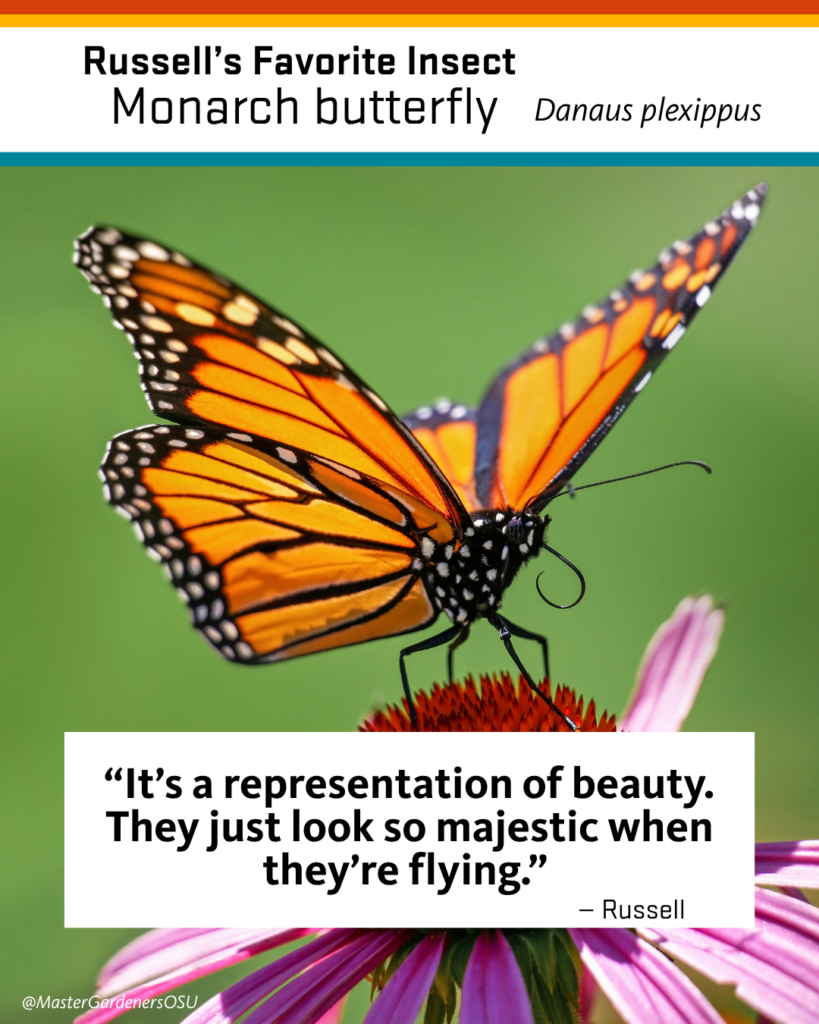
Russell chose the monarch butterfly because of its beauty.
“When you see them, they just… it’s a representation of beauty.”
He also noted that declining monarch populations make seeing them especially meaningful to him.
Plant recommendation for beginners
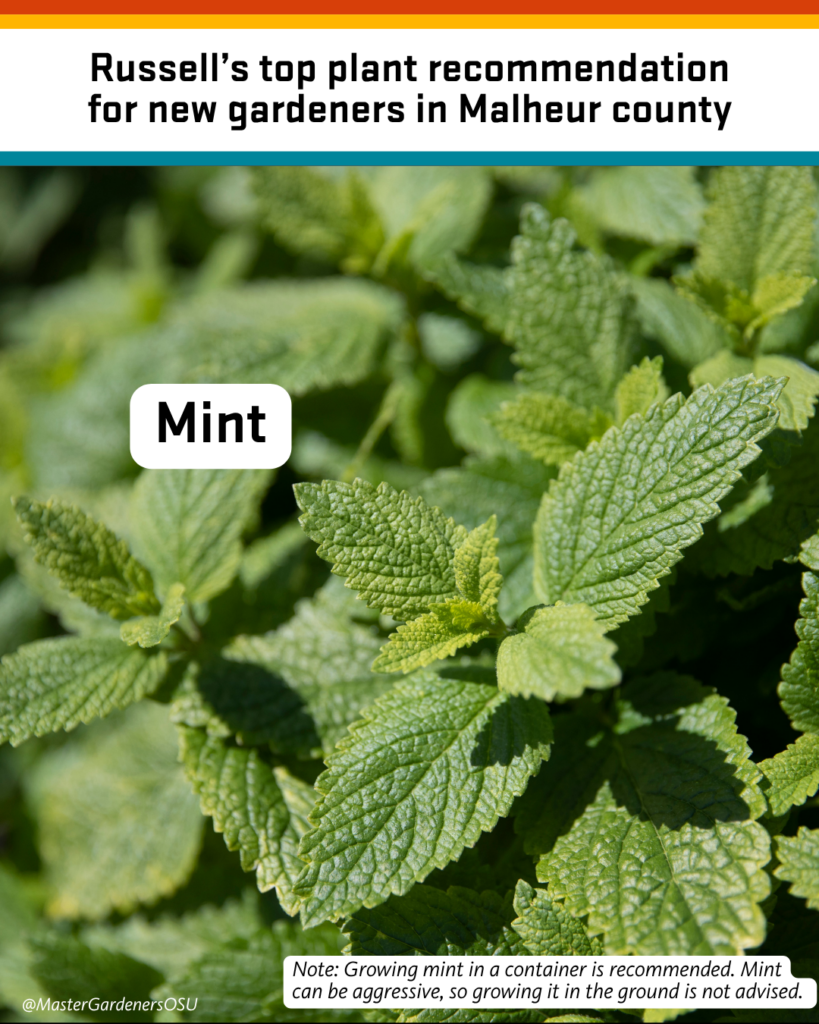
Russell recommends mint for beginning gardeners because it grows quickly, is low maintenance, and does well in the region’s conditions.
“Mint is very, very forgiving.”
There’s one important caveat: mint can be aggressive. His recommendation is to grow it in a container rather than directly in the garden, because its roots can eventually spread and overrun the surrounding area.
More work from Russell Smith-Ollivierre can be found here: [click here]
This is part of a series of stories we are featuring about the people of the OSU Extension Master Gardener volunteer program in celebration of our 50th anniversary. With +1,800 amazing volunteers and 30 faculty and staff we hope you are as inspired as we are by their dedication joy and impact that they make across the state.
If you’d like to share your Master Gardener story, we’d love to hear from you! Submit your volunteer story here: https://beav.es/mgstory
Associate Professor of Practice based in the Lane County Extension Office
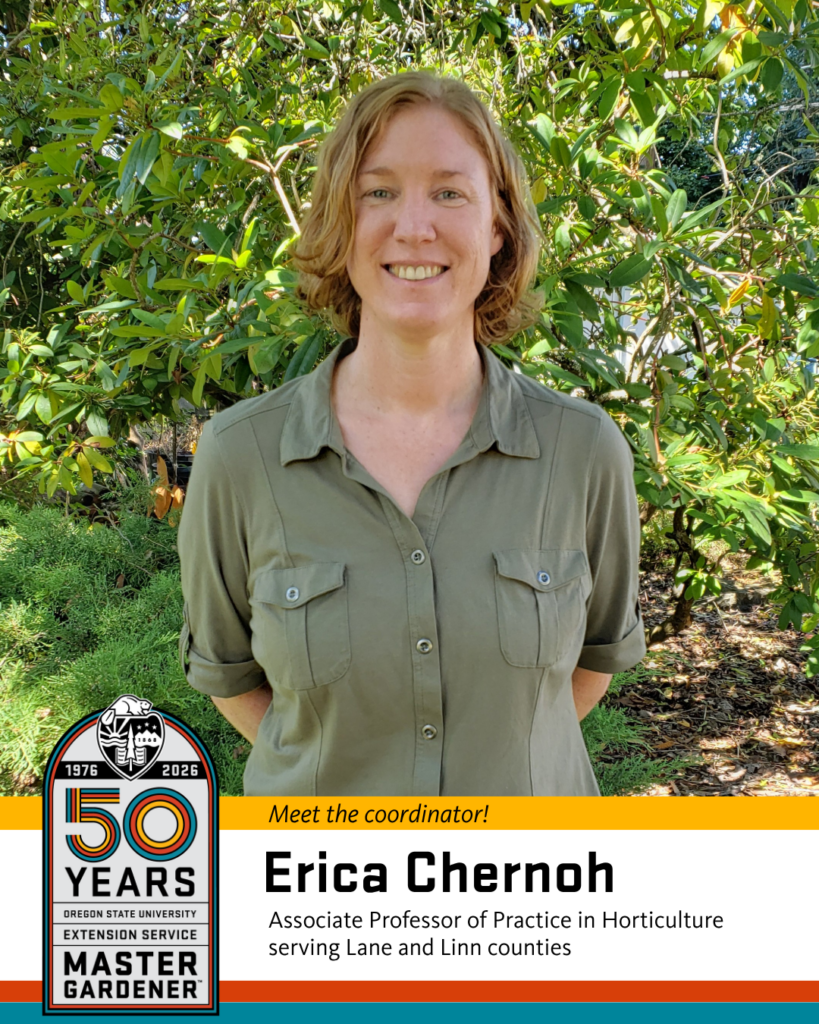
Since joining Oregon State University Extension in 2019, Erica Chernoh has worked with Master Gardener volunteers in Lane County to support sustainable gardening education and community outreach. Before coming to Extension, her career included teaching at a community college, working with farmers overseas, and supporting agriculture through the organic industry.
I spoke with Erica Chernoh about her path to horticulture education, what makes the southern Willamette Valley a great place to garden, and the volunteers who make the Master Gardener program possible.
Quick Facts
Position: Associate Professor of Practice in Horticulture
Region: Lane and Linn County
Years with Extension: Since 2019
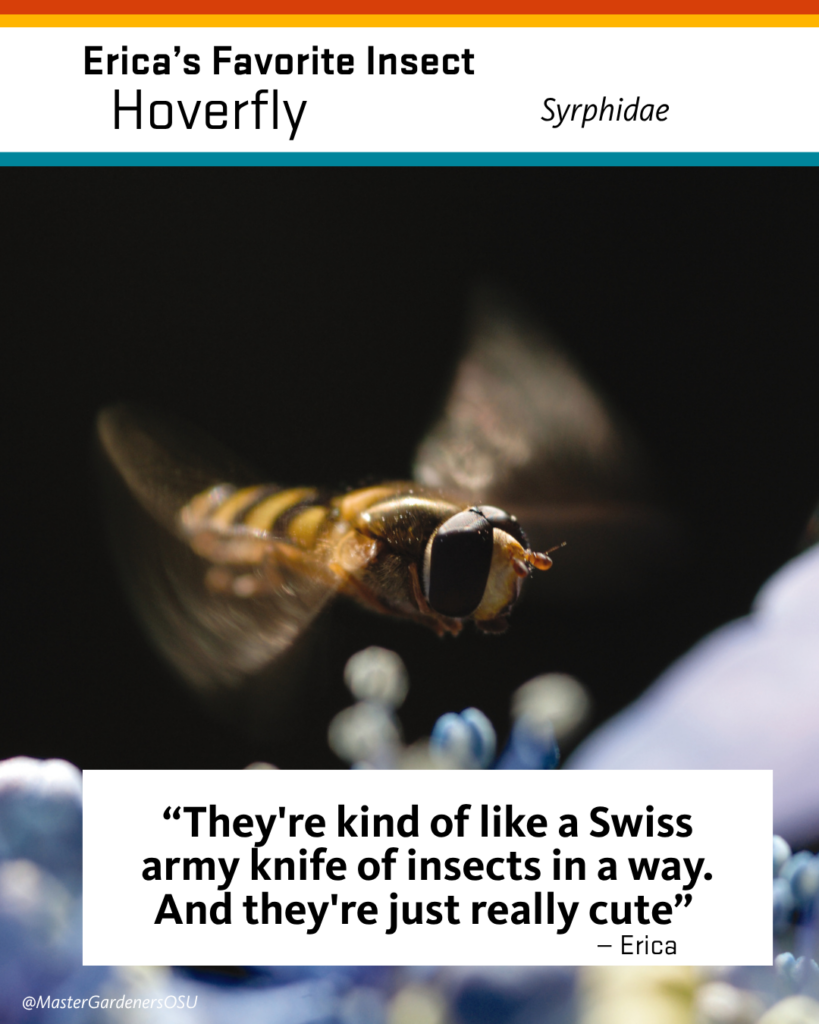
Favorite insect: Syrphid flies (hover flies)
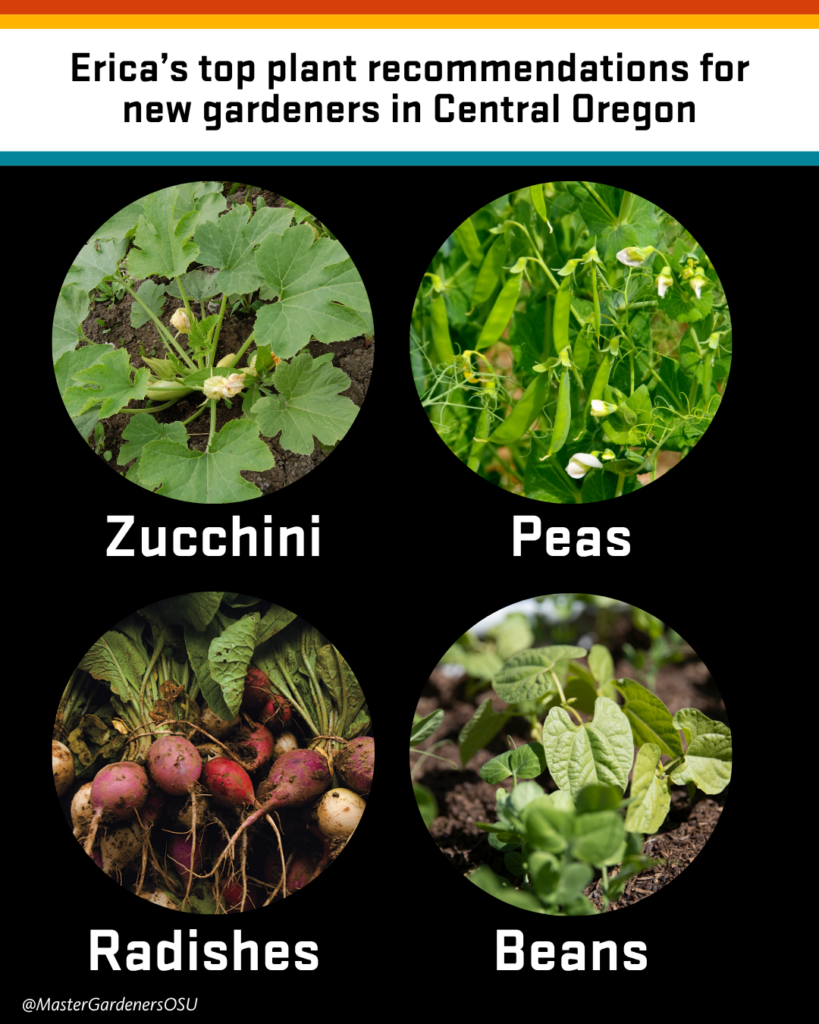
Beginner plant recommendation: Zucchini, radishes, beans, or peas
Background
Erica’s interest in gardening began at home, where she helped care for fruit trees with her dad.
“I just remember always having fruit trees and… working with my dad, pruning them.”
She earned a bachelor’s degree in physical geography, but while in college she found herself drawn toward agriculture. Working at her university’s student farm and taking soil science classes inspired her to pursue horticulture.
After college, Erica joined the Peace Corps and served in Guatemala in an agricultural program, working as an integrated pest management (IPM) volunteer. She later worked in the organic industry before earning a master’s degree in horticulture from the University of California, Davis.
Throughout her career, education has remained a common thread. Before joining Extension, she taught at a community college and worked with farmers through international development programs. She says the Master Gardener program offered another opportunity to share her enjoyment of gardening and horticulture with others.
Gardening in the South Willamette Valley
The southern Willamette Valley offers gardeners a long growing season and some of Oregon’s most fertile soils. According to Erica, the region avoids some of the challenges faced in other parts of the state, such as the harsh winter freezes common in Central Oregon or the persistent coastal rainfall. Those conditions allow gardeners to grow a wide variety of fruits and vegetables, making the area an excellent place for home gardening.
Favorite Garden Lesson
Like every gardener, Erica has had her share of setbacks.
Living in the South Hills of Eugene, she says deer are one of her biggest gardening challenges. She also remembers unsuccessfully trying to grow passion fruit while living in California.
“We all have garden fails every year, right?”
Whether it’s deer, slugs, cabbage moths, or simply trying a plant that isn’t suited to the location, she says gardening always provides opportunities to learn.
Supporting Volunteers
Erica says she’s continually impressed by the dedication of Master Gardener volunteers and the time they invest in serving their communities. She especially appreciates their curiosity and willingness to keep learning.
“They’re lifelong learners.”
Whether researching a new plant problem at the plant clinic or learning about an unfamiliar species, volunteers bring an enthusiasm that she says is contagious. Erica also values how connected volunteers are within the community.
“I learn from our volunteers a lot of times.”
Community Partnerships
Erica highlighted several long-standing partnerships that help expand gardening education in Lane County.
One is with GrassRoots Garden and Food for Lane County. GrassRoots Garden, an urban farm that grows food for the local food bank, was started by Master Gardener volunteers about 35 years ago. Volunteers continue to support the site by maintaining compost facilities and herb beds, while Extension also teaches pruning classes there.
She also recognized the City of Eugene as an important community partner. Together, Extension and the city maintain compost facilities at community gardens and use those spaces to offer composting workshops for the public.
Quick Questions
Favorite insect
Erica’s favorite insects are syrphid flies, also known as hover flies. She appreciates them because they’re pollinators, beneficial insects, and often mistaken for bees.
“They’re kind of like a Swiss army knife of insects in a way. And they’re just really cute”
Plant recommendation for beginners
In midsummer, Erica’s first recommendation is zucchini. She also suggests radishes, beans, and peas as good options for beginning gardeners, noting that they’re generally easy to grow, provided slugs don’t get to them first.
This is part of a series of stories we are featuring about the people of the OSU Extension Master Gardener volunteer program in celebration of our 50th anniversary. With +1,800 amazing volunteers and 30 faculty and staff we hope you are as inspired as we are by their dedication joy and impact that they make across the state.
If you’d like to share your Master Gardener story, we’d love to hear from you! Submit your volunteer story here: https://beav.es/mgstory
Associate Professor of Practice in Horticulture serving Klamath, Harney, and Lake counties
For the past 10 years, Nicole has served gardeners across Klamath, Harney, and Lake counties, providing research-based horticulture education for home gardeners, commercial growers, and Master Gardener volunteers. Her career in horticulture spans decades, from floral design and botanical gardens to Extension, where she continues to help gardeners adapt to the unique challenges of south-central Oregon.
I spoke with Nicole about her journey into horticulture, what makes gardening in her areas unique, and why she enjoys working with Master Gardener volunteers.
Quick Facts
Position: Associate Professor of Practice in Horticulture
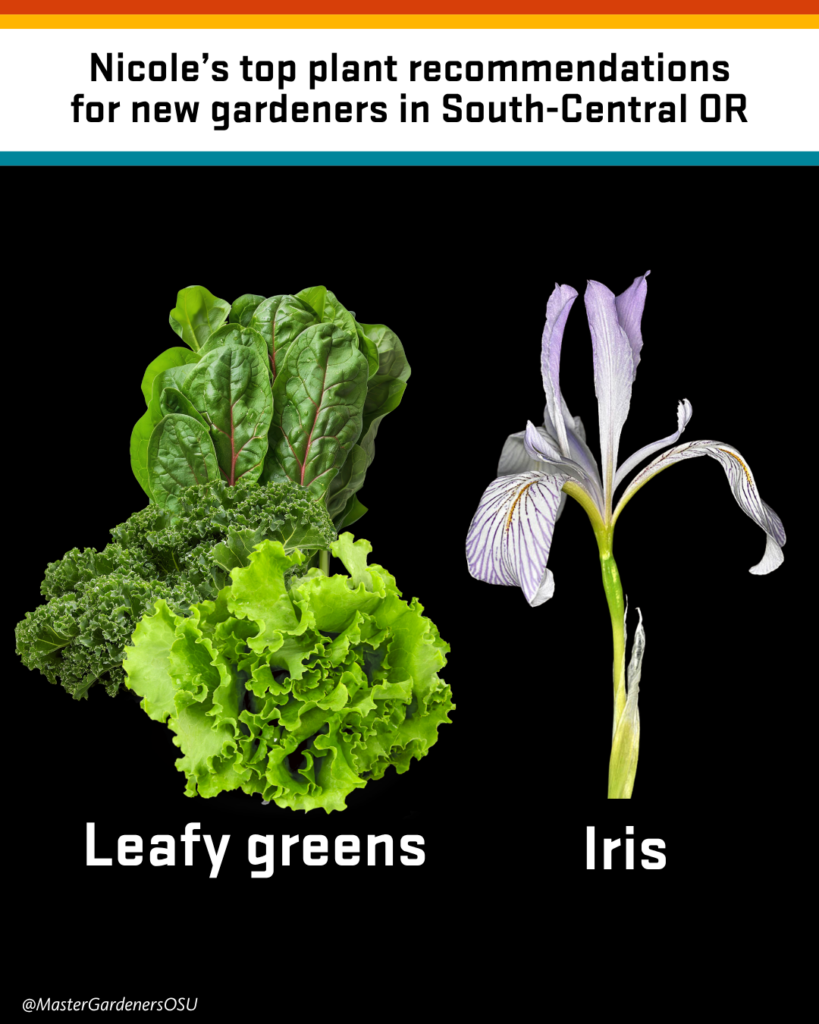
Beginner plant recommendation: Leafy greens for vegetable gardens; iris for perennial gardens
Background
Nicole’s interest in gardening began by following her grandfather through the vegetable garden, asking questions as he worked.
“I just had a really special affinity for my grandfather… if he was doing it, I wanted to be doing it too.”
She credits those early experiences with inspiring her career in horticulture and even dedicated her graduate thesis to him.
Her path into horticulture wasn’t traditional. While in high school, she attended a vocational horticulture program, where she discovered a talent for floral design and began working in the industry at just 16 years old. By age 19, she was managing the floral department of a garden center.
Rather than attending college immediately, Nicole spent years working in horticulture before earning her bachelor’s degree in horticulture and master’s degree in entomology from the University of Tennessee.
Looking back, she says waiting to attend college was the right decision for her.
“It’s different for everybody. We all have our own different paths.”
Gardening in South-Central Oregon
Gardening in Klamath, Harney, and Lake counties means learning to work with a challenging climate.
According to Nicole, gardeners commonly face:
Short growing seasons and late spring or early summer frosts
Cool nighttime temperatures, even during the hottest part of summer
Large swings between daytime and nighttime temperatures
Low humidity and limited summer precipitation
Many warm-season vegetables struggle under these conditions because cool nights repeatedly slow their growth, even when plants appear healthy.
Nicole says this is where Master Gardener volunteers make an important difference by helping gardeners understand local growing conditions and sharing practical strategies, such as season extension techniques and watering in the morning.
“There’s just so many pressures on being successful in some kinds of gardening, and actually, you know, that’s one of the important ways that Master Gardeners can help in my community, is by sharing that information.” explained Nicole.
Because many new residents have gardened successfully elsewhere, she often helps people adjust their expectations for gardening in south-central Oregon.
Favorite Garden Lesson
Even experienced horticulturists learn by trial and error. Shortly after moving to Klamath Falls, Nicole filled her new garden with plants purchased at the local Master Gardener plant sale. While she was away at a meeting in Corvallis, a mid-June freeze killed the tender plants. Earwigs finished off many of the survivors.
“$200 worth of my very first plants that I planted here.”
The experience quickly showed her why gardening in the region has a reputation for being challenging.
Supporting Volunteers
For Nicole, one of the most rewarding parts of the Master Gardener program is seeing the different strengths each volunteer brings. She enjoys learning from volunteers’ diverse backgrounds and perspectives and says the educational experience goes both directions.
“It’s not a one-way street with the trainings in the Master Gardener program. We all learn from each other.”
She also values the long-term relationships that develop through volunteer service and says people who are passionate about gardening and willing to volunteer their time have become some of her favorite people to work with.
Community Partnerships
Nicole works with several community partners to expand gardening education throughout the region. This year the program began offering plant clinics at independently owned local garden centers, meeting gardeners where they’re already shopping for plants.
She also highlighted long-standing partnerships with the local museum, which shares space for classes and research projects, and the local Native Plant Society. According to Nicole, collaboration with the Native Plant Society has strengthened both organizations.
Quick Questions
Favorite insect
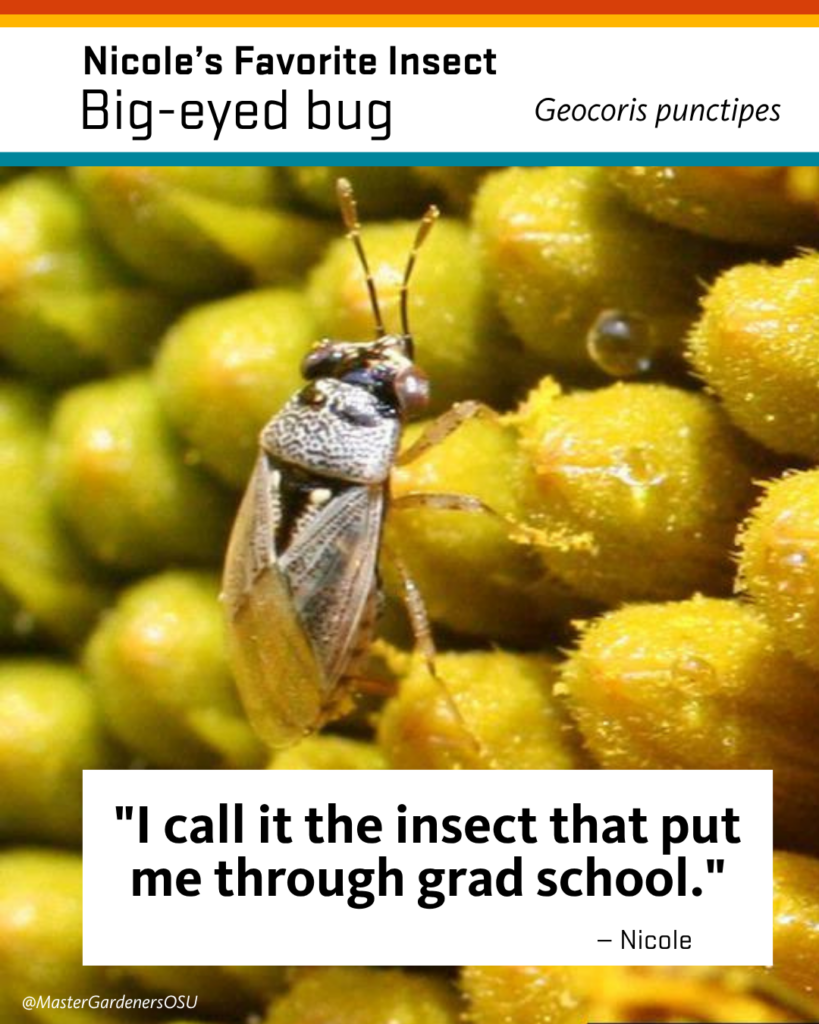
Nicole’s favorite insect is the big-eyed bug (Geocoris punctipes), a generalist predator that was the focus of her graduate research. She studied whether the insects could be reared successfully on an artificial diet and compared their ability to control aphids with insects collected from the wild.
“I call it the insect that put me through grad school.”
Plant recommendation for beginners
For beginning vegetable gardeners, Nicole recommends starting with leafy greens because they are generally more reliable than fruiting crops, which often drop their fruit when stressed.
For ornamental gardens, she recommends iris, which she says performs consistently well despite the region’s unpredictable weather.
When it comes to trees, her advice is less about species and more about care. Gardeners should plan to water newly planted trees thoroughly for their first three years, she says, because the region receives too little growing-season precipitation for trees to become established without consistent irrigation.
Nicole has created some helpful resources which are available to gardeners for free online, including the YouTube series Pruning With The Pros. This video series walks the viewer through a variety of challenges common in mature landscapes and offers suggestions on how they might be remedied.
This is part of a series of stories we are featuring about the people of the OSU Extension Master Gardener volunteer program in celebration of our 50th anniversary. With +1,800 amazing volunteers and 30 faculty and staff we hope you are as inspired as we are by their dedication joy and impact that they make across the state.
If you’d like to share your Master Gardener story, we’d love to hear from you! Submit your volunteer story here: https://beav.es/mgstory
One of the reasons Amy Howes joined the Oregon State University Extension Master Gardener Program was to become more connected to the Central Oregon community while learning more about horticulture. What Amy didn’t expect was how quickly those connections would grow. In just a few months, the program has opened doors to new friendships, mentors and opportunities to serve, reinforcing that being a Master Gardener volunteer is about much more than plants. It’s about building stronger communities through shared knowledge, relationships and a love of gardening.
Finding community through gardening
“I am incredibly grateful for the opportunity to be part of the 2026 Deschutes County Master Gardener trainee cohort,” Amy said. “One of the reasons I joined the program was to become more connected to my community while deepening my horticultural knowledge, and I never imagined how quickly those connections would begin to grow.”
In just a few short months, Amy has met educators, horticulturists, volunteers, nursery professionals and community leaders who all share a common goal of helping Central Oregon become a healthier, more resilient and more connected place.
“What has been especially rewarding is seeing how willing people are to share their knowledge, experience and enthusiasm with others,” Amy said.
That spirit of collaboration has already led to opportunities Amy never expected, including becoming involved with the High Desert Horticultural Center and learning more about its vision for expanding horticultural education and creating a future native botanic garden in Central Oregon.
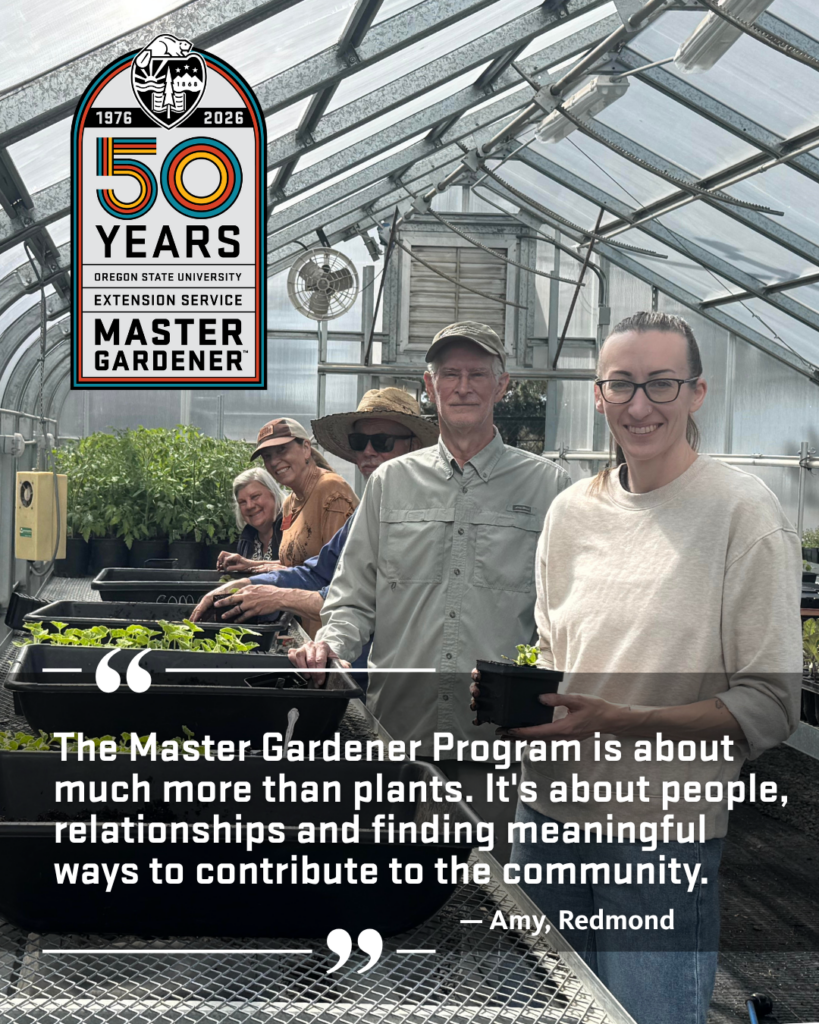
“The experience has reinforced something I suspected when I applied: that the Master Gardener Program is about much more than plants,” Amy said. “It’s about people, relationships and finding meaningful ways to contribute to the community.”
Creating opportunities to connect
Amy says the program has expanded the sense of what’s possible.
“I joined hoping to learn more about gardening, but I have also found mentorship, inspiration and new opportunities to serve,” Amy said. “The connections I’ve made through the Master Gardener Program are already opening doors I never expected, and I’m excited to see where those relationships lead.”
Why Master Gardener volunteers matter
Amy believes the need for Master Gardener volunteers continues to grow because people are looking for meaningful ways to connect—with nature, their communities and one another.
“We live in a world where so much of our time is spent indoors and online, yet some of the most meaningful learning still happens when people get outside, get their hands in the soil and share knowledge with others,” Amy said.
Whether answering questions at a plant clinic, supporting a demonstration garden, teaching a class or simply talking with a neighbor, Master Gardener volunteers help make research-based horticultural knowledge more accessible while encouraging stewardship of the places people call home.
“Small actions, multiplied across a community, can have a remarkable impact.”
Share your story
We’d also love to hear from you.
Whether you are currently volunteering or were part of the Master Gardener Program in the past, your story matters. What has this program meant to you? What are you proud of? How has gardening, volunteering or being part of this community shaped your life?
Horticulture Professor and Extension Horticulturist serving Crook, Deschutes, and Jefferson counties
In celebration of the 50th anniversary of the OSU Extension Master Gardener volunteer program, we’re featuring stories about coordinators and volunteers. Let’s get to know Amy Jo Detweiler and hear about her path to Extension, what makes gardening east of the Cascades unique and the volunteers who continue to inspire her.
For more than 27 years, Amy Jo has helped gardeners across Central Oregon navigate some of Oregon’s more challenging growing environments. As the Extension horticulturist serving Crook, Deschutes, and Jefferson counties, she works with Master Gardener volunteers to answer gardening questions, maintain demonstration gardens and provide research-based education throughout the region.
Quick facts
Position: Horticulture Professor and Extension Horticulturist
Region: Central Oregon—Crook, Deschutes, and Jefferson counties
Years with Extension: 27.5 years
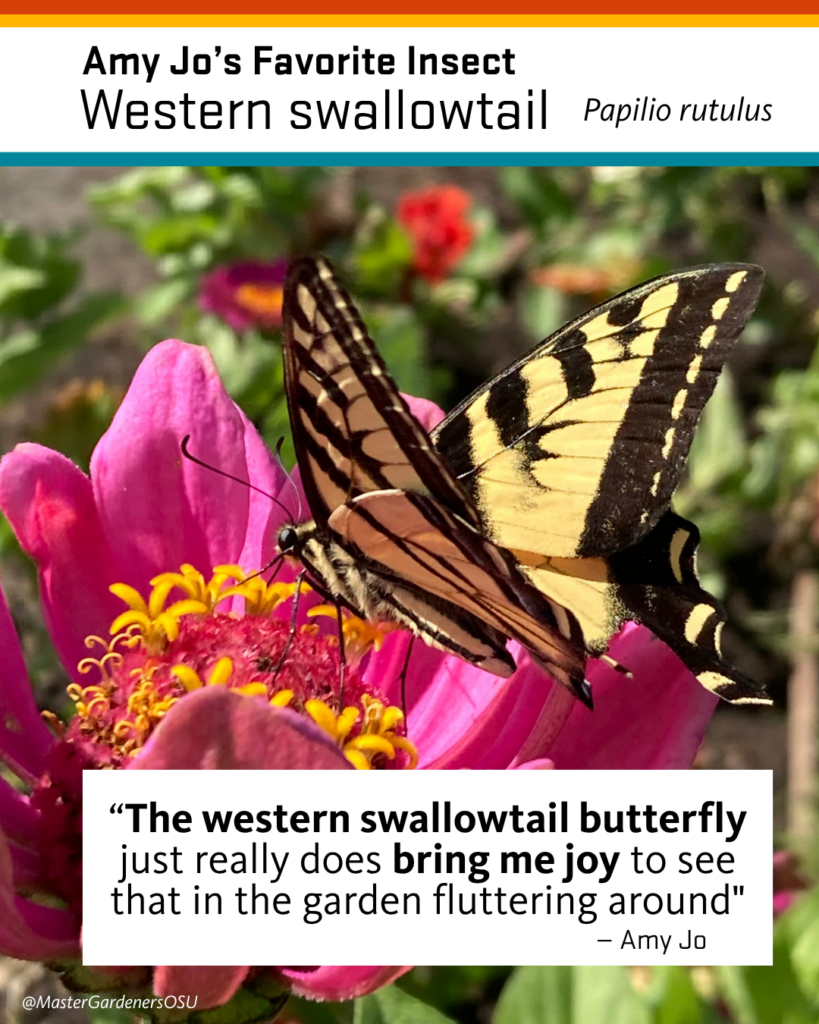
Favorite insect: Western swallowtail butterfly
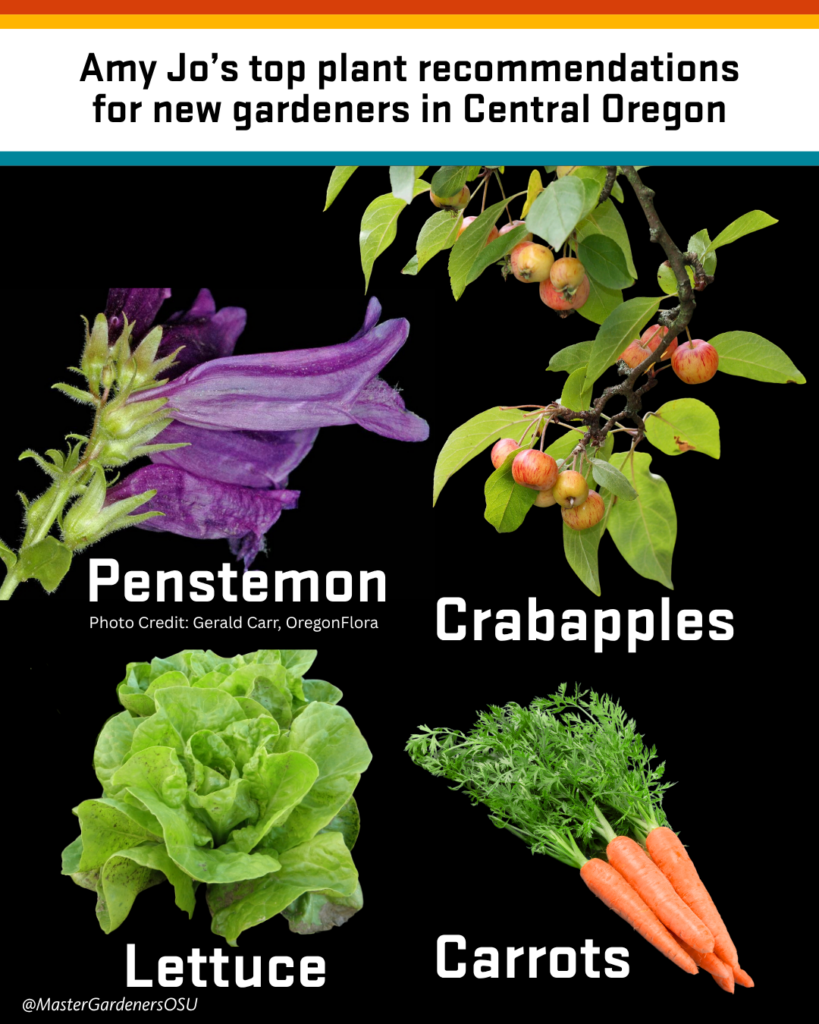
Beginner plant recommendation: Lettuce or carrots for vegetables penstemons for perennials and crabapples for ornamental trees.
Background
Amy Jo didn’t originally plan on a career in horticulture. She earned her undergraduate degree in biology with a human health emphasis and initially considered a career in healthcare. That changed after spending a summer working as an outdoor adventure guide.
“After being outside for a couple of months… I realized I really wanted to be working more in an outdoor environment with something related to nature and biology.”
She returned to school to study landscape horticulture at Colorado State University, where she also worked in a nursery and gained firsthand experience helping home gardeners. When an Extension position opened in Central Oregon, the similarities between Colorado’s high desert climate and Central Oregon made it an ideal fit.
Although she hadn’t previously managed volunteers, she was excited to combine horticulture education with community engagement.
Gardening in Central Oregon
Gardening in Central Oregon comes with unique challenges. The region sits in the rain shadow of the Cascade Range, receiving a very small amount of rainfall especially during the growing season.
According to Amy Jo, gardeners contend with:
Short growing seasons (as little as 90 days in some areas)
Sandy, volcanic soils that drain quickly
Irrigation needs throughout the summer
Frost that can occur nearly any time of year
“We can get frost any day of the year. There’s been snow on the Fourth of July.”
These conditions make plant selection and water management especially important for local gardeners.
Favorite garden lesson
Even experienced horticulturists have garden failures. One of Amy Jo’s favorite trees, the Vanderwolf pine, refused to thrive after being planted in one of the demonstration gardens. Despite multiple attempts, the tree never established successfully.
After the original tree failed to establish, another Vanderwolf pine was planted in a different location. This time, it thrived.“It’s all learning.”
The experience reinforced one of gardening’s most important lessons: sometimes success depends as much on the site as it does the plant.
Supporting volunteers
After nearly three decades with Extension, Amy Jo says one of the most rewarding parts of her job is watching volunteers dedicate their time to helping others learn. Some Master Gardener volunteers in Central Oregon have served alongside her for more than 25 years. That is much longer than the average volunteer commitment.
Just as meaningful are the friendships that develop through the program.
“I didn’t anticipate the relationships that come out of the Master Gardener Volunteer Program.”
Over the years, she’s watched volunteers become lifelong friends, creating connections that extend well beyond the garden.
“The western swallowtail butterfly just really does bring me joy to see that in the garden fluttering around”
Amy Jo also enjoys observing the wide variety of native pollinators that visit demonstration gardens, from tiny native bees to flies and other beneficial insects.
Plant recommendation for beginners
For beginning vegetable gardeners, Amy Jo recommends starting with lettuce or carrots because they’re easy to grow from seed and give gardeners a good chance of harvesting something successfully.
For gardeners interested in perennials, she recommends penstemons, noting that many native species perform well in Central Oregon and help attract native pollinators.
For those looking to plant an ornamental tree, Amy Jo suggests crabapples, which she says establish well and perform reliably in the region.
This is part of a series of stories we are featuring about the people of the OSU Extension Master Gardener volunteer program in celebration of our 50th anniversary. With +1,800 amazing volunteers and 30 faculty and staff we hope you are as inspired as we are by their dedication joy and impact that they make across the state.
If you’d like to share your Master Gardener story, we’d love to hear from you! Submit your volunteer story here: https://beav.es/mgstory
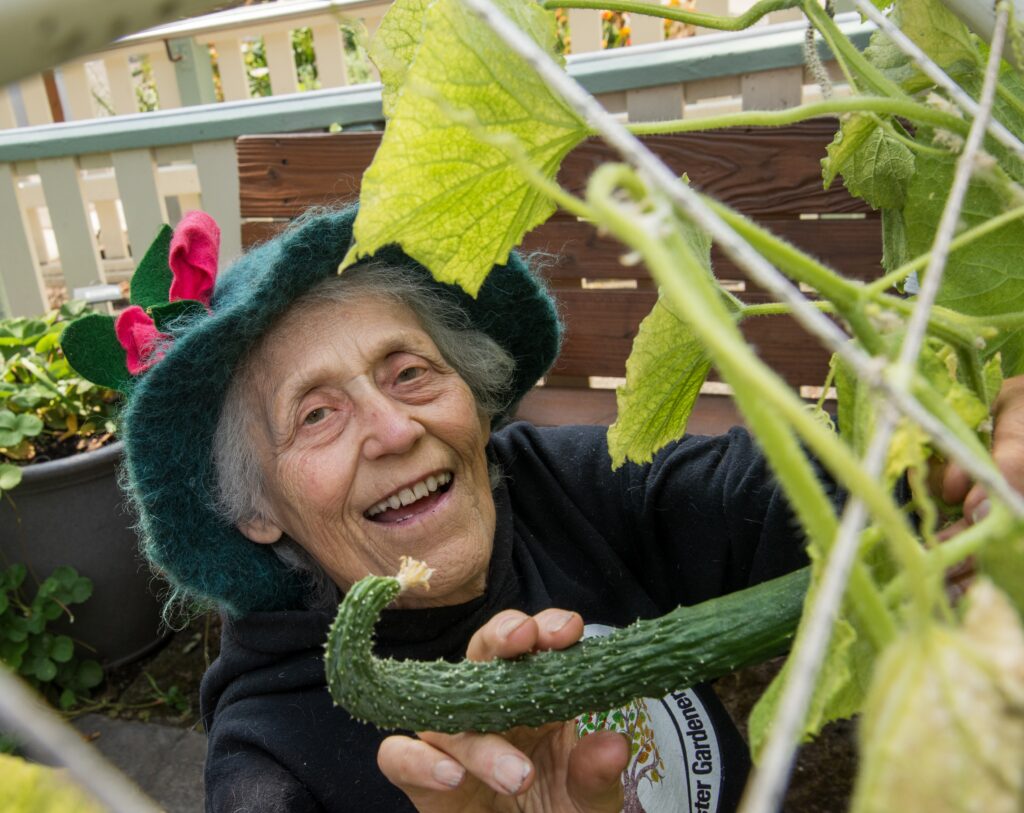
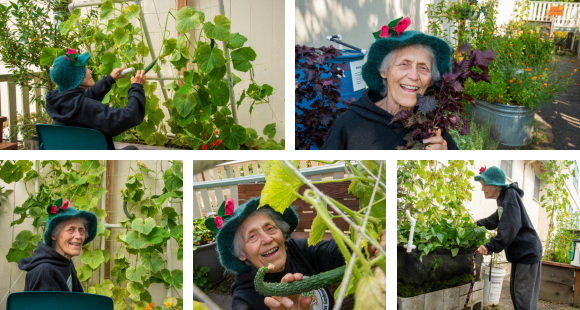
Pat Patterson was one of the original OSU Extension Master Gardener volunteers when the program started in Oregon in 1976. Photos by Lynn Ketchum.
From chance to legacy: original Master Gardener marks 50 years
When the Oregon State University Extension Service Master Gardener Program launched in 1976, Pat Patterson wasn’t the one in her family who planned to sign up.
Her husband, Robert, was.
“He was going to take the course,” Patterson said. “We were both graduate assistants at the University of Oregon and his classes conflicted, and so I just walked in and took his place. Talk about fate.”
That moment set Patterson on a path that has spanned five decades. Now 87, she remains the program’s longest-serving volunteer — still answering gardening questions from her home on a 10-acre farm near Noti.
The Master Gardener Program educates Oregonians about the art and science of growing and caring for plants. Operating in 27 counties, Oregon State University Extension Service trains thousands of volunteers who serve as educators, neighbors and on-the-ground researchers in their communities.
Master Gardener volunteers provide science-based, sustainable gardening information through plant clinics, workshops and community projects — helping Oregonians grow food, steward natural resources and make informed decisions in a changing environment.
The program began in 1976 in Lane County and the Portland metro area with just a few dozen participants. Today, it is a statewide network connecting university research with communities across Oregon.
From the start, Patterson said, the program was different than a garden club.
“A garden club is a social club basically made up of gardeners who swap their stories, do garden sales and so forth,” she said. “Ours requires constant retraining every year. We must recertify, because science changes. It was like going to college. So, it was a very, very deep learning curve, even though I had been gardening for most of my life. I had not been gardening scientifically.”
Early days: meeting a growing need
Patterson was part of a cohort of about 20 volunteers in Lane County. There were no fees, and much of the instruction came from university faculty as OSU Extension built the program from the ground up.
After training, volunteers didn’t staff formal clinics. Instead, they set up wherever they could.
“We would go to any venue that would give us a table,” Patterson said. “We’d sit there with our manuals, and people would come ask us questions. It was kind of scary at first.”
At the time, demand for reliable gardening information was high.
“There was a huge amount of information out there that was not good,” she said.
That need continues today, Patterson said, as gardeners navigate misinformation online, climate variability and evolving best practices.
Inside the Extension office, the program quickly formed strong connections across disciplines.
“It became a very close family,” Patterson said. “We were connected to forestry, to home economics and 4-H — everything.”
From generalists to specialists
As the program evolved, so did its approach to education.
“What we are now is a club of specialists,” Patterson said. “That wasn’t before. We were all generalists before; now we’re all specialists.”
Patterson’s own role expanded over time. After completing the program, she was hired as a horticulture assistant in Lane County, a position she held until 2006.
“I retired being in the office as a paid person,” she said, smiling.
Her volunteer work never stopped.
Through the online “Ask Extension” service, Patterson has answered more than 23,000 gardening questions — part of what she estimates are tens of thousands of volunteer hours.
That kind of service, replicated by volunteers across the state, represents a significant public value: extending university expertise into communities, often at no cost to residents.
“Pat is an amazing person and has always been a joy to work with,” said Erica Chernoh, OSU Extension horticulturist and Master Gardener coordinator for Lane County. “She has jumped into just about every volunteer role out there, from teaching classes to leading committees to hosting a radio show.
“She has a wealth of horticultural knowledge, and her commitment to teaching and community building has strengthened our program and built long-lasting partnerships that continue to this day,” Chernoh said.
Gardening for everyone
One of Patterson’s most lasting contributions has been her work in adaptive gardening.
A longtime member of the Lane County Master Gardener Association’s adaptive gardening committee, she has helped make gardening more accessible to people with a wide range of abilities — from physical limitations to time and space constraints.
“I felt it was really important to allow people to garden no matter what,” she said. “No matter what their physical abilities were, no matter what their mental abilities were, no matter what their time abilities were — there was a way to get around it.”
Her approach reflects broader changes in gardening science and practice, including a shift toward sustainability and working with natural systems instead of relying on chemicals.
“I’m happy to say that science has changed,” Patterson said.
Instead, she emphasizes practices that support soil health, biodiversity and long-term resilience.
“Garden smarter, not harder,” she said.
A lifelong connection
Patterson’s knowledge of plants stretches back decades, shaped by a lifetime of gardening and learning. She has taught classes, contributed to plant clinics and remained active in the gardening community even in retirement.
“Gardening is so great,” she said. “There’s always something you don’t know.”
Of the original Lane County cohort, Patterson was one of three who remained active for decades. She and fellow volunteers Juanita Manley and Phoebe Staples referred to themselves as the “Three Musketeers.”
Today, Patterson is the last surviving member of that original group — and the Master Gardener with the most years of service in the program’s history.
Why it matters now
As the Master Gardener Program marks its 50th anniversary, its role continues to grow in importance.
Across Oregon, residents are turning to gardening for food security, environmental stewardship and personal well-being. At the same time, they face new challenges — from climate change to invasive pests — that require reliable, science-based information.
Master Gardener volunteers help meet that need, serving as a bridge between university research and everyday practice.
For Patterson, that mission has been deeply personal.
“This has been my life and my family,” she said.
“I’m amazed at how much Extension has changed over those 50 years,” she said. “It has grown in ways that we would never have guessed.”
Still, the core remains the same: helping people succeed, one garden at a time.
From her farm outside Noti, Patterson continues that work — answering questions, sharing knowledge and staying engaged.
“Use it or lose it,” she said. “The more you’re challenged, the better chance you have of staying engaged.”
This year marks the 50th anniversary of the OSU Extension Master Gardener Program. If you are or ever have been a Master Gardener volunteer, we’d love to hear from you. Share your story with us: Beav.es/mgstory
Note: early giving is open for Dam Proud Day! Please help support the program today, but first, be inspired by Colleen’s story….
When Colleen of Milwaukie became a Master Gardener, she found more than a community of fellow plant lovers. She found a way to partner with her community — connecting with local groups, city leaders and neighbors around a shared purpose. What started with learning about native plants grew into something bigger: helping launch the Milwaukie Pollinator Pathway and advocating for Milwaukie to become a Bee City USA affiliate.
“I would not have started the Pollinator Pathway and Bee City journey without the Master Gardener program.” Photo by Kelby Whittington
“The best part of being a Master Gardener is the people I meet and the community I have come to know.
Starting the Milwaukie Pollinator Pathway and advocating for the city of Milwaukie to become a Bee City USA affiliate is something I am especially excited and proud of.
Through that work, I have connected with local gardening groups, neighborhood district associations, the Rotary Club of Milwaukie, City Council and city staff, as well as the city of Beaverton.
I became a Master Gardener in 2019, and 2020 became a time to delve more deeply into the resources available to us. I kept coming back to the benefits of native plants. It was also a time to get outdoors for the sake of my physical and mental health, both of which I greatly needed.
Our hikes strengthened our family bonds. They gave us a greater appreciation for the land around us and the trees and plants that grew there. Those hikes strengthened us, both physically and mentally.
Growing plants and food gives us a sense of accomplishment and ownership. It grounds us, so to speak. It is peaceful and satisfying to see something grow.
I would not have started the Pollinator Pathway and Bee City journey without first being introduced to the Master Gardener program. In that first year, we were encouraged to participate in different volunteer activities so we could learn what interested us. For me, that interest was native plants.”
P.S. This year marks the 50th anniversary of the OSU Extension Master Gardener Program— and giving is now open for Dam Proud Day. If this program has shaped your life, your garden or your community, consider making a gift today to help support the next 50 years. We’re also collecting stories from current and past Master Gardener volunteers. Share your story with us: Beav.es/mgstory