Protein Portraits 2016

Posted in 2016 posts, Student posts | Leave a comment

Google Doc Caption

Below is the link for art captions. Please ensure your caption and PDB picture stay on one page. Once you are done, remember to put your project and name in the ballot on the last page.

https://docs.google.com/document/d/1mApN-EBO76QV3N_XFD6QjF_qgeStUoz_0j-K3cLXpnU/edit?usp=sharing

Posted in 2016 posts, Student posts | Leave a comment

Ideas for Keratin potrayal

52d36ac9503c0ca563a86fedd1b50874 2014-01-30 08.40.48 Curling-Ribbon IMG_3986_small2 nsmb.2330-F1 spiral_scarf_v1

Here are some interesting possibilities for my protein (keratin) portrait. I’m thinking about using wool as a medium, since wool is a type of keratin. Tomorrow in class I’d love to share my goals for the project and brainstorm with you all!

Posted in 2016 posts, Student posts | 2 Comments

Comic Book Panels

IMAG0071

So, if you guys were to read a comic at a presentation, how much context/background story would you feel comfortable with before getting bored? I presently have about 10 panels.

Posted in 2016 posts, Student posts | Leave a comment

3D painting!

I just found out that Google has made 3D painting a reality. I think this would make the art of making a protein portrait easier. As their website states: “Your room is your canvas. Your palette is your imagination. The possibilities are endless.” I also really like the fact that this product is sustainable; you can create so many things using very few material products. I guess my only concern with this is how you would be able to present your art work.
Check it out! (Don’t forget to press play): http://www.tiultbrush.com/

Posted in 2016 posts, Student posts | Leave a comment

Medium for my project

hannahfish

This is my paining/art piece from years ago.  For my project, I will be using this method: I will be using acrylics to paint the molecule and then after putting several layers of it, I will then pour blank paint/ink all over the paper.  After a couple of minutes, I will then use a sponge to rinse off the ink.

Posted in 2016 posts, Student posts | Leave a comment

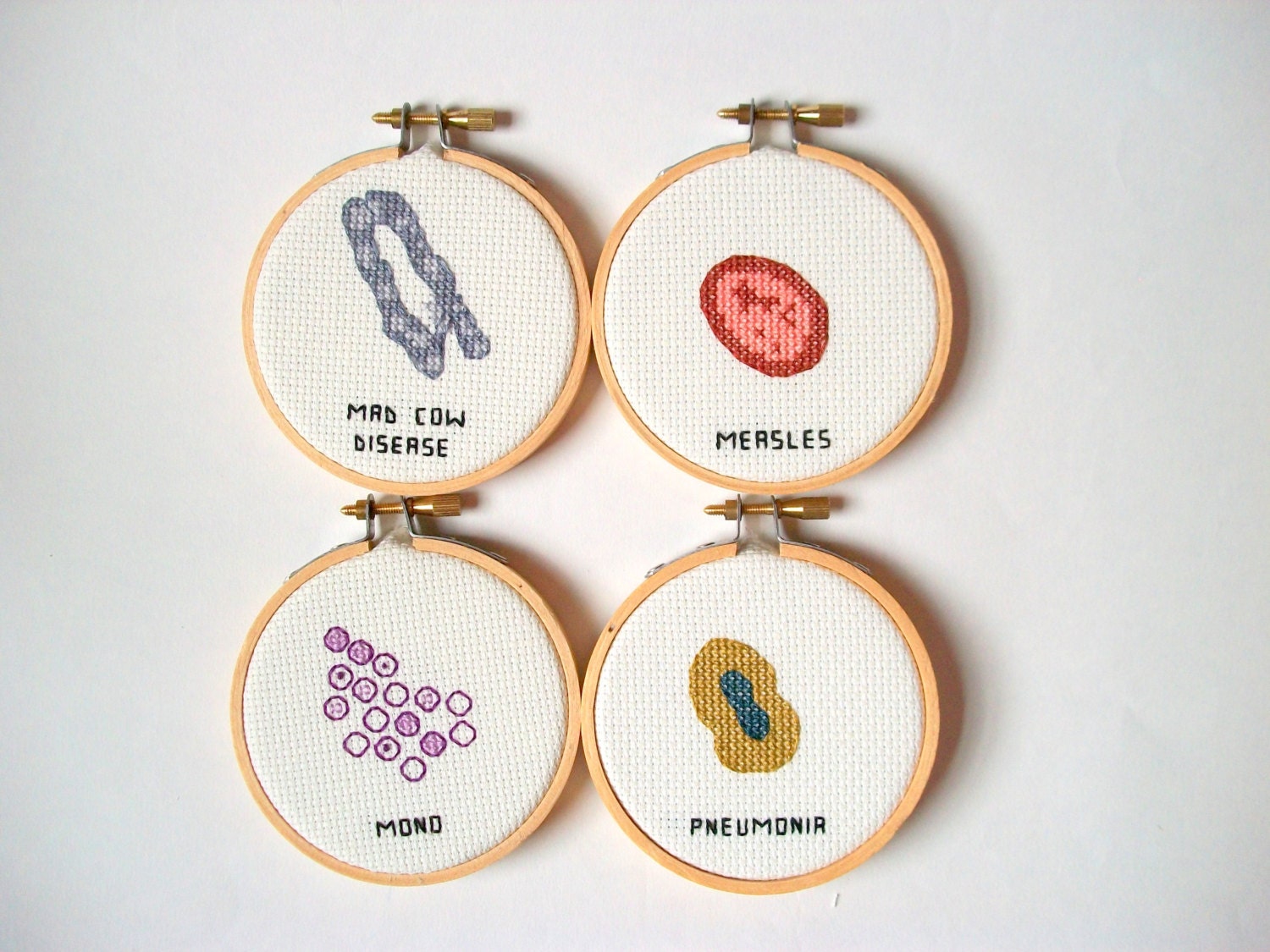
Microbial Cross-stitching

And many more: https://www.etsy.com/shop/aliciawatkins?ref=l2-shop-info-name&search_query=microbes

Posted in 2016 posts, Student posts | Leave a comment

Hopeful for the Instamorph

I played around with the Instamorph this weekend. The major challenge is the heating and reheating necessary when cutting. It is very malleable immediately after heating and becomes hard (at least with thin pieces) in a few minutes. When hard, it is slightly flexible, but not brittle (it seems pretty indestructible). And… I made an alpha helix!!

IMG_20160508_150905684


Posted in Student posts | Leave a comment

Gluten

Articles About the Structure of Gluten

The structure and properties of gluten: an elastic protein from wheat grain

Structure and Function of Gluten Proteins

Circular Dichroism and Nuclear Magnetic Resonance Spectroscopic Analysis of Immunogenic Gluten Peptides and Their Analogs

Optical Rotatory Dispersion, Circular Dichroism, and Infrared Studies of Wheat Gluten Proteins in Various Solvents

My biggest hangup right now is interpreting what the data in these papers means and how I’d put it in a visual form. I realize it’s open for some interpretation, but I want to strive for SOME accuracy. I’m definitely going to use gluten as the medium because it has some interesting properties that make it worth utilizing to depict its structure.

Experimenting with My Medium

Gluten Project Experiment

What I’ve found by playing around with gluten is that it’s stickiest and most elastic when mixed with tap water. However, if too much water is added, the elasticity is lost and the mixture segments into smaller bits. Here it is mixed with excess water:

excess_water

Solutions, Baking vs Air-Drying

One of the first things I tried was mixing it with oil (left), vinegar (second from left), some water (second form right), more water (right). Then I baked it to see what would happen (bottom). After baking, the sample with oil got really crumbly, but the others stuck to the board without issue. The variations in water quantity were the most beneficial to play around with. I’ve decided a against baking because it sort of smooths out the surface, causes some bubbling, and I don’t really like that – I’d rather have the rough texture minus the bubbles.

before_baking_IMG_0053-001 after_baking_IMG_0058-001
This picture shows the gluten with different quantities of water after they have air dried, rather than baking.

hydrated_then_dried_IMG_0065

After reading this article about bread chemistry, I decided to experiment with salt water. I started out making a super concentrated salt water and mixed it with the gluten and the consistency is more granular – it’s not elastic at all. Even by diluting the salt water, the mixture just lacks elasticity when salt is involved.

Planning the Piece

I’m also trying to think of contexts, and I’m stuck in a more artistic mindset so I’m envisioning a wheat field, or the inside of a person’s intestinal tract, but I could also do something more abstract looking. Without knowing much about the structure of gluten, I’m leaning more toward the abstract layout. I want to use the stretchiness and natural shapes that emerge from pulling the gluten over the board. Maybe utilize the different textures of the gluten when mixed with excess water, little water, and/or salt water. Here’s a sketch of what I’m thinking:

gluten_project_sketch_IMG_0087

I have an 8″ x 10″ cradled wood panel because the gluten adheres really well to wood and I think it’s going to be a nice surface to work on. I have tubes of watercolor paint that can be easily mixed with the water I add to the gluten, so I should have lots of flexibility with colors.

paint_board_File_000

Since the gluten I’ll be working with will be hydrated, I think using blues for the “holes” and a warm color, such as orange or sienna, for the web-like part will provide some context to the piece. Below is just a sample I did to see how well the paint mixes with the gluten.

less_water_plus_pigment_File_005

Once I get the gluten layered on the board I can come back in with paints and add in details to explain the amino acid sequences of some of it or mark out hydrogen bonds, etc.

IMG_0069-001

Feedback, suggestions, whatever! Let me know what you think.

***Update 5/10****

First layer done; wet, then after drying:


image image

Update 5/23/16

Posted in 2016 posts, Student posts | Tagged | 1 Comment

Book Sculpture

My current idea is to turn a book (The Linus Pauling Catalogue, which I got at OSUsed!) into my art piece. Specifically, I intend to cut the pages in layers (like so:

https://www.google.com/imgres?imgurl=http%3A%2F%2Fviola.bz%2Fwp-content%2Fuploads%2F2012%2F12%2F%25E2%2580%259CAnimal-Story%25E2%2580%259D-Book-Sculpture.jpg&imgrefurl=http%3A%2F%2Fviola.bz%2Fbook-sculptures-by-jodi-harvey-brown%2F&docid=i2LnNCaFz0-EnM&tbnid=sj1Xir1dqRzw9M%3A&w=500&h=372&hl=en-us&client=safari&bih=729&biw=1024&ved=0ahUKEwiijvSz6L_MAhVN1WMKHaHEBnc4ZBAzCEcoRDBE&iact=mrc&uact=8

and the 8th one on http://www.hongkiat.com/blog/book-paper-sculptures/) to show normal and sickle cell hemoglobin, since they were the subject of some of Pauling’s research.

I may also include a collage aspect, interspersing pictures in the layers of hemoglobin. Here is an example of the collage style I want to achieve: http://craftycreativegal.com/james-giant-peach-book-sculpture/.

Posted in 2016 posts, Student posts | Leave a comment

Another cool post (I think! ;)

An amazing glowing gown worn by Claire Daines (have to scroll down a bit to see the gown glowing)–maybe an inspiration for anybody who wants to delve into their protein portraits from either fluorescence or fashion side, or both!
https://www.thewrap.com/claire-danes-met-gala-glow-in-dark-gown-zac-posen/

Posted in 2016 posts, Student posts | Leave a comment

Inspiration for fluorescent protein enthusiasts: New Jellyfish Discovered!

Here is a link to an article that talks about the recently found species of jellyfish in the Mariana Trench: http://www.smithsonianmag.com/smart-news/deep-sea-researchers-spot-mysterious-jellyfish-near-mariana-trench-180958961/?utm_source=facebook.com&no-ist

Here is a live-stream of the expedition that led to the discovery of this jellyfish (off topic, but live streams are pretty cool! :D): http://oceanexplorer.noaa.gov/okeanos/media/exstream/exstream.html

Posted in 2016 posts, Student posts | Leave a comment

Found my medium: InstaMorph

Clear Worbla Rose

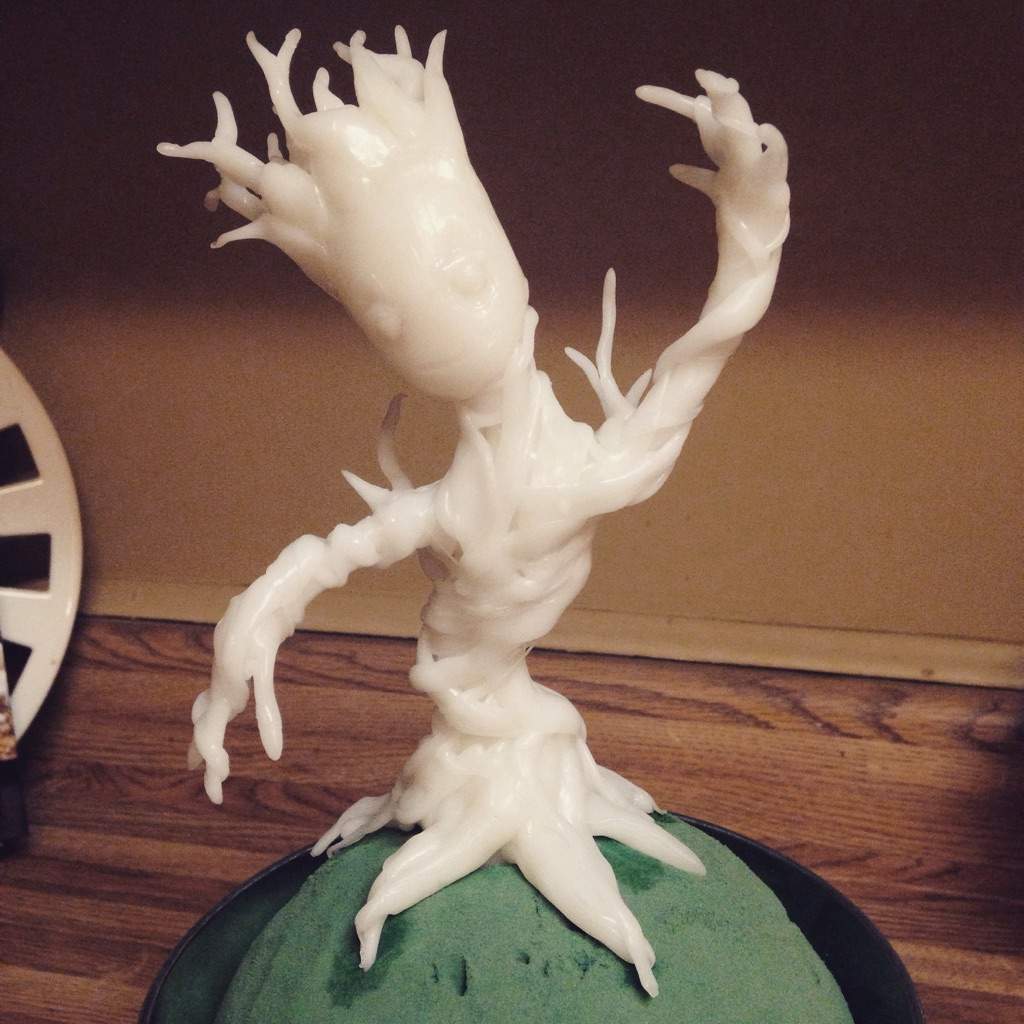
InstaMorph Groot Sculpture

Over the weekend, while watching youtube videos, I discovered the world of thermal plastic art! Worbla is sheet thermal plastic while InstaMorph (there are many other names for this) is pellet thermal plastic you heat in water and then mold. I started searching different applications of InstaMorph. It is used in a lot of Cosplay, but also for basic utilities for fixing mechanical devices that are broken.

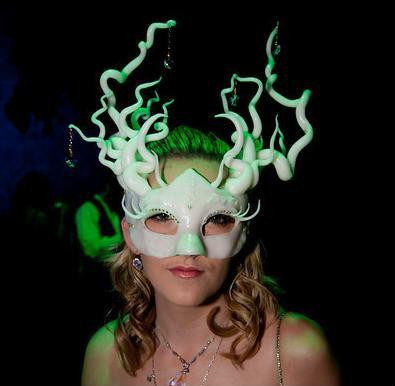
InstaMorph Cosplay Mask

I wasn’t sure how feasible it would be to use it as a medium at first, but then I saw a finger splint that looks like an alpha helix! The different components, when shaped, can be reformed if more hot water is added. For my project, I will make the different secondary structure components separately, then I will reheat then to create the tertiary structure.

The medium has also made me reconsider my protein choice. Doing a transmembrane protein that is very complex will be very hard to scale correctly.

Posted in 2016 posts, Student posts | Leave a comment

McGill and Johnson interviewed by David Goodsell

“Images of molecules are becoming more and more common in educational and entertainment media. These pictures are often created by computer graphics artists using state-of-the-art programs such as Maya and Cinema4D. However, the methods used to import PDB structures into these advanced programs can be challenging. David Goodsell recently spoke with two molecular graphics professionals to see what is available and what still needs to be done.”

Very cool.  Three protein artists discussing their artistic techniques as well as the creative motivations and economic opportunities that have brought them to their current and growing mastery of the artform.  To read the full interview click Interview at PDB 101!

Posted in 2016 posts | Leave a comment

The waltz

Let’s look some more at the art and science of protein translation:

ribosome_gif_by_sarinasunbeam-d967sfa.png


BZZlNs3IgAAwNK1


The waltz of polypeptides

Ribosome-61111982000px-Ribosome_mRNA_translation_en.svg


MoM ribosomeMy Description

 
rRNA sketch


Posted in 2016 posts | Leave a comment

Insulin depiction by Dorothy Hodgkin

http://www.margaretalmon.com/wp-content/uploads/6a0105362f4359970b0120a859270a970b.png


This is a color diagram showing the crystal structure of insulin as depicted by Dorothy Hodgkin, the woman we talked about in class Wednesday. I love how much it looks like a true artwork.

Click to go to Margaret Almon's mosaic blog. Beautiful!

Click to go to Margaret Almon’s glass mosaic web blog where she comments on “Art in the Atoms”. Beautiful!

Posted in 2016 posts, Student posts | 1 Comment

Agar Art

Agar ArtAgarArt_ThankYou1

I have attached a few pictures from Agar Art events I helped organize this year through the Department of Microbiology (inspired by the ASM Agar Art Contest). I wanted to share them because I think it’s a really cool and unique way to combine art and science to create something amazing. The images were used to create greeting cards and the Microbiology Student Association might use them to make coasters.


Posted in 2016 posts, Student posts | Leave a comment

Polymer Clay

I thought this technique might be something some of you may like to try. Could be turned into something wearable such as earrings 😉

Posted in 2016 posts, Student posts | Leave a comment

Using Protein Shapes as Outlines

Here’s an interesting idea that people may want to consider. Rather than focus specifically on the protein and its function, we could instead find shapes in the protein structure  and use them to create drawings of things important in our lives, such as family or hobbies. Here is a blog showcasing what I mean.

https://maykayart.wordpress.com/

Posted in 2016 posts, Student posts | Leave a comment

Beauty of Microscopy Blog

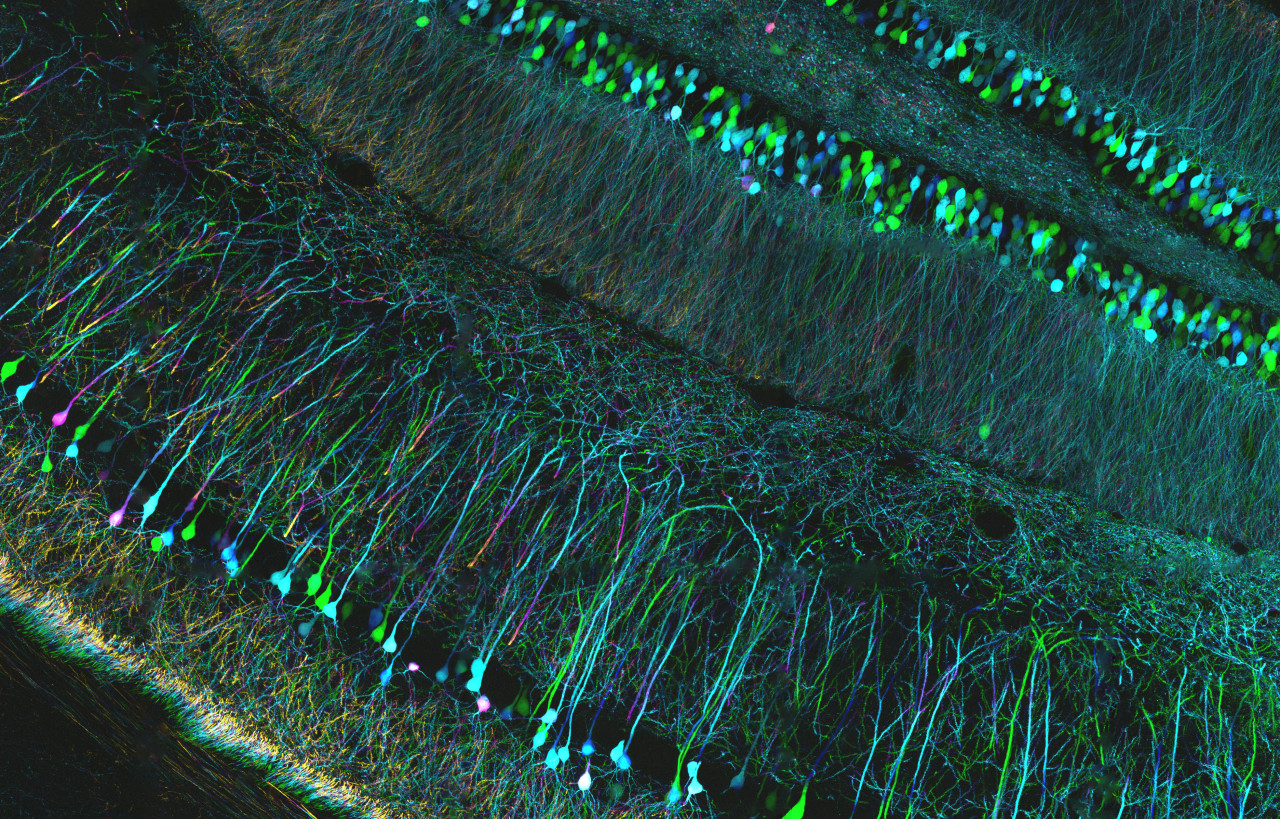
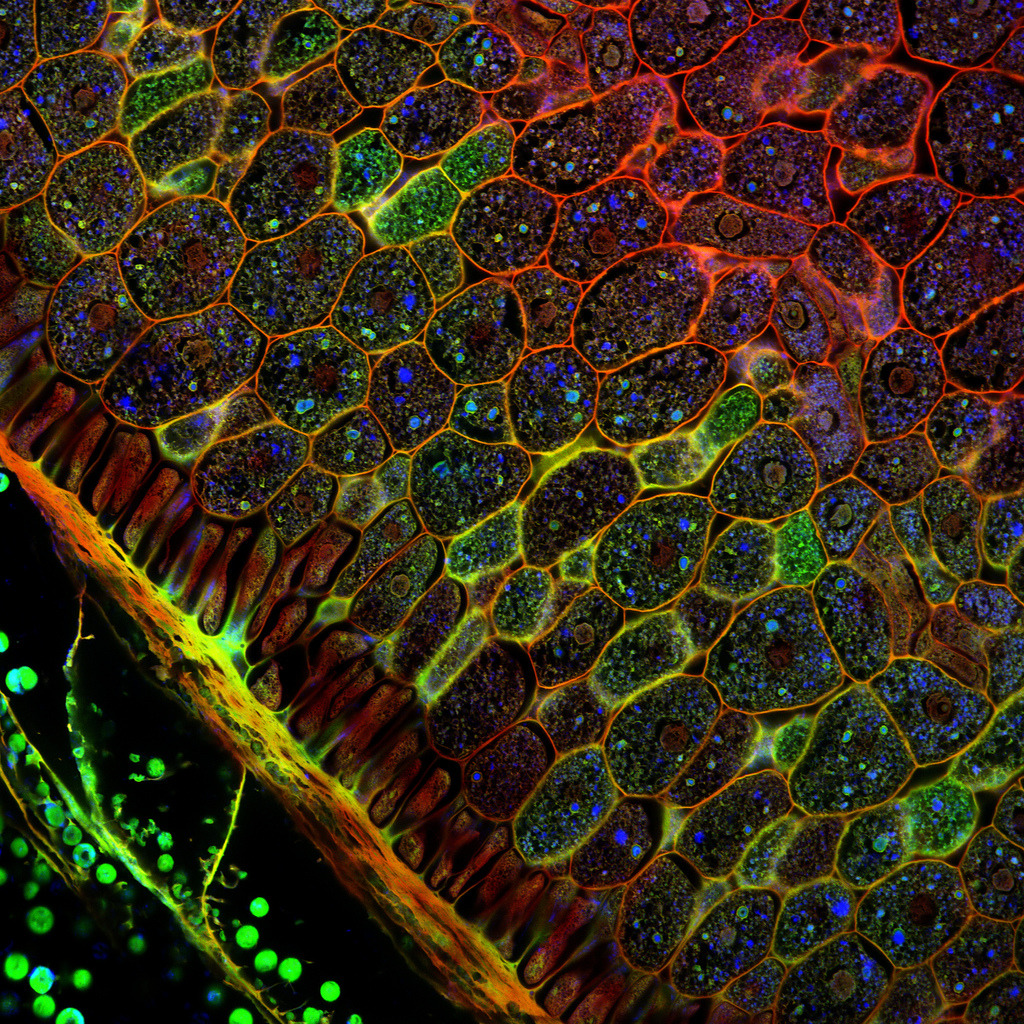
From ZEISS Microscopy, “Confocal microscopy of mouse brain, detail” “Depth coded projection (colour) image of mouse hippocampus sections of thy1-GFP line. Stained with GFP and imaged with ZEISS ELYRA PS.1 with LSM 780 confocal option. Tiling & stitching with ZEN software generates hi-res confocal maps, make sure to download in full resolution and zoom in. Sample courtesy of Yi Zuo, Molecular, Cell and Developmental Biology (MCDB) Department, University of California Santa Cruz. www.zeiss.com/elyra”

Mouse Hippocampus sections of thy1-GFP line

I discovered a blog called the Beauty of Microscopy a while back when I wanted to find a cool science wallpaper for my computer. There are some really great images of microscopic perspectives.

natureofnature:

Confocal microscopy of plant tissues

Confocal microscopy of plant tissue

i-heart-histo:

Have A Very Micro Christmas!
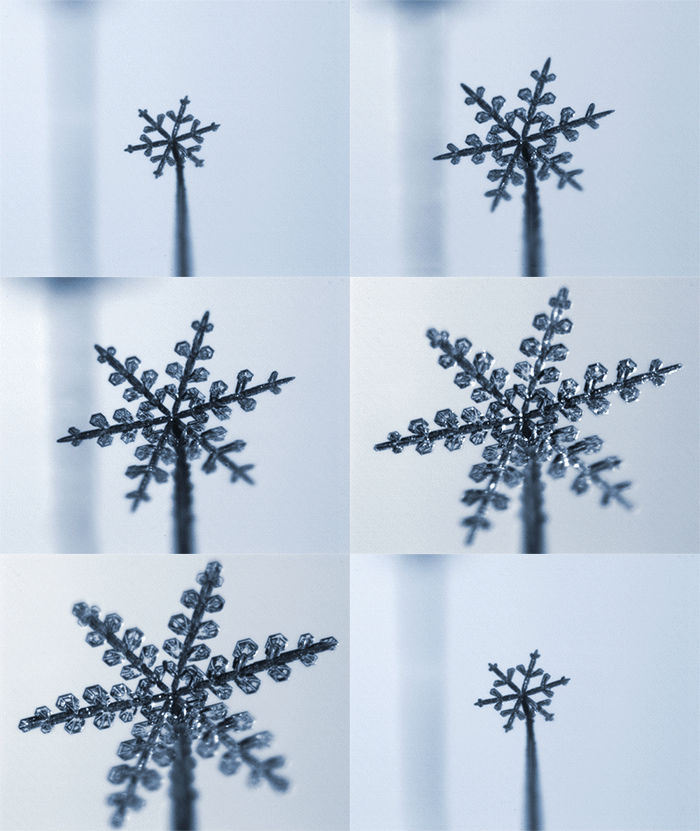
A growing snowflake by Kenneth Libbrecht
i-h-h

Growing Snowflake

Posted in 2016 posts, Student posts | Leave a comment

Can the class see this post?

I believe tomorrow is 4/20/2016

Posted in 2016 posts, Student posts | Leave a comment

Inspiration: art that depict symmetric/circular structures

http://www.thisiscolossal.com/2016/01/hypnotic-new-kinetic-sculptures-by-anthony-howe/

Since there are so many people who like circular protein structures in this class, I thought I would share this link with y’all! Check out some mesmerizing kinetic sculptures designed and made by Anthony Howe. Although his work is not inspired by protein structures, I feel like he is inspired by objects that are symmetric and intricate, like some of the proteins we have seen. Also, going along with the idea of art that portrays the function of a protein, I think that if he were to create kinetic sculptures based off of protein structures, he could use his art to theorize the movements/change in configurations that enable proteins to function!

Posted in 2016 posts, Student posts | Leave a comment

For the Crocheters and Knitters

Check out these crocheted structures: http://jpolka.blogspot.com/

Posted in 2016 posts, Student posts | Leave a comment

The Best Scientific Image Of The Year Was A Hand-Painted Watercolor of Ebola Virus by David Goodsell

Check it out!

Posted in 2016 posts, Student posts | Leave a comment

Boyer’s early portrait (model) of ATPsynthase

http://www.jbc.org/content/277/42/39045

F2.medium

This is a portrait of ATP synthase, circa 1979.  Circular motion was not an intrinsic requirement for this model, but the picture compels us to imagine a pinwheel-like motion relative to the central axis, does it not?

Posted in 2016 posts | Leave a comment

Mondrian in Cake Form

At the San Francisco Museum of Modern Art, you can buy cakes and other desserts in the cafe that are inspired by works of art in the museum. Seeing as we talked about Piet Mondrian, and how his paintings look like aperiodic crystals, I thought I would share his work in cake form.

Mondrian cake by Caitlin Freeman at SFMOMA. Photo by Charlie Villyard.

Mondrian cake by Caitlin Freeman at SFMOMA. Photo by Charlie Villyard.

Here’s an article about the chef who created this cake, as well as multiple other art-themed desserts: http://openspace.sfmoma.org/2010/05/collection-rotation18/.

Art, cake, potential physics of life- what more could you want in a dessert?

-Lauren Pittis

Posted in Student posts | Leave a comment

Example post. X marks the spot

K.Sharpton chromosome

This is an example post.

This is also a great example of an artist’s view of a chromosome! Krista Shapton is the artist.  Her work can be found at kshapton.com

Posted in Student posts | Leave a comment

A Protein Progression

Just a small update on my project. I just powered through 4 leaves and 1 petal of Rubisco, and it’s not taking as long as I thought, which is awesome! Hopefully I can power through another 7 and assemble it before Wednesday, but so far so good!

get-attachment

Posted in Student posts | Leave a comment

Progress on work

Hello!

Sorry it’s been so long…

I recently thought about my project again, and I realized that I didn’t like the leaf idea so much. I’m leaning toward the idea of “5 hot dogs”, as I described in class! So, on I’ll wrap the alpha helices with candy wrappers or junk food wrappers in general. I sketched the protein structure, as the full protein is not available on PDB, I found a paper that gave a detailed structure of the 7TM protein and where THC binds. I drew this as a basis for what I will use in my 3D structure.

Protein Sketch


Good luck!

Bo

Posted in Student posts | Leave a comment

Prion Protein Portrait Concept Idea

Hey guys,

I’ve been thinking lately on how to portray prions in an artistic way. One thing I thought of was origami. Origami is something that I’ve been into for a while, and I think it represents prions well. It’s taking a piece of paper (normal protein) and folding it into a new shape (Prion). I have also heard that prions can come together to form larger structures. In origami, there are pieces that you can make that can come together as shown in the picture below. What do you guys think?

Origami

Posted in Student posts | Leave a comment

A Little Late to the Protein Party…

Hey everybody!

Thanks to my wonderful friend, Irena, this account will now have multiple personalities.

So for this post, I’m Michael, and after weeks of many difficulties, I think I finally found a protein!

Rubisco (ribulose bisphosphate carboxylase/oxygenase)!

Fullscreen capture 542014 114724 PM.bmp

A lot of my classes have dealt with the carbon cycle, so I’m pretty interested in Rubisco’s role in converting inorganic carbon dioxide into organic carbon through carbon fixation. This process happens REALLY SLOW, making it the most abundant single enzyme on Earth to compensate its inefficiency. I also found this article of some scientists looking increase Rubisco’s carbon dioxide conversion rate so that plants are more efficient at sequestering carbon dioxide in the atmosphere.


Posted in Student posts | Leave a comment

Collagen Pics

I found these pictures of collagen on google..I am still thinking this is the protein I want to represent but still not sure how. I think I still need to get a better sense for the collagen structure itself, because I do not think these pictures do much justice. I need to download that app onto my iPad! Here is what I found on google..

1K6F_Crystal_Structure_Of_The_Collagen_Triple_Helix_Model_Pro-_Pro-Gly103_05 1bkv_collagen_02

Posted in Student posts | Leave a comment

Chosen Idea for Project

After much thought, I decided to choose cannabinoid receptor-1 (CR1). I was inspired by a nature artist named Andy Goldsworthy, who I believe many of you may know. He created many nature pieces, often dealing with rocks, leaves, and branches. With CR1, I felt it may be suitable to use nature products, such as leaves. As the protein structure includes several alpha helices, it is likely that the base will be metal wire.

andy_goldsworthy_maple_leaves_arrangement Andy-Goldsworthy-Green-Leaves PP-Andy-Goldsworthy-Earth-Art-8

There are many studies that describe the presence of endogenous cannabinoid ligand (endocannabinoids) which activate CR1. Endocannabinoids may stimulate biological activities similar to that of plant-derived cannabinoids. The metal wire could represent endocannabinoids. Although they are not completely organic, they may represent humans, as they are a product of human construction. The leaves may wrap around the wire to represent the plant-derived ligand. In this way, the two are brought together to show that they can recognize the receptor and cause similar activities in the human body.

Posted in Student posts | Tagged , , | Leave a comment

Molecule ideas

Being a psychology major, I am interesting in proteins that affect human thought and behavior. Some common “psychological molecules” that I hear about in my psychology course are cortisol, adrenaline, oxytocin, estrogen and testosterone. This morning I have been looking a lot at dopamine. Dopamine is a neurotransmitter that play a part in many psychological conditions including depression and schizophrenia.


Dopamine-3d-CPK.png

Posted in Student posts | Leave a comment

Hello

I hope this works now..

Posted in Student posts | Leave a comment

Protein idea

Hello everyone!

I have been looking through the protein data bank and I’m interested in a few, but I think Myosin is particularly interesting as it is critical for any movement that you make! It was the Molecule of the Month June of 2001. What do you guys think??

Posted in Student posts | Leave a comment

Protein Ideas

Hello! Currently I’m looking at antifreeze proteins, also known as ice structuring proteins, which permit the survival of certain organisms, namely fish, plants, insects, and microorganisms, in subzero environments. I’m very interested in extremophiles and their abilities to survive in environments once thought to be uninhabitable, so I’ll be looking more into the AFPs at work in the microorganisms living in sea ice. These proteins bind to small ice crystals to inhibit growth and crystallization, so I think I may be able to work with that from an artistic standpoint.

Posted in Student posts | Leave a comment

Protein Idea

I choose RecA. In MB 310, I learned about RecA and its role in DNA repair. It’s also listed as the molecule of the month (April 2014) on RCSB PDB.

Posted in Student posts | Leave a comment

Protein ideas!

Hello!

I have a few ideas in mind…but I’m not certain which protein I should choose.

There are two proteins that are actually in David Goodsell’s “Molecule of the Month”!

One is prolactin (April 2004), a growth hormone present in children and adults. In female adults, the hormone is secreted to stimulate the mammary glands for milk production. Interestingly, this hormone is also secreted in males. Now, why would it be required for men? I’m not sure there are any studies that actually point out the function of this hormone in males, but it has been suggested to play a role in sexual latency.

Prolactin

The other is luciferase (June 2006)! I think many of you know of the anglerfish, a fish that has a little light in front of their head to lure prey, like Marlin and Dory from “Finding Nemo”. Interestingly, the light is actually produced from marine bacteria, such as Vibrio harveyi. Now, to produce luciferase, the bacteria use a strategy called quorum sensing. This is a way for the bacteria to communicate, so once they reach a certain cell density, they’ll all work together to glow by producing this protein.

converted PNM file

Lastly, the protein that I may want to explore is Cannabinoid Receptor-1, a receptor present in the central nervous system to inhibit the release of an inhibitory neurotransmitter. I first read about this receptor in my physiology class, and I’ll use the example my professor provided to explain it. Let’s say you’re craving tacos. Your brain will release an excitatory neurotransmitter to another neuron. However, your body will also release an inhibitory neurotransmitter to the same neuron, thus inhibiting the excitatory signal (your body says, no tacos!). When you’re exposed to a molecule such as THC, THC will bind to the Cannabinoid Receptor-1 and prevent the release of the inhibitory neurotransmitter, thus allowing the excitatory signal to continue (eat those tacos!).

Cannabinoid Receptor

Posted in Student posts | Leave a comment

Protein Idea

Hi All –

After some research, the protein that I seem to be gravitating towards is Ricin. I find it interesting how lethal this protein is and think it would be fun to find a creative way to depict how powerful and destructive it can be. Any thoughts or suggestions? Thanks.

Posted in Student posts | 1 Comment