

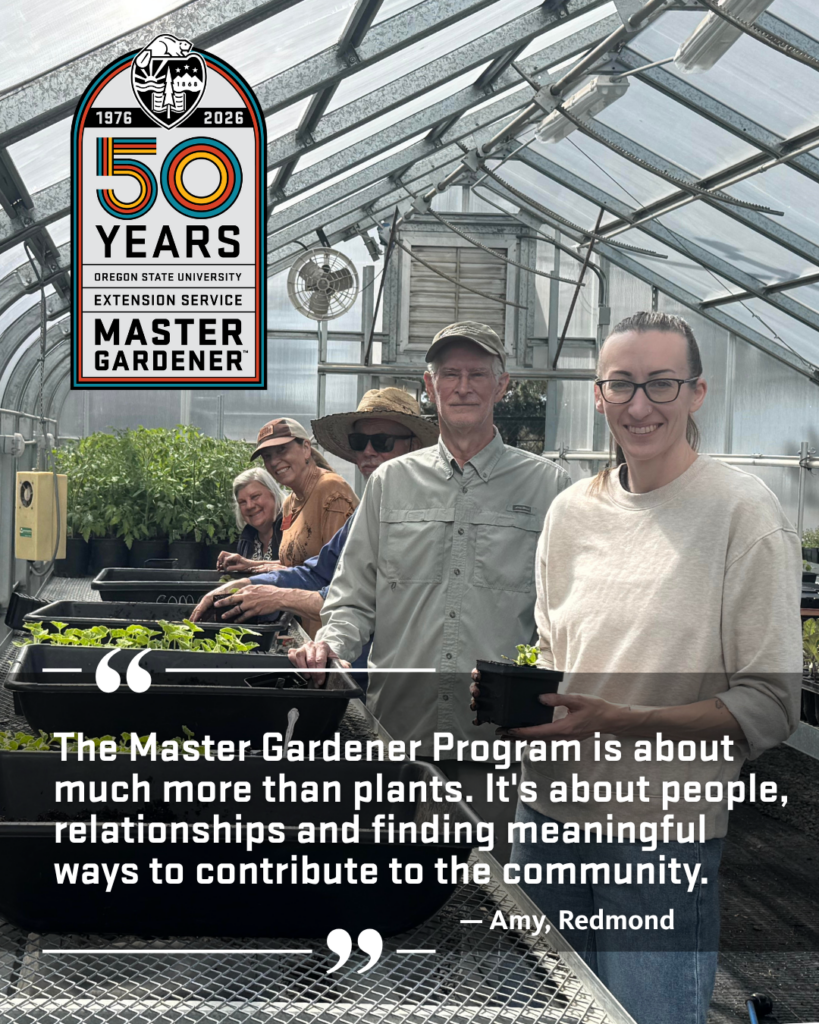
One of the reasons Amy Howes joined the Oregon State University Extension Master Gardener Program was to become more connected to the Central Oregon community while learning more about horticulture. What Amy didn’t expect was how quickly those connections would grow. In just a few months, the program has opened doors to new friendships, mentors and opportunities to serve, reinforcing that being a Master Gardener volunteer is about much more than plants. It’s about building stronger communities through shared knowledge, relationships and a love of gardening.
Finding community through gardening
“I am incredibly grateful for the opportunity to be part of the 2026 Deschutes County Master Gardener trainee cohort,” Amy said. “One of the reasons I joined the program was to become more connected to my community while deepening my horticultural knowledge, and I never imagined how quickly those connections would begin to grow.”
In just a few short months, Amy has met educators, horticulturists, volunteers, nursery professionals and community leaders who all share a common goal of helping Central Oregon become a healthier, more resilient and more connected place.
“What has been especially rewarding is seeing how willing people are to share their knowledge, experience and enthusiasm with others,” Amy said.
That spirit of collaboration has already led to opportunities Amy never expected, including becoming involved with the High Desert Horticultural Center and learning more about its vision for expanding horticultural education and creating a future native botanic garden in Central Oregon.
“The experience has reinforced something I suspected when I applied: that the Master Gardener Program is about much more than plants,” Amy said. “It’s about people, relationships and finding meaningful ways to contribute to the community.”
Creating opportunities to connect
Amy says the program has expanded the sense of what’s possible.
“I joined hoping to learn more about gardening, but I have also found mentorship, inspiration and new opportunities to serve,” Amy said. “The connections I’ve made through the Master Gardener Program are already opening doors I never expected, and I’m excited to see where those relationships lead.”
Why Master Gardener volunteers matter
Amy believes the need for Master Gardener volunteers continues to grow because people are looking for meaningful ways to connect—with nature, their communities and one another.
“We live in a world where so much of our time is spent indoors and online, yet some of the most meaningful learning still happens when people get outside, get their hands in the soil and share knowledge with others,” Amy said.
Whether answering questions at a plant clinic, supporting a demonstration garden, teaching a class or simply talking with a neighbor, Master Gardener volunteers help make research-based horticultural knowledge more accessible while encouraging stewardship of the places people call home.
“Small actions, multiplied across a community, can have a remarkable impact.”
Share your story
We’d also love to hear from you.
Whether you are currently volunteering or were part of the Master Gardener Program in the past, your story matters. What has this program meant to you? What are you proud of? How has gardening, volunteering or being part of this community shaped your life?
Share your Master Gardener story with us. beav.es/mgstory