

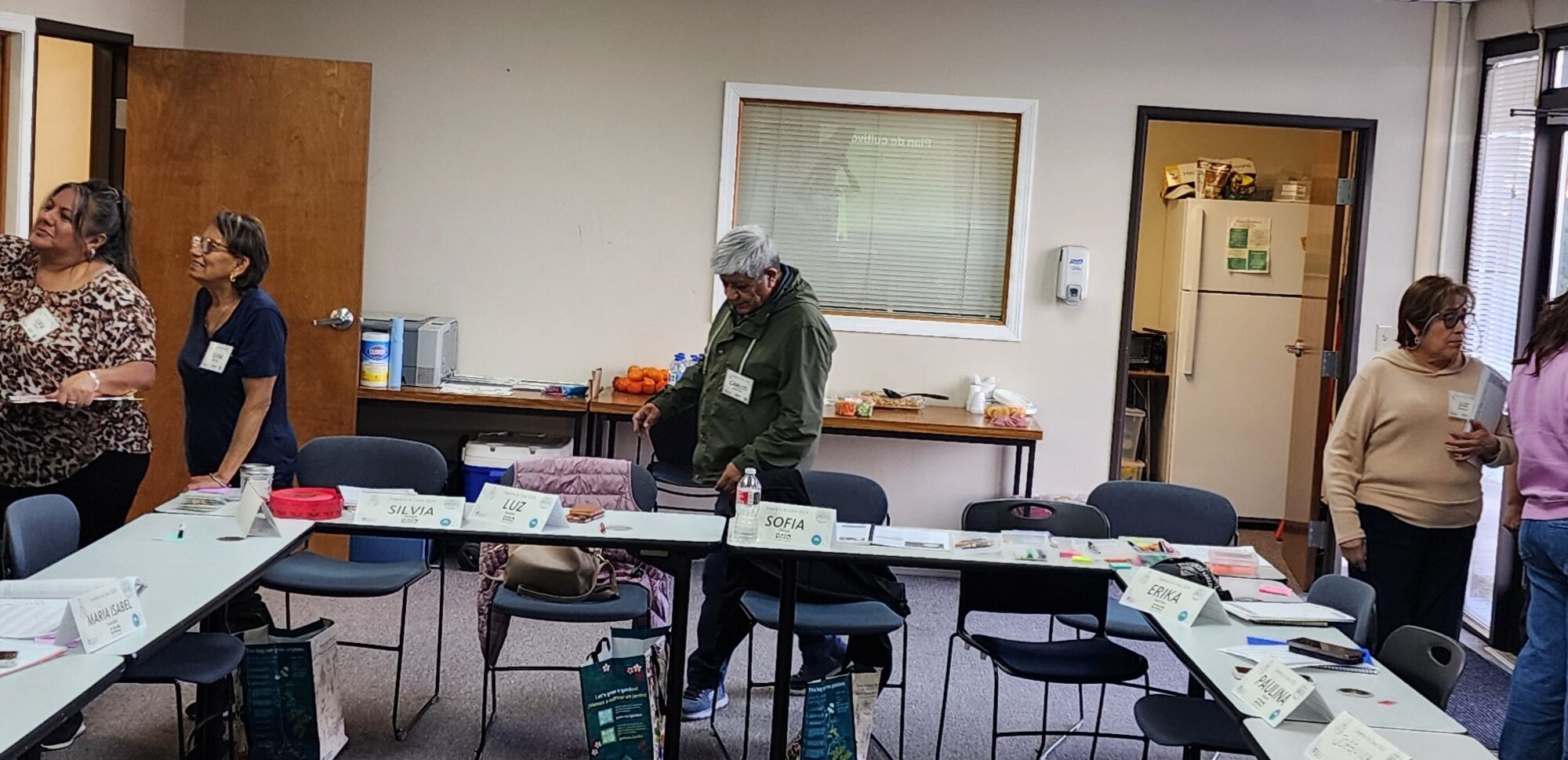
Across Oregon, something powerful is happening in gardens, classrooms and community spaces.
The Oregon State University Extension Master Gardener Seed to Supper program continues to grow — not just in numbers, but in depth, reach and impact. In 2026, the program is evolving in meaningful ways, while staying rooted in its purpose: helping people who are food insecure learn to grow and prepare their own food.
And this year, that work feels especially alive.
What’s new in 2026
This year marks an important step forward for Seed to Supper, with new tools and content designed to make learning more accessible, engaging and relevant.
A new activity library is now available to instructors statewide — something the program has never had before. Each session now includes multiple hands-on activities, contributed by facilitators and coordinators and informed by national resources. These activities are helping bring adult learning to life in new ways.
In response to participant feedback, a new container gardening component has also been introduced. This addition reflects a key reality: not everyone has access to land. Container gardening opens the door for more people to grow food in small spaces, making the program more inclusive and practical.
At the same time, a fully updated curriculum has been developed and is currently going through peer review — ensuring the program continues to be grounded in research-based, high-quality education.
And while these updates are being rolled out, classes across the state are already putting them into action.
Umatilla County: building connection through culture and community
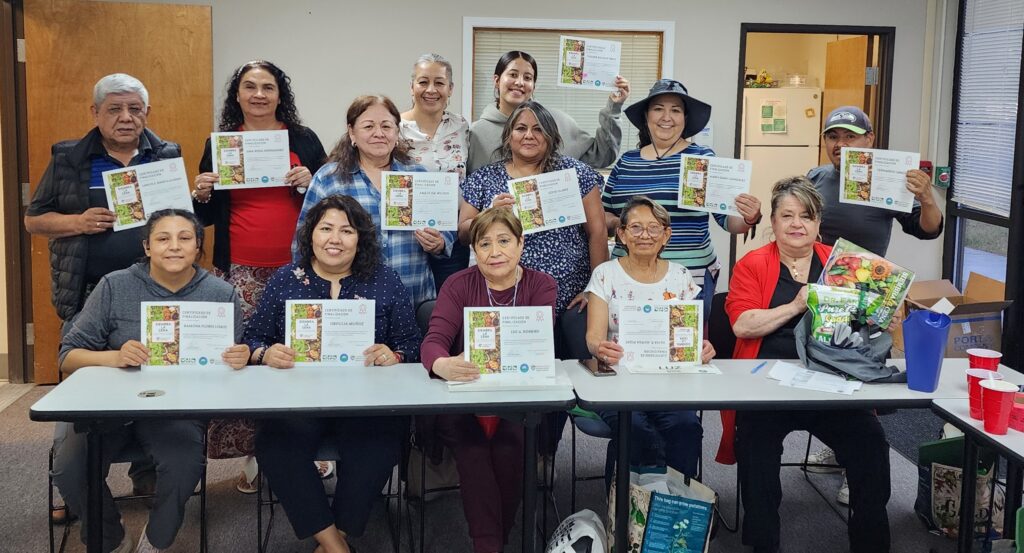
In Umatilla County, Seed to Supper reached an important milestone this year: the first Spanish-language class offered in the region.
Facilitated by volunteer Rocio Arias Hansen, the class brought together 17 participants, with 15 completing the program. Participants ranged in age from 19 to over 70 and traveled from Hermiston, Umatilla and the Tri-Cities area.
“All participants were Hispanic,” Rocio shared. “And yes, this is the first time this course has been offered in Spanish through our Eastern region.”
The program was deeply rooted in partnership. The Migrant Education Program and the Northwest Center for Alternatives to Pesticides provided classroom space, helped recruit participants and contributed food and raffle prizes.
“I am very grateful for their unconditional support,” Rocio said.
“Our culture deeply values gathering and spending time together — this is about more than gardening.”
—Rocio Aria Hansen
The response from participants was clear: they wanted more.
“They would like more hours to cover the topics in greater depth, more hands-on classes, and additional trainings like this one,” she said. “There were also many messages of appreciation for the program and for the opportunity to learn.”
But what stood out most was what happened beyond the classroom.
“To maintain the group’s enthusiasm, I reached out to the community garden coordinator to request space where participants can continue meeting,” Rocio explained. “Starting after the second week of May, we will meet once a week to check on our plants.”
She added, “Our culture deeply values gathering and spending time together, and this will be a great opportunity to strengthen that sense of connection and foster unity within the group.”
For Rocio, the experience was transformative.
“I believe this is just the beginning of something very important for our Hispanic community. They clearly demonstrated both interest and need, which motivates me to continue this work.”
Jackson County: meeting people where they are
In Jackson County, the program is taking place in a very different setting — but with the same core purpose.
Classes are being held at Rogue Retreat sites, including The Crossings, serving people who are experiencing homelessness or housing insecurity and working toward stability.
Facilitator and Master Gardener Program Coordinator Grace Florjancic described the environment as one of support and rebuilding: “People are working to reconnect with family, find jobs and secure housing. This class becomes part of that journey.”
The program is designed with intention, adapting to the realities of participants’ lives.
For example, lessons include recipes that don’t require cooking — recognizing that not everyone has access to a kitchen.
“They’re really interested in things like microgreens and sprouts,” Grace said. “And we’re focusing on foods that are fresh, simple and accessible.”
“This class becomes part of people’s journey toward stability.”
—Grace Florjancic
Each session includes shared meals, often using Food Hero recipes, creating space for conversation and connection alongside learning.
The physical space also supports hands-on learning, with raised garden beds, classroom areas and even an outdoor kitchen.
“It’s nice that with the great structure of the program, it’s also customizable to what the class may be most interested in, or specific to their needs,” Grace said.
Participants are actively engaged — planting peas and spinach, exploring soil and composting, and building knowledge they can use right away.
“We’ve got an excited crew,” she said.
Josephine County: responding to need with creativity and scale
In Josephine County, demand for Seed to Supper exceeded expectations.
“We shot for a class of 18, but we got 31 — not counting the kids,” shared facilitator and Master Gardener volunteer Isaiah Davidson. “We have about 35 people total.”
Recruitment was intentional and direct.
“I got in my truck one day and brainstormed: housing services, food access points, women’s shelters, check cashing places — where do people go who need this?” he said.
The result was a diverse group of participants, many connected through social services or court-mandated programs.
And the response?
“Everybody loves it.”
The program has been supported by strong community partnerships, including donations from local businesses providing compost, materials and plant starts.
Participants who didn’t have space to garden were given access to raised beds, including newly renovated community garden plots.
“We took a community garden that needed help and created space for students to grow,” Isaiah explained.
“We asked: where do people go who need this? And we went there.”
–Isaiah Davidson
The impact doesn’t stop when the classes end.
“We’ll be there all summer,” he said. “Showing up once a week so people can ask questions and keep learning.”
For Isaiah, who completed Master Gardener training in 2023, the experience has been deeply personal.
“It’s been a learning experience — I’ve never done this before. But as the weeks go on, I get better.”
And the need is clear.
“We’re looking at running it twice a year, based on the demand.”
Columbia County: expanding access and growing participation
In Columbia County, a simple shift led to the biggest Seed to Supper turnout the program has ever seen.
Master Gardener coordinator Janhvi Pandey and her team have long focused on making the program accessible by offering classes in five locations — St. Helens, Scappoose, Vernonia, Rainier and Clatskanie — reducing the need for participants to travel long distances.
“The goal is simple: make the program easy to access by bringing it closer to where people live,” Janhvi shared.
This year, they made one key change. Instead of separate flyers and registrations for each site, Janhvi created a single, combined flyer with all class schedules and one registration link.
“I did it just to streamline everything,” she said. “But it turned out to be a big hit.”
The result was their highest participation ever — 79 registrations, far exceeding expectations.
Participants were also given flexibility to attend sessions at different locations if needed, making it easier to stay engaged throughout the course.
Strong partnerships continue to be at the heart of the program. This year, collaborations included local food banks in St. Helens and Rainier, the Scappoose Public Library, Clatskanie Farmer Collective, Community Action Team and local churches. These partnerships helped reach more people and provide additional support, including gardening supplies, plant sale coupons and a class from Certified Master Food Preservers on how to use and preserve what participants grow.
Feedback from participants has been overwhelmingly positive.
“They made it feel like I can do it,” one participant shared.
Others described the course as “easy to understand and follow along — even with literally no experience,” and appreciated the practical handouts and resources that made gardening feel achievable. Across evaluations, participants reported increased confidence and a strong intention to grow their own food.
“The class didn’t want it to end — so we extended it.”
—Janhvi Pandey
At each site, hands-on learning has been a highlight.
In St. Helens, participants have been germinating seeds and tending early crops — including a surprising success with strawberries.
“Strawberries can be difficult from seed, so I warned the class we might not see success,” the facilitator said. “But here we are.”
In Rainier, participants didn’t want the program to end after six weeks.
“The class didn’t want it to end,” the facilitator shared. “So we extended it by two additional weeks to spend more time in the garden.”
For Janhvi, these moments reflect what makes Seed to Supper so impactful: removing barriers, meeting people where they are, and building confidence through shared learning.
This year’s changes made the program more connected, more flexible and more accessible — and the response from the community shows just how much that matters.
Growing more than food
Across all of these stories, a few things stand out.
Seed to Supper is not just a gardening program.
It is:
• a bridge to community
• a response to real, immediate needs
• a space for learning, connection and dignity
• a way to share knowledge that can change daily life
It is also a program shaped by the people who lead it — volunteers, staff and partners who are deeply committed to meeting communities where they are.
And in 2026, with new tools, expanded content and growing partnerships, that impact is only increasing.
As Rocio said, “This is just the beginning.”