In this plant of the week, we are highlighting the Western columbine, or Aquilegia formosa. This perennial flower is native to the western part of North America, with occurrences in the western U.S. and throughout Canada and Alaska (1, 2). A welcome sight in Oregon gardens, A. formosa invites novice and experienced gardeners with its low maintenance nature. It does best in partial shade with moist soil and can tolerate the dry Oregon summers with extra watering (35). Anecdotally, however, Anna Perry does not water her A. formosa in her garden or at the A. formosa hedgerow at OSU’s urban farm and finds that they thrive without added watering. You can read more about Anna’s masters research on their most recent blog post, “Science Behind the Scenes: Searching for Microplastics in Garden Soils.”
There were prominent medicinal applications of A. formosa throughout North America prior to colonization, including its use in treating coughs, sore throats, stomach aches, lice, and dizziness. Such medicinal properties come from the cyanogenic glycosides found throughout the entire plant of A. formosa, but if not prepared properly, can be poisonous (2). The cyanogenic glycosides are highly concentrated in the roots, seeds, and leaves, and the plant structure can be seen in image 2 (4). You can read more about the medicinal applications of A. formosa in one of our past blog posts, titled “Ethnobotany of Oregon Wildflowers.”
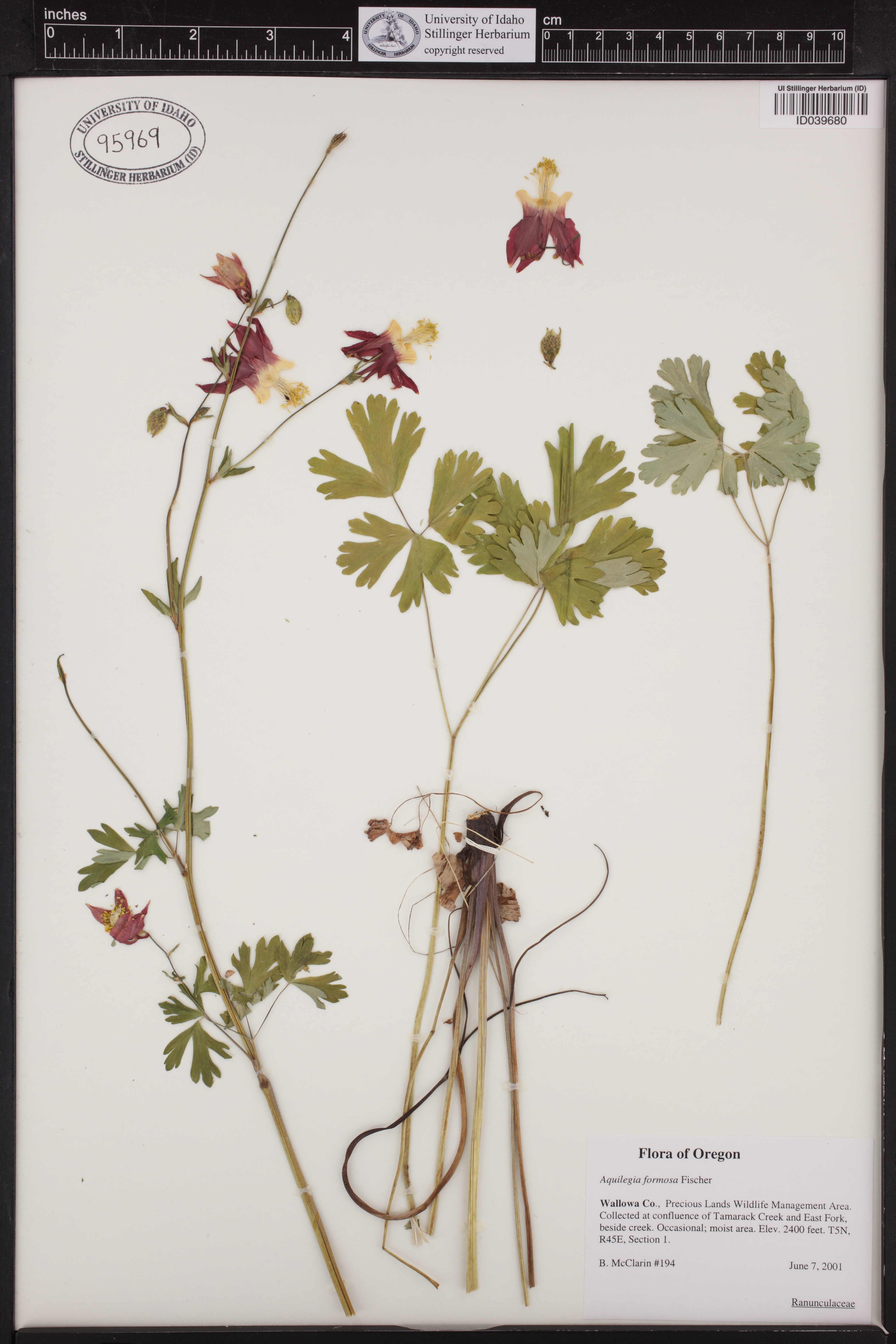
Image 1: Herbarium specimen of A. formosa, which shows all parts of the plant (5).
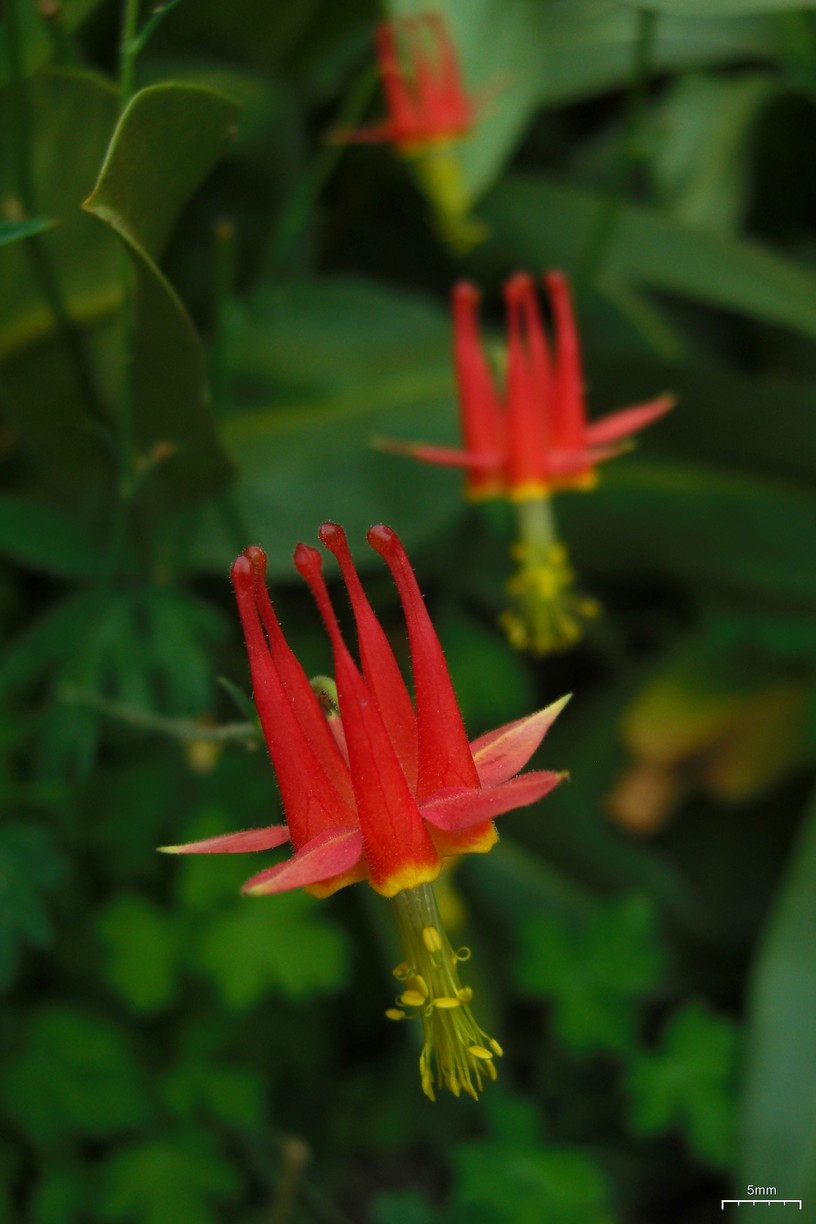
This curious plant is a favorite source of nectar for butterflies and hummingbirds, who use their long mouth parts to collect nectar from A. formosa’s spurs (3). We can see that the spur is a modified petal in the below image of an Aquilegia flower. Though butterflies and hummingbirds have a strong preference to A. formosa, one of our past graduates, Dr. Aaron Anderson found some association between the sweat bee, Lasioglossum olympiae, with A. formosa (6).
Aquilegia formosa was also included in Dr. Jen Hayes’ research, which you can read more about in her blog post titled “Announcing the Publication of Seven New Garden Ecology Lab Briefs” or on our “For Gardeners” page on our Garden Ecology Lab website. Dr. Hayes found that the native cultivar (nativar), “XeraTones,” of A. formosa had fewer visitations by pollinators than the native plant. It should be noted, however, that Dr. Hayes found that A. formosa and its nativar had the lowest abundance and richness of wild bees compared to other native plants in her study. On the topic of A. formosa cultivars, the Aquilegia’s are notorious for producing hybrids and can produce a variety of colors (7)!

Image 2: A labeled image of an Aquilegia flower. We are focusing on the spur, which is a modified petal where nectar is produced (8).
If you are looking to add a pop of color to your garden that attracts a variety of pollinators, but especially hummingbirds and butterflies, A. formosa is an excellent (and low maintenance) option. Though it already has a long blooming season, with bloom times between April and August, you can increase blooming events by deadheading (or removing) the spent flowers, which is demonstrated in Image 3 (7).
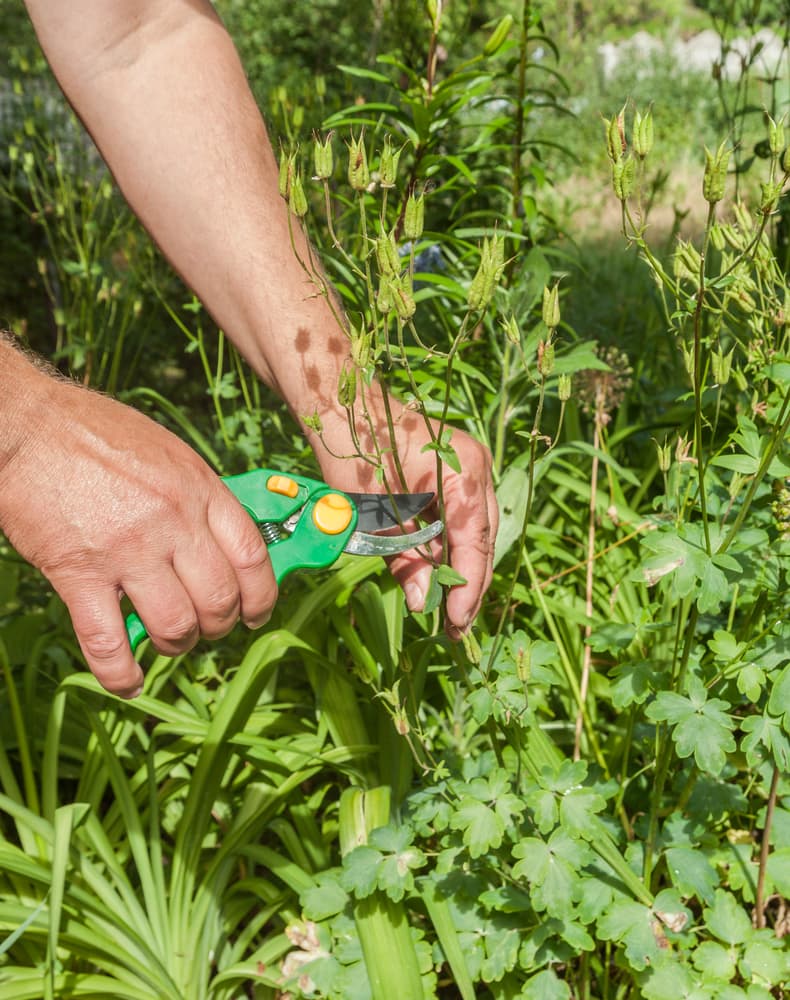
Image 3: A demonstration on how to deadhead A. formosa flowers that have already bloomed (9).
References:
- TWC Staff. (2023). Plant database: Aquilegia formosa. Wildflower Center. Accessed 1 December 2025 from: https://www.wildflower.org/plants/result.php?id_plant=aqfo
- Foster, S., & Hobbs, C. (2002). Peterson field guide to Western medicinal plants and herbs (pp. 155-156). Houghton Mifflin Harcourt Publishing
- Oregon Flora. (2025). Western columbine: Aquilegia formosa. Accessed 1 December 2025 from: https://oregonflora.org/taxa/garden.php?taxon=2835
- Eflora. (n.d.). Red columbine- Aquilegia formosa. Accessed 1 December 2025 from: https://eflora.neocities.org/Aquilegia%20formosa
- McClarin, B. (2001). University of Idaho, Stillinger herbarium (ID: 7c0dfa2b-397f-430d-8bda-d78a155cd968) [Image]. Oregon Flora. Accessed 1 December 2025 from: https://oregonflora.org/collections/individual/index.php?occid=3199884
- Bell, N., Langellotto, G, Messer, I, Best, L., & Hayes, J. (2023). Portland bee guide. Garden Ecology Lab. Accessed 1 December 2025 from: https://gardenecology.oregonstate.edu/sites/agscid7/files/gardenecology/portland_bee_guide_-_final.pdf
- Portland Nursery. (n.d.). Aquilegia: Columbine. Accessed 1 December 2025 from: https://www.portlandnursery.com/natives/aquilegia
- USDA. (2025). Aquilegia express: The columbine flower [Image]. Accessed 1 December 2025 from: https://www.fs.usda.gov/wildflowers/beauty/columbines/flower.shtml
- Skekhdar, K. (2024). Growing Aquilegia makes an excellent seeding plant in a shady garden [Image]. Horticulture Magazine. Accessed 1 December 2025 from: https://horticulture.co.uk/aquilegia/
Header Image: Hollinger, J. (2010). Aquilegia formosa- Western Columbine [Image]. Wikimedia Commons. Accessed 8 December 2025 from: https://upload.wikimedia.org/wikipedia/commons/d/d8/Western_Columbine_%284974246521%29.jpg