
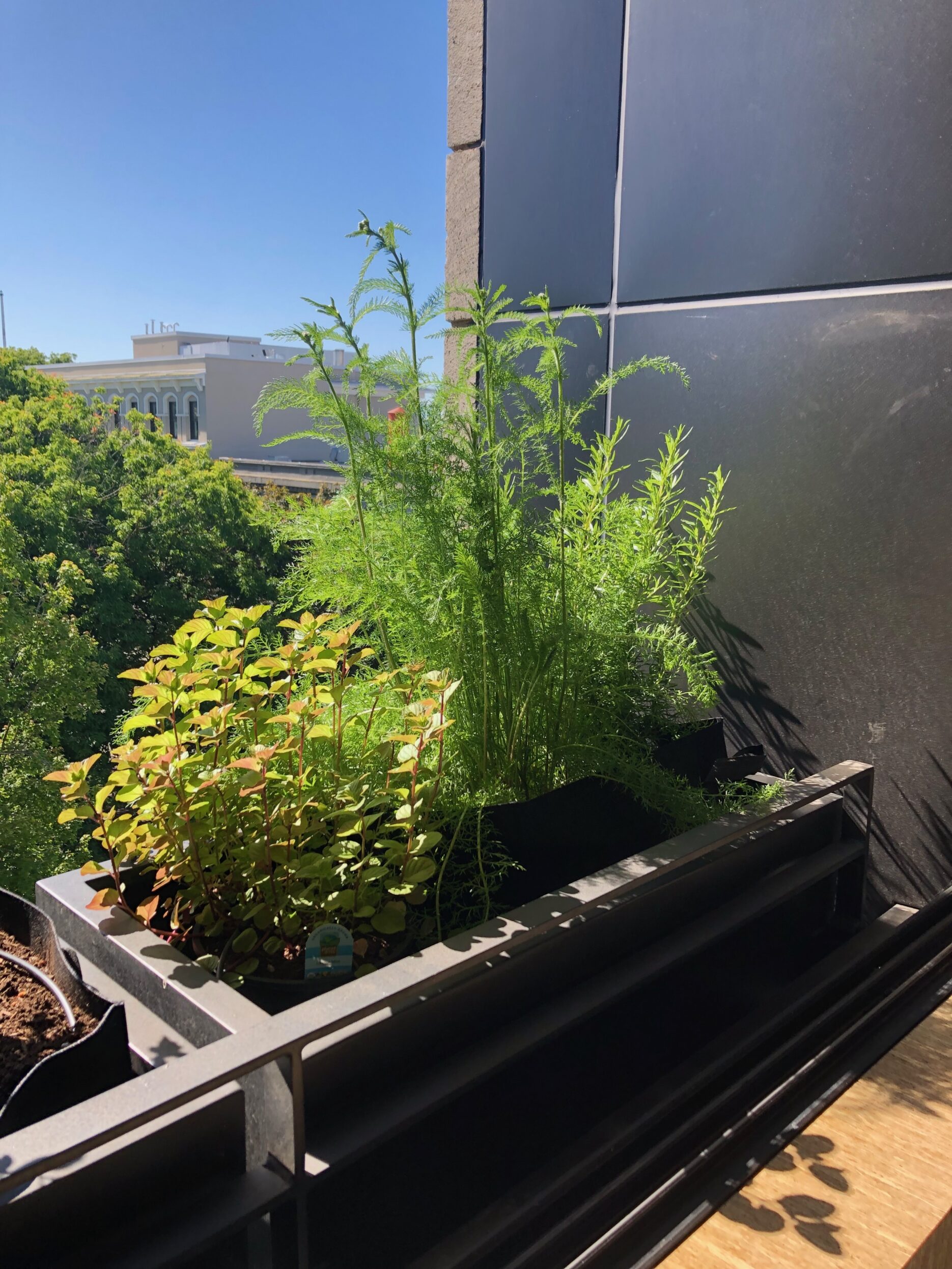
Hello gardeners! Anna here, I am so thrilled to be able to share with you some of the information gleaned from my undergraduate research. During the summer of 2024 I monitored environmental conditions along a 5th-floor building-integrated agricultural array (planter boxes) in downtown Portland. For this case study, I used a combination of commercially available sensors and data loggers, and custom-built data loggers of my own design. The sensors I used took readings on soil moisture, soil temperature, ambient air temperature, and relative humidity. Though this case study might not immediately seem relative to most gardeners, the planters I monitored have many similarities to a typical urban balcony garden.
Brief overview of the case study
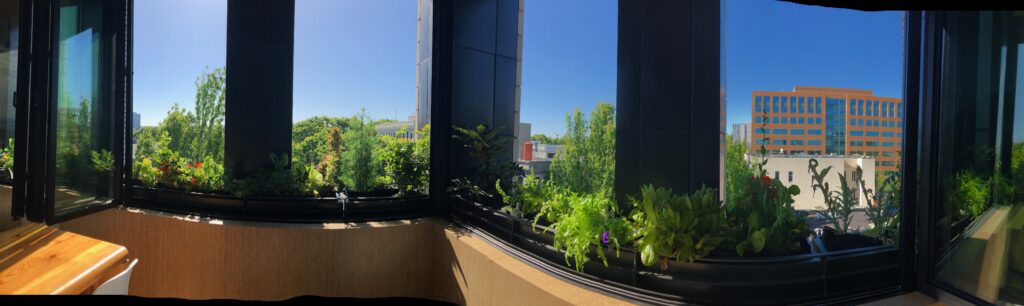
In this project I monitored environmental conditions (soil moisture and temperature, ambient air temperature and relative humidity) along a series of planters situated on the 5th-floor exterior of a building in downtown Portland, OR. The planters were situated on both the east and south faces of the building.
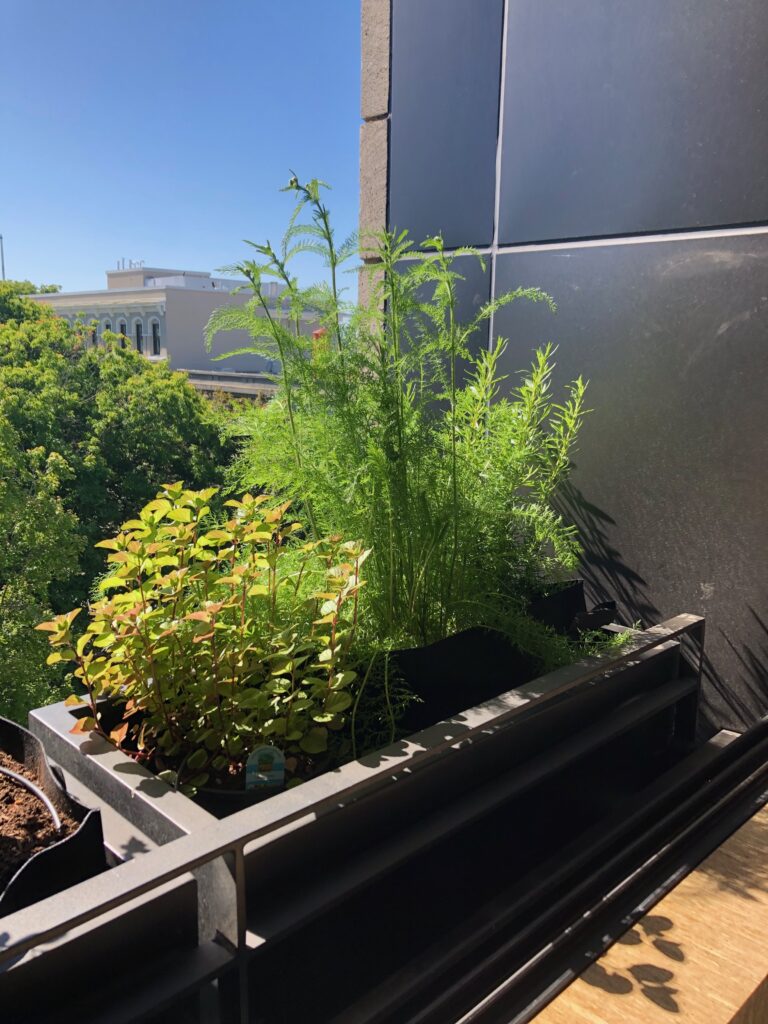
Based on the data I was able to collect from late July to early November 2024, certain trends became apparent. Most environmental conditions were fairly consistent, regardless of whether the sensors were located on the eastern or southern facing planters. Soil temperature was remarkably consistent across the board. Soil moisture varied across planters, but not in any particular pattern. This could have been due to variances in the placement of drip irrigation emitters, or something else. In terms of ambient air temperature and humidity, there were slight differences between the east and south faces of the array. Conditions on the south face were generally warmer, and slightly drier, than those on the east face.
Though there was not much variation in conditions on site, when compared to the conditions reported at nearby weather stations an interesting trend appeared, especially when looking at the daily temperature extremes (daily high and low temperatures). Daily low temperatures onsite didn’t seem to be much different from those reported at the nearby weather stations, but onsite daily high temperatures were generally higher than those reported elsewhere in Portland.
Considerations for balcony growing
The influence of aspect
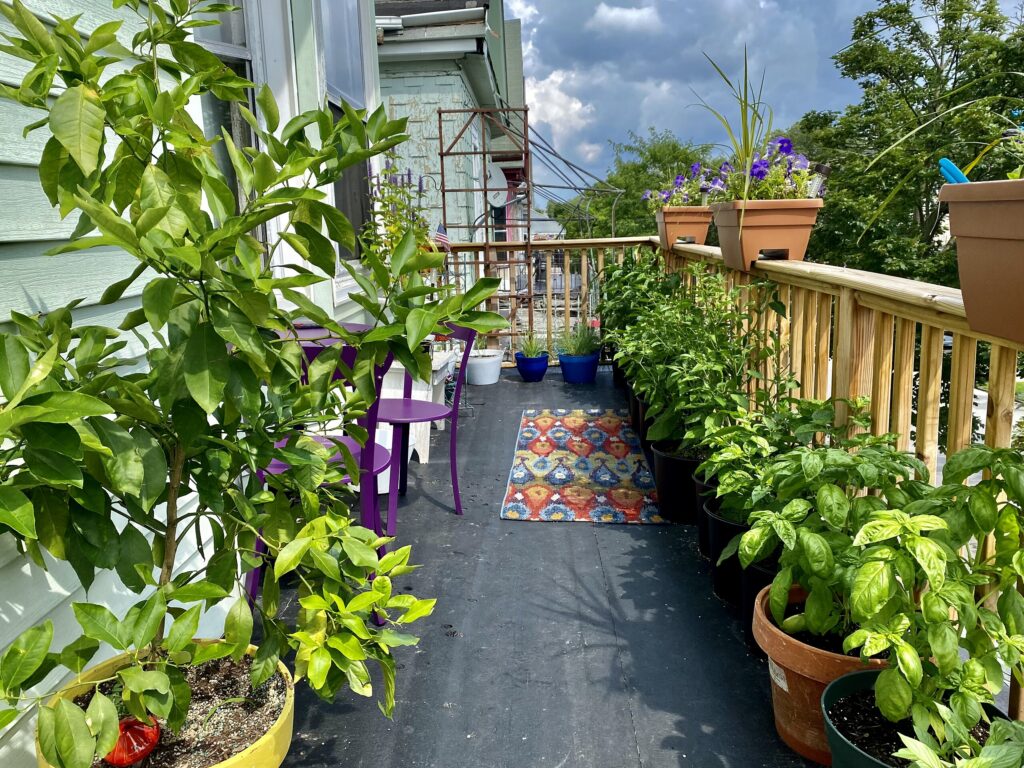
Aspect, or which direction something is facing, is a key factor to consider when planning any garden, but especially a balcony garden (as they tend to experience dramatic shading from the building, or nearby buildings). Depending on which direction your balcony faces, you may be working with severely limited sunlight, or even excessive sun. For example, if you are located in the northern hemisphere, a south-facing balcony will receive far more sunlight than a north-facing balcony. Since most vegetables require at least 6 hours of sunlight per day1, aspect is crucial to consider before planning your balcony garden.
If you are unsure of how many hours of sun your balcony receives, try observing your balcony over the course of a day and make a note when it is in the sunlight. Try to do this during the growing season, as the sun’s path across the sky changes with the seasons. Generally speaking, the sun is higher and traverses a larger portion of the sky in the summer than the winter. This seasonal effect will be more pronounced, the further you are from the equator.
Additionally, what time of day your balcony receives sunlight is important to note, especially when it comes to temperature. An east-facing balcony might receive the same hours of sunlight per day as a western facing balcony, but the two might not experience the same temperatures. Why is this? By the time afternoon occurs, the air has already been “pre-heated” over the course of the day2. Thus, areas which receive sunlight in the afternoon tend to get warmer than areas that receive an equal amount of sunlight in the morning. The sun rises in the east and sets in the west. So, if you have a balcony which faces northeast, you might want to focus on growing cool season produce, such as leafy greens.
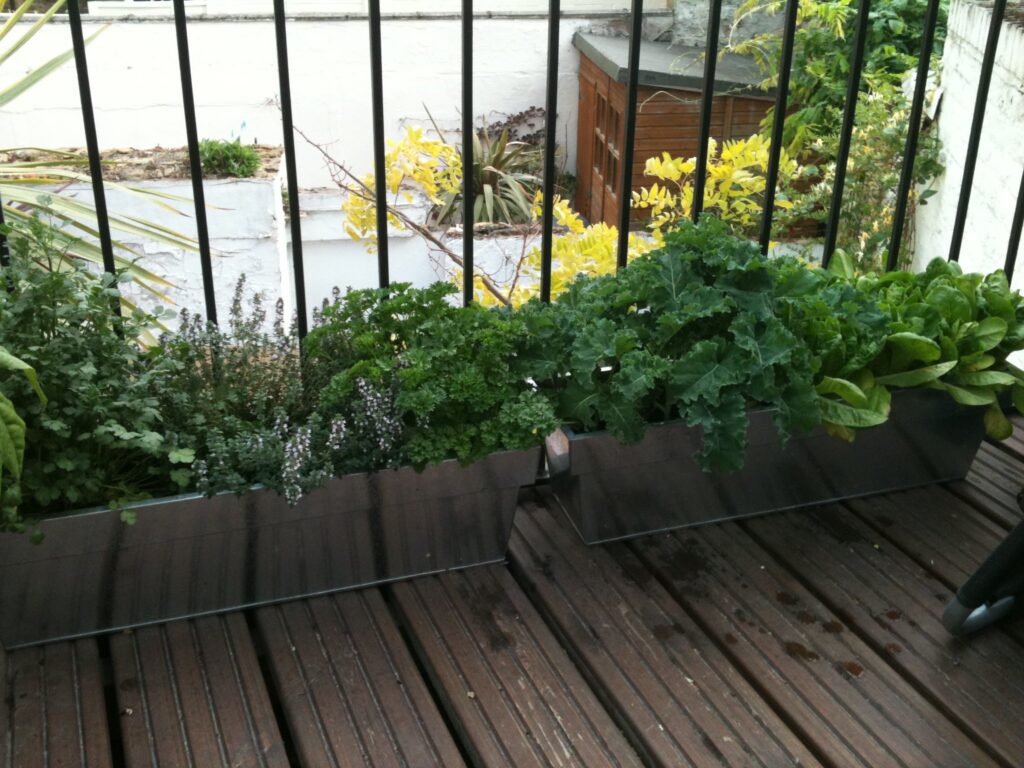
The data acquired from my undergraduate research project appears to support this idea. Daily temperature extremes were generally higher around the planters on the southern face of the building, compared to planters on the eastern face.
The temperatures on your balcony may be different than those reported by local weather apps
Have you ever noticed that temperatures in the downtowns of cities tend to be warmer than in surrounding areas? This is due to a phenomenon called the urban heat island effect, which is a result of a combination of factors including increased impermeable surfaces and reduced vegetative cover3. Due to this, and local factors such as the heat reflected off of your building itself, your balcony may reach temperatures significantly higher than those reported by local weather stations. This should be kept in mind when planning for irrigation, seed starting, plant selection, or other activities influenced by or dependent on temperature.
Over the course of the case study, daily high temperatures tended to be warmer than those reported by local weather stations. For example, on the hottest day during the data collection window, one of my sensors located on the south face of the planter array reported a daily high temperature nearly 10 degrees Fahrenheit hotter than that recorded at KPDX (see table 1). Note that KPDX is the weather station located at the Portland airport, which provides data to many Portlanders when they check the weather online or on phone apps.
| Weather Station | KPDX | South face of planter array | East face of planter array |
| High temperature (F) recorded on 9/5/2024 | 102 oF | 111.4 oF | 106.2 oF |
Because of the influence of local effects on air temperature, you may also find it helpful to install a thermometer on your balcony. You can choose a simple analog or digital thermometer, or if you prefer you can install a fancier digital thermometer which connects to the internet. With a thermometer that connects to the internet you can monitor temperatures remotely, or even view trends over time. This might be especially helpful if you are growing a tender perennial, such as dahlias or citrus, which need to be moved indoors when temperatures dip near freezing.
Be aware of water
Different plants have different needs when it comes to water. It is important to keep this in mind when planning your irrigation strategy. While it might seem simple to lay out a drip line which covers all planters/containers, this can be problematic if there are plants that have very different water needs. For example, perennial mediterranean herbs such as thyme and rosemary require very little water compared to most annual vegetables, such as tomatoes or lettuce. If you do elect to automate your watering, separate your plants into irrigation groups based on watering needs, so that plants that prefer drier conditions aren’t getting too much water, and vice-versa.
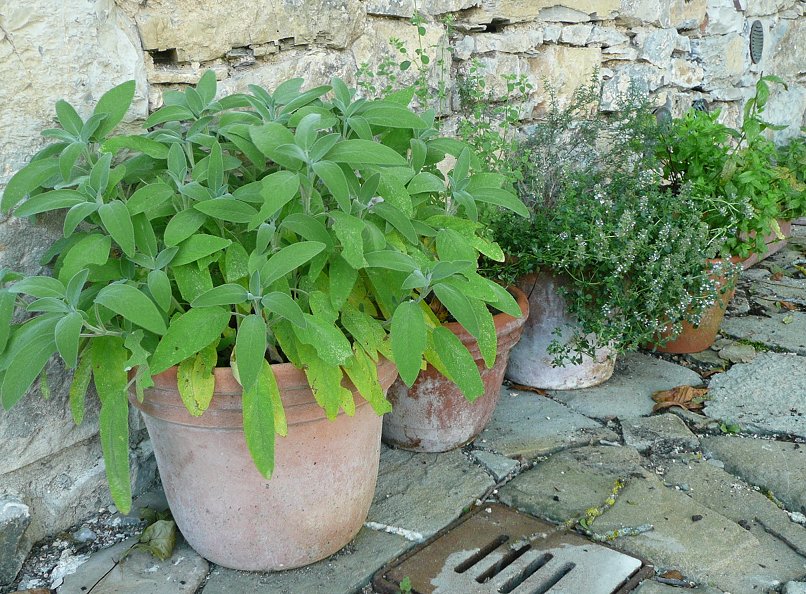
Another factor to consider is the growing media (soil), as well as the size and type of container used. These factors will affect the amount of water that is retained in the soil, and will impact watering needs. For example, felt grow bags and unglazed terracotta pots lose more water to evaporation than other, less permeable pots4. In general, smaller pots will need to be watered more frequently, since smaller pots have less volume to hold water and therefore dry out faster5.
As is the case with plants in any situation, drainage is important. When selecting containers be sure to choose ones with drainage holes, or ones which can have drainage holes added to them.
Select cultivars that are suitable for balcony gardening
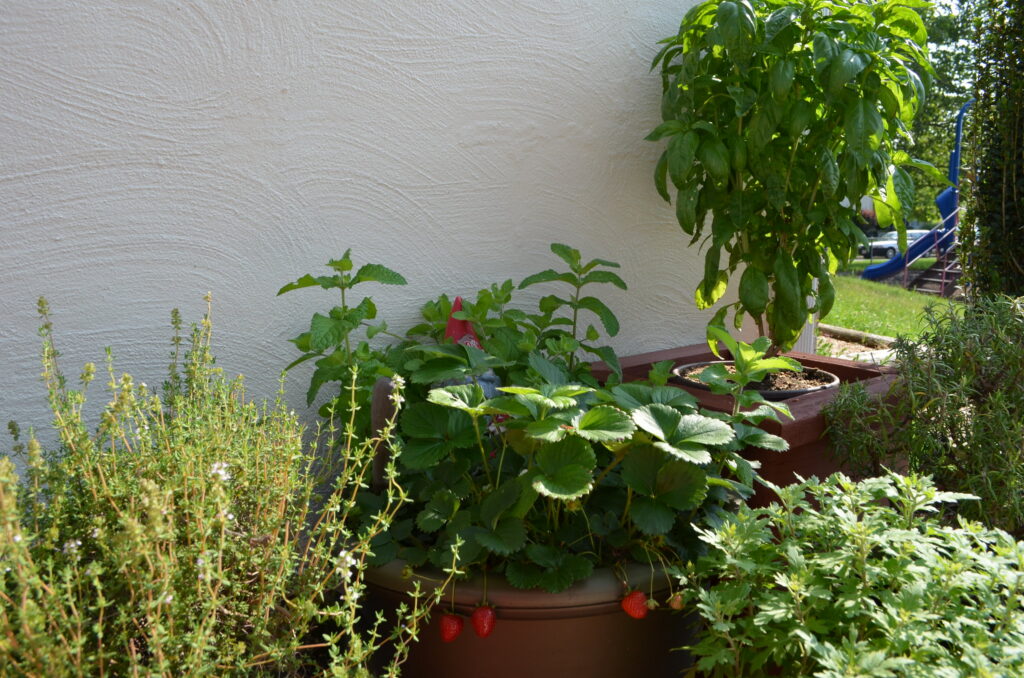
Some plants are basically always suitable for containers. These plants, such as lettuces, many herbs, radishes (not including daikon radishes), and strawberries, always have relatively compact growth habits and are ideal for containers. However, for other plants it is important to choose cultivars that are best suited for container growing. In general, it is a good idea to choose cultivars that are smaller. This is especially important if you intend to grow any fruit trees or fruiting shrubs. Below is a small selection of cultivars suitable for growing in containers, along with some notable characteristics.
| Crop | Cultivar | Notable characteristics |
| Figs, Ficus carica | “Fignomenal” | 3-4 feet tall, 2 feet wide at maturity |
| Blueberries, Vaccinium sp. | “Jelly Bean” | 1-2 feet tall and wide at maturity |
| Tomatoes (determinate), Solanum lycopersicum | “Yukon Quest”, “Sweet Scarlet Dwarf”, “Rosella Crimson”, “Dwarf Pink Passion”, “Dwarf Almandine” | Determinate tomatoes produce one single harvest of tomatoes, and the plants are typically smaller. These cultivars are especially small. |
| Tomatoes (indeterminate), Solanum lycopersicum | “Dwarf Audrey’s Love”, “Tastywine”, “Uluru Ochre”, “Rosella Purple”, “Fred’s Tie Dye”, “Dwarf Wild Spudleaf”, | Indeterminate tomatoes produce throughout the season, and the plants are typically larger. These cultivars are smaller in size compared to most indeterminate types. |
| Peppers (sweet and hot), Capsicum spp. | “Biquino Yellow”, “Riot”, “Marbles”, “Bulgarian Carrot”, “Stocky Red Roaster” | While most peppers are suitable for containers, these cultivars are especially compact |
| Cucumbers | “Salad Bush”, “Bush Champion”, “Spacemiser” | These are all bush-type cultivars, which are smaller than vining-types. |
Value for space
Because balconies are by nature limited in size, you may want to consider selecting plants that offer the biggest return on investment in terms of space. My favorite choice for gardening in small spaces is herbs (annual and perennial). Herbs provide so much value, for relatively little fuss. Fresh herbs are typically quite expensive to purchase, and really add a lot to a dish.
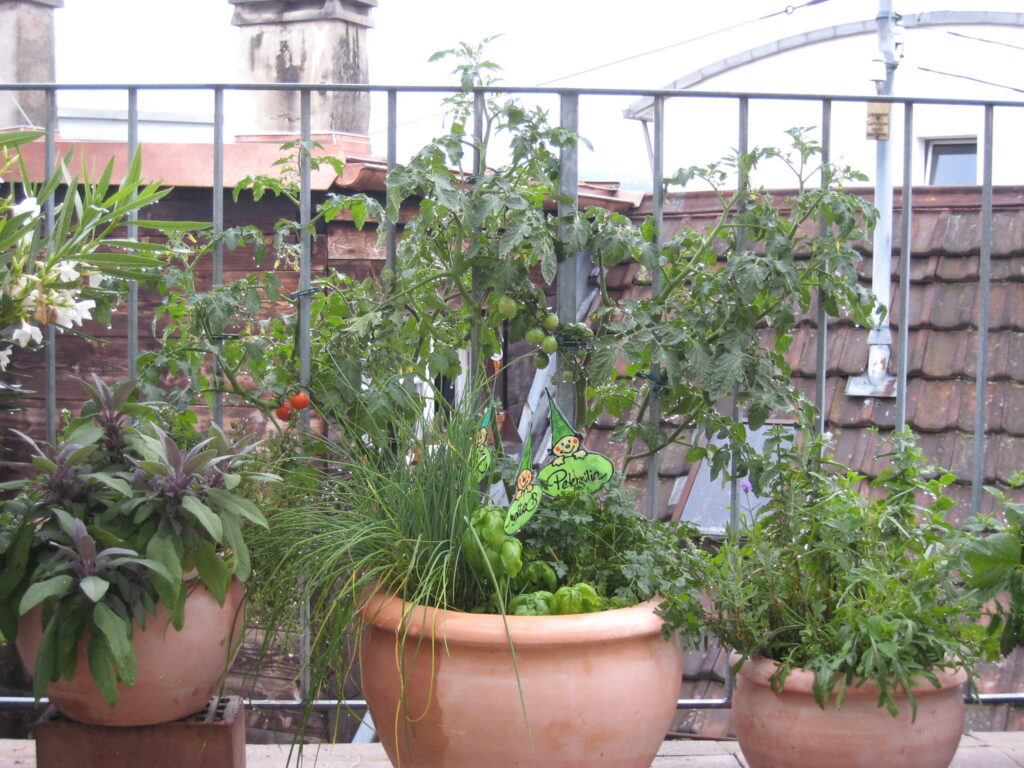
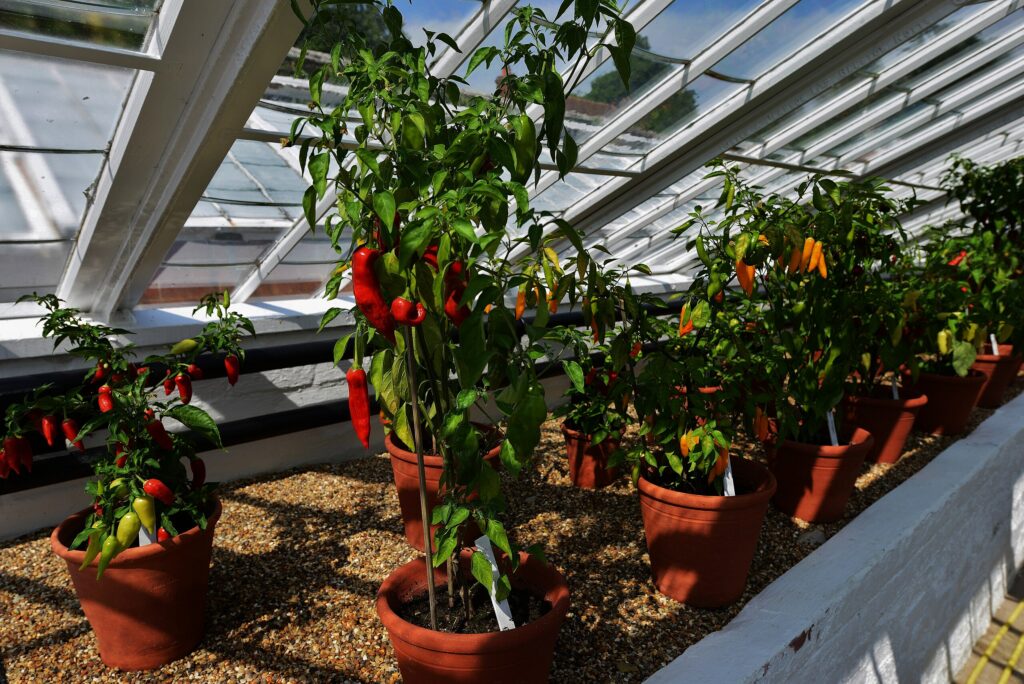
An example of a crop you might want to reconsider planting on a balcony is potatoes. Potatoes are relatively cheap to purchase at the grocery store or farmers market and require a fairly large container (University of New Hampshire Extension recommends using at least a 10 to 15-gallon container for 2-3 potato plants). In contrast, other plants in the solanaceae (potato) family can provide a lot of “bang for your buck”. Tomatoes, peppers, and eggplants are all in this plant family, and can all be successfully grown in containers. Because they are of relatively high value, they are an excellent choice for balcony growing.
This is not an absolute rule, just something to consider. If you are interested in growing a precious heirloom potato variety, or just love the sweet succulence of a freshly harvested tender new potato, give it a shot! Generally speaking, the size of the container, the cost of the soil and compost needed to fill the container, and the value derived from your harvest (monetary and personal value) should all be considered when planning your balcony garden.
Choose edible plants that you actually want to eat
This seems obvious, but it really is worth saying. While it is always a good idea to try new things (you never know what your next favorite fruit might be!), it is advisable to resist the temptation to fill your limited space with novel plants that you have never tasted before. Just because something is edible, does not necessarily mean that you will enjoy eating it. Additionally, many edible plants really need to be prepared in a specific way to be truly tasty. If you don’t know a good way to prepare it, and are unable or unwilling to learn, you may want to reconsider if it is a plant that is right for your (limited) space. If your goal is to grow a significant portion of your produce on your balcony, you may want to consider focusing on tried and true plants.
Consider non-edible plants
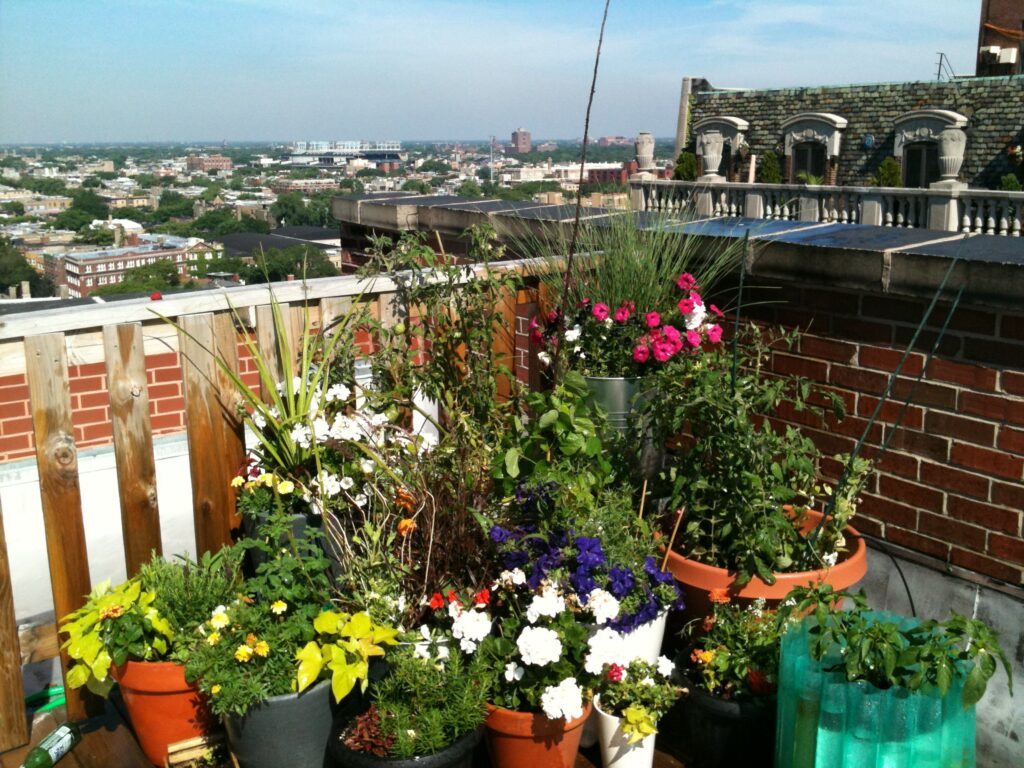
There are many reasons to grow plants that are not edible, such as the ecosystem services they provide, the aesthetic joy of seeing luscious plantings out your window, privacy screening, personal significance/importance, or for other practical reasons (such as flowers for cutting). The possibilities are seemingly endless, and balcony gardeners need not restrict themselves to edible plants, despite the limited space.
Be aware of what is below your balcony
It is important to consider how your balcony garden might affect those around you. If you have downstairs neighbors it is important to make sure that water doesn’t flow down to the balcony below you. Similarly, if you are growing fruits that tend to drop when overripe, such as tomatoes, you should be especially sure to keep on top of harvesting to prevent unpleasant situations from arising.
Additional resources for balcony (and other small space) gardeners
Book: The Bountiful Container by Rose Marie Nichols McGee and Maggie Stuckey
This book is an amazing resource for anyone interested in growing edible plants in containers, whether or not they are situated on a balcony. The book is organized into three useful sections, the first being a comprehensive introduction to the basic practical and aesthetic considerations of planning a container garden. The second section gives a thorough overview of the physical aspects of container gardening, including containers, soils and amendments, and information on watering and managing soil fertility. The final section is a deep dive into the many cultivars of edible annual and perennial plants that are best suited for container growing.
The Dwarf Tomato Project
This is an open-source breeding project, led by Craig LeHoullier and Patrina Nuske-Small. The goal of the project is to develop and trial new tomato cultivars that are compact in size, and well-suited to containers and other small spaces.
Link: https://www.tomatofest.com/The_Dwarf_Tomato_Project_s/163.htm
Citations
1 – Langellotto, G. (2014, December 18). Growing Your Own (Master GardenerTM) [Extension Catalog publication]. Extension Communications; Oregon State University Extension Service. https://extension.oregonstate.edu/catalog/em-9027-growing-your-own
2 – K-State Extension. (2024, September 25). Shedding Light on Sun-Shade Conditions. K-State Research and Extension Johnson County. https://www.johnson.k-state.edu/programs/lawn-garden/agent-articles-fact-sheets-and-more/agent-articles/environment/sun-shade-conditions.html
3 – Purdue Extension. (2017, June). Urban Heat Island Effect. Purdue University. https://www.extension.purdue.edu/extmedia/ID/ID-508-w.pdf
4 – Maqbool, A., Nagaraju, V., Ferooz, K., Satpal, Rashid, R., & Ul Huda, N. (2025). Urban Horticulture: Embracing Container Gardening for Sustainable Fruit Production. In Research Trends in Horticultural Sciences (Vol. 23, p. 126). AkiNik Publications. https://doi.org/10.22271/ed.book.3151
5 – Ray, J. D., & Sinclair, T. R. (1998). The effect of pot size on growth and transpiration of maize and soybean during water deficit stress. Journal of Experimental Botany, 49(325), 1381–1386. https://doi.org/10.1093/jxb/49.325.1381
Image Sources
Figures 1 and 2: Anna Perry
Figure 3: “Balcony container garden, Laurel street, Buffalo, New York” [https://commons.wikimedia.org/wiki/File:Balcony_container_garden,_Laurel_Street,_Buffalo,_New_York_-_20210801.jpg] by Andre Carrotflower, licensed under CC BY-SA 4.0
Figure 4: “Balcony gardening first attempt: herbs & salad greens doing well” [https://www.flickr.com/photos/35468154560@N01/5727329324] by Katy Lindemann, licensed under CC BY-NC-SA 2.0
Figure 5: “herbs in pots” [https://www.flickr.com/photos/40385177@N07/3768508507] by christina.sanvito, licensed under CC BY 2.0
Figure 6: “Container garden spring 2012” [https://www.flickr.com/photos/51812340@N00/7286912774] by ss.faulkn, marked with Public Domain Mark 1.0
Figure 7: “Almost ripe” [https://www.flickr.com/photos/12531571@N00/3693252714] by greckor, licensed under CC BY 2.0
Figure 8: “West Dean Gardens a selection of potted pepper plants” [https://commons.wikimedia.org/w/index.php?curid=36706183] by Michael Garlick, licensed under CC BY-SA 4.0.
Figure 9: “container garden is bloomin” [https://www.flickr.com/photos/12955651@N07/5961574253] by Dane Brian, licensed under CC BY-NC-SA 2.0