

Extension General Agriculture Educator serving Malheur County
When Russell arrived in Malheur County in 2023, he discovered that the county did not yet have a Master Gardener program. After conducting a needs assessment and finding strong community interest, he helped launch the program in 2024 with its first group of 10 Master Gardener volunteers.
I spoke with Russell about starting a new Master Gardener program, gardening in Oregon’s high desert, and the volunteers and community partners helping build the program.
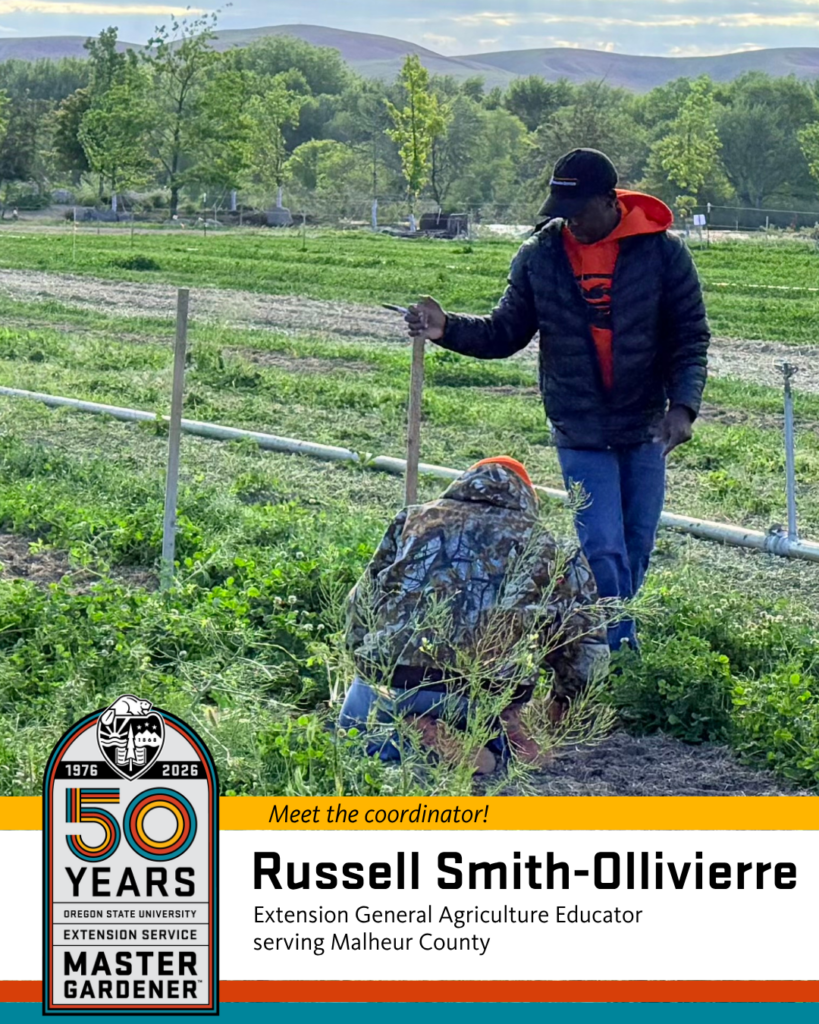
Quick Facts
Position: Extension General Agriculture Educator
Region: Malheur County
Malheur County Master Gardener program launched: 2024
Favorite insect: Monarch butterfly
Beginner plant recommendation: Mint (in a container)
Background
Russell’s agricultural education began in his home country of Barbados, where he attended a technical school and earned a diploma in agriculture. He continued his education at university, earning a bachelor’s degree in general agriculture and a master’s degree in tropical crop protection with an emphasis in plant pathology. After completing his graduate degree, Russell went into teaching and taught high school agriculture for nearly nine years.
His experience in agriculture and education eventually brought him to Oregon. When he arrived in Malheur County in 2023, he began looking into the Master Gardener program and realized the county did not have one. He saw an opportunity to provide education about sustainable gardening while also giving community members a way to give back. After conducting a needs assessment and receiving generally positive feedback, the program launched in 2024 with 10 members in its first cohort.
Gardening in Malheur County
Malheur County is a large county with gardening conditions that differ from many areas in Oregon. The region is semi-arid and high desert, with hot summers and cold winters. Russell says gardeners typically focus on drought-tolerant plants and practices that help retain moisture and reduce the effects of high summer temperatures.
Some of the strategies he highlighted include:
- Using mulch to retain moisture
- Selecting plants suited to the region
- Using efficient irrigation practices
- Considering drought tolerance when selecting plants
Compared with Western Oregon, Malheur County is much drier, making moisture retention and plant selection an important step for gardeners.
Favorite Garden Lesson
Russell’s most memorable recent garden failure involved growing peppers in a greenhouse. Through a partnership with Treasure Valley Community College, the Master Gardener program has access to greenhouse space during the winter and early spring. The group used the greenhouse to start a large number of pepper plants, including plants connected to a seed-starting workshop. Until the mice found them.
“The mice just came in and ate all of the peppers.”
Although some plants had been covered, the mice were still able to get underneath the coverings and eat many of the seedlings. For Russell, it was a particularly frustrating setback after the time and effort invested in starting the plants. However, as any Master Gardener knows, when things don’t go as planned, it’s time to make adjustments.
“I think going forward, we should cover them.”
Supporting Volunteers
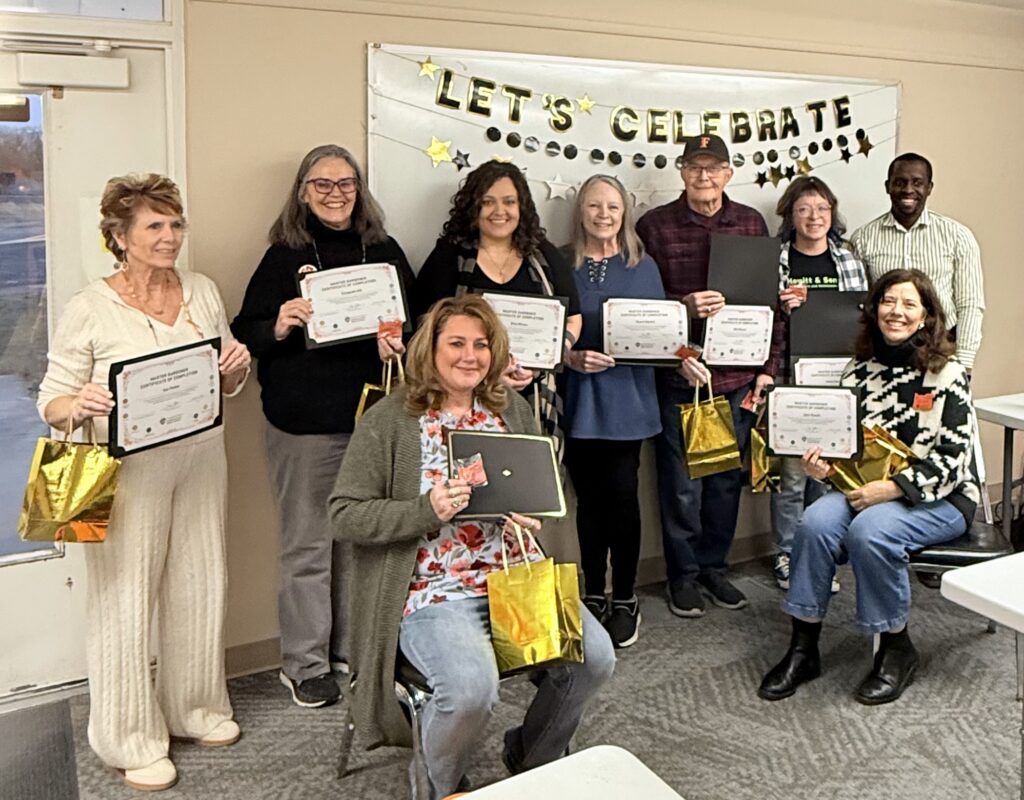
Russell says one of the things he appreciates most about his volunteers is their dedication to the new program. Some volunteers give significant amounts of their time to community activities, including work in the community garden and at the farmers market. He also appreciates the role volunteers play as advocates for the program. Through word of mouth, they help spread awareness of the Master Gardener program and its work in the community.
“The program is new, but it’s definitely one for the future.”
Community Partnerships
Russell highlighted two major partners: the Oregon Food Bank – Southeast region and Treasure Valley Community College. The Master Gardener program has a relationship with the Oregon Food Bank – Southeast region to distribute produce grown in its demonstration garden. Volunteers clean the produce before donating it, and the food bank distributes it to food pantries throughout Malheur County.
The partnership has also expanded to include volunteer participation and outreach. The regional manager volunteers in the demonstration garden, and the organization helps promote opportunities for community members to volunteer.
Treasure Valley Community College provides greenhouse space that the Master Gardener program uses during the winter and early spring. The college also uses the demonstration garden as a teaching tool for a course held there.
Quick Questions
Favorite insect
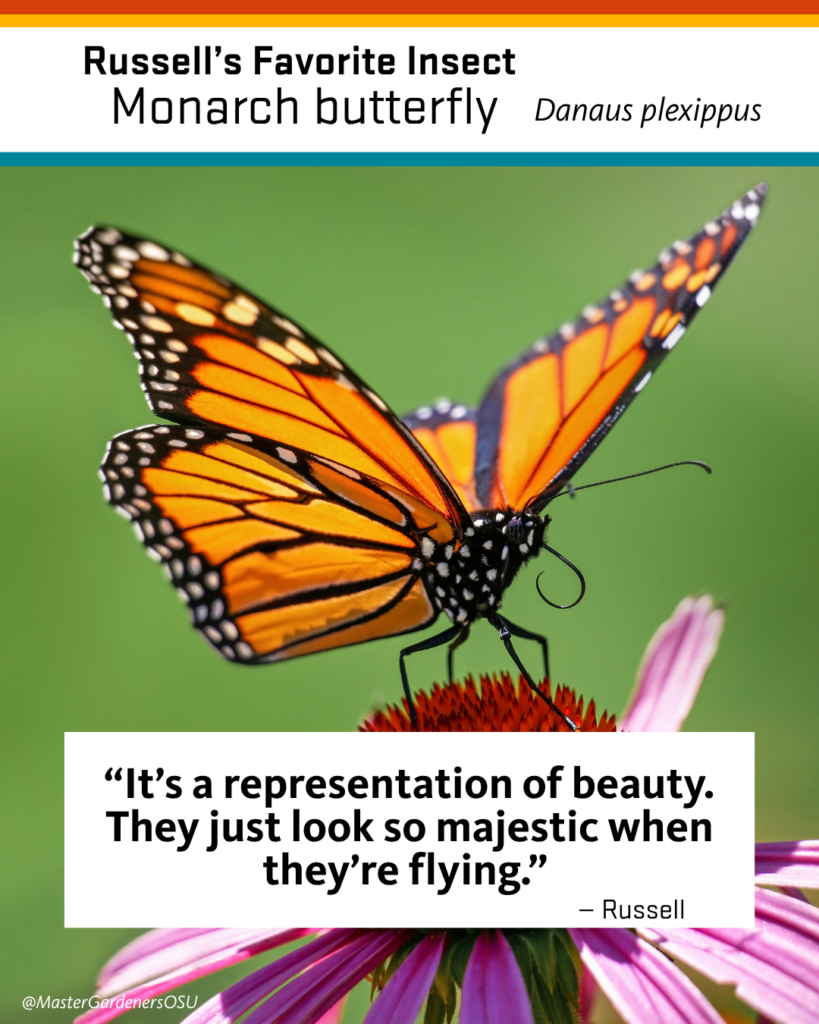
Russell chose the monarch butterfly because of its beauty.
“When you see them, they just… it’s a representation of beauty.”
He also noted that declining monarch populations make seeing them especially meaningful to him.
Plant recommendation for beginners
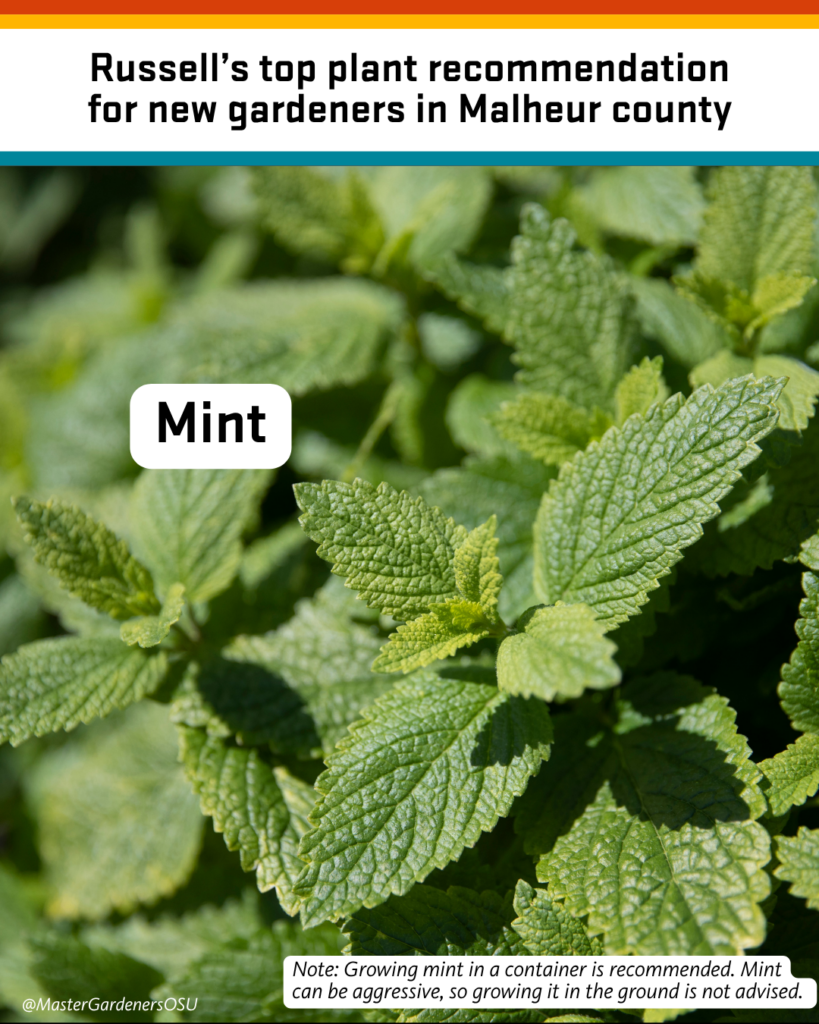
Russell recommends mint for beginning gardeners because it grows quickly, is low maintenance, and does well in the region’s conditions.
“Mint is very, very forgiving.”
There’s one important caveat: mint can be aggressive. His recommendation is to grow it in a container rather than directly in the garden, because its roots can eventually spread and overrun the surrounding area.
More work from Russell Smith-Ollivierre can be found here: [click here]
This is part of a series of stories we are featuring about the people of the OSU Extension Master Gardener volunteer program in celebration of our 50th anniversary. With +1,800 amazing volunteers and 30 faculty and staff we hope you are as inspired as we are by their dedication joy and impact that they make across the state.
If you’d like to share your Master Gardener story, we’d love to hear from you! Submit your volunteer story here: https://beav.es/mgstory