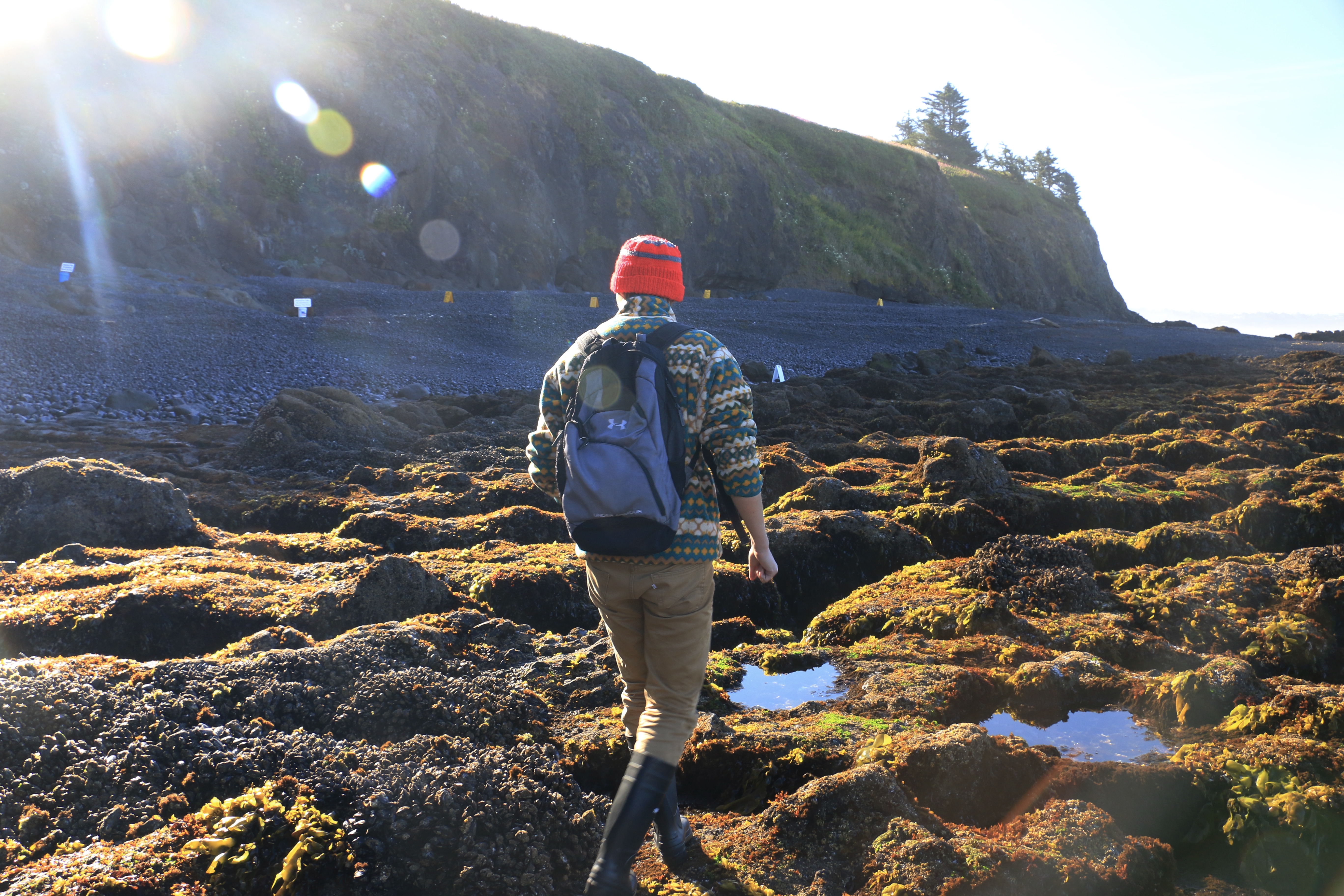
Sustainable Development: Can Conservation Exist without Economic Stability?

So the quintessential dilemma in environmental policy seems to be the conservationist versus the hungry farmer/fishermen debate, which you’ve probably heard before. The conservationist has many arguments about protecting the forest or sea for its endless values, not just timber and fish but hard to quantify values like oxygen output and water purification, and also impossible to quantify values (although willingness-to-pay measures are trying) like aesthetic pleasure that creates wellness and feelings of wonder, connectedness, and fulfillment. But of those arguments can seem a bit diminished against a person that says, “But what are my children going to eat?”  I’m interested in finding a middle ground – a conservation strategy that can provide for the community and standards that are met alongside addressing social issues. To simplify, I normally tell people that I’m interested in Sustainable Development.

But my experience and research at Wild Rivers Coast Alliance (WRCA) has me questioning just about everything surrounding sustainability. What qualifications render something “sustainable”? I’ve been running into a lot of definitions. Most people agree that there are three basic principles that should be met (although often in varying degrees): Community, people, culture, i.e. social issues; Environment, ecosystem, conservation, i.e. ensure that the human dimension does not harm the natural surroundings, the goal to actually enhance the wildlife and restore it to its condition prior to human presence; and Economy, with the theory being that if the economy can develop, then the social and environmental needs can continue to be addressed. I’ve found that this dimension can also be debatable.

To me, the debate on the necessity of a growing economy is one of the most interesting questions in regards to sustainability, and one I think I’ll continue to develop during my time here at WRCA. Is a growing economy really necessary for conservation? What would conservation look like in an area of economic strife, if even possible? History seems to suggest that natural resources are the quickly exploited in sake of the economy. Some examples come to mind: the Dust Bowl throughout the southern prairies in the 1930s; The War and the Great Depression pressured farmers for a high crop yield, and exploitive agricultural practices led to a decade of dust for the region; In the 1960s and 70s Costa Rica reluctantly agreed to clear-cut many of their Tropical Forests for these same monoculture practices in order to export bananas, pineapples, and coffee to pay off international debt. What would “sustainable” practices look like in these cases? Would they even be possible, given the high crop demand?

My preliminary research seems to suggest that we may be facing a similar situation here on the Oregon South Coast. Throughout our nations’ history, the economy of the South Coast was bolstered by timber and marine/fish production. At its peak, timber accounted for nearly all of the pine across the U.S., and over 700,000 jobs throughout Oregon, on both federal and private lands. New federal regulations, along with increased competition from Canada and the Southeast U.S., led to a decline in the Oregon timber industry, which now accounts for around 250,000 jobs, mostly on private land. I have yet to research the numbers on fish production, but I’ve heard that a similar decline occurred, with the U.S. now importing a lot of their fish from international waters.

So as many organizations, including WRCA, attempt to launch conservation programs throughout the region, they are faced with the same farmer verses conservationist debate. How can we address social, economic and environmental problems? Can we avoid repeating exploitive resource practices? Furthermore, what would programs look like if the greatest weight was placed on the social and environmental aspects of sustainability? Would they survive? Encouragingly, it seems like many of the organizations that we work with are conservationists at heart, and also realize the importance social and economic development. They, too, are attempting to find a middle ground and reach a solution that contains all three principles.

It’s very exciting and enlightening to work at the forefront of this debate that I’ve continuously discussed in classrooms. I don’t have an answer to any of the questions that I brought up, but I think I’ll have a lot more light shed on possible solutions by the end of my Sea Grant experience, and I’m excited to continue to ponder these big questions. To help me ponder, I’d love to hear your thoughts on any topics discussed.


Week 2: Just admiring the general splendor

This week I received more information about the CBRAT project and settled into my research duties. I am starting with the effects of ocean acidification on decapods (shrimp, true crabs, hermit crabs etc.). Decapods are relatively well studied compared to other marine taxa because of their economic importance, however, they are a diverse group of organisms and have varied adaptations for living in a low pH environment. I have a lot of papers to get through and I hope some clear trends will reveal themselves in the coming weeks.

sgphoto4

Favorite sunset shot of the week from the Yaquina Bay Bridge

Every now and then it is necessary to take a short mental break from reading scientific journals. Fortunately, my office looks out on the courtyard that is frequented by several varieties of colorful finches, hummingbirds, one large out of place seagull and European starlings. I know I promised marine organism fun facts, however, my favorite organism fact I learned this week is terrestrial. My office mate, Maya, another intern with expertise in identifying the regional wildlife told me all about how European Starlings were brought over in the 1890’s in an attempt to bring all of the birds mentioned in Shakespeare’s works to the Americas. Starlings were first introduced in Central Park, now there are over 200 million taking over North America. They are highly invasive species with a range spanning the entire US where they outcompete native birds for space. Who knew such an inconspicuous little black bird would have such an interesting story.

sgphoto5

An epic face-off about to begin

In my free time I have been exploring Newport’s beaches, which has yielded some fascinating wildlife encounters. I spent a good amount of time watching a seagull have his beak snapped at as he attempted to eat a very much still alive crab twice the size of his head, a turkey vulture stealing a dead fish from a flock of seagulls (tough week for seagulls), seals lazing about the tide pools and the highlight of my week, spotting three Orcas heading into the Bay after sunset.

This Saturday was World Ocean Day and what better way to spend it than tide pooling in the morning and wandering through the Oregon Coast Aquarium with the other interns all afternoon. We finished off the weekend with some light hiking Sunday afternoon around the coast. All in all Its been a great week.

By the way, if you somehow missed out on properly celebrating World Ocean Day go pick up some trash off of your local beach or checkout what these awesome marine advocacy groups have to say: World Ocean Day5 Gyres.


A week in the life of a government biologist

Last week for me can be described in two words: field work. I was able to get outside and work on a different project each day. I started off my week by assisting South Slough lab technicians in the retrieval of SONDES water quality sensors located along tide gates in the upper Coos estuary. In the following days, I tagged along with Fisheries Biologists from the Oregon Department of Fish & Wildlife (ODFW). My first day with ODFW consisted of fish seining at five sites throughout the estuary. The main goal of this work was to monitor the size and abundance of chinook salmon smolt. The next day I traveled with ODFW Biologists South to The Devil’s Backbone for littleneck clam population assessments. Working alongside these biologist taught me a great deal about the coastal species found on Oregon’s coast and the methods used to manage their populations. I concluded my week by analyzing settlement plates as part of an Olympia Oyster monitoring project and scouting out potential sample sites for my personal research project that I will begin this week.


I have decided to complete my own research project this summer on the European Green grab’s presence in the South Slough National Estuarine Research Reserve. Green crabs have invaded the waters of the United States’ Atlantic and Pacific coasts. For years green crabs on California’s coast were unable to establish populations in Oregon and Washington due to colder waters. The invasive crab was first discovered in the Pacific Northwest in 1998 after an El Nino event which temporarily warmed waters long enough to allow the species to move North. The magnitude of the 2015/2016 El Nino is the largest since 1998 and incidental landings of green crabs in the Coos estuary have increased. I plan to compare my results to data collected from a previous green crab population assessment in South Slough conducted after the 1998 El Nino. The results of my study have potential importance in the management of dungeness crab fisheries as european green crabs have been shown to outcompete the less aggressive, commercially important native species.


I leave you with a picture of a garter snake I found just outside of my yurt a few mornings back. Follow my instagram account @CollinHoldingCreatures for more pictures of animals I encounter throughout my field work.

Tide Poolers

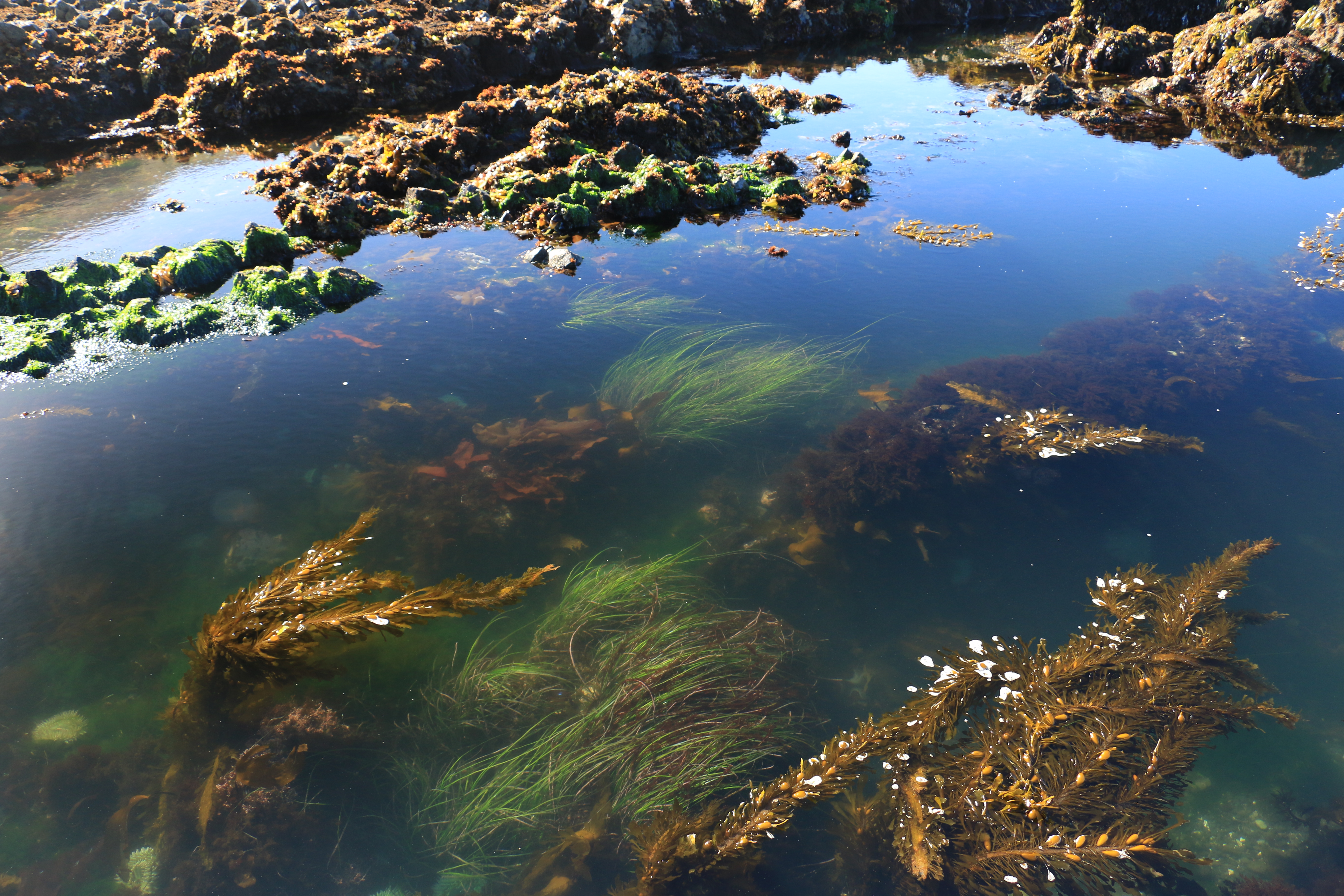
Tide pools are the wildflower bloom of the marine world. If you time it right, the colorful array of life is revealed from beneath the ocean cover for a brief, yet exciting period of time. Some of the marine life in tide-pools lives between two worlds, spending half of their time fully submerged under seawater and the other half in the air we breathe. I think tide pools are one of the most intriguing ecosystems that exist on this planet.

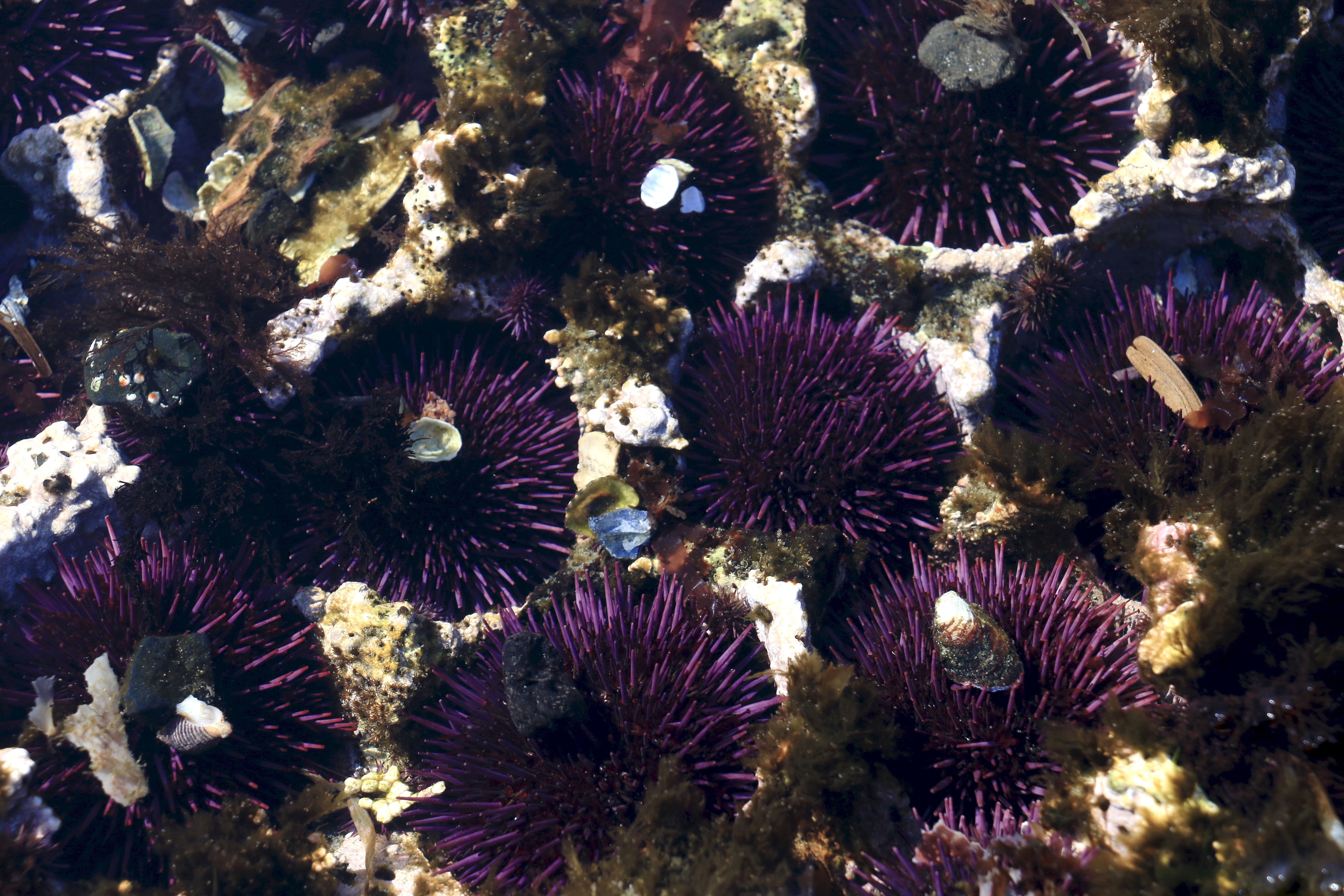
purple urchins in the tide pools at Yaquina Head

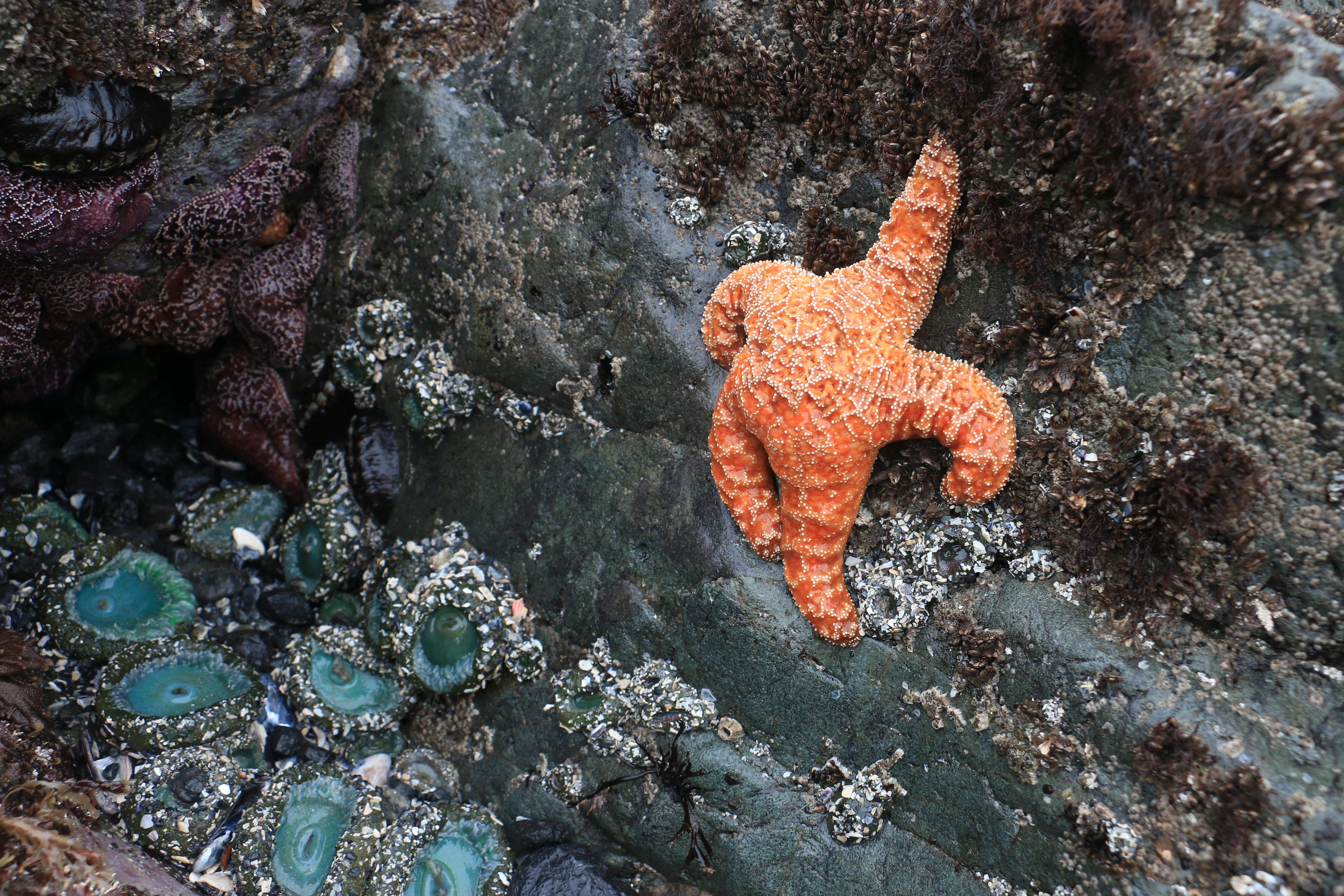
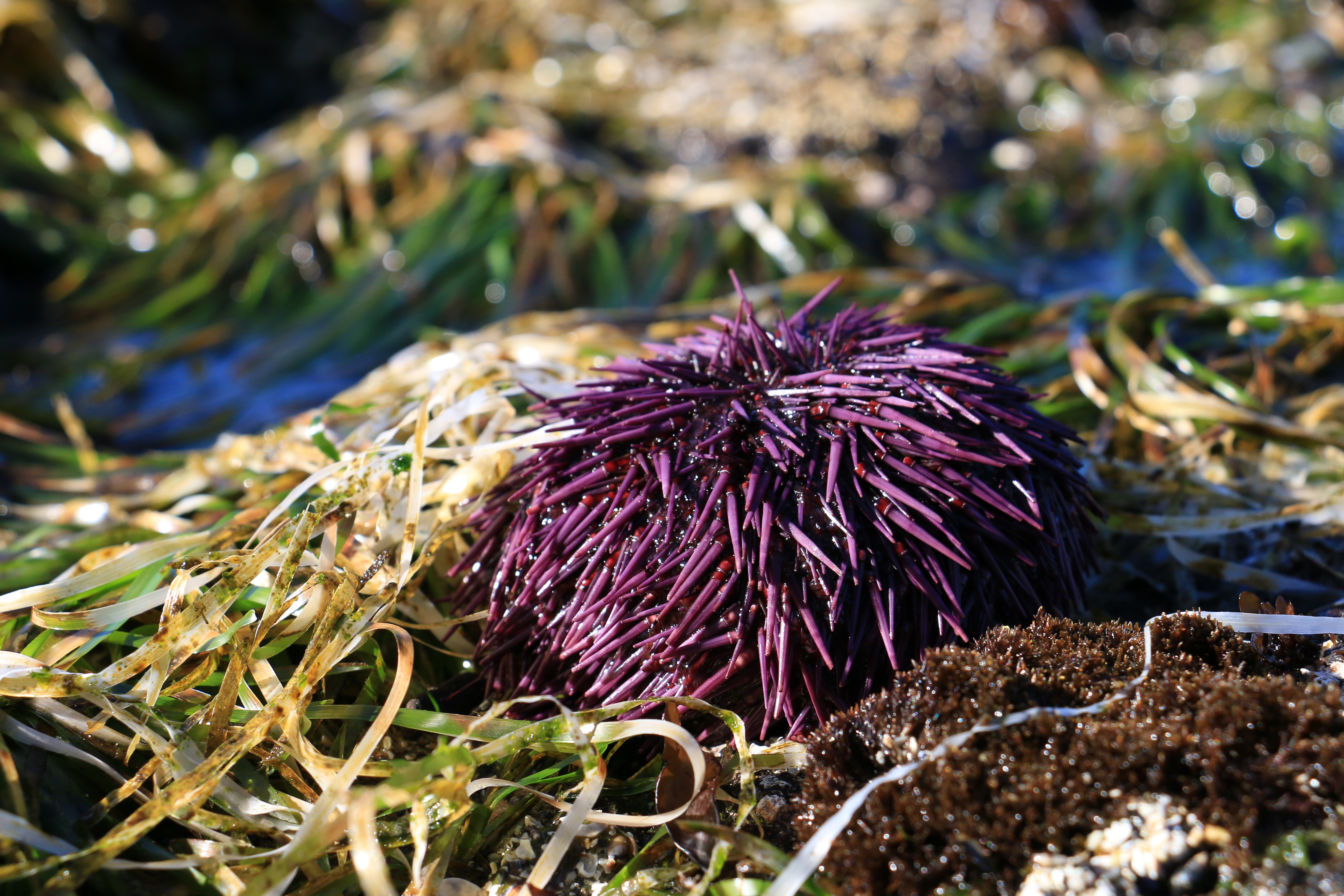
Why is it that these creatures, that become exposed when the tide goes out, can flaunt such vibrant colors and shapes? Wouldn’t they all want to camouflage themselves as rocks to avoid getting eaten? The sun-orange sea stars, huckleberry-purple urchins, seafoam-green anemones, and assorted hermit crabs (to name a few) sport their colors loud and proud. For some of these organisms, it is still not known for certain what the purpose of their vivid coloration is, but one thing is known for certain: this attractive marine life display draws eyes from across the globe to the coast of the Pacific Northwest.

Sea stars and anemones at low tide

This past Saturday, June 25th, we were lucky enough to have a negative-low tide, which (as the name implies) means the lowest tide retreats to a negative number of feet relative to average sea level. For tide-poolers, that means there is a very good chance of seeing the unique marine life that resides at the farthest edge of the low-tide water line. Of course, I am just one of many tide-pool chasers. For many coastal residents and marine enthusiasts alike, tide-pools are an important place. A recent study in 2013 found that exploring tide-pools was among the top three most common activities for Oregon’s marine reserve visitors. While it is encouraging to a conservationist for there to be so much interest in this natural resource, too many visitors can be harmful to such a fragile environment. I’m sure the tide pool residents wouldn’t be pleased to have an army of land-dwelling visitors tromping all over their property.

Purple urchin at negative low tide

In the coming weeks, as I finish up some prep work and solidify my work schedule, I look forward to exploring more of the unique places along the coast, but also learning about the people who use them. As part of my work this summer, I hope to find out how informed coastal visitors feel about issues related to marine areas in order to better inform ocean managers about any potential knowledge gaps or concerns from the general public about our oceans. While I haven’t been able to immediately work out in the field, the work I will eventually be doing along the coast is a crucial element to bettering our understanding of marine reserves. Until then, I’ll continue to familiarize myself with new places in Oregon during my free time!

Angus exploring the tide pools

Newport: My new place

The past few weeks have been exciting and eventful. I returned home after spending a year abroad studying at the National Oceanography Centre in Southampton England. Only to unpack, repack and once again say goodbye to home and move into the dorms at the Hatfield Marine Science Center in Newport, Oregon.

My first office

My first office

As far as life in Oregon goes, I am a huge fan. The beach is a 20-minute walk to the west, a campus full of marine science experts sits to the east and a sand volleyball court is just outside my doorstep. I have met some awesome young scientists that share my passion for the ocean from all corners of the USA and I get to live with three of the friendliest and funniest ones! We have spent the weekend exploring the beach and the cute casual coastal town of Newport, complete with quirky coffee shops, delicious seafood and a picturesque lighthouse.

 This week I started my internship with the EPA. After finally ticking all of the federal government’s safety training boxes and moving into my first office, I sat down with my mentors to hear all about the Coastal Biodiversity Risk Analysis Tool (CBRAT), the project I will be working on the next ten weeks.

CBRAT is a program that attempts to define the potential risks climate change poses for marine species living in the Gulf of California up through the Beaufort Sea. The first phase of CBRAT involved cataloging hundreds of marine species, their traits habitats, ranges and taxonomic information. It’s an impressive feat, and some of the data is already available to the public here: http://www.cbrat.org/.

I will be contributing to the second phase of CBRAT that looks at the primary risks climate change poses to ocean creatures through sea level rise, warmer ocean temperatures and ocean acidification.

Sunset over the dunes

Sunset over the dunes

My research focus is ocean acidification. Many marine organisms use calcium carbonate to make their shells. As the ocean becomes more acidic calcium carbonate becomes more difficult for calcifying marine organisms like shellfish and plankton to obtain. The good news is some organisms have adaptations that allow them to live in lower pH environments, but the bad news is these adaptations are highly variable and not entirely understood for many species. That’s where I come in; I will be going through the existing literature and identifying characteristics that make ocean acidification a higher or lower risk for a particular organism and developing pH tolerance parameters for different marine taxa.

I am excited for a summer full of long walks on the beach, epic sunsets, improving my sand volleyball game and lots of marine science! Stay posted for updates on my research, adventures and sea creature fun facts.


Life on the coast

After traveling across the country for 11 days and putting 4,000 miles on my car, I finally arrived in Newport, Oregon! This being my first time on the West Coast, I really didn’t know what to expect. I recently graduated college in upstate New York so I was more than ready to see and live in a new part of the country. As of right now I can say that I am really enjoying my time here and I am very excited to see what the rest of the summer has in store for me and the research team I am working with.

My internship is stationed at the EPA’s Pacific Coastal Ecology Branch under Dr. Ted DeWitt. Our research team consists primarily of Ted, Jody, Daryl, Katie (another intern in the group), and myself (all pictured below except for me). We are looking primarily at characterizing how water moves through various salt marshes around Tillamook Bay, OR and seeing if we can use various models (that were created for other outside sites) at these sites to predict changes in the environment due to different factors. To eventually accomplish that goal, Katie and I will be analyzing soil cores to look at the hydrology, soil chemistry, and soil physics of these salt marshes.

I originally found out about the Summer Scholars program when I was looking at OSU for graduate school. I’m really passionate about studying water quality and one of my long term goals is to be able to participate in creating a management plan for a certain area to improve coastal water quality while appeasing local business owners and nearby residents. This is why I am so excited to be a part of this research. Even though I won’t be here to see the project all the way through, I am very confident that the work we are doing will lead to more knowledge about Tillamook Bay and management plans will have a greater chance of being established in this area.

DSC_0140

The picture above was taken this past Thursday in Tillamook Bay when we were installing wells in the salt marshes to track the water pressure in different areas of the marsh. It was a surprisingly beautiful day considering the weather was predicted to consist of severe rain and possible thunderstorms. It was the one day so far in Oregon where we completely missed any sort of rainfall. This was my first experience conducting field work in salt marshes and it was a lot of fun. We used a corer to take out soil cores in the marsh which were then sectioned off and soil characteristics were identified while we were still in the field. Wells made out of PVC piping were then installed and HOBO (yeah I know it’s a weird name but that’s just what they’re called) sensors were put into the wells to measure the water pressure over time. We should be going back to this particular site in about a month to remove the sensors and analyze the water pressure data.

We now have eight cores to analyze from Thursday, plus the four cores taken from site 7 before we arrived in Newport, AND now we have water pressure data to work with…so I am currently preparing for a very busy week ahead of me. Knowing that my contribution to this project will hopefully improve the health of the environment and possibly even the standard of living in the Tillamook area makes me really excited to analyze the data.

Other aspects of living in Newport and being a Summer Scholar are getting to explore the area and getting to meet other like-minded individuals from across the country.

IMG_0296

My roommates and I went to the Yaquina Head lighthouse on Saturday and I highly recommend going! It was beautiful and the area has great intertidal zone access. I definitely suggest looking at a tide chart before going and planning your trip around low tide so you can go out further and see more. We went to a nearby beach today which was also beautiful but windy. Very windy. Hopefully the next time we try to go the conditions will be a little better. I’m still having trouble getting all of the sand out of my clothes.

Hopefully I’ll have some really interesting data and some beautiful pictures to share next week!

Yurt-Life on the OR Coast

By definition a Yurt is a portable, round tent covered with skins or felt and used as a dwelling by nomads in the steppes of Central Asia. A little more than a week ago, I had no idea what a yurt was. Now, I comfortably reside in one overlooking the South Slough National Estuarine Research Reserve (SSNERR) in Charleston, OR. I’ll admit I was skeptical about not having running water at first, but after seeing the view from my front porch and getting to know my roommates, I have no doubt that I’m in store for an amazing summer on the coast.

One of the first things I noticed upon my arrival to Oregon is how nice the people are here. From the labs at Oregon Institute of Marine Biology (OIMB) and Oregon Department of Fish and Wildlife (ODFW) to gas stations and even the local music store, I have met nothing but genuine and helpful people. If local fishermen are anything like the people I’ve met so far, it’s no wonder that Oregon Sea Grant and other agencies have made so much progress with innovative commercial fisheries management techniques. Collaboration and a positive attitude can go a long way. I am really looking forward to working with the great staff here at SSNERR for the next couple months.

As far as research goes, I am just getting my feet wet. This past week for me has consisted mostly of literature review and data entry, though I did get out on the water twice. My work will primarily consist of long-term biological monitoring of oyster settlement and fish abundance. I will compare my data from this summer to data collected at our sample sites from up to 30 years ago. Therefore, it is important for me to read through these previous publications to enable comparison of the different datasets. Data entry of previous fish seines is important to me as well. When fish are collected in the field, they are recorded in a log. I have been transferring information about each fish over from the log to a database that South Slough scientists will use to assess fish populations and write future grant proposals. I am also learning about the species richness and abundance found in SSNERR as I enter this data. My mentor has also encouraged me to pursue my own independent project to complete in my time here. I will continue learning about the organisms of SSNERR and propose potential project ideas next week.


Tide pools and travel – summer update

Greetings all!

I can’t believe my first year as a graduate student is already done (at least for schoolwork). The last couple of months have been focused on getting methods, materials, and interview guides compiled and out for comments among a great group of fellow graduate students. Although there ended up being a slight re-adjustment to the aim of the study, it now reflects what is needed by the marine resource managers better than the original version.

Additionally, I was in a marine and coastal ecology class which had an awesome fieldtrip to the study site near Boiler Bay on the Oregon Coast. Below is a sampling of the awesome plants, animals, and everything in between we got to find while we were out there.

IMG_0043    IMG_0041    IMG_0054                 IMG_0061

IMG_0048 IMG_0070 IMG_0067 IMG_0063

I was also continuing to share my thesis poster at both the Portland State University Student Research Symposium in early May.

IMG_0078

And the Joint Campus Student Symposium, which combines Portland State University, Oregon State University, and University of Oregon. Portland had the honor of hosting this year in late May.

I am heading off to northern Michigan next week to the International Symposium on Society and Resource Management (ISSRM) conference. They are incorporating a tribes component for the first time this year, which fit right into my focus. In addition to attending talks, networking, and showing my poster, there is also a field trip of a (lake) coastal restoration lead by a tribe. The conference itself should be very interesting, and I have never had the chance to set foot in Michigan before. All this to say I’m very excited for the academic and travel opportunity.

Next steps are mostly a full launch of the field studies for thesis work. With the warming days I’m anticipating excellent weather between Portland and the coast. More pictures to follow. Onward to the summer field season!

Sabra

Welcome 2016 Summer Scholars!

Summer Scholars 2016

Summer Scholars, 2016

Today we kicked off our 2016 Summer Scholars season with an orientation for the 10 undergraduates who will be spending their summer working on research and public engagement projects with natural resource agencies on the Oregon coast: Angus Thies, Lexi Brewer, Skyler Elmstrom, Claire Mullaney, Erin Horkin,  Stephanie Ng, Collin Williams, Edward Kim, Justin Dalaha and Jessica Vaccare.

This is the largest class of Summer Scholars we’ve hosted to date, and we look forward to reading their posts about their experiences in our Sea Grant Scholars blog.

Learn more:

Healthcare meets the Environment

Hi There!

Welcome to the convergence between medicine and the environment!  I am a new Oregon Sea Grant scholar (actually, I started in late March, but who’s counting?) that was given the wonderfully unique opportunity to attend the Institute of Environmental Health at the Oregon Health and Science University (OHSU) in Portland, OR, under the sage direction of Dr. Tawnya Peterson and Dr. Joseph Needoba.  What’s that?  Marine scientists at a school of medicine?  Life is certainly full of the unexpected!

13308347_1265113166851203_4454932357287724244_o

The Columbia River view from Munra Point, OR.

OHSU Pic

OHSU campus and tram from the South Waterfront District in Portland, OR (photo courtesy of OHSU Transportation & Parking website http://www.ohsu.edu/xd/about/services/transportation-and-parking/tram/)

The principle behind the OHSU Institute of Environmental Health actually reflects that of my research.  OHSU believes preventive medicine starts with a healthy environment.  The concept is simple: when your environment is healthier, people are healthier.  For example, think of the impact of river water quality on drinking water, and the impact of contaminants on fish and the people who consume them.  My research is based on the reverse principle: our environment becomes unhealthy with unhealthy people living in it.  Specifically, I am trying to characterize the distribution, breakdown, and phytoplankton effects of the Type II diabetes medication, metformin (and its breakdown products) in the lower Columbia River, within a public health outreach focus.

Type II diabetes is on the rise in the modern world.  In fact, by 2030, it is expected that over 350 million people worldwide will be diagnosed with Type II diabetes (http://www.whocc.no/atcddd/)!  The most commonly prescribed drug for Type II diabetes (by mass) is metformin (http://www.whocc.no/atcddd/).  Metformin (also known as Glucophage) is a dimethyl-biguanide with the unique ability to lower glucose levels in the blood without breaking down in the body (more on this in my next post!).  The drug simply does its job and passes straight through the human system.  Metformin is so amazing that the molecular underpinnings of its pharmaceutical action remain an area of active investigation.  There are even potential links between metformin and improved physiology, including anti-cancer and anti-aging properties!

An amazing little drug!

An amazing little drug!

With such a high rate of metformin usage in combination with its largely unaltered excretion into wastewater, metformin has become one of the most abundant pharmaceuticals being introduced into the environment and has been labeled as a Contaminant of Emerging Concern (CEC).  Very little is known about the effects of metformin or its breakdown products in the environment, but endocrine disrupting effects have been observed in fathead minnows (Niemuth and Klaper 2015, Crago et al 2016), in addition to possible effects on Chinook salmon survival (Meador 2014).  In fact, a 2016 study in the Puget Sound listed metformin as the highest CEC in wastewater treatment plant effluent water (Meador et al 2016).  The total combined CEC output of only TWO tested wastewater treatment plants (out of 106!) was on the order of kilograms per day (Meador et al 2016).  To give you a frame of reference, picture the total amount of synthetic drugs, chemicals, and other chemicals of concern approaching natural levels of nitrogen input!  Being one of the highest CEC’s in wastewater treatment plant effluent, metformin is a large part of this picture.

A similar situation may be true down here in Oregon, which is why I am looking at metformin in the Columbia River.  The Columbia River is the second largest river (by flow) in the United States and the largest source of freshwater to the northeast Pacific Ocean.  With such a high flow rate along areas of dense population, metformin is a detectable CEC in the Columbia River (unpublished data).   I hope to characterize the distribution of metformin and its breakdown product, guanylurea, along the lower river.  I have already started taking samples with the help of Columbia River Keeper (CRK) and our wonderful lab assistant, and I hope to start analyzing metformin and guanylurea concentrations soon.

Columbia River Basin Map

Map compiled and designed by Kirstyn Alex.

This project is particularly motivating due to the potential for a positive change in both humans and our environment – two passions which I find impossible to separate.  In a clinical trial, the National Institutes of Health “found a lifestyle intervention (modest weight loss of 5 to 7 percent of body weight and 30 minutes of exercise 5 times weekly) reduced the risk of getting Type II diabetes by 58 percent in a diverse population of over 3000 adults at high risk for diabetes” (https://report.nih.gov/nihfactsheets/viewfactsheet.aspx?csid=121).  Obviously, Type II diabetes is often largely preventable with relatively simple changes in lifestyle.  Or, in words more pertinent to my study, metformin input and associated toxicological impacts on the Columbia River watershed is largely preventable with relatively simple changes in human lifestyle.

20160502_085622

Sampling kits for Columbia River Keeper.

20160407_143749

Successful first round of cleaning sample vials.

How great is it that I can encourage human health while encouraging environmental health?!  I love my job.

Stay tuned for my next entry: Metformin, the Miracle Contaminant…


Works Cited

Crago J, Bui C, Grewal S, Schlenk D. 2016. Age-dependent effects in fathead minnows from the anti-diabetic drug metformin. General and Comparative Endocrinology 232: 185-190. doi:10.1016/j.ygcen.2015.12.030

Meador JP. 2014. Do chemically contaminated river estuaries in Puget Sound (Washington, USA) affect the survival rate of hatchery-reared Chinook salmon? Canadian Journal of Fisheries and Aquatic Sciences 71(1): 162-180. doi:10.1139/cjfas-2013-0130

Meador JP, Yeh A, Young G, Gallagher EP. 2016. Contaminants of emerging concern in a large temperate estuary. Environmental Pollution 213: 254-267. doi:10.1016/j.envpol.2016.01.088

National Institutes of Health (NIH). 2010. U.S. Department of Health & Human Services: NIH; [updated October 2010; accessed May 2016]. https://report.nih.gov/nihfactsheets/viewfactsheet.aspx?csid=121

Niemuth NJ, Klaper RD. 2015. Emerging wastewater contaminant metformin causes intersex and reduced fecundity in fish. Chemosphere 135:38-45. doi:10.1016/j.chemosphere.2015.03.060

http://www.whocc.no/atcddd/