Week 6

Since all of our field and lab work are done, Week 6 mostly consisted of office work. I’ve had a lot of time to start making graphs of our soil data and analyzing some of the trends. I actually had this blog post typed out a pretty long time ago and didn’t realize I saved it as a draft so I decided to just publish it now as I would have originally (oops!).

We are having some difficulties with the elevation corrections for each site so hopefully by early next week we will have that figured out. That way we can start analyzing how the soil characteristics of each site impact the hydrology in the marsh.

I’ve also started learning how to do basic operations in R. This is something I’ve wanted to learn how to do for a while and, if I can get good enough at using the program, I may be able to do some of statistical tests for our data in the program. I installed the swirl package into RStudio which is a program that teaches you how to navigate and enter data into R within the R program. So for the past few days I’ve been running through all of the courses in R that I can find which has been draining but also really interesting.

Katie and I have to give a presentation on our work this summer on August 9th for the EPA so we have started putting a PowerPoint presentation together. I’ve actually been learning a lot of great new techniques for presentations from some of the contractors and post-docs working here. Once we finish that presentation, I’ll start putting my 5-minute presentation, poster, and final report together for Sea Grant.

This past weekend some of the interns went down to Crater Lake National Park, Toketee Falls, and Umpqua Hot Springs. Crater Lake was beautiful and it is a MUST to jump in. There isn’t a ton to do at the actual lake, there is only one trail that leads down to the water. Have no fear, there are plenty of hikes, waterfalls, and yes, hot springs in Umpqua National Forest. I would love to post a picture of the hot springs since they were incredible, but none of the pictures did them any justice. There were approximately 6 small pool type areas to sit in that were nestled into the side of a cliff that overlooked a raging river. The pools became cooler as you went down the cliff face but they were all warm and a beautiful green color. Since the weather is typically pretty warm in the forest during the summer, I’d recommend trying to get to the hot springs later in the day when it cools off. On the other hand it may be more crowded later in the day, you’ll just have to give it a try!
 

Home Alone

So my mentor, Amy, has been gone since July 21st at a conference in Michigan and left me with a to-do list for my time alone. Although I was secretly terrified at the prospect (I’m an intern all alone in the wilderness) this week was incredibly fulfilling. Not only did I not screw anything up (fingers crossed) but I was able to get through all the tasks and start playing with the data we’ve collected so far this summer. Stay tuned for all the earth-shattering announcements to be made at the final symposium. I also learned how to use an oven-furnace this week; Katie, an EPA GRO intern, was kind enough to teach me and showed me how not to burn down the building. I also started teaching myself the stats program R using an online tool called Swirl. Super fun stuff. My week rounded out with a quick trip back to Boston for a funeral in western MA. Despite the circumstances it was great to see my parents and brother again (I haven’t been home since December so this was long overdue). The plane rides also gave me plenty of time to perfect my mad-coding skills in R. I’m not entirely sure what this week has in store for me but I’m looking forward to playing with some more data and getting my poster ready!

IMG 3755

Week 5: A seal of approval

It is pupping season for the harbor seals and this week started off with a baby harbor seal sighting. Just as I made it over the dunes separating the forest from the beach, I saw the little guy flopped out on the sand. During their first three to four weeks of life baby seals need to spend time resting. Their mothers often leave them alone for hours at a time on the beach. People naturally are concerned when they find them alone and report the seals as abandoned or worse try to move them. Sure enough, I spotted a group of people not too far away peering over at him.

What a cutie :)

What a cutie :)

Putting on my concerned citizen scientist hat, I approached the group of tourists, mentally going over the marine mammal protection talking points. However, I was pleasantly surprised when I approached the group to have my talking points fed back right to me. They were not plotting out their seal selfie strategy as I had assumed but were keeping a appropriate distance and informing others to do the same.

I’ve always believed that the public wants to do the right thing when it comes to the environment, a view that is often challenged by reports of climate change deniers and the carelessly tossed trash I always find on the beach. However, moments like this one where it is clear that the message has reached the public renew my confidence. As a scientists it is so important to remember that education must be a key part of conservation if we are to protect the environments we study.

This week marks the halfway point for the summer. Friday, all of the scholars got together to present the research we have worked on the past five weeks. We attended a few seminars on science communication and then headed out for a camping trip in the beautiful Willamette National forest. The change of scenery was spectacular. It was great to trade the bunk room by the beach for a tent in the forest.

A spectacular view from the Oregon section of the PCT

A spectacular view from the Oregon section of the PCT

Hiking was my favorite part of the weekend. We explored the Willamette forest full of creeks and lakes and the headed towards Bend, Oregon and the alpine landscape surrounding Mt. Bachelor.

As far as CBRAT goes, the initial part of my crab research is nearly complete. I have compiled all of the most important research papers. Now, I am editing my spreadsheet that I will review with my mentors at our meeting next week and begin looking at which pH values indicate high, moderate or low risk for decapods. 

New Projects, Familiar Faces, and Market Value Investing

This past week was filled with familiar places and faces, as I journeyed back home for a conference.

In my travels I also began my new project for the Wild Rivers Coast Alliance, on the Rural Tourism Studio (RTS). The Rural Tourism Studio is this neat program created by Travel Oregon to promote sustainable development in rural Oregon through tourism. RTS is essentially a series of workshops facilitated by a Travel Oregon Consultant, along with a steering committee of community members from that region. The region I’m working with is called “The Wild Rivers Coast”, which extends from Bandon, south until the California Border (Brookings, Oregon), getting it’s name from the plethora of rivers in the region that run into the sea. Once the region has been selected to be a part of RTS, a committee is formed to help determine exactly what each workshop will cover, specific to the region, to help get the most out of the sessions. There are then about 8 workshops, where any community member is invited to attend – restaurant owners, entrepreneurs, farmers, conservationists, and anyone is interested in learning how to best attract visitors to the region, or has a stake in the process. The RTS for the Wild Rivers Coast took place from October 2013 to January 2014, so I’ll be researching and compiling a summary about what took place in the workshops, and any progress that has been made since. I’ll then be able to give this information to the new tourism professor at OSU to help with the program and curriculum.

20160715_123518

Pictured: Some beautiful wildflowers spotted at the Hatfield Marine Science Center.

On the eventful side of things, it was refreshing to be back home in familiar territory, and all flights and travel went smoothly. It was also really great to drive my car again – I’m loving my sustainable low-carbon-footprint in Oregon, but it was nice to have a set of keys too. In Missouri I was able to see my much missed family, and drive down to my college town to see some great friends as well. Below is a picture of a hike I took while back home, at the Lake of the Ozarks.

20160719_132904

My mandatory scholarship workshop was for the Hagan Scholarship Foundation – an incredible scholarship that you should definitely look up if you’re a senior high school student from the rural Midwest (a niche group, yet still…) Part of the requirements is the workshop every summer, where Mr. Dan Hagan teaches about financial security and investing. He made quite a bit of his money by investing in stocks – but not the quick and risky buy low, watch the market, sell in a couple weeks and hopefully not lose any money type of investing. He “Market Value” invests, where you research the best, most stable companies that are likely to continue growing for 20+ years. You invest a bit, and then you let “the magic of compound interest” and “the rule of 72” create your retirement funds for you. We’re given a Schwab account, and so far just about every scholar has been successful. I’d love to talk to anyone interested about what I’ve learned so far, because I’m so grateful for the opportunity to invest and learn, and when you get out of the financial jargon, investing is actually pretty fun and interesting.

20160724_072021

Pictured: The return flight and incredible clouds.

But not nearly as interesting as sustainable development. Looking forward to getting back to the South Coast and continue learning about RTS and eco-tourism. Thanks for reading!

Wandering, Not Lost.

One of my connecting flights between the East and West Coast.

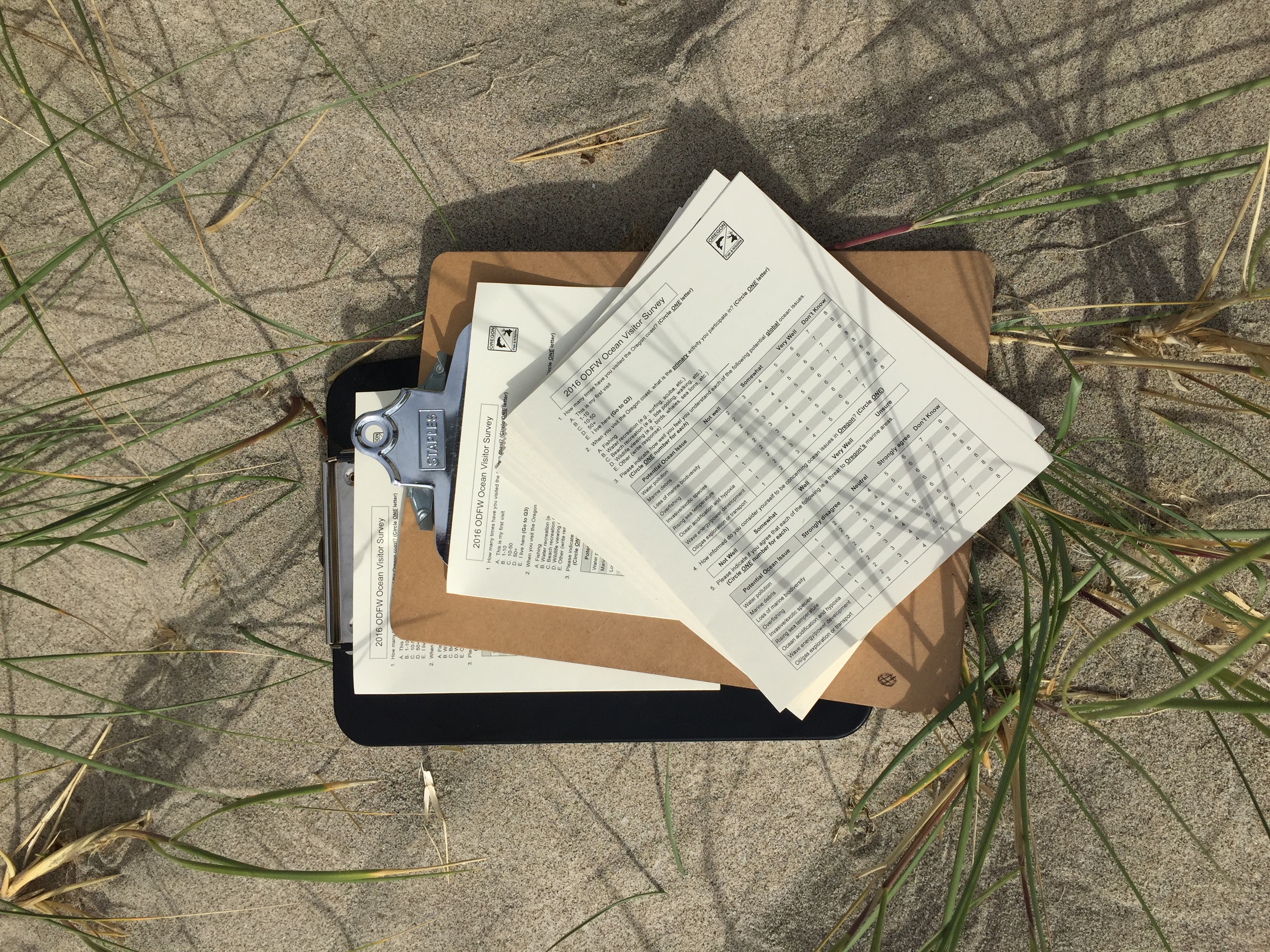
After a lot of traveling over the past two weeks, I’ve finally had a chance to rest and reflect. It’s been a mix of both personal and work travel totaling to just about 7,000 miles between plane and car. In short, I now have over 300 completed ODFW ocean literacy surveys and a sister who is married. Admittedly, those are two very distinct accomplishments to group together, but that’s just how busy the past couple of weeks of travel have been.

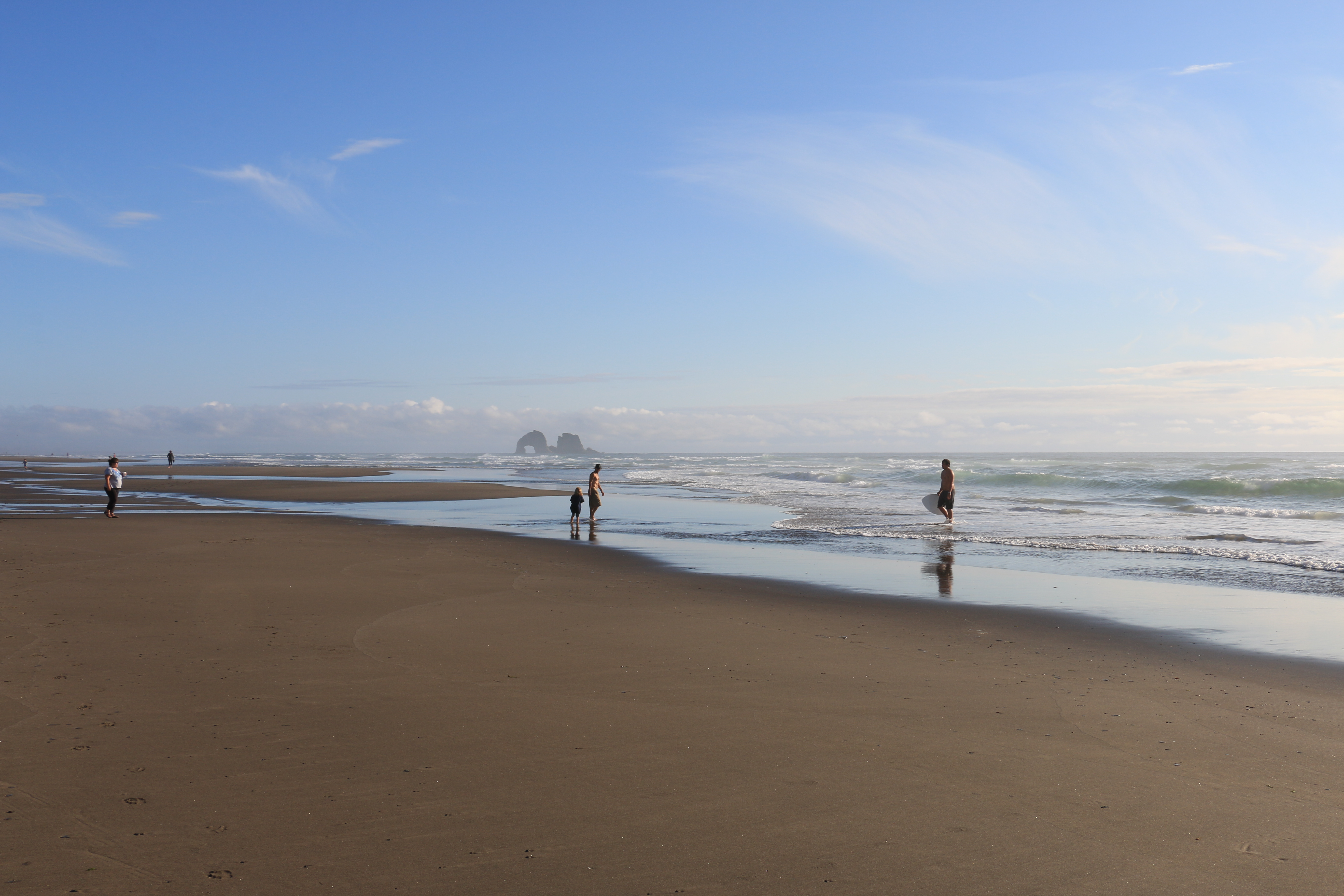
Oregon beach-goers, whom I would ask to take an ocean awareness survey as part of my work with ODFW.

Coastal visitor intercept surveys.

I wrapped up another successful round of sampling on the coast immediately after spending a week on the East coast for my sister’s wedding. If flying from coast-to-coast wasn’t exhausting enough, getting right back into the groove of driving from beach-to-beach conducting ocean visitor surveys on the Oregon coast definitely added to my collective sleep debt. I’ve been adjusting back to a normal sleep schedule, but all in all, it’s been a productive time and I’ve had a lot of time to think about my personal goals.

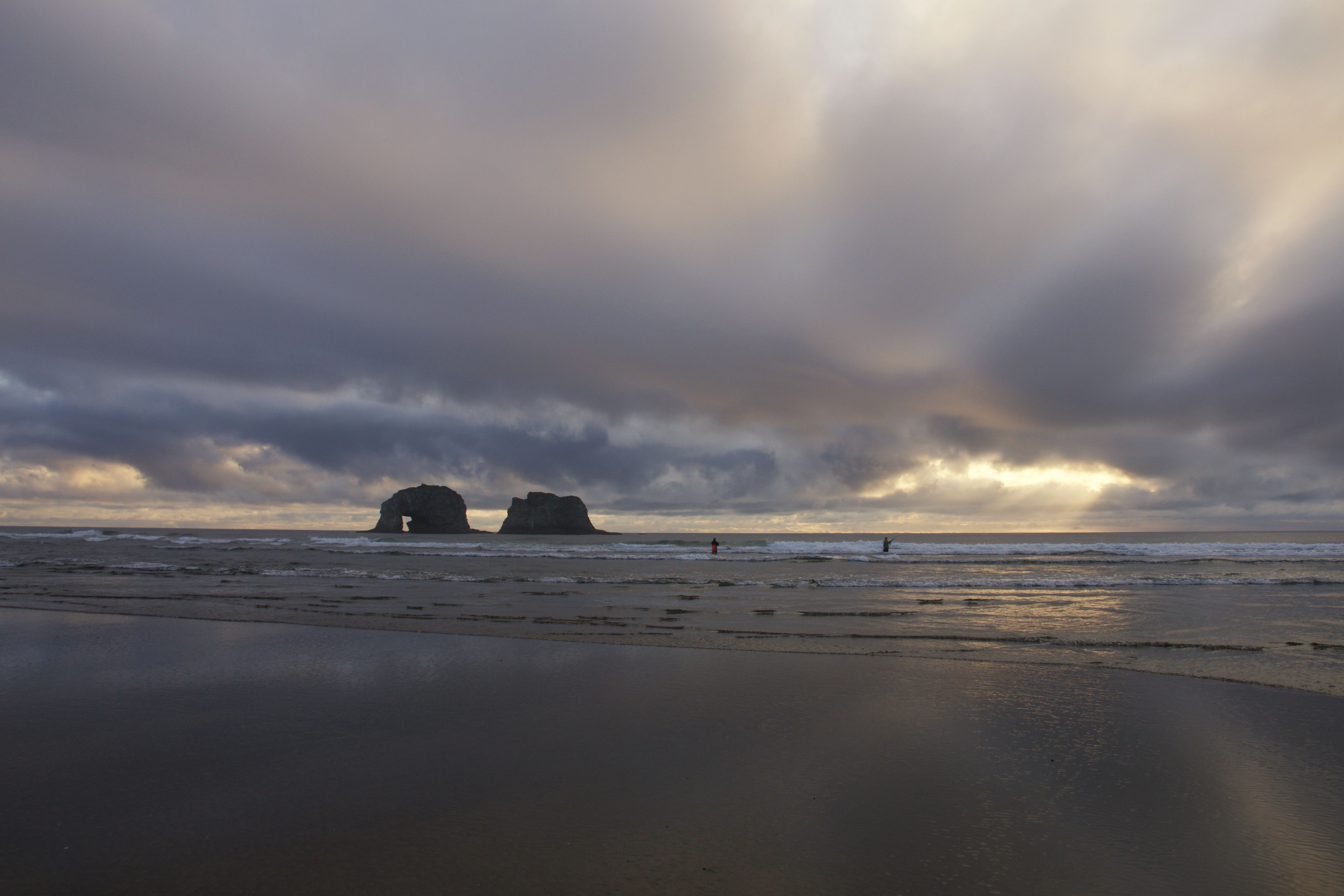
Twin Rocks

I’ve never really been able to sit still in one place for long. My built-in drive to constantly stay on the move often it brings me to new places that lead to great new adventures. That’s pretty much the story of how I found my way here (in Newport, Oregon). I went into this summer knowing that I would be leaving a lot behind back in the east, but I maintained the commitment to return home for my sister’s wedding. I guess what I’m getting at here is that travel can take a toll on you physically, and it may not be the most environmentally friendly lifestyle, but it certainly has opened doors to new adventure, education and life direction.

Oswald Beach

As I mentioned earlier, all this travel has given me time to consider my personal goals. Two of my greatest passions are conservation and photography. Between listening to podcasts and catching flights, I’ve been thinking of ways to combine the two into a life career. No matter what goal you have in mind, whether it’s attainable or not, I’ve learned that you just have to throw yourself at it. There’s no right or wrong direction, but if you wander enough, you’ll eventually find where you want to go (and learn a lot along the way).

Survey Count: 314

Whale Count: Still 8


Week 6: Fieldwork and Papers

Nothing huge to report this week! Monday and Tuesday were dedicated to getting the lab prepped for a field sampling trip to Tillamook Bay on Wednesday. That mostly involved labeling lots of sample bags/bottles and filling a plethora of tubes with 0.3g of glass beads to be used in DNA extractions next week. Although the work is fairly tedious it does payoff to get to spend a whole morning out on the water! The sampling actually went well this time and the hovercraft didn’t have any terminal malfunctions until the very last sample site. We were able to collect water, nutrient, sediment, and eelgrass samples from 7 sites in all. The down side of getting that many sites is that it takes an obscene amount of time to process the samples when we get back to the lab that afternoon. Overall, it was a 14hr day once we got the water filtered and the sediment and eelgrass rinsed. On the bright side I only had half days on Thursday and Friday so there was some time to catch up on sleep and go for a run! I spent those days scraping epiphytes off of eelgrass leaves and preparing samples for moisture content analysis. All things considered it was a good week in the office!

The big event this week that has been on my mind is that I’ve decided, with the support of my school mentor and Amy, to rework a research paper I authored last fall into a publishable manuscript. On my semester abroad with the School for Field Studies in the Turks and Caicos, BWI I spent a month doing my own research on the interactions of two groups of indicator species (2 Acroporid corals, A. palmata and A. cervicornis, and the long-spined sea urchin, Diadema antillarum). I ended up finding some interesting relationships between these three species and I would love to have this work published in Marine Ecology Progress Series. I know this is going to be a long road but I’m not too stressed (which is VERY unusual for me haha). I’ve already done all the heavy lifting so I just need to rerun some statistics, generate better figures, do general editing, and reformat the manuscript. My current plan is to ask a professor at UCSD to co-author with me and have them help me with the process. Who knows, it might just work out!

Week 4: Reptiles and amphibians and mollusks! Oh my!

Despite being a short week for 4th of July weekend this week was full of activity.

Morning at the Cascade Head marine reserve

Tuesday, I helped with a fellow intern with his sea star survey. We went out to the tide pools at Cascade Head and measured all of the sea stars we could find and checked them for signs of wasting. Wasting disease has decimated sea star populations all along the pacific coast. Scientists are curious to see if populations are recovering this year and how the juvenile recruits are faring. We searched on hands and knees in every nook and crevasse and found some juveniles on the scale of millimeters as well as many larger adults.

Sea stars were not the only thing we found. The tide pools at Cascade Head are some of the best I have ever seen. We found a tiny octopus, a school of rockfish and my personal favorite, opalescent nudibranchs!

Opalescent Nudibranch

Opalescent Nudibranch

The word nudibranch translates to naked-gill. This describes the tentacle-like structures, or cerata, found all over their bodies that are used for breathing, digestion and defense. Nudibranchs prey on many stinging organisms including the venomous Portuguese-Man-O-War. They can take the toxins from their prey and incorporate them into their cerata to use for their own defense.

The rest of the week was spent reading papers, CBRAT project meetings and attending an interesting seminar given by Dr. Burke Hales about the effects of ocean acidification on oyster larvae in Willapa Bay, WA.

The weekend came with unpredictable coastal weather. Saturday we managed to find a rain free window in the afternoon for some browsing at the weekly Newport farmer’s market and hiking at Beaver Creek state park. A benefit of the rainy weekend was all of the wildlife we found out on the trail.

Garter snake at Beaver Creek state park

Garter snake at Beaver Creek state park

We caught a garter snake lounging on a blackberry vine, a newt making his way through a pile of soggy leaves and a few quarter-sized frogs. The clouds may have obscured most of the viewpoints but we made up for that with many berry stops to sample the thimbleberry and not-quite-ripe blackberries lining the trail. We were clearly not the only ones enjoying the berries, every few yards we came tracks and scat from bear, deer and elk. Unfortunately, all of the mammals managed to hide from us, we didn’t end up spotting any bears. Maybe next time!


Week 3: Science for a changing world

Whoops a little overdue for an update. Week three was spent mostly reading, I’m still working through the literature related to decapods and pH. I had my most intern-like task of all this week which involved reorganizing my mentor’s bookshelves. Now I’m just waiting for the coffee orders to start coming in. Ha-ha.

Through all of my reading the thing that stands out the most is how far science has come in the past century. During our first days at HMSC it was remarked that now is a great time to be a scientist. This brings to mind the quote or curse (depends on who you ask) “may you live in interesting times.” Human caused global climate change has altered and will continue to alter our world in ways that are difficult to predict and understand. Many of the advances in science, especially ocean and atmospheric science in this century stem from pressing necessity rather than simple curiosity.

Waiting at the HMSC bus stop

The studies I look at focus on pH and its effect on marine invertebrates. Studies done after the year 2000 all include standardized methods of bubbling CO2 through ambient seawater pumped in from an area near to where organisms were collected. Multiple components of pH are measured and all other conditions are monitored constantly. Organisms are exposed to pH conditions predicted for the year 2100 determined by complex ocean/atmosphere computer models. In other words, good accurate science is being conducted.

In contrast, a study from 1975 looking at pH tolerance of crayfish simply put some crayfish in a jar of acid, a jar of NaOH and measured how long it took for them to die. Turns out crayfish will die within 24 hours if put in a beaker of HCl (Newcombe, 1975). They say there is no such thing as a bad question but there is definitely such a thing as poor scientific design and I am sure at least the crayfish involved would wonder if the question of how long an organism can live in pure acid is something we really need to answer.

Friday I caught a bus out of Newport and headed home for a long relaxing 4th of July weekend. It was nice to have a break from the bunkhouse and see family and friends. 

Mud, Ultimate, and Bacteria

How is it already the end of week 4…? Crazy. Time is starting to really fly by. Not a whole lot of new stuff has happened at work this week. The samples from our Tillamook field work are still being processed slowly but surely. A few fairly cool things did happen this week though.

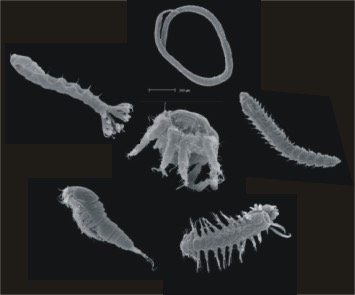
First, I learned how to run particle size analysis (PSA) on sediment samples. While it may seem pretty useless to know what the sizes of your sediment grains are, this is actually very important information. By determining the particle sizes, you can infer lots of other info about the hydrology of the habitat. For instance, in marsh sediment samples PSA can help model how fast the marsh will drain as the tide goes out or how fast it will fill. I’m sure reading Jess’ blogs will give you more info about this since her research revolves around this kind of analysis. PSA also lets you infer what the microhabitat of the environment is like. The term “meiofauna” refers to organisms that spend their lives living in between sediment particles such as grains of sand on a beach. This is a very dynamic habitat and there is huge diversity in the taxa that call this environment home. The project I’m working on is mainly interested in how fecal indicator bacteria can colonize the top layer of sediment and potentially become resuspended by wave action and storm winds. For some reason I can’t caption the picture below but it’s a few of the representative meiofaunal taxa.

Meio

Second, Amy and I went on a road trip up Yaquina Bay Rd. to try and find some eelgrass sampling sites for my side project. All in all, we were pretty successful! We found three sites that were fairly accessible and easy to relocate so we can definitely resample them later in July. The mud was easier to deal with this time but I don’t think I’ll ever really enjoy standing on a surface that isn’t solid haha; my brother keeps making fun of me that I’m fine with freediving and skydiving but I hate walking on some soft mud. Something about solid ground giving way just isn’t natural haha. The mud was actually so bad in one site that Amy and I decided to butt-scooch down two fallen trees to get to the waterline. I’m sure anyone who saw us had a good laugh.

Third and finally, the results of the IDEXX tests targeting Fecal Coliform and Enterococci are continually returning high hits for eelgrass leaves! The loosely-attached biomass on eelgrass leaves is full of indicator bacteria and this result suggests that gentle agitation by rain, storm action, waves, and wake could release the bacteria into the water column. This is an important early result because it suggests that storm-based water sampling for indicator bacteria could be very inaccurate in Oregon and might be resulting in extended closures of shellfish harvesting areas.

On a non-work note I found out about an ultimate Frisbee league this week that happens every Monday and Thursday night in Newport. “League” might be a bit of an overstatement but it’s certainly a whole lot of fun! One of the researchers at the EPA and Jess’s boss, Jody Stecher, and his wife, Linda, are very into ultimate and always show up. Jess, another intern, Amy, and myself are actually going to their house tonight to make pasta. Not a bad way to round out week 4!


Image references:

http://www.marbef.org/wiki/Meiofauna_of_Sandy_Beaches


Little Green Aliens

Invasive species are an especially hot topic among today’s scientific community. Non-native species have been shown to negatively impact the health of native ecosystems, especially in aquatic environments (e.g. Lionfish, Snakehead, Zebra Mussel, Nutria, and Asian Carp). It is important for coastal managers to detect invasive species soon after their arrival so that successful eradication and management plans can be implemented. Therefore, invasive species monitoring is conducted at most NERRs.

The South Slough NERR alone is home to over 50 non-native marine species. Of these species, few are as infamous as the European green crab. As I discussed in my last post, I recently started a project aimed to investigate the distribution and population of green crabs in South Slough. I collected samples continuously for 2 days at my first set of sites. While dungeness and hairy shore crabs were most abundant, I collected 15 green crabs at the mouth of the estuary. Specimens were measured, sexed, and weighed before being humanely disposed of. The data collected from this project will be used to manage the spread these little green aliens and potentially prevent future invasions along other coastlines.