Day 6: A Day on Ngarkeklau Island

Our day started off early in the morning at 5:30 am when we paddled out to watch the sunrise as we floated to Ngarkeklau island in hopes of seeing some dugongs. Unfortunately we didn’t spot any, but we still got to experience the peacefulness of the early morning out on the ocean. The island of Ngarkeklau is an isolated island managed by the Ebiil society in an effort to conserve the mangroves and other unique species, including sea turtles.  

Image: Morning paddleboard to Ngarkeklau

Upon arrival at Ngarkeklau island we explored the tree named Demdemkur. A Palaun legend says that the God’s were having a throwing contest to see who can throw their betelnut the furthest. A trickster god put a bird in his mouth instead of the betelnut, and threw the bird which ended up landing the furthest away. This spot is where the tree lies. After looking at Demdemkur, we wandered the island where we got to explore the mangroves and even see some previous sea turtle nests. We then went and collected clams on the shore with Cindy, which would be used to make, demok (clam chowder). While searching for clams we found other interesting shells and even some broken pottery from when Palauans used to make pottery from the clay on the island. While exploring, we noticed a lot of trash on the island that drifts in from Asia; we even found a glass fishing float from the Japanese when they colonized the area.

Image: Demdemkur tree
Image: Searching for clams with Cindy
Image: Anna holding her Japanese fishing float

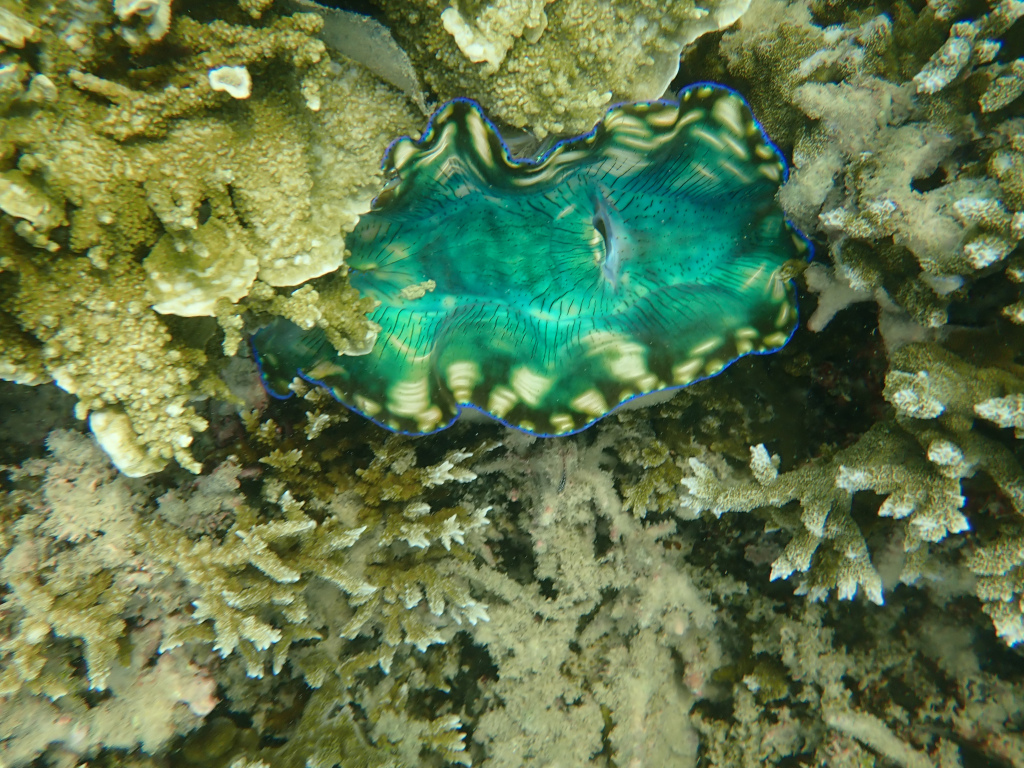
After a few hours on the island we got on the boats to go snorkel the Ebiil channel where we saw some awesome fish and coral structures. Bryan and Scott told us how last year they noticed a lot of dead coral and this year they noticed there was some growth, meaning the coral in the Ebiil channel is recovering. We got to see giant clams, tons of fish, and even a baby shark! Seeing the giant clams in their natural habitat was especially cool after visiting the aquaculture center and planting some ourselves. The Ebiil channel is also a marine protected area (MPA) which means there are certain laws and regulations in place to protect the marine life within that area. It was very special to be able to snorkel in an area that was protected, and be able to see the benefits of these MPA’s.

Image: KB diving with a starfish
Image: Baby shark (doo-doo doo-doo)
Image: Alex with a giant clam
Image: Drone footage of all of us snorkeling at Ebiil channel

After an amazing snorkel, we headed back to the island where we got to enjoy a delicious lunch served on coconut leaves.

Image: Lunch; fried fish with veggie slaw, taro, and rice

After eating, we hopped back on the boats and headed out to the open ocean, where we got to fish using the hand lines that we made yesterday. We made some awesome catches, including Red Snappers and a Black Saddled Coral Grouper, and even got an unexpected visit from a sea krate. Some of our catches had to be released back into the water because they were either a protected species or they were juvenile, meaning they haven’t been able to reproduce yet.

Image: Rachel with the biggest catch of the day: a Red Snapper
Image: Sea Krate on our boat

After some fishing we headed back to camp Ebiil where we learned about the anatomy of a fish and the type of data that fisheries collect for sustainable fishing. Some of these include the size, gender, and age. We then had a demonstration by KB and Midner on how to properly scale and gut a fish, and were able to try ourselves for those of us who wanted to. This would be our dinner for the night.

Image: Fish scale and gut demonstration

We ended the day by sitting at the dock and enjoying the beautiful sunset. After dinner with our freshly caught fish, we did a group reflection of the day, and got to enjoy smores by the fire.

Image: Sunset at Ebiil

Written by Veronica and Rebecca

Day 5: Mangrove Ecosystems and Clam Planting

Figure 1. Mangroves viewed from an inshore channel.

The last several days we have been learning about the traditional food systems of Palau. After breakfast, we began the day by preparing hand lines, which we will be using when we go bottom fishing tomorrow.

Figure 2. From left to right: Midner, Jocelyn, Hilary, Veronica, and Rebecca preparing handlines.

Next, we grabbed the paddle boards, kayaks, and snorkel gear to head out to the mangroves.

Figure 3. From left to right: Dustin, Alex, Anna, Jocelyn, Brian, KB, Scott, Omar, Sharon, Nwe, Aot, Brittney, and Red at the mangroves.

Aot talked about the many different benefits of the mangrove ecosystem. Mangroves are unique trees with many adaptations. To survive in the saltwater, individual mangrove trees use “sacrificial leaves”, which they divert salt from the ocean into, instead of dispersing the salt through the whole tree. Another strategy is the aerial root structures, which vary from species to species. The four types of root structures are buttress, knee, snorkel, and prop. Because of the complex root structure, mangroves protect the coastlines from wave erosion, typhoons, tsunamis, and catch sediments from terrestrial runoff. These ecosystems are also vital to the traditional subsistence practices of Palau. Women go out foraging at low tide for clams, fiddler crabs, and sea cucumbers. At high tide, when larger fish come near the shore to feed, men will spear fish for the larger species such as mangrove snappers, rabbitfish, and mangrove crab. These systems also function as a refuge for early growth of juvenile fish, which then disperse to support the reef fisheries. As estuarine systems, mangroves have high productivity and high biodiversity.

Figure 4. Mangrove prop roots on the left, with snorkel roots on the right.

After the introduction by Brian, Scott, and Aot, we tied up our paddle boards and went snorkeling along the edge of the mangroves. Along the edge of the shore, we primarily saw snorkel roots, but saw more prop roots when we swam up inland channels. Further offshore, beyond the snorkel roots, there was patchy seagrass. Throughout the seagrass, there were mantis shrimp holes guarded by different species of shrimpgoby. This is a mutualistic relationship, where mantis shrimps will dig the holes, and the shrimpgoby guards the hole; the shrimpgoby gets a home, and the mantis shrimp is protected.

Figure 5. Mantis shrimp and shrimpgoby house.

When we swam into the mangrove channel, it was much calmer than in the ocean along the shore. It was cool to experience firsthand how the mangroves keep the waters calm.

When we got back to Ebiil society from our excursion in the mangroves, the power was out so we had a few hours to catch up on journaling, relaxing, and lunch. We wrapped up lunch with a chemang (mangrove crab) that Noah caught!

Figure 6. Noah’s chemang.

Once the boats were fueled up, we piled on three boats and took a 20 minute ride out to Bngall, a traditional fishery which has been degraded by overfishing. The Bngall fishery is located just south of Ollei where we have been staying, near the island of Ngerkeklau.

Figure 7. Garret’s drone footage at Bngall.
Figure 8. Group photo right before clam outplanting. Picture credit Rachel.

The giant clam restoration area was marked by four white buoys, approximately a square kilometer in area. Because it was low tide, we were unable to boat all the way to the restoration area. We put on our snorkel gear and swam in about 2 feet of water for about a kilometer to meet with the smaller boat, which had the clams from the hatchery for outplanting.

Figure 9. Tridacna species ready for outplanting.

Omar explained how to proceed with outplanting to increase the chances of clam survival. He said to plant close to a protective structure such as seagrass, a rock, or coral, so that wave action would not knock the clam over leaving it to die. However, he also said not to put the clams too close to coral or rock, to make sure the clam had room to open and to grow. We planted 55 clams in Bngall!

Figure 10. KB outplanting two Tridacna.

We returned to Ebiil society, where the power was still out and dinner was going in the smoker. We had another amazing meal with tapioca, chicken, fresh caught fish, and the taro which we harvested yesterday.

Most evenings we gather for discussion and reflection on the activities of the day, and talk about all that we are learning. Tonight, welcomed Ann (executive director of Ebiil society) home to Ollei, and had the chance to hear about how she saw the need for cultural resurgence and natural conservation, and how she acted on that.

Figure 11. Brian and Ann at evening discussion.

The earliest project of the Ebiil society was establishing protections for the Ebiil channel. Ann also told us the story of how the sea cucumbers outside of Ollei were overfished. Traditionally a women’s fishery, the sea cucumbers were targeted by the men in the community who had boats for export to China. The fishery was stressed to the point where the lack of sea cucumbers began to effect other organisms in the system, with meas (rabbitfish) being the next thing to disappear from the waters. The desolation of the system impacted the women in the community the most. Once the community understood the damage to the fishery, it was time for action. The mechas (women elders) knew the spawning cycle of the sea cucumbers, which was instrumental to the success of restoring populations. Ann attributes the success of Ebiil to the community engagement and country leadership involvement. Without Ann’s leadership in the early days and continuing behind-the-scenes contributions, Ebiil society would not be where it is today.

Day 4: Mesei, Monoliths, and Monster Fish

Throughout the trip we have learned various ways to use the plants that surround us. Today, we started out braiding betel nut fibers into bracelets to either use on our baskets we made last night or just to wear.

Handmade basket woven from coconut

“A taro field is the mother of life.” – Palauan Proverb

Hilary, Veronica, and Dustin holding Taro that they harvested

Last night we had an honorary guest, Anne Marie, come and speak about her taro garden. She explained the history of how taro is grown and its significance in the Palauan culture. A point that has been stressed every time we learn about taro is that this is a plant that grows on Palau and is Palauan. Rice, and many other foods, are imported, but taro is always here. “Taro is our staple food” is a phrase that comes into conversation often.

There is a legend of how taro is easier to grow in some areas and is not so easy to grow in others. It is said that there was a woman who lived all over Palau, in each place she lived she planted taro. In areas where the taro is harder to grow, the wife liked the husband she had, so she spent little time in the fields and lots of time at home. In areas where the taro is much easier to grow, the woman did not enjoy time with her husband, so she spent more time in the taro patches. This story is used to explain why taro is so difficult to grow in this part of the island. This morning, we walked about 15 minutes to the taro patch that is owned and farmed by the local women, just down the road. Anne Marie showed us the process of harvesting the taro plant, it’s uses, and how traditionally women were the ones who would work in the taro fields. While the women worked the taro patch, the men would set off to catch fish for the day. The taro patch is a source of food through all times, good and bad. It is an anchor that allows for food independence and security.

Taro field from aerial viewpoint using drone
Drone video of the class working in the taro patch

While washing our taro plants in the river, Anne Marie showed us a rock that lay by the roots of a tree next to the taro patch. We were told that this was a sacred rock that fell from the sky called “Emeraeche” which is Palauan for “North Star”. It made the river by rolling down through the forest. She said the rock was unusually heavy for its size, and when it was moved from the river to rest by the tree it took five men to pick it up.

The sacred rock at the base of the tree

Midner showed us how to climb the betel nut tree. A number of us tried, but we will have to make sure we practice a bit more to master the technique.

Midner climbing the betel nut tree

After our lesson on taro, we helped her clean up debris from last night’s storm at the construction site downstream of the taro patch. The buildup of the debris was contributing to higher water in the taro field and a subpar drainage. We managed to get much of the debris removed from the dam quickly by working a team to pull debris and carry it away. The water quickly started to flow again and we expect the water level to be lower by tomorrow.

Clearing the debris down below the taro field.
The finished product

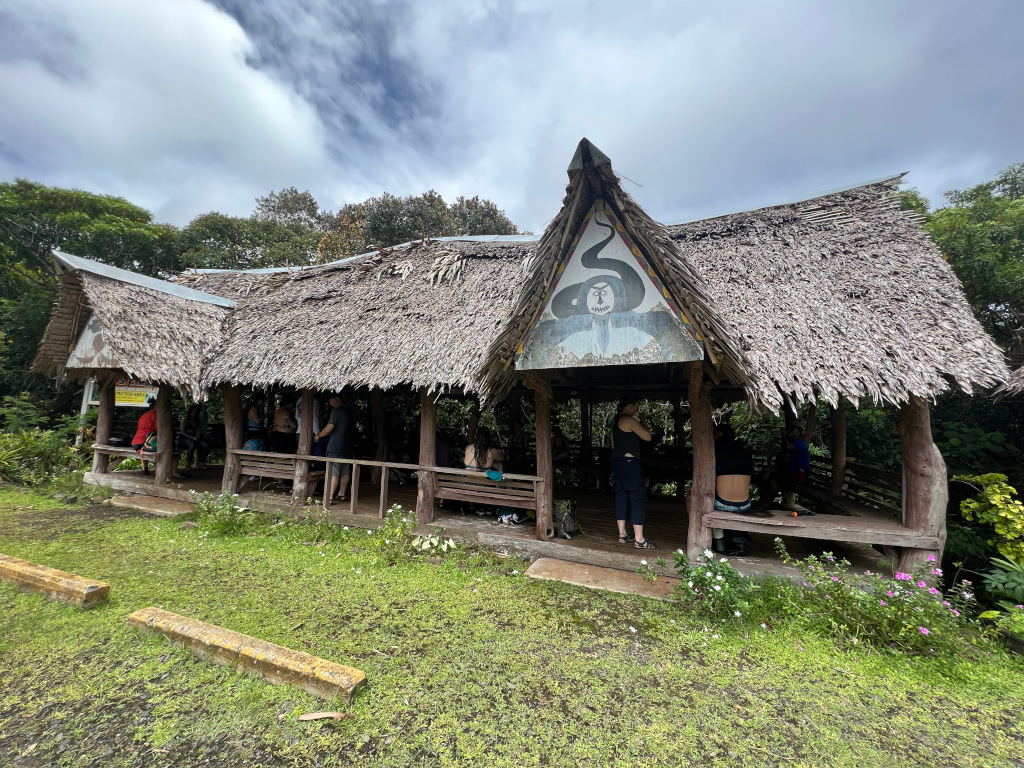
After lunch we decided to visit the historical stone monoliths or Badrulchau. We met up with Cristopher Kitalong who told us the legends of the monoliths. This was presumed to be the foundation for a large structure or Bai which was typically the local meeting house for men within a village. The legend goes that the gods were building this structure were only active at night. One god from the south wanted to keep his village powerful, so to stop the building of the house he shot fire into the sky to make a rooster crow. This fooled the gods in the north into thinking that day had come; they thought it was morning and dropped the stones where they lay on the ground today.

Everyone listening to Christopher Kitalong telling the story of the stones


After the monoliths, we made our way back to the Ebiil Society. Many went paddleboarding, fishing, and snorkeling, while some took a much-needed nap. To conclude our day with a sweet treat, Bryan brought us ice cream and sodas. In a few minutes we’ll be eating yesterday’s catch, doing our dishes, and falling asleep.

Noah’s fishing update:
Noah went out to the outer reef with the rest of the paddle boarders, he reeled in another, bigger, Giant Trevally after having a fierce battle with the 25 pound big boy.

(This blog entry was written by Garrett, Haley, and Alex.)

Day 3: Trees!

We started our day heading out to the state of Ngchesar.  There was an area where dead trees had been observed and our task was to survey and try to determine what the cause of this was. We split into groups and set off through the tall bush and grass to different areas to make our observations and hypotheses.

Image: Haley making observations of a suspected tree system that was dying.

We observed lichen, burrow holes, evidence of past fires, and erosion. We came back to the bus full of excitement to share our findings with our classmates.

Image: Dustin, Melissa, and Hilary comparing notes

Next, we headed north to Ngardmau to the bauxite mines and had lunch before our next project. The bauxite mines were historically used by the Japanese up until the end of WWII. The result of this was that the soil was left degraded and generally unproductive. The Ebiil Society and the state of Ngardmau are undertaking a project to plant native trees that will reestablish vegetation to restore the site.

Video: Drone footage of the reforestation sites taken by Garrett

After an introduction to the different types of native trees and a planting demonstration, we set out to work. We planted 192 trees, with coconut husks around the base of the tree for protection, and then placed palm fronds between the rows to prevent erosion.

Image: A newly planted Btaches tree (Calophyllum inophyllum)

We then took samples of soil from the site we planted at today to compare to soil samples taken from a site previously planted in 2020. The sample from today’s site will provide a controlled baseline to detect if there is any change in the pH in the site from 2020. The hope is that the plants will help decrease the amount of acidity in the soil.

Image: Jocelyn and Dustin collecting a soil sample

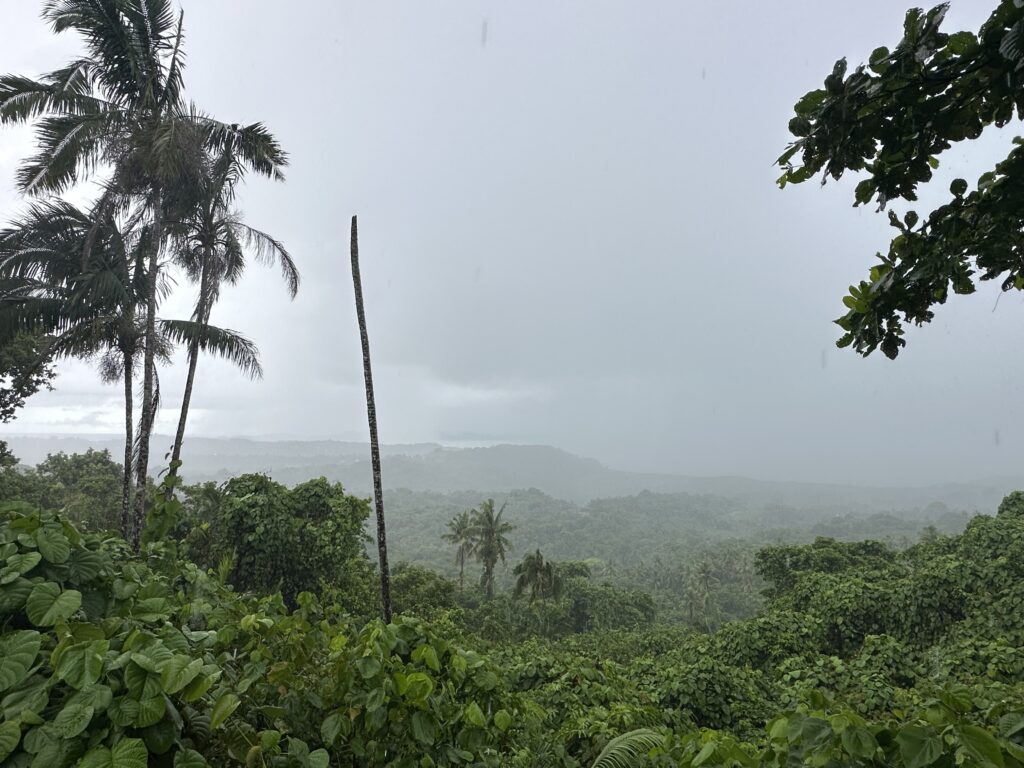
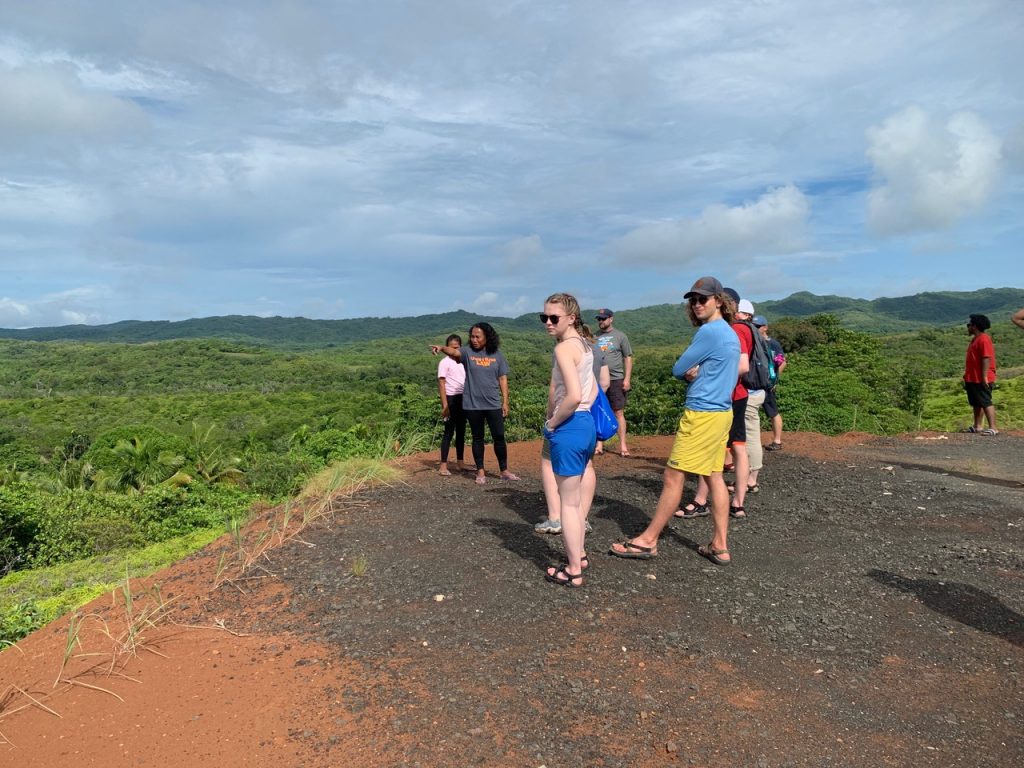
Piling back into the bus after a hard day’s work, we headed to Todai Light House, not far from the Ebiil Society. This site would give us a great view of a watershed above the taro fields. It began to downpour while we were there and according to Scott “You can’t have a watershed without water!”

Image: The watershed viewed from the Todai Lighthouse

We walked around the area to look at the site where the remnants of the lighthouse are and the group bonded while hiding away from the rain in a nearby picnic hut.

Image: A group of students huddling together away from the rain

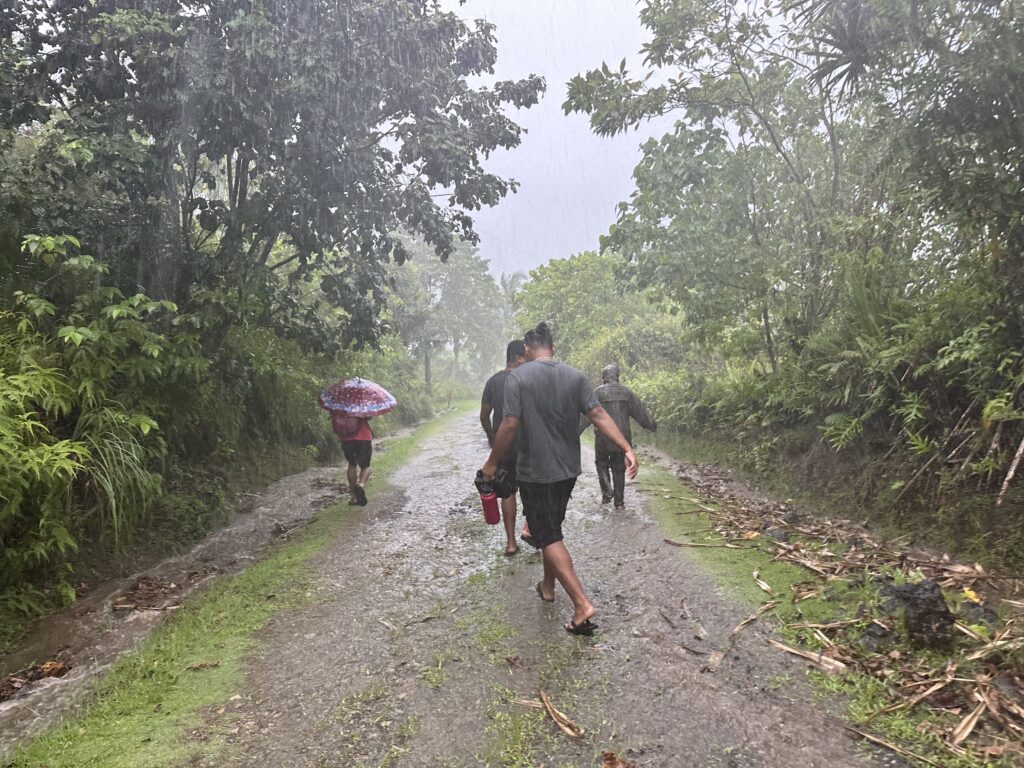
While most took the bus back to the Ebiil Society, some of us decided to take a walk in the rain, making observations about how runoff from heavy rain can affect the ecosystem. Returning to a flooded home, we set to work rescuing adrift flip flops and fishing poles. After drying off, we relaxed for the evening of our rainy day and then had some delicious food for dinner.

Image: Walking back to the Ebiil Society in the rain

After dinner, we all gathered in the learning center to listen to two local Palauans, Tino and Anne Marie, speak to us. With the help of Cindy translating Palauan to English and vice versa, we learned about their expertise in the fields of fisheries and taro cultivation. They told us their backgrounds and answered our questions.

Image: Anne Marie, Tino, and Cindy speaking with Garret listening attentively

Today’s blog was written by Alanna, KB, and Alix

Day 2: Koror to Ollei

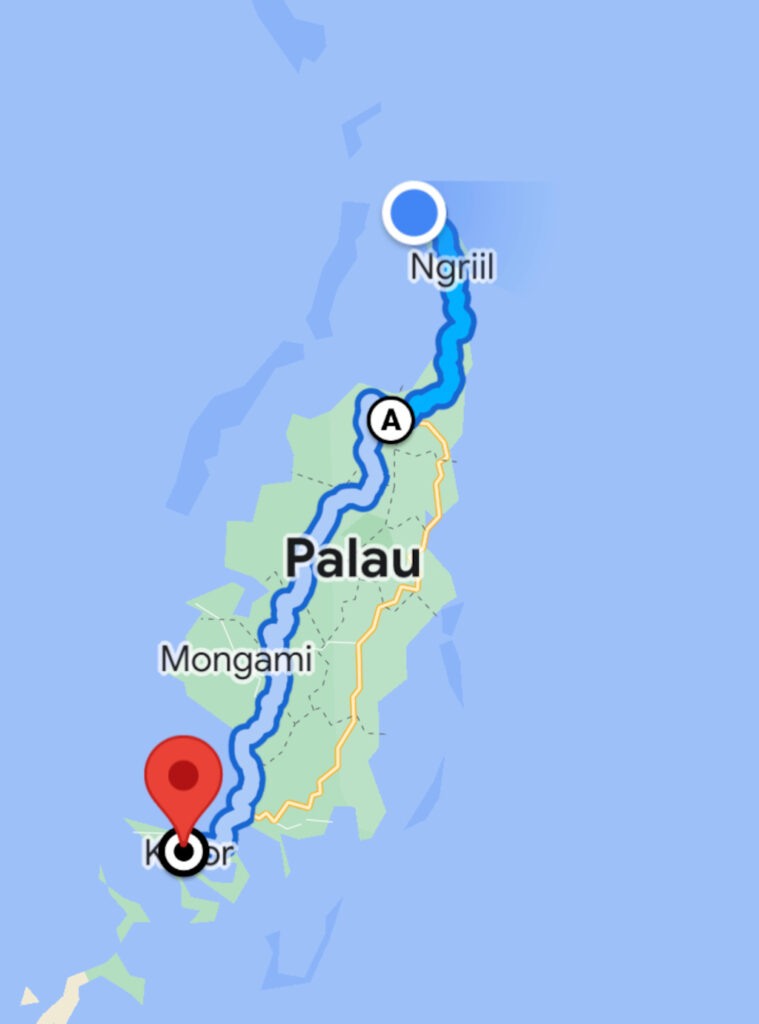
Our day began at 9:00 AM when everyone gathered their belongings and hopped onto the Palau Community College (PCC) bus.  This was the start of our journey north to the Ebiil Society in Ollei  (www.ebiilsociety.org). We were joined by two PCC students, KB and Midner, and by Dr. Nwe, who will all be with us for the remainder of the course.

Image: All ready to go!

Image: Route for today, PCC to Ebiil with a stop (A) at Ngardmau Waterfall.

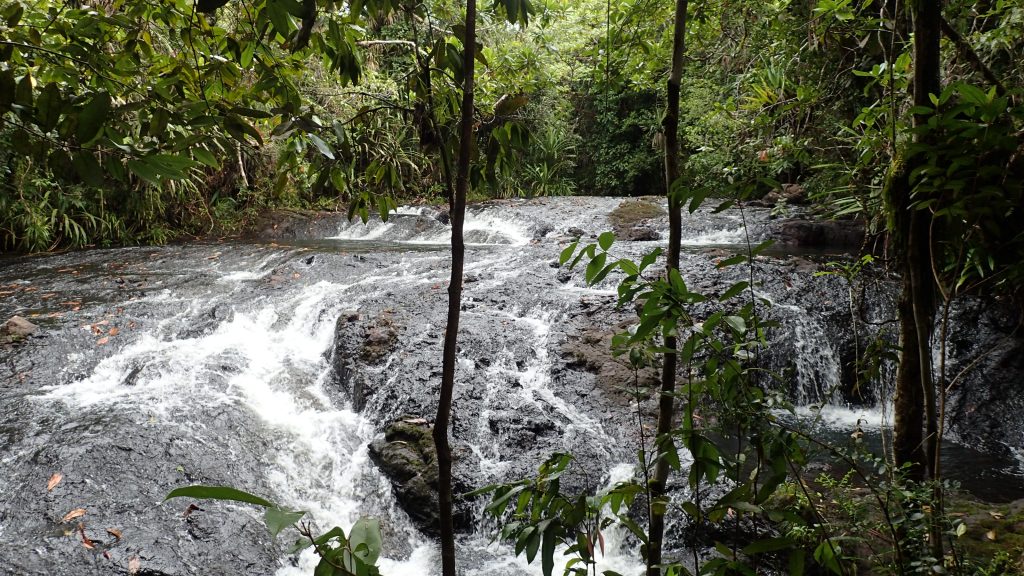
After traveling through four states, passing ancient earthworks and grasslands, we arrived at the trailhead to the Ngardmau Waterfall. We trekked through the jungle down many stairs (hundreds according to Bryan). Part of the path crossed a single raised rail that had once been used for a tourist tram as an attempt to bring ecotourism to the area.  However, it is now abandoned after that attempt failed. We also walked along the remains of a Japanese railroad that was used to haul bauxite from a nearby mine when Palau was under Japanese occupation. We encountered carnivorous pitcher plants growing in the nutrient-poor volcanic soil, causing them to evolve to feed on insects for sustenance. Other things we saw were several orchid species (there are 80 in Palau!), stingless bees, toads and guppies.

Image: Starting the hike down the stairs.

Image: Remnant tracks of Japanese bauxite trains and tourism rail.

Image: Carnivorous pitcher plant

Image: The beautiful Ngardmau Waterfall.

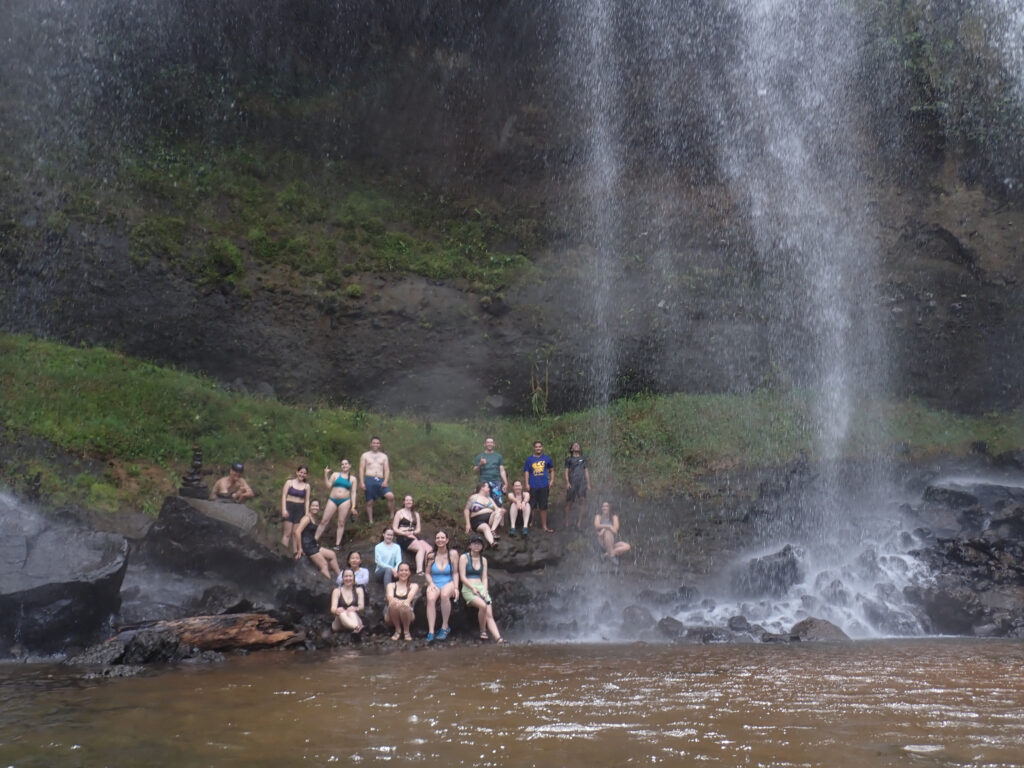
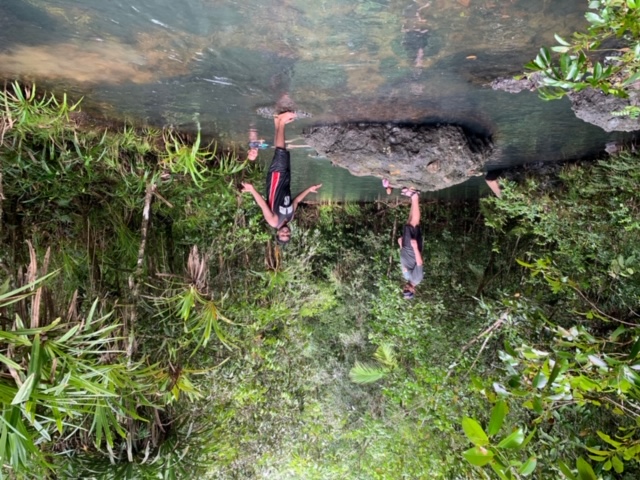
After reaching the falls, we took the opportunity to relax and take a dip in the water. Then it was time to make the long trip back up all those stairs so that we could eat our bento box lunches and continue on.

Image: Students at the waterfall.

Image: Garret, KB, Midner, and Noah hanging out.

Image: Lunch spot.

We arrived at the Ebiil Society and were welcomed by Cindy, then settled into our dorms for the next five days. While others were exploring, a few of us had the chance to learn about collecting and peeling betelnut leaves. The leaves of betelnut are commonly used for wrapping food or even gifts. Cindy taught us how to find good leaves for peeling and the proper peeling techniques.

Image: Jocelyn, Cindy, Anna, and Haley harvesting betelnut leaves (Areca catechu)
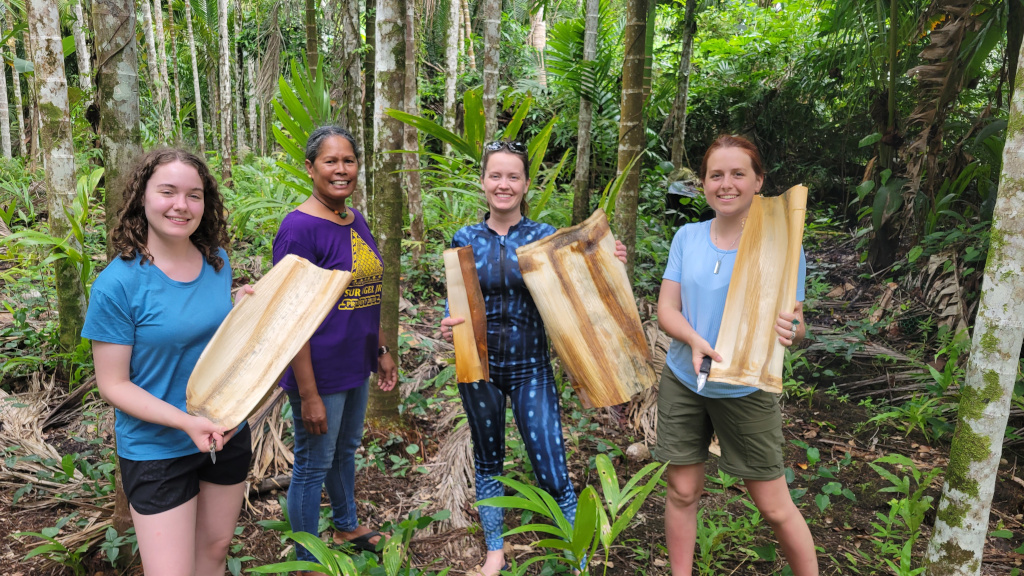
Image: Cindy showing Jocelyn proper peeling techniques

Everyone then broke out their snorkeling gear and we headed down to the docks. We swam through sand flats, seagrass beds and patch reefs where we encountered some familiar animals from the day before (the chocolate sea star, the blue sea star, and giant clams), as well as a few new ones.
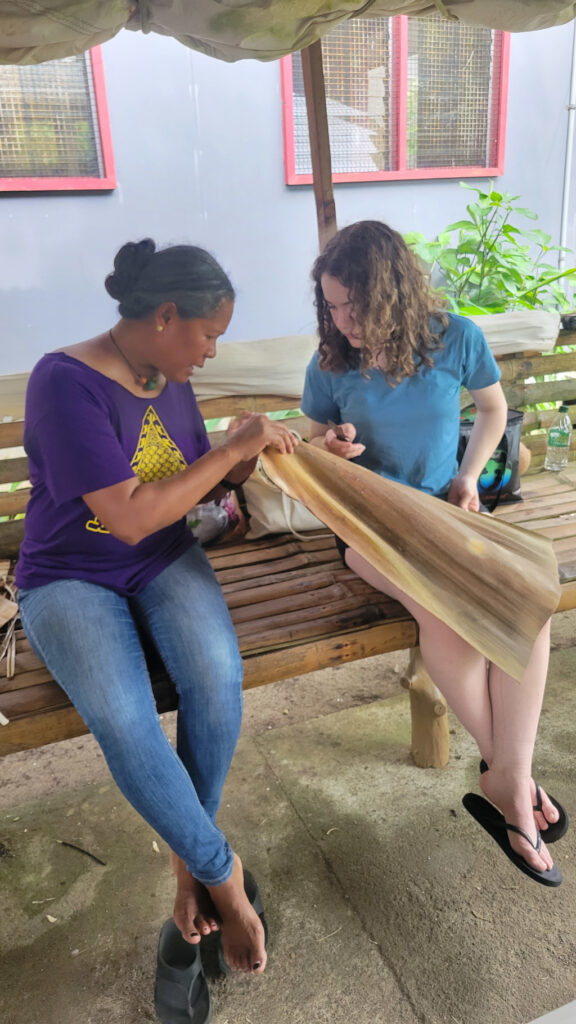
Image: A familiar friend the giant clam.

Image: A network pipefish (Corythoichthys flavofasciatus)

While others were snorkeling, Noah caught a bluefin trevally (Caranx melampygus) that he brought back to Ebiil for dinner.  They used it to make us an amazing poke and fish soup.

Image: Noah and his catch.

Image: Dinner time.

We ended our day with an evening group reflection on what we had seen and learned. We’re excited to continue spending time here at the Ebill Society.

Today’s blog post was written by Jocelyn Wilson, Hilary Hillis and Melissa McMullen

DAY 1: Orientation

Hello! This is our first day of OSU’s 2023 Ridge to Reef class.

Our day began by gathering in one of the Palau Community College classrooms where we became acquainted with one another and were introduced to the class curriculum for our two week course. After the briefing we ventured out in the pouring rain to our new form of transportation, the Palau Community College bus.

(Image: Palau Community College Bus)

Our first destination was the Belau National Museum in Koror. Upon entering the first exhibit we noticed that new research had been compiled to exemplify the most up to date information on the monumental earthworks of Palau. This research process was done using LiDAR, these earthworks are the earliest expression of earthen monuments in Oceania. 

Upon moving to the upstairs exhibits, we found that the presence of Germans greatly influenced the ecological and cultural environment of Palau. German currency was the first form of foreign currency to be introduced to Palauans. The German Channel was created in the Rock Islands as an easier alternative for passage. This channel was created through means of explosives devastating wildlife. Mixed in with these exhibits were testimonials from Palauan’s who lived during these times. 

After exploring the gift shop we stumbled upon a shelf of old license plates. Shuffling through, one of our classmates came across a very familiar logo.  

(Image: OSU license plate at Belau Museum)

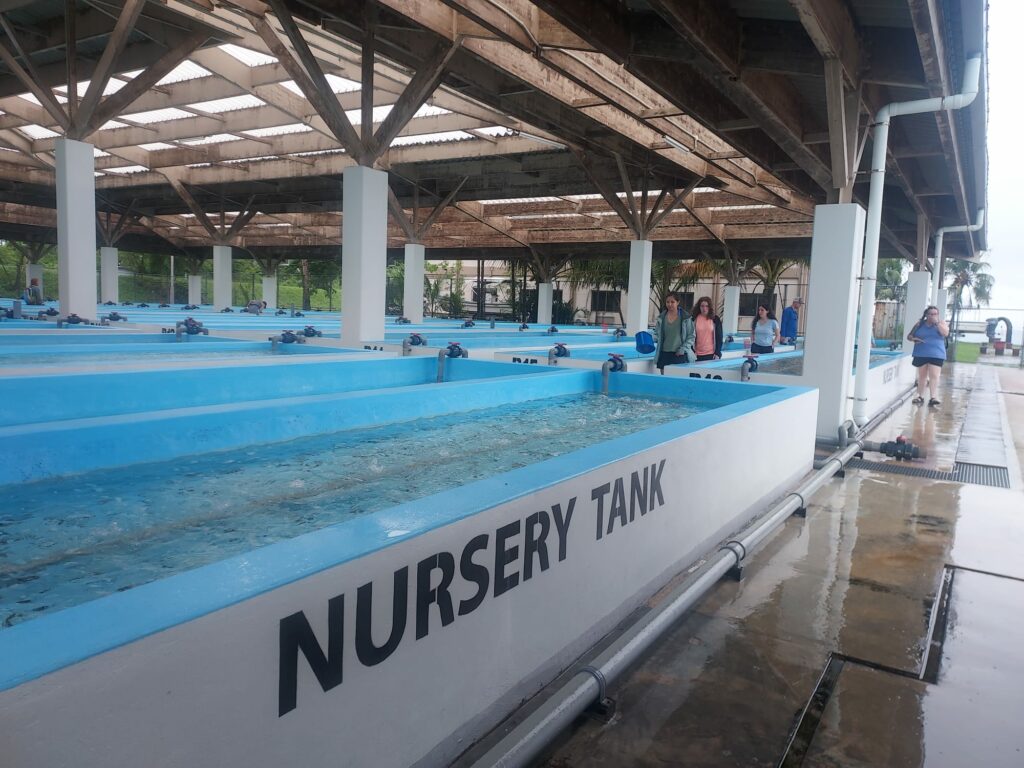
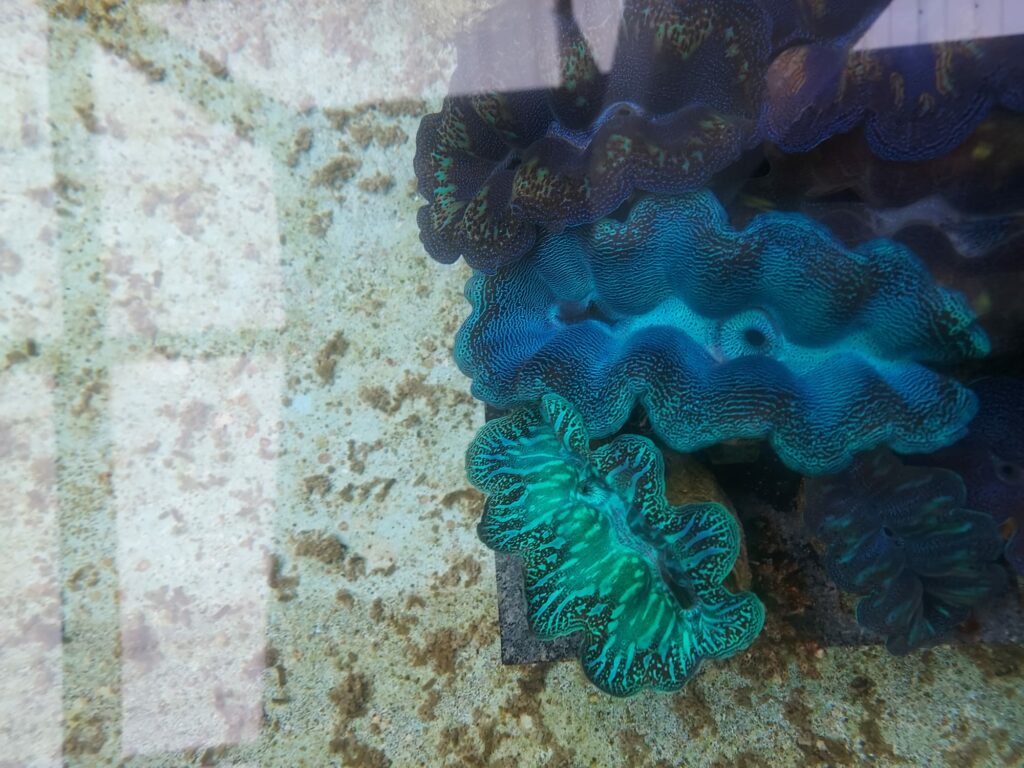
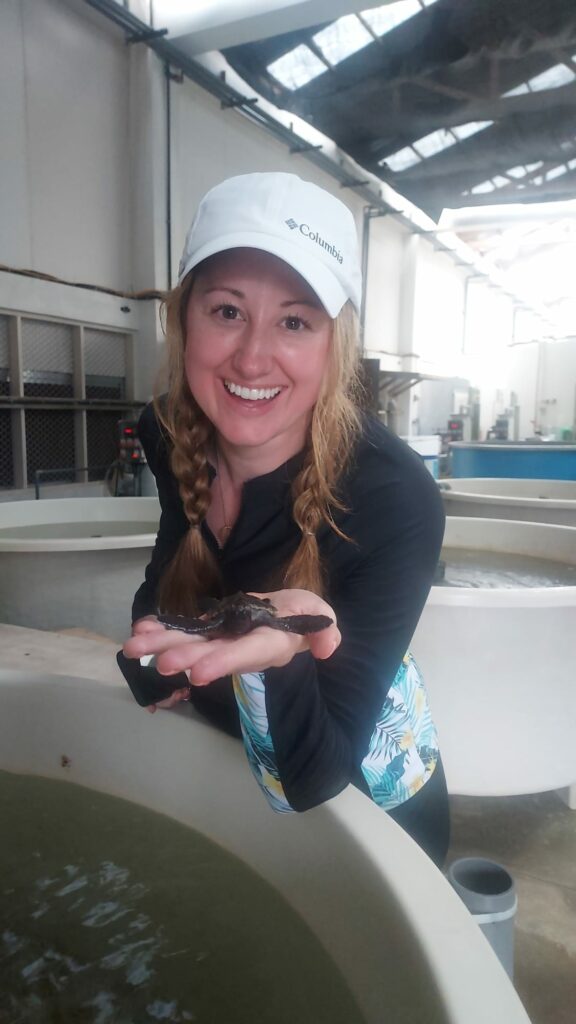
Our next stop was the Palau National Aquaculture Center. It was here we learned about the complexities of giant clam aquaculture and their species. In the wild a giant clam such as the Maxima can live past 200 years. However, in captivity they can only survive a few decades. Which is why the aquaculture center plants them in the wild. We also learned that clams are identified by their shells and not their colors or lack of colors. Palau was the first to successfully cultivate giant clams in captivity.

(Image: Palau National Aquaculture Center Entrance)

(Image: View of Giant Clam Aquaculture Facility)

(Image: Nursery Tanks)

(Image: Giant Clams )

(Image: Hilary (an OSU Student) holding a baby Hawksbill sea turtle)

After the Palau National Aquaculture Center, we made our way to the Palau International Coral Reef Center. At this research institute we encountered chocolate chip sea stars and sea cucumbers in their interactive touch tank.

(Image: Chocolate Chip Sea Star at the Palau International Coral Reef Center)

(Image: Bryan showing Brittney (an OSU student) the chocolate chip sea star)

(Image: Blue sea star)

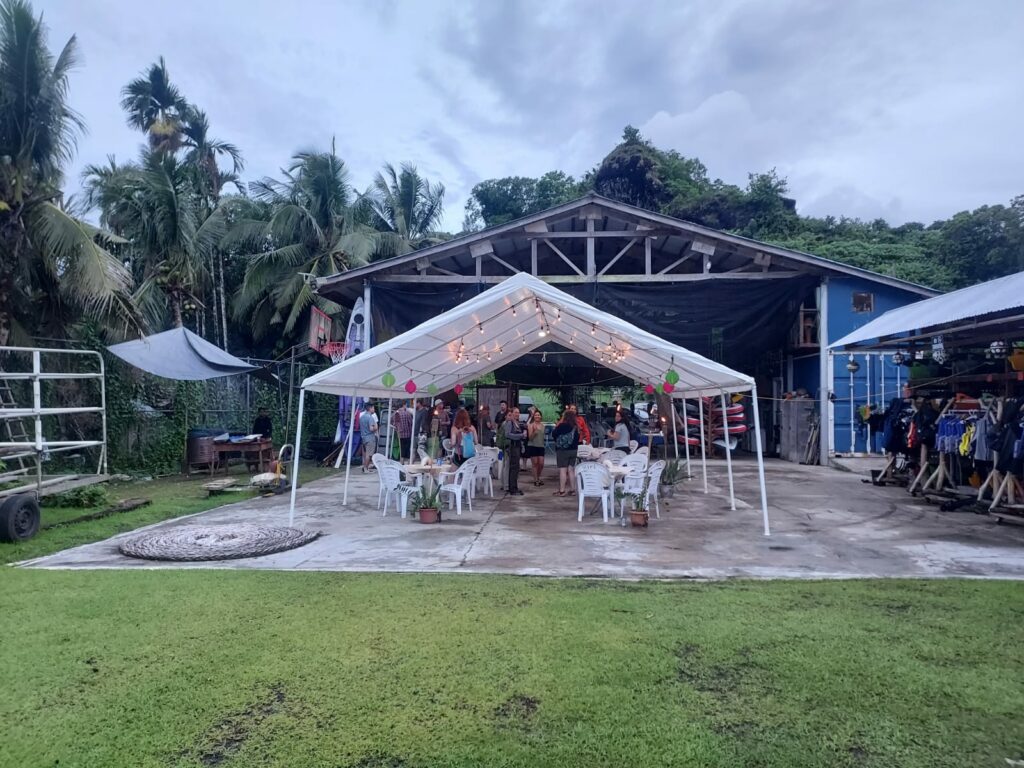
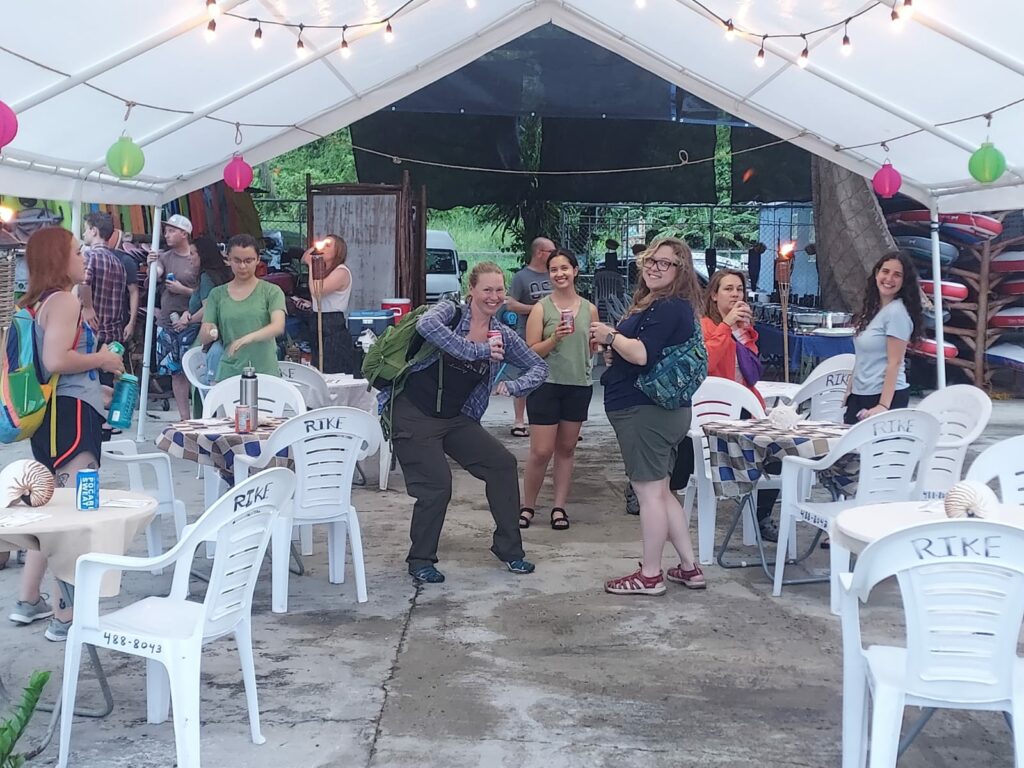
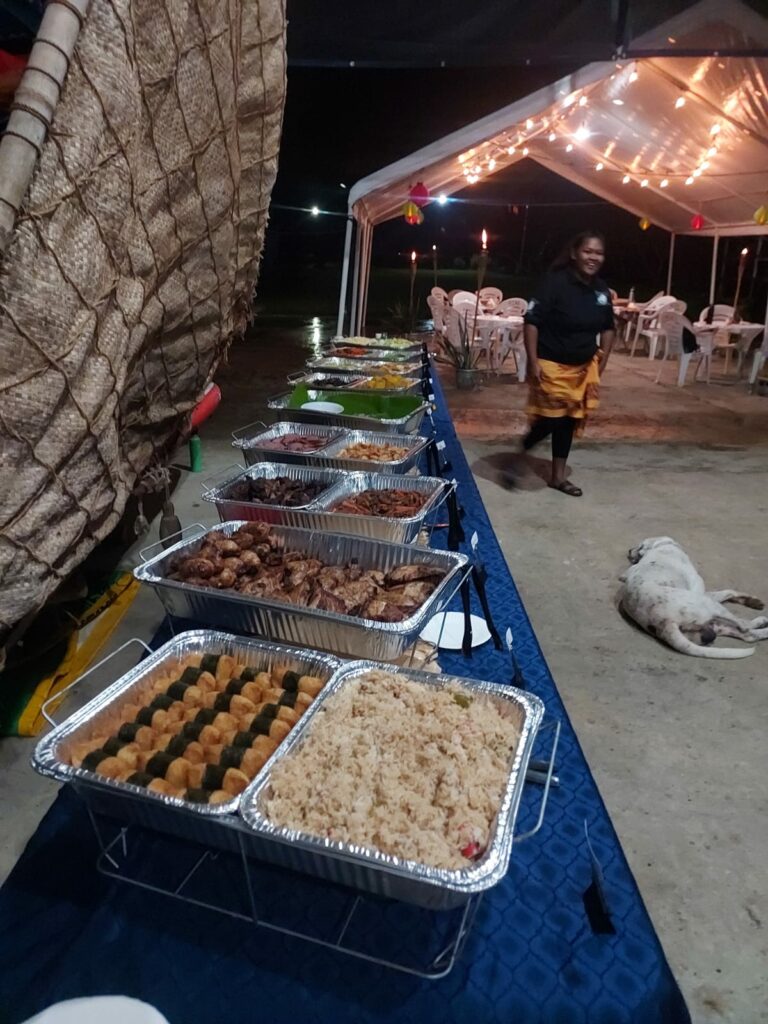
After this extremely informative and immersive experience we ended our day with an amazing presentation and dinner at Paddling Palau. This presentation built upon what we learned today, and we were given first-hand accounts by Mac, a guide from Paddling Palau. He started the presentation by explaining the culture and history of Palau. He talked about his research projects around the islands and discoveries of new fish species and lakes. His work has been instrumental in protecting Palau and its environment. After the presentation we were graciously treated to a delicious buffet of Palauan cuisine by the Paddling Palau crew. We truly appreciated their hospitality and their willingness to share their knowledge with our class.

(Image: Students enjoying an evening at Paddling Palau)

(Image: Students posing for a picture at Paddling Palau)

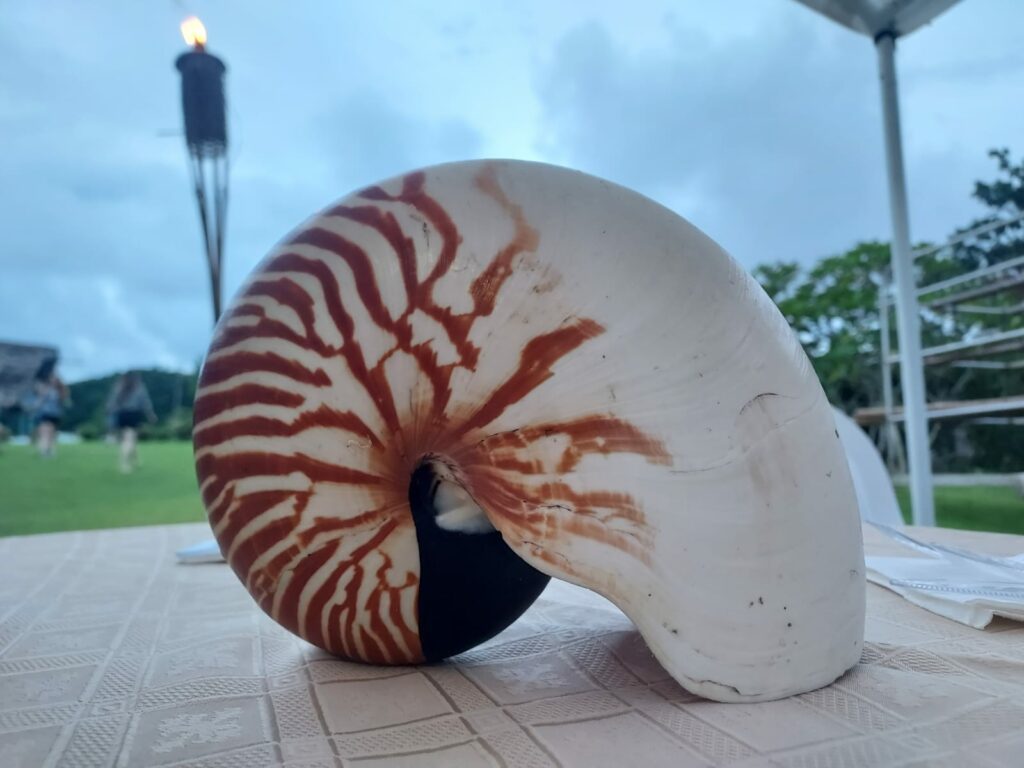
(Image: Chambered Nautilus center piece)

(Image: Buffet presented to OSU students by Paddling Palau)

We ended the day by reflecting in our journals and discussing what we all learned and want to learn more about while on this amazing journey together.

Today’s blog post was written by: Abby van Klaveren and Brittney Collins

Day 12: Snorkeling, Stone Money, and Ethnobotany!

Pictured is a wild Day Octopus found while snorkeling near the Balang trail.

Day 12 on Palau consisted of snorkeling, stone money, and ethnobotany! We headed out on a boat to patch reefs outside Koror. After snorkeling for about 20 minutes, we had to pack up and head to a different location because the sea was becoming too rough. (Rumor has it that a typhoon is developing over Yap, a small island near Palau, and headed this way.)

(Left to right) Savannah and Destiny enjoy a ride on the bow of the boat.
The beginning of a stormy day.
Boss Bryan diving deep in a patch reef.

After snorkeling, we hiked up the Balang trail where people from Yap used to travel to harvest Aragonite, a type of stone only found on Palau, to make their stone money. Stone money pieces are huge (sometimes up to 12 feet in circumference) donut -shaped slabs used as women’s currency in Yapese culture. One of these slabs was left on the island after being cut and sculpted because it was broken during the moving process and therefore worthless.

The gang poses next to the abandoned stone money piece.
Another day in the life of Simone.

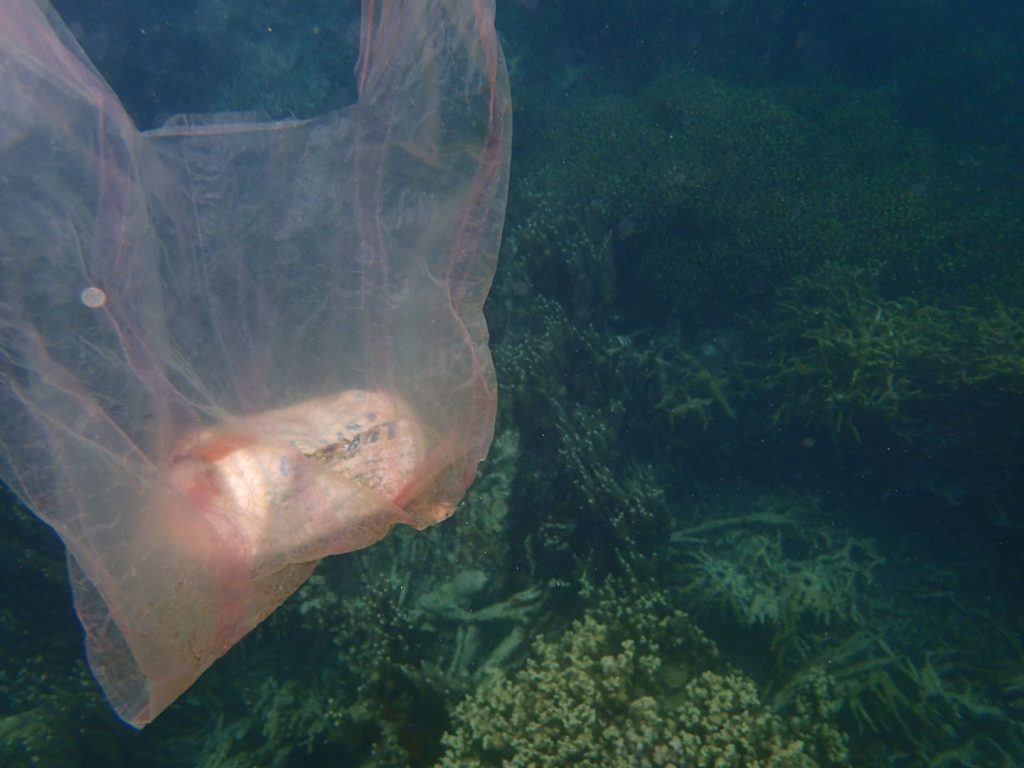
After hiking the Balang trail, we snorkeled in the reef right off the quarry. Within the Rock Islands, the water is more protected from storms and was much more calm than our previous snorkel that day. During this snorkel, we saw some human-made trash, unfortunately. Even in remote areas like Palau, plastics and littering are still an issue for marine and terrestrial life. Our team picked up around 20 pieces of trash from just that one snorkel site. It can be easy to disassociate yourself from your garbage when you don’t have to witness what happens with it afterwards. However, seeing the plastic bags and Coke cans on the bottom of the ocean floor, with fish swimming in and out of them can be eye-opening. The FW 391 gang would like to remind you to Reduce, Reuse, and Recycle!

The snorkel spot right off of the Balang trail.

One of the discoveries made on this snorkel trip was a wild Day Octopus, pictured at the beginning of this blog. Student Tate originally found this octopus hiding in a hole in a mound of coral. As the octopus moved to different parts of the coral, its body shape, texture, and color would change to match its background. If you took your eye off of it, you would probably never find it again.

Dylan sneaking up on the Day octopus. Can you spot it in the mound of coral?
Savannah feeding the wildlife (Tate). Don’t try this at home.

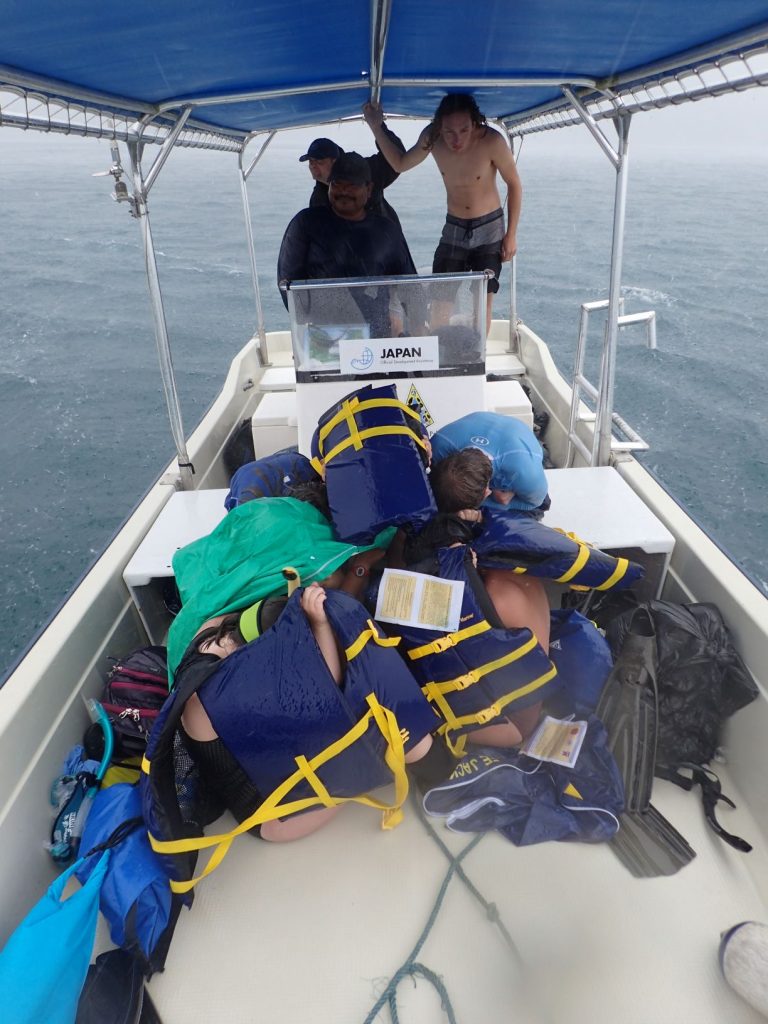
After leaving the snorkel site near the Balang trail, a storm hit the ocean. Intense, cold rain poured down on the gang and we had to get creative.

Destiny preparing for the storm.
Katherine.
The squad builds a makeshift shelter to protect from the freezing rain. Tate oversees.

The day ended with a lecture in ethnobotany by Dr. Chistopher Kitalong. His research focused on using traditional Palauan plants as medicine to help treat diabetes on the island. He discovered that the traditional ways are more effective for treating the islanders than the modern Western medicine.

Dr. Christopher Kitalong lecturing the OSU students.

All in all, it was successful day! We are very grateful to our boat captain for navigating us through the storm, our instructors for their insight and advice, the PCC students and Dr. Kitalong for allowing us to sit in on their lecture, and to all of Palau for granting us a 12th day on this beautiful island.

Written by:

Simone Burton, Oregon State University, Marine Biology major, Graduating June 2021

Katherine Healy, Oregon State University, Women and Gender Studies

Day 3: Tree Planting/Tagging and Waterfall Nature Hike

The Ebiil Society adventures have begun! Today we had a whole day laid out for us with a tree planting project to seeking out a historic road for the people of Babeldaob to cooling off in the Mesekelat waterfall.

Ann telling us the ecological history of our planting site.

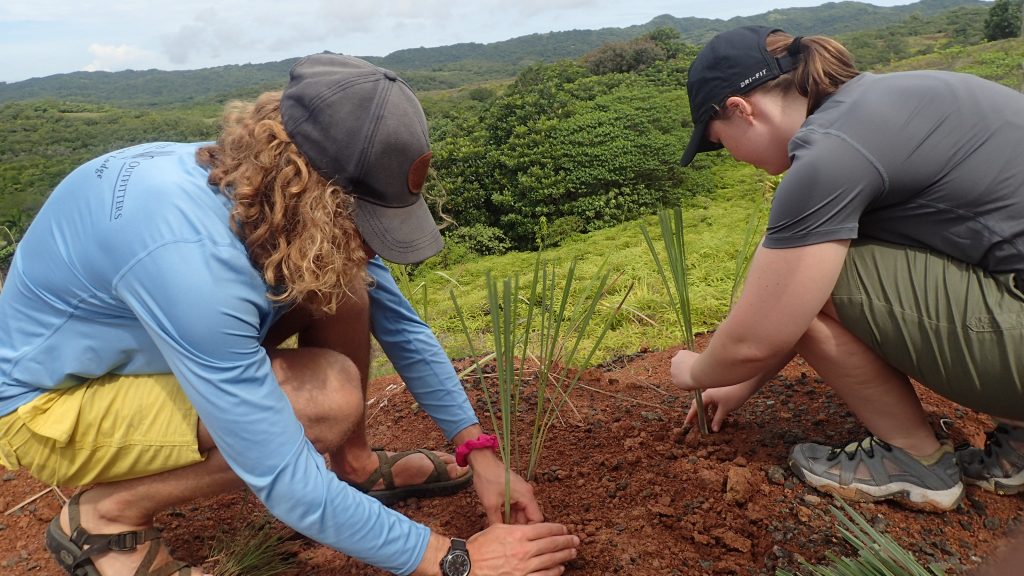
Most of us were awake and ready to start the day around 7am and prepared our breakfast soon after with things such as toast, bananas, ramen, boiled eggs, fish, and cereal. After promptly filling our bellies, around 8am we began by loading up the truck with 82 trees, such as Btaches, Kisaks, and Miich to help the society with a reforestation project in an eroded site in Ngermchau Bai, Ngiwal. While driving the route to the site, part of our group stopped to collect lemongrass to plant at the site to help assist in preventing future erosion.

Btaches and Kisaks

After Ann gave us a brief history of the area, we got down and dirty. Literally. Ilima, El, and Surech guided us with the osib in digging a trench and hole to show us how to plant the way they would prefer. After the example, we pitched in and got started. Several of us learned how to properly plant the lemongrass in the trenches to help protect the newly planted and tagged trees. We only tagged a sample of the trees planted to watch their succession over time. Bryan and Scott helped us by cutting the wires with the single multi-use wire cutter that we also used for the clamping part of the tagging. This timely process, El took down the tree info and tag number to keep record of the area.

Tate and Savannah planting Lemongrass
Dylan and Sofia measuring and tagging a tree
El recording measurements from Dylan, Bryan, and Destiny

With the help of the Ngiwal youth and their leaders we were all able to work on an eroded hillside to dig holes, plant the trees and lemongrass, and properly tag and record info for the Ebiil Society’s project. While the ground wasn’t the best, we worked our way with the red acidic clay and gravel with lots of tender loving care. We planted, patted, and gave these little guys all the love and hope we could manage.

Jose and Destiny providing tender loving patting of surrounding dirt to the lemongrass

By this time we were famished, dirty, and ready for lunch and a cool down. Ann took us to Mesekelat waterfall and we ate under shade at the trail head. No photos of our delicious lunch were taken as we were too busy scarfing down our chicken sandwiches, banana fries, and grapes. But do not fret our journey to and from the waterfall was documented quite well!

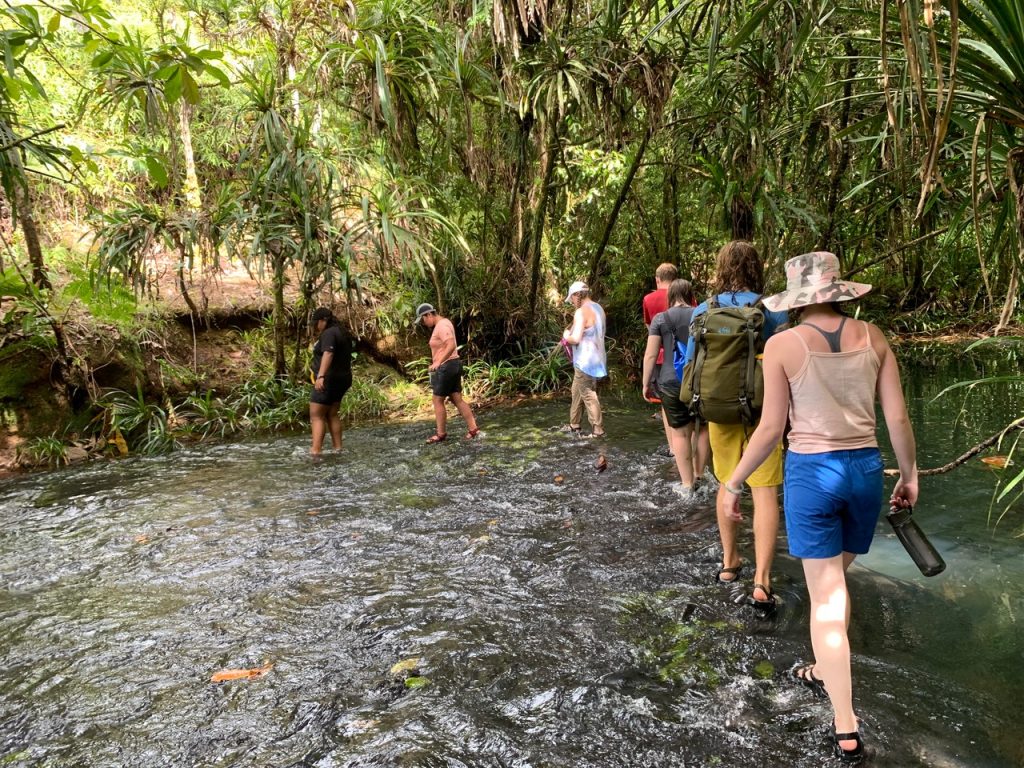
Group river crossing wet-style

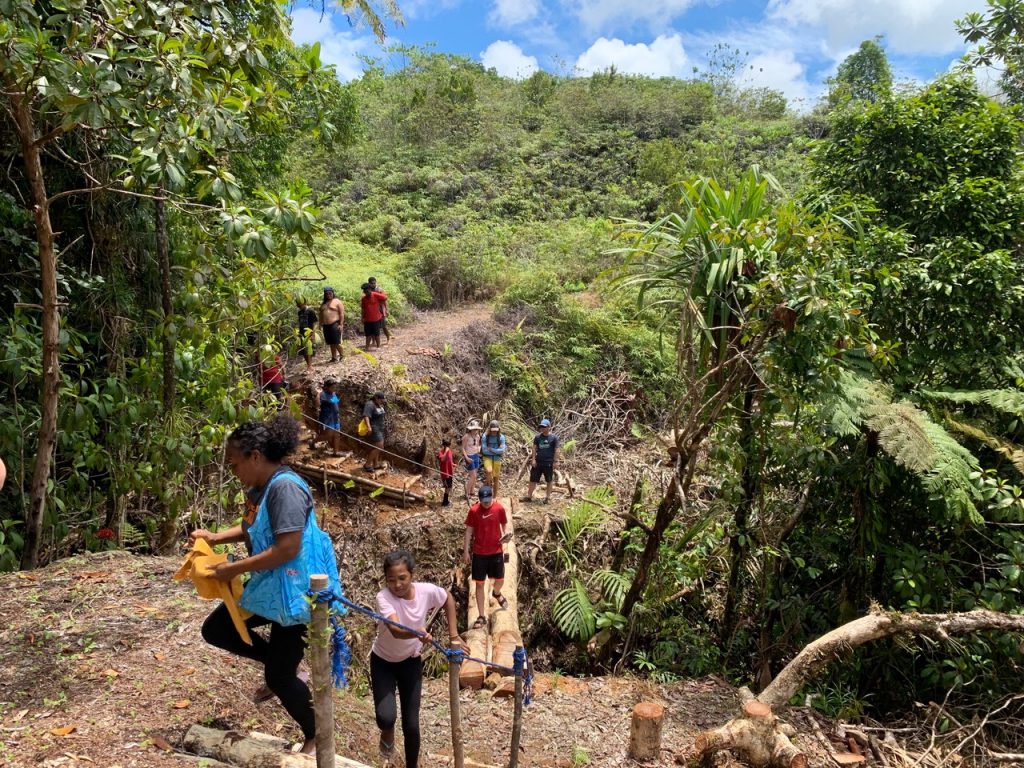
As we ventured down the steps and path to the old Babeldaob road, which is about a few thousand years old, Ann told us about some of the road’s history. We got to see some of the caves that the Palauans took cover in during airstrike attacks, as well as some remains of the Japanese agriculture carts. We identified a few endemic trees of Palau along the road. The road was recently opened and cleared for passage and some of the water crossing were a bit sketchy.

One of the more “iffy” bridges
Ann pointing out one of the many caves that Palauans used to take cover and hide during the war.

At last we made it to our destination of cool, sparkling waters. Upon promptly rushing down the steps, we were all in the water within minutes. Exploration and relaxation at it’s finest happened at the Mesekelat waterfall. We spent a good chunk of time here, cooling down and washing off the dirt from our hard work this morning.

Jesus is back!

On the way back to the Ebiil Society we came across a fire along the road, Ann went to investigate and there was a man claiming to watch it carefully. Fires are illegal in protected areas but this may have been private property.

Dinner was just what we all needed after a long day. It consisted of mashed banana with coconut and coconut glaze, rice, grilled tuna, poke, papaya, mango, kangkum salad, kool aid, and water. We happened to briefly catch the sunset during the feast and it was extravagant! After dinner, Ulang and Osu joined us for a story and Q&A session. We learned about the women’s fisheries and sea turtle issues in this area. Whew! What a day, looking forward to another full day tomorrow!

Ulang telling her stories
Another lovely sunset

Published by:

Destiny Pauls, Natural Resources- Conservation Law Enforcement, Graduating Spring of 2021.

Jose Thomas, Liberal Arts, Graduating Summer of 2020.

Palau Ridges to Reef -Day one!

Welcome to our Palau Ridges-to-Reefs blog, which will follow our Oregon State University group in Palau for the next two weeks! This class is designed to explore natural resources on small islands and how both communities and ecosystems can be resilient with appropriate management approaches. In addition to the students from OSU, we have a number of Palauan students joining us, including five students from Palau Community College. This mixing of students provides great opportunities for peer-to-peer student learning, and the incorporation of the PCC students -who have a great wealth of cultural and ecological knowledge about the nation that they can share- will contribute greatly to the richness of the class. This is hopefully a first step in creating a joint OSU-PCC class in the future!

Each day two students will post a narrative of our adventures, talk about what they’ve learned, and share some videos and photos to round it all out. For our day one blog, Bryan Endress, who organized the course, and Scott Heppell, who is a co-instructor, are taking on the task. We are also joined by Chris Kitalong, a Palauan scientist at the Pacific Academic Institute for Research at PCC. And what a great first day it has been!

Our goals for today were to get students thinking about Palau, its natural resources, and its culture. First of all, who doesn’t love a syllabus review to start the day? You can’t start a class without covering expectations for the class, after all.

Following that rousing activity, we visited the Belau National Museum, where we learned about the several thousand year history of the islands, some of the important cultural features of Palauan society, and a bit about Palau’s recent efforts in conservation. Having the Palauan students along was a fantastic way for the OSU kids to learn more about the various topics than what could be read on the placards

After a quick break for lunch we were headed off for our afternoon activity -a boat ride out to east side of Airai,

Where we got in the water for some snorkeling,

followed by a brief stop on a sandbar exposed at low tide,

and then a short hike up the Yap Money Trail to see a bit of the forest and some really large coins -not the type you’d plan on carrying around in your pocket. Many thanks to Clarence Kitalong for the use of his boat and for serving as captain for the day!

We ended the formal events for the day back at the museum, where we were served traditional Palauan fare including grilled fish, taro, tapioca, dragon fruit, mangrove clams, and other delicacies.

It was a busy day, and it’s just the start of what will hopefully be an amazing two weeks.

We’re sure the students are in their rooms right now, diligently working on their daily journal entries and packing for our trip tomorrow. We’ll be spending the next several days on the north end of Babeldaob in the village of Ollei, where we’ll be hosted by the Ebiil Society. We’re very much looking forward to it! Stay tuned for more adventures (and learning!) to come.