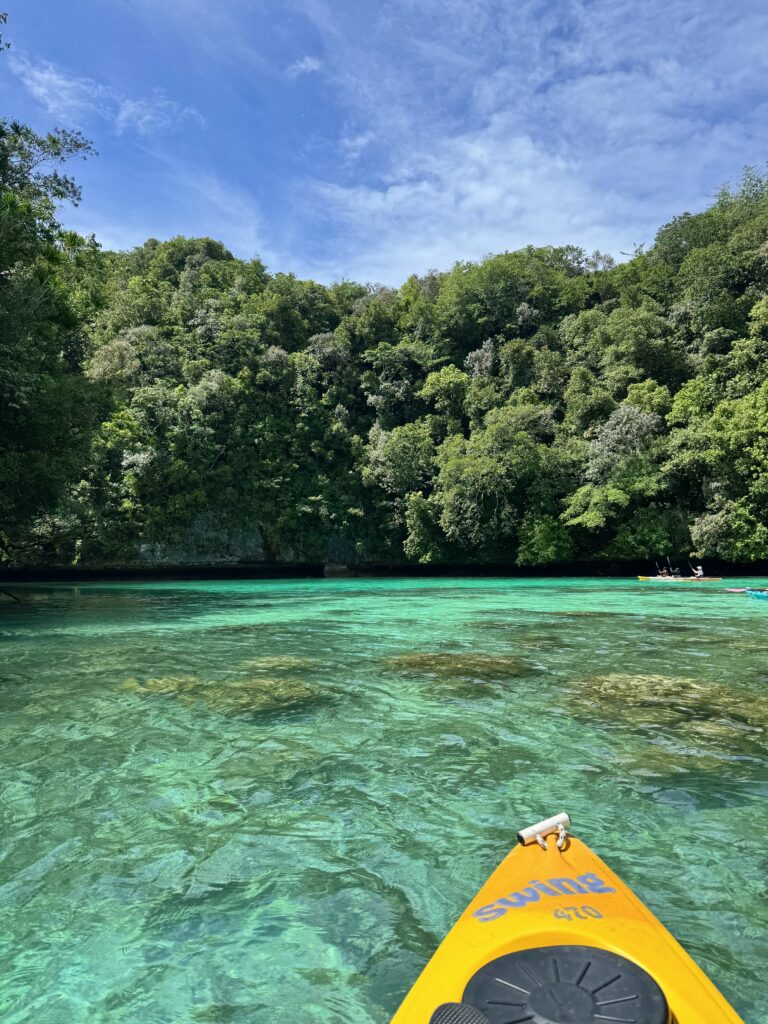
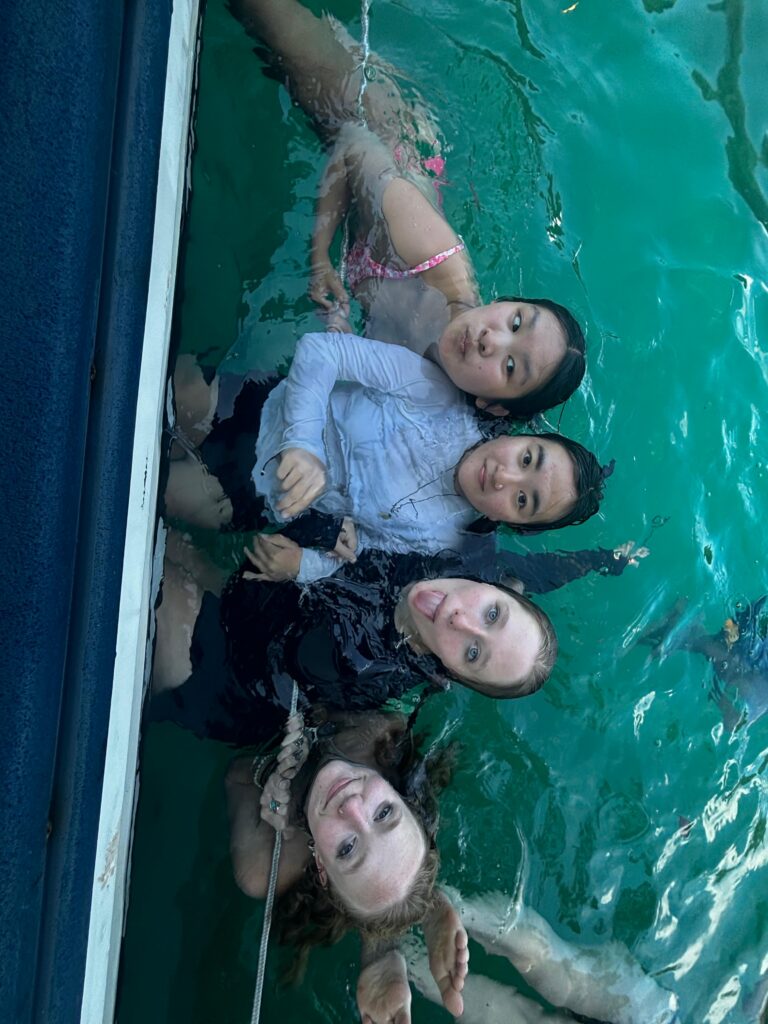
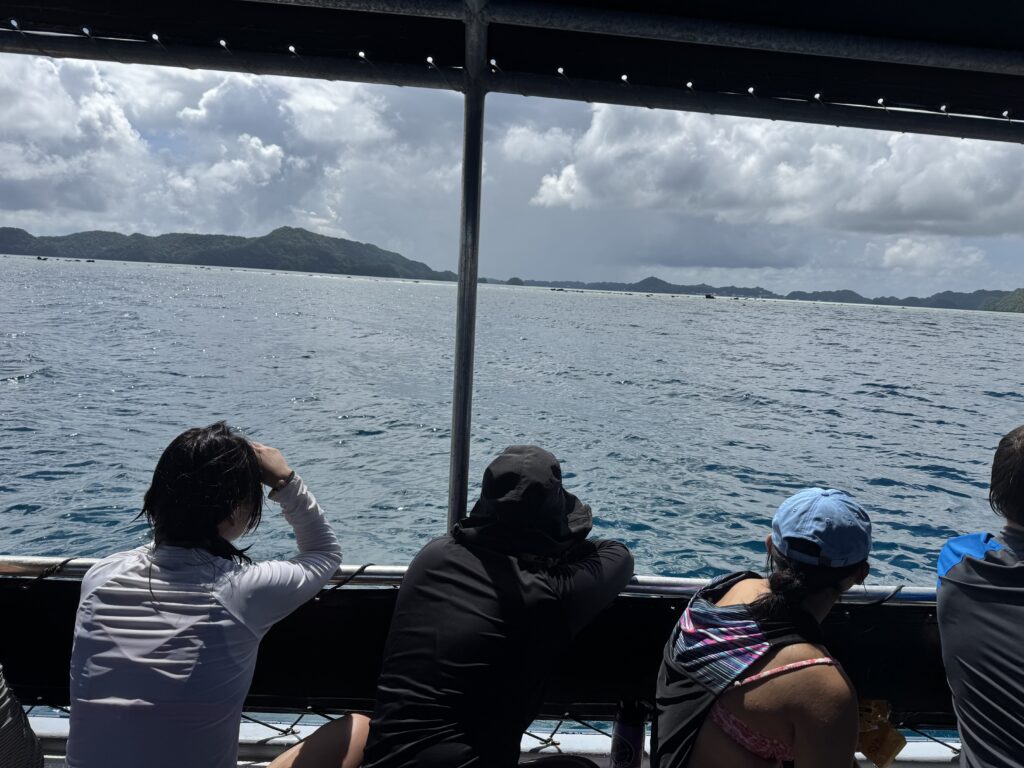
Day 16: Farewell Palau (We’ll be back!)

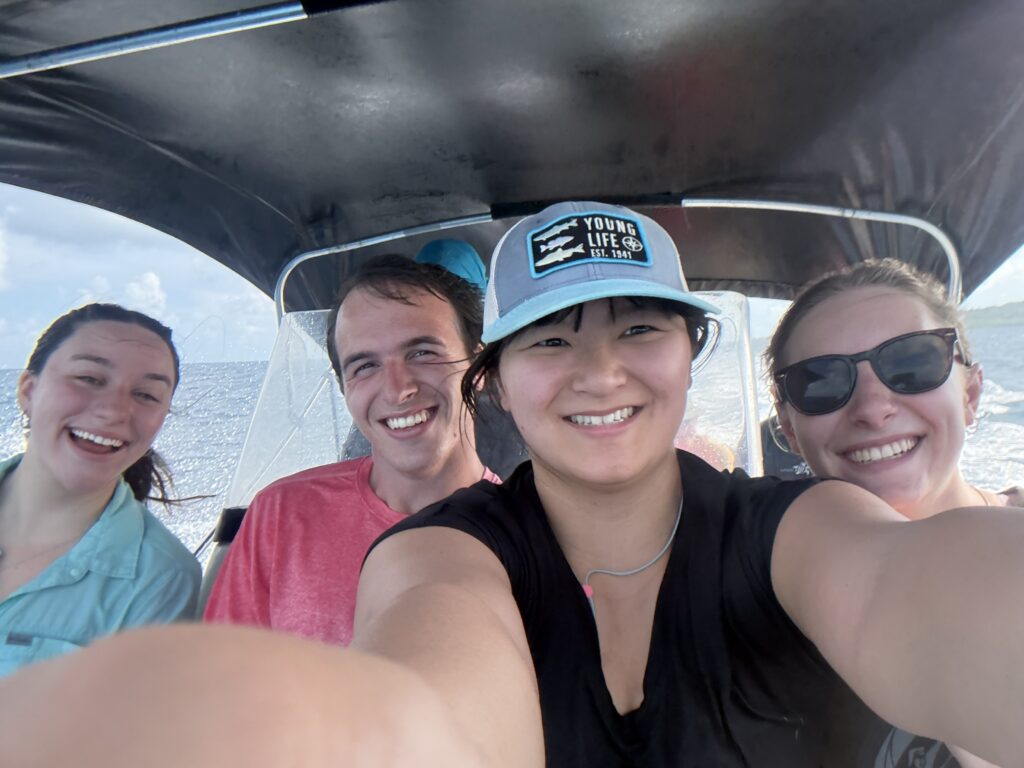
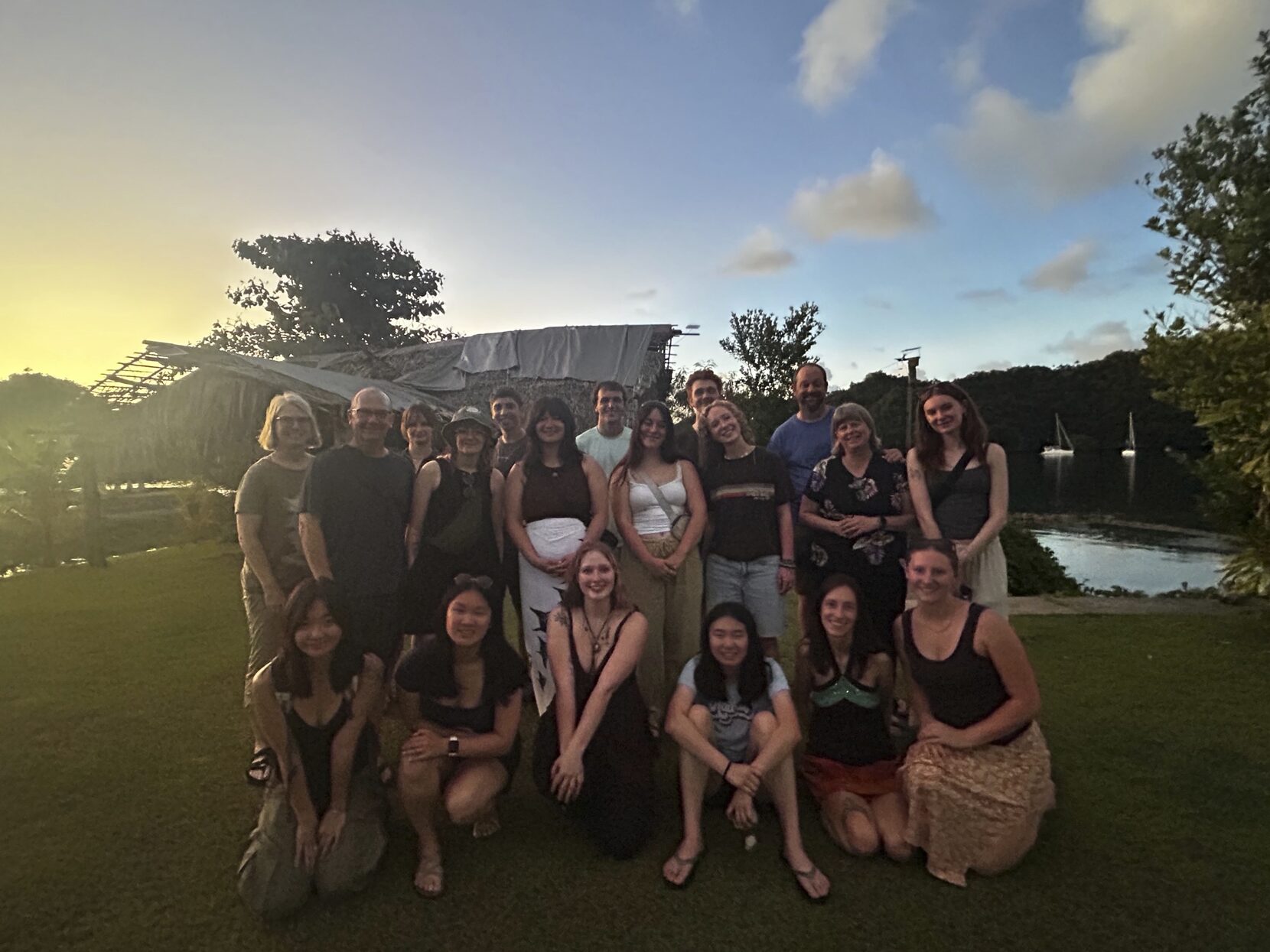
For our final blog post, the three of us- Paige, Susannah and Adam- decided the best way to commemorate our trip was to hear from everyone about their time here, following the questions: How were you feeling before this trip and how do you feel now? What is something important you’ll remember from this experience?

Bailey: At the beginning of the trip I felt nervous about meeting everyone, and also unsure about how I would be able to process all of the content. Now, I have friends that I am looking forward to spending more time with when I get back to Corvallis, and feel that my overall general mindset and outlook about conservation and how the world works has completely changed. It was a great trip!
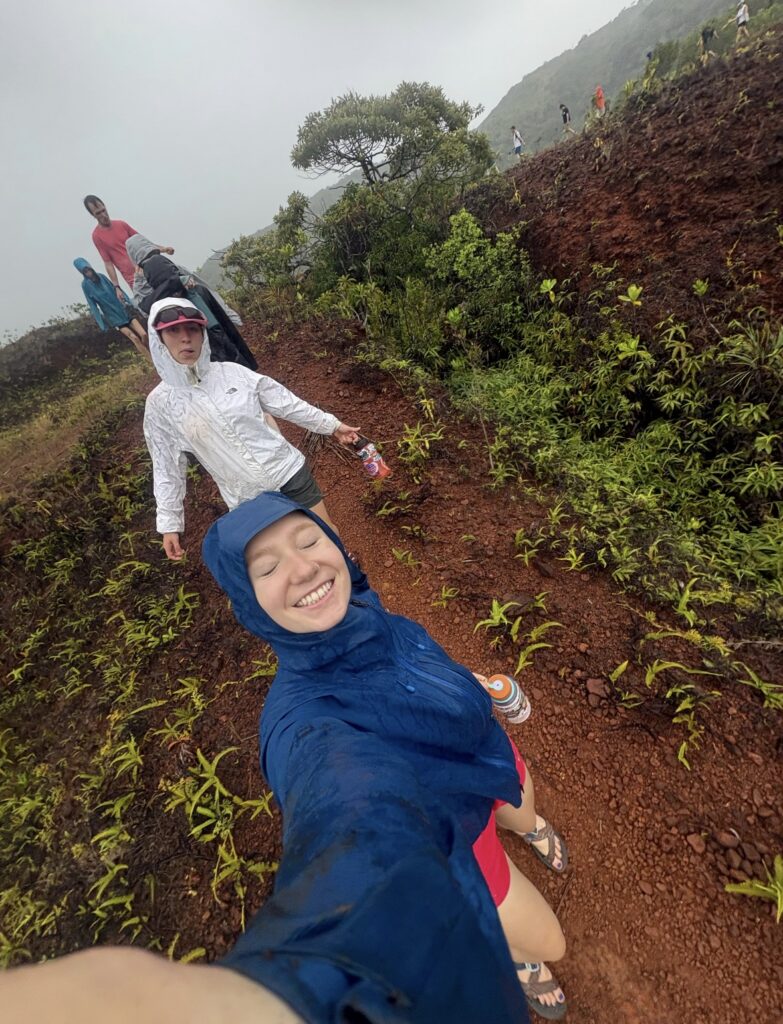
Bailey making her way down from reforesting!

Kasia: Before the trip, I was feeling uneasy about the immense changes in the environment and culture that I would experience and I was feeling sad about leaving Corvallis into the unknown for the summer. Now, I realize Palau isn’t as different from my norm as I originally thought and as always, what I was nervous about experiencing was thoroughly enjoyed and wasn’t something to be nervous about. One thing I’ll remember is exacty that. My adventures are never experiences to worry about but are actually just things that make me a better more well-rounded traveled person!
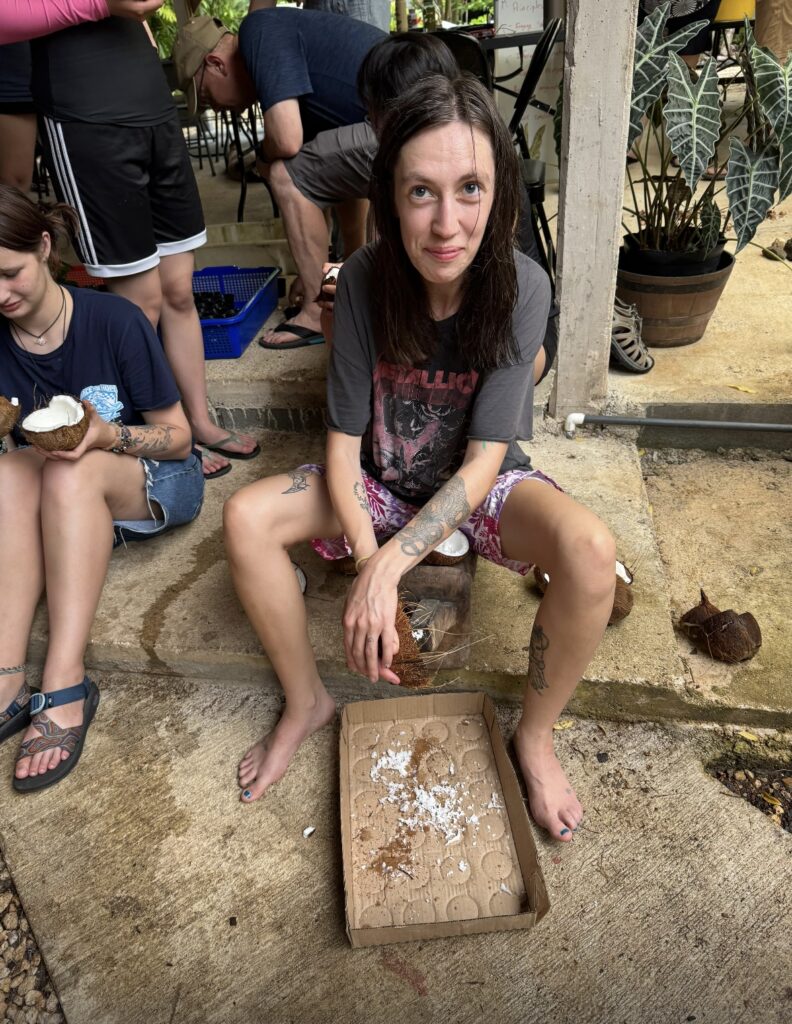
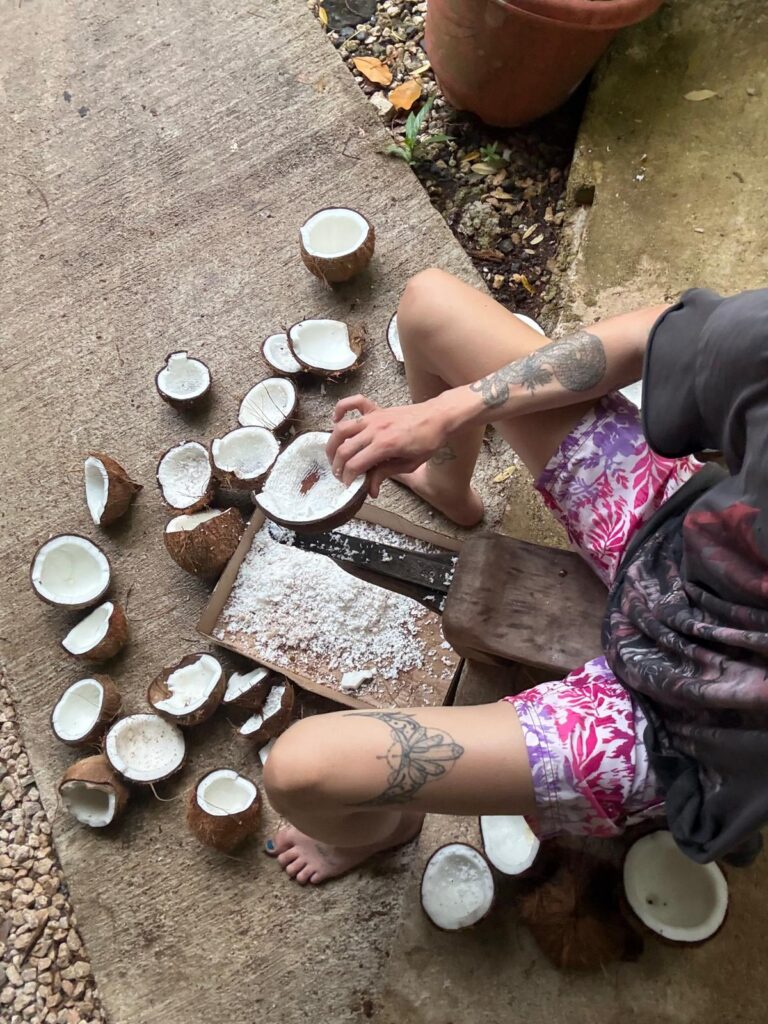
Kasia shredding coconut for our dinner!

Abby: Before this trip I didn’t know anything about Palau. I felt that conservation had one path and it was to remove humans from the environment. Through my experiences here I have begun to see the environment and humans as working together and that humans can never be taken out of nature. I am so glad to have been able to learn from everyone here and I will always remember the community and sense of belonging that Palau has shown me.
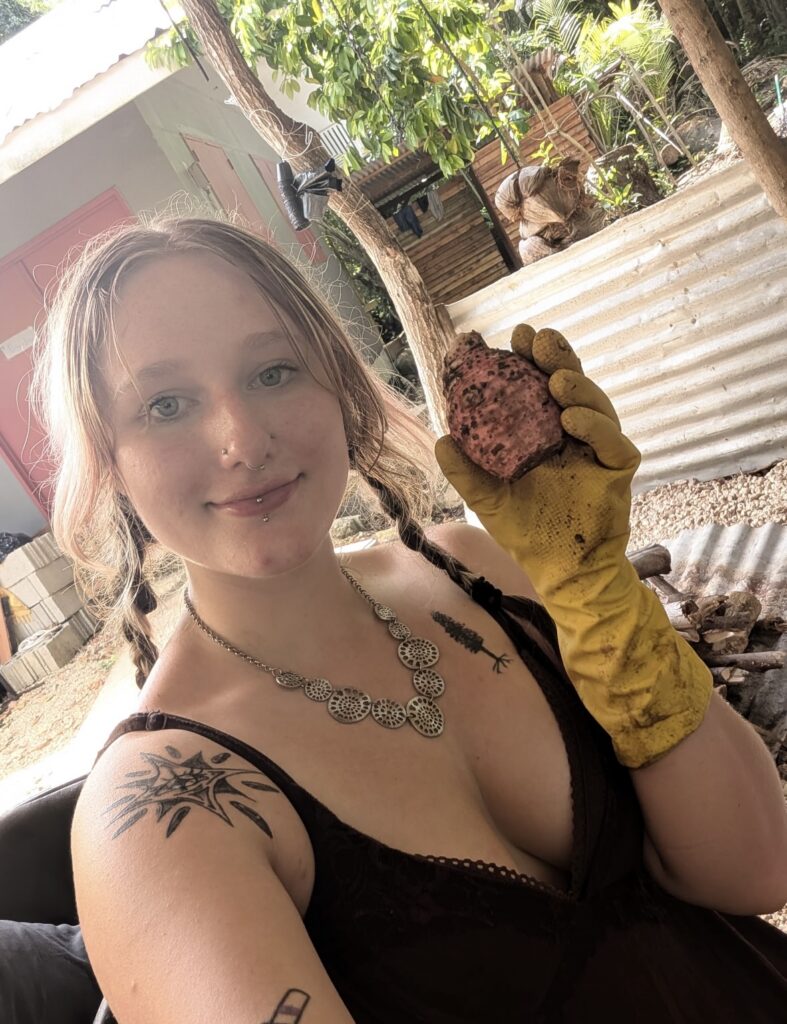
Abby learning how to scrape taro

Taylor: I wasted so much time worrying about being isolated during this trip, and not gaining everything I hoped to because of it. I’ll always remember the warmth and the wisdom I was greeted with from Palauans as well as other students, and take those experiences and the confidence I’ve gained to help foster that culture of community and accountability wherever I go.
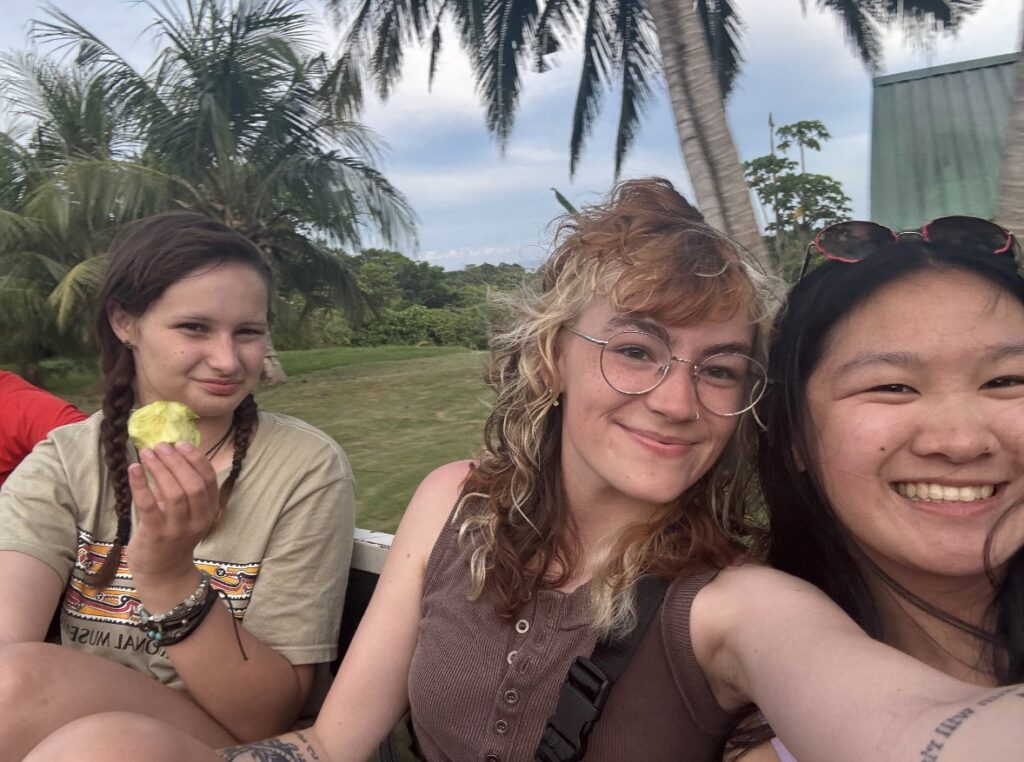
Left to right (Anna, Taylor, Lauren)

Jack: Before this trip, I had a lot expectations for what I’d see: incredible nature, fascinating culture, ways of life I’ve never imagined, etc. And I was definitely right about all of those things, but the reality of being here is so far beyond what I ever could’ve imagined. I’ll forever remember the amazing people I met here, the kindness they showed us, and the insane beauty of the nature here.
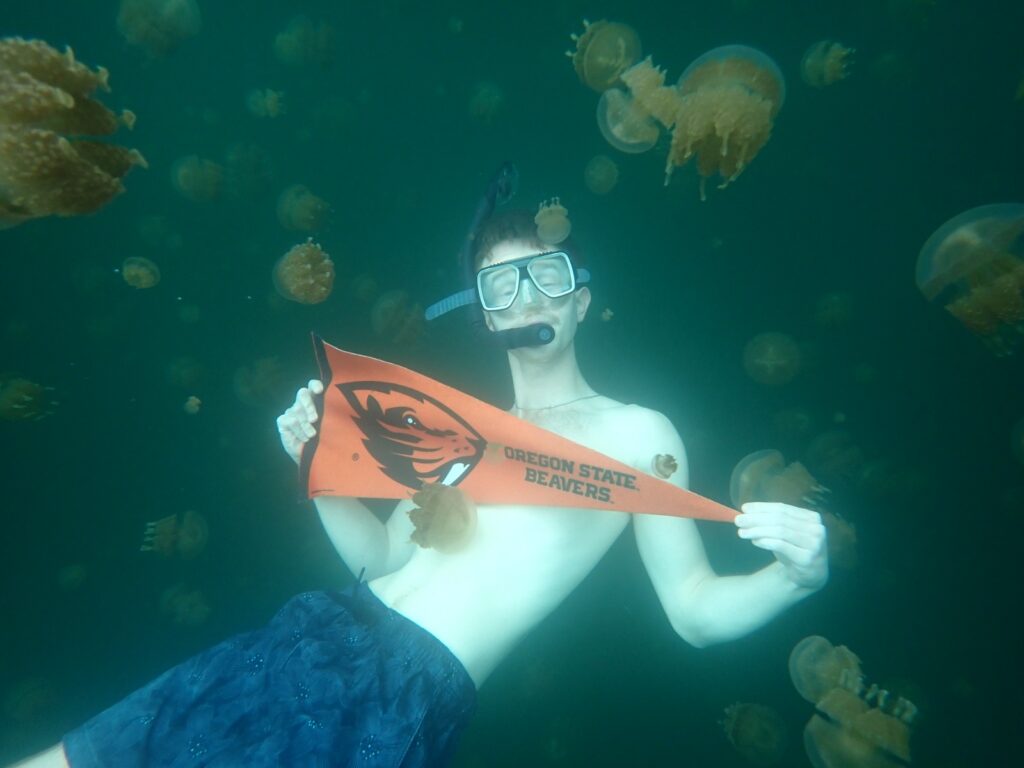
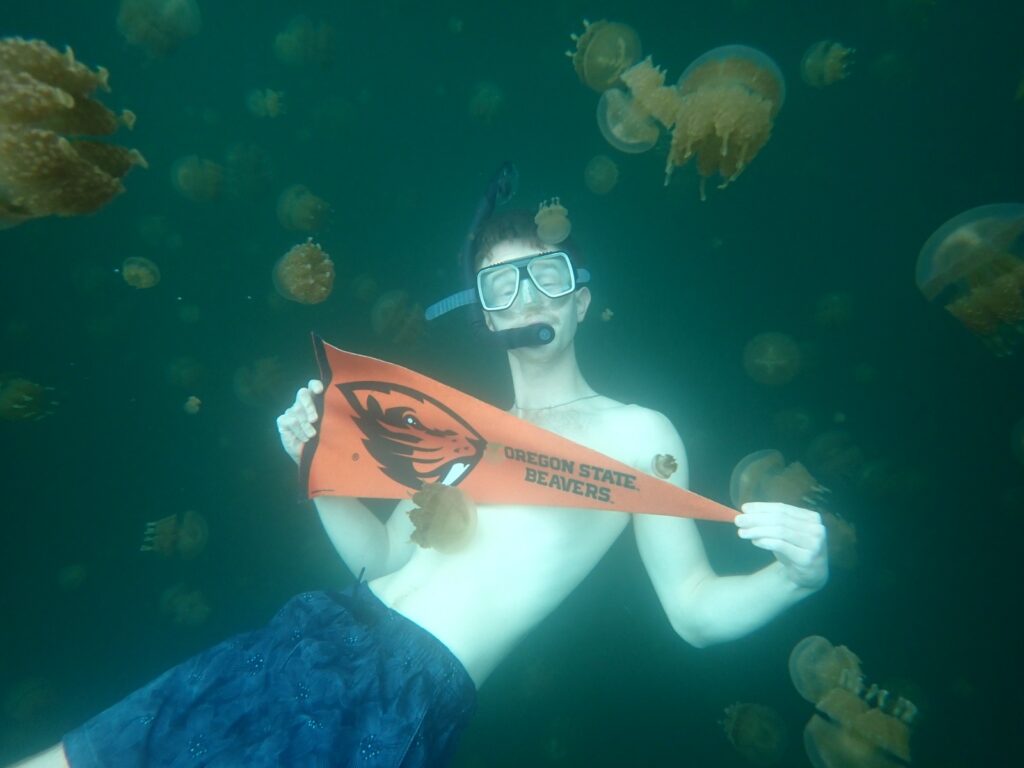
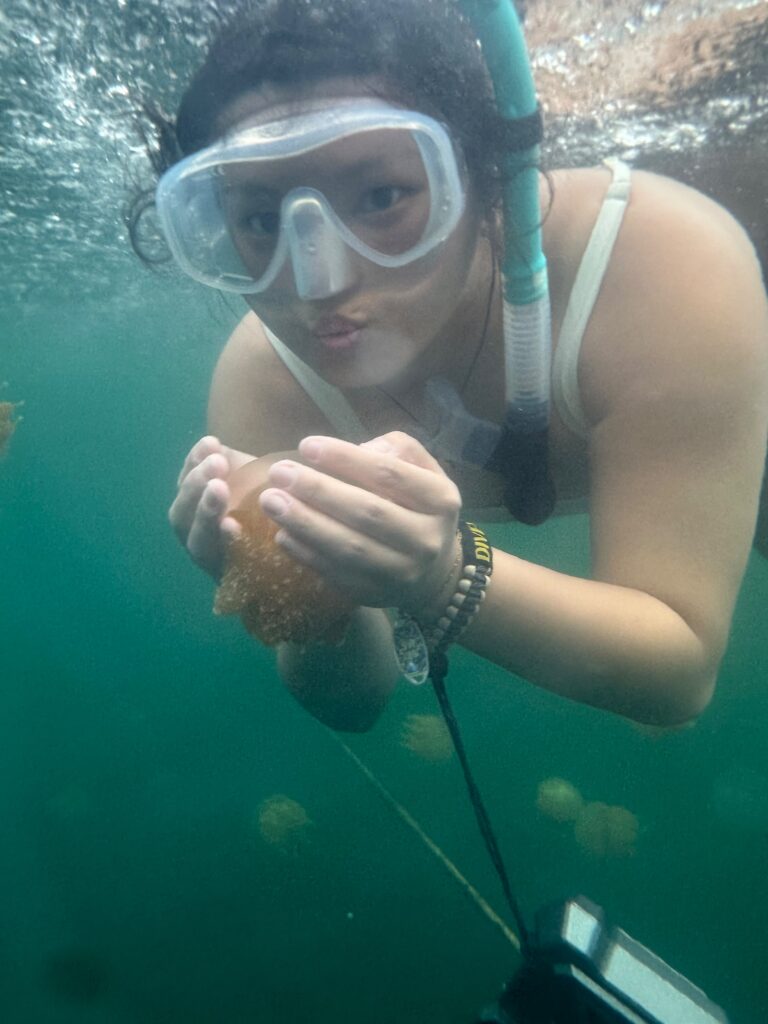
Jack representing Beaver Nation in Jellyfish Lake

Lauren: At first I did not know what to expect and was hesitant about how “remote” we were going, but looking back I wouldn’t have changed anything about our experiences. My favorite moments were just taking in the beauty of the island, and appreciating those who have protected and preserved its nature.
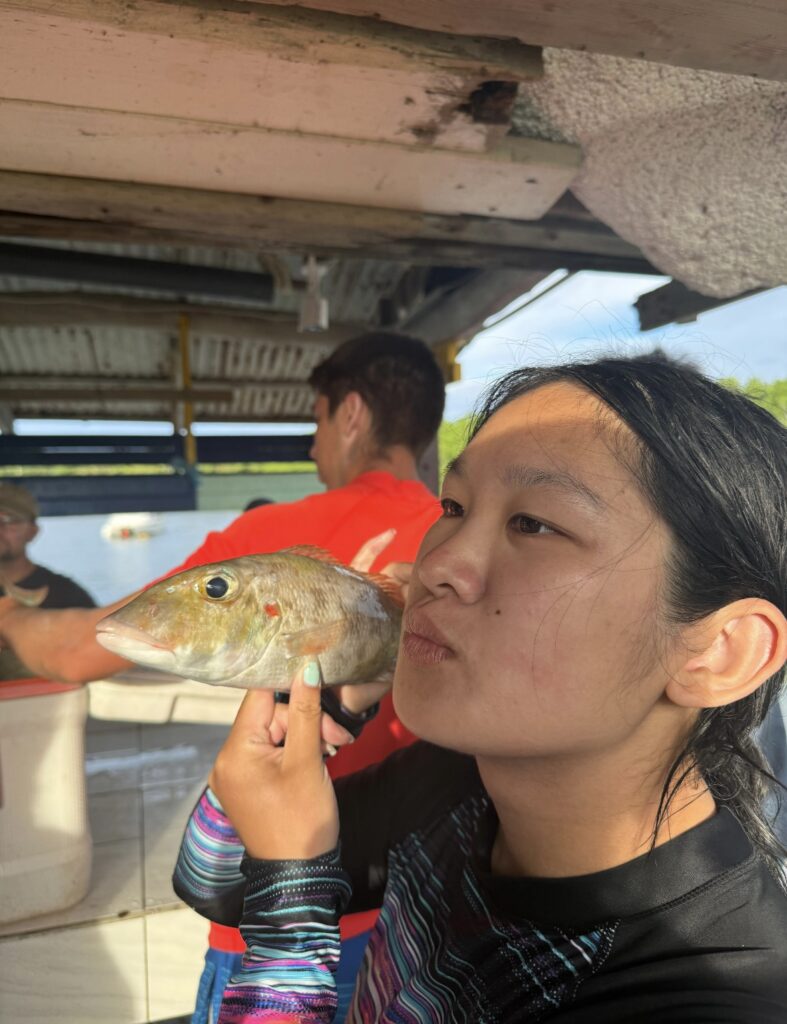
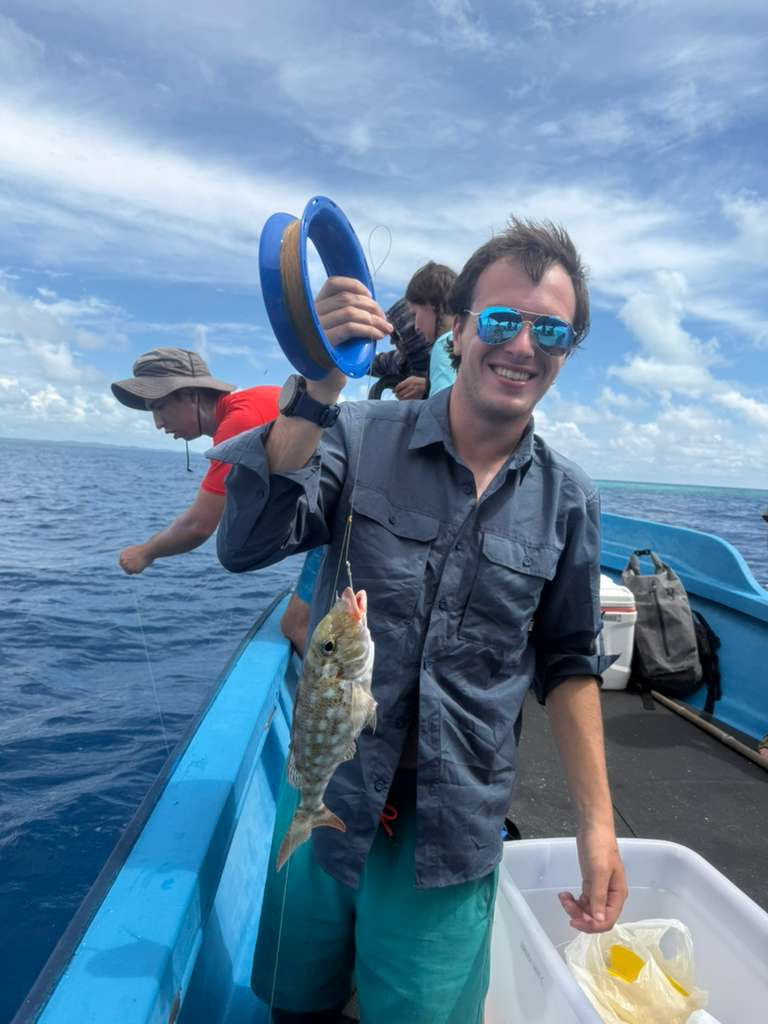
Lauren and her fish catch!

Savannah: This is a trip I will never forget. I’ve learned so much while being here and I’m excited to be able to apply all this new knowledge in my future career and personal life! I will always remeber the people I have met here and the impact they have left on me. Truly a once in a lifetime experience.
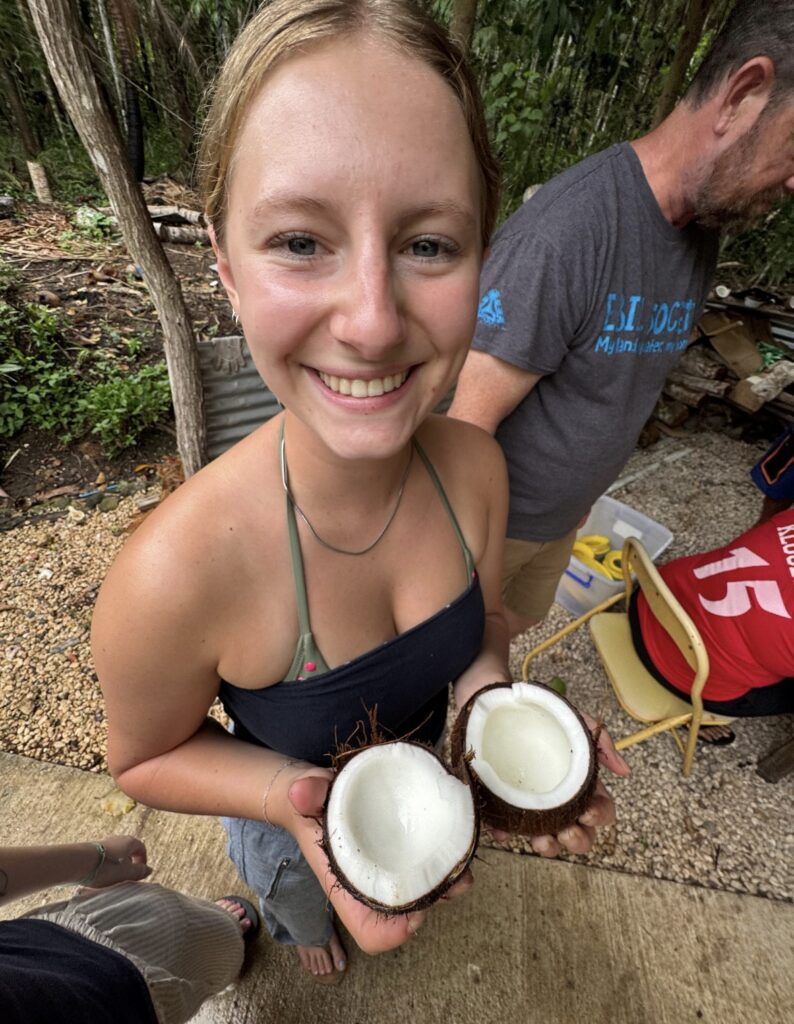
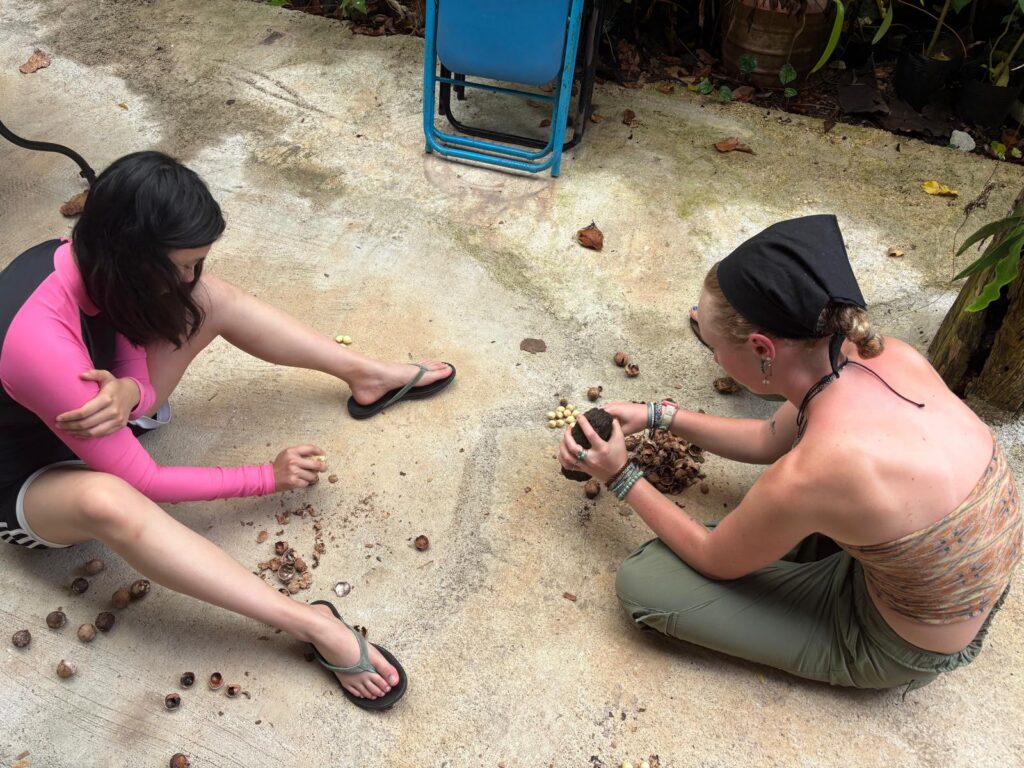
Savannah learning how to crack a coconut!

Angela: Before the trip I was scared I was going to accidentally say something culturally insensitive, but everyone was so welcoming and friendly and I was able to learn so much. Everyone had such different perspectives and midnsets from the US and it such a breath of fresh air!
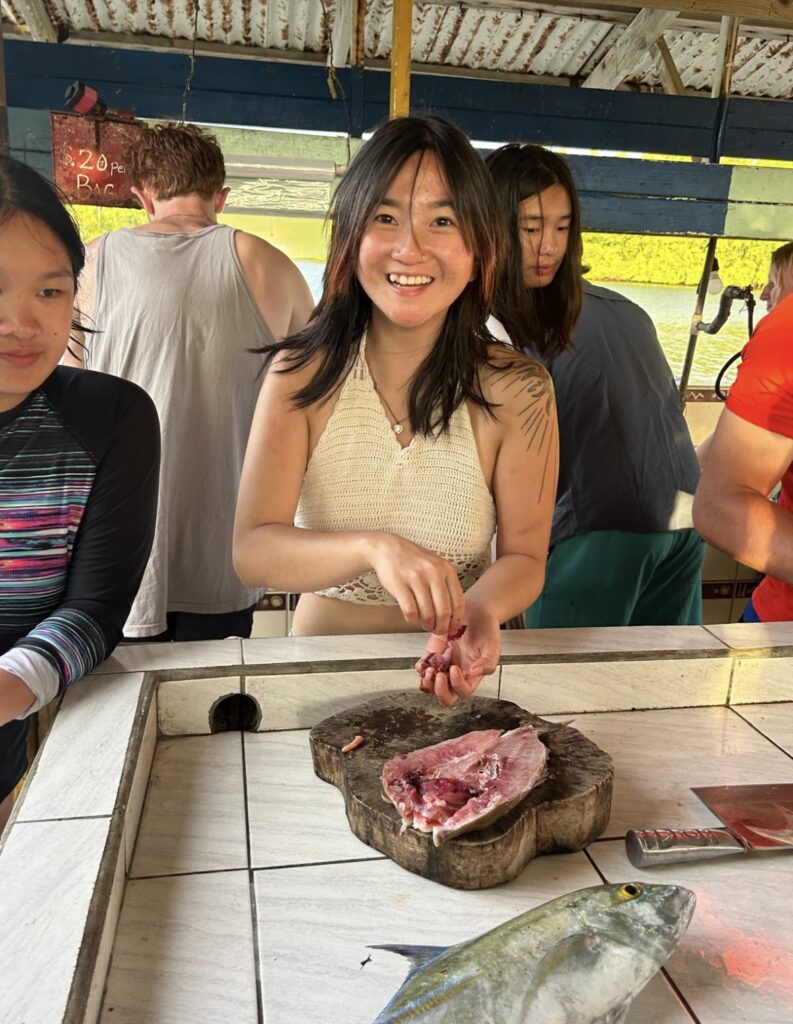
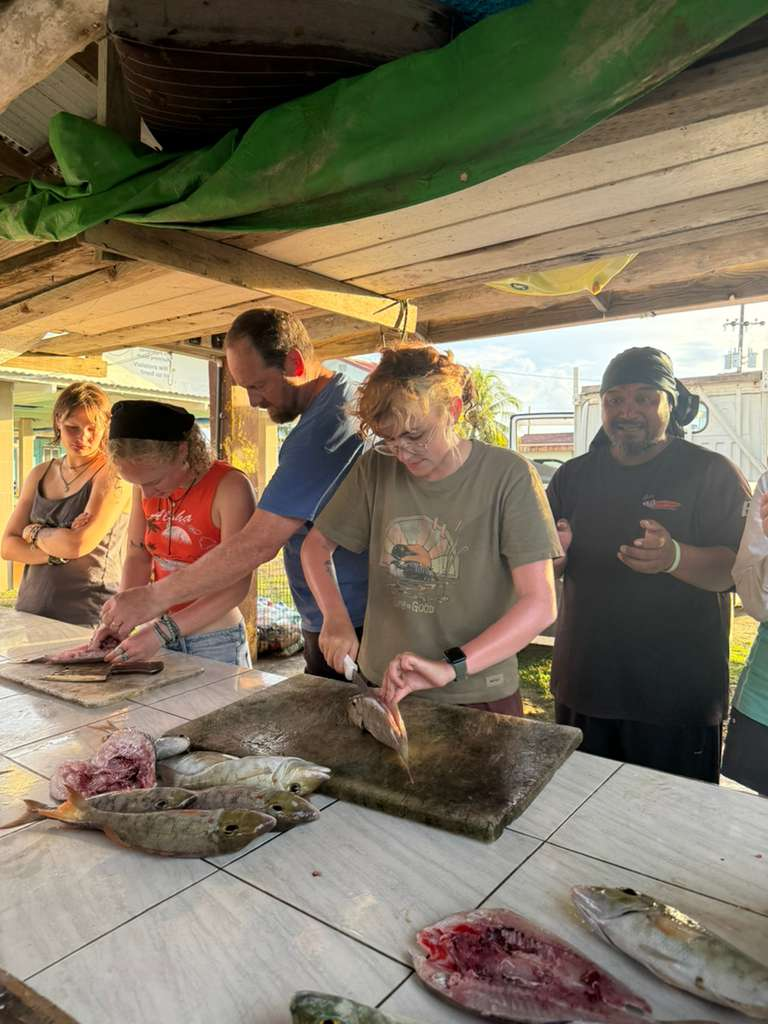
Angela gutting fish!

Anna: I was expecting this class to only focus on water, and it was very cool to learn about so many different aspects of the island and how they’re managed in comparison to management systems back in the US. I’ll miss the reefs and nature here so badly, but I’m thankful I can appreciate them because it makes me want to help protect them even more.
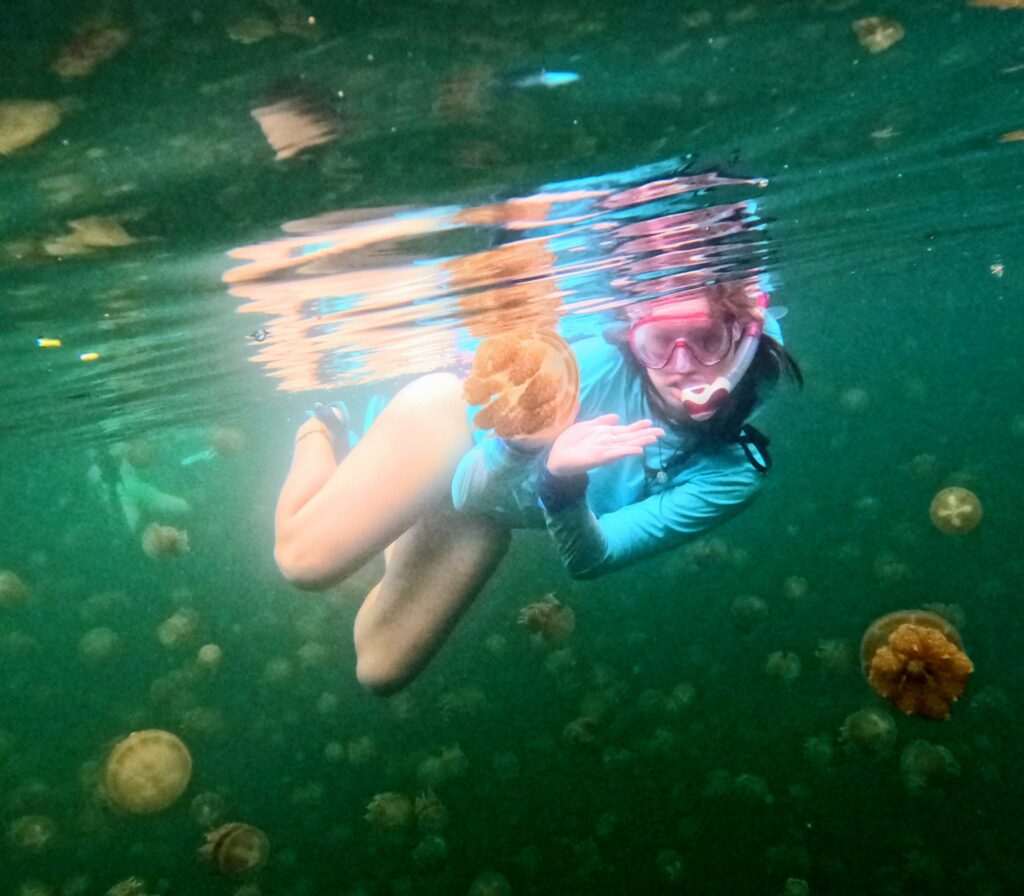
Anna in Jellyfish Lake!

Raven: I came into the class without a lot of expectations but was excited to experience a new culture and see cool things in the water. In this class I was able to do that and more. Something I will remember is the beauty of this place that Palau has been able to protect and the hope it gives for our world’s oceans.
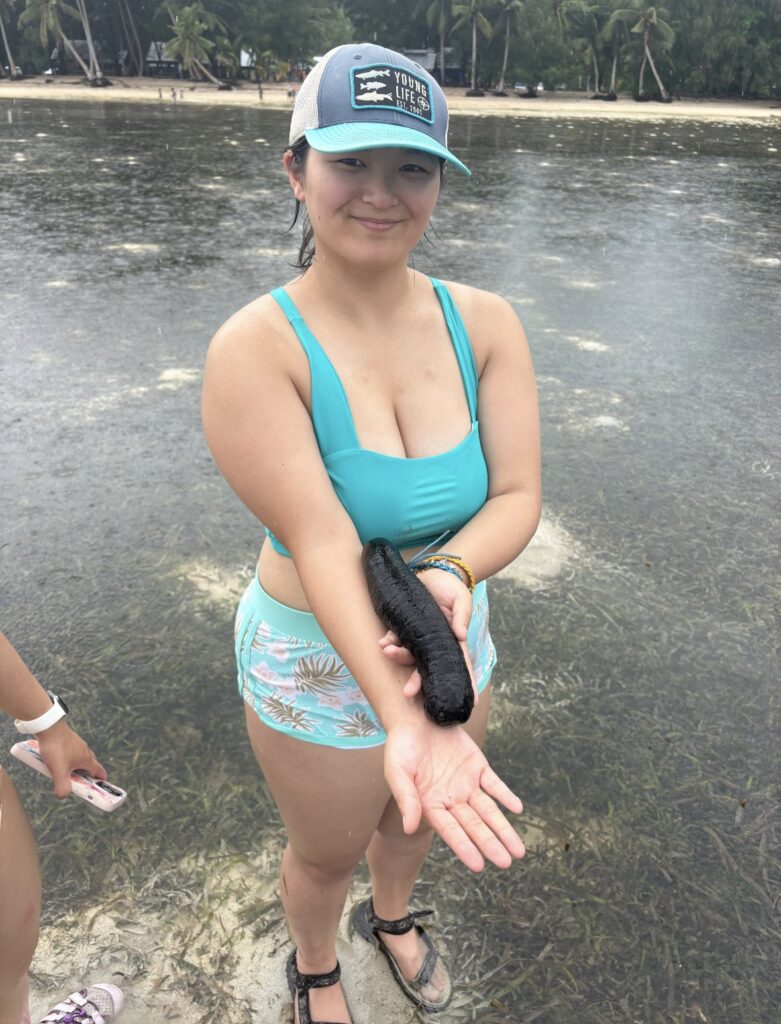
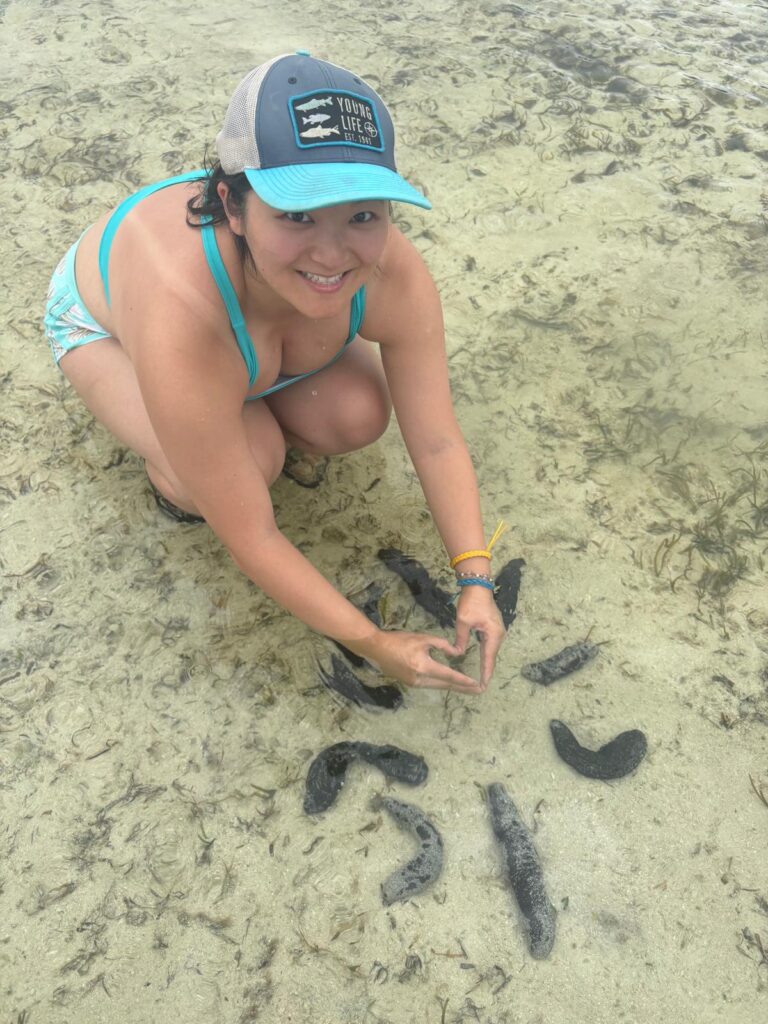
Raven and her sea cucumbers!

Paige: I have never been more grateful to be chosen to be here on this trip. I walked in with very little knowledge about Palau and I was met with so much grace and openness from the people here. What is there not to remember? We have driven the entire island learning everything from traditional knowledge passage, to looking at architecture, doing ecological restorations, planting taro, talking with our friends in Ebiil and within the government and got to go snorkeling in some of the most pristine coral reefs in the world. Walking away from this trip I am just incredibly grateful to be here with some amazing instructors and hosts and to have made connections that will last for life.
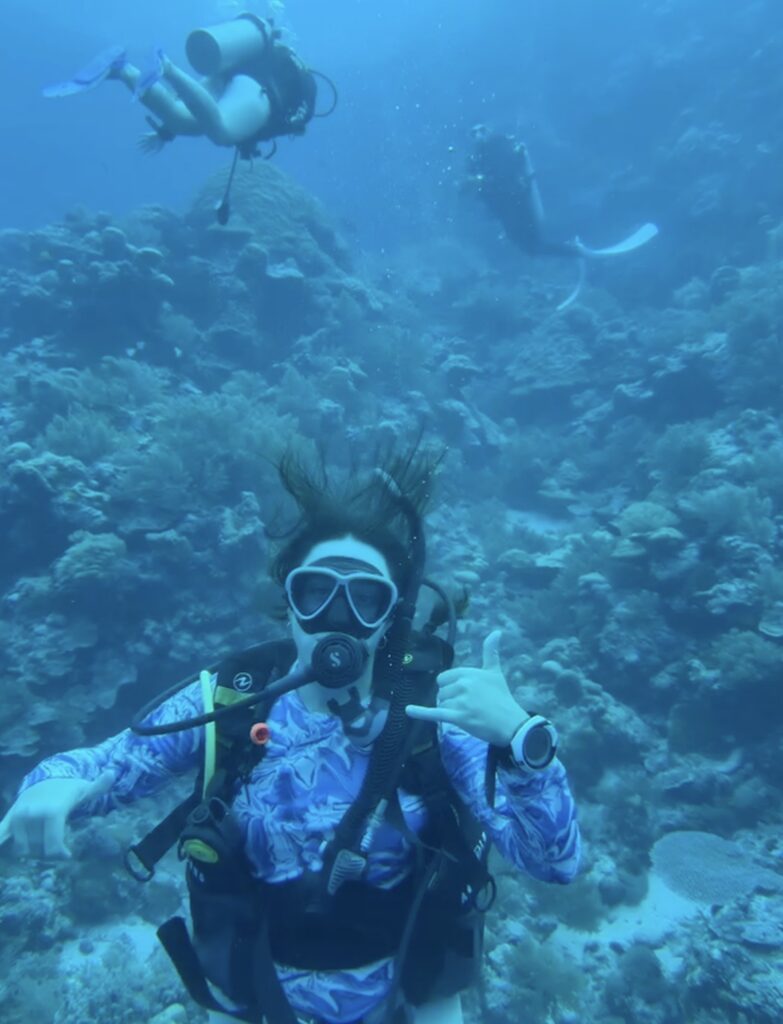
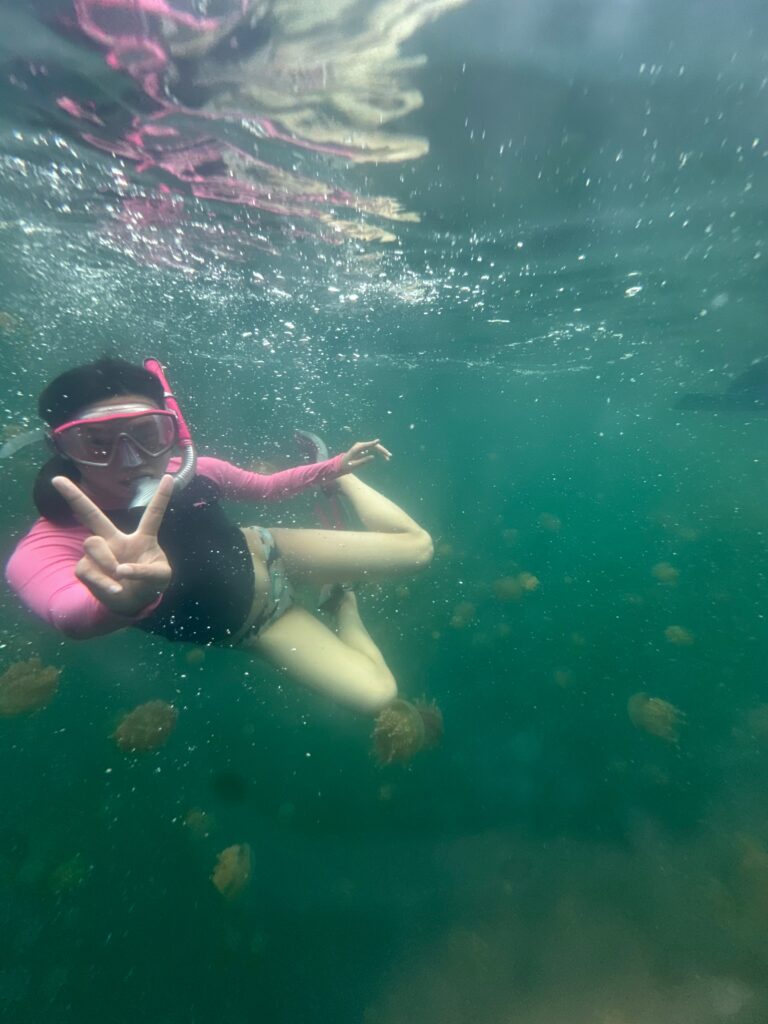
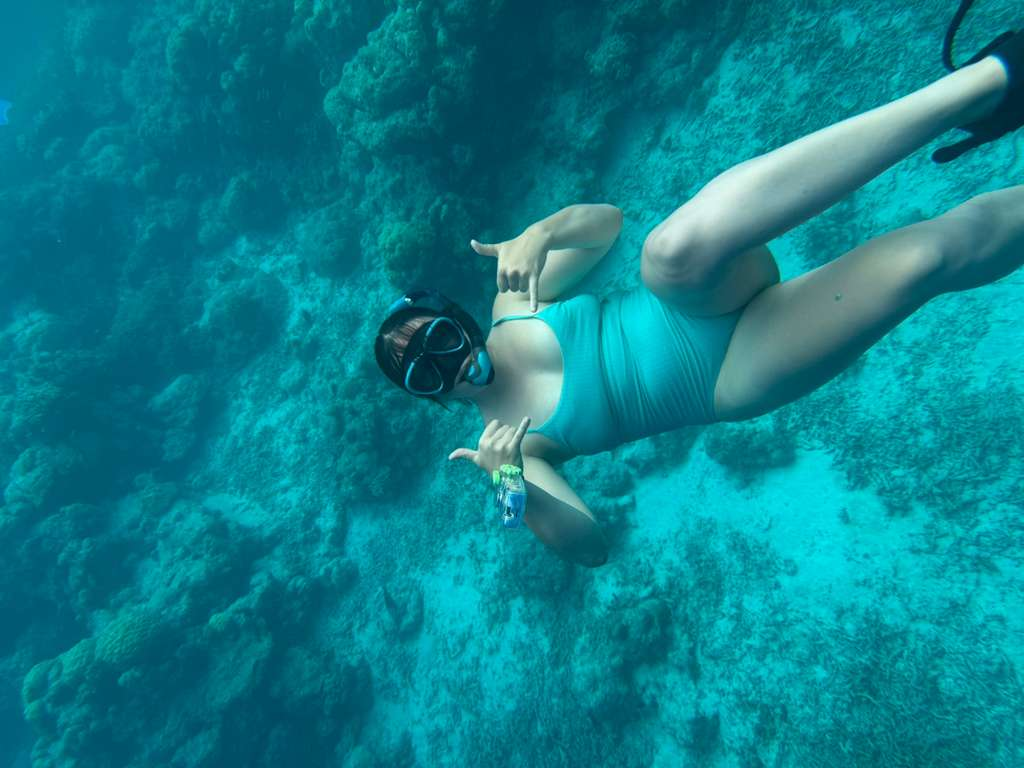
Paige’s off day underwater!

Adam: I was nervous. This was my first time crossing the Pacific and flying alone. I didn’t know what to expect, and if the 19 people I met in the next few hours would ever be friends in this strange place thousands of miles away. This place now feels like a home with the community I have built with my classmates, along with all of the people I met here and their kindness.
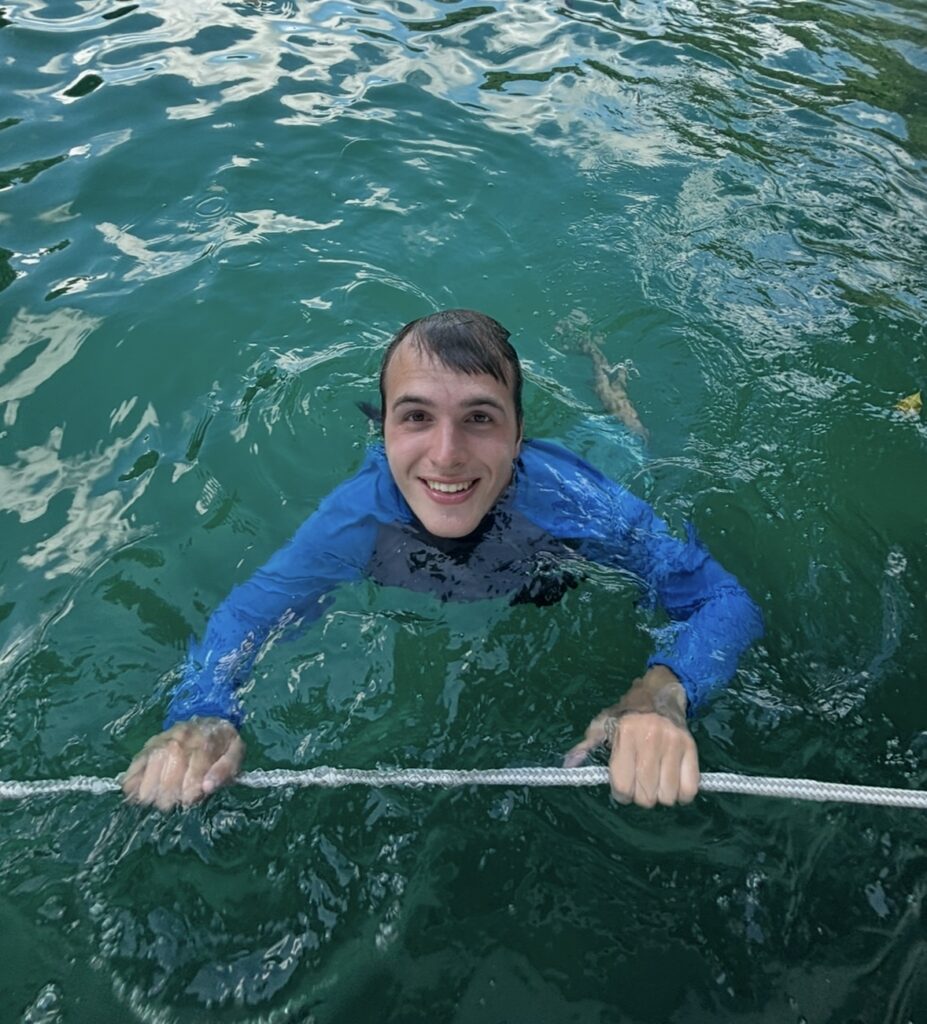
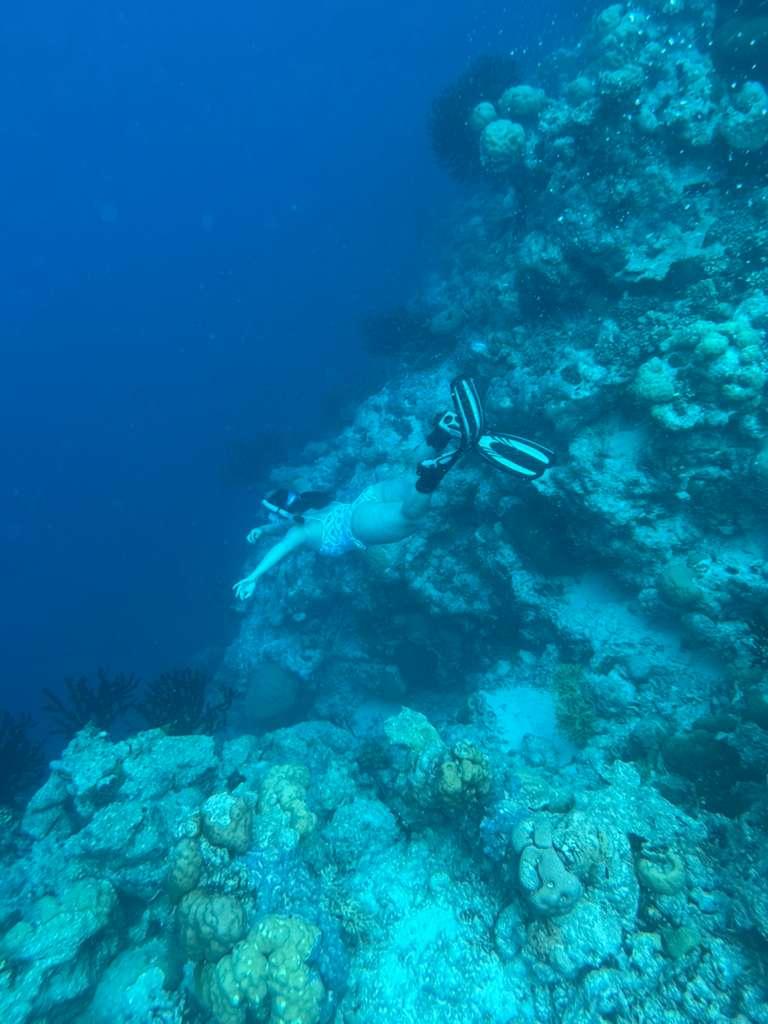
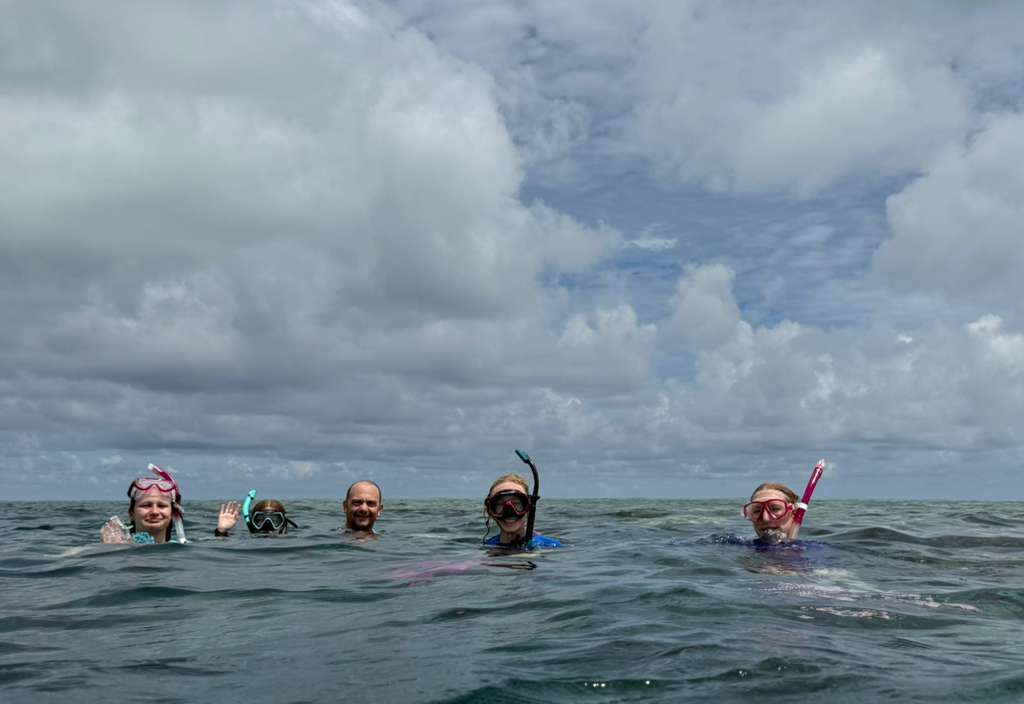
Adam swimming in the Rock Islands

Susannah: Before this trip, I felt scared to travel alone, nervous to be somewhere new, but also curious and ecstatic about such a cool opportunity to learn in a beautiful place. I leave feeling not so scared anymore. The truth is, even being in a new place with no one you know, you can never be alone. The people I’ve met here and the Palauans I’ve learned from made this world feel not so big. What I’ll take from this experience is hope. Hope for healthier oceans, more collaborative conservation strategies, and a world of people who help eachother.
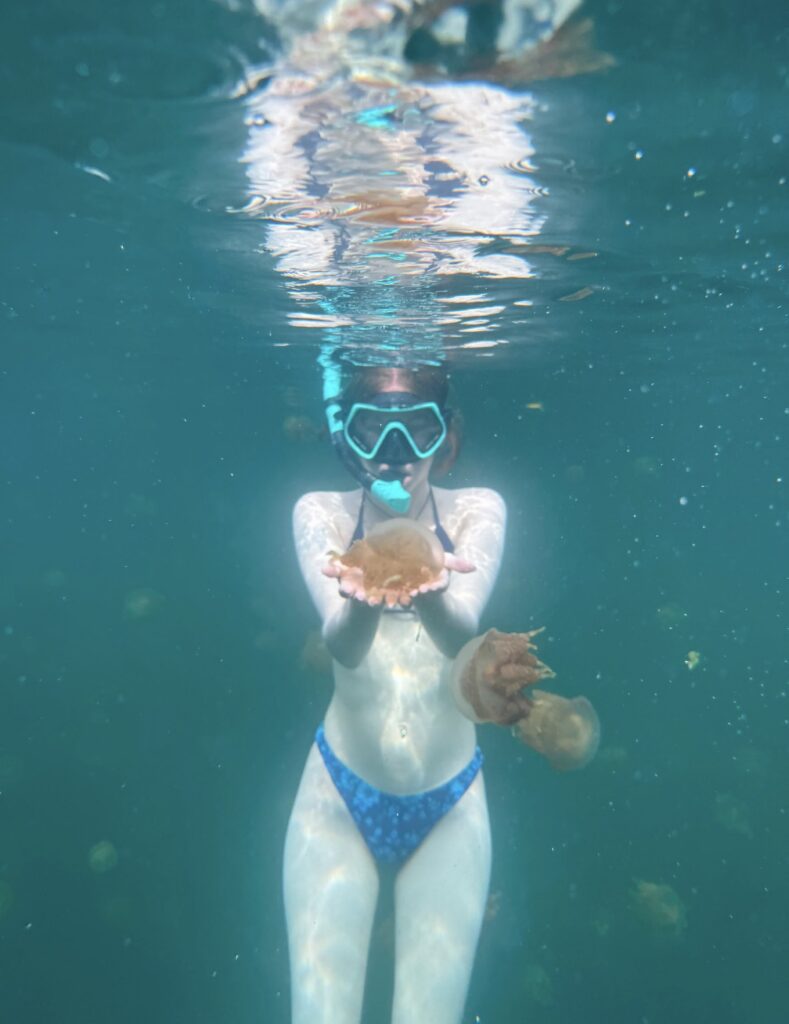
Susannah with jellyfish!

Issie: Initially with this trip I was unsure if I was enough because I was the youngest in the group but after the two weeks I’m confident in what my strengths and weaknesses are. One thing I’ll remember is the community in the class and the people around us since it was the first time where I saw people so tight knit even if they’re not related to each other!
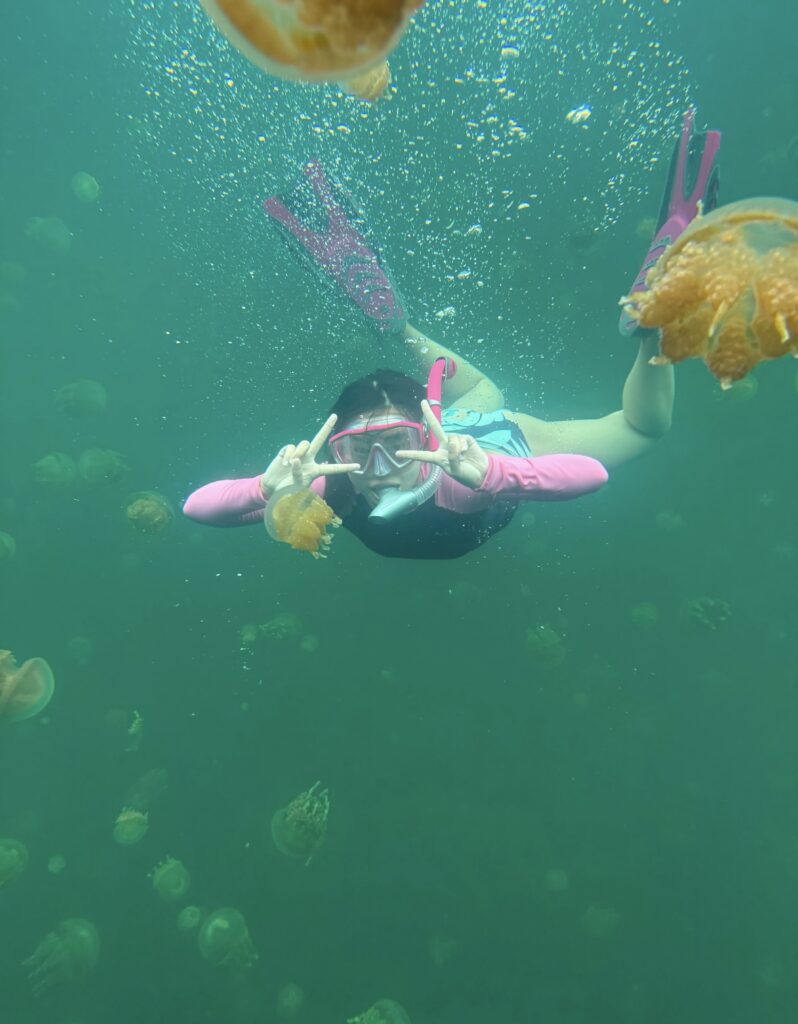
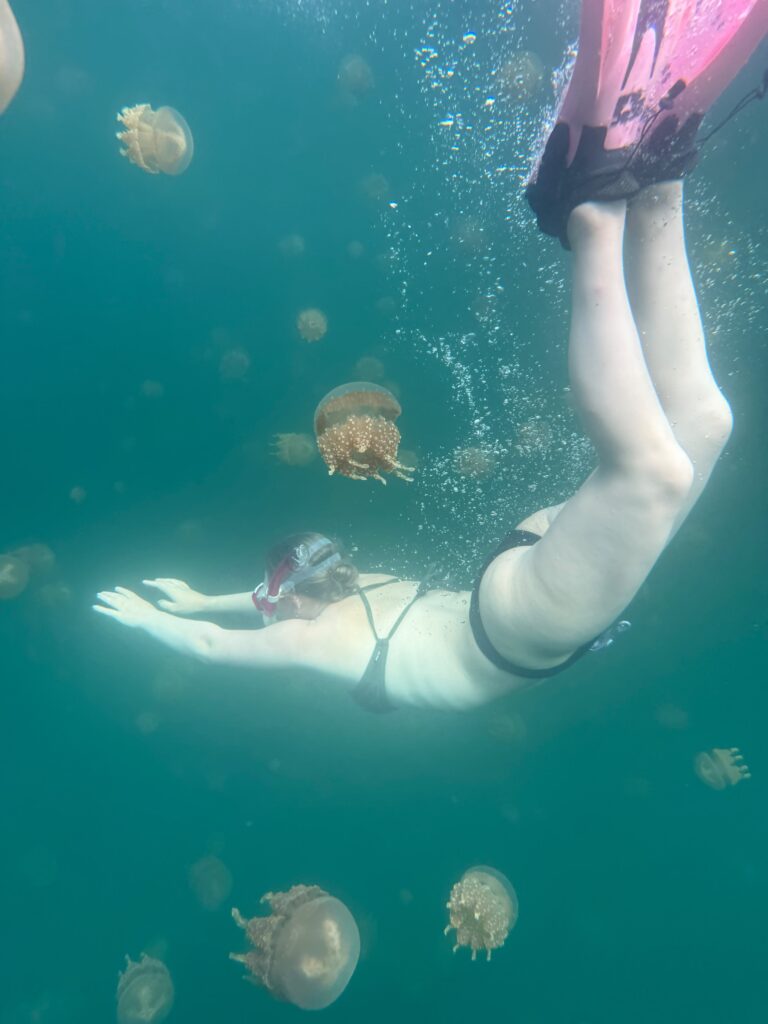
Issie swimming in Jellyfish lake!

Noah: Before the trip I was feeling a little nervous about traveling abroad and being in a foreign country with people I didn’t know. However I’ve had an amazing time getting to know everybody on the trip. I’ve learned so much and it’s really changed my perspective on conservation and sustainability. I want to always remember the natural beauty and connections I made throughout the course.
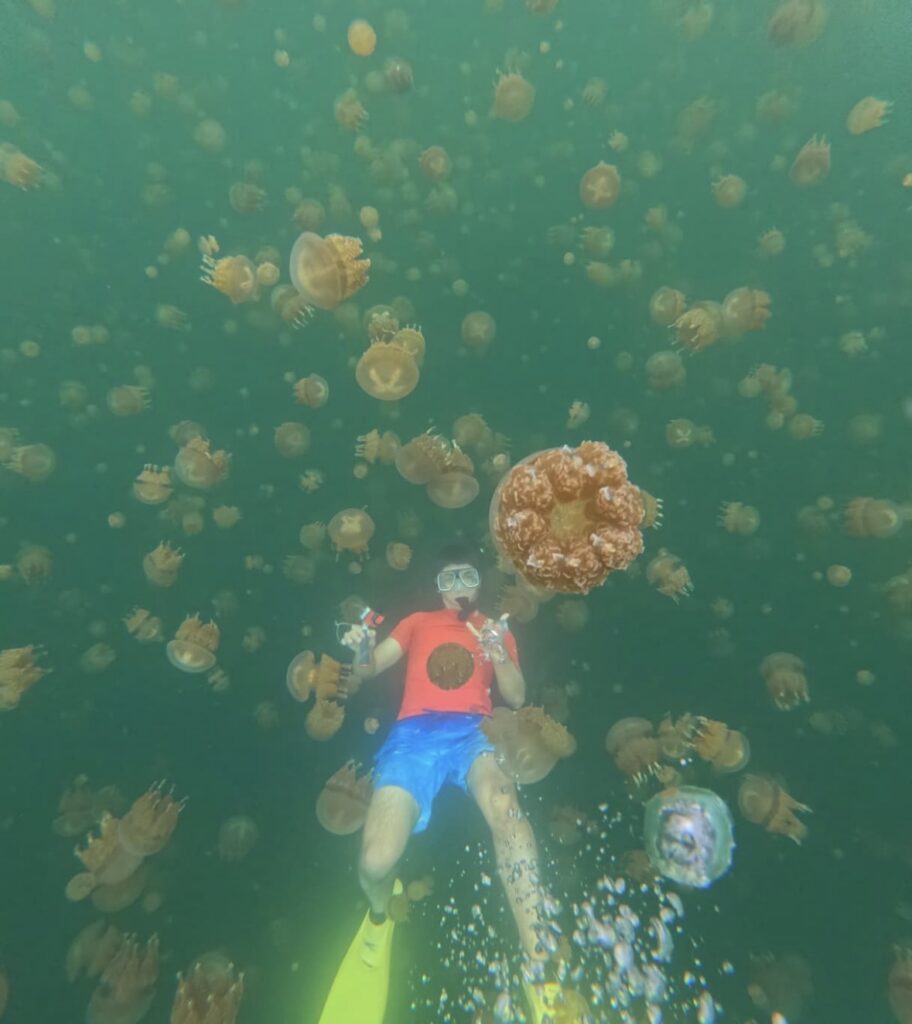
Noah in Jellyfish Lake

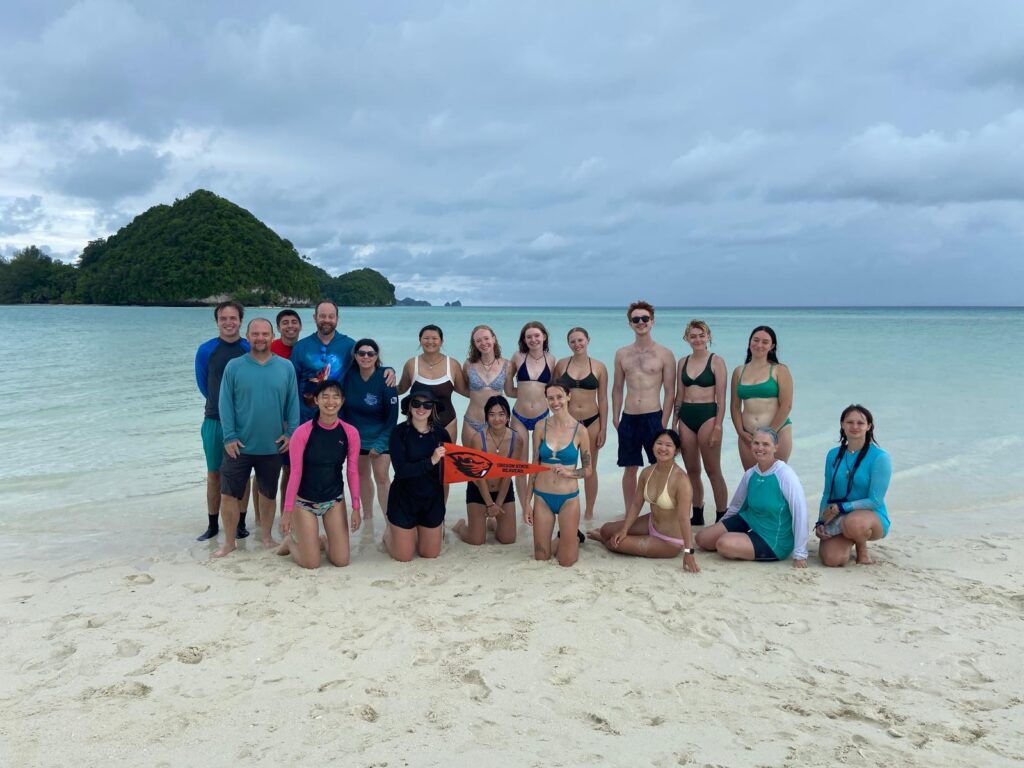
Now, on behalf of the Ridge to Reef class of 2026, we’d like to thank everyone who made this trip what it was.

Thank you to our families and friends for supporting us. We can’t wait to come home and tell you everything we’ve learned.

Thank you to the Ebiil Society for hosting us for a week and welcoming us into your home. You shared your knowledge with patience and openness, happy to answer our endless questions and share unique experiences with us. Whether it was preparing food together, learning about traditional practices, or simply sitting in conversation, every moment meant the world to us.

We would also like to thank all the guides and people we’ve met on this trip. Thank you to Paddling Palau and Palau Community College for spending your time with us. People like Anne, Joyce, Iseko, Ilima, Daemi, Chris, Mac, and everyone else inspire us with their committment to making a difference.

As we reflect on our time here, we are struck by a strong feeling of hope. In a world where environmental challenges can often feel overwhelming, Palau stands as a powerful example of resilience and responsibility. The commitment of Palauans to protecting their natural resources, while maintining cultural traditions and knowledge, reminds us that change is not only possible but already happening.

For a lot of us, this experience has strengthened our own sense of purpose. We all share a deep care for the oceans and our planet, and this trip has solidifed that even further. No matter how difficult things get, no matter who tells us something isn’t possible, we are reminded here why it is worth continuing to fight. We will continue to go out into the world with questions, curiosities, and endless wonder.

The resilience of Palau and its people will stay with us long after we leave. It is a reminder that hope is something built through dedication, community, and an unwavering belief in a better future. For that lesson, and for everything you’ve shared with us, we are endlessly grateful.

Thank you to Bryan, Scott, Maren, and Selina for your time, dedication, hard work, and mentorship throughout this incredible experience. Your passions for this place are what allowed all of us to one day come, and we will never forget these past few weeks you’ve shared with us.

And lastly, thank you to the Ridge to Reef classes of past years for paving the way for us. As Selina says, conservation is about people. Let’s keep being those people who, despite everything, continue to fight for this world.

Ridge to Reef class of 2026, signing out.
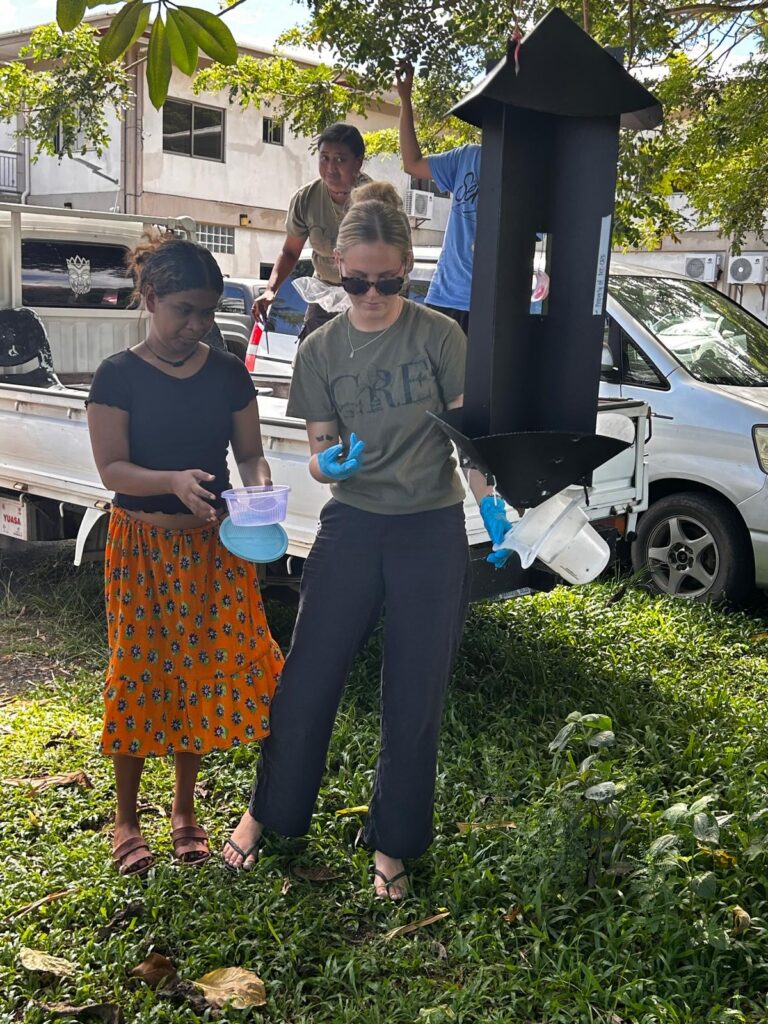
Day 15: Beetles and fish.

Today we met up with PCC (Palau community college) to learn more about their DNA sequencing of Coconut Rinocerous Beetles, an invasive species that has damaged many of the coconut trees in the Pacific islands, with the beetles targeting the palm fronds specifically. The head researcher of the lab, Chris, explained why the lab is dedicated to finding which beetle had a virus that changes the beetle population. The main goal was slowing the beetle population with the virus, but not completley wiping them out, since their larvae is important for mulch in local agriculture.

Collecting beetles from a beetle trap at PCC.

When arriving at PCC, protective wear was put on and a dead beetle was handed to each student, starting with the breaking off the back legs. Next the wings and head were removed as waste, then guts and fat were sorted and labelled. Solutions were pipetted and mixed with guts, allowing them to incubate together. From this process we could determine wether the beetle was a carrier for the virus.

Lastly we met with Deimi (an OSU alum!) at the Bureau of Fisheries, and she gave us an insight on her work, specifically discussing the impacts of climate change and tourism on fisheries management in Palau. They shared a project they’re developing which would moniter boats to better understand safety when it comes to overfishing or crossing protected reef areas. One of their long term goals aimed to build regional and global partnerships, and update fishing regulations since some of the policies are outdated.

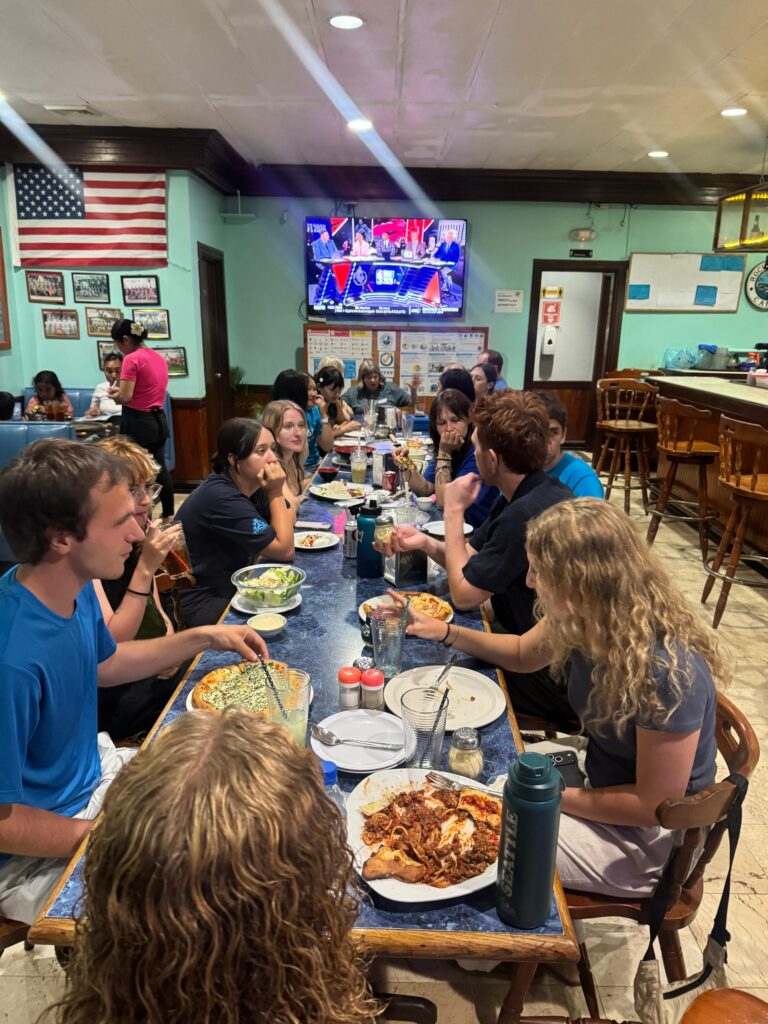
Finally, we all sat down and had our last dinner together as a class! It’s been a great 2 weeks, and we’ve all learned a lot while enjoying our time on the island.

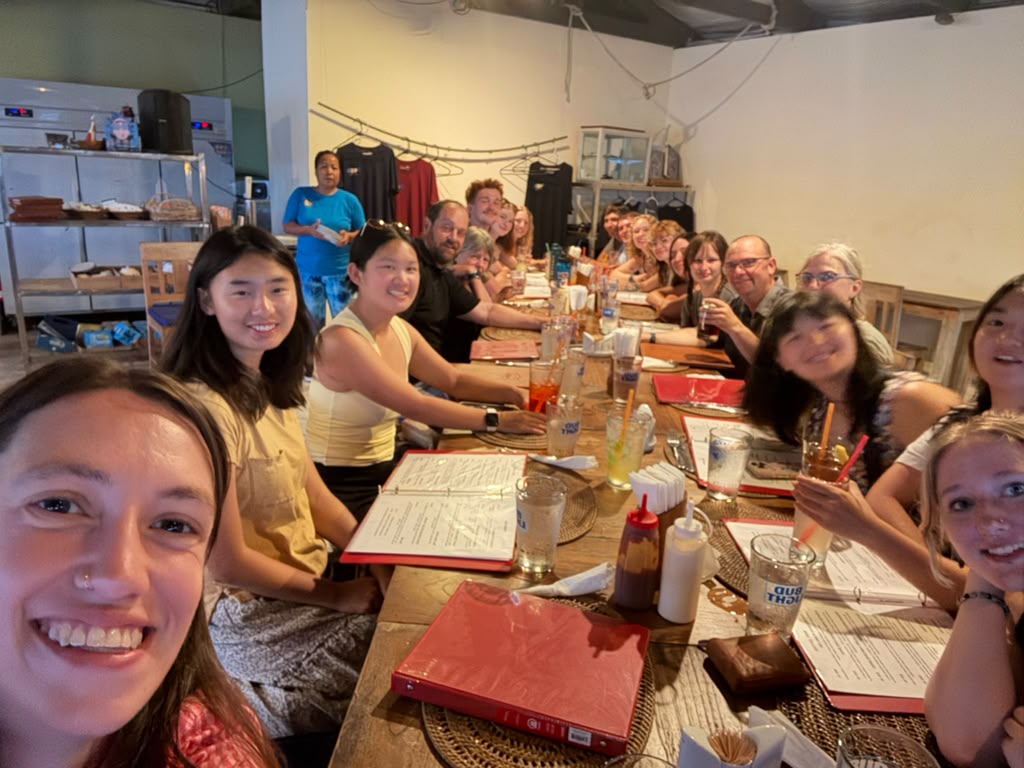
Final class dinner (:

Anna and Izzy signing off!

Day 14: Sharks ahhhh

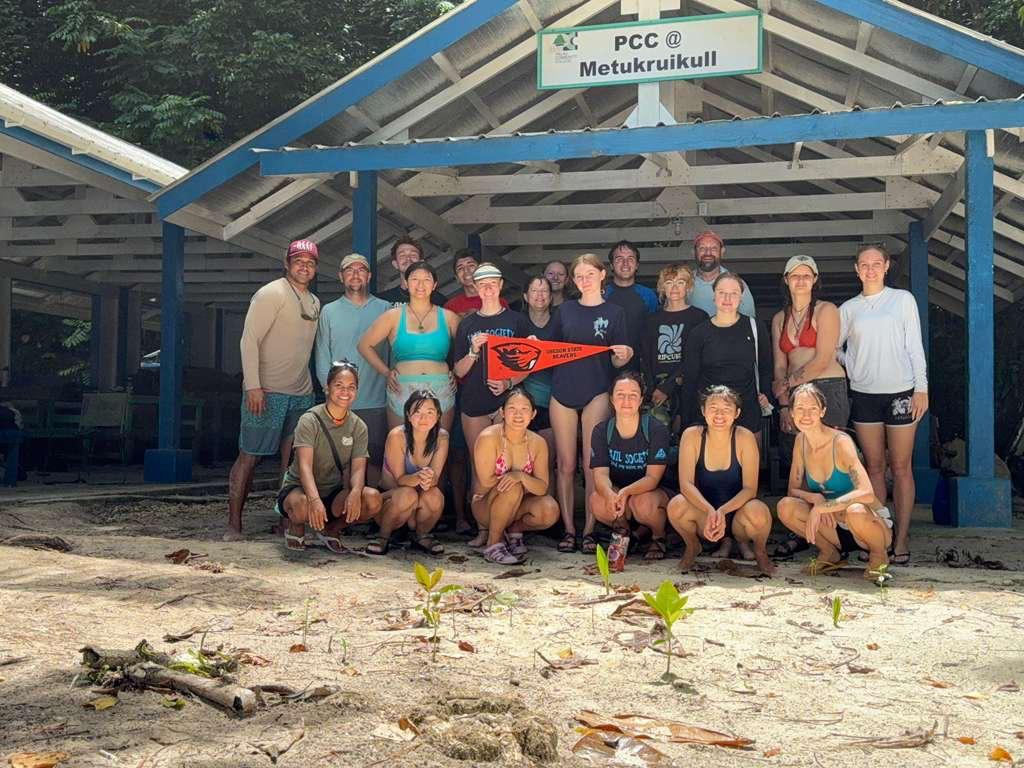
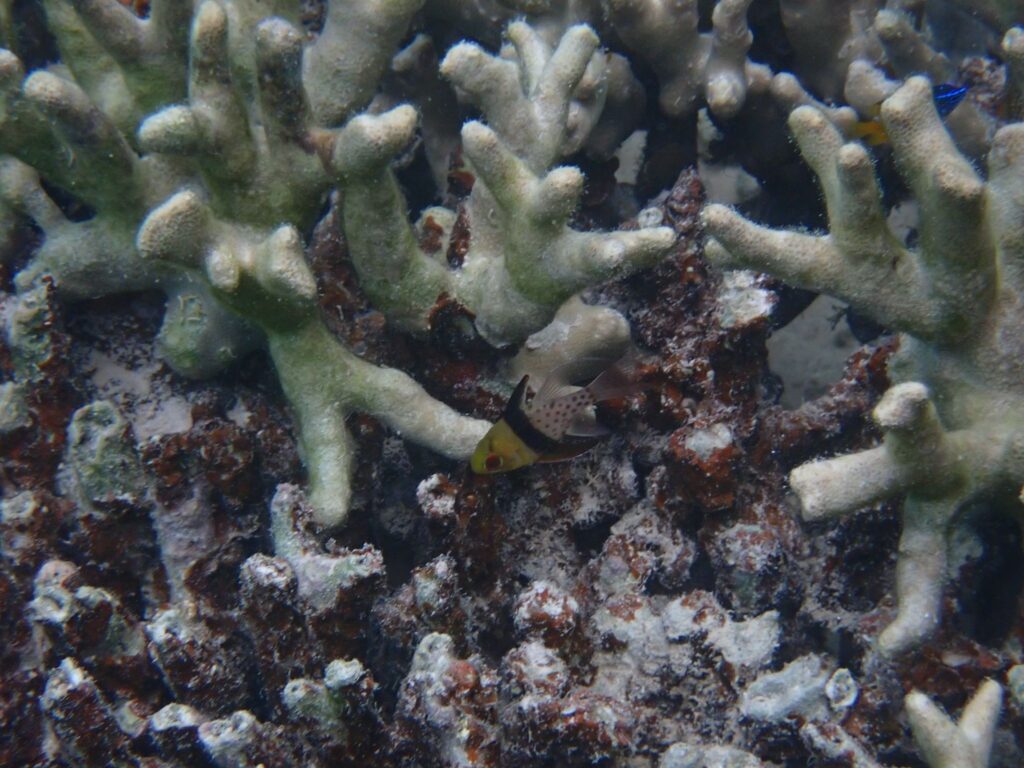
We are coming up to the end of the trip now and today was our last day in the water. We spent another day at the rock islands, this time with the Palau Community College crew. We first went to Metukruikull, a protected rock island. Here we listened to Chris Kitalong give a talk. We learned that this island used to be inhabited but now stands barren. The rock islands used to be a good place for villages since the people would have easy access to the water, and thus their food. Some villages even caught fish and put them in the marine lakes as a back up food source. Chris also talked about some of the conservation efforts at this and other islands. A lot of these efforts were brought on by foreigners without much consultation from the Palauan people. One example of this is the protection of sea turtles, which sounds like a good thing but cut a lot of the cultural ties that the Palauans had with hunting turtles for food and currency made from the turtles shells. The turtles that were hunted by the Palauans had ample numbers in Palau and the practices from the Palauans were not endangering them. After learning from Chris we snorkeled off of the island, some students saw lion fish, pajama cardinal fish, butterfly fish, and more!

Students, professors, and PCC staff at the PCC summer house on Metukruikull
A pajama cardinal fish in the coral

After leaving Metukruikull we went to Ngarmeaus, which provided a stark contrast since Ngarmeaus is not a protected island, and is a common spot for tourists. The island was beautiful and cleaner than Metukruikull since it is actively managed. It did have much more area cleared, however, for building summer houses. We sat in one of the summer houses and ate lunch, then snorkeled Ngarmeau’s luscious shores. Here we saw lots of cool critters, including many blacktip sharks! One boat was chumming the waters which brought many small fish and sharks to the surface. Whether this is legal or not I am not sure but it did make for a spectacular view for us.

A video of the sharks at Ngarmeaus

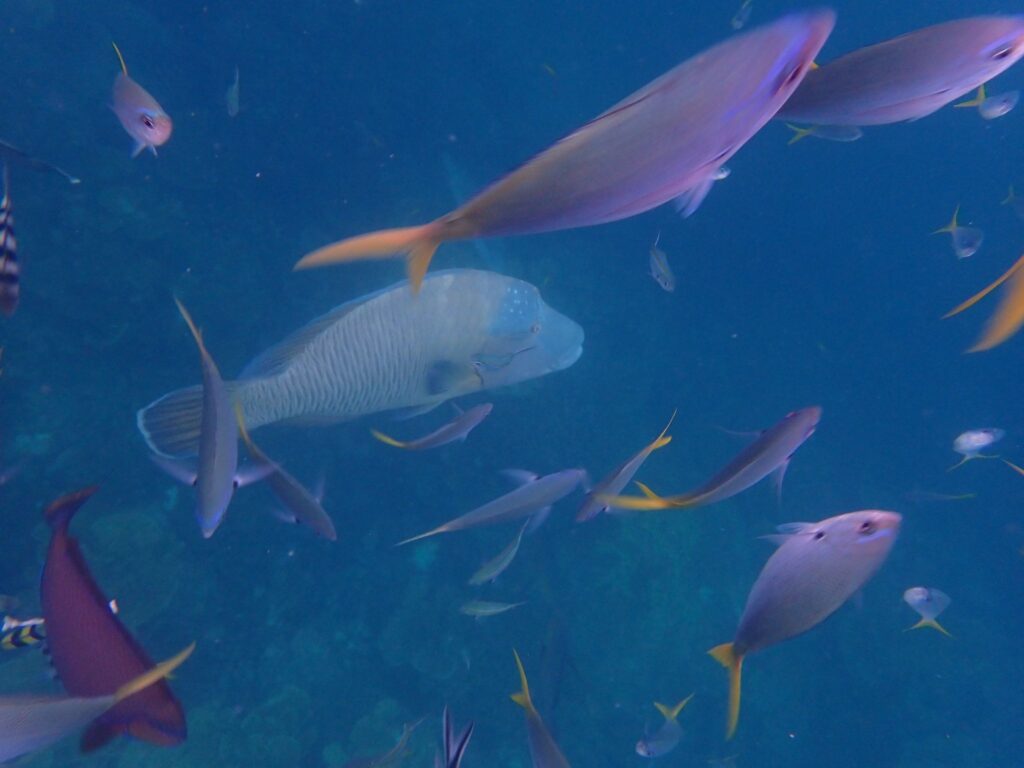
We ended our snorkeling by going to the cemetery reef. The reef has a fitting name as most of the coral here is dead and breaking off. This has happened mostly due to a mass bleaching event and continual use. This reef is known as a “sacrifice” reef. Many tourists are brought here which kills the reef but keeps foot traffic out of some of the healthier reefs of Palau. Here we saw many large Napoleon wrasse which stayed at the surface due to people feeding them. This has contrasted our experiences snorkeling previous days where the wildlife was protected and had less contact with humans.

A Napoleon wrasse in a swarm of fusiliers

Day 13: Agriculture, Recycling Culture, and Culture Culture

Today we were back on land from being on the water the past three days, which was very needed for the sake of our motion/sea sickness. We ran around town, going from PCC, to the recycling plant, to Surangel’s, to the Etpison Museum. 

PCC Research & Development Station

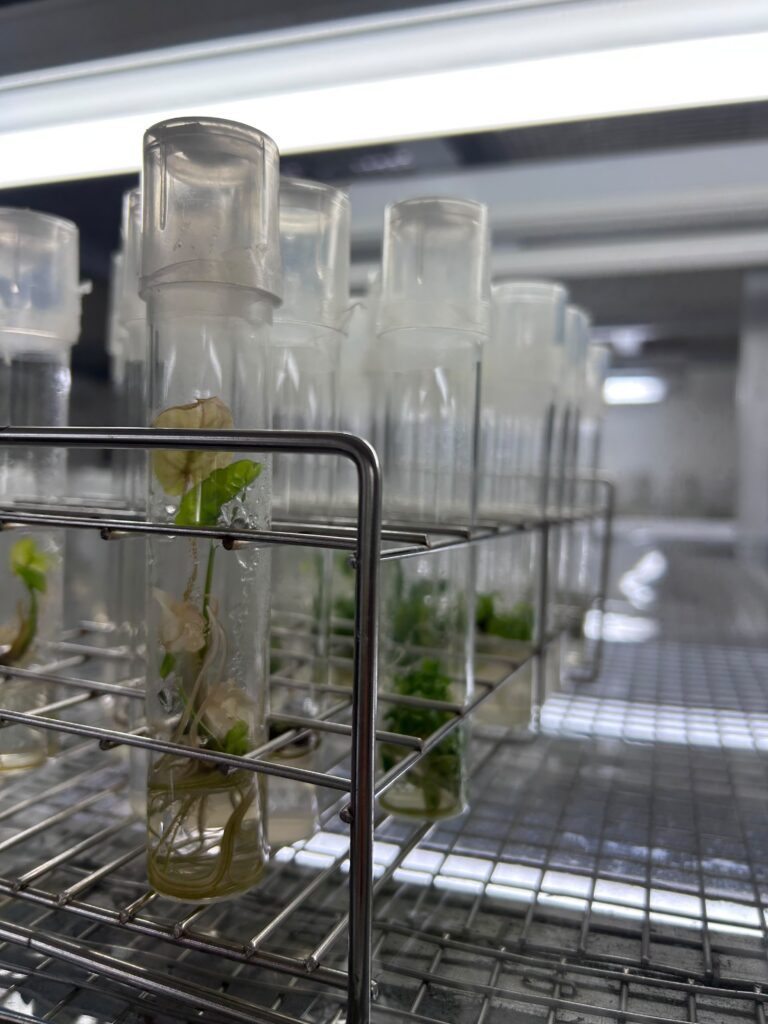
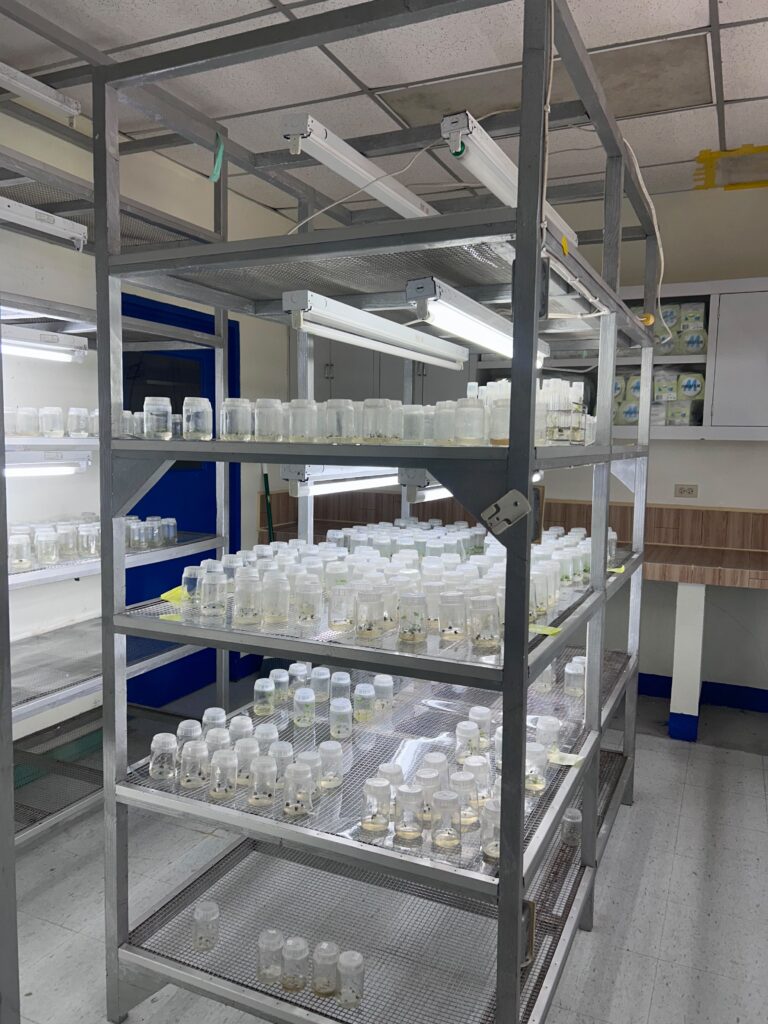
We started off at the Palau Community College (PCC) Research & Development Station, learning about their taro tissue culture which can grow 200 to 1,000 taro from one stalk. They are the only botany research station in Palau and is a land grant organization. We are super fortunate to be able to see the inner workings of the plant tissue culture cultivation site, led by Chris Kitalong, who has been working with OSU since the Ridge to Reef class started!

The lab does amazing work in Palau to prevent mono-cropping through preserving the thousands of varieties of taro alive, in addition to attempting to make taro the superfood for the Pacific, which could help with reducing diabetes in Palau. 

Along with taro, PCC grows sweet potato, vanillas, orchids, pineapples, passion fruits, bananas, and many more!

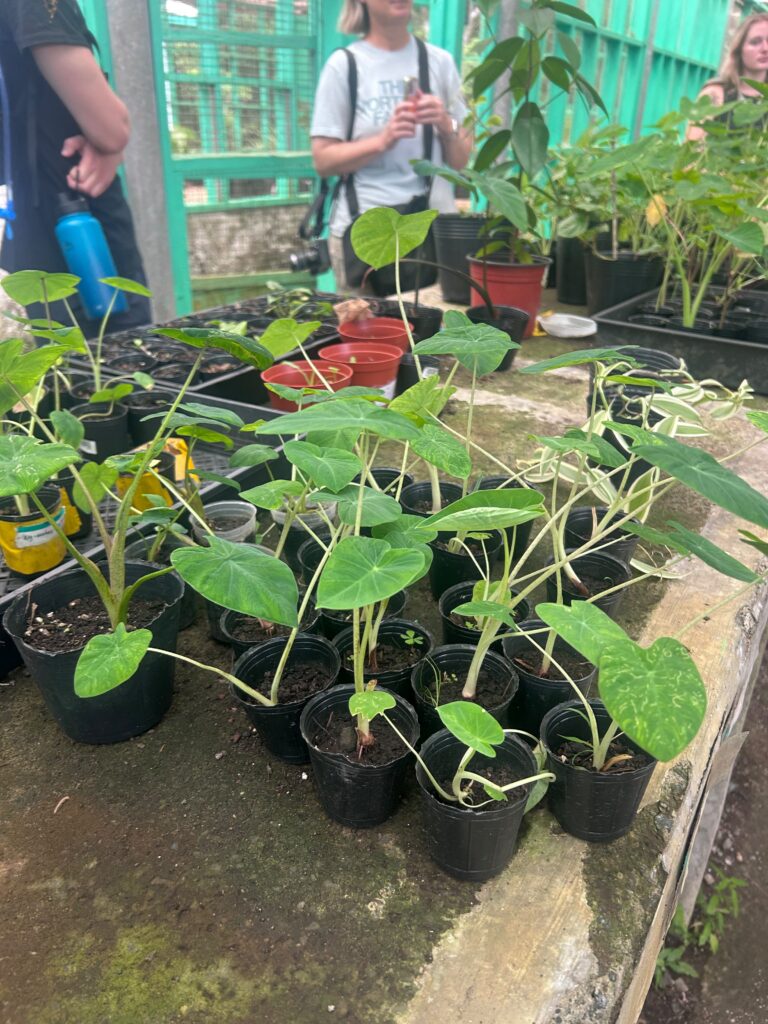
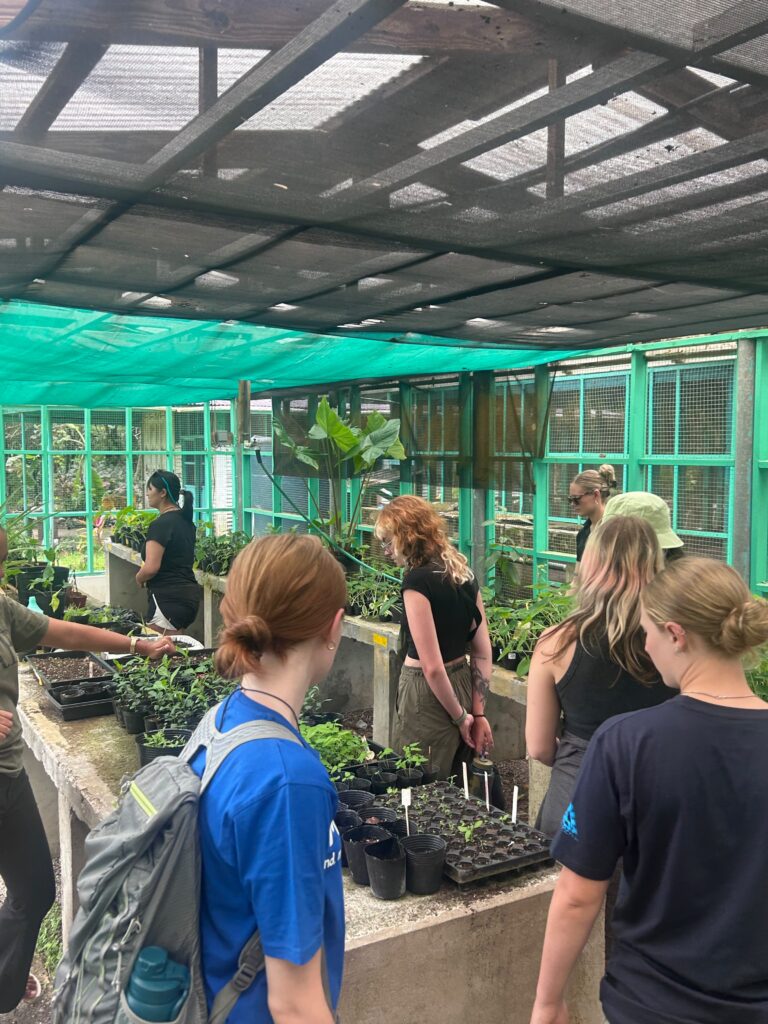
After the tissues are grown (stage 1), they are moved to the small greenhouse (stage 2), then to the bigger greenhouse (stage 3), and finally it goes out to the community based on their needs. 

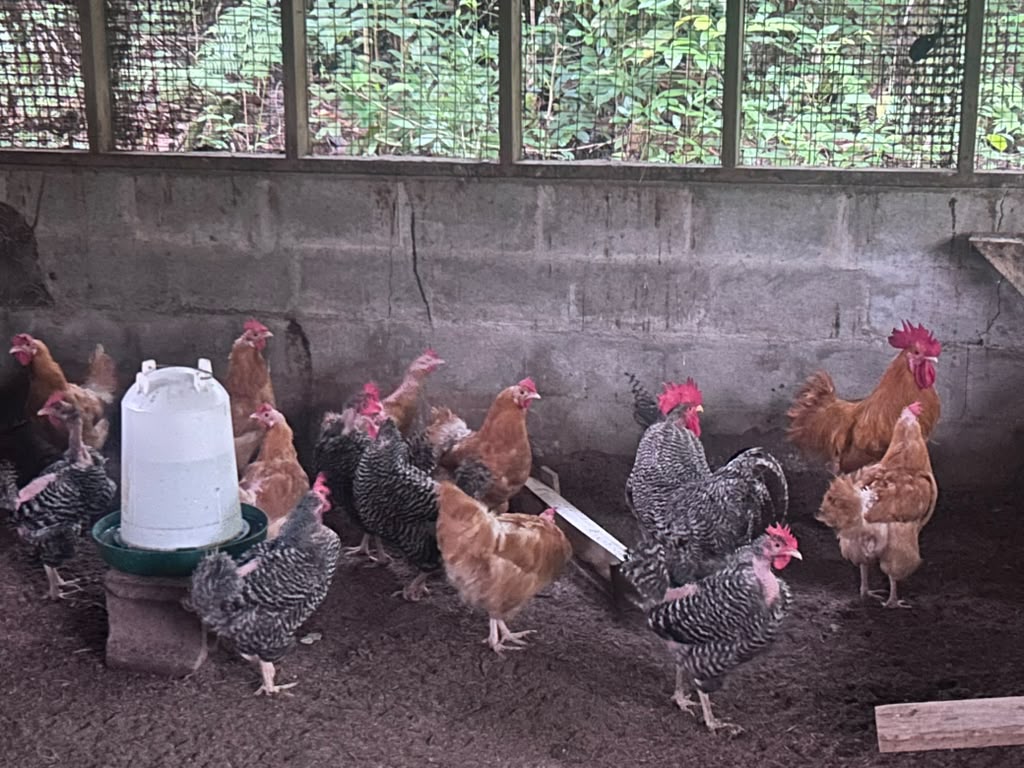
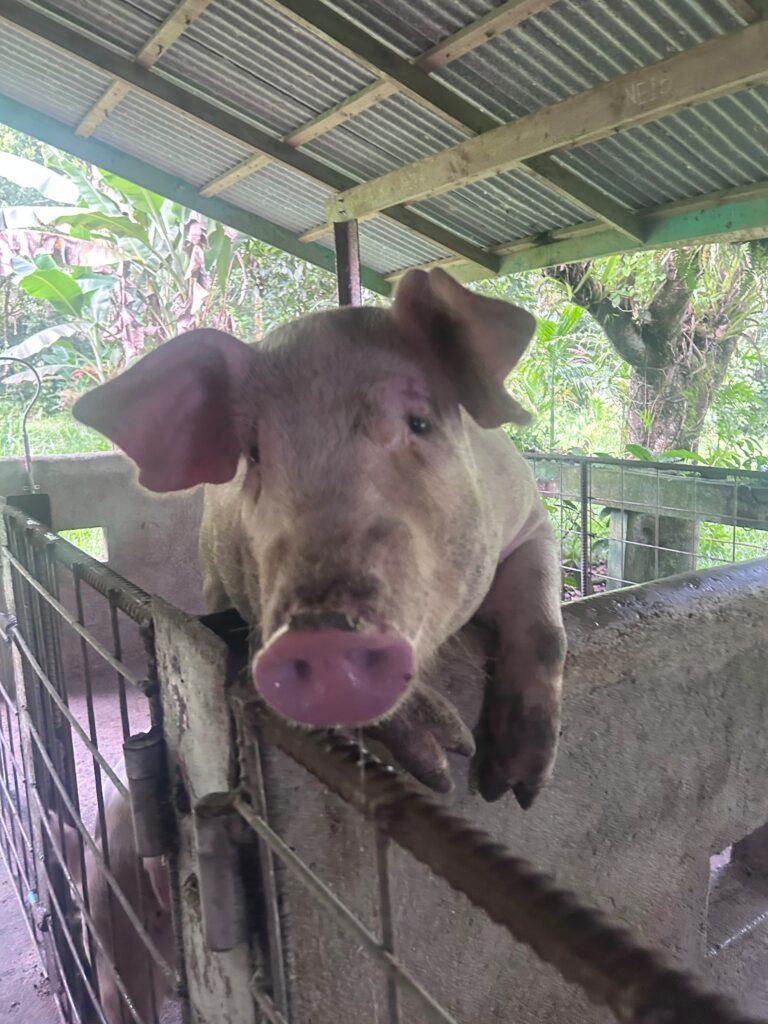
We were then given a tour of the animal husbandry areas for PCC students, where they learn to take care of animals. The animals are sometimes used for monumental traditional Palauan ceremonies. 

Surangel’s Super Center

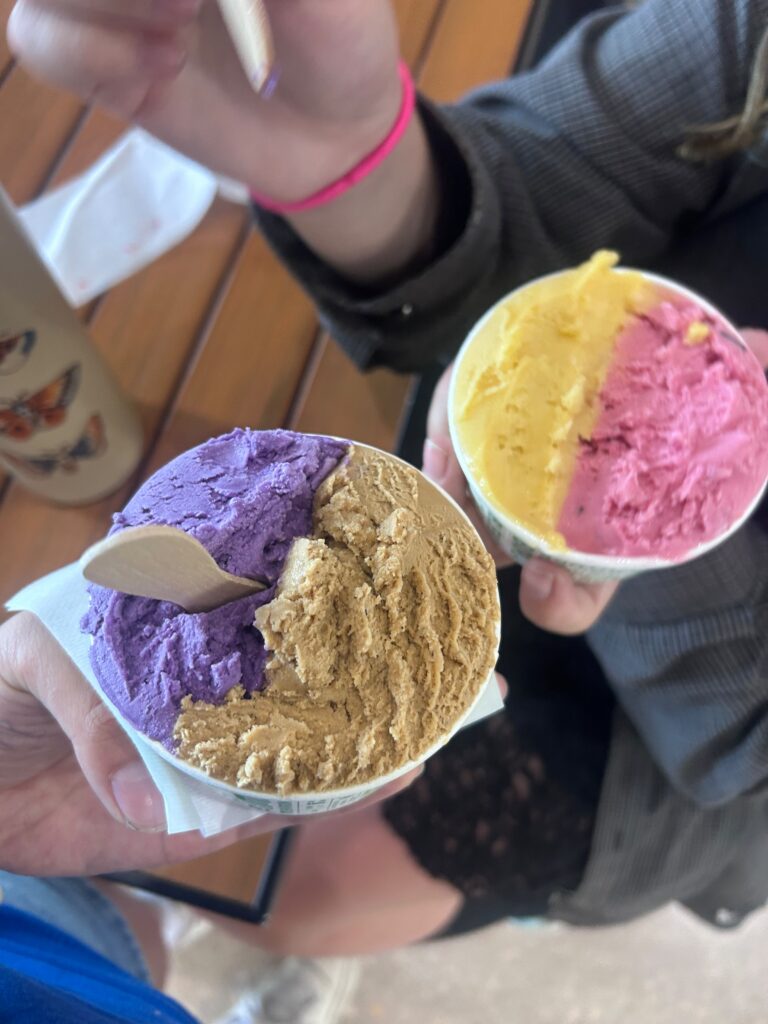
We took a quick stop by the super store Surangel’s, where we got some gelato for an afternoon sweet treat!

Gelato flavors consisting of: ube, coffee, mango, strawberry, and even seaweed flavor…

Koror State Solid Waste Management Office & Belau Eco Glass

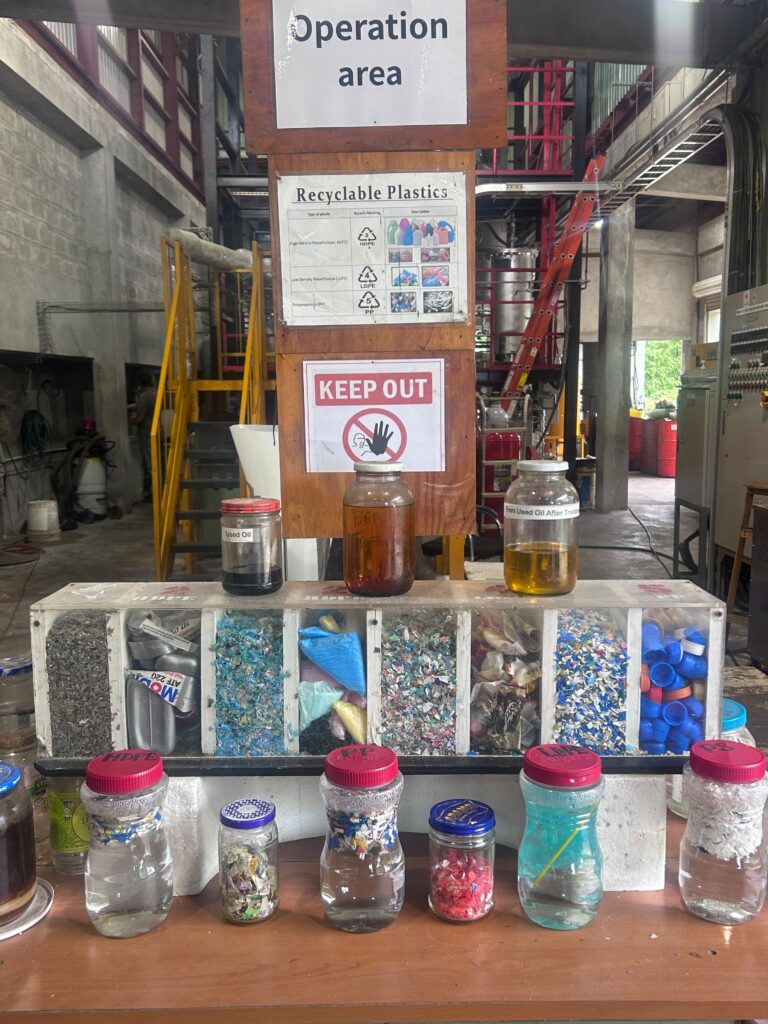
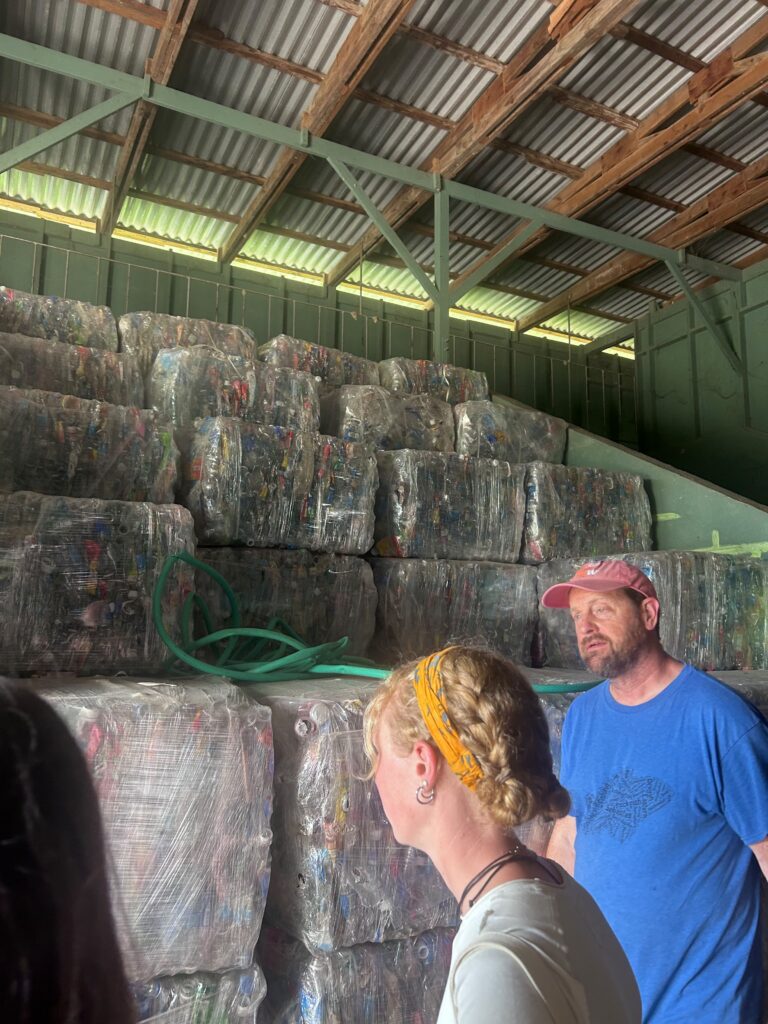
Our next adventure took us to the state’s recycling station, which receives Palau’s recycling and makes useful materials from them. They do amazing work keeping recyclable trash out of the landfills. These are some of the ways that the plastic are utilized: Sold to Taiwan, made into clothing, and made into oil (which powers the operations of the recycling plant). 

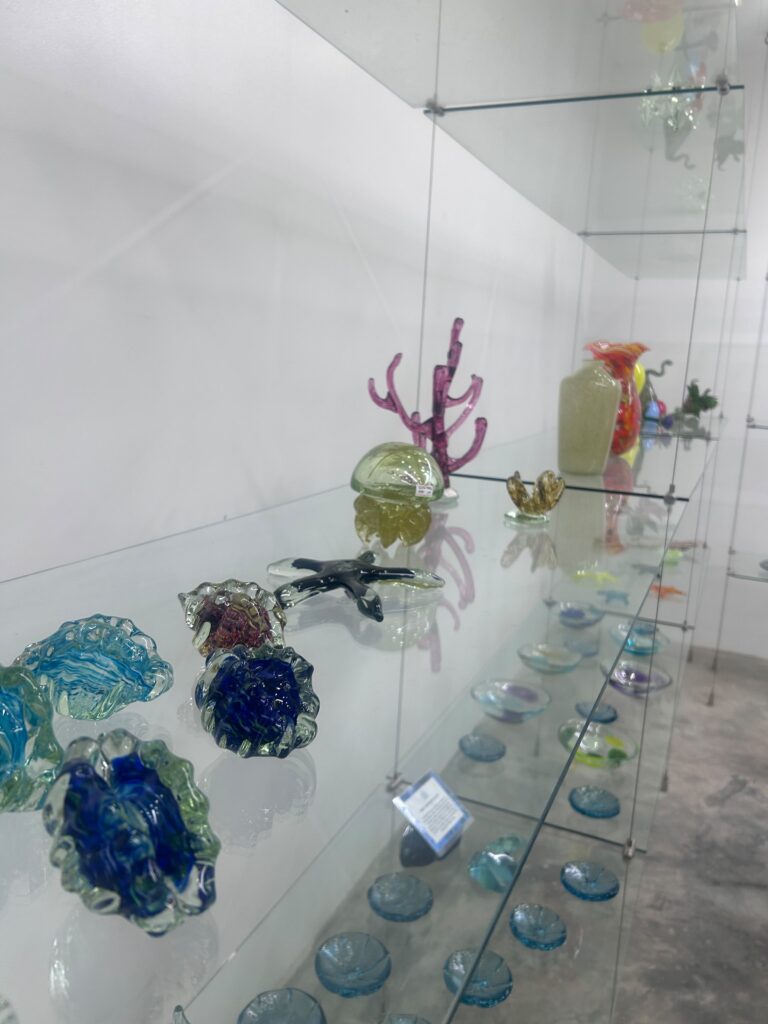
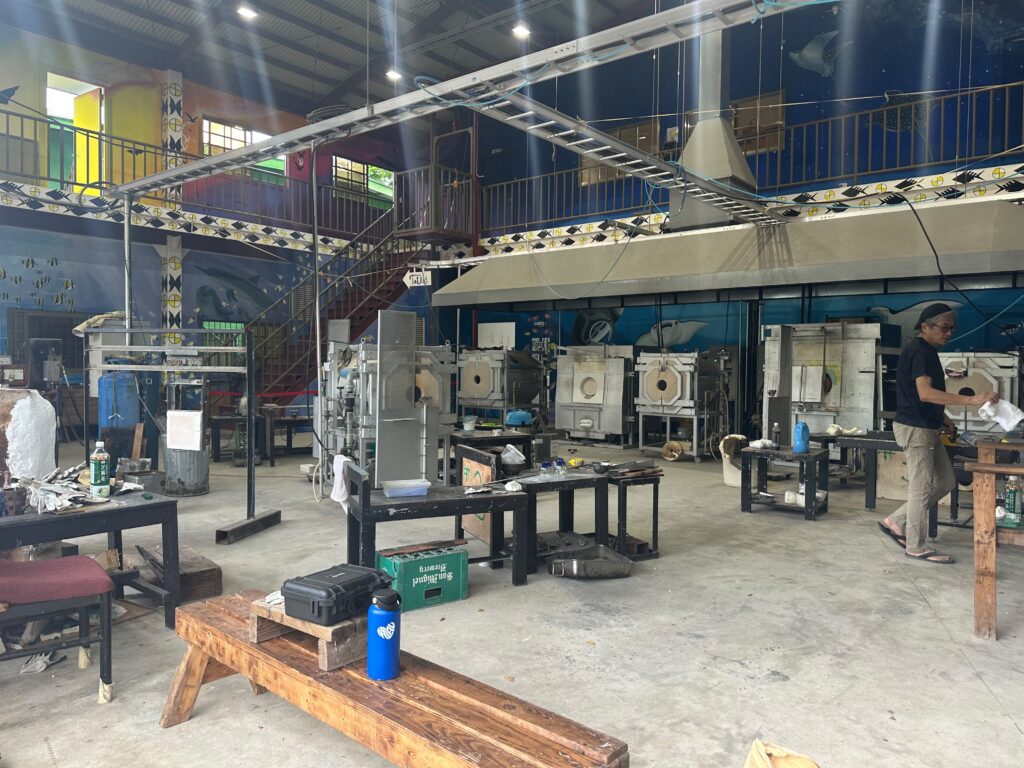
Glass recycling is also utilized, and are either crushed and given to construction companies to make into concrete, or made into fun jewelry/decorative eco-glass! As a small island, Palau has to look at resources differently and do what they can to make sure as little waste is produced as possible. Latest reports show about 25-30% of waste in Palau being recycled, along with a 88% redemption rate. 

Etpison Museum

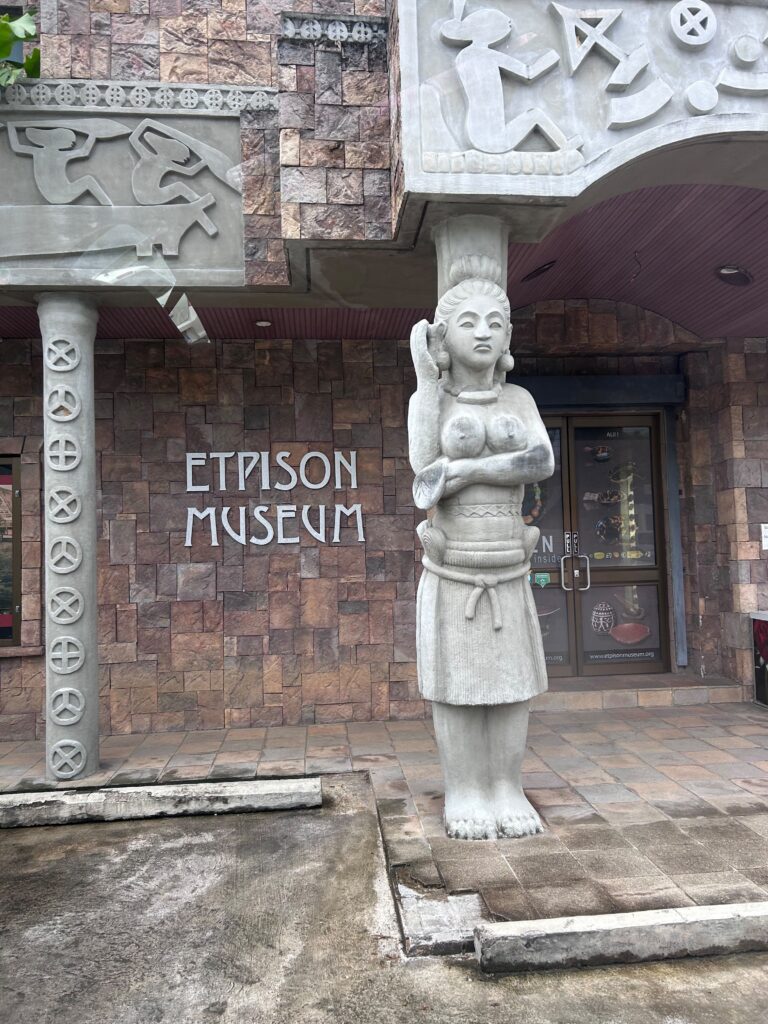
Etpison Museum (self explanatory), we couldn’t take pictures inside 🙁

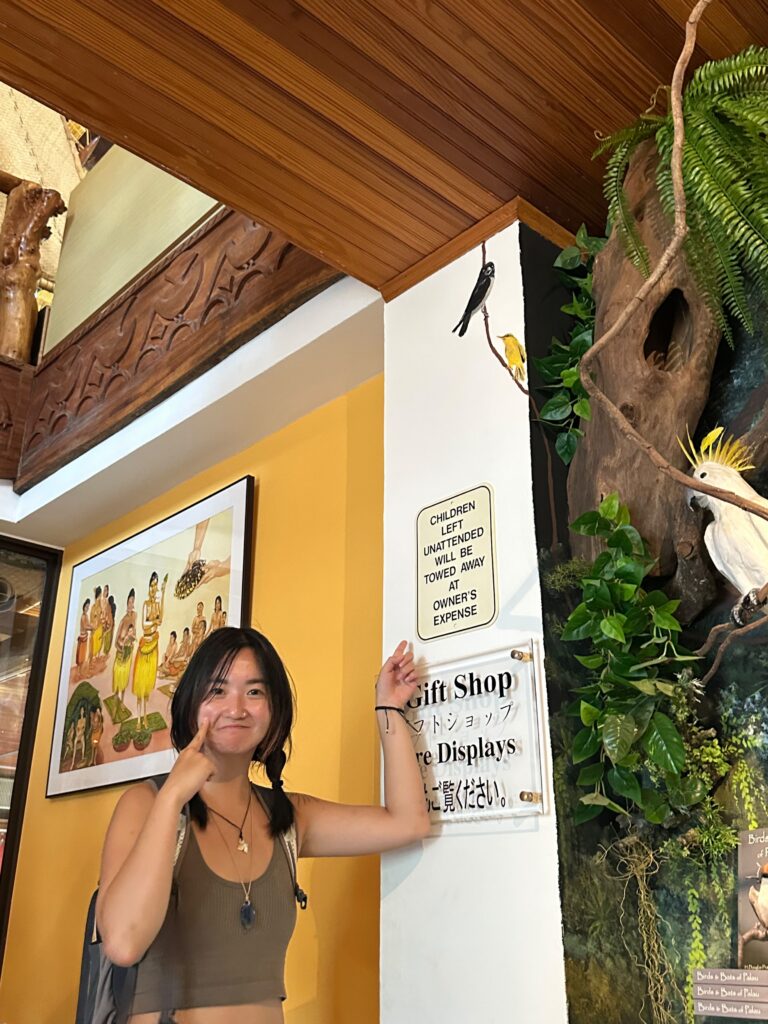
Our last stop of the day is to the Etpison Museum, where we learned more about the historical traditions and stories of Palau. For example, we learned about how a long time ago, a pregnant woman ate the forbidden fruit KEAM nut and turned into a dugong! In the Etpison Museum, children left unattended will be towed away. 

Children will be towed

Today’s blog was written by Angela and Lauren 🙂

Day 12: Jelly Fish Lake and more Snorkeling!

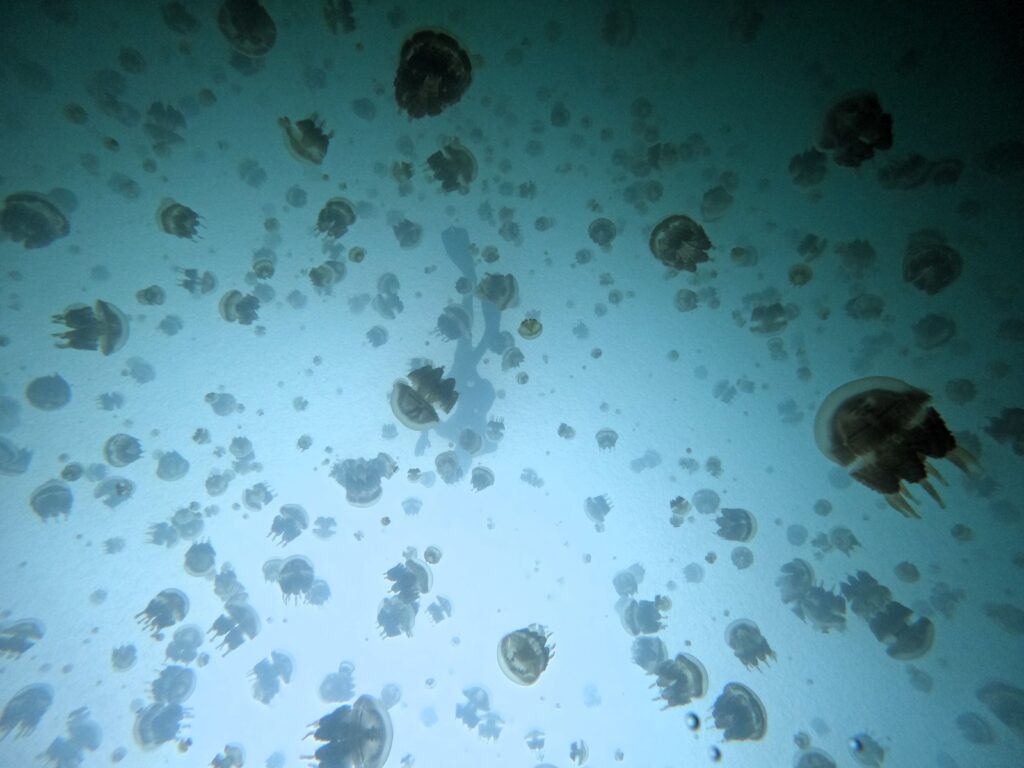
Today we continued our time learning and experiencing local tourism and finally made our way to see the notorious Jellyfish Lake. This is a marine lake that can contain millions of jellyfish in a good bloom year. We learned that this is also not the only marine lake with jellyfish like this across the rock islands and actually is one of the sacrificial lakes they have made to provide tourists with a closer look at what the rock islands are like. These islands are heavily protected by the rangers here.

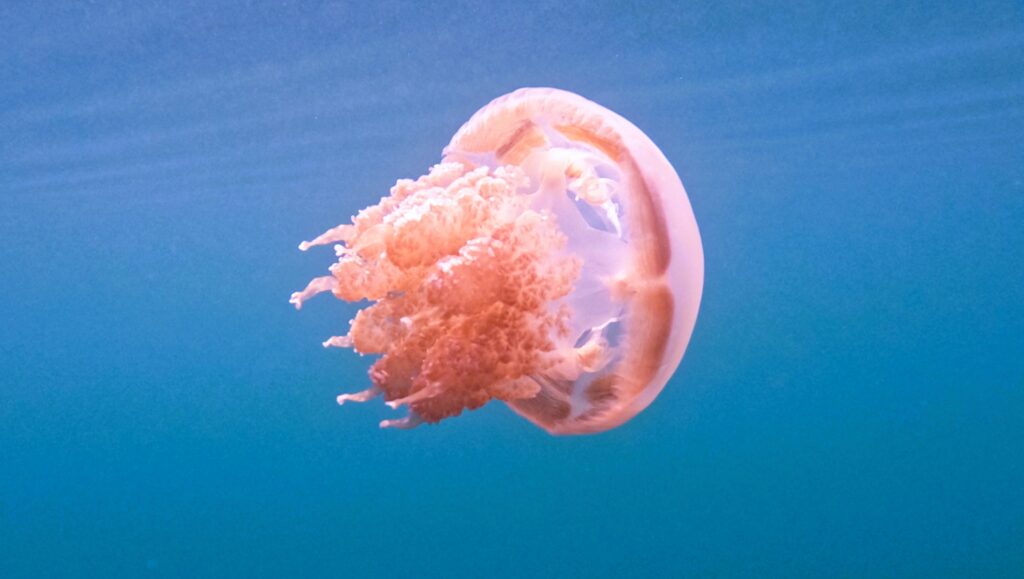
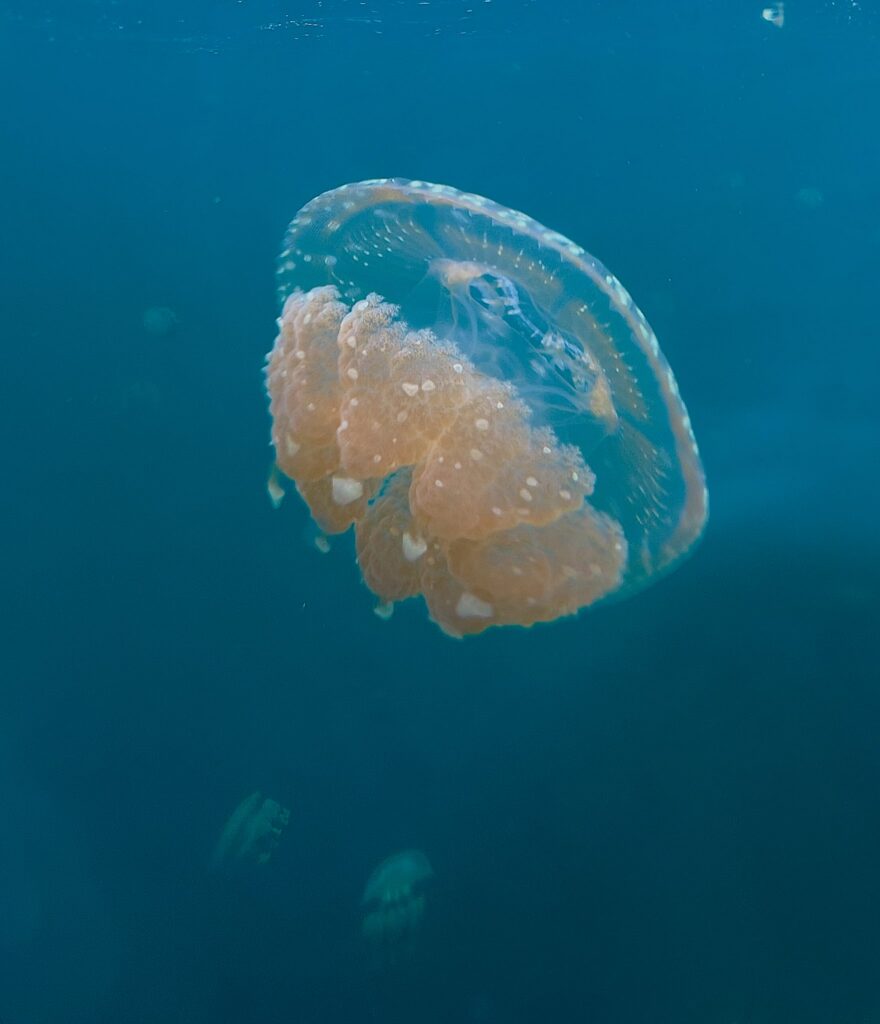
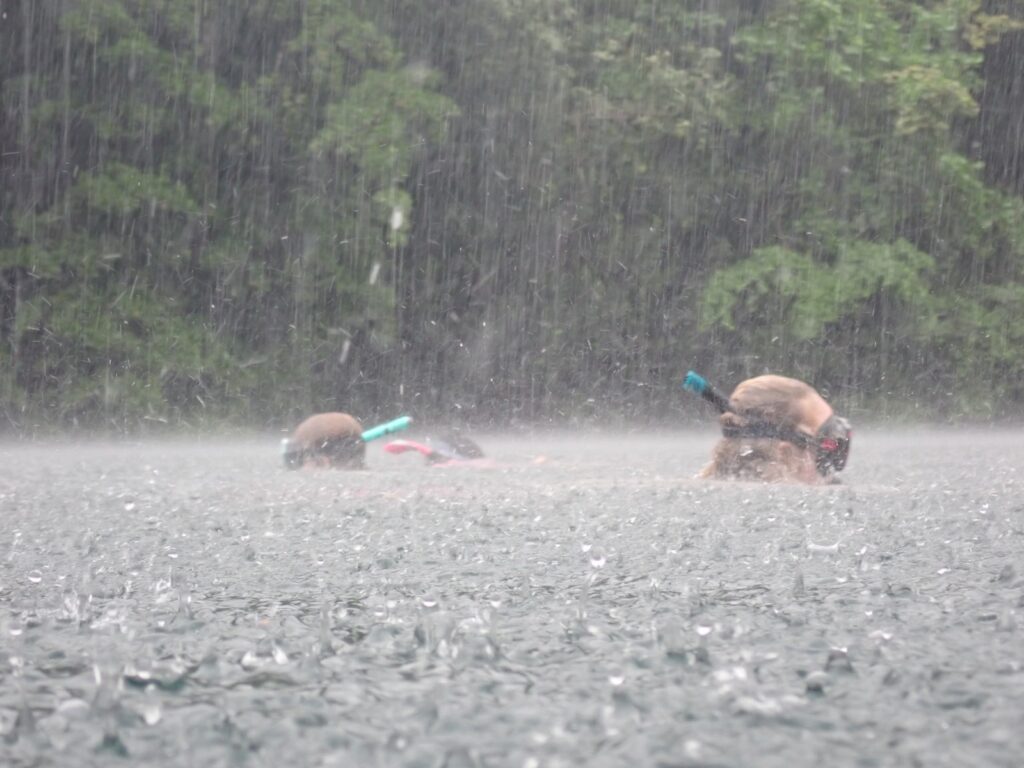
We took a short boat ride to get to the UNESCO world heritage site, Ongeim L’Tketau which is where the lake is. We learned that the jellyfish life cycle goes from a fertilized egg to a planula which will plant itself onto the surface to become a polyp. This polyp will grow into a budding polyp to become an ephyra and finally to an adult medusa which was what we saw today. Since these jellies don’t sting, people are able to swim in the lake and be surrounded by millions of jellies without any fear. There are two kinds of jellyfish in the lake the golden jelly and the moon jellyfish, both of which we saw today! We swam with and around them and also simultaneously got caught in a very heavy rainstorm!

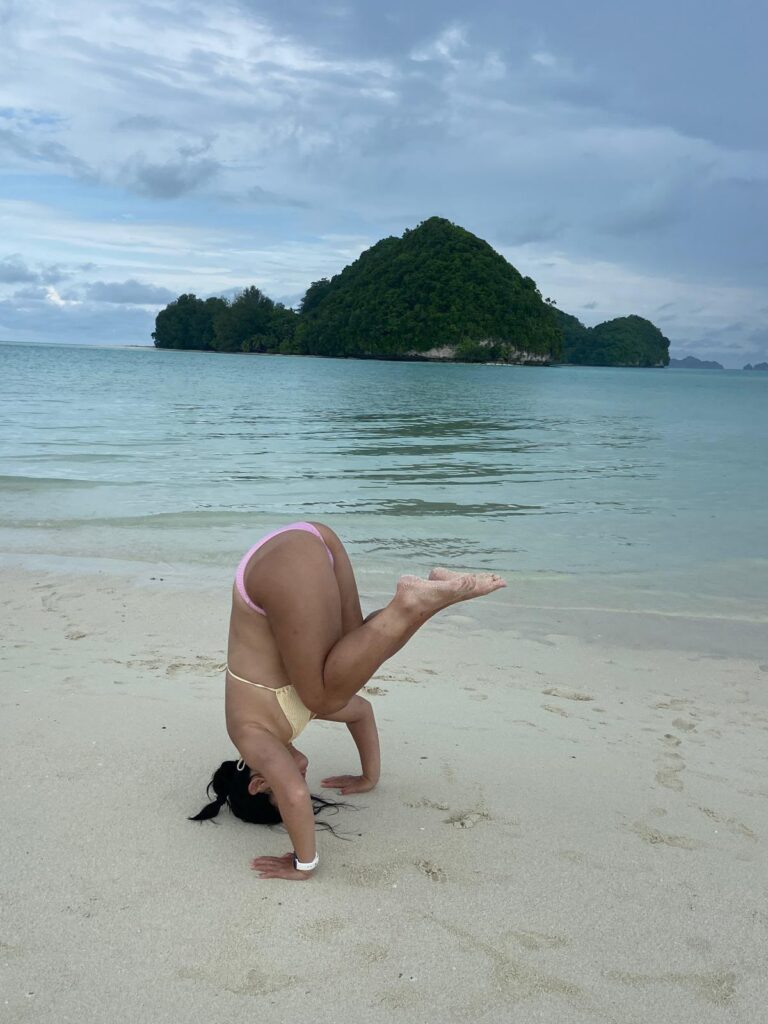
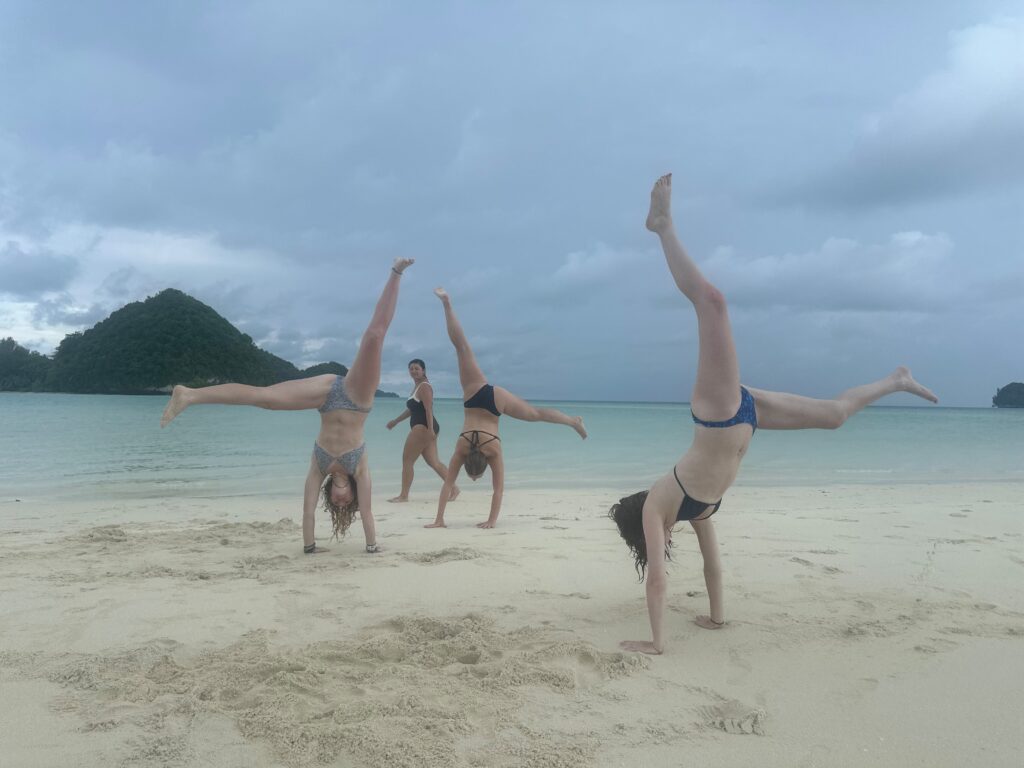
We then took another boat ride with our group to a long sandbar pinpointed between a few of the rock islands. Some of us wandered off to look at shells and sand dollars and others of us did a little bit of yoga…

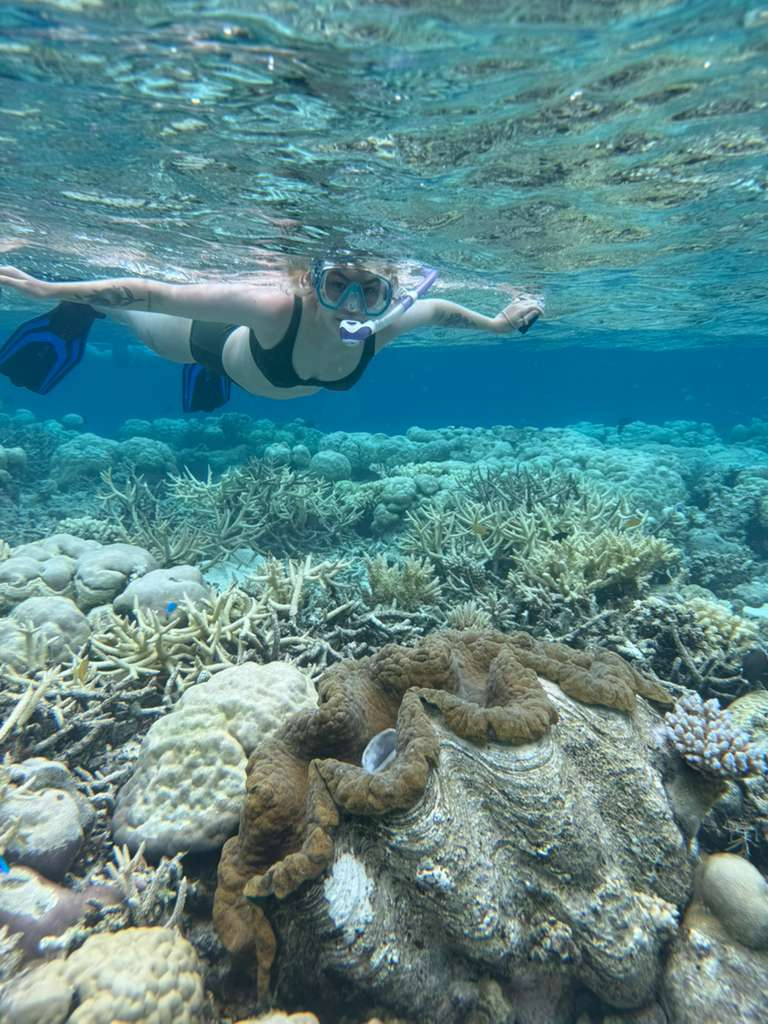
We then hopped back into the boat and found our way back into the water for some more snorkeling with our guide Mac! Our first snorkel site was located near New Dropoff where we swam along a steep drop and saw some amazing animals including gray reef sharks and hawksbill sea turtles who were swimming below us! There were lots of different fish and huge amounts of coral all along the reef drop. Mac even let one of our classmates, Raven, pick up a huge sea cucumber which made her very happy.

Our second site was within the false German Channel. This area is more popular for tourists, so when we arrived there were other groups with us as well. The experience gave us a good time to reflect more on ecotourism and how important and big it is for Palau as a main source of revenue, especially since the past few days we have been sheltered from that. The reef was still beautiful and there were so many kinds of cool fish to see, but you could tell that the coral was much more damaged than ones we have seen in other spots. The other group that was with us had screaming children and people who were kicking or standing on the coral. It was incredibly frustrating and demonstrated how important this type of education is for tourists since we have been hearing since we got here about not touching the reef and making sure to not disturb anything. What they were doing can be damaging to the corals as they’re a living creature and are very important for marine ecosystems, however Palau does have regulations in place to deal with these kinds of tourists like the sacrificial areas we mentioned before with Jelly Fish Lake. This reef is what you could call a “sacrifice reef”, as it is a spot specifically designated for tourists to go to, so they don’t have to worry about the damages they cause.

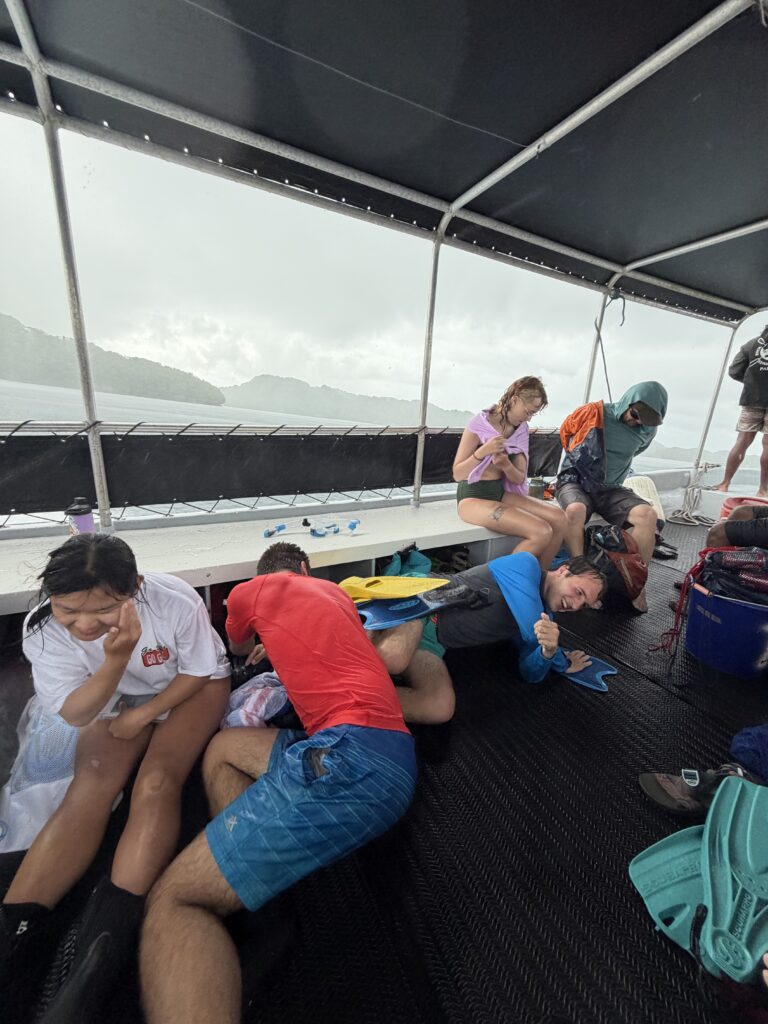
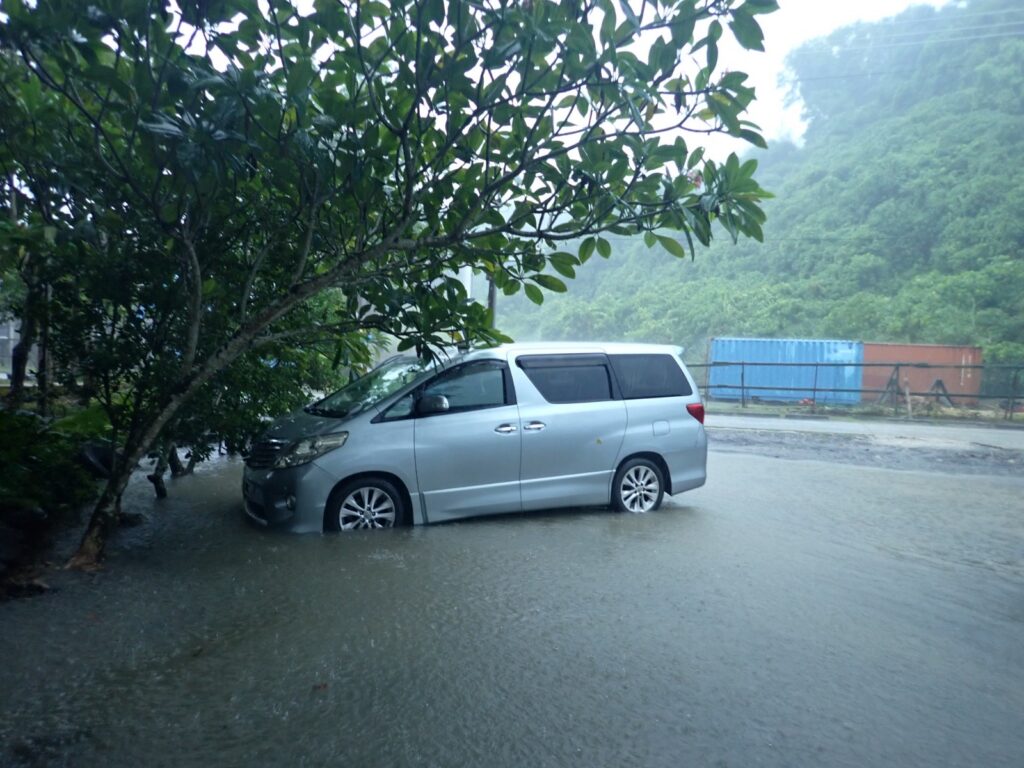
Our third site was the coral garden. The coral garden was incredibly beautiful with a diverse array of corals in all shapes and sizes. Some of the table top corals were larger than our tallest students! This was one of our shorter snorkels of the trip, so we quickly loaded back into the boat only to be met with a heavy rainstorm. It was a cold and wet ride back to the dock but luckily we made it back safely and to the car only to find it in about half a foot of water.

Only 4 more days of traveling left!

Written by Paige and Savannah!

Day 11: Burning and Learning (wear your spf)

Mac showing us what we’ll be seeing today!

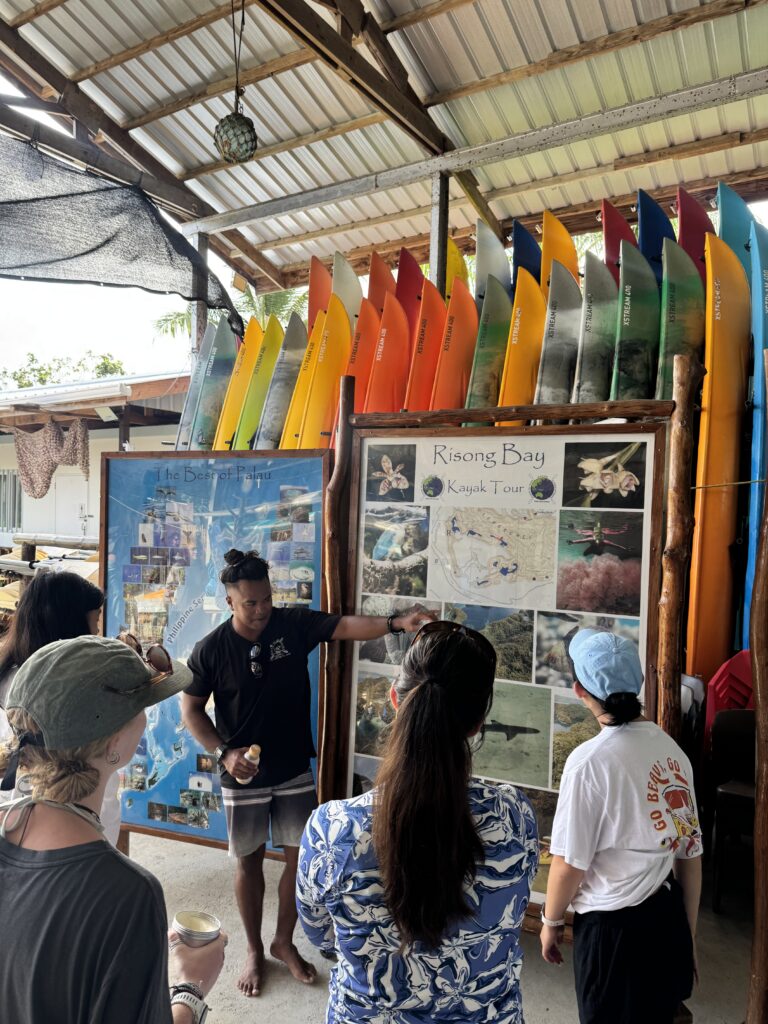
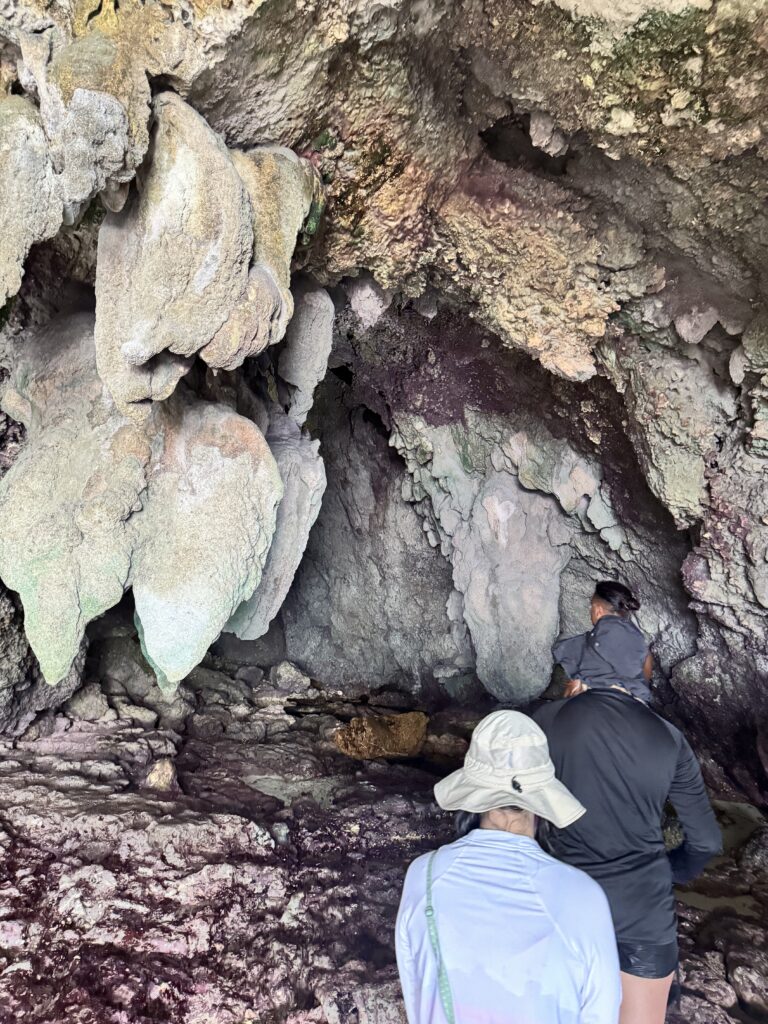
We set out with Paddling Palau bright and early into the Rock Islands, lead by our guide Mac. First we were on a boat, then moved into kayaks. Our first stop was a small cave where we could listen to a species of bird called the Palauan Swiftlet who uses sonar to navigate the dark caves. Then we went to Mandarin Fish Lake to snorkel and spot the tiny Mandarin fish. They are highly sought after in aqarium trade due to their beautiful colors and unique look.

The cave we visited with the Palauan Swiftlets.

The water was so beautiful and clear, we could not stop admiring it. We had some yummy bento boxes from Kings for lunch, but didn’t wait the 30 minutes after eating before getting back in the water, we couldn’t help it! We kayaked through the islands a bit more (note to self, put extra sunscreen on your thighs when you kayak), then headed back to the boat. It was an afternoon full of amazing snorkeling spots. Our guide Mac took us to a place where you can snorkel with the current pulling you along, and you hardly have to swim! We saw incredible corals, unlike anything you can find elsewhere in the world, and some were the twice the size of us.

Next we went on a search for dugongs near their protected area where they go to feed when the tide is high. They are an endagered species here, but also a very important special ceremonial food for the local clans. Locals are working to find a balance within both of those needs. We spotted one bull with the drone and were able to see its head pop up for some air. We also searched for a manta ray, but with no luck, as it is not the season for them. After the long day, we headed back to the hotel to rest up and head to dinner. Some students went to Tori Tori, a nearby Japanese restaurant with delicious sushi.

We can’t wait for our second day in the Rock Islands tomorrow!

This post was written by Bailey and Susannah.

Day 10: A day off -Kayaking, Diving, and Jack’s Birthday!

Today was the students’ day off. So what do you do on a day off in Palau? Get out on the water! Certified scuba divers (and Scott and Selina) went diving with Sam’s Tours and saw amazing underwater sights, while many of the others paddled and snorkeled the rock island with kayaks from Paddling Palau. A great day off! This video blog was produced by Jack and Lauren.

Day 9: Triumphs and Troubles in Conservation

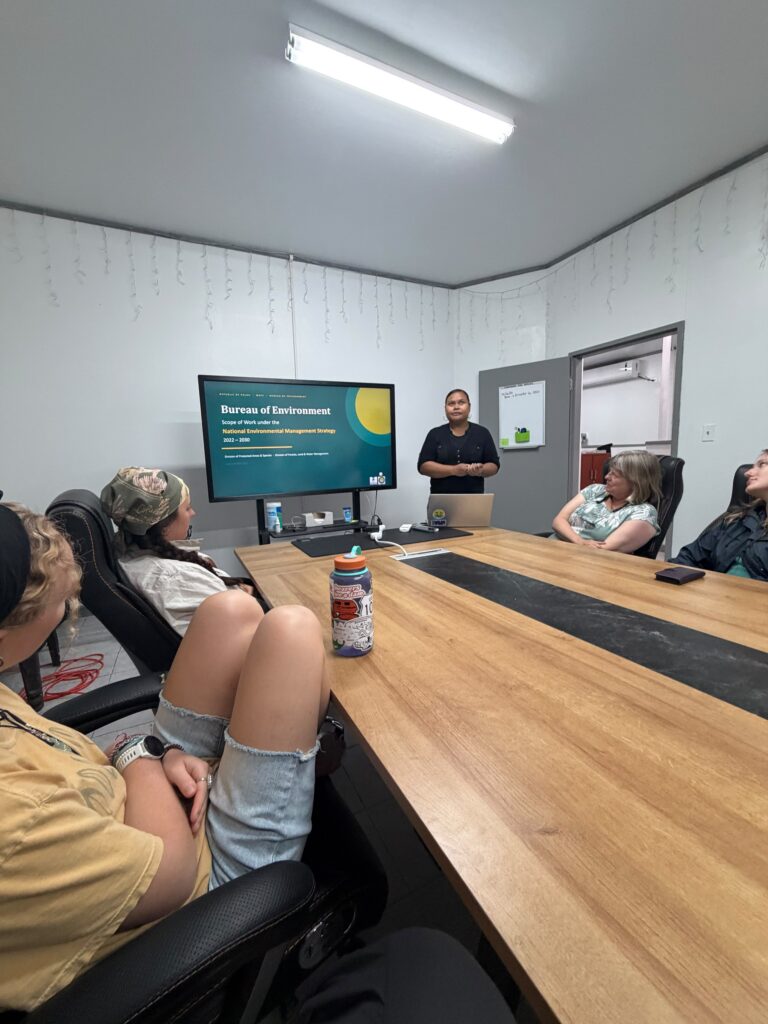
The first thing on our agenda was the Bureau of Environment to see Ilima, who we had already met back at our time at the Ebill Society. Ilima is the head of the Bureau, and was kind enough to give us a presentation about who they are, what they do, future goals, and past achievements already made! Their work has 8 different programs which cover everything from resource management to endangered species. She informed us that even though they oversee and manage so many things, they only have 12 people currently working. Most of their work, however, can be separated into 2 different sections: Division of Protected Areas and Species (DPAS), and Division of Forest, Land and Water Management (DFLW). She also told us about some of their key commitments and goals for the coming years. One of those is expanding Protected Areas Network (PAN) to protect 30% of land and sea by 2030. These areas are very important for Palau, so expanding them would help the island thrive even more. 

Another thing she mentioned that really stuck out was Palau’s energy. She said that currently the island runs on diesel to power their electricity, which was really surprising. When we asked about renewable energy, she explained how hard it would be because their only option is solar. If a solar panel breaks, there’s nowhere to dispose of it and no one to fix it on the island. This make it hard for them to switch to renewable energy, but even then she did say that they are still trying. Talking to Ilima gave us all a deeper look into the politics of facing climate change and protecting the island, and how much deeper it goes than just small conservation efforts that we got to see at Ebiil. Thank you Ilima for all the work you do fighting for your country and for sharing it with us! 

Alima’s Presentation

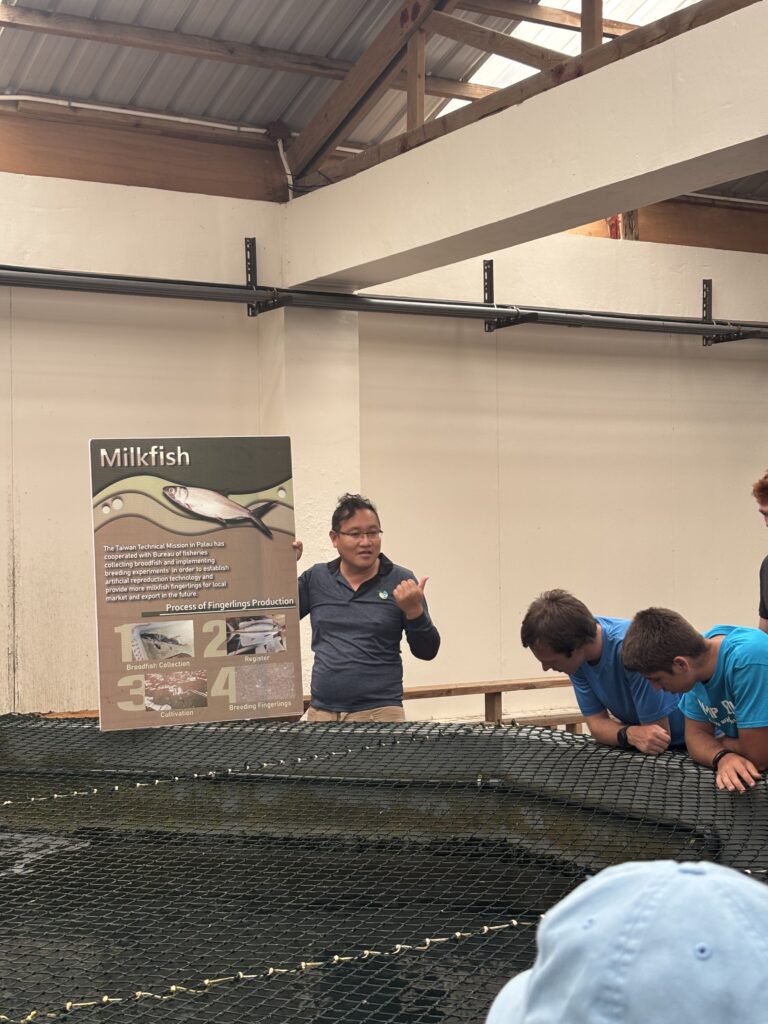
After our time at the Bureau of Environment, we headed over to a river with waterfalls called Meskelet, lead by a member of the Forestry Department. After a quick swim at the falls, we visited the Palau National Aquaculture Center to learn about their fisheries processes. During a tour of the center, they walked us through the breeding processes of giant clams, tiger prawns, sea cucumbers, and milkfish. The staff showed us their 8 different species of clams, which they raise, spawn, and distribute to clam farms. Some clams are exported, but only to aquariums.  

Along with the amazing good happening in conservation, we also got a view into some of the issues the industry is facing. Poaching is a known problem within the fisheries community, but the ways of handling it are controversial. While at the center, we saw an Indonesian fishing boat docked. Many boats fishing in protected areas are run by low income and marginalized workers. When they are caught, many are abandoned by their companies. With no company to claim the boat and no documentation, the workers are often kept at port, unable to enter the country. Oftentimes their families don’t know if they are still alive. The process to get them home can take years. You can learn more here: https://www.ap.org/news-highlights/uncategorized/2015/ap-investigation-slaves-may-have-caught-the-fish-you-bought/

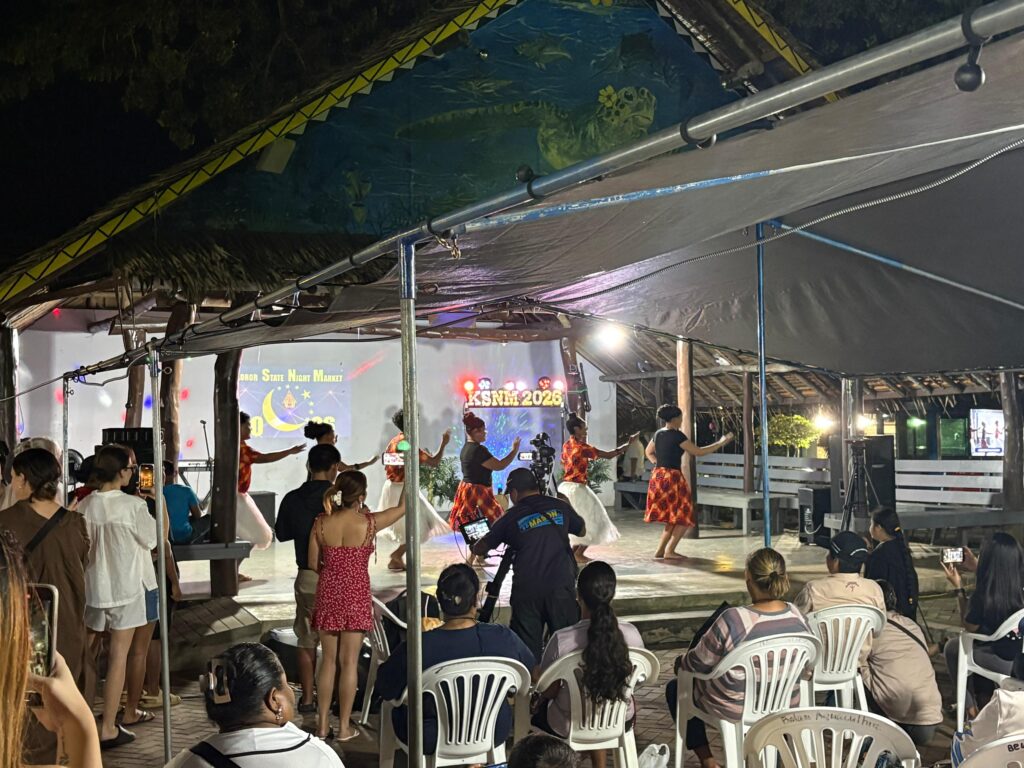
We returned to the hotel for a group reflection before going out to explore Koror, and spent the night immersing ourselves in the food and culture of the community at the Koror State Night Market.

This blog was written by Taylor and Savannah.

Dancers at the Koror Night Market

Day 8: A Day of Reflection & Driving

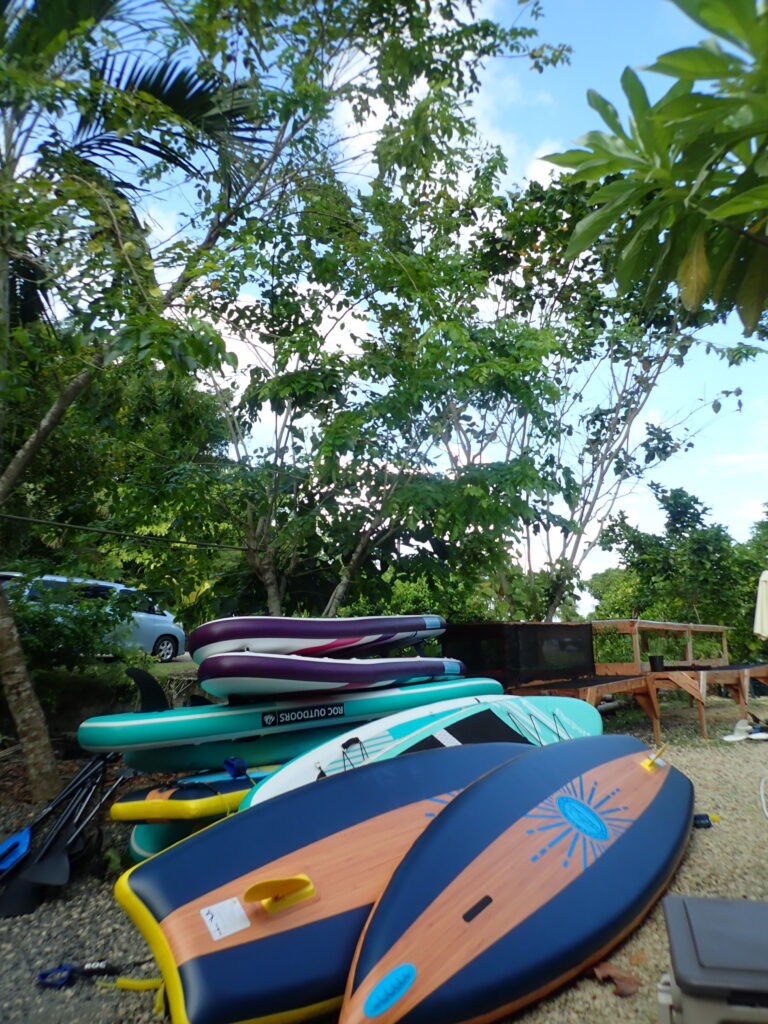
Today was our last morning at the Ebiil Society. Some students got up early to catch the last snorkeling opportunity off the pier, while others woke to strong winds and a rainstorm coming in. We raced to pack up the paddle boards and tidy up the camp while it poured rain, then took some time to sit together and reflect on our time here at Ebiil.

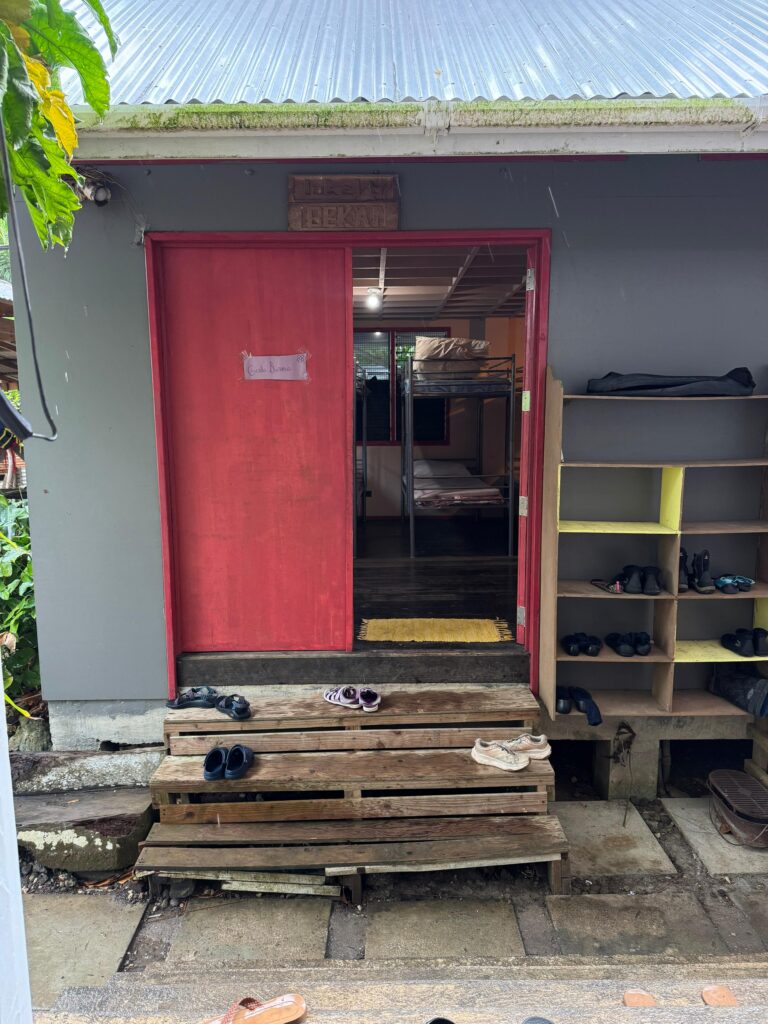
Last view of the girls’ dorm :,(

We want to thank everyone at the Ebiil Society for everything they did for us this past week. We learned so much from the staff during our stay, and we are tremendously grateful to them for all the hard work they put into feeding and hosting us. We ate so many incredible meals while being here, and we even got to learn how they make and prepare some of their foods which was an amazingly unique opportunity. Additionally, we are extremely honored to be able to borrow knowledge from them and to have made so many memories with them. They were incredible hosts, and no amount of time with them would have been enough.

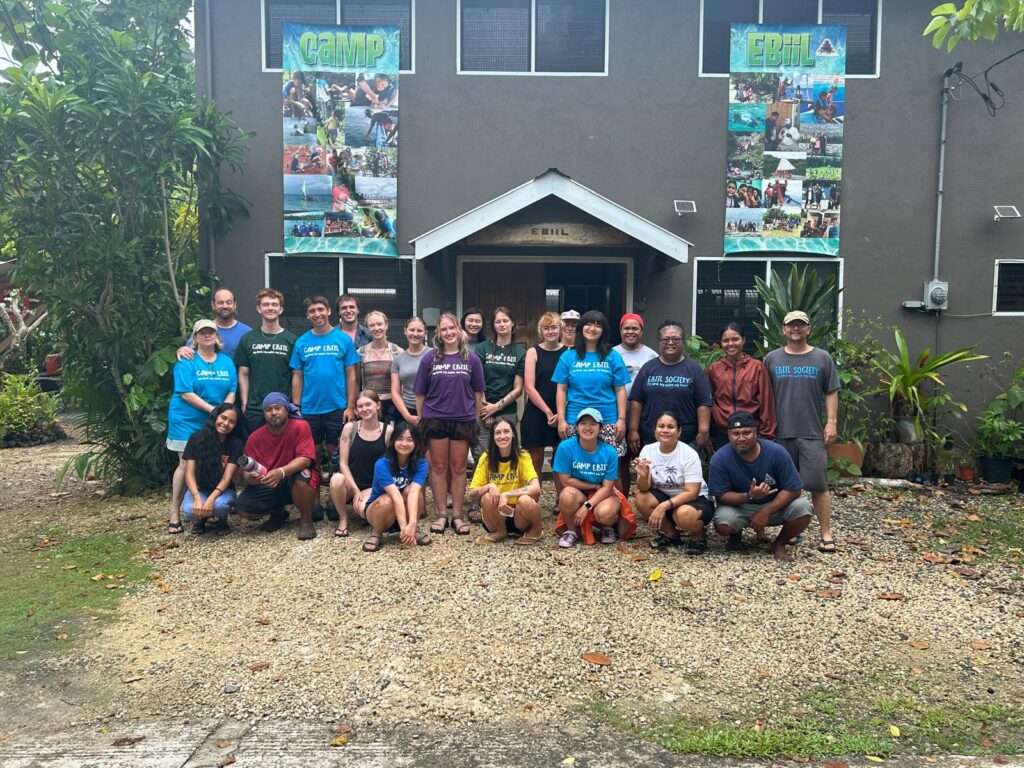
After a group photo with the staff, we loaded our bags into the cars and said our farewells. Until next time, Ebiil. Sulang!

On our way to lunch we stopped in Ngiwal to visit a restoration site planted by the Ridge to Reef class of 2019! It was cool to see what our restoration efforts from our first day at Ebiil might look like in 7 years. After a long car ride (30 minutes) from Ebiil, we got hungry, so lunch at Okemii was a necessity. The food was really good and the view matched.

We returned to the Palau Hotel and got settled, then took some time to get groceries, gifts, or walk around town before we gathered up for dinner. We went to the Rock Island Cafe where we had a large array of foods, and stories and laughter filled the table. Some students finished the evening with some exciting tasks like picking up laundry and visiting the dive shop Overdrive for some dive gear and souvenirs.

Group dinner at Rock Island Cafe

We look forward to our adventures in Koror this week. Thanks for reading!

This entry was written by Adam and Susannah.

Day 7: Seeing Fishes, Catching Fishes, Eating Fishes

Today, we thoroughly observed fishes, from seeing them in the reef, to catching them, to cleaning and gutting, and finally eating them.

Snorkling in the Ebiil Channel

We started off the day by walking to the pier and splitting up into two boats. We rode across the ocean into the Ebiil Channel, which is a no-take, no-touch area; meaning that no one is allowed to fish or take organisms from the protected area. This was originally to protect grouper spawning but has also helped many other species to thrive.

Group big boat heading towards the Ebiil Channel, #VoteHadleyforGovernor

The group then had the amazing opportunity to snorkel in the Ebiil Channel and we saw so many beautiful sea creatures! This channel has unique geography with shallow corral reefs, cliffs, and the deep channel. This is because it is a channel that leads from the open ocean back to the shallow lagoon.

Students and Bryan
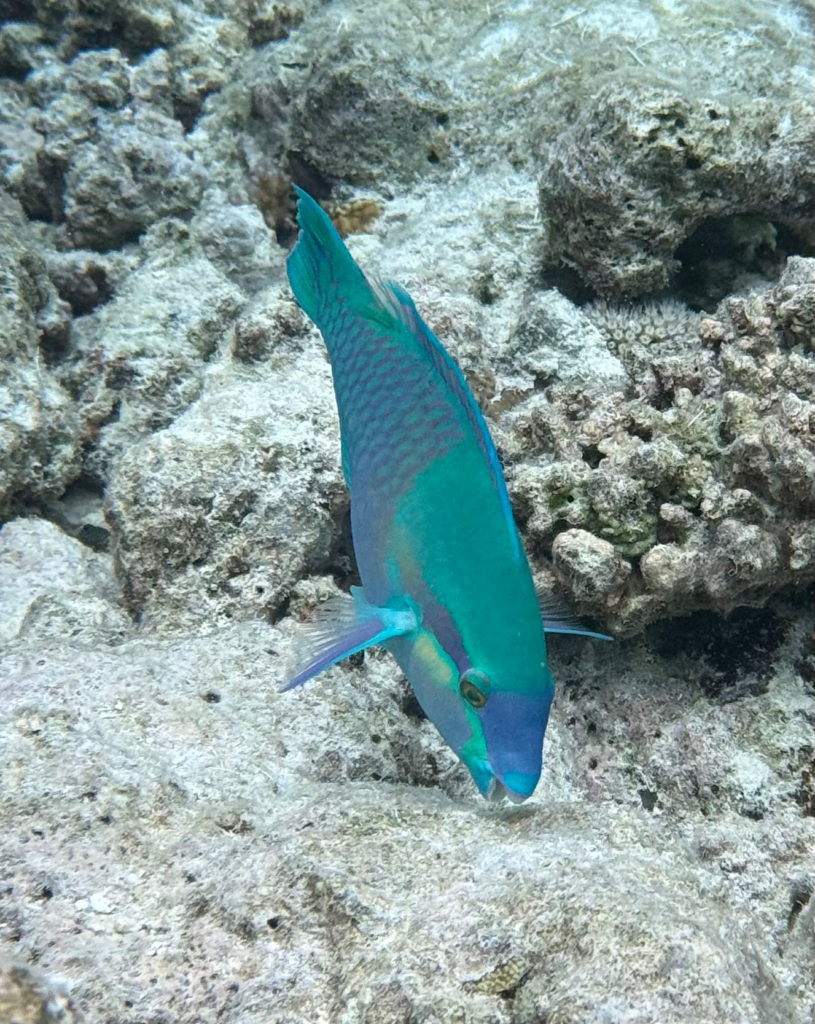
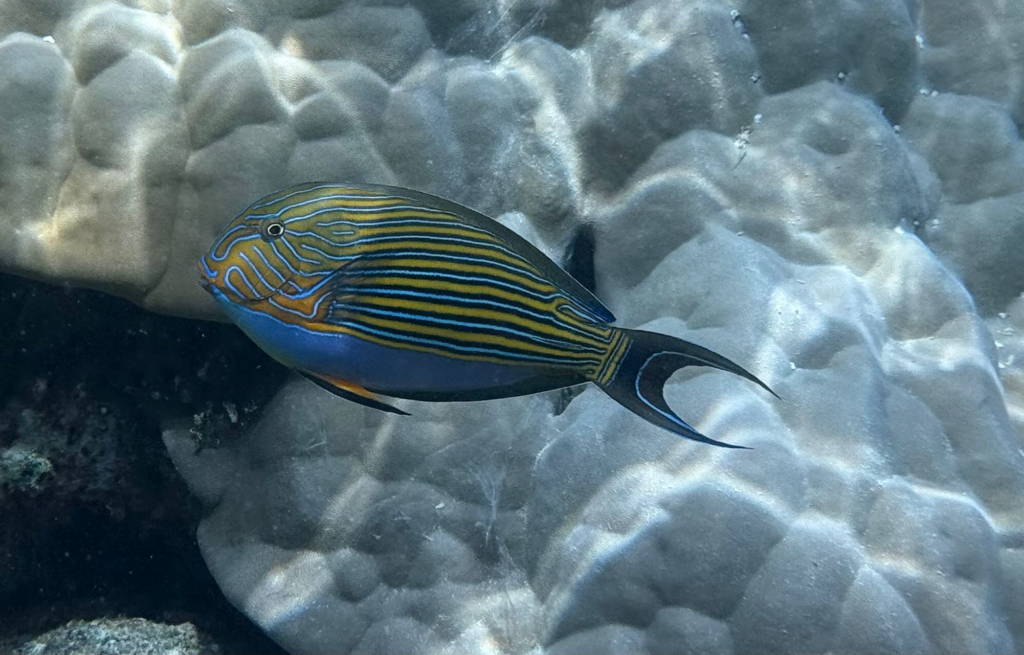
Striped Surgeonfish

Lunch & Megapodes

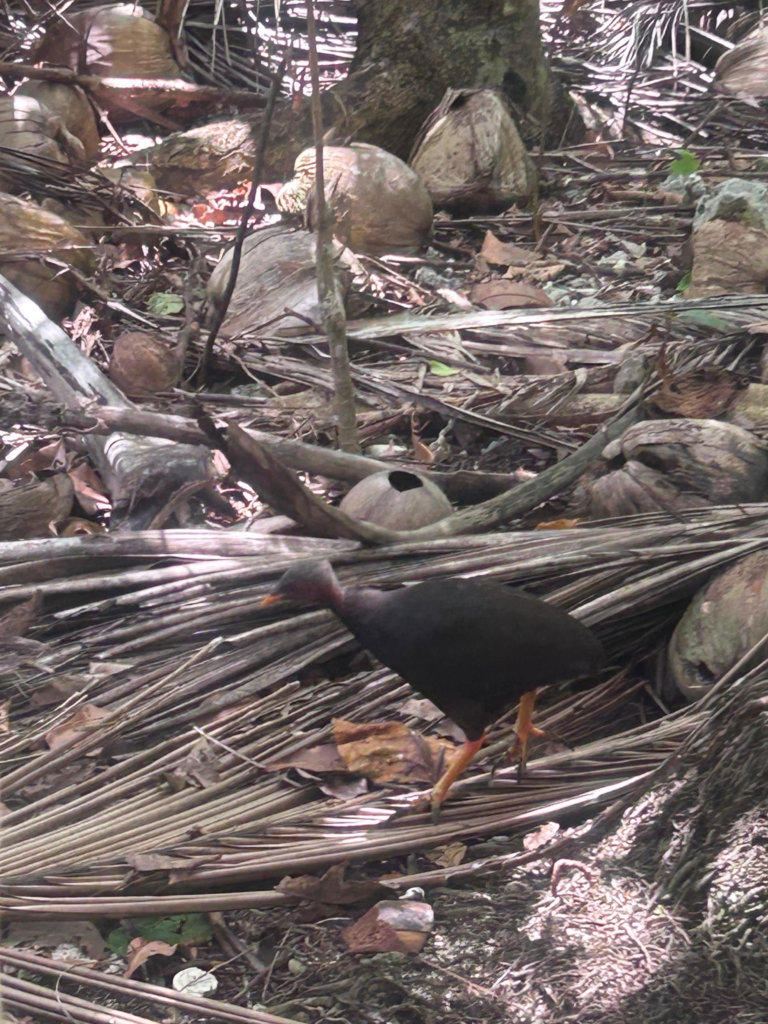
After snorkeling, we headed to the island Ngerkeklau, where we had lunch for the day. We saw the endemic (species found only in one part of the world) megapode and heard the story of the megapode and the turtle, a Palaun folklore. This is a Palaun story that explains the origin of the relationship between megapodes and turtles. A woman prayed for children and gave birth to a turtle and a megapode. The woman was unhappy since she didn’t have human children to help around the house, so the turtle and megapode left. The turtle helped the megapode cross the ocean and in turn the megapode now helps baby turtles hatch by digging up the sand and scratching leaves to protect them from predators. The megapode was previously an endangered species, but the population has since increased and they are now only considered threatened.

Fishing & Gutting

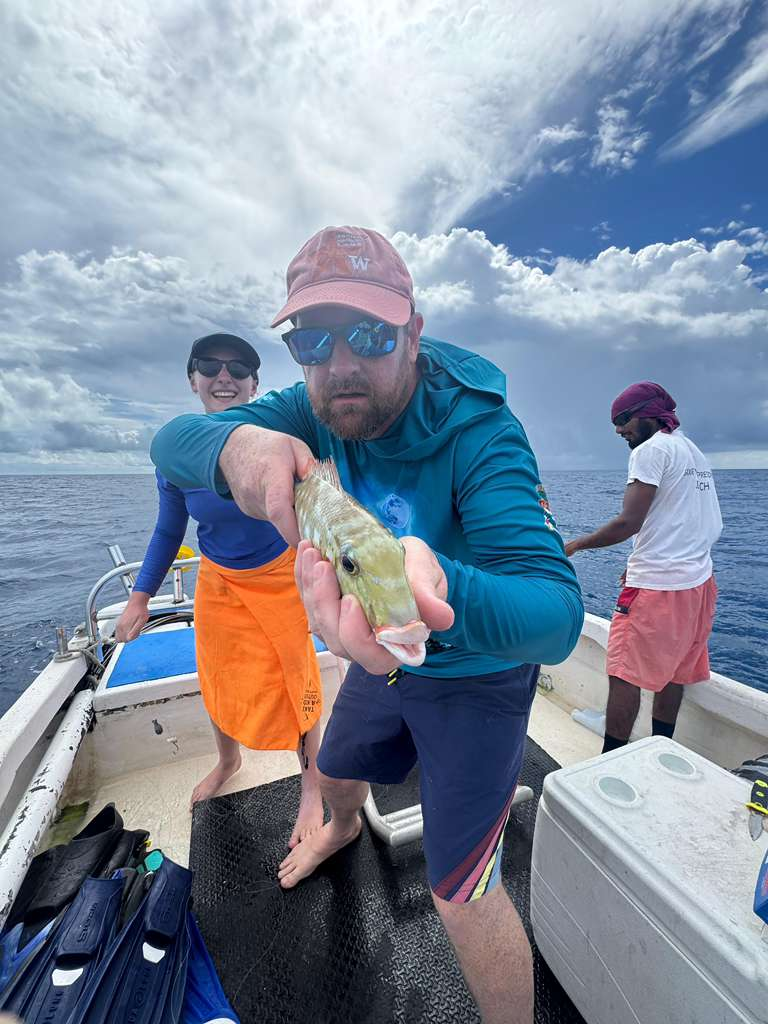
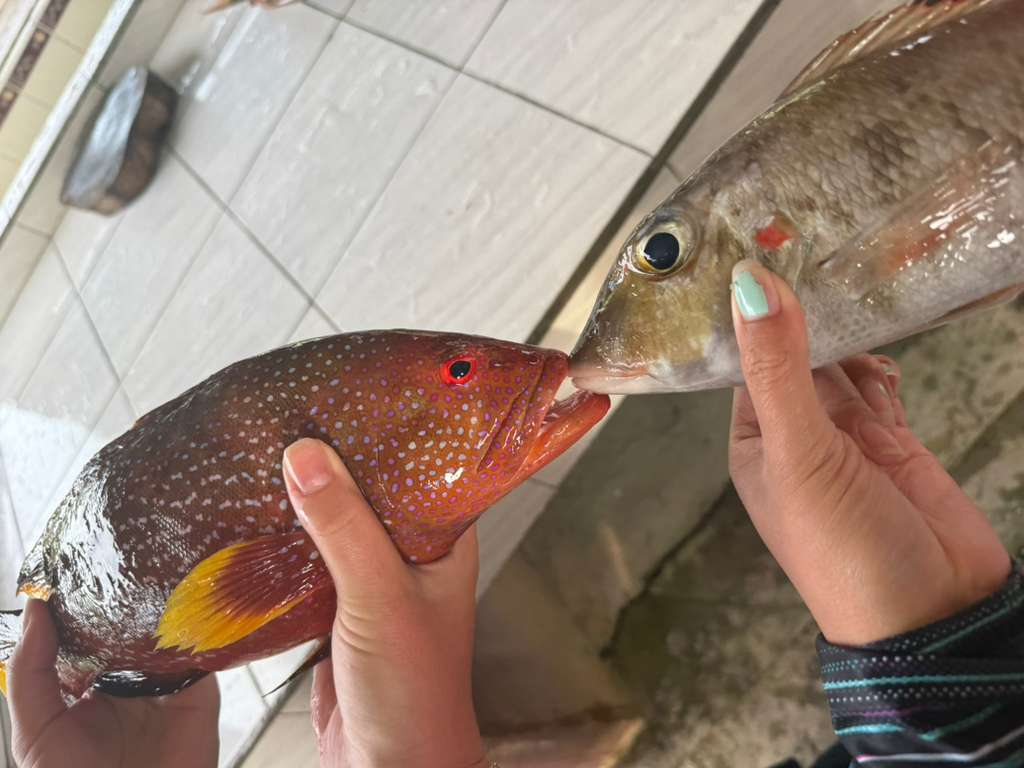
We then headed to a different, non-protected area of the ocean and started fishing for our dinner. Using a hand line, we were able to catch a variety of fishes, totaling 28 fishes that we feasted on for dinner. We put squid bait on hooks and sent the weighted line to the bottom of the ocean, and patiently waited for a bite. And bite they did! After hauling in our catch we started on gutting the fish and prepared it three different ways for dinner.

Rest assured, we were learning about food waste in America the entire time. We gained insight into how most of the fish in the U.S. is not used, whereas in other parts of the world, all of the fish is utilized (including the eyeball!). This connects to how cultural values and traditions can influence a country’s sustainability. Another example is when fishermen from the Virgin Islands were complaining about red hind fish restoration becoming too successful since the fish were growing too big to fit plates. Traditionally, they would serve the whole fish on the plate, so due to the restoration success, they were not able to continue this cultural practice. Conservation efforts should always be planned within a cultural context, and take into account as many perspectives as possible.

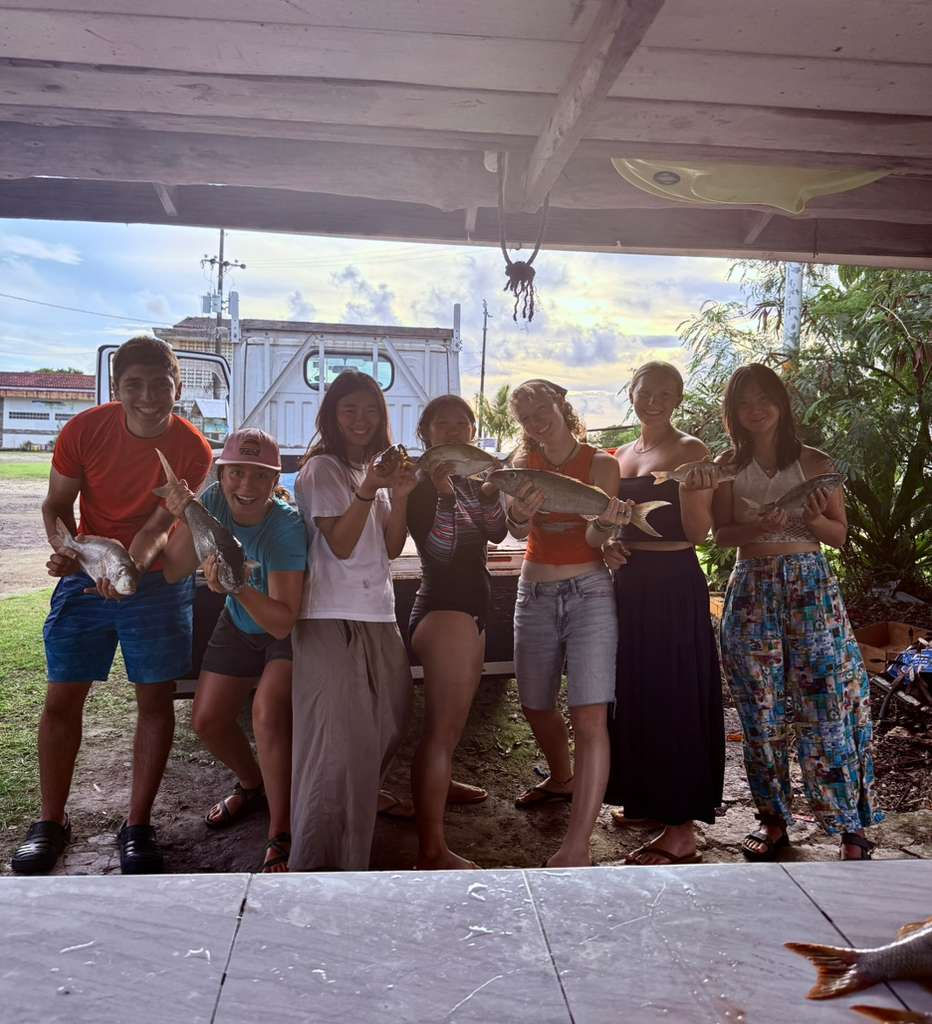
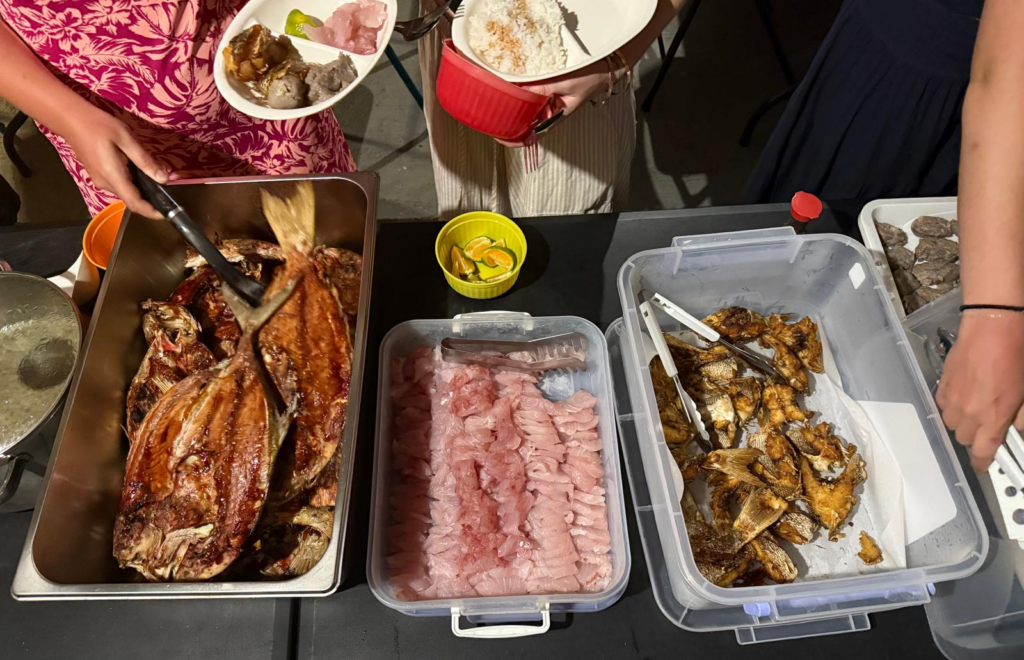
Super Fish Dinner

From left to right: Smoked, Shashimi, Fried

Today’s post was written by Raven and Angela <3

Day 6: Sweat, Mud, and Taro

Bright and early this morning we walked down the road to Ebiil’s mesei (taro patches). Cultivating Taro is a culturally important practice to Palauan’s women. Often, maintaining a Taro patch is a way that Palauan women provide for their families. These taro patches can be passed down generation to generation for hundreds of years!

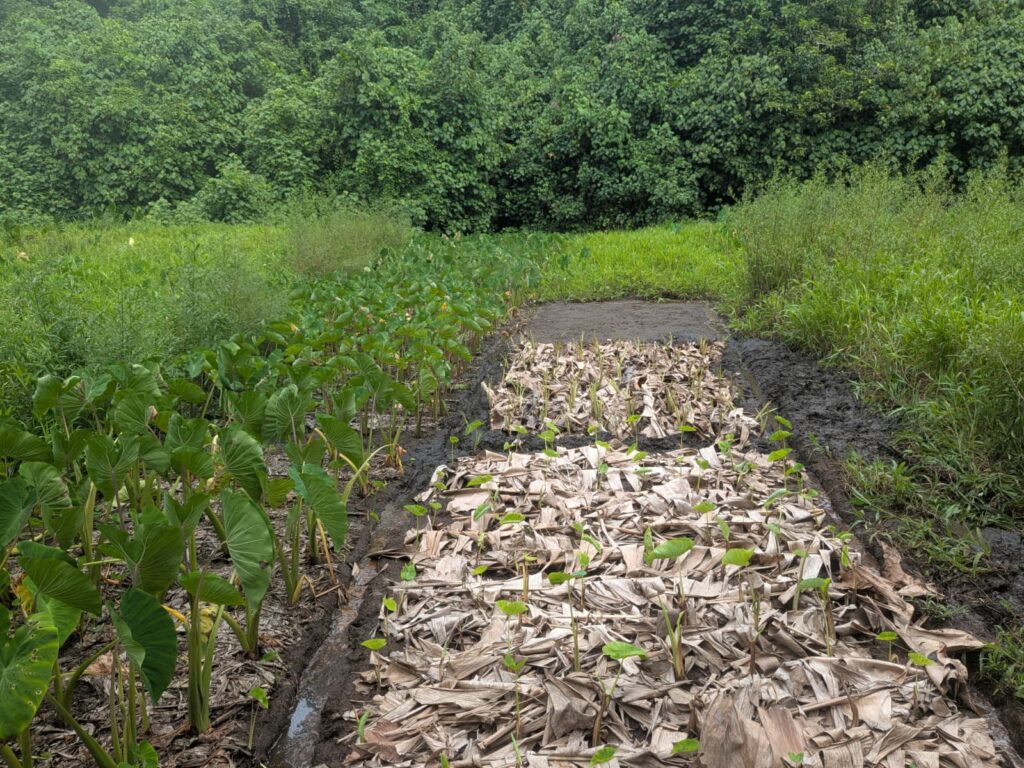
The taro patch before we planted

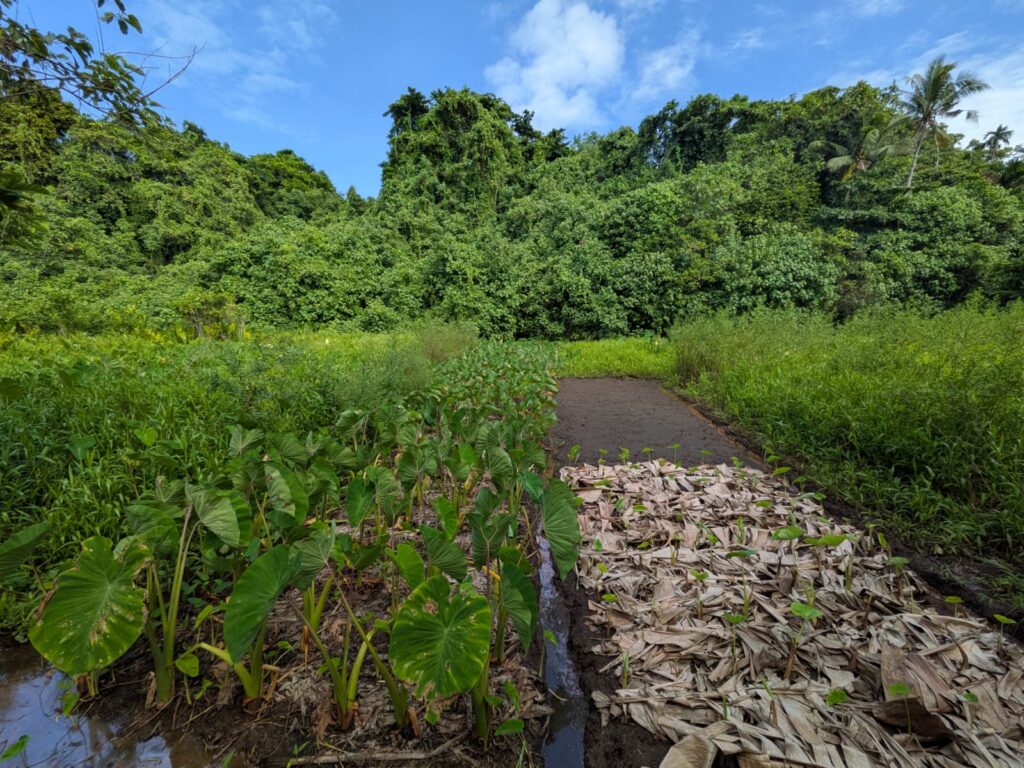
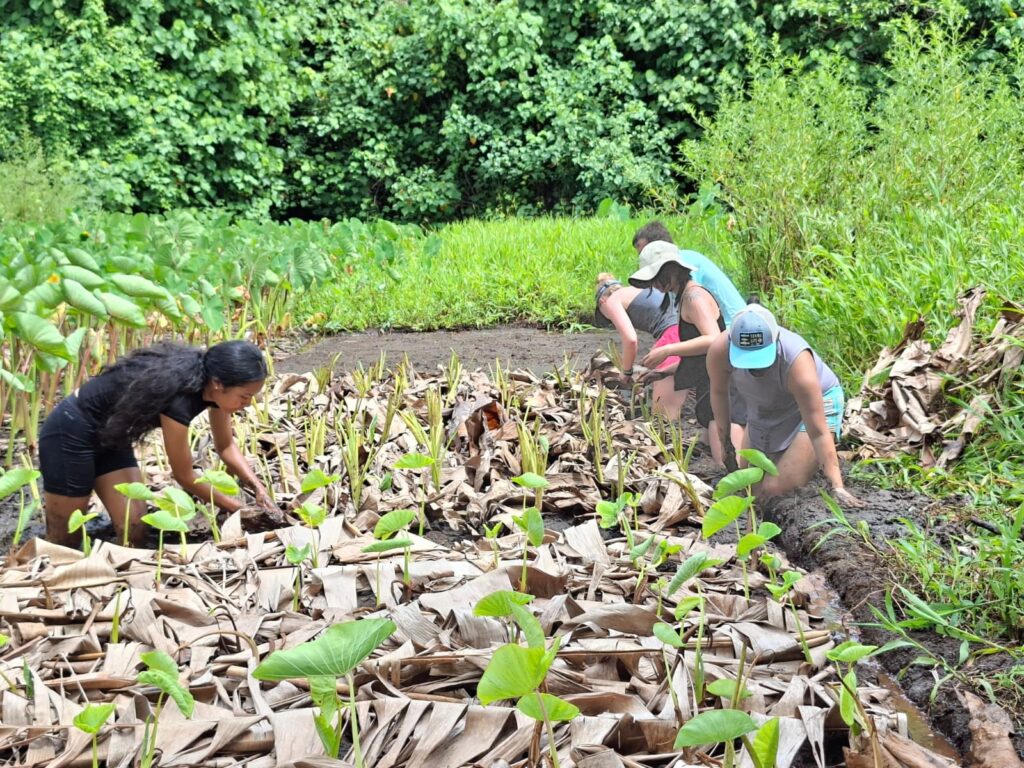
Once at the mesei we learned about their significance from Auntie Marie. In Palauan culture, taro is always planted left to right. We got a short demonstration on how to plant taro using stems from previous taro plants from Iseko of the Ebill staff. We then got to plant our own patch! The mesei are split into bluu (squares with taro planted) and kellaeb (The waterways between each bluu). We walked in the waterways so that we did not disturb any of the already planted taro. While walking in the waterways we sunk into the mud up to our thighs! Luckily we were given coconut oil to spread on our legs before hand so that the mud and taro did not bother our skin. Once planted, the taro will take 8-9 months until they are ready to be harvested. Learning about this practice made us appreciate all of the taro that we have been served at Ebiil.

The taro patch after we finished planting
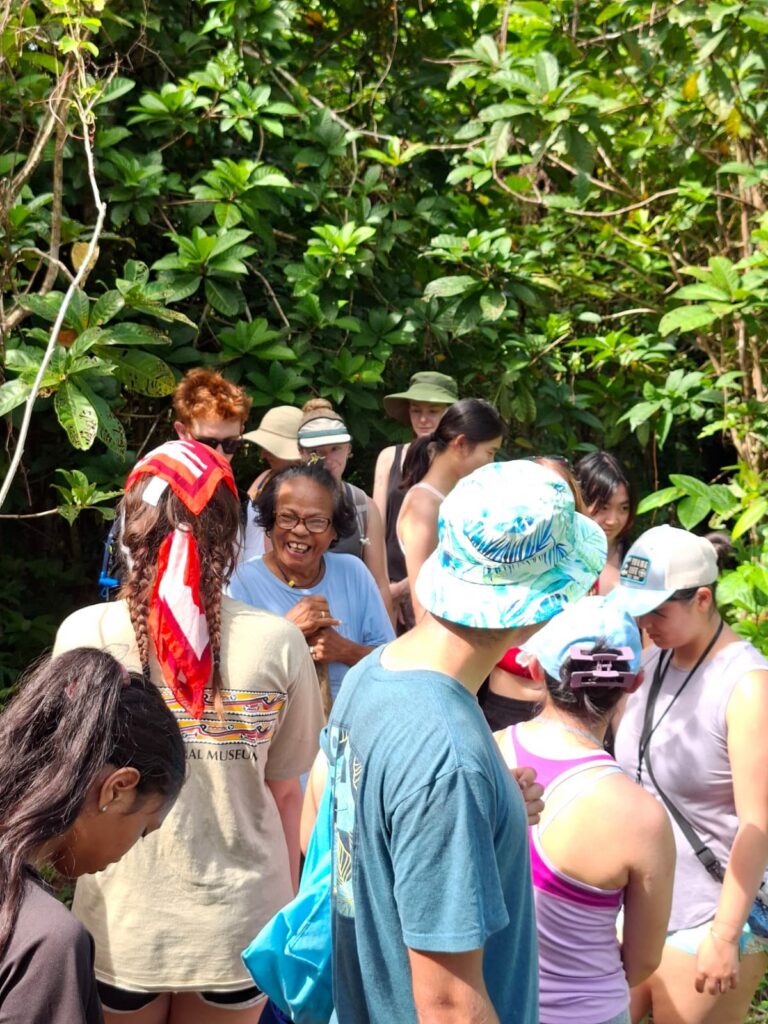
Students learning from Auntie Marie
Students planting taro

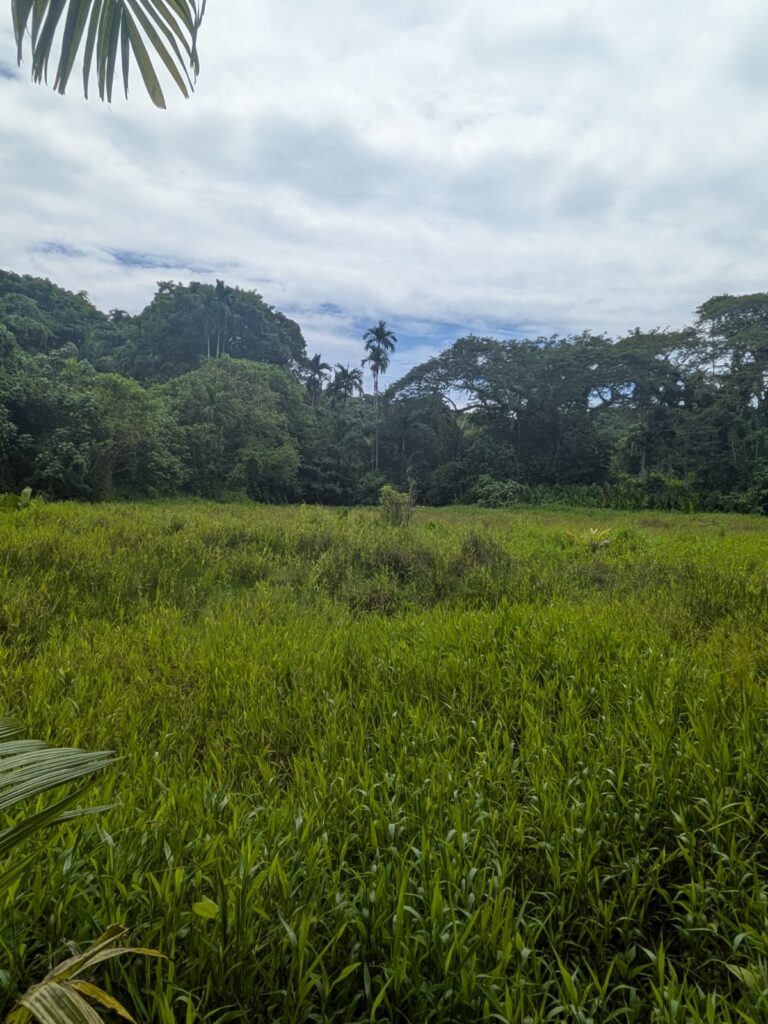
Water management of mesei is extremely important for the health of the taro. The waterways that flow between the mesei are often connected to many other mesei belonging to other families. It is important to keep the water clean and flowing so that the community can all share water. After planting taro we went to look at a mesei that has been completely destroyed. A dam was built to provide clean water and water pressure to the village. While this is good, the women of the village shared concerns that the dam would flood the community mesei. Their concerns were not taken into consideration and when the dam was built, exactly that happened. Today the mesei are overrun with grasses.

The old community mesei

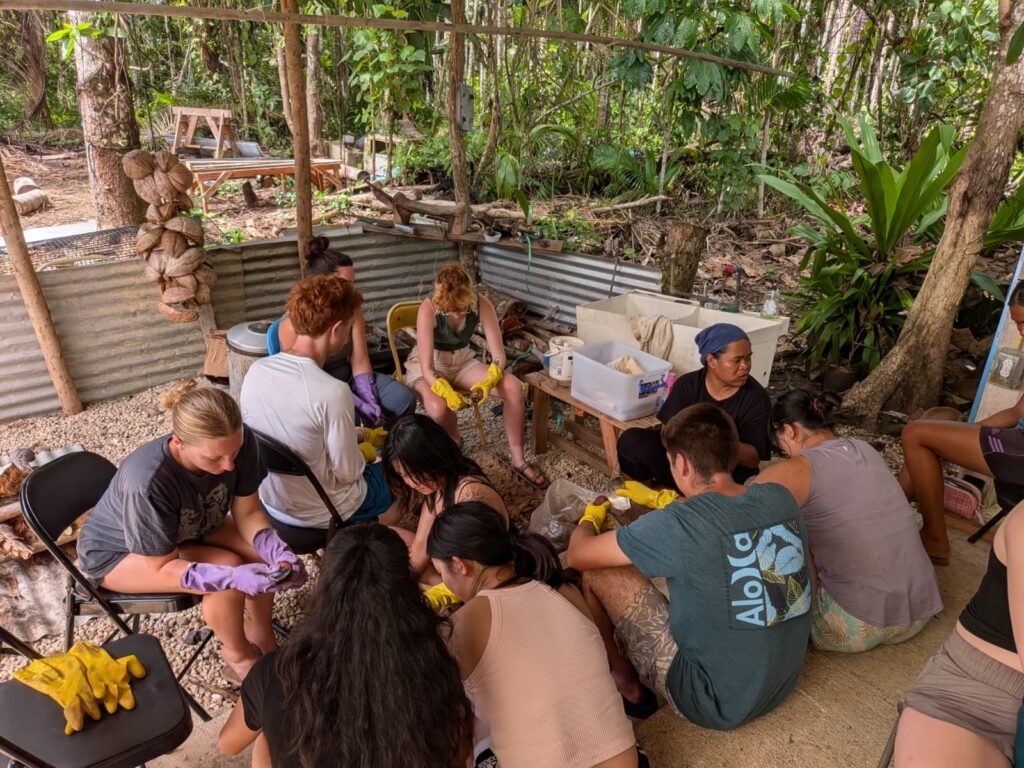
When we got back to Ebiil we had a delicious lunch of fried rice, tofu salad, and poki. Just the energy kick that everyone needed to move on to our next activity of the day! Now that taro was planted it was time for us to start processing taro. We started by helping the staff scrape all of the dirt off of some taro that they had cut from the stems. Wearing gloves during this process is essential as taro skin containes calcium oxalate crystals. When handled raw this compound can cause irritated and itchy skin. The process of scraping the dirt off the taro was oddly satisfying and got us one step closer to our meal!

Students scraping dirt off of the taro
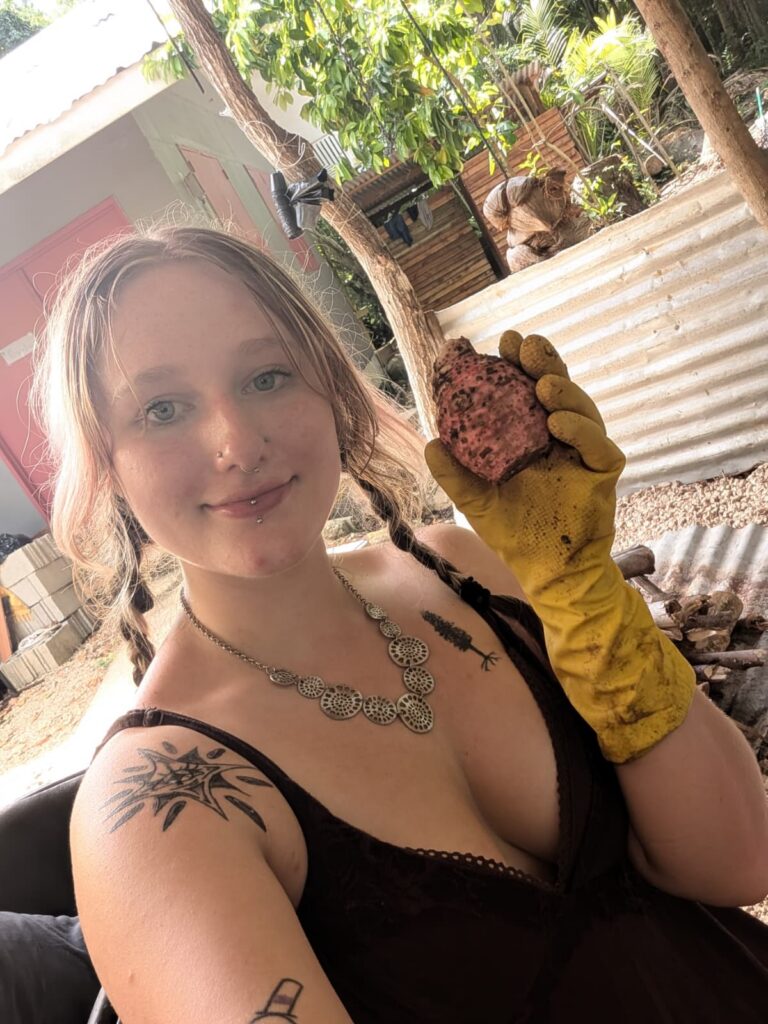
Student Abigail Johnson with scraped taro

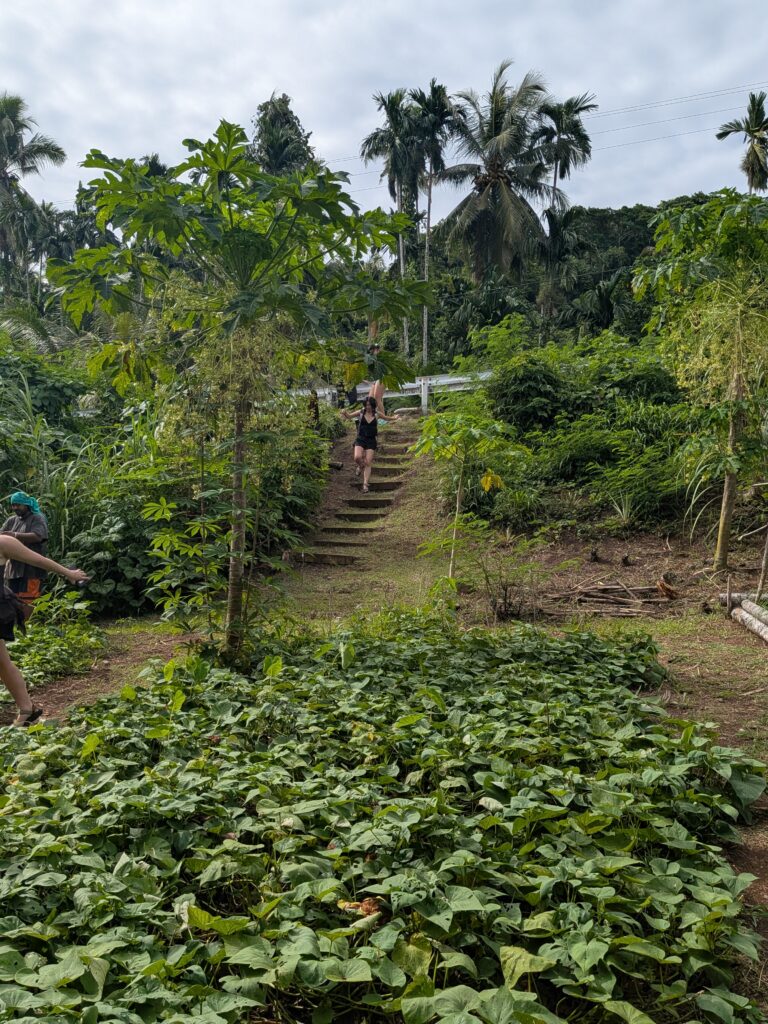
After lunch we had some free time. Brian , Daniel, Red, and Dora lee took some students on a tour of the garden at Oleii that provides the Ebiil society with food. The garden grows many important foods and medicines like papaya, tapioca and sweet potatoe as well as fresh eggs. Not only are these foods important for nutrition, but they also have cultural importance for Palauans. By continuing grow them and use them, the Ebiil society is helping to protect Palauan Culture.

Sweet potato patch
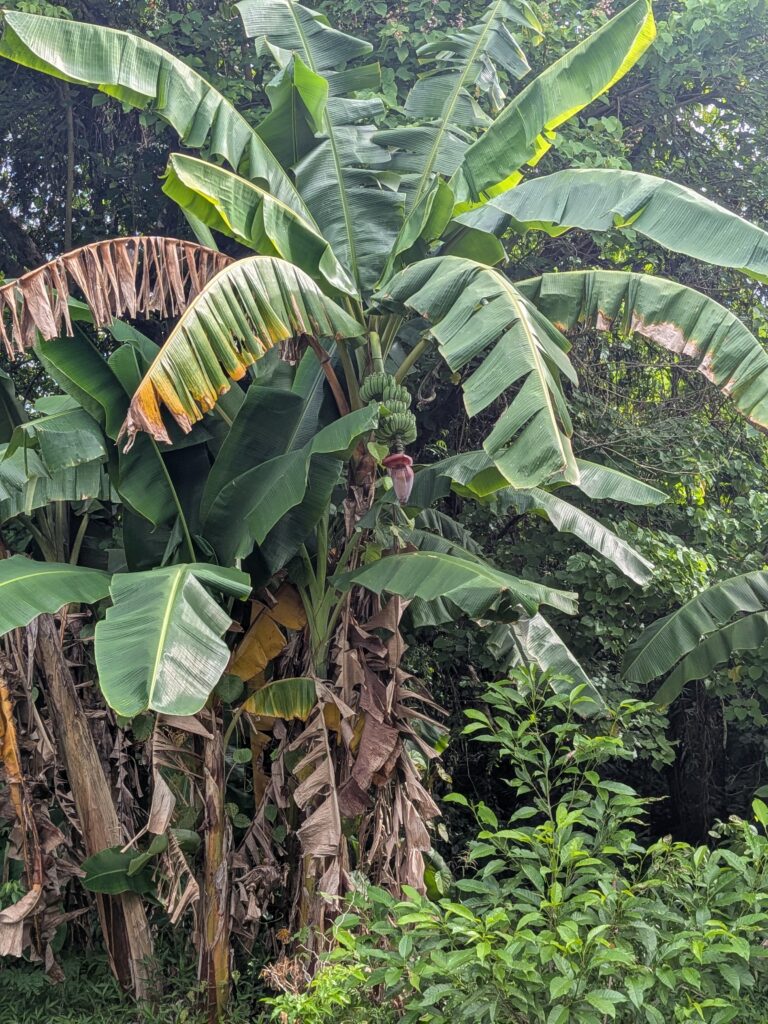
Bannana Trees

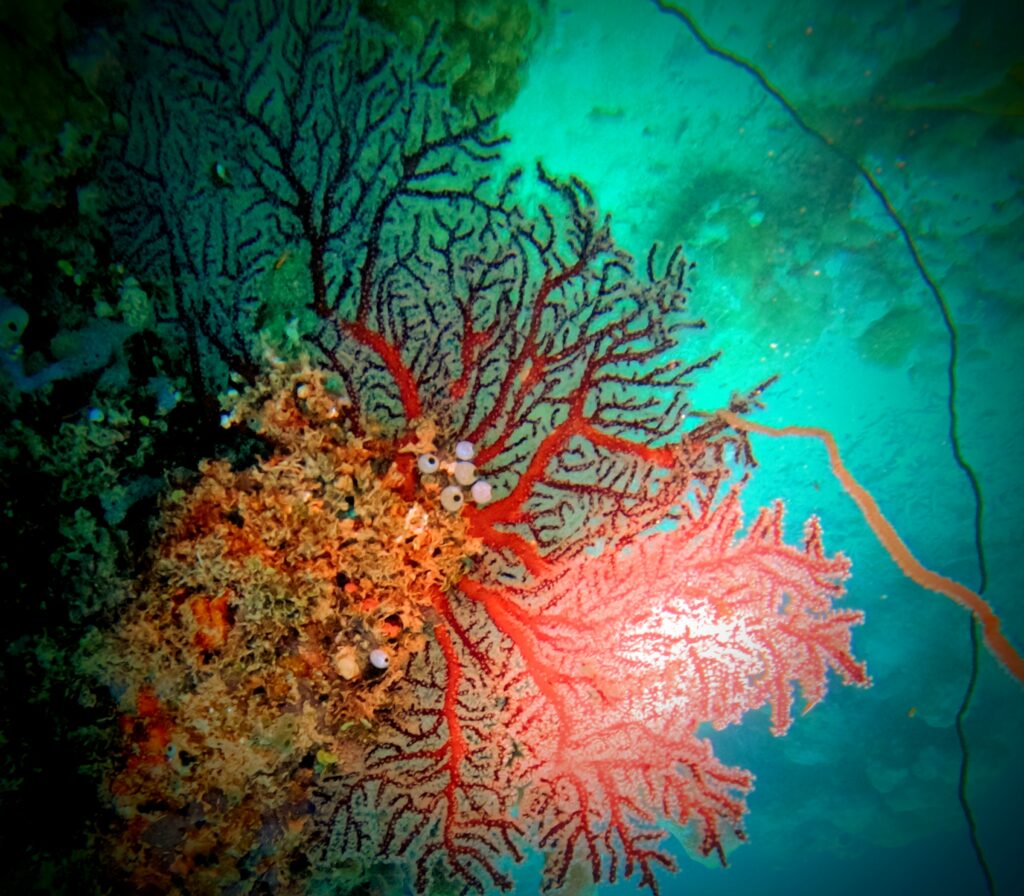
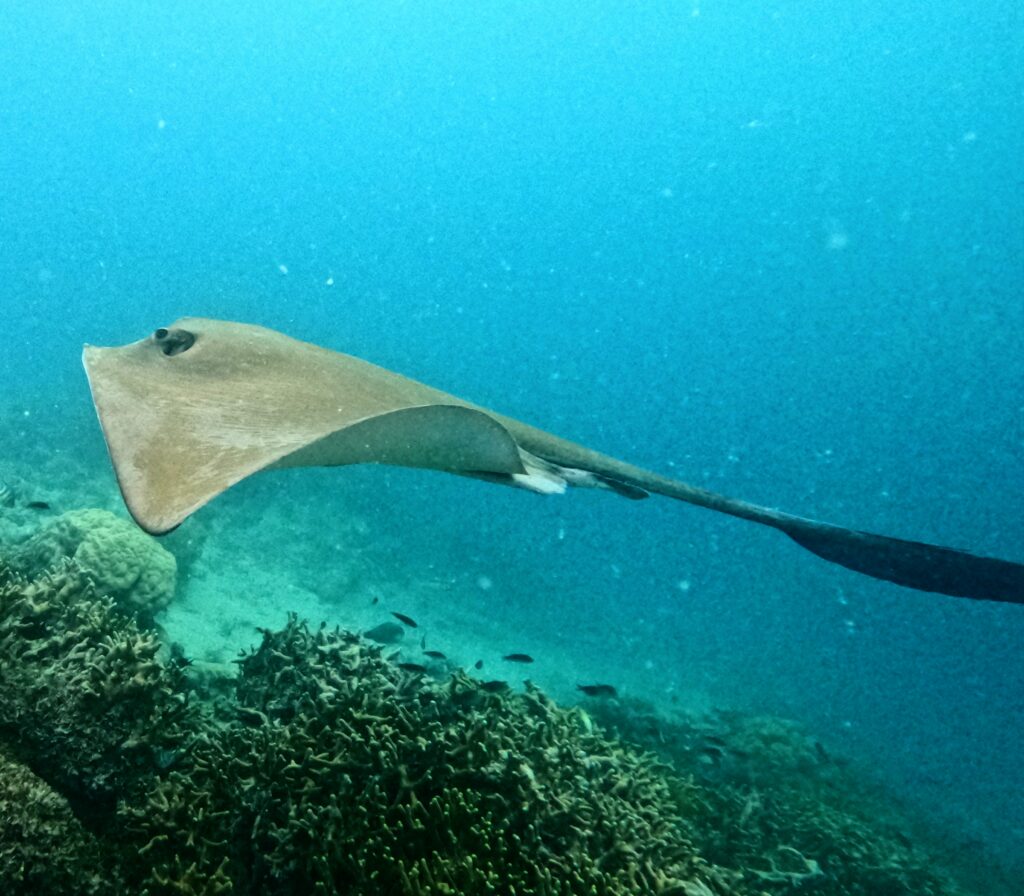
After returning to the main site, their was still more extra time before dinner. Some of the students spent time interacting with the young fruit bat Razor, a pet of one of the workers at Ebiil. Others decided to snorkel out to try and find a WW2 sunken plane just the jetty. Me (Noah) and Adam went off in search of the wreck. On the way out to the reef they found several interesting creatures in the eelgrass such as crocodilefish, sea stars, and jellyfish. Eventually the eelgrsss transitioned into coral. We searched for the wreck but were quickly distracted by the pristine reef. We saw numerous hard and soft corals, sharks, stingrays, angelfish and feather stars.

Coral Fan seen while snorkeling
Stingray swimmingy by

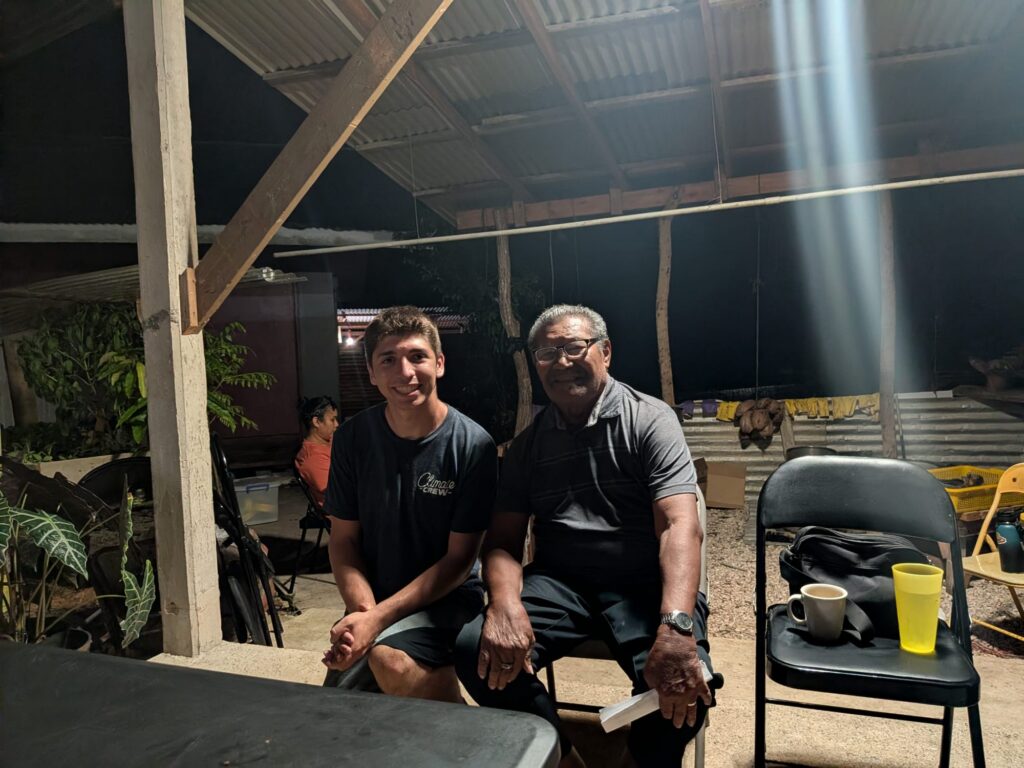
Heading back to camp, the Ebiil Society had prepared a delicious dinner of BBQ chicken. We then cleaned up and waited for the arrival of the fifth Chief of Ollei. As third chief, it is his responsibility to be the messenger between the different Chiefs. He has done a lot of important work to protect the fisheries around Ebiil, particuraly protecting giant clams and establishing a protected zone around Ebiil Channel. In Palau, roles are split between genders where the woment tend to the taro patches and harvest clams while the men go out and fish. That is why it is the responsibilty of the Chief to protect to oceans and fisheries.

Noah with the 5th Chief of Ollei

Written by Abigail Johnson and Noah Brown

Day 5 Within the mangroves: Orateruul and Snorkeling

Hello friends and family! Today Jack and I compiled our best vlogging skills and much to our disappoint they did not turn out as we expected an hour or two of work became a day. BUT we were able to create a vlog that we think will give you a better picture of some of the work we have been doing and learning about so feel free to click on the link below to view our wonderful YouTube video! Some of our activities from the day included walking along the coastline to get to the mangroves which held a sacred Palauan space known as Orateruul. We learned about local legends and the significance of the place which Jack talks about in the video!

I was our snorkel videographer for the day and filmed some of the snorkeling within the mangroves along with some important features of the mangrove like its root systems and leaves. We caught a bunch of amazing fish species on camera as well! Please go check out our video and enjoy!

Signing off for now!

Paige and Jack

https://youtu.be/f1XYfGp8Z

Day 4: Searching for Sea Cucumbers & Clam Drop Off Drive Through

Today was our second full day at Ebiil. Our group started the morning split off in two groups: one with a task to snorkel for retrival of giant clams, and the other paddle boarding off shore of Ollei on the search for sea cucumbers.

Clam Catchers Team 1

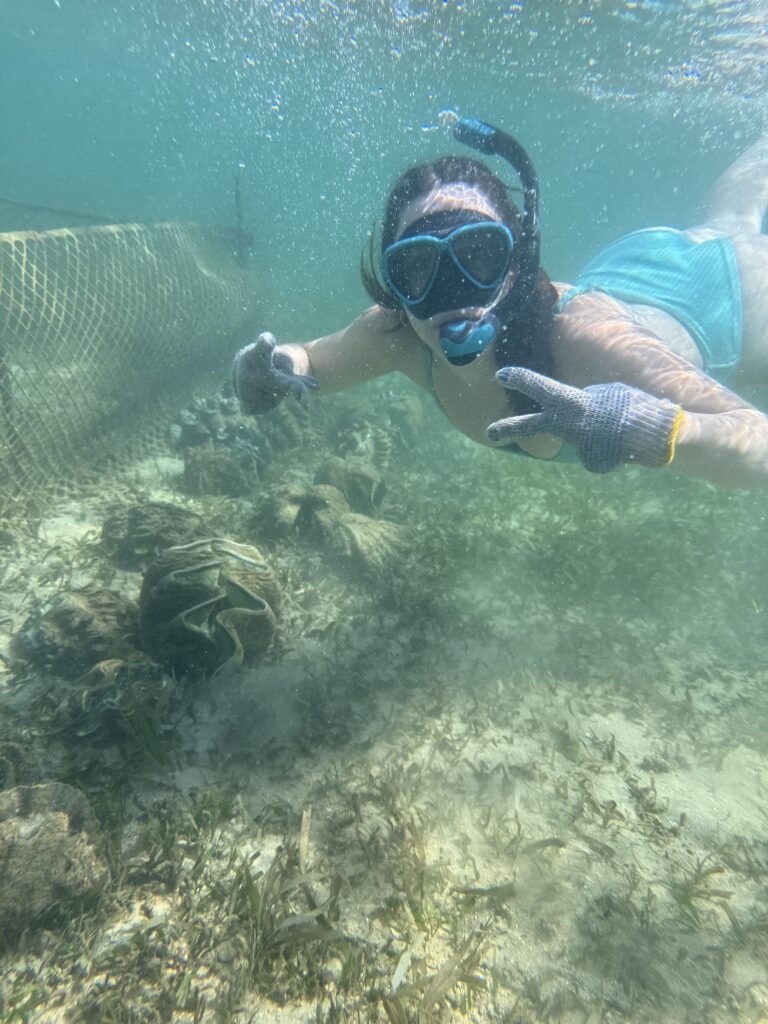
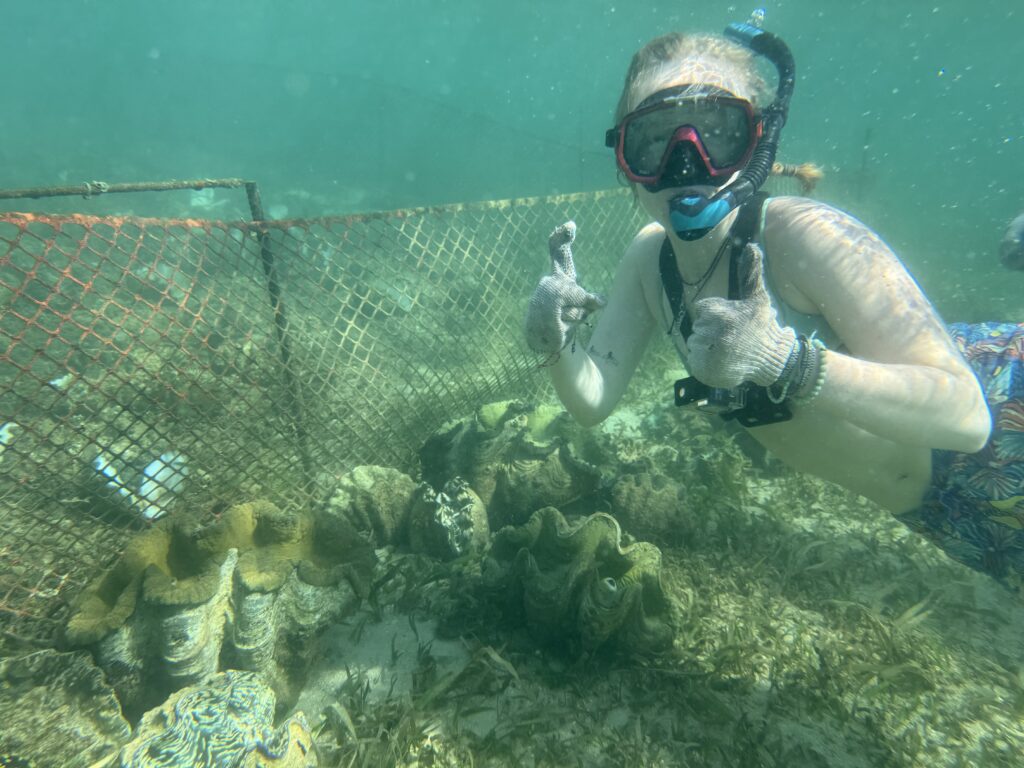
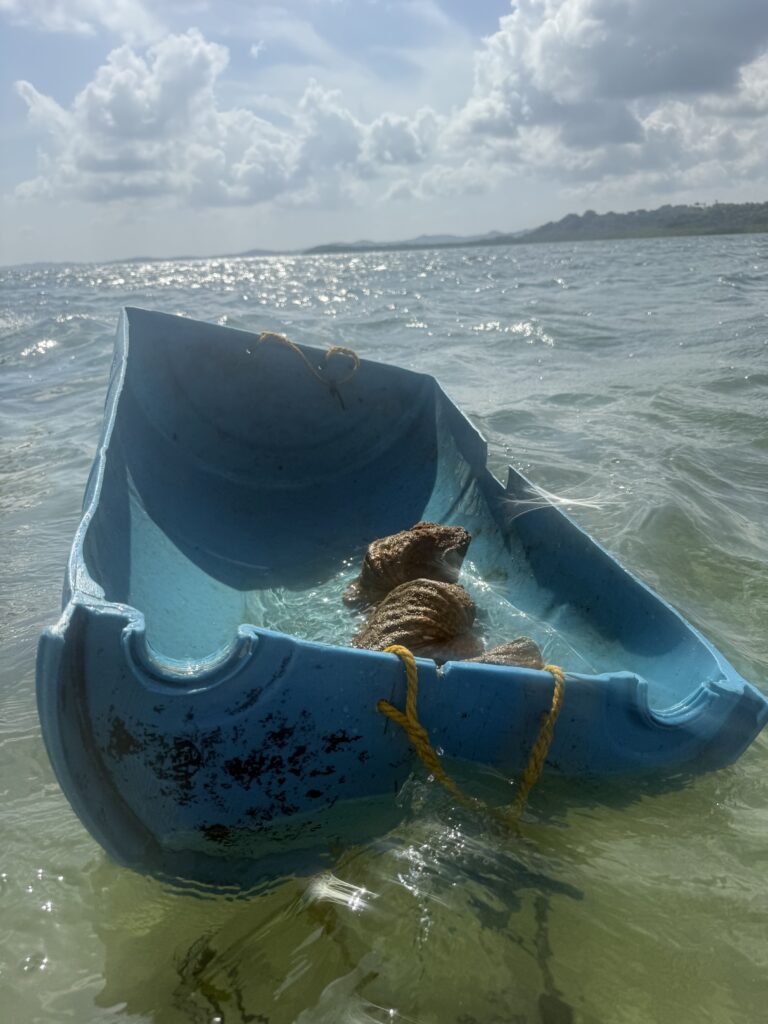
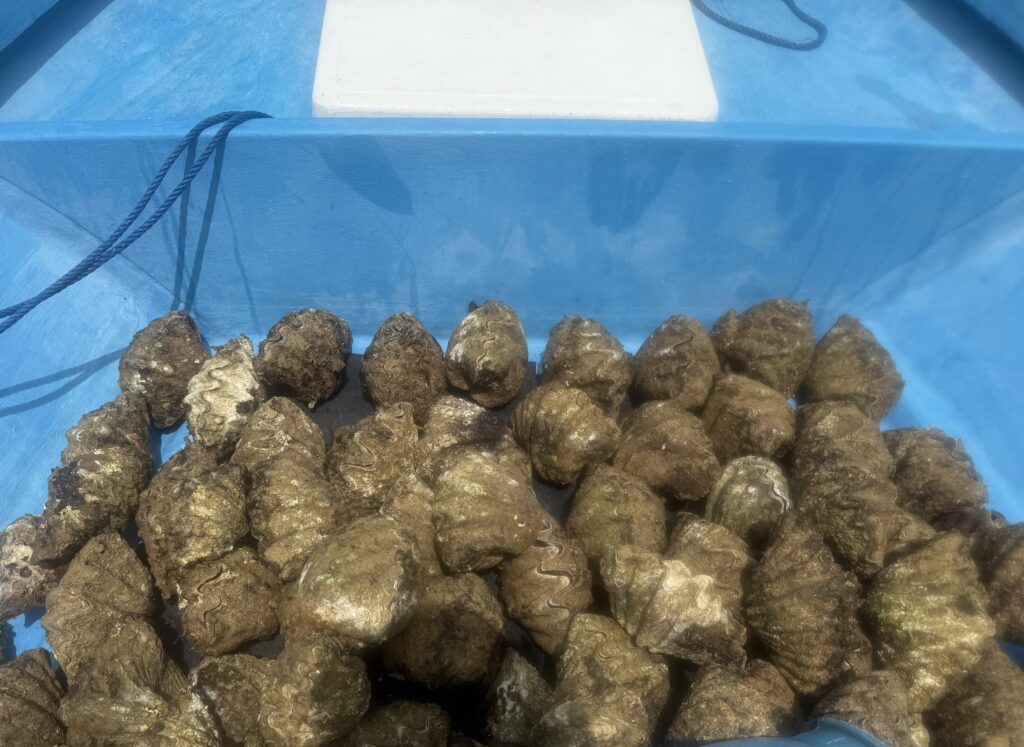
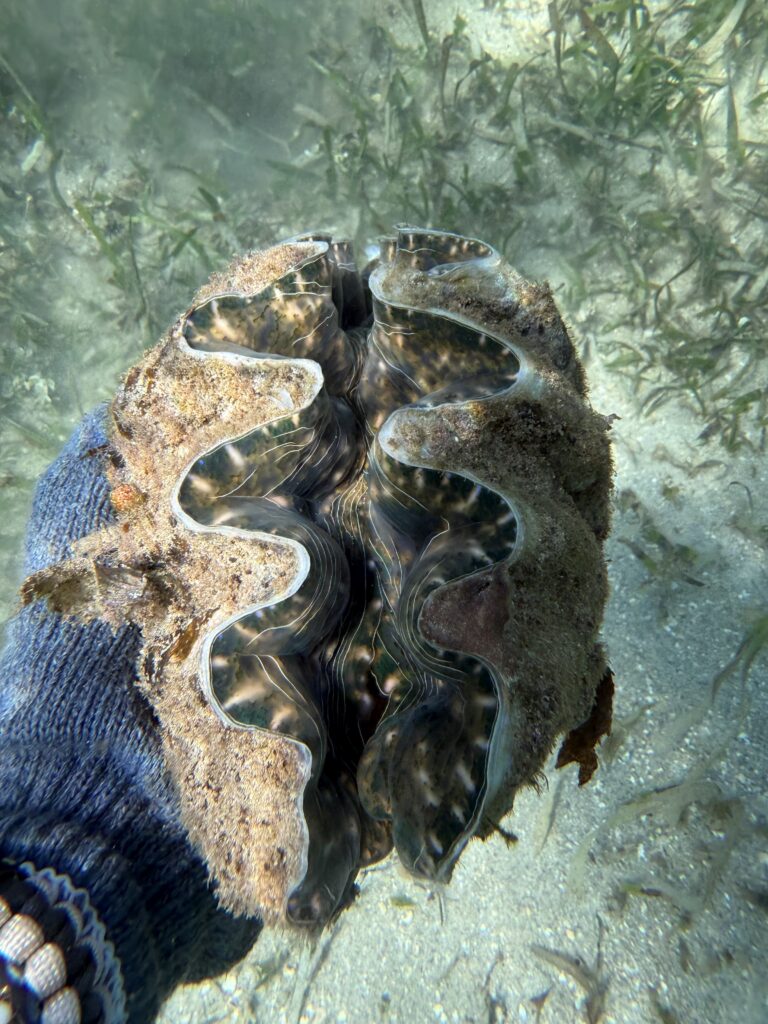
The Giant clam group ventured off by boat to the giant clam farm to pick up some young clams for relocation. It was pretty cloudy today and the wind picked up so it was a fun and bumpy ride. Once we got to the right place we saw several patches of netting in the water. These were the underwater clam gardens that were protected by the fencing and netting. Within the gardens, there were many clams of varying size and color, completely covering the sea floor. The Palauan women who cared for the gardens easily picked out young clams for us and moved effortlessly in the choppy waters with years of experience. We collected around 100 young giant clams, taking some from each garden and swimming them over to the boat and collecting them in blue barrels.

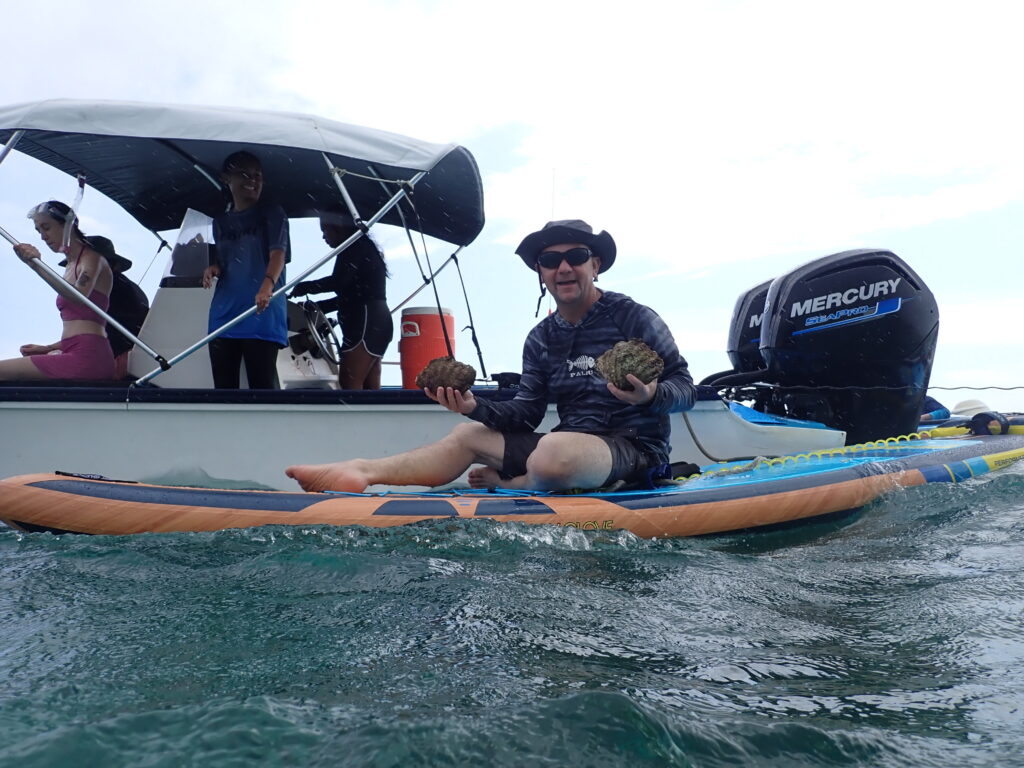
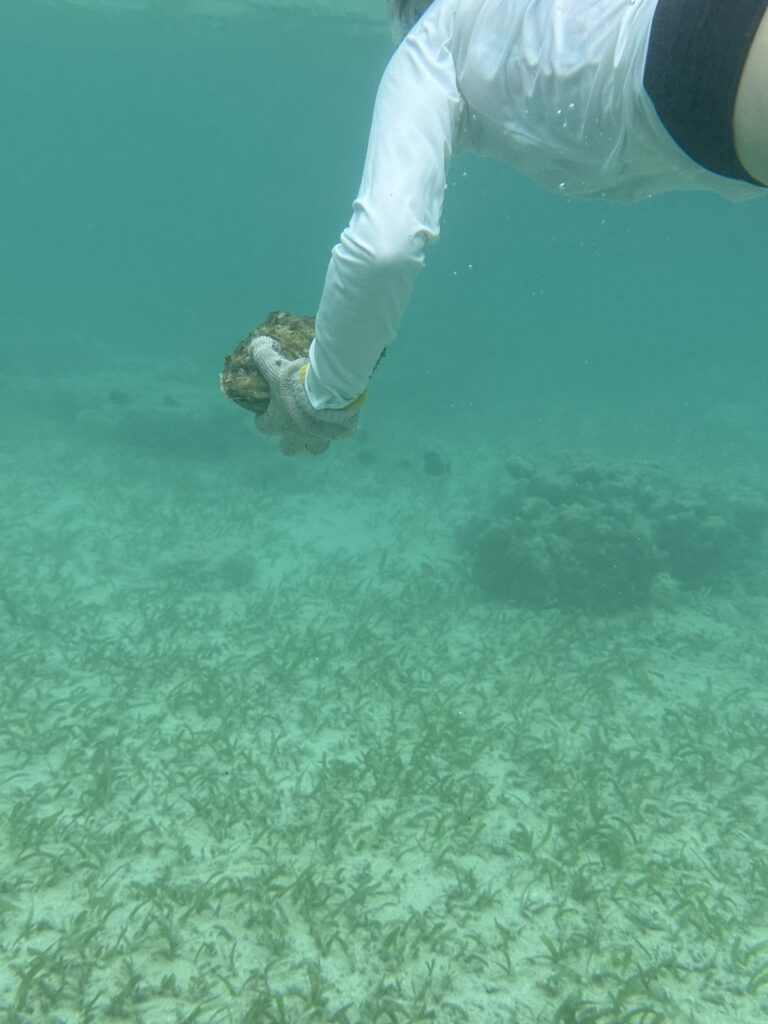
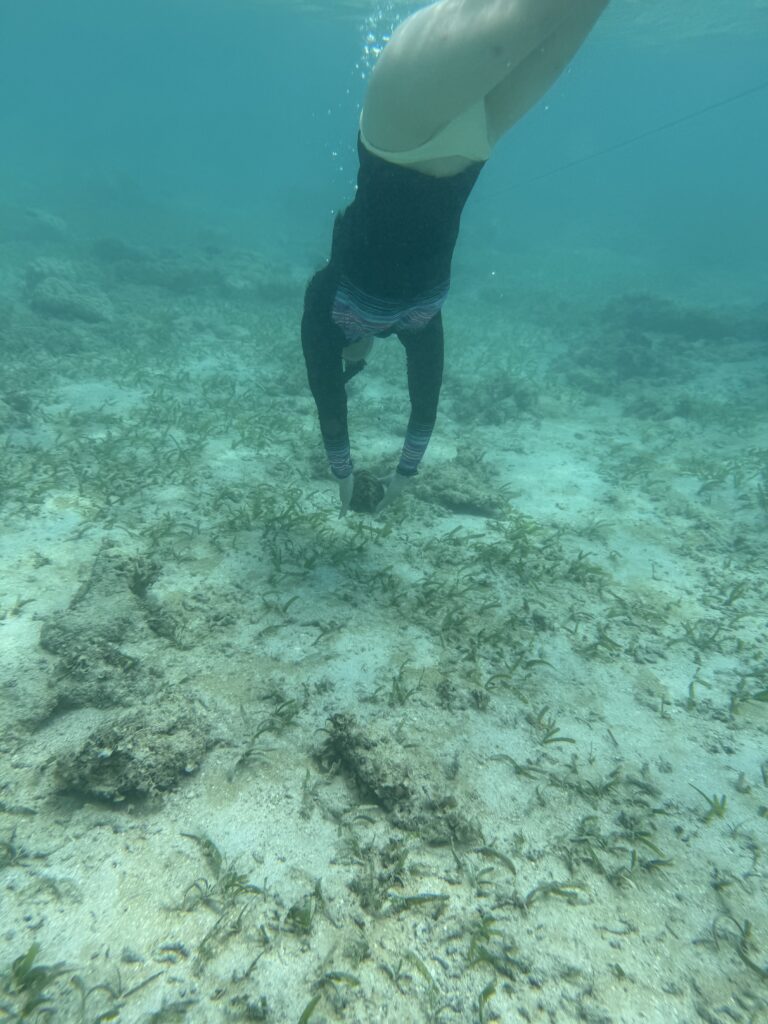
Bailey collecting clams and delivering them to the boat

Measuring Sea Cucumbers

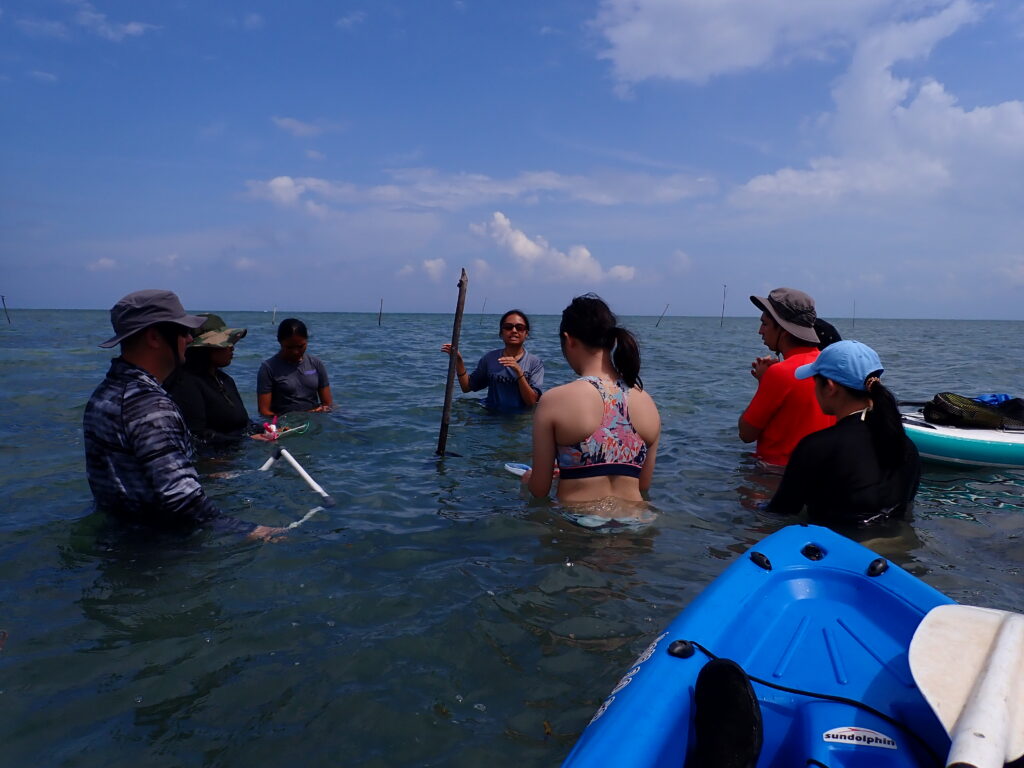
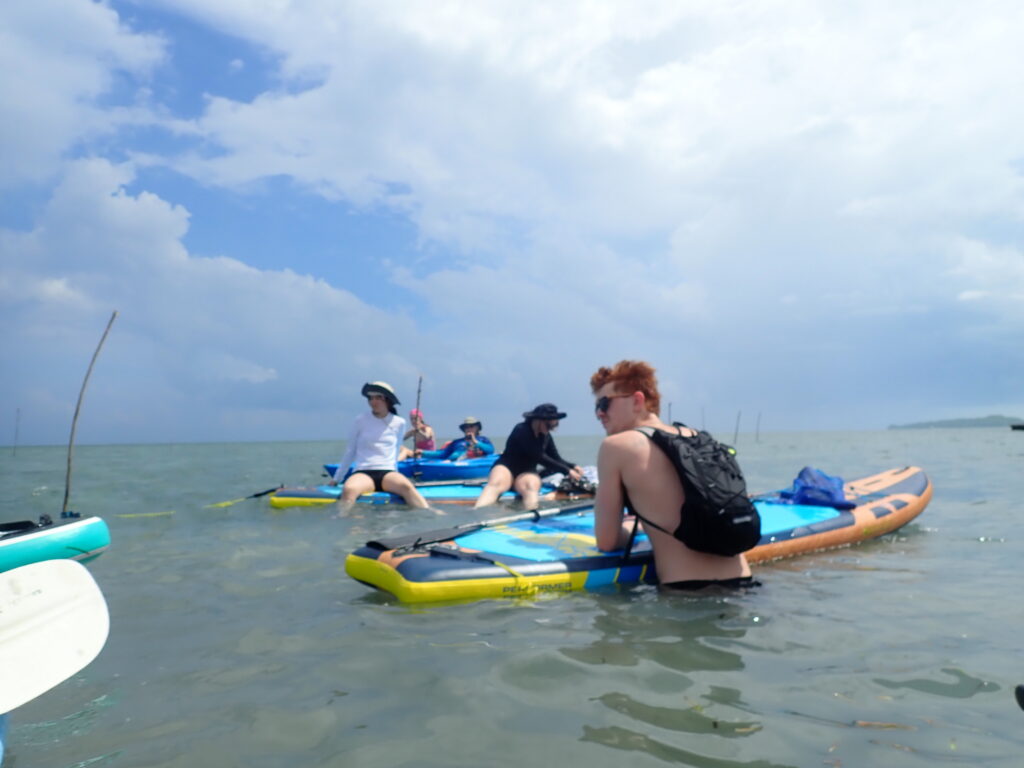
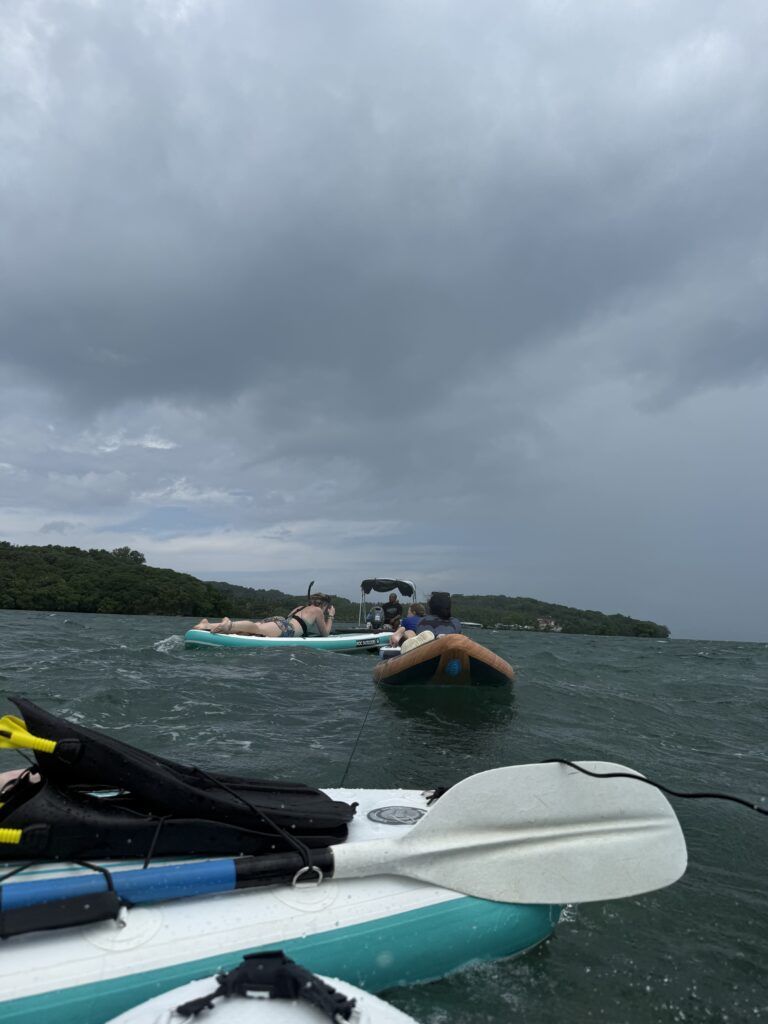
The other group paddled to a cheremrum (Palauan for sea cucumber) nursery site and practiced field measurements and even found a few, although surprising less than usual. We then faced some rough tides meeting with the other group on the boat, the wind taking our paddle boards off route and into the mangroves. Luckily the water was shallow enough to jump in and redirect ourselves. 

Clam Restoration in Ollei

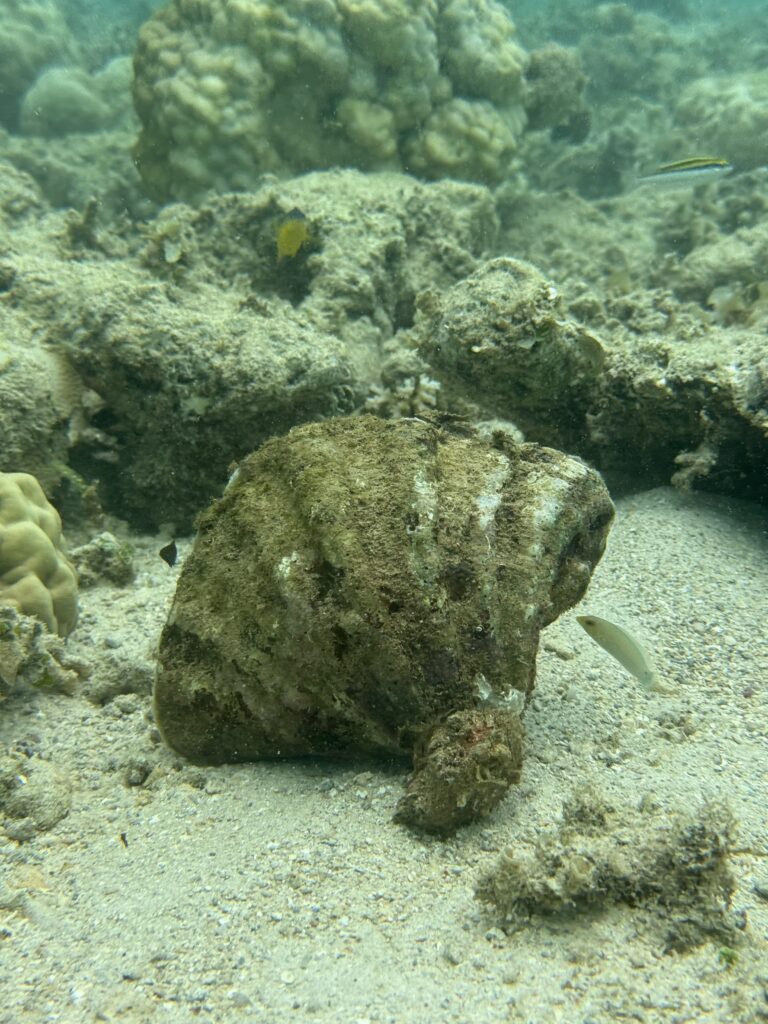
Once we made it to the boat and everyone was reunited, clams were handed off and placed on the sandy seafloor. While we snorkeled around placing clams, we saw various corals, fish, and sea stars. The clams had closed from their long journey, probably to retain moisture and for protection. As we placed them in their new homes, it was really cool to see them open back up. In some areas the local fish were immediately checking out the new additions to their home. Once we were finished, we again split off into two groups. Most of the class went back to Ebiil on the boat, while a few of us traveled via paddle board train.

Removing Rebar

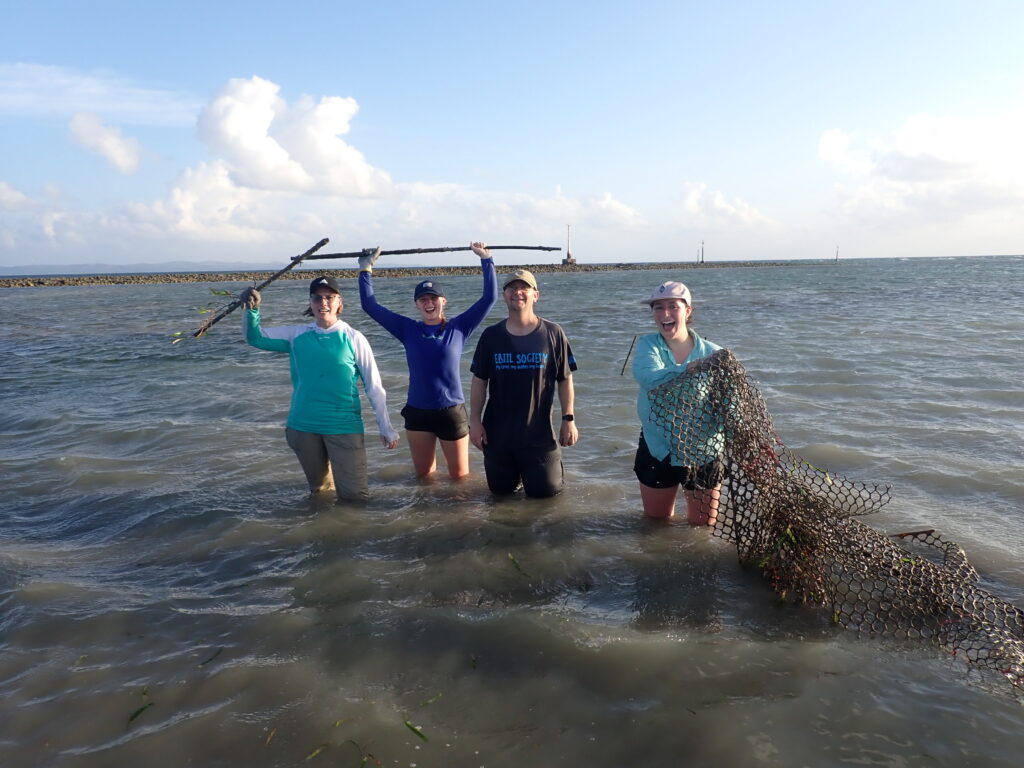
Later in the afternoon, Ebiil staff and some students went back out on the water to detach a clam trap, which catches netting, rebar, and debris in water, disturbing swim pathways and accumulating trash. The small team of elite rebar removers went out at low tide and helped to clean up the remains of an old clam garden.

Today’s blog was written by Lauren and Raven :p

Day 3: Coconuts for Sea Cucumbers

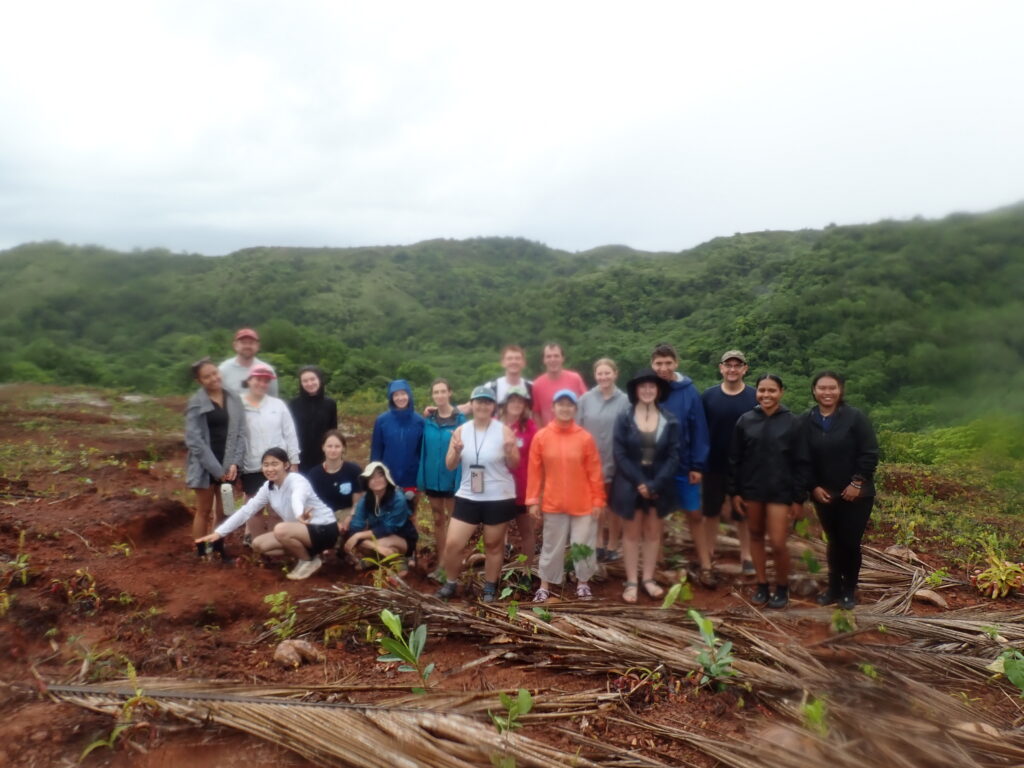
Group photo at Old bauxite mines

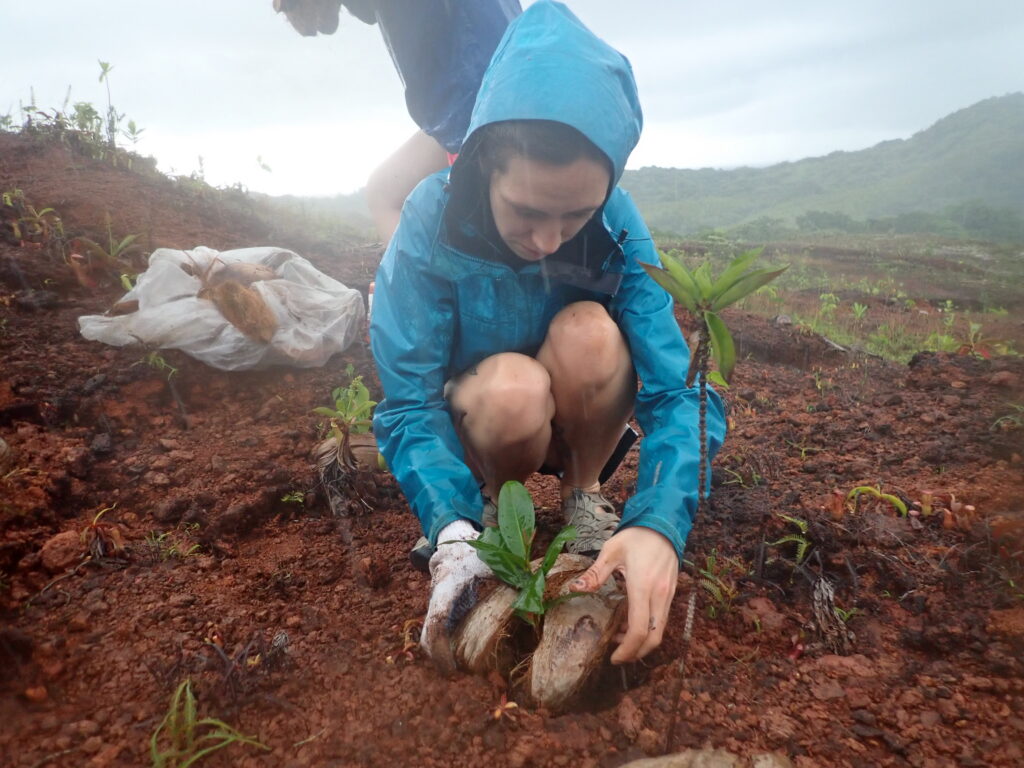
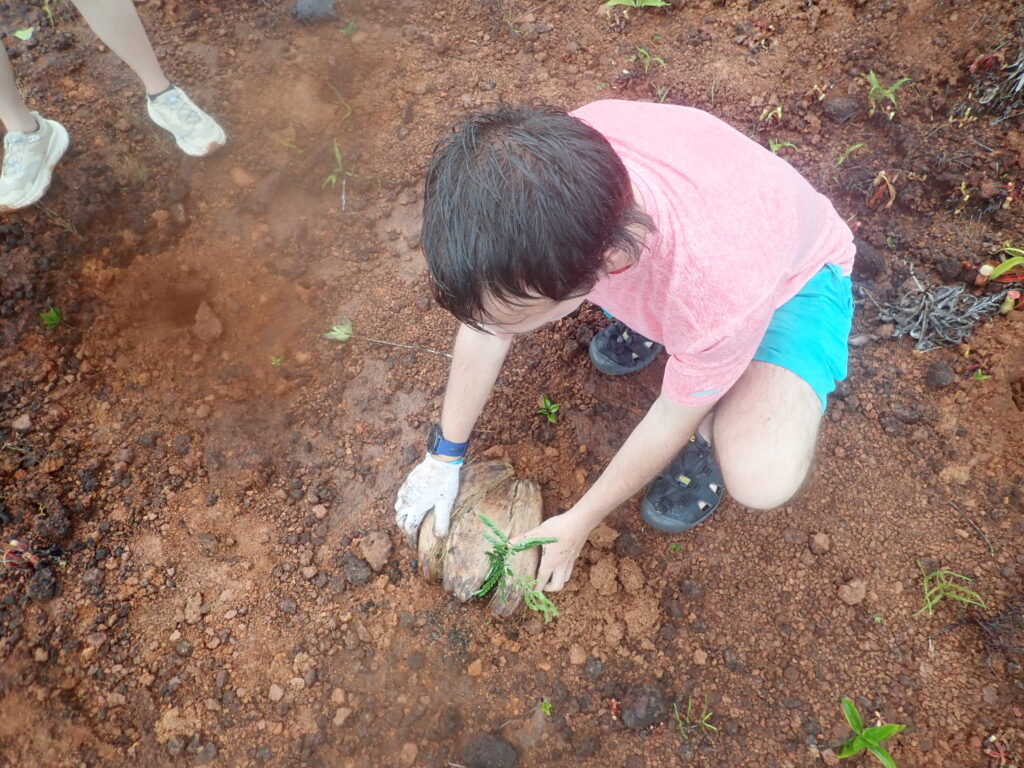
We went up to the old bauxite mines, a major producer of aluminum which was mined in the 20’s by the Japanese. In the midst of getting caught in the rain, we planted native trees in order to help restore the land. We put coconut shells and palm fronds over the seedlings to protect them from the shade and help retain moisture.

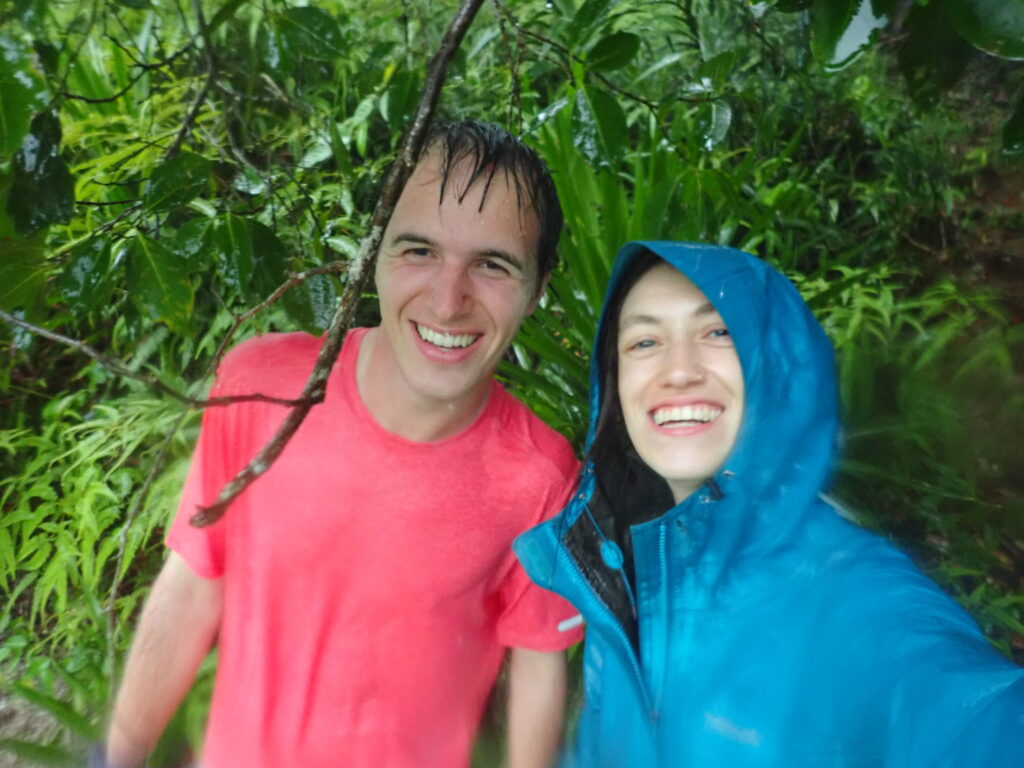
Adam and I (Kasia) hiding from the rain
Raven with her sea cucumber clan

After the plant restorations, we headed for lunch and a stroll to Kuabes beach, where we found sea cucumbers, several fish species, coral, and hermit crabs as we walked the low tides.

After planting the saplings, we had to replenish the seed supply so the group worked on breaking open seed husks and planting the seeds so that we may have more seedlings for the mine restoration later.

We also worked on processing coconuts. We saw how to break open the husks, take out the coconut, crack it open, and how to scrape it out. Ebiil kitchen will use the shavings to make coconut milk.
We literally went from ridge to reef today, being able to plant seedlings on the restored mine land and walk the low tide by the reef. In doing this, we got to see the benfit of vegetation and how it plays a part in stopping the sedimentary run off into the ocean which affects the vulnerable coral reefs.

Today’s blog post was written by Kasia and Adam.

Day 2: Adventures to Ebill

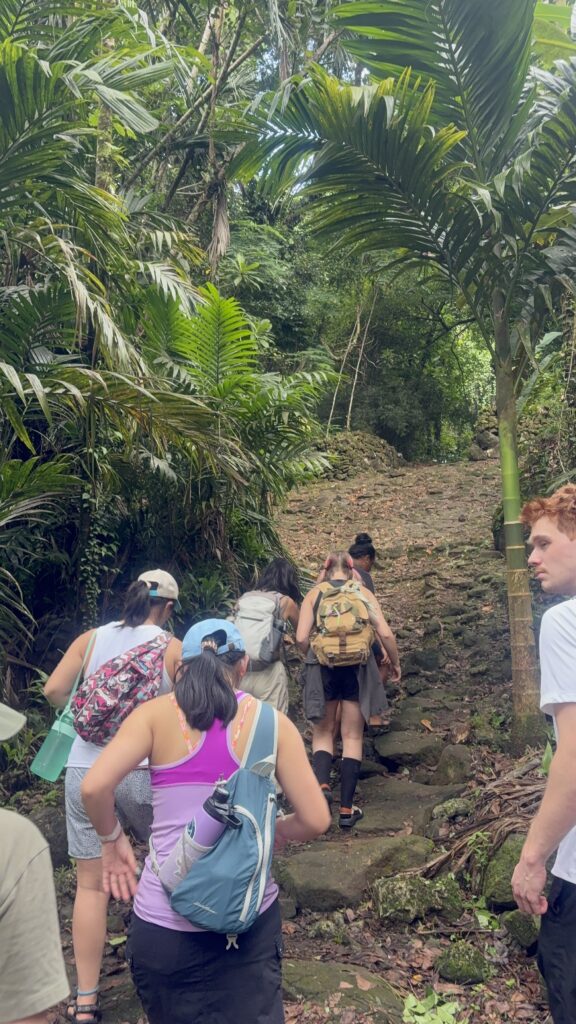
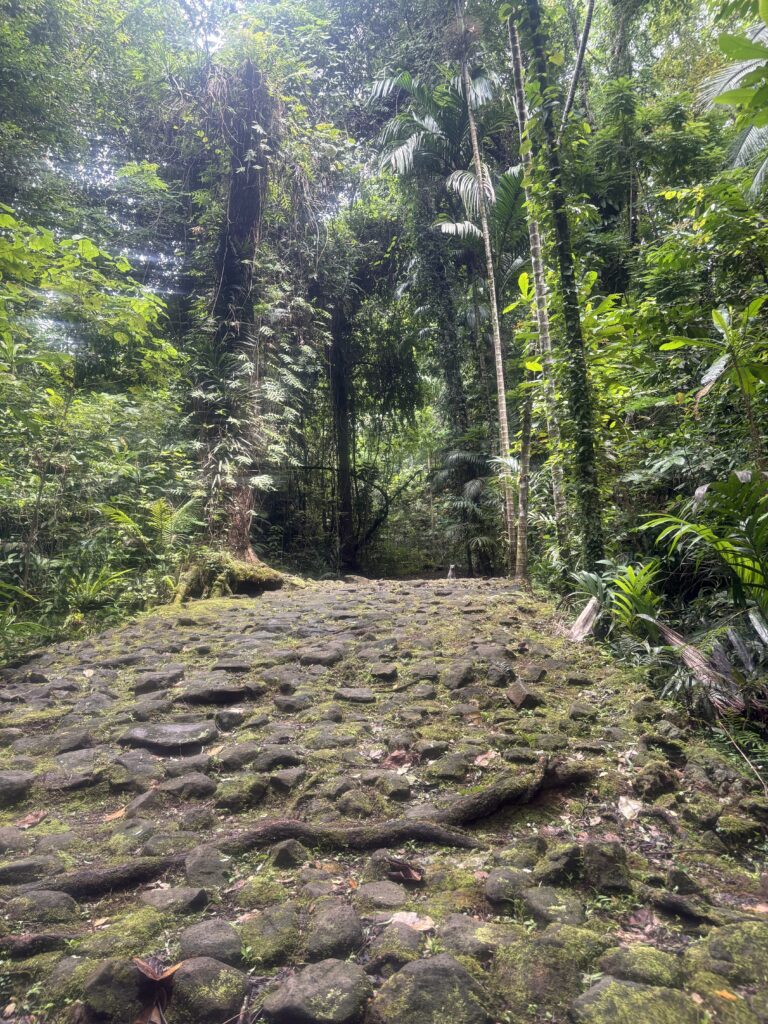
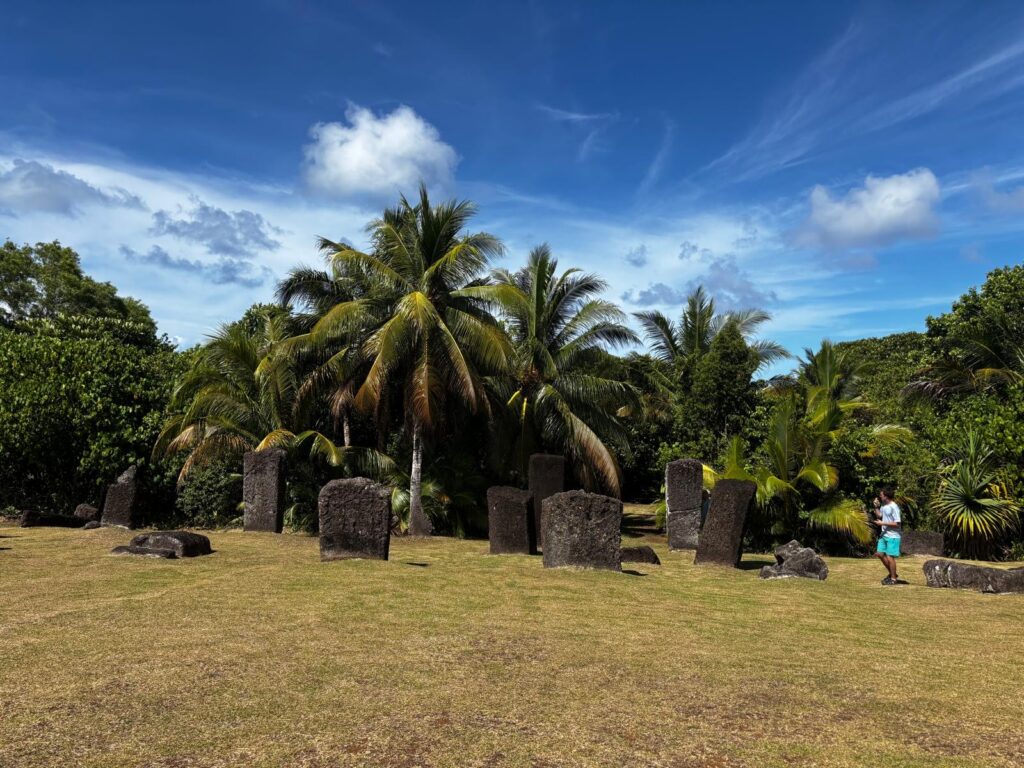
Today we departed Koror and started making our way to Ebill Society, a local women-founded non-profit, where we will be spending the next six days studying everything from watershed management to clam restoration. There were two main stops along the drive. The first was a guided hike up a historic stone path that led to a large and beautifully painted Bai (traditional meeting house for tribal chiefs), and the second was a stone Monolith site. It was a very hot and muggy day but an absolute DOWN-POUR in the middle cooled us down and made the hike down from the Bai fun!

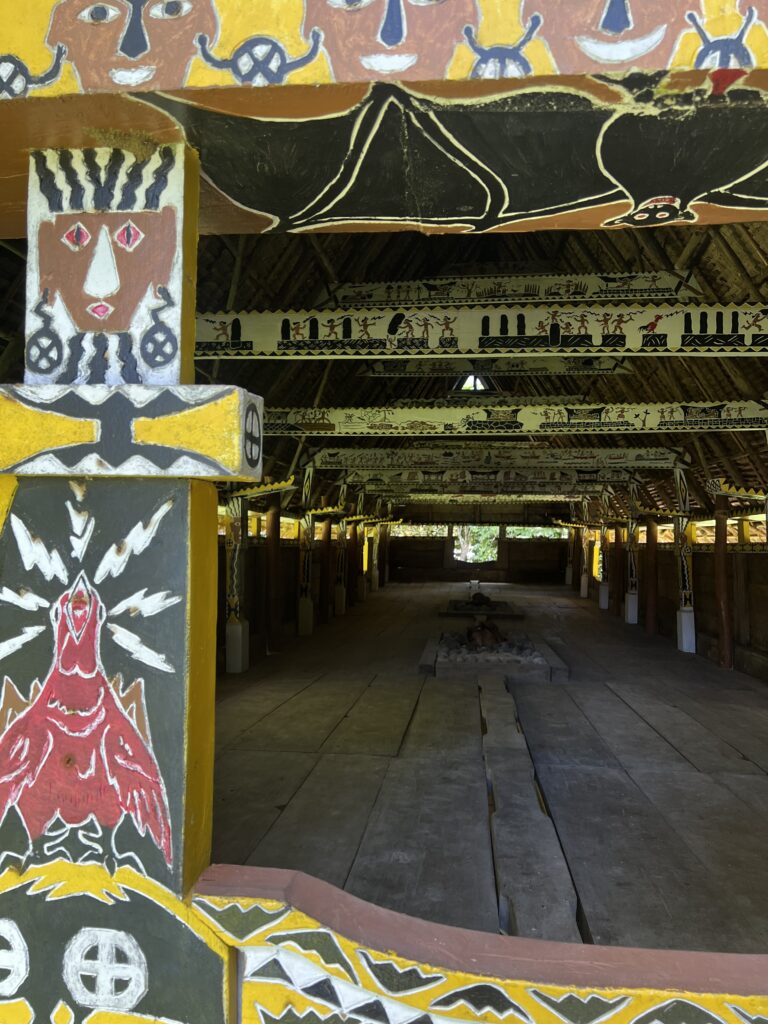
Inside a traditional Bai

Our guide Vivian and her husband helped us understand each story behind the artwork on the outside and on the beams of the inside of the Bai. Each beam represents a story from a different family, and the people who painted them got to learn about the tale within the process.

Each Bai is built using nearby plants and trees, no nails or metal. The triangle roof is woven together using palm fronds which are then dried in place, and they act as “shingaling” for rain to slide off of it. The long vertical and slightly raised beam in the middle connecting the firepits works as an alarm system for intruders. When someone comes through the door, that is the first thing they step on and it is meant to be slightly loose so it rattles and wakes the chiefs up.
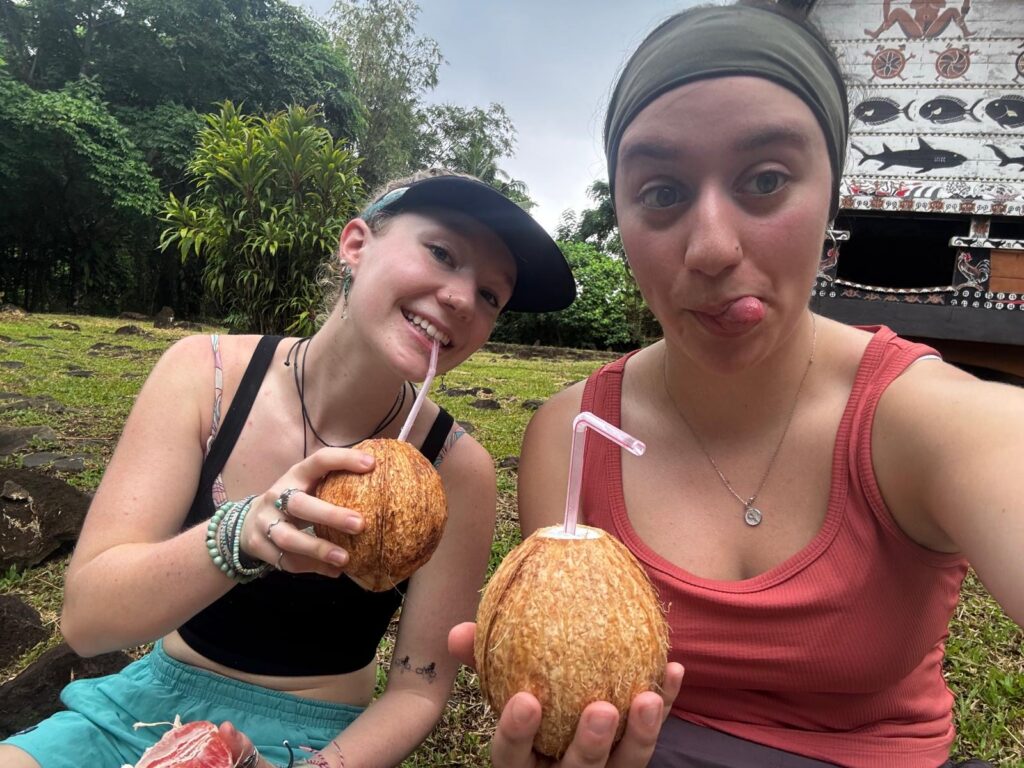
We also got fresh coconuts to drink the water from at the top, which we agreed was the best coconut water any of us have ever had!

After getting a shower (the rainstorm) we hiked back down and had traditional Palauan food for lunch- including fried fish, rice, and glass noodles. After that we loaded back into the vans to see the ancient monoliths. They are giant rocks that have been there for thousands of years and the orgin of them is somewhat unknown because they are made of rock that is not found anywhere else on the island. It was a short but steep hike down to the site with lots of stairs, but it was very worth it. We will be asking the women at the Ebill Society about the traditional Palauan story behind the monoliths and will keep you updated on what they say!
We arrived at Ebill late afternoon and had time to walk out to the ocean and see the mud flats during low tide that we will be doing clam restoration on in a couple days. Dinner was prepared by the cooks at Ebill and included grilled fish, taro, white rice, and democh soup. We all loved it and are excited to see what it will be in the coming nights! Before bed we had a group reflection about the day and learned more about what Ebill has done to help with watershed management. They understand that however the land is treated and whatever is put into it all runs back to the ocean and can affect all different forms of life.
We are all looking forward to learning from them in the coming week and borowing knowlege to pass on and spread awareness to the natural resource issues they have faced and solved over the years. Thank you for following along and we will keep you updated!

Best,

Bailey and Anna

Day 1: Snorkels and Sulang

Group photo at Paddling Palau

On the first day of Palau we departed to the Balau National Museum, where we read how countries encountering the native Palauans influenced and changes their way of life. It’s interesting how some outside influence improved such as Germany writing the language in the latin alphebet while other times it disadvantaged the country’s sovereignty.

After a small car ride into the Palau Aquarium, we learned how people survey fish with the fish survey sheets given out on our trip. Id’ing fish was really hard especially when the fish is not displayed on the boards. Scott was great help when one of us had trouble trying to find what category our desired fish was at.

From the aquarium we headed to the Japan-Palau Freindship Bridge Park to regroup under the sun house and finally jump in the water! Both new and experienced snorkelers got to buddy up, test their gear, and take a peek under the sea.

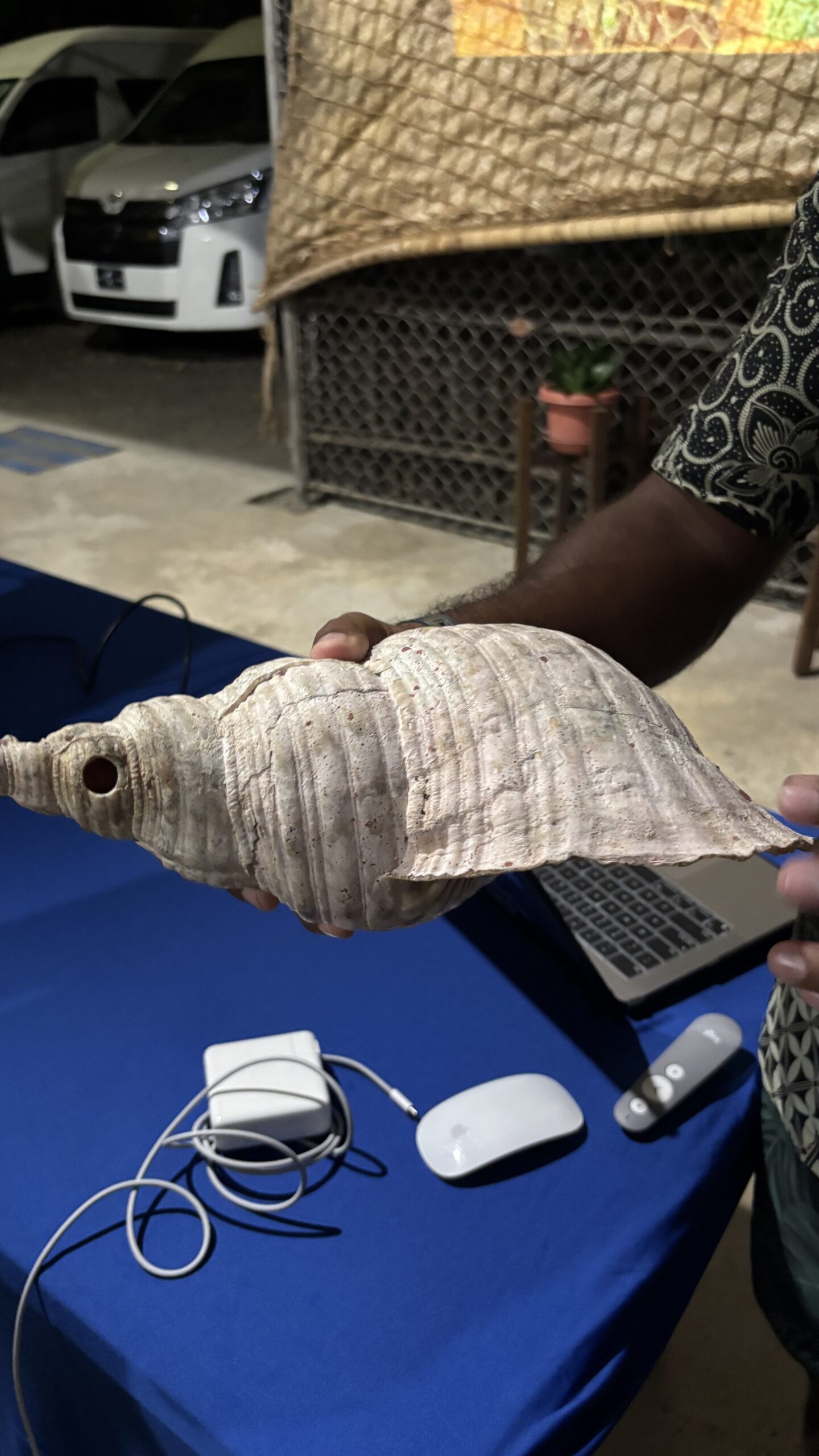
After a swim and our first snorkel under the Friendship Bridge, we joined the staff of Paddling Palau for dinner, dessert, and a presentation from master storyteller Mac Sasao. Before starting the presentation, he blew his horn 3 times to acknowledge the ancestors and the sharing of knowledge.

Mac’s horn

He told us about the Palaun flag, whose yellow circle represents the moon. The blue background shows the peaceful night sky with the moon outshing the stars. If you look at the flag, you’ll also notice that the circle is off center. This represents a new future for Palau, away from colonization. Part of this future is marine conservation. After making some of an economic comeback from intense colonization, big fishing lines were banned. 80% of their waters are no take, making them one of the largest marine preserves in the world. These conservation areas protect Palau’s unique marine lakes, inner lagoons, outer reefs, and pelagic zone (open ocean).

The view from Paddling Palau

Today’s blog was written by Taylor Habedank Fuller and Izzy Yeung

Day 15: Full Hearts and Full Suitcases!

In the blink of an eye, the last day here in Palau has arrived! We had a thoughtful last reflection this morning and enjoyed a great traditional Palauan lunch here at PCC for our final group event.

We would like to take the time to offer sincere gratitude to everybody who has helped make this trip truly unforgettable. The Ebiil Society, Paddling Palau, and PCC have once again graciously opened their arms to Oregon State students and given us experiences that will last in our memories for a lifetime. Most of us never pictured ourselves weaving baskets from palm leaves, swimming with jellies, wading through thigh-deep mud in a mangrove forest, preparing taro for dinner, or counting out sea cucumbers, but these opportunities filled us with brand new knowledge and perspectives on the world around us.

During our first week in Ebiil, we learned to slow down and appreciate the natural world around us. We also got to recognize how food strengthens relationships and reinforces cultural heritage. Many of us got to experience our first hands-on field work through sea cucumber monitoring and conducting surveys in a mangrove plot, which gave us skills that we could utilize in a broad array of future outdoor careers.

In our second week in Koror/the Rock Islands, we were able to experience the impact of ecotourism, learn about modern scientific methods of achieving agriculture sustainability, and looking at the challenges and benefits of island self-sufficiency.

We arrived to this island as a group of complete strangers, and we are leaving as a family. These two weeks have created incredibly tight bonds and brought together people from all over the world. The Ridge to Reef family grows each year, and we feel so lucky to be the 2024 additions!

The 2024 Class Getting Muddy at the Milky Way!

We’d like to personally thank the entire PCC staff, the Ebiil Society, Paddling Palau, and every other organization that made this trip a success. At PCC, Lik opened the dorms to us and helped organize transportation to and from events. Gurney, Chermang, Sean, Didil, and Lee kept our stomachs full with the most delicious meals in the dining hall! At the Ebiil Society, Ann, Ann-Marie, Joyce, Patty, Cindy, Sharon, Aki, Margie, Omar, Brekke, Red, Daniel, and the rest of the staff taught us traditional Palauan knowledge, cooked us more amazing food, and provided wonderful hands-on opportunities. At Paddling Palau, guides Mac, Jeff, Olilai, and Cobi helped us navigate the pretty blue waters in the Rock Islands and Chef Alina provided a wonderful first dinner. Thank you also to Belau National Museum, our guide to the Melekeok Bai Demei, Ngardmau Rangers, our mangrove instructor Rich, Des with Peleliu Adventures, high school STEP-UP program students, Airai 680 Night Market, Dr. Chris Kitalong, Elchung, Hideyos, Nikka, and Emengal, Christine and our other friends with CRE, Bruno and Cinzia with Palau National Aquarium, and LeAnn and Mr. Fuji with his staff at Palau’s Waste Treatment Plant and Glass Arts Center.

Thank you to KB for joining us on this trip and adding a Palauan voice to every important conversation, thank you also to Garrett for your willingness to be an honorary TA for the course, and thank you Reid for joining us and getting some great underwater pictures!

Finally, thank you endlessly to our instructors Bryan and Scott for giving us such a memorable, amazing experience in Palau. Your efforts to ensure a smooth, unforgettable course does not go unnoticed and is greatly appreciated.

Farewell, from the Ridge to Reef class of 2024! <3

Ridge to Reef Class of 2024
The sun is setting on this year’s course, but the memories are here to stay.

This post comes from the heart of all students, and is authored by Iris Ford, Jacob Colvin, and Donika Mitev.

Day 14: The Final Adventure

Today was the last full day of the course! We started the day off at the Palau Aquarium, where we looked around at various exhibits, which had information about mangroves, reefs, invasive species, and more. We also saw even more sea creatures in the tanks.

At the touch tank.
Myles helping with identification.
Everyone chilling at the aquarium.

Then Bruno, who works at the aquarium, taught us about giant clam propagation. Afterward, Cinzia discussed with us her experiments with coral propagation, density, and resilience. 

Learning about coral experiments.
Cinzia explaining her research to the class

Next stop was the waste treatment plant, where recycling and repurposing is in full swing. The plastics collected around the state of Koror are used to produce biodiesel. This fuel is used to produce part of the electricity needed to run the rest of the facility. The plant also repurposes glass bottles by using them for glass blowing to create creating beautiful jewelry, dishes, sculptures, and, more. Mr. Fuji, the manager of the Solid Waste Management Office/Belau Eco-Glass Center, explained to us the processes of turning the things we throw away into something new. 

Different types of plastic used at the facility.
Glass blowers at work.

We headed back to PCC for lunch and a presentation by Jason Johnson about a fungus that is killing one of the local tree species. He explained the process he has gone through in figuring out what the fungus might be and how it is being spread around.

Next, some of us headed to the beach for one last dip. Meanwhile, Mica and Reid worked with those at the PCC dining hall (Gurney, Chermang, Sean, Didil, and Lee) to prepare the tapioca that they harvested on Monday.

The tapioca crew!

We finished off the day with a group dinner at Drop Off Bar and Grill. Everyone had a fun time and ate great food!

Our final dinner!

Today’s blog post was written by Gary Esvelt and Emma Schnabel

Day 13: Me When I Extract DNA

Today was all about dna extraction and GMO’s. The dna extracted today came from the taro samples cultured from yesterday. Later we set up mosquito traps to catch potential vector born illnesses, where they will count identify and test different species. High schoolers in the STEP-UP program taught us about a new breed of passion fruit that was sent from Jerusalem from one of their local universities. These passion fruits are much larger than other varieties and we had the opportunity to help them repot their propagations. We ended the day being invited by the president of the university to an assembly on land grant institutions and how their efforts in the US affect small pacific islands like Palau.

Repotting Passion fruit
Us When We Vlog
Mosquito trap

This blog post was done by Megan, Jacob, and Katie

Day 12: Return of the Taro

This morning, we headed to Palau Community College’s Cooperative Research and Extension Center (CRE), dedicated to completing the College’s land grant mission (just like OSU!). This includes sustainable agricultural and resource management efforts that can benefit Palau. For example, we were taught about different Taro cultivars, and how they are being studied to create more saltwater resistant species. This would enhance food security by preventing crops from dying due to saltwater intrusion, which has recently worsened because of climate change.

Introduction to CRE projects

To achieve so, CRE’s staff, Dr. Chris Kitalong, Elchung Hideyos, Nikka Ngirkelau, and Emengel Ida Singich (who is a fellow OSU student!) are harvesting three different taro species. After that, they isolate the samples, extract the genes of interest (salt resistance) from the plant’s DNA, and insert them into new taro plants. Lastly, the new samples are tasted by traditional women taro farmers for approval! We contributed to their research by harvesting wild taro (one of the three species being investigated).

Tasty taro snack

After that, Em removed the roots and stems, leaving enough of the taro to be replanted later (a method we previously learned with Ms. Ann Marie in the Mesei – look at day 4 for referral 😊). Nikka taught us how to prepare taro cuttings for DNA extraction by getting down to the core of the tuber.

Nikka cutting taro
Emengel preparing taro

CRE has been monitoring salinity levels and climate indicators since last November, a collaborative effort to provide accessible empirical data to Palauan farmers, researchers, and any interested individuals. Currently, they have multiple sampling stations in Palau and one in Yap (a neighboring island) to connect the scientific Micronesian region. We are excited to see how this project will continue to grow!

Emengel and Elchung explaining salinity sensor

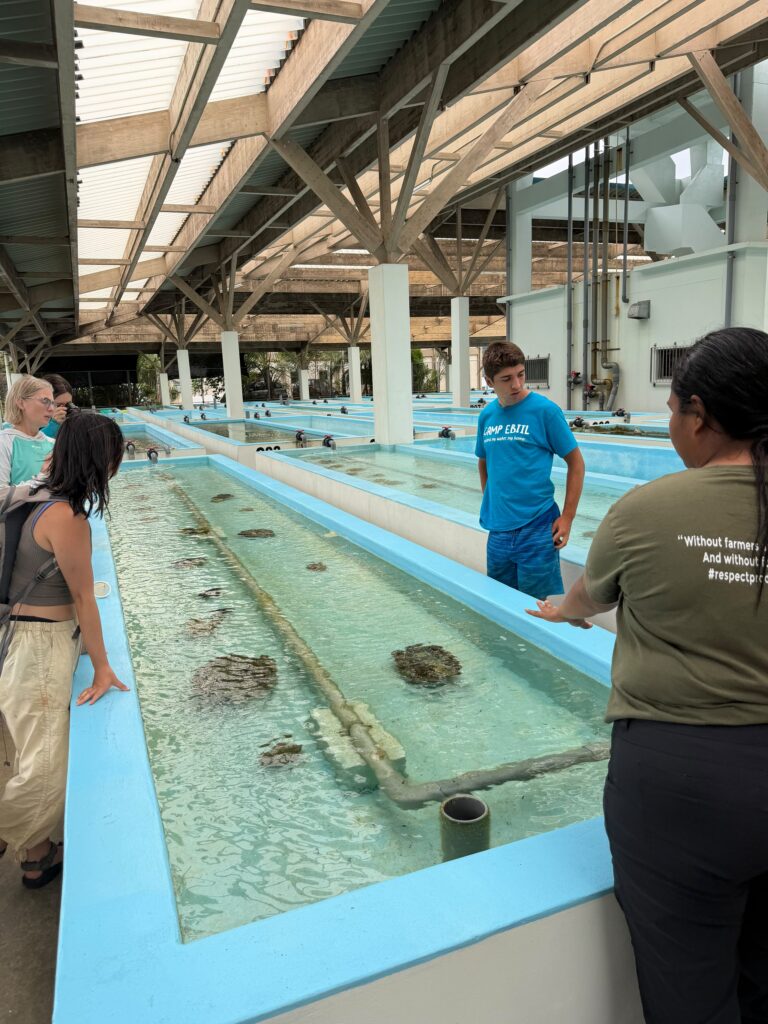
Later in the day, we headed to CRE’s aquaculture facilities, where Christine Rengiil introduced us to their algae, crabs, rabbit fish, sea cucumbers, clams, and an adorable, rehabilitated sea turtle named Susanne. Besides research, the hatchery’s goals are to support local farms with stock and re-integrate species into the ocean.

Aquaculture tour
Susanne the rehabilitated sea turtle

After a day well spent with our friend’s at CRE, we headed back to our dorms at PCC. Some of us couldn’t resist the temptation of taking a nap in the air-conditioned bus.

ZZZ

Today’s blog was written by Emily Dye and Micaela Muñoz

Day 11: Yak Attack

Today was day two of adventuring with our Paddling Palau pals! Our lovely guides–Mac, Jeff, and Cobi–took us out once more on their boat towards the kayaks that we would be paddling for the remainder of the day. But first, we made a quick stop to search the surrounding incoming tides for the famous dugongs of Palau. For those who have never heard of a dugong, they are related to the endangered manatees, but are much more athletic. Our patience was rewarded with the presence of a large male dugong, which was accompanied by its friend, the green sea turtle. 

Some unlikely pals

The boat dropped us off just outside of Risong Bay to pack us in the kayaks and head to Blacktip Bay to see some baby black tip reef sharks (if we are lucky). Although we weren’t able to see any sharks here, we saw so much incredible surrounding scenery by getting up close and personal with the limestone rock islands. Some folks with a keen eye even spotted the nest of a fairy tern (a distinguished tropical white bird). We paddled around the beautiful area for around two hours before striking out and giving in to our hunger and chowing down on scrumptious bento boxes from King’s Palace. 

Coves and caverns along the route
Bryan hoping we will share

After stuffing our tummies, we hopped back on our kayaks and entered Risong Bay. We paddled around for a while, and Mac decided we weren’t fast enough, so he encouraged a race across the bay. Katie and Garrett were the champions of this event, beating everyone else (even the locals) by a mile, while others *ahem Gary* decided there were better uses for the paddle such as scratching his back. 

“Tell everybody I’m on my way, new friends and new places to see!” – Phil Collins
Yakin’ & Scratchin’

Finally we made it around the bend and came across some mangroves hoping to try our luck once again spotting some baby black tip sharks. This time was a total success; we saw at least three shark pups no longer than one foot, which were too cute!

Baby black tips sharing their safe space with us

To wrap up our final day out on the water, we stopped for a snorkel session in Mandarin Fish Lake hoping to see the infamous, and tiny, mandarin fish. Amazingly enough, we found several of them, but unfortunately we were not able to get many pictures of them due to their small stature. Here are some other fish to satisfy the readers: 

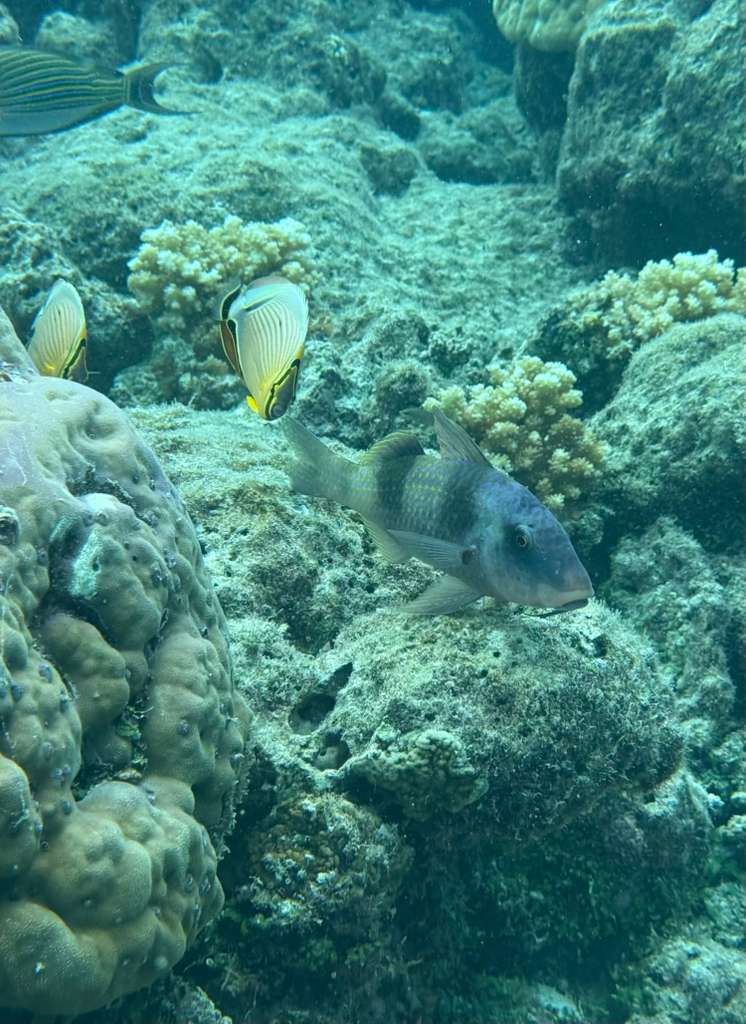
These are definitely fish

At the end of another long, tiring day we headed back to Koror on a rainy and bumpy ride, sad to say goodbye to the lovely staff of Paddling Palau. Then we will be off to Ngaremlengui State tomorrow to take a look at taro DNA and species diversity.

RIP

Written by Lydia Dapkus and Donika Mitev

Day 10: Jelly and… Mud Sandwich?

After a wonderful day off yesterday, we were ready to jump back into action today by visiting the Rock Islands/Jellyfish Lake! Today’s fantastic hosts were our friends at Paddling Palau. We started our day at 8:30 by all piling into a boat with our wonderful guides Jeff, Mac, and Olilai. We had a rainy hour-long boat ride to the German Channel, where most of the class was able to get some prime snorkeling time in. We saw black-tip and white-tip sharks, manta rays, turtles, and tons of fish (barracudas, surgeonfish, groupers, unicorn fish…).

A sea of snorkels and fins at the German Channel
When u go to ur friends house for a sleepover and they don’t give u a blanket

After getting tired out and hungry, we set out to a perfect, beachy island for lunch-time! Lunch was a delicious assortment of bento boxes curtesy of King’s Palace. Once we were well-rested and fed, we set out for a long-awaited part of the trip: Jellyfish Lake. This is a saltwater marine lake nestled in the valley of one of the Rock Islands that is home to multiple species of jellies (primarily Moon and Golden). It was completely unlike anything most of us had ever seen with colorful jellies floating all around us! We spent about an hour snorkeling around and making friends with these lovely gelatinous invertebrates.

Mac and Mica making a Golden Jelly friend
Lydia cosplaying as a fire-bender

Next, we went to a place called the Milky Way for some spa-time. The beautiful turquoise water runs over milky limestone mud that visitors have traditionally spread all over themselves (we were no exception to this). While here, we had a first-time sighting: a crocodile! Garrett grabbed some great footage using his drone that you can check out in the compilation video linked at the end of this post.

Megan, Iris, and Katie gaining levitation powers after covering themselves in Milky Way mud
“The Dock is Lava”

Once we washed off the silky-smooth mud, we loaded on the boat, returned to the Paddling Palau facility, said our goodbyes to our incredible hosts, and headed back to the dorms at PCC. Most of us journaled or rested during the quick break before we departed for the final adventure of the day. Every other Saturday evening, the state of Airai hosts a Night Market with live music and dancers, artisan craft vendors, and lots of yummy food. Some of the class danced to the music while others enjoyed some snacks like calamari, coconut rolls, BBQ, and boba tea. This night out was a great way for us to experience the close-knit Palau community first-hand.

Palau Night-Life
Katie-Kat and Gare-Bear share a snack

We are quite exhausted from such a long, exciting day, but we will leave you with one more treat. Below is a great compilation of clips from today compiled by co-author Alaina!

Thanks again to Paddling Palau and the Airai 680 Night Market for giving us another unforgettable day :^).

This post was written by: Iris Ford and Alaina Houser

Day 9: Pathway to the Past

Today marked the halfway point of the trip, and we had a day off to do with as we pleased. The majority of us decided to charter a boat to Peleliu, one of the southern islands of the Palauan archipelago and the site of one of the bloodiest battles of World War II. In an island-hopping campaign across the Pacific, American forces set their sites on the Japanese-controlled Peleliu and its valuable airfield. What was expected to be a short, 2 to 3 day campaign turned into a 2.5-month siege. It has earned the nickname “Museum Island” because of the sheer number of well-preserved artifacts and buildings, with more being unearthed even today.

A destroyed Japanese Type 95 Ha Go light tank

Our tour guide, Des, led us around the island, recounting stories from the war and the horrors that faced the people there. More than 11,000 Japanese soldiers were entrenched in positions they’d spent months fortifying, and of these forces, only 19 survived. Over 2000 Americans died there as well, marking it one of the costliest battles in the Pacific.

Some of the numerous relics left over from the battle

With that somber reminder fresh in our minds, we returned to the boat and headed to our last artifact of the day, a sunken Japanese fuel freighter. Here, we enjoyed the cool water after a hot day in the sun, floating over the shallow wreck and watching the life that calls this wreck home.

Our boat next to the sunken fuel freighter
The islands where the freighter sank, visible at the bottom left
The stunning sunset over the rock islands

Scott and Reid spent the day doing much the same, diving on some of the incredible sites scattered all over Palau. Iris, Lydia, and Bryan spent the day around Koror, shopping, visiting a local park, and enjoying the local Palauan cuisine.

The highlight of the dive trip, an Ornate Ghost Pipefish
A leaf scorpionfish hiding amongst the coral
Iris and Lydia in front of the Japan-Palau Friendship Bridge

We’d like to thank Garrett and Omar for getting us the boat, KB for connecting us with the tour company, Peleliu Adventures, and especially our tour guide, Des, for taking the time out of his busy day to lead us on an incredible experience around the island he calls home.  

Today’s blog post was written by: Myles Tallmadge, Micaela Muñoz, and Megan Haner

Day 8: Beng and Byes

A group of us woke up early this morning to paddle board and watch the sunrise from the dock. As it was our last morning at Ebiil Society, we wanted to make sure we got every last drop out of our time left. 

Sunrise from the paddleboards

Most of our morning was spent cleaning the grounds of our gracious hosts. The fish we caught yesterday was smoked late at night and ready for lunch today. We enjoyed a delicious last lunch at Ebiil Society of the smoked fish, bbq chicken, coleslaw, rice, and potato salad. 

Omar and Red BBQing

Next, we had a final group reflection of our time in Ollei. We each shared our takeaways from the week, such as the sense of community we felt and the knowledge that was shared with us. We are all very grateful to Ebiil Society for welcoming us into their space. This week has been impactful for us all as we learned about Palauan culture, native ecosystems, and the relationship between the two.

Hanging out by the fans before group reflection

After we sadly said our goodbyes, we hopped on a bus with some long-awaited air conditioning. In the state of Ngaraard and town of Ngekeklau, we waded out to a traditional beng. A beng is a fish trap made from coral rubble, usually in the shape of an arrow, that lures fish in through a small opening and leads them to be trapped at low tide. Around 60 years ago, this technique was almost lost in their oral history, but recent efforts have begun to restore the traps and method. 

The group on the way to the beng

We safely made it back to Palau Community College and settled back in. A couple of groups headed out to local restaurants and had a lovely evening to finish off the day!

Today’s blog was written by: Emily Dye and Emma Schnabel

Day 7: Splashes n’ Fishes

After our muddy mangrove experience yesterday it was time to go back for another adventure in the deep saltwater. Following a 15-minute boat ride, we reached our snorkeling site – the Ebiil Channel Marine Protected Area in the state of Ngarchelong. This conservation site was established in 2000 with the goal of protecting the fishery resources of the area so that future generations would be able to continue utilizing them.

(Mostly) smiley faces on the boat just before our ride to the Channel began

Upon arriving at the Channel, we donned our snorkeling gear and we went on to explore the incredible biodiversity below the waterline. Everyone got to experience something different – some of us saw small sharks, while others saw passages of colorful reef fish that seemed mostly unbothered by our presence. Although the reef was negatively impacted by a typhoon that passed through the area in April 2022, it continues to be an important spawning as well as primary habitat for a countless number of marine organisms.

Stony coral landscape at the Ebiil Channel reef.
Just Myles a.k.a The Aquaman doing his usual thing

Our next stop of the day was on Ngerkeklau island for lunch. The island is cooperatively managed by the Ebiil Society and the State of Ngarchelong as a nature as well as a cultural preserve. Sea turtles and the nearly endangered Micronesian megapode nest on its beaches side by side, unbothered by human presence and other stressors. Sea crates can also be found in the shallow water near the shore. The ancient tool (donguu) and pottery (bekai) parts scattered throughout the island are remnants of an old village that is no longer standing. On one end of the island, we spotted a curious looking tree standing alone. Ms. Ann shared with us that the existence of this tree called the dmedmekur is embedded into the culture of Palauans through oral stories the legacy of which continues to be passed down from one generation to the next. We then enjoyed a well deserved lunch break. We could not say the same about the megapode which went on and on with its restless bird business.

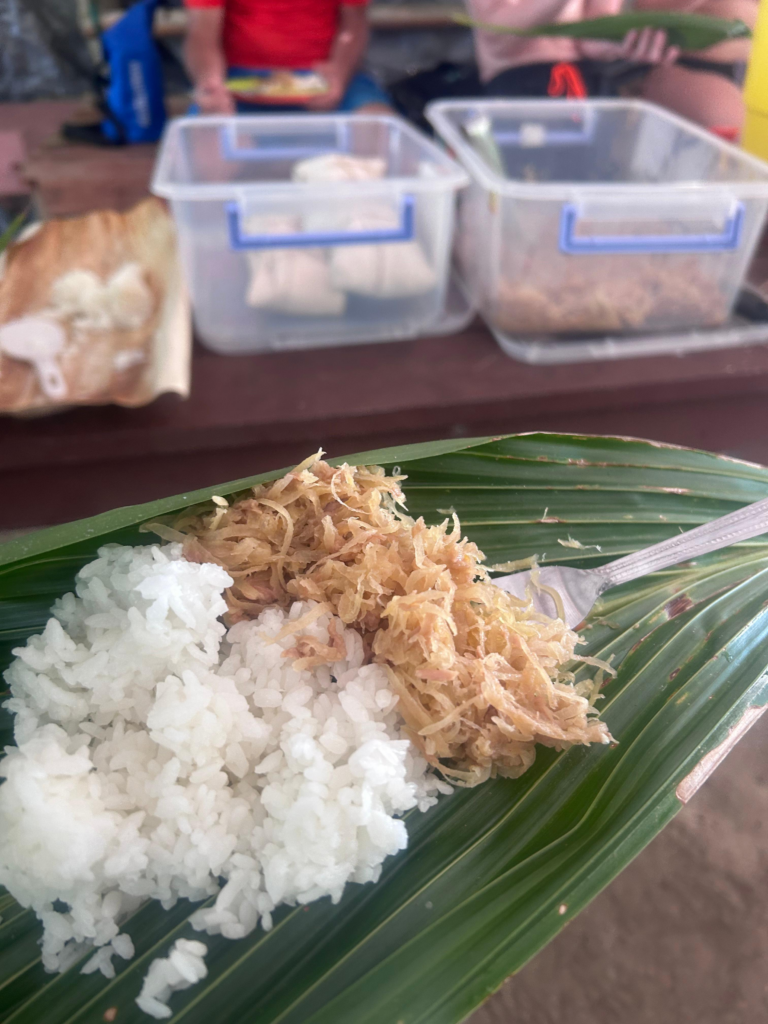
Enjoying our delicious tuna and rice lunch served on coconut leaves
Our charismatic constantly-on-the-go friend – the Micronesian megapode

Our next activity was in stark contrast with the turbulent t snorkeling in the Ebiil Channel. We stopped at a couple of different spots in the ocean where we got to experience the simplicity of handline fishing – an uncomplicated but efficient method that puts food on the table as we found out later! We caught a variety of different species of fish amongst which Titan triggerfish, red snapper, trevally, and emperor fish.

A very happy Emily with her first not-so-happy red snapper

After making sure that we had enough fish for everyone at dinner, we all got back in the water for a swimming break before heading back to the dock where we had to process our catch in order for it to be ready to be cooked. Omar showed us a couple of processing techniques that are commonly used by traditional Palauan fishermen. While observing and practicing these methods, we got to reflect on how engaging in every step of food harvesting – from catching our fish to cooking it helped us feel appreciative of the collective efforts we put into it.

Our bountiful harvest
From the ocean to the dinner table – freshly caught fried red snapper

Upon reflecting on our salty-fishy adventures, we all went on to make the most of our last remaining hours at the Ebiil Society camp before our trip back to Koror – some of us headed to bed early so that we could hop on paddle boards and catch the amazing tropical sunrise the next morning, while others stayed late to gaze at the stars. We are excited what the second week of our incredible Palauan experience has to offer.

Marveling at the Palauan night sky

Today’s blog post was written by Donika Mitev and Gary Esvelt.