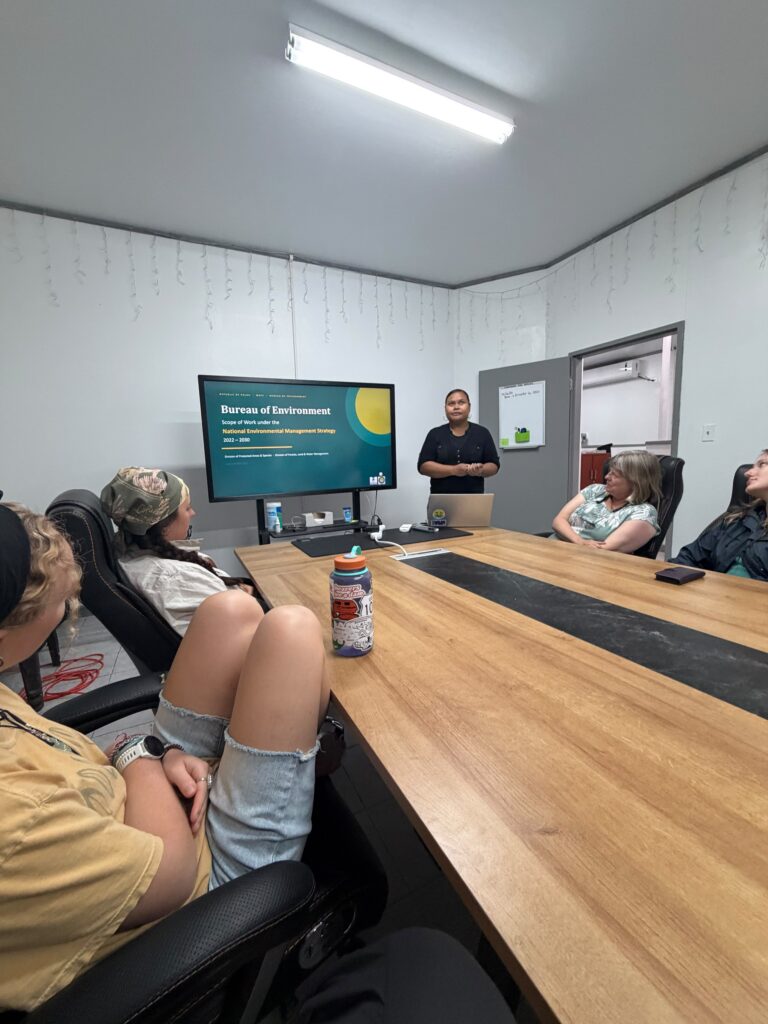
The first thing on our agenda was the Bureau of Environment to see Ilima, who we had already met back at our time at the Ebill Society. Ilima is the head of the Bureau, and was kind enough to give us a presentation about who they are, what they do, future goals, and past achievements already made! Their work has 8 different programs which cover everything from resource management to endangered species. She informed us that even though they oversee and manage so many things, they only have 12 people currently working. Most of their work, however, can be separated into 2 different sections: Division of Protected Areas and Species (DPAS), and Division of Forest, Land and Water Management (DFLW). She also told us about some of their key commitments and goals for the coming years. One of those is expanding Protected Areas Network (PAN) to protect 30% of land and sea by 2030. These areas are very important for Palau, so expanding them would help the island thrive even more.
Another thing she mentioned that really stuck out was Palau’s energy. She said that currently the island runs on diesel to power their electricity, which was really surprising. When we asked about renewable energy, she explained how hard it would be because their only option is solar. If a solar panel breaks, there’s nowhere to dispose of it and no one to fix it on the island. This make it hard for them to switch to renewable energy, but even then she did say that they are still trying. Talking to Ilima gave us all a deeper look into the politics of facing climate change and protecting the island, and how much deeper it goes than just small conservation efforts that we got to see at Ebiil. Thank you Ilima for all the work you do fighting for your country and for sharing it with us!
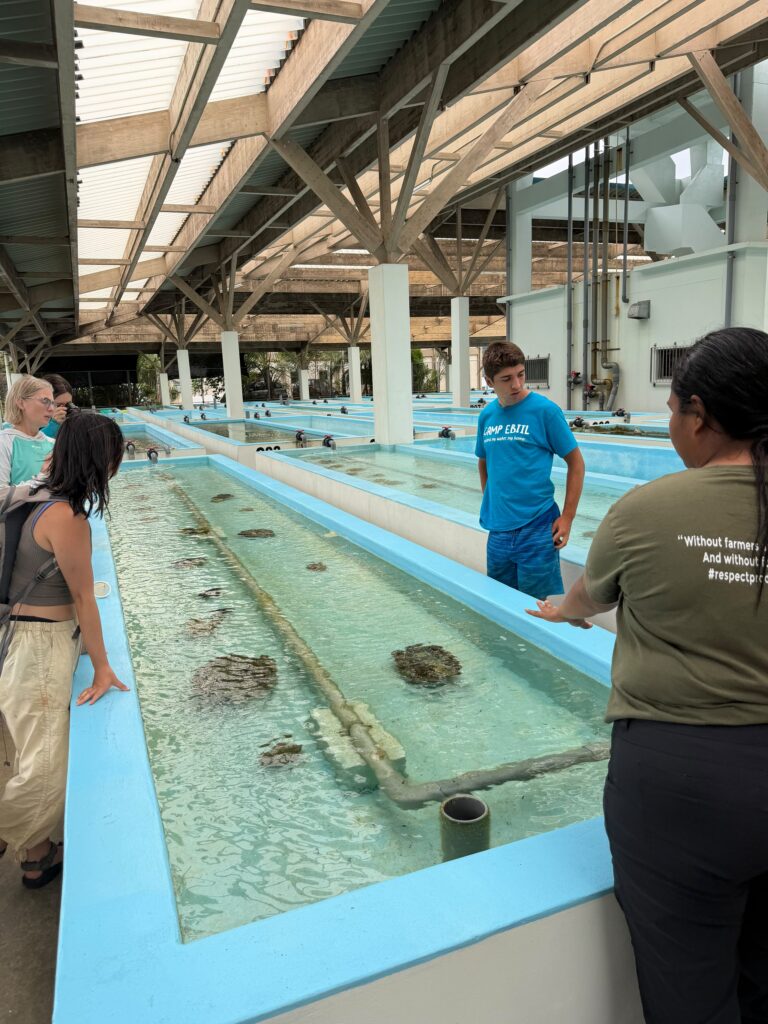
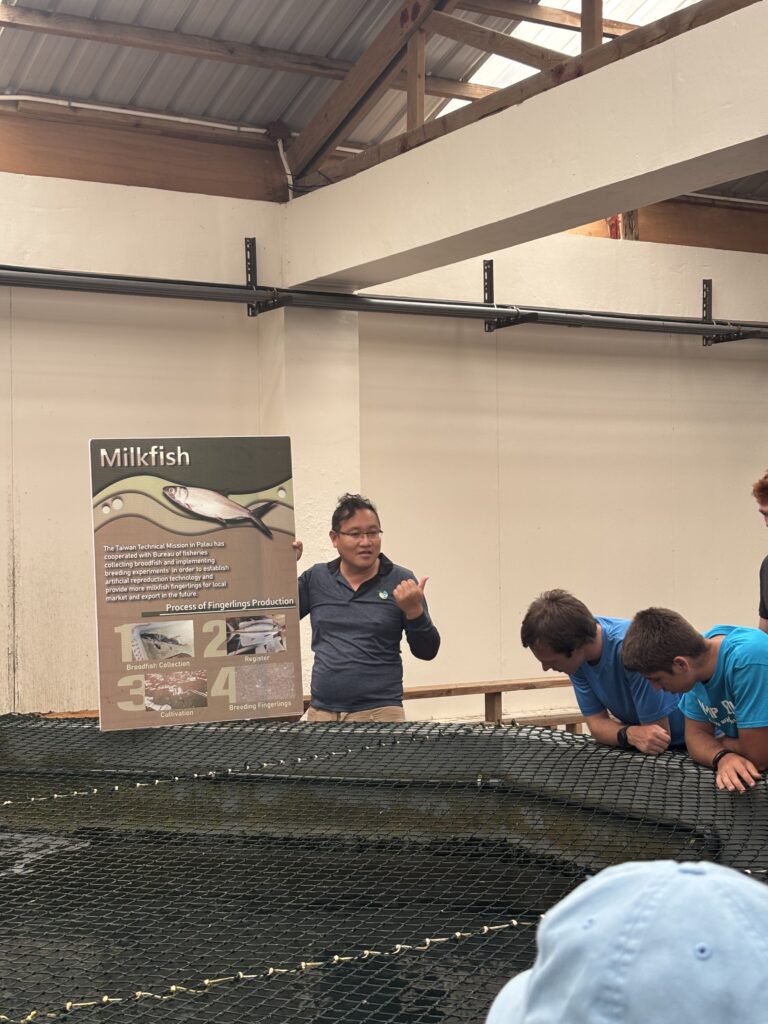
After our time at the Bureau of Environment, we headed over to a river with waterfalls called Meskelet, lead by a member of the Forestry Department. After a quick swim at the falls, we visited the Palau National Aquaculture Center to learn about their fisheries processes. During a tour of the center, they walked us through the breeding processes of giant clams, tiger prawns, sea cucumbers, and milkfish. The staff showed us their 8 different species of clams, which they raise, spawn, and distribute to clam farms. Some clams are exported, but only to aquariums.
Along with the amazing good happening in conservation, we also got a view into some of the issues the industry is facing. Poaching is a known problem within the fisheries community, but the ways of handling it are controversial. While at the center, we saw an Indonesian fishing boat docked. Many boats fishing in protected areas are run by low income and marginalized workers. When they are caught, many are abandoned by their companies. With no company to claim the boat and no documentation, the workers are often kept at port, unable to enter the country. Oftentimes their families don’t know if they are still alive. The process to get them home can take years. You can learn more here: https://www.ap.org/news-highlights/uncategorized/2015/ap-investigation-slaves-may-have-caught-the-fish-you-bought/
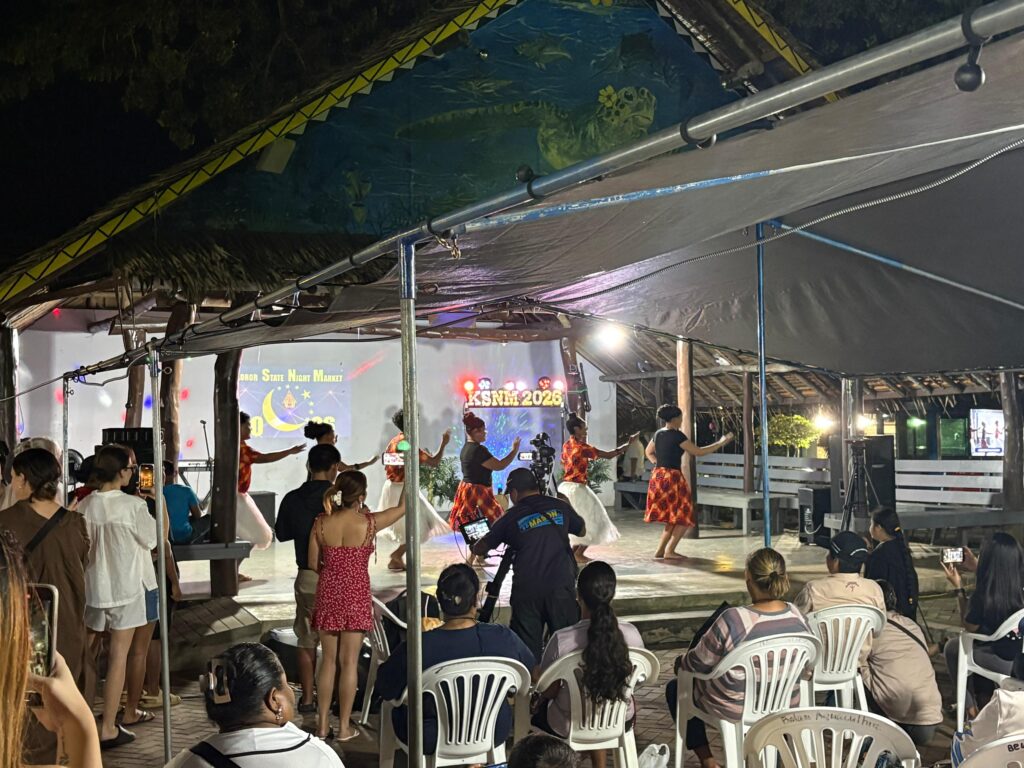
We returned to the hotel for a group reflection before going out to explore Koror, and spent the night immersing ourselves in the food and culture of the community at the Koror State Night Market.
This blog was written by Taylor and Savannah.