
Today, we thoroughly observed fishes, from seeing them in the reef, to catching them, to cleaning and gutting, and finally eating them.
Snorkling in the Ebiil Channel
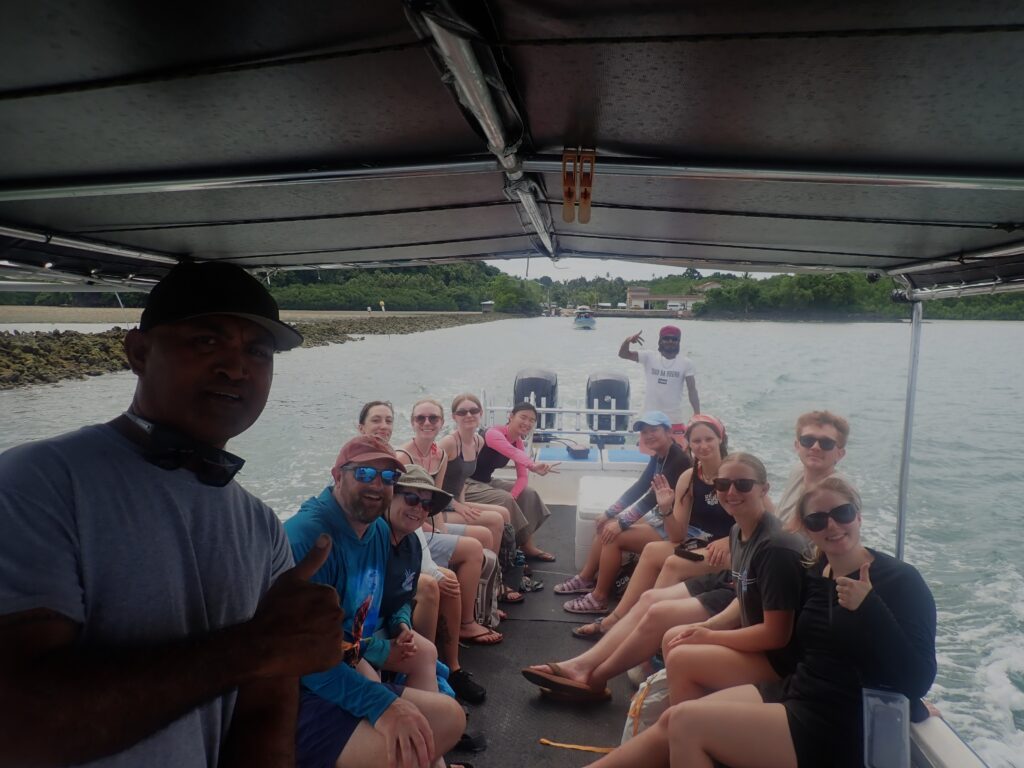
We started off the day by walking to the pier and splitting up into two boats. We rode across the ocean into the Ebiil Channel, which is a no-take, no-touch area; meaning that no one is allowed to fish or take organisms from the protected area. This was originally to protect grouper spawning but has also helped many other species to thrive.
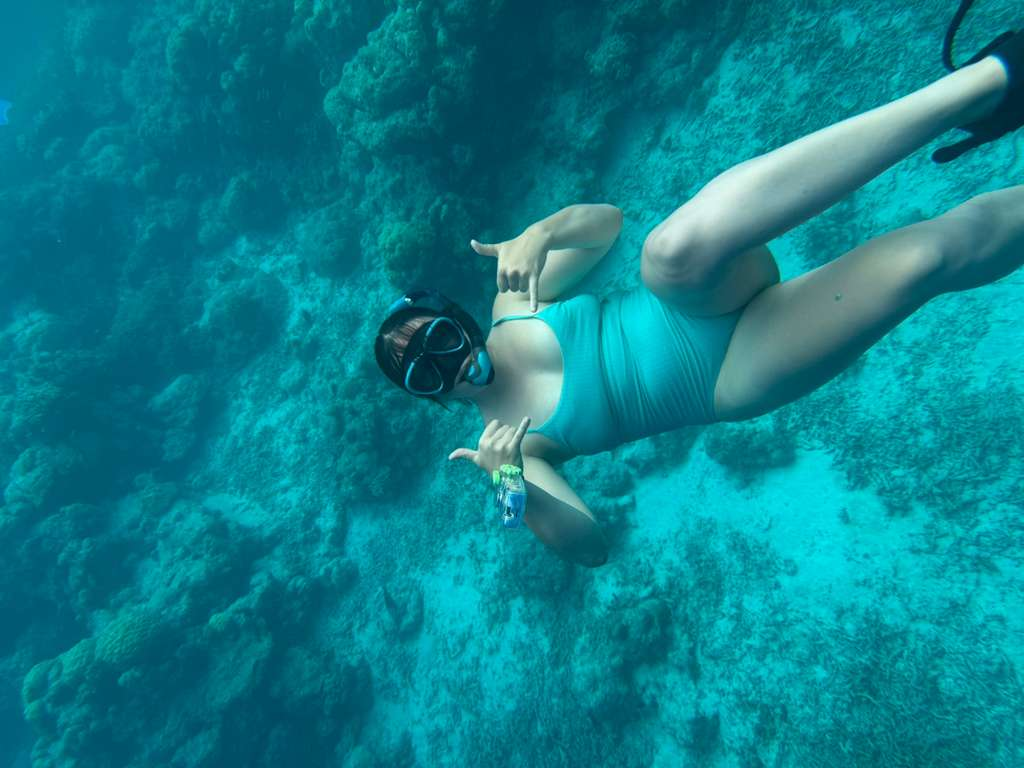
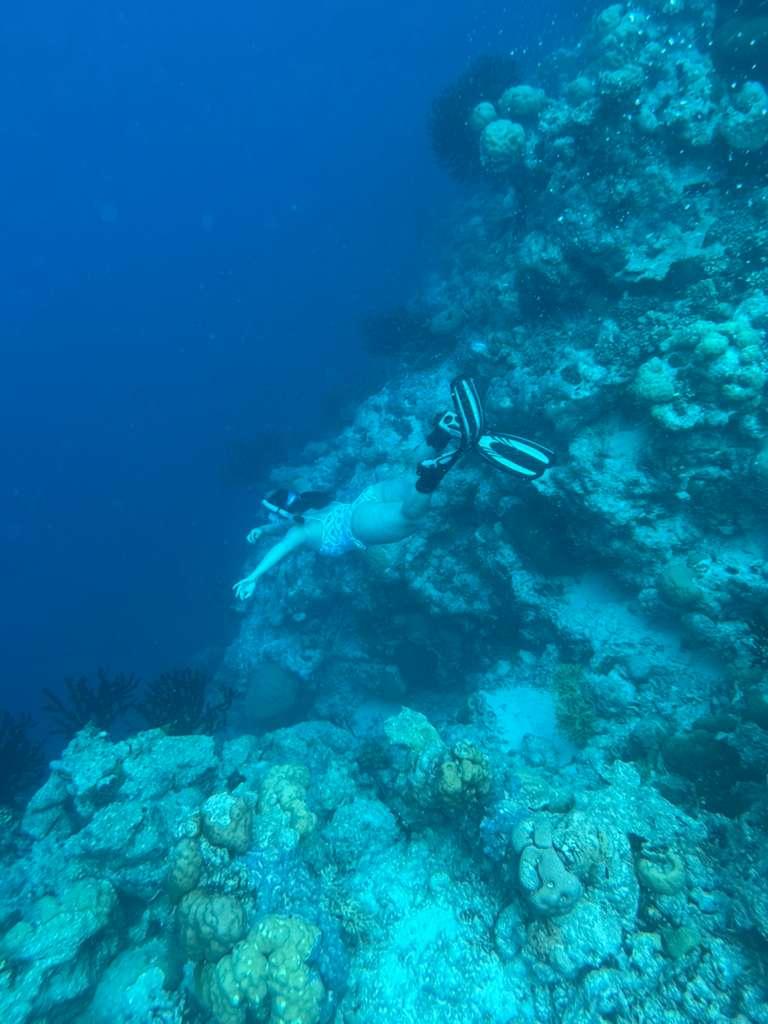
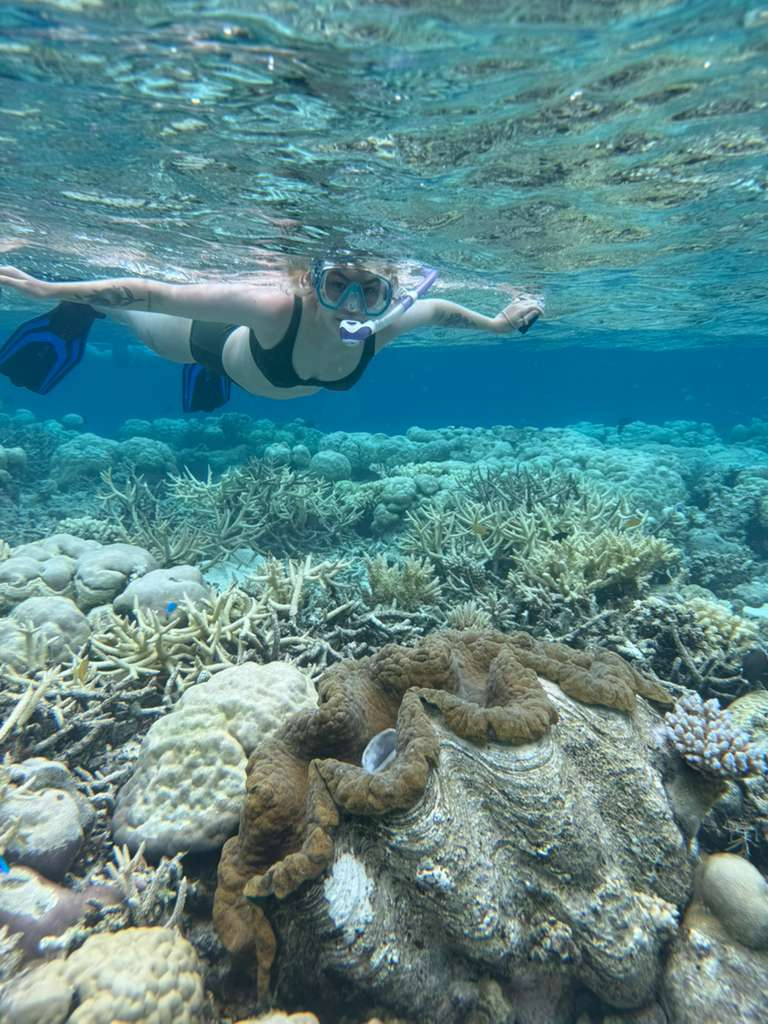
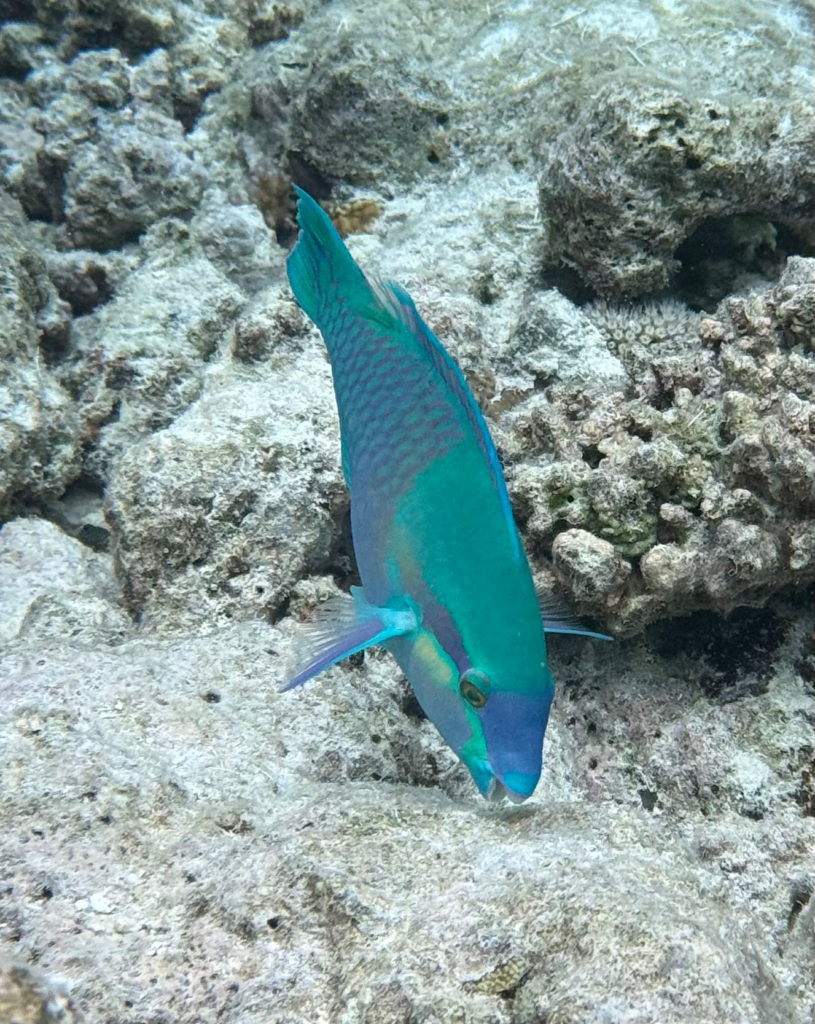
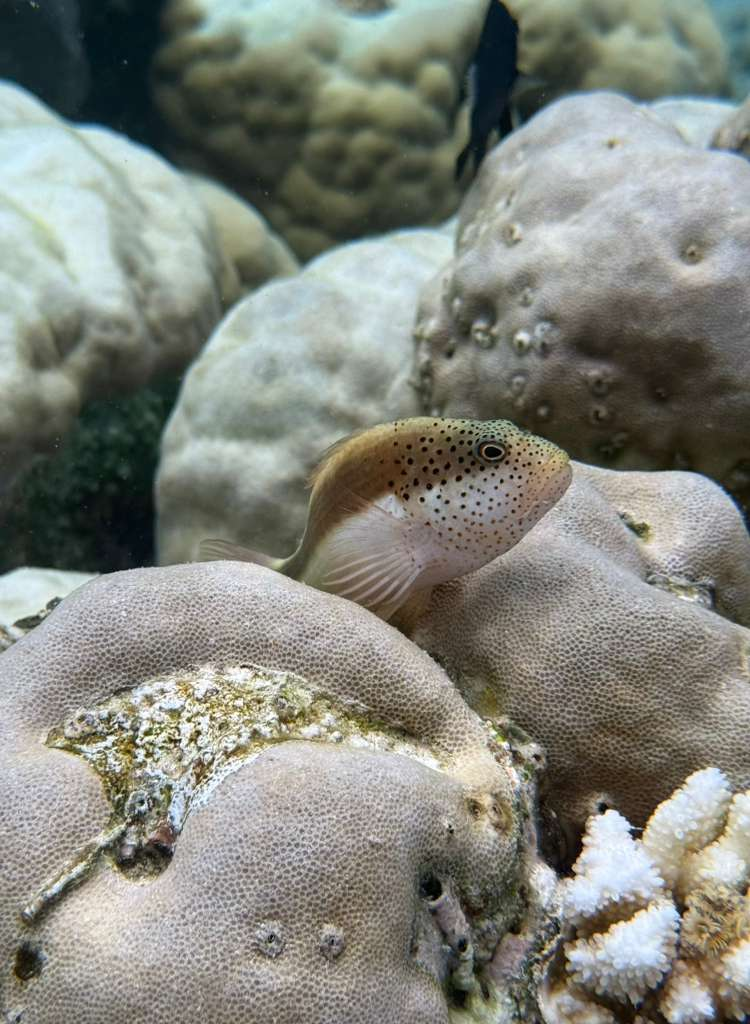
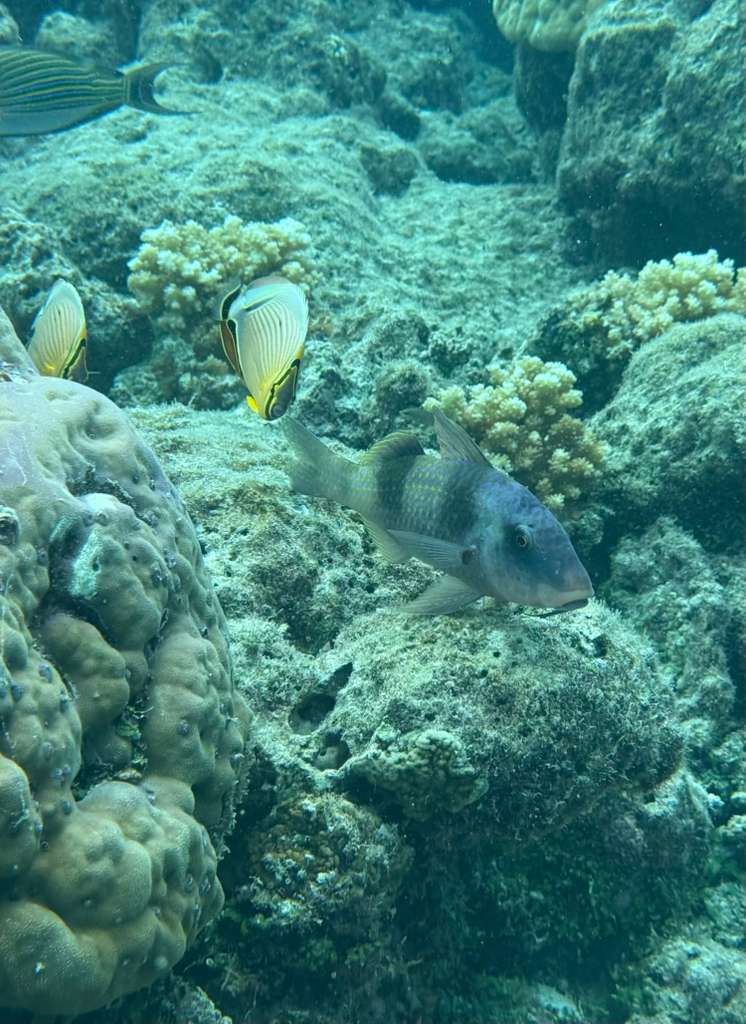
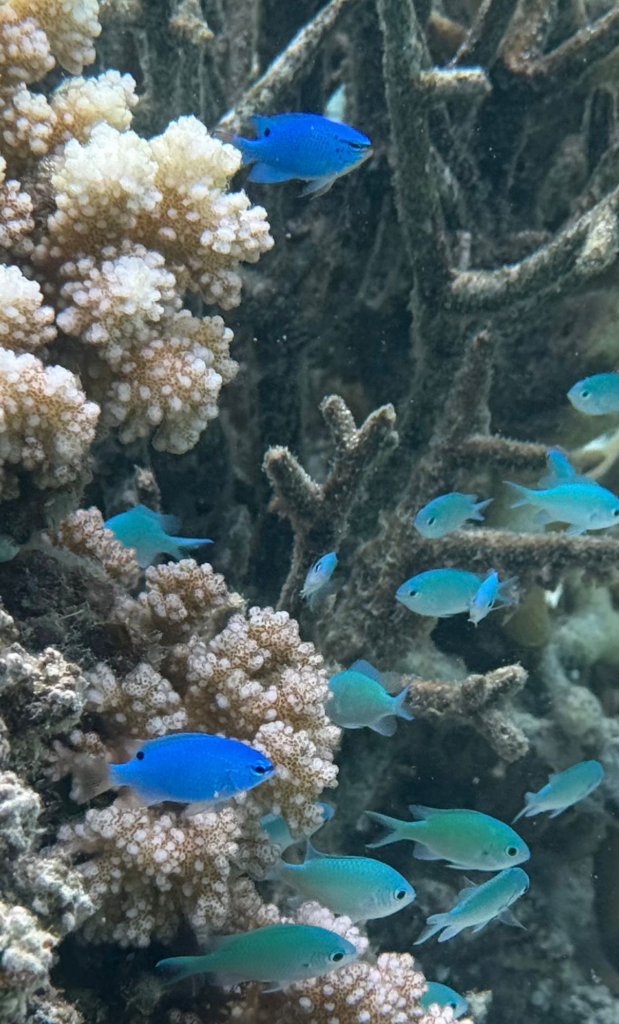
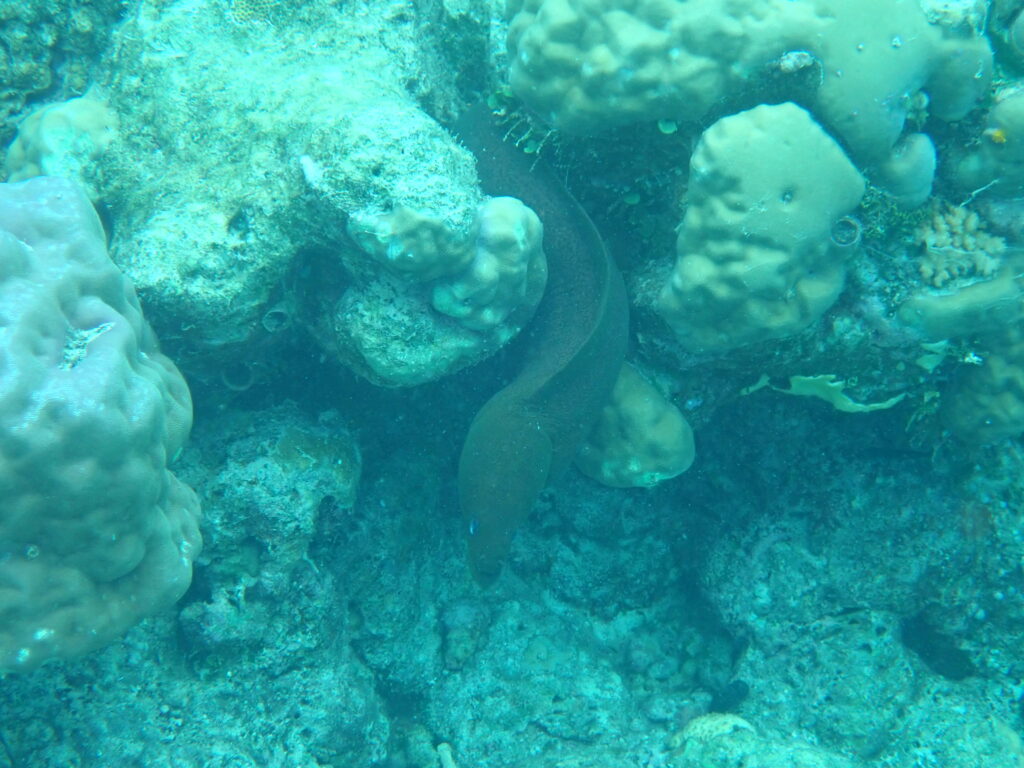
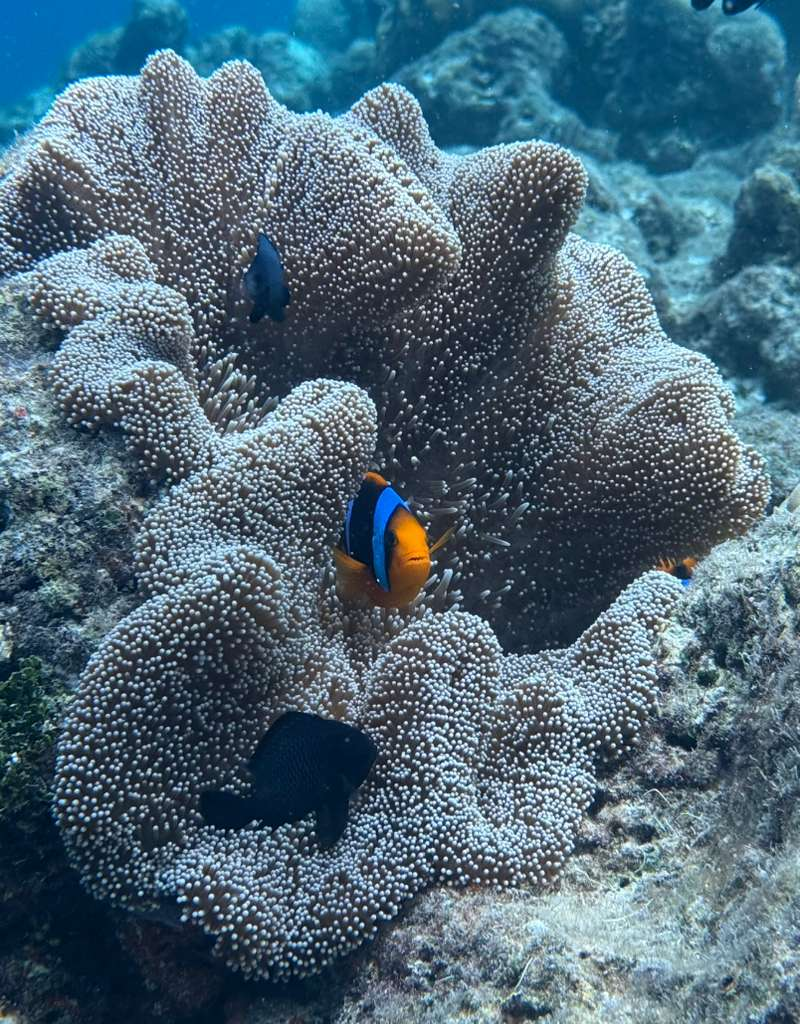
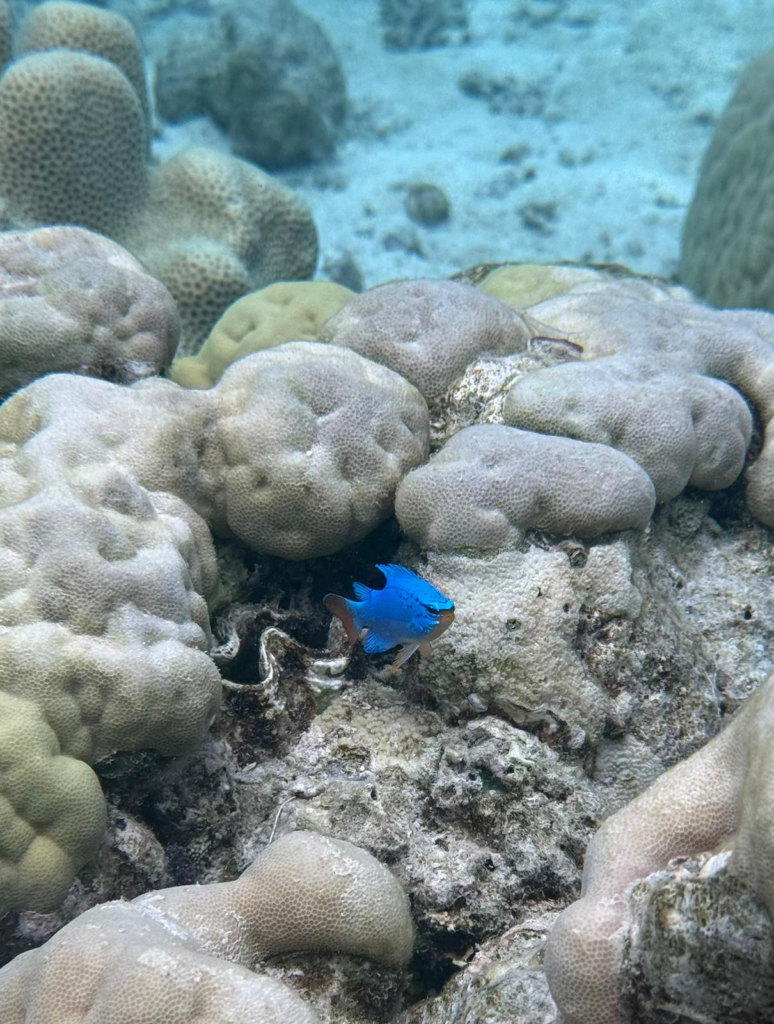
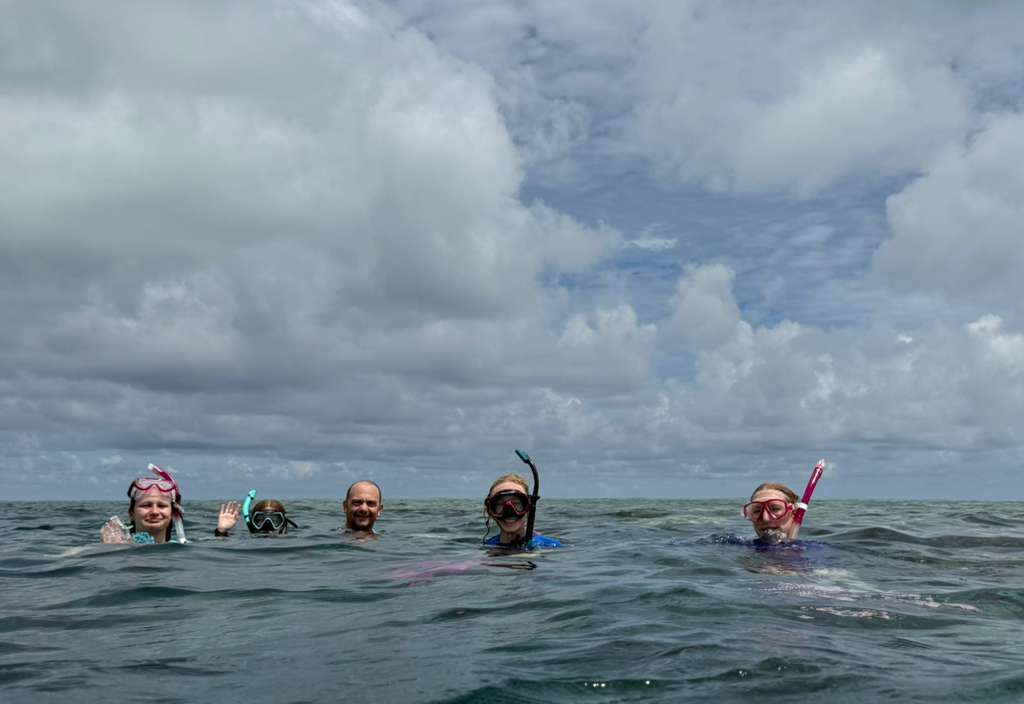
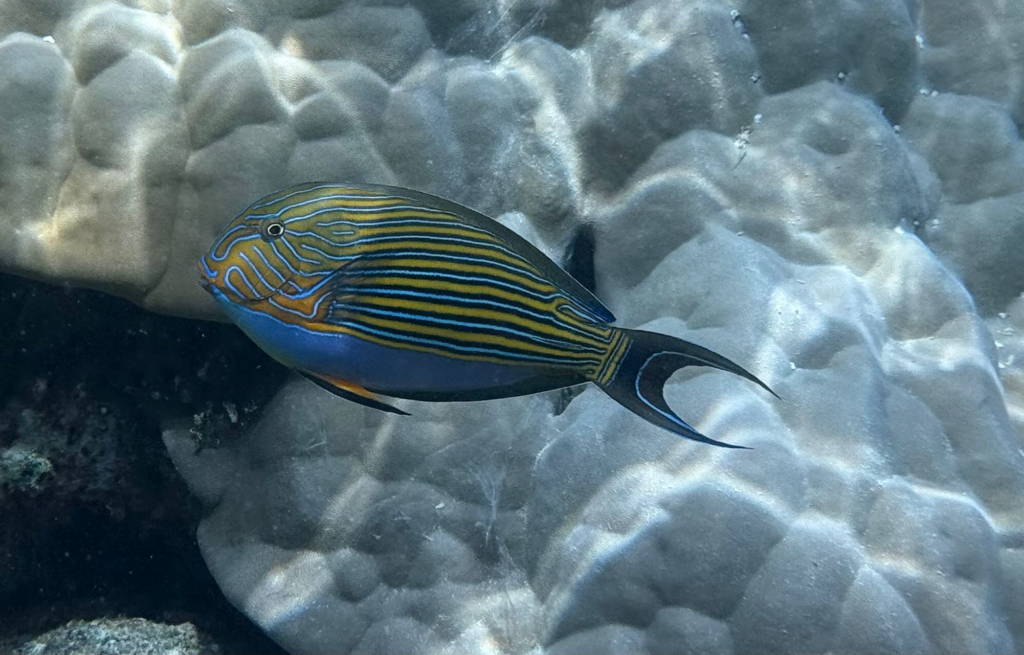
The group then had the amazing opportunity to snorkel in the Ebiil Channel and we saw so many beautiful sea creatures! This channel has unique geography with shallow corral reefs, cliffs, and the deep channel. This is because it is a channel that leads from the open ocean back to the shallow lagoon.
Lunch & Megapodes
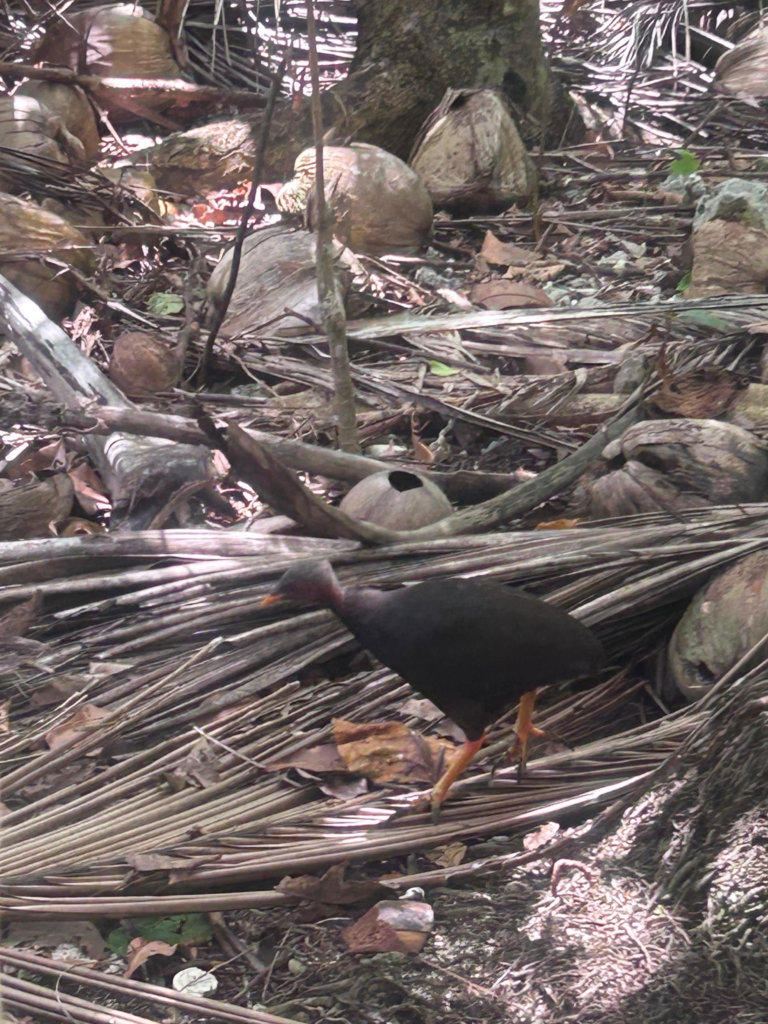
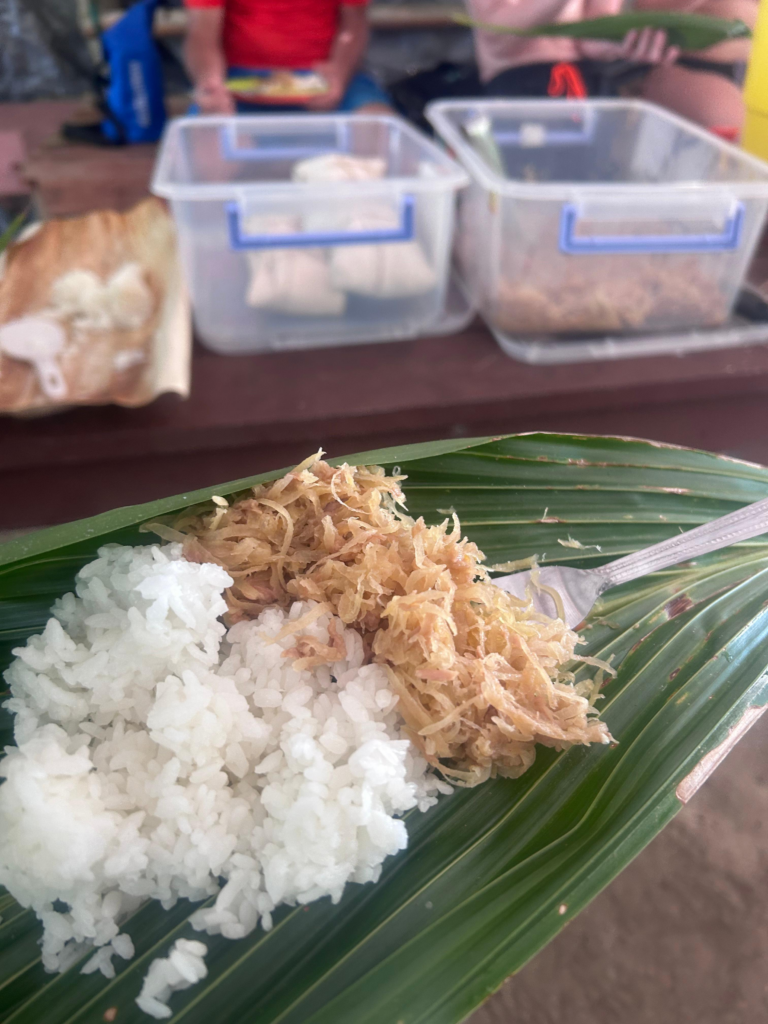
After snorkeling, we headed to the island Ngerkeklau, where we had lunch for the day. We saw the endemic (species found only in one part of the world) megapode and heard the story of the megapode and the turtle, a Palaun folklore. This is a Palaun story that explains the origin of the relationship between megapodes and turtles. A woman prayed for children and gave birth to a turtle and a megapode. The woman was unhappy since she didn’t have human children to help around the house, so the turtle and megapode left. The turtle helped the megapode cross the ocean and in turn the megapode now helps baby turtles hatch by digging up the sand and scratching leaves to protect them from predators. The megapode was previously an endangered species, but the population has since increased and they are now only considered threatened.
Fishing & Gutting
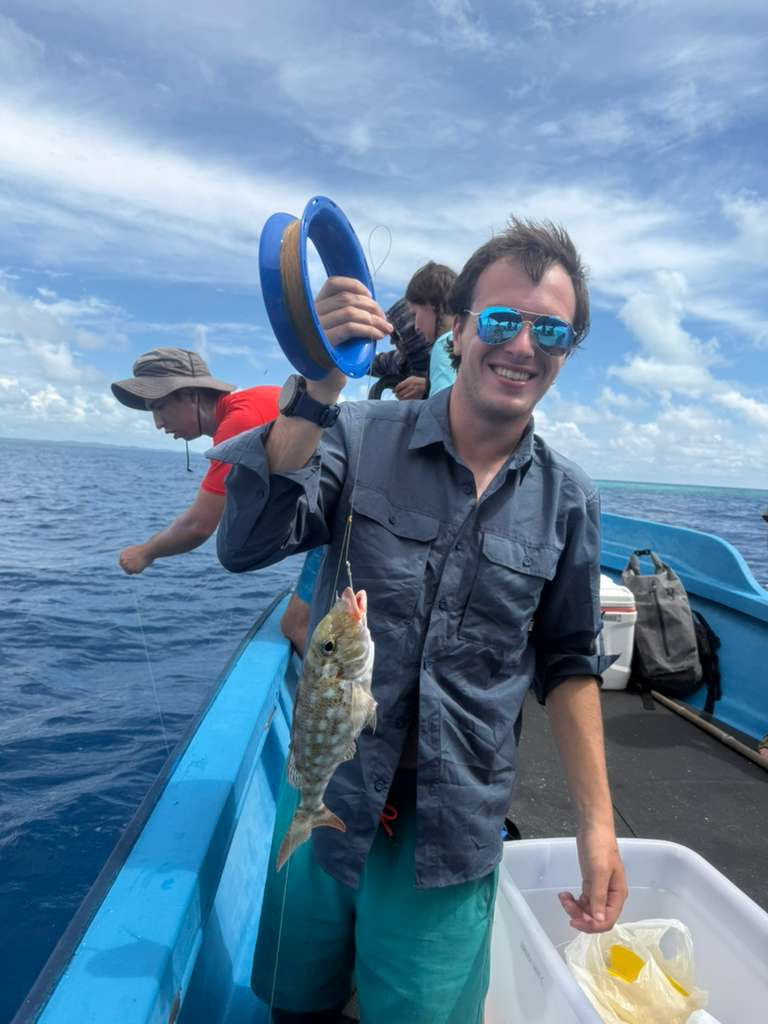
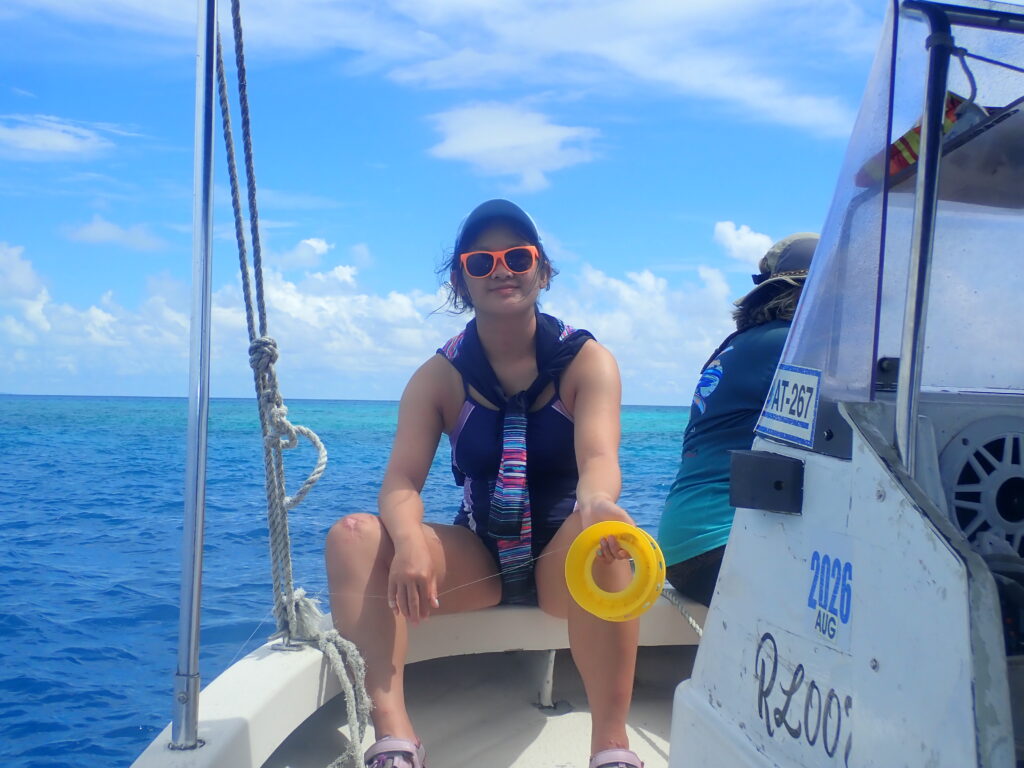
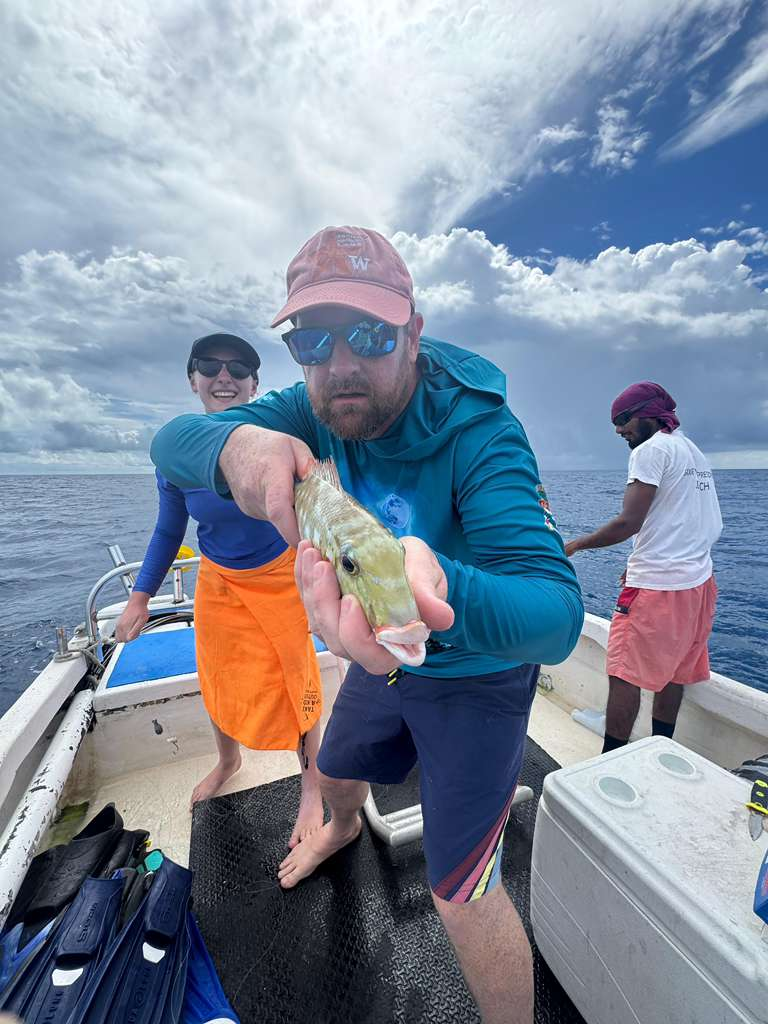
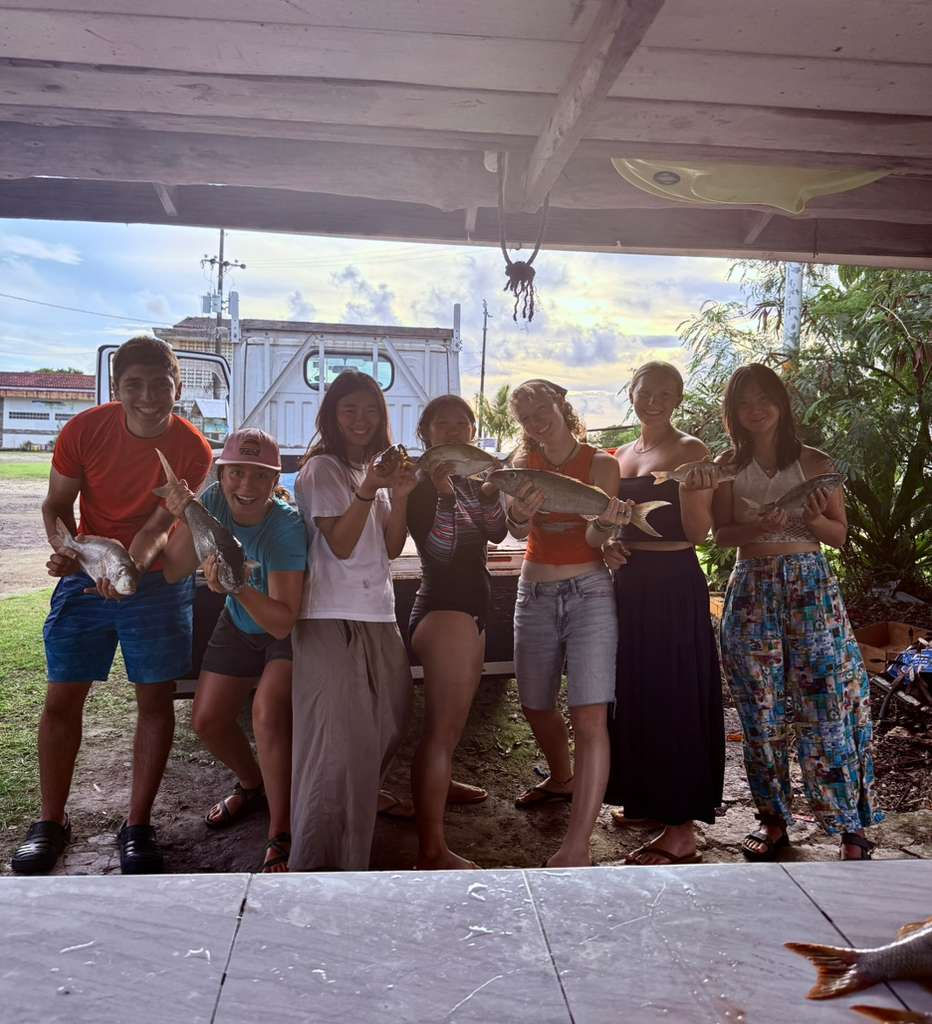
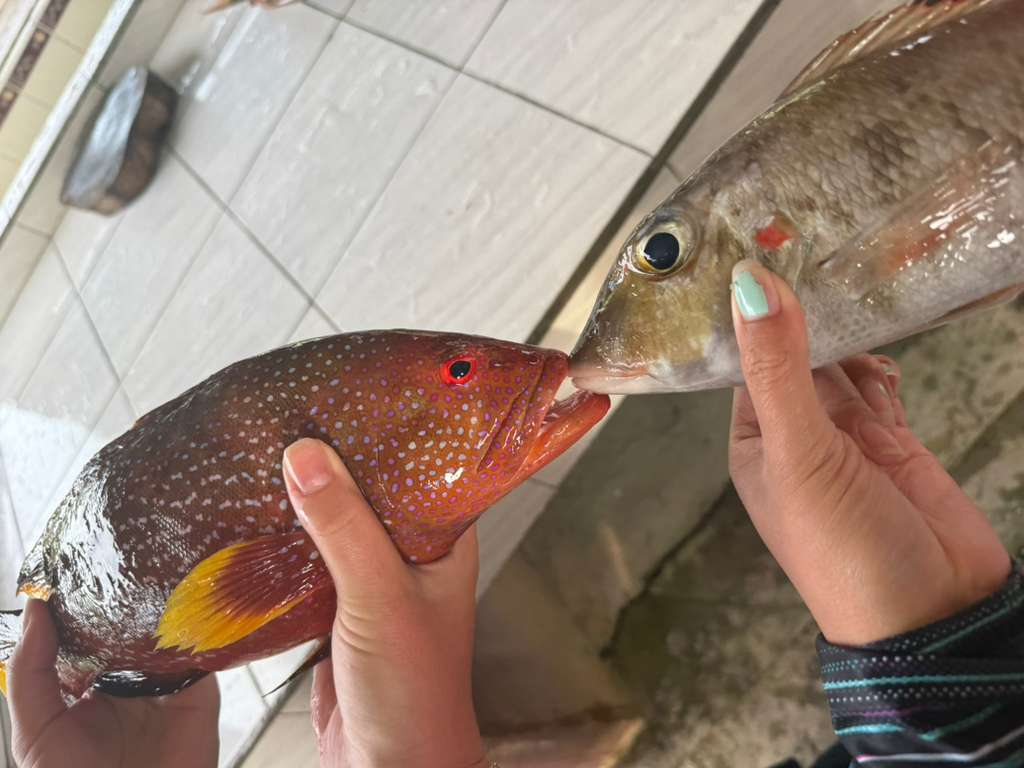
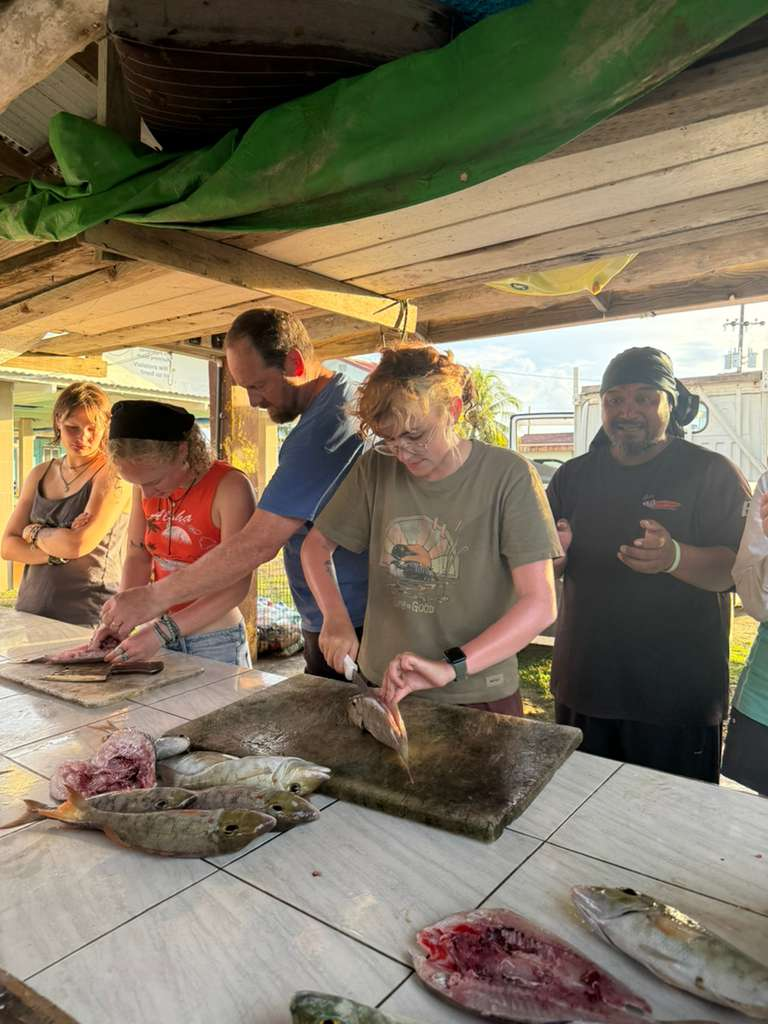
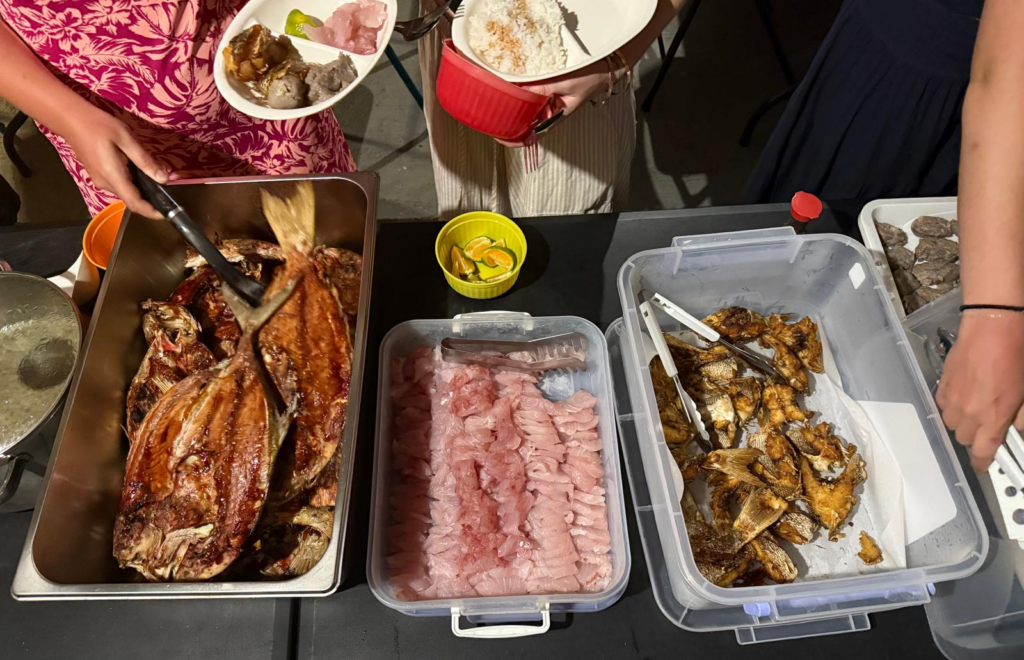
We then headed to a different, non-protected area of the ocean and started fishing for our dinner. Using a hand line, we were able to catch a variety of fishes, totaling 28 fishes that we feasted on for dinner. We put squid bait on hooks and sent the weighted line to the bottom of the ocean, and patiently waited for a bite. And bite they did! After hauling in our catch we started on gutting the fish and prepared it three different ways for dinner.
Rest assured, we were learning about food waste in America the entire time. We gained insight into how most of the fish in the U.S. is not used, whereas in other parts of the world, all of the fish is utilized (including the eyeball!). This connects to how cultural values and traditions can influence a country’s sustainability. Another example is when fishermen from the Virgin Islands were complaining about red hind fish restoration becoming too successful since the fish were growing too big to fit plates. Traditionally, they would serve the whole fish on the plate, so due to the restoration success, they were not able to continue this cultural practice. Conservation efforts should always be planned within a cultural context, and take into account as many perspectives as possible.
Super Fish Dinner
Today’s post was written by Raven and Angela <3