Gardening for the Future: Education Garden at Portland Community College Rock Creek

A conversation with the Washington County Master Gardener Association Education Garden Team

From gravel to garden—that’s the story of our Education Garden at Portland Community College Rock Creek. This 17,000-square-foot space used to be a compacted parking lot covered in gravel and riprap. Nothing but weeds could grow here. It radiated heat and offered virtually no support for plants, wildlife, or the soil organisms that make up a healthy ecosystem. But we saw an opportunity to reclaim the space and transform it into a thriving outdoor classroom that teaches sustainable gardening practices. And that’s exactly what we did.
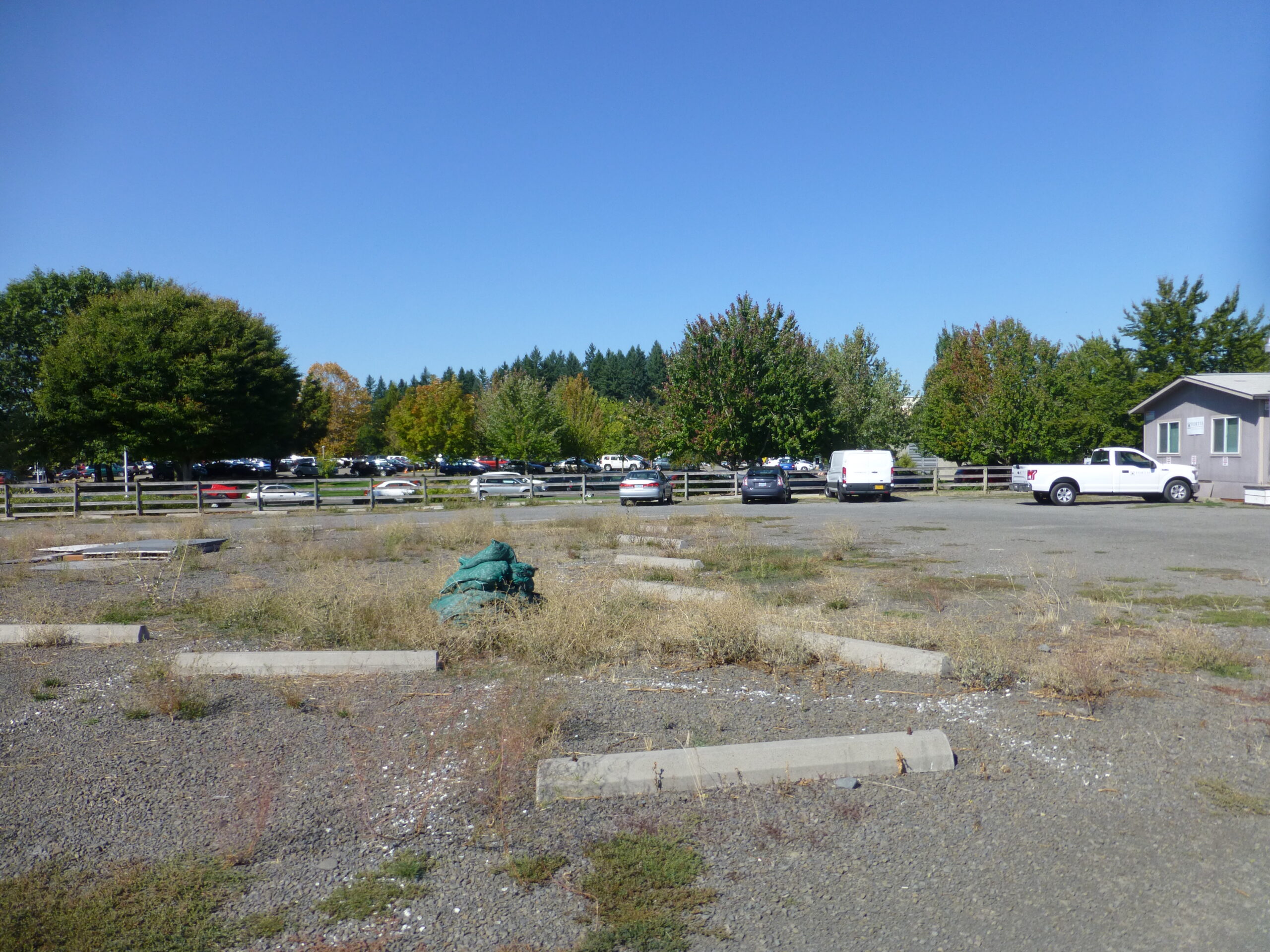
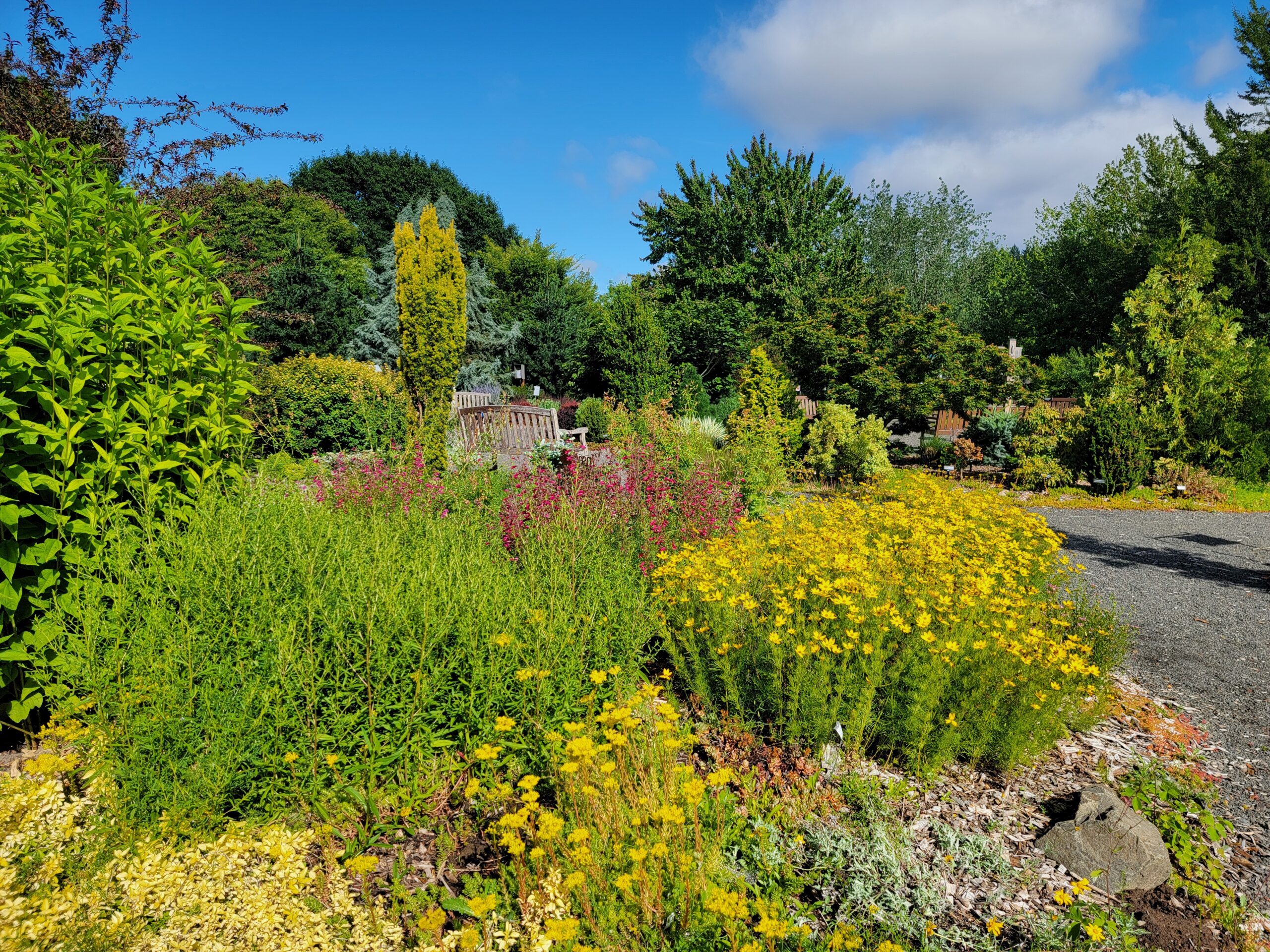
An empty gravel parking lot with overgrown weeds and scattered concrete parking stops, bordered by a wooden fence and rows of trees in the background. Several cars and trucks are parked near a small gray building on the right under a clear blue sky.Garden with a mix of colorful plants and flowers, including large clusters of yellow blooms in the foreground, surrounded by shrubs and trees with a gravel path and wooden benches in the background under a partly cloudy sky.
Then and Now. Photos courtesy of Sue Ryburn.

Designing with Resilience in Mind
From the beginning, our goal was to create a space where people could learn. We organized the garden into themed sections—what we call “Garden Classrooms”—each one focused on a specific concept. These include:

  • Waterwise Garden
  • PNW Meadowscape
  • Hellstrip beds (with native and non-native comparisons)
  • Moon Moth Garden
  • Pollinator Habitat Garden
  • Fragrance Garden
  • Community Circle with small conifers and companion plants
  • PNW Pollinator Hedgerow
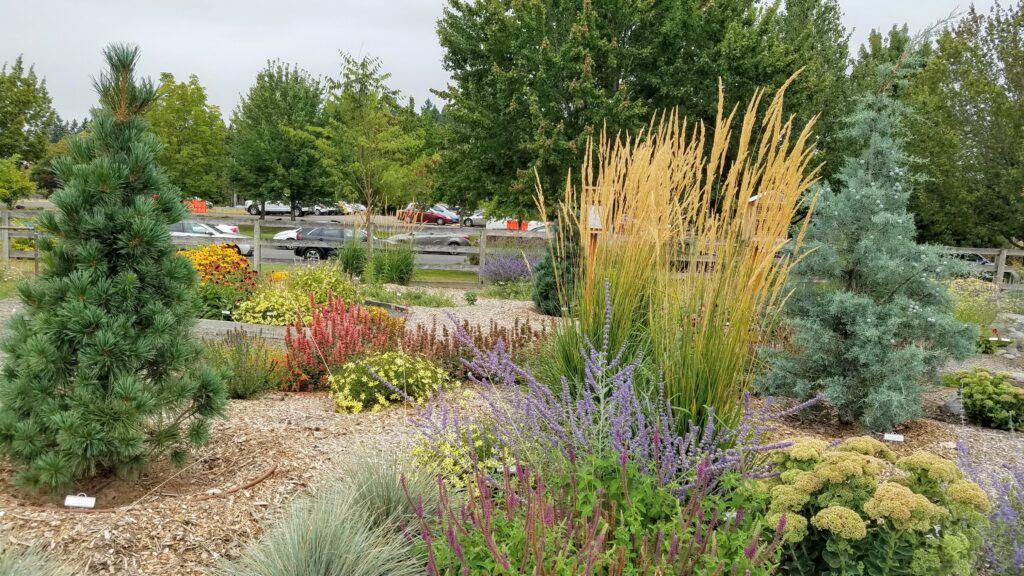
Demonstration garden with a variety of plants, including tall ornamental grasses, purple flowering perennials, evergreen shrubs, and small trees, bordered by mulch pathways with parked cars and trees visible beyond a wooden fence.
The waterwise garden. Photo courtesy of Sue Ryburn.

We also feature habitat elements like mason bee stations, ground-nesting bee zones, and signage for the DarkSky Oregon Citizen Scientist Project. Everything we’ve done is meant to demonstrate how gardens can be beautiful, functional, and climate-resilient.

Facing Climate Challenges
Because the site had been a gravel parking lot, there was no usable soil. After removing the gravel, we brought in 40 truckloads of topsoil and 150 cubic yards of compost. We tested the soil, amended it, and covered it with arborist chips after planting. We haven’t needed additional soil amendments since—just mulch and good care.
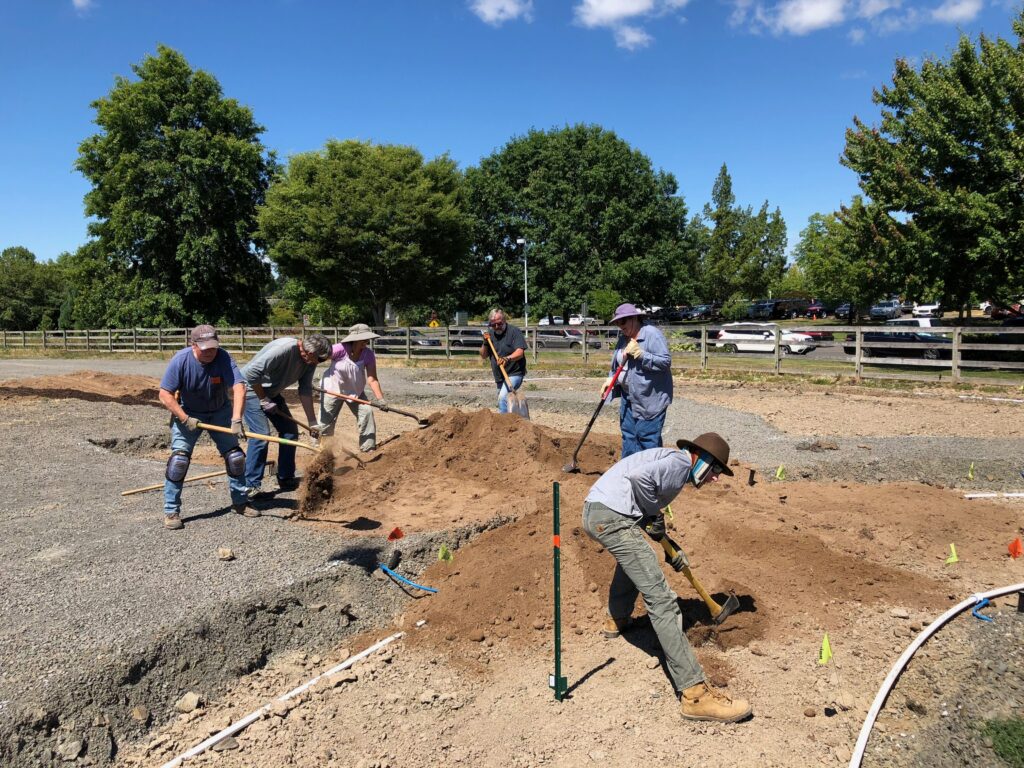
Group of people using shovels and rakes to move and level soil in an outdoor area, with trees and parked cars visible behind a wooden fence under a sunny sky.
In 2018, the team hard at work installing grading and incorporating compost and amendments. Photo courtesy of Sue Ryburn.

Water was another major concern. With little initial shade and increasing summer heat, we installed drip and overhead irrigation and grouped plants by water needs. We monitor the health of our plants regularly and adjust irrigation based on what we observe, including probing soil for infiltration.

Drainage remains an issue. The compacted subgrade is still there, so we avoid planting large trees that require deep soil. When we planted trees early on, we used an auger to break through the hard layer and give roots a path through the compacted subgrade.

The site also had very little wind protection. Over time, we’ve used shrubs and trees to create a buffer and soften the wind, especially along the garden’s edge, during summer drying events but also in winter storm events by shielding plants from freezing high winds from the east.
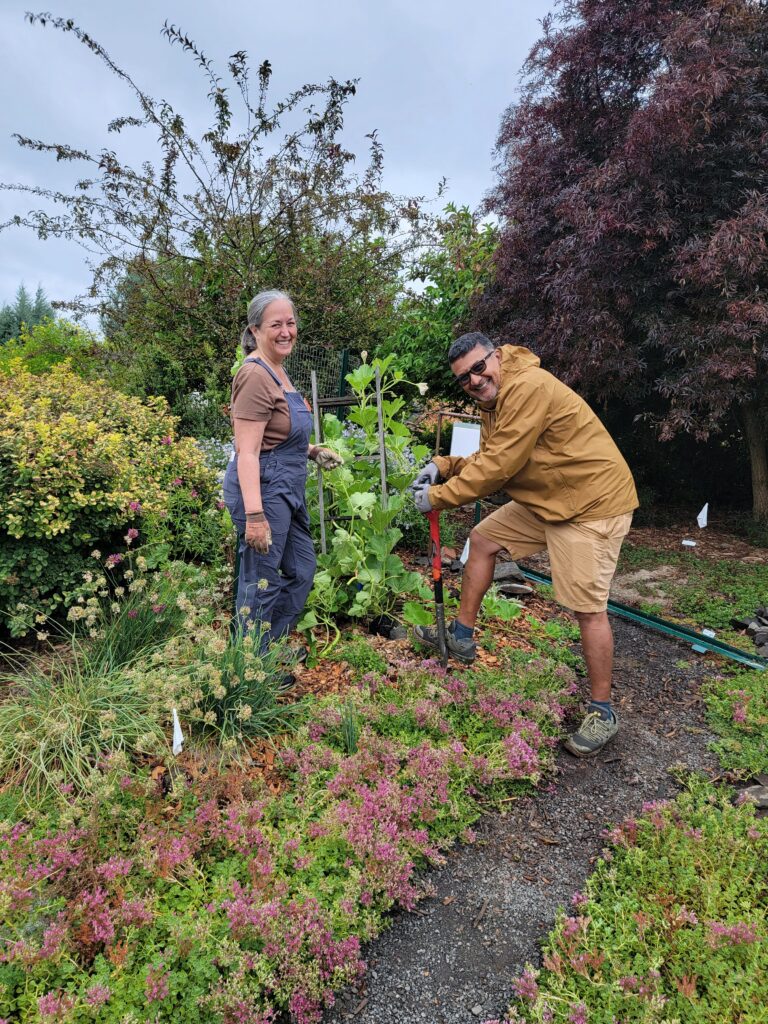
wo people working in a garden, one holding a shovel and the other standing nearby smiling, surrounded by flowering plants, shrubs, and trees on a cloudy day.
Working in the Moon Moth Garden. Photo courtesy of Sue Ryburn.

Choosing the Right Plants
We’ve always prioritized plants that are low-water, low-maintenance, affordable, and available to home gardeners. The garden is a balance of perennials and evergreens to provide both structure and year-round habitat for insects and other wildlife.

Our goal is to build a resilient, adaptable ecosystem. When plants die, we try to determine why the plant failed before replacing it, with the goal of creating a garden that, over time, is increasingly composed of plants adapted to the specific conditions of the site.

Native plants were an integral theme of the original garden design, a theme we have continued to expand on with the installation of a PNW Pollinator Hedgerow in 2020 (and its extension in 2022) and a PNW Meadowscape in 2023. In 2024, we converted a section of our Hellstrip into a native-only test zone.
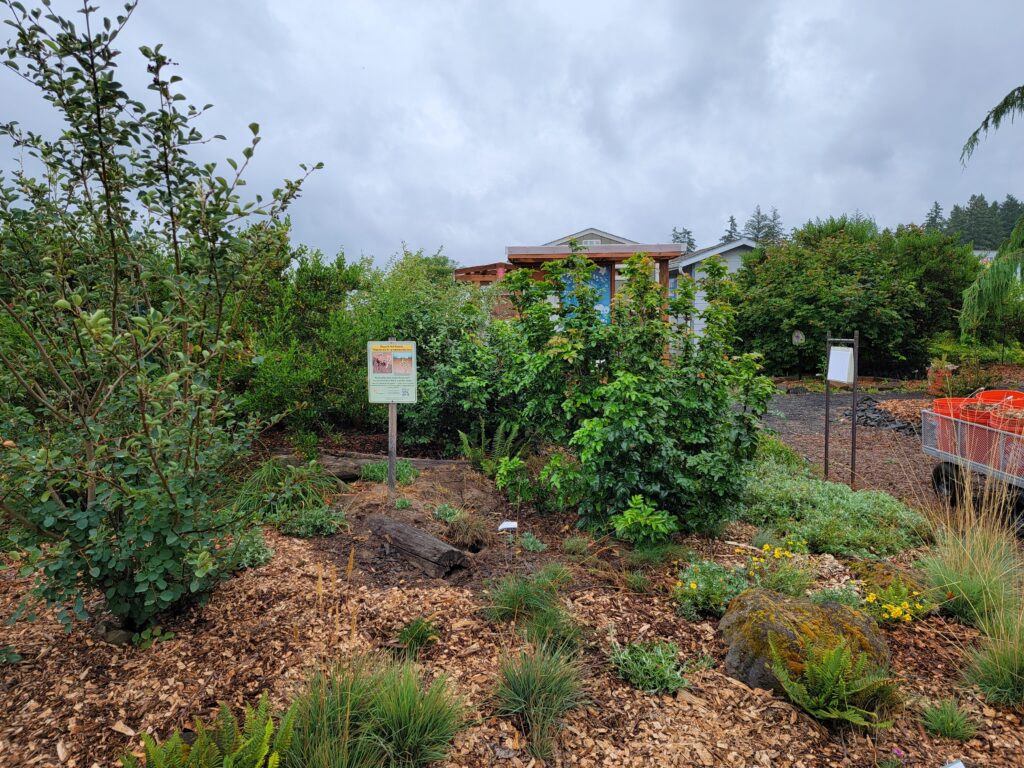
Garden area with shrubs, small trees, and mulched ground, featuring a wooden sign about pollinator habitat in the center, with buildings and a cart of orange bins visible in the background on a cloudy day.
Pollinator Hedgerow. Photo courtesy of Sue Ryburn.

We’ve learned from experience that some plants—like goldenrod, woodland strawberry, and Douglas aster—can be too aggressive in our managed garden. They’re great in the wild, but here we aim for diversity without constant intervention.
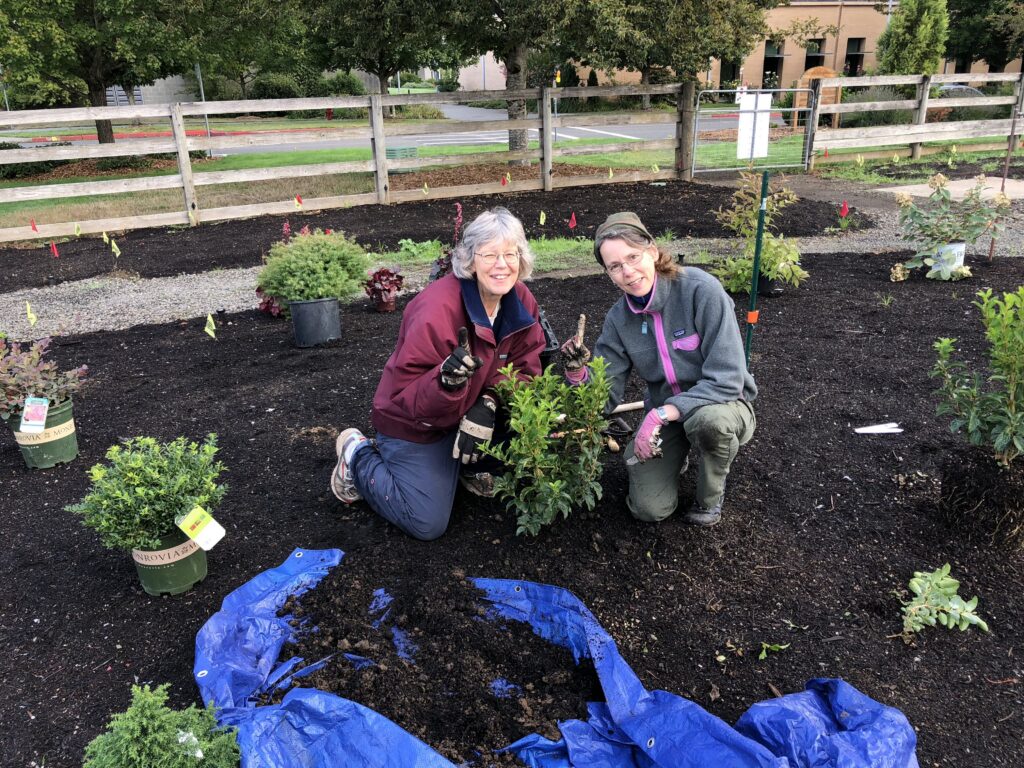
Two people kneeling in a freshly mulched garden bed, planting a shrub with potted plants nearby, a blue tarp spread on the ground, and a wooden fence with an educational sign in the background.
Planting in the fall of 2018. Photo courtesy of Sue Ryburn.

Techniques That Make a Difference

  • Adjusting irrigation for maturing plants
  • Leaving leaves and small branch piles to support overwintering insects
  • Creating intentional habitat spaces, like our Moon Moth Garden
  • Avoiding all chemical inputs
  • Using arborist chips for weed suppression, moisture retention, and soil health
    We started with organic compost to support soil life and have since let the garden build healthy soil naturally.

What’s Next?

We’re continuing to adapt. We plan to convert more overhead irrigation to drip, fine-tune watering in key areas, and explore new plant choices—especially native species—when replacements are needed. We’re also evaluating plants that have outgrown their space to decide whether to relocate or remove them.
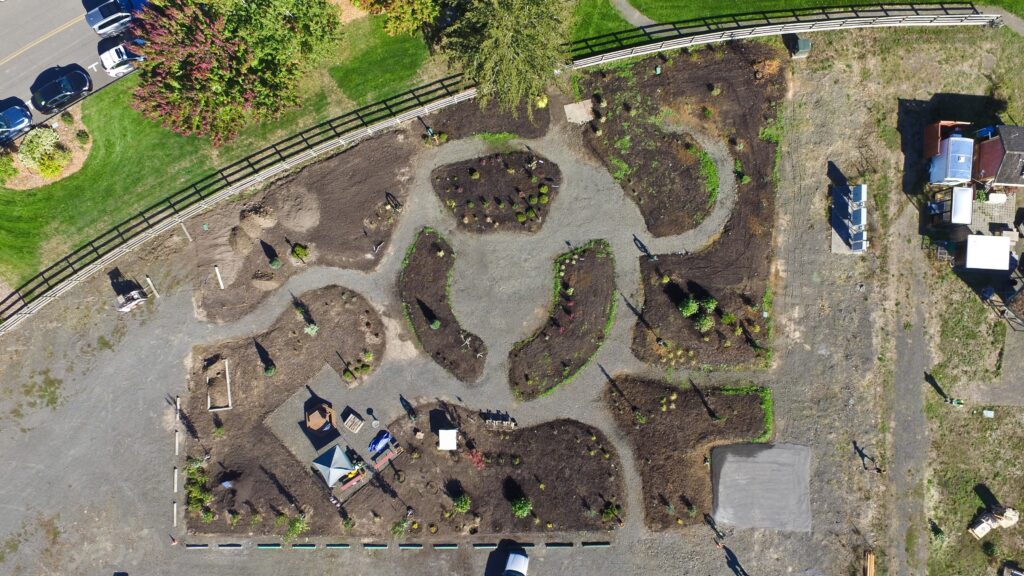
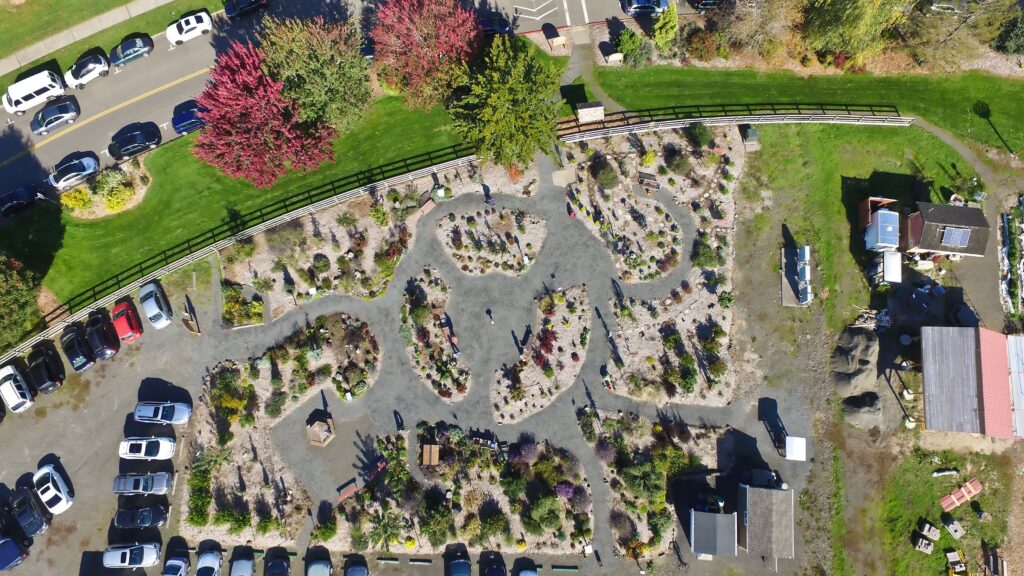
  • Aerial view of a garden under development with mulched planting beds arranged in curved shapes, gravel pathways between them, and small plants scattered throughout, bordered by a wooden fence with parked cars and grassy areas nearby.
  • Aerial view of a demonstration garden with newly mulched planting beds in curved patterns, small plants spaced throughout, and gravel pathways dividing the sections, bordered by a wooden fence and parking area.
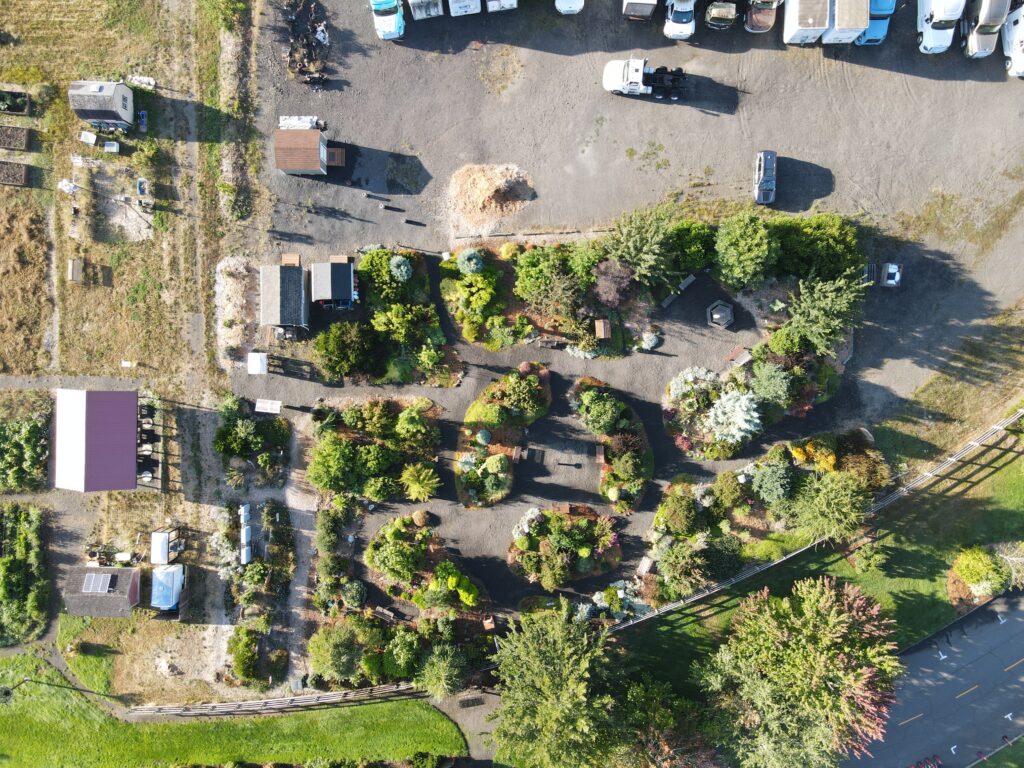
  • Aerial view of a mature demonstration garden with dense plantings, winding gravel paths, and seating areas, surrounded by sheds, small structures, and a gravel lot with parked vehicles.

Sharing What We Learn

Our garden is a living classroom. We host public classes as part of our In the Garden Series, offer hands-on Master Gardener workshops, and partner with PCC’s Landscape Technology program for curriculum-based learning. Educational signage helps visitors learn even when we’re not there.

We’re excited to integrate Garden Future activities into our outreach this year. We plan to display laminated Garden Future posters in the garden and hand out quarter-sheet cards with links to the website and resources. It’s a natural fit—we’re already focused on sustainability, and Garden Future gives us another way to talk about climate resilience.
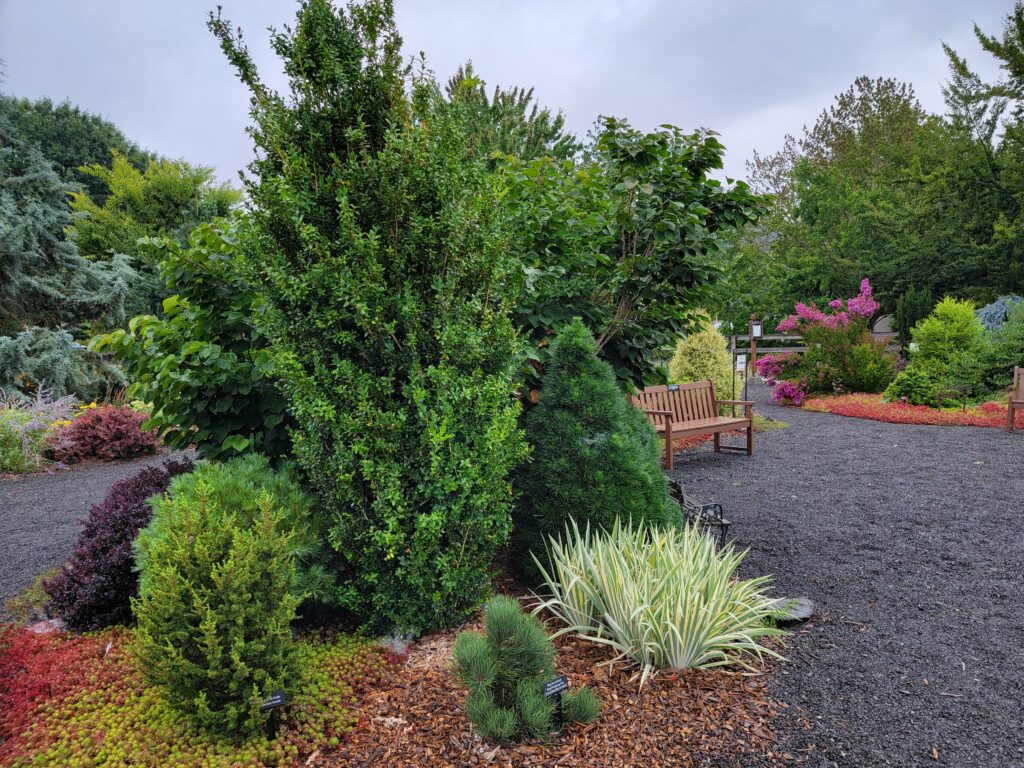
Garden pathway lined with gravel and bordered by a variety of shrubs, conifers, and colorful groundcover, with wooden benches placed among the plantings and bright flowering bushes visible in the background.
Community Circle with small conifers and companion plants. Photo courtesy of Sue Ryburn.

Our Advice to Other Gardeners

Take time to plan. Know your goals. Observe your garden’s microclimates and be realistic about your time and energy. When in doubt, rely on trusted sources—your local Master Gardener Program, the Garden Future website, the Backyard Habitat Certification Program, and the Xerces Society are all great places to start.

And always remember right plant, right place, right care.

Take a video tour of the garden at our YouTube channel.

Explore one of Oregon’s 50+ Master Gardener Demonstration Gardens—realistic, regionally adapted spaces that showcase what thrives in your local conditions. Find a demonstration garden near you.

This story is part of Garden Future, an OSU Extension Master Gardener outreach project dedicated to conversations and action for gardening in a changing climate.

What are you seeing in your garden? What changes are you making? We invite you to join the Garden Future conversation by answering three quick questions. At the end, you’ll have the option to sign up for our Garden Future newsletter and stay connected with stories, resources, and tools to support climate-resilient gardening in your community.
Gardening for the future: waterwise beauty in Central Point

In Southern Oregon’s scorching summers, it can be hard to imagine a vibrant garden that doesn’t rely on constant irrigation. But at the Jackson County Master Gardener Waterwise Garden, colorful blooms, pollinator habitat, and year-round interest prove that climate-resilient gardening can also be beautiful. Designed to showcase low-water native and ornamental plants, this demonstration garden at the OSU Southern Oregon Research and Extension Center is inspiring visitors to rethink what’s possible in a drought-prone climate. OSU Extension Master Gardener volunteer Pete Livers and Master Gardener Coordinator Grace Florjancic share what they’re learning—and teaching—about gardening in a hotter, drier world.

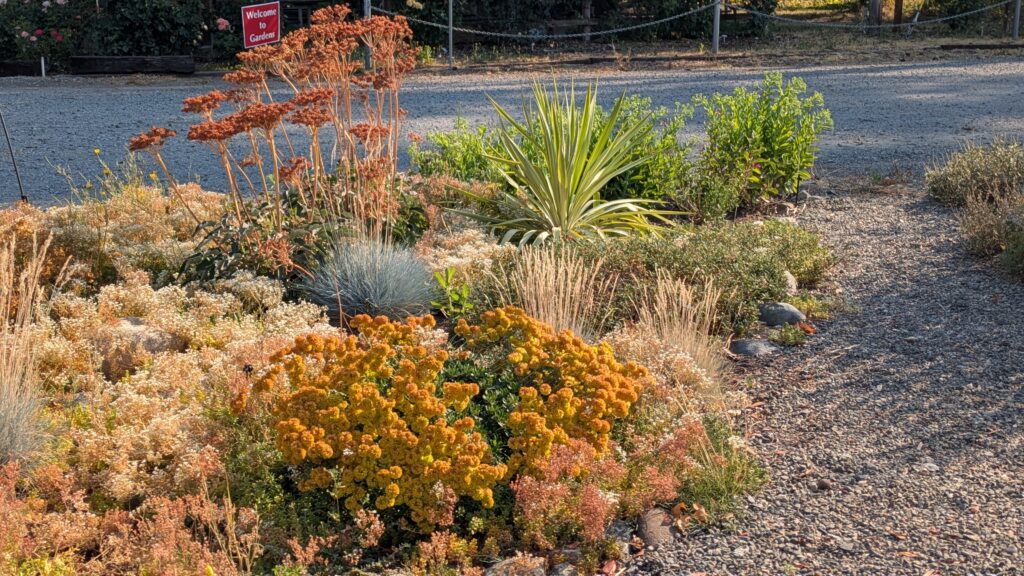
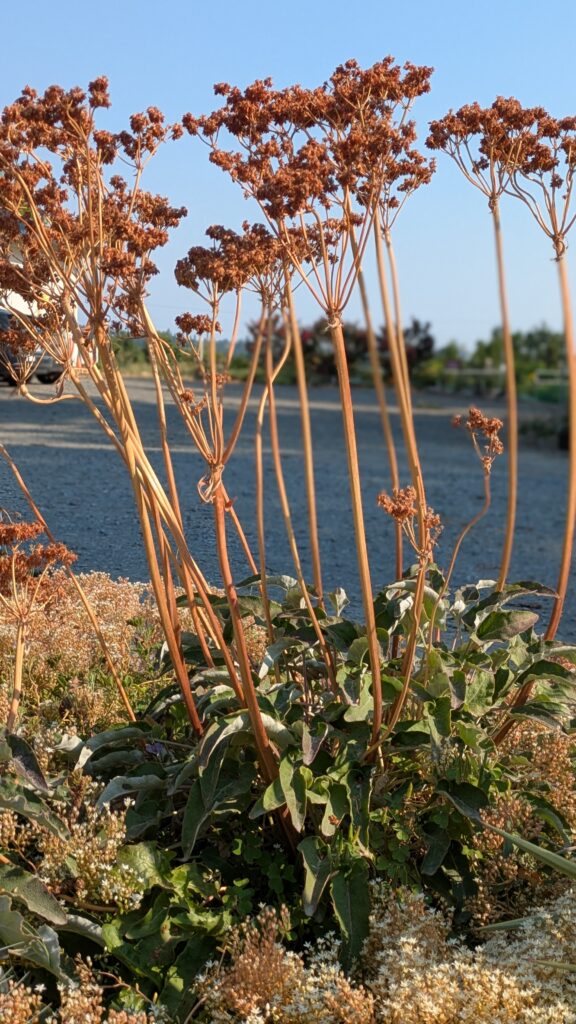
landscape of mixed plants of various textures, with rocks and gravel path

Waterwise Garden in Central Point

A conversation with OSU Extension Master Gardener volunteer Pete Livers and Master Gardener Coordinator Grace Florjancic

What was your garden like prior to any changes you’ve made for climate resiliency?
The Jackson County Master Gardener waterwise garden set out to show how you can still have plenty of colorful blossoms and year-round interest while saving on water usage. This garden was designed with a mix of low water usage native and ornamental plants. There are many pollinators that visit this garden throughout the year like bumblebees, honeybees, and butterflies.

What issues did you find you were facing regarding climate change impacts in your garden?
Frequent irrigation in our intense summer heat has become an issue for many gardeners. Using drip irrigation has helped us be more efficient with water usage but low water use plants is another step towards reducing the need for constant summer irrigation.

What plants have you changed to help with climate resilience?
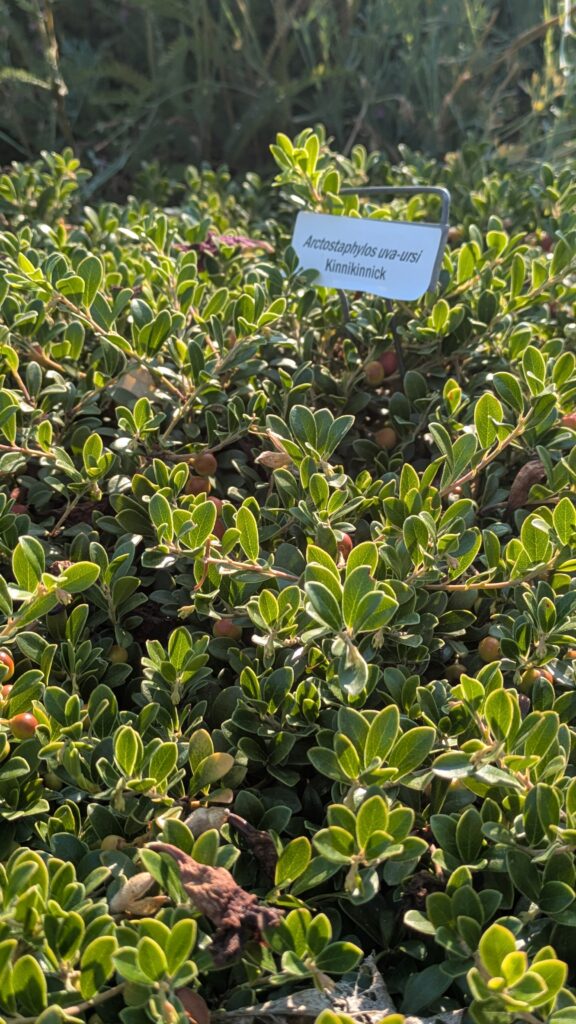
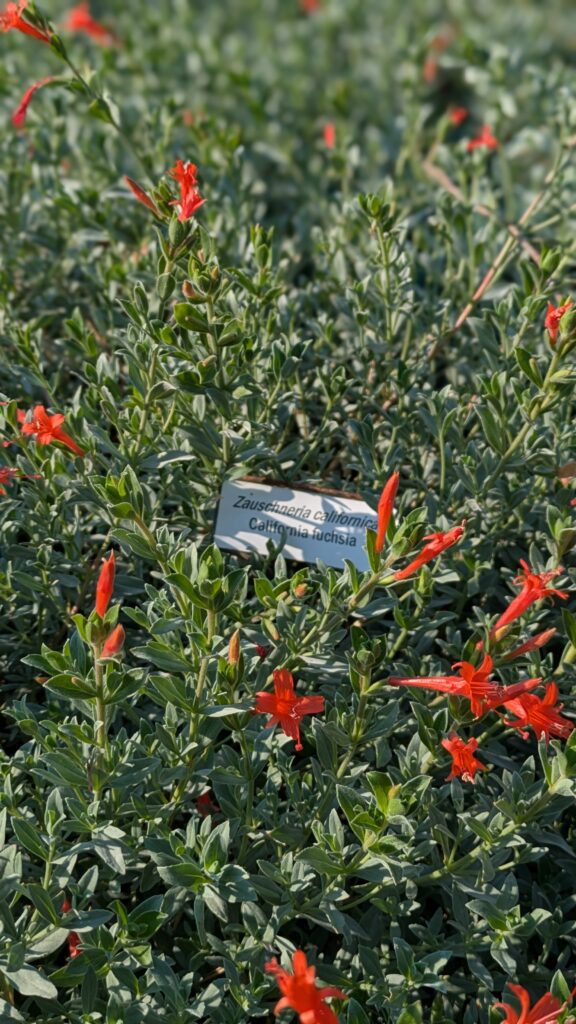
Some of the native plants like poppies and yarrow wander out of their desired areas. From a structured garden perspective, some of these plants have been removed to keep the desired appearance. Low water usage irises recently replaced some yarrow to fill out the irises currently in the garden bed for a fuller appearance. The native California fuchsia, buckwheat, and Kinnikinnik play nicer with their neighbors in a formal garden setting.

What techniques have you changed to help with climate resilience?
Master Gardener Pete Livers is the new team lead for the waterwise garden. As a newcomer to the garden, Pete has found the main challenge to be learning which plants are very drought tolerant and which ones are just low water plants. Pete has been keeping a careful eye out for plants that show signs of stress like curling and wilting leaves. To not overwater the extreme drought tolerant plants, he has resorted to hand watering the individuals that show signs of drought stress.

Are you anticipating future changes you plan to make?
No major changes for our garden at the moment. Plants may get occasionally swapped out for color, size, or other desired attributes to keep the garden fresh and exciting.

Have you received feedback from others regarding the changes you’ve made?
Many people are surprised at how many flowers and pops of color are in this waterwise garden. Often people have an image of rocks green cacti and succulents in mind for a waterwise garden. We wanted to show another way to create a waterwise garden with blooms each season.

Do you have any specific resources you’ve used in making the decisions for the changes you’ve made?
Some helpful resources for gardeners designing a waterwise garden include native plant lists such as Gardening with Oregon Native Plants East/West of the Cascades and the Firewise Plants for Home Gardens publication. Check with your local nurseries to see if they have a list of their available native plants and low water use plants for sale.

What would you tell other gardeners who want to make changes in their gardening to create more climate resilience?
Our summers in Jackson County turn brutal for a full sun garden quickly and some irrigation is still needed once or twice a month in an established waterwise garden like ours. New plants need to be gently acclimated to low water conditions and individually watered until established. A common mistake is expecting a young plant fresh from the nursery to be able to survive a drought before becoming established. Grouping your low water use plants together makes watering much easier than having them mixed between water-loving plants.

How are you using your climate resilient garden for teaching or outreach events?
We have hosted garden tours for local gardening clubs across the county where we discuss each garden and share ideas. Last summer, the local news station did a feature on waterwise gardens and included footage from our garden!

Anything else you’d like to share?
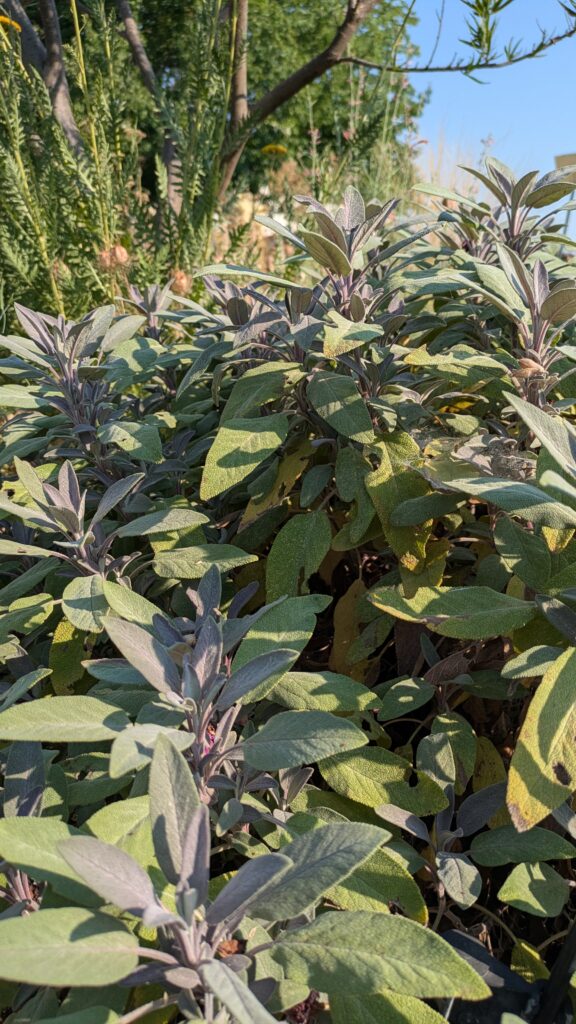
Some of the plants Pete wanted to highlight are the arrow leaf buckwheat for interesting foliage and dramatic white blooms and the purple cooking sage for the unique purple to green fade the plant has. A well designed waterwise garden still has plenty of interesting leaves, blossoms, colors, textures, and habitat for the local critters.

Established in 1994, the Jackson County Master Gardener Demonstration Gardens feature fifteen different gardens that are used to teach the art and science of gardening through the OSU Extension Master Gardener Program and to the community at large. The Demonstration Gardens are located on the grounds surrounding the OSU Extension office in Central Point, 569 Hanley Rd, Central Point, OR 97502. The public is welcome to take self-guided tours Monday through Friday between the hours of 9-5 p.m.

Explore one of Oregon’s 50+ Master Gardener Demonstration Gardens—realistic, regionally adapted spaces that showcase what thrives in your local conditions. Find a demonstration garden near you.

This story is part of Garden Future, an OSU Extension Master Gardener outreach project dedicated to conversations and action for gardening in a changing climate.

What are you seeing in your garden? What changes are you making? We invite you to join the Garden Future conversation by answering three quick questions. At the end, you’ll have the option to sign up for our Garden Future newsletter and stay connected with stories, resources, and tools to support climate-resilient gardening in your community.
Photos by Grace Florjancic

Gardening for the Future: Visiting the Discovery Garden in Roseburg, Oregon

Across Oregon, OSU Extension Master Gardener Demonstration Gardens are blooming with inspiration—and resilience. As our climate shifts, gardeners are adapting with creativity and care. As part of the Garden Future initiative, we’re spotlighting real stories from Master Gardener volunteers who are reimagining their spaces to be more climate resilient. These aren’t show gardens with endless budgets—they’re real, regionally relevant spaces that demonstrate what’s possible with thoughtful choices in plants and practices.

Today, we’re excited to share one of those stories.

Discovery Garden – Xeriscape Garden in Roseburg

A conversation with Geoff Puryear, OSU Extension Master Gardener volunteer and Program Education Assistant.

What was your garden like prior to any changes you’ve made for climate resiliency?
The Discovery Garden itself was established in 2000 and is divided into 21 different themed sections. The Xeriscape Garden was initially installed around 2005. Originally, the space was smaller and regularly irrigated. I was assigned, as a new Master Gardener volunteer, to take over the design and maintenance of the space in 2013. At that time, the Xeriscape Garden had limited plant variety, large gaps between plants, and very little mulch. That year, while the rest of the Discovery Garden resumed irrigation, the Xeriscape Garden did not and has not received any supplemental irrigation since, relying solely on rainwater.

What issues did you find you were facing regarding climate change impacts in your garden?
This project of an irrigation-free landscape was started to demonstrate how many commonly available landscaping plants can survive our Mediterranean climate of hot-dry summers without supplemental irrigation. The second year into this project, we experienced a significant drought which set back the establishment process of most plants. The lack of rain in the first three years made establishing most of the perennials a challenge, but it also showed that following the 7 Principles of Xeriscape is a viable method for both the conservation of water and drought resiliency, as hundreds of plant varieties, planted in the right place and at the right time of year, successfully populated the burgeoning garden beds.

What plants have you changed to help with climate resilience?
To create a more resilient landscape, I removed plants that couldn’t handle the dry season; mostly plants with larger leaves and higher water needs. This included a 15-foot Red maple and the Siberian red-twig dogwoods, both of which suffered without irrigation, or in the case of the tree, outcompeted every other plant near it for water. I replaced them with a wide variety of plants that use various adaptations to survive our climate. Many of the plants chose had smaller, silvery, and/or needle-like leaves, traits that help reduce water loss. Succulents like Sedum, cold-hardy Agave, and yuccas that all survive drought by going summer-dormant or perform photosynthesis at night during the dry season. I’ve also added many native species, where appropriately suited to the microclimates around the space. I made a point to fill in all available space in the garden beds to help shade the soil and each other. All of the turf grass areas around the space have been removed and replaced with pathways and perennial garden beds.

What techniques have you changed to help with climate resilience?
I’ve implemented a design grounded in the 7 Principles of Xeriscape. To reduce plant stress, I avoid pruning or deadheading during the dry season. This allows the plants to grow naturally without the stress of water-dependent regrowth. Every garden bed is fully mulched, I’ve used a variety of mulch throughout the space including wood chips, bark, gravel, and boulders to help keep the soil cool and moist. I also allow for most fallen leaves, needles, pinecones, or any other bits of organic material to stay on the beds, continually creating a fresh layer of mulch.

Are you anticipating future changes you plan to make?
As the dry season has become longer and hotter, and varying levels of drought has become the normal state of the climate in Southern Oregon, many plants have not been able to cope. If the trend continues, I will probably have to replace many of the plants that, at one time, thrived in the dry garden.

Have you received feedback from others regarding the changes you’ve made?
People tend to appreciate the beauty and diversity of the garden and they are usually surprised to see all the plants that can be grown happily in a dry landscape.

Do you have any specific resources you’ve used in making the decisions for the changes you’ve made?
I’ve done a lot of research into the native range of plants, if they come from a similar climate to ours, I will usually choose those plants to trial. When considering native plants, I look to OregonFlora.org for species distribution maps and natural habitat descriptions. Missouri Botanical Garden’s “Plant Finder” is a regularly used resource for most of my horticultural resource, along with OSU’s Landscape Plant Database, as well as the North Carolina Extension Plant Toolbox. The Seven Principles of Xeriscape by the Denver Water Board

What would you tell other gardeners who want to make changes in their gardening to create more climate resilience?
I always try to encourage people to accept plants in their natural state; to choose ones that will look good without irrigation or excessive pruning. If you pick the right mix of plants and let them grow the way they’re meant to, the need for constant maintenance and watering disappears. It makes for a much more rewarding and sustainable garden. Gardeners should focus on matching plants to the site’s light, soil, and water conditions, rather than choosing plants purely for looks. With nearly 300 varieties of drought-tolerant perennials in the Xeriscape Garden, it’s clear you can achieve a beautiful and climate-resilient landscape with the right plant choices.

How are you using your climate resilient garden for teaching or outreach events?
As part of the annual Douglas County Master Gardener training course, new trainees are given a tour of the garden as well as a 2-hour presentation from me on the 7 Principles of Xeriscape and designing a naturalized garden. I also give regular presentations to the public covering the topic of drought resilient landscaping using the Xeriscape Garden as the main example and sometimes as the classroom.

More information about the garden, including plants lists and photos. You can visit the garden, open from dawn to dusk, at 236 River Forks Park Rd in Roseburg.


Explore one of Oregon’s 50+ Master Gardener Demonstration Gardens—realistic, regionally adapted spaces that showcase what thrives in your local conditions. Find a demonstration garden near you.

This story is part of Garden Future, an OSU Extension Master Gardener outreach project dedicated to conversations and action for gardening in a changing climate.

What are you seeing in your garden? What changes are you making? We invite you to join the Garden Future conversation by answering three quick questions. At the end, you’ll have the option to sign up for our Garden Future newsletter and stay connected with stories, resources, and tools to support climate-resilient gardening in your community.
Growing together: a neighborhood garden story

At the heart of the OSU Extension Master Gardener volunteer program is something powerful: the idea that when we grow plants, we grow connections. This guest post, written by Master Gardener volunteer Sarah W. in Portland, is a shining example of that spirit in action.

While taking the Master Gardener training, Sarah began to apply what she was learning and applied it in the most generous way—by organizing her entire neighborhood block to garden together. Inspired by community-supported agriculture and grounded in the knowledge she gained from the program, she helped coordinate a shared vision: plant together, harvest together, and build deeper community ties through the act of growing food.

Sarah’s story is a clear reflection of the ripple effect the program can have—on individuals, families, and neighborhoods. It’s a reminder that when someone gains skills and confidence through the Master Gardener Program, they take those gifts into the world and plant seeds of change far beyond the classroom.

We’re honored to share Sarah’s story with you.


woman wearing plaid shirt and jeans, holding a large head of lettuce, just harvested from the garden she's standing in, along with two small children.

Why master gardening?

It’s a question I tried to answer repeatedly during the spring of 2024, as I attended Zoom class during kid soccer practice, puzzled out the calendar for every farmer’s market in the Portland Metro area, and marveled at the poised, knowledgeable, and involved perennial Master Gardeners I met at every turn. What was I trying to prove, and did I belong?

Indeed, the moment a few weeks ago before I pressed send on a spreadsheet garden planner covering my entire neighborhood, I wondered – is this why? Am I too much, or not enough?

My whole life, I’ve been what people indulgently call “a do-er”. I love a good idea, but more than that, I love plotting a good idea into being. I have also been called persistent – not to say stubborn – by those who love me. And my kids know that when I say, “five minutes until we go”, they can happily play for 15 while I chat up a new group of parents and lose track of time.

This is all to say that when my neighbor pitched the idea of a block-wide project where we crossed community-supported agriculture with a community garden spread across multiple yards, my husband correctly predicted I’d be in deep. He knows me.

The idea was simple. What if we each planted something different, and then brought together the harvest to share? Having just read about an inspired project in Los Angeles, it was an easy sell. The project formed quickly, based on the training fresh in my mind.

If any neighborhood was set up for this challenge, it was my little block, which hosted weekly line dances through COVID lockdowns and painted our street to commemorate the connection during those years. We’re a neighborhood where repeated gestures of kindness have created runners, and underground network that shoots up random acts of support you never thought to ask for.

Yet at its core, this project was about pooling individual effort for the collective – an ideal but challenging in the details. Nonetheless, we set off. At a potluck, we mapped individual plots into a single farm. On the south side of the street, better sun but smaller beds. On the north side, shade, but retirees who had time to build beds or move container tomatoes to track the sun. We calendared workdays, I ordered seeds, and we mixed fertilizer and pressed seeds into four-inch pots together. And yes, I emailed a beautifully color-coded spreadsheet where my eight-year-old and I mapped space, time, crop, and affection into a sharable format. So many things about this project are imperfect. But it’s an answer to the persistent question about why I became a Master Gardener. What kind of community is possible in this fast-paced and fragmented world? This week, it’s pak choi and kale thinnings. It doesn’t matter if we pool our plots for different reasons. When we arrive curious, open-hearted, offering care and whatever we have on hand – the connection follows.


Are you building community and connections through gardening? 2026 will mark the 50th anniversary of the Master Gardener volunteer program in Oregon: we would love to share your stories of community and connection. Please email leann.locher@oregonstate.edu if you’d like to share your story.

Who are your Master Gardener county award winners?

Who will be the next recipients of each county’s Master Gardener of the Year, Growing and Belonging, and Behind the Scenes awards? We’re ready to take your reporting of awards.

All county-level award submissions should be made in cooperation with your local Master Gardener coordinator. Prior to selecting your counties’ winners, please be sure to review the criteria for county awards.

We’ll celebrate the county award winners at this year’s Joy of Gardening Conference in July, and announce the  statewide award recipients.

How the county-level and statewide awards differ

  • The county-level award winners are selected by active Master Gardener volunteers in each county. Once counties have selected their winners, they report them to the state using the County Master Gardener of the Year award submission form.
  • The statewide award winners are selected through a competitive process at the state level. Each county may nominate one winner or winning team for each of the three awards. A statewide awards committee convened by OMGA and the Extension Master Gardener Program reviews nominations and selects the winners.

Please note that county-level winners are not automatically considered for the statewide awards. If your county wants to nominate a volunteer for a statewide award, you must do so using the statewide award nomination form. Typically, counties submit different candidates for the statewide and county awards.

How to submit your county’s award winners

All submissions must be made using the County Master Gardener of the Year award submission form. Incomplete submissions may be disqualified, so take your time and prepare your submission in advance. Again, be sure to keep the county awards criteria in mind when you’re selecting your winners and describing their contributions.

Deadline: May 15th, 2025

Nominations for 2025 statewide Master Gardener awards are open.

Who will be the next recipients of the statewide Master Gardener of the Year, Growing and Belonging, and Behind the Scenes awards? Nominations are open and we’re ready to take your submissions.

All nominations should be made in cooperation with your local Master Gardener coordinator, and make sure to review the criteria for each of the awards. Remember, these are the statewide awards, not county awards which are done locally, county by county.

We’ll reveal the statewide winners at this year’s Joy of Gardening conference in July, and celebrate all of the incredible county award recipients.

All submissions must be made using this online form. Incomplete submissions may be disqualified, so take your time and prepare your submission in advance. Again, the criteria for the awards can be found here.

Deadline: May 15th, 2025

What’s the future of gardening in Oregon?

The future of gardening can be confusing right now. With changing seasonal weather, new techniques, different plants, you might be asking yourself, what should I be doing now? What should I be doing into the future?

Garden Future is about growing resilience in a changing climate.

When it comes to climate change, there are some things we know. But there’s a lot we don’t know, too. We’re collecting information from gardeners across Oregon to find out what they’re seeing, what they’re doing, and what they need help learning about, when it comes to climate change and its impact in gardens.

And for OSU Extension Master Gardener volunteers, it’s go time. It’s time to get involved with the project, Garden Future.

Beginning in April, Garden Future will be out in the wild, and this is the official call to Master Gardener volunteers to get involved in the movement.


What is Garden Future?
Climate change is already transforming the way we garden. From shifting growing seasons to unpredictable weather, Oregon gardeners are seeing these changes firsthand. Garden Future is an OSU Extension-led initiative that empowers Master Gardener volunteers to engage the public in conversations and actions for gardening in a changing climate.
This project is built on the power of conversation—research shows that talking about climate change in relatable, solution-focused ways is one of the most effective ways to inspire action. And who better to lead these conversations than gardeners like you?

How You Can Get Involved:
We’ve created a Garden Future Volunteer Guide to give you an overview of the project and materials available to use. Inside, you’ll find:

  • Tabling resources & outreach materials – Posters, prize wheels, and interactive tools to engage the public
  • Conversation starters – Tips on how to frame discussions around climate-smart gardening
  • Training & learning opportunities – So you can feel confident talking about gardening in a changing climate
  • Ways to share stories & insights – Help collect gardener experiences and be part of the conversation

The success of this project relies on Master Gardener volunteers who can help champion it. Once you’ve read the guide, think about fellow MG volunteers who would be interested in working on this project. Reach out to them. Reach out to your MG coordinator and let them know you want to help with Garden Future. Your involvement is what will make this project thrive.

Are you ready to be part of the future of gardening?

  • Start conversations at tabling events and community gatherings
  • Share your story—how has your gardening changed?
  • Help document and uplift other gardeners’ experiences
  • Stay connected through the Garden Future Champions newsletter

Together, we can make a difference—one conversation, one garden, and one story at a time.

If you are an OSU Extension Master Gardener volunteer and would like to learn more, become a Garden Future Champion, and to receive your copy of the Garden Future Volunteer Guide, please email mastergardener@oregonstate.edu.

P.S. Garden Future will be at Hortlandia – Stop by! Reach out to Amy Espinoza to find out about volunteering at the Garden Future booth at Hortlandia. Special thanks to our friends at the Hardy Plant Society of Oregon for offering us this opportunity!

Master Gardener Trivia

Q: What’s a fun way to earn continuing education hours while flexing your horticulture expertise?

A: Our annual Oregon Master Gardener Trivia Series, of course!

We’re turning up the heat once again this fall/winter and inviting OSU Extension Master Gardener volunteers to join us for a little friendly competition with each other. One Thursday a month, November through February, at 7 p.m., hop on our Zoom to test your gardening knowledge and vie for cool prizes—not to mention bragging rights for your county!

We’ll have 50 questions related to a different theme each month, and topics range from the super scientific and technical to the practical and historical, so there’s something for everyone. (Plus, it’s multiple choice, so even if you slacked on studying, you still have a 25% chance of getting it right!)

November 7, 7pm: All about Botany. Zoom link here

Botanical terminology, classification, nomenclature, plant parts. To score well, study up on leaf shapes, margins, and arrangement; common plant families; and the parts of flowers.

December 5, 7pm: Gardens and Inventions. Zoom link here

Gardening tools and gadgets, garden inventors and innovators, historic and current garden tech, and famous historic gardens will be featured in this session. We’ll learn about the history behind common garden tools, and amazing botanists and gardens that paved the way for modern horticulture.

January 9, 7pm: It starts with seeds. Zoom link here

All things seed-related, just in time to refresh your memories for the new gardening season! Study up by viewing the seed-related videos from the Growing Oregon Gardeners “Level Up” series and you’ll be ready for this seed drill.

February 6, 7pm: The Gardeners buffet. Zoom link here

A smorgasbord of unrelated garden trivia. Questions may be drawn from the nooks and crannies of the giant Master Gardener handbook, plant clinic experiences and questions, or horticultural pests of concern in Oregon. Challenge yourself and your fellow Master Gardeners—this season closer will be tough (and fun)!

How to participate

  1. Join via zoom on the date of the event.
  2. Connect to the trivia app (Slido) on your phone or computer.
  3. At the start of the tournament evening, you’ll be directed to the Slido app to begin competing.
  4. Multiple choice trivia, 50 questions per session.
  5. Winners will be announced live during the Zoom event.

Each session counts as one Continuing Education Unit for Master Gardener volunteers.

Did we say prizes? Yes we did. For each session, you can win gift certificates to mail-order garden companies in the PNW.

  • 1st place: $100 gift certificate
  • 2nd place: $50 gift certificate
  • 3rd place: $25 gift certificate

Winners will receive gift certificates approximately one week after each event.

Accommodation requests related to a disability should be made by Nov 1, 2024 to Nicole Sanchez: nicole.sanchez@oregonstate.edu or 541-883-7131

Growing & Belonging: We all have implicit biases

Dushaw Hockett, a tall Black man wearing a button-down shirt, sweater vets, slacks, dark dress shoes, and a small microphone, stands on a red carpet on stage at a TedX event while giving his talk.
A still image from Dushaw Hockett’s TEDx talk.

The resource

Dushaw Hockett, “We all have implicit biases. So what can we do about it?”, TEDx MidAtlanticSalon, Washington, D.C. March 6, 2017 (uploaded to YouTube on Sept. 18, 2017). 12 minutes.

The way that we currently think about, talk about, and act on issues of racial bias and other lines of difference in this country is woefully inadequate and it’s incomplete. . . The very robust and compelling evidence that has been coming out of the science community for the past ten plus years suggests that if we want to move to a radically different place—a radically better place—on issues of race and difference in this country, we have to pay attention to something called implicit bias.   

— Dushaw Hockett

Growing & Belonging learning level

This is a Level 1 Growing & Belonging learning opportunity.

About this resource

The speaker

Dushaw Hockett is the founder and Executive Director of Safe Places for the Advancement of Community and Equity (SPACEs), a Washington, DC-based leadership development and community building organization dedicated to bridging the gap between what people imagine and what they achieve. He’s the former Director of Special Initiatives for the Center for Community Change (CCC), a 40-plus year old national social justice organization founded in the memory of the late Robert F. Kennedy.

As an outgrowth of the W.K. Kellogg Foundation’s Truth, Racial Healing and Transformation Initiative (TRHT), Dushaw serves as healing facilitator/practitioner.  In this capacity, he has facilitated healing circles for numerous organizations including but not limited to the Independent Sector, the American Library Association (ALA), the American Association of Colleges and Universities (AACU) and the Michigan Council on Foundations.

He has served on the boards of numerous local and national organizations including the National Coalition for the Homeless (NCH) and the National Low Income Housing Coalition (NLIHC). He currently serves as an advisor to the Perception Institute.

The presentation

Hockett begins his talk by discussing the three characteristics of implicit biases:

  • They operate at a subconscious level. The nature of implicit bias is that we don’t know that we have it.
  • They often run contrary to our conscious, stated beliefs and values.
  • They are triggered through rapid and automatic mental associations that we make between people and the attitudes or stereotypes we hold about those people.

He continues his argument by discussing why we must focus on implicit bias if we are to stop harming entire communities of people. Among these are:

  • The tools we’re currently using to address bias are insufficient because have been designed to address explicit bias instead of implicit bias.
  • Implicit bias is predictive. It allows us to predict how people will act based on biases that can be diagnosed using existing tools like Project Implicit.
  • Implicit bias can also be preventative. It can help us to develop tools—including internal motivation and habitual practices—that can shift us away from our current model of reactive, emergency responses to bias and toward a preventative approach based in part on public health research.
  • An implicit bias approach helps to reduce the shame and shaming that arises when we talk about bias. An implicit bias approach shifts the essential questions from “Are you racist or not racist?” or “Are you sexist or not sexist?” to “How do we align our actions and behaviors with our consciously held egalitarian beliefs?”

Content and themes

Implicit bias, stereotypes, racism, sexism

The learning guide

Download the learning guide for “We all have implicit biases. So what can we do about it?”

To get credit for this continuing education opportunity

  • Read the introductory sections of this learning guide.
  • Watch or listen to “We all have implicit biases. So what can we do about it?”
  • Consider and answer the questions in this learning guide.
  • Share your best ideas from your answers to the questions in prompts 3 and 4 with your program coordinator. (Ask them if they’d like to receive this information from you via email or another method.)

Growing & Belonging learning levels

Seed to Supper in the Garden was a special plant clinic held in April 2024 for new gardeners on a tight budget that want to grow food at home. It was hosted by OSU Extension Master Gardeners and held at Lupe’s Community Garden in Philomath.

The concepts of growing and belonging are essential to the success of the Oregon State University Extension Master Gardener Program. We subscribe to a philosophy of personal and communal growth—in our gardens and ourselves. We offer programs and services that welcome and serve Oregonians interested in gardening, regardless of their income or education level, physical or cognitive ability, age, race/ethnicity, or any other protected aspect of their identities.

None of us are born ready to educate and support such a diverse audience. In fact, mainstream U.S. culture—our media, educational systems, and social and political structures—often nudge us not to think far beyond our families or neighborhoods. Due to human nature, personal comfort, and/or social engineering, we often spend time with people who look, think, and act very much like ourselves.

In addition, the U.S.’s economic realities, social mores, and cultural practices are evolving rapidly. It can be hard to keep up with all the subtle changes in language and appropriate behavior.

Despite these internal and external challenges, Master Gardener volunteers must be ready to welcome and serve participants with diverse interests, experiences, needs, and perspectives. Accordingly, we require all volunteers (new trainees as well as returning) to pursue at least one hour of continuing education each year that will help them support the Master Gardener program in becoming a more equitable and welcoming space for all Oregonians. Because Master Gardener volunteers tend to be intellectually curious, we encourage them to go beyond that minimum requirement, learning about new cultural topics and perspectives that interest them and are relevant to their county’s program.

We call these our Growing & Belonging learning opportunities. You can read more about the words we use, and their intentions, here.

Scaffolding volunteers’ learning

Every volunteer comes to these learning opportunities with different life experiences, interests, and exposure to the ideas and concepts within Growing & Belonging. To allow each volunteer to scaffold their learning appropriately, we assign each Growing & Belonging opportunity described on this blog to a specific learning level. These are labeled Level 1, Level 2, Level 3, and Level 4.

These levels aren’t designed to be exclusively sequential. Volunteers need not complete opportunities in Level 1 to advance to Level 2. If you’re a volunteer who has lived experience with these concepts or who has pursued similar learning opportunities elsewhere, feel free to dive into opportunities at Level 3 or 4. If you’re a volunteer who, for example, feels very comfortable being inclusive in one aspect of individual or identity (e.g., gender expression) and would normally tackle Level 3 or 4 opportunities, feel free to pursue Level 1 and 2 opportunities in areas where you’re less comfortable (e.g., disability).

Level 1: Foundational Awareness

Audience: Master Gardener volunteers new to specific Growing & Belonging concepts

Description: Level 1 opportunities support volunteers in developing an understanding of the elements necessary to fostering welcoming and inclusive learning environments. Level 1 learning opportunities raise volunteers’ awareness of common barriers to inclusion and introduce them to fundamental terms and ideas. Such learning opportunities include, but aren’t limited to:

  • recognizing and addressing implicit bias
  • understanding privilege of various kinds
  • identifying and remediating microaggressions
  • understanding the difference between equality and equity
  • using contemporary language related to aspects of individual identities, such as gender expression and disability

Resources at this level provide a gentle introduction to these concepts, with an emphasis on personal reflection and foundational knowledge.

Level 2: Building Understanding

Audience: Volunteers with some familiarity with Growing & Belonging concepts who are ready to deepen their understanding and connect Level 1 concepts to our programs and services

Description: This level goes beyond the basics to explore the impact of Growing & Belonging on communities and organizations. These learning opportunities may include opportunities to grapple with such topics as:

  • systemic inequality and its impact on volunteer programs and access to garden spaces, knowledge, and tools
  • the history and impact of discrimination in horticulture
  • strategies for promoting equity in gardening and community spaces

Resources at this level encourage critical thinking about one’s role in perpetuating or challenging inequality. Volunteers will learn simple, beginning strategies for engaging in inclusive practices within garden education and the Master Gardener program.

Level 3: Advanced Exploration

Audience: Individuals who are well-versed in Growing & Belonging concepts and eager to explore more complex and nuanced subjects

Description: This level delves into advanced and emerging topics, encouraging volunteers to engage with challenging and innovative ideas. Opportunities may include such topics as:

  • queer ecology,
  • decolonization in environmental practices
  • traditional ecological knowledge
  • intersections of identity, power, and nature.

Resources at this level invite deep reflection, discussion, and exploration of how these concepts can inform and transform gardening practices and community engagement.

Volunteers pursuing opportunities at Level 3 should be familiar—through focused learning or lived experience—with relevant foundational concepts expressed through Level 1 and 2 opportunities.

Level 4: Applying Growing & Belonging Principles

Audience: Volunteers with a solid understanding of Growing & Belonging concepts who are interested in applying these principles in their work and community engagement

Description: This level focuses on practical application, exploring how Growing & Belonging principles can be integrated into everyday practices and decision-making. Topics may include, but aren’t limited to:

  • inclusive community engagement
  • allyship
  • creating accessible gardening spaces
  • addressing environmental justice

Resources at this level provide case studies, best practices, and actionable steps for incorporating equitable and inclusive practices into gardening programs and outreach efforts.

Selecting your opportunities and getting credit for them

  • Some of these topics may be very familiar and relatable to you because of your lived experiences. We always welcome your perspectives on how these are explored through horticulture and the OSU Extension Master Gardener Program. If you have thoughts or feedback you’d like to share, please send them to Leslie Madsen, the statewide program manager.
  • We encourage volunteers to select Growing & Belonging topics with which they are unfamiliar, then grow from there. It’s normal to feel a little uncomfortable when you’re first learning about different aspects of human identity. These zones of discomfort, if we enter them with genuine curiosity and more than a little humility, are where the most learning and growth happen.
  • Remember, the levels aren’t designed to be strictly sequential. If you have a background with people experiencing homelessness, for example, you might feel ready for a Level 4 workshop related to gardening with that population. At the same time, you might get more out of a Level 1 webinar on language around disability, gender, or race.
  • After each Growing & Belonging learning opportunity, reflect on how the topic connects to the Master Gardener program in your county. Share with your program coordinator any topic-relevant ideas or suggestions for growing or improving the Master Gardener program in your county. To get continuing education credit for the Growing & Belonging opportunity, you must share this take-away from your learning with your program coordinator. (Ask your coordinator whether they prefer to receive this information from you via email or another method.)
  • For your annual Growing & Belonging education credits, you aren’t limited to the opportunities curated by the statewide program. You’re welcome to find your own opportunities. However, after each learning opportunity, you must provide ideas or suggestions as detailed in the bullet point immediately above.
  • If you come across excellent learning opportunities you believe should be showcased by the statewide Master Gardener program, please email Leslie Madsen, the statewide manager, to let her know you’d like to see them included.