Red, White, and Bandon!

Greetings readers!

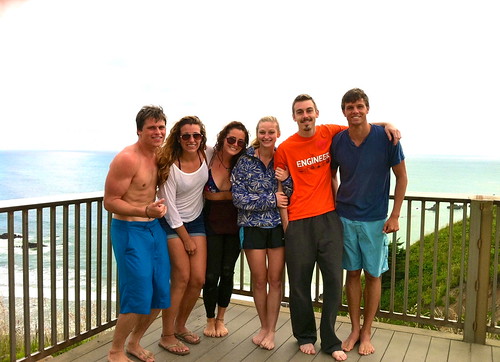
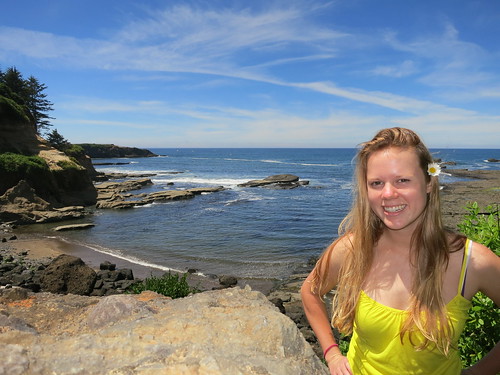
I hope everyone’s 4th of July weekend was as amazing as mine!  As I said before, I have been a California girl my entire life and as such have been somewhat hesitant about opening my heart and mind to a different state.  However, after spending the holiday weekend exploring Corvallis, Seaside, and Cannon Beach I have replaced my skepticism towards the Oregon coast with what I can only assume will progress into a budding romance.  I started off my four-day weekend by visiting some friends in the quirky college town of Corvallis where I discovered some amazing bakeries, got the chance to stroll through the bustling farmer’s market, and went on a short but beautiful hike up to Bald Hill.

photo 4

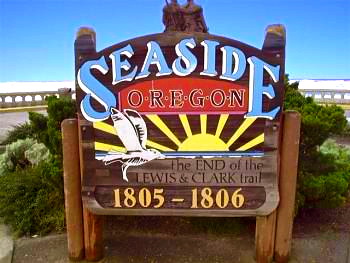
Later we set off on a short road trip to Seaside to enjoy some 4th of July festivities and well deserved beach time.  The second I set foot in downtown Seaside I immediately realized that I wasn’t in Bandon anymore…  Whereas Bandon (or as its residents affectionately refer to it as, “Bandon by the Sea”) is a small fairly quiet beach town whose citizens pride themselves on their charming old downtown and specialty stores, Seaside (whose motto is “More than just a day at beach”)  is roughly twice the size of Bandon and definitely has more mainstream tourist attractions.  Later we traveled down the coast a bit to Cannon beach and spent the day exploring local art galleries, all of which drew their subject matter from the surrounding coastal environment.

SEASIDESIGN

So far this project has been very different from ones that I’ve previously taken part in.  Up until this moment, most of the work I’ve done has been on a fairly small scale, but now gone are the days of sitting at a lab bench and observing organisms under a dissecting scope!  I have been tasked with determining what the “brand” is of South Coast Oregon.  With four towns, roughly 12, 803 people, and thousands of miles of land and coast you can imagine this is no easy task.  I have also discovered that there is no easy answer of how to promote and spread coastal tourism.  My trip to the North coast this past weekend exemplified that, and taught me that the while the more traditional modes of attracting tourists (such as bright neon signs, gift shops, arcades, etc.), may be lucrative, they are not necessarily what’s best for an individual community, let alone something its residents would be fine with.  I saw this in the charismatic town of Seaside Oregon; a town that most likely attracts passersby because of its beautiful beaches and charming houses, but causes them to stay and return with the help of new aesthetically pleasing apartments and hotels right on the beach, an arcade full of games and rides, and numerous shops where you can purchase apparel and food to remind you of your stay.

While I do not claim to be an expert on Oregon’s coastal towns, anyone could see that Seaside is virtually the polar opposite of Bandon (not to mention double the size!)  I have come to the conclusion that a lot of it basically comes down to personal preference.  And using my experience thus far as an indicator, I believe that it is near impossible to brand the entire South Coast simply because each town has something special to promote (ie. Old Downtown Bandon, art galleries in Cannon Beach, arcades and souvenir shops in Seaside).  While this can be seen as a major pain (especially since I have been asked to in fact, brand the south coast) it also reminds me that the beauty in it is that each town is in fact different, so theoretically there is a coastal town in Oregon for each and every person!
photo 3

While Oregon’s coastal towns may be different, there is one thing that they all have in common: the beauty of their natural resources.  Bandon, Brookings, Gold Beach, and Port Orford all provide access to the coastal activities such as SCUBA, fishing, and kayaking, lush forests where you can camp, hike, and bike, and freshwater where you can swim, fish, windsurf, or just boat around.  In my remaining time with the WRCA I hope to help each town capitalize on their breath-taking environments to not only help stimulate their economies, but to educate the residents and tourists on conservation issues that are right in their back yard.  This is a crucial step, one which is often overlooked, because the fate of these natural resources will directly affect many local businesses such as fishing and farming.

photo-1

This past week I was fortunate enough to sit in on the second meeting of WRCA’s steering committee and meet a variety of people working with organizations such as the Freshwater Trust and the Port Orford Ocean Resource Team, as they discussed their individual projects as well as  organizations that WRCA has funded or will fund in the future.  It was amazing to learn how many organizations WRCA has helped and about all the amazing projects they plan to fund in the future (such as a sustainable greenhouse where teens can volunteer and learn about local plant species).  Next week I’ll be taking a field trip down to visit Brookings, Port Orford, and Gold Beach to meet with community leaders to discuss the work I have done on mapping out what each town’s assets are.  I think this will be an awesome chance to get to know these towns a bit better as well as start a conversation about how each town wants to work towards creating more sustainable tourism!

Stay tuned for more adventures!

Week 3: Happy Fourth of July

This week of my internship turned out to be quite short. Because of an unfortunate accident over the previous weekend, my foot might be broken, (a week later, it is feeling much better and I can almost walk normally but I am still not able to do field work), so I missed Monday to go to the doctor and rest up. The Fourth of July and the following EPA furlough day gave me a four-day weekend. I guess it was great timing, because I was able to rest up plenty and relax but still have fun. My friends hosted a BBQ at their house, and we all biked down to the Willamette River in Corvallis where there was a fireworks show, as well as hundreds of people lighting off their own in the street. The Fourth is one of my favorite holidays, and although I was not in tip-top shape, it was still a wonderful time.
IMG_0128
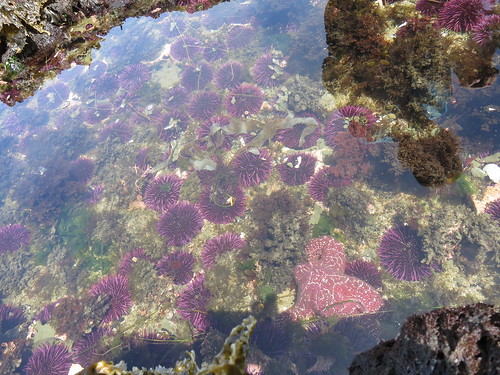
Before I hurt my foot, I was able to go tidepooling in Boiler Bay, just north of Newport. I spent three hours there (and consequently got a little sunburned, it was a beautiful day), and had a great time taking pictures, touching things, and trying to catch fish. The Oregon Coast has an amazing diversity of marine life, and I’m so glad I get to experience it!

IMG_0024

To respond to a question from my last post, “testing” the GoPro cameras involved taking pictures and videos, trying to figure out the battery life, size of the SD card, and the size of the field of view at various heights off the ground. I put testing in quotes because it felt more like playing with the cameras. We came up with a design for the mount of the camera and built and deployed it last week to get some test video. It worked surprisingly well the first time, and I learned how to use a drill press. We just bought materials for the rest of the camera mounts, and will be building them soon.
In the meantime, I am continuing my video analysis from previous years so we will have historic data to compare to. I am also sorting through samples of seagrass, measuring any crabs I find and weighing the plant matter, as part of another ongoing project looking at the crabs that live in Yaquina Bay. We are trying to determine where they are most abundant (in the native seagrass, the invasive seagrass, or bare mud), and if the ages of the crabs is different between them.
Hopefully my foot will be better soon so I can get back to field work!

Good Times All Around

I think I’m falling in love… with Oregon that is. With a four-day weekend last week thanks to the Fourth of July holiday, myself along with some fellow interns were able to get out and see more of what Oregon has to offer.

But before we began our adventures, there was work to be done.  The project I am working on that uses clear buckets to study soil oxidation requires a good low tide so that the sample site is clear of water. This allows us to easily photograph the sediment layer without disturbing the surrounding area. To answer a question from my last post, the reason we removed and weighed the macroalgae was to see if there is any correlation between the depth of the oxidized soil and the amount of algae on top and to see how much algae is covering different parts of the estuary. The tides this past week weren’t low enough, so instead of being out in the field, I was helping out with another lab’s research project that had finished up earlier in the week. I helped to count Zostera japonica plants which are a type of sea grass.  The experiment was studying growth rates of the plants under varying conditions. It was a pretty quiet week at the EPA, but this week promises to be much busier with four days of field work.

DSCN1061

On the Fourth of July, a group of us went to Olalla Lake where we spent the day swimming and jumping off of rope swings. We then made our way back to Newport for an all American cookout complete with a little slice of Wisconsin, grilled bratwursts. When we finished our feast, we watched the fireworks that were launched from Yaquina Bay, right next to the Hatfield Marine Science Center.

After the holiday, some of us went to Devil’s Punchbowl where, for the first time in my life, I saw a whale, which just so happens to be my favorite animal. It was pretty far away from us but nevertheless it was still amazing to see one in the wild.  We stopped at the Whale Watching Center in Depoe Bay to see if we were able to spot anymore but we had no such luck, however we did get to drive along a beautiful stretch of the coast which made up for it.

DSCN1059

The next day we went to Corvallis where we spent the afternoon floating down the Willamette River. After driving to what seemed like every store in the city, we finally found tubes and began to drift down the river only to realize we had forgotten our car keys back at the start. Luckily some fellow floaters offered us a ride to the starting point, and we were able to laugh it off. We certainly learned our lesson!

Then on Sunday, which was my birthday, we went to the beach to celebrate. Nothing says “Happy Birthday” quite like a quick dip in the 50 degree Pacific Ocean! It sure was a weekend I will never forget. Oregon truly is a beautiful place to live!  This week I will be sampling in Yaquina Bay and traveling to Nestucca Marsh, Netarts Marsh, and the Bandon Marsh for four long days of field work, and I can’t wait!

week two at HMSC

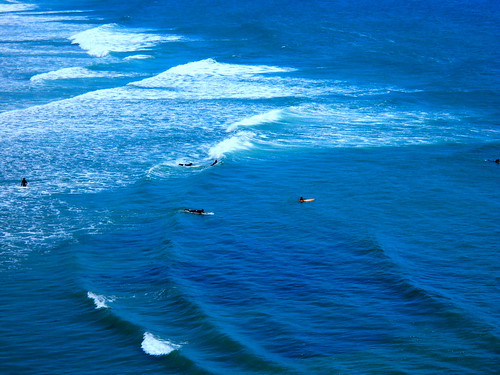
Week two at HMSC in Newport has been yet another adventure. The weather and wind came together perfectly in the latter half of the week, grooming the ocean into surf perfection. The minute I was finished with my work commitments I spent the rest of my evenings exploring the coast and looking for waves to surf. I scrambled over rocky outcroppings, shuffled through blackberry bushes, and forded the many creek outlets, all to satisfy my obsession for the chance at catching that perfect wave. I have spent more time and energy searching for waves than I have actually spent in the water surfing, but the exploration is what makes riding a wave that much more enjoyable. What most people fail to realize is that riding waves are only a meager component of surfing.

The majority of time is comprised of anxiously waiting around for inclement weather to clear, networking with the local surfing community, studying and observing the natural coastal wildlife and geological features, and understanding the local bathymetry that creates ideal waves. Newport and its surrounding coastline can be a surfers dream if one seeks solitude and empty, un-crowded waves. It just takes a bit of adventure and a little luck to find that perfect wave.

Aside from my adventures, I’m still here primarily to work. Of course that is only if you consider fishing as work. This past Friday I went along with an ODFW employee to help with a PIT tagging project. Passive Integrated Transponders, or PIT tags, are about 2 mm in length and provide a unique identification code when inserted into an animal. This allows researchers to gather information about migratory patterns and other behavior. The PIT tagging project entailed catching black rockfish by method of hook and line, quickly inserting the PIT tag, and then releasing it back into the ocean. My role was primarily to practice handling, weighing, and measuring fork length of all non black rockfish species. I also participated in the actual fishing, where I caught and reeled in a total of 7 fish, including a 40 inch lingcod! Not a bad day considering this was technically for work. Who knew work could ever be so fun!

Between balancing work obligations and surfing, I still managed to squeeze in social time with the other interns. On Thursday, we all met with some of the graduate students who are conducting research here at HMSC. This was a good opportunity to establish some connections and learn about additional research opportunity to get involved in. You never know what could arise from a simple volunteering effort, thus it is important to be involved and take every possible opportunity. And with that, I wish everyone a fantastic Fourth of July weekend.

Field Work Frenzy!

Hello all!
I’m so excited to update you on my week! This past week was all about field work, which is my favorite part of any job. Monday we kicked off the week heading down to Indian Point where Jim, my officemate and colleague, and Scott, my mentor, had previously placed two crab pots filled with pit tagged cockles. Our goal was to dig up the crab pots (no easy feat in such coarse sand!) and retrieve the cockles to measure their growth over the previous two weeks. Unfortunately, many of the cockles had died but we could still collect all the growth data we needed from them, such as shell length, height, fatness, and clam weight.

A typical day at the ODFW in Charleston, OR

Wednesday I had the opportunity to venture outside of shellfish biology and got to ride along and seine with the marine fish department. Our target species was Chinook salmon but we also found many other species of fish such as greenlings, sand lances, English soles, staghorn sculpins, and smelts. We also found hundreds of small Dungeness crabs and comb jellies.  A few people held one end of the seine on the beach and the boat was driven around in an arch until the boat reached the other end of the beach. We then pulled the seine up to the shore and then sifted through the bag for fish.
We sampled 4 sites along a seven mile stretch of water, from Charleston to North Bend. We measured lengths and weights of our target species in order to later be able to calculate a condition factor (K) which is used to estimate the condition (health) of fish. We also identified which salmon were hatchery salmon by checking to see if the adipose fin was clipped. Clipped fins indicated hatchery spawned salmon.

Port Orford

Thursday’s field site in Port Orford

Thursday was by far my favorite field work day of the week. Jim and I drove out to Woodruff Creek near Port Orford. After scaling down a sharp cliff-face in waders to get to our sampling site my adrenaline was definitely pumping. We sampled eight, random, 1m^2 quadrats. Our target species was littleneck clams. Digging through all the tide pools was amazing and we found some cool intertidal species; my favorite find was a clown nudibranch (sea slug). The tide pools were teaming with diverse fauna: several species of crabs, gunnels, peanut worms, sea stars, sculpins, the list goes on and on! Though we were out sampling in the warm sun for three or so hours I enjoyed every minute of lifting cobble and boulders and digging through sand to find littleneck clams. When you love what you do, it never seems like work!

DSCF2759

A clown nudibranch (sea slug) I found in one of our quadrats in Port Orford

And what’s work without a little play? I have made some good friends at the Oregon Institute of Marine Biology (OIMB) where I am being housed. All the students are friendly and always ready for adventures. After dinner, rain or shine, we’ll get together to play volleyball or Frisbee or go hang out on the beach. Thursday was particularly fun, as I swam in the Pacific Ocean for the first time. It took a few minutes to get used to the cold water but soon we were having the time of our lives swimming through the breakers.

volleyball

A typical night at OIMB

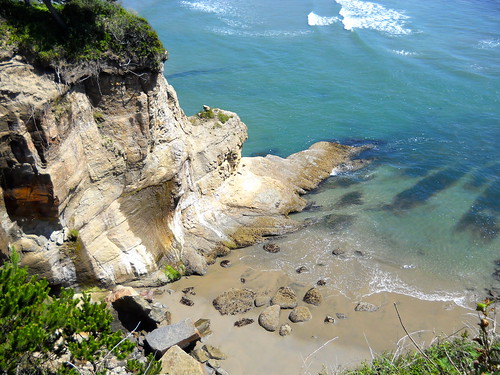
This weekend, a few friends and I drove over to Sunset Bay where we spent our day climbing through the cliff sides where we found some pretty stellar tide pools. As the tide began to roll in, so did the fog. The fog is a unique part of the Oregon coast that I have come to love.  In Indiana, fog is something you wake up to and it appears as a boring, thick sheet. Here in Oregon, fog comes in at random times throughout the day and it rolls in looking like thick cumulus clouds gliding across the ground and pouring like falls over cliff sides. It’s a beautiful event that I’ve fallen in love with and there is something very relaxing about the whole occurrence. On our way back to OIMB we stopped at an overlook of the cove and ended up sighting some sea lions and even a whale, which was the cherry on top of a good day. I can’t wait to see what adventures this week holds!

Starting Fieldwork

It has been another great week here in Oregon!  I’ve done so much and cannot believe I have already been here for two weeks. These past few days were filled with fieldwork at the EPA. Myself along with two researchers started one of our experiments in the Yaquina Estuary here in Newport on Tuesday and Wednesday. Then on Thursday we traveled and hour north to Pacific City, Oregon to collect data on the Nestucca Estuary and on Friday we went three hours south to Bandon, Oregon to do the same data collection on the Bandon Marsh.

DSCN0848

It was a week full of very long days, but it was great to be doing fieldwork. I had never done any fieldwork before and didn’t know what to expect, but I really enjoyed it. Plus, I got to ride in the EPA’s hovercraft which was pretty awesome! In the Yaquina Estuary we placed clear boxes in the sediment to see the different rates of soil oxidation, while in Nestucca and Bandon we measured how quickly sediments have been building up over the past few years.

In addition to that, I cleaned and measured the macro-algae that was covering the sites where our clear boxes were placed in the Yaquina Estuary. We are interested in seeing how much macro-algae is on the estuary and if that correlates to the oxidation layer in the sediment.  After collecting the algae from our plots in the estuary I had to wash off the sediment and weigh it to see how much we had collected. During this process I realized how great it is to be working at the Hatfield Marine Science Center. While I was cleaning off my algae another researcher came into the lab to do her work. She turned out to be a professor from Oregon State University and an expert on algae who, just last week, gave a presentation at Hatfield about the algae that comes to the Oregon Coast on the debris from the Japanese tsunami. She has been responsible for collecting and identifying the foreign species. We were able to share the same workspace and we talked for about two hours all about marine science. It was a great experience and made me realize how lucky I am to be working at such a unique and intellectual place.

DSCN0976

This week wasn’t all about the work, however. Yesterday, I traveled south of Newport to Waldport where, along with some fellow residents, I collected fresh clams and mussels straight from the water! We also went to Cape Perpetua and Devil’s Churn, both of which over look the Pacific and have rocks the create huge waves.  It was so beautiful to be perched up above the beach and to look out and only see the ocean.

Next week I am looking forward to spending the 4th of July along the Oregon Coast and hope to do some more sight seeing around the area.

DSCN0886

Off to a Great Start!

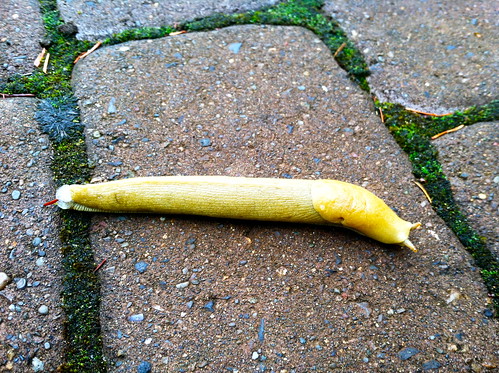
My first full week in Bandon began with a surprise visit from my beloved school’s mascot!  After setting eyes on this gorgeous gastropod, I knew it was going to be a good week…

IMG_4135

After a full week in the office I think I’m starting to get a better handle on what it is I will be helping Wild Rivers Coast Alliance with in the next ten weeks.  For the past week and a half my main priority has been to create a master database that details what activities, lodging, restaurants, shops, and places to visit, are available to tourists in each of the four cities that WRCA works with (Bandon, Brookings, Gold Beach, and Port Orford.)  Thus far what I have learned from my research is that while each city advertises many places to stay and eat, most of the four towns are seriously lacking when it comes down to detailing what there is to do (i.e. such as whale watching, hiking, and kayaking).  In the end, all the information I have been collecting will eventually be input into Travel Oregon’s website.  To me this is particularly exciting because I want to reinforce the knowledge out there that one of the main reasons people should visit Oregon is to take advantage of the astounding environment!  My hope is that by strengthening the information that’s out there about activities to do in nature, each city will be able to not only increase their sustainable ecotourism, but educate locals and tourists alike about each particular habitat, species, and conservation issue relevant to the coast.

In the coming week I believe I will be meeting with some city officials from the representative four cities to fine tune the information I have collected, as well as determine what the best way is to implement any desired changes.  I also plan on continuing my research on what South Coast Oregon’s presence is in facebook, twitter, and smartphone applications; because we live in a society that is so driven by technology and instant access to information I believe this is a great chance to captivate and educate!

IMG_4188

This past weekend we had, without doubt, the best weather since I’ve been here!  So with warm weather, sunny skies, and some visiting friends I set out again to explore Oregon’s charismatic South Coast.  Since my position as a coastal tourism intern requires me to research what the towns of Bandon, Brookings, Port Orford, and Gold Beach have to offer (such as various activities, restaurants, etc.) I have decided that I should probably experience them myself; after all, why should I expect other people to be interested in all these places if I myself haven’t even been to them?

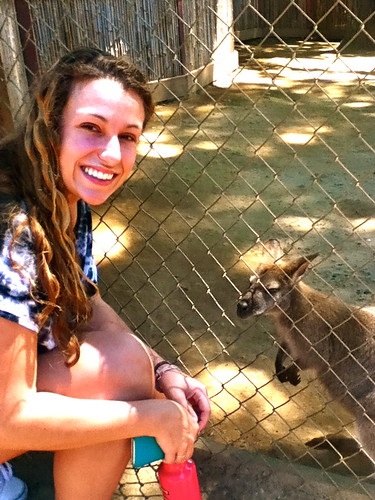
My day began at the Bandon Baking Company and Deli, which had cinnamon rolls that looked so appetizing I think I actually started to drool… The Baking Company is a cute place that’s the perfect stop for some morning coffee and a delicious homemade pastry.  After breakfast my friend and I traveled a short distance down the 101 to the West Coast Game Safari Park, an awesome place for people of all ages to not only have close encounters with exotic animals that they would otherwise probably only see in pictures, but to learn about them as well.  We spent the afternoon petting and learning about animals such as the lynx and white tiger, and wishing that we had our own pet Wallaby.

IMG_4205

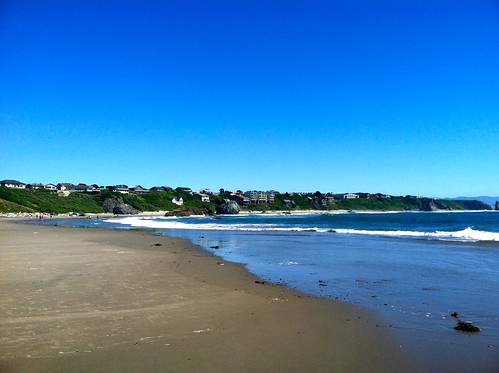
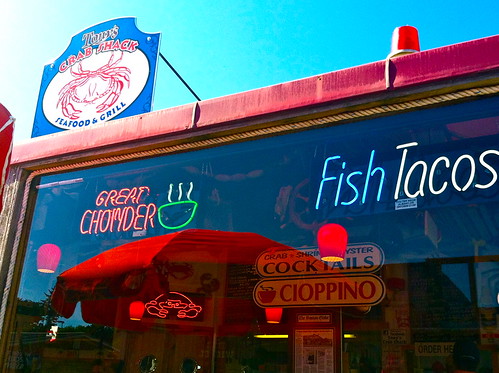
After we had our fill of cute furry animals and loud annoying peacocks, we headed back to Bandon for some smoothies from the Bandon Cofe Cafe which has quite an impressive menu including sandwiches, a variety of coffee drinks, and homemade pie (not to mention free WiFi!).  While it’s fun exploring, on a hot summer day there really isn’t anything better than relaxing on the beach and exploring the intertidal.  We weren’t the only ones taking advantage of the lovely weather, and saw both locals and visitors surfing, beach-combing, tide-pooling, and birdwatching. We ended our tough day of exploring with some delicious seafood at Tony’s Crab Shack!  This is an awesome place to sit outside, enjoy the beautiful weather and view, and enjoy some fresh seafood.

IMG_4195

This week will be a short one since the 4th of July in on Thursday.  While I will not be spending it in Bandon, my weekend will still be spent exploring Oregon’s coastline, but this time I’ll be in Seaside.  Stay tuned for more updates on my adventures and progress with Wild Rivers Coast Alliance!

Week Two

It’s been another great week on the Oregon coast!  The sky was a little bit more grey than I’m accustomed, but I hear it’s all sun shine after the 4th of July.

Today I got down and dirty trying out some really coastal living.  One of many things I have been excited about living on the coast was all the fresh sea food, and of course there is nothing fresher than harvesting it yourself.  As tasty as tuna and even rockfish are they are slightly out my reach as a boat is required. However, many species of shellfish are easily harvested from the shore.

Having never clammed, crabbed or shrimped I was a little befuddled as to what to do once I bought my permit.  Luckily enough on my way out of the office that day I noticed a flyer, by the Oregon State Park ranger, advertising a free clamming, crabbing, etc. workshop for beginners, and so this morning I attended workshop.  The other attendees and I learned how to work a crab trap and how to bait it.  I learned how a shrimp pump worked and that the shrimp it catches are best used for fishing bait.  The clamming is what I was most interested in learning about.  I learned the gapper clams have long “necks”, sometimes up to three feet long, and so the body/shell of the clam can sit as far down as a yard under the sand.  It was advised that two to three people dig for one gapper clam at a time and they all close in around in it.  Talk about team work!

After the workshop the ranger took us all down to the mud flat and help us dig for our first purple varnish clams.  It only took a few minutes before I got the hang of in and within an hour I had hit the bag limit of 72 purple varnish clams a day.  It was recommend that before cooking the clams be left to soak in a mix of sea water and flour from several hours. So I hurried them home to set them to soak for dinner that night.

While letting them soak a few of my fellow Hatfield residents and I took a drive about 30 miles south of Newport to Cape Perpetua and the Devil’s Churn.  On that portion of the coast lava rock juts out of water just in front of the beach and the tidal waters get just high enough to fill the voids in the rock.  These salty pool were dotted with anemones and mussels.  Interestingly enough the pools closest to the mainland where filled with tadpoles, meaning they were fresh water.  I must have been filled by rain and just outside the reach of the tide.

After leaving them to sit for a few hours my fellow Hatfield residents and I steamed the clams in white wine, garlic and parsley and served them over linguine.  A delicious way to end the day if may say so.    The only thing I would have changed is that I would have left the clams to sit for just a bit longer because they were just a bit sandy still on the inside come dinner time.

Week 2: First Day in the Field!

My work this week has been defined by many miscellaneous tasks I have done for various members of my mentor’s lab, almost none of which are related to my project, but I had a lot of fun with them. I have done analysis of videos taken in an estuary in Washington, measured tiny mud shrimp recruits (juveniles) after sorting through mud to find them, and measured, sexed, and examined adult mud shrimp to look for parasites and infection. I also “tested” the GoPro cameras we will be deploying in July to record the fish and crabs found in the invasive species of eelgrass.

A picture of the video I’m analyzing. You can see a full-sized Dungeness crab.

Mud samples on a tray that I sorted through looking for small mud shrimp recruits (juveniles)

Today was the first day I went out in the field to do sampling, on the mudflats near Hatfield Marine Science Center. Thank goodness it was a beautiful day today, so we didn’t have to wear heavy rain gear. We got very muddy, and I wish I had pictures but I don’t have a camera I wouldn’t mind getting dirty. We were looking for mud shrimp to measure and look for parasites. We used what is called a bucket core, which looks like a giant stainless steel bucket without a bottom and is about three feet tall. We pushed it all the way down into the mud, and shoveled the mud out into sieves, sorting through them and pulling out the shrimp as we found them. It was hard work, but the most fun I’ve had so far, and a great excuse to get outside and play in the mud!

Overall, it was a great week. I also bought a new camera, so hopefully I’ll have some higher quality pictures from now on. Next week I’m looking forward to building the mounts for our cameras and testing them in the field, and the Fourth of July, of course!

Hello HMSC!

Hello all! What an incredible opportunity it is to be a part of the marine science community here at Hatfield Marine Science Center (HSMC) in Newport Oregon. My name is Patrick Cousineau, I was born and raised in Southern California and grew up surfing, sailing, and swimming off the coast of Los Angeles. All my life I have been drawn to the peaceful tranquility of natural places. The ocean has molded and shaped my personality, educational and career interest, and has served as a place for personal thought and reflection. The ocean, however, places immense barriers to human exploration, but the intrinsic curiosity in humans to explore new places will always overcome difficulties. Oceanographers, marine biologists, atmospheric scientists, geologists, and other scientific research teams are making new discoveries about our oceans every day. It is an amazing experience for me to be studying and working alongside prominent marine researchers and helping to better understand the natural processes of our oceans.

I am working with the Oregon Department of Fish and Wildlife, where I am helping conduct research in Oregon’s network of Marine Reserves. A few days ago I went on what was intended to be a multi day, overnight benthic survey. Unfortunately the turbidity in the water column and low visibility conditions cut our research efforts short and we were only able to stay out at sea for one day. On the vessel, I helped deploy and retrieve an underwater camera system that takes footage of the benthic community, allowing us to identify fish species, assess population density, and estimate fish size. This camera system, called a sled, is towed behind the vessel where it slides along the ocean floor on two skis. The footage is saved onto a standard SD card where it is later analyzed and compared with other study sites.

Outside of work, I have seamlessly bonded with my roommates and the many other interns. Already in the first week we have come to know each other so well and have bonded over trips to the aquarium, tide pools, and the beach. I am so excited for what is in store for the following nine weeks, but I know that my time here is short and that I must take full advantage of every opportunity to come.