Week 1: Getting Oriented

Hello!

My name is Sarah Heidmann, and I am one of the Summer Scholars this year for Oregon Sea Grant. I attend Oregon State University, and will be graduating in June 2014. I’m majoring in biology with the marine option, and minoring in statistics. I am originally from California, but am loving my experiences so far in Corvallis and Newport studying marine biology. This past spring term at OSU I lived in Newport taking an intensive marine biology course, and am excited to put all my new knowledge to the test.

Although I am working in Newport, I am living in Corvallis. Since OSU’s main campus is there, it was easier for me to live in the house I will have throughout the next year, in addition to being able to be with my friends who are here this summer. It’s about an hour driving distance, and I’ve been riding in a vanpool that allows me to sleep both ways, but I still have to get up pretty early.

Part of the beautiful bike ride I have every morning and afternoon in Corvallis on my way to and from the vanpool pickup location

This summer I am working in Newport with the US Department of Agriculture (USDA-ARS) studying fish and invertebrate use of coastal estuarine habitats. We are focusing on the habitat provided by a non-native species of seagrass, Zostera japonica, using GoPro cameras to record video in different areas and analyzing the numbers of fish and crabs that appear in the field of view. I’ll be in the field a lot this summer, getting very muddy.

The outside of the EPA building, where I work

So far I’ve been mostly practicing analysis of video from past years, trying to find some ways of improving the sampling technique. Although I’ve had some previous research experience, I still have so much to learn! I have been getting some training in Microsoft Access databases as well as statistics using R, which has a very steep learning curve when you have never programmed before. It seems like I’ll gain a some skill sets this summer that will be very useful farther down the road in my career.

Thanks for taking the time to read about my adventures! I am greatly looking forward to the rest of the summer.

Bandon or Bust!

Hello readers!

My name is Catherine Courtier and I have recently graduated from the University of California Santa Cruz with a B.S. in Marine Biology. During my time as an undergraduate I was not only fortunate enough to work in the labs of some truly inspiring professors, but  got the chance to take part in field study classes that enabled me to get a taste of what exactly it was that I was spending my undergraduate career working towards. Now I am one of six lucky Summer Scholars chosen by Oregon Sea Grant to work with Wild Rivers Coast Alliance. My main focus has always been on marine organisms, (specifically invertebrates) however I have recently become interested in the issues that surround coastal conservation, something I hope to learn more about through WRCA.

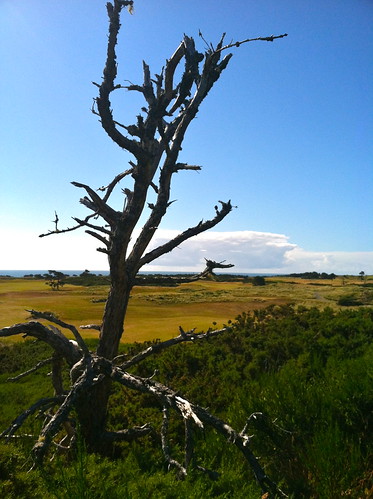
I was born and raised in Southern California, so you could definitely classify me as a sun, sand, and sandals type of girl. So naturally when I found out that the town of Bandon Oregon (where I will be spending the next ten weeks of my life) typically reaches a summer high of 68° I was a bit concerned. However, when I arrived in this cozy coastal town my worries seemed to disappear as I caught glimpses of the landscape on my way down the 101.

IMG_4096

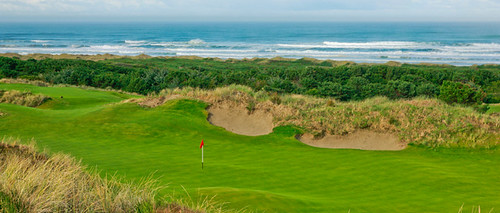
My first stop in Bandon was at the Bandon Dunes Golf Resort, and home of the Wild Rivers Coast Alliance, where I had lunch with my mentors Marie Simonds and Jim Seeley while overlooking the Bandon Reserve Course. Aside from its spectacular beauty, this course is of particular interest because all its proceeds go to funding Wild Rivers Coast Alliance.

Bandon_Preserve_Top

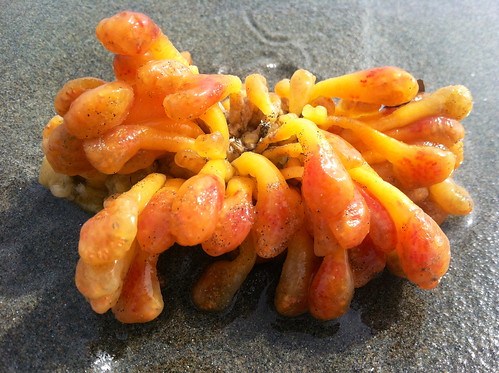
Now that I am all settled in, I’ve had some time to begin exploring Oregon’s South Coast. Despite the questionable weekend weather and encroaching storm, I ventured out to the beach and was rewarded with mild temperatures and amazing tide pooling! In addition to the vibrant anemones and adorable sea stars, I caught a glimpse of some sunning sea lions and quite a bit of what I believe to be an orange sea sponge washed up on the beach.

IMG_4123

IMG_4128

Sadly the storm eventually caught up with me, so my plans to explore the various hiking and biking trails Bandon has to offer will have to wait till next weekend! While I’m not by any means an expert cyclist, I hope to improve my riding over the course of this summer so I can help with the final stages of a new coastal scenic bike pathway.  Tomorrow marks week two of this amazing experience and I can’t wait to see what adventures are in store for me!

Coos Bay: My New Frontier

Hello, all!

Thanks for joining me on my adventures in the Pacific Northwest this summer! Allow me to introduce myself, I’m Sam Thiede. I’m an undergraduate student at Purdue University majoring in Fisheries and Aquatic Science and minoring in Wildlife Science. I’m a senior and will be graduating May 2014 and plan on pursuing my masters and Ph.D. in either fisheries sciences or aquatic resource management. Currently, I am working at the Oregon Department of Fish and Wildlife (ODFW) as a technical research assistant to Scott Groth through the Oregon Sea Grant Summer Scholars program, but you will all hear much more about that topic throughout the summer.

I’m a Midwesterner, specifically from Indiana. Before my arrival in Oregon I had never been farther west than St. Louis, Missouri and the trip here was quite a shock. My plane had a short layover in Salt Lake City, Utah. I have never seen desert before and I was in true awe of the scenery throughout my short hour there. Seeing the Great Salt Lake and all the desert salt flats in between the mountain tops looked like something out of a painting! As I flew out of the desert and into the mountains of Oregon, again I was in for a total shock. Mountain tops covered with snow, gigantic confiners leaning over open ocean, I was in love before I even stepped off the plane.

OIMB Beach

Upon my arrival into Coos Bay, my mentor, Scott Groth, gave me a tour around the area. As we drove up Cape Arago highway we stopped off at an overlook of the bay to check for tsunami debris. Sure enough, all the way down at the bottom of the cliff face was a washed up Japanese plastic pallet. Much of the debris from the tsunami that struck Japan several years ago has been floating up on the coast of Oregon and biologists have been avidly collecting samples and trying to remove live specimens to avoid the spread of Japanese invasive species.

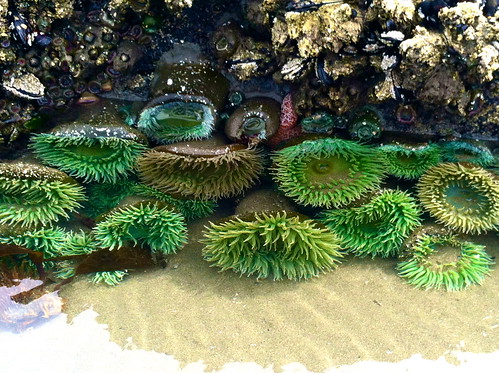
Within hours upon my arrival I was already scaling down the side of a cliff, sample bags and scraper in hand, to retrieve samples off of Japanese tsunami debris and at that moment I was assured I was in for an interesting and informative summer. We scraped off many kinds of unknown shellfish and algae (we are still processing the sample) and I was given a tour of the surrounding tide pools at the base of the cliff—full of shellfish, anemones, sculpins, etc.—to the soundtrack of sea lions (which I had never seen outside of a zoo!) barking on a nearby island. It was truly an exciting first day on the job.

OIMB Beach Anemones

As the week went on I had begun to learn the ropes of the ODFW’s shellfish program. This week was all about collecting data on pink shrimp, cockles, and spot prawn. Local fishing boats and clammers offer samples to the ODFW in order for us to keep track of size structure and monitor age class trends over the years in order to ensure sustainable fisheries. Not only did I learn how to measure carapaces and sex shrimp but I also had the pleasure of meeting with the local fishermen and hearing their tales of their times out at sea, which is always very colorful! This coming week’s project will be littleneck clam surveys and will bring even more excitement as good stories always seem to come from field work.

I hope you will all continue to tune in as I delve more into the science of marine life here on the Oregon coast with the ODFW! I will post weekly about my experiences here in Coos Bay and am excited for the coming weeks as well as having you all following me along in my journey!

Tide Pool Sea Star


Week One

I am super excited to have the opportunity to be living in Newport Oregon this summer!
For the next nine weeks I will be working with Oregon Department of Fish and Wildlife (ODFW) to develop new outreach material regarding Pacific Rockfish conservation and the use of descending devices.  I will be using this blog to share my experiences while on the Oregon coast, both at work and recreating.   This is my first time living near an ocean, having grown up in the Chicago area and attending university in Michigan.  I intend to use the next nine weeks to enjoy the experience to the fullest.
My time with ODFW has gotten off to a great start!  Last Friday I was able to volunteer my time with ODFW’s rockfish PIT tagging crew.  As a volunteer it was my responsibility to catch as many Black Rockfish as possible with a rod and reel.  Having never fished the ocean before I was skeptical as to whether or not I would be able to catch any fish.  However, after just a short time of fishing I caught my first Black Rockfish and by the end of the seven hours I had caught nine fish in total. I feel the boat captain deserves a lot of the credit though, considering he’s the one that had to find where the fish may be lurking under water.
Yesterday, some of the other residents at Hatfield and I were treated to a special tour of the Oregon Coast Aquarium.  The guide took us behind the scenes to see where they culture jellyfish and brine shrimp as well as the pinniped training pools.  Lucky for us, as we arrived two of the harbor seals were just beginning their training session.  It was the cutest thing to see the seals bounce around the pool deck on their bellies.  My favorite exhibit at the aquarium was the Passages of the Deep, where visitors walked through a tunnel surrounded by rockfish, sharks and other deep sea life found off the coast of Oregon.
Mother Nature planned an additional surprise for my first week on the coast as well, a tide of -2.38 on Sunday morning.  So a fellow Hatfield resident and I went tide pooling at seal rock.  The rocks were covered with green anemones, starfish and mussels.  The mussels made the rocks seem alive, hissing and wheezing whenever they were disturbed.  Tucked between rocks where purple shore crabs and sea sponges and when we looked closely through the sea grass we even found a nudibranch (a fantastically colored sea slug)!
With such a successful first week I am really looking forward to the rest of the summer.OLYMPUS DIGITAL CAMERA

Hello, Oregon!

Hello everybody, my name is James Kralj and I am so glad to be an Oregon Sea Grant summer scholar this year! I am a junior at the University of Wisconsin – Madison where I am majoring in microbiology. I am also an undergraduate researcher in the Department of Atmospheric and Oceanic Sciences where I help create and use computer models to study the ecology of Lake Michigan.  For as long as I can remember I have wanted to be an oceanographer and I cannot wait to start learning about marine science this summer!

DSCN0692

As part of my internship, I will be working with the United States Environmental Protection Agency in the Pacific Coastal Ecology Branch at the Hatfield Marine Science Center in Newport, Oregon studying soil oxidation rates in salt marshes along the Oregon coast.  I will be doing a lot of fieldwork this summer and I cannot wait to get started but before the fun begins, the EPA requires quite a bit of training.

This past week I have been working my way through the EPA’s health and safety training where I learned everything from how to properly hold a ladder to the correct usage of air filtration masks. Exciting, I know! But now that I have finished with that, I can start working in the field. Next week I will be going to two marshes with EPA researchers to set up our experiments.

In addition to getting started at the EPA, I have been having a great time so far in Newport. I am staying in the dorms at the Hatfield Marine Science Center and have met a ton of awesome people from all over the country. It has been great to meet so many people, each from such different backgrounds.

Also, everything here is so beautiful! We have been down to the beach many times already and each time I see the water I can’t get over how great it is to be living on the coast. Even if the weather isn’t perfect, it is still amazing to see the mountains and the waves through the fog and rain. Plus, I’d take a cool Pacific breeze over the hot and humid Wisconsin summers any day!

DSCN0736

I have already done a lot of great things in Newport. A group of students from Hatfield and I have gone to the Oregon Coast Aquarium and were given a behind the scenes tour which was really great to see. I have also had some pretty amazing seafood like clam chowder, fish and chips, and clam strips. I love to cook and can’t wait to try my hand at cooking some local seafood.

Although it has been just a week, I have already been having such a great time. I cannot wait to start my fieldwork next week and I am really excited to learn all about the coastal salt marshes of Oregon. And of course, I can’t wait to share all of my experiences with you!

DSCN0643

2nd Quarter Report

 Are we really half way through 2013 already?  It is going too fast!

The SRGP recently got some love from the Oregon press.  Check it out:  http://www.albanytribune.com/10062013-tuality-hospital-receives-seismic-upgrade%E2%80%8F/

And, Congresswoman Bonamici is still working hard to free up some of the funding that is available for marine debris removal.  You can read about it here: http://www.oregonlive.com/politics/index.ssf/2013/06/help_for_tsunami_debris_cleanu.html

For more updates, check back throughout the summer.

The OAPA Conference

This past week, I had the opportunity to attend the Oregon Chapter of the American Planning Association’s (OAPA) Annual Conference at the Portland Convention Center and present two posters I created that discuss the work I have been doing here at OEM.  Pictures of the posters can be seen here:

P__AF19 P__22C0 P__D424 P__BA18

PDFs of the posters can be found on the OEM website.

At the OAPA Conference, I also had the opportunity to listen to Kent Yu and Jay Wilson, Chair and Vice-Chair of OSSPAC, talk about the new Oregon Resilience Plan.  For me, the big take-away was that we shouldn’t just think about natural disasters as a one time emergency; instead, we should perceive them as the obvious results of our everyday planning.  Natural disasters offer us an opportunity to think about how we organize our communities and to maybe make some really important and beneficial changes.  As Jay Wilson says, “You constantly need to ask yourself, ‘How prepared am I at this very moment?'” How prepared are you for a magnitude 9 earthquake?   

April at OEM

At the beginning of the month, I had the opportunity to travel with Kim Lippert, OEM’s Public Information Officer, up to Astoria to have a meeting with Congresswoman Suzanne Bonamici.   Briana Goodwin from SOLVE, Steve Rumrill from ODFW,  David Solomon from ODPR, and Patrick Corcoran from Oregon Sea Grant also attended and  took part in a short briefing about what we are seeing occur on our coast in relation to Japan tsunami marine debris (JTMD).  The Congresswoman also presented legislation that she is introducing to Congress that is directly related to JTMD cleanup reimbursement.

 The first bill, titled “Marine Debris Emergency Act of 2013,” would expedite the current grant award process made through the National Oceanic and Atmospheric Administration’s Marine Debris Program.  Currently, the National Oceanic and Atmospheric Administration (NOAA) has existing grant programs available to assist with debris removal, but the process for awarding these grants is slow and does not account for extreme circumstances. The bipartisan Marine Debris Emergency Act would speed the grant award process and give preference to applicants who are facing a severe marine debris event.  Here is a draft of the bill: Marine Debris Emergency Act of 2013

 The second bill, titled “Tsunami Debris Cleanup Reimbursement Act,” would give NOAA the authority to use the $5 million provided to the U.S. government by the Government of Japan for the purpose of assisting state governments with funding marine debris cleanup activities they have already undertaken.  In December 2012, the Japanese government generously provided the United States government with $5 million to assist with the cleanup and removal of debris from the tsunami; however, because of the statutory language describing their grant authority, NOAA can only provide grants to states for future projects, not those that are already completed.  Therefore, this legislation would give the NOAA Administrator authority to reimburse states for the cost of cleanup efforts they have already undertaken to address marine debris from the tsunami. Here is a draft of this bill: Cleanup Reimbursement Act – draft

 For more information on this meeting with Congresswoman Bonamici, check out these articles from OPB and The Daily Astorian.

 On April 24, there was a great assembly at Central Elementary School in Albany to celebrate the success of a $1.5 million retrofit project funded by the SRGP.   The student assembly was followed by an earthquake drill and a building tour for guests who were interested in seeing all of the retrofit work done to the building.  Distinguished guests and experts at the event included: Senator Betsy Close; Albany School District Superintendent Maria Delapoer; Dr. Chris Goldfinger, one of the world’s leading subduction zone earthquake experts from Oregon State University; Albany Mayor Sharon Canopa; Jay Raskin, a commissioner with the Oregon Seismic Safety Policy Advisory Commission; and Ryan McGoldrick, Red Cross Preparedness Program Coordinator for the Oregon region.

 In reality, Central Elementary School is just one of many schools that have benefited from the SRGP.  Since 2009, state-funded seismic retrofit grants have been awarded to 21 K-12 schools, three Oregon community college and university campuses, and 18 public safety facilities deemed in danger during an earthquake. The Governor’s budget requests $30 million for this priority for the next two years, and legislators will decide the final funding level later this spring.

For more information on this wonderful event, check out the new SRGP website and these stories from OPB and KEZI


Legislative Update from Oregon Sea Grant’s Legislative Fellow

To date, it has been an incredible experience serving as the Oregon Sea Grant Legislative Fellow, working for the Oregon Legislative Assembly’s Coastal Caucus, and being a part of the 2013 legislative session.

Last week (that of April 15th) marked two important benchmarks for this legislative session: the halfway point of the session and a deadline for bills to pass out of committee in their originating chamber. A symbolic marker, the halfway point denotes the mid-point between the beginning of this legislative session and the constitutional sine die date of June 30, 2013. It is at this time that many legislators take stock of what work they have accomplished — and what legislative goals they yet have to achieve. As of today, 2,631 measures have been introduced, 357 passed by the House, 266 passed by the Senate, and 47 signed into law by the Governor.

Last week’s calendar included a second important procedural marker: the date by which bills must be passed favorably from committee in their originating chamber. In the Oregon Legislative Assembly, much of the work is completed in committee. Once introduced, bills move next to the chamber floor for a first reading, and from there are assigned to a committee by either the Senate President or the Speaker of the House. Senate bills are referred to one of ten Senate committees and House bills are referred to one of sixteen House committees. In lieu of chamber-specific committees, a bill may instead be referred to once of six joint committees.

It is in these committees where much of the work happens in the Legislative Assembly — and where the fate of most Oregon legislative measures is decided. A committee may essentially “kill” a bill by simply failing to take any action on it. Further, a committee may conduct a public hearing on a bill (to gather public input and feedback), but may then decline to hold a work session, meaning they will not vote on the bill; this is another action that will “kill” a bill. To continue on in the legislative process, a bill must receive a majority of committee member votes — allowing the measure to pass from the committee and back to the chamber floor for a vote by the Senate or House body.

Last Thursday, April 18th, marked the deadline by which bills must have been voted out of their originating chamber’s committee*— House bills from House committees and Senate bills from Senate committees. This deadline serves, to some degree, as a procedural sifting mechanism. What does not move from committee by this date does not move forward and is essentially a “dead” bill.

Two small factoids provide some context to the importance of this deadline: prior to the April 18th deadline I tracked close to 300 bills (293 to be precise) for the Coastal Caucus; today, my list contains 123 bills — an almost 60% reduction. While this represents a mere snippet of the thousands of bills being considered by the Legislative Assembly, it illustrates the functional value of the deadline, which serves to considerably shrink the universe of bills that the Legislative Assembly must now consider and assess. Of course, this is most important as the days of the 2013 legislative session begin to grow shorter.

Several important bills impacting the ocean and marine resources made it out of committee by this deadline— among others, Senate Bills 580, 605, 606, and 737; and House Bills 2694, 3451, and 3476. I will discuss those in more detail in a later post, but you can search for the bills here to keep an eye on their progress: https://olis.leg.state.or.us/liz/2013R1

The next major deadline on the horizon is June 1st, the last day for policy committees to move measures that originated in the opposite chamber out of committee.

*Three types of committees are exempt from this requirement: the Joint Committee on Ways and Means; the House or Senate Committees on Rules; or the House or Senate Committee on Revenue.