Greetings from Newport, Oregon

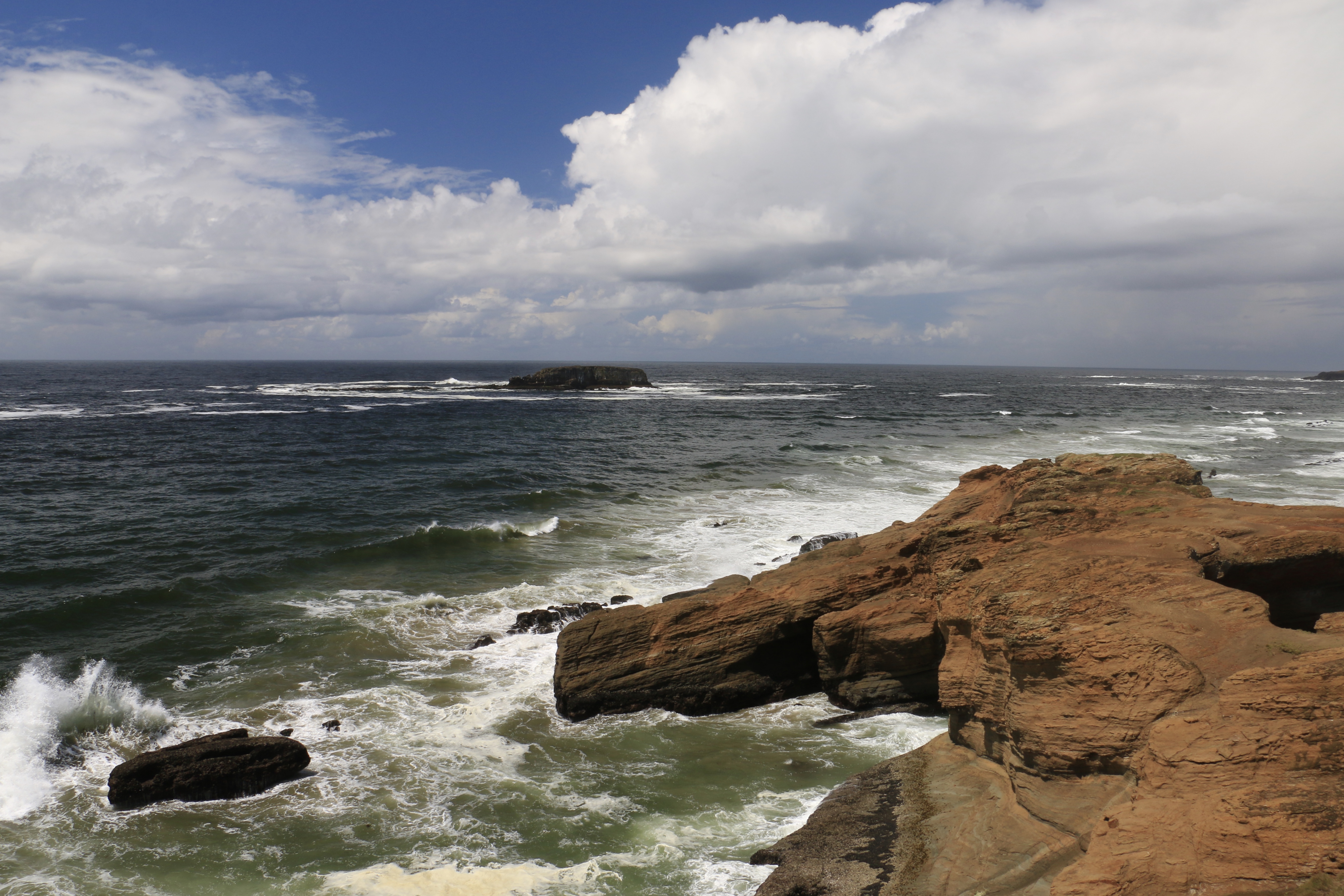
Yaquina Bay State Park

The last couple of months have brought a lot of change. From applying to jobs and internships, to graduating, to moving out of my minuscule apartment in LA, to moving here- it’s been quite the adventure. Welcome or unwelcome, these events have all pushed me closer and closer to the real adult world. As young and carefree (or perhaps naive) as I’d like to be, there’s nothing more sobering than the prospects of figuring out my future and the reality that money can determine what happens in my future. And while I don’t want it to be the most important thing, I do recognize the value in understanding the role money has in the world.  

Albeit, economics is not a field I’m very familiar with, I’m extremely excited to be working with the OSU Lincoln County Extension Office on a project to assess the economic and business impacts of direct marketing programs that help marine businesses of Yaquina Bay. An astounding amount of seafood caught off the Oregon Coast is shipped elsewhere; hence, research was done on the impacts of direct marketing (also known as community-supported fisheries) in the hopes of understanding which fishermen can benefit from these programs. It found that many consumers felt intimidated or unfamiliar buying off the docks.

flyers

Flyers for Shop at the Dock

And so began Shop at the Dock (now going into its third summer!), which is an event that provides free, guided educational tours of commercial fishing docks in Newport, allowing customers to learn about fisheries, meet local fisherman, and buy fresh, locally caught fish. This project combines all of my interests- education, community building and outreach, and the environment- so I’m really grateful and excited to get started.

During my first week, I spent time getting acquainted with the Extension Office. I was amazed to hear about all the work they do, including running the 4-H Youth Program to Family and Community Health Programs. I have my very own (and first!) office with a fantastically distracting view of Yaquina Bay. I also began preparation for Shop at the Dock. One of the highlights of the week was going on a Dock Walk led by my mentor, Kaety Jacobson, and seeing a boat that was rigged to catch hagfish (mmm…dried slime).

I am endlessly in awe of Newport. The weather gets a little gloomy for this California soul, but I love the billowing clouds, the random rain, and the cotton candy sunsets. So far, I’ve had a fantastic time exploring the Newport Farmer’s Market (I ate the pint of blueberries I bought in a day), hiking around Yaquina Head Lighthouse, and laying out on the beach on an exceptionally windy day (my ears are still filled with sand).

IMG_6142

Like-minded (and like-dressed) environmentalists

Newport’s definitely inspired a new playlist this summer, so feel free to listen along. Thanks for reading and stay tuned for more on my research and Newport adventures!!

Week 1 – Planting the seed

I have always found fish to be intriguing creatures, and as far back as I can remember, I have been enamored with fishing…Each species has its own life history that dictates its diet, location, and behavioral characteristics, and so I studied up on a plethora of them, eager to know more about what makes each one unique as well as how to pursue them…connecting my interest with academics was intuitive – as a biology major specializing in ecology, I was very much interested in fish as a particular subject, and as a recreational angler, I felt as though I had a personal stake in helping to manage our resources. It has become increasingly apparent to me, whether it be through learning about historical stock collapses through my lecture on the tragedy of the commons or hearing the debates regarding recreational regulations each year, the importance of stewardship side by side with research…

I included the above excerpt from my personal essay as a bit of insight into what drove me to apply to the Oregon Sea Grant Summer Scholars Program. The focus of my essay was on the tragedy of the commons, a phenomenon that I first came across several years ago when I was still an undergraduate. Now, I’ve found that throughout college there are the courses you enjoy, the courses you tolerate, and the courses that leave you profoundly contemplative of what just transpired in the sixty minutes prior. I can’t say that I was raptly attentive throughout the entirety of my marine biology lectures (I’m looking at you, macroalgae), but our class on the tragedy of the commons was one in which I was not only intrigued by the content matter itself, but also surprised by the fact that I could be so interested in a topic.

Originally conceptualized by William Forster Lloyd in 1883, the tragedy of the commons was popularized by Garrett Hardin in 1968 as an explanation of the consequences of the rapidly expanding human population on resources. In his paper, Hardin summarizes it best in the following thought experiment:

“Picture a pasture open to all. It is to be expected that each herdsman will try to keep as many cattle as possible on the commons…As a rational being, each herdsman seeks to maximize his gain. Explicitly or implicitly, more or less consciously, he asks, “What is the utility to me of adding one more animal to my herd?”…the rational herdsman concludes that the only sensible course for him to pursue is to add another animal to his herd. And another; and another… But this is the conclusion reached by each and every rational herdsman sharing a commons. Therein is the tragedy. Each man is locked into a system that compels him to increase his herd without limit–in a world that is limited. Ruin is the destination toward which all men rush, each pursuing his own best interest in a society that believes in the freedom of the commons. Freedom in a commons brings ruin to all.”

Since its inception, the tragedy of the commons has been applied to a variety of situations – in the case of my marine biology class, on overfishing. This isn’t even necessarily about blatantly illegal fishing; responsible operations that abide by the law are also part of the problem as we attempt to divide increasingly scarce fisheries among increasingly larger markets. Certainly fishermen have a right to a livelihood, but where do we draw the line between sustainability and human demand? As one can imagine, it’s a complex path studded with bias and contention, one that must be navigated shrewdly if we are to adequately meet the needs of both nature and man. (I recommend reading Hardin’s paper in its entirety to get a stronger understanding on the tragedy of the commons, but be forewarned that the latter parts of the paper adopt a decidedly controversial attitude on human overpopulation).

Which brings us to why I’m here with the Oregon Department of Fish and Wildlife (ODFW). My area of research this summer is centered on the state’s five marine reserves scattered up and down the coast. Officially enacted in 2012, these reserves are closed to fishing and ocean development, but they are more than simply ecological sanctuaries. The ODFW Marine Reserves Program is closely monitoring their long-term effects with respect to comparison areas, which are open to fishing but still closed to development. In addition to studying the impacts of fishing, the Marine Reserves Program also assesses other abiotic and biotic measures related to the health of Oregon’s coastal ecosystems.

As a research project, these marine reserves were built specifically to be scientific in nature. But they are also simultaneously meant to conserve biodiversity and inform future management of our marine resources. Having already shared my above motivations for pursuing this specific field, I can’t help but feel that that this is the path that much of future ecology work must take, if it hasn’t already started trending in that direction. This is exactly what I meant when I wrote “stewardship side by side with research” in my essay. The effects of what has already occurred under scenarios dictated by the tragedy of the commons are glaring. Overfishing. Water shortages. Fossil fuel usage and the advent of climate change. And so on and so forth; the list will undeniably get longer with time. We’ve already taken so much out of our natural resources, some of it irrevocably. It’s going to take a lot more to restore it back to the way it was.

But enough big picture talk for the time being. My personal role in this endeavor is multifaceted – I’ll be working on anything ranging from SMURF (Standard Monitoring Units for the Recruitment of Fishes) data collection to intertidal sea star surveys to underwater video analysis. I’ll also be spending part of my time on the communications aspect of the project, namely video editing and social media outreach. So far, I’ve been dutifully busy reading material, visiting the aquarium to solidify my fish identification skills, and conducting SMURF fieldwork.

We’ll see what the next week brings.

The Oregon South Coast: Week One

My first week as an Oregon State Summer Sea Scholar has been busy, but already fulfilling. It’s impossible to document every experience that I’ve had, but looking back on my week, there are several moments that stand out. I’ll organize the post by these moments, and hopefully this will make it easier for you to read too – you can skip the less intriguing subtitles.

Part 1: “Where are the hipsters?” (A story of expectations)

I’m almost embarrassed to say that I didn’t know much about this region, or Oregon generally before I had arrived. My academic interests surround environmental policy, and I’ve studied Oregon’s history within (really, initiators of) the U.S. environmental movement, and many of their successful environmental policies are fascinating, so I wanted to learn about these aspects on the ground. But my academic research on the histories and policies of the region failed to prepare for the cultural and geographic differences from my Mid-West home. Flying in, I had no idea that there were so many mountains here! I knew about Mt. Hood, and the mountains in Washington, but mountains, a coast, and a seasonal in-land climate? Oregon, you cool. I also expected just about everyone to be wearing flannel, skinny jeans, and thick-rimmed glasses, but I don’t think I saw a one! There were plenty of Starbucks in the airport, though, and I haven’t had a shortage of coffee while here, so that expectation was met. Also no one told me how cold it was; coming from Missouri, our summers are 100 degrees and humid, but here? Highs of 65 and breezy? I can see why Nike set up shop, you can run forever! Also these trees. Man, the trees! Gorgeous conifers, towering over 70 ft! I thought just the Redwoods (which, I also got to see a “baby” Redwood on the OSU campus) could grow this tall, but their average tree here is a giant. Really helps put the world in perspective biking among this giants to work.

Mount St. Helens, the river in Newport, and my new hat


Part 2: The pokey bike ride

Speaking of biking, that brings me to my first story. So I had just arrived at my new place (also gorgeous, by-the-way — huge ceilings, two stories, queen bed with my own private bath — definitely didn’t expect any of that. Oh, also laundry is right-next-door and I have yet to see anyone else in there), and I was about ready to take my requisite daily nap, when it occurred to me that I had absolutely no food. While I wasn’t hungry then, I reasoned that by the time I woke up, biked the 10 mile roundtrip to town, and fixed my dinner, it’d be too late. Talking myself out of my nap (very hard to do), I took off down the road I was told led to Bandon (there’s only one road…). I didn’t get very far when I noticed that the seat on the bike that was donated (thanks a million, OSU!) was a bit too high (surprise, I’m really short). I bent down and realized that the only way to move the seat was with a wrench. So I piddle-paddled-peddled on down to town, choosing between bruising my tailbone and getting poked in the rear with the seat (a difficult decision). After a couple of stores, a lady (in a pharmacy, no less), directed me towards the section that included a wrench, wahlah! She was very surprised by how excited I was to find and purchase such a strange item, and so I explained my long and arduous journey. She laughed and said, “Well now you can add a wrench to your toolbox.” “Great,” I replied, “it will include one wrench.” But it was a wrench that I was able to comfortably peddle on back to my house (with some yummy groceries that I was also very excited for upon returning).

Downtown Bandon, and the infamous bike

Part 3: Person, Place, Thing (First Day on the Job)

Wow, is Bandon Dunes stunning (photos linked). I had looked up photos before coming, but nothing compared to standing out on the course, warmed by the sun, cooled by the ocean breeze, and in awe as these elements played with the seemingly-endless rolling hills, unbelievably tall trees, and sparkling sand dunes. When I first saw Bandon Dunes, it felt like I was in a dream. Every morning biking to work, it still takes my breath away as I roll through the forest, come down the hill into the resort, and its vast beauty strikes me again. Best perk: I can walk amongst this beauty during my lunch break (see photos from my lunch spot, and a few great trails that I’ve visited).

Bandon Dunes

For the actual “work”, I get to do what I love, research, for a cause I support. A bit on Wild Rivers Coast Alliance (WRCA) – they’re a local non-profit that is funded by the proceeds from Bandon Preserve, a 13-hole, 3-par course open to anyone at a much lower cost than the other courses at Bandon Dunes. Mike Keiser, the visionary, creator, and owner of Bandon Dunes, created WRCA to help give back to the community. We work with local businesses, other non-profits, and the state to fund projects that meet the “triple-bottom-line” of conservation, community, and economy. We help the south coast develop sustainably, which are exactly my academic interests. My job? Provide information to make this happen. Currently I’m working on a report of the Oregon Coast Trail that I’ll provide to Travel Oregon on how to increase the accessibility of the trail, while protecting the ecosystem that it runs though. Later, I’ll be compiling data on the tourism initiatives in the region to help develop curriculum for Oregon State’s new tourism program. I’ll also get to work with a fantastic local organization called “Washed Ashore”, which collects local sea debris and turns it into art, and then a conversation about the effects of sea litter on our ecosystems (see photo of “Henry the Fish” who lives in downtown Bandon). Basically, this position is perfect. It’s like no other “job” I’ve had before because it doesn’t feel like a job. Every day I am excited to show up and learn as much as possible to support such a great cause. Thank you to everyone who has helped to make this organization, and I am so grateful to be a part of the team.

Meet Henry, from Washed Ashore

Part 4: “Do you know how I can get to Portland?”

When I envisioned Oregon before my arrival, I guess I basically thought that it would be Portland all across the state… that’s a bad assumption. But with that assumption I also thought that I would be just fine trying to navigate around with just a bike. Oregon is bike-friendly, right? Sort of. What I didn’t realize was just how small Bandon is (the town where my program is), and just how far away it is from everything else (even my office is 2 miles from where I live, so I’m getting into some decent shape, whether I want to or not).

I’ve also been lucky enough to receive a scholarship for my tuition. I’m truly grateful, but one of a few stipulations of the scholarship is that I have to attend a workshop in the middle of the summer, meaning that I had to determine how to get from Bandon to KC and back again as quickly as possible. For my Missouri friends, I likened this task to trying to get from Camdenton (similar to Bandon) to either Springfield (like Eugene, has a smaller airport) or Kansas City (like Portland, large-ish airport with more options, but much farther away) with only a bike. Now, I lived in Camdenton for over 5 years, and I wouldn’t be able to tell someone how to do that. Do they have an Amtrak? I’m pretty sure there’s an Amtrak from Jeff City to KC, but how would you get to Jeff? Local bus from Osage Beach? And then I’m not sure if there’s a local bus from Camdenton to Osage Beach? My point is, I’ve learned what I didn’t know about myself growing up in a small town – we don’t take public transportation, because there basically isn’t any. If you live in a small town, chances are you have to commute to a larger town for most things, and so you’ll need a car, which I’m running short on. So after many conversations (a lot very similar to my description of transportation in rural Missouri), lots of google searches, and tremendous help from my travel enthusiast/saint of a grandmother, I found a route that includes a couple 30-min taxis, 2 greyhound buses, two flights, including the “red-eye” flight (1 am departure) from Las Vegas into KC, and finally a 3-hr drive to my workshop in Columbia, MO. That’s the trip out, I’m still working on getting back in since I just found out that there are no buses back to Bandon on Saturdays. I’ll keep you posted.

Looking forward: Week 2

If you’re still reading, (thanks!), you’re probably wondering about several aspects of my experience that I haven’t mentioned. This certainly isn’t close to everything that I have to talk about, including my roommates, workmates, and the wonderful people I’ve met around Bandon so far. But I’m sure I’ll fill in the gaps as the weeks progress and I continue posting. I’ve already set out some goals for the summer, for my internship, professionally, and personally, and I’m excited to share those next time!

Skyler’s Weekly Review – Week 1

The Buzz: Newport, ODFW & SEACOR, UAVs and GIS

Newport: Consistent temperature. Inconsistent weather. Weather prediction apps wildly inaccurate. Prepare for rain AND sun. Quaint maritime/fishing community reinforced by the presence of the Hatfield Marine Science Center (HMSC). Excellent farmer’s market on Saturdays.
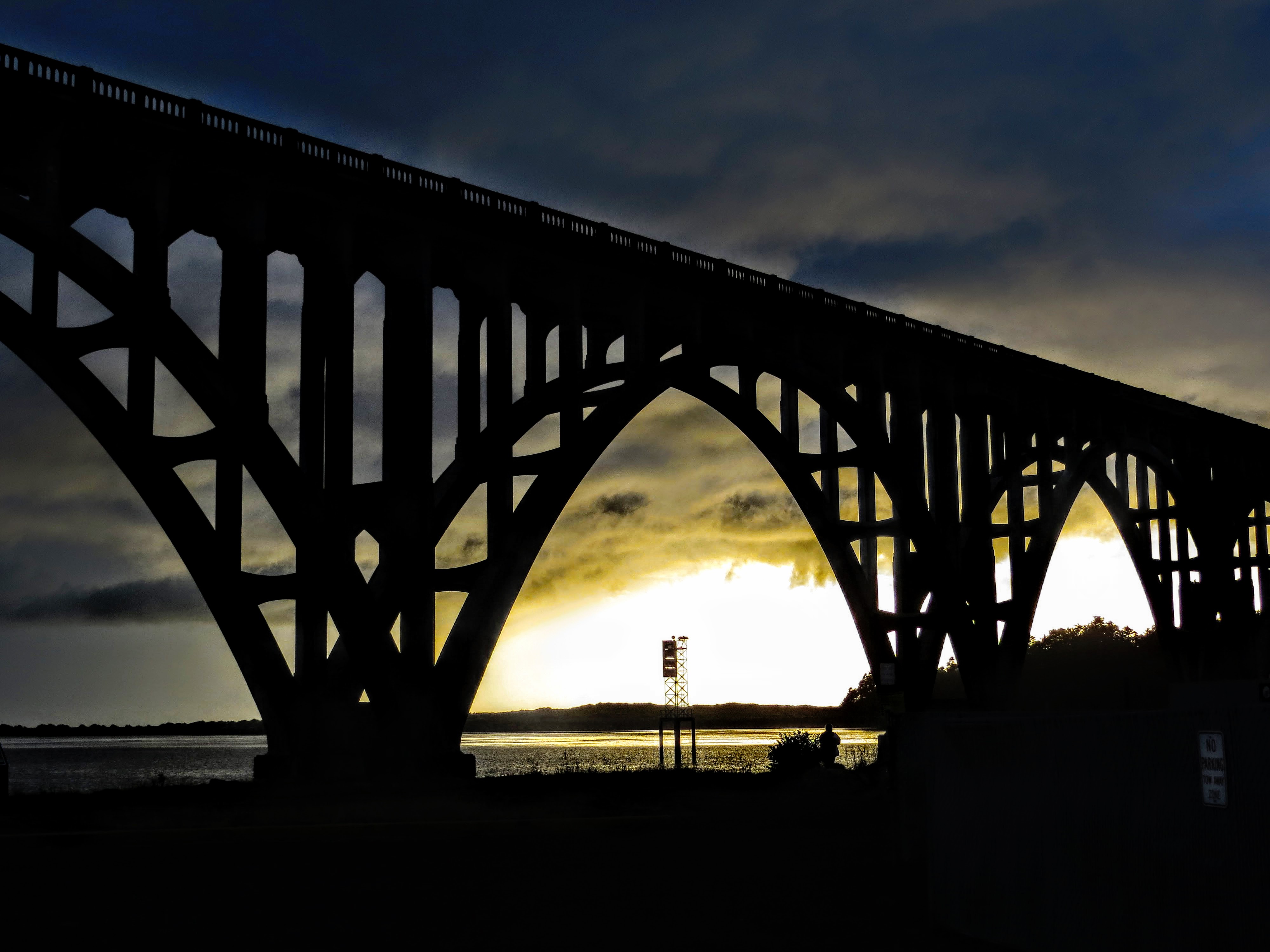
P.S. Like many before me, I too have now contributed to the pool of images of the Yaquina Bay Bridge (See Left).


ODFW & SEACOR: The Shellfish and Estuarine Assessment of Coastal Oregon (SEACOR, pronounced “seeker”), is operated under the auspices of the Marine Resources Program of ODFW and is primarily funded by recreational shellfish licenses. They have enlisted my help for field work in several major Oregon estuaries. Additionally, I have been tasked with aiding in operating and evaluating Unmanned Aerial Vehicles’ (UAVs) potential for rapid assessment of shellfish burrow hole counts and eelgrass estimates. Utilizing various software, UAV imagery is stitched (also called a mosaic), referenced to a position on the planet, and exported for further use and/or analysis in a Geographic Information System (GIS).


UAVs: Often given a bad rap for landing on the White House lawn and interrupting firefighting flights, UAVs (or more commonly, drones) remain an undeniably game-changing technology in photogrammetry and scientific research due to their affordability and ease of use. We will be primarily utilizing a Turbo Ace Matrix quadcopter: a reliable, lightweight carbon-fiber/aluminum bodied UAV carrying a Sony RX100 camera sensor.


GIS: In order to utilize the UAV imagery with computer mapping tools (i.e. ArcGIS), we need to position several Ground Control Points (GCPs) along the anticipated flight path of our UAV. GCPs allow us to make geographic ties between the images we collect and the real coordinates of the high-accuracy GCPs. Our GPS coordinates will be collected using a professional-grade Trimble GPS receiver prior to the UAV flight. Once our imagery and GCPs are collected we can “georeference” our imagery so that we can make more accurate calculations.

Next week: Estuary Field Work, RStudio, and more!

Thinking Beneath the Surface

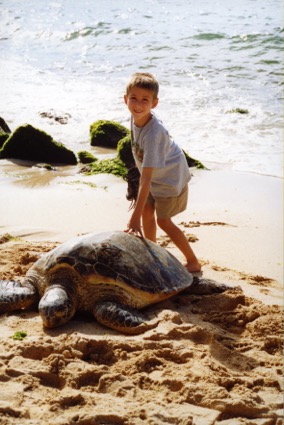
Photo of my first encounter with a sea turtle.

Ever hear of the saying, “the head, the hand and the heart?” I’ve learned that thinking, doing and feeling are key elements to bringing about change. If you know about an issue and you can feel the impacts of it, then you are more likely to care about it and take action. The same is true for me with my first encounter with the great sea turtles of Hawaii. When I was younger, I vividly remember the first time I came across one of these massive creatures on the beach and my heart raced as I approached this mysteriously large being that was probably much older than myself. On June 16th this week, people across the globe took part in world sea turtle day in an effort to spike awareness and emphasize the importance of their conservation.

When it comes to conservation problems, there is a lot to think about. In 2005, bycatch accounted for about 17% of all U.S. commercial fisheries catch. This has been a huge problem as a result of heavy fishing pressure with non-selective fishing gear, especially large purse seine and bottom trawl nets. To give perspective, the world’s largest supertrawler, the Atlantic Dawn, is longer than one and a half football fields with an otter trawl big enough for a 747 jet to pass through. As you might imagine, any fish or marine mammal that becomes trapped in this net has no chance of escaping and many in fact drown before being tossed back overboard upon retrieval. As horrifying as this may sound, it is our love for seafood and the sky rocketing demand to feed the population that has led to the implementation of such efficient technology.

So what is being done? For sea turtles, there has been a bit of a success story thanks to the efforts of conservation groups. It is now required by law that shrimp fishermen use Turtle Excluder Devices (or TEDs) to let sea turtles or other large bycatch escape deadly trawl nets. While sea turtle mortality has been reduced by 90 percent as a result, all six species of turtles found in U.S. waters are endangered and still faces threats of survival each year. The decline in marine species stretches far beyond sea turtles, as many species may be slipping into extinction without our knowing.

Otter Rock Marine Reserve.

That is where marine reserves are important. A Marine Reserve constitutes areas “protected from all extractive activities, except as necessary for monitoring or research to evaluate reserve condition, effectiveness, or impact of stressors.” This differs from a Marine Protected Area in that some fishing may be allowed rather than closing off all extractive activities. Both of these are important efforts to reduce fishing pressure on fish that have been harvested at an unsustainable rate.

Just as the sea turtles of Hawaii ignited my passion for their conservation, I see my position this summer with the Oregon Department of Fish and Wildlife as an opportunity to help bring attention to issues of ocean conservation. I look forward to better understanding the ways humans value, use and depend on marine resources and how Marine Reserves play a part in that. We’ve only just begun to skim the surface but there’s much more to dive into.

Shooting the poop

So I’ve read a lot about different kinds of poop these past few days…cow, bird, elk, and human to be specific (yes, there is a difference). Why? Because my mentor (Amy) is focusing on determining the sources of feces that contribute to the microbial load in Tillamook Bay. Although the details are still in flux, the current plan for the summer is to take water and sediment samples from various estuaries that empty into the bay and gather nutrient, chlorophyll, and microbial data. The microbial data Amy is looking to collect is specifically regarding fecal indicator bacteria (FIB), microbes that are found in feces that can signal the potential presence of other harmful pathogens in the water. We will also be using qPCR to determine the abundance of specific genetic markers from certain microbes in order to do microbial source tracking (MST). MST allows us to determine whose poop is where and how much of it there is. I’m sure that I’ll learn more as the next week unfolds and we do some field work for the first time. If time permits I’m also going to be able to work on my own side-project related to microbes in the Tillamook Bay; I’m thinking of looking at the concentrations of microbes in oyster gut tissues or on the biofilm produced by eelgrass, Zostrea marina. I’m getting really excited for all the data to start coming it, it’s going to be a cool time at the EPA!

On a non-science related note Newport is pretty sweet! It feels a lot like Boston (my hometown) and Maine; it’s great to be around actual trees instead of being in the SoCal desert. Newport itself is a quaint little town that really only exists on one main street by the bay; it’s a nice small-town feel.


P.S. Dungeness crab is really good


Report from Oregon Ocean Science Trust Science Summit

For two days in Newport in May, over 40 natural and social scientists and agency natural resource managers met to discuss research and monitoring priorities in Oregon’s nearshore. Convened by the Oregon Ocean Science Trust with funding support from The Nature Conservancy, Oregon Sea Grant, and the Packard Foundation, the goal of the workshop was to identify and prioritize research and monitoring funding needs, scalable to budget resources available, to provide baseline and trend data and inform key research questions. These research questions could relate specifically to changing ocean conditions such as ocean acidification and hypoxia, marine habitat, fish and wildlife, and the vulnerability and resilience of coastal communities to changing ocean conditions and the effects on marine resources.

The Oregon Ocean Science Trust is intended to serve as a funding mechanism for research and monitoring in Oregon, and by convening an interdisciplinary Science Summit to prioritize funding needs, the Trust will better be able to direct available funds to the most relevant and urgent areas. The attendees at the Summit were a Who’s Who of oceanography, fisheries science, marine ecology, geochemistry, economics, sociology, and anthropology. It would have been enough to be a fly on the wall for this event, but I was fortunate to be one of the breakout session facilitators. The breakouts were organized to spread representatives of different disciplines out among all the groups, making the groups as academically diverse as possible. Each group was then tasked with generating research and monitoring plans at three different budget levels that would address key nearshore questions. There were great back-and-forth discussions, and it was fascinating when all the groups came back together, to see how each group had approached the tasks. As a facilitator, I used a much lighter touch than I otherwise might have because it seemed like a good idea to let the conversation and exchange between group members really develop, and then bring everybody back to the template we were given. The end result will be a report with key research themes, questions, and monitoring approaches identified, as well as a plan for a comprehensive research and monitoring program for Oregon’s nearshore with three budget levels identified. The event, which was conceived of in late January, came together quickly and nearly everyone invited was able to attend, and produced substantial results which can be used to guide funding for important efforts in the nearshore as we face changing ocean conditions and the related impacts on communities. Definitely one of the coolest gatherings I’ve gotten to attend in my time with OSG!

New place, New work, Same blog

Well. Things have certainly been happening. When you last heard from me, it was nearly a year ago. I was finishing my last quarter of classes and heading into total thesis writing mode. I have since presented at two conferences, successfully defended my thesis and received a M.S. diploma in Marine Resource Management from Oregon State University.

What then (you may be asking your computer) am I doing still writing a blog for Sea Grant?

It turns out that Sea Grant will support us even after we graduate through different fellowships and I was one of four fortunate ladies from Oregon State to be selected for the Knauss Marine Policy Fellowship. The fellowship is for graduate students (and recently graduated graduate students) who are interested in marine, coastal, and aquatic resources and the national policies surrounding them. This fellowship places these students with a host institution in the legislative or executive government in Washington, D.C. to learn all that they can in one year. So now I am hosted by NOAA Fisheries in their Office of Science and Technology and I work on protected resources topics (think whales, dolphins, sea turtles, corals). We also get to take advantage of being in Washington, D.C. to attend hearings on the hill, special talks and events, and their associated receptions. Never having researched any of these things nor attended any events like the ones here, I have a lot to learn. That said, I am confident I have the adaptable mindset that will allow me to keep up with the crowd while I am here.

So. The fellowship began February 1 and I have already done so many things that I could write an individual blog about but time has gotten away from me. So rather than write a detailed blog about each one and fall further behind, I will catch you up with a top ten list of the last month and a half. (Note: my top ten lists rarely reach or stop at 10, nor do they reflect any order of prioritization). That said, I do want to start with the by-far coolest thing I’ve done so far and that is….

Go to Peru!!!

That’s right, I went to Peru as part of my fellowship. How? Let me back up. Each fellow prepares a “professional development plan” with support of their host. I was discussing mine with my host and said I want to go to two conferences but was flexible as to which. She suggested I go to the International Sea Turtle Society Symposium on Sea Turtle Biology and Conservation for a crash course in sea turtle biology and conservation (what else?). We looked it up, saw that it was in 10 days, in Lima, Peru and we began turning the wheels to make that travel happen. And it did! And I will use this forum to again thank Oregon Sea Grant for putting in the rush order on approval for the expense. I had been in Peru in a tourist, professional capacity before (see blog about it here if you’re interested), and personal capacity before but never for science! And I had been to conferences before but never with the diversity of attendees I saw at this conference. My previous conferences had been mainly academic researchers talking about many different topics. Here the topic was sea turtles but academic researchers, federal, state officials, conservation groups, and private companies were talking about it. How neat is that? I learned about the techniques of sea turtle research, its limits, costs, and outcomes, the current conservation status and activities in different places, and about different citizen science and development activities happening all over the world. Sea turtle biology and conservation is a new field for me, but if these are the other people who are doing it, I could see myself getting into it. The conference was a sharing of knowledge of beloved critters and a family reunion of the researchers.

So that was definitely the best part of the last 7 weeks but before this blog gets too long, on to the top ten list of the first 7 weeks of the Knauss Fellowship.

  1. Move in – If you recall, there was a giant snow storm that hit the east coast at the end of January. Shortly after that snowstorm hit, I moved in to my little basement apartment. My dad and I had been on the road for four days when we stopped in sweet home Chicago to let the storm wear itself out. I also got to eat my fill of home cooking before getting the all clear from friends on the ground in DC to come ahead. The storm was over. But the flurry of activity was about to begin.
  2. Orientation – My fellow Knaussians may complain about an orientation but I think we would all recognize it as a necessity. After just one overwhelming day in our offices on our own, we were reunited with each other to get an overview of national Sea Grant and a 101 on how to work for the federal government and get everything we can out of this fellowship. I appreciated it for the reunion of my fellow fellows with whom we had bonded so well during placement week. Let me know if you want more information on placement week.
  3. NOAA Open House – Just one week after “working” at NOAA, I volunteered to help with NOAA’s outreach event where they open the doors to the federal building and host exhibits for the public to come and learn about what NOAA does. I spent two hours helping kids test their PVC, frisbee, and zip tie buoys by placing them in a pool of water and loading them down with “scientific instruments” (golf balls). I think the record was 170! Then I spent another two hours talking with passersby about marine debris. In the down time I wandered and learned more about NOAA for myself. The day ended with a stop in the hurricane simulator and a free t-shirt.
  4. Meeting alphabet overload – The first week or two I followed my hosts around to their meetings and took extensive notes. Later, I would look up the acronyms online and try to figure out what I had just listened to. In one wonderful meeting where I met everyone in our division and heard what they were up to, the boss stopped every person mid-reporting to tell me the meaning of the acronym they had just used. It’s safe to say this office has had fellows before and is looking out for us as we navigate the year. Allies found!
  5. Hill experience – I have gotten this in a few ways so far. First, I have gone to a few receptions held in Senate buildings. These were a great introduction to the grandeur that one experiences while looking around the Senate buildings. Let’s just say there’s a lot of marble. Then, I was glad to be invited to accompany Oregon Sea Grant director, Shelby Walker, and Fellowship Program Leader, Sarah Kolesar, to visit staffers of two Oregon congress-folk to talk about Sea Grant and how great it is. I had never been in a senator’s or a representative’s office before and you could say it was like most other offices. But! There were Oregon things everywhere! There was even a square of the PDX carpet in both offices! And when you peered into the offices of other state representatives, you could see that they had decked their offices out to represent their states as well. Alaska has a bear pelt on the wall! The third way I’ve gotten to the hill so far is to attend a house committee hearing on the NOAA budget. Never having gone to a hearing before, I took in the rules of conduct for these meetings, where people sat, the formality with which representatives and witnesses addressed each other, and the flow of the meeting. I learned much more by being in the room than I had by watching a live stream a couple of weeks before.
  6. Continuing with thesis sharing – Last week I joined two PIs from OSU to share my thesis research at the National Science Foundation building via a poster. The fellowship affords the flexibility to continue to work on my graduate school projects. This meant I could share my results with NSF in this forum and that I can work on publishing. And this is good, because if they didn’t allow me the time, I don’t know when I would get it done.
  7. Over-caffeination – They way to get to know people is to go get coffee. So I’ve been doing a lot of that. So I’ve been drinking a lot of coffee. And I know what you’re thinking – Laura, just order something without caffeine. -To which I respond – coffee tastes good and even the decaf version has a little bit of caffeine so you can’t truly escape it. But it’s worth it because through these coffee trips, I’ve gotten to know the people around me and begun to build my community.
  8. Trivia – speaking of building the community. You put one little fact about you in your blurb like “I like pub trivia” and you’ve got people in the office inviting you to come out to play at various places around town. If it’s not coming through that my office is making me feel welcome yet, I should put in more bullet points.
  9. Brunch – DC loves brunch. I had brunch three Sundays in a row when I moved here. I love brunch. But even I have my limits of how often I can go out to eat it…and how long I will wait for a table to have it. I guess that’s what living in a city means.
  10. Enviro-Run – There is always something to do in this town and one of these things combines two of my favorite things – running and environmental studies. One night, I joined a group of folks for a four mile run on the mall, past the White House, Washington Monument, Korean War Memorial, and Lincoln Memorial. We then met in the upstairs room of a bar called the Science Club and talked about habitat restoration with a NOAA official. How neat is that?
  11. Star struck – OK, so not actually movie or rock stars but seeing some big names in marine resource science, management, and policy. And it’s kind of weird seeing people who’s names you’ve read on important federal documents or press releases or studies. I haven’t had time to fully digest this yet, but it’s on my radar.
  12. True spring – I know the weather in Oregon is wonderful. I’m not being sarcastic – I do love it. But being here as we head into spring reminds me of what spring actually is and makes me think that I missed it without me even realizing it. The temperature will swing from 35 one day to 80 the next. I biked in shorts and a tank top yesterday but on Sunday they are forecasting snow! And as the weather warms, the deciduous trees trees begin to come back and flower. The dramatic shift from bare to blooming is inspiring and beautiful.

OK, so it was a top 12 list with one extra. For a first post on the Knauss, I think this is awfully true to how the first weeks have been – a whirlwind of activities with little time to process and reflect. You can probably already tell that this fellowship will be full of experiences. I hope to share them with you more completely and thoughtfully in the months to come.

Week Ten: The End

I decided to write my final blog post on my second to last day of work at the EPA. I am only working three days this week, because I need time to pack for school before I fly to Pennsylvania on Saturday, and tomorrow the interns are presenting their summer work. This week wasn’t eventful, I was mainly finalizing tables at work and preparing for school. However, amidst the uneventfulness, I had time to reflect on this past summer and whether I achieved the SMART goals that I had created at the beginning of the summer.

I had three SMART goals. My personal goal was to learn to cook cheap and healthy food that tastes good every evening for dinner, while my two professional goals were to provide useful feedback during my team’ weekly group meetings that will contribute to the overall outcome of CBRAT and to determine whether I can see myself as a future EPA employee like I previously desired, or if non-governmental organizations seem more exciting and relaxed than the rigid structure of a government agency.
My personal goal was to a certain extent achieved. I did not starve obviously but I did not particularly venture into the world of cuisine. I made burritos, nachos, salad, sandwiches, pasta, and other easy dishes. However, I feel like even though these dishes are not complex, it still required basic skills such as using the stove and microwave and chopping up veggies.

My first professional goal was achieved, however, without question. Every week, I shared what I had been working on and what values I found, but I also helped design the homepage for CBRAT, compile a list of ‘to-do’ items for CBRAT’s public version, helped identify problems with CBRAT, and helped write an abstract submission to a climate change conference. I participated every week outside of sharing my work duties.

With regards to the final professional goal, I have determined that a non-governmental agency suits me better than a government agency at this point in my life. I applaud the work of government workers and truly think the EPA is doing some incredible things, but the bureaucracy and structure in the government agency is limiting. My mentor, Christina, used to do field work every day. However, the agency decided to focus more on using data previously available rather than create more. Now Christina is restricted to sitting at a computer for forty hours a week. My future career goal now is to work for a non-governmental organization working with the EPA to create policies and advocate for environmental protection, environmental justice, and climate change and clean energy initiatives.

On Wednesday I leave for Salem with my goals for the most part achieved. It feels weird knowing I am leaving a summer full of memories behind. Although I live in Oregon, I am not sure if and when I’ll be able to visit Newport next; and when I do visit, the atmosphere will be nostalgic rather than exciting. Thank you Oregon Sea Grant for this amazing summer!

image1

So long Newport!

Have you been convinced to visit yet?

As I have said in so many of my posts, Oswald West State Park, basically my second office here, is absolutely gorgeous. In case I haven’t convinced you to come here and hike Cape Falcon or surf at Short Sand Beach, I have even more pictures of it that I think should do the trick. Oswald West is a unique place where the forest and cliffs go right up the edge of the ocean, which makes for great hiking views.

IMG_4984

This is a picture from the half mile hike it takes to get from the parking lot down to Short Sand Beach, where we hand out visitor surveys.

IMG_5015

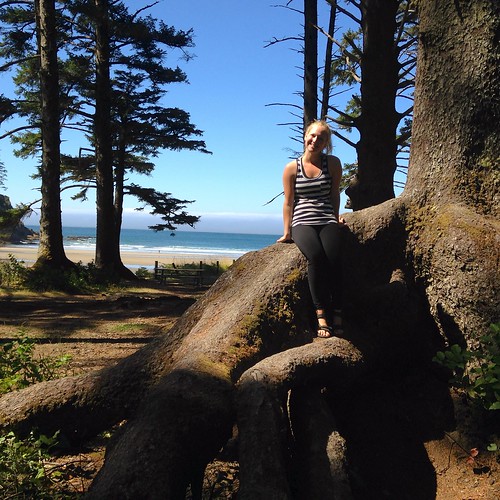
Here I am chilling in my office! This is where we stand and ask people to fill out surveys as they are heading down to the beach. All of trees at Oswald West are super different and neat. This intriguing tree is climbed by dozens of kids and adults everyday as it has such a gradual slope.

IMG_5006

Here’s where the stream that flows through the forest comes out and flows into the ocean!

IMG_4978

Early morning tidepooling! There are amazing tidepools at Short Sand. When the tide is low you can actually walk into deep caves full of starfish and other interesting critters.