More “Green Time,” Less “Screen Time”

I’m going to play Nature’s advocate for a moment. Let’s be honest, many of us are bombarded with constant reminders to unconsciously check our phone or computer on a daily basis. It’s easy to become tied to an electronic device without realizing. For Smartphone users, the convenience of having our entire agenda and communication network stored electronically means that we’re checking our phones from the moment we wake up. Whether it’s the stream of emails, demanding social media notifications or a missed message from friends and family, there is no doubt all the time spent on electronics can have some effect on our mental health.

The most extensive study to date estimates that people across all age groups in the United States check their phone on average 46 times per day, which totals to upwards of 8 billion times a day that all Americans are collectively checking their phones. It has been suggested that as a society, Americans have become so accustomed to daily “screen time” at a young age, that they are getting significantly less “green time.” Only 10 percent of teens in America spend time outside every day, according to a recent Nature Conservancy survey. The documentary film, Play Again, also explores the decrease in “green time” and increase in “screen time” through the case of seven teenagers from Portland, Oregon. Despite being surrounded by ample opportunity to explore outdoors, these young Oregonians exemplify the troubling estimations of American youth spending an average of 7-½ hours per day in front of a screen. As I alluded to in my earlier blog post, the more connection we have to the natural world around us, the more likely we will care enough to conserve it, but have we lost that crucial connection by spending less time outdoors?
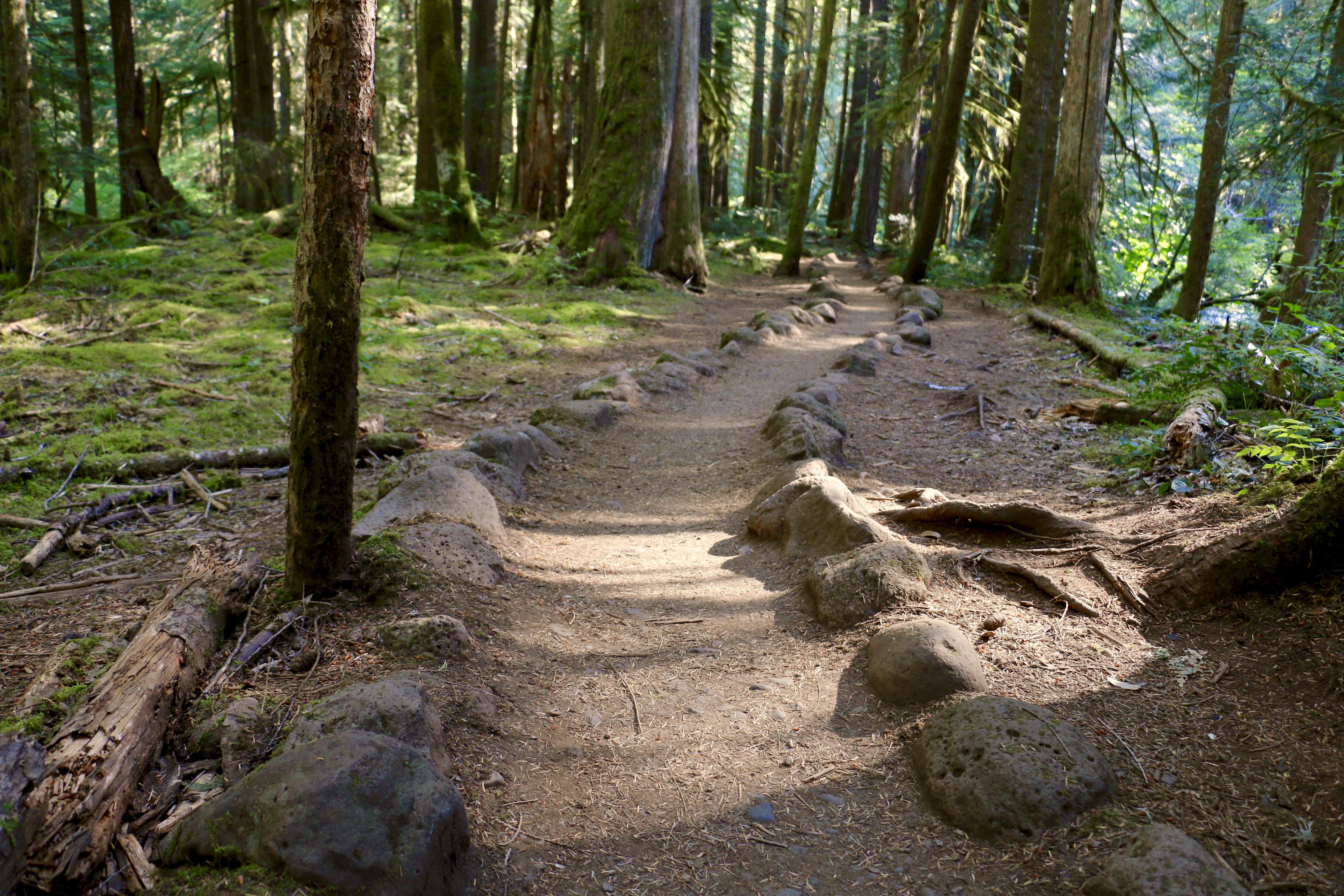
Spending green time on a hiking trail in Willamette National Forest.

On a related note, surveys often reveal a good bit of insight into a larger question or issue, which can help inform where changes need to be made. That is exactly the focus of my work at the moment, as I have tirelessly been drafting and rewriting an ocean literacy survey to assess the knowledge of the general public who visits the coast of Oregon. One of the things that struck my curiosity as I wrote and rewrote this survey in collaboration with the ODFW Marine Reserves team has been where individuals receive their information about ocean-related issues. I am interested to find if there is some sort of link between the sources of media where individuals receive information and the gap in knowledge relating to ocean health threats.

I’ll admit, it’s a bit ironic and probably hypocritical for me to play nature’s advocate after spending several full workweeks indoors on a computer, but I took advantage of a three-day weekend off work to ensure that I refreshed my mind in the outdoors. And let me tell you, it worked.
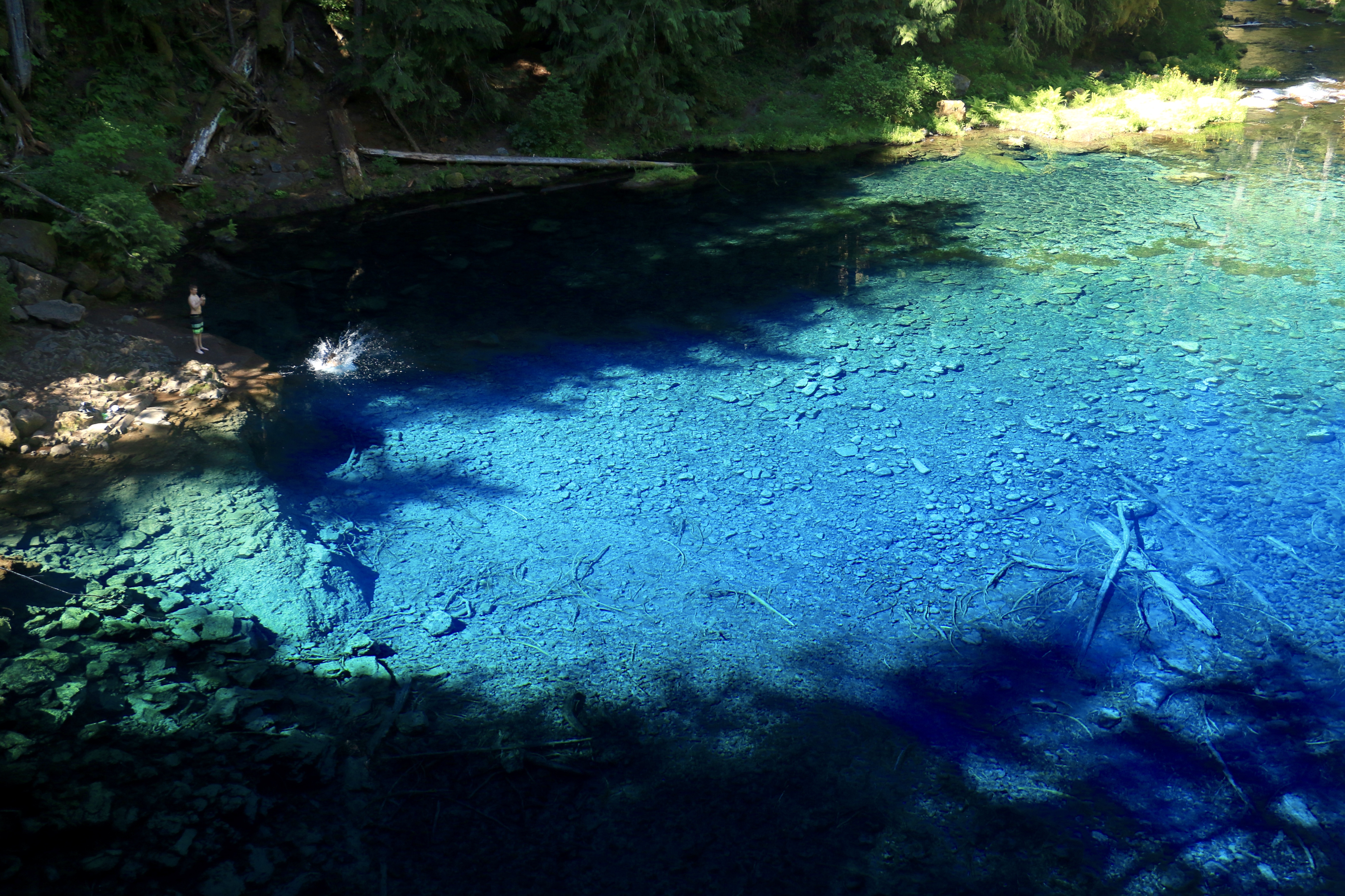
“Immersing” in nature at Tamolitch Blue Pool

Dr. David Strayer, a cognitive psychologist at the University of Utah argues that after three days of wilderness backpacking, our brains perform significantly better on creative problem solving tasks. He calls this the three-day effect, where immersing oneself in nature for long enough can clean one’s “mental windshield” that becomes clouded over from the stress of being indoors. Other studies have shown that it doesn’t take that much to recharge our cognitive function, as just 25 minutes of “green time” can give our brain the rest it needs from “screen time.”
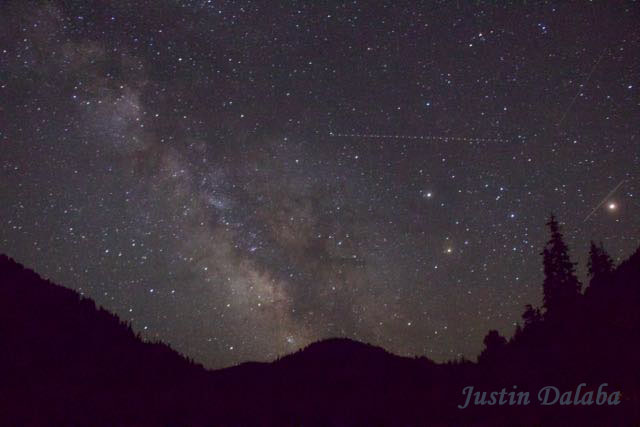
Gazing into the Milky Way from my tent at Blue River Reservoir.

As a frequent saying goes, “there is no wifi in the woods, but I promise you’ll find a better connection.” Driving through Willamette National Forest this weekend, I realized it would have been nice to have service while searching for a campsite, but instead I had to problem solve on my own. With my phone switched off and stowed away, I managed to find an ideal campsite and spent the night losing track of time while gazing at the countless stars. And let me tell you, waking up to the sound of birds chirping and the sunlight penetrating through the trees into your tent feels much more refreshing than the harsh sound of an alarm clock in a dark bedroom. Many others must have received the “green time” memo as well, as all of Willamette was flooded with campers, hikers and outdoor enthusiasts alike. Bearing in mind the statistics of recent “screen time” surveys, it’s a restoring feeling to see others catch up on their vitamin “N.”



BBQs and Views

(please click this link and leave it open in the background while reading this post: https://www.youtube.com/watch?v=4daJ8gMtE-g)

So why is the 4th of July, 1776 so famous? The obvious answer is that it’s the day that the U.S. Continental Congress declared independence from Great Britain. Wait, nope, that happened on july 2nd. Oh wait duh, it must have been the day that we started the revolutionary war. Nope, you’re wrong again. That happened a year earlier in 1775. OK so was it when a draft of the constitution was written or when it was signed?? Wrong and wrong-er. That was June and August of 1776. Ok so what the heck really happened on July 4th, 1776? Congress did something they haven’t done since the 1960s: they agreed on something. To be specific, they agreed on the final draft of the document. Super exciting. So why do we celebrate the 4th? Following the war of 1812 (yes there was a war in 1812, bet you all didn’t remember that from middle school history) there was great ideological division in the United States. Copies of the declaration were circulated around the nation with the date July 4th at the top. This inspirited national unity around the date (incidentally Thomas Jefferson and John Adams also died on July 4th, 1826 so that may have helped).

A lot has happened since then though. The liberty bell cracked beyond repair while ringing to celebrate Washington’s birthday in 1846, the Civil War divides the nation in 1861, the statue of liberty is gifted to the U.S. by France and erected in 1886, the U.S. and Spain go to war briefly (you probably also forgot about that), the Panama Canal is established in 1903, World Wars I and II erupt in 1914 and 1939, man walks on the moon in 1969, and finally and most importantly, the US EPA is founded by Richard Nixon on December 2, 1970.

The 4th of July these days is still a cause for celebration. Festivities usually involve buying cheap meats and American flag apparel from Walmart, public intoxication on beaches and pontoon boats, BBQs, cheap beer, and of course fireworks. Mostly though it’s a holiday for spending time with friends and family. My family’s usual tradition is to go up to Old Orchard Beach, ME with a bunch of family friends. This is the first year I couldn’t make it but those of us at Hatfield, including Collin who drove up here for a night, have been having a blast. We went out to the Sandbar on Friday, drove down to Otter Point yesterday, and had a huge communal BBQ courtesy of Walmart (pics included below). Needless to say I’m excited to see what the actual 4th brings.

Since I do feel somewhat obligated to talk shop on my Sea Grant blog post here we go: this week at the office was pretty sweet for three reasons. First, not only did I learn how to extract DNA for qPCR but I didn’t even screw it up (I don’t think…I’ll get back to you on that one)! Second, Amy has also been helping me to put together my own project I can work on during the down time in our sampling. Since I’m definitely more interested in biology than general water quality, my project is investigating on the role of Eelgrass (Zostera marina) in promoting the growth of Enterococci ssp. (a fecal indicator bacteria). Almost all surfaces in the natural world have biofilms on them as a result of bacterial growth. Eelgrass is no exception and the aquatic habitat it lives in serves to expedite the growth of this film. Suspended bacteria can adhere to the plant’s leaves and reproduce rapidly. I want to know if these indicator bacteria can become suspended due to leaf decay, storm events, or tidal flow. If so, this resuspension could be contributing to the exceedance of regulatory limits for indicator bacteria thereby yielding a false positive. Third, I got to go on some unplanned fieldwork this Friday in Tillamook with Jess and one of her mentors, Jody. Although I couldn’t reach the site I needed to due to a higher than usual low tide, it was a gorgeous day and I was able to collect some samples for my own project. Jody did make us go get ice cream and lunch at the Blue Heron though…that was pretty rough.

All things considered it’s been a pretty great week in Oregon but how time flies…

Here are the pics from fieldwork, Devil’s Well, the Otter drive, and our glorious BBQ:


References:

http://www.constitutionfacts.com/us-declaration-of-independence/fourth-of-july/


Week 2: Clams and Creel Surveys

Wow, I can’t believe it’s already the end of June. This week was another busy one. At work, I’ve started to zero in on a direction in my research. While I still hope to collect some data on ocean-caught recreational crab size frequency and shell condition, my mentor and I decided to focus more on data collection concerning gear usage. Last week, we finalized a few extra questions to tack onto the end of creel surveys (surveys of fishermen – in this case, recreational crabbers. It turns out that the name comes from the wooden basket, called a creel, used by fishermen to hold their catch.). After revising the data sheet, I spent quite a bit of time at the marina, waiting for crabbers to come back so I could ask them about their gear. More specifically: if they lost any gear (rings or pots) on this crabbing trip or on previous trips in the past twelve months, why the gear was lost, and whether they use floating or sinking line on their rings/pots.

Edging into the recreational side of things, I got my first taste of clamming this week. On Friday, a group of people from ODFW trekked out to the tidal flat near the office armed with rakes, buckets, waders, and clam guns. My waders were slightly much too big, so I kept nearly face planting in the mud. But I still managed to scrape up a few cockles and dig up a gaper clam. I spent a hectic hour in the kitchen Monday evening cooking them into a pasta dish; this was a big deal for me, considering I still feel twinges of sadness when smashing a spider. It was a little bit of a battle, as I am a scatterbrained and inefficient cook even when live organisms aren’t involved, but the food wasn’t half bad.

The week wrapped up with a trip to the aquarium on Saturday (just in time for their World Oceans Day Celebration) and a hike in the Cape Perpetua area on Sunday. Even though we “took all the wrong turns” possible when trying to get to Thor’s Well (a hole in the rock near the shore that spouts water in time with the waves, like a dynamic fountain controlled by the ocean), we still managed to find it and catch some beautiful views along the way.

IMG_2681

I think that’s about it. Have a food/firework/fun-filled Fourth of July weekend, everyone!

Skyler’s Weekly Review – Week 2

The Buzz: Estuary Field Work, RStudio/Swirl, and The ORGN

Deploying Nutrient Bags

Deploying Nutrient Bags

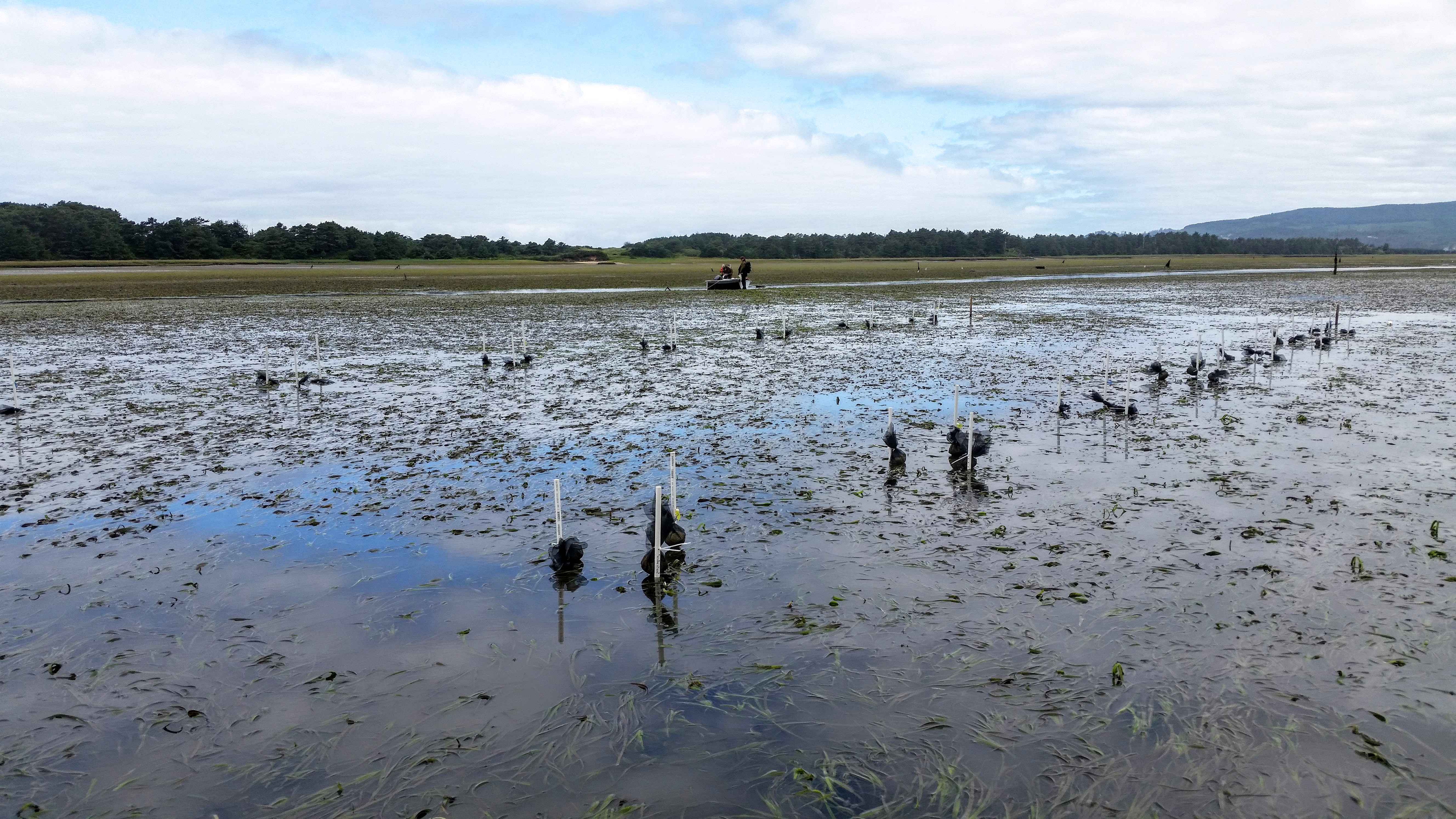
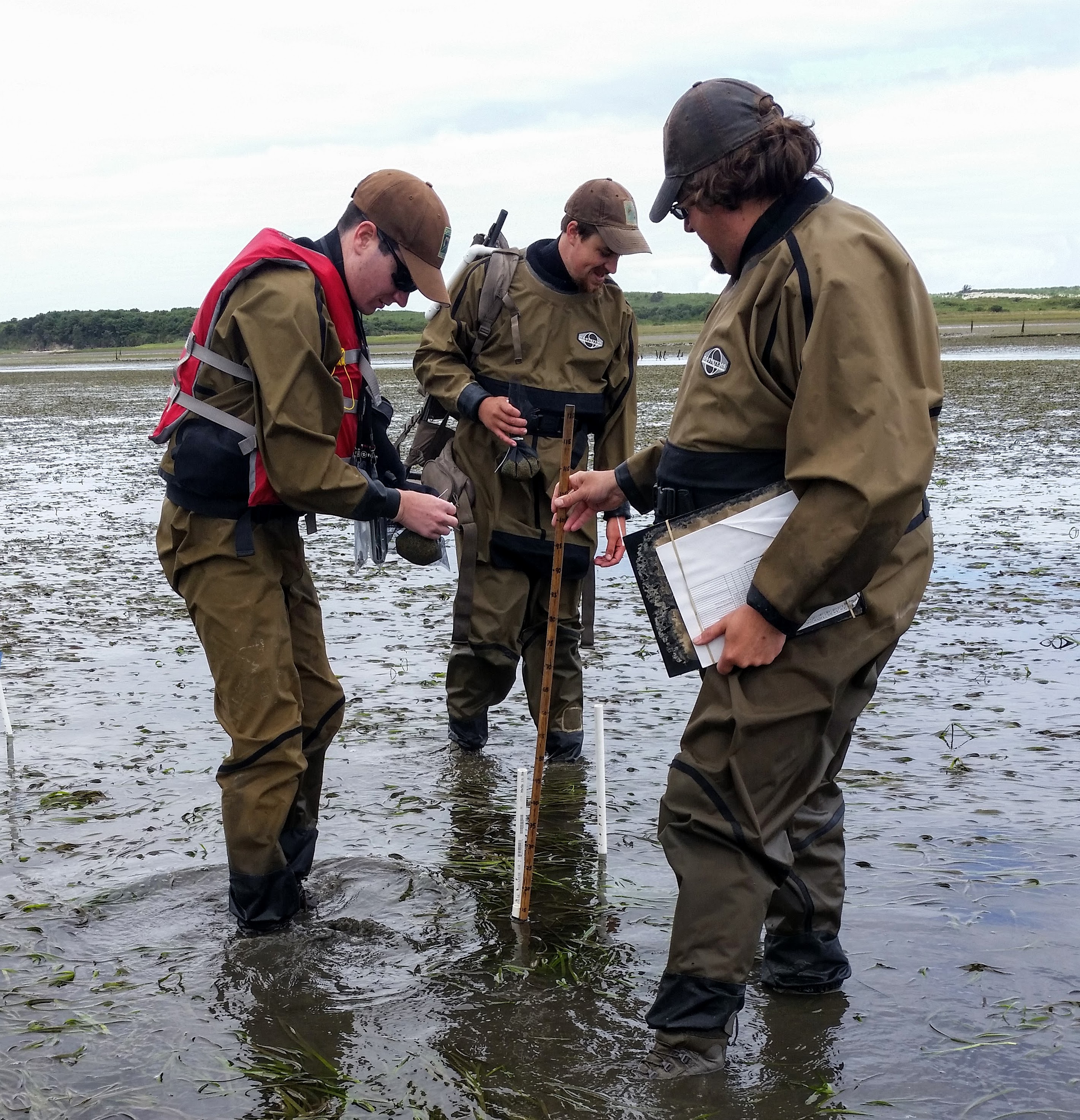
Estuary Field Work: SEACOR’s week started early at low-tide in Netarts Bay. After a boat ride through channels inhabited by harbor seals and oyster leases, we gathered clams for the Coos Bay Clamboree and began setting up an experimental plot within a large eelgrass bed to study the potential effects of eutrophication. Armed with dry suits and military-grade backpack frames loaded with nutrient bags, PVC, and transect tapes, our objective was to set up 20 modified quadrats (a predetermined sampling area for assessing distribution of plants/animals) with randomized nutrient and control bags attached. Additionally, we collected samples of eelgrass for further analysis in a lab, took a count of eelgrass shoots per quadrat, and estimated percent coverage of eelgrass, macroalgae (seaweed), and epiphytes (plants that grow on other plants) in each sampling area. Our initial eelgrass samples will be sent off for stable isotope analysis. Ideally, eelgrass will absorb marker isotopes from the nutrient bags and provide insights into how much is being absorbed. When SEACOR returns for another site visit in 2 weeks, we will collect information on whether the nutrient bags we deployed had any effect on growth inside each nutrient-loaded quadrat compared to the control quadrats.

Completed Experimental Plot


Learning R in Swirl

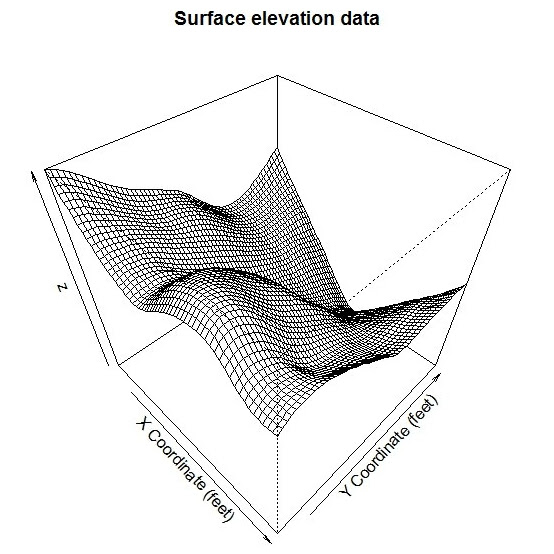
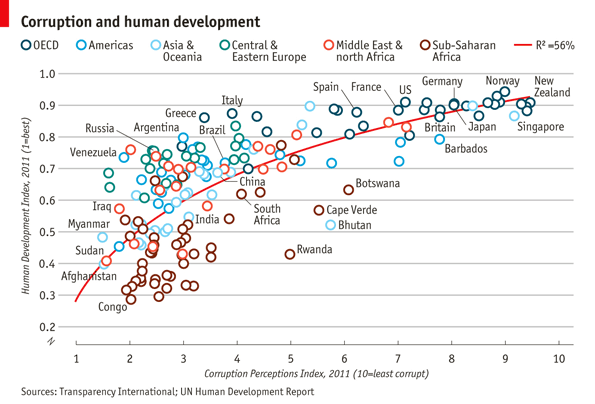
RStudio/Swirl: The history of the programming language R may not interest most scientists who want to use it, but they do recognize R as an incredibly useful tool for statistical analysis and graphics representation (and perhaps more importantly, an open-source, cheaper alternative to MATLAB). As with any language, it cannot be learned overnight but RStudio (a development environment that simplifies writing code in R) and Swirl (an interactive learning platform that helps you learn RStudio/R with lessons in the R language itself) make any budding programmer/frustrated scientist’s efforts a little less painful. With corny phrases of encouragement like “You rock!” and “You are so good at this!” displayed for completing tasks/goals, Swirl keeps you motivated (humorously) to progress forward. Why learn how to use R? The simple answer is scientists work with a lot of data; piles of it. And in order to make sense of it all, it helps to see that data visualized graphically to evaluate trends that may not have been immediately apparent by staring at matrices or spreadsheets full of values. Additionally, the only mainstream alternative to R is MATLAB (a costly but perhaps superior product); a software platform that may be useful to many scientists, but not affordable to many as part of their research program budgets. When confronted with the decision to either not have MATLAB or have a reduced budget, R seems like an obvious choice in a world of tight research funding.

Creating Surfaces with R

Informative Graphics using R


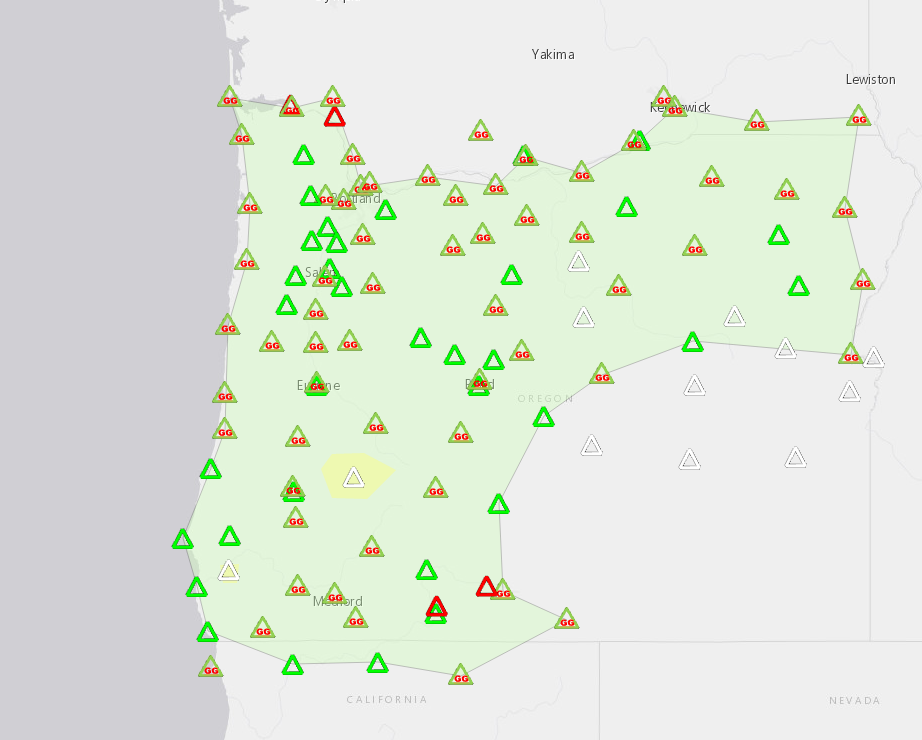
Current Oregon Real-time GNSS Network

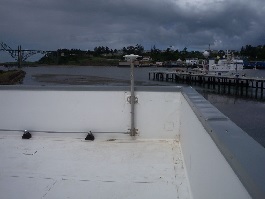
The ORGN: Professional-grade survey equipment is a hefty investment. Keeping guard of your equipment from theft and vandalism while it is operating is also expensive (usually in the form of some poor soul sitting next to static locations for long periods of time). Oregon State Department of Transportation has established a publicly-available network of stationary, continuously collecting GPS base stations (used to correct “roving” GPS units, or make rover measurements more accurate) that support the mainstay of GPS data collection: real-time-kinematic surveys (RTK). Without the need for each survey to field its own base station GPS,  lower-budget survey operations can be conducted (granted those surveys are within the network’s coverage) because less equipment is required to operate. In this case, it allows SEACOR to utilize near centimeter-grade measurements of the UAV ground control points that we otherwise might not have access to. The high precision locations can then be utilized to reduce the amount of error and distortion introduced into our UAV imagery when used for georeferencing. The ORGN GPS devices are very similar to the ones used in the Continuously Operating Reference Station (CORS) network which is owned and operated by NGS/NOAA. The primary difference is that the ORGN provides real-time corrections via a cellular connection; the CORS network is more useful with a different GPS survey technique known as precise point positioning (PPP). PPP requires GPS units to continuously occupy a point long enough to enable post-processed calculations (not real-time calculations) to correct for errors in GPS satellite clock and orbit (this information is usually published within 24 hours after it occurs). This survey technique can achieve centimeter or even subcentimeter accuracies and is typically only used in navigation or guidance of missile/rocket trajectories, flight, or other machinery that require precise movements.

NOAA’s South Beach Continuously Operating Reference Station (CORS)

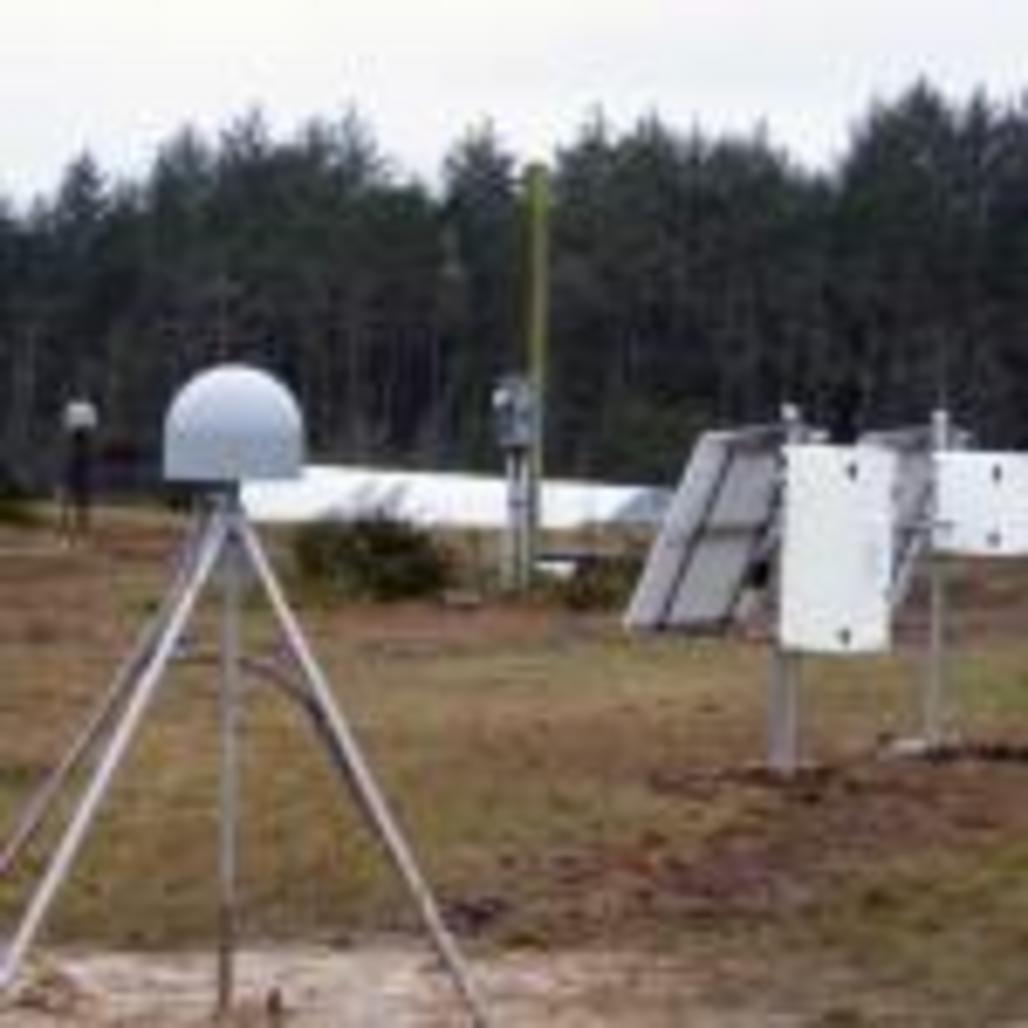
Newport Airport CORS – Station P367


Next week: Clamboree, RTK, Mission Planner, and more…


Week 2

So as an extension of last week, my work has consisted of preparing all of our soil samples (250 of them) for particle size analysis (PSA). This technique will tell us the proportion of sand, silt and clay in each of our samples which will give us a better idea of how water moves through the salt marsh. This will give us a lot of valuable information about the Tillamook Marsh sites so it’s necessary, but it has unfortunately been a fairly dull and tedious work schedule this past week. Therefore, I don’t really have much to report on but we will soon be able to analyze our data which will get very interesting.

Other things that we did this past week included going to the aquarium (on world oceans day!) and Cape Perpetua.

You can ask anyone who has spent any sort of time around me, I love jellyfish. So, naturally, I am going to include a wonderful picture.

IMG_0339 (1) Isn’t it awesome?!

We also watched an otter feeding, saw some gigantic crabs and were able to touch some anemones.

On Sunday, we drove down to Cape Perpetua (about a 35 minute drive) which was absolutely beautiful! Here is a view from the top.

IMG_0351

We hiked around for a while and saw some cool sites such as Thor’s well. Make sure to check a tide chart before going. During high tide it is supposed to be awesome with water spewing in and out of it. Unfortunately, we were there around mid-tide so it mostly just looked like a hole. Still cool though!

I almost forgot! Finding Dory was awesome. Definitely go see it!

Week 2 Adventures

Last summer, I got eaten alive by mosquitoes while doing fieldwork. In all his optimism, my professor told me that I should consider myself a grandparent to mosquitoes because my blood helped create their eggs. (Fun fact: Only female mosquitoes take your blood because they use the protein and iron in it to develop their eggs.) While I won’t be baking cookies for my mosquito grandchildren anytime soon, I try and take comfort in helping to create life, as I uncontrollably scratch at my five mosquito bites.

mikemiller

Mike Miller Park, where the views are worth the bug bites

Things are moving along with Shop at the Dock! For those of you who didn’t read my last post, Shop at the Dock is an event where OSU staff teach people about Newport’s commercial fisheries and how to buy seafood directly from fishermen. This is fantastic for so many reason- it supports local businesses, promotes understanding of local fisheries, and encourages a sense of responsibility in consumers. Flyers for the event are done and the dates are set for every Friday, beginning July 15th.

dock_shop_2016_colorv2

seagrantbag


This week, I began developing a survey to assess the economic impacts of Shop at the Dock. It will be administered to both fishermen and participants at the event to gauge the economic impacts of the program and to understand ways in which the event can be improved, week to week. Still adjusting, but should be done soon!

In keeping with the theme of promoting understanding and stewardship of the ocean, Oregon Coast Aquarium celebrated World Oceans Day this past Saturday. The theme was “Healthy Oceans, Healthy Planet” and the goal was to bring attention to the important role the ocean’s health plays in the well-being of the planet and how stopping plastic pollution can benefit the ecosystem. My fellow Summer Scholars and I took the Better Bag Challenge and pledged to avoid disposable bags for at least a year. Such an easy way to make a difference!

Thanks for reading! I’ll leave you with a great song by a great band, the Yeah Yeah Yeahs. Lead singer Karen O once said “mosquitoes are one of my least favorite things”, and I really couldn’t agree more.


Week 2 – Planting the seed, Part 2

Last week’s post dealt with the scientific portion of my work this summer. This week I’d like to devote my thoughts to the communications aspect of it, something that I would argue is becoming just as important as the science itself. I was talking to my mentor just last week when I spotted these curious words tucked away to the side of her cubicle:

People don’t trust what they don’t understand.

Simple and self-explanatory words, but powerful ones that I think are at the crux of the figurative wall that has existed between the scientific community and the general public for a great while. Check out this (somewhat maddening) clip of a professor futilely attempting to inform a congressman on climate change for a real life example of what I mean.

Now, this is an extreme case (and a particularly obstinate politician), but one that I think defines fairly well what occurs when there is a complete lack of contact and understanding between two parties. So what’s up? There are a few schools of thought on the matter. For one, the sciences span a mind-boggling number of disciplines and subfields that, in total, add up to be an overwhelming amount of intelligence for any person. Furthermore, the syntax and specialized jargon that scientists employ in their professional writing generate something of a language barrier. And through no fault of their own; scientists are not journalists by trade, after all. But they are communicators (albeit of scientific material), and all it takes is a little creativity to make the leap from one audience to another.

These days, that creativity comes in the form of social media, which is opening up previously unconventional avenues of communication. Facebook, Twitter, and a slew of other sites are cropping up as powerful means of relaying material to once inaccessible audiences. As an intern with the ODFW this summer, part of my job will be to help spread awareness via these platforms about the purpose of the marine reserves through blog posts and videos of what our team does. So far, the outreach program appears to be making headway. Of the marine reserves, Jeff Miles, a commercial fisherman who has plied Oregon waters for 40 years, says, “I think it’s already working. I think it’ll be a great asset for the community. I just don’t believe the ocean is an endless bounty, and I don’t have a problem with saving little spots here and there for future generations.” This understanding is the kind of goal that my mentor and I are striving towards in our communications work.

Of course, all of this begs one very important question – why should we trust scientists? As I was writing this, I was reminded of a seminar I attended last summer by Dr. Naomi Oreskes entitled “Why We Should Trust Science: Perspectives from the History and Philosophy of Science.” I pulled the following lines from a similar TED talk she gave earlier:

“Our basis for trust in science is actually the same as our basis in trust in technology, and the same as our basis for trust in anything, namely experience…Our trust in science, like science itself, should be based on evidence. And that means that scientists have to become better communicators.”

To illustrate her point, Dr. Oreskes brings up a straightforward, everyday example in cars. Our faith in cars as reliable machines is predicated by the efforts of the many previous scientists who have worked for years to build up the evidence that in turn could allow them to construct something so reliable so well. Yet few of us would even consider this when we step into our cars and turn on the ignition successfully time after time. This science that is unknowingly right under our noses is also the very same science that some of us fail to acknowledge in more pressing issues, such as in the climate change video I shared above.

I’d like to take it one step further and ask, why then do we put so much trust in something so complicated and potentially dangerous as a car if so few of us understand it? I would say it’s a matter of familiarity, which we obtain through one of two ways: personal experience, as mentioned in the talk, and also deferring to the experiences of people we know. Most of us grew up surrounded by people who drove cars, and later on, we were taught to drive them ourselves. Similarly, with such a vast amount of information present these days, much of what we trust is, by necessity, through familiarity, not complete understanding of a subject. To reiterate the quote at the beginning, people don’t trust what they don’t understand. However, they will trust familiarity, and to achieve that we have to incorporate it into their lives in some way, shape, or form.

And so, as Dr. Oreskes puts it, we scientists need to become better communicators, and that means we have to work harder than before if we’re to get people familiar with what we do. We now have tools like social media to help us along the way, although this isn’t by any means a permanent solution. Facebook and Twitter have come, and they will go. But we’ll keep coming up with new ways to get our point across. You can take my word for it.

Stuck in the Mud

So week two is already done…hard to believe; this summer is flying by. A lot has happened though since my last post! First, I got stuck in the mud haha. I guess it was bound to happen at some point. We went out on Tuesday for our first field sampling trip to Tillamook Bay (2 hrs north of Newport). Since we needed to cross both water and mud flats during our sampling, we elected to use one of the EPA’s hovercrafts. Yes, it was as awesome as it sounds. Everything was going great for the first hour or so! We got to 3 sites and collected water, nutrient, sediment, and eelgrass samples at each. Then we hit our first speed bump. The pillow-block (the part of the engine that holds the driveshaft of the propeller in place) failed in spectacular fashion due to old age. As a result, the belt connecting the driveshaft to the engine lost tension and we were left dead in the bay. Thankfully we were fairly close to shore and the tide was coming in so we started paddling towards shore. With some luck we made it to shallow water that was near our 4th sampling site so, like any good scientists, we stopped and took some more samples. We resumed pushing the hovercraft when we had finished. As it turned out, we had broken down very close to the Pacific Oyster factory and there was a makeshift boat-ramp by their jetty. That was when our luck ran out: to get to the ramp we would need to pull the hovercraft across 300ft of mudflat. After 10 minutes of yanking and tugging on the hovercraft’s bowline I found my right leg buried in mud up to the knee and solidly stuck. Once I had been dug out we resumed our struggle but my boss took my place being stuck. After an hour of this repeated pulling, getting stuck, and digging each other free we had only moved 50ft. To make a very long story short it took us 3 hours to get to the boat-ramp and it was only with the help of the tide and some very nice folks from the Oregon Department of Fish and Wildlife’s Tillamook Office did we get that head of metal back on its trailer and back to Newport. On the bright side I did get some pretty stellar ice cream at Tillamook Creamery.

Second, I processed a LOT of samples from our field collections. Every water and eelgrass sample gets filtered for DNA for qPCR (quantitative polymerase chain reaction) so we can start to identify whose fecal bacteria have made it into the bay (human, cow, chicken, or otherwise). Sediment, water, and eelgrass samples also need to be diluted down for IDEXX testing; this detects the presence of certain indicator bacteria such as Enterococci ssp. and fecal coliform and generates the most probable number of bacteria per 100ml of sample. We also enrich many of the samples with growth media to try and grow Salmonella, E. coli, etc. to see if they are present in the samples.

Third and finally, I started doing some research for my own side project that will feed into my work at the EPA: how eelgrass biology could play a role in enabling the retention of indicator bacteria in the Bay. I’m mostly reading papers right now but I’m going to start work on a lit review next week. Hopefully it works out and I can use it as part of my poster!

That’s all for this week! I’ve put a link to some of the fieldwork pictures below, sadly nobody thought to take a picture while we were struggling in the mud haha.

Summer is here! (finally)

It’s the first day of summer today, and with the sunshine came our ten new Summer Scholars! This past Monday, orientation at the Corvallis Sea Grant office was followed by a trip to Newport where eight of our scholars met their agency mentors and moved in to the Hatfield Marine Science Center (HMSC) dorms. On Tuesday, Sarah Kolesar, Mary Pleasant and I headed down to the south coast to drop off two more of our Scholars, Lexi and Collin. Lexi is stationed in Bandon working for the Wild Rivers Coast Alliance (WRCA), and Collin is living in Charleston and working for the South Slough National Estuarine Research Reserve (SSNERR). This was my first opportunity to visit these beautiful locations, and to be honest, I never wanted to leave! The South Slough Visitor Center is interactive, modern and well designed, which is coupled with an adventurous forest setting with winding trails throughout. The housing for SSNERR interns are yurts that sit up high in the forest overlooking the slough, which makes for a stunning view every day. In Bandon we saw the newly built WRCA offices that are located on the Bandon Dunes Golf Resort, which I found out is ranked number one for golf resorts in the nation! These offices are architecturally appealing with outdoor seating available that overlooks a small lake – a perfect place for lunch. Check out Lexi and Collin’s blogs for photos to see for yourself. We happened upon delightful, sunny weather, which always makes the coast seem ten times more breathtaking in my opinion. We also encountered some delicious food at Shark Bites restaurant in Coos Bay – I highly recommend the Dungeness crab eggs benedict!

As summer continues we are gearing up for expectations meetings with our scholars and host agencies, as well as the much anticipated mid-summer check in and camping trip! We will be heading to Trout Creek Campground, which is about an hour from Corvallis, to spend some time exploring more sections of Oregon. Seeing as none of our Scholars are Oregonians this year, we encourage them to make the most of their summer in Oregon and adventure as much as possible. There’s no place more amazing than the Pacific Northwest in the summer months – warm days, plenty of lakes and rivers, flowers and trees all around, mountains to hike or even ski, well you get the idea! I’m kept plenty busy between my two jobs at Oregon Sea Grant (OSG) and Oregon Department of Fish and Wildlife (ODFW), but I am certainly making time for camping and hiking in these next months. Even as a native Oregonian, there are still plenty of places I haven’t yet discovered. If anyone has any suggestions please let me know!

First Thoughts (…Best Thoughts?)

Hello there.

Thank you for checking out this blog. As you probably already know, I (Claire) am one of the students participating in the Oregon Sea Grant Summer Scholars Program for Undergraduates. This summer, I am working for the Oregon Department of Fish and Wildlife (ODFW) on a project to research the recreational ocean Dungeness crab fishery and recreational Dungeness crab fishing gear. I’ll explain more about that in a bit.

A little about me before I launch into a week-by-week account of my life: I just finished my junior year at Indiana University (IU) in Bloomington (well, not all at Indiana University – I spent the spring semester studying in the Dutch Caribbean) where I am majoring in Biology. I have focused on lab work in my short time in the research world, but studying Dungeness crabs calls for getting out in the field, measuring some crabs, and chatting with people. The remainder of my time will be spent analyzing data and learning other things (which may or may not include learning R and driving a truck with a boat trailer attached – I’ll let you know). Conclusion: this summer I am getting a taste of fieldwork, working on my social skills, and reviving my relationship with math. Three birds with one stone.

And, as usual, I’m procrastinating.

I arrived in Newport to chilly and damp weather on Monday after our orientation in Corvallis. As most beginnings seem to be, Monday was hectic – it was filled with driving, grocery shopping, unpacking, meeting new people, divvying up closet and refrigerator space…

The rest of the week simultaneously flew by and felt much longer than six days. Maybe because I was meeting so many new people and doing so many new and varied things every day…every hour, even. Tuesday brought my first day on the job, a trip to Rogue Brewery, and Funfetti cake for Justin’s (another Scholar’s) birthday. Getting to know the seven other people here with me has been such a treat, especially against the backdrop of beautiful Newport. Watching the sunset from the South Jetty, visiting the popular bayfront restaurant Local Ocean, going to the [ferociously windy] beach, seeing Yaquina Head Lighthouse…I couldn’t ask for a better place to spend our time. If my body would maintain the temperature of a normal human being and let me wear less than five layers that would be even better. But it’s okay. Hiking boots and wool socks are my new flip-flops.

IMG_2564 IMG_2393 (1)

My week during the hours of 8:30 AM to 5 PM was no less eventful. This week, I got a crash course in the recreational Dungeness crab fishery. While there has been ongoing data collection on the sizes of crabs caught in the estuary, this information is lacking for ocean-caught crabs. So, my job will be to start getting some data there. To do this, of course, I have to learn how to handle/measure crabs. After Justin (my mentor) took me shopping for a pair of boots, lent me some rain gear, and took me out to measure some crabs we caught in the bay, I feel like I am well on my way. I didn’t get pinched, at least. And we found a message in a bottle! A plastic water bottle. But a bottle nonetheless.

I also learned about the problem that derelict fishing gear poses to the environment (a larger one than I had realized). A lost crab pot can continue catching crabs for months to years after it is lost. Crabs crawl in the pot, die, become lunch for more crabs, and so on. I’ll be asking crabbers (that return from crabbing in both the estuary and the ocean) questions about lost gear to feel out just how big this problem is. Oregon already has a Post-Season Derelict Gear Recovery Program, but perhaps there is more that needs to be done. Hopefully, I’ll have at least part of an answer to this question by the end of the summer. There are other issues involving crabbing gear as well, including that of floating vs. sinking line. Crabbers are encouraged to use sinking line because floating line can cause navigational problems for other boats. Oregon does not have laws concerning this issue, but Washington does. “To regulate or educate???” seems to be the overarching question with these gear problems. Hopefully, some of my data will help people to eventually make that choice.

To sum up: my first week has been packed with learning new info and skills. I have some wonderful roommates and program-mates (hi, boys) to help pass the time when I’m not huddled in orange rain gear elbow-deep in a bucket of crabs. But in all seriousness, I am thrilled that I get participate in marine science research and get my feet wet in the resource management side of things. As I spent more time at the lab bench, I became more aware of the importance of not only scientific research but also education and communication with the public. In the coming weeks, I get to bridge that gap by hanging around the docks, clipboard in hand.

Hey, you still there? Thank you for making it this far. Catch you next week.