Skyler’s Weekly Review – Week 9

The Buzz: Sea Grant Summer Scholar’s Final Symposium!

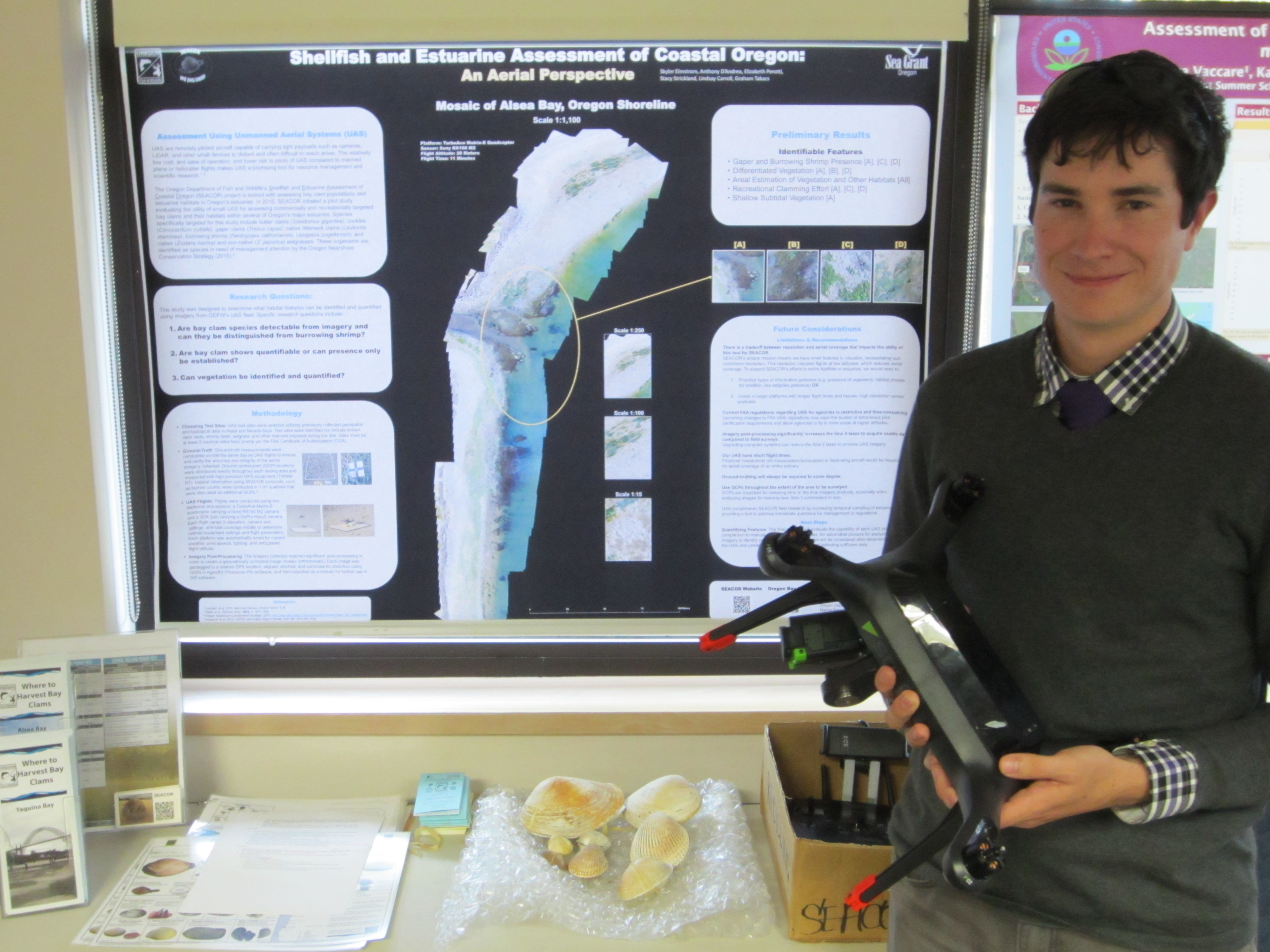
Final Symposium: This is it! Finally, the culmination of all of our summer projects are here to share! After many hours of creation and working in the details and minor edits, we each completed a poster and prepared a presentation to the Hatfield general public. I have embedded a link to my poster below for your perusal:

SYMPOSIUM POSTER LINK

My Poster & Display at the Final Symposium

While I still have a week of work left, it is a week of winding down and tieing loose ends. Saying goodbye is never easy, and I can never dole out enough thank yous to those who made this summer remarkable.

Put Your Money Where Your Mouth Is

I’ve been writing about buying seafood directly from local fishermen for weeks now. While I’d had fresh and local seafood, I had yet to purchase anything off the docks myself. With the summer almost over, I decided it was time to put my money where my mouth was and seize the oppor-tuna-ty to buy something at Shop at the Dock (writing posts for the Fisheries Extension Facebook page has brought out the best of my fish puns).

At the end of Shop at the Dock, I stopped at F/V (fishing vessel) Triggerfish to complete my survey and placed an order for a tuna. Triggerfish is owned by brothers, Ernie and Joe. Like many other boats, they often fish at the beginning of the week and come back Thursday night or Friday morning to sell off the docks over the weekend. Alternatively, there are boats like H/F/V (historic fishing vessel) Chelsea Rose that are essentially floating fish markets. Their seafood comes from other boats they own and other fishermen, so they are able to stay docked everyday.

triggerfish

Joe showing off a beautiful 50 lb. tuna

Tunas average 10-20 lbs, but some can get MUCH larger. It is priced per pound for the whole fish and there is an additional fillet charge. I asked for a 14 lb fish, so Ernie weighed several fish until he got one about that size. The recovery rate (the amount of meat recovered after filleting) is roughly 50-60% for tuna, so I was to expect about 7-9 lbs of meat.

tunaweight

Ernie picking out a tuna

There are a couple of things to do to ensure the freshness and quality of your fish:

  1. Ask when the trip started- fishing trips can last multiple days, so that’s the earliest it could have been caught
  2. Ask how the fish was cooled down- tuna are very warm fish and quality can decrease if it is cooled slowly
  3. Inspect the fish to ensure its quality (clear eyes, scales and gills still in tact)

I already knew that I wanted to split a fish with my mentor, so once I was satisfied with the fish, I asked for it filleted and split in half. It’s regulation that boats sell whole fish to avoid contamination, but most boats are willing to split the fish for you so you can purchase with other people. I made sure to bring a hot-cold bag and cash to pay for the fish (because most don’t take cards).

filleting

Brothers who fillet together…

I kept the tuna on ice and when dinner came around I marinated it in brown sugar, soy sauce and garlic. I ended up having it raw, seared and barbecued and it all tasted fantastic. There is something really thrilling about knowing where your food is coming from. I love that I was able to see a whole tuna fresh from the ocean in the morning and eat it for dinner a couple hours later. It was quite the experience and I know I’ll definitely miss Newport’s seafood at the end of this summer.

grilling

Mmmm

That’s all for now. Thanks as always for reading!

Winding down: The beginning of the end

With just a few weeks left and after completing the first draft of my second project (the Rural Tourism Studio) I began my final project – updating the Orb. The Orb is a platform that can used by businesses, communities, or individuals to upload their content to share online. They simply have to create an account, be approved, and start uploading their information. Although it is currently just updated by some Destination Marketing Organizations (DMOs) and a few statewide groups, the aim of the Orb is to allow anyone to be able to share information about local deals, lodging, events, attractions, or photographs for any place in Oregon.

One of the products of the Rural Tourism Studio - now the produce sold at Bandon farmers market is a part of a network of local farmers that make up the Wild Rivers Coast  farm trail.

One of the products of the Rural Tourism Studio – now the produce sold at Bandon farmers market is a part of a network of local farmers that make up the Wild Rivers Coast farm trail.

This creates “a centralized collection of data of all the tourism assets in the state…” (Davidson 2016) that is then shared onto the Travel Oregon family of websites, mobile apps, and many other locations. It allows smaller, community events to be easily showcased to the world, to “Tell the Oregon story” and make it easier than ever to attract locals and visitors alike.

For my third project, I am updating the datasheet of the Wild Rivers Coast, which includes the coastal towns from Bandon to Brookings. I am now making sure that the existing information on lodging, deals, and attractions in the region is to up-to-date, allowing more visitors to take advantage of the regional assets.

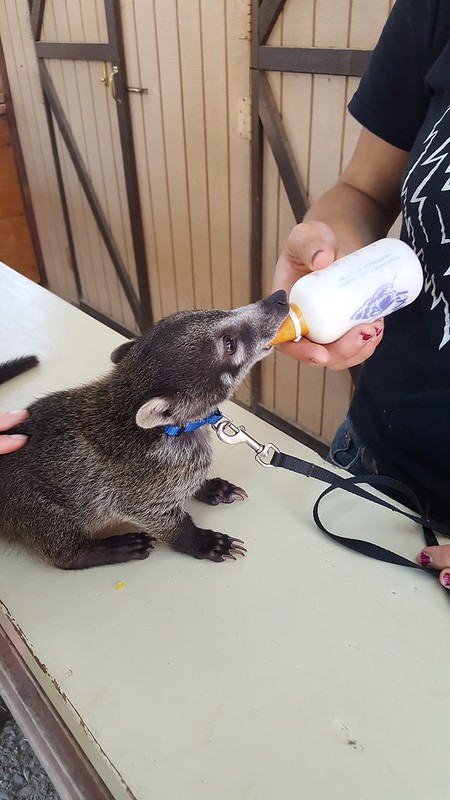
This past week I also got to check out a few neat places close to Bandon, such as the West Coast Game Park Safari, a walk-through Safari where I got to hold a baby Bobcat and Caracal!  They also had some large cats, like snow leopards, tigers, and panthers. One of my favorite parts (aside from holding baby animals, which is always awesome), was the free roaming deer. They were Mediterranean/European deer, and many had very large antlers. Although having such large antlers walking towards me was intimidating at first, all of the deer were super friendly (probably because they hoped that I had food for them). Some of them were also trying to get rid of the felt on their antlers, so they were as happy as a dog being scratched behind the ears to be pet!

Resized_20160806_150135

20160806_143318

20160806_150506

Aside from that, I agree with Claire’s last post, that I am definitely missing studying in my favorite coffee shops. I’ve been spending a lot of time researching for my senior project, studying for the GRE, and generally trying to prepare for post-undergrad life (woah). Since Bandon is a pretty small town, all of the coffee shops close at either 3 or 4 pm on the weekends, leaving me little room to procrastinate and/or sleep until the afternoon. I was able to make it the library (closes at 5:30) on Saturday, and settled for the “McCafe” on Sunday, but I can’t wait until my all-day study seshs in Springfield. Didn’t realize how much I loved those, and just generally studying. (But check out the great wildflowers spotted while procrastinating/playing Pokemon Go on Saturday, below!)

20160806_123513

The projects for Oregon Sea Grant are winding down, and I’m getting ready to jump into my own projects for my senior year – pretty exciting!

Final presentations on Friday! Stay tuned!

Week 8 – Milestones: First video!

It’s nearing the end of the program now, but things have been busier than ever at the office. A couple of weeks ago I wrote about my first post on the ODFW Marine Reserves Program website. Continuing on my communications roll, this week I was able to pull together all of my footage taken at Otter Rock and Cascade Head Marine Reserves and create a video on the diverse life found in Oregon’s tide pools. I had a blast just walking around and pointing the GoPro in every promising hole and at whatever little creatures caught my eye. Back in the video cave at work, learning how to use Adobe Premiere Pro – an industry-leading video editing software program – and finally putting it all together was equally enjoyable and gratifying. While I’m still no Steven Spielberg (lots of Google searches and troubleshooting…), this experience has definitely piqued my interest in the field, and I’m looking to churn out one more video before I leave.

So without any further ado, here’s the final product.

P.S. The music is kind of corny, but I think it fits the theme (it’s grown on me, having listened to it an infinity number of times throughout the editing process).

Week 7, or: Charter Boats and Coffee Shop Studying Withdrawals

Week 7 was my last full week of doing interviews, and it wasn’t exactly a climactic one. It was a week of blustery, chilly afternoons…not the best for ocean fishing and crabbing. The bay crabbers I talked to seemed to be doing well, though; most were hitting their limits of 12 crab per person. I even talked to one group of 6 crabbers in Waldport that managed to limit out with 72 crab. 72. Friends from Missouri, can you imagine having the meat of 72 freshly caught Dungeness crab sitting in your freezer right now?

Although the week was slow for private boat interviews, I did manage to talk to a few charter boats about their crabbing gear. Interestingly, even though charters are pulling ~8-10 crab pots per trip and taking ~150 crabbing trips per year, most boats only lose 1-2 pots in a given year. Those are impressive numbers, and I was happy to hear that the experience of charter boat captains and deckhands seems to be paying off by helping to limit derelict gear and marine debris.

IMG_3094

After talking to the charter boats, Justin (my mentor) and I went to Local Ocean for lunch. I never take pictures of food (I know, I know, I’m a millennial and you probably don’t believe me, but I swear it’s true), but I just had to share a photo of this gorgeous, colorful salad topped with Albacore tuna. Medium-rare is the way to go:

IMG_3096

I wouldn’t ordinarily be so excited about a salad, but eating at a restaurant where you know the fish is bought locally and caught sustainably makes me feel good about what I’m eating. If you haven’t already, I encourage you to read some of the other scholars’ posts about buying local products (especially seafood) and sustainable fishing practices.

The following weekend, a couple of us made the trek across the bridge to spend some time wandering through the farmer’s market. Armed with backpacks and laptops, we then headed to Nye Beach to get a change of scenery, do some work, and have a cup (or two) of coffee. One of the things I’ve missed most about IU these past eight months? My favorite local coffee shop, a bottomless mug of coffee for $3.45, and ~8 hours of studying, listening to music, and people watching. Thanks to Carl’s Coffee for helping me get my fix.

Week 6, or: Crater Lake

With Crater Lake being so far away, I was worried that I wouldn’t get the chance to the famous landmark before the summer was over. Luckily, my roommates were as anxious to see it as I was, so on Friday afternoon of Week 6, five of us piled into the car and headed for a small hotel room in Roseburg. We crashed early – after the 4-5 hour drive, 9 PM felt like 11 – and left at 6 the next morning to beat the crowds to Crater Lake National Park.

For those of you in the Midwest, Crater Lake’s reputation is definitely well deserved; it was every bit as beautiful as I had expected, and more. The water was a deep blue that was so vibrant it seemed almost unnatural, and the shallows were a clear turquoise that rivaled the Caribbean Sea. Of course, there was no way I wasn’t going for a swim in that. One of the park employees instructed vaguely that we could jump in “a little ways around the corner,” so we found a spot that looked good and went for it. Not quite as chilly as the plunge I took the weekend before, but not exactly balmy, either.

IMG_2985

IMG_3002 (1)

After a steep hike back to the parking lot (during which most of my energy went towards trying to not look like I was dying as much as I felt like I was), we were ready for another hike. We decided to explore more of the area and head to Toketee Falls and Hot Springs in the Umpqua National Forest. We got lucky and had the hot springs mostly to ourselves. Unfortunately, the photographs don’t quite do them justice, but we spent a good hour soaking in the warm water and watching the stream below rush past.

IMG_3039

IMG_3062

It was the warmest I’d felt in months.

Whale Said

Whales are neat. Well, that’s my opinion at least and I hope you feel the same way by the end of these short paragraphs. Recently, I’ve become so attuned to searching for whales while conducting visitor surveys on the Oregon coast that the visitors at Depot Bay ask me questions about the whales as I stand there in my ODFW hat. I graciously answer to the best of my ability, making it clear that I am far from an expert on the topic and then let them know that I am actually studying humans (but maybe we’re more or less one in the same).

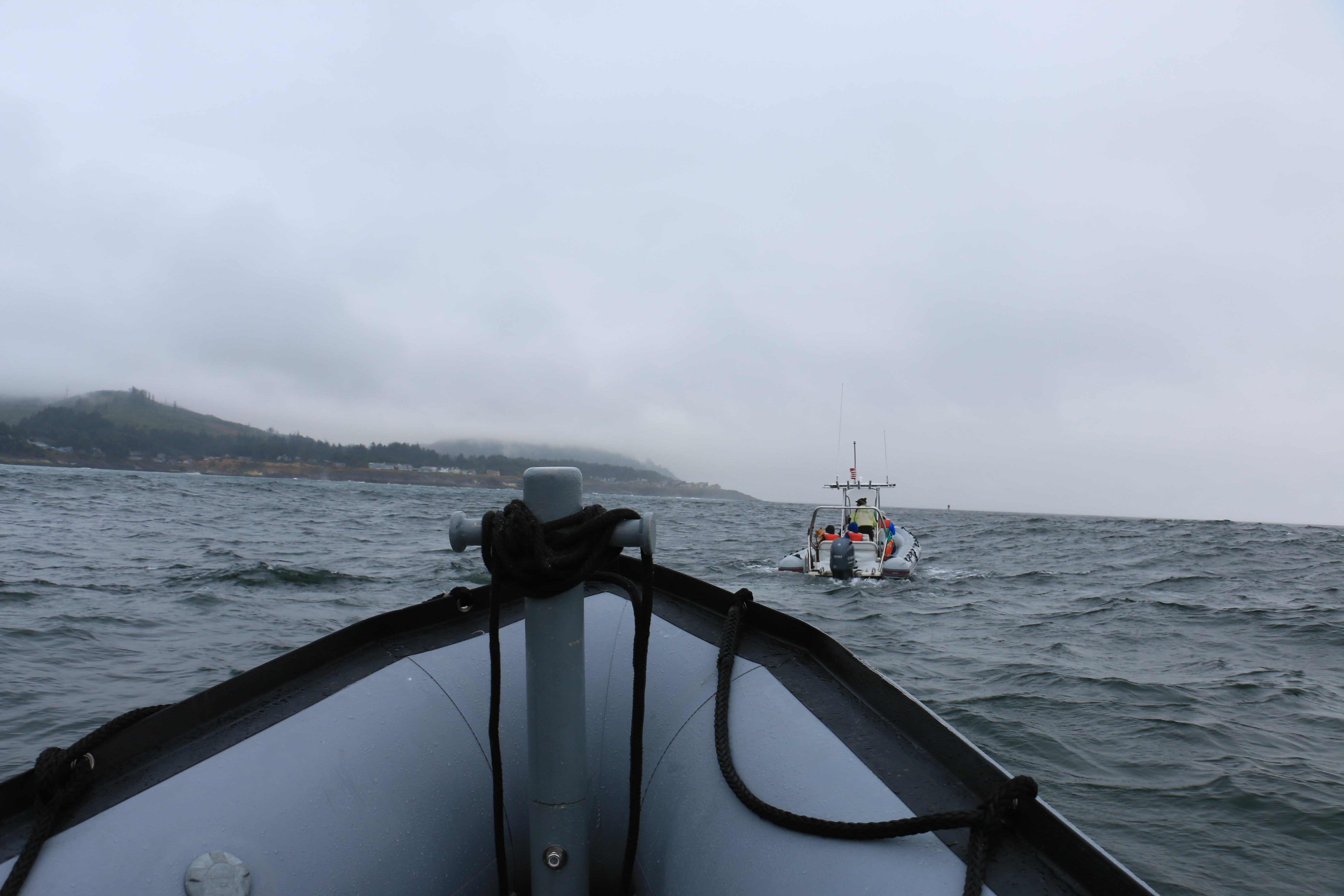
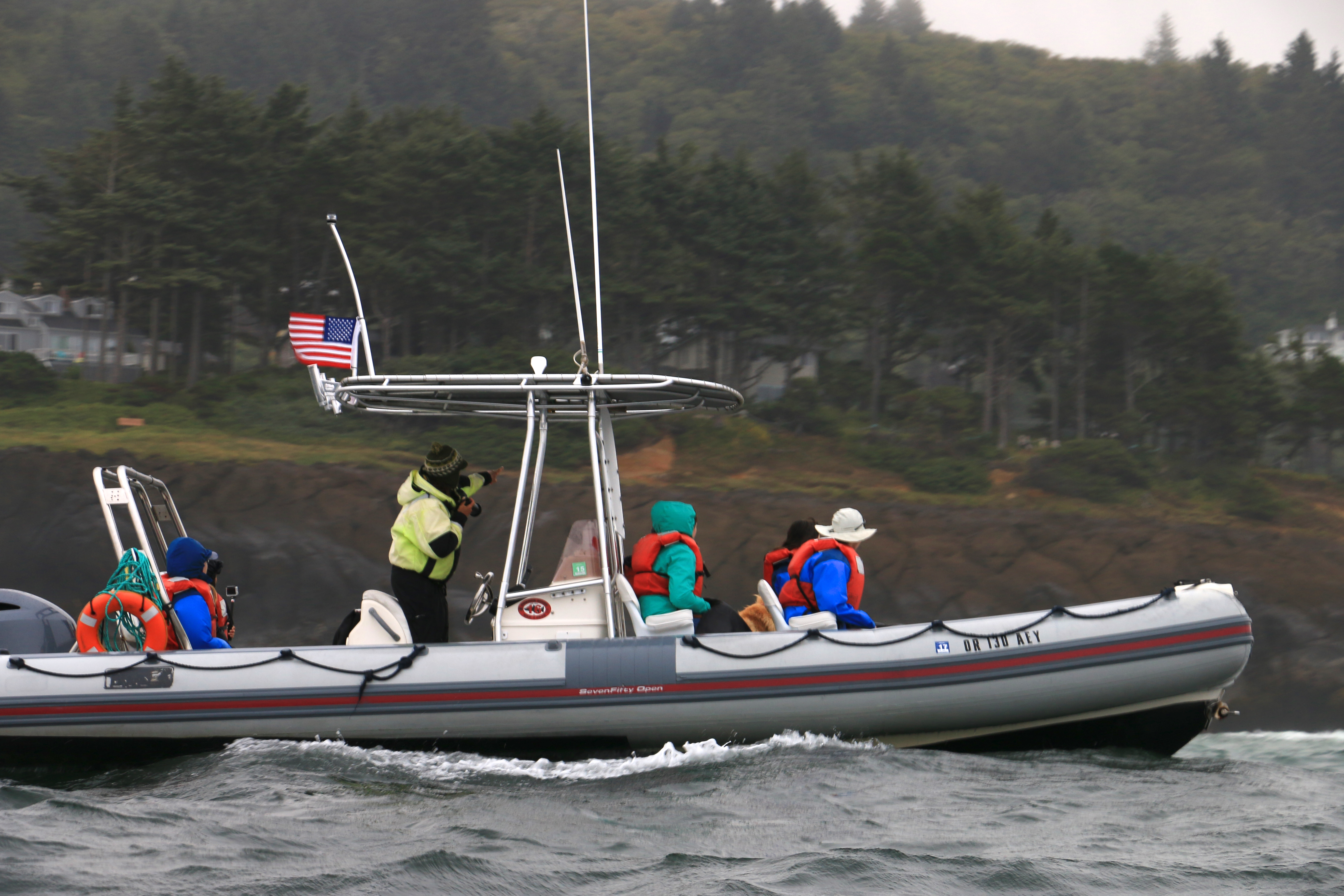
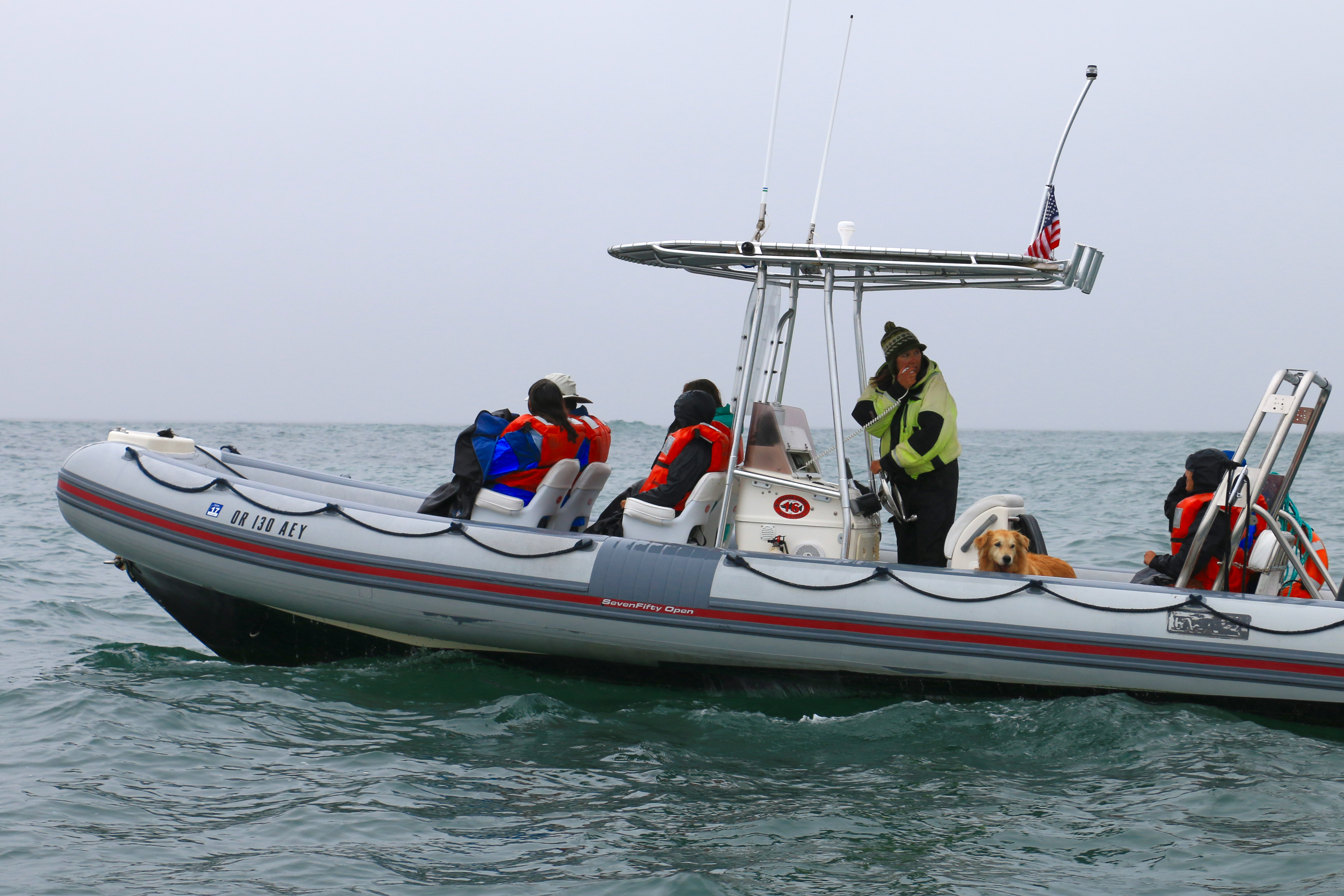
Whale-watching zodiac.

I’ve been envious of the visitors who share stories about their whale watching tour in Depot Bay. It just so happens that the REU students who live next door were going whale watching this weekend and they invited the Sea Grant scholars to tag along for a discount price. I had heard a couple of months back about a whale researcher in Depot Bay, named Carrie. As it turns out, Carrie Newell was the one who generously offered the Hatfield interns a discount on a private whale-watching excursion early Sunday morning.

Carrie and the Hatfield interns spotting whales.

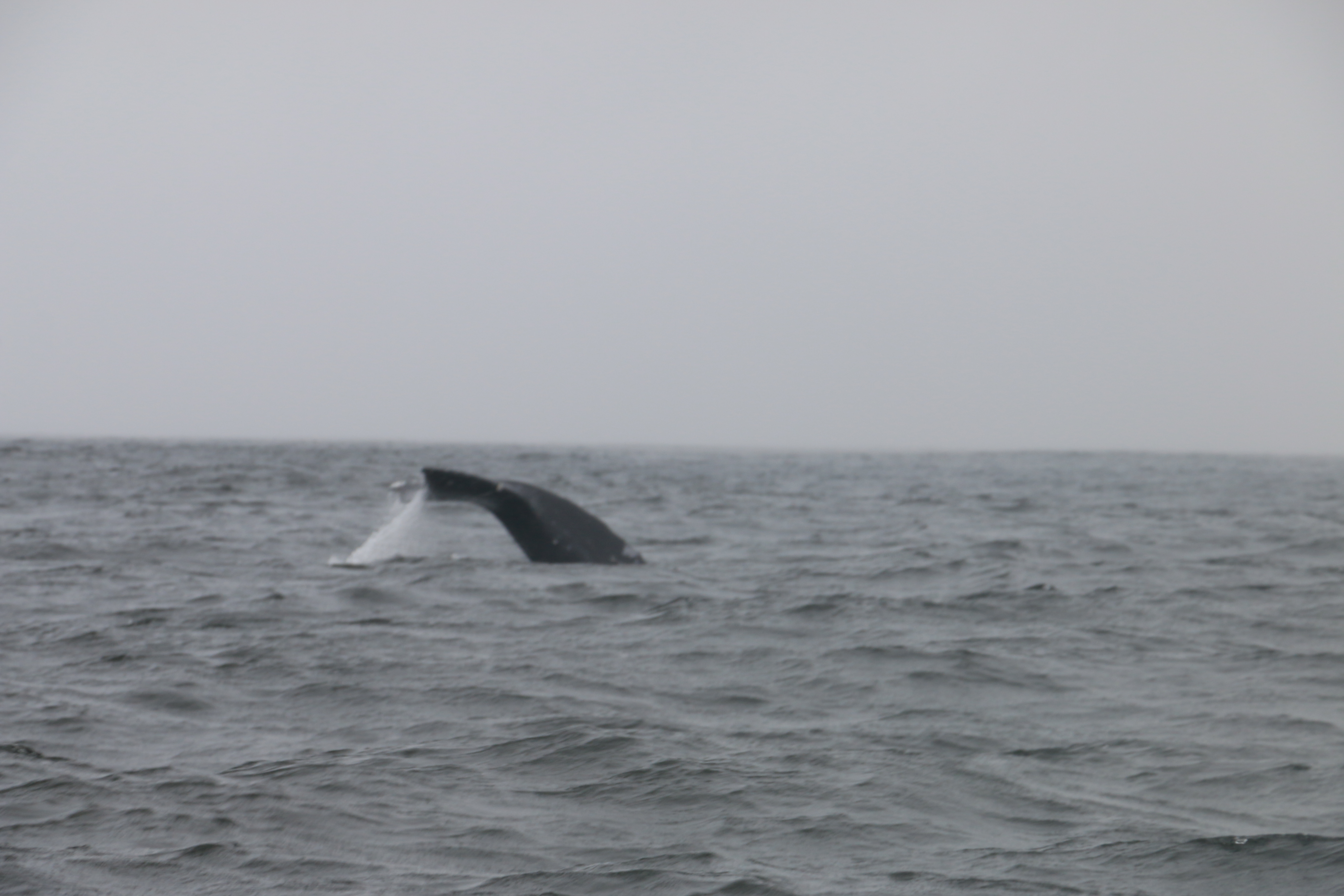
As if Carrie’s energy and passion for her work wasn’t encouraging enough, something that her coworker Captain Dan said out on the water really struck a cord with me. As we approached a female whale in our zodiac, she flashed her fluke and dove down, leaving everyone in a moment of silent awe. Captain Dan then started explaining to us how this whale (Ginger was her name) seems to always fluke and each of the resident whales in Oregon has their own identifiable characteristic. He said he even has suspicion that at least one of the whales intentionally tries to sneak up and startle everyone in the boat. It was then that Captain Dan said, “You know, I’ve learned a lot from Carrie and from the textbooks, but no one can teach you about the personality of these animals until you’re out here with them every day.”

Carrie Newell and her first mate Kida.

I think what Captain Dan said resonated with me for a couple of reasons. First, whales are intelligent and social animals, just like humans. Humans tend to feel a strong connection to what they can relate to. Second, I am perpetually fascinated by how little we know about our expansive ocean and find it humbling to think about. Reflecting a little more deeply on the second thought, I realized individuality defines a lot more than a biology textbook could explain. If whales really are trying to playfully spook people in a boat as Captain Dan suspects, then perhaps they really are a lot more like us than we think.

Captain Dan.

Over the years, humans and whales have had a relationship that some might call “complicated.” I think now, more than ever, through the powerful influence of media and the efforts of Greenpeace, people want to save whales and dolphins rather than exploit them as a natural resource. If we could all take the time to connect a little more closely with the environment around us, I think we might learn a lot from those who share this planet with us.

Fluke of Ginger the gray whale.

The Beginning of the End and Mental Health

Happy Sunday folks! Let’s start with some of the nitty-gritty science stuff. This Friday I completed my last fieldwork in Yaquina Bay. Amy and I took a trip upriver to three eelgrass beds where we collected water, sediment, and eelgrass samples for processing. For the first time this summer the processing went completely smoothly! Nothing got mixed-up and the new lab layout gave us tons of space (we totally reorganized this week in anticipation of a visit from an EPA bigwig). It appears that, based on our preliminary data, eelgrass is a massive reservoir of Enterococci (a fecal indicator bacteria). What’s more, the majority of this bacteria is loosely-attached to the plant via biofilms and could be easily resuspended by wave action or storm energy. This finding could have big implications on future work as storm-based water sampling could be providing skewed levels of indicator bacteria due to resuspension. This would falsely indicate levels of fecal matter in the bay. I know you’re all hooked but you’ll have to wait until my poster is complete to learn the whole story (I can’t go spoil the results for you).

Speaking of posters and presentations, there’s only 5 days until the final symposium! How’d that happen?!? This coming week is going to involve a LOT of figure-making and R script…I know, sounds like a party, right? I am actually excited to see if there are any interesting findings however! We shall see.

On a very non-Sea Grant note I want to take a second to talk about an issue that I feel doesn’t get addressed enough in our fast-paced culture: mental health. It’s not a very popular topic and it’s slightly taboo in our culture to discuss mental health; maybe it’s because we associate the term with ‘crazy’ or ‘illness.’ Regardless, it’s a topic that we should all stop and think about every so often. I think it’s especially relevant for those of us thinking about graduate school to take time and evaluate how we make our choices and if they are good for us. I don’t just mean good for us professionally but also mentally and personally. I know that I’ve felt immense pressure to go to grad school ASAP and get my degree ASPA and get a post-doc ASAP and get a job ASAP and produce research ASAP…it’s exhausting just to think about it all. The truth is that this thought process doesn’t leave much room for our own personal growth or happiness. I would argue that making choices for mental health reasons should be just as important as, if not more so, than academic reasons. Being happy isn’t a luxury that’s earned with success; it’s a right that we all should take the time to exercise in our lives no matter what are professional goals are. Invest in friendships. Forge healthy relationships. Bottom line: take care of yourself first.

Skyler’s Weekly Review – Week 8

The Buzz: Tillamook Field Work Week

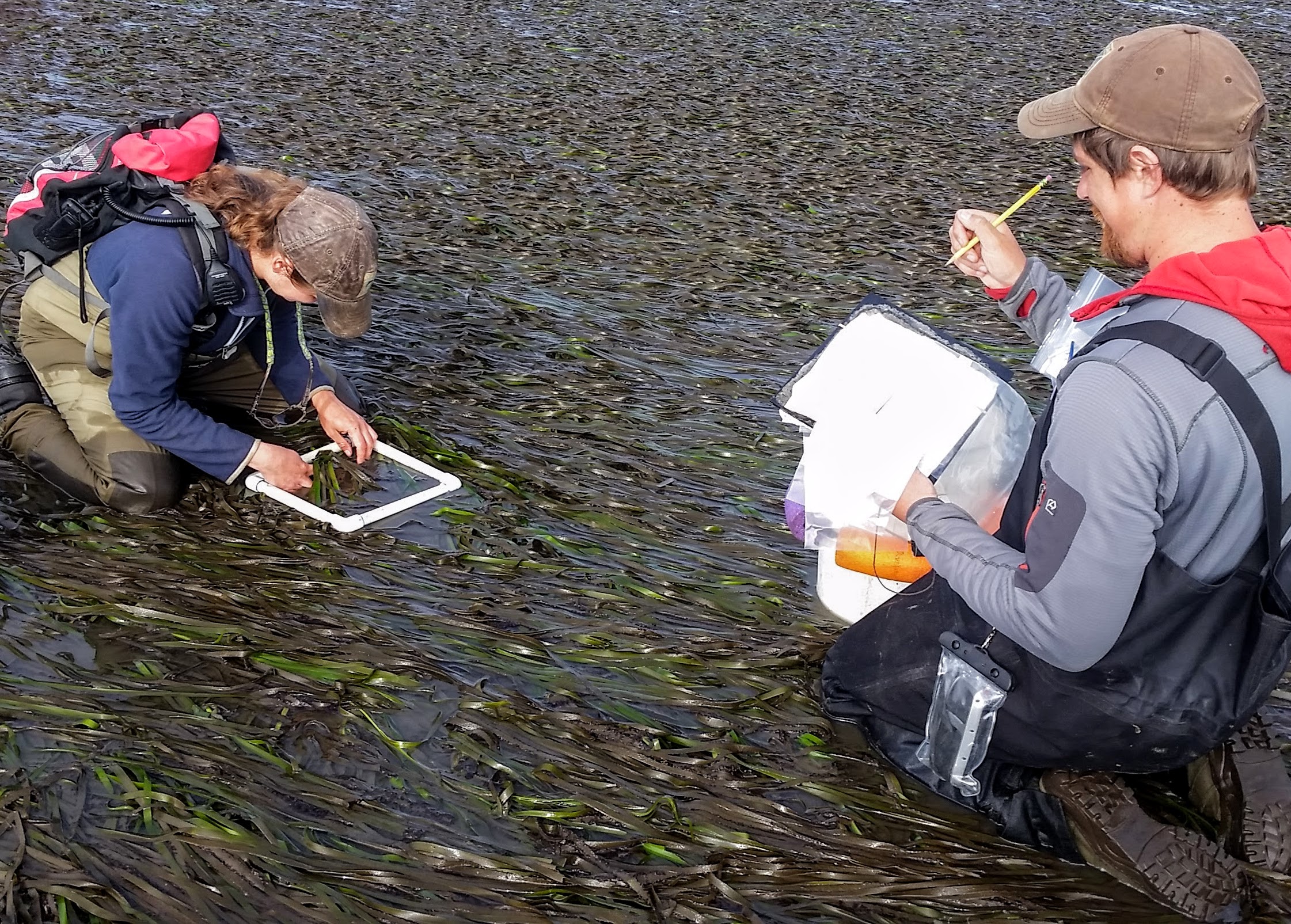
Eelgrass beds of Tillamook Bay

Tillamook Field Work Week: In the world of computer systems and mountains of data to process, I often don’t get to find out where the data I’m working with comes from. Working with SEACOR has provided me ample opportunities to splash in the mud, wade through the water, handle an estuary’s bounty in the form of epiphyte goop (plants that grow on other plants) and smelly eelgrass, and perhaps most importantly see the data I use from start to finish.

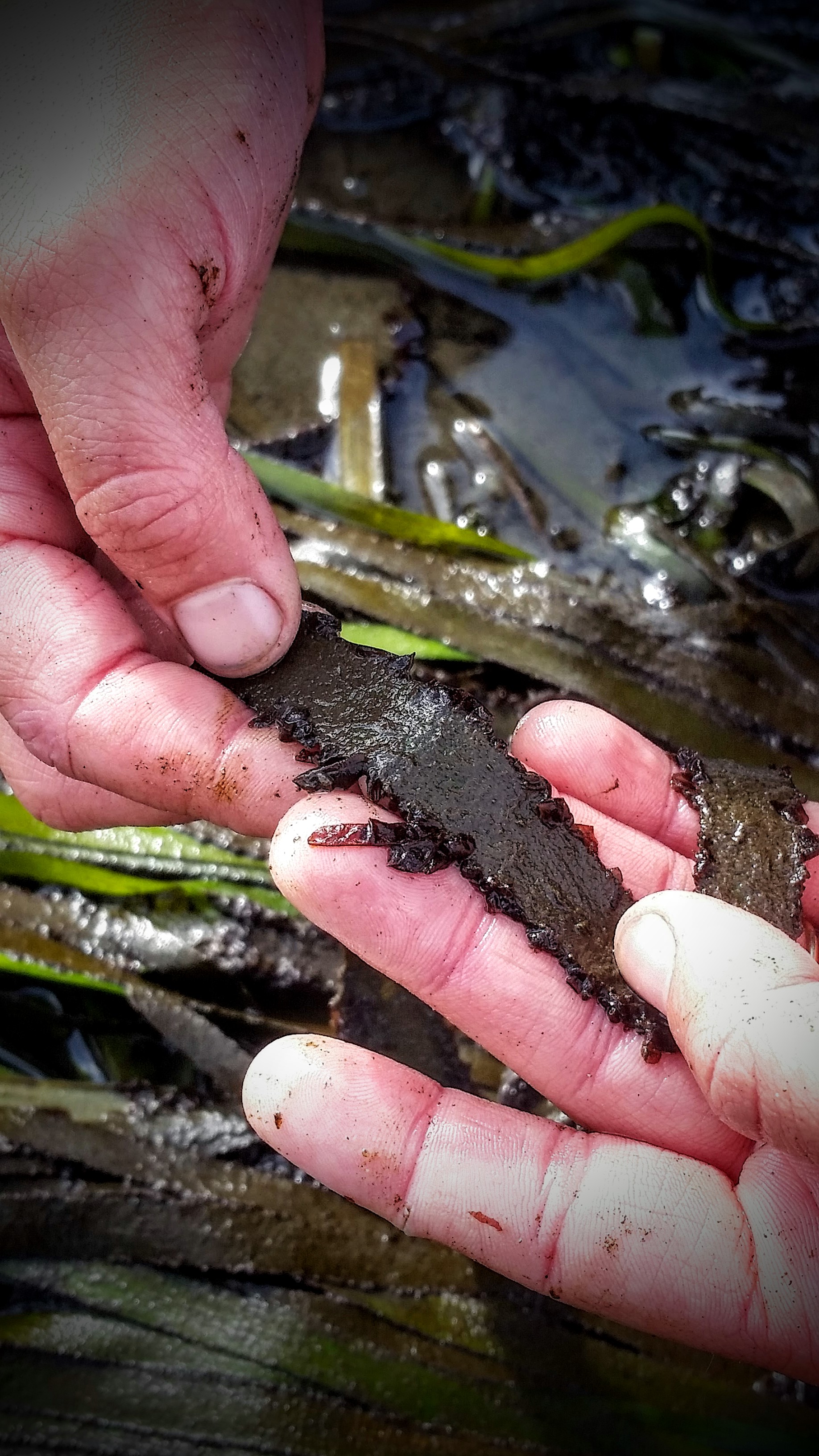
Porphyra, a genus of common brownish-red epiphyte off the Oregon Coast that attaches frequently to eelgrass, can be seen here.

Buried under mats of eelgrass are a plethora of vulnerable but highly adapted animals. Poke around long enough, and you’ll find a whole other world. I have found Skeleton shrimp, colonial tunicates (some invasive), shore crabs, kelp crabs, isopods-a-plenty, bay clams and oysters taking advantage of the cover. I find something new every trip!

Eelgrass coverage, epiphyte coverage, algae coverage, and number of shoots per quadrat are typical numbers SEACOR collects for dozens of sample sites in each estuary.

Much like the golden hour of sunset, sunrise has its own hour that’s best enjoyed when you get used to waking up early enough to see it.

Sun is up. I am up.


An Update from the South Coast

A lot has happened since my last post. This week alone I have worked on an ODFW lamprey assessment by electrofishing Winchester Creek’s headwaters, participated in a Sea Grant funded eel grass monitoring survey, and seined for juvenile fish with visiting scientists from OSU. Most importantly, I have successfully completed all of my crab sampling in the South Slough Research Reserve. After deploying 160 traps, I processed over 2,100 crabs in just 12 days. Of these only 86 were the invasive green crabs I was targeting.

Though I had wished to collected more data on the species, my mentor and her colleagues were pleased with my results. I found green crabs in locations they have never been found before. My data also indicates the highest abundance of these crabs in the Coos estuary in the last 19 years. I am currently collaborating with a professor from OSU to publish a report on the status of the European Green Crab along Oregon’s Coast. Please enjoy the pictures below taken on my last day of sampling.

IMG_0487

IMG_0483

IMG_0482