Skyler’s Weekly Review – Week 9

The Buzz: Sea Grant Summer Scholar’s Final Symposium!

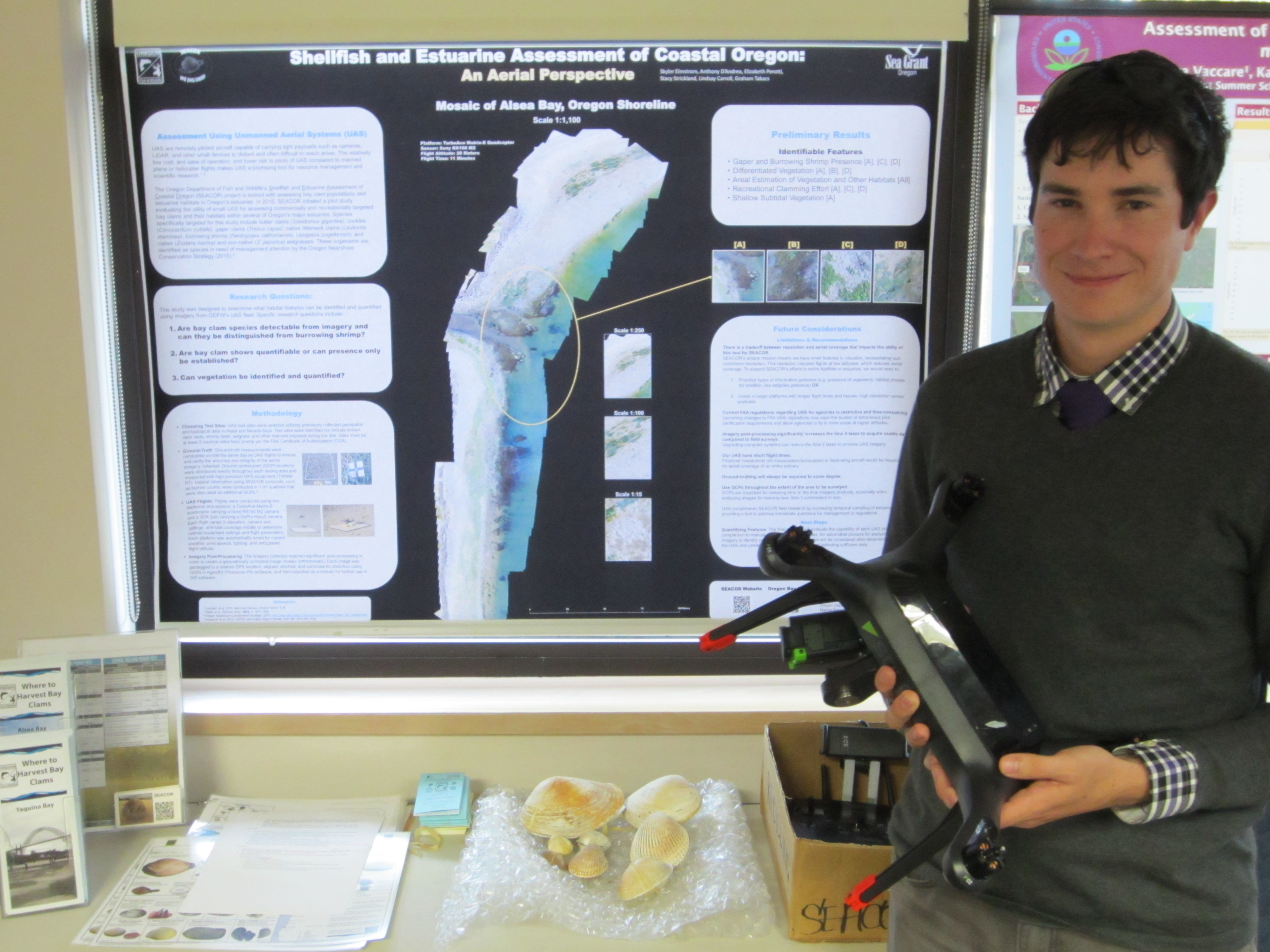
Final Symposium: This is it! Finally, the culmination of all of our summer projects are here to share! After many hours of creation and working in the details and minor edits, we each completed a poster and prepared a presentation to the Hatfield general public. I have embedded a link to my poster below for your perusal:

SYMPOSIUM POSTER LINK

My Poster & Display at the Final Symposium

While I still have a week of work left, it is a week of winding down and tieing loose ends. Saying goodbye is never easy, and I can never dole out enough thank yous to those who made this summer remarkable.

Week 7: Coastal exploration continued

Not too much happened on the research front this week. I’ve finished looking into decapod studies and began looking at fish studies. It is thought that fish will be fairly resistant to ocean acidification because they can swim away from unfavorable water conditions and do not calcify an external shell. However, there have been some recent studies on larval fish that found evidence to the contrary. Behavioral studies have found that low pH conditions have a negative effect on the ability of larval fish to detect prey, learn and reduce overall activity. Even though fish do not calcify an external shell they do calcify their ear bone, or otolith. This structure is important for balance and hearing. It also has an important use for research. Marine biologists look at otoliths in the same way that dendrologists look at tree rings. The layers of calcium carbonate can tell the age of a fish and the isotopes incorporated in the structure can be analyzed to learn about the water conditions at the time the otolith was formed.

Hiking past a beachside creek

Hiking past a beachside creek

This weekend I convinced some of my friends to make the drive down from Seattle and come see some of Oregon. We went camping at the Oregon Dunes National Recreation Area, a 40 mile stretch of the coast covered in massive dune formations. The reason the Oregon dunes are so unique is that they extend into the forest. Over the 6,000 years since the modern shoreline was established coastal winds and waves have moved sand back, up to 2.5 miles inland. We hiked along trails that began with pine needle covered forest floor only to find ourselves struggling up a sand dune a few yards later, even as we headed away from the beach. 

Inside the sea lion caves

Inside the sea lion caves

We also visited one of the best known tourist traps along the Oregon coast, the sea lion caves. The enormous cavern extends 125ft high, making it the largest sea cave in the America’s. Unfortunately, the sea lions were not inside the caves when we visited but we could still hear the bleating of the disgruntled beasts from the cliffs overlooking the sea and watch them flop out on the sunny outcropping below.


Put Your Money Where Your Mouth Is

I’ve been writing about buying seafood directly from local fishermen for weeks now. While I’d had fresh and local seafood, I had yet to purchase anything off the docks myself. With the summer almost over, I decided it was time to put my money where my mouth was and seize the oppor-tuna-ty to buy something at Shop at the Dock (writing posts for the Fisheries Extension Facebook page has brought out the best of my fish puns).

At the end of Shop at the Dock, I stopped at F/V (fishing vessel) Triggerfish to complete my survey and placed an order for a tuna. Triggerfish is owned by brothers, Ernie and Joe. Like many other boats, they often fish at the beginning of the week and come back Thursday night or Friday morning to sell off the docks over the weekend. Alternatively, there are boats like H/F/V (historic fishing vessel) Chelsea Rose that are essentially floating fish markets. Their seafood comes from other boats they own and other fishermen, so they are able to stay docked everyday.

triggerfish

Joe showing off a beautiful 50 lb. tuna

Tunas average 10-20 lbs, but some can get MUCH larger. It is priced per pound for the whole fish and there is an additional fillet charge. I asked for a 14 lb fish, so Ernie weighed several fish until he got one about that size. The recovery rate (the amount of meat recovered after filleting) is roughly 50-60% for tuna, so I was to expect about 7-9 lbs of meat.

tunaweight

Ernie picking out a tuna

There are a couple of things to do to ensure the freshness and quality of your fish:

  1. Ask when the trip started- fishing trips can last multiple days, so that’s the earliest it could have been caught
  2. Ask how the fish was cooled down- tuna are very warm fish and quality can decrease if it is cooled slowly
  3. Inspect the fish to ensure its quality (clear eyes, scales and gills still in tact)

I already knew that I wanted to split a fish with my mentor, so once I was satisfied with the fish, I asked for it filleted and split in half. It’s regulation that boats sell whole fish to avoid contamination, but most boats are willing to split the fish for you so you can purchase with other people. I made sure to bring a hot-cold bag and cash to pay for the fish (because most don’t take cards).

filleting

Brothers who fillet together…

I kept the tuna on ice and when dinner came around I marinated it in brown sugar, soy sauce and garlic. I ended up having it raw, seared and barbecued and it all tasted fantastic. There is something really thrilling about knowing where your food is coming from. I love that I was able to see a whole tuna fresh from the ocean in the morning and eat it for dinner a couple hours later. It was quite the experience and I know I’ll definitely miss Newport’s seafood at the end of this summer.

grilling

Mmmm

That’s all for now. Thanks as always for reading!

The Best Laid Plans…

This post is about plans. You know how this goes. The typical wisdom is that if you plan well for something, it will go well for you. If you don’t plan well for something, it won’t. Simple. And often this is exactly what happens. But sometimes more prominently in our minds are the episodes where we spend exorbitant amounts of time planning only to have the plans fall through. No amount of pre-effort could have precluded that result. Or the contrary episodes where we do no planning at all and something turns out beautifully. I’m thinking of you, impromptu camping trip to Washburne State Park. I have been thinking about plans a lot lately and would like to share with you a few episodes from this the last few months of this fellowship.

Bad Planning, Bad End – Interviews: In an effort to end this post on a good note, let’s start with the bad endings. One of the projects I am helping with as a fellow is a report about how NOAA does or could incorporate Indigenous and Local Ecological Knowledge (ILEK) into its scientific programs. To form this report, the team is using methods that hark back to my master’s thesis – interviews. We divvied up a list of NOAA employees who work in ILEK to interview about our numerous research questions. I took my list of 6 and promptly e-mailed them all to set up meeting times. I was new to the team and wanted to meet the deadlines for interviewing. But really, I should have taken the time to prepare for them. I didn’t know who I was calling, what they did, where they are located in the country or anything about their capacity to answer our questions. I took at face value that they would know what I was talking about. The result is that I asked people who did not work in ILEK to tell me about their work in ILEK. I suggested a time for a call that was perfectly acceptable in DC but offensively early for a person who works in Hawaii. I asked to be referred to my interviewee, mispronouncing her name and then accidentally hanging up on her. The strange lesson I learned here is that when on a tight deadline, on time does not necessarily mean that the project is done right or well. Before you discount the report that will come out, I must reassure you that these blunders were all pre-interview and really only made me look foolish. The interaction and exchanges with these experts were fulfilling and enlightening and will contribute a lot of wisdom nuggets to the final report. I just think that with a little more planning, I, and my interviewees, could have gotten a lot more out of these interactions.

Good Planning, Less than Satisfying End – Newsletter: One of the first projects I was given when I arrived was to produce a quarterly newsletter referencing and highlighting the science done on protected species throughout the NOAA Fisheries regions. This was meant to be a quick win for the new Fellow. It had the higher ups behind it and the infrastructure in place for me to easily collect the publications. We formed a communications review and distribution plan for the newsletter and by the end of my second month (March), a draft of the first issue was ready. We then went through all of the steps for approval to distribute and that is where the best laid communications plan led to a bunch of hiccups. These hiccups, as in human physiology, were beyond our control, and we used all of the methods to relive ourselves of them – eating peanut butter (stress eating), scaring ourselves (what if it never gets out?!), drinking water upside down (flipping the angle and trying a different route).  Long story of frustrations short, five months and a new name later, the science newsletter was distributed last week. But rather than the feeling of a quick win and, wow look what a fellow can contribute, it was more like the feeling you have when you finally get through a door by realizing that it was a pull and not a push. You’re through the door but it was  a lot more trouble than it was worth. To get a little T.S. Eliot – Not with a bang, but a whimper. The lesson to be learned from this is the same that we learn over and over when our best plans do not lead to the end we want: change the things you can, accept the things you can’t, know the difference. Thanks Serenity Prayer.

Less than Normal Planning, Beautiful Ending – Wedding: If you know me, you probably know I got married July 10! Now I’m not going to say I didn’t plan for my wedding day, because I did. Quite a bit. But as I evaluated throughout, it seemed like I was doing a lot less planning than my friends who have gotten married and definitely way below what the two bridal magazines I owned suggested. Part of this was me never having dreamed of a perfect wedding. And part of this was due to the largest details depending on a small permission from the US government for now husband to join me in the US. This meant that our planning timeline strongly diverged from the “norm” and that we did not dedicate as much time as the “typical” couple to planning. I most certainly did not Bridezilla on anyone (I think – feel free to disagree). But when the day came and we rehearsed the morning of the ceremony (and the musicians rehearsed two hours before the ceremony), everything came together beautifully. Most of our loved ones were there to share with us, it didn’t rain, no one got hurt, and at the end of the day, Husband and I were married. Enjoy the artsy picture of all of us having a wonderful day. What do I learn from this? I learn that having relaxed expectations (as expressed in my lack of planning) can lead to an extraordinary time. I also learned that my mom really planned most of that spectacular day. Thanks Mom.

Wedding party (1)

Good Planning, Good End – St. Croix: Actually, another reason I may have been lax in planning for wedding was because I was spending quite a bit of time planning for a field work trip to St. Croix just two weeks before that day. Part of my professional development plan as a Knauss Fellow included getting some protected species field work experience. So back in April, I blasted e-mails to all of the NOAA scientists I knew doing protected species research this year to see if any of them could use an extra pair of hands and eyes for a week. Only three people responded and only one fit my timeline so it was fairly easy to decide to visit Dr. Kelly Stewart and her team monitoring and researching nesting and hatching leatherback sea turtles. In the Caribbean. Some days it’s tough to be a marine biologist. So leading up to this trip I was in communication with Kelly about what to bring, how to prepare, reading her papers, getting up on the methods so that I didn’t make a fool out of myself when I got in the field. I wanted to be useful. I wanted to prove my mettle. And it worked out for me. My first three nights there, I accompanied the team on night patrol. That is, 7:30 pm to 5:00 am patrolling the beach and looking for nesting mamas and/or emerging hatchlings. My first night out, I was rewarded by the most outstanding vision of a leatherback sea turtle I could possibly hope for. With the backdrop of a passing lightning storm, I saw the largest leatherback to nest on this beach. She measures 5’8″, which coincidentally is my own height, and has been coming to this beach to nest since at least 1996. The field team had dubbed her Fiona, named for the Shrek ogress. I scanned her for PIT tags, helped note scars, took down the time, saw her eggs the size of billiard balls and then watched as she suffered back into her preferred environment, the sea. Incredible.

My last few days, I accompanied the early squad which patrols the beach at sunset looking for emerging hatchlings and marking upcoming nests. I got to see a “boil” – where the sand bubbles and then out pop dozens of baby sea turtles. I helped collect them to take DNA samples for later lab work and then helped to carry the sampled babies to a more amenable beach for release. The reward here was that several times during that week I had a bucket of hatchlings in my lap looking something like this.

IMG_1343

Again. Incredible. The lesson? The best laid plans can and do turn out to deliver beyond your wildest expectations for an event. So maybe we should keep laying our best laid plans while continuing our agility training to flexibly respond when we need to.

Future plans: Like I said, I’ve been thinking about plans a lot lately. I am mid-way through this fellowship and a very frequent question is: what are your plans for after? Contemplating plans, how well should I lay them? How fixed should I make them? How much flexibility into them? Just in the last few months, I have experienced good plans go well, good plans go poorly, bad plans go poorly and bad plans go well. Maybe the take away is: Do plan. Don’t worry. Be flexible. Enjoy. But I’m open to suggestions.

Winding down: The beginning of the end

With just a few weeks left and after completing the first draft of my second project (the Rural Tourism Studio) I began my final project – updating the Orb. The Orb is a platform that can used by businesses, communities, or individuals to upload their content to share online. They simply have to create an account, be approved, and start uploading their information. Although it is currently just updated by some Destination Marketing Organizations (DMOs) and a few statewide groups, the aim of the Orb is to allow anyone to be able to share information about local deals, lodging, events, attractions, or photographs for any place in Oregon.

One of the products of the Rural Tourism Studio - now the produce sold at Bandon farmers market is a part of a network of local farmers that make up the Wild Rivers Coast  farm trail.

One of the products of the Rural Tourism Studio – now the produce sold at Bandon farmers market is a part of a network of local farmers that make up the Wild Rivers Coast farm trail.

This creates “a centralized collection of data of all the tourism assets in the state…” (Davidson 2016) that is then shared onto the Travel Oregon family of websites, mobile apps, and many other locations. It allows smaller, community events to be easily showcased to the world, to “Tell the Oregon story” and make it easier than ever to attract locals and visitors alike.

For my third project, I am updating the datasheet of the Wild Rivers Coast, which includes the coastal towns from Bandon to Brookings. I am now making sure that the existing information on lodging, deals, and attractions in the region is to up-to-date, allowing more visitors to take advantage of the regional assets.

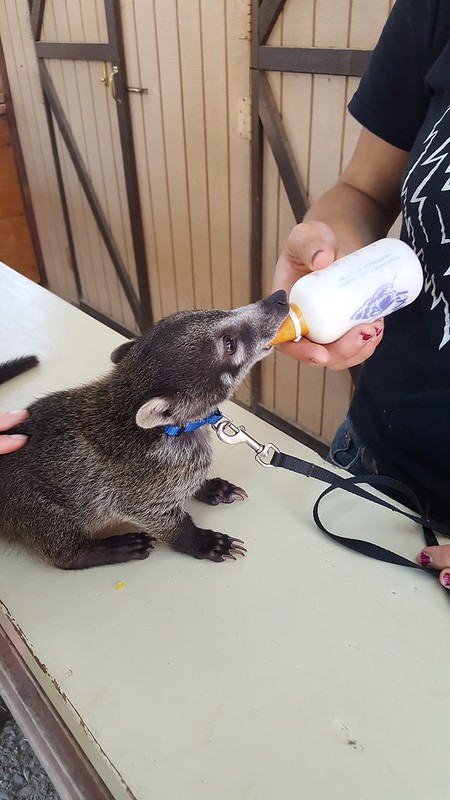
This past week I also got to check out a few neat places close to Bandon, such as the West Coast Game Park Safari, a walk-through Safari where I got to hold a baby Bobcat and Caracal!  They also had some large cats, like snow leopards, tigers, and panthers. One of my favorite parts (aside from holding baby animals, which is always awesome), was the free roaming deer. They were Mediterranean/European deer, and many had very large antlers. Although having such large antlers walking towards me was intimidating at first, all of the deer were super friendly (probably because they hoped that I had food for them). Some of them were also trying to get rid of the felt on their antlers, so they were as happy as a dog being scratched behind the ears to be pet!

Resized_20160806_150135

20160806_143318

20160806_150506

Aside from that, I agree with Claire’s last post, that I am definitely missing studying in my favorite coffee shops. I’ve been spending a lot of time researching for my senior project, studying for the GRE, and generally trying to prepare for post-undergrad life (woah). Since Bandon is a pretty small town, all of the coffee shops close at either 3 or 4 pm on the weekends, leaving me little room to procrastinate and/or sleep until the afternoon. I was able to make it the library (closes at 5:30) on Saturday, and settled for the “McCafe” on Sunday, but I can’t wait until my all-day study seshs in Springfield. Didn’t realize how much I loved those, and just generally studying. (But check out the great wildflowers spotted while procrastinating/playing Pokemon Go on Saturday, below!)

20160806_123513

The projects for Oregon Sea Grant are winding down, and I’m getting ready to jump into my own projects for my senior year – pretty exciting!

Final presentations on Friday! Stay tuned!

Week 8 – Milestones: First video!

It’s nearing the end of the program now, but things have been busier than ever at the office. A couple of weeks ago I wrote about my first post on the ODFW Marine Reserves Program website. Continuing on my communications roll, this week I was able to pull together all of my footage taken at Otter Rock and Cascade Head Marine Reserves and create a video on the diverse life found in Oregon’s tide pools. I had a blast just walking around and pointing the GoPro in every promising hole and at whatever little creatures caught my eye. Back in the video cave at work, learning how to use Adobe Premiere Pro – an industry-leading video editing software program – and finally putting it all together was equally enjoyable and gratifying. While I’m still no Steven Spielberg (lots of Google searches and troubleshooting…), this experience has definitely piqued my interest in the field, and I’m looking to churn out one more video before I leave.

So without any further ado, here’s the final product.

P.S. The music is kind of corny, but I think it fits the theme (it’s grown on me, having listened to it an infinity number of times throughout the editing process).

Week 8

It’s getting to be that time where we can all start to see the light at the end of the tunnel and it is so sad! Only two more weeks in Oregon and there is still so much I wish I could have done/seen. I won’t get too nostalgic just yet though.

Week 8 was filled with presentation and poster prep. My blog post for Week 9 will be all about the presentations for the EPA and Sea Grant. Katie and I have our presentation for the EPA this coming Tuesday.

This past weekend I went to Corvallis and got a tour of the OSU campus. I really liked it and will definitely be looking more into the OSU graduate school. Also, Corvallis has a pretty awesome farmers market!

On Sunday Angus and I went to Neptune (just south of Newport) at low tide with Jody to look at some amazing rock formations and tide pools! I saw my first wild sea stars and more anemones than I’ve ever seen before. There was also a really cool cave called Creature’s Cave. It had a great view when looking out of it but it was definitely pretty creepy inside. There was a pretty beat up mattress, lots of mail (Todd Graham I think your mail is being delivered to the wrong place…) and a bunch of very…interesting graffiti. If you are adventurous you can camp out in there!

Starfish at Neptune during low tide

Starfish and anenomes at Neptune during low tide

View of the Pacific Ocean from Creature's Cave

View of the Pacific Ocean from Creature’s Cave


Week 7, or: Charter Boats and Coffee Shop Studying Withdrawals

Week 7 was my last full week of doing interviews, and it wasn’t exactly a climactic one. It was a week of blustery, chilly afternoons…not the best for ocean fishing and crabbing. The bay crabbers I talked to seemed to be doing well, though; most were hitting their limits of 12 crab per person. I even talked to one group of 6 crabbers in Waldport that managed to limit out with 72 crab. 72. Friends from Missouri, can you imagine having the meat of 72 freshly caught Dungeness crab sitting in your freezer right now?

Although the week was slow for private boat interviews, I did manage to talk to a few charter boats about their crabbing gear. Interestingly, even though charters are pulling ~8-10 crab pots per trip and taking ~150 crabbing trips per year, most boats only lose 1-2 pots in a given year. Those are impressive numbers, and I was happy to hear that the experience of charter boat captains and deckhands seems to be paying off by helping to limit derelict gear and marine debris.

IMG_3094

After talking to the charter boats, Justin (my mentor) and I went to Local Ocean for lunch. I never take pictures of food (I know, I know, I’m a millennial and you probably don’t believe me, but I swear it’s true), but I just had to share a photo of this gorgeous, colorful salad topped with Albacore tuna. Medium-rare is the way to go:

IMG_3096

I wouldn’t ordinarily be so excited about a salad, but eating at a restaurant where you know the fish is bought locally and caught sustainably makes me feel good about what I’m eating. If you haven’t already, I encourage you to read some of the other scholars’ posts about buying local products (especially seafood) and sustainable fishing practices.

The following weekend, a couple of us made the trek across the bridge to spend some time wandering through the farmer’s market. Armed with backpacks and laptops, we then headed to Nye Beach to get a change of scenery, do some work, and have a cup (or two) of coffee. One of the things I’ve missed most about IU these past eight months? My favorite local coffee shop, a bottomless mug of coffee for $3.45, and ~8 hours of studying, listening to music, and people watching. Thanks to Carl’s Coffee for helping me get my fix.

Week 6, or: Crater Lake

With Crater Lake being so far away, I was worried that I wouldn’t get the chance to the famous landmark before the summer was over. Luckily, my roommates were as anxious to see it as I was, so on Friday afternoon of Week 6, five of us piled into the car and headed for a small hotel room in Roseburg. We crashed early – after the 4-5 hour drive, 9 PM felt like 11 – and left at 6 the next morning to beat the crowds to Crater Lake National Park.

For those of you in the Midwest, Crater Lake’s reputation is definitely well deserved; it was every bit as beautiful as I had expected, and more. The water was a deep blue that was so vibrant it seemed almost unnatural, and the shallows were a clear turquoise that rivaled the Caribbean Sea. Of course, there was no way I wasn’t going for a swim in that. One of the park employees instructed vaguely that we could jump in “a little ways around the corner,” so we found a spot that looked good and went for it. Not quite as chilly as the plunge I took the weekend before, but not exactly balmy, either.

IMG_2985

IMG_3002 (1)

After a steep hike back to the parking lot (during which most of my energy went towards trying to not look like I was dying as much as I felt like I was), we were ready for another hike. We decided to explore more of the area and head to Toketee Falls and Hot Springs in the Umpqua National Forest. We got lucky and had the hot springs mostly to ourselves. Unfortunately, the photographs don’t quite do them justice, but we spent a good hour soaking in the warm water and watching the stream below rush past.

IMG_3039

IMG_3062

It was the warmest I’d felt in months.

Whale Said

Whales are neat. Well, that’s my opinion at least and I hope you feel the same way by the end of these short paragraphs. Recently, I’ve become so attuned to searching for whales while conducting visitor surveys on the Oregon coast that the visitors at Depot Bay ask me questions about the whales as I stand there in my ODFW hat. I graciously answer to the best of my ability, making it clear that I am far from an expert on the topic and then let them know that I am actually studying humans (but maybe we’re more or less one in the same).

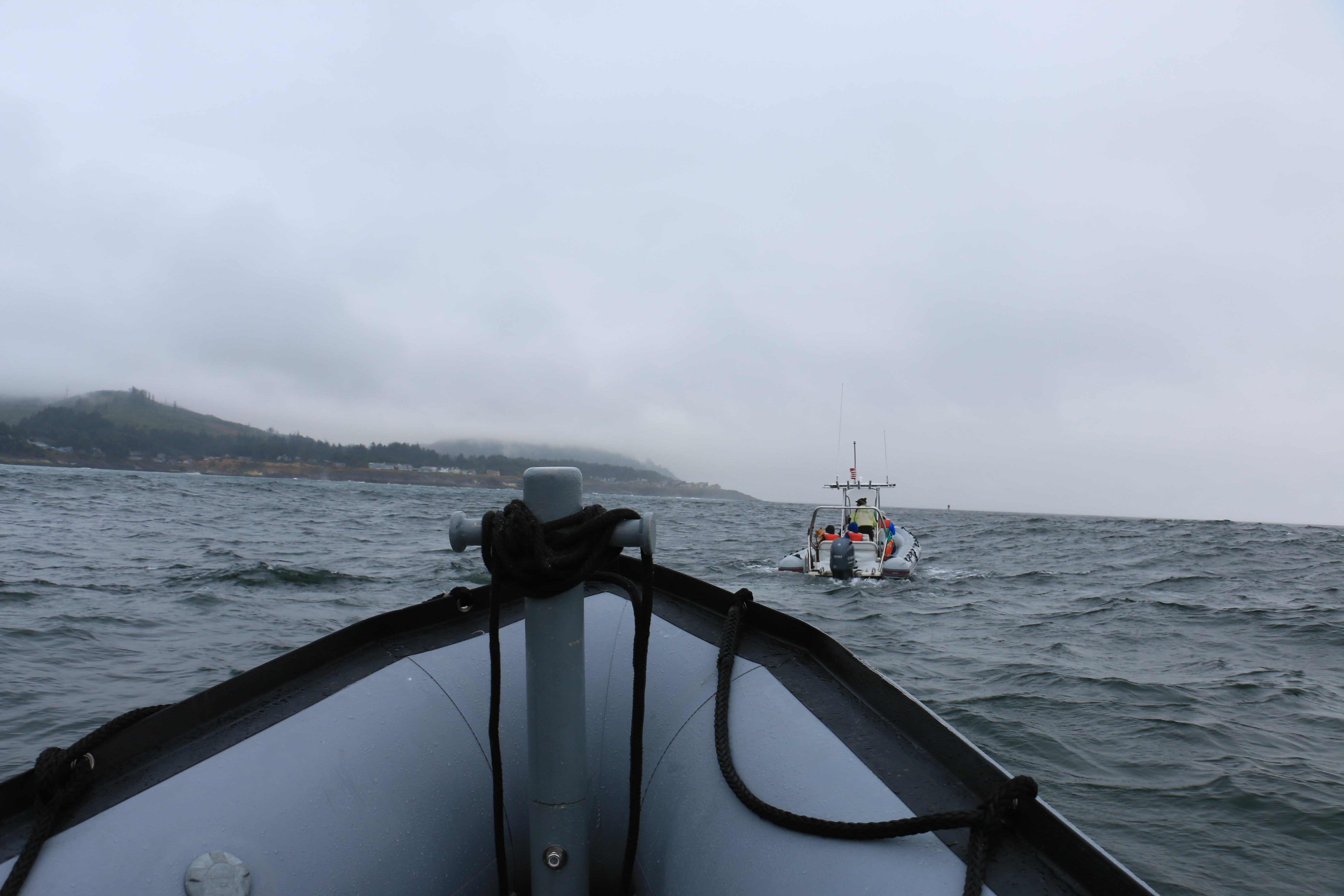
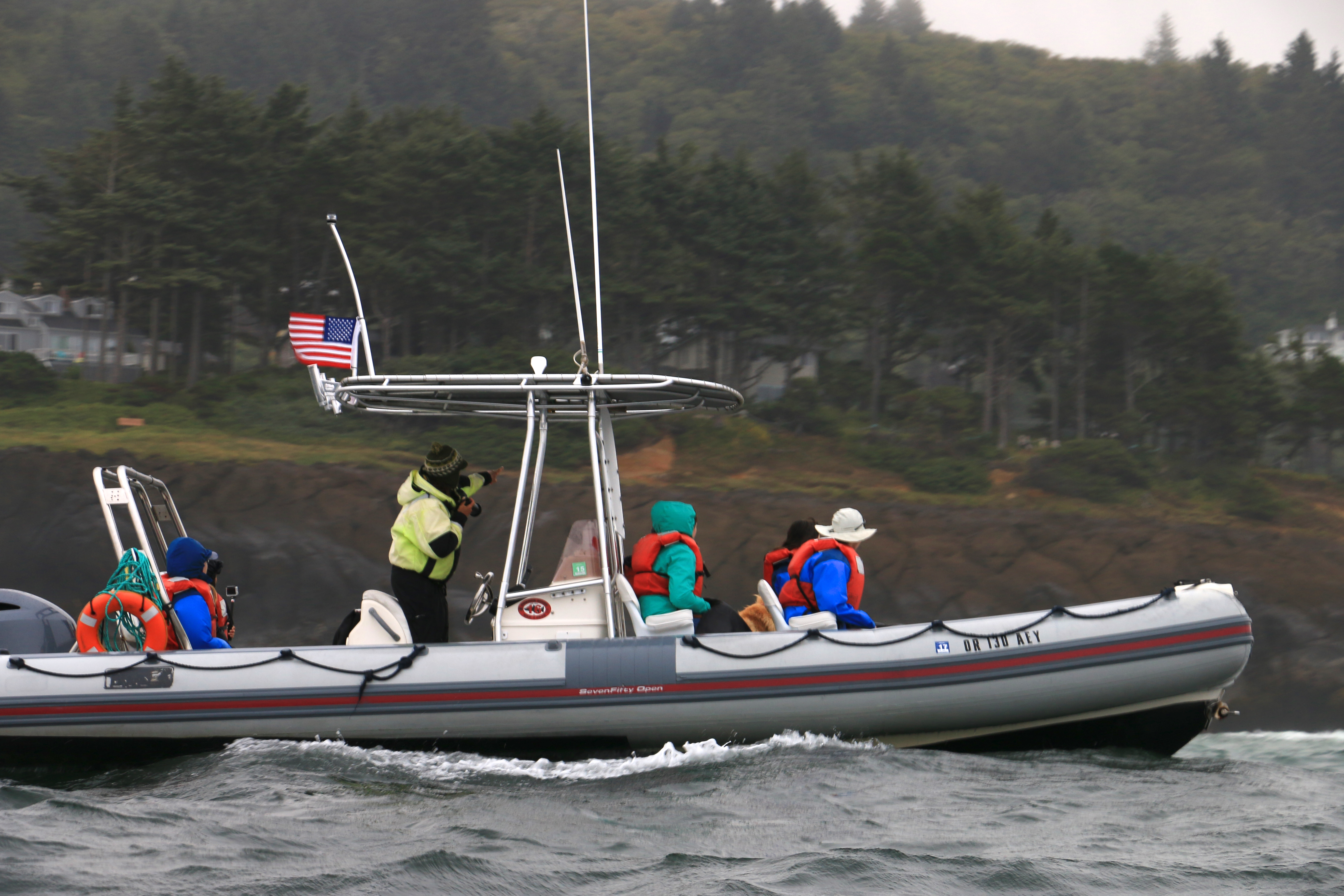
Whale-watching zodiac.

I’ve been envious of the visitors who share stories about their whale watching tour in Depot Bay. It just so happens that the REU students who live next door were going whale watching this weekend and they invited the Sea Grant scholars to tag along for a discount price. I had heard a couple of months back about a whale researcher in Depot Bay, named Carrie. As it turns out, Carrie Newell was the one who generously offered the Hatfield interns a discount on a private whale-watching excursion early Sunday morning.

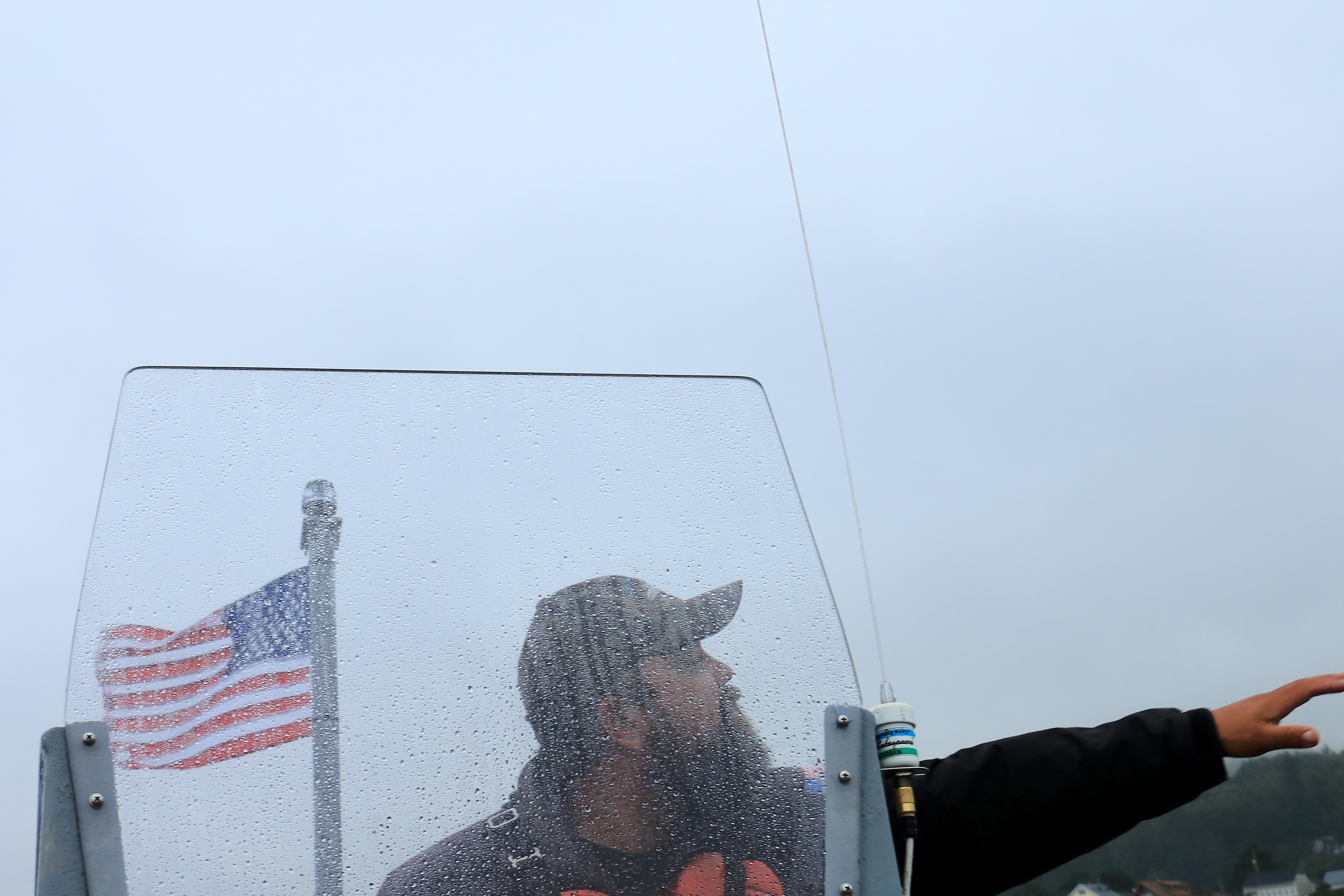
Carrie and the Hatfield interns spotting whales.

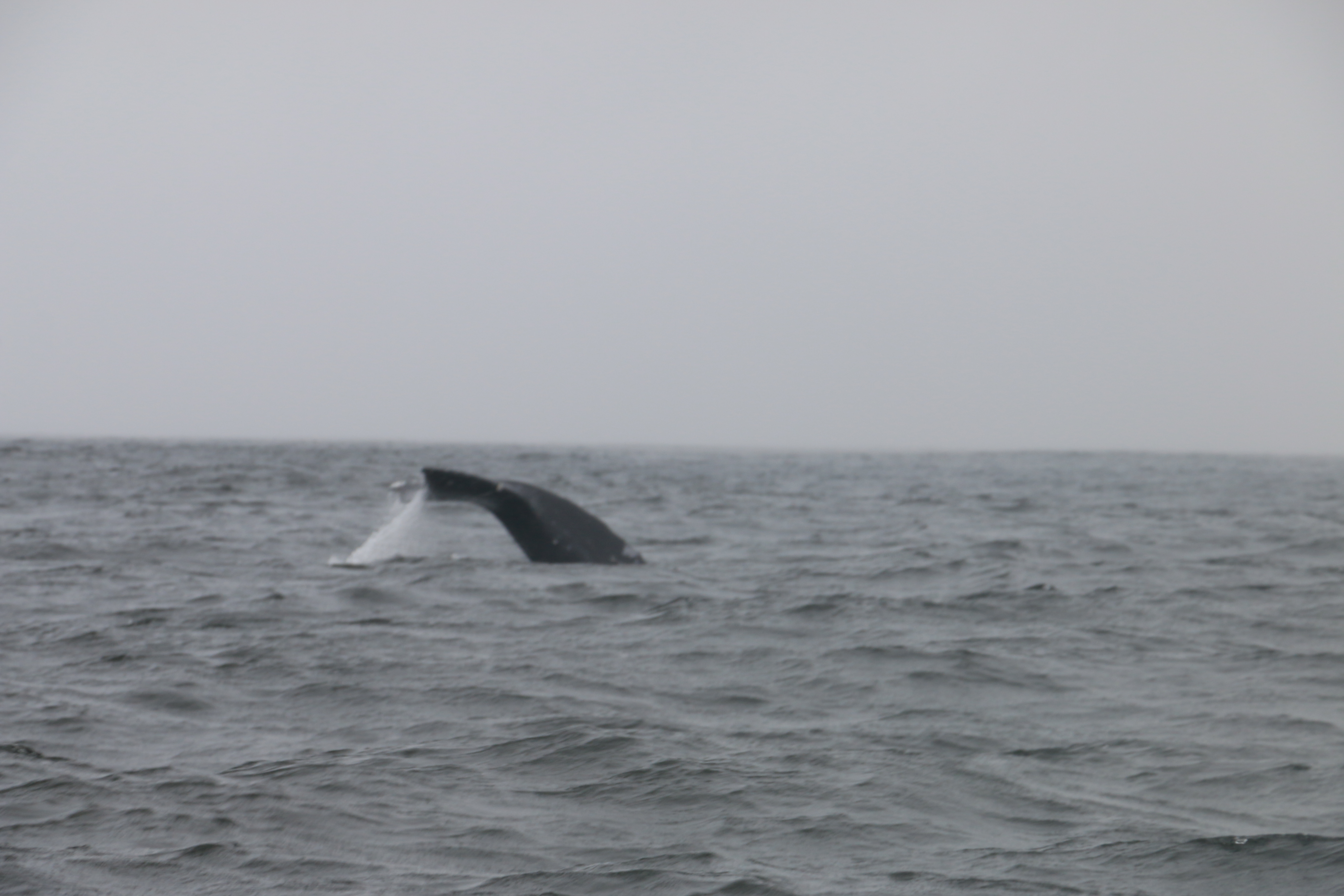
As if Carrie’s energy and passion for her work wasn’t encouraging enough, something that her coworker Captain Dan said out on the water really struck a cord with me. As we approached a female whale in our zodiac, she flashed her fluke and dove down, leaving everyone in a moment of silent awe. Captain Dan then started explaining to us how this whale (Ginger was her name) seems to always fluke and each of the resident whales in Oregon has their own identifiable characteristic. He said he even has suspicion that at least one of the whales intentionally tries to sneak up and startle everyone in the boat. It was then that Captain Dan said, “You know, I’ve learned a lot from Carrie and from the textbooks, but no one can teach you about the personality of these animals until you’re out here with them every day.”

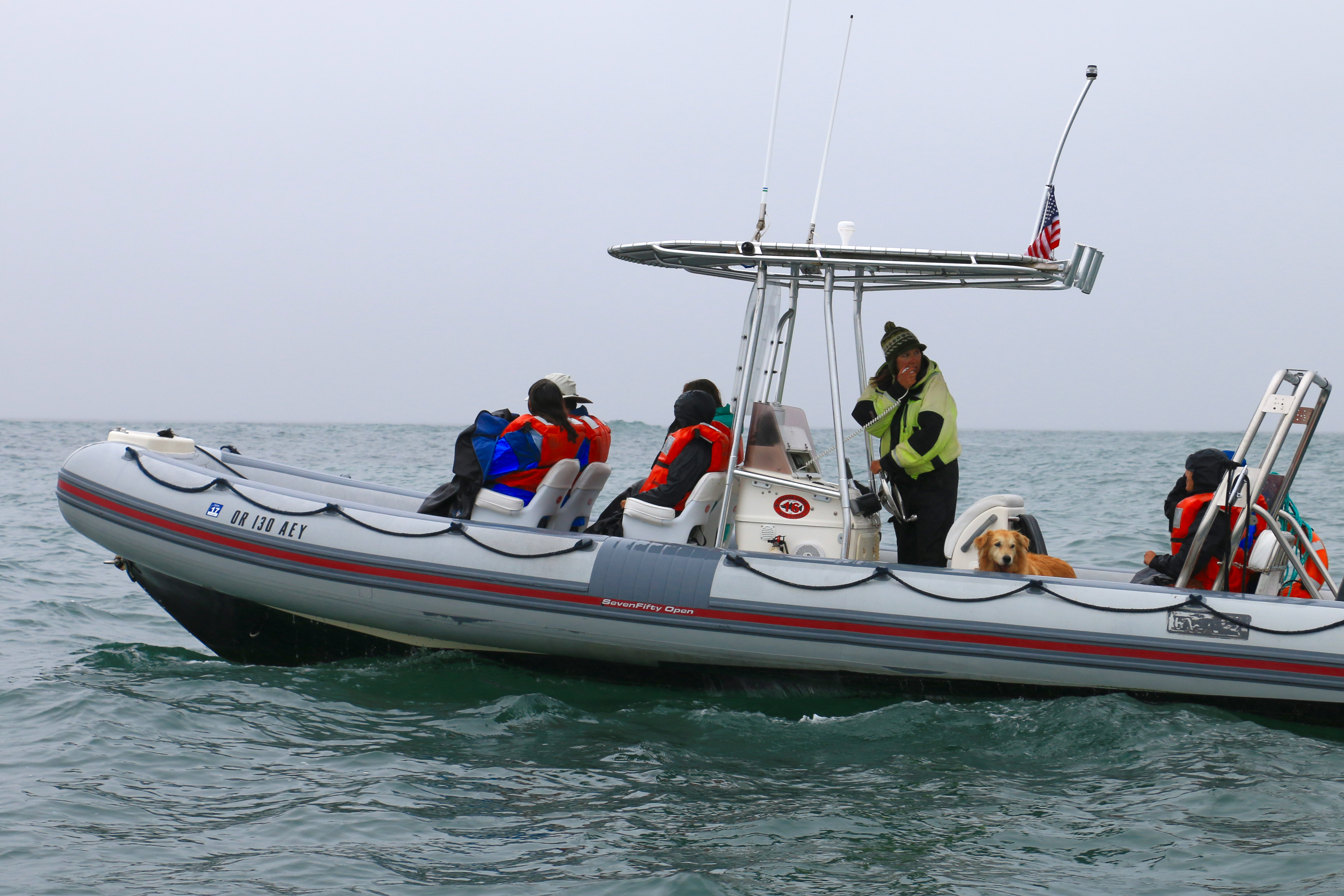
Carrie Newell and her first mate Kida.

I think what Captain Dan said resonated with me for a couple of reasons. First, whales are intelligent and social animals, just like humans. Humans tend to feel a strong connection to what they can relate to. Second, I am perpetually fascinated by how little we know about our expansive ocean and find it humbling to think about. Reflecting a little more deeply on the second thought, I realized individuality defines a lot more than a biology textbook could explain. If whales really are trying to playfully spook people in a boat as Captain Dan suspects, then perhaps they really are a lot more like us than we think.

Captain Dan.

Over the years, humans and whales have had a relationship that some might call “complicated.” I think now, more than ever, through the powerful influence of media and the efforts of Greenpeace, people want to save whales and dolphins rather than exploit them as a natural resource. If we could all take the time to connect a little more closely with the environment around us, I think we might learn a lot from those who share this planet with us.

Fluke of Ginger the gray whale.