Week 3

Week 3 has come and gone! I already find myself planning trips for every weekend we have coming up and it’s scary to see that we really don’t have many left.

Similar to Week 2, this past week mainly consisted of soil processing in the lab. We did have one field day in Tillamook Bay which ended up being really nice. The trip was mainly to make sure our wells were still in place and hadn’t been tampered with. Unfortunately, one of our wells had the logger taken out of it and we found the logger lying next to the well. In the field we were able to download the data and it looked like the logger was pulled only two days into the sampling period. It was a huge bummer to realize we lost basically all of the data for that well and we most likely won’t be able to make great conclusions about that transect because of it. We are fairly certain that it was most likely a person that tampered with the well due to how we found the scene and the time that the logger was pulled. Since the logger was found right outside of the well, it was pretty clear that whoever pulled it wasn’t doing it to steal, they were probably just curious. I do understand that, but their curiosity cost us really valuable data. So, just as a disclaimer to the public, PLEASE do not touch field equipment that clearly isn’t yours. In the grand scheme of things we are actually trying to help you.

On a more positive note, we’ve lucked out so far that every day we have gone into the field the weather has been beautiful. This past field day we of course stopped for some ice cream and then we got lunch at the Blue Heron which was an awesome little cafe.

Hopefully this coming week we will be able to start doing particle size analysis (PSA) on our samples and analyzing some of the data we have gotten back.

On the personal side of things, we took some cool trips to Otter Rock, the Devil’s Punchbowl and Lincoln City. We have also been barbecuing a lot which has been delicious.

Yesterday was the 4th of July and it ended up being one of the warmest days we’ve had since being here. We went to a small party at one of the apartments across the bay from Hatfield which had a perfect view of the fireworks Newport put on. We met some extremely nice people who lived in the community and ate so much that we had to go to sleep as soon as we got home.

Hopefully in the upcoming weeks I’ll be able to talk about some interesting trends in the data we’ve been collecting and maybe some cool weekend trips inland (I really need to get warm for a little while).

Until next week!

Week 3 – The Curious Case of the Cabezon

For those of us old enough to remember (or young enough, depending on your age), the word SMURF most likely evokes memories of little blue woodland figures brought to you by Saturday morning programming. But to members of the ODFW Oregon Marine Reserves team, SMURFs are something radically different: Standard Monitoring Units for the Recruitment of Fishes.

Which is fancy terminology for what basically amounts to a floating bunch of plastic encased by even more mesh plastic. However, to a juvenile fish, these artificial refuges offer a safe haven in the desert that is the open ocean.

A SMURF attached to its mooring. Photo courtesy of oregonmarinereserves.com.

Upon deployment in nearshore waters, SMURFs are left to soak for two weeks before being retrieved, during which time they are colonized by the young of a variety of fishes (in our case, mainly rockfish and cabezon). The SMURF is then enveloped in a large net, dragged onto the boat, and unceremoniously shaken against the deck to dislodge any creatures stuck within the inner crevices of plastic. Back in the lab, each fish is meticulously measured and dropped into individually labeled baggies destined for the freezer. On a good day of SMURFing, the total haul can tally in the hundreds.

Juvenile fish being measured with calipers in the lab.

Researchers with the marine reserves program and Hatfield Marine Science Center use these sample collections to piece together various aspects of the early life histories of fish. One process known as recruitment, which is defined by NOAA to be the “time when a young fish enters a fishery or enters a specific habitat such as a juvenile or adult habitat,” is of particular interest. Many larval fish species, rockfish and cabezon included, spend a portion of their time in a pelagic phase, in which they are subject to surface currents that carry them offshore. As they continue to grow, they make their way back to nearshore waters and become recruits of the more mature populations. SMURFs intercept these transients, providing valuable information on the understudied temporal and spatial links between larval and adult stages.

One of the more notable observations on our SMURFing expeditions this year has been the presence of an abnormally large size class of juvenile cabezon.

Top and middle: Juvenile cabezon. Bottom: Unidentified juvenile rockfish. The cabezon is the largest member of the sculpins, a group of highly camouflaged, demersal fishes. Their mottled coloration enables them to expertly blend in with their rocky surroundings.

A quick discussion with colleagues back in the office has led to a few conceivable conjectures, all regarding recent El Niño conditions (Earth is currently experiencing neutral conditions, but a La Niña event is scheduled to be in place later this year). The occurrence of an El Niño leads to weakened winds that would otherwise normally push surface waters westwards across the Pacific. This in turn causes depressed upwelling of nutrient-rich cold water along the western coast of the Americas; the opposite effect is seen during La Niña conditions. Past SMURF research has shown that the periods of surface current relaxation and reinforcement associated with these climatological events favors recruitment of certain rockfish species over others, which could indicate similar successful outcomes for other larval fish species.

One of our personal theories is that the slower currents induced by the El Niño equate to a longer time spent offshore, and thus an extended period of growth before being brought back nearshore. An interesting way to test this would be to observe the temporal abundance of recruits – later arrival times than normal could lend support for this theory. Another guess is that the warmer surface water increases the metabolism of the larvae and accelerates their growth prior to recruitment. Perhaps it’s a combination of the two, or possibly something entirely different.

A cursory online search of research literature yielded little insight, although I did find this lone paragraph on cabezon and El Niño conditions from a 2009 NOAA assessment:

“The recruitment patterns…suggest a possible link between environmental forcing and population dynamics. Specifically, strong ENSO conditions…may be a pre-cursor to significant recruitment events.”

Just to be clear, it certainly is possible that the data is simply coincidental. But based on our own observations and the one above, the potential correlation of increased cabezon size with El Niño is a plausible hypothesis to be sure, and one that requires further investigation to tease apart the true dynamics of the situation. For now, though, the phenomenon remains a mystery as cryptic as the fish itself.

Skyler’s Weekly Review – Week 3

The Buzz: Clamboree, RTK, Mission Planner

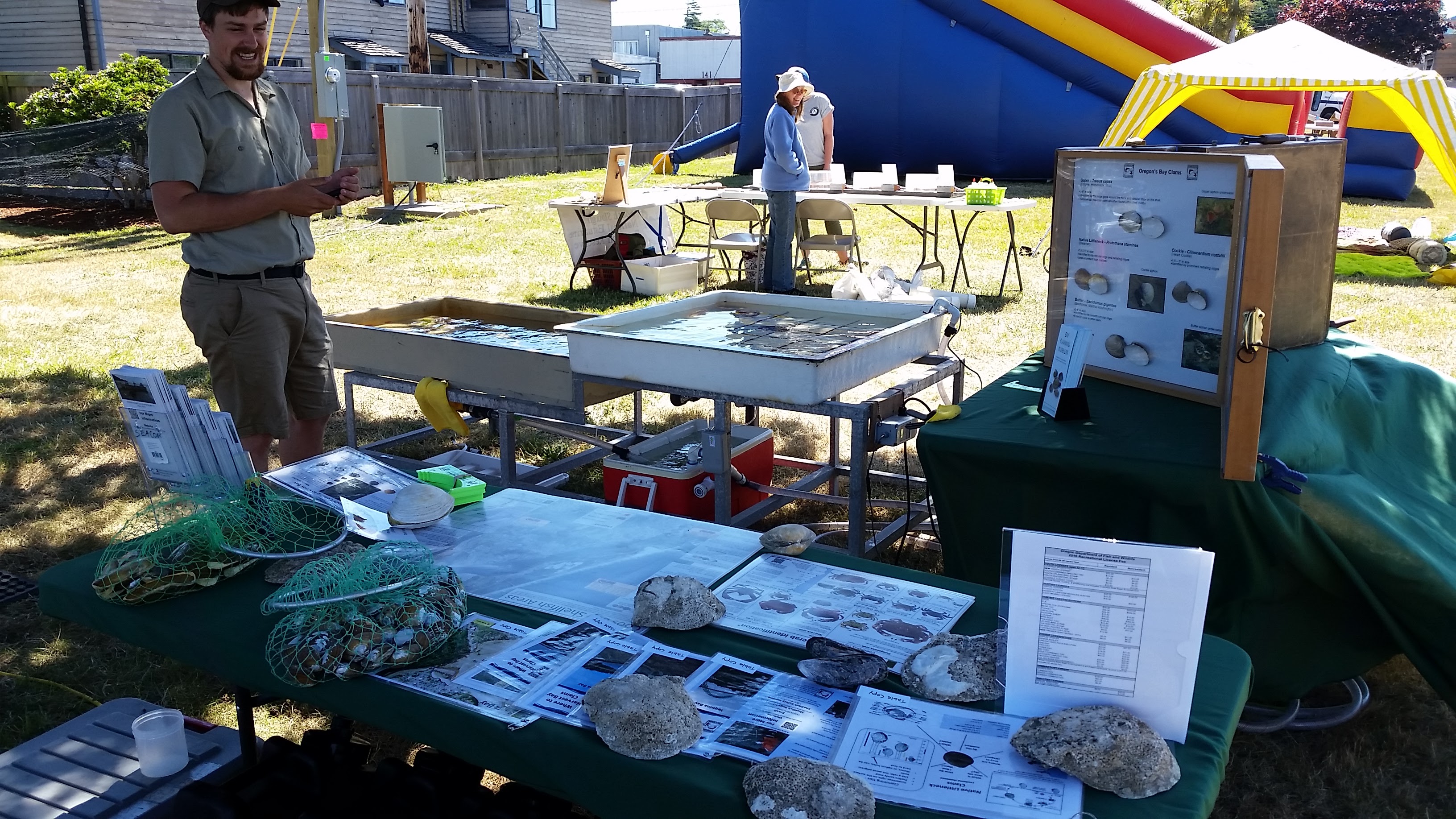
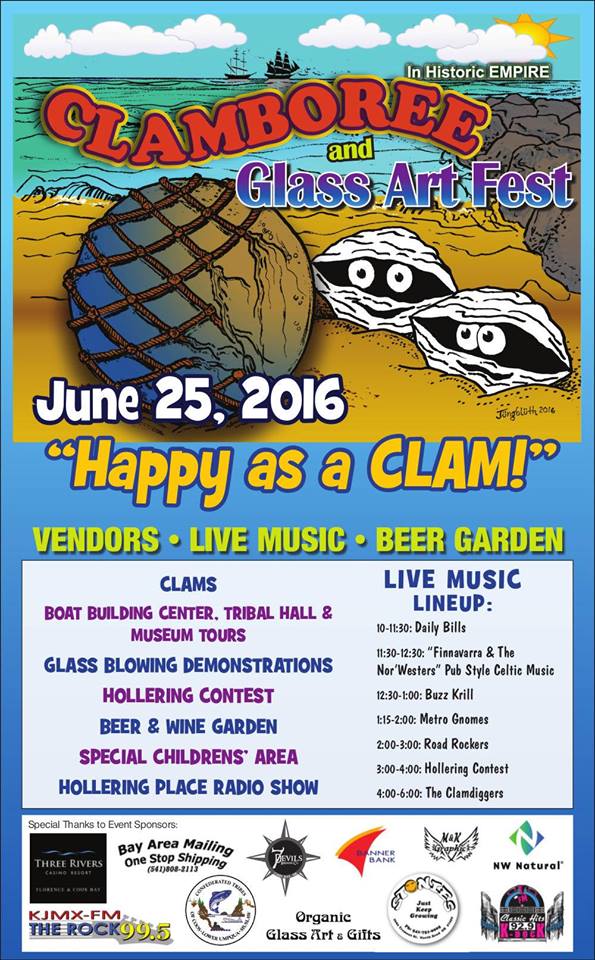
Clamboree: Every year, Coos Bay hosts an event to celebrate their fondness for Empire clams (otherwise known as gapers, horse clam, horseneck clam, or Tresus capax) and more recently, glass art. This year was particularly important for ODFW to make their presence known due to upcoming estuarine studies being conducted in the bay. Despite being located by Clamboree staff in the most distant corner from the action (you would think being near the kids section, which also happened to be next to the beer/wine garden, would draw lots of people), we had ample amounts of wanderers playing in our touch tank full of clams, crabs, and other invertebrates. Loaded for bear with pamphlets, sport fishing regulations, identification charts and shadow boxes, crab gauges, visual displays of legal and non-legal crab, and plenty of things to poke and touch, SEACOR did their best to provide educational outreach for the event.

2016 Claboree Poster

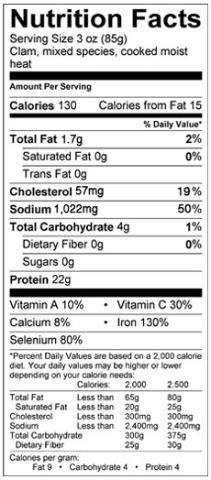
Bay Clam Nutrition Facts

RTK: RTK, or real-time kinematic, is a rapid survey style that utilizes several GPS reference stations to calculate highly accurate “rover” or moving GPS positions on-the-fly. This style allows us to record locations with very low error and accuracies down to about 1 centimeter quickly (under 2 minutes per location), easily (push of a button), and without more additional computer processing. The purpose of RTK surveys for SEACOR projects remain primarily in the realm of conducting estuarine bathymetry surveys; combining echosound measurements with precise GPS locations. However, with some additional equipment, RTK provides a massive benefit to our UAV imagery we plan to collect. Precise GPS data makes our imagery able to be used for measuring distance on the ground from aerial photography; a game changer that allows us to measure and count clam shows that are roughly a centimeter in size over a much larger area and long after the tides have returned to obscure them. These clam shows also happen to be the most recreationally harvested bay clams: gapers, cockles, littlenecks, and butters. UAVs plus RTK ground-truthing might allow far more advanced and accurate calculation using much fewer resources than typical quadrat surveys of bay clam populations; a boon to clam resource management.

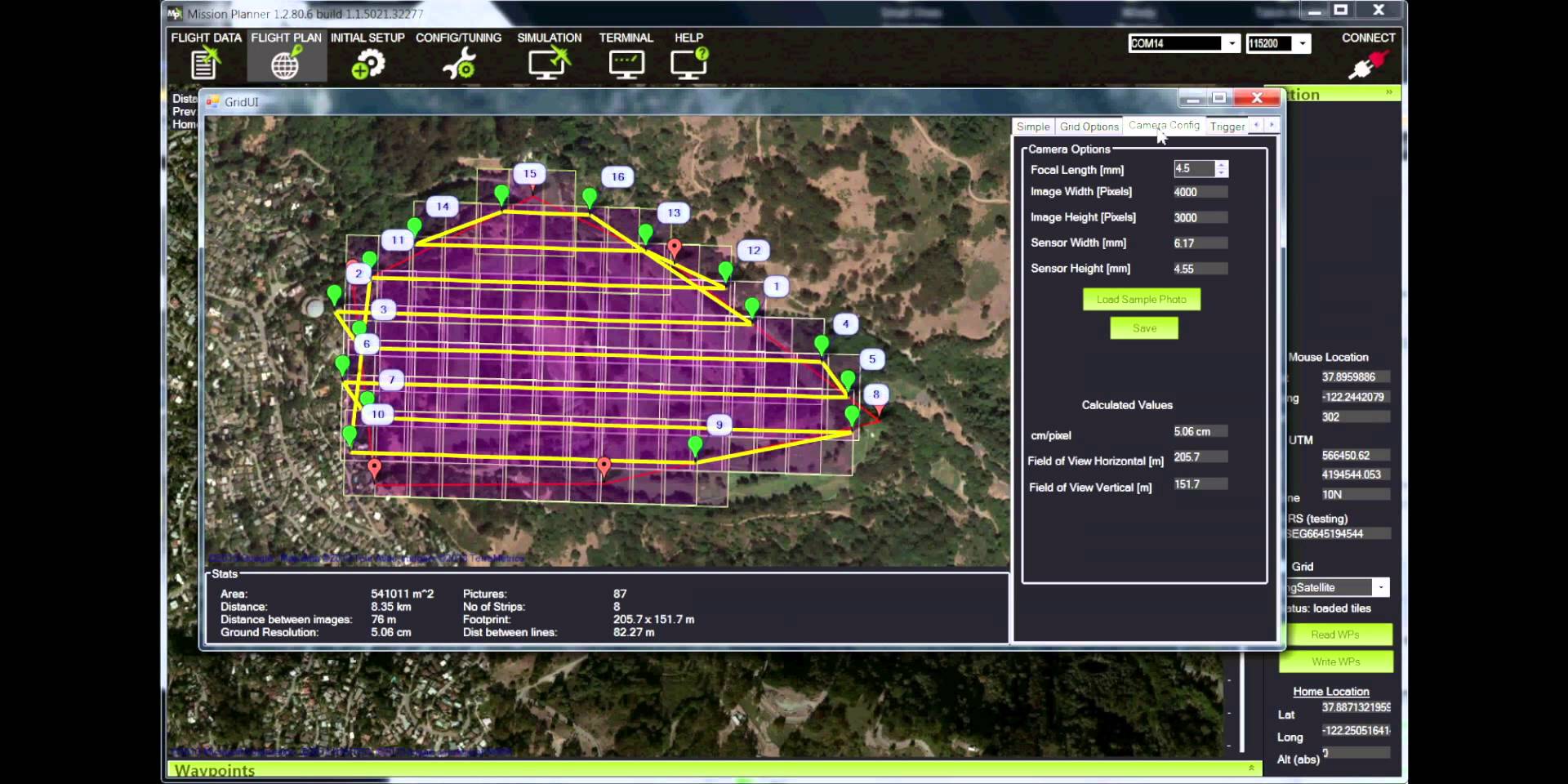
Example Mission Planner Grid

Mission Planner: Few software developers have pursued a complex suite of UAV applications as well as the open-source UAV community. A well-known platform, Mission Planner, can be used to control a variety of remote controlled autonomous vehicles including copters, planes, rovers, and to some extent even submersible vehicles. Recently, the community developing the software added in features to make UAV aerial photography and mapping even easier such as creating gridded flight plans that ensure a certain percentage of image overlap. SEACOR’s UAV flights will require 80% or higher image overlap; flying manually and achieving this is next to impossible. But Mission Planner and its compatibility with most common UAV flight controllers allow us to design an automated flight path to ensure we get the data we need from our on-board camera sensor.

Next week: UAVs, UAVs, and UAVs!

Little Green Aliens

Invasive species are an especially hot topic among today’s scientific community. Non-native species have been shown to negatively impact the health of native ecosystems, especially in aquatic environments (e.g. Lionfish, Snakehead, Zebra Mussel, Nutria, and Asian Carp). It is important for coastal managers to detect invasive species soon after their arrival so that successful eradication and management plans can be implemented. Therefore, invasive species monitoring is conducted at most NERRs.

The South Slough NERR alone is home to over 50 non-native marine species. Of these species, few are as infamous as the European green crab. As I discussed in my last post, I recently started a project aimed to investigate the distribution and population of green crabs in South Slough. I collected samples continuously for 2 days at my first set of sites. While dungeness and hairy shore crabs were most abundant, I collected 15 green crabs at the mouth of the estuary. Specimens were measured, sexed, and weighed before being humanely disposed of. The data collected from this project will be used to manage the spread these little green aliens and potentially prevent future invasions along other coastlines.


More “Green Time,” Less “Screen Time”

I’m going to play Nature’s advocate for a moment. Let’s be honest, many of us are bombarded with constant reminders to unconsciously check our phone or computer on a daily basis. It’s easy to become tied to an electronic device without realizing. For Smartphone users, the convenience of having our entire agenda and communication network stored electronically means that we’re checking our phones from the moment we wake up. Whether it’s the stream of emails, demanding social media notifications or a missed message from friends and family, there is no doubt all the time spent on electronics can have some effect on our mental health.

The most extensive study to date estimates that people across all age groups in the United States check their phone on average 46 times per day, which totals to upwards of 8 billion times a day that all Americans are collectively checking their phones. It has been suggested that as a society, Americans have become so accustomed to daily “screen time” at a young age, that they are getting significantly less “green time.” Only 10 percent of teens in America spend time outside every day, according to a recent Nature Conservancy survey. The documentary film, Play Again, also explores the decrease in “green time” and increase in “screen time” through the case of seven teenagers from Portland, Oregon. Despite being surrounded by ample opportunity to explore outdoors, these young Oregonians exemplify the troubling estimations of American youth spending an average of 7-½ hours per day in front of a screen. As I alluded to in my earlier blog post, the more connection we have to the natural world around us, the more likely we will care enough to conserve it, but have we lost that crucial connection by spending less time outdoors?

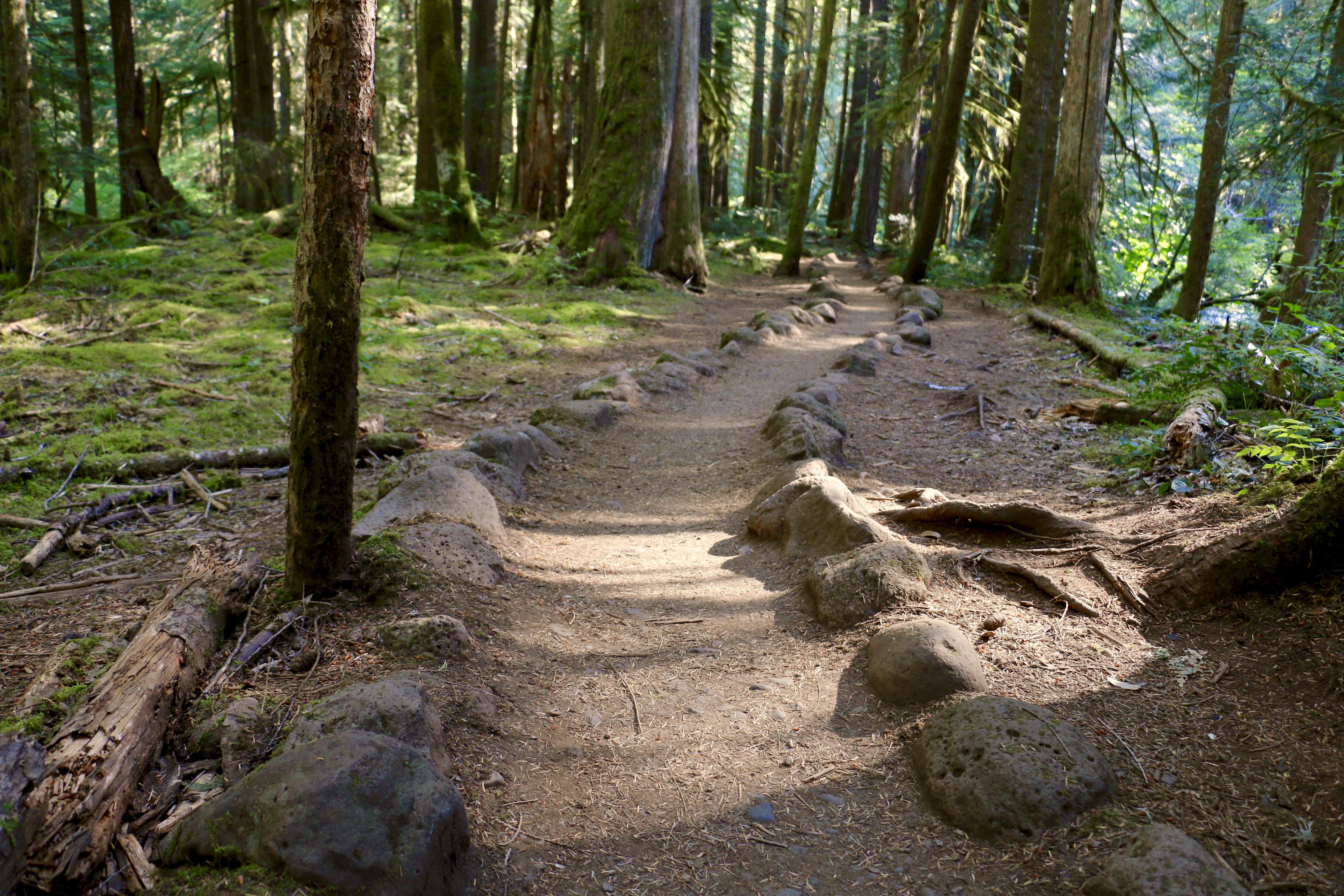
Spending green time on a hiking trail in Willamette National Forest.

On a related note, surveys often reveal a good bit of insight into a larger question or issue, which can help inform where changes need to be made. That is exactly the focus of my work at the moment, as I have tirelessly been drafting and rewriting an ocean literacy survey to assess the knowledge of the general public who visits the coast of Oregon. One of the things that struck my curiosity as I wrote and rewrote this survey in collaboration with the ODFW Marine Reserves team has been where individuals receive their information about ocean-related issues. I am interested to find if there is some sort of link between the sources of media where individuals receive information and the gap in knowledge relating to ocean health threats.

I’ll admit, it’s a bit ironic and probably hypocritical for me to play nature’s advocate after spending several full workweeks indoors on a computer, but I took advantage of a three-day weekend off work to ensure that I refreshed my mind in the outdoors. And let me tell you, it worked.

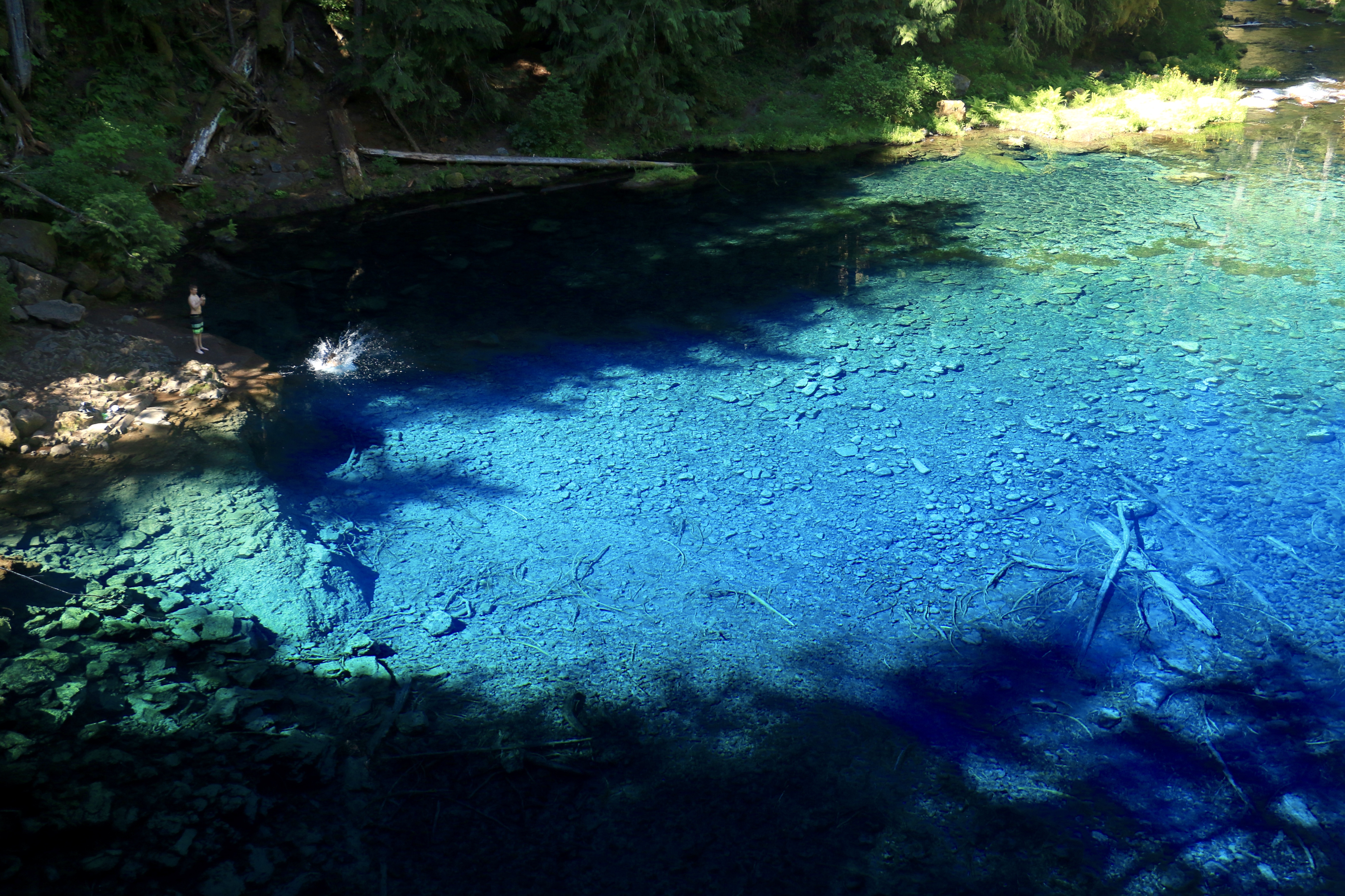
“Immersing” in nature at Tamolitch Blue Pool

Dr. David Strayer, a cognitive psychologist at the University of Utah argues that after three days of wilderness backpacking, our brains perform significantly better on creative problem solving tasks. He calls this the three-day effect, where immersing oneself in nature for long enough can clean one’s “mental windshield” that becomes clouded over from the stress of being indoors. Other studies have shown that it doesn’t take that much to recharge our cognitive function, as just 25 minutes of “green time” can give our brain the rest it needs from “screen time.”

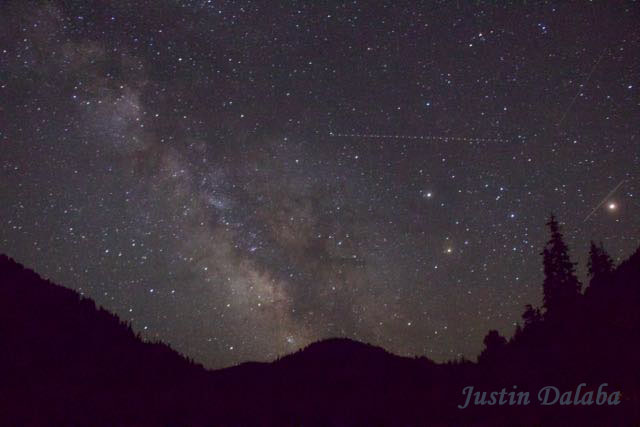
Gazing into the Milky Way from my tent at Blue River Reservoir.

As a frequent saying goes, “there is no wifi in the woods, but I promise you’ll find a better connection.” Driving through Willamette National Forest this weekend, I realized it would have been nice to have service while searching for a campsite, but instead I had to problem solve on my own. With my phone switched off and stowed away, I managed to find an ideal campsite and spent the night losing track of time while gazing at the countless stars. And let me tell you, waking up to the sound of birds chirping and the sunlight penetrating through the trees into your tent feels much more refreshing than the harsh sound of an alarm clock in a dark bedroom. Many others must have received the “green time” memo as well, as all of Willamette was flooded with campers, hikers and outdoor enthusiasts alike. Bearing in mind the statistics of recent “screen time” surveys, it’s a restoring feeling to see others catch up on their vitamin “N.”


BBQs and Views

(please click this link and leave it open in the background while reading this post: https://www.youtube.com/watch?v=4daJ8gMtE-g)

So why is the 4th of July, 1776 so famous? The obvious answer is that it’s the day that the U.S. Continental Congress declared independence from Great Britain. Wait, nope, that happened on july 2nd. Oh wait duh, it must have been the day that we started the revolutionary war. Nope, you’re wrong again. That happened a year earlier in 1775. OK so was it when a draft of the constitution was written or when it was signed?? Wrong and wrong-er. That was June and August of 1776. Ok so what the heck really happened on July 4th, 1776? Congress did something they haven’t done since the 1960s: they agreed on something. To be specific, they agreed on the final draft of the document. Super exciting. So why do we celebrate the 4th? Following the war of 1812 (yes there was a war in 1812, bet you all didn’t remember that from middle school history) there was great ideological division in the United States. Copies of the declaration were circulated around the nation with the date July 4th at the top. This inspirited national unity around the date (incidentally Thomas Jefferson and John Adams also died on July 4th, 1826 so that may have helped).

A lot has happened since then though. The liberty bell cracked beyond repair while ringing to celebrate Washington’s birthday in 1846, the Civil War divides the nation in 1861, the statue of liberty is gifted to the U.S. by France and erected in 1886, the U.S. and Spain go to war briefly (you probably also forgot about that), the Panama Canal is established in 1903, World Wars I and II erupt in 1914 and 1939, man walks on the moon in 1969, and finally and most importantly, the US EPA is founded by Richard Nixon on December 2, 1970.

The 4th of July these days is still a cause for celebration. Festivities usually involve buying cheap meats and American flag apparel from Walmart, public intoxication on beaches and pontoon boats, BBQs, cheap beer, and of course fireworks. Mostly though it’s a holiday for spending time with friends and family. My family’s usual tradition is to go up to Old Orchard Beach, ME with a bunch of family friends. This is the first year I couldn’t make it but those of us at Hatfield, including Collin who drove up here for a night, have been having a blast. We went out to the Sandbar on Friday, drove down to Otter Point yesterday, and had a huge communal BBQ courtesy of Walmart (pics included below). Needless to say I’m excited to see what the actual 4th brings.

Since I do feel somewhat obligated to talk shop on my Sea Grant blog post here we go: this week at the office was pretty sweet for three reasons. First, not only did I learn how to extract DNA for qPCR but I didn’t even screw it up (I don’t think…I’ll get back to you on that one)! Second, Amy has also been helping me to put together my own project I can work on during the down time in our sampling. Since I’m definitely more interested in biology than general water quality, my project is investigating on the role of Eelgrass (Zostera marina) in promoting the growth of Enterococci ssp. (a fecal indicator bacteria). Almost all surfaces in the natural world have biofilms on them as a result of bacterial growth. Eelgrass is no exception and the aquatic habitat it lives in serves to expedite the growth of this film. Suspended bacteria can adhere to the plant’s leaves and reproduce rapidly. I want to know if these indicator bacteria can become suspended due to leaf decay, storm events, or tidal flow. If so, this resuspension could be contributing to the exceedance of regulatory limits for indicator bacteria thereby yielding a false positive. Third, I got to go on some unplanned fieldwork this Friday in Tillamook with Jess and one of her mentors, Jody. Although I couldn’t reach the site I needed to due to a higher than usual low tide, it was a gorgeous day and I was able to collect some samples for my own project. Jody did make us go get ice cream and lunch at the Blue Heron though…that was pretty rough.

All things considered it’s been a pretty great week in Oregon but how time flies…

Here are the pics from fieldwork, Devil’s Well, the Otter drive, and our glorious BBQ:


References:

http://www.constitutionfacts.com/us-declaration-of-independence/fourth-of-july/