Fried Fish and Fish Fraud

In 2012, an ocean conservation group, Oceana, conducted one of the largest seafood fraud investigations in the world to date. They collected over 1,200 samples from 674 retail outlets in 21 states to determine how honestly seafood was labelled. The results were staggering. Of 1,212 seafood samples, DNA testing found 33% were mislabeled, according to U.S. Food and Drug Administration guidelines.

“Oceana found one in three seafood samples mislabeled nationwide.”

Mislabelling can occur in several ways. Wild fish can be swapped for farmed, which can lead to consumers paying almost twice as much. Species can also be swapped. Oceana researchers found that 84% of white tuna sampled was substituted with escolar, a species known as the “Ex-lax fish” because it can be known to cause digestive problems (yikes).

And although the U.S. imports up to 90% of its seafood, an audit by the Government Accountability Office found that the FDA inspects less than 2% of its imported seafood. Mislabelled fish can result in inflated prices and health risk to consumers and a general misinformation about the health of fish populations and the ocean.

Many are calling for more transparency in the supply chain, increased seafood inspections and improved documentation and verification to allow for traceability. There are several things consumers can do to prevent seafood fraud:

  1. Ask questions– What kind of fish is it? Is it wild or farm raised? Where, when and how was it caught?
  2. Check prices– If the price seems too good to be true, it’s likely the species is different than what is on the label.
  3. Buy the whole fish– It makes it more difficult to swap species.

Buying local and off the docks is a great opportunity to ensure that consumers are truly getting what they pay for. Consumers can ask questions directly to the fisherman who caught the fish, see the whole fish filleted, and leave knowing they got an honest product.

This Friday, July 15th will be the first Shop at the Dock event, which I’m really excited for! I was lucky enough to cook lingcod this week, and I have to say, knowing it was fresh and local made it taste all the better.

lingcod

Pan-fried lingcod with herb and parmesan crust and caramelized fennel and onions!

I’ll leave you with a nice ocean tune. Thanks as always for reading and I hope you have a fantastic week!

A Bandon Way of Life

Bandon is the awesome little town that I’m calling home for the summer. Population of around 3,000, it’s situated right where the Coquille River runs into the ocean. Since I’ve spent a few weeks exploring now, and here are a few of my favorite things that I’ve found:

Lighthouses and Wildlife

There are 11 lighthouses are the Oregon Coast, reminiscent of Oregon’s rich and long history as a haven for sailors and fishermen alike. The youngest of these lighthouses is the Coquille River lighthouse, constructed in 1891. It’s located in Bandon by the north jetty of the Coquille River, in Bullard’s Beach State Park. The lighthouse is open to the public, and there I learned about the hard life of a lighthouse keeper. I tried to imagine the days before electricity, when the lives of sailors depended on one man walking miles in a storm to remain awake and alone throughout the night to shine a light out to sea, and guide sailors to safe harbor.

20160625_125858

Walking down the north jetty by the lighthouse, I looked up to see a very curious Harbor Seal staring straight at me, about 100 yards away. He was really loving the wave action that day – he made loops out to sea, down back to the beach, and back across to the rocks where I was sitting. I watched him for a while, thinking how cool it was that this was his home and how much I wanted to make sure that I did something to conserve these waters to make sure that he, and all other marine organisms, could enjoy their waves.

Sea Stacks

Bandon is also famous for its sea stacks, which are like giant columns of rock right off the coast. They’re formed by constant wind and wave erosion against the headlands for millions of years. Here in Bandon, there are sea stacks at varying sea-levels, some on the sand itself, and some jutting straight up from the ocean. With the changing tides, every trip to the stacks is a brand-new experience. Below are a few photos of the same rocks, but at different tide levels:

20160703_164348

20160625_162012

In Bandon, Face Rock, which is just to the right of the pictured photos, is one of the famous sea stacks. I’m hoping to catch this beauty at sunrise or sunset before I leave.

Coos Bay, Independence Day and the Music Scene

It’s hard to talk about Bandon without mentioning the larger town of Coos Bay that lies about 20 mile north. North Bend and Charleston are right next door, making for a pretty big coastal town (many people that work in Bandon commute from Coos Bay, and most people in Bandon drive up to Coos Bay pretty often for groceries, restaurants, movies, etc.) Aside from having a Safeway, and the awesome 7 Devils Brewery (named after 7 Devils Sea Stacks, just north of Bandon; I tried the delicious Quebecan dish Poutine there, French fries with cheese curds and gravy),

20160626_191059

they also have the Mill Casino on the bay, where they had an incredible fireworks display on the 3rd of July. I think just about the whole town came down to see the show, and so it was incredible to see people hanging out, playing Corn Hole (very popular here), or throwing a football. Neighborhoods all around the Bay set off a few fireworks too, making for a spectacular light show.

The actual 4th was, amazingly, even more incredible than the fireworks at the Mill. Bandon had an all-day music festival set up downtown by the dock. There were over 6 bands that ranged from “Irish Reggae Folk” to “Gypsy Jazz”.  We enjoyed walking around the cute artsy stores downtown, Ice Cream from Face Rock Creamery, and when it began to get dark, they even had a fire dancing show. It was probably some of the coolest fireworks I’ve ever seen, as the sunset turned into the firework display over the ocean.

20160703_204320

20160704_212224

20160704_220113

While Bandon seems like a little blip on the map, this tiny town has a lot to offer. I’ve been meeting super nice people every day, and I definitely know that I’m going to miss exploring the town and seeing the magnificent wildlife and sea stacks.

Week 4 – Seeing Stars

Last week, I spent two of my mornings hunched over tide pools looking for sea stars. We were out conducting sea star surveys as part of a research effort documenting the effects of sea star wasting disease, an epidemic that has affected populations of these iconic animals up and down the West Coast.

Not your typical day at the office.

To be honest, I wasn’t enthused at the thought of groggily getting up at 5 AM. But I quickly warmed up to the idea – especially after measuring tapes and clipboards were handed out and we were turned loose to hunt down sea stars.

I think the main reason I became so immersed in my work that morning was because it resembled a lot of what I did throughout my childhood: roaming independently outside and exploring whatever nature offered to us. I didn’t grasp it at the time, but I was reaching back to my roots – roots buried and forgotten a long time ago as I grew up and moved on to other endeavors.

It seems that stress bombards us from all sides these days. I’ve definitely been feeling it this week – from working 21 total hours those two days of sea star surveys, to getting writer’s block on a difficult topic for my very first post on the ODFW Marine Reserves website, to preparing a presentation for the midsummer check-in at the end of this week.

So as we near the halfway point of the program, I suppose now is a more than apropos time to raise the importance of not getting lost within the rat race that’s convinced many of us to chase societal success. We miss a lot of the little things – things that tend to keep us sane – when we don’t stop to appreciate what’s around us. I’ll keep the rest of the text in this post short and sweet by sharing some of my own little things from this week:

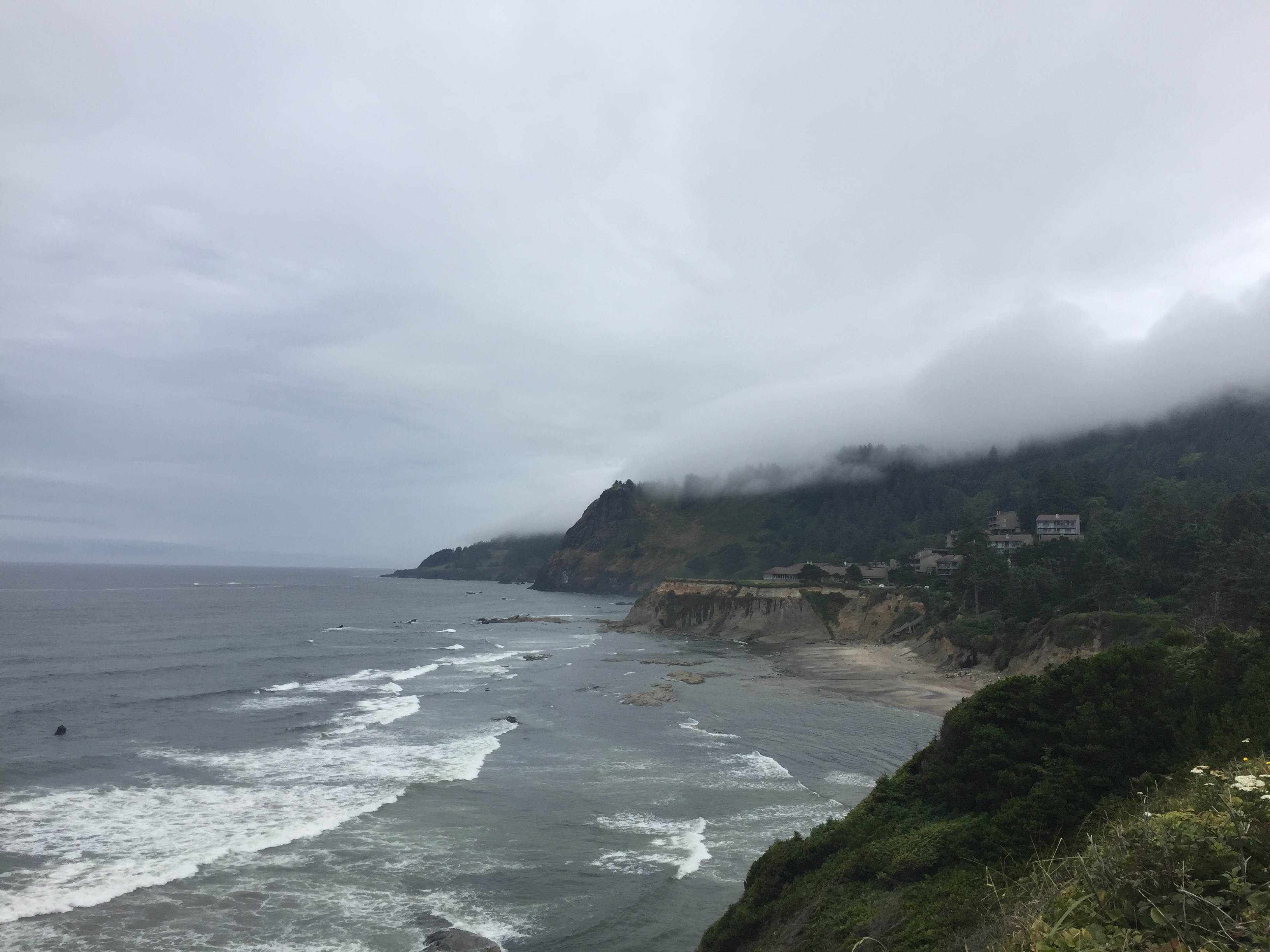
A foggy morning greeted us at Otter Rock Marine Reserve, one of the sites of our sea star surveys.

View from inside the Devil’s Punchbowl at Otter Rock. The hollowed-out structure is dry and explorable at low tide, but come high tide the basin fills up with water.

A winding channel cutting through the tide pools.

A very well hidden, and very much alive, red rock crab.

Pisaster ochraceus, commonly known as the ochre star, can actually come in a variety of colors, but the major color morphs are orange, purple, and brown.

A not-so-healthy sea star. Those affected by the wasting disease experience external lesions, decaying limbs, and overall body deterioration.

A dense school of juvenile rockfish welcomed us as soon as we reached the tide pools at Cascade Head Marine Reserve on the second morning of our sea star surveys. This was an unexpected discovery – juvenile rockfish typically recruit nearshore by the time they reach the size of the ones in this pool, but to see so many all in one place was surprising.

A flamboyantly blue nudibranch, found in the same pool as the rockfish. The colors are much more electrifying when seen in person.

Not positive, but I’m guessing this is another nudibranch, although much bigger than the first.

The most interesting find of the afternoon – an octopus! It took several minutes of gentle coaxing to tease him out of the hole he was hiding in.

Saying goodbye to Cascade Head for the day.

I find that one of the more intriguing things about nature is that you can leave with a sense of fulfillment just from silently wandering about and observing. When I look down into a tide pool, I’m usually searching for fish and other little creatures hiding amongst the rocks and algae. But more so than that, I realize now that I’m peering deeper into a window of my childhood days, when the only things with an iota of consequence at the end of the day were our dirty clothes and grass-stained knees.

So slow down, take a deep breath, and go find your own tide pool, wherever it may be.

In Full Swing

Somehow, we’re already halfway through the summer. After weeks of preparation and design, this was my first week in the field conducting surveys. Aside from this being a short workweek following the July 4th holiday, the days sure seemed to fly by much quicker than usual. Of course it helps when your office is the Oregon coast and your job is talking to new people. Additionally, I spotted 8 whales off the coast while sampling… my favorite marine animal!

Enjoying the view while conducting surveys at Otter Rock.

This first round of surveys proved successful, without too many visitors reluctant to participate. Surprisingly, the rain and wind doesn’t stop visitors from exploring Oregon’s many coastal attractions. Along the central coast, I met visitors from Germany, Italy, Brazil and Canada. In the coming weeks I will have a change of scenery as we begin sampling on the North and South coast, which I have yet to explore for myself.

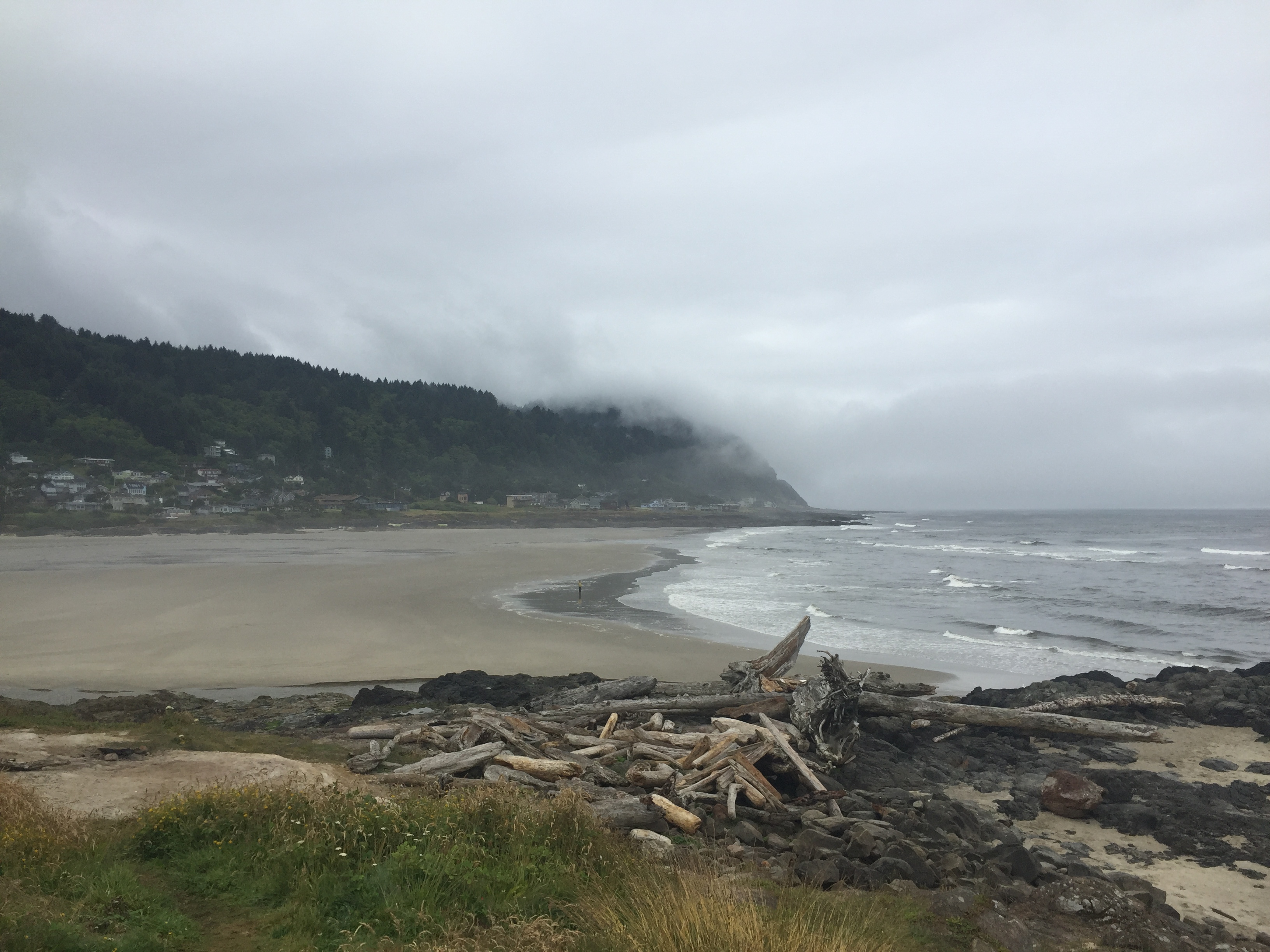
Rainy day sampling in Yachats.

Living on the central coast has given me an advantage when answering questions that visitors have while they are filling out their ocean awareness survey. As we expand our sampling range, I will be seeing new places for the first time, along with some of the coastal visitors. If all goes according to plan, I will have traveled the Oregon coast from North to South six times in total by the end of this summer. That’s a lot to pack into the few remaining weeks, but that’s not all I have on my agenda when it comes to exploring Oregon.

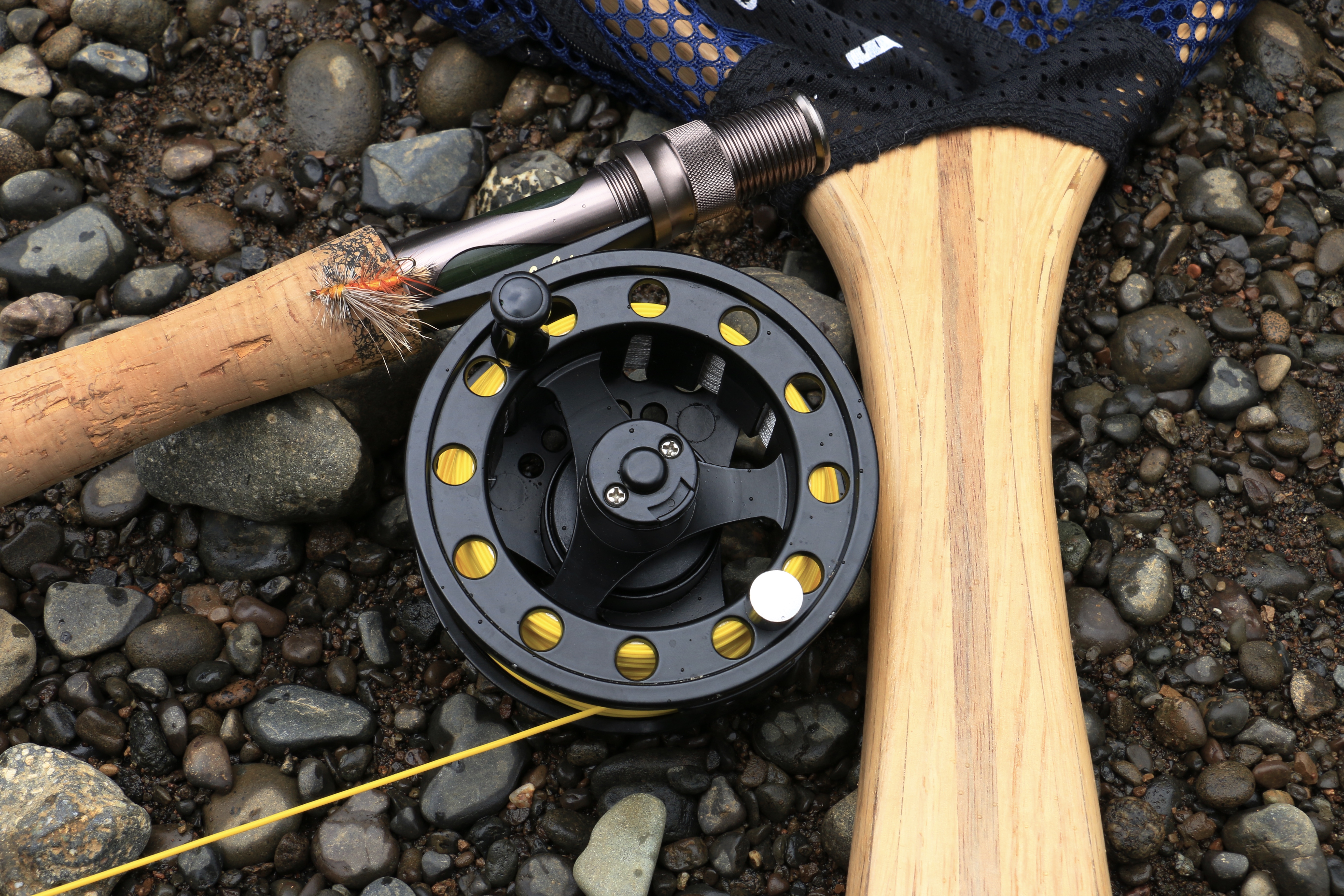
Planning a fishing trip “on the fly.”

As time flies by, I’m taking every chance I can to slow down and take it all in. This weekend, I went exploring “on the fly.” Despite some stormy weather that inhibited my prior weekend plans, Sunday shaped up to be fairly nice and I grabbed my fly-fishing rod and took a dirt road into the Siuslaw wilderness to unwind. Well, it wasn’t quite that easy. Fly- fishing generally takes a little more effort and planning, but once you find your spot, it can be one of the most meditative ways to refresh your mind in nature. Of course I’m biased, but there is compelling evidence to support that fly-fishing is truly a natural stress reliever.

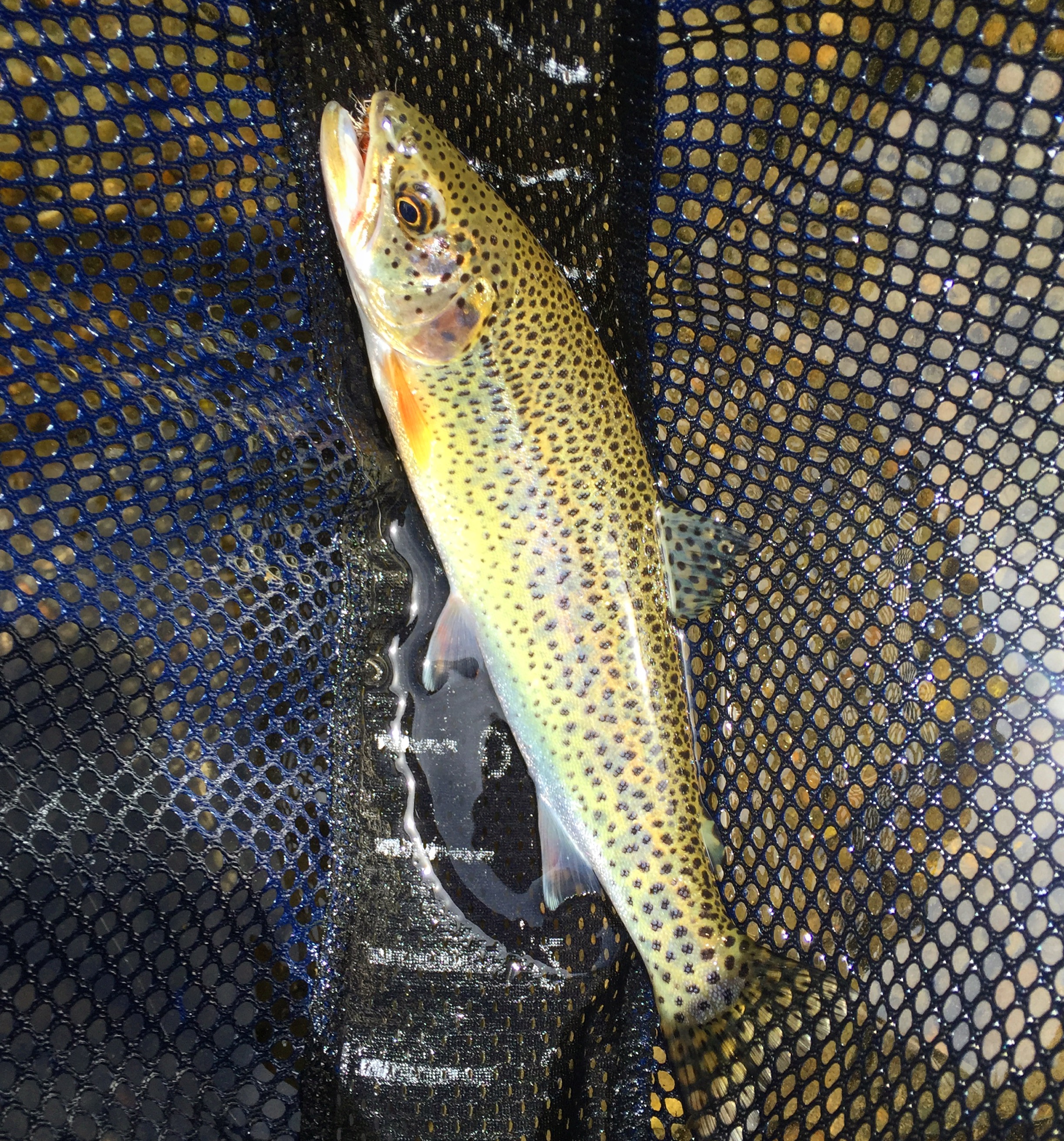
Resident cutthroat trout I caught (and released) in the Oregon wilderness.

As my previous blog alluded to, there is good reason to spend our free time out in nature, rather than indoors and in front of a screen. The only trouble I’ve found with spending time in the outdoors is that the more you seek new places and adventures, the more you find you’re missing out on. Oregon is loaded with more opportunities than ten weeks can fulfill, but it’s a matter of making the best of every opportunity as it comes.


Survey Count: 145

Whale Count: 8

Week 4: Reptiles and amphibians and mollusks! Oh my!

Despite being a short week for 4th of July weekend this week was full of activity.

Morning at the Cascade Head marine reserve

Tuesday, I helped with a fellow intern with his sea star survey. We went out to the tide pools at Cascade Head and measured all of the sea stars we could find and checked them for signs of wasting. Wasting disease has decimated sea star populations all along the pacific coast. Scientists are curious to see if populations are recovering this year and how the juvenile recruits are faring. We searched on hands and knees in every nook and crevasse and found some juveniles on the scale of millimeters as well as many larger adults.

Sea stars were not the only thing we found. The tide pools at Cascade Head are some of the best I have ever seen. We found a tiny octopus, a school of rockfish and my personal favorite, opalescent nudibranchs!

Opalescent Nudibranch

Opalescent Nudibranch

The word nudibranch translates to naked-gill. This describes the tentacle-like structures, or cerata, found all over their bodies that are used for breathing, digestion and defense. Nudibranchs prey on many stinging organisms including the venomous Portuguese-Man-O-War. They can take the toxins from their prey and incorporate them into their cerata to use for their own defense.

The rest of the week was spent reading papers, CBRAT project meetings and attending an interesting seminar given by Dr. Burke Hales about the effects of ocean acidification on oyster larvae in Willapa Bay, WA.

The weekend came with unpredictable coastal weather. Saturday we managed to find a rain free window in the afternoon for some browsing at the weekly Newport farmer’s market and hiking at Beaver Creek state park. A benefit of the rainy weekend was all of the wildlife we found out on the trail.

Garter snake at Beaver Creek state park

Garter snake at Beaver Creek state park

We caught a garter snake lounging on a blackberry vine, a newt making his way through a pile of soggy leaves and a few quarter-sized frogs. The clouds may have obscured most of the viewpoints but we made up for that with many berry stops to sample the thimbleberry and not-quite-ripe blackberries lining the trail. We were clearly not the only ones enjoying the berries, every few yards we came tracks and scat from bear, deer and elk. Unfortunately, all of the mammals managed to hide from us, we didn’t end up spotting any bears. Maybe next time!


Week 3: Science for a changing world

Whoops a little overdue for an update. Week three was spent mostly reading, I’m still working through the literature related to decapods and pH. I had my most intern-like task of all this week which involved reorganizing my mentor’s bookshelves. Now I’m just waiting for the coffee orders to start coming in. Ha-ha.

Through all of my reading the thing that stands out the most is how far science has come in the past century. During our first days at HMSC it was remarked that now is a great time to be a scientist. This brings to mind the quote or curse (depends on who you ask) “may you live in interesting times.” Human caused global climate change has altered and will continue to alter our world in ways that are difficult to predict and understand. Many of the advances in science, especially ocean and atmospheric science in this century stem from pressing necessity rather than simple curiosity.

Waiting at the HMSC bus stop

The studies I look at focus on pH and its effect on marine invertebrates. Studies done after the year 2000 all include standardized methods of bubbling CO2 through ambient seawater pumped in from an area near to where organisms were collected. Multiple components of pH are measured and all other conditions are monitored constantly. Organisms are exposed to pH conditions predicted for the year 2100 determined by complex ocean/atmosphere computer models. In other words, good accurate science is being conducted.

In contrast, a study from 1975 looking at pH tolerance of crayfish simply put some crayfish in a jar of acid, a jar of NaOH and measured how long it took for them to die. Turns out crayfish will die within 24 hours if put in a beaker of HCl (Newcombe, 1975). They say there is no such thing as a bad question but there is definitely such a thing as poor scientific design and I am sure at least the crayfish involved would wonder if the question of how long an organism can live in pure acid is something we really need to answer.

Friday I caught a bus out of Newport and headed home for a long relaxing 4th of July weekend. It was nice to have a break from the bunkhouse and see family and friends. 

Mud, Ultimate, and Bacteria

How is it already the end of week 4…? Crazy. Time is starting to really fly by. Not a whole lot of new stuff has happened at work this week. The samples from our Tillamook field work are still being processed slowly but surely. A few fairly cool things did happen this week though.

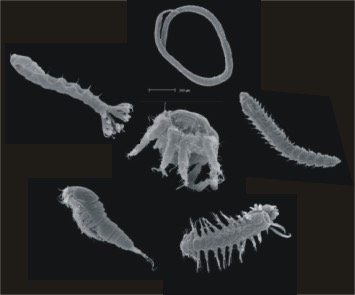
First, I learned how to run particle size analysis (PSA) on sediment samples. While it may seem pretty useless to know what the sizes of your sediment grains are, this is actually very important information. By determining the particle sizes, you can infer lots of other info about the hydrology of the habitat. For instance, in marsh sediment samples PSA can help model how fast the marsh will drain as the tide goes out or how fast it will fill. I’m sure reading Jess’ blogs will give you more info about this since her research revolves around this kind of analysis. PSA also lets you infer what the microhabitat of the environment is like. The term “meiofauna” refers to organisms that spend their lives living in between sediment particles such as grains of sand on a beach. This is a very dynamic habitat and there is huge diversity in the taxa that call this environment home. The project I’m working on is mainly interested in how fecal indicator bacteria can colonize the top layer of sediment and potentially become resuspended by wave action and storm winds. For some reason I can’t caption the picture below but it’s a few of the representative meiofaunal taxa.

Meio

Second, Amy and I went on a road trip up Yaquina Bay Rd. to try and find some eelgrass sampling sites for my side project. All in all, we were pretty successful! We found three sites that were fairly accessible and easy to relocate so we can definitely resample them later in July. The mud was easier to deal with this time but I don’t think I’ll ever really enjoy standing on a surface that isn’t solid haha; my brother keeps making fun of me that I’m fine with freediving and skydiving but I hate walking on some soft mud. Something about solid ground giving way just isn’t natural haha. The mud was actually so bad in one site that Amy and I decided to butt-scooch down two fallen trees to get to the waterline. I’m sure anyone who saw us had a good laugh.

Third and finally, the results of the IDEXX tests targeting Fecal Coliform and Enterococci are continually returning high hits for eelgrass leaves! The loosely-attached biomass on eelgrass leaves is full of indicator bacteria and this result suggests that gentle agitation by rain, storm action, waves, and wake could release the bacteria into the water column. This is an important early result because it suggests that storm-based water sampling for indicator bacteria could be very inaccurate in Oregon and might be resulting in extended closures of shellfish harvesting areas.

On a non-work note I found out about an ultimate Frisbee league this week that happens every Monday and Thursday night in Newport. “League” might be a bit of an overstatement but it’s certainly a whole lot of fun! One of the researchers at the EPA and Jess’s boss, Jody Stecher, and his wife, Linda, are very into ultimate and always show up. Jess, another intern, Amy, and myself are actually going to their house tonight to make pasta. Not a bad way to round out week 4!


Image references:

http://www.marbef.org/wiki/Meiofauna_of_Sandy_Beaches


An Upward Trajectory: Setting Goals and Finding Peace

I think I’m settled in on the Oregon South Coast – finally had time to unpack my bags and live that relaxing way of life that this region is known for!

20160704_203440

Throughout this relaxation, I’ve been able to focus on my goals of the summer. One of my favorite aspects about Oregon Sea Grant is that they’re interested in our development, not just professionally, but personally as well. One way that they have encouraged us to make the most of our time and experiences here is by setting S.M.A.R.T. goals, standing for Specific, Measurable, Achievable, Realistic, and Time-bound.

20160705_204431

I love goals. I make a goals/to-do list just about every day, but I had never heard of SMART goals before. I think they’re a great way to reach your end goal by focusing on bite-sized, manageable tasks every day. I also think that the best way to reach your goals is by shouting them to the world, and telling anyone who will listen. Even if they’re not too interested, talking about them is an easy way to keep you accountable to yourself. And so, here is my favorite personal goal that I made, and here is me shouting it to the world: “Determine how to focus my mind and energy to be my most peaceful, healthy, and productive self.” This is basically my way of saying “determine what makes me happy (including what attempts to take away my happiness) and brings me peace”.

20160705_205137

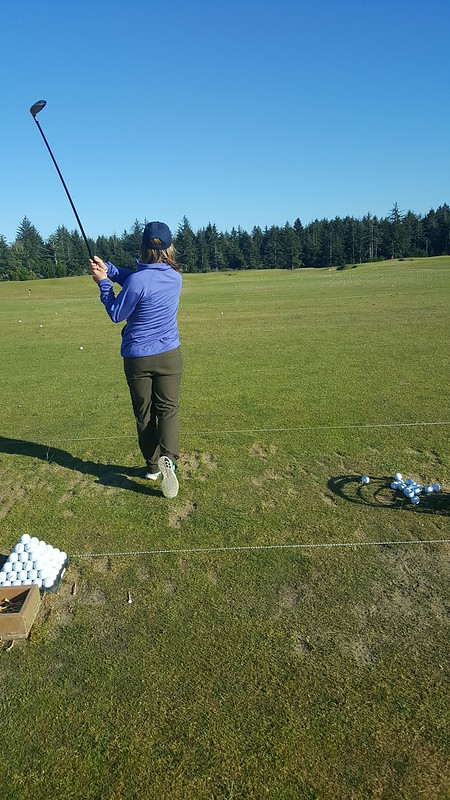
One way that I’m doing this is by taking an hour a day to do something that I enjoy, be it drinking coffee and listening to music, sitting outside, walking on the beach, running, yoga, or playing golf. I’ve been finding the activities that I enjoy the most, and when it comes time for researching for my senior project or studying for the GRE, I’ve noticed that I’m more relaxed and that those activities are more enjoyable as well. I’ve also been finding happiness in unexpected places, like the fresh morning air on my bike rides to work, or having all of my laundry done and my bed made. Maybe this is what growing up feels like?

20160705_184124

Never thought that my internship experience would include finding myself giddy over clean dishes, but I’m really glad that I’ve been able to take the time for personal growth and reflection. I think that these realizations will be extremely beneficial for my senior year, graduate school, career, and personal life moving forward. I definitely see an upward trajectory, and I’m grateful for the South Coast for giving me this peace of mind.

20160705_204702

Week 3: Somehow July is Happening

Hello, friends. Not much new on the work end of things. The survey data keeps trickling in, which is good, and I’ve been sifting through some papers on derelict gear and ghost fishing. There is a small collection of papers on derelict gear in trap fisheries; researchers have only been publishing on the subject since the late seventies. For the most part, people seem to agree that it is an issue. As to how big of one, for whom (commercial or recreational fishermen), and if there is an overarching economic benefit to cleaning up lost gear? The jury’s still out. The answers to these questions seem to be pretty dependent on the situation, so what works for the Dungeness crab fishery in Oregon may not work for Alaska, or for California, or for the blue crab fishery in Chesapeake Bay.

Work-wise, the highlight of the week was probably deploying “the world’s most expensive crab trap” (sound bite credits to Justin) last Friday. This crab pot is equipped with a battery, a flash, and a GoPro camera. It takes a picture once a minute, and it will be deployed for a week. A picture a minute for seven days à tons of data. After arriving at work a little earlier than usual, we loaded the gear into the truck and left for the marina. By 7:30 or so, we were out on the water. It was my first time being on the ocean since arriving (actually, now that I think about it, it may have been my first time ever on a boat in the Pacific), and it was a gorgeous day for it. On our way back into the marina, we spotted a few gray whales hanging around near the South Jetty. So, the weekend was off to pretty good start.

IMG_2728

Crab trap deployment

The rest of the weekend was pretty relaxed. We drove around and saw a few sites (Devil’s Punchbowl, Otter Crest Loop) on Saturday, and Sunday was a much-needed lazy day. On Saturday and Sunday night, we took advantage of the grills at the dorms to make some chicken kabobs and Korean BBQ. In my head, BBQ=summer, and it has the added perk of being more affordable than a night eating out. Wins all around.

IMG_2771

One of the many stunning views from Otter Crest Loop

The Fourth was filled with volleyball, cooking, and…eating! I slept later than I’ve probably ever slept in my life before joining in a lazy game of sand volleyball (i.e. there were scarce amounts of volleying, and a lot of time was spent lying in the sand). Monday evening, we somehow got ourselves invited to a Fourth of July potluck at a gorgeous apartment overlooking the bay. The food was amazing, and there were lots of people there that were close to our age but already doing a fantastic job of living very much like adults. Oh well, someday.

Also, please notice I just used the words “relaxed” and “lazy” three times to describe the weekend…I think that says it all.

Until next time. How is it already July??

IMG_2713

Sunset is a great time to go on a run to the South Jetty

Crashes, Cooking, and Climate Change

Happy July!

This week was one of the most eventful, yet most uneventful weeks of my summer so far. Last Monday, I got into a bit of a bike accident that ended in a trip to the emergency room. With a sprained ankle and stitches, I spent a majority of the week confined to the couch. I am endlessly grateful to be hobbling around at this point and am hoping to make a speedy recovery so I’ll still have time to enjoy the rest of Oregon. Huge shout out to my roommates and fellow Summer Scholars, my mentors, Kaety and Kelsey, and the random strangers who have been SO helpful and understanding.

foot

Sorry if you’re eating

Seafood can be a tricky thing to deal with. Once you’ve got it, what do you do with it? We’re trying to fix this with an eating guide for Shop at the Dock participants. It will list common species to buy off the dock, its favor/texture, how sustainable it is, and a common and delicious way to cook it. 

This week, I also came across a poignant article about how the commercial fishing industry is declining due to warming waters. 

“The cod isn’t just a fish to David Goethel. It’s his identity, his ticket to middle-class life, his link to a historic industry.

“I paid for my education, my wife’s education, my house, my kids’ education; my slice of America was paid for on cod,” said Goethel, a 30-year veteran of these waters that once teemed with New England’s signature fish.

But on this chilly, windy Saturday in April, after 12 hours out in the Gulf of Maine, he has caught exactly two cod, and he feels far removed from the 1990s, when he could catch 2,000 pounds in a day.”

Even having studied it, climate change is definitely one of the more intangible, abstract topics for me. And while the science is crucial, hearing the more humanistic side of climate change really brings the issue home. The article is set on the East Coast, but presents some staggering statistics about declines in catches and also really interesting opinions from fishermen about climate change.

I’m determined to get back on my bike by the end of the summer, so I’ll finish this post with a little motivational tune. Thanks for reading and have a wonderful week!