As we’re enjoying the first major rains of the fall here on the Oregon Coast, we now have another year of Yaquina Head seabird monitoring in the books (and the latest one to date)! We wrapped up our Yaquina Head field season on the morning of September 6th after the fledging or loss of the last murre chicks remaining in our plots.
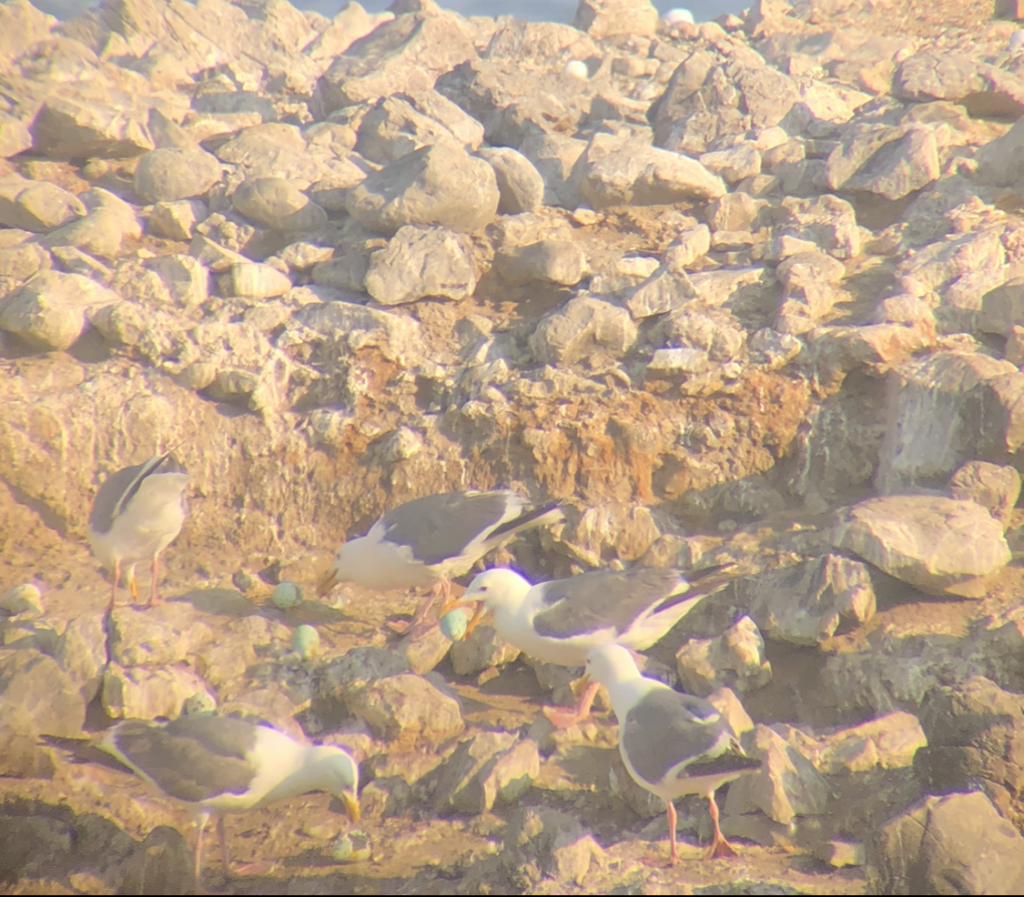
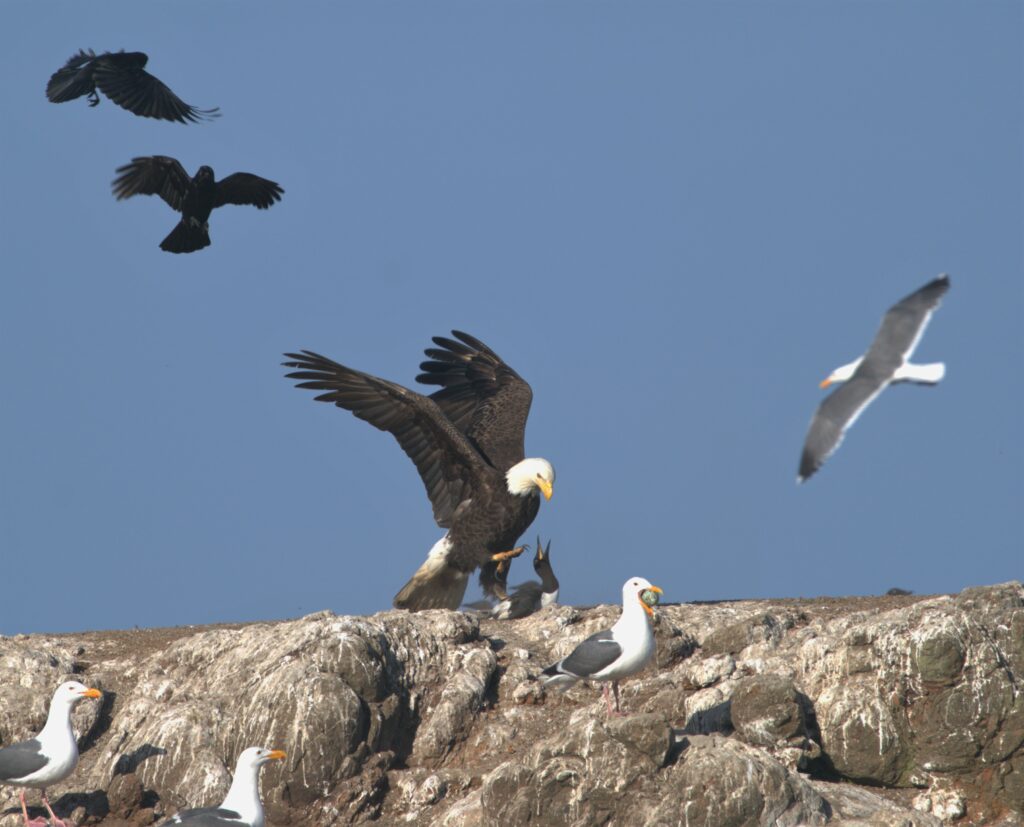
For the seabirds as a whole, it was certainly an odd year, but not necessarily a bad one. After a poor 2022 season, the pelagic and Brandt’s cormorants did very well at Yaquina Head, with most nests fledging multiple chicks. In contrast, initial prospects for successful murre reproduction seemed poor. The eagles and attending secondary predators hammered the murres early on: we documented nearly 22 hours of eagle-related disturbances, witnessing a minimum of six murre adults and 73 eggs consumed during this time. Considering that we only monitored the Yaquina Head colony three mornings a week, the total number of eggs predated must have been exponentially higher.
Almost without warning, however, the eagles moved on and the persistent murres were ready to exploit this reprieve. As mentioned in our last update (emailed 08/23/23), this summer we recorded the latest median murre hatch date since monitoring began at Yaquina Head. One consequence of this is that by the time the eagles moved on, and eggs began to persist for longer than a day or two, most murres had already attempted to breed. It’s not likely that some murres even re-laid eggs, only to lose their egg to the gulls a second time! Reproduction is costly for murres and by the time conditions were good, most individuals had already given up and decided to save their finite energy resources for overwinter survival and (hopefully) next year’s nesting attempt.
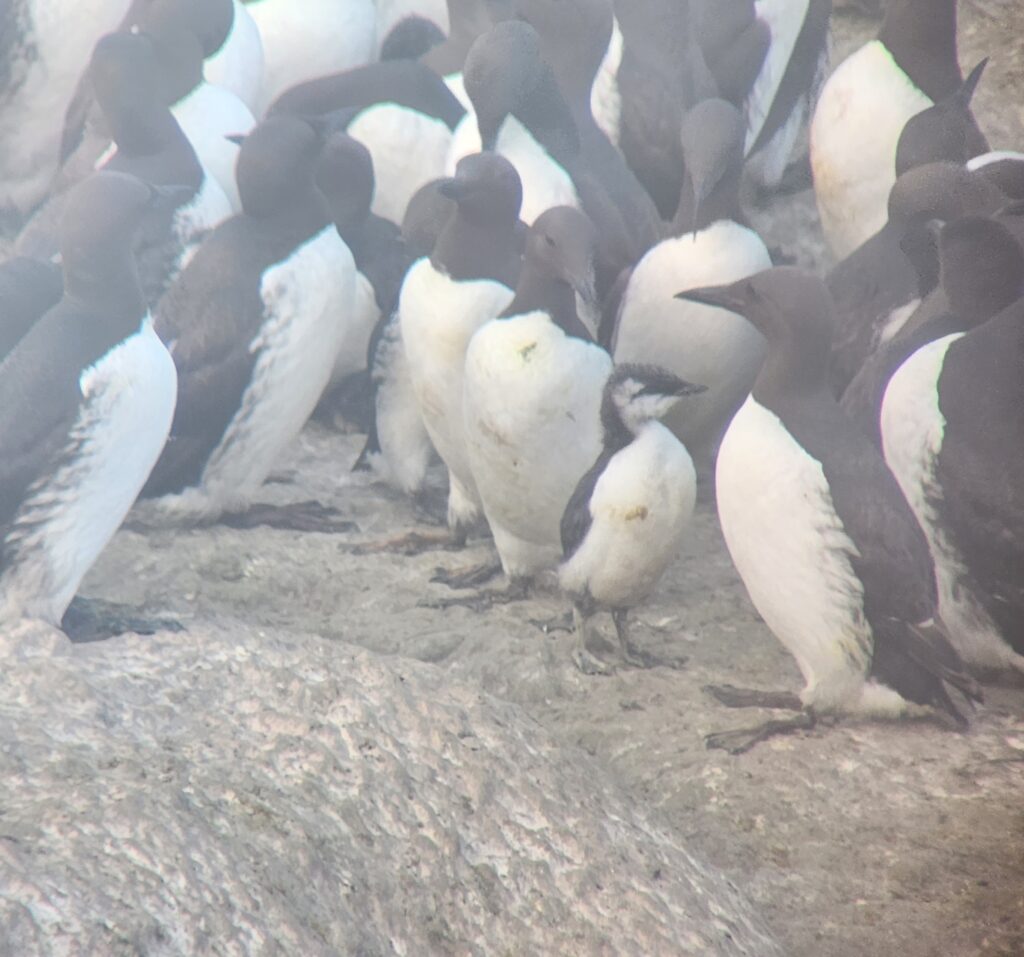
Unfortunately, we don’t have multiple, complete colony counts documenting the decline in breeding murre numbers throughout the season, but we can use photographs to get a rough, qualitative understanding of this decline in colony size. Compare these photos: both were taken during the middle of chick-rearing, one showing the “full” colony (circa 2017), while the other is from early August 2023. By mid-summer, the number of murres raising chicks on Colony Rock this year was clearly just a fraction of what we once observed.

It isn’t all doom and gloom, however. Those murres that laid or re-laid eggs exceptionally late did have a reasonable chance of successfully incubating that egg until it hatched. For example, only 1 out of 3 eggs laid during June survived the marauding eagles, gulls, and crows to successfully hatch. In contrast, more than 2/3 of the eggs laid during July ended up hatching. Once out of the egg, those chicks that did hatch this year did quite well. By the time chicks hatched in late July/early August, the eagles had left the colony alone, and more than 80%* of all hatched chicks survived to fledge.
In sum, although the overall colony size was substantially smaller, and murre egg losses were high until late June, the Yaquina Head colony was able to successfully raise some chicks this year.
Part of this success is surely attributable to this summer’s favorable ocean conditions and prey resources. Our team documented what murre chicks were feeding on by photographing adult murres bringing fish to the colony, and we also recorded the frequency with which these feeds occurred during three, all-day provisioning watches. We observed murres feeding their chicks an average of 3-4 times per day, bringing in lots of smelt (Family Osmeridae), plus lesser numbers of herring or sardine (Family Clupeidae) and sandlance (Family Ammodytidae). These are all relatively nutritious prey items that enabled the surviving murre chicks to grow quickly and to eventually head to sea with their fathers by the beginning of September.
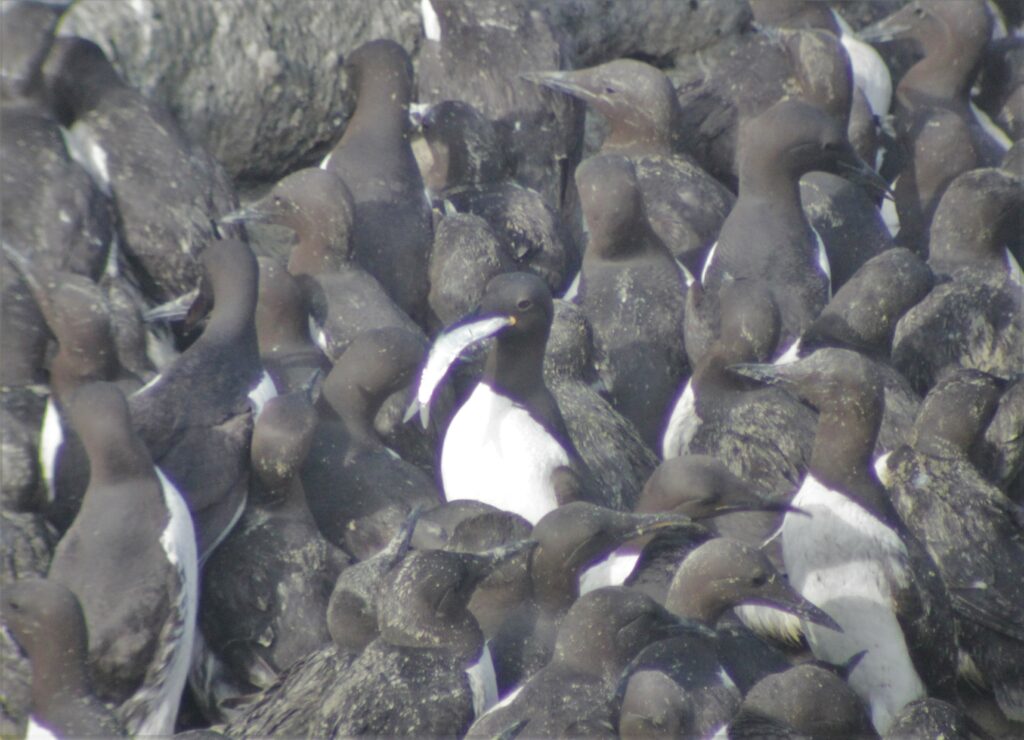
successfully raise their chick until fledging.
2023 was certainly a roller coaster for the Yaquina Head murres, but the birds displayed incredible persistence. We witnessed heavy predation pressure early on that threatened to lead to another year of complete reproductive failure (like 2022), but the murres displayed great flexibility and managed to lay eggs and raise chicks later than we’ve ever before documented. In spite of all the diverse challenges seabirds face worldwide, their remarkable adaptability continues to give us hope.
Thank you all for the support and continued interest in the Yaquina Head Seabird Monitoring Program. A huge thanks to our hard-working interns this year (Jacque, Neci, and Ricardo) and all the other people who made this work possible. We hope to see you all out at the lighthouse next May!
*please note that exact values may change slightly pending further data proofing and processing