Yaquina Head Mid-Season Update, Summer 2026

By Xitlali Pedraza-Payta, Seabird Monitoring Technician & NSF REU Intern
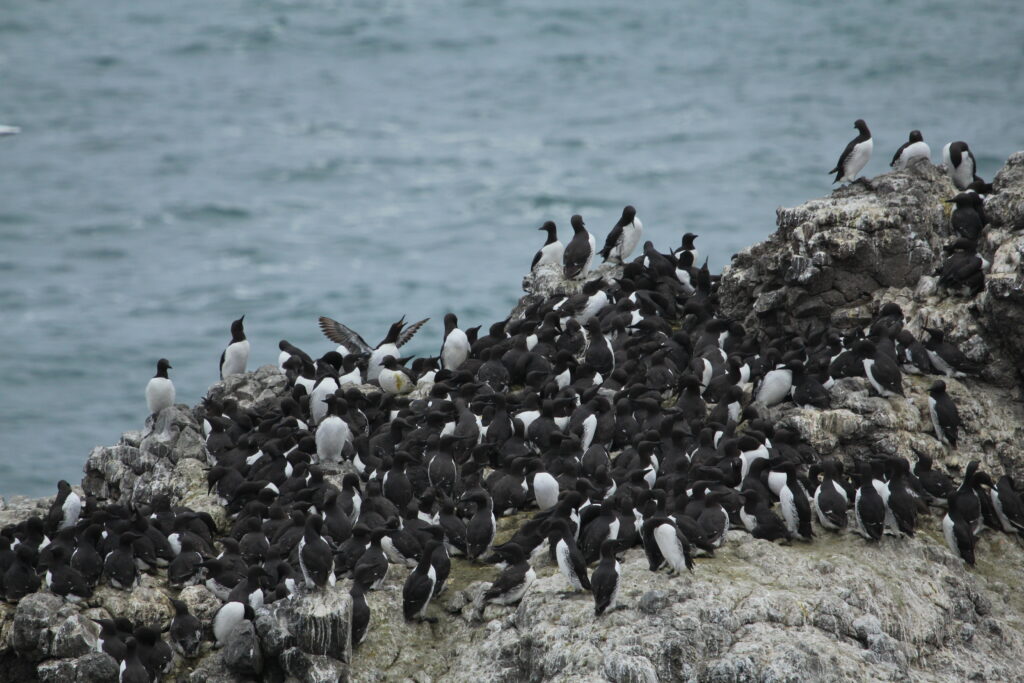
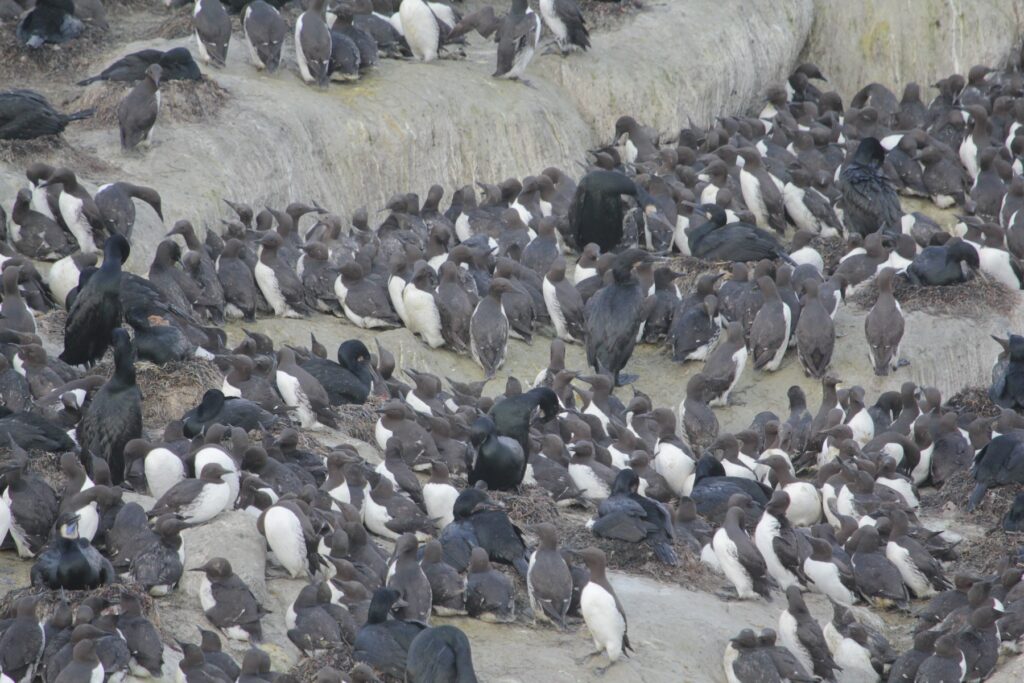
Common Murre colony nesting at Yaquina Head Outstanding Natural Area.

Hi there!

I’m Xitlali Pedraza-Payta, a rising senior at the University of San Diego who is spending the summer as an NSF-REU intern for the Seabird Oceanography Lab here at the Hatfield Marine Science Center. I’m very excited to be here!

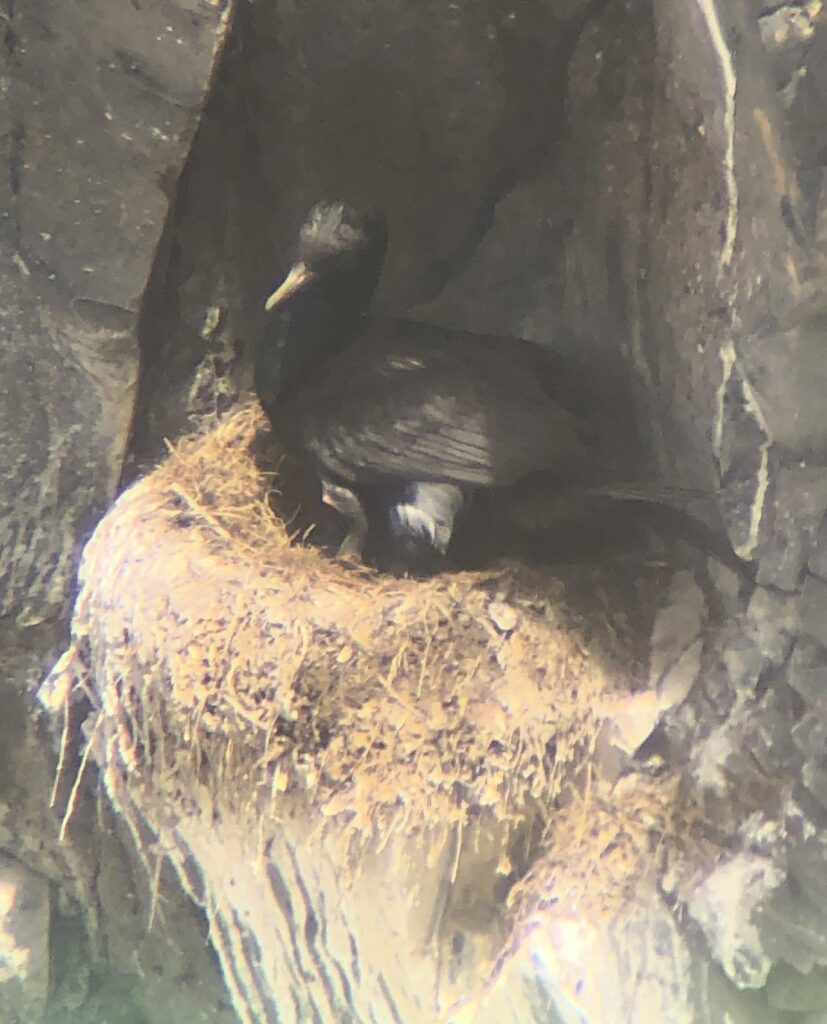
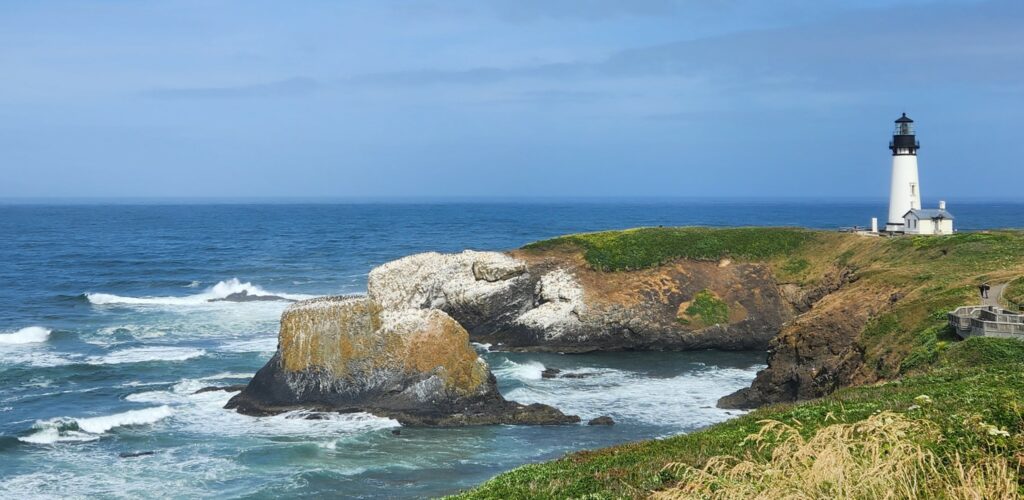
I drove out to Yaquina Head Outstanding Natural Area (YHONA) with Will Kennerley for the first time the morning of June 22nd and was amazed by the sheer amount of seabirds nesting at the site. At this point, the Brandt’s Cormorants and Pelagic Cormorants were looking quite settled, as many had already laid eggs and were busy incubating them while perfecting their nests. Although they laid their eggs a few weeks later than the cormorants, Common Murres were also congregated in their nesting colony either keeping their eggs warm or tripping over each other.
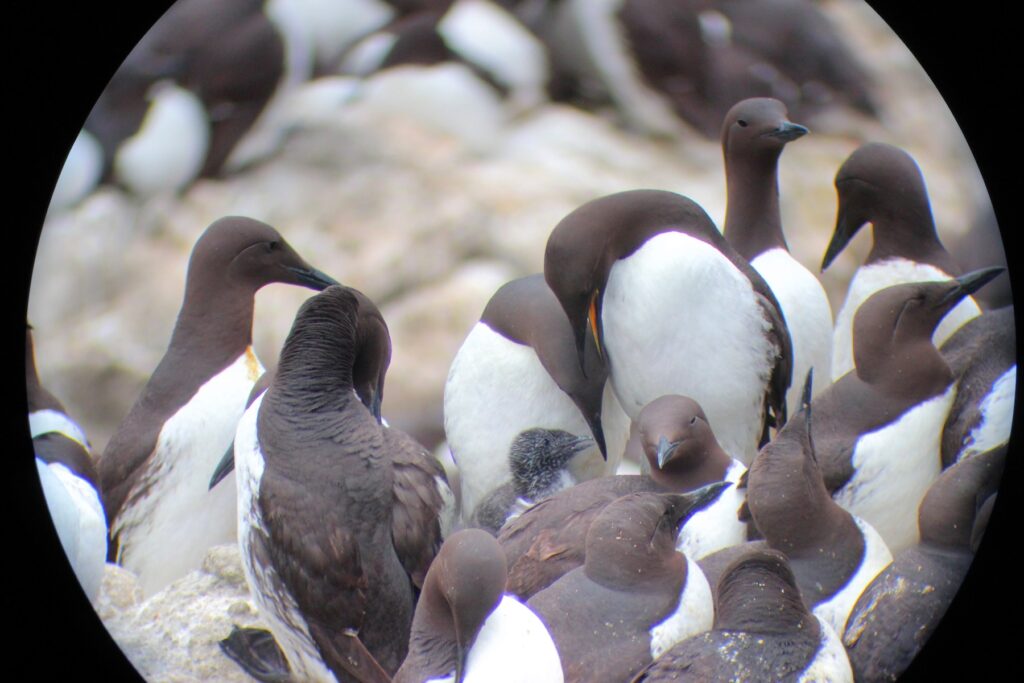
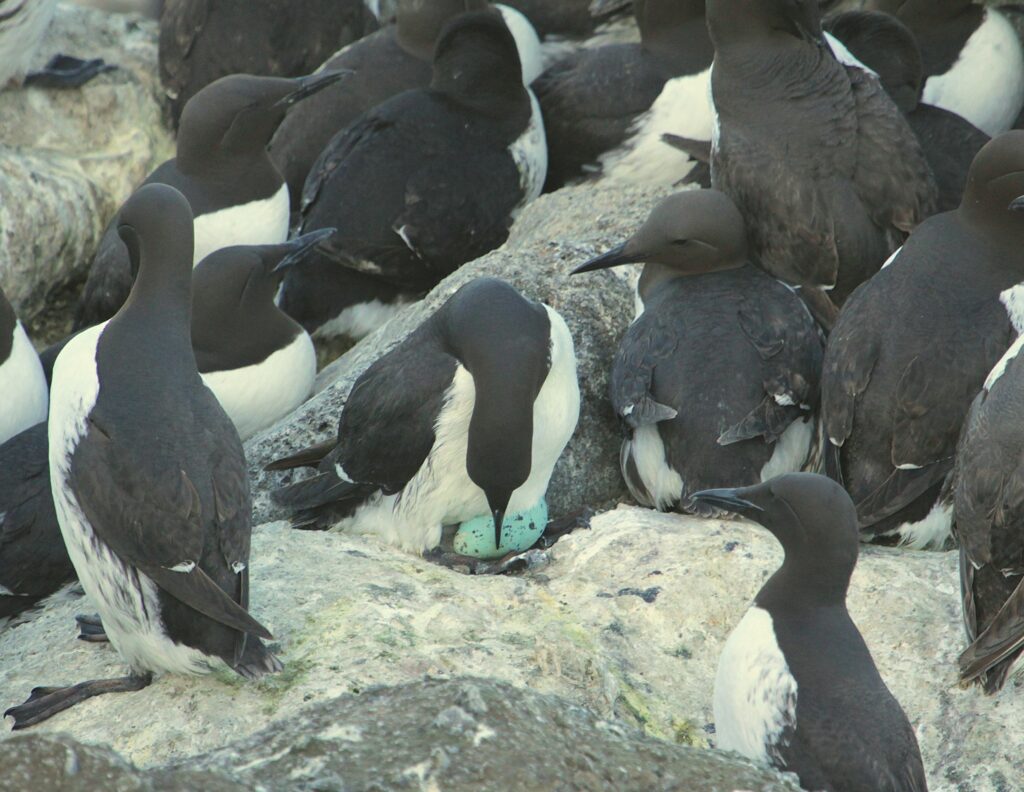
Common Murre colony nesting at Pirate Cove, Depoe Bay. A murre egg can be seen under the center murre.
Common Murres nesting at Pirate Cove, Depoe Bay. An egg can be seen under the center murre.

Since then, we’ve also been monitoring seabird plots in Pirate Cove, where it seems that the frequency of disturbance events by Bald Eagles has risen compared to previous years. In the past, Bald Eagle predation had been more common at Yaquina Head than at Pirate Cove, though it seems that a group of juvenile and adult eagles have been keen on the site in Depoe Bay this season. While unfortunate for the murres and cormorants that have lost eggs due to Bald Eagle disturbances and secondary predation by the Western Gulls, so it goes in wildlife. Despite this, the nesting colonies have persisted, with some cormorants re-laying eggs as eagle disturbances have been decreasing throughout the summer and some sheltered plots avoiding predation altogether. For instance, Brandt’s Cormorants at the base of Lion’s Head Rocks have nests full of several large chicks that hatched weeks earlier than the long-term average. Just a few hundred yards away, however, Brandt’s on the open and exposed Satellite Rock have had nests repeatedly depredated and they now have few, if any, eggs. Despite both groups breeding at the Yaquina Head colony complex, their productivity is likely to look drastically different, a pattern that has been seen in murres but is new to the cormorants here. Credit is also due to the murres, who have been gaining more and more courage to stand their ground during disturbance events. Now that the murres are largely on eggs, they are less likely to evacuate during eagle flybys and only leave the colony during more severe disturbances. Bravo, birds!
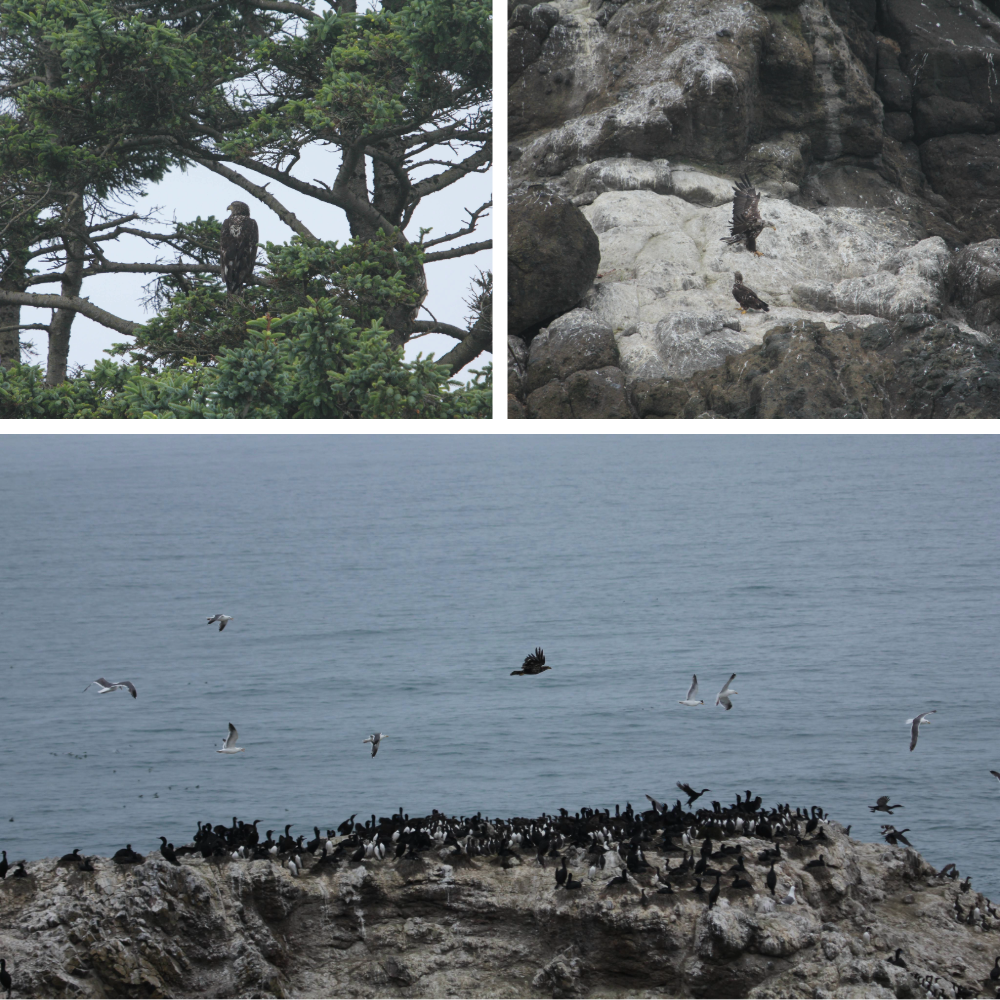
Juvenile Bald Eagle sightings and disturbances against the Common Murre colony and cormorants at Yaquina Head Natural Outstanding Area. The top left image depicts a juvenile Bald Eagle perched in a nearby tree. The top right image depicts two juvenile eagles on Seal Rock. An eagle can be seen flying over the murres and cormorants on Main Colony Rock, with Western Gulls surrounding it.
Juvenile Bald Eagle sightings (top left and right) and disturbances against the Common Murre colony and cormorants (bottom) at Yaquina Head Natural Outstanding Area.

An exciting morning on July 6th, when we saw our first fledged Brandt’s cormorants chicks at Yaquina Head! With average annual median hatch dates for both cormorant species being in early-mid July, these chicks have fledged a few weeks early. However, most are still brooding eggs or young chicks, so the median hatch date for this year may still fall within the normal range. Just a few days later on July 9th, we spotted our first murre chick of the season at Depoe Bay! In previous decades, this would have been about the time when the first murre chicks would have fledged, making this season’s chicks consistent with the recent trend of murres nesting later in the season.
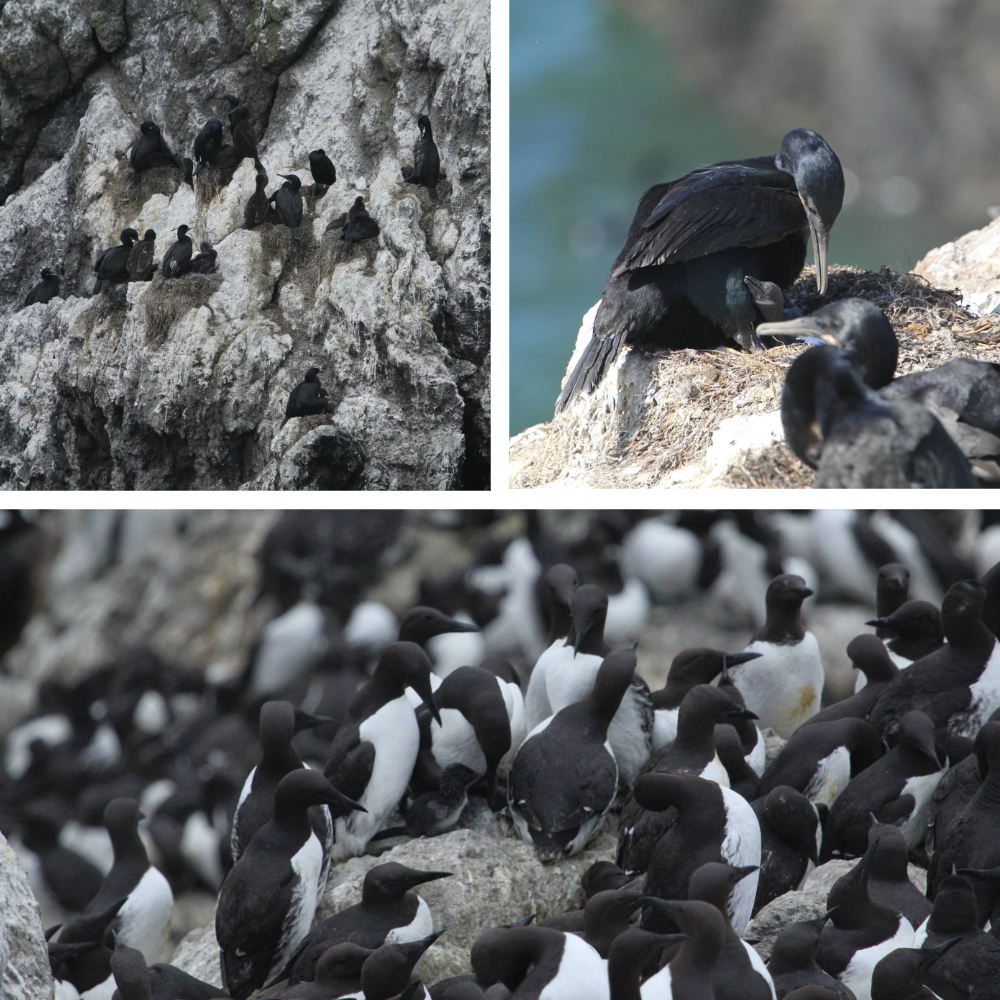
Brandt's Cormorant chicks, both fledged (top left) and recently hatched (top right). Common Murres at Pirate Cove, Depoe Bay. An adult murre is pictured feeding its chick (bottom).
Brandt’s Cormorant chicks, both fledged (top left) and recently hatched (top right). Common Murres at Pirate Cove, Depoe Bay. An adult murre is pictured feeding its chick (bottom).

NOAA’s National Weather Service announced on June 11th that El Niño has developed in the tropical Pacific and is predicted to intensify in the fall1. El Niño effects are often subtle off the coast of Oregon during summer months, though we can expect its intensity in the fall to bring warmer sea surface temperatures2. These elevated temperatures can make zooplankton smaller and increase metabolic needs for fishes3. Not to mention, changes in water currents and wind tend to move these lower trophic prey species further north, disrupting local marine ecosystems2,3. In contrast to the indications of poor reproductive success for Brandt’s along the central California coast, the birds here may finish breeding in time before strong El Niño effects are felt. The predicted increase in El Niño conditions in the late fall and winter could lead to high adult mortality and perhaps reduced breeding effort next year. For now, however, things appear to be normal here on the Oregon coast. 

Lastly, if we recall the 2014-2016 intense marine heatwave (“the Blob”), YHONA murres have since then fallen into a pattern of reproductive failure on even years and successfully reproducing on odd years. According to this pattern, it would come to no surprise if the colony fails to reproduce this year. At YHONA, we are currently following 12 murre plots, of which six are still active. However, seeing as the murres are typically less likely to abandon their nests during the chick-rearing stage and eggs are still present this late into the season, I have hope for some level of success in fledging chicks for the colony at YHONA.

Considering the recent increase in eagle populations in the area4 and the brewing strength of the El Niño in the tropical Pacific1, how might seabird reproductive success be affected? Will the murre colony succeed despite the forces working against them? Might this be the end of the pattern of biennial reproductive failure? We’ll see how the rest of the season plays out!
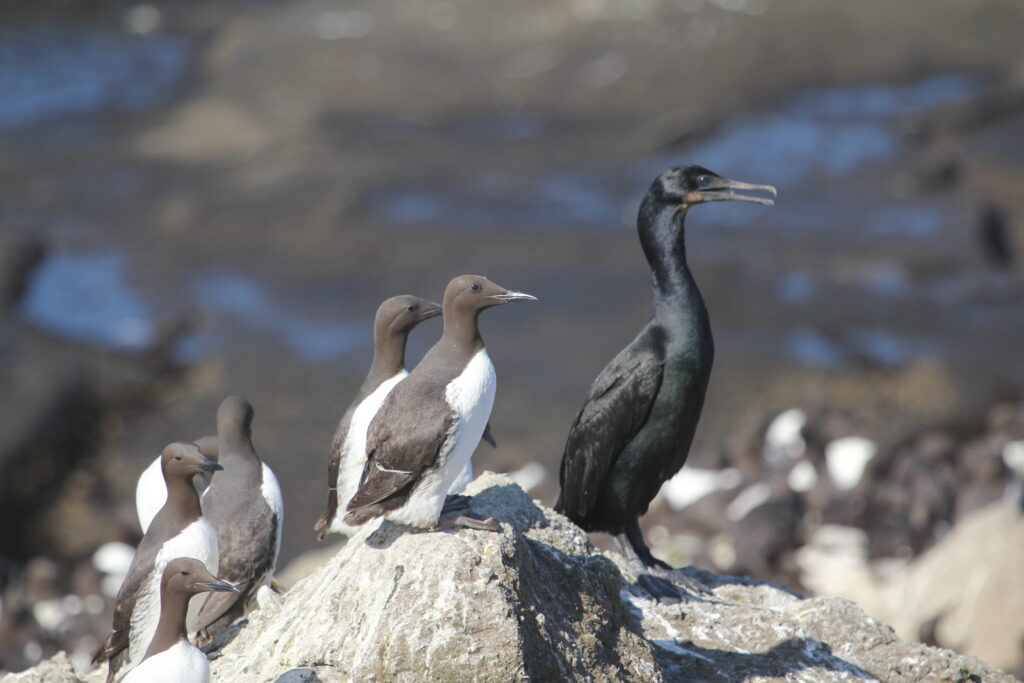
Murres and a Brandt's cormorant at Depoe Bay.

Read our Yaquina Head Early Season Update to see what the beginning of the summer looked like at these colonies!

References

1National Oceanic and Atmospheric Administration (2023). El Niño forms, expected to strengthen, say NOAA forecasters. National Oceanic and Atmospheric Administration. https://www.noaa.gov/news-release/el-nino-forms-expected-to-strengthen-say-noaa-forecasters 

2USDA Climate Hubs (2026). El Niño in the Northwest: What Can We Expect? U.S. Department of Agriculture, Northwest Climate Hub. https://www.climatehubs.usda.gov/hubs/northwest/topic/el-nino-northwest-what-can-we-expect

3Piatt JF, Parrish JK, Renner HM, Schoen SK, Jones TT, Arimitsu ML, Kuletz KJ, Bodenstein B, García-Reyes M, Duerr RS, et al. 2020. Extreme mortality and reproductive failure of common murres resulting from the northeast Pacific marine heatwave of 2014–2016. PLoS One. 15(1):e0226087.https://doi.org/10.1371/journal.pone.0226087

4Isaacs, F. B. and R. G. Anthony (2011). Bald Eagles (Haliaeetus leucocephalus) Nesting in Oregon and Along the Lower Columbia River, 1978–2007. Final Report, 18 March 2011. Oregon Cooperative Fish and Wildlife Research Unit, Department of Fisheries and Wildlife, Oregon State University, Corvallis, Oregon, USA.
Yaquina Head Mid-Season Update, Summer 2025

By Cherish Lyda, Seabird Monitoring Technican, OSU Seabird Oceanography Lab

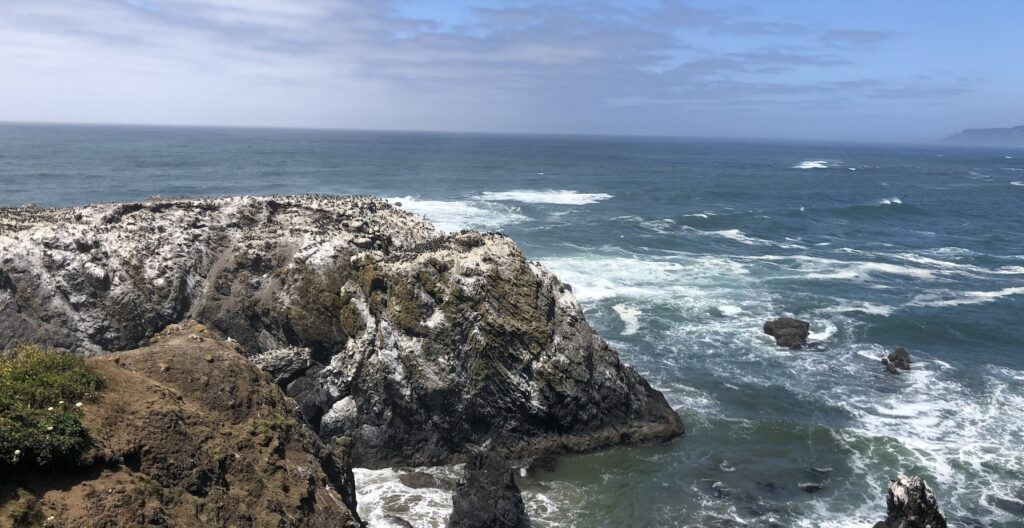
An image on a sunny day of an off-shore rock, Main Colony Rock at Yaquina Head, covered with guano. The nesting seabirds are small and hard to see.

Hello everyone!

My name is Cherish Lyda, and I’m a senior at Oregon State University, majoring in Fisheries, Wildlife, and Conservation Sciences with a focus on avian conservation and management. This summer, I’m the Yaquina Seabird Monitoring Technician for the Seabird Oceanography Lab. This is my first season working with seabirds – and it has been amazing so far!

Despite frequent Bald Eagle disturbances, Yaquina Head Outstanding Natural Area is once again bursting with new life! Although nesting started late this year, the birds have shown resilience and are beginning to proudly display their chaotic nests and adorable chicks. We are currently monitoring 13 plots and following 93 Common Murre nests, 36 Brandt’s Cormorant nests, 28 Pelagic Cormorant nests, and 13 Western Gull nests.

Western Gulls hatched first and are already wrapping up the season with seven successfully fledged nests. (Take a look at the top of Colony Rock and you’ll see these brown spotted fluff balls wandering around!) Brandt’s Cormorants started hatching on July 2nd and 21 nests have hatched so far with more on the way. Pelagic Cormorants have taken up their usual spots at Smuggler’s Cove and Whale Rock, and we saw our first chick on July 9th.

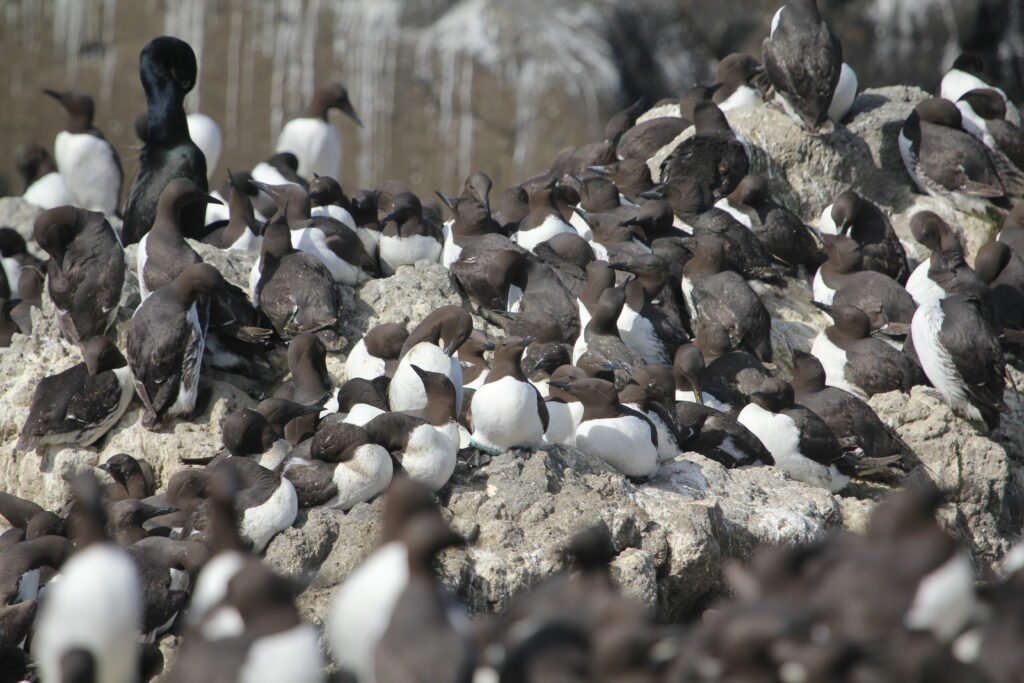
A close-up image of a mixed species seabird colony with clusters of nesting common murres and a few Brandt's cormorants.
Common Murres and Brandt’s Cormorants at Pirate Cove, Depoe Bay. Note the chick in the center cormorant nest.

As for the Common Murres, their season started out tough but is now looking very promising. Frequent early-season eagle activity hit the south half of Colony Rock and top of Whale Rock hard, clearing multiple plots of eggs. For a couple days, two immature Bald Eagles were seen perching continuously on the rocks. However, as eagle activity dropped off in late June, the murres regrouped and began laying again (along with lots of Brandt’s Cormorants) in the center and south parts of Colony Rock. The decrease in disturbances seems to have bolstered the murres’ courage, and they are starting to stay on their eggs during disturbances. Instead of flushing in panic, they’re standing their ground. It’s risky, but it seems to be paying off with fewer eggs being lost to the surrounding gulls.

We confirmed our first murre chicks on July 14th and we are now up to 25+ hatched with many more on the way. The parents are now busy bringing fish to colony, and it’s been cute watching the murres attempt to feed their eggs small fish – a sign that they are getting close to hatching!

A view through a scope of common murres, centered on a murre chick and its parents.
Young Common Murre chick at Depoe Bay

As for other avian species, Tufted Puffins continue to make occasional, delightful fly-bys. We’ve seen both single birds and a pair flying loops and heading north. The noisy Black Oystercatchers have been busy with nests at both field sites and Pigeon Guillemots are on their nests tucked deep into the cliffs of Smuggler’s Cove. Listen for their high-pitched, squeaky whistles coming from the rocks!

In addition to Yaquina Head, we have been keeping a close eye on Pirate Cove in Depoe Bay. With almost no eagle disturbance (none since mid-June), the birds have been doing great. As of this writing, 42 of our 97 murre nests have hatched. Amazingly, every one of our 31 Brandt’s Cormorant nests have hatched chicks! Although our Pelagic Cormorants have been nesting in some hard-to-see cliffs, we were able to confirm their first hatches this last week as well.

A pelagic cormorant brooding a very tiny chick on a large well built nest of vegetation and guano.
Pelagic Cormorant with its first chick nesting at Smuggler’s Cove, Yaquina Head.

Now that murre chicks have arrived, we’ll soon be conducting all-day nest watches to observe how often adults deliver food to their chicks. We’re also continuing to collect bill load photos of their prey items for diet analysis.

Working alongside Dr. Rachael Orben, the interns, and other researchers on this project has been amazing. I’ve gained so much knowledge about seabird life history and current research from our conversations and time together in the field and lab. Being able to wake up each morning at sunrise to the salty wind in my hair, the raucous calls of the murres, and the flaring brilliant blue throats of the cormorants has been an incredible way to spend my summer.

I can’t wait to see what the rest of the season brings — stay tuned!

To the Lighthouse: Another Year of Monitoring Breeding Seabirds at Yaquina Head

By Will Kennerley, Faculty Research Assistant, OSU Seabird Oceanography Lab

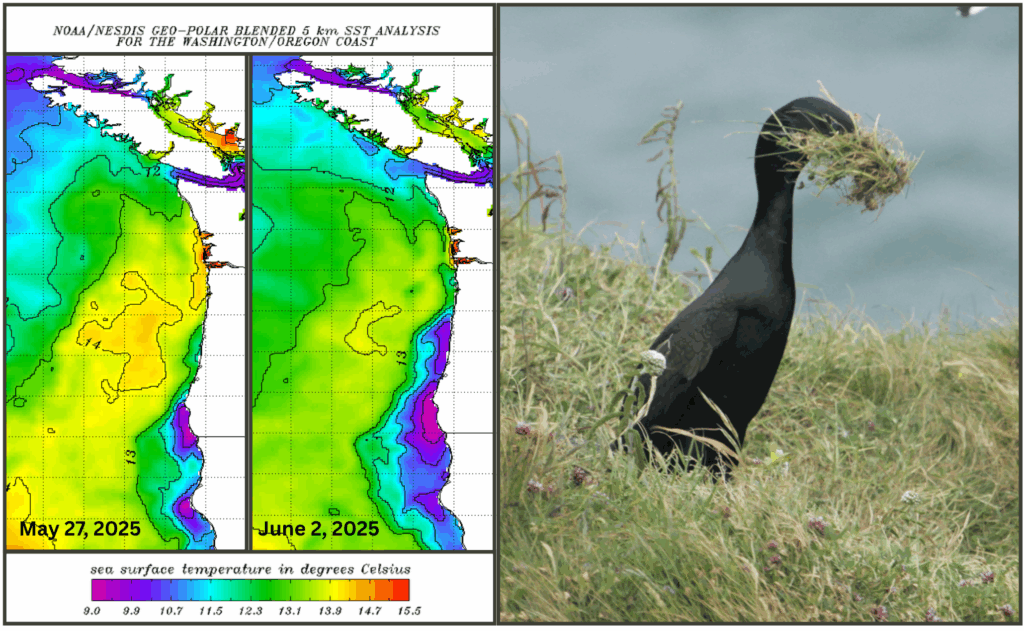
The 19th consecutive year of Yaquina Head monitoring is upon us. A local naturalist, Chris Fox, first reported murres occupying Colony Rock in mid-March but the returning murres were met with Bald Eagle disturbances almost immediately. While eagle disturbance likely contributed to the rather sporadic murre attendance throughout April and May, it seems that delays in upwelling (or at least a delay in consistent upwelling?) likely limited seabird breeding activity during the spring. While I’m still waiting for more formal, quantitative summaries of spring ocean conditions here, we observed warmer sea surface temperatures (12°C/54°F) off the central coast during much of May. During this time, we witnessed murres and cormorants attending the colony, but only half-hearted cormorant nest building on May 21st, the date on which we had our first Brandt’s eggs the year before.

Then, during the last week of May, the satellite maps I was monitoring began to show plumes of cool water moving northward from the California line. Sea surface temperatures dropped below 10°C/50°F close to the coast, suggesting the onset of strong upwelling and, presumably, increased ocean productivity. With surprising speed and synchronicity, we noted both of our cormorant species and murres quickly began nest building and/or egg-laying. By the first week of June we had our first Brandt’s Cormorant and Common Murre eggs, and our first Pelagic Cormorant eggs were laid before June 11th.

As May faded into June, colder ocean temperatures (at left, with cold temperatures shown in purples and dark blues) appeared along the central Oregon Coast, suggesting the onset of summer upwelling and increasing ocean productivity. Shortly after, Brandt’s Cormorants (right) began collecting nesting material, constructing nests, and laying eggs.

This level of synchronicity was exciting to see and stands in stark contrast to observations over the last few years. In 2024, Pelagic Cormorant breeding phenology was several weeks behind that of Brandt’s, while in 2023 both cormorant species were closely synced but they were a month or more ahead of the Common Murres! The reasons behind the highly variable breeding phenology are likely a complicated mix of ocean conditions and predation pressure, with the timing of murre egg laying regularly more aligned with Brandt’s Cormorants at our less eagle-disturbed site in Depoe Bay. This year, however, murres even at Yaquina Head seem to be laying eggs in sync with both cormorant species, and are doing so at dates closer to (though still later than) historical norms.

Now that we’re into the middle of June, most seabirds at our sites are busily incubating full clutches. Eagle disturbances continue but so far appear to be comparatively mild, with fewer whole colony-clearing disturbances observed. Still, eagles have regularly swept murres from the south end of Colony Rock and Flat Top, and we’ve rarely observed eggs at these exposed sites persist more than a few days. Elsewhere, such as our Lower Colony Rock and Whale Rock subcolonies, which offer more protection against aerial predators, some murres have been incubating for over a week already; this means that we could have murre chicks by July 10th, if all goes well! The first Western Gull chicks, meanwhile, have already begun to hatch, and visitors should keep an eye out for fuzzy, speckled heads poking up from the stones and sparse grasses atop Colony Rock.

Common Murres began to lay their speckled, blue-green eggs at both Yaquina Head and Pirate Cove/Depoe Bay during early and mid June this year.

Our lab also just welcomed a new set of interns and research assistants for the summer – Caitlin (NSF-REU), Cherish (OSU undergraduate), and David (EFTA intern at BLM’s Yaquina Head Outstanding Natural Area). It’s always convenient when the bird’s breeding phenology aligns well with OSU’s quarter system, and I’m hopeful our full team will get to observe the complete egg to fledgling progression! Although it’s early days, the strong, synchronized reproductive effort, relatively mild eagle disturbances, and regular appearance of rockfishes and large sandlance in murre bills (as display fish), all give me hope that our breeding seabirds have a successful season ahead of them.

More to come!

Welcome!

By Rachael Orben

Welcome to the blog of the Seabird Oceanography Lab. We engage in seabird science research along the Oregon coast, and worldwide. This blog will be used to provide updates on fieldwork, research, and anything seabird related! We may occasionally discuss seals. Please visit us again!

Previous Blog Posts

Over the past few years, our members periodically wrote blogs about our research for other venues. Follow the links below to blog posts written by members of the Seabird Oceanography Lab.

A series of blog posts written in collaboration with the Seabird Youth Network about red-legged kittiwakes (link). Followed by updates by Seabird Youth Network interns that includes resighting banded red-legged kittiwakes (link). Our recent project with red-legged kittiwakes occurred during three years of successively worse breeding success. This blog posted in 2017, was written by Rachael Orben as she contemplated why the red-legged kittiwakes nesting on St. George Is., AK did not lay eggs.

A blog describing Stephanie Loredo’s research on common murre movements on the Oregon coast.

The common murre capture crew from 2017.

Thoughts on western gull foraging preferences by Stephanie Loredo (link), along with a summary of western gull at-sea distributions relative to coastal marine reserves authored by Rob Suryan (link).

A tagged western gull sits on its nest after eluding the noose carpets placed strategically near-by.

Midway Atoll is home to the largest albatross colony in the world. A visit there can be more than overwhelming. Here are links to two blogs written by Rachael Orben after two, two-week visits to study albatross foraging ecology. Blog one and blog two.

Midway Atoll, 2015.

For more information about these projects and much more, our lab website can be found here: https://hmsc.oregonstate.edu/seabird-oceanography-lab