Author Archives: edmunsot

Early Oregonians Database now online!

As a legacy to commemorate the sesquicentennial of Oregon’s statehood, the Oregon State Archives announces the launch of the Early Oregonians Database on its website.

This resource uses data from census, death, probate, and other records to help researchers find information and documents about people who lived in Oregon prior to statehood. Volunteers at the Archives have worked on this project for more than five years. The database currently contains over 105,500 entries for individuals who lived in Oregon prior to statehood. Because of limits on available records and documentation, the project can be defined to include people living in Oregon from 1800 to 1860.

If you have any questions or documentation you would like to contribute to the database, please contact the Archives staff.

Want a more detailed description of the project?

Want the FAQ?

Fresh news from the OSU Press!

It’s true, I am a shameless promoter of all things related to the OSU Press…Today the “First Peoples: New Directions in Indigenous Studies” publishing initiative announced the launch of its new website!

What will the website do? Officially, it will “serve as a tool to broaden the reach and audiences for the books they publish on Indigenous studies.”  But really, it’s a great place to go to read their blog, learn about the books, check out their Twitter feed, find upcoming events, and just get lost exploring…

Want the details on the initiative? In January 2009, the Andrew W. Mellon Foundation awarded four university presses a grant to established an innovative partnership. Seeking the best and most robust scholarship by junior authors whose publications will contribute to the development of the field, the grant supports both the publication of 40 books over four years and the collaboration of the presses to further scholarly communication in the field of Indigenous studies.

Who is involved? University of Arizona Press, University of Minnesota Press, University of North Carolina Press, and (of course) Oregon State University Press.

Salmon, Beavers, & Ducks?

Is this a university archive or a petting zoo?

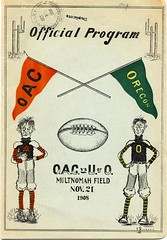
OSU’s campus is all a flutter — and covered with orange and black, of course. Why? Today is the big day: Civil War 2009! Tonight’s winner goes for Roses … That’s right, for those of you who haven’t heard because you’ve been hiding out to avoid the rain and/or 29 degree temperatures, the winner will be in the Rose Bowl!

Hasn’t this happened before? According to OSU’s Game Day Central, the answer is no.

It looks like it has, but it really hasn’t. The winner of the 113th Civil War will know that it has clinched the Pac-10 title and a berth to the Rose Bowl when the clock shows 0:00. It’s the first time that both teams have entered the game with the “winner take all” scenario. The Beavers entered the 1957 season finale 6-1 in the league, while the Ducks were 5-2 – Oregon won that game 20-0 to share the title, but the Beavers knew that they were out of the Rose Bowl going in, due to a no-repeat clause – OSU played in the ’57 Rose Bowl (’56 season).”

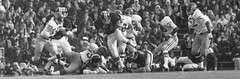
The rivalry between the two schools, especially that pig skin rivalry, goes waaaay back. To read all about it, and see lots of great pictures from the UO Archives and Special Collections, check out Anne Peterson’s article for KPIC news. Here’s a teaser to get you reading…

While this season’s Civil War between Oregon and Oregon State has been called the biggest game in the rivalry’s history, there have been plenty of significant – and just plain strange – Civil Wars in the past. Case in point: 1983’s “Toilet Bowl,” a 0-0 rain-drenched exercise in futility.

No rain tonight, just Jack Frost and his chilly dew.

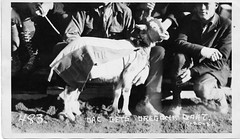
The OSU Archives got in on the historic photo action as well! Check out our Civil War set in Flickr. Want to see more football pics? Check out the Football at OSU set. And yes, it includes a picture of a goat.

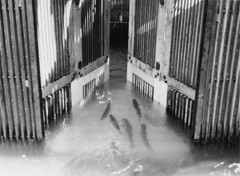
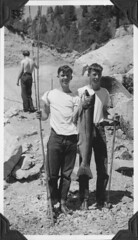
While you are there, check out the new Flickr Commons set on salmon fishing in Oregon. Everyone is swimming on over, don’t be left at the gate…

Salmon!

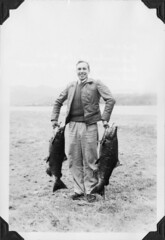
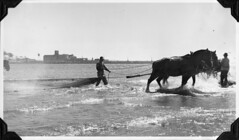
Dogs & Chinook, horses hauling and fish spawning, elevators and jump traps? Yes, it must be a set about salmon fishing!

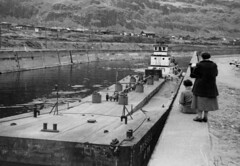
The images in these sets are from our “Pacific Northwest Stream Survey” digital collection, which includes over 1000 field images taken between 1934 and 1945 and spanning the 390 streams in the Columbia River Basin. They are also part of our Western Waters collection in Flickr, which is full of more salmon pics and some great images of dams!

We love sharing…

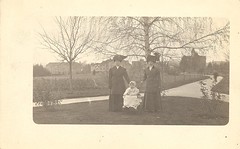
Chris from Portland sent us this wonderful image of OSU’s lower campus, which likely dates from 1911.

Why do I love this photo? Babies in strollers, no matter the era, are just great fun … Especially if they have a bonnet and 2 attendants!

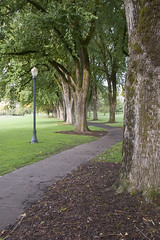
This is also fabulous because it shows the itsy, bitsy trees — which are now great big trees that shade visitors to the DaVinci Days festival in the summer and delight us with bright yellow foliage in the fall. Thanks to Flickr user “Geronimo the Elder” for this shot!

Do you have photos or memories of this little piece of park bliss?

Lots of great news coming out of the OSU Libraries this week!

Oregon Spatial Data Library launches in conjunction with national GIS Day

A powerful new data-access tool for Oregon researchers, students, public agency staff, private industry and the public at large was launched today in conjunction with national GIS Day… The Oregon Spatial Data Library provides easy and convenient ways to find, access and share geospatial data at no cost to the user. Currently, more than 200 datasets can be displayed and downloaded, with more to be added as they become available. Developed in partnership with Oregon State University Libraries, the Institute for Natural Resources and the Oregon Dept. of Administrative Services Geospatial Enterprise Office (DAS-GEO), the Oregon Spatial Data Library features access to all statewide “framework” data available for Oregon.  These are the datasets that serve as “base data” for a variety of GIS applications that support important research, business and public services.Read more here!

Learn about wetlands online through ‘Oregon Wetlands Explorer’

A far-reaching, highly interactive Web experience that provides deep, richly illustrated insight on the historic and current states of Oregon’s wetlands is the newest member of the critically acclaimed Oregon Explorer family of sites produced by Oregon State University Libraries, the Institute for Natural Resources and, in this case, The Wetlands Conservancy. Oregon Wetlands Explorer takes users virtually to areas throughout the state, from coastal salt marshes to mountain fens desert salt grass flats and many points in between, providing information on wetland ecology, history, wildlife and restoration opportunities.  Oregon has lost more than half of its wetlands since European settlers arrived in the 1800s, and producers of the site hope the information will be helpful in encouraging protection of the areas that remain.Read more here!

OSU Library earns grants to support digitization of key pieces of Oregon history

Oregon State University’s Valley Library is the recipient of two new grants that will support digitization of key images from the state’s past, a new Web-based portal where the images will be publicly accessible and digital archive assistance for cultural institutions around the state that otherwise might not be able to afford such services. The grants and the Oregon Digital Library Project (ODLP) that they’ll help create will enable the Valley Library to build on its critically acclaimed role in preserving material documenting the history of Oregon and its people, said Terry Reese, who holds the Gray Family Chair for Innovative Library Services at OSU.Read more here!

OSU Archives: Powered by Orange?

What do Dad’s Weekend, pumpkin bread, poached salmon, and a bunch of guys in gear rattling an inflatable helmet have to do with the OSU Libraries? And how does Doug Schulte fit into the mix?

Saturday brought Sue Kunda, Tiah Edmunson-Morton, and (super famous) student employee of the year for Oregon (Doug) to the President’s Breakfast and fancy football game suite! Joined by his dad, Doug spoke to a small gathering of student and university leaders in the Alumni Center, reflecting on both his experience in ROTC and the limitless fun he has working for the OSU Archives. After filling ourselves with a delicious breakfast, we headed over to the VIP entrance of the stadium and up to the exclusive 4th floor suites, where we ate more, drank a little, and enjoyed the blowout game against the Huskies — all from the comfort of our movie theater style chairs, covered in Beaver orange blankets, with the sun warming us behind the retractable windows.

All glitz and good food aside, it was an honor to be there with Doug and his father to recognize the great contributions he has made to the Archives. We are really lucky to have such a talented bunch working here, and I was proud to introduce Doug, who is certainly Powered by Orange, to an even wider audience!

And yes, there is a Flickr set… See the Flickr set.

Read all about WASAE’s Student Employee of the Year Award

New Flickr Commons Collection: “Western Waters”

Say “welcome!” to a new Flickr Commons collection dedicated to all things water — or at least all things water related … Or at least all things related to waters in the west …

The idea came from OSU Libraries’ own Michael Boock and the members in the Greater Western Library Alliance (GWLA), who wanted to showcase and spotlight the great collections featured in the Western Waters Digital Library (WWDL). So we’re doing our part to share OSU’s contributions with the Flickrverse!

The images in these sets are from our “Pacific Northwest Stream Survey” digital collection, which includes over 1000 field images taken between 1934 and 1945 and spanning the 390 streams in the Columbia River Basin. But the collection is also part of the Western Waters Digital Library, which includes classic water literature, government reports, legal transcripts, water project records, personal papers, photographic collections, and audio/video materials associated with the major river basins of the Western United States.

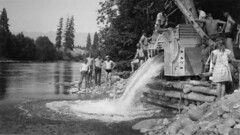
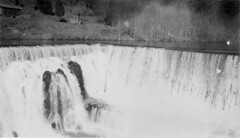
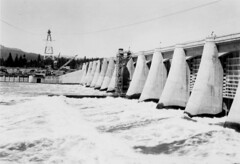
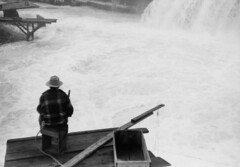
Cleverly called “Dam It,” the November 4th set includes images of roaring and rushing water, folks fishing, and a few salmon swimming … Enjoy these 19 images, straight from the late 1930s!

Keep your eyes open and your RSS feeds on, November 18th we’ll launch another set with a new set of images of people fishing at Celilo Fallls. Can’t wait until then? Check out the Celilo Falls images in the Gerald Williams Collection Flickr set, where you’ll find images like this one …

and this one …

and another one of my all-time favorites, this one …

Want to learn more about the Western Waters Digital Library?

Want to learn more about the Greater Western Library Association?

Ruth Nomura

Thanks “vintagepix”!

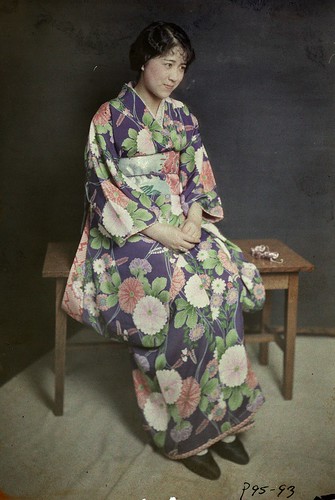
This beautiful & beguiling photo has graced the cover of our Oregon Multicultural Archives brochure, but when I tried to research Ruth Nomura for our International Womens Day set for Flickr Commons, I couldn’t find a thing … We knew the picture had been taken by an OSU photographer, John Garman, but basically we knew nothing about the context.

Who was she? Why did Garman take her photo? Was she a student? Where was the photo taken?

And so it remained one of those clichéd mysteries… Until “vintagepix” asked this question: “Any chance the name might be Nomura?” It was a great afternoon in the Archives, with staff scurrying around and clapping, pulling yearbooks off the shelves, retrieving student academic records, and really just smiling.

Because we were able to find her in the yearbooks, combined with the leads of “vintagepix,” we’ve pieced this little bit of her life together. She was born in 1907 in Portland, and was one of the first Japanese Americans born in Oregon. She graduated from Jefferson High School in 1924. According to the Japanese American Citizens League, Twin Cities chapter obituary for Nomura, “In 1926, as a winner of an essay contest for Nisei students, she traveled by steamship to Japan. She wrote that this trip ‘enriched my life and gave me a deep appreciation of Japan, its people, arts and civilization. It encouraged me to study the language, flower arrangement, holiday festivals, the tea ceremony, daily customs, Japanese cooking and serving, music, arts and crafts, particularly pottery, painting and calligraphy.’”

Then she came to OSC, as “the first Nisei woman from Portland to enroll in what is now Oregon State University.” She lived in Margaret Snell Hall all 4 years and graduated in 1930 with a BS in Home Economics.

Ruth Nomura

And, I tell you she was quite active on campus! Look at this list, it will make most feel like under-achievers.

  • Omicron Nu, secretary: National honorary fraternity in Home Economics, which was established at Michigan State college in 1912 and installed at OSC in 1919. “Its purpose is to further science in all extensive branches of home economics.”
  • Phi Kappa Phi: National all-college scholastic honor society, which was established at OSC in June, 1924. “The purpose of this society is to emphasize scholarship among college students, and to stimulate mental achievement by the honor of selection to membership. This society stands for the unity and democracy of learning.”
  • Kappa Delta Pi: “The purpose of Kappa Delta Pi is to foster higher professional and scholarship standards during the period of preparation for teaching, and to recognize outstanding service in the field of education.”
  • Clara H. Waldo prize, honorable mention
  • Cosmopolitan Club, vice-president: “The Cosmopolitan Club was formed to promote brotherhood and place humanity above all nations. Each year the club gives an International banquet. Meetings are every other week.”

And so … She left OSC in 1930 … But where did she go?

Again, turning to the obituary posted on the Japanese American Citizens League site we find an answer. She married Earl Tanbara at the Centenary Wilber Methodist Church in Portland, on September 16, 1935. When World War II, and relocation, began the Tanbara’s were living in Berkeley, CA. In 1942, they moved from Berkeley to a farm in Reedley, CA, in an attempt to avoid wartime internment. According to Earl Tanbara’s obituary, “[t]he bad news was that the boundaries for relocating individuals of Japanese ancestry were moved further inland and they were facing relocation. The good news was that the U.S. Army officer who visited the farm to inform them of the need to move to an assembly center was a former high school classmate of Ruth from Portland. The officer offered them an opportunity to move anywhere East if they had friends who would accept them. They contacted friends in Minneapolis and they were placed on a military train headed for the Twin Cities … Earl and Ruth assisted over a 100 evacuees to leave camp and find a place in the Twin Cities.” Ruth wrote, “Our main assignment was to build community acceptance. So each week, Earl and I were invited to different church groups, youth groups, schools, colleges and farming communities to give talks on Japanese Americans … As there were only 10 Japanese families living in St. Paul before the war, many Minnesotans were not acquainted with Americans citizens of Japanese extraction.”

At the end of the war, they decided to stay in Minnesota and in 1953, Ruth received her master’s degree in home economics from the University of Minnesota — as one of the first second generation women to earn a graduate degree. There is a letter in her OSC student file from 1953, written by her thesis advisor in Minnesota, with this wonderful quote: “I have never known anyone who was so versatile and could do well so many different things—from arranging flowers to organizing programs for the YWCA; from teaching foreign foods to writing publicity material. She is a charming, gracious person.”

What else do we know now? She was the Adult Education Director and International YWCA Program Director for the St. Paul YWCA from 1942 to 1972. She directed the participation of Japanese Americans in the first Festival of Nations in 1947, was one of the founding members in 1955 of the St. Paul-Nagasaki Sister City Committee (serving as president of the board from 1966-1972), and was a charter member of the Japan America Society when it was formed in 1972 and served on its board of directors. Ruth was a longtime member of Unity Unitarian Church in St. Paul, where she arranged flowers for Sunday morning services for more than 35 years, and the Japanese Garden at the YWCA on Kellogg Blvd. is named in her honor.

Ruth Tanbara passed away Jan. 4, 2008, at age 100. A small collection of her personal papers are available at the Minnesota Historical Society.