
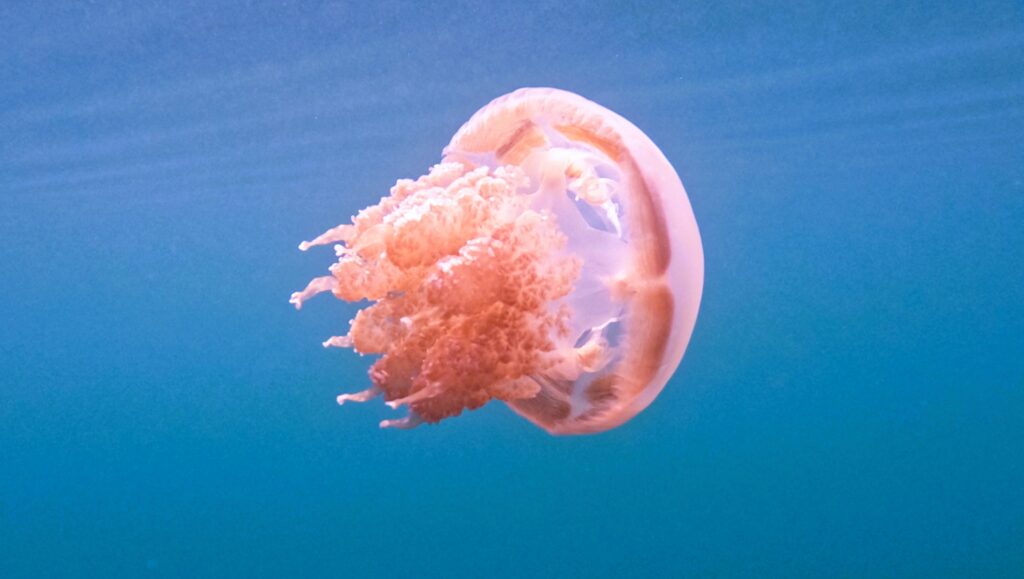
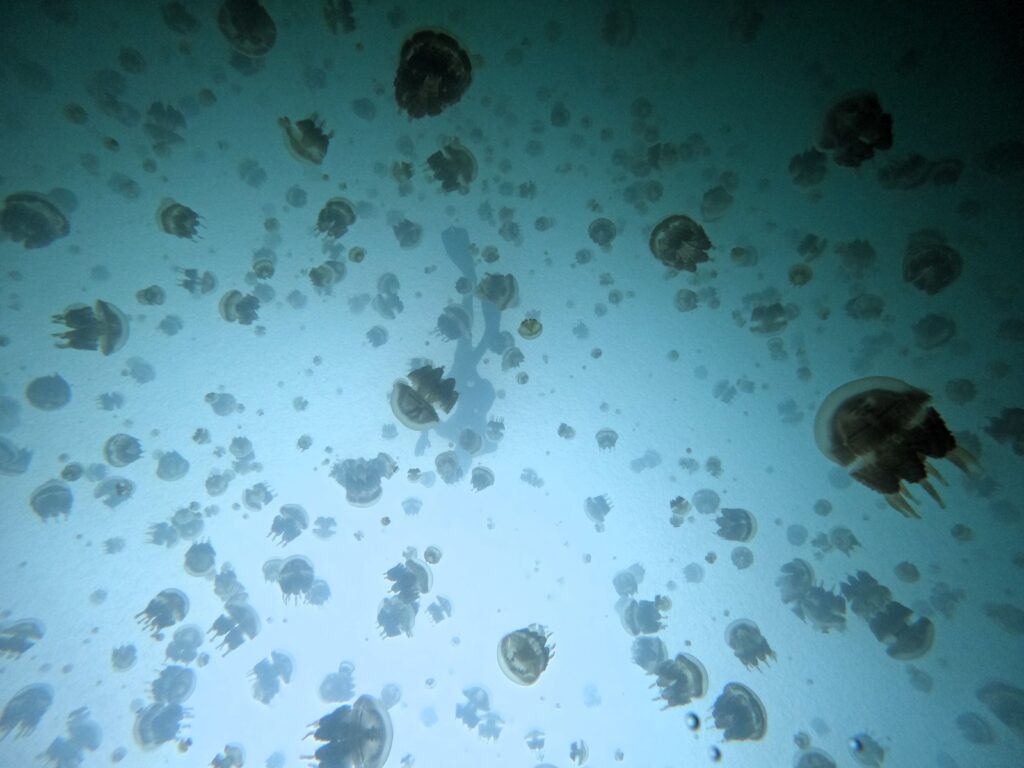
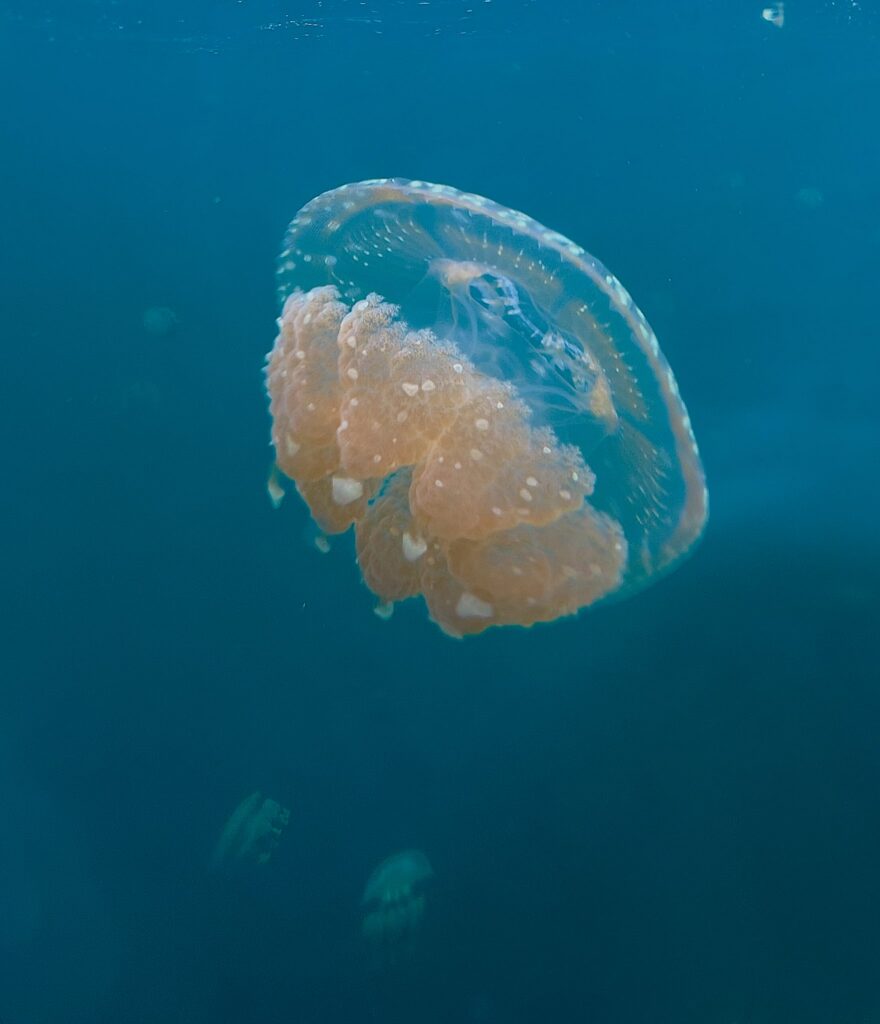
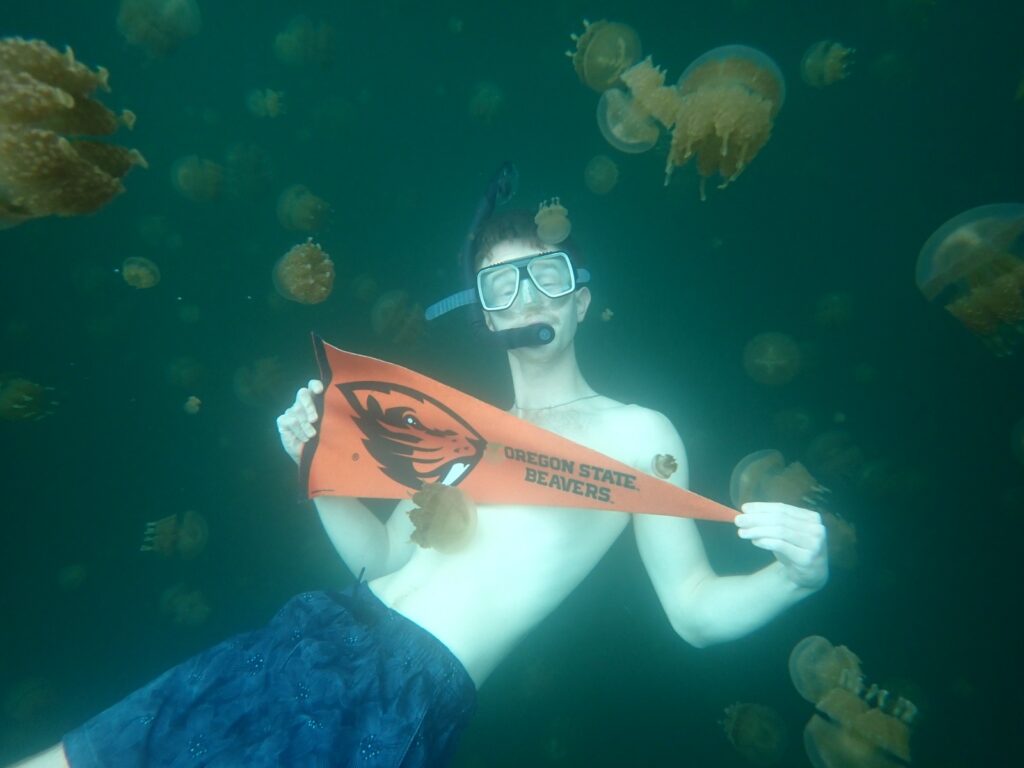
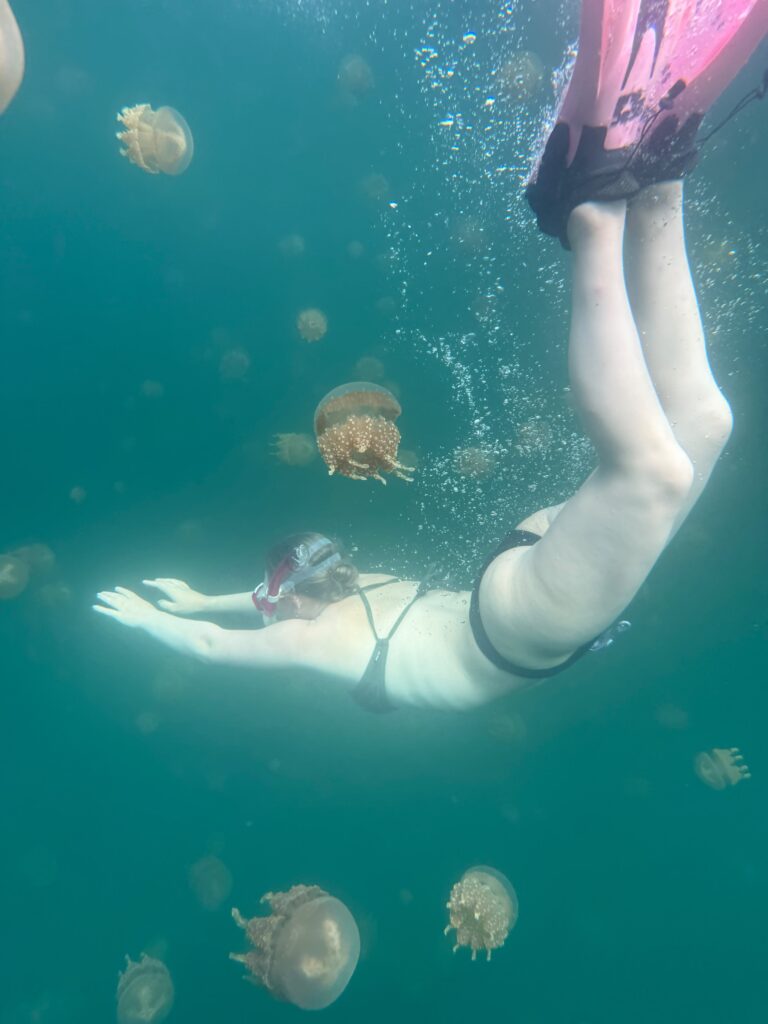
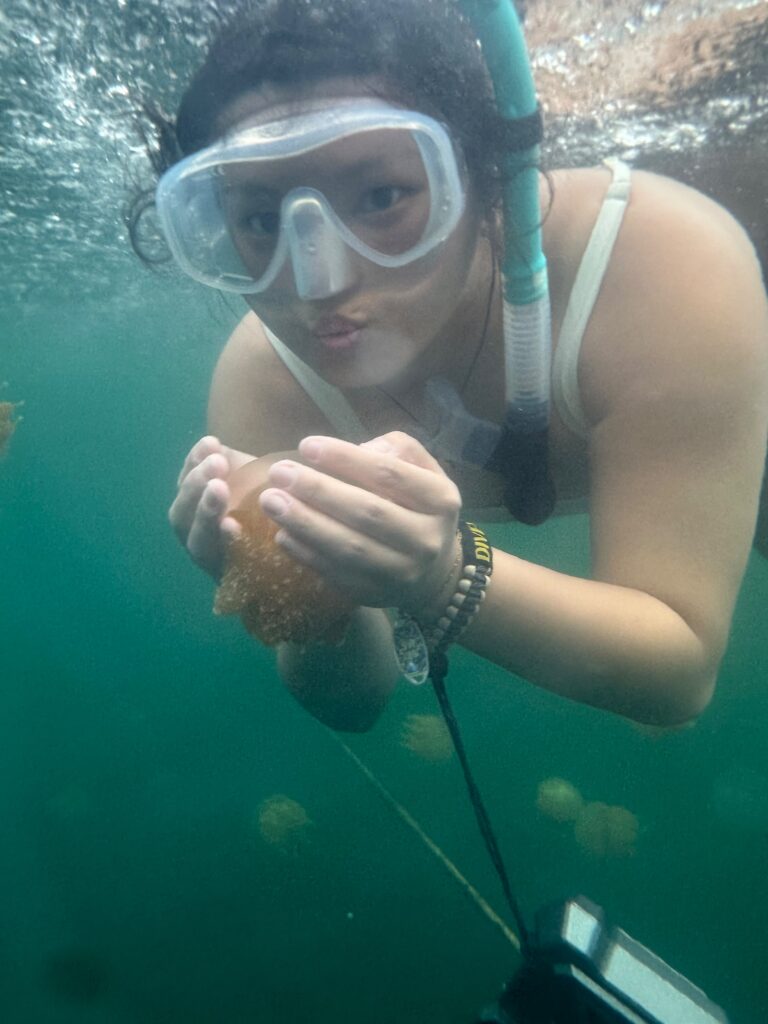
Today we continued our time learning and experiencing local tourism and finally made our way to see the notorious Jellyfish Lake. This is a marine lake that can contain millions of jellyfish in a good bloom year. We learned that this is also not the only marine lake with jellyfish like this across the rock islands and actually is one of the sacrificial lakes they have made to provide tourists with a closer look at what the rock islands are like. These islands are heavily protected by the rangers here.
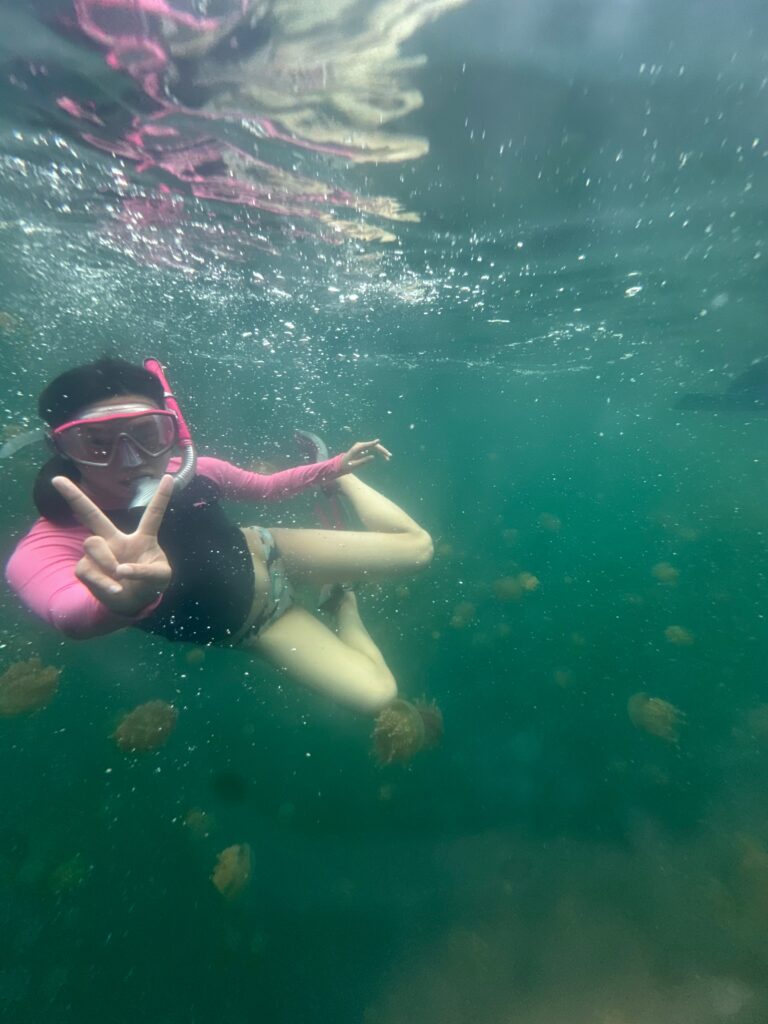
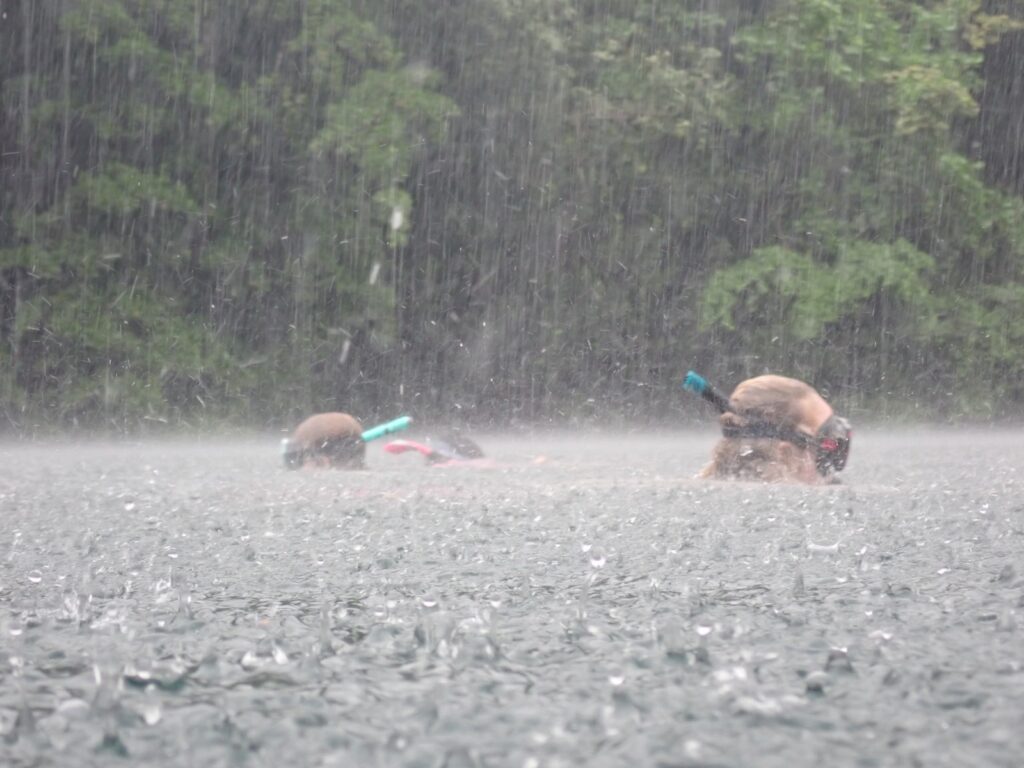
We took a short boat ride to get to the UNESCO world heritage site, Ongeim L’Tketau which is where the lake is. We learned that the jellyfish life cycle goes from a fertilized egg to a planula which will plant itself onto the surface to become a polyp. This polyp will grow into a budding polyp to become an ephyra and finally to an adult medusa which was what we saw today. Since these jellies don’t sting, people are able to swim in the lake and be surrounded by millions of jellies without any fear. There are two kinds of jellyfish in the lake the golden jelly and the moon jellyfish, both of which we saw today! We swam with and around them and also simultaneously got caught in a very heavy rainstorm!
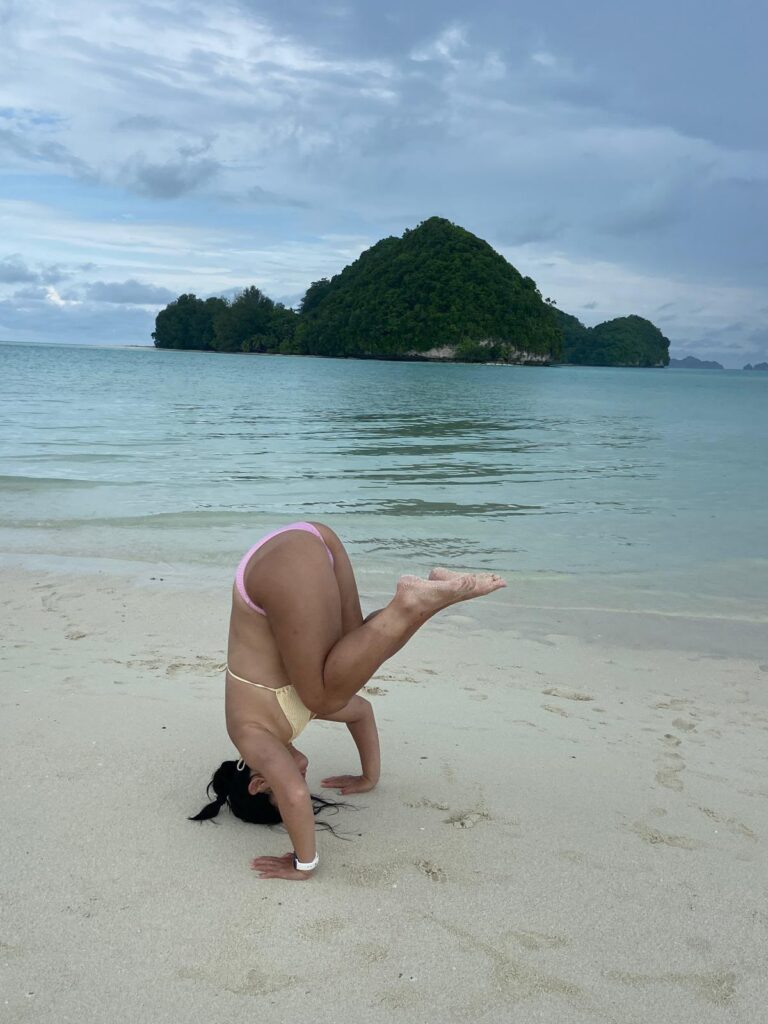
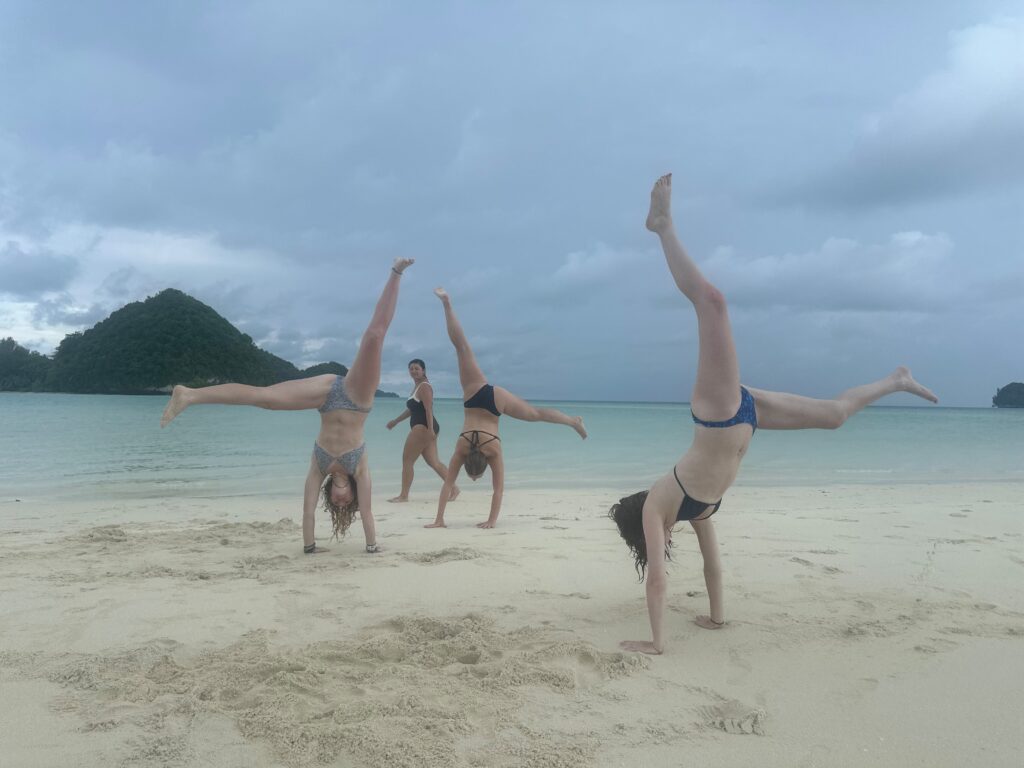
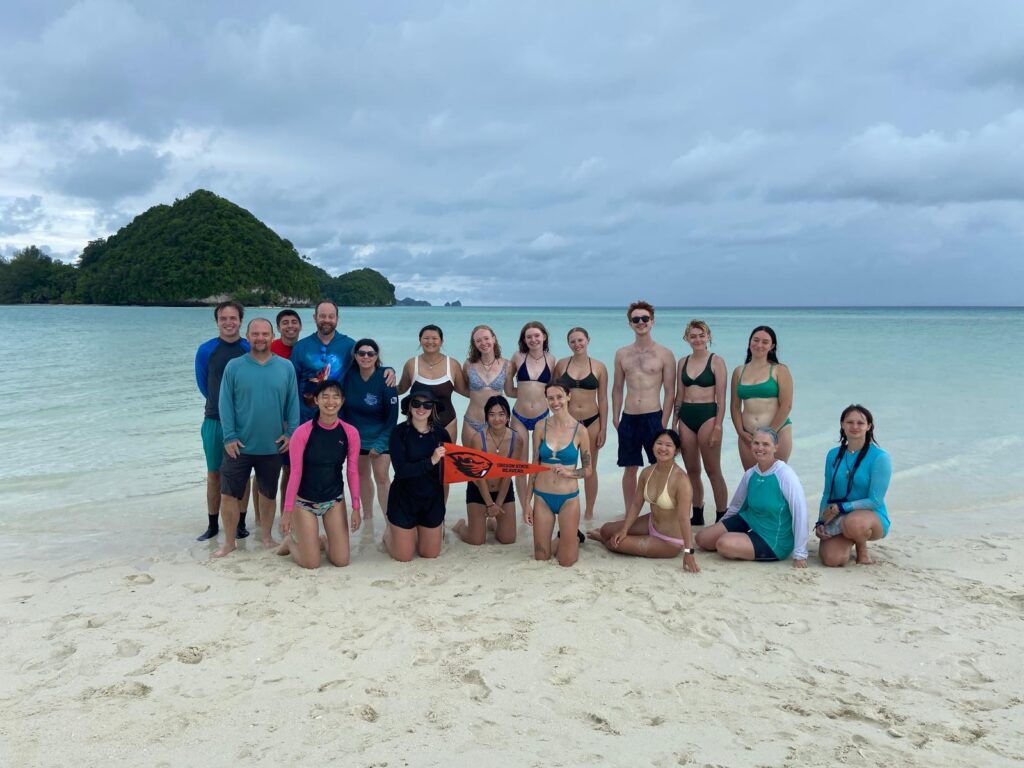
We then took another boat ride with our group to a long sandbar pinpointed between a few of the rock islands. Some of us wandered off to look at shells and sand dollars and others of us did a little bit of yoga…
We then hopped back into the boat and found our way back into the water for some more snorkeling with our guide Mac! Our first snorkel site was located near New Dropoff where we swam along a steep drop and saw some amazing animals including gray reef sharks and hawksbill sea turtles who were swimming below us! There were lots of different fish and huge amounts of coral all along the reef drop. Mac even let one of our classmates, Raven, pick up a huge sea cucumber which made her very happy.
Our second site was within the false German Channel. This area is more popular for tourists, so when we arrived there were other groups with us as well. The experience gave us a good time to reflect more on ecotourism and how important and big it is for Palau as a main source of revenue, especially since the past few days we have been sheltered from that. The reef was still beautiful and there were so many kinds of cool fish to see, but you could tell that the coral was much more damaged than ones we have seen in other spots. The other group that was with us had screaming children and people who were kicking or standing on the coral. It was incredibly frustrating and demonstrated how important this type of education is for tourists since we have been hearing since we got here about not touching the reef and making sure to not disturb anything. What they were doing can be damaging to the corals as they’re a living creature and are very important for marine ecosystems, however Palau does have regulations in place to deal with these kinds of tourists like the sacrificial areas we mentioned before with Jelly Fish Lake. This reef is what you could call a “sacrifice reef”, as it is a spot specifically designated for tourists to go to, so they don’t have to worry about the damages they cause.
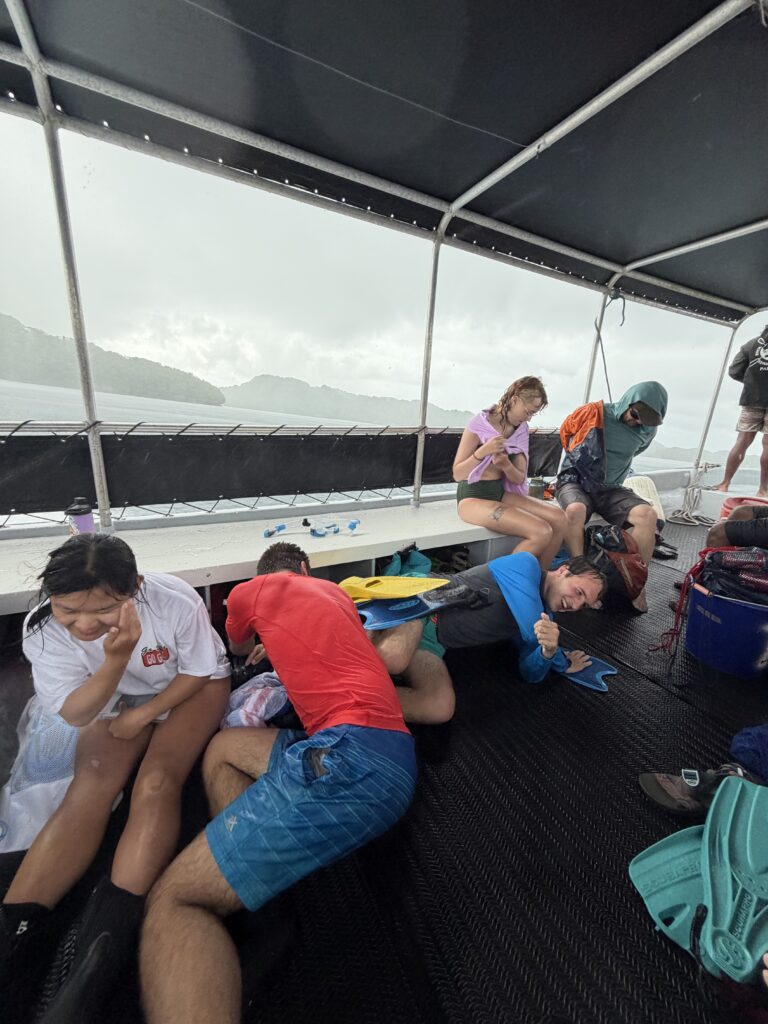
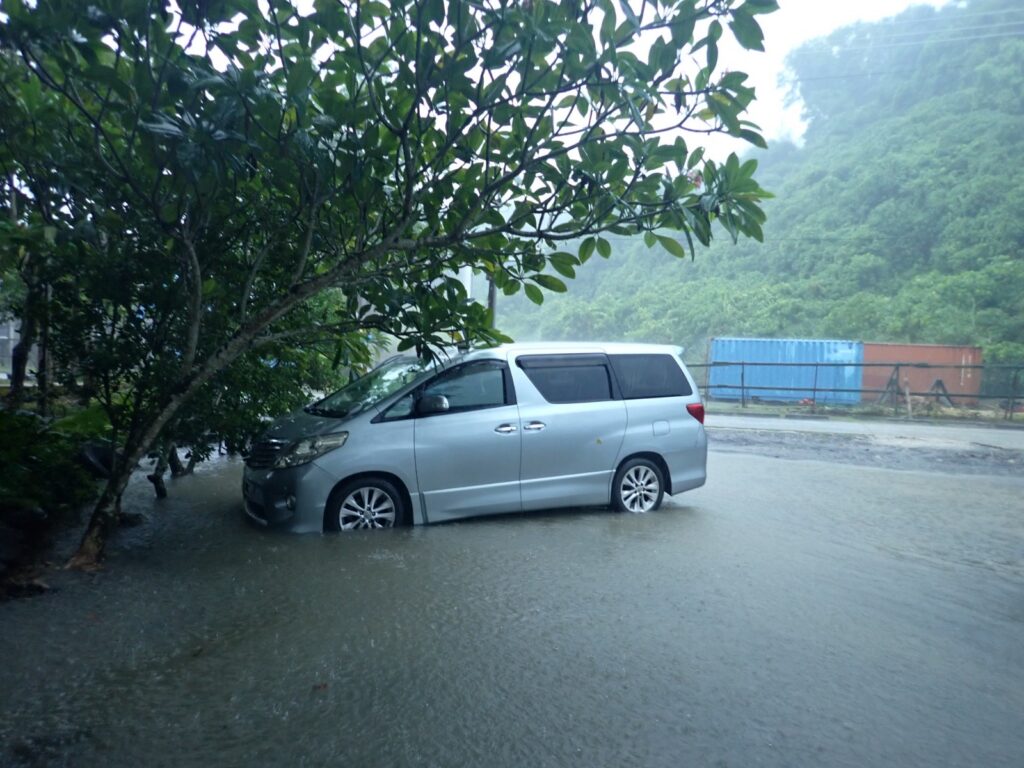
Our third site was the coral garden. The coral garden was incredibly beautiful with a diverse array of corals in all shapes and sizes. Some of the table top corals were larger than our tallest students! This was one of our shorter snorkels of the trip, so we quickly loaded back into the boat only to be met with a heavy rainstorm. It was a cold and wet ride back to the dock but luckily we made it back safely and to the car only to find it in about half a foot of water.
Only 4 more days of traveling left!
Written by Paige and Savannah!