Research area
Genomic demography
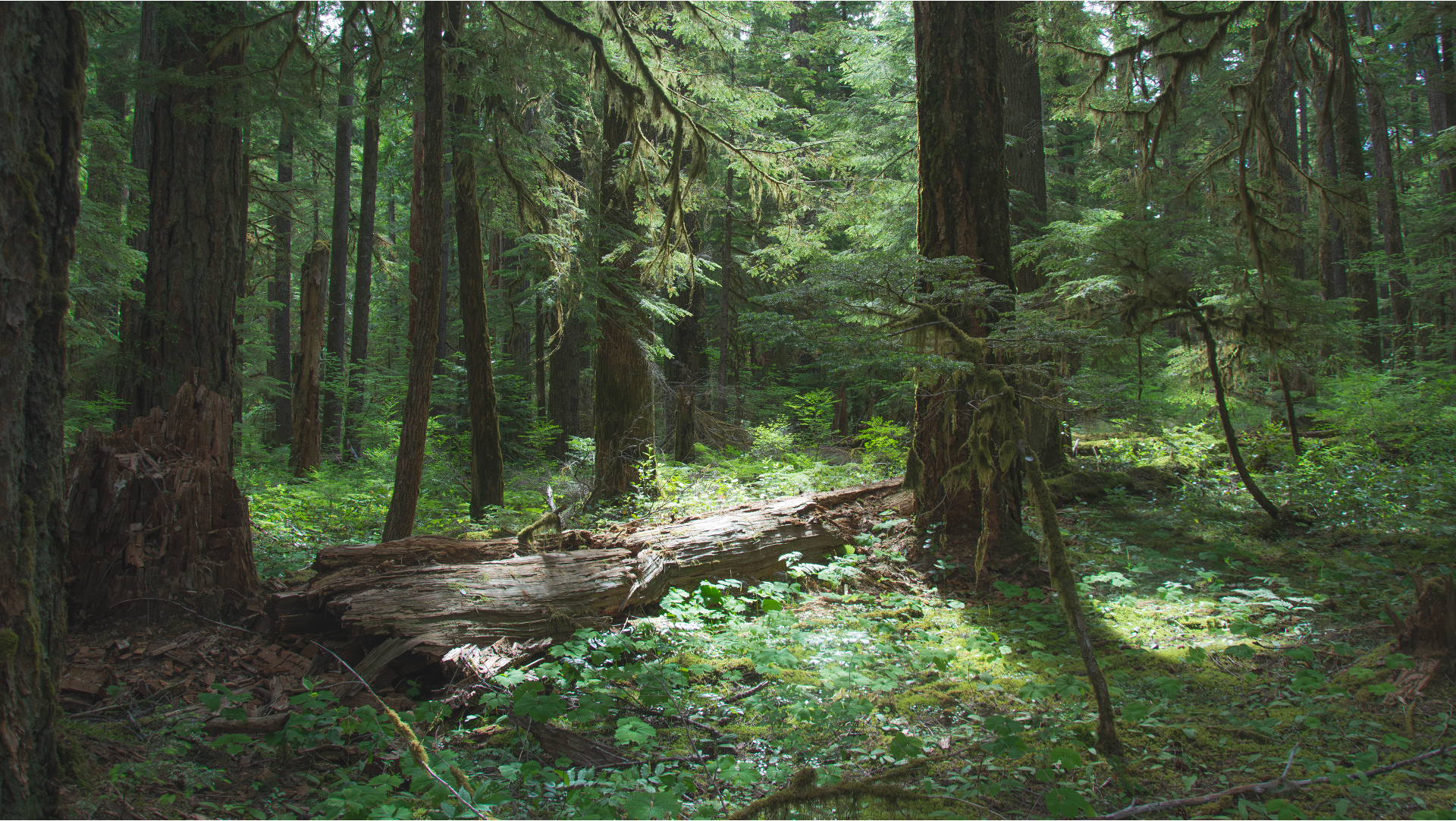
Using genomes to predict how forest populations change
We connect genetic variation recorded within tree genomes to the demographic processes that shape forest communities through time.
Collaborative research: This work is conducted in collaboration with James O’Dwyer at the University of Illinois Urbana-Champaign and the O’Dwyer Lab, and with Jim Lutz at Utah State University.
The central idea
Genomes retain a memory of population change
Population size, competition and life history leave recognizable signatures in patterns of genetic variation. By combining these genomic signatures with forest census data, we can estimate how strongly different tree populations fluctuate and improve predictions of future community dynamics.

Illustrations and results from the study
Figures from O’Dwyer et al. (2025), Science. View the publication.


Why it matters
Long-term forest censuses remain essential, but genomic data can add predictive information from a single sampling period. This creates a new path for forecasting population dynamics in diverse forests where decades of demographic observations may not yet exist.
Selected genomic demography publications
Research using population genetics and genomics to reconstruct demographic history, dispersal, connectivity and forest population dynamics.
- Genomic demography predicts community dynamics in a temperate montane forest (2025)
- Cryptic species diversity in a widespread neotropical tree genus: The case of Cedrela odorata (2022)
- Predicting the geographic origin of Spanish Cedar (Cedrela odorata L.) based on DNA variation (2020)
- Genomic resources for the Neotropical tree genus Cedrela (Meliaceae) and its relatives (2019)
- Genetic evidence of Quaternary demographic changes in four rain forest tree species sampled across the Isthmus of Panama (2013)
- Comparative genetic structure of two mangrove species in Caribbean and Pacific estuaries of Panama (2012)
- Reconciling field observations of dispersal with estimates of gene flow (2010)
- Spatial scales of pollen and seed-mediated gene flow in tropical rain forest trees (2008)
- Demographic spatial genetic structure of the Neotropical tree, Jacaranda copaia (2006)
- Inferring colonization history from analyses of spatial genetic structure within populations of Pinus strobus and Quercus rubra (2006)