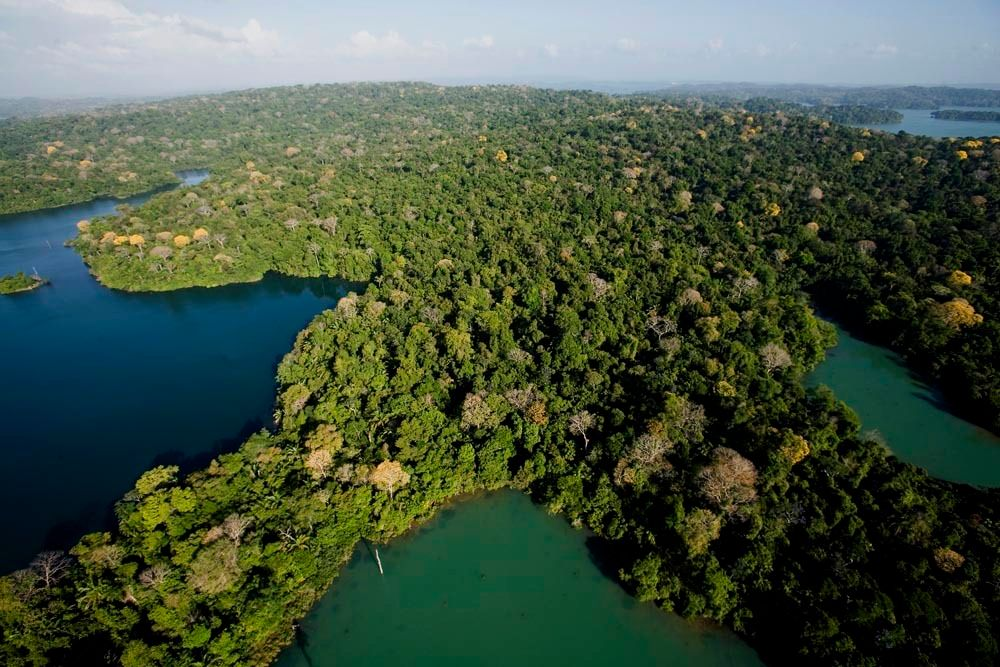
Barro Colorado Island · Panama
BCI EDGE
Evolutionary Dynamics and Genomic Ecology
A genome-enabled forest observatory revealing how ecological interactions shape evolution and maintain tropical biodiversity.
Photo: Christian Ziegler
The central question
How do ecology and evolution shape tropical forest diversity?
Tropical forests contain extraordinary biological diversity, yet we know remarkably little about the genetic basis of adaptation in tropical trees. BCI EDGE addresses this gap by linking individual genomes with long-term records of recruitment, growth, mortality, seed production, environmental conditions and species interactions.
The project focuses on conspecific negative density dependence: the reduced survival and growth experienced by trees near many individuals of their own species. Host-specialized pathogens and herbivores appear to drive much of this pattern, but their evolutionary effects on tree genomes remain largely invisible.
Why Barro Colorado Island?
An eco-evolutionary observatory
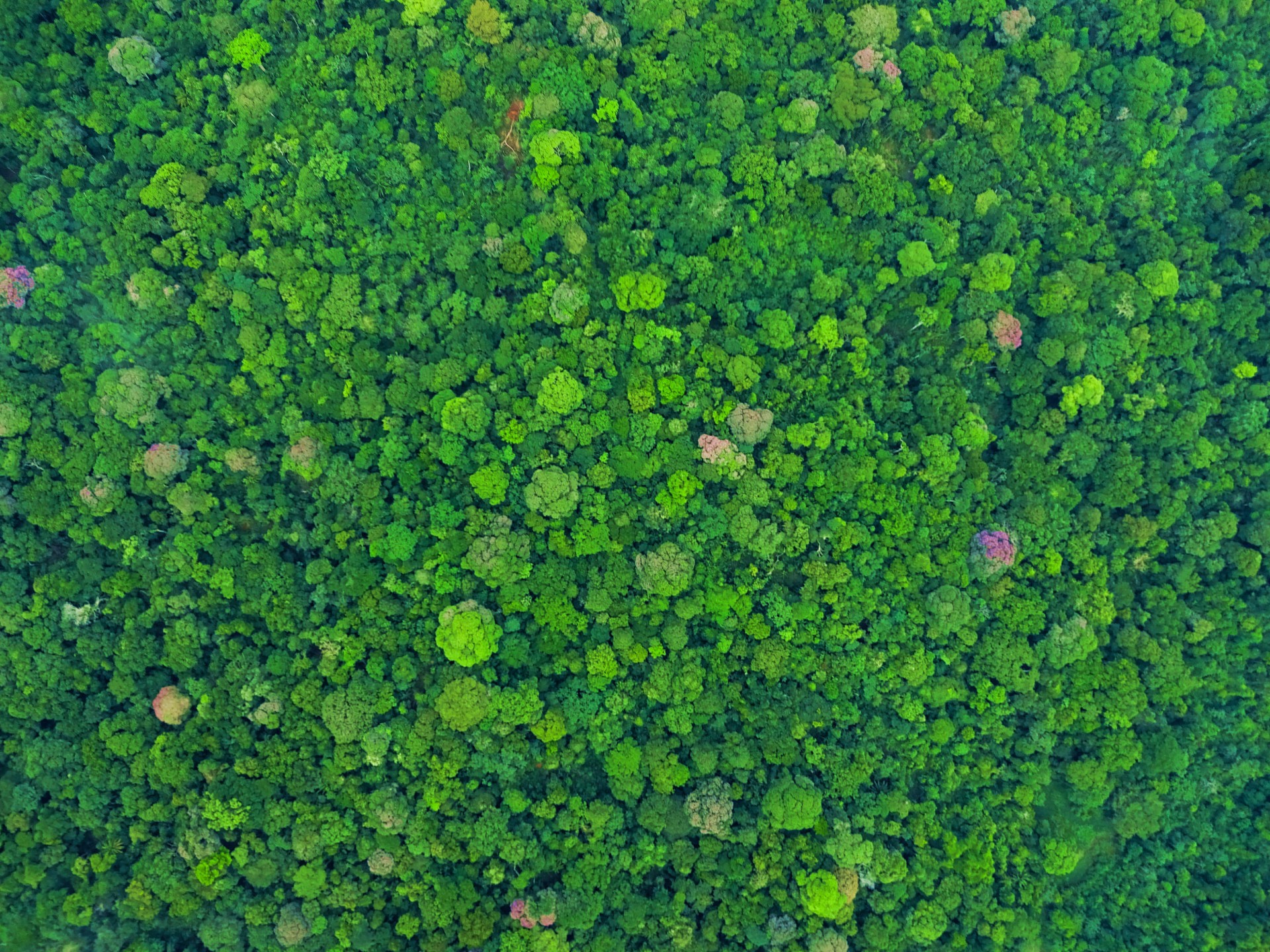
The 50-hectare forest dynamics plot on Barro Colorado Island is one of the world’s most intensively studied tropical forests. More than 200,000 living trees representing approximately 300 species are tagged, mapped, measured and identified.
- Nine censuses spanning approximately 45 years
- Long-term monitoring of seeds, seedlings, flowers and fruits
- Detailed climate, soil, canopy and functional-trait datasets
- Regional environmental gradients across the Isthmus of Panama
The project’s three connected research goals
Observing evolution across scales
Selection begins at the earliest stages of a tree’s life, as seeds and seedlings encounter pathogens, herbivores, competitors, and highly variable local environments. These neighborhood-scale interactions determine which individuals survive and reproduce, changing the frequency of genetic variants across generations. By connecting seedling experiments and fine-scale genomic data with long-term forest censuses, EDGE asks how local selective events accumulate to shape population structure and evolutionary patterns across the BCI landscape.
AIM 1
Genomic landscapes
Build genomic resources for about 50 tree species and examine population genetic patterns across Panama’s rainfall gradient to understand how environment, selection and gene flow shape tropical tree genomes.
- Chromosome-resolved genomes
- Population resequencing across environmental gradients
- Selection, defense and introgression
AIM 2
Selection in action
Connect genomes and leaf chemistry with 45 years of demographic data for 50 focal species.
- Local environments surrounding individual trees
- Recruitment cohorts
- Natural-enemy effects
AIM 3
Early recruitment
Measure selection from seed to seedling, when mortality—and evolutionary filtering—are greatest.
- Seed and seedling cohorts
- Resistance and defense loci
Collaborative leadership
A multi-institutional team
BCI EDGE is a collaboration among investigators at Oregon State University, the Smithsonian Tropical Research Institute, UC Berkeley, the University of South Florida and The University of Texas at Austin with support from The Simons Foundation.
Smithsonian Tropical Research Institute
UC Berkeley
University of South Florida
The University of Texas at Austin
A lasting eco-evolutionary observatory
BCI EDGE will transform an unparalleled ecological monitoring site into a long-term genome-enabled research facility. The project will provide the first community-scale assessment of how interactions with natural enemies shape genetic variation and evolutionary change across tropical tree species.
Selected publications related to BCI EDGE
Related work connecting tropical forest ecology, evolution, genetics and long-term forest dynamics.
- Understanding the Eco-Evolutionary Mechanisms That Maintain Genetic and Species Diversity of Tropical Trees on Barro Colorado Island (2024)
- Limited intraspecific variation in drought resistance along a pronounced tropical rainfall gradient (2024)
- Widespread variation in functional trait–vital rate relationships in tropical tree seedlings across a precipitation and soil phosphorus gradient (2023)
- Tree species diversity increases with conspecific negative density dependence across an elevation gradient (2022)
- ForestGEO: Understanding forest diversity and dynamics through a global observatory network (2021)
- Local adaptation to herbivory within tropical tree species along a rainfall gradient (2020)
- Community transcriptomics, genomics and the problem of species co-occurrence (2017)
- Comparative evolutionary diversity and phylogenetic structure across multiple forest dynamics plots: a mega-phylogeny approach (2014)
- Genetic evidence of Quaternary demographic changes in four rain forest tree species sampled across the Isthmus of Panama (2013)
- Plant DNA barcodes and a community phylogeny of a tropical forest dynamics plot in Panama (2009)