Category Archives: Main Page

Foreign Recipes

During these chilly fall days, we find ourselves daydreaming of warm, exotic lands that serve tantalizing, tempting, and tasty dishes. Thankfully, we have access to both the wonderful world of educational lantern slides from warm locales and pamphlets full of recipes that humor our hunger for hot and historically interesting recipes.

recipes

All these “Foreign Recipes” were pulled together by Lambda Chapter of Omicron Nu, National Honorary in Home Economics, for their December 1928 publication (see above).


A Simple Indian Curry (Ceylon)

  • One Pound of beef, mutton, fish, or vegetables, as desired.
  • One T curry powder
  • 1 heaping T butter
  • 1 onion
  • ½ fresh coconut
  • Juice of half a lemon
  • Salt to taste.
  1. Curry powder to be mixed in 2 ounces of water.
  2. Onion to be finely chopped.
  3. Coconut to be scraped and soaked in a teacup of boiling water, then squeezed, and the milk ( or liquid) to be put into the curry.
  4. First cook the butter till it bubbles, put in the onion and let it brown, add the curry powder and let that cook a few minutes; if it becomes too dry and sticks to the pan add a little hot water. Then put it in the meat (raw) cut in small pieces, fish, or vegetables, and fry, then add salt, and if dry, add a little more water.
  5. When about half done, add the coconut milk and the lemon juice.Let all simmer until meat is thoroughly cooked.
  6. If not convenient to use the coconut milk, ordinary milk may be used and the mixture thickened with a little flour. Coconut milk thickens without flour.
  7. When the butter separates and shows itself in the gravy, the curry is ready for serving.
  8. Curry should be served with plain boiled rice. Pass rice first, then chutney.
  9. Indian chutney served with curry is a decided improvement.
  10. A banana cut into pieces about ½ thick and added to the curry mixture while cooking gives a pleasant addition to the flavor.


Repollo Huevos ( Philippino)

  • 1 medium-sized cabbage
  • 6 eggs
  • 2 T lard
  • 6 medium sized onions
  • 2 ½ t salt
  • ½ t pepper
  1. Remove the outside leaves of the cabbage. Quarter the head, remove the stalk, wash thoroughly. Put into boiling water and cook until tender. Drain and chop the cooked cabbage.
  2. Slice the tomatoes and onions.
  3. Heat the lard in the frying pan, add tomatoes and onions.
  4. When onions are tender, add cabbage and a little hot water to keep mixture moist. Cook ten minutes stirring constantly.
  5. Add salt, pepper, and beaten eggs.
  6. Mix thoroughly and serve.


Savory Sippits (English)

  • 4 mutton kidneys and a pice of suet the size of two of them
  • 3 T bread crumbs
  • 4 sprigs of parsley
  • 2 shallots
  • 1 lemon
  • 8 rounds of toast
  • 2 T butter
  • Yolks of 2 eggs
  • Salt and pepper
  1. Boil the kidney 15 minutes in salted water.
  2. Cut eight rounds of bread the size of teacups and toast them quickly so they will be soft, not crisp.
  3. Mince two shallots (or a quarter of an onion); chop to bits a few sprigs of parsley; and grate 1 t of lemon peel.
  4. Chop kidneys fine, removing the white cartilage, and shred the suet to equal fineness.
  5. Add to them ¼ t of salt and a dash of pepper.
  6. Knead the kidneys with the minced greens, 3 T of bread-crumbs, and the yolks of two eggs to make a velvety paste. Should it be too stiff, add a little cream.
  7. Spread the paste thickly upon the circles of toast.
  8. Fry them in melted butter or bacon drippings first upon the toast side, then turn them deftly over to brown a bit in top. Dish them up garnished with parsley and lemon, and with melted butter in the dish.


Berlinenkranse (Norwegian)

  • 2 hard-boiled egg yolks
  • ½ c sugar
  • 1 c butter
  • 2 raw egg yolks
  • 4 c flour
  1. Mix hard-boiled egg yolks with sugar.
  2. Then add butter and raw yolks. Add flour.
  3. Take small pieces of dough and mould into rings.
  4. Dip in beaten white of egg and sprinkle with coarse white sugar.
  5. Bake in a moderate oven until light brown.


Soup (Korean)

  • ½ pound pork (diced)
  • ½ pound veal (diced)
  • 4 medium potatoes (diced)
  • 1 pound spinach
  • ½ head celery
  • 6 c water
  • ½ c soy bean sauce
  • Salt to taste
  1. Fry the meat in a large kettle. When nearly done add the soy-bean sauce. Allow this to heat.
  2. Add the water boiling hot, add the cabbage and celery and let cook 10 minutes.
  3. Add the potatoes and when nearly done add the spinach and let simmer.
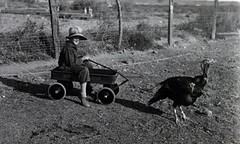
Timmy is tied to his turkey, how about you?

turkey

Fear not, for there are still delicious ways for you both to get your protein! The veggie lovers at University Archives recommend these tempting treats in place of meat, which we have to say are pretty neat…

And remember, next Wednesday is our festive meet and greet “Taste of the Chives.” High noon in the Willamette Rooms, 3rd Floor of the Valley Library. Still not sure what to bring, click the “recipes” tag at the end of this post to see all the recipes we’ve EVER posted — or go straight to the docs in ScholarsArchive.


Parsnip Fritters

From Canning Club Lesson no. 2, div. 1: Ways to prepare vegetables, Nov 1916

  1. Wash, peel, and cook parsnips until tender in boiling water.
  2. Drain off the liquid and mash the parsnips.
  3. To each cup of parsnips add
    • 1 T flour
    • 1/2 t salt and a dash of pepper.
  4. Mix thoroughly.
  5. Drop by spoonfuls into a frying pan containing enough hot fat to prevent the fritters from sticking to the pan.
  6. Flatten the fritters until they are about 1/2 inch thick.
  7. Fry on one side until a golden brown, then turn and brown the other side.
  8. Serve these at a meal that is lacking in fat.


Squash Cakes

From Substitutes for Meat, Ext. Bulletin 216, Oct 1917

  • 1 c squash (mashed)
  • 1/2 c finely cut nuts c bread crumbs
  • 1 T chopped cheese
  • 2 T onions (if desired)
  • 1 egg
  • 1 T chopped parsley (if desired)
  1. Salt to taste.
  2. Make into cakes and fry.
  3. Serve with or without brown or tomato sauce, or bake in well oiled baking dish.


Vegetarian Loaf

From Substitutes for Meat, Ext. Bulletin 216, Oct 1917

  • 1 c toasted bread crumbs (entire or graham)
  • 1 c nuts
  • 2 t grated onion
  • 1 c corn pulp
  • 1 T minced parsley
  • 1/2 c cheese
  • 1/2 c whole wheat flour
  • 2 eggs
  • 1 c chopped celery
  1. Mix ingredients together thoroughly.
  2. Press in small bread pan or baking dish and bake or steam one hour.
  3. Steaming preferred.


Peanut Butter Loaf

From Substitutes for Meat, Ext. Bulletin 216, Oct 1917

Thin the peanut butter to the consistency of heavy cream with hot water.

  • 1 c peanut butter cream
  • Salt to taste 2 c cooked rice
  • 1 T chopped onion
  • 1 egg
  • Juice of 1 small lemon
  • 1/3 t celery salt
  1. Combine.
  2. Bake in moderate oven about 30 minutes or until nicely browned.
  3. Serve with brown sauce or tomato sauce.


Welsh Rarebit

From Substitutes for Meat, Ext. Bulletin 216, Oct 1917

  • 1 T butter
  • 1 c milk or tomato juice
  • 1/2 c cheese
  • 1 t mustard
  • 1 t cornstarch
  • Salt and paprika
  1. Make sauce of butter, cornstarch and milk, cook, add cheese.
  2. Stir until melted; add seasoning and serve on toast.

It’s the weekend!

bohlmanThe time to relax … The time to hunt some game?

Since most of us live in the city, today we’ve donned our hunting caps and gone off in pursuit of some recipes! Here are some of the juiciest samplings from our bounty. Feel free to go “wild” with this collection. And, if you are “game” for some more fun and food, be sure stop by the Archives next week for our historic potluck!


Poyha

From Treats with Venison, Ext. Bulletin 800, April 1975

(A different meatloaf recipe handed down to us by the Cherokee Indians.)

  • 1 pound ground venison
  • 1 No. 303 can whole kernel corn
  • 1 small onion, chopped
  • 1 teaspoon salt
  • 2 eggs
  • ½ cup corn meal
  • ½ cup water
  1. Measure the cornmeal and place in a small bowl.
  2. Add the water and stir to mix.
  3. Allow to stand.
  4. Brown the venison in fat.
  5. When meat is thoroughly cooked, add the corn and onion.
  6. Cook 10 minutes.
  7. Add the salt, egg, and cornmeal, stir well.
  8. Cook another 15 minutes.
  9. Put in greased loaf pan and bake 30-45 minutes at 350°.
  10. Serve with gravy, cheese sauce, or mushroom soup.


Baked Rabbit Special

From Rabbit Production for Meat, Station Circular 155, June 1943

  1. Cut rabbit into pieces, sprinkle with salt and pepper, dip in flour, then in beaten egg batter diluted with 1 tablespoonful water and bread crumbs.
  2. Place in well-greased pan and bake 40 minutes, basting frequently with bacon fat.
  3. Serve with white sauce.


Rabbit Pie

From Rabbit Production for Meat, Station Circular 155, June 1943

  1. Cut rabbit into pieces; put in stew pan and cover with boiling water.
  2. Simmer until tender.
  3. Remove from broth and separate meat from bones.
  4. Add 1 tablespoonful of flour to each cup of broth.
  5. Return meat to broth and salt and pepper.
  6. Line sides of a baking dish with crust, add meat and broth mixture, cover with crust, and bake in hot oven 30 minutes.
  7. This is a good method of cooking a rabbit that is too tough for baking or frying.


Spiced Crayfish

From Catching and Cooking Crayfish, May 1963

  1. Kill in hot water.
  2. Clean crayfish by removing the intestinal tract by twisting off middle tail flipper and pulling.
  3. Cook whole or break off claws and tail as desired.
  • 5 dozen crayfish
  • 1 tsp nutmeg
  • 8 oz. salt
  • 2 tsp. allspice
  • 1 med. onion, diced
  • tsp. Cayenne
  • 3 tbsp. Worcestershire or cup Burgundy wine
  • 3 bay leaves substitute juice of two
  • 1 clove garlic, diced lemons
  • 1 tsp. whole cloves
  1. Put spices in a bag or tie in cheesecloth.
  2. Add water to cover and bring to boil.
  3. Add crayfish.
  4. Bring to boil again and time for 3 to 5 minutes.
  5. Do not overcook.
  6. Take crayfish out and spray or dunk in cold water for 2 minutes (this is important to stop the cooking process and prevent meat from sticking to shell).
  7. Chill before serving.


Barbecuing

Ava Milam Clark offers this tasty, complimentary sauce for any game in Camp Cookery, May 1913.

To barbecue is to roast an animal whole and baste it often with the following dressing.

  • 1 pint vinegar
  • ½ can tomatoes
  • 1 teaspoon of red pepper
  • 1 teaspoon of salt
  • 2 teaspoons of black pepper
  • 2 tablespoons lard
  1. Stir together until it is completely mixed.
  2. Tie a piece of clean cloth on a stick and keep the meat well basted with the dressing as long as it is on the fire.

Craving a crunchy carrot?

carrot field

You may or may not know this, but some of us in the OSU Archives are a bit obsessed with vegetables … And we’re likely to be found “rooting” for this robust vegetable.So if you are in the mood to turn a bit orange (the winter version of an Oregon tan), check out a couple of carrot creations below!

If you find that these make you a bit peckish, try them out for yourself and let us know what you think! And if you feel like tasting more recipes from the days of yore, be sure to stop by the Archives at 12:00 next Wednesday (10/27) to join us for a sampling of savory and sweet delights. And yes, we’d love you to share! So feel to free to bring a dish — we’d love to taste it!

From Twenty Ways of Using Oregon Carrots, Ext. Bulletin 439, March 1932


Cream of Carrot Soup

  • 1 cup chopped or ground carrots cooked in water to cover
  • 1 1/4 teaspoons salt
  • 2 tablespoons butter
  • Pepper
  • 2 cups milk
  • Slice onion
  • 2 tablespoons flour
  1. Cook chopped carrots until tender.
  2. Make white sauce of milk, flour and butter, adding salt, pepper, and onion minced fine.
  3. Add cooked carrots and liquor which should be reduced to 1 cup.
  4. Chopped parsley may be added just before serving.


Carrot Delight

  • 3 cups diced carrots cup
  • 3 cups diced potatoes
  • 1/2 cup of butter
  • 1/2 cup of water
  • 1 cup sliced onions
  • 1 teaspoon salt
  1. Put the vegetables in layers in an oiled baking dish.
  2. Place the butter in bits over the top; pour over the water in which the salt has been dissolved.
  3. Tightly cover the dish and bake in moderate oven until vegetables are tender.

Six large servings.


Carrot Timbales

  • 2 cups grated carrots
  • 1/8 teaspoon pepper
  • 1/2 cup bread crumbs
  • 2 tablespoons butter, melted
  • 2 eggs ½ cup milk
  • 1 teaspoon salt
  1. Wash, scrape and grate carrots and mix with the crumbs.
  2. Beat eggs slightly, add seasonings, butter and milk. Combine the carrot and egg mixtures.
  3. Fill oiled baking dish or custard cups with the mixture, set in pan of hot water, and bake in moderate oven until firm.

Six servings.


Carrot Loaf

  • 2 cups ground carrots
  • 2 cups strained tomatoes
  • 2 cups bread crumbs
  • 1 teaspoon salt
  • 2/3 cup chopped walnuts
  • 1 teaspoon pepper
  • 3 eggs
  • 1/8 teaspoon pepper
  • 2 teaspoons minced onion
  1. Mix the ingredients in order given.
  2. Shape the mixture into a loaf and put into a well-oiled baking pan.
  3. Steam the loaf for one hour, then brown in the oven.
  4. Serve with a white sauce.

This is a good meat substitute.

We’re just buzzing with excitement for the Archives Celebration next week…

Bee club

Still looking for ideas? May-bee one of these recipes will strike a fancy! All of these are from The Ext. Bulletin 322 Sept 1920: Honey — nature’s oldest sweet.


Honey Drop Cakes

  • 1 egg
  • 1 1/2 to 2 cups flour
  • 1/2 teaspoon soda
  • 1 cup raisins, cut small and floured
  • 3/4 cup honey
  • 1/4 cup butter, melted
  • 1/2 teaspoon cinnamon
  • 1/8 teaspoon cloves
  1. Mix honey and melted butter.
  2. Add egg, well beaten.
  3. Stir in sifted dry ingredients; add raisins.
  4. Drop teaspoon onto greased pan.
  5. Bake in moderate oven.


Honey Jumbles

  • 1 cup honey
  • 1/4 cup water
  • 1/4 cup molasses
  • 1/2 teaspoon vanilla
  • 2 teaspoons (level) soda
  • 4 cups (or less) flour
  • 1 teaspoon salt
  1. Drop from teaspoon onto buttered pans.
  2. Bake in moderate oven.


One Hour Graham Bread (with honey)

  • 2 cups sour milk
  • 3/4 cup honey
  • 1 1/2 teaspoons soda
  • 2 cups graham flour
  • 1 1/2 teaspoons salt
  • 1 1/2 cups white flour
  • 1 teaspoon baking powder
  1. Stir together and bake in greased pan one hour (moderate oven).


Honey Baked Apples

  • 8 medium-sized apples
  • Cinnamon
  • 1/2 cup water
  • 2 tablespoons butter
  • 2/3 cup honey
  1. Pare, halve, and core apples and arrange in baking pan.
  2. Pour water into pan.
  3. Put honey over apples.
  4. Dot with butter and dust with cinnamon.
  5. Bake until done.

Hello fall, we’ve missed you …

… and the hustle and bustle of a full campus!

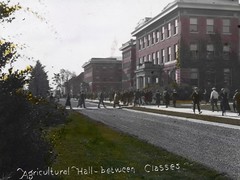
Students going to class

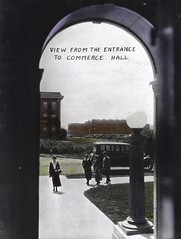
Though we’ve made it to the second week of classes and things are settling down a bit on campus …

Arch

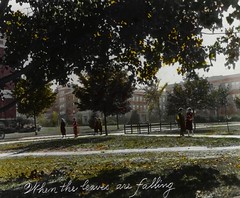
The leaves are turning and fluttering down through crisp fall mornings …

Leaves

In the OSU Archives it’s another wild and wacky Wednesday!

Fountain

Are you asking “why is it wacky?” (or “where is that fountain?!“) Well, while we returned to Oregon last month for our Flickr Commons releases, with two great sets from the Pendleton Round-Up, this month we are really back home!

Waldo Hall

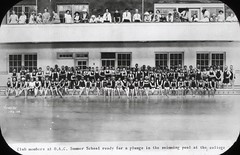
Though we’re still looking at lantern slides from the Visual Instruction Department Collection — the one that keeps on giving — we’ve found a lovely set of images from the days of yore at OAC (OSU for you newbies).

Pool

Meander around our campus, and if you want a 2.0 trip, check out our historical walking tour, aptly named
BeaverTracks.

Beaver Tracks

And make sure to stop, take a breath, and enjoy.

Twilight

Let ‘er Buck! Part 2

Mule

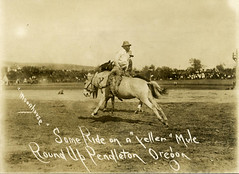
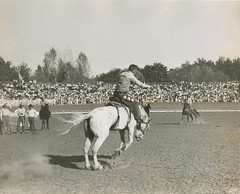
If you’ve been following this blog or a regular site-seer to our Flickr Commons site, you know that any set with an image of a man riding backwards on a mule is a set to spend some time looking through … The second release in the Pendleton Round-up collection will not disappoint you!

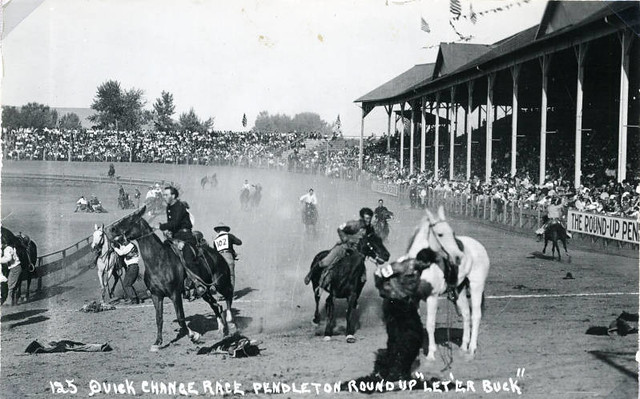
There’s action!

race

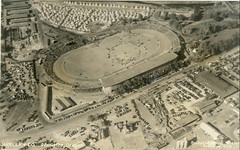
Aerial shots!

Aerial

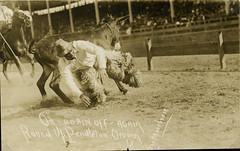
People falling off!

falling off horse

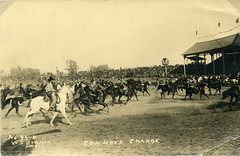
More racing!

charge

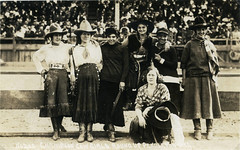
And some Champion Cow Girls!

cow girls

Enjoy the ride.

Updates!

We left you hanging with new online exhibits, new collection guides, and some mountains in the Holy Lands — and yes, that was a long, long time ago …

So what has been going on in the Archives since then? New students have been hired and others have finished their internship projects, vacations have been taken, public school children have returned to their scholarly pursuits, and we are all jazzed up to start another great academic school year with Benny the Beaver finding historical materials and all those in Beaver Land lining up to do some research!

Benny Pointing to box

Elizabeth has continued to produce great collections guides, as we now fully expect that she will every month… You can read about them all in the August 2010 Finding Aid file.

We also added one last set, Rivers of the World, to the Take a Trip: Traveling and touring with the Visual Instruction Lantern Slides Collection.

Calcutta, Delta of the Ganges

And to start off the month right (or to celebrate the middle of the month right?), we’re celebrating what was billed in 1910 to be “a frontier exhibition of picturesque pastimes, Indian and military spectacles, cowboy racing and bronco busting for the championship of the Northwest.” Oh yes, I’m talking about the 100th Anniversary of the Pendleton Round-Up.

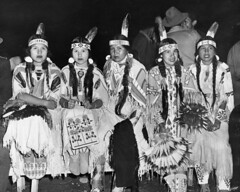
Gorgeous images of women in their fullest regalia!
Indian women view ceremonial dance

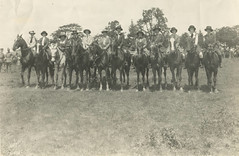
Ladies in a line!
line horses

Men on bucking broncos!
Bucking

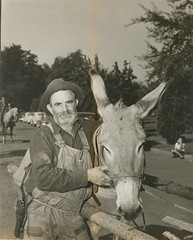
A man and his mule?

Man with donkey

There is something for everyone in this set. And for those who want even more — isn’t there always even more to be wanted?

Oregon Public Broadcasting has a new Oregon Experience piece entitled “Oregon Experience: The Wild West Way.”And yes, you can now watch it online!

OregonLive has a great group of blog posts pertaining to the Round-Up.

There is a nice Wikipedia article on the Round-Up for those who want a short synopsis, a few pictures, and lots of links to rodeo related articles.

And, as you might expect, the Round-Up site itself has a great history section

As they say “Let ‘er buck!” — oh, and enjoy the images!

Extension Service Photograph Collection


Take some time to check our new collection guide for the Extension Service Photograph Collection!

These pictures document Extension programs, activities, and staff throughout Oregon. The bulk of this collection relates to the three traditional Extension programmatic areas (agriculture, home economics, and 4-H) and the photographs show Extension Service programs and staff from all regions of Oregon (with Benton, Clatsop, Klamath, and Lane Counties strongly represented).


Of particular note are images of Braceros and other migrant agricultural laborers; County extension offices (exterior and interior views) and staff; the Dairy Demonstration Train; 4-H club activities and summer school; and soil conservation and dune stabilization. Many individuals farms and ranches are identified; numerous images of the Oliver Ranch in Grant County are part of the collection.


Photographers are not identified for most of the images (though we do know that they were primarily taken by Extension Service staff), but notable photographers and studios of note include the Columbia Commercial Studio (Portland), Asahel Curtis (Seattle), Benjamin A. Gifford, Arthur M. Prentiss, and the Weister Company.


The collection includes a variety of formats, with the bulk collection consisting of black & white prints. You’ll also find a selection of color prints, film negatives, nitrate negatives, color slides, digital prints, and panoramic prints.

Images from the collection are available online in the Best of the Archives and Braceros in Oregon digital collections.

Fighters on the Farm Front

New Online Exhibit!

When you think of World War II, how often do you think of food? If you’re like most Americans, it probably doesn’t cross your mind all too often. Believe it or not, during the 1940s, America was constantly on the brink of famine.

As those involved in agriculture left their jobs to join the military and support the war effort elsewhere, a gaping hole in the farming industry formed. In an attempt to fill this hole, the Emergency Farm Labor Service was born. From 1943-1947, the Emergency Farm Labor Service employed women, children, Mexican nationals, interned Japanese-Americans, German Prisoners of War, wounded servicemen, and several other untraditional categories of workers in order to keep America and Americans abroad fed.

Heavily impacted by the Emergency Farm Labor Service, Oregon has a unique and interesting story, which happens to be the feature of our newest exhibit. To learn more about this exciting time in Oregon’s history, check out Fighters on the Farm Front: Oregon’s Emergency Farm Labor Service, 1943-1947!