An Office, Cinnamon Buns and… Field Work??

This week in the office didn’t seem to have much spare time. It was mostly spent wrapping up loose ends on the communications side and doing background research for the Sea Grant final presentation (that is on Friday?? Man this flew by quick). It was so busy that there was only enough time for two cinnamon bun break trips this week at Fishtail Cafe!

Before we go any further in this blog, these buns must be discussed. Fishtail Cafe is in the Aquarium Village, located roughly a 45 second walk from the Marine Reserves office. Which makes it super convenient when you’re running low on coffee and can’t be bothered to make more back at your apartment. It all started on a normal day probably 4-5 weeks ago now… We had heard from the other ODFW employees that Fishtail was a pretty alright cafe, not bad but nothing special. I had eaten there once and had exactly that experience. But as I walked in to get a refill of coffee, one of the waitresses walked by me with a cinnamon bun, glazed over with icing, that barely fit on their mid-sized desert plates. I don’t reckon I could have palmed it with one hand. At that moment I knew I had to have one. The waitress explained that they make them in house every week and they almost always run out. She heated mine up and brought it out, making sure to let me know that there was extra butter if I needed it. Let me assure you this bun did not need butter. Each bite just melts in your mouth and the icing just tops it off. In proper cinnamon bun fashion, each bite gets better as you go around the spiral. With the last center bite sending you straight to heaven (or to the hospital with the amount of butter they must use in each one). Without a doubt the top 3 cinnamon buns I’ve ever had have been the last 3 from Fishtail Cafe. Who would have guessed the Aquarium Village in Newport Oregon would have the GOAT of cinnamon buns? I messaged Zach and told him he needed to experience this for himself. From then on it has become tradition. They know us by name and refer to us as their “boys” or “honey”. We don’t even have to wait to be seated, we just go to our same spot every time! Its fantastic. This week it was our favorite waitress’ birthday. We gave her big ol’ hugs and told her how much we would miss this place and their cinnamon buns. They even said they would hang up a picture of us if we get one framed, proper regulars! If you don’t believe me take a look at this bad boy (cinnamon bun, not Zach):

At $4.50 each, these buns have been a dangerous investment for both my buns and wallet. 

Now that the important stuff is out of the way… The large majority of the remaining time has been spent in the office doing various office activities:

  1. I’ve created a new photo organization protocol for the Marine Reserves team. Now all of our photos from research, community events and landscape photos can be nicely organized in separate folders on the server. Yay!
  2. I worked with the ecological monitoring team to fact check all of the blog and social media posts I’ve written over the past 8 weeks. Now almost completely edited they should be ready to go out into the world! Stay tuned and subscribe to our newsletter at: http://oregonmarinereserves.com/ (One last shameless plug)
  3. Read a bunch of articles on campaign planning, evaluation and the importance of community engagement in preparation for my poster and presentation. Next weeks blog post will probably be on that subject.

AND AS IF I ALMOST FORGOT. YA BOY WAS IN THE FIELD THIS WEEK. As much as I enjoy the process of communications, I love to be out in the field interacting with people and the environment. Doing that kind of work and being in those situations are what drives so many people to this field. This summer I had high hopes that most of the work that we would be doing would be community engagement out in the field. We got a taste of it in the first couple of weeks and since then it has just been office work. Which is important, just not nearly as exciting. So when the opportunity came to get out in the rocky intertidal zone and survey sea stars for wasting disease… I was 100% on board. So bright and early, we threw the ODFW rubber boots, bibs, gloves and measuring tapes in the back of the ODFW truck and headed toward Otter Rock Marine Reserve. After a quick stroll to the rocky intertidal we set up shop and got into some science. Searching through kelp and tidal pools just gets your inner kid so excited.


Zach and Nina down and dirty in the intertidal


When ya boy gets out of the office


Hello? Did someone say Sea Grant product placement?


Lesson #1 from the Rocky Intertidal: Surveying is all about getting comfortable

Getting to spend the whole morning with wicked friends doing wicked science! There isn’t much more you can ask for. It was some much needed time in nature to get you mentally ready to take on presentation week.


Last note: Alexis partaking in the epic program Take 3. It’s a program a friend of a friend started in Australia that is a campaign for awareness of trash in our oceans. It’s super easy and gets people involved by taking 3 pieces of trash with you whenever you go to the oceans, waterways or anywhere. It’s an epic program and I hope it starts catching on in America. Find out more at www.take3.org!


North Coast Best Coast

Stop One: Nehalem

This week I was lucky enough to take two trips up the North Coast for both work and fun. The first place I headed was Nehalem to get some pictures of the area at an average high tide. During the most extreme King Tide events the streets of Nehalem can end up slightly flooded from the Nehalem River rising, like this:

Nehalem during a King Tide

My goal was to gather a handful of the pictures from our Flickr account that have been taken in Nehalem over the past six years and duplicate them at average tide, like this:

Nehalem during an average high tide

The drive was long but I enjoyed getting to see more of Oregon, especially since I’ll be leaving the program a week early to start school. I was disappointed that the shop with vegan ice cream was closed (along with most other things on Mondays and Tuesdays up there) but I did find this cute little spot to enjoy the river and eat some fries before heading home. Little did I know we’d make our way back through Nehalem the same weekend and I’d get to try that ice cream after all.

Riverside N’ Chips

Stop Two: Astoria and Seaside

A childhood favorite of mine.

Although Friday morning I woke up feeling under the weather and not very optimistic about the day it turned into the beginning to a great weekend. That night the group convinced me to head over to Rogue and check out the “Dogs & Brews” event. There were pups galore and it’s always good for me to get out of the dorm and socialize. Unfortunately I can’t find my camera adapter, but when I do I’ll add the video of a wonderful husky named Orion that our entire group fell in love with.

The next day we headed up to a motel in Astoria in anticipation of the volleyball tournament a few of the interns had entered in. I discovered that Astoria is where The Goonies was set and filmed and was SO EXCITED to see the Goonie house until we got to the driveway. Whoever owns it now has a sign up asking people to stay away. Party poopers. I was still thrilled to be in the area and see all the references to the film in little shops around town. We had a great meal at an Indian restaurant, got caught in the rain, found a random piano, and soaked in the hot tub for a bit before crashing out.

The next morning we drove down to Seaside to watch Zach, Megan, Gabby, and Sawyer play in the volleyball tournament. I’ll let Zach tell you more about that one though because he was one of the true stars of the show. Overall it was a great beach day but definitely made me miss the California beaches of my childhood. Seaside reminded me so much of Santa Cruz and all the time I spent there growing up.

The Home Stretch

With my departure being next Tuesday I am officially beginning my last full week here as a scholar. I am anxious to be back and FINALLY settle into a place with some permanence. For the last two years it always seemed like I was packing a bag to go somewhere, whether it was for the weekend or for the semester. I’m excited to have a steady home and some HOT weather!

The last big thing that I’m working on is a video for the Oregon King Tides website. It’s nothing too fancy but I’ve really enjoyed putting it all together and hope you all have a chance to see it before the end of summer! Cheers to the last week and to my favorite weekend yet.

View from Crest Motel in Astoria.

Enzo & Hank

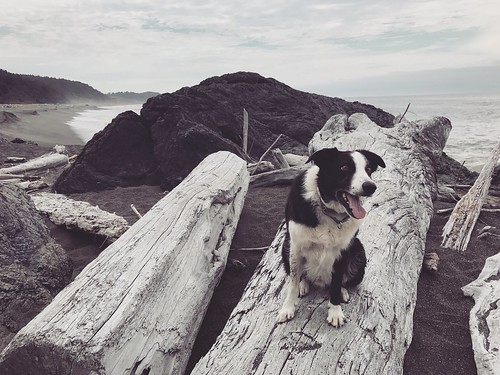
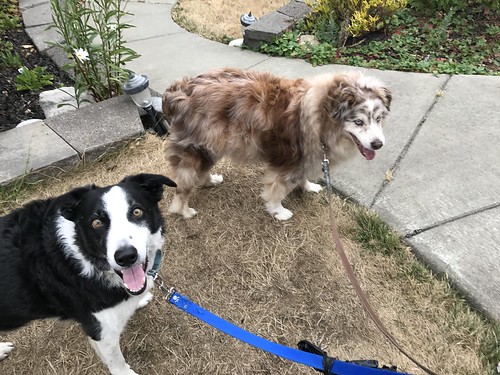
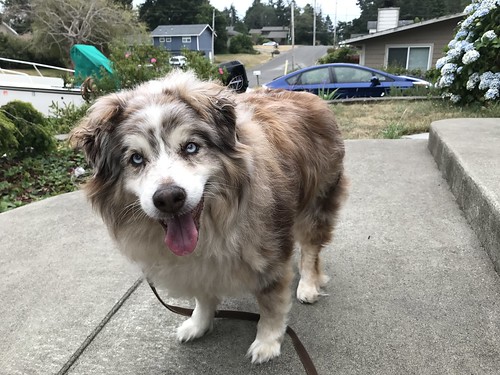
It’s week 8 and I’ve made 2 wonderful furry friends- Enzo the Border Collie and Hank the Australian Shepherd.
They are the family dogs of the Groth family, whom I have been house sitting for since the start of the month. Scott, one of my mentors at ODFW is ironically vacationing in our hometown of Rochester, NY, and asked me before he left to take care of their house, dogs, bearded dragon lizard, fish, and plants for about two weeks. He and his wife showed me around the place and gave me the run down on my duties. They put me up in their lovely guest room and gave me full use of their Prius and all the amenities (including hot tub and even more importantly, food and laundry ~lol). Not a bad gig, huh?

I quickly learned that taking care of a home isn’t as easy as it seems, and since I had a lot of things to remember to do on any given day (fetch the mail, give the dog his meds, etc) I resourcefully made a spreadsheet calendar to check off daily tasks- as any scientist would do. But really, the responsibilities have been a breeze, especially given the fact that through this whole thing I’ve gotten to play with doggies!

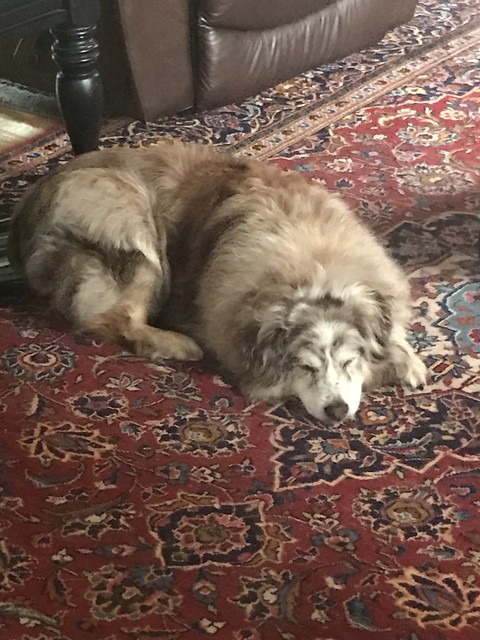
Hank is an old boy, he is almost fully deaf and blind. But he’s a real sweetie and takes his meds just fine morning and night (disguised in a piece of cheese or peanut butter of course). He’s a simple guy who very much enjoys food, and has mastered the new doggie door they bought right before their trip. In the past week he’s been uncharacteristically energetic, running to the door with Enzo when I utter that coveted phrase “You wanna go out?”. Walks with the two of them are funny because I’ve basically got Enzo on one leash pulling up front an Hank on the other slowly moseying behind, stopping to smell all the smelly smells. And, I may be crazy, but I swear Hank can sometimes see where I throw the ball. But it’s about 2% of the time, and even when I drop it at his paws it usually goes unnoticed. It remains a mystery.

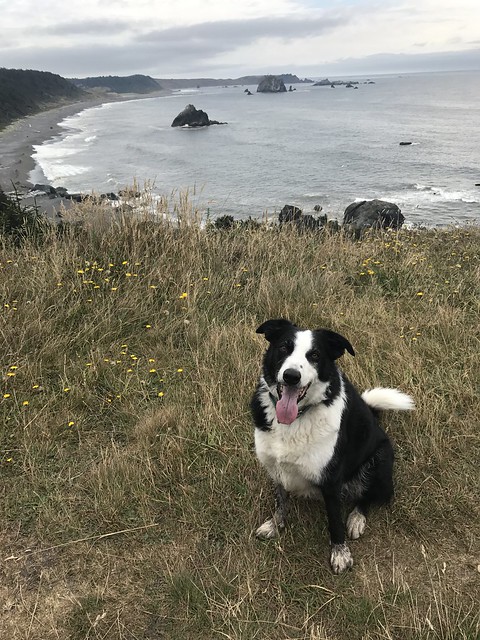
Enzo, the younger, hyperactive half of the pair has been my real buddy the past couple weeks. He’s the cutest lil bugger, who greets me at the door and sleeps at my bedside. We’ve been on a few adventures to different parks and hikes after work and on weekends, and he makes the big house feel a lot cozier. He’s got these crazy eyes that are just hysterical, and his deeply ingrained herding skills come out anytime a ball is in the mix. He’s the fastest dog I’ve ever seen, and is relentless at fetch (I call it “fetch”but really he only brings the ball 50%-75% of the way back to me, so it’s exercise for the both of us). We only stop playing when I’ve decided he’s definitely too tired and needs a break, if it were up to him he’d run till his feet bled.
It’s been so nice having them around, they are the highlight of my day. I’m going to have puppy withdrawals (and miss the use of the car) when Scott gets back on Wednesday.

As for work I spent a whoooole lot of time on the water this week with Joe conducting our native oyster surveys- more on that later (maybe even with some results!).

I’ve been applying for jobs and internships and fervently trying to find a balance between pursuing my career goals- which right now pretty much keeps me poor and away from home-  and what my heart wants- which is to spend some time with my family and friends and save money. I actually just completed a very successful interview for an AmeriCorps position with the Coos Watershed Association, which is the perfect balance of the outreach/education and science in the form of fish biology. But, it would require me to make the leap of moving across the country at the end of the month (!!!) and making barely enough money to break even for 11 months. I’m quite conflicted, but I am also excited by all the opportunities I’ve been finding.

Anyway, here are some cute dog pictures.

Enzo at Blacklock Point (such a good poser)

Hank dozin'

Enzo giving crazy eyes

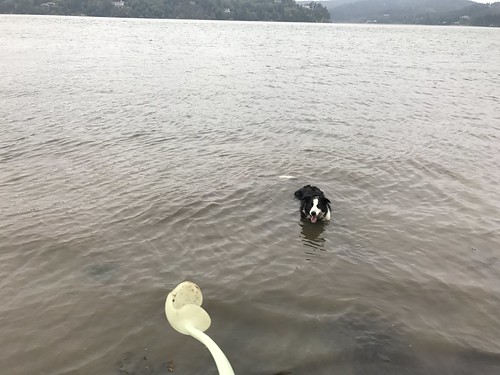
The ball literally sank... was not expecting that

Handsome Hank

Cheers,

Katie

Week 7: South Slough fishes

This past week was devoted to the August fish seining in South Slough. Since I already spent one blog post describing the process (http://wp.me/p64Blw-1cd), I figured that for my blog post this week I would highlight some of the fish species that we have been encountering during the seining.

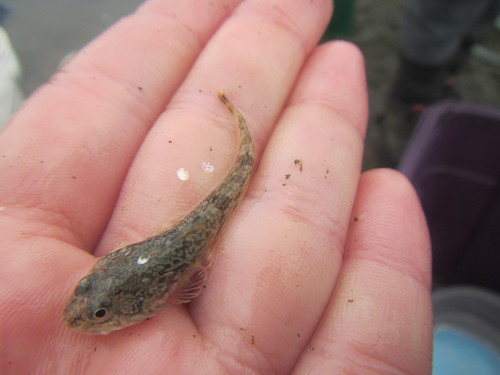
The Pacific staghorn sculpin (Leptocottus armatus) is commonly found in South Slough. It has spiky projection on its gill cover that it can raise when threatened. They also sometimes vibrate when threatened. Here’s a tiny staghorn sculpin:

IMG_0546

And a bigger one:

IMG_0548

Many different species of perch live in the South Slough, including Shiner perch (Cymatogaster agregata), White seaperch (Phanerodon furcatus), Walleye surfperch (Hyperprosopon argenteum), silver surfperch (Hyperprosopon ellipticum) and Pile perch (Rhacochilus vacca).

This week we caught a striped seaperch (Embiotoca lateralis):

IMG_0542

We also get a few different species of flatfish (fish that live on the seafloor and swim on their side, with both eyes on one side of their body). English sole (Parophrys vetulus) are most common, but there are also Speckled sanddab (Citharichthys stigmaeus), and starry flounder (Platichthys stellatus). We got a huge starry flounder this week, which was really unusual.

A tiny English sole:

IMG_0544

And a starry flounder:

IMG_0555

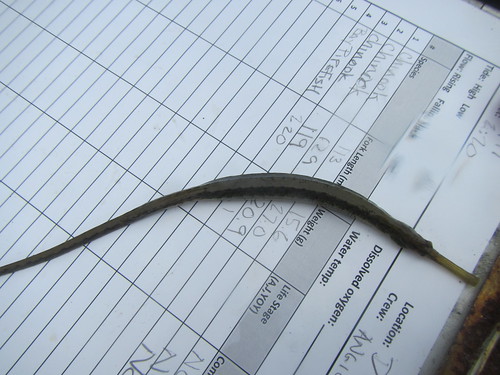
We also caught a bay pipefish (Syngnathus leptorhynchus). Bay pipefish live in eelgrass beds, and their bodies mimic a strand of eelgrass. Pipefish are related to seahorses, and the males incubate the eggs, just like seahorses.

IMG_0552

Juvenile Chinook salmon (Oncorhynchus tshawytscha) also appear pretty frequently. There are both wild Chinook and hatchery-raised Chinook. We can tell wild-born from hatchery-raised Chinook from the adipose fin (a small fin behind the dorsal fin): hatchery Chinook have their adipose fin clipped, while wild Chinook do not.

IMG_0550

It’s been so much fun seining and learning about the different fish in the South Slough this summer. I’m going to miss it!

Fire & Ice Cream

This week, I finally made a stop at the Tillamook Cheese Factory’s visitor’s center and had 2 scoops of caramel butter pecan ice cream. It was an unusual 88 degrees in Tillamook that day and we were headed to Garibaldi to install sensor rigging beneath a pier and collect water samples. It was a nice break from the car ride from Newport and the already long day. I had spent the morning learning how to analyze cholorophyll samples with the Turner Designs 10AU fluorometer. While not especially difficult, making sure to do every thing in the right order with the right checks conducted can get confusing fast when you’ve only had 5 hours of sleep. Analysis is conducted under low-light levels, and the fluorometer gives off a fire-red glow from it’s power button that is both sinister and sedating. It was a long morning with too little coffee, the 10AU glaring at me like the frighteningly incomprehensible machine that it is inside the dull black, ruggedized case. Science apparatus can often-times look quite frightening for no reason at all. The 10AU says, “I might explode,”, it’s red light screaming, “look out”. The fluorometer is just a fancy lamp, but it sure doesn’t look like that or feel like that when you’re sleep-deprived and concentrating on doing things right because the samples are not practice samples. Why can’t it look like an ipod?

After the welcome ice cream break, we launched the boat and tied up beneath the pier of interest. The installation of the sensor rigging and test package went off without a hitch. I took pictures to document the project, and collected water for BOD incubation and nutrient analysis. The test package, with a somewhat sacrificial sensor, will be retrieved shortly to check the data and see how the whole set up did with the tides.

My respiration runs have yielded interesting variation in rates, and as the time to present this research and talk about its implications comes near, I am forced to admit that I am intrigued by what I have found so far but cannot explain it or say just what it means in terms of pH, carbonate chemistry, or nutrient pollution. Perhaps the most important knowledge gained at this point is a sense of the magnitude of change involved in respiration rates, how those rates might change spatially and temporally, and how best to measure them.

I am incubating the last samples taken from beneath a pier in Garibaldi near the mouth of the bay. The three samples were taken over the time that we were there installing the rigging, as the tide changed. It will be interesting to see the results. The last sample was taken as sea water was rushing back in to the bay and was super-saturated with oxygen, unlike any sample incubated so far. Exciting!

Altruistic Congratulations

There is nothing I love more than a new perspective. My most recent shift came in the form of a text from my best friend Mahala, with whom I’ve been inseparable since junior high school. Knowing that she has always dreamed of starting a family of her own, I was not surprised to open my phone earlier this summer to a text saying, “Sarah, guess what? Tom proposed!”

“’Sarah, guess what? Tom proposed!’”

Quickly thereafter, there were engagement pictures and wedding plans galore. As the weeks have gone by and the examination hundreds of “dusty rose” colored bridesmaid dresses has continued, I have noticed a shift in mentality. In the typical nature of planning ahead, our thinking has become predominantly futuristic.

Perhaps I am ahead of myself, but I cannot help but wonder, “What type of world will Tom and Mahala’s children enter into in the coming years?” As a young adult still in my undergraduate education, this question has (up until this point) been relatively foreign to me.

A bit of reading revealed that I am not alone in my question. The concern I felt for the well-being of my friends’ future children is referred to by literature as altruistic concern (5). Altruistic concern is separate from other types of concern, in that it is motivated by care for others instead of self. This care for others has been shown to inspire action through increased helping behaviors, referred to by the literature as prosocial behaviors (2). 

Prosocial behaviors, such as donating time or funds to a social cause, have an end goal of benefitting others in society (2). With biologically driven survival instincts in mind, prosocial behaviors play a role in preserving the health, well-being, and continuance of the human race.

With subsequent content to appease my social concerns, I then turned to an environmental context. Though research is still sparse, studies have shown that a similar model of concern to behavior has been found towards the natural environment (4,1). According to Stern and Dietz (1994), environmental altruistic concern is the concern one has for nature with others outside of themselves in mind.

For example, an individual with high altruistic concern may wonder, “How can we take care of the environment so that my children/the community/ others can enjoy it?” In a natural resource management context, the question may then become, “How can we conserve these resources to sustain future children/ communities/ others?” 

Environmental altruistic concern has also been shown to lead to an increase in reported beneficial behavioral change, known as pro-environmental behaviors (6). These behaviors include recycling as well as providing donations to environmental causes (6).

Though I have done research on these topics before, never have they been so relevant to me. As I move through this transitional phase of young adulthood, I am reminded that I and those around me are slowly assuming responsibility for the generations of the future. What type of concern will we have towards social and environmental issues? More importantly, will we impart these prosocial and pro-environmental behaviors on the generations to follow? Stay tuned for the answer!

In closing, I would like to congratulate the soon-to-be Tom and Mahala Disney. I love you both dearly. Thank you for bringing personal relevance to my research this summer and reminding me of the importance of applied studies for generations to come.

“I would like to congratulate the soon-to-be Tom and Mahala Disney.”


References

  1. Berenguer, J. (2007). The Effect of Empathy in Proenvironmental Attitudes and Behaviors. Environment And Behavior, 39(2), 269-283.
  1. Davis, M. H. (2015). Empathy and prosocial behavior. In D. A. Schroeder, W. G. Graziano, D. A. Schroeder, W. G. Graziano (Eds.) , The Oxford handbook of prosocial behavior (pp. 282-306). New York, NY, US: Oxford University Press.
  1. Kim, S., & Kou, X. (2014). Not all empathy is equal: How dispositional empathy affects charitable giving. Journal Of Nonprofit & Public Sector Marketing, 26(4), 312-334.
  1. Schultz, P.W. (2000). Empathizing with nature: The effects of perspective taking on concern for environmental issues. Journal of Social Issues, 56 (3), 391-406.
  1. Stern, P. C., & Dietz, T. (1994). The value basis of environmental concern. Journal of Social Issues, 50, 65–84.
  1. Tam, K. (2015). Mind attribution to nature and proenvironmental behavior. Ecopsychology, 7(2), 87-95.


Gumboot

Prepare for rambling to make up for my lacking-in-words-posts in 3..2..1..

I haven’t written much about activities at work besides the action-packed trips we’ve taken thus far, mostly because the majority of my work-related time has been spent in front of a computer analyzing the available outdoor recreation experiences in southern Oregon and attempting to visualize all of the information in a digestible way. After many weeks of analyzing previously collected data, collecting my own data, analyzing that, creating a report, editing that, losing files, wanting to throw the computer out the window into the lily pond outside, and then thanking it for doing things my brain can’t, collecting more data, reviewing, editing, re-doing, reviewing, number crunching, watching obscure excel tutorials (thanks youtube), having dreams about formatting, editing, and so on (and that description is still probably an understatement) Miles and I have finally agreed on the project’s status as being tentatively finished.

To say the least, it’s been a bit grueling. I’ve never conducted a research project outside of school that didn’t involve sampling methods in a context that I’m already familiar with, i.e. field data collection, lab work. etc. I’ve also never been responsible for writing the final report for the research. I’ve felt a bit stir crazy having to create this project entirely from a desk, but lemme tell ya, does it feel GOOD to see it all laid out in colorful, organized graphs, trends, and a few pretty pictures of the coast to complement the data. To briefly explain its purpose, I’ve added a few paragraphs from the report here.

“This research project was conducted to fill a gap in the knowledge of guided fishing charters and outdoor recreation tours along the coast. Data on the number of and type of operators, how well they are marketing themselves online, the products they offer, and especially the price of services is not readily available. This research was conducted in order to identify guided fishing and outdoor recreational tour businesses that were successfully marketed online so that a search for the specific service offered in the targeted community would appear as a top result in a basic online search. A limited comparison of these results against other inventories of or estimate of the number of operators would then be possible. Collection of price data helps to understand the economic impact of these businesses and potentially to help identify new growth conducted annually to provide long term trend data. In addition, the model is one that could be reproduced for other coastal communities in different states and countries.

The data collected will provide a basis upon which a guide training program will be developed to aid guided tour operators in obtaining the knowledge, skills, and resources to better market themselves, reach customers, sell experiences, and attract more sustainable, experiential, and interpretive tourism to the southern coast of Oregon.” 

During this process, I’ve learned a lot about basic data analytics and visualization, interpretive communication, and how to create a project/write instructions that are clear enough to be successfully repeated by others. We have already shown the report to a couple of guides in the area and they are quite pleased with the information. In the fall, Miles will be sharing these findings with the Adventure Travel Trade Association World Summit in Argentina to present the Wild Rivers region of Oregon as a pilot location to implement a guide training development program based off of the needs assessment information we have been collecting. For the amount of time we’ve spent working with this data, it’s going to be a lot of fun keeping in touch with Miles to see what comes of this summit and where he is able to take his ideas. I just wish I could still be here to help make it happen! 10 weeks is just too short.

Now that the core project is finished, I’ll be spending the last couple weeks of the summer interviewing a few guides about their operations to get qualitative assessments of their operations, needs, and perspectives. In addition, I am making videos for the guide training program and working with Dustin to compile literature (about southern Oregon ecology, wildlife, tourism, sustainable business, interpretation, marine reserves, psychology, etc.) to use in the program.

Crabz on the docks in Bandon

In other news, it’s been yet another fun week outside of work. Dustin and I went crabbing with one of the photographers we hired and although most were just shy of the legal size, or female, it’s a pretty great feeling to put in almost no effort (you just throw the pot into the water with some chicken attached) and barely any time to then pull up the pot and there’s nine crabs scuttling around.

That same evening I attended a lecture at the OIMB given by Robert Pitman, a marine biologist of NOAA Fisheries who studies killer whales in the Antarctic. It was a great learning and networking experience; stay tuned for what’s to come of that.

This weekend, Dustin and I got to tag along on a kayaking tour out of Port Orford with South Coast Tours (perks of being a buddy of Dave’s).

Our foggy launch site

The trip was definitely a highlight of the summer. We got to see an unbelievable amount of sea stars, which was incredibly encouraging. I did a kayaking/intertidal survey a few months ago in Morro Bay, CA where I work with the Estuary Program, to write a piece about the sea star wasting disease that’s been heavily impacting populations all along the Pacific coast. I only found one sea star that day, but during this trip there were definitely more than I could count and some were the biggest sea stars I’ve ever seen. We also saw two river otters and a number of harbor seals, pelagic cormorants, black oystercatchers, pigeon guillemots, and a peregrine falcon. We also saw a huge gumboot chiton, which is somehow just a ridiculously fitting name for such a creature.

Later that day, I hiked with my roommate and her boyfriend from Sunset Bay to Cape Arago and back, after having scouted the perfect hammock locations along the trail the evening before.

Prime.

PSA and lesson of the day: Do not let the presence of fog discourage you from a sunset expedition!

It was a gorgeous trail and we again saw some harbor seals, which always remind me of cookies and cream ice cream. We also saw the massive colony of sea lions located off the coast of Simpson’s Reef. It was crazy how loud they are, and how many there were. At cape Arago, we sat for 40 minutes timing the intervals between spouts of what I’m pretty sure was a grey whale. It was the first whale I’ve seen while here, and there’s really nothing like it. The perfect day filled with so many cool animals was ended with a beautiful sunset as we hiked back to the car.

Extra Curricular Activities??

Every blog post I have written so far (and the following blogs in the next few weeks) has dealt with work and the work environment. But ya boy hasn’t just writing blogs and working this whole summer. Oh no, the rowdy strapping group of educated youths at Hatfield Marine Science Center have been taking full advantage of their limited time in Oregon. Ranging from weekend trips to Crater Lake to organized camping trips through Sea Grant and REU program, we’ve been getting as much exposure to (arguably) the most beautiful state in the US.


Waterfalls and Mt. Hood

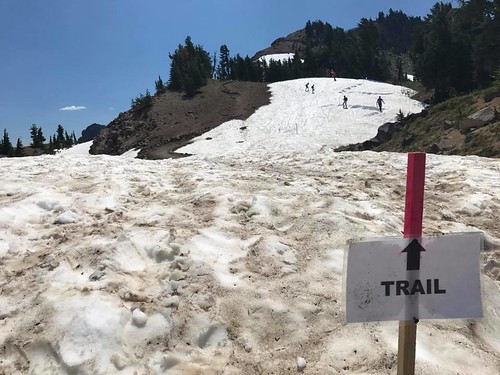
Zach and I were lucky enough to hop on the REU camping trip a few weeks back. The highlight of the trip (besides the wonderful bonding we experienced) was hiking up to the tree line of Mt. Hood. It was a beautiful day for a hike. Not a cloud in the sky, yet there was a coolness in the air that made it perfect for shirts and t-shirts. Crossing snow patches in 85 degree weather just boggled my New England mind. If these snow patches were the leftovers, it made me wonder what these trails looked like at the peak of winter. 14 miles round a trip to just over 9000 feet, not too bad!

Zach and Dimitri, part of the DIVAs (Dads in Vertical Ascent) (Not actual dads), under the snow capped peak of Mt. Hood.


Beautiful days in the high 80s with snow are just a recipe for impromptu snow ball fights


The REU camping trip also included visiting just a bunch of waterfalls. Of the ones we did visit, two stick out clearly in my mind. Those two were the Tamanawas Falls and the Multnomah Waterfall. The Tamanawas Falls are a huge 100 foot waterfall at the end of a nice easy hike through the forest. There were a few thing that made these falls stand out:

  1. They were about as thick of a waterfall as they come. It wasn’t a wimpy tall stream coming down, the amount of water pouring off of this cliff was unreal! You could hear the roar a good 5 minutes before it properly came into view.
  2. By scrambling over a few moss covered boulders and accepting the fact the spray was going to drench you, you were able to get behind the falls. Behind the falls was a massive cavern that had incredible views of the water pouring down, the stream winding its way through the forest and the mosses that covered every rock that was touched by the spray. I’ve seen some falls in my days, but this was epic.


This summer I’ve committed to honing the photography skills I’ve picked up during my online intro to photography 101 class I took 2 years a go. Ya boy is shooting on M!

Multnomah waterfall was great too! Thanks to instagram I felt like I had already seen it a hundred times before, but it was still so much more beautiful in real life than in the pictures. The highlight of this waterfall was that I found my doppelgänger?? A more accurate description is someone who likes kind of like me, but was wearing oddly similar clothing. Naturally I didn’t say a word to him. I opted for a casual walk over and awkwardly stand next to him and his girlfriend. Then, as if life became a scene in a movie, the crowd of tourists staring at the Multnomah falls split and gave professional discreet photographer Zach Clemens the perfect moment to snap a picture. Highlight reel moment for sure.

Me, myself and a bunch of tourists.

The next activity was the Sea Grant camping trip! While not as intense as hiking Mt. Hood it was still in tents!!! Hahaha…. God that was dreadful. I am so sorry. Uh.. anyway, the real highlight of the camping trip was getting the chance to really connect with the South Coast Sea Grants. So many great conversations. It’s so interesting hearing the contrast of Newport and Coos Bay living conditions and all of their projects. It’s a shame we’re very quickly running out of weekends! I’d be super keen to go explore a bit more of the south coast of Oregon. Especially the river snorkeling that Catie was talking about, that sounds so sick!


The big activity that we had was visiting the Tamolitch Blue pool. An unreal freshwater spring with water so clear that while it may look 5 feet deep, it’s at least 40 feet in some parts. This perspective change really threw me off when it came time to go cliff jumping. The clearness of the water made it look so much closer than it was! I kept hearing 70 foot cliff, but it just looked life a 30-40 footer. Wrong, it was definitely a 70. I had that realization moment mid air when I found myself thinking that I probably should have hit the water by then, but instead kept on falling. Great stuff! We were also told that the water was around 38 degrees Fahrenheit. But, you hear 38 degrees Fahrenheit and it doesn’t really translate because you have nothing to compare it to. But let me tell you, I’ve never felt water so cold that it made it hard to breathe! It was as if my lungs were being compressed by a large ice block resting on my chest. It was wild. Zach and I joked about bringing our wetsuits, in hindsight, that probably would have been a good idea!

Other highlights include: Allie and her hand + Dutch Bros and their confusion with ordering a normal black coffee + Dustin finding a big fish at night

Zach diving in after a nice 20 minute warm up in the sun

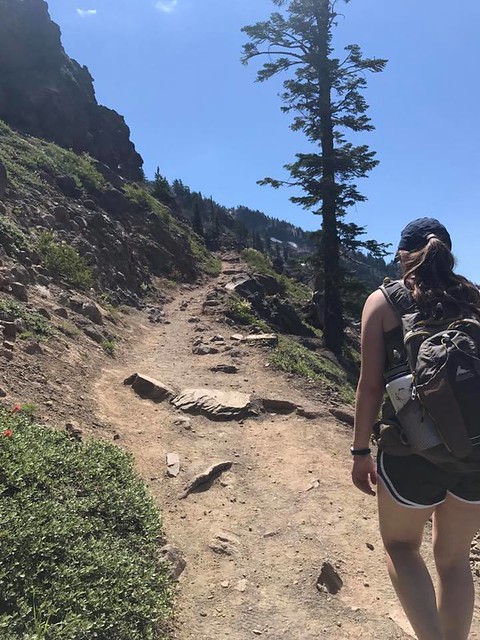
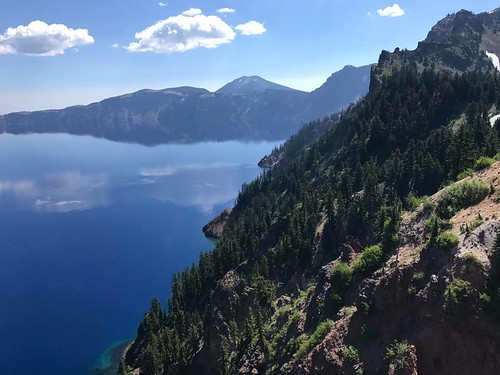
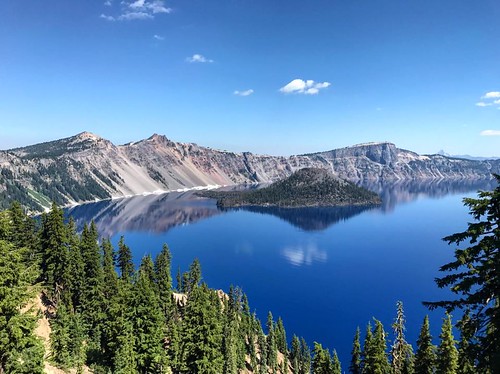
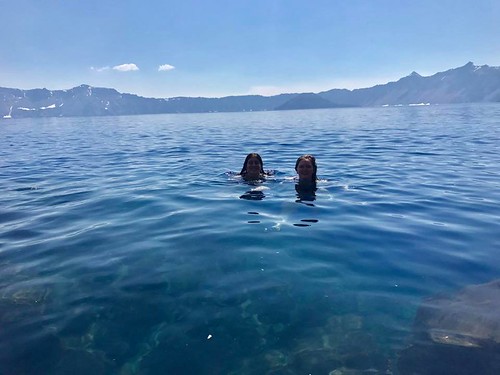
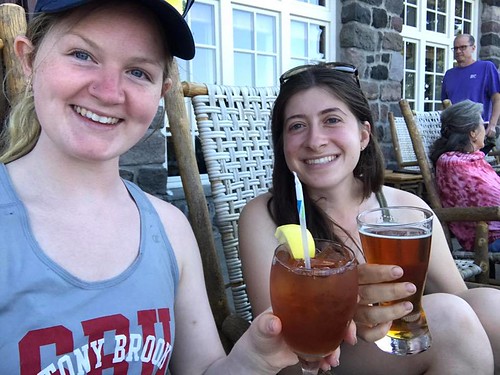
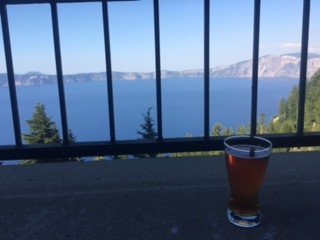
Finally (not really finally for everything we’ve done, but rather for this blog post), last weekend we took it upon ourselves to go camping at Crater Lake! I remember first meeting everyone in Corvallis and having a conversation about how we all are determined to go to Crater Lake this summer. Well guess who did it? Ya interns did. This trip came together as a spur of the moment decision that we decided during the Sea Grant camping trip. With less than a week to plan the trip (mostly done by Julia, thank you Julia), it came together in a hurry. Most camping spots were full, but Julia came through and found some dude on Airbnb that was renting out a camping spot in his yard! However, his yard turned out to be a dusty road in the middle of his farm. There’s nothing like 5 people in a 3 person tent on a slight decline, with some rocks in your spine to put you to sleep at night, am I right? Mediocre sleep aside, it felt like a real adventure and it honestly made the trip so much more interesting. The 2 guys we were staying with lived in a bus with their 3 dogs and 25+ ducks. They were quite the characters and had some very interesting conversations with them about politics, the environment, aliens, and white water rafting. As great as they were, we didn’t come for the conversations. We came for this big ol beautiful lake. You always see pictures of it online. Even National Geographic photographers just can’t seem to capture how incredible it is. Pictures can’t translate the feeling of awe, as you stand before it. That is what gives you the full experience. Can you believe the guys we stayed with had never been there?? They live an hour away! Unreal I tell you, unreal. The hike and drives were incredible. But my favorite moment might have been swimming in the lake itself. Naturally, Zach and I brought our dive masks again. Easily 50 foot visibility with chilly water, but not nearly as cold as Tamolitch! After swimming out for a bit we could see where it drops off. We were able to dive down to stand on the edge of the drop off and peer down into the dark blue. That is so spooky. Even though there isn’t anything that can hurt you living in there (knock on wood) it just made you feel small seeing how awe inspiring it was. 10/10

I really hope this isn’t as blurry as it is in the preview picture…