Week 7: Under Pressure

Pressure.

It’s what pushes us to perform our best, it’s sometimes hard to handle….and  it’s also what created Crater Lake.

This week was a pretty routine work week- I spent the first half megacoring with the SEACOR team and the latter half in the office doing background research for our oyster survey, counting shrimp, and conducting surveys of local recreational crabbers/clammers. Pretty low pressure as far as work is concerned.

However, this week we received information on our final symposium taking place the 9th week of the program, for which we have to prepare a 5 minute talk and poster to present to the Sea Grant audience. The due dates for when these final products have to be submitted are fast approaching. Intro pressure. I have done enough public speaking to feel pretty comfortable giving these sorts of presentations. But in such a short time frame, trying to relay across enough information to draw an audience seems a difficult task. I’ve also never created a professional poster before, and trying to get it done in the midst of what will almost surely be my most time-consuming work week to date (with the native oyster survey happening Monday- Friday with just Joe and myself hitting 60+ site by foot, boat, etc), just does not sound appealing. That being said, I will change out of my grumpy pants and rise to the occasion to put together something I will be able to show off with some dignity at the final symposium.

Beyond the pressure of the program, I’m feeling external pressure as well. With only a few weeks left in my internship, I’ll be back home before I know it. The pressure of finding a job to come back to is intensifying. I have always been a person with forethought, planning my next move to get me to my next goal. I remember the relief I felt after being accepted into this program, because it meant I had a next step after graduating college. But I’m at a dead end. This time (as of now) I don’t have a next step waiting for me when I get done. And I don’t like that, not one bit. My long-term plan is to go back to school in Fall ’18 for my master’s, but find a full time position in the mean time to save money for school and make a dent in my existing loans. But finding a full time position in anything even remotely close to my field is proving difficult. Especially in my home state of NY. I’ve been away from home for 4 years and the thought of being back in Rochester for awhile after graduating was comforting. But if I can’t find work I fear I’ll feel paralyzed. Like I’m not living up to the expectations I had for my life beyond graduation.

I have been putting out applications, editing my LinkedIn profile, contacting old mentors- everything they tell you to do when looking for a job. So far, I’ve only gotten rejections or no response at all. Dealing with the rejection has been a bit of a struggle for me, mainly just because it’s often blamed on my lack of work experience. Well how am I supposed to get the experience if no one will hire me?! (I realize this is an issue 99% of recent grads have all been through/ relate to, but this is my blog so let me have my pity party moment, thanks). I kind of hoped having a degree would put an end to my interning days/ working for minimum wage, but I don’t think I’ll be in a big girl job making the “big” bucks anytime soon. I’m just going to keep doing what I’m doing and hope something turns up (if you’re reading this and you have a job opening- hire me? :) or if you have info on any positions please send it my way!).


Now on to hydrothermal pressure. Ah yes, the fascinating natural disaster that gave rise to beautiful Crater Lake. 7,700 years ago the catastrophic eruption of Mount Mazama led the mountaintop to collapse in on itself and form a massive bowl-like depression called a caldera. The caldera, almost 4000 ft deep, then filled with water from rainfall and snow events, to form a lake 1943 ft deep, the deepest in the United States.

The geologic history of the lake is fascinating but its natural beauty is what’ll take your breath away. It was my first time being in a national park, and even with such a high volume of visitors the park was pristine, with the natural features so well preserved, and human presence undetected in a lot of areas. I was in awe all day, impressed by the natural structures and national park service alike. We took a beautiful hike- that was classified as strenuous but totally doable, and not super crowded- up Garfield Peak, which took us through wildflowers, hordes of butterflies, a bit of snow, and followed the edge of the caldera almost the whole way.

Later on we took another hike, this time down to the water at the only access point to the lake. It was a sunny, warm day and I jumped right in without hesitation. After a few sharp breaths and the initial shock of the cold I actually adjusted to the temperature pretty quickly. Julia joined me and we both took our time swimming (a deviation from most people who get in, can’t handle the cold and get the hell out) and taking in the views above and below us. I’m not a religious person, but being in that gorgeous blue water was a spiritual experience. So was sitting in a rocking chair in the back of the luxurious lodge with a drink in hand, looking out over the park while the sun sank lower in the sky. It was a perfect day.

Crater Lake National Park

Till next time,

Katie


Cold Water and Car Sing-Alongs

In the past two weeks, I have gone camping twice, shocked my body with frigid water on multiple occasions, memorized the soundtrack to Moana, and even managed to break my hand (a boring detail compared the rest of the recent adventures). The first camping trip was with all of the other SeaGrant interns at Trout Creek. The creek itself was chilly, but the valley air was like a warm blanket compared to Newport’s constant ocean zephyr (GRE vocab word meaning gentle breeze). The next body of water I encountered was my coldest yet, Tamolitch Blue Pool. It’s up to 40ft. deep, a delicious blue like a melted skylight-flavored snowball, and 38◦F. All of the interns took our turns jumping into the pool (and scrambling out as fast as possible), and two even cliff-jumped into it from a height of some 60ft. Shout out to Neal and Dustin, I’m still insanely impressed at that.

Trout Creek

Tamolitch Blue Pool

The weekend after was camping trip #2: Crater Lake! This water was around 50◦F, and yes we swam in that too. After spending as much time in the water as we could bear, we crawled out and basked on rocks, chatting and reheating our cores to a decent temperature. During this weekend trip, we also hiked through clouds of butterflies, befriended some trippy Oregonians living out of a school bus, and participated in hours of car singing, at least 40% of which was the soundtrack to Moana. I am not ashamed nor sick of it yet.

Crater Lake feat. Allie

The last cold-water encounter was a ride in the relatively swift current of the Rogue River, and also my favorite. It was a spontaneous decision at the end of the long day at Crater Lake, prompted by us driving right past it and being a little toasty in the car with five people crammed inside. I was definitely the most hesitant, traumatized by the cold water at Tamolitch, worried about only being able to swim with one hand (remember the other is broken), and honestly just being scared to make the jump into the current. After watching everyone else float some 40 yards down the river multiple times and begging for someone to hold my hand, I succeeded in floating the river too. It was numbingly cold, but the excitement of riding the current (think strong Lazy River from water parks) and conquering my fear overrode the temperature drop. Getting out of the water also sent a surge of heat to the muscles as they regained feeling, leaving all of us giddy with adrenalin and endorphins.

While we are all here because of our love for the marine world, Oregon’s freshwater systems have certainly demanded their equal respect and awe as well. You go Mother Nature, you are one beautiful being.

Conservation, more than just behavior

“What do you think of when you hear the word ‘conservation’?”

What do you think of when you hear the word “conservation”? Do you approach it in the biological sense, as a need for sustainability of resources to continue to survive? Or perhaps see it through a historical lens, with images of colorfully clad activists of the ‘70s with ideals of peace and love?

The word “conservation” is often perceived as politically loaded. With the current debates surrounding climate change (or lack thereof), conservation has become a word that connotes a lifestyle change for many. This lifestyle change can come in a range of forms. A simple example of this would be the California Plastic Bag Ban, which requires multiple-use bags of thicker material to replace single-use plastic bags that cause pollution. This change can also be more complex, such as mass job loss in the coal industry due to the shift towards more renewable energy. In order to understand the ultimate result of behavioral change that occur from embraced efforts towards conservation, it is important to first understand the term.

When discussing the role of conservation in the professional realm, a common thread of education emerges. Though many environmentalists in the workforce aim to conserve different resources, the need for communication and education surrounding why and how to conserve is present for all. Though what constitutes conservation varies across the workforce, conservation will be defined broadly in this blog post as the “ethical use and protection of valuable natural resources”.

Anthropologists, activists, psychologists, and economists from around the world voice the the importance of teaching values rather than the concept of conservation. By communicating values such as respect, care, and responsibility, many professionals believe that individuals are then able to use their own discretion about how to treat natural resources. This makes sense, as it is not enough to teach behaviors (such as recycling) if overarching concepts such as respect and responsibility for maintaining a healthy environment free of pollution are not discussed as well.

When communicating to children in particular, teaching these core values such as respect for nature are easier to learn than countless facts about resource management, as they have already been modeled by human interaction in their families and schools. If a child first learns the deeper value of respect, he/she is then able to apply that concept across situations, including that regarding natural resource conservation. This reverence of core values is a strong tool when acquiring an understanding and providing education to people who all think of conservation and its effects differently.

“Don’t simply teach the ‘how’, teach the ‘why’.”

If you have been reading these weekly blogs, this concept is very similar to our discussion about Kohlberg’s six stages of moral development in my post “A Green Perspective on Rights and Wrongs”. As ethical views develop, children are able to make decisions out of moral judgement instead of simple obedience. Over time, “don’t take cookies from the jar” transforms from a behavioral command to the concept of stealing, an ethically moral wrong. As children shift into adulthood, this ethical train of thought continues to grow, further defining the difference between behaviors and deeper core values. Though not all professionals working towards conservation are child educators, keeping this developmental trend in mind is useful when communicating new concepts to an audience. Don’t simply teach the “how”, teach the “why”. 

Let’s go back to our original question. What do you think of when you hear the word “conservation”? Where did you learn the ideals behind your connotations with the word? Leave your comments in the provided box below. I look forward to reading your thoughts.

In the meantime, below is my photo gallery from the past two weeks. It is not all work here out on the Oregon coast!

Joined in on the sea star wasting surveys with ODFW and the Nature Conservancy last week!

Healthy sea star in the intertidal at Cape Perpetua.

Tamolitch Blue Pool was an incredible sight this past weekend on the OSG camping trip.

This pool was 38 degrees and we all jumped in! Oregon Sea Grant camping trip 2017.

No shortage of water here in Oregon!

Family visit this weekend. Toured lighthouses here in Newport.

Yaquina Bay Lighthouse in Newport, OR.

In search of great coastal views? Visit this stone lookout point at Cape Perpetua, one of five marine reserves on the Oregon coast!

Nothing like a little Merlot and a beautiful sunset to end a perfect weekend.

I AM MOOAANAAAAA

Well I’m incredibly late to the game in finally watching Moana, but let me just say that in the middle of all my emotional turmoil this movie has really brought me happiness. Never really thought that I would find an animation so inspiring but I truly do, especially after our Crater Lake trip and my hesitancy to enter cold water because 1. I hate cold anything and 2. I can’t really swim all that well. So I’ve watched this video approximately 37 times in the last few days and aspire to bring out the Moana in me exhibited at 2:17 in the song below.

Moving Forward

Our current struggle with the King Tides project is our reliance on our partners to supply us with the information we need. We are working with the Oregon Coast Visitors Association to host a photo contest this year and are now just waiting to hear back about the details so we can start spreading the word. We also have a few meetings with members of the Coastal Management Program coming up to get our photo submission form published and accessible as well as some contact information for potential new partners like REI.

In the mean time I have planned more field work for myself to get out of the office and enjoy the Oregon coast. I will be heading to Nehalem next week to take photos and spend a few hours around the Newport Bayfront as well. I am really happy to have the chance to be outside for a bit because I must admit that I’ve been really jealous of other scholars getting to be out in the field so often!

How to Share King Tides Photos

I have also been working on some content for our social media including tips on how to take good King Tides photos and how to share them online!

King Tides Tips and Tricks

My mentor Meg has been incredible in working with me this week and helping me find ways to benefit as much as I can from this opportunity. As Neal would say, “Top 3 mentors, top 3 opportunities.”

A Big Hole With Water In It

This weekend was exactly what I needed to get my head back on straight. A handful of interns as well as my boyfriend and best friend from back home came to visit and we headed down to Crater Lake to camp and hike.

Little did we know the so called “campground” was a pot farm run by two dudes and 3 dogs living out of a school bus. Their names were Austin and Norton and they were actually really kind and interesting people. They had about 20 ducks and ducklings as well. If the bathroom wasn’t just a trail into the forest I would say top 3 camping trips but that’s still a bit of a stretch.

I’ve been slacking on my photography game lately so I literally only took one okayish photo of the lake which wasn’t even at the peak of Mount Scott, though we tackled those 5 miles like champs.

Still, cheers to week 6, a beautiful view, and great company.

Week 5: Sharing the word about green crabs

IMG_3880

July has passed in a blur, and it’s somehow already August, with only four weeks left in Oregon. I’ve had–during the Sea Grant camping trip to the Tamolitch blue pool, and Crater Lake National Park—which I’ll hopefully get to in another blog post. This week, though, I wanted to give an update on the green crab work numbers in Coos Bay since they were first found in 1998. Last year, a total of around 200 crabs were caught throughout all of Coos Bay, including in South Slough. So far this year, more than 1,500 crabs have been caught in the estuary.

Before getting into more detail, I want to explain a technicality that makes understanding the data easier. We use something called Catch Per Unit Effort (CPUE) for our measurement of crab abundance as a way to standardize crab numbers. CPUE is calculated by dividing the total number of crabs caught by the number of traps set. In this way, we can control for the number of crabs by the trapping effort. If we used just abundance numbers (like the 200 crabs caught in 2016 and 1,500 in 2017) to compare between sites or between years, our values might be impacted by the fact that we set a different number of traps at each site or year. Using CPUE allows us to more directly compare crab abundance.

So, back to the data. Luckily for the South Slough, the drastic increase in green crab abundance seen in Coos Bay has been almost entirely restricted to the upper part of the Coos Bay and not in the South Slough specifically. While a couple sites in South Slough have seen a CPUE increase of about 0.5—1 crabs/trap, a couple other sites in the South Slough have actually decreased by about the same amount compared to last year. In the other side of Coos Bay, though, the CPUE has increased by 15 crabs/trap/day—more than a 600% increase!

The map below shows the change in CPUE across all sites in the different parts of the Coos Estuary. The triangles show where green crabs were present in 2016. You can see from the colored circles that the Upper Bay has seen a much higher increase in CPUE than the South Slough.

Slide1

Because of the massive increase in green crabs this year, we are trying to get the word out to the community. I have encountered people a few times while out doing fieldwork that ask questions about what we’re doing, which provides a great opportunity to share about green crabs and let them know about the issue. We’ve printed flyers that we can hand out to the community with information on how to identify green crabs, why they are a problem, and what to do if they are found. I am going to continue outreach about green crabs by updating the information flyer and distributing them around.

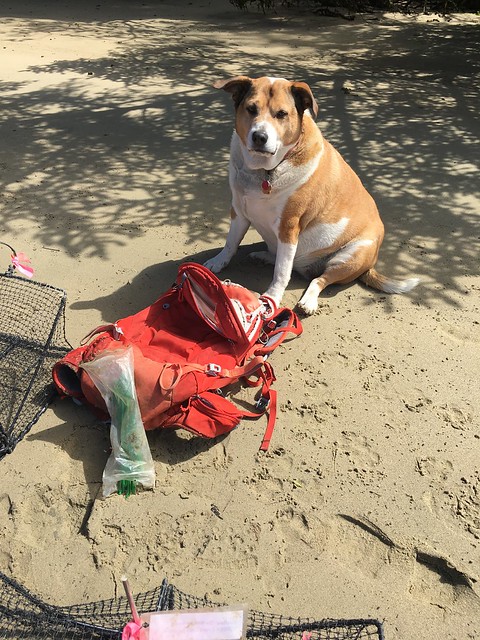
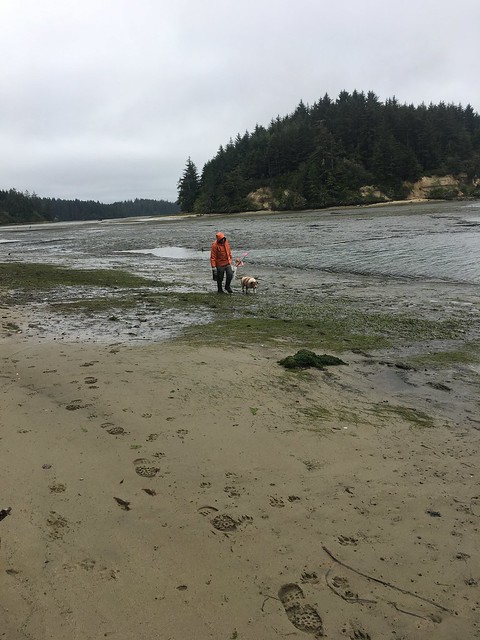
The human community members we’ve encountered have been great to talk to, but the dog community members have been even better. One of our field sites has two dogs that have joined us every time we’ve been there. They live in a house somewhere behind our field site, but I’m not exactly sure where, because every time we are there they just come running down the hill through a patch of forest behind the beach and join us for crab trap setting.

A good dog:

IMG_3886

Also a good dog:

IMG_3883

They are really helpful workers and will be great scientists someday 12/10

A little bit of Rockfish in my life, a little bit of Otolith aging by my side, a little bit of everything is all I need… in order to properly communicate to our target audiences.

Blog #4

Neal Tyson

The past couple weeks have been almost entirely in the office. Yet somehow these weeks are just flying by. I’ve never been one to see myself working in an office setting. I get antsy when I sit for too long and am almost constantly longing to be out in the field. But I guess when you find a purpose in the writing and are writing about fascinating topics it ain’t so bad. I would say 90% of my time, these past couple of weeks, have been dedicated to creating stories to share to fishers, tourists, environmentalists and the general public about Oregon’s marine reserves. All in hopes to write a story that peaks someone’s interests to get them involved in our research or become more knowledgeable about all the amazing things below the surface. Before I can even begin to write a blog post or a social media post there is naturally a research process. My focus has almost always been on tropical reefs in the South Pacific… a slightly different ecosystem to Oregon’s cold, rough, and rocky coastal waters. Although I will say I prefer the bright corals and visibility higher than 5 feet, its been pretty wicked learning about a new area. Stories so far have included biographies on species found in the Oregon marine reserves (mainly rockfish, who get wicked old??), explanations of research techniques and highlights of any super sick stuff going on.

I’ve never done this science communications thing and it definitely takes a bit of getting used to. My mentor Kelsey has been giving me some stuff to keep in mind in mind while I’m writing these stories:

  • That because we have such a large audience it can be really easy to alienate a certain section. By taking a neutral position based off of what we see in the reserves we can avoid pissing off anybody who disagrees or feels alienated.
  • As a government agency we are here to state facts, peak interests and inform, not to take a position on a subject.
  • As we deal with scientific research, it’s pretty important to fact check things. We don’t want to be accused of spreading any fake news by any political groups and/or individuals.
  • Make sure it is relatable. By having content that is relatable to our audiences (i.e. talk about local fisheries, things they may have experienced at the reserves or questions they may have), they can find connections with the research and the work that we are doing in the reserves.
  • Make sure that the content is primarily and almost entirely focused on the marine reserves. As part of the overarching Department of Fish and Wildlife, it’s pretty easy to step on other department’s toes on their content. By keeping content directly related to the marine reserves we are able to avoid that.


The struggles are real, and they’re great teachers

I’ve always wanted to go into behavior change and environmental campaign planning. Science communication is definitely a part of those topics, but I haven’t done much if any in that field. So there has definitely been some getting used to during this internship where the goal has mainly just been to educate rather than to persuade.

Other struggles have stemmed from learning how government works. I didn’t see a reason why we shouldn’t be covering topics that are related to the marine reserves. I figured creating a story on a topic that another department works on and one that is related to the marine reserves would serve both departments. In my mind as along as we are spreading the same message and pointing people in the right direction to find out more, then it’d be all good. But, I’m starting to understand why sometimes that isn’t feasible/the best option. By focusing our content on specifically what we are doing (our research, our researchers, specific sightings that we have collected), we highlight our work and become more in the spotlight of the communities’ focus. Spreading our message out to incorporate topics that are related to the reserves (like a story on trash in our waterways/beach clean ups) we take some of that spotlight away from our specific work, while also taking some of that spotlight away from those who focus on that work (ODFW park services).


At least that is my understanding of it at the moment… I could be wrong, I’m very much still figuring it out. There is always more to learn from experience, plenty more questions to ask and mistakes to make.

Good things yeeeeah!

While creating some of this content is still a rough work in progress coming from a persuasion background (progress that is getting better), I’ve been making good use of some of the techniques I’ve learned!

One of the techniques that has been really easy and seems to be pretty effective is the use of relatable visual comparisons. One of my favorites has been about how old the Yellow Eye Rockfish gets:

“Studies have dated these beautiful fish to living well over 100 years old, with maximum age at 147 years. Some of these fish would have been exiting their awkward teenage years by the time Washington was granted statehood back in 1889”

A comparison like that really puts that age in perspective. Man, fish are so cool.


Another one of my favorites talks about the maximum size of the Giant Pacific Octopus in terms of Shaquile O’Neals:

“The largest Giant Pacific Octopus ever recorded was 30 feet from arm to arm and over 600 pounds! That means they were the length of 4 Shaquille O’Neal’s head to toe and twice as heavy (he’s a big guy). However, the average adult will grow to “only” 16 feet in length and 110 pounds.”


I have also been attempting to use anthropomorphism, to apply humanistic traits to fish or habitats. For example associating adjectives often applied to humans, like beautiful, sleepy or hungry to fish or other species. Other ways include comparing the behaviors of certain species to human behaviors, like species hiding beneath the kelp bed at night, similar to humans sleeping in bed. Another example is relating how Wolf Eels mate for life, occupy the same cave and carefully care for their eggs until they hatch and comparing that to how humans live. This is all in the hope that the audience can connect more with the species and become more empathetic and think about them in a more connected way.


Anyway, keep an eye out on Oregonmarinereserves.com and our (new) social medias @oregonmarinereserves (not actually out yet) these next few months to see some quality relatable marine reserves content!