
By Xitlali Pedraza-Payta, Seabird Monitoring Technician & NSF REU Intern
Hi there!
I’m Xitlali Pedraza-Payta, a rising senior at the University of San Diego who is spending the summer as an NSF-REU intern for the Seabird Oceanography Lab here at the Hatfield Marine Science Center. I’m very excited to be here!
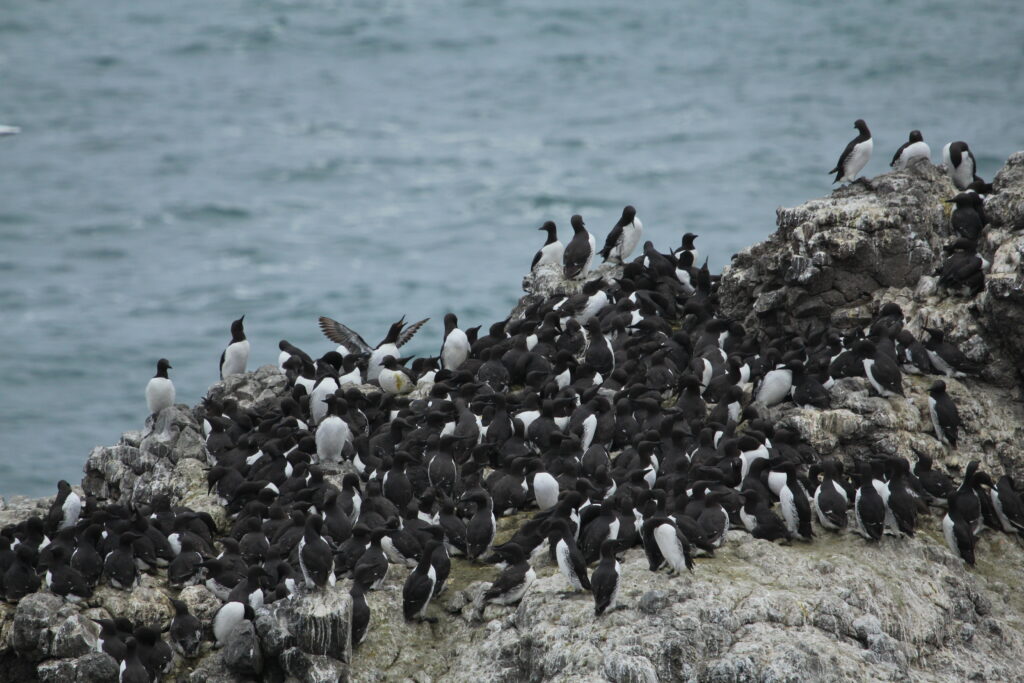
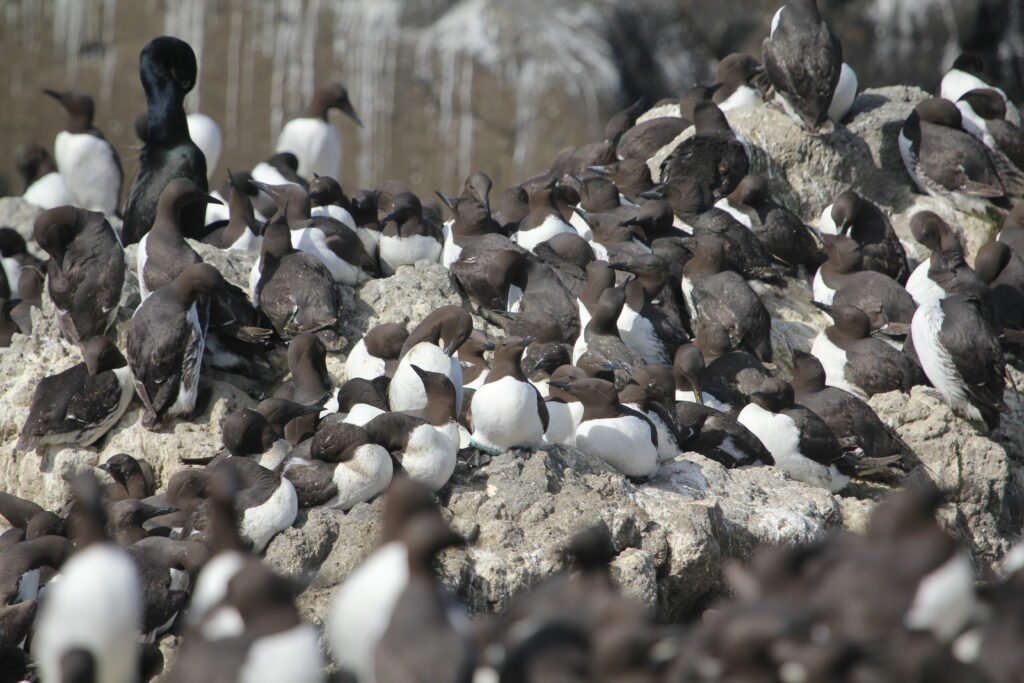
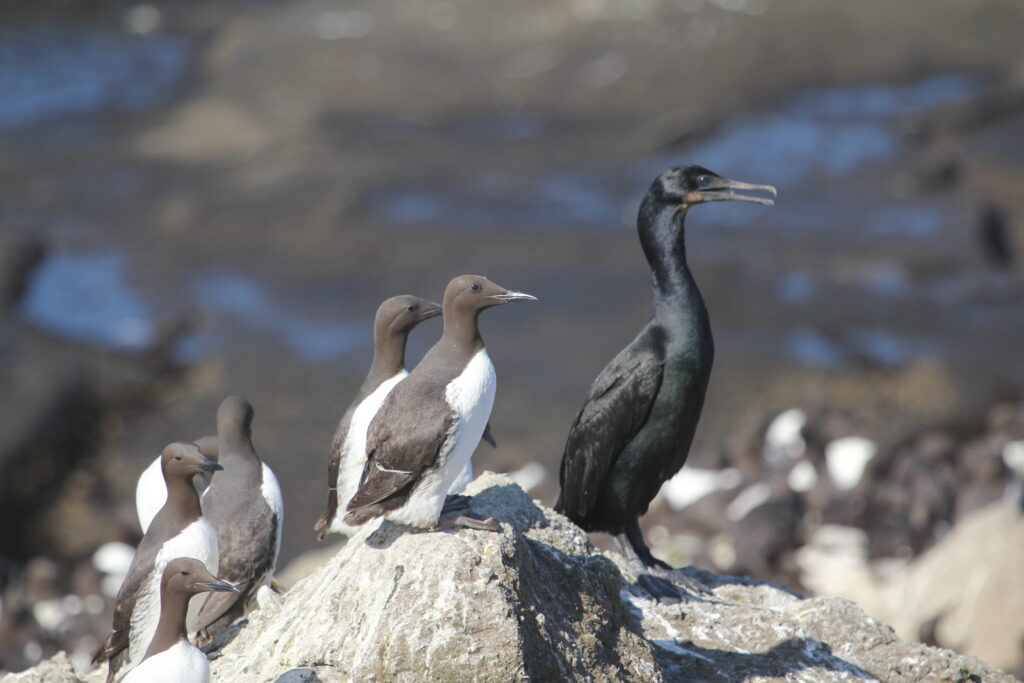
I drove out to Yaquina Head Outstanding Natural Area (YHONA) with Will Kennerley for the first time the morning of June 22nd and was amazed by the sheer amount of seabirds nesting at the site. At this point, the Brandt’s Cormorants and Pelagic Cormorants were looking quite settled, as many had already laid eggs and were busy incubating them while perfecting their nests. Although they laid their eggs a few weeks later than the cormorants, Common Murres were also congregated in their nesting colony either keeping their eggs warm or tripping over each other.
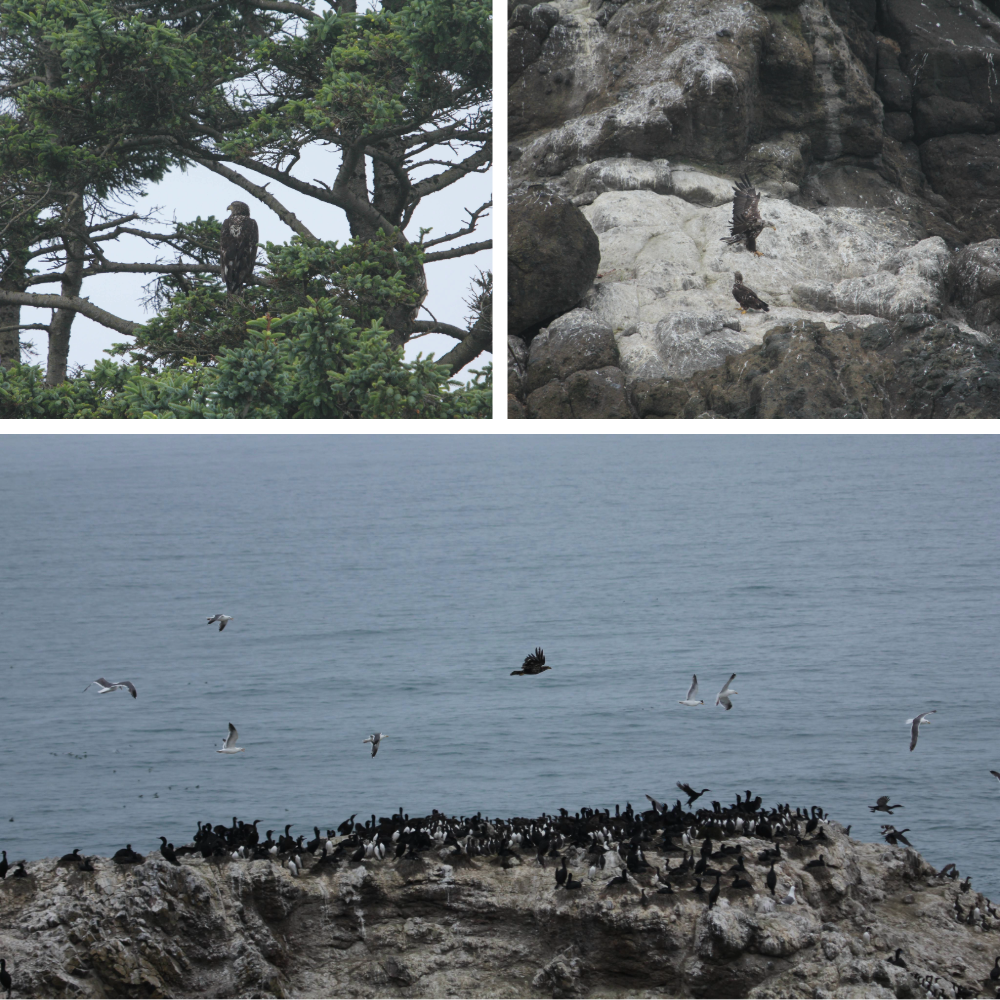
Since then, we’ve also been monitoring seabird plots in Pirate Cove, where it seems that the frequency of disturbance events by Bald Eagles has risen compared to previous years. In the past, Bald Eagle predation had been more common at Yaquina Head than at Pirate Cove, though it seems that a group of juvenile and adult eagles have been keen on the site in Depoe Bay this season. While unfortunate for the murres and cormorants that have lost eggs due to Bald Eagle disturbances and secondary predation by the Western Gulls, so it goes in wildlife. Despite this, the nesting colonies have persisted, with some cormorants re-laying eggs as eagle disturbances have been decreasing throughout the summer and some sheltered plots avoiding predation altogether. For instance, Brandt’s Cormorants at the base of Lion’s Head Rocks have nests full of several large chicks that hatched weeks earlier than the long-term average. Just a few hundred yards away, however, Brandt’s on the open and exposed Satellite Rock have had nests repeatedly depredated and they now have few, if any, eggs. Despite both groups breeding at the Yaquina Head colony complex, their productivity is likely to look drastically different, a pattern that has been seen in murres but is new to the cormorants here. Credit is also due to the murres, who have been gaining more and more courage to stand their ground during disturbance events. Now that the murres are largely on eggs, they are less likely to evacuate during eagle flybys and only leave the colony during more severe disturbances. Bravo, birds!
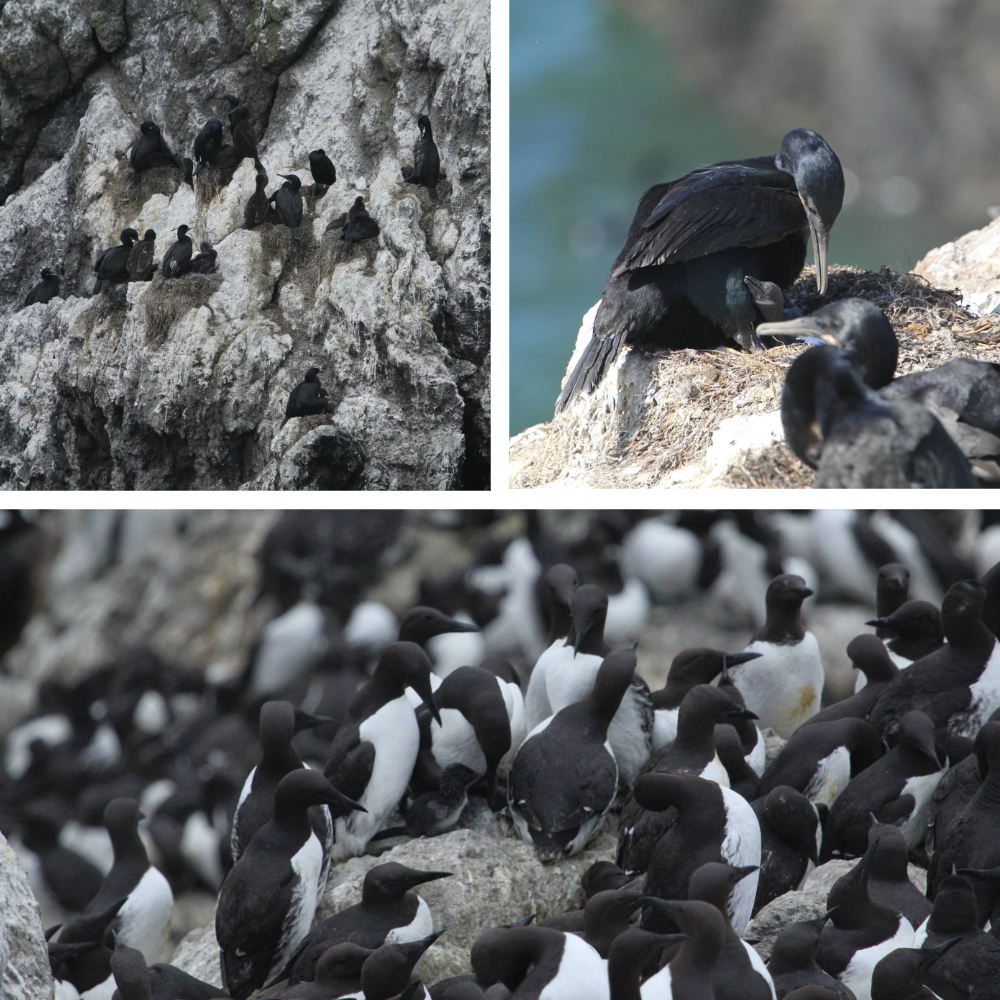
An exciting morning on July 6th, when we saw our first fledged Brandt’s cormorants chicks at Yaquina Head! With average annual median hatch dates for both cormorant species being in early-mid July, these chicks have fledged a few weeks early. However, most are still brooding eggs or young chicks, so the median hatch date for this year may still fall within the normal range. Just a few days later on July 9th, we spotted our first murre chick of the season at Depoe Bay! In previous decades, this would have been about the time when the first murre chicks would have fledged, making this season’s chicks consistent with the recent trend of murres nesting later in the season.
NOAA’s National Weather Service announced on June 11th that El Niño has developed in the tropical Pacific and is predicted to intensify in the fall1. El Niño effects are often subtle off the coast of Oregon during summer months, though we can expect its intensity in the fall to bring warmer sea surface temperatures2. These elevated temperatures can make zooplankton smaller and increase metabolic needs for fishes3. Not to mention, changes in water currents and wind tend to move these lower trophic prey species further north, disrupting local marine ecosystems2,3. In contrast to the indications of poor reproductive success for Brandt’s along the central California coast, the birds here may finish breeding in time before strong El Niño effects are felt. The predicted increase in El Niño conditions in the late fall and winter could lead to high adult mortality and perhaps reduced breeding effort next year. For now, however, things appear to be normal here on the Oregon coast.
Lastly, if we recall the 2014-2016 intense marine heatwave (“the Blob”), YHONA murres have since then fallen into a pattern of reproductive failure on even years and successfully reproducing on odd years. According to this pattern, it would come to no surprise if the colony fails to reproduce this year. At YHONA, we are currently following 12 murre plots, of which six are still active. However, seeing as the murres are typically less likely to abandon their nests during the chick-rearing stage and eggs are still present this late into the season, I have hope for some level of success in fledging chicks for the colony at YHONA.
Considering the recent increase in eagle populations in the area4 and the brewing strength of the El Niño in the tropical Pacific1, how might seabird reproductive success be affected? Will the murre colony succeed despite the forces working against them? Might this be the end of the pattern of biennial reproductive failure? We’ll see how the rest of the season plays out!
Read our Yaquina Head Early Season Update to see what the beginning of the summer looked like at these colonies!
References
1National Oceanic and Atmospheric Administration (2023). El Niño forms, expected to strengthen, say NOAA forecasters. National Oceanic and Atmospheric Administration. https://www.noaa.gov/news-release/el-nino-forms-expected-to-strengthen-say-noaa-forecasters
2USDA Climate Hubs (2026). El Niño in the Northwest: What Can We Expect? U.S. Department of Agriculture, Northwest Climate Hub. https://www.climatehubs.usda.gov/hubs/northwest/topic/el-nino-northwest-what-can-we-expect
3Piatt JF, Parrish JK, Renner HM, Schoen SK, Jones TT, Arimitsu ML, Kuletz KJ, Bodenstein B, García-Reyes M, Duerr RS, et al. 2020. Extreme mortality and reproductive failure of common murres resulting from the northeast Pacific marine heatwave of 2014–2016. PLoS One. 15(1):e0226087.https://doi.org/10.1371/journal.pone.0226087
4Isaacs, F. B. and R. G. Anthony (2011). Bald Eagles (Haliaeetus leucocephalus) Nesting in Oregon and Along the Lower Columbia River, 1978–2007. Final Report, 18 March 2011. Oregon Cooperative Fish and Wildlife Research Unit, Department of Fisheries and Wildlife, Oregon State University, Corvallis, Oregon, USA.