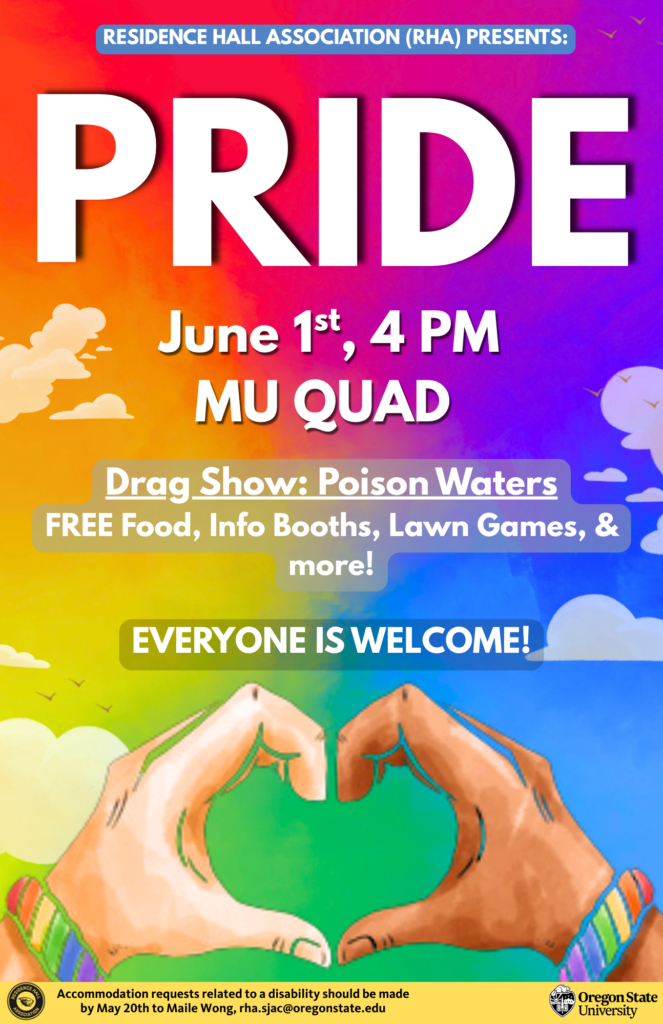
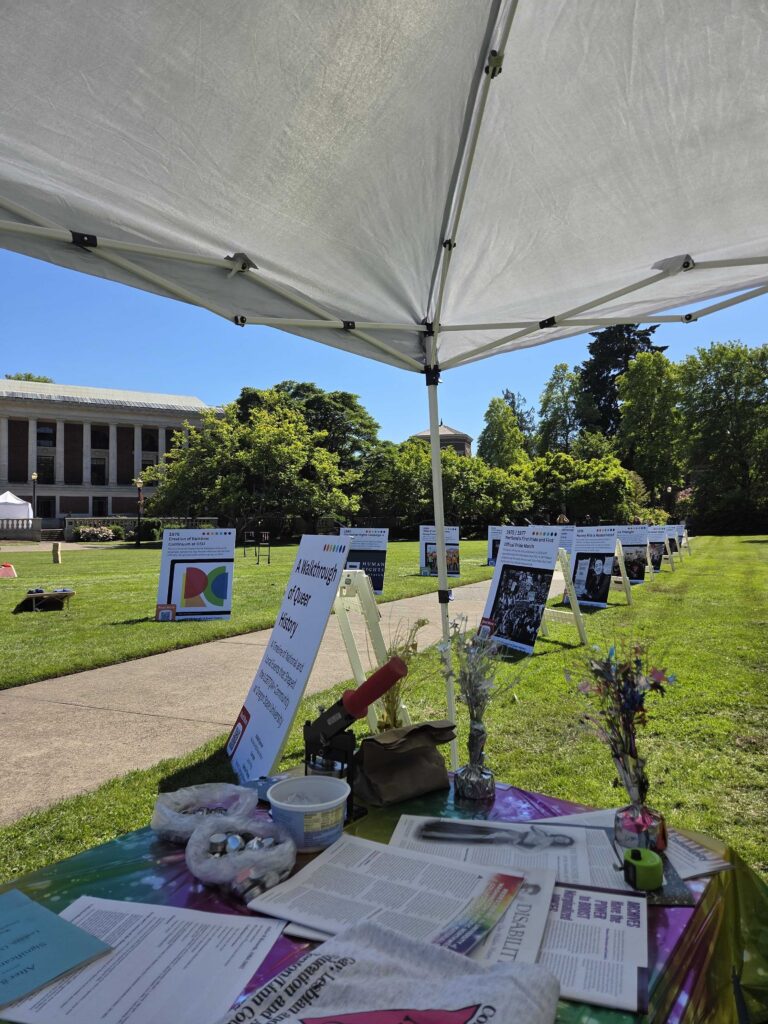
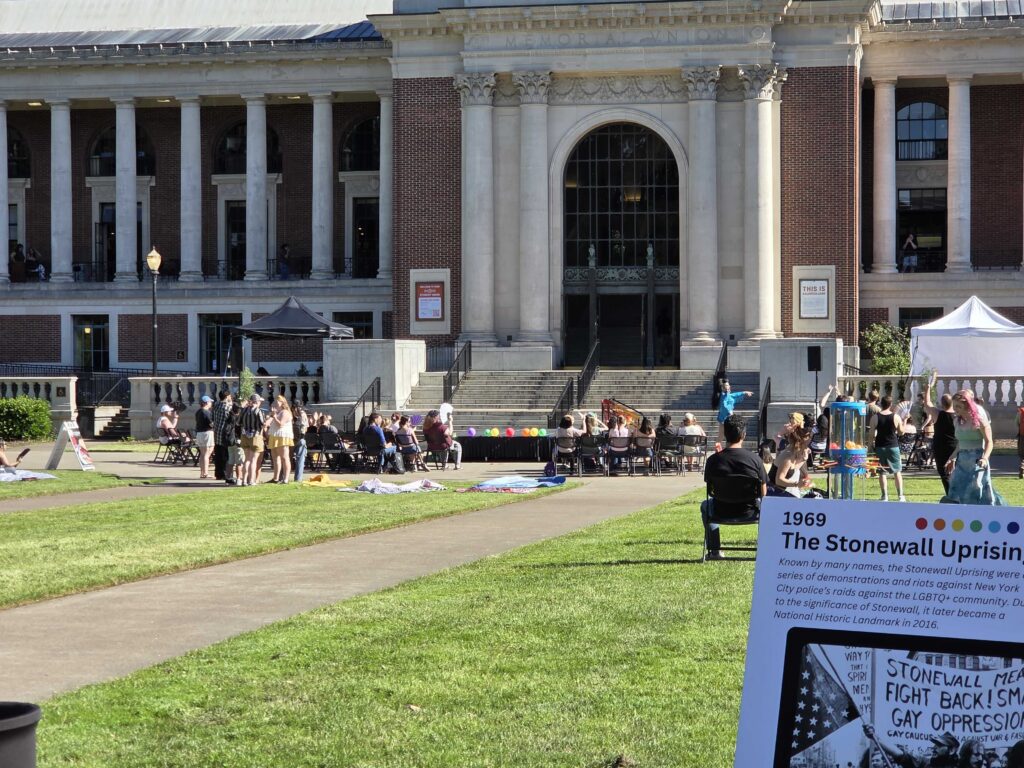
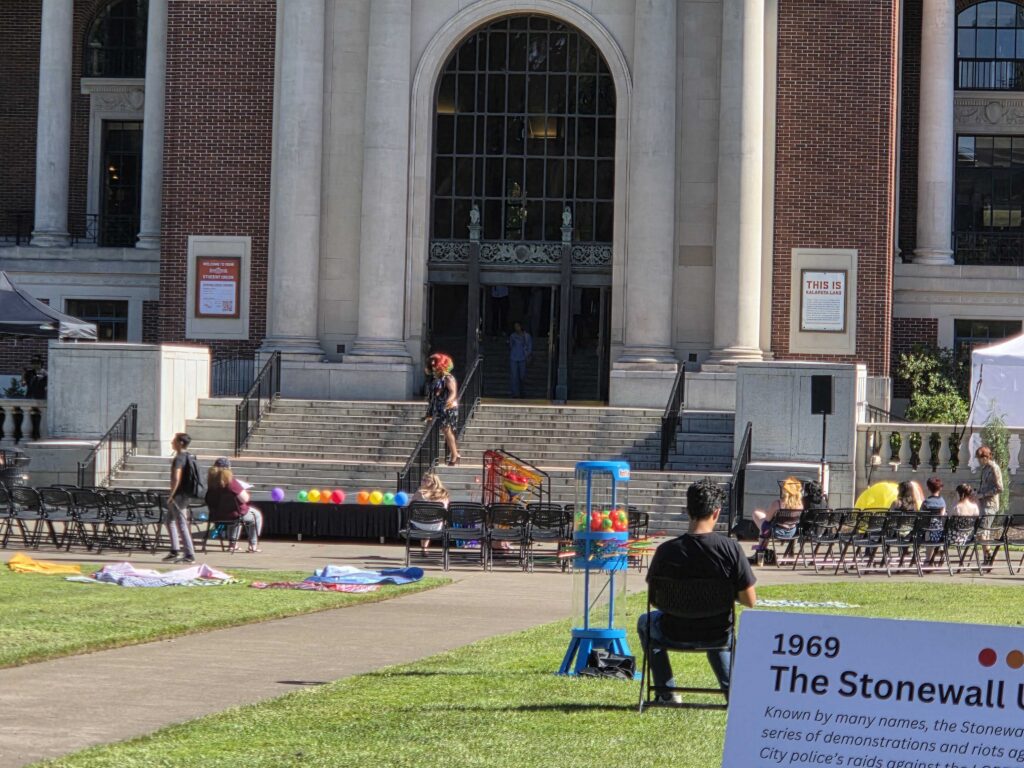
The OSU Queer Archives hosted a booth at OSU’s June 1st Pride event in the MU Quad! It was a beautiful late spring day, with over 20 organizations sharing information with the hundreds of event attendees. Drag Queen Poison Waters hosted a meet-and-greet as well as a fabulous main stage show.
OSQA Booth
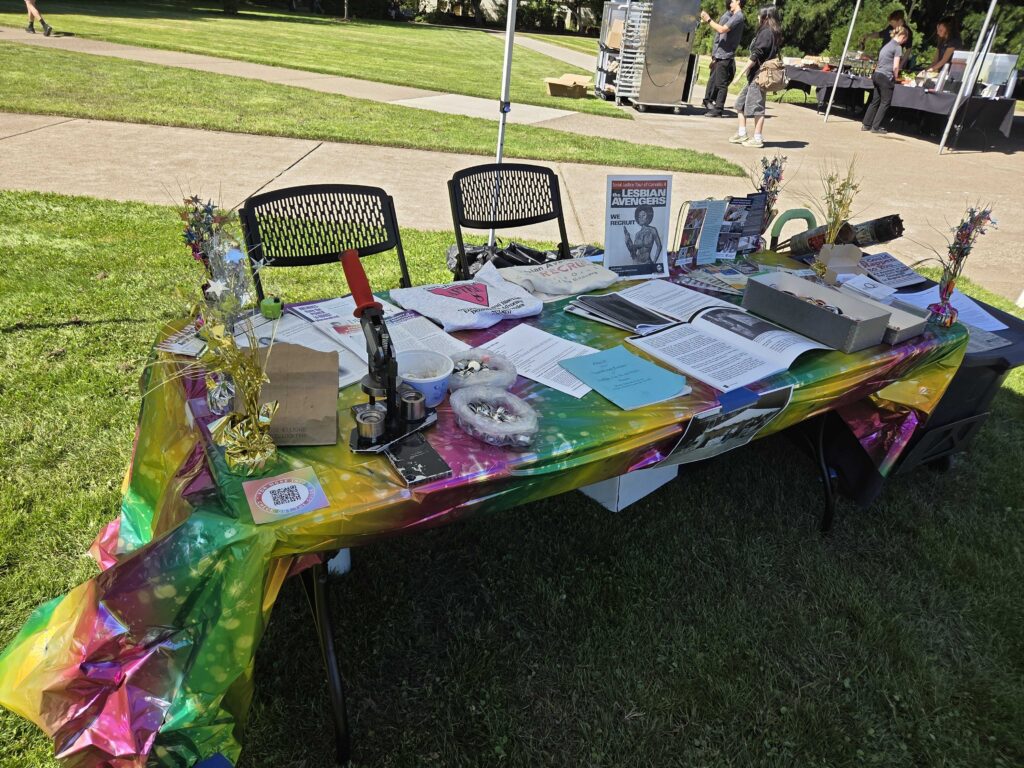
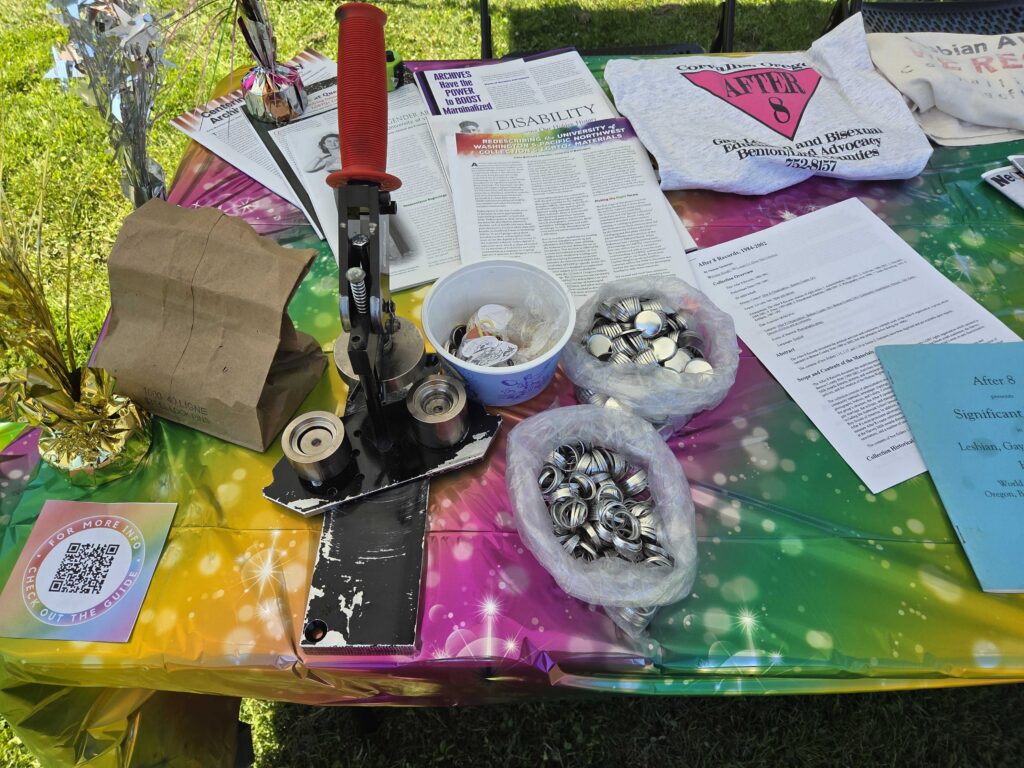
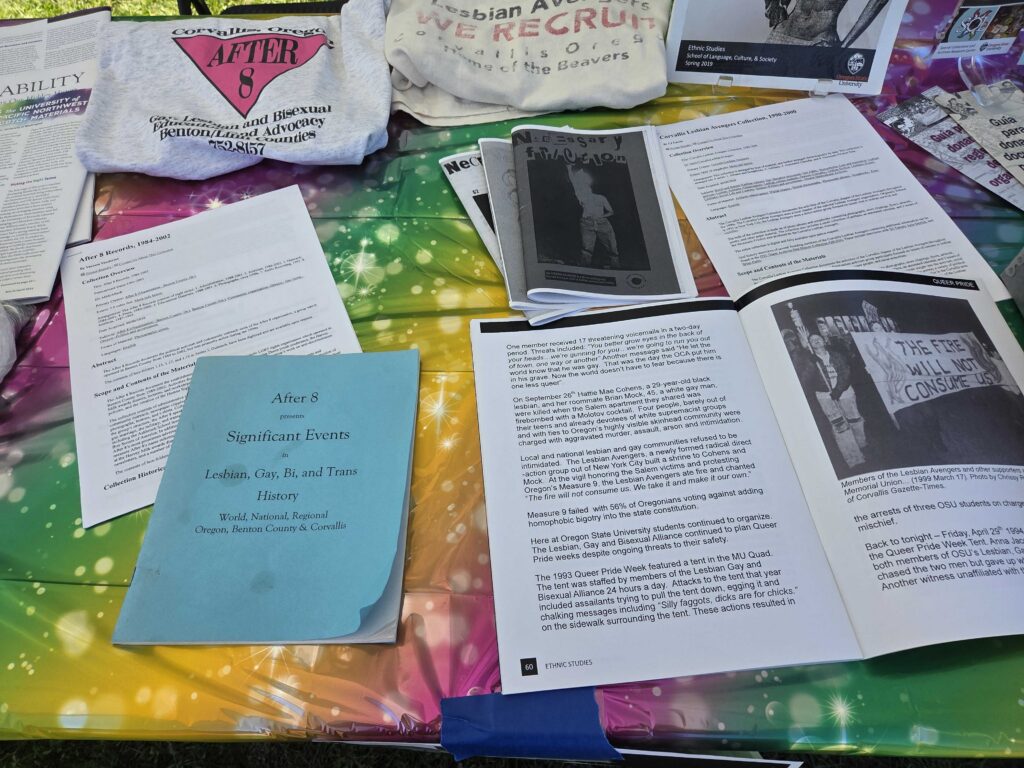
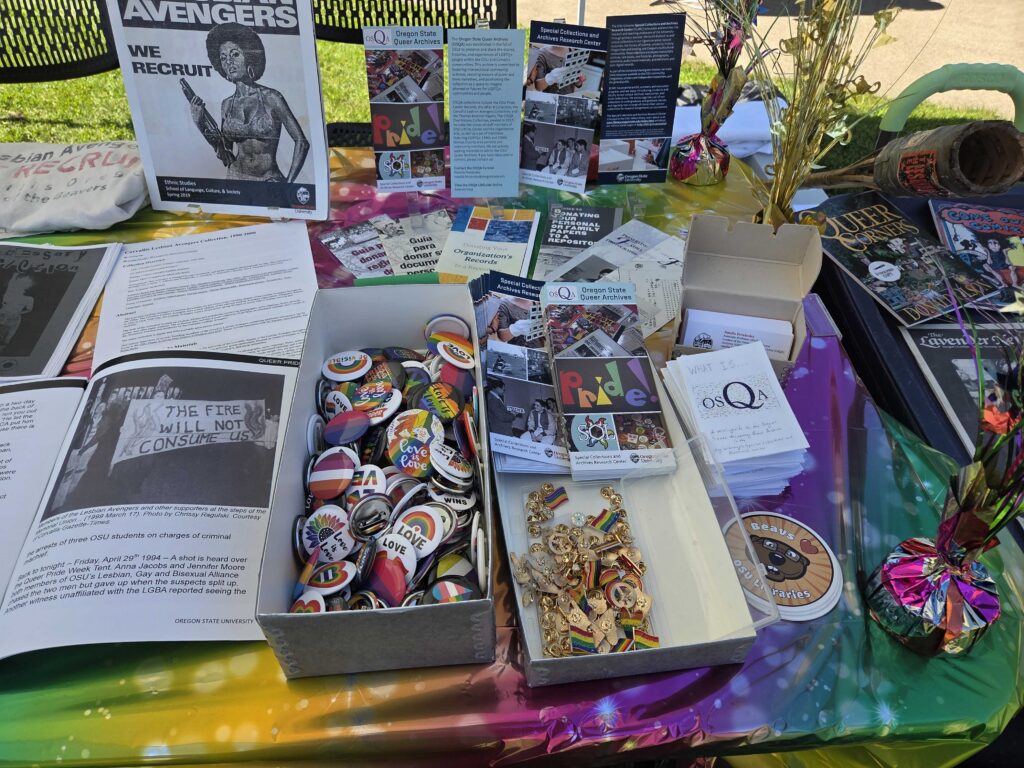
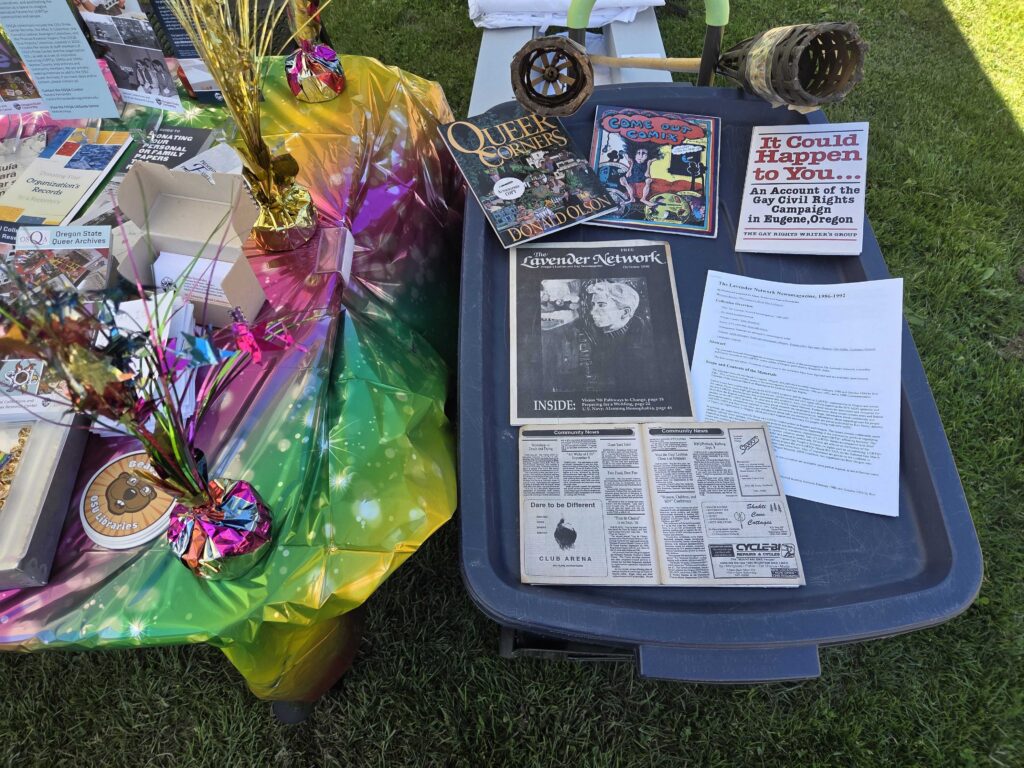
We had 85 people stop by our booth! We featured copies of materials from a few of our collections including the Corvallis Lesbian Avengers Collection, the After 8 Records, and The Lavender Network Newsmagazine. We also included some materials pertaining to general information for archiving personal papers and some newsletters from the Society of American Archivists’ Archival Outlook newsletter that showcased how archives across the nation support traditionally marginalized communities.
As giveaways, we offered an assortment of Pride pins – those are always a big hit – and, as a new giveaway for this year, we offered a mini-zine about OSQA — we gave out 35 zines!
OSQA BoothOSQA Booth – Button MakerOSQA Booth – After 8 and Corvallis Lesbian Avengers MaterialsOSQA Booth – free pride pins and OSQA mini-zinesOSQA Booth – The Lavender Network collection and queer books
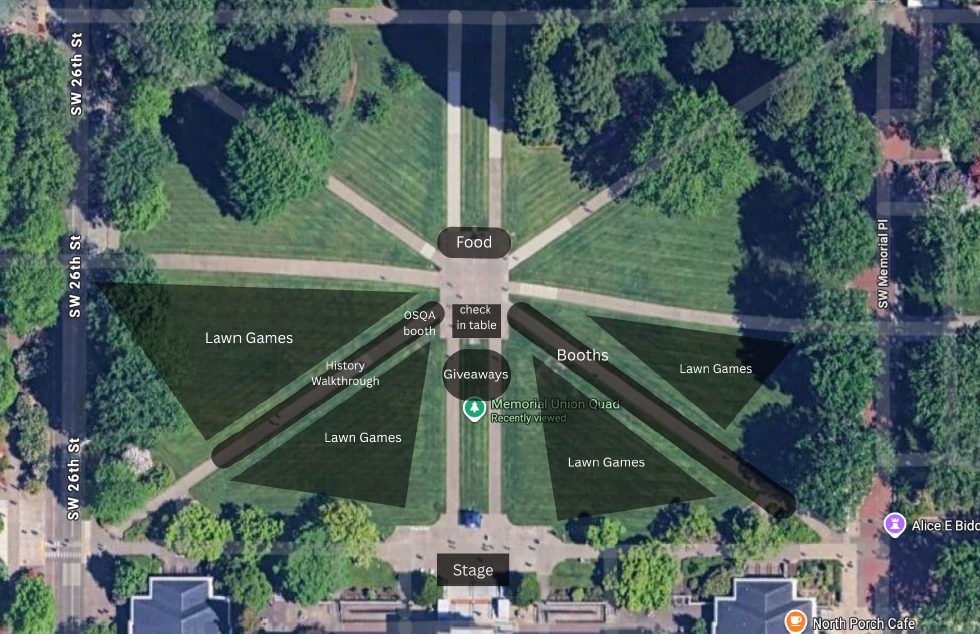
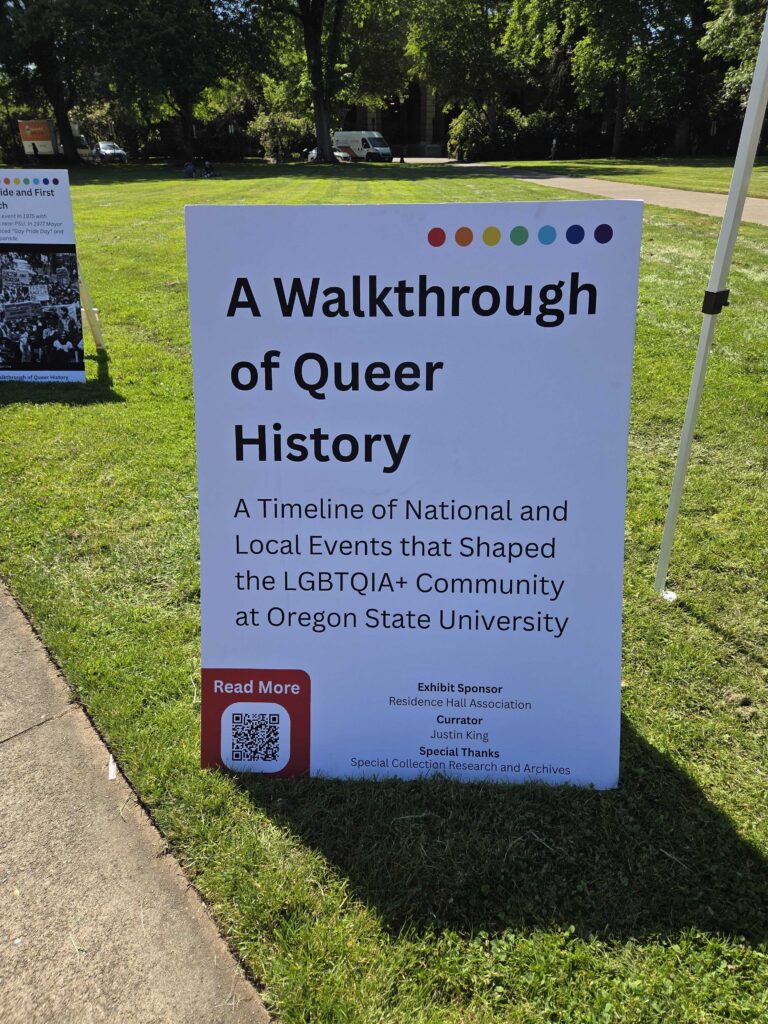
BONUS: This year our booth was in a special location, on the side of the MU Quad with a Queer History Exhibit.
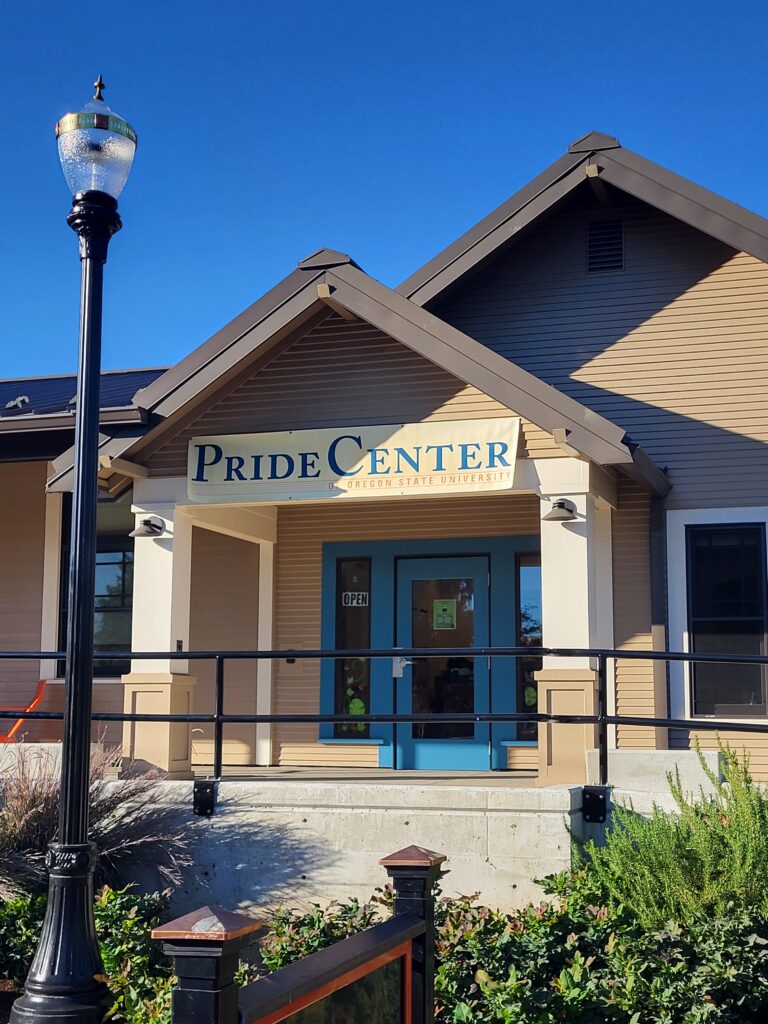
The Pride Center is located on the southern side of campus at 1553 SW A Ave, Corvallis. Sol is not located within the Pride Center, but holds regular office hours there and in all other cultural centers to help provide support and nurture community for all LGBTQ+ students of color.
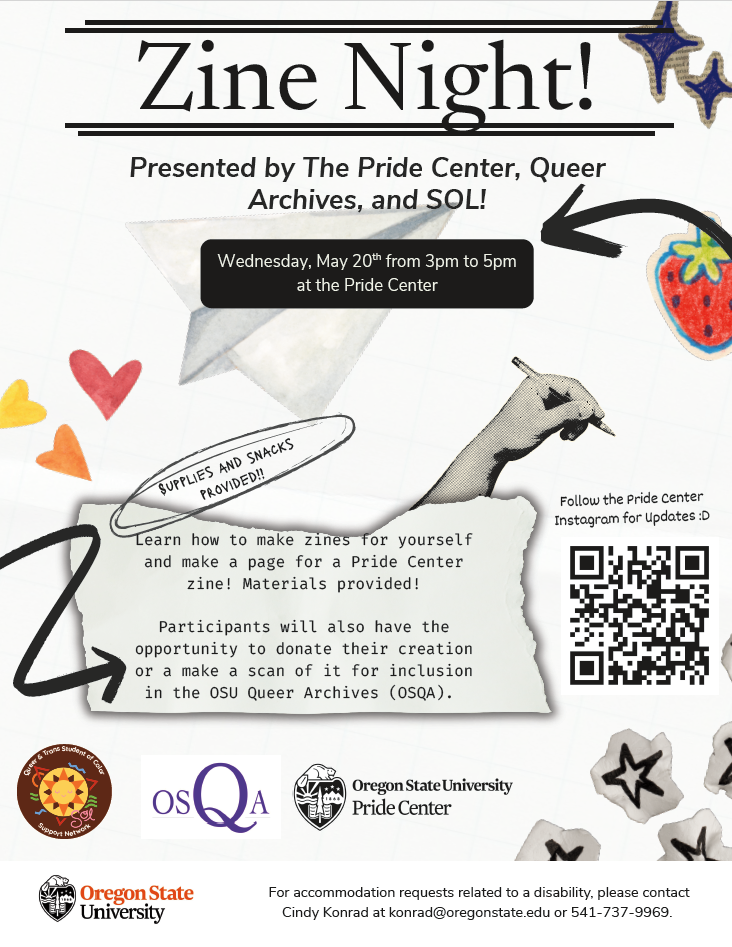
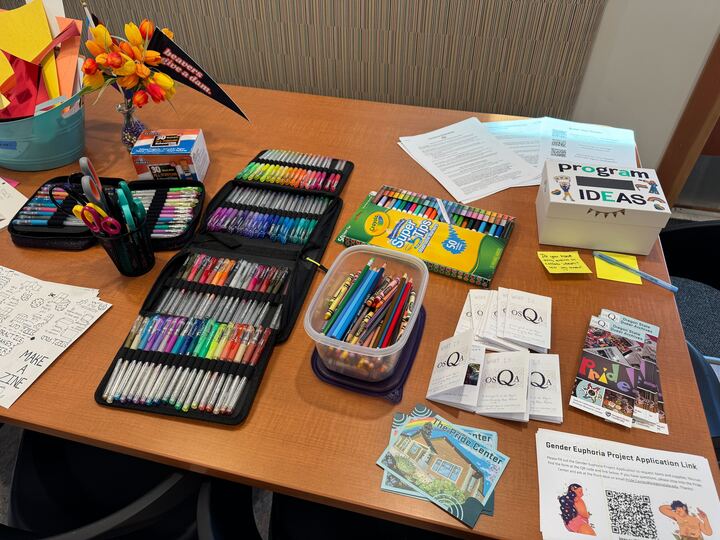
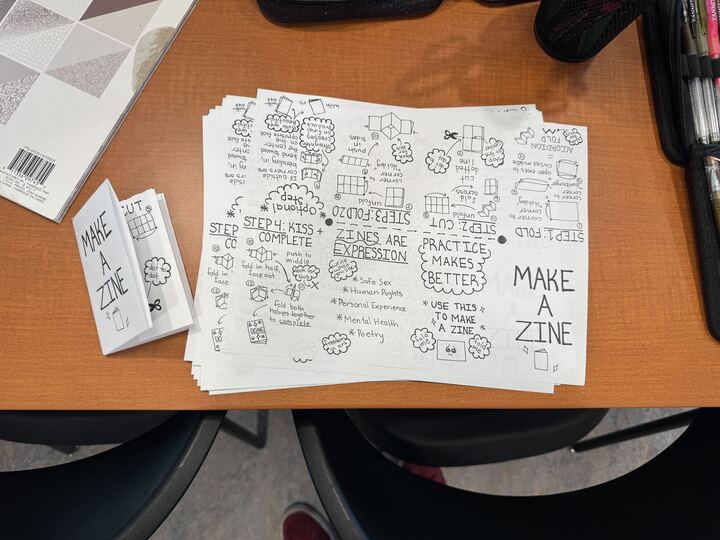
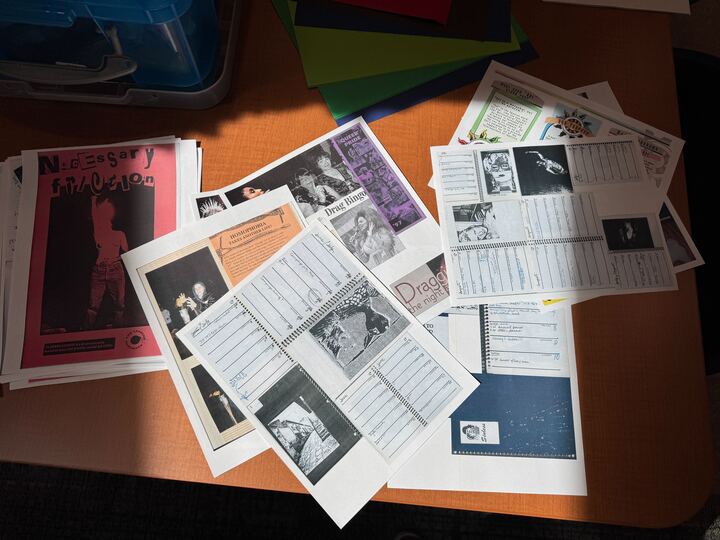
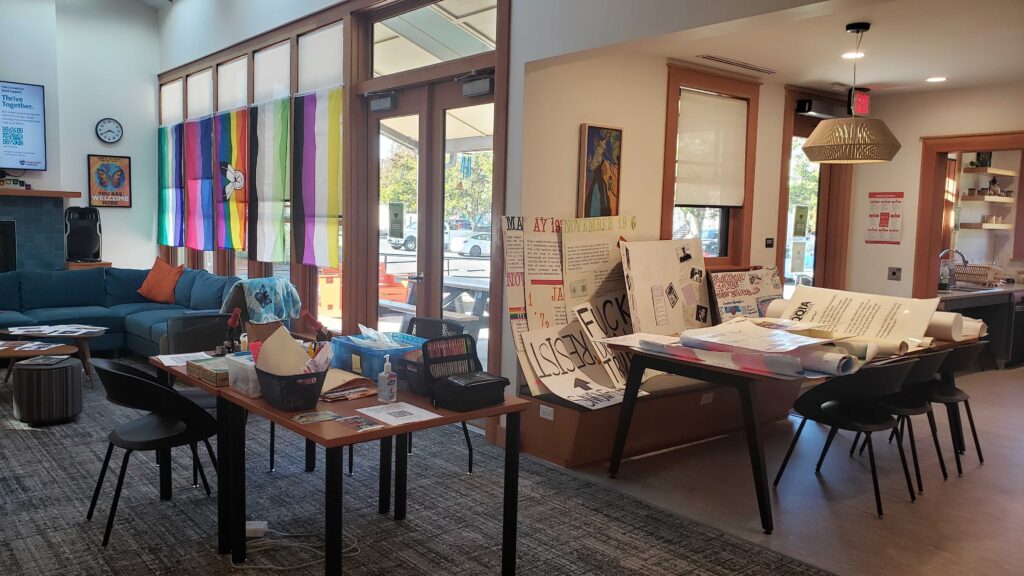
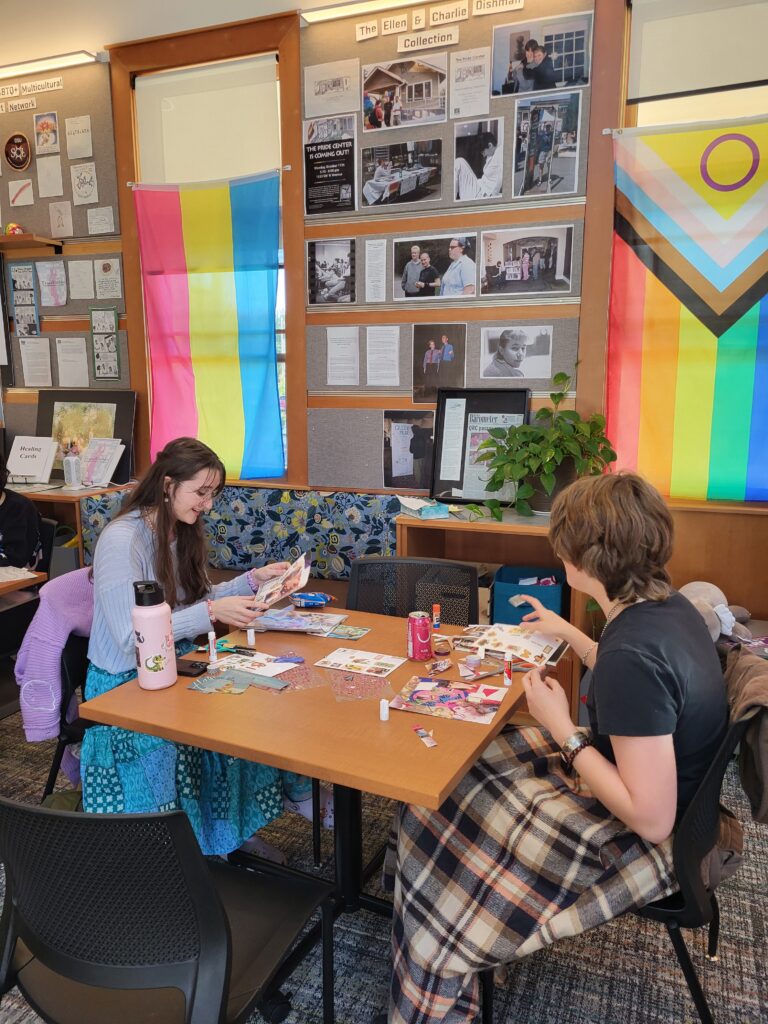
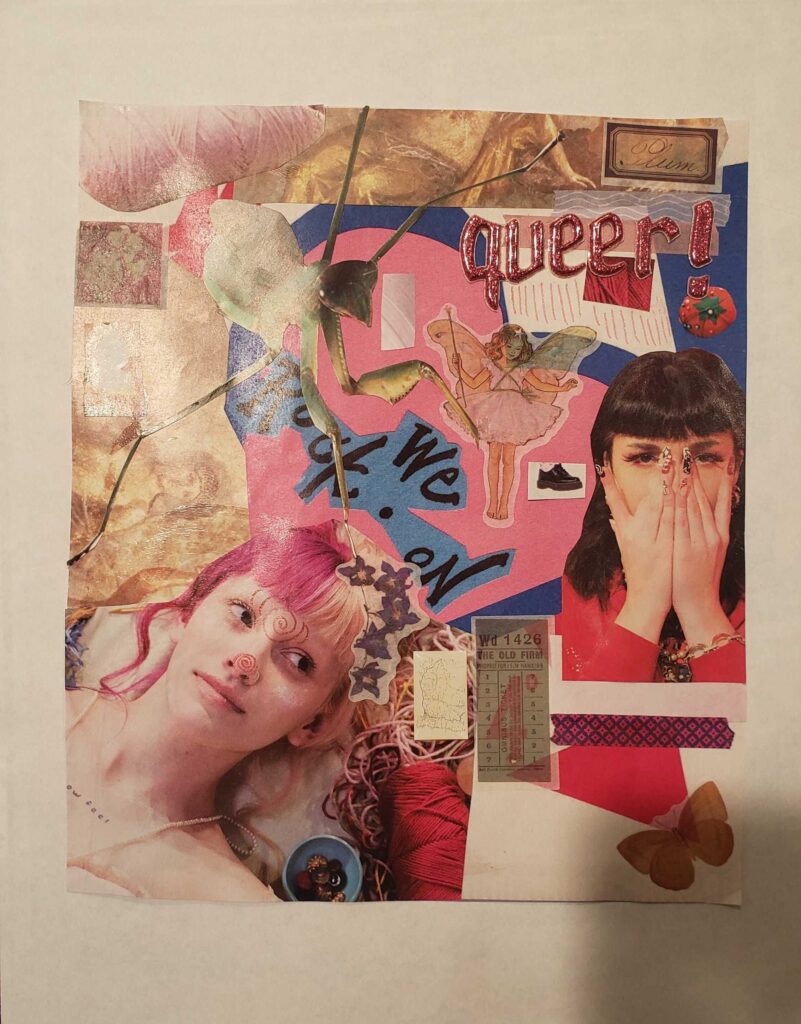
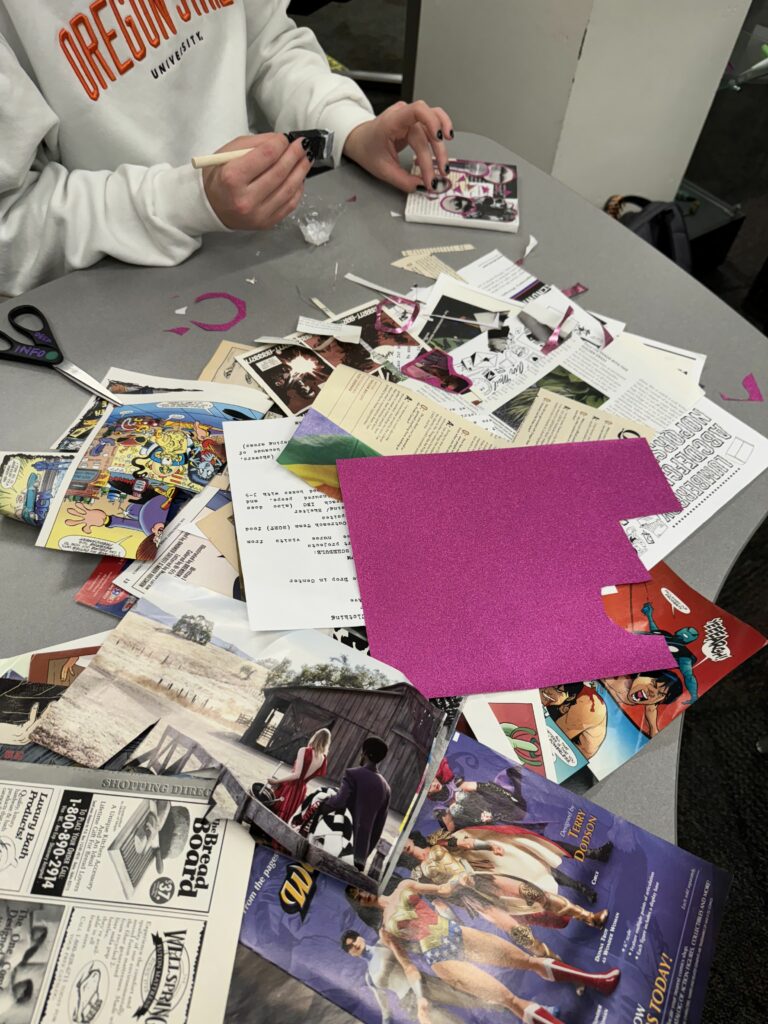
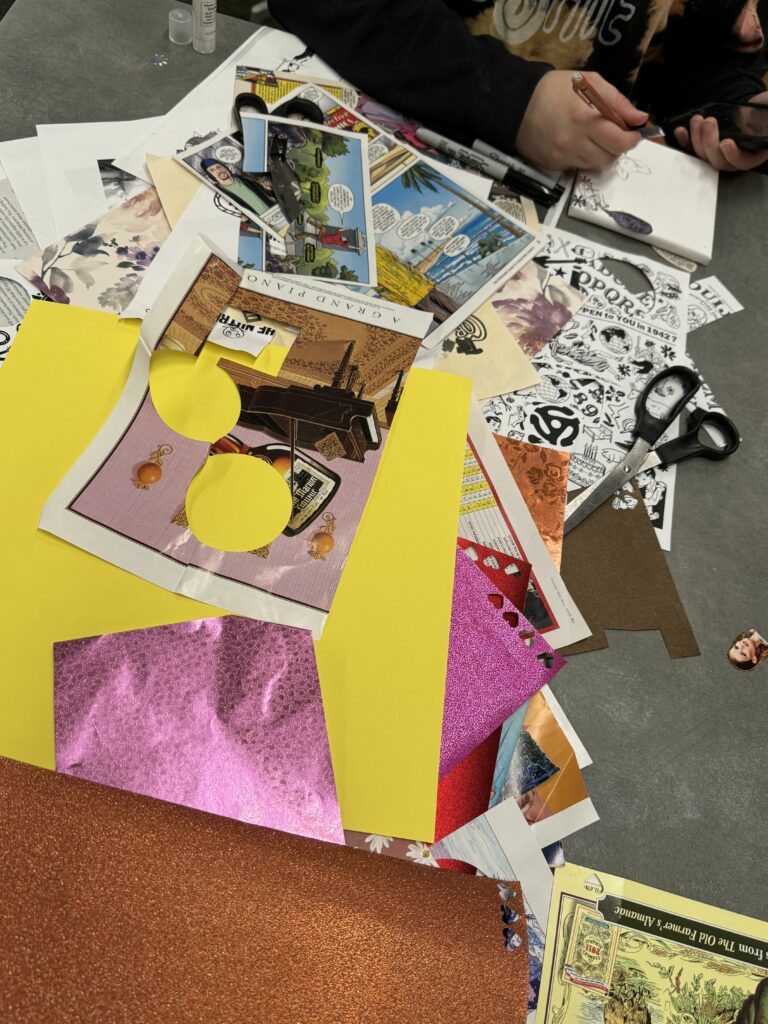
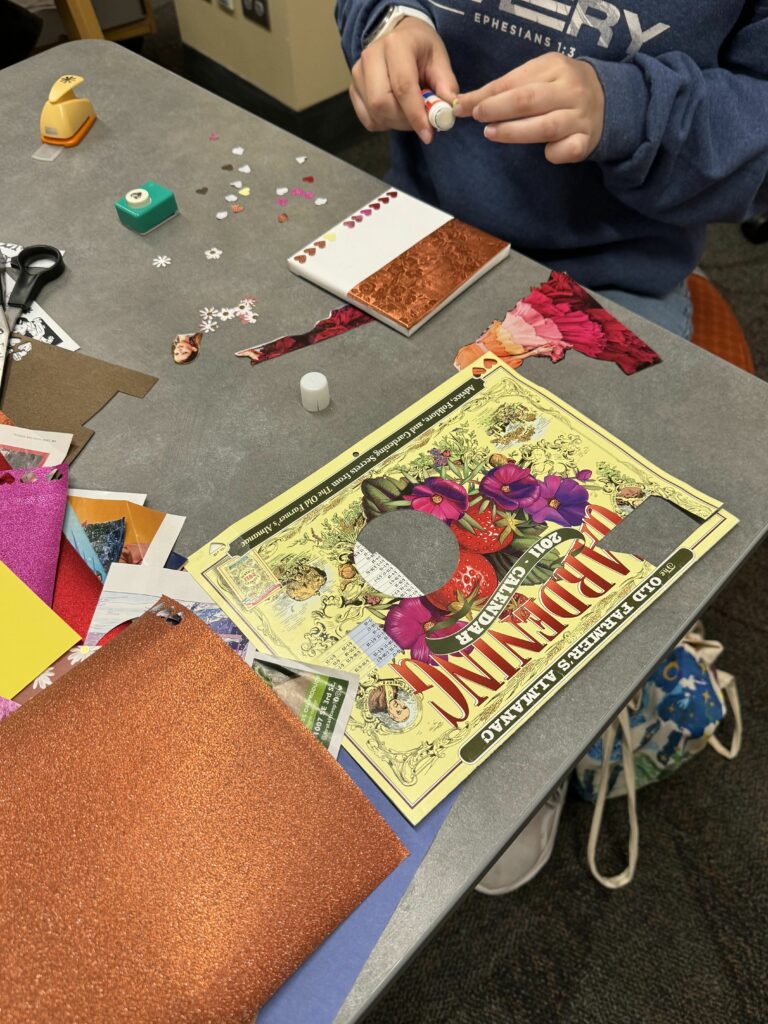
All three organizations provided crafting materials with a theme of pulling from our shared Queer and multicultural history. OSQA pulled images from the Lesbian Avengers scrapbooks, the Sol collection, and the Pride Center collection, including photos of what the Pride Center looked like before their recent renovation. The Pride Center provided wonderful mini-zines that guided guests through how to fold, cut, and decorate their own mini-zine! Guests were given free range of topic, and the Pride Center received several donations of pre-made zines as well as ones made during the event. It was an intimate gathering, with 13 enthusiastic event participants. Thank you to the Pride Center and to Sol for hosting OSQA!
Below are a few photos from the event:
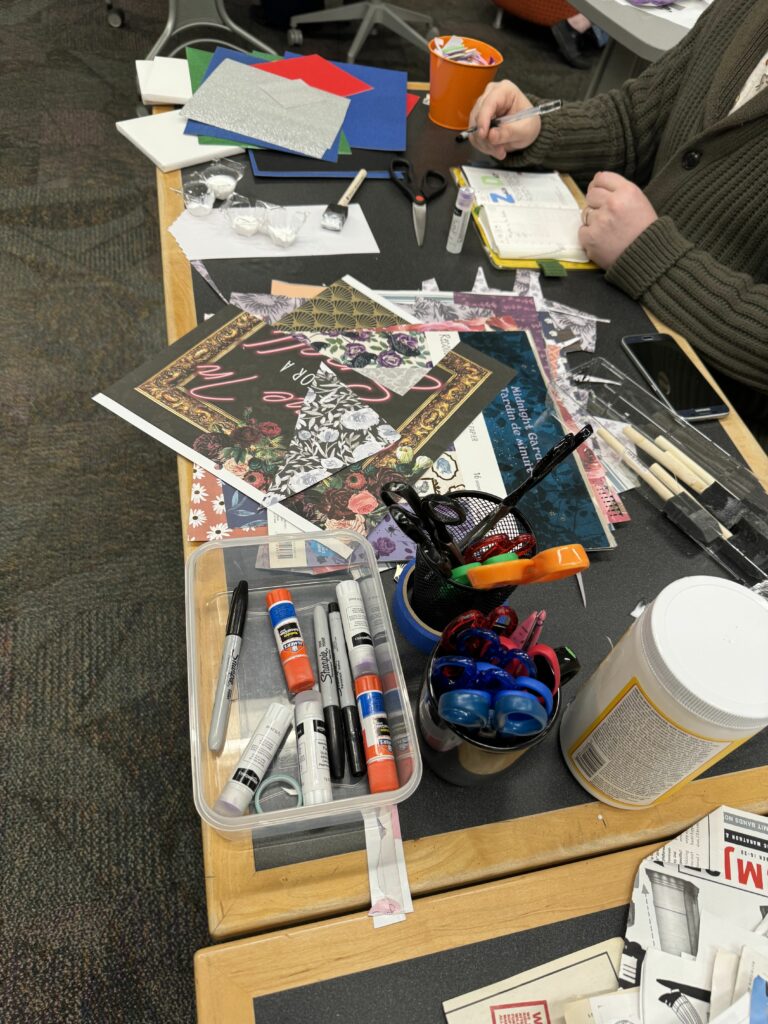
Zine making supplies
A zine explaining how to make a zineZine making materials
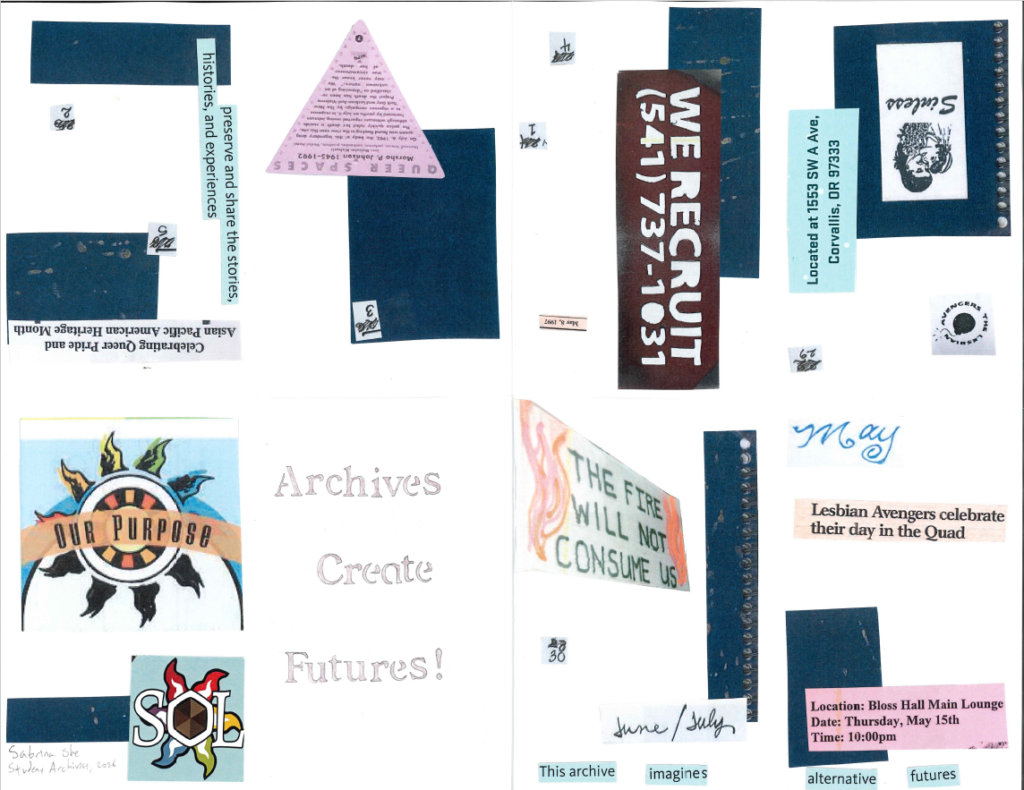
And, here is a zine made by Sabrina She, OSQA Student Archivist, during the event!
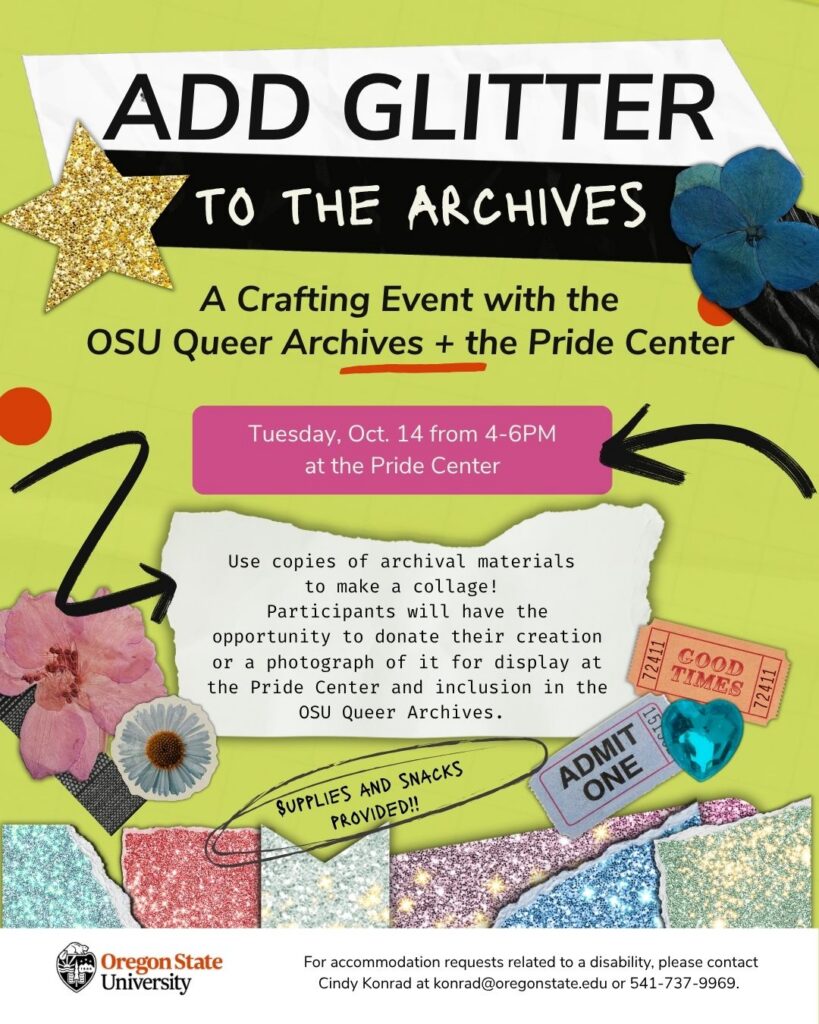
The OSU Queer Archives was delighted to collaborate with the OSU Pride Center for the Center to host the event “Add Glitter to the Archives”!
The crafternoon event “Glitter in the Archives” began in 2016 as part of Oregon Archives Month and OSU’s Queer History Month celebrations to feature copies of materials from the OSU Queer Archives to use for craft-making. It was hosted in the Special Collections and Archives Research Center’s 5th Floor Reading Room in the Valley Library from 2016-2019, and in 2023-2024, we collaborated with the Libraries’ Crafternoon series and the event was hosted in the main lobby of the Library — hence the new name “Add Glitter to the Archives.”
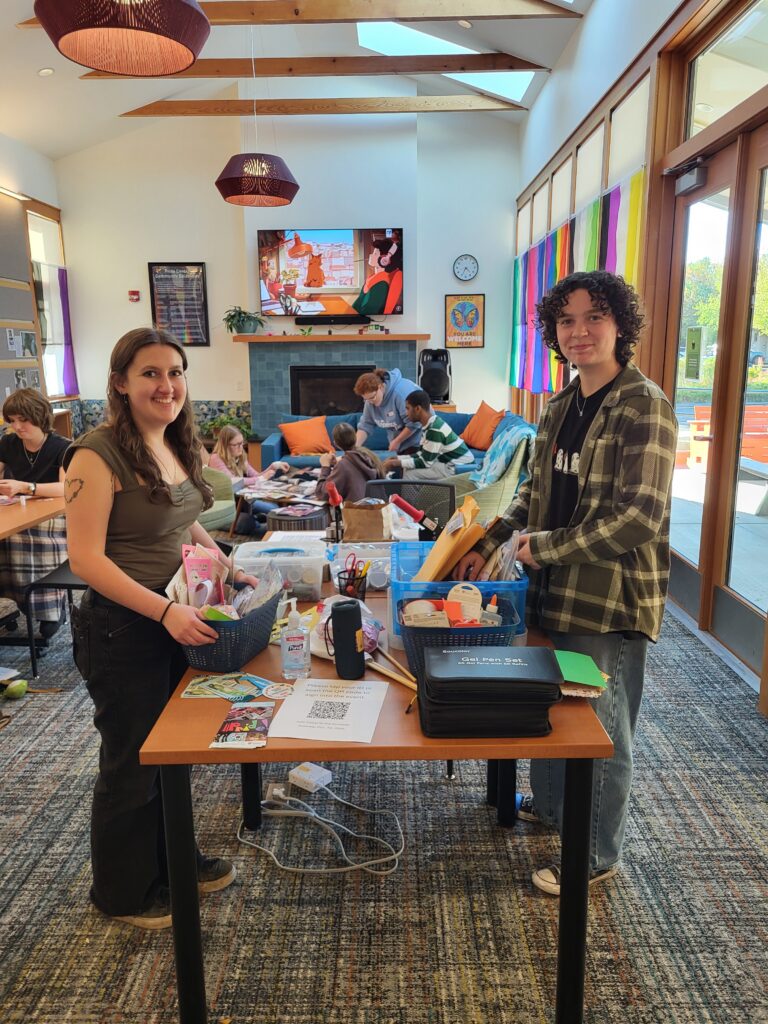
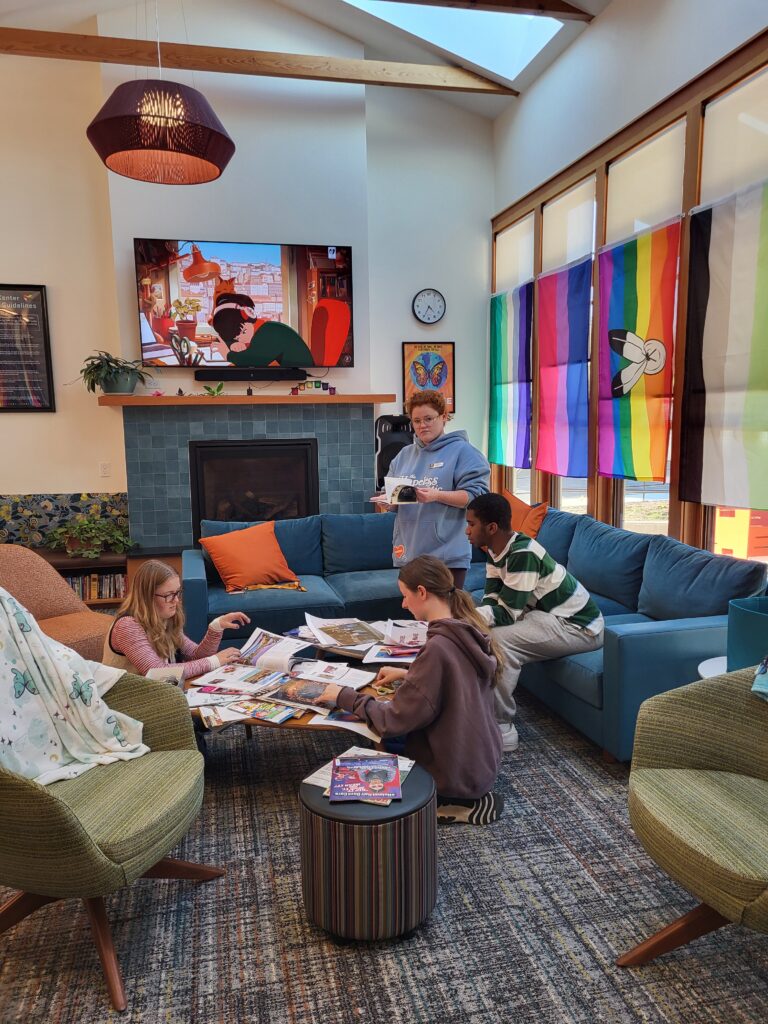
Hosting the event at the Pride Center was extra special because the event was an opportunity for many new students to come to the Pride Center for the first time as part of the start to the academic year. It was an event by and for the community in a safe community space. And, it was a great opportunity to get to know the Pride Center staff!
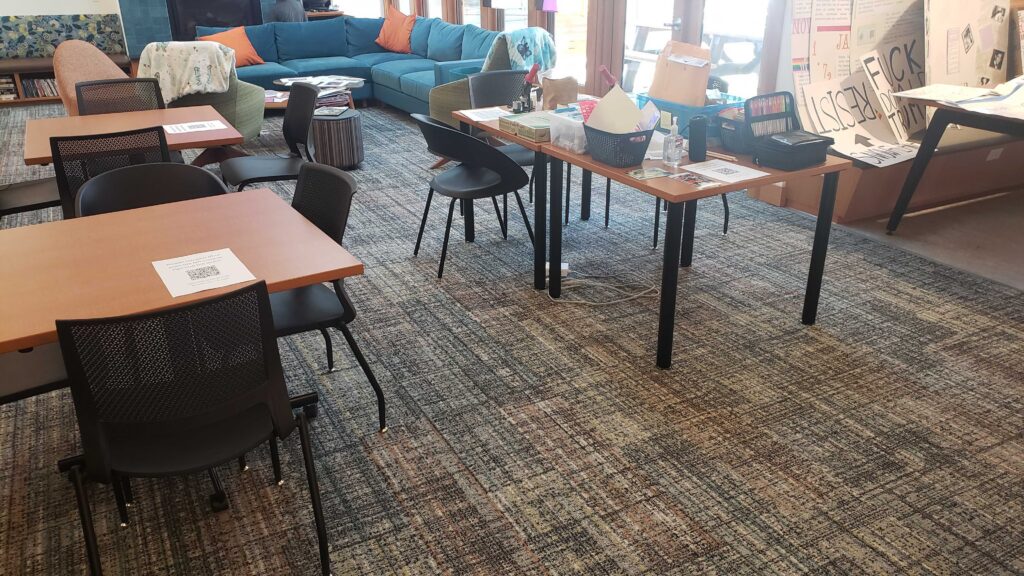
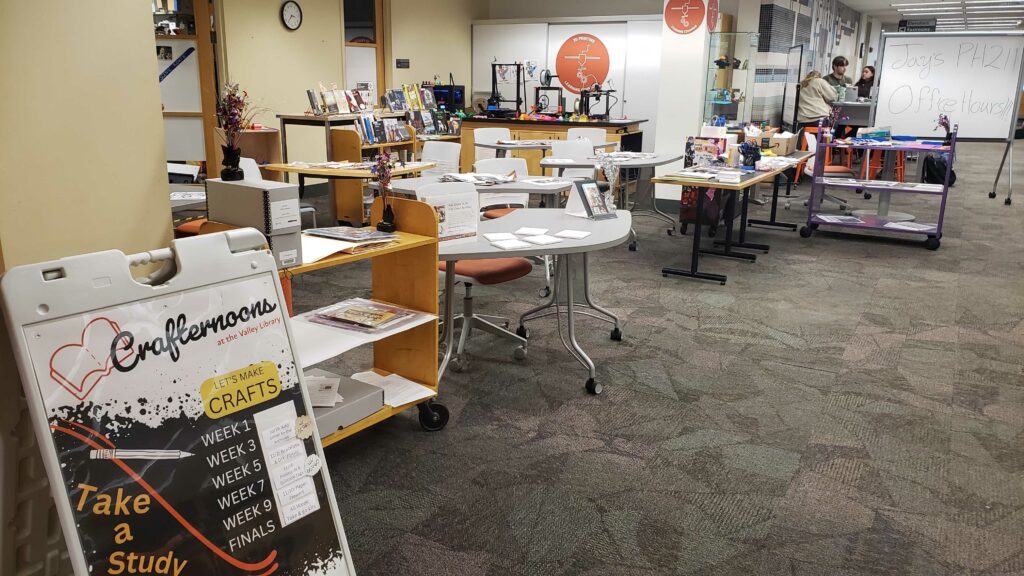
Below is the crafternoon setup featuring lots of glittery collaging supplies and copies of OSQA archival materials ~ about 12 students, plus Pride Center student staff, joined us for the event!
Event Space Set Up
Event space set up at the Pride Center
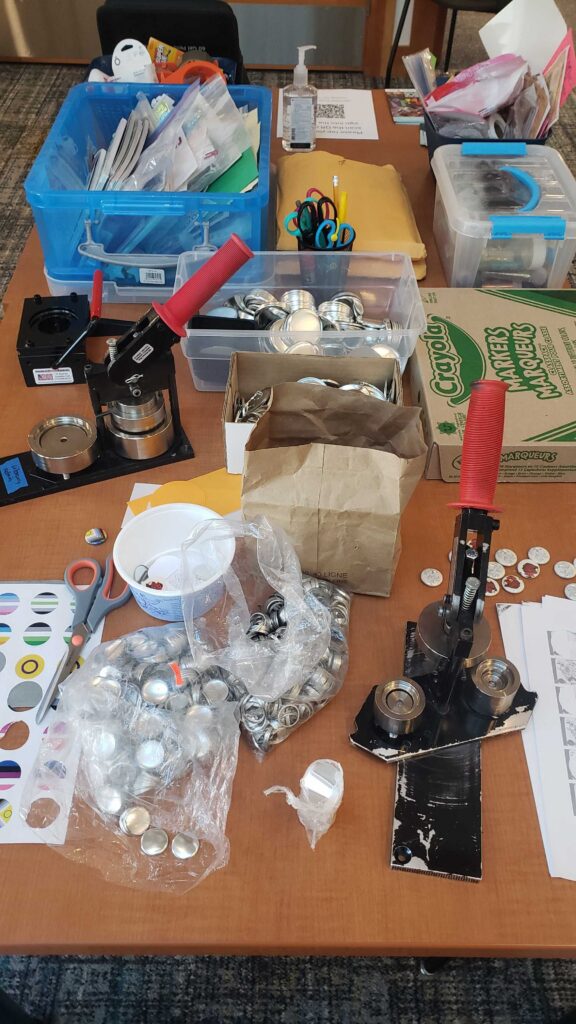
Crafting supplies, including button-makers!
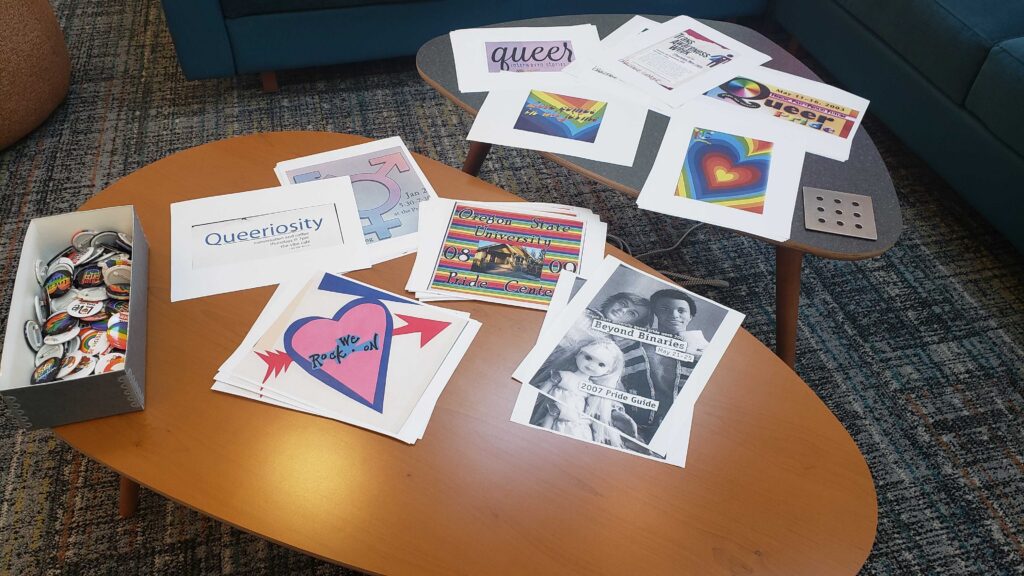
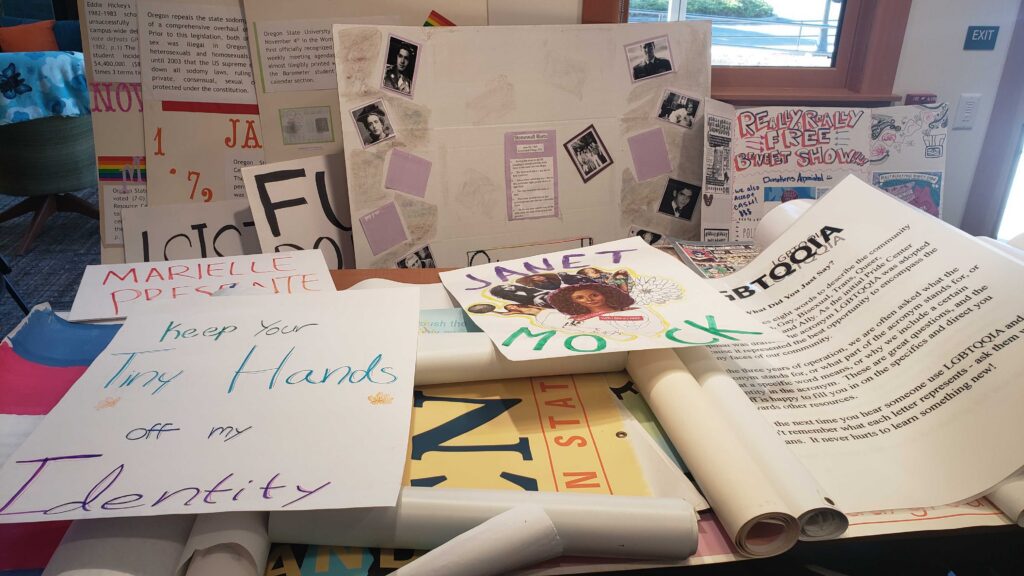
Copies of archival materials available for craft-makingEvent space set up – supplies and crafting materialsNew for this year: posters the Pride Center is not retaining, and OSQA documented via photographs, were made available for crafting
Event Participants
Two event participants with crafting supplies
Three event participants reviewing crafting materials options
Two event participants crafting
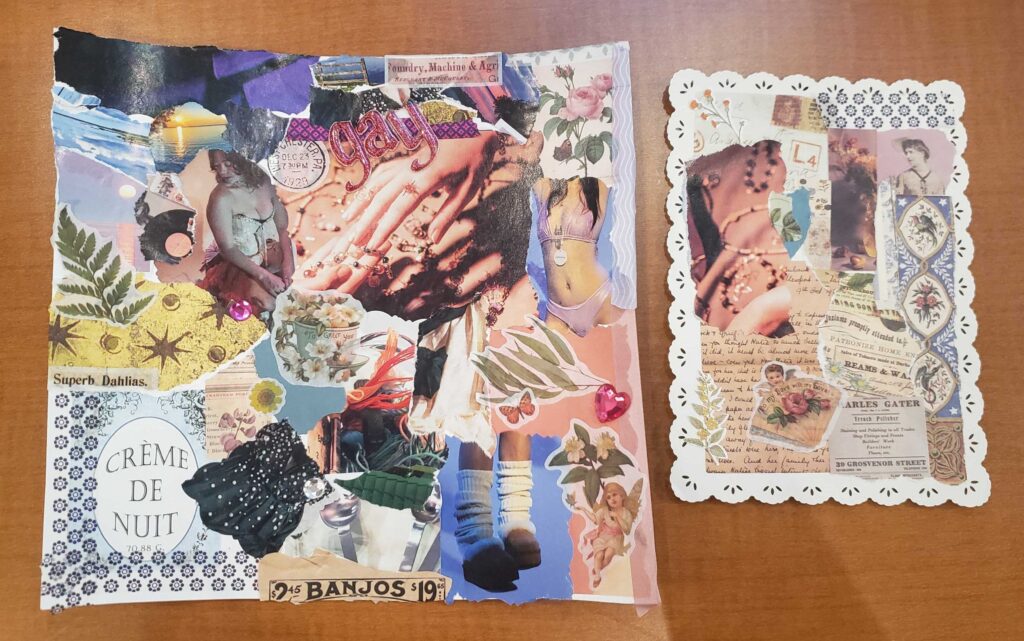
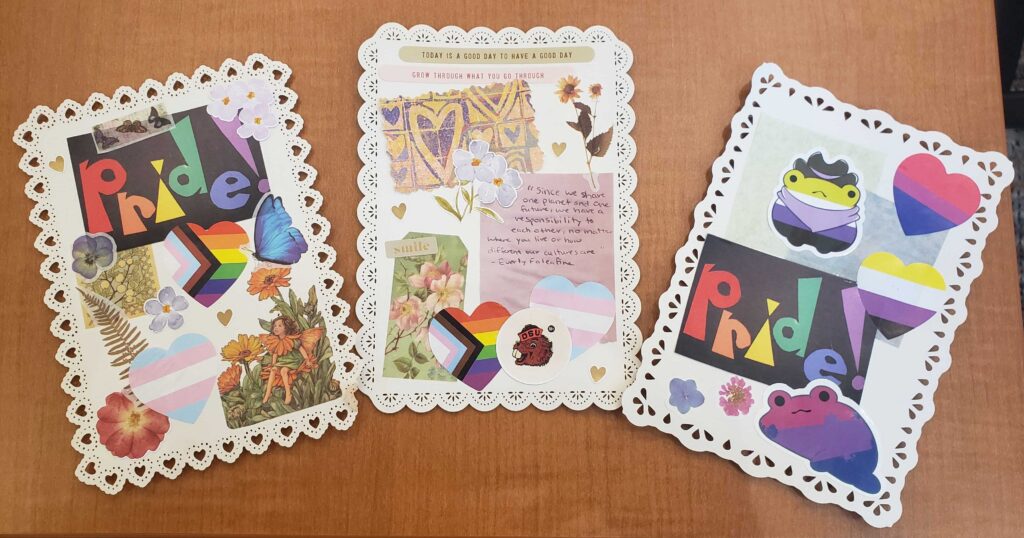
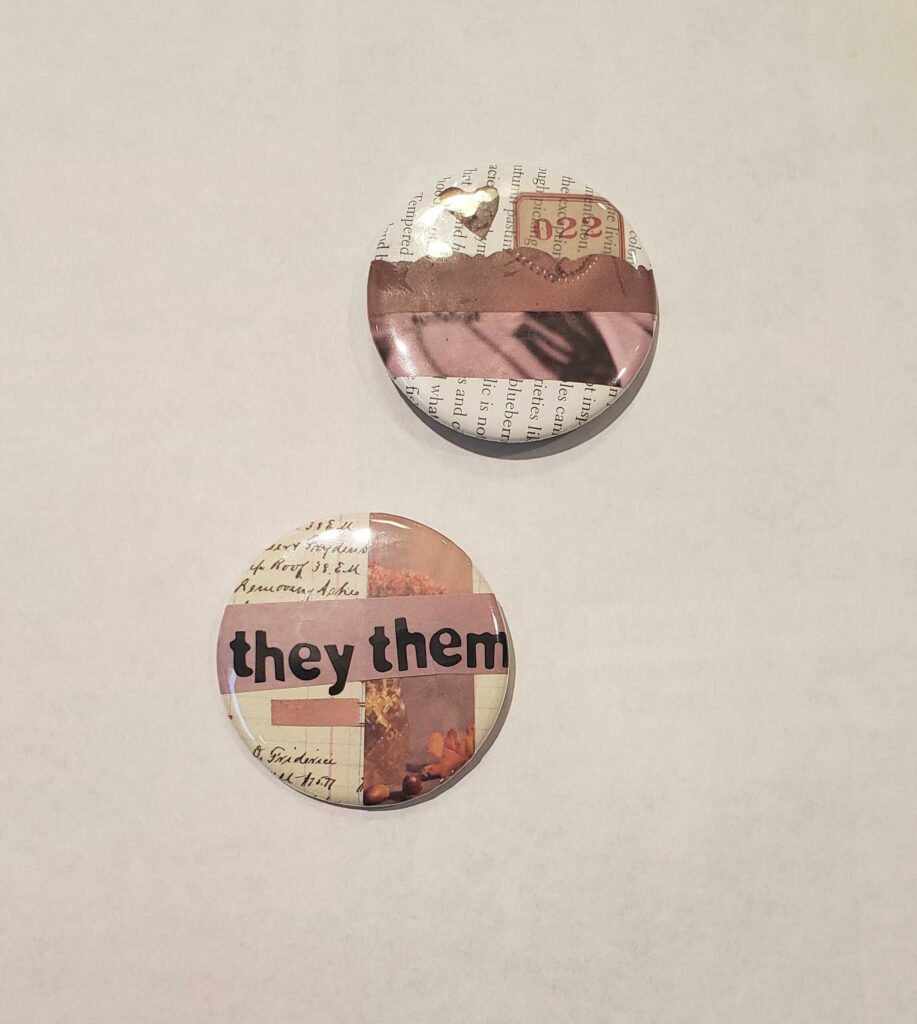
Photos of some of the beautiful crafts!
Two collages made by the same artistThree collages made by the same artistButtons made by a third artist A collage made by the same artist who crafted the buttons
Be sure to visit the Pride Center!
OSU Pride Center, located at 1553 SW A Ave, Corvallis, OR 97333
The OSU Queer Archives hosted a booth at OSU’s June 2nd Pride event in the MU Quad and we had a blast! Lots of organizations shared information with the hundreds of attendees, there was an assortment of games, crafts, a photo booth, and free rainbow tamales, and Poison Waters and her friends performed a special drag show on the steps of the MU – they were all fabulous!
OSQA Booth
We had over 150 people stop by to view the materials and/or chat with us! We featured copies of materials from a few of our collections including the Corvallis Lesbian Avengers Collection, the After 8 Records, and The Lavender Network Newsmagazine. We also included some materials pertaining to general information for archiving personal papers and some newsletters from the Society of American Archives Archival Outlook newsletter that showcased how archives across the nation support traditionally marginalized communities. And, we gave away free Pride themed as well as cute Benny the Beaver pins 🙂
Photos of the Event
BONUS: Pride Display at the OSU Pride Center
OSQA shared digitized content from various collections for the OSU Pride Center to showcase as part of their renovated space, which includes permanent display space!
Sol: LGBTQ+ Multicultural Support Network Collection: The Sol: LGBTQ+ Multicultural Support Network Collection consists of records and materials documenting Sol’s history, from its beginning in the early 2000s up to its operations in 2023, at Oregon State University. Sol’s intention is to create spaces that celebrate the intersectional identities of queer and trans people of color. Sol works closely with the Pride Center (historically known as the Queer Resource Center), as well as other Cultural Resource Centers on campus. The collection contains administrative and programming records, as well as art related materials. The collection contains digital and physical items, including oversize materials. Sol related oral history interviews can be found in the OSU Queer Archives Oral History Collection.
Ellen and Carolyn Dishman Papers: The Ellen and Carolyn Dishman Papers are the collected materials and photography by the Dishmans documenting their involvement at Oregon State University in the late 1990s to early 2000s. As OSU students, they were involved in prominent LGBTQ+ groups on campus and served as primary advocates for the establishment of the Queer Resource Center (QRC) in 2001; the QRC is now called the Pride Center.
Pride Center (RG 236) (currently closed for processing): The Pride Center serves as Oregon State University’s resource center for lesbian, gay, bisexual, and transgender (LGBT) members of the OSU community and their allies. In addition to its roles in outreach and education, the center provides a safe space for anyone in the community to “explore aspects of sexual orientation and gender identity in an open and non-judgmental atmosphere.”
Corvallis Lesbian Avengers Collection: The Corvallis Lesbian Avengers Collection documents the activities of the Corvallis chapter of the Lesbian Avengers throughout the 1990s. The Corvallis Lesbian Avengers were a local chapter of the national Lesbian Avengers organization. Originally formed in 1992 in New York City, the Lesbian Avengers were a direct-action group focused on issues vital to lesbian survival and visibility. The bulk of the collection is made up of photo albums and scrapbooks containing photographs, news clippings, flyers, artwork, poetry, and other paper material. The collection also includes a small collection of artifacts, an annotated calendar, and 3 issues of the Necessary Friction zine produced by the Corvallis Lesbian Avengers.
This exhibit is the second in a series of exhibits created in honor of a new page on the OSU Queer Archives website created to showcase the LGBTQIA+ rare books within the rare books collection, and can be found in the display case outside of the reading room on the 5th floor of the library!
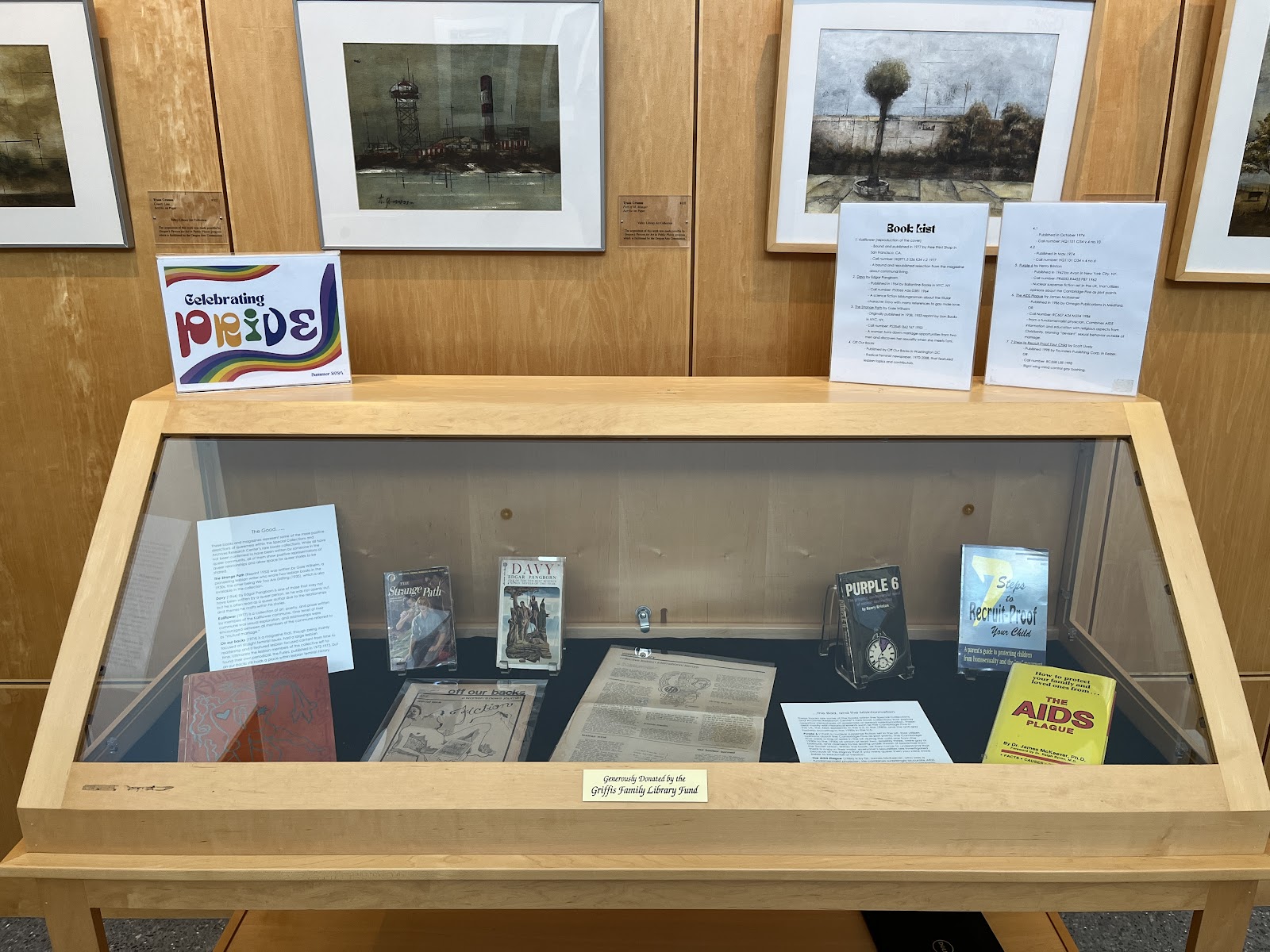
Included below is a picture of the display as well as a copy of the statement about the display:
Queer History Month Display, 2024
Queer Books Written By and For Oregonians
These materials from the rare books collections include a songbook, comic, magazine, and books that contain queer themes and topics surrounding the central theme of Oregon. Some of these are associated with Oregon just through the author being born here, such as with Gale Wilhelm’s books The Strange Path and We Too Are Drifting. Some are written about events in Oregon such as It Could Happen to You and Queer Corners. And some have parts of the story that take place in Oregon, such as Come Out Comix or Turned On Woman’s Songbook.
These materials come from SCARC’s rare book collections, and are available for all to use. Access to materials is provided by appointment only; email scarc@oregonstate.edu to set up an appointment.
In honor of the new guide created to showcase the LGBTQIA+ rare books within the SCARC rare books collection, some of these rare books are being exhibited in the display case outside of the SCARC Reading Room on the 5th floor of the library!
While looking at the collection as a whole and trying to separate the books into two themes, there was one clear theme, that being books written by and for Oregonians, which will be the second exhibit going up at the end of August 2024. With those books removed, we surveyed the remaining books, and another theme emerged: the good, the bad, and the misrepresentation. This set of materials deals with the ways that queer people have been referred to and used within media historically. While there are more good representations than bad representations, the bad cannot be overlooked and ignoring them would not accurately represent the historical record that exists.
Below a picture of the exhibit can be found, as well as copies of the statements that are placed within the bookcase:
The Exhibit, mid-June – August, 2024
The Good……
These books and magazines represent some of the more positive depictions of queerness within the rare books collection. While all have not been confirmed to have been written by someone in the queer community, all of them show positive representations of queer relationships and allow space for queer stories to be shared.
The Strange Path (Reprint 1953) was written by Gale Wilhelm, a pioneering lesbian writer who wrote two lesbian books in the 1930s, the other being We Too Are Drifting (1935), which is also available in the collection.
Davy (1964) by Edgar Pangborn is one of those that may not have been written by a queer person, as he was not openly out, but he is often read as a queer author due to the relationships and themes he crafts within his stories.
Kaliflower (1977) is a collection of art, poetry, and prose written by members of the Kaliflower commune. One tenet of their commune was sexual exploration, and relationships were encouraged between all members of the commune referred to as “mutual marriage.”
On our backs (1974) is a magazine that, though being mainly focused on straight feminist issues, had a large lesbian readership and it featured lesbian focused content from time to time. Ultimately the lesbian members of the collective left to found their own periodical, the Furies, published in 1972-1973, but on our backs still holds a place within lesbian feminist history.
…the Bad, and the Misinformation
These books are some of the books within the collection that portray negative stereotypes of queerness or spread misinformation. These contain themes or plot points that are centered around historical events such as the Cambridge Five in the UK, the AIDS epidemic in the U.S. in the 80s, and the anti-gay hysteria occurring in the 90s in the U.S.
Purple 6, published in 1962, is nuclear suspense fiction set in the UK, that utilizes opinions about the Cambridge Five as plot points. The Cambridge Five were a ring of spies in the UK during the cold war from the 1930s to the 1950s of which at least two, possibly three, were gay or bisexual, and claimed to be spying under threat of blackmail from the Soviet Union. Within the book, as they come to understand that there is a spy in their midst, everyone’s sexualities are investigated because of this stigma that if you were queer then you were more liable to blackmail or treason.
The AIDS Plague (1986) is by Dr. James McKeever, who was a fundamentalist physician. He combines surprisingly accurate AIDS information and education with religious aspects from Christianity, and blames not just homosexuality, but all deviant sexual behavior outside of marriage. Not the worst representation, but certainly not the best.
7 Steps to Recruit-Proof Your Child by Scott Lively was published in 1990, and is described on the book jacket as “A concise, practical guidebook for parents who wish to protect their children from pro-homosexual indoctrination and the possibility of recruitment into the homosexual lifestyle.” Lively is known for being an aggressively anti-gay pastor who helped introduced anti-gay laws into Uganda and possibly Russia. This is possibly as far from a queer-positive book as you could get.
The LGBTQIA+ Rare Books LibGuide started with curation of books from the Rare Books that had any connection to LGBTQIA+ people or topics, which was done by Anne Bahde, Special Collections Librarian for Research and Learning. Once all of the materials had been paged, I got to spend more than a few hours poking through all of the materials. The trouble with doing work like this is that everything is so fascinating, it can be hard to stay on task without getting lost in the materials. Regardless, I was able to take pictures of all of the books, take some notes on the content, and then start on the LibGuide.
I decided to separate the books into 5 categories: Magazines and Newspapers, Music and Arts, Fiction and Queer Pulps, Non-fiction, and HIV/AIDS. What follows is a highlight of the materials in each category, as well as information that was found through some light researching.
Tip: Right Click on an image and hit “Open image in new tab” for a larger view of the image so that the text is readable.
Magazines and Newspapers
The Lavender Network
The magazines and newspapers were by far the most interesting set of materials to me, and the one that I found myself spending the most time on. One rather interesting one was the Lavender Network, or “Oregon’s Lesbian and Gay Newsmagazine,” created in Eugene, Oregon.
Kaliflower
Kaliflower, with its colorful covers and wonderful artwork, was quite an eye-catcher. I spent some time flipping through the pages, trying to ascertain why a self-published magazine from a commune about communal-living was in a curation of queer books, but I soon found out. Their articles on sexual freedom and exploration, and “mutual marriage” elucidated that for me, but their other articles on their anti-capitalist practices and advice for communal living were just as interesting.
Off Our Backs
But the materials that I kept finding myself coming back to was the run of off our backs (lowercase stylized as oob). It had an array of queer and lesbian focused features, those being columns, interviews, artists, and letters from lesbian subscribers. There were comic strips from Alison Bechdel’s “Dykes To Watch Out For,” advertisements for other lesbian periodicals, groups, and retreats, and statements from lesbian groups and organizations. And yet lesbians were still marginalized within oob.
This lesbian-marginalization spawned not only one, but two separate lesbian-focused magazines. Furies, a lesbian focused periodical that was founded when the lesbian members of the collective left, but was only published for a short year. Another publication that was created out of spite against oob was On Our Backs (OOB), a lesbian erotica magazine that ran from 1984 to 2006. Its existence sprung out of the anti-pornography stance that oob held, particularly during the sex war period of the 80s in lesbian and feminist communities (interesting further reading here).
Despite the faults, this set of oob is a really incredible time capsule back to feminist culture in the 70s. Reading these even inspired me to subscribe to a new queer magazine that is created and printed in Portland, in hopes that one day I could look back on them as I am looking at oob now.
Music and Arts
Turned On Woman Songbook Come Out Comix
I do have to say that I am an enjoyer of comics and graphic novels, especially queer focused ones, so Come Out Comix was a real treat for me. It was really interesting to read it as someone who lives in the Willamette valley, as it is set in Portland, and Coos Bay was also mentioned. Turned On Woman was also interesting, but as I can’t read sheet music, I think it’s intrigue was lost to me.
Fiction and Queer Pulps
Torchlight to Valhalla (Original Cover and Title) The Strange Path (Reprint Cover and Title)
The queer pulps are definitely the catchiest bunch of this collection, but seemed different from what I expected at first glance. The Strange Path was written by Gale Wilhelm, a pioneering lesbian author, but this edition is a rename of the original book titled Torchlight to Valhalla, with the new name being paired with a new pulpy cover. This printing occurred in 1953, almost ten years after Wilhelm stopped writing and 25 years after the book was originally published. Barbara Grier, who is known for essentially building the lesbian book industry, speculated in the foreword of one of the publishings of Torchlight to Valhalla that she stopped writing “because the world would not let her write the books she wanted,” that being books with lesbian characters, as her last three novels featured heterosexual themes. Looking at the title, the Strange Path, through the lens of this information makes me a bit sad. Wilhelm probably didn’t think that this path was a strange one, but at the time, the world did think that. This led not only to Wilhelm writing stories she truly didn’t enjoy, but to a misbranding of one of the stories where she was able to share her true self.
The other pulp fiction that has an eye-catching cover does not do any better, with the content of this one being the main offender. The Men Between has been described as what “seems to be anti-gay propaganda in disguise” by a reviewer of the book. The tagline on the back of the seems to say the same, reading “Mike thought he was normal until he was raped by another man – and he liked it!”
Non-fiction
It Could Happen To You 7 Steps to Recruit Proof Your Child
It Could Happen Happen To You was my favorite of the non-fiction books, mainly for all of the inserts that were seen within it. There were a lot of comics, posters/flyers, and advertisements relating to the Local Measure 51 in Eugene that these activists were working against. Two other books that are really interesting include the Homosexuality Bibliography and Supplement, which could be a really great resource if you are looking for works published earlier than 1975. Lastly, Seven Steps to Recruit-Proof Your Child, although rather homophobic, does have a lot of interesting illustrations, including queer right’s groups posters and ads that they took out of context. This book was also created in Oregon and contains a lot of Oregon related content.
HIV/AIDS
The AIDS Time Bomb
I chose to separate out the HIV/AIDS related books as they are not necessarily about queer people or written by them, but they are included in this collection due to the stigma in the US surrounding HIV/AIDS as being something that only gay men contract, which is far from the truth. One of these books, AIDS: The American Roads of Denial by Richard Caper, shines light on that fact. It details his story as a person with AIDS (PWA) as an intravenous drug user and the social rejection he faced when his diagnosis got out, and his walk across the country to raise awareness. It is by far the most positive representation of queerness in any of the AIDS books, as the other two contain rather negative depictions of queerness in relation to AIDS.
The Necessary Friction zine, produced by the Corvallis Lesbian Avengers, features art and writing in a variety of formats that relate to the experiences of queer people, and especially lesbian women, as well as the activities of the Lesbian Avengers. This material was written by members of the Lesbian Avengers, as well as solicited from the broader Corvallis community.
Wired was published by the OSU Hattie Redmond Women & Gender Center. The Center’s mission is informed by feminist theories and lessons, we are committed to creating spaces of community, supporting advocacy, and developing student leaders who actively contribute to building feminist futures.
Issues of Wired are available online via ScholarsArchive@OSU: Wired Issues
The Benton County Quaranzine was compiled by the staff of the Corvallis-Benton County Public Library and consists of submissions from area residents collected from June 1 to November 2, 2020, focusing on life during the pandemic and the era’s political unrest. The resulting print publication includes drawings, cartoons, collages, photographs and other artistic renderings, as well as essays and poems.
Contributors to the project were: Quinn Andreas, Ellen Beier, Jack Compere, Molly Curry, Tru Denton, Sarah Finkle, David Grube, Mari Beth Hackett, Forrest Johnson, Charlie Kelso, Colleen Kitchen, Erin MacAdams, Nancy Chestnut Matsumoto, Orion Olson, John Otto, Vic Russell, Linda Varsell Smith, Karen Stephenson, Kim Thackray, Marvel Vigil and Marion J. Whitney.
“Glitter in the Archives” began in 2016 as part of Oregon Archives Month and OSU’s Queer History Month celebrations. The crafternoon event, featuring copies of materials from the OSU Queer Archives, was hosted in the SCARC reading room and ran from 2016-2019, and it’s finally back!
This year we collaborated with the Libraries’ Crafternoon series and the event was hosted in the main lobby of the library, hence the new name “Add Glitter to the Archives.” As before, one of the event’s main goals was to use (copies of) archival materials to imagine queer futures, particularly as they pertain to OSU and the surrounding community. For information and photos from past events, see the blog posts for Glitter in the Archives, 2016-2019
We have some ideas for the event’s future, including hosting an OSQA materials SCARC Open House the week after the crafternoon event, and we hope folks will join us in October 2024!
Here’s the crafternoon setup featuring lots of glittery collaging supplies and copies of OSQA archival materials ~ 14 people joined us for the event!
“Add Glitter to the Archives” Crafternoon Crafternoon Supplies
The event also showcased Glitter creations from past years:
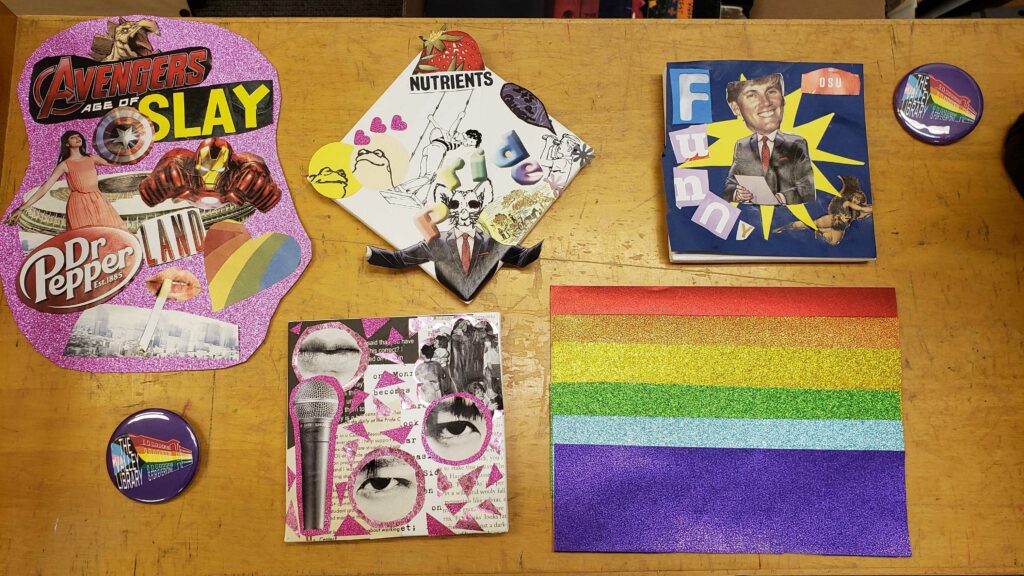
Glitter Crafts from the Archives
Participants had the opportunity to donate their craft creations to OSQA – we received 5 donations!
We are so excited to be able to celebrate Archives Month in person with you all and are looking forward to seeing you at the following events:
Special Open House: Scrapbooks
What: Get glimpses from nearly a century of student experiences here at OSU in student scrapbooks during this Special Open House! These colorful, candid, and joyful documents of campus past were assembled by students from the 1910s through the 2010s. Where: SCARC Reading Room, 5th floor, Valley Library When: Wednesday, October 4, 10am to 1pm
Special Open House: Shannon Day Rettig Book Arts Collection
What: SCARC is excited to celebrate the gift of the Shannon Day Rettig Book Arts Collection. This collection of over 75 stunning artists’ books and fine press specimens will support book arts at OSU for years to come. Come explore selections from the collection, including rare fine press titles and unique, collaborative art pieces. Where: SCARC Reading Room, 5th floor, Valley Library When: Wednesday, October 18, 10am to 1pm
Add Glitter to the Archives: A Crafternoon with the OSU Queer Archives
Art created by 2016 Glitter in the Archives event attendees
What: “Glitter in the Archives” began in 2016 as part of both Oregon Archives Month and OSU’s Queer History Month celebrations. The crafternoon event, featuring copies of materials from the OSU Queer Archives, was hosted in the SCARC reading room and ran from 2016-2019, and it’s finally back! This year we are collaborating with the Libraries’ Crafternoon series and the event will be hosted in the main lobby of the library, hence the new name “Add Glitter to the Archives.” As before, one of the main goals of this event is to use archival materials as a way to imagine queer futures, particularly as they pertain to OSU and the surrounding community. Participants will have the opportunity to donate their craft creations to OSQA if they would like to do so. For information and photos from past events, see the blog posts for Glitter in the Archives, 2016-2019 Where: Main Floor Lobby, Valley Library When: Thursday, October 19, 4:00 to 6:00pm
“The OSU Queer Archives: Reflecting on the Past and Imagining the Future”
What: The Oregon State University Queer Archives (OSQA) was established in the fall of 2014 with a mission to preserve and share the stories, histories, and experiences of LGBTQ+ people within the OSU and Corvallis communities. The creation and development of the OSQA was the product of a collaboration between an archivist Natalia Fernández, and a professor, Dr. Bradley Boovy, who engaged in community-based initiatives that helped to build the archive. Almost a decade after its establishment, Fernández shares her reflections on the evolution of the OSQA as well as ideas for its future. More information can be found on the Corvallis Museum website about the event; the lecture is free with admission to the museum, which is $5 general admission, free for students including OSU and LB, and free to youth and families who have SNAP. Where: The Collins Education Center at the Corvallis Museum (411 SW Second Street, Corvallis, OR 97333) When: Thursday, October 26, 10:30am to noon
Taste of the ‘Chives Recipe Showcase
What: Sample and celebrate the flavors of the Fisheries and Wildlife Coffee Club and the founder of this Friday morning tradition, Professor David L.G. Noakes! For this year’s Taste of the ‘Chives, we’ll be preparing recipes featured in “Baking Connections: Coffee Club Memorial Cookbook.” Where: Willamette Rooms, Third Floor, Valley Library When: Tuesday, October 31, noon to 1:30pm