OSU Archives: Powered by Orange?

What do Dad’s Weekend, pumpkin bread, poached salmon, and a bunch of guys in gear rattling an inflatable helmet have to do with the OSU Libraries? And how does Doug Schulte fit into the mix?

Saturday brought Sue Kunda, Tiah Edmunson-Morton, and (super famous) student employee of the year for Oregon (Doug) to the President’s Breakfast and fancy football game suite! Joined by his dad, Doug spoke to a small gathering of student and university leaders in the Alumni Center, reflecting on both his experience in ROTC and the limitless fun he has working for the OSU Archives. After filling ourselves with a delicious breakfast, we headed over to the VIP entrance of the stadium and up to the exclusive 4th floor suites, where we ate more, drank a little, and enjoyed the blowout game against the Huskies — all from the comfort of our movie theater style chairs, covered in Beaver orange blankets, with the sun warming us behind the retractable windows.

All glitz and good food aside, it was an honor to be there with Doug and his father to recognize the great contributions he has made to the Archives. We are really lucky to have such a talented bunch working here, and I was proud to introduce Doug, who is certainly Powered by Orange, to an even wider audience!

And yes, there is a Flickr set… See the Flickr set.

Read all about WASAE’s Student Employee of the Year Award

New Flickr Commons Collection: “Western Waters”

Say “welcome!” to a new Flickr Commons collection dedicated to all things water — or at least all things water related … Or at least all things related to waters in the west …

The idea came from OSU Libraries’ own Michael Boock and the members in the Greater Western Library Alliance (GWLA), who wanted to showcase and spotlight the great collections featured in the Western Waters Digital Library (WWDL). So we’re doing our part to share OSU’s contributions with the Flickrverse!

The images in these sets are from our “Pacific Northwest Stream Survey” digital collection, which includes over 1000 field images taken between 1934 and 1945 and spanning the 390 streams in the Columbia River Basin. But the collection is also part of the Western Waters Digital Library, which includes classic water literature, government reports, legal transcripts, water project records, personal papers, photographic collections, and audio/video materials associated with the major river basins of the Western United States.

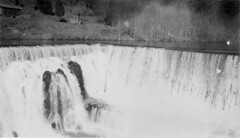
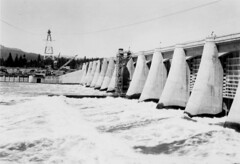
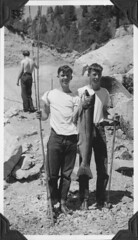
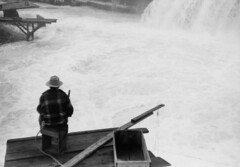
Cleverly called “Dam It,” the November 4th set includes images of roaring and rushing water, folks fishing, and a few salmon swimming … Enjoy these 19 images, straight from the late 1930s!

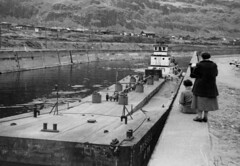
Keep your eyes open and your RSS feeds on, November 18th we’ll launch another set with a new set of images of people fishing at Celilo Fallls. Can’t wait until then? Check out the Celilo Falls images in the Gerald Williams Collection Flickr set, where you’ll find images like this one …

and this one …

and another one of my all-time favorites, this one …

Want to learn more about the Western Waters Digital Library?

Want to learn more about the Greater Western Library Association?

Ruth Nomura

Thanks “vintagepix”!

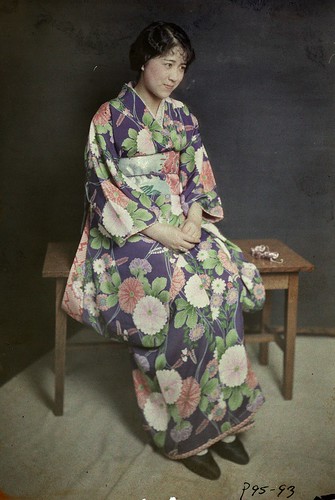
This beautiful & beguiling photo has graced the cover of our Oregon Multicultural Archives brochure, but when I tried to research Ruth Nomura for our International Womens Day set for Flickr Commons, I couldn’t find a thing … We knew the picture had been taken by an OSU photographer, John Garman, but basically we knew nothing about the context.

Who was she? Why did Garman take her photo? Was she a student? Where was the photo taken?

And so it remained one of those clichéd mysteries… Until “vintagepix” asked this question: “Any chance the name might be Nomura?” It was a great afternoon in the Archives, with staff scurrying around and clapping, pulling yearbooks off the shelves, retrieving student academic records, and really just smiling.

Because we were able to find her in the yearbooks, combined with the leads of “vintagepix,” we’ve pieced this little bit of her life together. She was born in 1907 in Portland, and was one of the first Japanese Americans born in Oregon. She graduated from Jefferson High School in 1924. According to the Japanese American Citizens League, Twin Cities chapter obituary for Nomura, “In 1926, as a winner of an essay contest for Nisei students, she traveled by steamship to Japan. She wrote that this trip ‘enriched my life and gave me a deep appreciation of Japan, its people, arts and civilization. It encouraged me to study the language, flower arrangement, holiday festivals, the tea ceremony, daily customs, Japanese cooking and serving, music, arts and crafts, particularly pottery, painting and calligraphy.’”

Then she came to OSC, as “the first Nisei woman from Portland to enroll in what is now Oregon State University.” She lived in Margaret Snell Hall all 4 years and graduated in 1930 with a BS in Home Economics.

Ruth Nomura

And, I tell you she was quite active on campus! Look at this list, it will make most feel like under-achievers.

  • Omicron Nu, secretary: National honorary fraternity in Home Economics, which was established at Michigan State college in 1912 and installed at OSC in 1919. “Its purpose is to further science in all extensive branches of home economics.”
  • Phi Kappa Phi: National all-college scholastic honor society, which was established at OSC in June, 1924. “The purpose of this society is to emphasize scholarship among college students, and to stimulate mental achievement by the honor of selection to membership. This society stands for the unity and democracy of learning.”
  • Kappa Delta Pi: “The purpose of Kappa Delta Pi is to foster higher professional and scholarship standards during the period of preparation for teaching, and to recognize outstanding service in the field of education.”
  • Clara H. Waldo prize, honorable mention
  • Cosmopolitan Club, vice-president: “The Cosmopolitan Club was formed to promote brotherhood and place humanity above all nations. Each year the club gives an International banquet. Meetings are every other week.”

And so … She left OSC in 1930 … But where did she go?

Again, turning to the obituary posted on the Japanese American Citizens League site we find an answer. She married Earl Tanbara at the Centenary Wilber Methodist Church in Portland, on September 16, 1935. When World War II, and relocation, began the Tanbara’s were living in Berkeley, CA. In 1942, they moved from Berkeley to a farm in Reedley, CA, in an attempt to avoid wartime internment. According to Earl Tanbara’s obituary, “[t]he bad news was that the boundaries for relocating individuals of Japanese ancestry were moved further inland and they were facing relocation. The good news was that the U.S. Army officer who visited the farm to inform them of the need to move to an assembly center was a former high school classmate of Ruth from Portland. The officer offered them an opportunity to move anywhere East if they had friends who would accept them. They contacted friends in Minneapolis and they were placed on a military train headed for the Twin Cities … Earl and Ruth assisted over a 100 evacuees to leave camp and find a place in the Twin Cities.” Ruth wrote, “Our main assignment was to build community acceptance. So each week, Earl and I were invited to different church groups, youth groups, schools, colleges and farming communities to give talks on Japanese Americans … As there were only 10 Japanese families living in St. Paul before the war, many Minnesotans were not acquainted with Americans citizens of Japanese extraction.”

At the end of the war, they decided to stay in Minnesota and in 1953, Ruth received her master’s degree in home economics from the University of Minnesota — as one of the first second generation women to earn a graduate degree. There is a letter in her OSC student file from 1953, written by her thesis advisor in Minnesota, with this wonderful quote: “I have never known anyone who was so versatile and could do well so many different things—from arranging flowers to organizing programs for the YWCA; from teaching foreign foods to writing publicity material. She is a charming, gracious person.”

What else do we know now? She was the Adult Education Director and International YWCA Program Director for the St. Paul YWCA from 1942 to 1972. She directed the participation of Japanese Americans in the first Festival of Nations in 1947, was one of the founding members in 1955 of the St. Paul-Nagasaki Sister City Committee (serving as president of the board from 1966-1972), and was a charter member of the Japan America Society when it was formed in 1972 and served on its board of directors. Ruth was a longtime member of Unity Unitarian Church in St. Paul, where she arranged flowers for Sunday morning services for more than 35 years, and the Japanese Garden at the YWCA on Kellogg Blvd. is named in her honor.

Ruth Tanbara passed away Jan. 4, 2008, at age 100. A small collection of her personal papers are available at the Minnesota Historical Society.

Another great book from the OSU Press

I loved “Pedaling Revolution: How Cyclists Are Changing American Cities,” especially once I realized it was reviewed by David Byrne in the NY Times… But when I read that Jeffrey Kovac, author of “Refusing War: Assuming Peace: A History of Civilian Public Service at Cascade Locks” was coming to OSU, I knew I had to pass it on to all our blog readers!

Kovak will be in Corvallis Oct. 18 for a 3 p.m. talk, presentation, and discussion at the Corvallis-Benton County Public Library. The event is free and open to the community.

Here’s a blurb from the OSU Press site:

“One of the untold stories of America’s World War II experience belongs to the thousands who refused military service for reasons of conscience, instead serving their country through non-military alternate service. Refusing War, Affirming Peace offers an intimate view of a single Civilian Public Service Camp, Camp #21 at Cascade Locks, Oregon, one of the largest and longest-serving camps in the system—and one of the most unusual. Under the leadership of a remarkable director, Rev. Mark Y. Schrock, and some outstanding camp leaders, the men at Camp #21 created a vibrant community. Despite the requisite long days of physical labor, the men developed a strong educational program, published a newspaper and a literary magazine, produced plays and concerts, and participated in a special school and research project called the School of Pacifist Living. They also challenged the Selective Service System in two political protests—one concerning the threatened removal of a Japanese American, George Yamada, and a second concerning a war- related work project.”

Click here to find out more…

Cool news from a historic upgrade

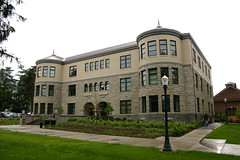
“Kearney Hall at Oregon State University has received gold certification from the Leadership in Energy and Environmental Design (LEED) program of the U.S. Green Building Council, the second major facility at the university to achieve the recognition for environmentally sensitive design and construction.”

“The recognition for the building comes 110 years after Apperson Hall was built at the intersection of 14th Street and Monroe Avenue. The $12 million restoration, completed earlier this year, was made possible in part by a $4 million gift from OSU alumnus Lee Kearney and his wife, Connie Kearney. He graduated in civil engineering in 1963, and she, after starting her studies at OSU, earned a degree in education in 1965 from the University of Washington. The building was renamed in their honor.”

Want to know more? Check out the Gazette-Times article “Historic OSU building earns ‘gold’ rating for green energy“.

Terra story featuring the University Archives

“A Bracero’s Story: Farm labor is a family affair”

“It started with Salvador, the patriarch. In 1959, he left his wife and children near Guadalajara, Mexico, to work the fields of California. Salvador Castillo was a Bracero — one of more than 4 million who came to the United States from Mexico under an agricultural worker program that lasted from 1942 to 1964.”

Want to read more of Celene Carillo’s story, hear University Archivist Larry Landis talk with Tasha Galardi about OSU’s Braceros Collection, and hear more about Galardi’s research? Check out the article!

Want to check out the Braceros in Oregon Photographic Collection?

People Doing What?

We’ve launched a new Flickr Commons set in a brand new collection! It’s dedicated to people — and all the stuff they do… Not surprisingly, the collection is called “People Doing Stuff.” The first set is from the Herman Bohlman Collection, and, again not surprisingly, is called “People Doing Stuff in the Herman Bohlman Collection.” 33 images this week, with 30 more to come on the 3rd Wednesday of October (10/21).

Herman Theodore Bohlman was born on April 15, 1872 in Portland, Oregon, and lived there all of his life. He was a lifelong friend of William L. Finley, the renowned ornithologist, naturalist, and conservationist. Bohlman and Finley were co-founders of the North-Western Ornithological Association in 1894 and several accounts tell of Bohlman teaching Finley photography…

The two started photographing birds in the late 1890s and between 1899 and 1908 they made many trips to study and photograph birds. Bohlman’s photographs appeared in U.S. and international magazines, as well as in Finley’s 1907 book, American Birds.

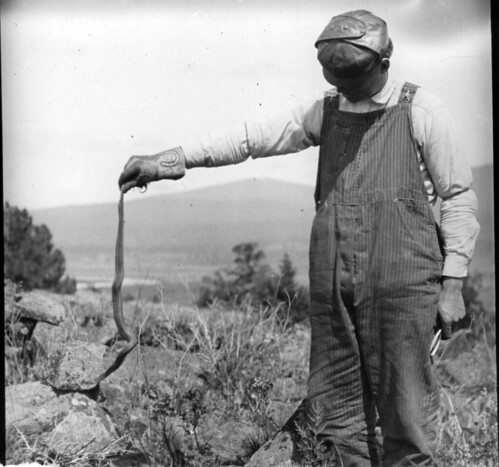
While Bohlman’s collection in the OSU Archives is full of wonderful images of birds found in the Pacific Northwest, it is also a treasure trove of images of “people doing stuff.” Included in the collection are images of the Portland waterfront wharves, Crater Lake, Alaska, the Mazamas in the Mt. Jefferson region, and Bohlman family & friends.

Fun fact: Bohlman was associated with the family’s plumbing business in Portland for over 40 years.

Fun fact: On October 14, 1908 he married Maud Bittleston at the Finley home, Jennings Lodge. They had one son, H. Theodore Bohlman.

Fun fact: The collection consists primarily of lantern slides (mounted & unmounted), glass negatives ranging in size from 3.25×4.25 to 6.5×8.5, and nitrate base film negatives.

Want to read all about our collection?

Want to see our other Flickr Commons set full of Finley & Bohlman’s pretty birds?

Want to know more about William Finley?

Want to find a copy of American Birds?

Glenn Klein talk: “On the Road”


Imagine a 225-mile journey from Jacksonville to Corvallis on foot, on horseback — and in a Conestoga wagon!

Hear the story of how the Jackson County 4-H Empirebuilders Club made this 13-day trek in observance of Oregon’s Centennial in 1959. Glenn Klein, Jackson County 4-H Agent and chief organizer of this event, will talk about his adventures “on the road” and show film footage and a slide show of images from the trek. Join us October 8th, 12 to 1 pm in the Valley Library’s Willamette Room.

Want to know more about this event and other Oregon Archives Month programming activities? Check out the 2009 OR Archives Month site.

Common Ground… A mini debrief

In the midst of beautiful fall leaves and the traditional Beaver orange & black, the Library quad was all pink & blue, Flickr-style. It was a lot of work, but from beginning to end it was also a lot of fun! Want to see how fun? Check out the “Common Ground 2009” set in the osu.archives Flickr account.

We had the chance to talk to many many passersby in the afternoon while Media Services and Facilities Services worked their magic with a crane, big screen, and patience during an enormous downpour. Many great conversations were sparked by the prompt “Do you want to know why there’s a big crane?”

The Gazette-Times wrote a great article, “Projecting a Northwest Image,” and indicommons has a complete global debrief from ALL the Common Ground events Friday and Saturday nights.

Sad that you missed the fun? Short on a time machine? You still have two options! You can view all the images selected for Common Ground on this indicommons page or scroll through all the images on Flickr.